







Abstract
Makeup air is important for fire smoke control systems, and the effects of makeup air on atrium smoke conditions have long been a concern. Requirements for makeup air velocities and makeup air inlet arrangements are too broad in most standards. Herein, the relevant requirements for the design parameters of makeup air given in standards are summarized, and a comprehensive review of factors that influence makeup air and the corresponding effect on smoke management during atrium fires is provided. These influencing factors are divided into uncontrollable factors (wind, external temperature, the location of fire development and the power of the fire) and controllable factors (layout of makeup air inlets and mechanical makeup air velocity). Due to advancements in makeup air systems, the behavioural characteristics of occupants can now be taken into account in the design stage of makeup air systems. Regarding air supply in the breathing zone, the fresh air provided by a makeup air system can be directly supplied to occupants to reduce harmful effects of smoke and avoid casualties. However, determining how to effectively design a makeup air distribution system and the applicability of this type of air distribution in various complex fire conditions requires further study.
Keywords
Introduction
Due to the rapid development of the world economy, the process of urbanization has accelerated, accompanied by the construction of multistorey, multifunctional and comprehensive large-scale public buildings. Consequently, catastrophic building fire accidents occur frequently, which poses a great threat to people’s lives and property. Fire is a serious threat to public safety and social development and is one of the most frequent and widespread disasters. Studies have shown that toxic gases in smoke, such as carbon monoxide, are the most lethal factors in fire accidents, and approximately 85% of victims die of smoke poisoning in building fires.1–3 The key to solving the ‘temperature’, ‘toxicity’ and ‘visibility’ problems caused by building fires is to control fire smoke. If fire smoke can be reasonably controlled, more than 85% of life and property losses can be reduced.4,5 Therefore, determining how to control fire smoke and help people evacuate safely can reduce the number of casualties; these topics have become research hotspots in the field of fire prevention.
Compared with other buildings, when there is a fire in an atrium, a more complicated operation is needed. 6 In commercial buildings, the atrium is usually crowded with a high density of people during holidays. Therefore, the smoke hazard in the atrium must be carefully considered. 7 Moreover, an atrium is continuously connected from the top to the bottom of the building. In the case of fire, due to the stack effect, smoke will quickly spread to all floors, affecting the safe evacuation of people and threatening their lives. 8 The atrium is difficult for firefighters to enter during a fire and also to protect the exit route. A large number of toxic gases are produced when building materials are burned, and these gases are the main cause of death. 9 A building smoke management system is a comprehensive system that includes multiple components, such as a smoke exhaust system and a makeup air supplementation system.10,11 In the case of a fire, the diffusion of smoke can be effectively controlled under the condition that the smoke exhaust system can operate normally. When a large amount of fire smoke is extracted from a building, negative pressure may form, resulting in the smoke extraction system not functioning normally. To avoid negative pressure in the building, fresh air must be provided to the building in a timely manner. This air is called makeup air. The importance of makeup air to fire smoke exhaust systems has been emphasized in relevant fire smoke control standards.12–17 In the fire accident involving the International Monetary Fund building in Washington,18 the smoke exhaust system did not work effectively because the air supply was not sufficient. In investigations of this fire accident, evidence was found to indicate that the building was in a negative pressure state.18 However, the supply of makeup air is rarely considered in fire smoke control systems for most above-ground buildings. The pressure balance during the smoke extraction process can be achieved through natural ventilation from doors and windows. In fact, the natural ventilation capacity of many buildings cannot meet the relevant makeup air volume requirements during fires. 19
Chow and Hung, 20 Lee et al. 21 and Shi et al. 22 showed that the stack effect can occur during fires in multistorey and high-rise buildings. The factor that triggers the stack effect is the pressure gradient between the outdoor environment and indoor spaces. The magnitude of this pressure gradient is determined by the height of the building and temperature differences between the outdoor environment and indoor spaces. 21 For a room on fire with all openings closed, the stack effect cannot be formed but only the buoyancy that would drive the hot smoke to spread vertically. 22 When a fire occurs in a room with all openings opened, hot smoke would spread horizontally along the room and corridor ceilings and also would move vertically under the influence of the stack effect.20,22 Hence, the room containing the fire would develop negative pressure. Due to this negative pressure, a large amount of natural makeup air would be drawn into the burning room from openings, and the natural makeup air would become concentrated near openings. 22 With this abundant natural makeup air, the flame would incline towards stairwells, which may ignite the surrounding combustibles, thus expanding the fire area and resulting in a larger fire.20–22 When a mechanical smoke extraction system is used, makeup air is necessary to maintain the pressure balance. 23 Without this kind of air, the atrium smoke exhaust system cannot work as expected. 24 Many important factors, such as wind, external temperature, the arrangement of makeup air inlets, the distance between makeup air inlets and the fire and the makeup air velocity, may affect the fire smoke exhaust system. 25 All these parameters have different effects on the smoke exhaust efficiency. Improper design and operation of the system may lead to a significant reduction in the smoke extraction efficiency, which would threaten the life and safety of occupants. 26 Therefore, in the design of performance-based smoke control systems, the optimization of the smoke exhaust system and also the makeup air supply system are necessary. 27
Relevant standards for makeup air in smoke management systems
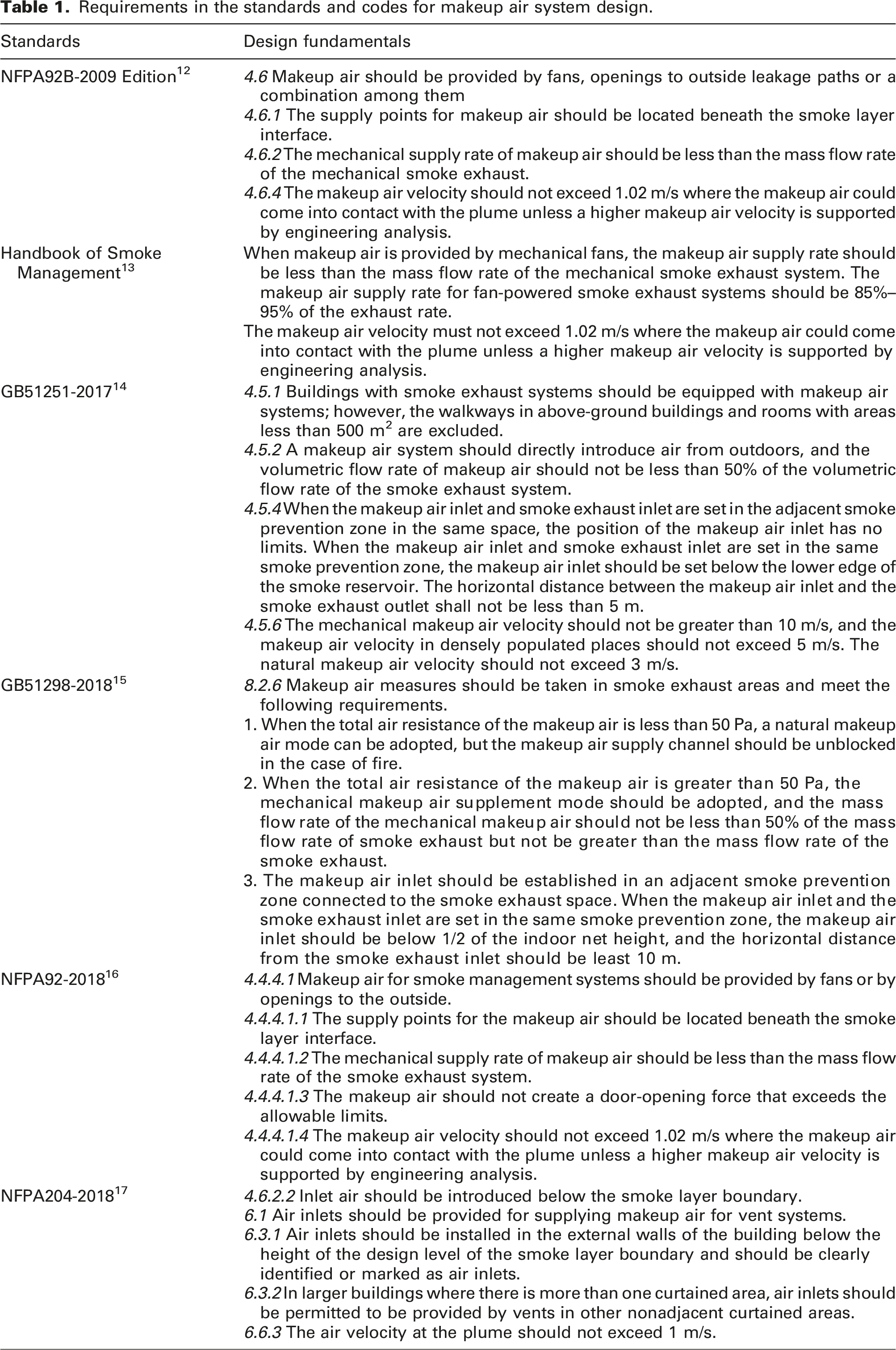
Requirements in the standards and codes for makeup air system design.
Questions regarding the standards and possible consequences.
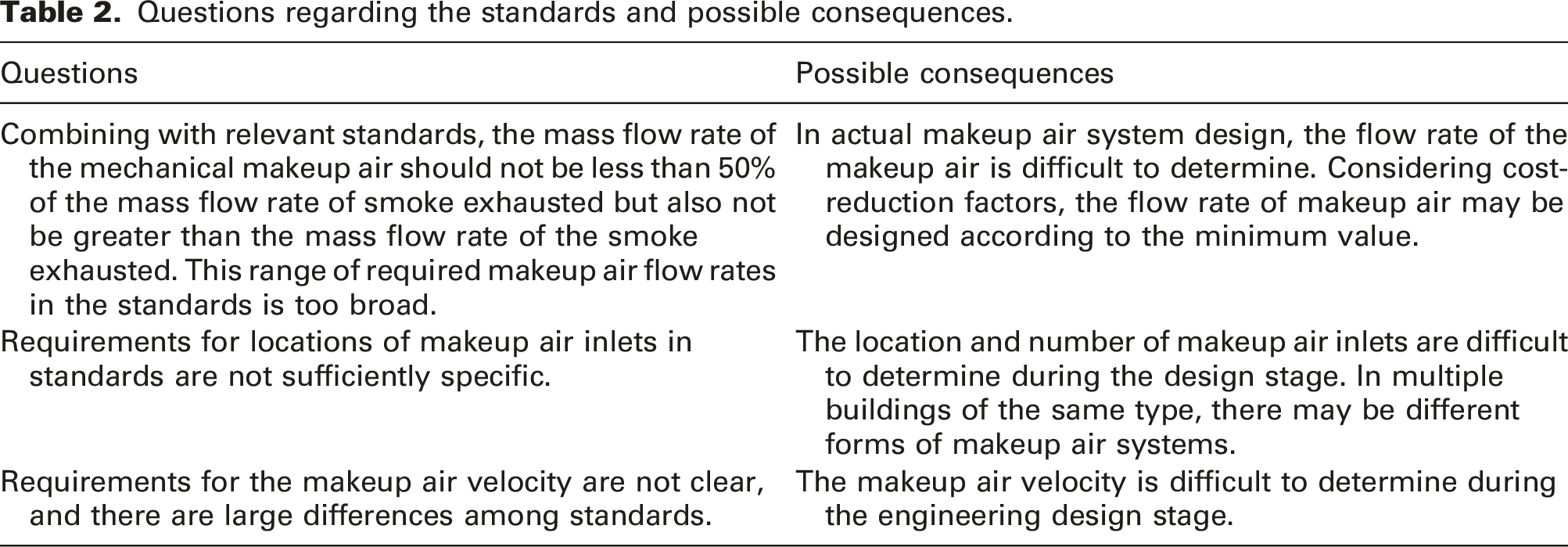
A makeup air system is an indispensable part of a fire smoke control system that could directly affect the flow and spread characteristics of smoke in buildings. However, requirements for the makeup air velocity and locations of makeup air inlets are too broad in standards. To effectively control the spread of smoke in buildings, research on makeup air in building smoke control engineering is important. For mechanical or natural smoke extraction systems, the effect of makeup air must be considered. 28 Klote 29 indicated that makeup air is an important factor in atrium smoke extraction systems. Makeup air may be supplied either mechanically or naturally, and the supply method could strongly affect the efficiency of the smoke exhaust system. Therefore, the effect of the makeup air on atrium fire smoke extraction has been investigated by many researchers and fire safety engineers.
Methods to evaluate the influence of makeup air on atrium smoke conditions
At present, three main methods are used to study the influence of makeup air on smoke development in atrium fire risk assessments, namely, full-scale experiments, physical reduced-scale models and numerical simulations. Full-scale fire experiments are the most convincing and can accurately describe smoke diffusion.24,30–40 However, full-scale experiments are very expensive41,42 and require considerable preparatory work, human resources and time.42,43 Reduced-scale models can be employed to replace full-scale models in many tests studying smoke motion.28,42,44–49 The accuracy of these studies is equivalent to that of studies using full-scale models. Compared with full-scale experiments, reduced-scale models are less time consuming, more inexpensive and require less fuel consumption. 42 However, the maintenance of similarity between reduced-scale models and real fires is not easy, and fire modelling requires an accurate understanding of fire physics. 41 In view of this, a set of dimensionless similarity groups for fire modelling was established by Quintiere 44 to transform governing equations and render relevant boundary conditions dimensionless. The last study method is computational fire modelling to simulate and predict smoke movement in building fires. Many software programs have been developed, and their validations are widely reported in literature.26,43,50–56 Chow et al. 53 proved that if used properly, a numerical model can provide a relatively accurate prediction of atrium smoke movement.
Influencing factors of makeup air on atrium smoke conditions
There are three ways to supply makeup air: naturally, mechanically and with a combination of these two methods. The physical structure of an atrium determines the supply mode of makeup air. The external wall of an atrium is equipped with directly openable doors or windows to realize a natural supply of makeup air. When there are no or few doors or windows that can be opened directly on the exterior wall of the atrium, a mechanical system is needed to provide makeup air. 57
Fire smoke extraction systems can be divided into natural smoke extraction systems and mechanical smoke extraction systems. Natural smoke exhaust systems for an atrium have many advantages, including a low initial cost, no power requirement and low maintenance costs. 28 Natural smoke extraction is one method of smoke management.58,59 Natural smoke extraction strategies are not common in the USA, but there is an increasing interest in these strategies. 55 There are concerns, however, about whether natural venting strategies can be as effective and reliable as mechanical systems. 60 In the case of a fire, smoke may spread widely and could adversely affect people who are exiting the building. To counteract this concern, smoke management systems are required to exhaust the smoke, usually at the roof level. The smoke extraction rate should keep the smoke layer higher than the highest floor occupied by people throughout the building. Makeup air should be introduced strategically through open inlets that are usually located on the sidewalls of lower levels of an atrium. 55 When an atrium is on fire, hot internal gas generates a stack effect. Su et al. 61 showed that due to the stack effect, smoke flows rapidly through stairs to the upper layer of a building. Yang and Li 62 indicated that large stack vents enhance natural ventilation; therefore, smoke and heat rise rapidly, and the energy consumption decreases. External air enters the building through the lower openings due to traction force to form makeup air.24,63
The primary objective of any smoke extraction system is to protect occupants of a building from harm due to smoke in case of a fire. Mechanical smoke exhaust systems are commonly installed for smoke control in large atrium.59,64–66 The performance of this type of system is more reliable than that of other systems because the system is not strongly dependent on environmental conditions. 25 When using a mechanical extraction system, the makeup air must be provided to maintain pressure. For all mechanical smoke extraction schemes, the supply of fresh makeup air is particularly important. 23 Generally, makeup air should be supplied from air inlets below the smoke layer at a low velocity so that the flow rate is less than the exhaust rate. 67 In this way, when the smoke is moving, it cannot be affected by external factors such as wind and external temperature. 68 In addition, the structure and height of a building and arrangement of makeup air inlets can affect the smoke movement in the building. Factors that interfere with the smoke extraction process become very important, especially for buildings with a natural smoke extraction. 69 Although many factors could affect makeup air in smoke extraction systems, some are beyond the control of designers and engineers. These include wind speed, wind direction, external temperature, place of fire development and fire heat release rate (HRR). There are also factors that can be controlled, such as the arrangement of the makeup air inlets and the shape or height of a building. 70
In this paper, these influencing factors are divided into uncontrollable factors (wind, external temperature, the location of fire development and the power of the fire) and controllable factors (the layout of makeup air inlets and the mechanical makeup air velocity), and their effects on makeup air and smoke extraction are described.
Uncontrollable influencing factors of makeup air on atrium smoke conditions wind
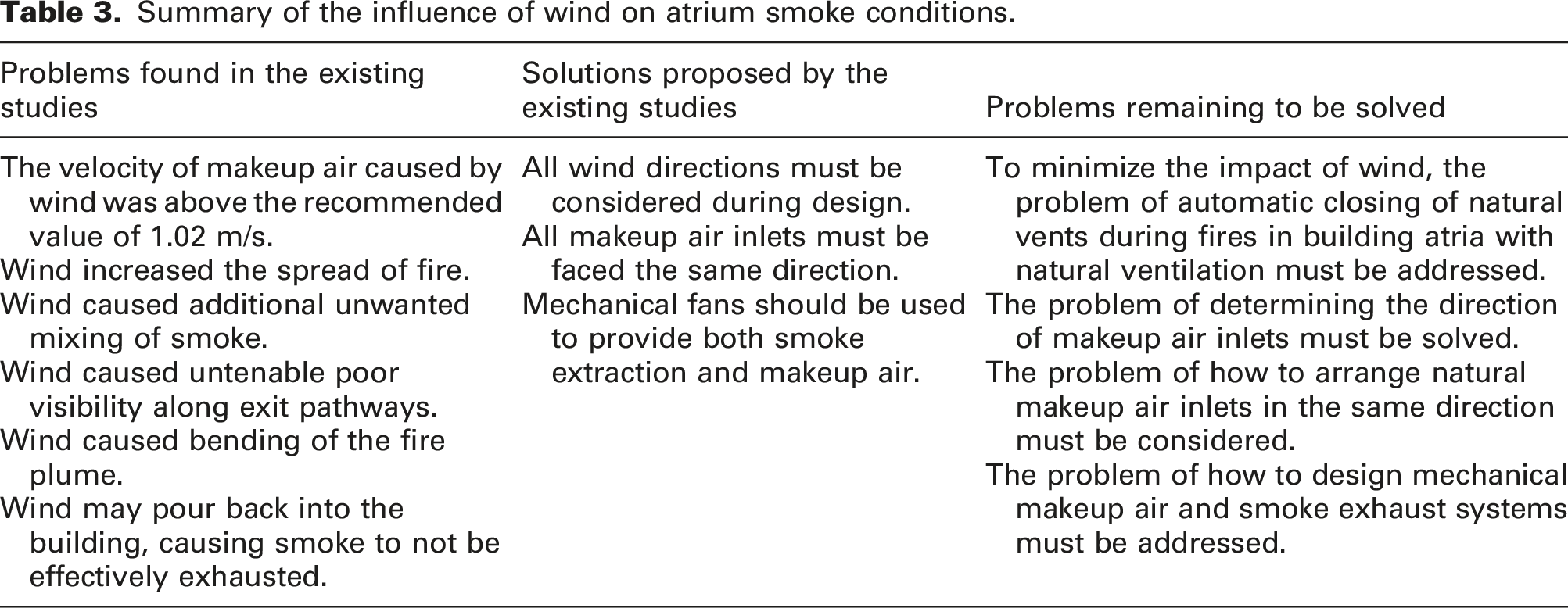
In the analysis of a smoke exhaust system, the wind influence must be considered. 71 Wind can cause beneficial or adverse effects on smoke management systems with mechanical and natural venting strategies, primarily owing to the significant number of openings required in a building envelope to provide makeup air. 55 Ambient wind through a window plays a crucial role in affecting fire and smoke behaviour. Affected by wind, smoke would spread in a building and follow the air flow pattern. Mowrer 68 and Yi et al. 72 indicated that the pressure generated by wind has a greater impact on smoke flow than the stack effect, especially for low-power fires. Wind-induced pressure on building walls would increase the compensatory makeup air velocity over the recommended value of 1 m/s (NFPA 92B-2009). 12
When wind enters a makeup air inlet at velocities in excess of 1 m/s, the makeup air can increase the spread of fire or cause additional unwanted mixing of smoke in an atrium, which may cause poor visibility along exit pathways during a fire. 55 Some researchers have suggested that increasing the velocity to 1.25 m/s or even 1.5 m/s would not interfere with the formation of convective plumes above the fire source. 73 Sinclair and Ratcliff 74 claimed that it is necessary to assess the inflow of wind from different directions. Li and Delsante 75 investigated the natural ventilation caused by a combination of wind and thermal forces through vertical vents and pointed out that when the wind force was opposite to the thermal buoyancy, smoke was difficult to exhaust. Sinclair and Du 55 pointed out that smoke conditions were not tenable in simulated cases of 4-storey and 8-storey atria when the wind speed was 12.8 m/s owing to significant makeup air speeds, which caused bending of the fire plume and the mixing of smoke throughout the atria. They also indicated that all wind directions must be considered during design, rather than only the prevailing wind direction. Meroney 76 pointed out that external wind can change the inflow and outflow of air through external doors and windows, distort the rise of thermal and smoke columns above the fire source, cause plumes to directly hit atrium walls and change the filling height of smoke in an atrium. Król 77 evaluated the influence of wind on natural smoke extraction in an atrium by investigating two wind velocities, 2.5 m/s and 7.5 m/s. For certain air inlet arrangements, even an air velocity of 2.5 m/s is too high and could lead to unfavourable development in the transition area between the hot upper layer and the cold lower layer. A 7.5 m/s air velocity would cause high turbulence, which would adversely affect the smoke under any arrangement of makeup air inlets. Klote 78 pointed out that the design of atrium smoke control systems should minimize the influence of the wind.
Summary of the influence of wind on atrium smoke conditions.
External temperature
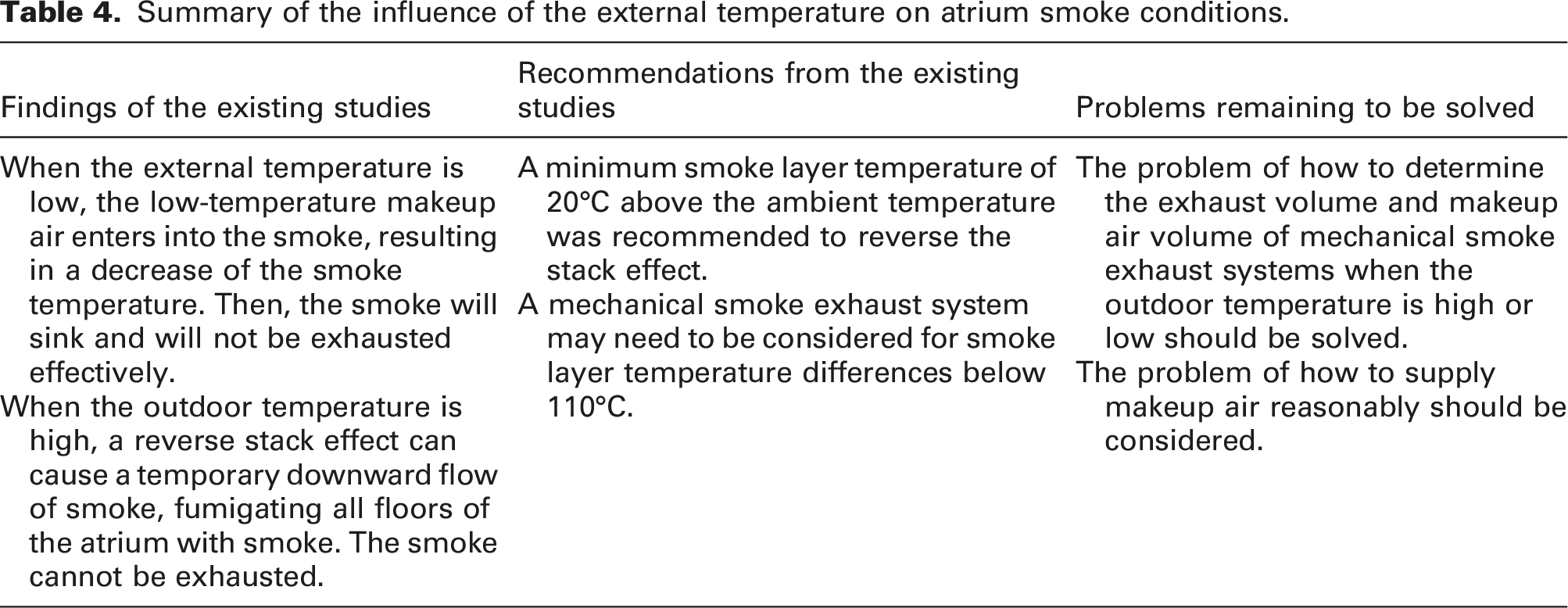
When natural smoke extraction is adopted, the outdoor temperature has a significant impact on the development of smoke in atrium fires. The smoke development process in atrium fires with outdoor temperatures ranging from −10°C to 35°C was explored by Zhen and Ran.79 The results show that when outdoor temperatures range from 25°C to 35°C, the effect of natural smoke extraction is remarkable. When the outdoor temperature drops to 20°C, the natural smoke exhaust effect is not obvious. When the outdoor temperature falls to 10°C or lower, natural smoke extraction does not work. In a tall atrium, the significant vertical rise of a smoke plume allows the entrainment of relatively cool makeup air into the smoke plume, which diminishes the average temperature of the smoke that enters the smoke layer. 55 With a decrease in the outdoor temperature, the situation in the atrium worsens because the smoke generated by the fire cannot be completely removed by the buoyancy force.79 During cooler weather, large heat loss in the smoke layer might occur, which might cause the smoke layer to increase beyond the desired depth. Experimental evidence 80 has shown that excess air movement into a cool but stable smoke layer caused by air conditioning, ventilation or weather conditions can cause the smoke layer to become unstable and spread further throughout the atrium. In large atria and relatively low-HRR fires, the temperature of the smoke is not very high.81–82 In this case, the pressure difference across a horizontal vent would be small. The heavier cold air entering the building may sink, and in this case, smoke cannot be effectively extracted.
Li et al. 83 investigated smoke control by natural smoke extraction through horizontal ceiling vents under the conditions of no temperature difference between inside and outside the atrium and an outside temperature higher than the inside temperature. The results show that when the temperature of the smoke layer is close to the temperature of the outdoor makeup air, it tends to mix with the air rather than float on the air. From practical experience, Hansell and Morgan 18 and Morgan et al. 84 suggested that a minimum smoke layer temperature 20°C higher than the ambient temperature is required to prevent this effect. Sinclair and Du 55 suggested that in the absence of wind, cold outdoor conditions (−25.2°C) may not cause a significant adverse impact on the performance of a natural smoke venting system. Under very hot outdoor conditions (43.4°C), a reverse stack effect can cause a temporary downward flow of smoke, affecting all floors of the atrium. Alkhazaleh and Duwairi 8 pointed out that the external temperature plays an important role in increasing upper layer temperatures under steady internal conditions in an atrium with a mechanical ventilation system. The results showed that an increase in the external temperature causes an increase in the smoke layer temperature, but the smoke interface height remains unchanged. Section A.10.1.1 of NFPA 204 17 suggests that a powered smoke exhaust system may need to be considered for smoke layer temperature differences below 110°C.
Summary of the influence of the external temperature on atrium smoke conditions.
Location of fire development and fire HRR
Normally, atrium space is used to provide an environment similar to nature. The atrium space in a building can provide people with social, entertainment, shopping and other activities. During non-holiday periods or when an atrium does not host exhibitions and other activities, there are few combustibles in the atrium itself.
7
However, during festivals, holidays or when the atrium is used for temporary exhibitions, the fire load may be high (Figure 1). The accidental burning of a Christmas tree can cause a 7 MW fire, and the accidental burning of an exhibition booth can cause a 10 MW fire. Furthermore, there are many combustibles in shops adjacent to atria, and the associated fire load density may be very high.
7
Therefore, many researchers have discussed makeup air and smoke extraction in different fire locations40,46 and fire HRRs in atria.24,26,32,36,38,56,73,85–88 Numerous combustibles during festivals and holidays or when an atrium is used for temporary exhibitions. (a) Many combustibles in an atrium. (b) Christmas tree on fire in an atrium.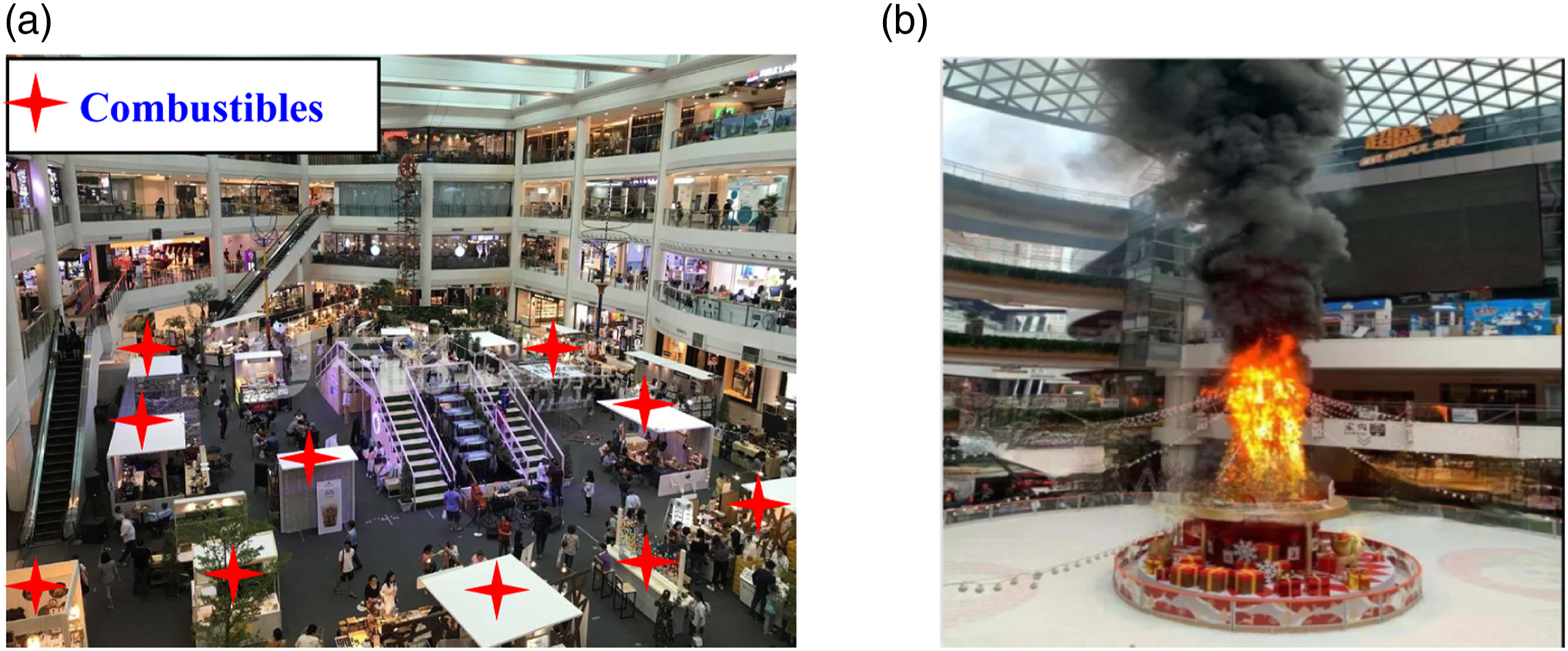
The influence of the fire location in an atrium (at the centre and at 1/4 of the length of the diagonal) on smoke behaviour was assessed by Ayala et al. 87 The results show that for the same fire HRR and makeup air conditions, the fire located at the centre produced a higher smoke layer height than the fire located at 1/4 of the length of the diagonal. When the makeup air velocity was too high, the flame was disturbed significantly and evenly at both locations. Therefore, the amount of smoke generated in both cases was very high. When the exhaust flow rate was lower, the influence of the fire location was remarkable. The results showed that when the fire occurred at 1/4 of the length of the diagonal, the makeup air opening was closer to it; thus, the fire was more affected by the makeup air in the case of a symmetric venting configuration. A higher degree of turbulence was generated by the flame and more smoke was produced. 87 Vigne et al. 40 conducted experimental and numerical studies on the smoke dynamics of four fire sources (5.2 MW combined HRR) in a 20 m high cubic atrium with different ignition times and transient ventilation conditions. The results show that the smoke conditions caused by multiple sources are obviously worse than those caused by a single fire source with the same HRR.
Research on makeup air and smoke extraction under different fire HRRs is relatively mature. The general conclusion is that under the same conditions, the greater the fire HRR is, the higher the smoke temperature and the thicker the smoke layer. Moreover, the design parameters of the mechanical makeup air system are given. However, the location of the fire source can differ; under the same makeup air and smoke extraction conditions, makeup air may cause a series of problems, such as additional unwanted mixing of smoke, untenable poor visibility along exit pathways and bending of the fire plume. As a result, there is no guide to follow in the design of mechanical makeup air systems. Therefore, there is still much work to be done in research on smoke extraction and makeup air supplementation when fires occur in different places.
There are few studies on smoke extraction and makeup air supplementation with multiple fire sources in atria. The number of fire sources, trigger times and relative positions of fire sources pose great challenges to the design and operation of makeup air supplementation and smoke exhaust systems. From this point of view, researchers and fire safety engineers still have much work to do.
Controllable influencing factors of makeup air on atrium smoke conditions
Arrangement of makeup air inlets
The reasonable layout of makeup air inlets is of great significance for controlling smoke diffusion and improving smoke extraction efficiency. Experiments have proven that the locations of makeup air inlets could affect smoke exhaust and fires.
89
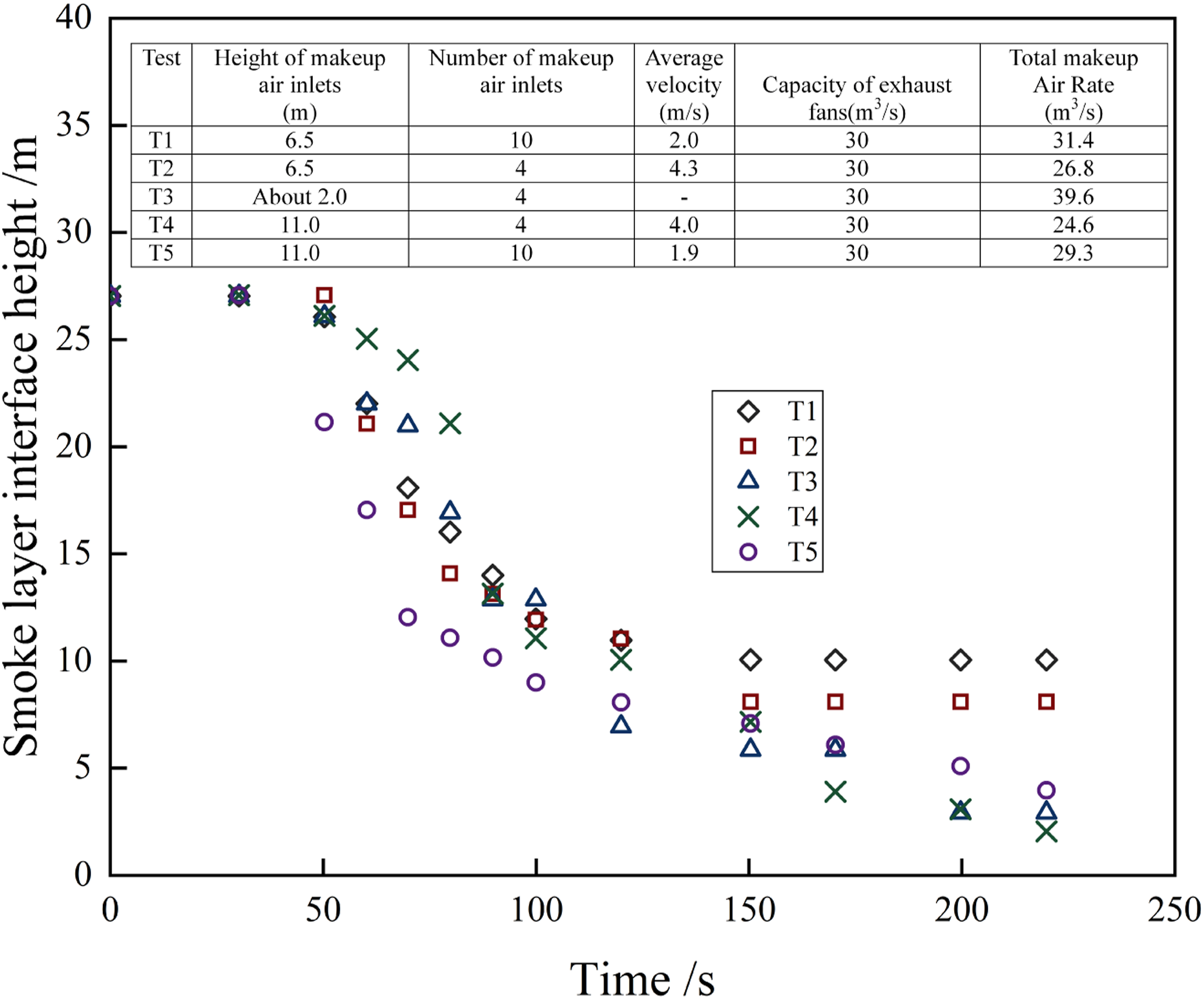
Yi et al.36,41,66 carried out full-scale experiments and numerical simulations to investigate the influence of different makeup air inlet positions (above, within and below the interface of the smoke layer) on smoke conditions in an atrium. They concluded that if the minimum height of the smoke layer interface is higher than the safe level, makeup air inlets should be installed below this level. If makeup air inlets are higher than the smoke layer interface, makeup air would enter the smoke layer and accelerate its descent (refer to Figure 2).
36
Variation in the smoke layer height.
36
Makeup air inlets should be distributed and symmetrically arranged to ensure that the makeup air flow does not blow directly towards the fire source to avoid the distribution of smoke plumes and the aggravation of fire source combustion.38,52,54,56,66,86,90–94 The influence of different arrangements of makeup air inlets on fire smoke movement have been examined by Ayala et al.
38
in a 20 m high cubic atrium using full-scale fire tests and numerical simulations. They concluded that flame swirls were provoked by a crossed makeup air supply distribution. This open vent distribution (asymmetric) caused a flow pattern that created flame swirls, which increased the mass loss rate, flame height and flame inclination during fire tests. Eighty-four simulations were carried out by Ayala et al.,
87
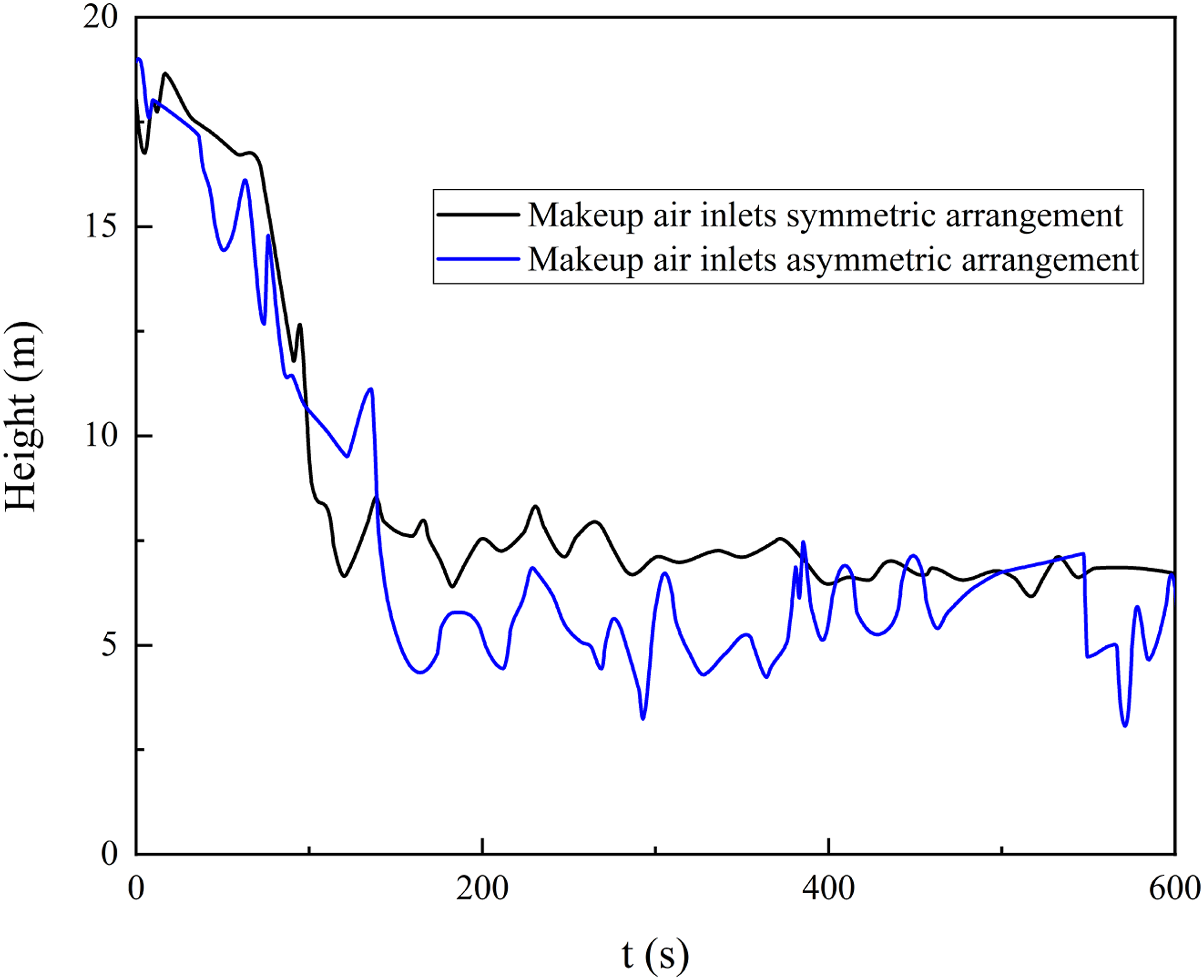
considering different makeup air configurations (symmetric and asymmetric). They noted that the smoke layer drop presented more unstable behaviour and that the smoke layer descended farther than the expected height (see Figure 3
87
) in the case of asymmetric ventilation. Kerber and Milke
52
conducted a numerical study on the possible impacts of various arrangements of makeup air inlets on an atrium smoke management system. The results show that the best arrangement of makeup air inlets is symmetrical, such that the makeup air supplied to the flame is symmetrical, and disturbance of the plume can be avoided. The asymmetric layout of makeup air inlets would affect the stability of the flame and flue gas plume. When makeup air inlets are symmetrically arranged, even if the makeup air velocity is greater than 1 m/s, flame or plume instability does not occur.24,91 Yi et al.
66
investigated a mechanical exhaust system in a large space with a one-sided, asymmetric air supply. They concluded that with a one-sided, asymmetric air supply, due to the blending of smoke and fresh air and the descent of smoke away from the air supply vents, the efficiency of the mechanical exhaust system was reduced, and the expected result was not achieved. Pongratz et al.
56
noted that when the fire source and makeup air inlets are located on the same floor, combustion is intensified, and when the makeup air inlets are located at a lower elevation, mechanically supplied makeup air can accelerate the downward filling of smoke. They stated that although mixing is reduced by injecting makeup air at a low elevation, the temperature and concentration of smoke within the smoke plume still increase due to the stronger stratification and concentration of combustion products, forming a more extreme smoke condition within the plume and smoke layer.
56
Smoke layer heights with symmetric and asymmetric makeup air inlet arrangements with a makeup air velocity of 1.3 m/s and an HRR of 2.5 MW.
87
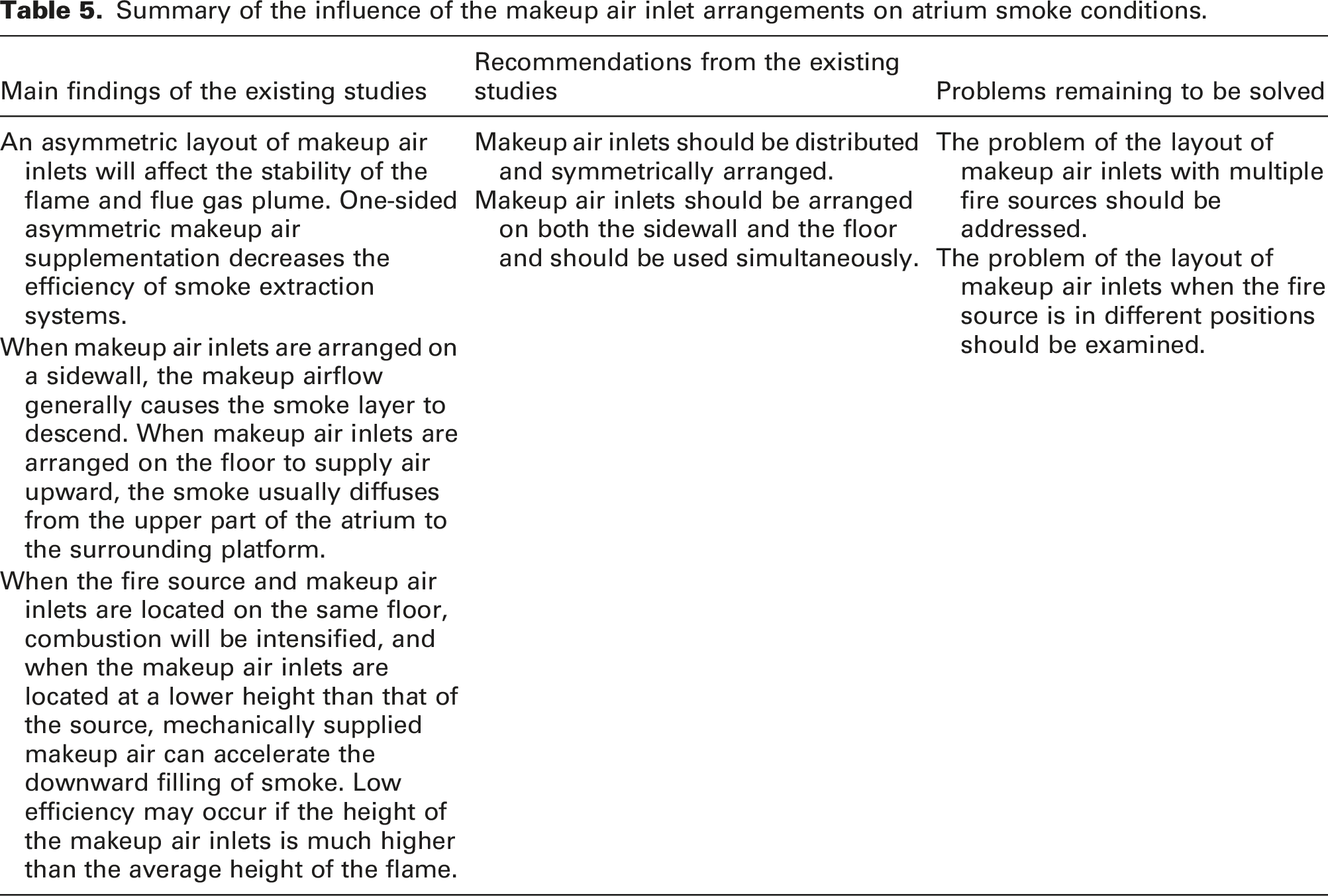
Huo et al. 92 found that when makeup air inlets were arranged on a sidewall, the makeup airflow disturbed the smoke plume and diffused the smoke to the surrounding platform, generally causing the smoke layer to descend. When makeup air inlets are arranged on the floor to supply air upward, the decrease in the height of the smoke layer can be mitigated to a certain extent, but this approach cannot prevent the diffusion of smoke from the upper part of the atrium to the surrounding platform. They suggested that two makeup air inlet locations should be used simultaneously to control smoke. Yang et al. 93 noted that when the makeup air volume was small, the average temperature in the area with makeup air inlets arranged on the sidewall was lower than that in the area with makeup air inlets arranged on the floor to supply air upward. However, with increasing makeup air volumes, the average temperature tended to become the same under the two air supply conditions. In addition, the visibility in the area with makeup air inlets arranged on the sidewall was higher than that in the area with makeup air inlets arranged on the floor to supply air upward. Zhou and Hadjisophocleous 85 carried out a numerical study of the influence of the locations of makeup air inlets on fire plumes. They noted that placing makeup air inlets at the bottom and top of an atrium resulted in the smallest distortion of the plume. However, locating makeup air inlets at the middle and top of the atrium caused much mixing between smoke and makeup air, even at lower makeup air velocities. Zhou et al. 26 noted that the efficiency of a smoke extraction system is reduced with a one-sided unsymmetrical makeup air supply. They also pointed out that if the height of the makeup air inlet is much higher than the average height of the flame, low efficiency may occur. Abotaleb 95 also concluded that symmetrical makeup air supplementation greatly enhances the function of smoke management systems. He also pointed out that increasing the offset distance of makeup air inlets above the floor on the same wall does not seriously affect the average temperature or density of the smoke.
Summary of the influence of the makeup air inlet arrangements on atrium smoke conditions.
Mechanical makeup air velocity on atrium smoke conditions
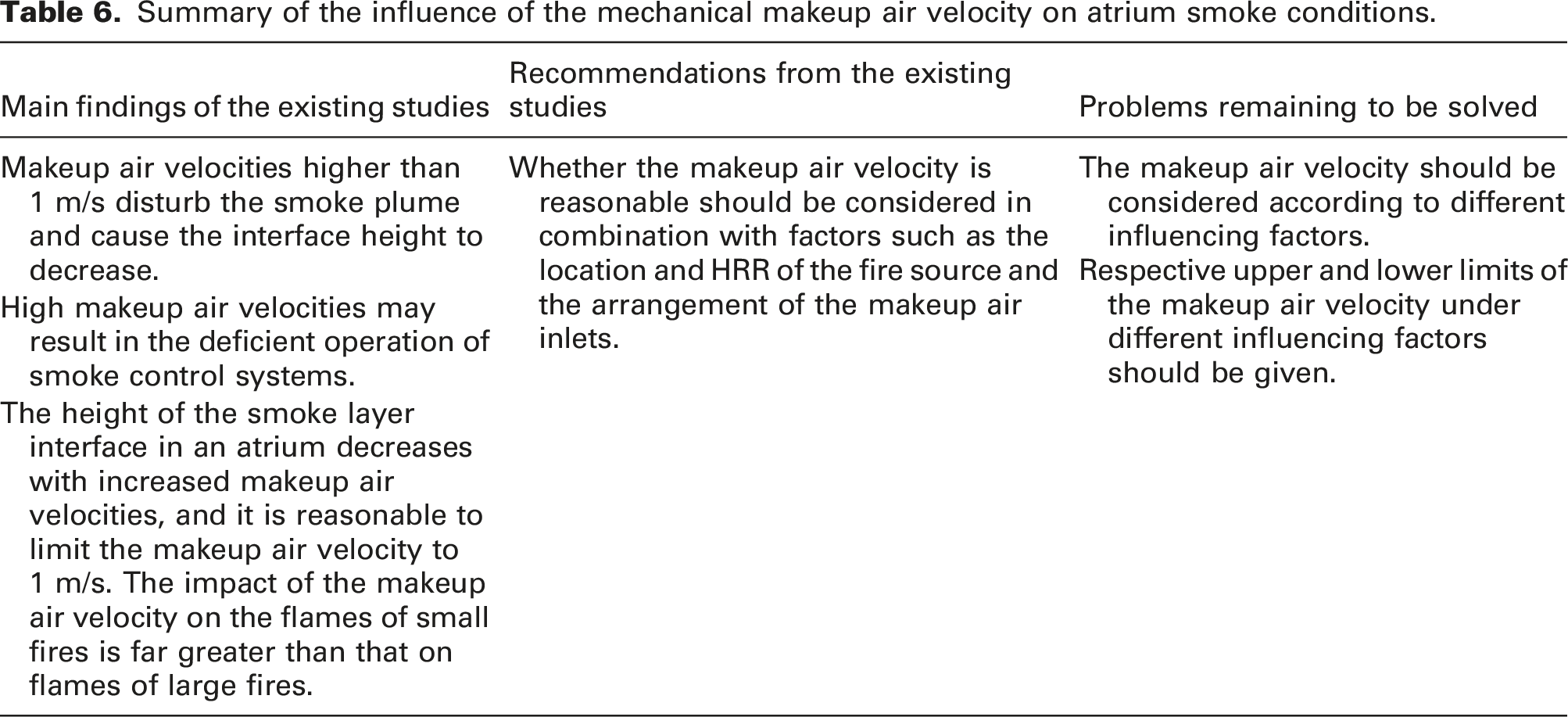
NFPA12,16,17 and the Handbook of Smoke Management
13
limit the makeup air velocity to 1.02 m/s to prevent significant deflection of the plume and disruption of the smoke layer interface.
73
The deflection of the plume increases the entrainment of air, resulting in the failure of the smoke control system. The limitation of the makeup air velocity can reduce the possibility of fire growth and spread caused by airflow. Heskestad,96,97 and Mudan and Croce
98
recommended a 1 m/s limitation for the makeup air velocity. They stated that air velocities higher than 1 m/s disturb the smoke plume and cause the interface height to decrease. Kerber and Milke,
52
Hadjisophocleous and Zhou,
73
and Beyler
99
also suggested that velocities above 1 m/s can alter axisymmetric smoke plumes, which causes an increase in the amount of air entrained in the plume and a decrease in the interface height (see Figure 4
52
). Kerber and Milke
52
also showed that high makeup air velocities may result in the deficient operation of smoke control systems. Consequently, inlet velocities should be very low to prevent smoke diffusion and under such conditions, the makeup air would not influence the fire. Makeup air velocities versus the smoke layer height.
52
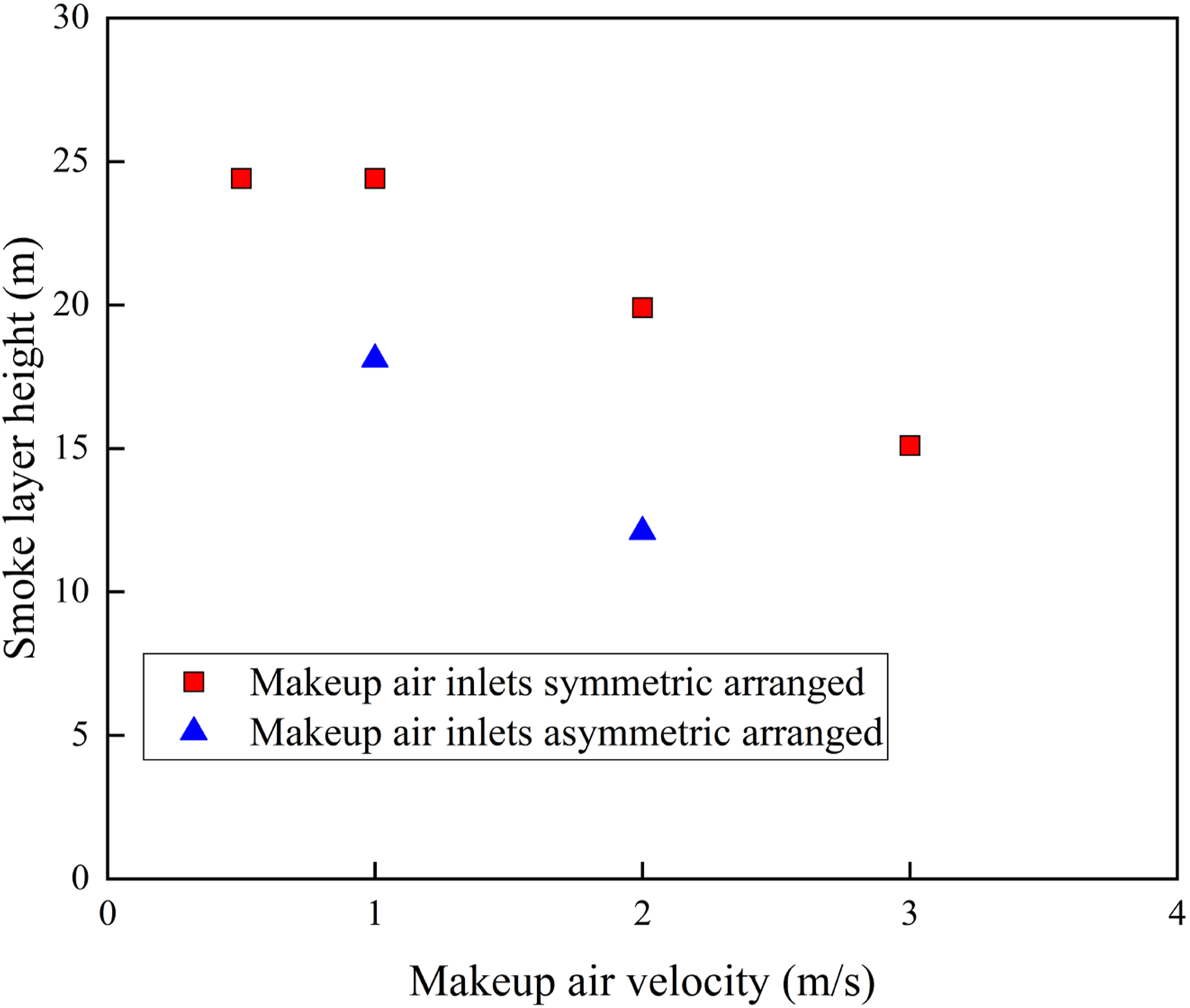
Hadjisophocleous and Zhou 73 investigated the influence of makeup air velocities in atria of various sizes. The results showed that the height of the smoke layer interface in the atrium decreased with an increase in makeup air velocities, and it is reasonable to limit the makeup air velocity to 1 m/s. Moreover, for atria with heights less than 20 m, the influence of the makeup air velocity was more obvious. NFPA 92,12,16 and the Handbook of Smoke Management 13 permit velocities of makeup air greater than 1.0 m/s if the design is supported by engineering analysis. Therefore, many researchers and fire safety engineers have evaluated the influence of makeup air velocities on smoke conditions in atria.70,85,100–102
Zhou and Hadjisophocleous 85 demonstrated that the impact of the makeup air velocity on the flames of small fires is far greater than that on flames of large fires. The results show that even a 1.0 m/s makeup air velocity can cause a flame tilt in a 5 MW fire. The impact of makeup air on smoke conditions in an atrium was also investigated by Pongratz et al. 56 A total of 31 simulations were conducted with makeup air velocities of 0, 1, 1.25, 1.5 and 1.75 m/s. A 1 m/s or higher makeup air velocity would increase the entrainment rate of the plume. The makeup air tilted the flame and plume, increasing the radiant heat flux in the direction of the airflow. Through empirical calculations and numerical simulations, they pointed out that an increased makeup air velocity would create a significant tilting of the flame to produce a greater heat flux proportional to the increased airflow velocity. 56 The influence of the makeup air velocity on smoke conditions in an atrium with a symmetric air inlet arrangement was also conducted by Rafinazari and Hadjisophocleous 86 based on full-scale tests. They pointed out that limiting the makeup air velocity to 1 m/s is not reasonable. The results showed that for small fires, the effect of a 1.5 m/s makeup air velocity on the flow of smoke was similar to that of a 1 m/s makeup air velocity. For large fires, the smoke layer height was first affected at a 2 m/s makeup air velocity.
Summary of the influence of the mechanical makeup air velocity on atrium smoke conditions.
Discussion
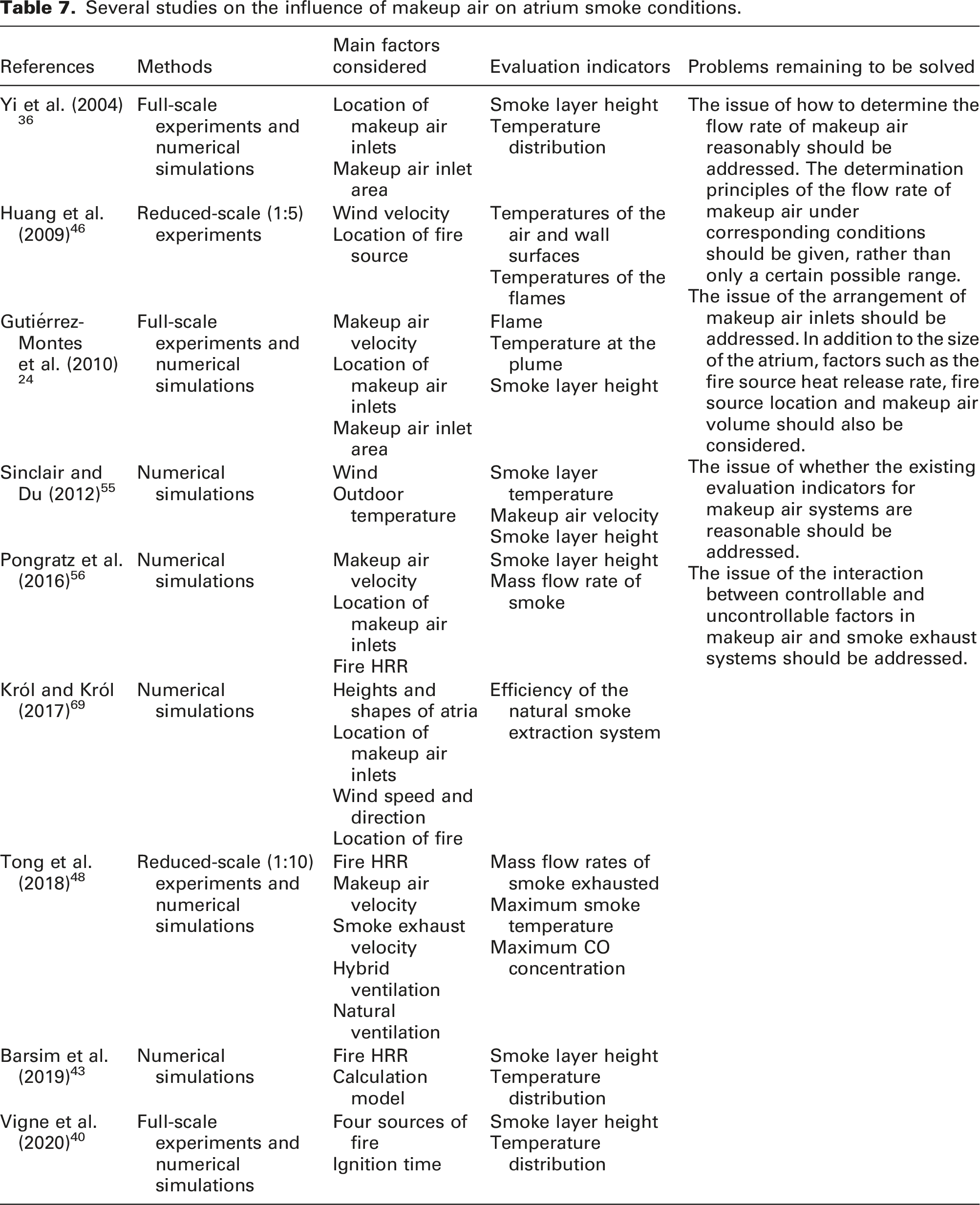
Several studies on the influence of makeup air on atrium smoke conditions.
Design of makeup air and smoke exhaust systems for high floors in atria
Existing research on smoke control with the makeup air system is largely based on improving the height of the smoke layer in the entire building and rarely considers the smoke layer on each floor, including parameters such as the smoke layer height, smoke concentration and visibility level in the evacuation passageways of higher floors. A smoke management system is designed to maintain a specific clear height and prevent occupant exposures to smoke. Atria are commonly used in multistorey offices and commercial buildings. However, an atrium is a large space connecting multiple building floors. In atrium fires, under the influence of the stack effect, smoke first diffuses to the upper floors and then flows to interconnected floors, which reduces the visibility on each floor. For an atrium with a height of 30 m, the height of the smoke layer is controlled at 80% of the total height by smoke exhaust systems, but the safety of individuals on floors above this level may be threatened. Moreover, the temperature or toxic gas concentration below the smoke layer interface may also exceed the human limit. Previous studies26,41,66,85 noted that makeup air inlets located above the smoke layer cause the smoke layer height and smoke extraction efficiency to decrease significantly. To avoid these problems, how to design makeup air and smoke exhaust systems for atria should be determined.
Makeup air supply systems combined with the evacuation behaviours of occupants
The purpose of providing makeup air is to replace the smoke discharged by the smoke exhaust system, avoid negative pressure in the building and ensure the normal operation of the smoke exhaust system. As shown in Table 7, most previous studies focused on the effect of makeup air on plume disturbances, the smoke interface height and the smoke extraction efficiency. In the case of fire, the occupant behaviour and the choice of evacuation route are seldom taken into account in the design of makeup air systems. Research on reducing the impact of smoke on occupant evacuation has mainly been conducted from the perspective of building structures, such as establishing improved evacuation passages, 103 improving lighting conditions,104,105 creating smoke screens with vertical walls,106,107 enhancing the design of exit signs 108 and identifying optimal escape routes.109,110
Researchers have achieved fruitful results in the field of human evacuation behaviour analysis.94,111–118 Through the summary of relevant studies, when a fire occurs, the space through which people should escape is the lower space of the floor, rather than the space of the entire floor. In atrium fires, under the influence of the stack effect, smoke first diffuses to the upper floors of the atrium, which reduces the visibility on the upper floors. When the evacuation environment is very bad, for example, when the visibility is low, people tend to use the building envelope to help them move.98,118,119 Notably, a series of typical behavioural characteristics, such as following behaviour112,120 and herding behaviour,104,105 has been observed in fire environments. According to occupant familiarity with the building, behavioural characteristics related to evacuation route selection preferences have been observed.120–122 Based on these behavioural characteristics of people, in the case of a fire, the utilization rate of the area close to the enclosing structure is relatively high during evacuation. Studies have shown that smoke and toxic gases in smoke, such as carbon monoxide, are the most lethal factors in fire accidents. Approximately 85% of victims in building fires are directly influenced by smoke poisoning or suffocation.1–4 Thus, can the establishment of an effective evacuation passageway be considered from the perspective of ‘gas’? Is it possible to achieve the goal of ‘not only ensuring personal evacuation but also preventing smoke diffusion’ through reasonable ventilation and smoke control? These questions put forward requirements for makeup air systems.
The behavioural characteristics of occupants should be taken into account in the design stage of makeup air systems. Fresh air provided by a makeup air system can be directly supplied to occupants to reduce the harmful effect of smoke and avoid casualties. However, determining how to effectively incorporate evacuation behaviours into the design of makeup air systems and smoke exhaust systems is a problem that remains to be solved. During evacuation, only the lower space of the evacuation passageway on each floor of the building is used. Liu
19
and Roh et al.
123
suggested that a makeup air and smoke exhaust system only needs to ensure that this space is not or rarely polluted by smoke and that other spaces can be filled with smoke. In this way, smoke can be controlled within a specified range, and a usable ‘life passageway’ can be created for people. Based on this point of view, the lower part of the passageway on each floor of the atrium and the side space near the wall are taken as areas that need makeup air supplementation. These areas can be termed ‘Available Evacuation Passageway’ (AEP), as shown in Figure 5. The height of the AEP to be established should be at least the height of the breathing zone when an adult man stands, and the AEP width should ensure that at least an adult man can pass through. The reasonable organization of makeup air flow ensures that the AEP is not or rarely polluted by smoke. Schematic diagram of the AEP to be created.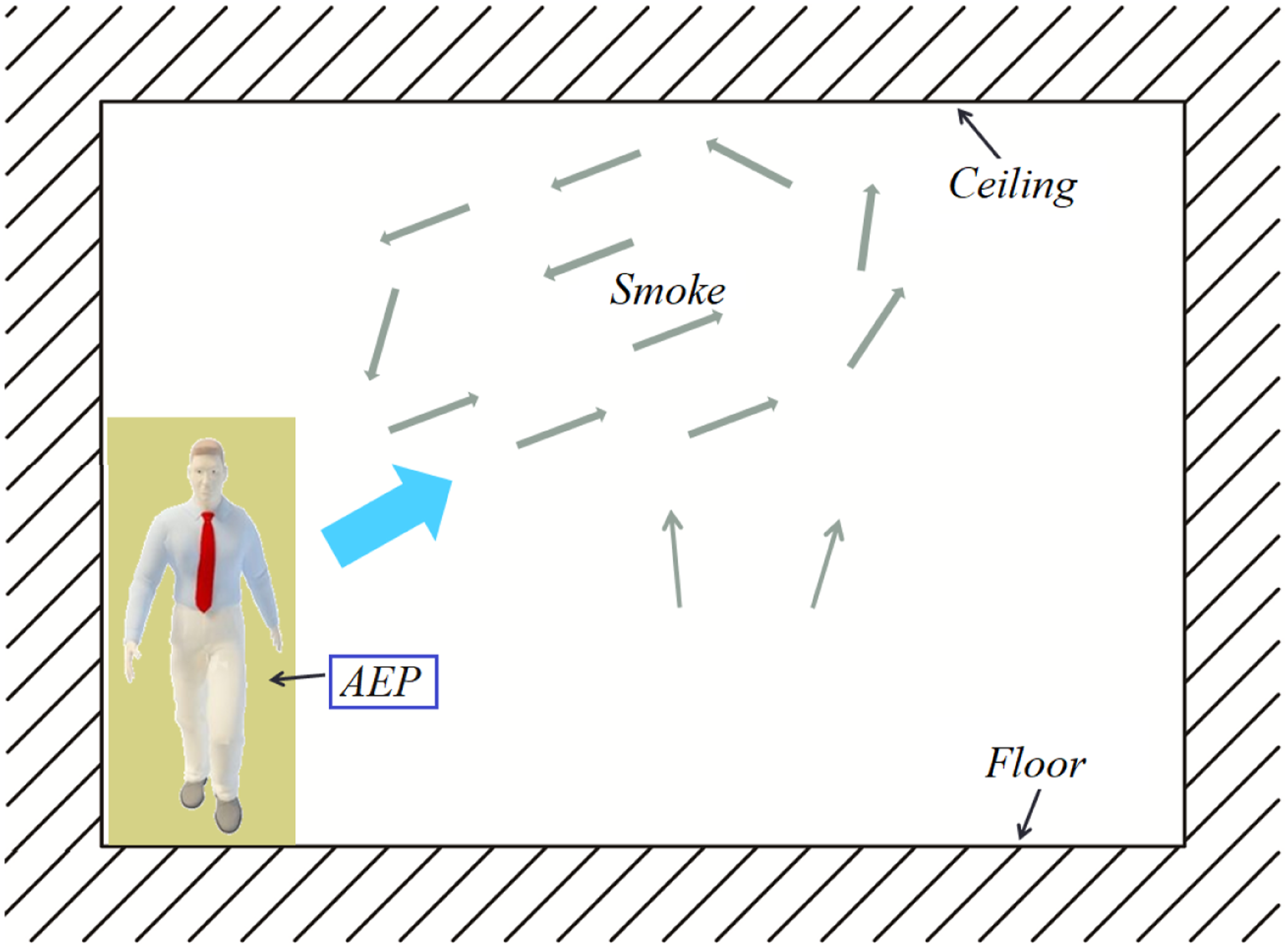
The key to solving this problem is determining how to design the makeup air distribution to ensure the air quality in the AEP. Can the behavioural characteristics of occupants be taken into account in the design stage of makeup air systems? The fresh air provided by a makeup air system can be directly supplied to occupants to reduce harmful effects of smoke and avoid casualties. However, effectively combining the makeup air system and evacuation behaviour management is still an unsolved problem. From the scope of action, ventilation can be divided into general ventilation and local ventilation. 124 Breathing zone ventilation is a type of local ventilation used to guarantee the air quality in the human breathing area. Breathing zone ventilation, which is also known as personalized ventilation or post ventilation, is a research hotspot in the field of air conditioning (industrial and civil ventilation under normal conditions). When ventilation directly blows into the human breathing zone, it can ensure the normal functioning of people under high-temperature (such as smelting) and high-toxicity (such as chemical industry) conditions.125–128 Referring to the principle of air supply in the breathing zone, an air distribution form suitable for mechanical makeup air systems in fire environments can be proposed to ensure the air quality of the AEP.
Although there are many studies on the application of breathing zone ventilation in the field of air conditioning, the results cannot be directly applied to the field of fire protection engineering. The main difference is that the physical properties and flow characteristics of fire smoke need to be considered when applying breathing zone ventilation to the field of fire protection engineering. Existing research, including authors’ previous research, has shown that to ensure air quality of the AEP, air supply must be provided in two directions.92,129,130 Further research on how to design makeup air systems to ensure the air quality of AEPs is needed. The influence of this makeup air supply mode on the smoke flow and exhaust efficiency also needs to be further discussed.
Conclusions
A makeup air system is an important part of a fire smoke control system. It directly affects the flow and spread characteristics of smoke and exhaust in buildings. A comprehensive review of factors that influence makeup air and the corresponding effects on smoke management during atrium fires is provided in this paper. In this paper, these influencing factors are divided into uncontrollable factors (wind, external temperatures, the place of fire development and the power of the fire) and controllable factors (the layout of the makeup air inlets and the mechanical makeup air velocity), and their effects on makeup air and smoke extraction are described.
Wind can cause beneficial or adverse effects on smoke management systems for mechanical and natural venting strategies primarily owing to the significant area of openings in a building envelope required to provide makeup air. The smoke control system of an atrium should be designed to minimize the influence of wind. When an atrium adopts a natural smoke control strategy, the external temperature could also significantly affect the development of fire smoke. Compared with natural smoke extraction systems, the performance of mechanical smoke extraction systems is more reliable because they are not strongly dependent on external environmental conditions. When a mechanical exhaust system is used, makeup air must be provided to ensure the normal operation of the system. The arrangement and velocity of makeup air inlets have a great influence on the smoke conditions in an atrium. To reduce the influence of makeup air on the atrium smoke conditions, suggestions regarding the location of makeup air inlets are given. When fires occur in different locations or with multiple fire sources, determining how to design a suitable makeup air system still requires much work. The influence of the makeup air velocity on small fires is greater than that on large fires. There are still controversies among researchers regarding limiting the makeup air velocity to 1 m/s in relevant codes and standards.
In this study, the viewpoint that the behavioural characteristics of occupants can be taken into account in the design stage of makeup air systems is put forward. Makeup airflow is used to create an AEP. Referring to the method of air supply in the breathing zone, the fresh air provided by a makeup air system can be directly supplied to occupants to reduce the harmful effects of smoke and avoid casualties. However, determining how to effectively design makeup air distribution systems to prevent smoke from diffusing into AEPs requires further study. The applicability of this type of air distribution to various complex fire conditions also needs further discussion.
Footnotes
Author contribution
All authors contributed equally in the preparation of this manuscript.
Declaration of conflicting interests
The authors declare that they have no known competing financial interests or personal relationships that could influence the work reported in this paper.
Funding
The author(s) disclosed receipt of the following financial support for the research, authorship, and/or publication of this article: This work was supported by the National Natural Science Foundation of China (No. 51908333) and the Plan of Introduction and Cultivation for Young Innovative Talents in Colleges and Universities of Shandong Province.
