







Abstract
In order to assess the radiological impact of radon on >250,000 students, the total annual effective dose was estimated inside 204 Moroccan primary schools sampled in the Doukkala-Abda region. The measurement of indoor radon concentrations was conducted using the LR115 detector for each month, each season and throughout the year. The evolution of indoor radon concentrations showed a decrease in annual average radon concentrations of 20–26% and 10–14%, respectively, compared to the monthly and seasonal annual average radon concentrations. For this purpose, a corrective model of short-term radon concentrations was developed to calculate the seasonal correction factors in order to estimate the annual indoor radon concentrations. For the qualitative evaluation of these factors, a percentage of deviation between the measured and estimated annual radon concentrations was calculated. Almost half of the estimated annual concentrations were 10% less than the measured concentration and the majority of these estimated values were within 40%. The estimated total annual effective doses received by students, except those in the Sidi Bennour city, were higher than the world average (1.15 mSv/y). Nevertheless, all these doses remained below the permissible limit recommended by the International Commission on Radiological Protection (3–10 mSv/y).
Keywords
Introduction
Radon is considered the main source of exposure to natural radiation for the population. It is a rare, odourless, colourless, chemically inert and radioactive gas resulting from the decay of radium.1,2 Its main natural isotopes are radon (222Rn, T1/2 = 3.8 days), thoron (220Rn, T1/2 = 55.6 s) and actinon (219Rn, T1/2 = 3.98 s), respectively, originated from three chains of radioactive decays (238U, 232Th and 235U). 222Rn is the most commonly measured due to its relatively long half-life. This radioactive gas disintegrates by alpha transition to generate solid progenies in the atmospheric air, which are also radioactive (polonium, bismuth and lead). However, these radon progenies can attach to the aerosol surfaces and deposit their alpha and beta radiation on lung surfaces when they are inhaled. The inhalation of this gas and its progenies constitutes for the population the first cause of irradiation between the natural sources of radiation. 3 Approximately 80% of radon come from the subsoil, 10% from substances used for construction and the rest from the outdoor air. 4 In 1987, the International Agency for Research on Cancer (IARC) 5 of the World Health Organization (WHO) admitted radon as a lung carcinogen for humans in particular and palpably for children.
In order to evaluate the radiological risk of radon indoors, where people spend an average of 80% of their time, 6 determining the average annual radon concentration deems necessary. Due to the time constraint imposed for epidemiological studies, the exposure durations of Solid State Nuclear Track detectors, which determine this concentration, generally range from 1 to 3 months.7–9 On basis of the seasonal variation of radon concentrations, which is at a maximum level in winter and a minimum in summer,10–12 the choice of short periods of radon measurements does not provide consistent data on health risks related to the human long-term indoor exposure. However, the measurement of these concentrations is not always possible for a 12-month period. This is due to the difficulty of reserving safe spots for dosimeters exposure throughout this period and also to the reduction of the detection efficiency by dust deposits on detectors. 13
To overcome these constraints, several researchers in different countries such as Ireland, United Kingdom, Pakistan, Canada, France and Poland have estimated the annual indoor radon concentration based on their short-term radon measurements.8,9,11–20 These researchers have developed models to determine seasonal correction factors that could be used later to assess the annual average radon concentration. However, although these correction factors remain comparable, other studies have shown the need to estimate seasonal correction factors by region due to several determinants likely to vary indoor radon concentrations.14,21 These determinants include soil geology characteristics,22–24 the nature of building construction materials, air exchange and climatic and atmospheric conditions.25–27
To this end, the present work focused on developing a corrective model of short-term radon concentrations based on numerical calculations. The model aimed to estimate, for the first time in Morocco, seasonal correction factors from geometric mean of monthly radon concentrations and estimated radon concentrations using the seasonal variation model proposed by Pinel et al. 12 For this purpose, passive alpha dosimeters, based on the use of LR115 type II, were developed and calibrated to measure the radon concentration of each month, each season and the whole year. This work was carried out inside 204 Moroccan primary schools in the Doukkala-Abda region during 2018 and 2019. The main objective of the study was to assess the radiological impact of radon on students in the age group of 6–13 years by determining annual effective doses from estimated annual radon concentrations. The interest in this region comes from the fact that it is among the most polluted regions of Morocco due to industrial activities of the extraction and transformation of phosphates as well as coal combustion which remain some of the significant sources of radon exhalation.
Materials and methods
Presentation of the studied area: Doukkala-Abda Region
The region studied is located in central Morocco on the Atlantic coast (Figure 1). Geographically, it is placed at the latitude of 32′ 17″ North and a longitude of 9′ 14″ West. The climate is semi-arid characterized by a humid and temperate winter from December to April and a hot, and dry summer from May to November. The average annual rainfall fluctuates around 370 mm and 402 mm. This region with its four major cities is positioned among major industrial centres of Morocco. The city of Youssoufia establishes an economic axis of the country which is driven by the main source from the extraction of phosphates from the deposits. The deposits in Youssoufia are ranked second after those of the city of Khouribga. Transformations of phosphates into phosphoric acid and phosphate fertilizers, as well as the production of electricity from the combustion of coal in thermal power plants in Morocco, are mainly concentrated in industrial zones located in cities of El Jadida and Safi while the economy of the city of Sidi Bennour revolves mainly around agriculture. In this region, almost all of these industries generate considerable quantities of gaseous, liquid or solid waste including phosphogypsum and coal ash, discharged without any prior treatment. These industrial discharges can contribute to increasing the natural radioactivity. Once natural radioactivity reaches a certain level, the implementation of special precautions is required.
28
Map of the Doukkala-Abda region showing the sampled schools.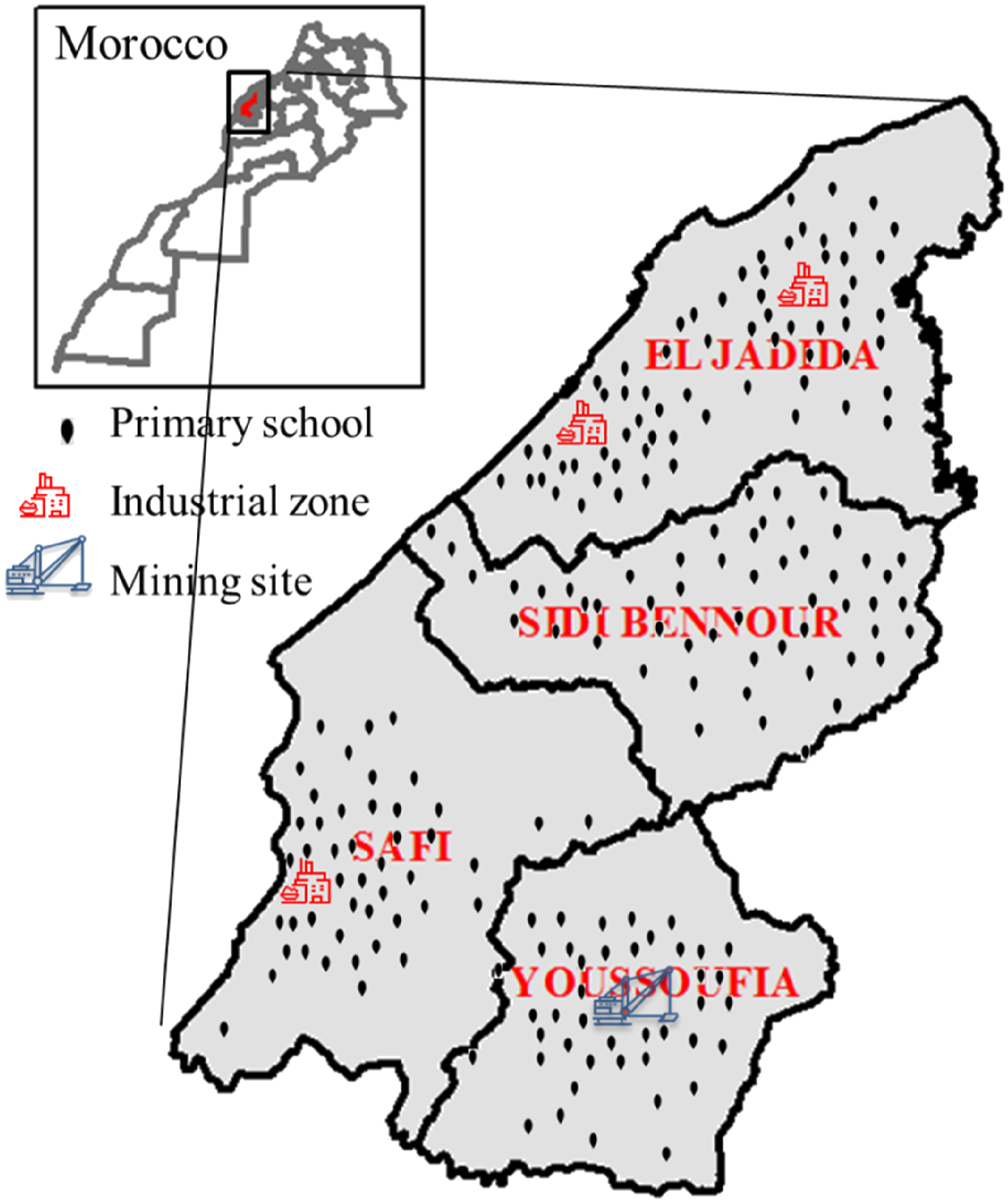
In this work, 204 primary schools were taken as samples among 1394 in the Doukkala-Abda region, hosting over than 250,000 students. 29 Schools located near industrial zones were the principal choice of the study. Most of these sampled primary schools are partially ventilated and built using cement, bricks and concrete.
Calculation of indoor radon concentrations
This paragraph is a description of the method and the experimental device used to measure the radon concentration in the indoor air of the sampled primary schools. The radon-measuring device was a solid state passive alpha dosimeter composed of an open plastic cup (uncovered) with a height of 8 cm and diameters at its two ends of 4.5 and 6 cm, where a piece of 1.5 × 1.5 cm2 of LR115 detector type II non-strippable, Kodak brand of 12 μm thick, was fixed to its internal base. The main role of the plastic cup was to protect the detector from touching and depositing dust and moisture. The detection principle is based on the interaction of alpha particles emitted by radon and its progeny with the detector, which results in the formation of latent traces (Figure 2). Schema of the alpha dosimeter.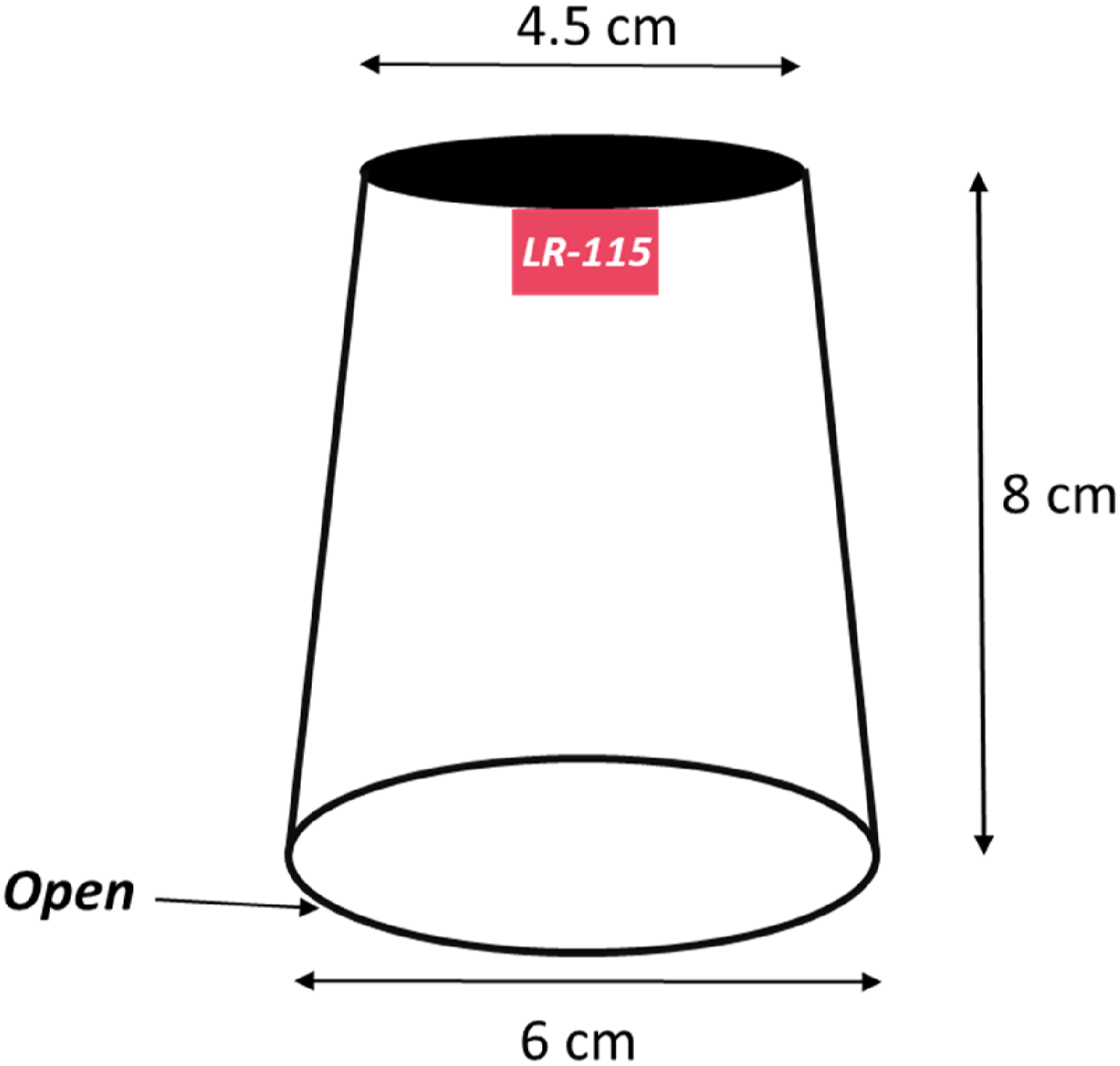

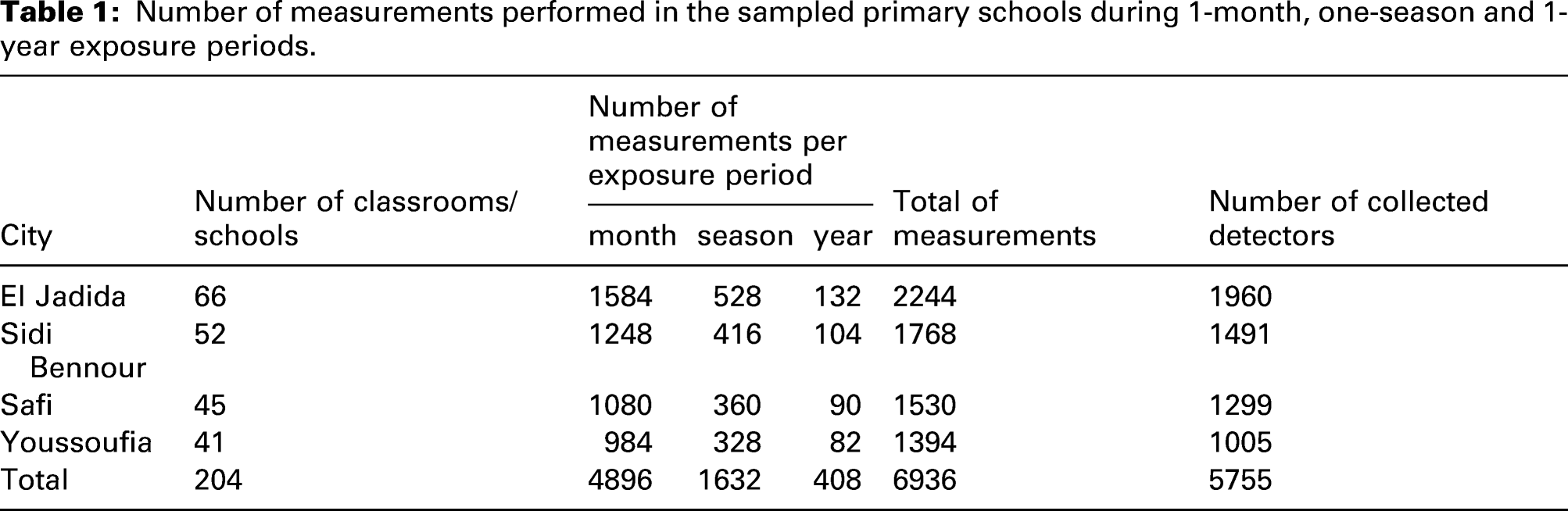
Number of measurements performed in the sampled primary schools during 1-month, one-season and 1-year exposure periods.
To calculate the calibration factor εLR specific to the alpha dosimeter used for radon measurements in the sampled primary schools, several detectors were exposed to a radon source in a cylindrical calibration chamber (25 cm diameter and 12 cm height) for a time frame of 2–7 days. Measurements of radon concentrations inside the calibration chamber were performed by the active digital monitor CANARY. 30 The track density in the LR115 detector irradiated and chemically treated under the same conditions as was described earlier were determined by an optical microscope. The fitting of experimental points of track densities in the LR115 as a function of radon concentrations, using equation (1), has allowed the determination of the calibration factor εLR which is of the order of (0.027 ± 0.005) (tracks/cm2.d)/(Bq/m3).
Corrective model for short-term radon concentrations
To estimate the effective annual dose received by the population in their premises from the annual radon concentration and having taking the difficulties into account in the measurement of these concentrations and their seasonal variations, a corrective model was developed for short-term radon concentration. This model was based on numerical calculations to determine for the first time in Morocco, seasonal correction factors from the geometric mean of the measured and estimated monthly radon concentration. It was built on the assumption that the seasonal variation in annual indoor radon concentrations is periodic and typically sinusoidal. This hypothesis was demonstrated by numerous studies, with slight differences.11,12
In this model, the annual average radon concentrations 

With: n j : the number of measurement rooms during month j,
To obtain more valid values of f
j
, 3-month measurements of radon concentration were intermittently carried out for 1 -month period in each room i. These discontinuous measurements were chosen to take into account the reduction in the detection efficiency of alpha particles emitted by radon and its progenies by deposits of dust and humidity on LR115 detectors. To guarantee the symmetry of the measurement duration related to the target month, the radon concentration was calculated from the monthly concentrations measured in the rooms according to the equation (4)

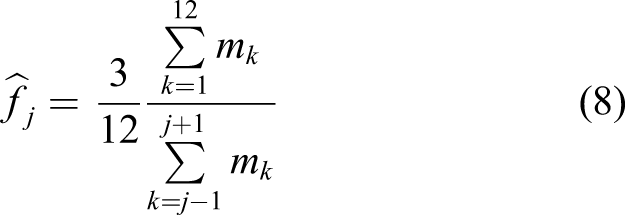
Two methods were used to determine seasonal correction factors. In the first method, which is direct, seasonal correction factors were calculated based on the ratio of the geometric means of the annual values of radon concentration to the three monthly values according to equation (6)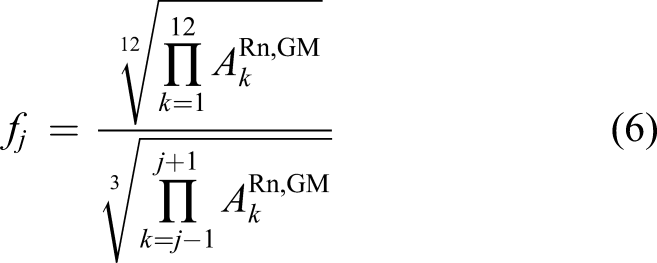
In the second method, the seasonal variation model in buildings can be represented by Fourier series as a linear combination of the sine and cosine functions of different amplitudes and frequencies using the same approach as Pinel et al.
12
Hence, the estimated geometric mean of the monthly radon concentration in month j could also be represented by equation (7)
Results and discussion
Monthly, seasonal and annual variations in radon concentrations
Based on 5755 measurements of radon concentrations inside 204 primary schools, the arithmetic mean of the monthly, seasonal and annual radon concentrations were calculated. Figure 3 shows monthly variations of radon concentrations in four cities of the Doukkala-Abda region. Average monthly radon concentrations recorded in primary schools in Youssoufia (a), Safi (b), El Jadida (c) and Sidi Bennour (d) cities.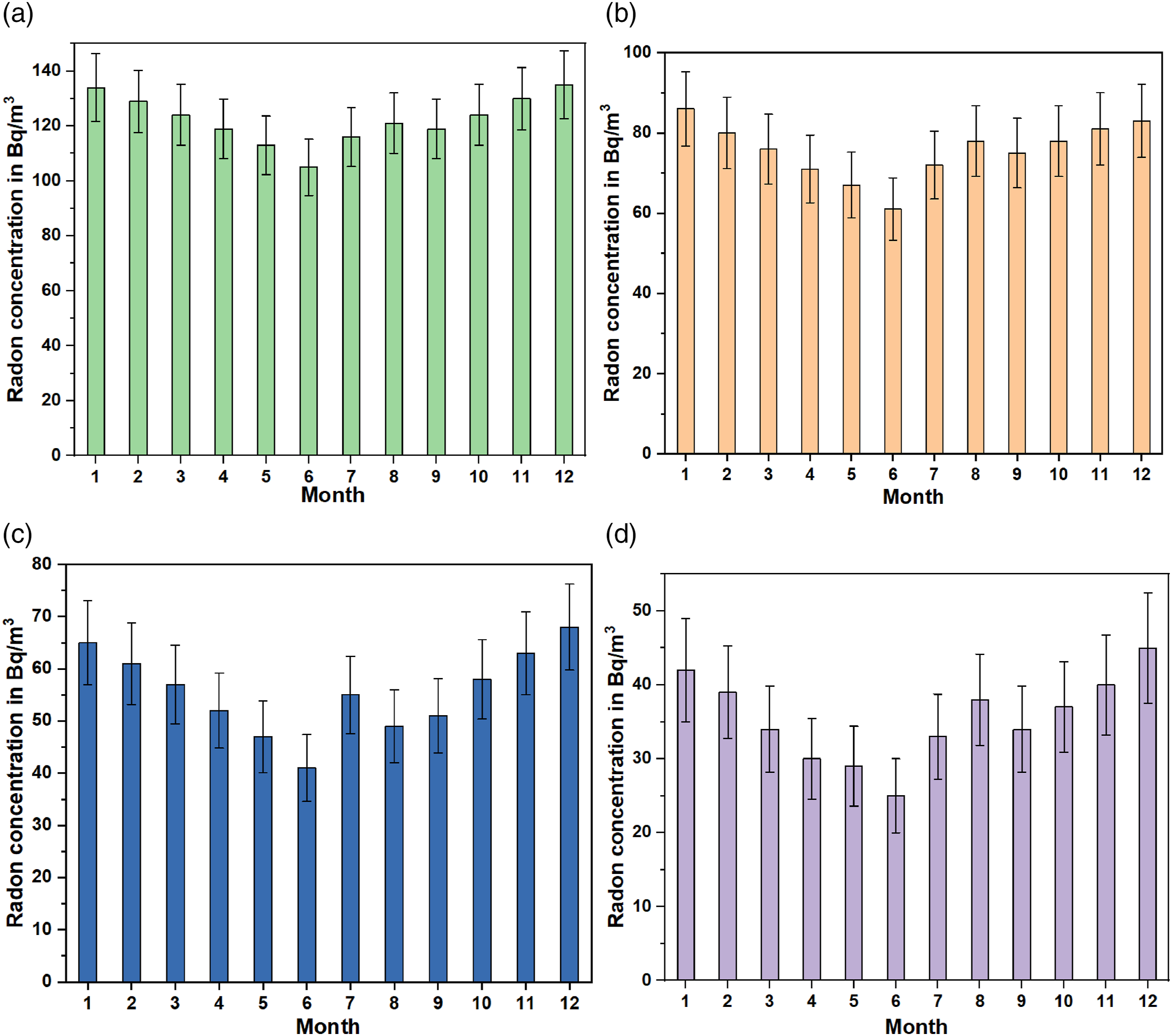
Similar variation patterns of the average monthly indoor radon concentrations were found in four cities of the region with higher and lower values obtained during December and June, respectively. Moreover, highest concentrations were recorded in schools of Youssoufia city, whereas lowest ones were recorded in those of Sidi Bennour city ranged from 105 to 135 Bq/m3 and 25 to 45 Bq/m3 with average values of the order of 122 Bq/m3 and 36 Bq/m3, respectively. With regard to average monthly radon concentrations detected in schools of Safi and El Jadida cities, obtained values were significantly convergent close to and varied from 61 to 86 Bq/m3 and 41–68 Bq/m3 with average values of 76 Bq/m3 and 56 Bq/m3, respectively.
Since materials used in the construction of primary schools in these four cities, as well as climatic and atmospheric conditions are almost identical, the difference noticed between average monthly indoor radon concentrations in these schools is mainly due to the geological nature of the subsoil and occupants’ habits. 14 This can be explained by the fact that most of the sampled schools in the city of Youssoufia are located on the most important phosphate plateaus in Morocco rich in radium (226Ra) which increases the rate of radon (222Rn) exhalation from the soil of these schools. In addition, a significant increase of the measured concentrations was found in schools located on the phosphate plateau and close to the phosphate mining sites in the city of Youssoufia. This may be due to radioactive aerosols generated by phosphates which increase the rate of radon exhalation in the atmospheric air. This has also been demonstrated in schools located near industrial areas of phosphate processing and coal combustion in cities of El Jadida and Safi which generate considerable quantities of waste containing technologically reinforced natural radioactivity (phosphogypsum, coal ash, etc.). On the other hand, the schools of Sidi Bennour city located in a fertile agricultural region, the contribution of industrial activities remained low.
Based on values of these concentrations, they remained below the permissible limit of 200 Bq/m3, 31 even if 80% of concentrations recorded in schools of Youssoufia city exceeded 100 Bq/m3.
In these schools and in order to avoid adverse effects on the health of students in the long term, corrective measures must be adopted by using techniques that reduce the emanation of radon in classrooms and facilitate its elimination through ventilation and aeration.
Figure 4 illustrates seasonal average radon concentrations measured continuously inside primary schools in four cities during the winter (December, January and February), spring (March, April and May), summer (June, July and August) and autumn (September, October and November) seasons. Seasonal average radon concentrations in primary schools in four cities of the Doukkala-Abda region.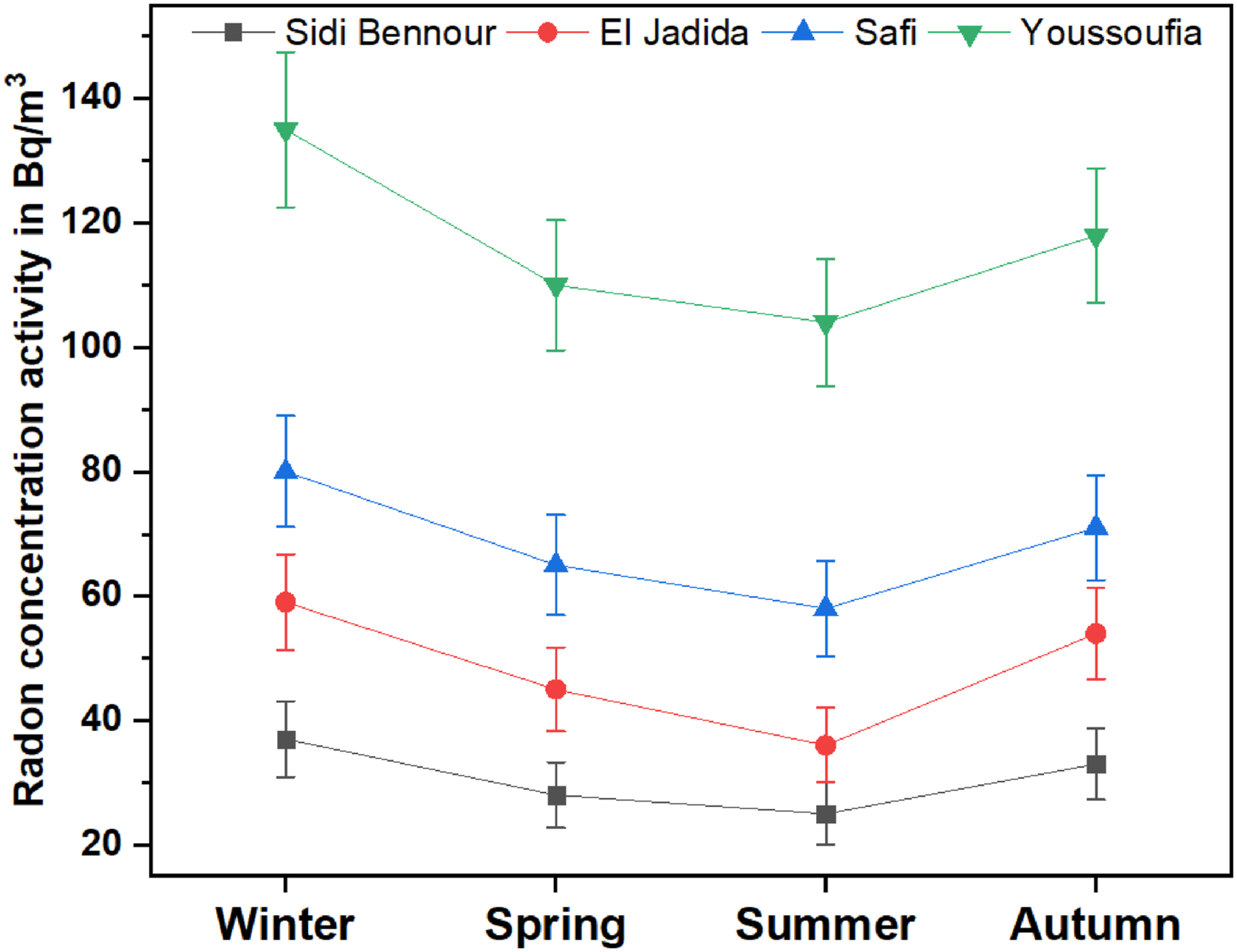
The indoor radon concentration exhibited seasonal variation, with the exception of 4% of sampled schools, with significantly higher values in the autumn and winter seasons than in the spring and summer, with maximum values recorded in the winter and minimum values in the summer. Average seasonal indoor radon concentrations in cities of Youssoufia, Safi, El Jadida and Sidi Bennour fluctuated, respectively, from 104 to 135 Bq/m3, 58 to 80 Bq/m3, 36 to 59 Bq/m3 and 25 to 37 Bq/m3. Average values of indoor radon concentrations in these cities were of the order of 117 Bq/m3, 69 Bq/m3, 49 Bq/m3 and 31 Bq/m3, respectively. This rate of fluctuation between winter and summer, varying from 30% to 64%, reflects the influence of meteorological parameters on seasonal concentrations through atmospheric leaching phenomena due to rainfall and dispersion phenomena caused mainly by variations in wind speed. 32
To assess the effect of measurement periods on annual average radon concentrations, these concentrations were measured over a year continuously and calculated from monthly and seasonal average radon concentrations measured over the year (Figure 5). Annual average radon concentrations in primary schools in four cities of the Doukkala-Abda region.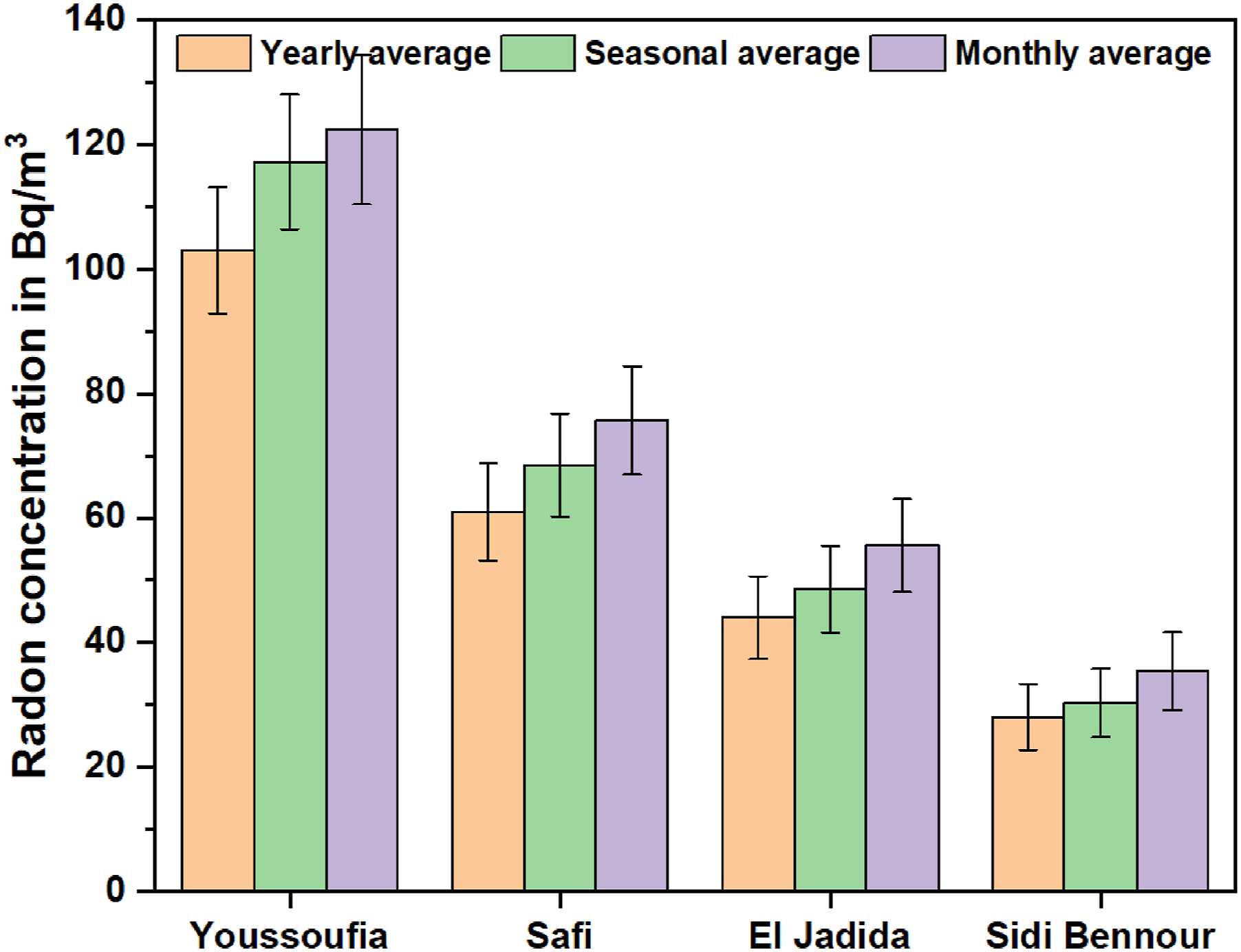
Concentrations measured continuously over the year in four cities of the Doukkala-Abda region were lower than those calculated intermittently, that is, month by month or season by season. The percentage of reduction in the yearly average radon concentrations measured continuously varied from 20% to 26% and from 10% to 14%, respectively, compared to the monthly and seasonal yearly averages radon concentrations. The decrease can be explained by the importance of dust deposits and humidity on detectors over the exposure time, which probably reduces the detection efficiency of alpha particles emitted by radon and its progeny.
Based on the above results and to obtain more reliable annual values using passive alpha dosimetry, measurements should be made over short periods, preferably at least 3 months, but on discontinuous basis over a 1-month and also considering the seasonal variation by determining seasonal correction factors.
Determination of seasonal correction factors
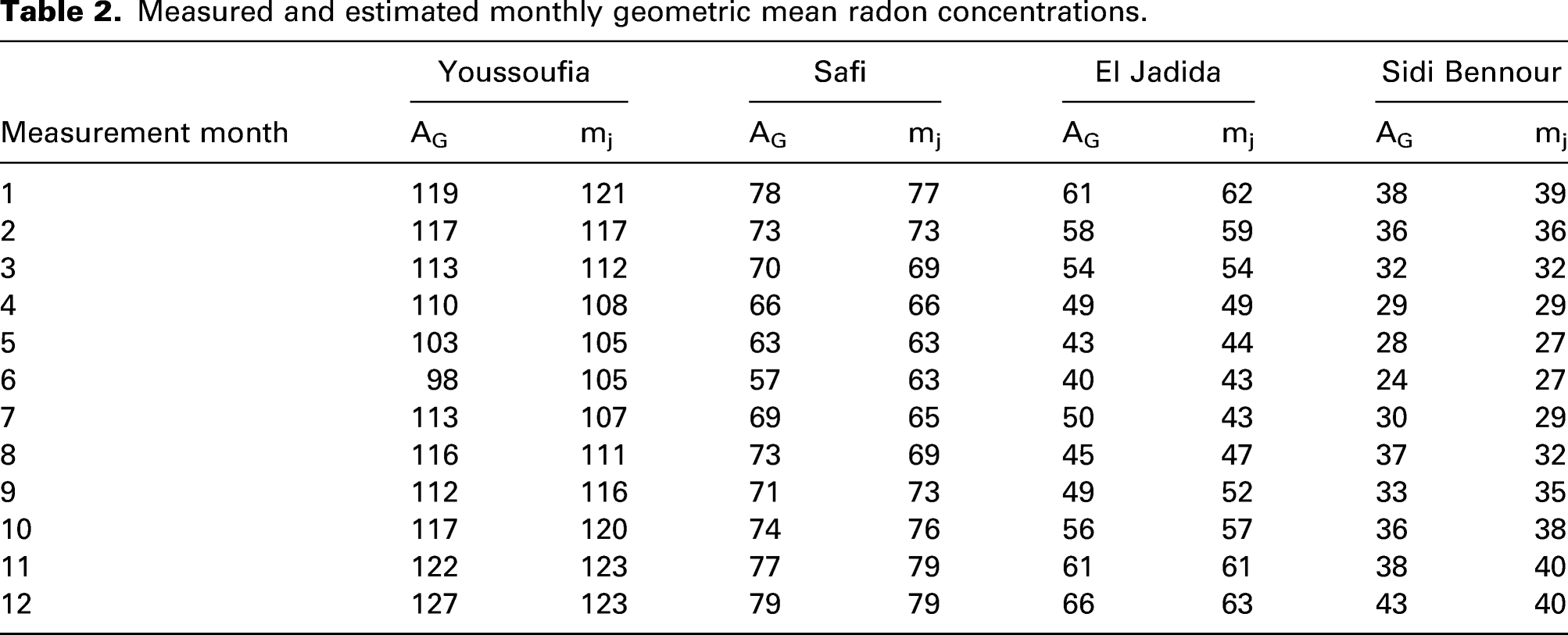
Measured and estimated monthly geometric mean radon concentrations.
Seasonal correction factors for radon measurements starting in any month in the four cities.
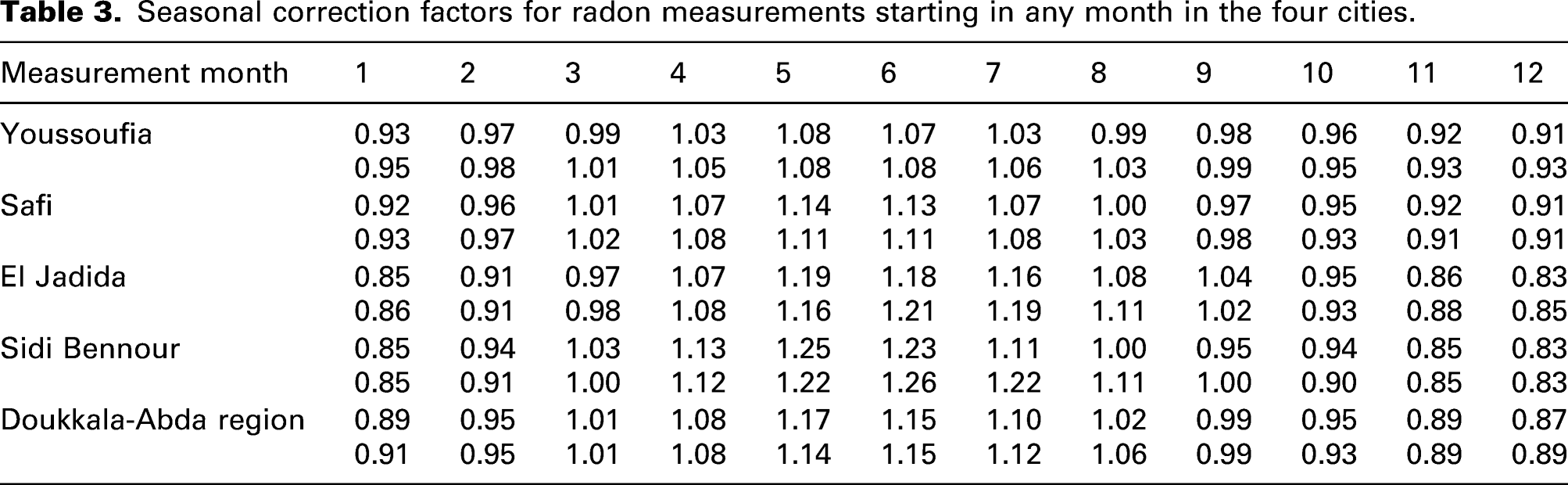
The results showed a monthly variation of seasonal correction factors determined by the direct method in four cities of the Doukkala-Abda region. Lowest values were recorded during December and the highest during May and/or June. The order of these values was as follows (0.91, 0.91, 0.83 and 0.83) and (1.08, 1.14, 1.19 and 1.25), respectively. These correction factors were greater than 1 in the spring and summer but lower than 1 in the autumn and winter. This can be reasonably explained by the variation of average monthly indoor radon concentrations, which were higher during the winter and autumn and lower during the spring, and summer as shown initially. In addition, a slight variation in seasonal correction factors was noted in four cities with a maximum value of 13%.
The variation decreased between El Jadida and Sidi Bennour (9%) on one hand, as well as Safi and Youssoufia (5%), on the other hand. The decline in the variation can be attributed to the fact that the sampled schools in both pairs of cities were located within a perimeter of approximately 70 km.
The results displayed no significant differences in seasonal correction factors determined by the direct and Pinel’s methods. However, slight differences were noticed especially in the summer season with a maximum value of 3% for Safi and El Jadida cities and 4% for Youssoufia and Sidi Bennour cities. According to these results, regional seasonal correction factors were determined by both methods using measured and estimated monthly radon concentrations recorded in four cities of the region (Table 3). Factors determined by the direct method varied from 0.87 to 1.17 and those by Pinel’s method from 0.89 to 1.15. Maximum values were recorded in May and June while minimum values were recorded in December.
For qualitative evaluation of regional seasonal correction factors determined by two methods, the percentage of deviation between measured and estimated annual radon concentrations was calculated for each school and each month from measurements performed at 204 schools in the region. Indeed, estimated annual radon concentrations for each school were obtained by multiplying each monthly radon concentration by the corresponding regional seasonal correction factor using equation (2). Measured annual radon concentrations for a given school were obtained by calculating the geometric mean of all monthly radon concentrations for the year. Figure 6 illustrates the percentage of deviation between the measured and estimated annual radon concentrations for each sampled school. Histograms of deviation between measured and estimated annual radon concentrations for each school using regional seasonal correction factors determined by the direct method (a) and Pinel’s method (b).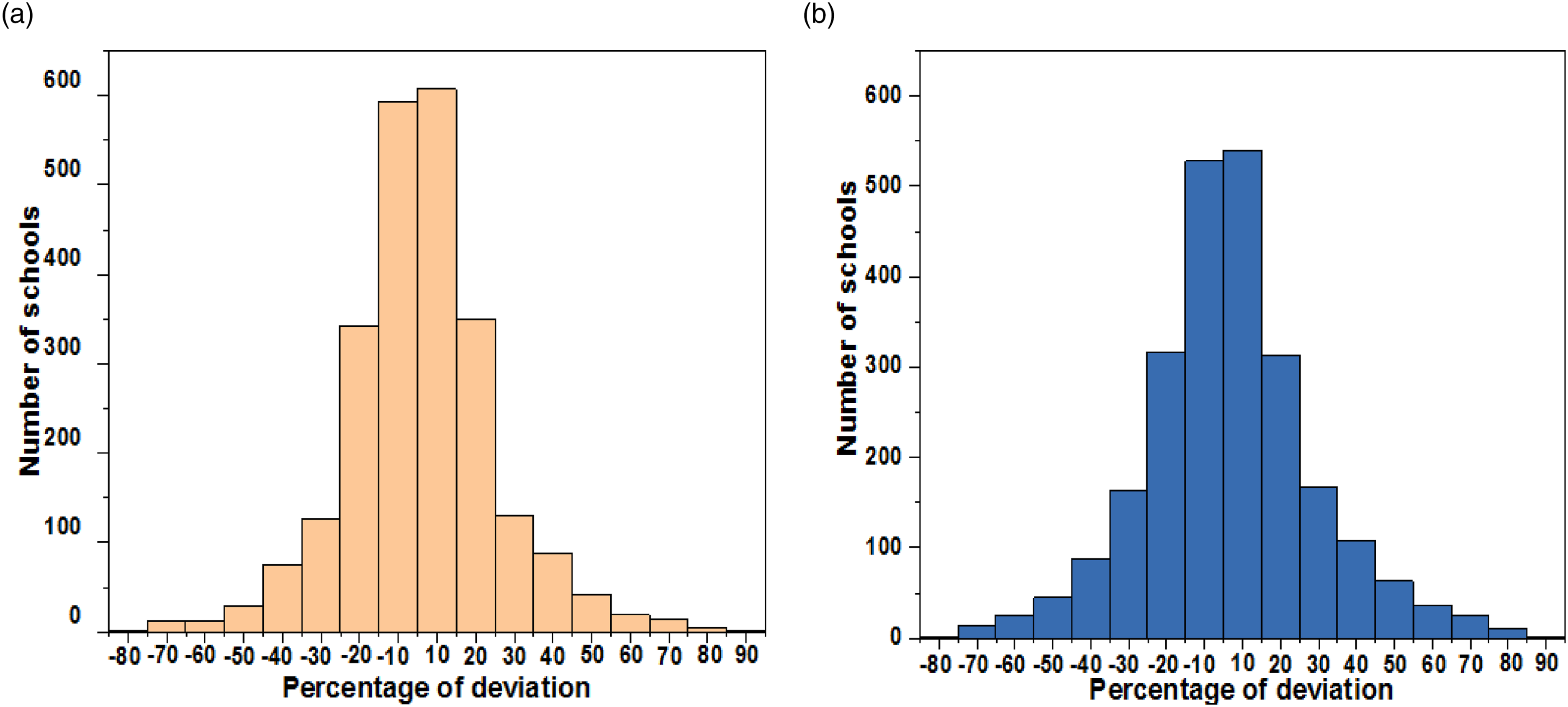
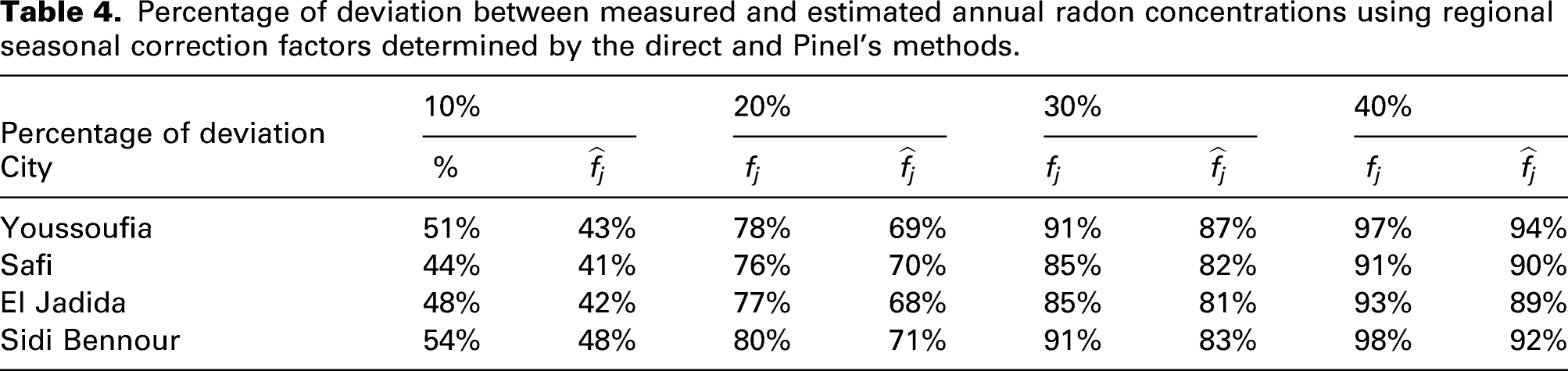
Percentage of deviation between measured and estimated annual radon concentrations using regional seasonal correction factors determined by the direct and Pinel’s methods.
Seasonal correction factors for the Doukkala-Abda region and some countries.

Based on the above results, the use of these seasonal correction factors can be extended to other regions of Morocco to estimate annual radon concentrations, taking into consideration of the strong association between annual radon concentrations measured and estimated from regional seasonal correction factors determined by the direct method.
Annual effective dose
In order to assess the radiological impact of radon and its progenies on students aged from 6 to 13 years who are studying in 204 schools of the Doukkala-Abda region, annual effective doses of these students were determined using estimated annual radon concentrations for each month of the year. This was based on the model of the United Nations Scientific Committee on the Effects of Atomic Radiation (UNSCEAR)
31
using equation (9)
The choice of the indoor occupancy factor of 0.8 was made in order to estimate the total annual effective dose received by students even if the time of their presence in classrooms did not exceed 12% (30 h/week × 34 weeks/year). Indeed, this choice was based on values of radon concentrations measured in houses in this region, recorded by Abdo et al., Choukri and Hakam,35,36 which belong to current measurement intervals in primary schools.
Figure 7 shows the average estimated annual effective doses received by students for each month of the year in four cities of the region. A slight variation in estimated doses for each month in cities of Youssoufia, Safi, El Jadida and Sidi Bennour was noted. The variation ranged from 2.91 to 3.31 mSv/year, 1.77 to2.00 mSv/year, 1.19 to 1.52 mSv/year and 0.72 to 0.99 mSv/year, respectively, with average values of the order of 3.07 mSv/year, 1.90 mSv/year, 1.39 mSv/year and 0.88 mSv/year. In cities of Youssoufia, Safi, El Jadida and Sidi Bennour, the contribution in effective dose in schools is about 15% of the total annual effective dose with a variation ranged, respectively, from 0.44 to 0.50 mSv/year, 0.27 to 0.30 mSv/year, 0.18 to 0.23 mSv/year and 0.11–0.15 mSv/year and respective mean values of about 0.46 mSv/year, 0.28 mSv/year, 0.21 mSv/year and 0.13 mSv/year. Average annual effective doses due to radon and its progeny in Youssoufia (a), Safi (b), El Jadida (c), and Sidi Bennour (d) cities.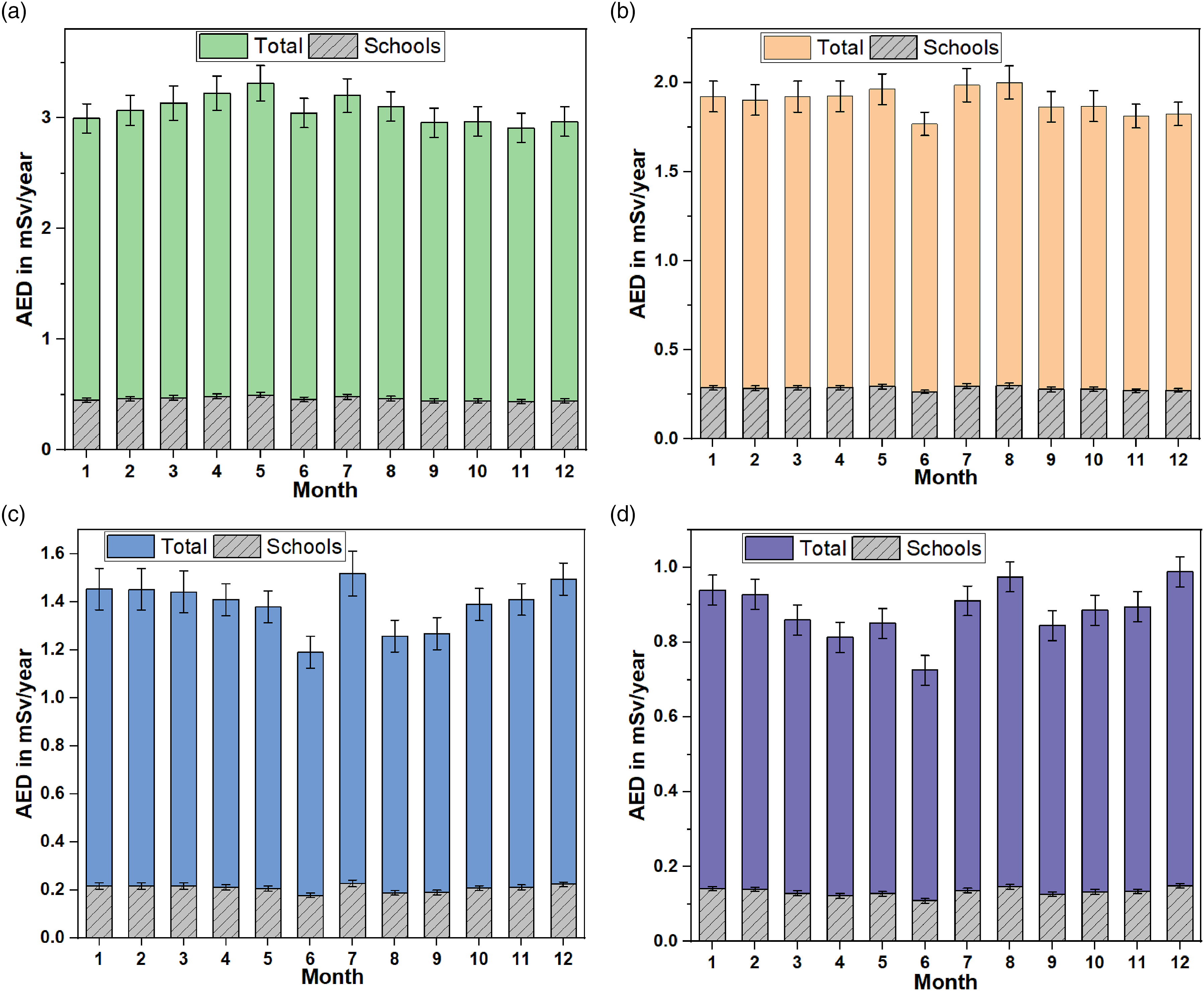
These values showed, except the Sidi Bennour city, that the total dose received by students in schools of Youssoufia, Safi and El Jadida cities was higher than the world average which is about 1.15 mSv/year 31 but all remained below the admissible limit recommended by International Commission on Radiological Protection which ranges from 3 to 10 mSv/year. 37
Conclusion
Indoor radon concentrations measured in less than 1 year are subject to seasonal variations. Such radon measurements must be corrected with an appropriate seasonal correction factor. In this study, measurements of radon concentrations were performed using the LR115 alpha track detector over each month and season of the year and throughout the entire year. The results showed that the indoor radon concentrations were higher in winter and lower in summer. Moreover, yearly average values recorded from monthly and seasonal measurements were higher than those obtained from annual measurements. Therefore, to estimate annual indoor radon concentrations, a corrective model for short-term indoor radon concentrations based on numerical calculations was developed to derive seasonal correction factors by two different methods, one direct and the other based on Pinel’s model. Almost half of the estimated annual concentrations were 10% less than the measured concentration and the majority of these estimated values were within 40%. On another note, the direct method provided a better estimation of the annual radon concentration than Pinel’s method. Consequently, the use of seasonal correction factors determined by the direct method can be extended to other regions of Morocco. In sampled primary schools, obtained concentrations were useful for a more accurate evaluation of annual effective doses received by students whose ages oscillate from 6 to 13 years. Average values of total annual effective doses estimated in various schools were below permissible limits recommended by the International Commission on Radiological Protection (3–10 mSv/y). However, all these doses were higher than the world average, which is around 1.15 mSv/year, except those recorded in the Sidi Bennour city.
Footnotes
Acknowledgements
The authors would like to thank the Ministry of National Education, Vocational Training, Higher Education, and Scientific Research of the Kingdom of Morocco. Special thanks are addressed to Mhammed Zaimi for his rapid help and to Abdelmottalib Hakkar as well as to Rim Jouraiphy for proofreading the manuscript.
Authors contribution
All authors contributed equally in the preparation of this manuscript.
Declaration of conflicting interests
The author(s) declared no potential conflicts of interest with respect to the research, authorship, and/or publication of this article.
Funding
The author(s) received no financial support for the research, authorship, and/or publication of this article.
