







Abstract
Urban Public Spaces (UPS) are important arenas for human interaction and social activities, and ensuring their quality and functionality is crucial for a successful urban design with public health benefits. However, mostly for insufficient public participation, user experiences of UPS are usually not what the designers were expecting. Therefore, the urgent need to investigate the difference in UPS perception between design professionals and ‘laypersons’, that is, non-professional users, has been increasingly highlighted. In this paper, we utilize Immersive Virtual Environment (IVE) and physiological measurement tools to obtain empirical observations on the psychological and physiological responses, as well as environmental preferences on UPS of the two groups, compare their perceptual similarities and differences, and consequently analyze the influencing factors and potential mechanisms. We find that the environmental perception of the two groups do differ, with design professionals showing a higher degree of ‘intolerance’ in the quality rating of UPS, and being more sensitive to scene features related to necessary than spontaneous and social activities. The findings reveal structural differences for the two groups in the mechanisms by which environmental features trigger perceptual differences, thus providing new support for designers to prepare ready-made UPS design templates that are evidence-based.
Keywords
Introduction
In the face of many environmental problems brought about by rapid urbanization, 1 the quality of the built environment shows increasingly strong effects on the health and well-being of residents. The potential to improve people’s quality of life through the provision of high-quality built environments has become one of the most prominent concerns of designers. 2 Urban Public Space (UPS), as an arena for various activities in cities, carries an essential function of promoting social inclusion and interaction. It also contributes to citizens’ cultural, ecological and health benefits.3–5 Therefore, the creation of UPS plays a crucial role in the sustainability of cities, the quality of urban life and livability, and has become one of the central issues in sociological, geographic, architectural and urban design research.5–8
Urban residents are the users of UPS, and meeting their needs is where the value of a successful UPS design lies.9,10 However, traditional UPS design was usually determined by the designer’s perspective, which tends to follow a self-referential, structuralist paradigm, while ignoring the desires of ordinary users, resulting in a design practice that deviates from real needs.10,11 The failure of designers to anticipate users’ expectations has prompted researchers to consider whether there is a fundamental difference in the perception of the built environment between design professionals and ‘laypersons’, that is, non-professional users. 12
Previous studies had shown that design professionals and non-professional users do have some differences in experiencing and evaluating the urban landscape and architectural appearance,12–18 resulting in a noticeable mismatch in environmental perception and preferences between the two groups. 19 Extensive research has further discussed the issue that most architects are having a hard time predicting how non-professional users would react towards built environment accurately.12–18 Nevertheless, the problem of inter-professional perceptual difference remains, especially in terms of urban landscapes, which to our knowledge, has not been thoroughly addressed in the existing literature. In particular, few studies have focused on inter-group perceptual differences in UPS regarding their forms, general patterns and causes, mostly due to limitations in research tools for directly observing human’s perceptual responses to the environment, leaving prominent knowledge gaps.
Recent developments in new research tools such as virtual reality (VR) and portable physiological sensors have provided new opportunities for research in this field, which opens up more possibilities for empirical investigations and theoretical development.20–22 In this paper, we designed an Immersive Virtual Environment (IVE)-based experiment, integrating with physiological monitoring and conventional psychological scales. We try to answer the following scientific questions: (1) Do design professionals and non-professional users perceive UPS differently? (2) What are the specific perceptual differences between design professionals and non-professional users regarding the design of UPS? (3) How do UPS scenes with different physical features affect the perceptual differences between the two groups? To investigate the questions, we first present a critical review of the literature related to the differences in built-environment perceptions between the two groups, thus sorting out the specific research progress and knowledge gaps, and build the analytical framework of this paper accordingly.
Given the extant research related to the perception of UPS and perceptual differences in urban landscapes among users with different academic backgrounds, we propose to test the following hypotheses: H1. Perceptual differences regarding the design of UPS exist among different users, especially in this case, between design professionals and non-professional users. H2. The mechanisms of how environmental features contribute to the perception between the two groups differ, in which differences exist in their environmental preferences, physiological and also psychological responses. H3. Non-professional users might hold more positive attitudes when perceiving the same UPS than design professionals.
Literature review and analytical framework
Empirical Studies and Explanations on the Design Professionals’ Failure to Meet the Needs of Non-Professional Users in UPS Design
Overall, researchers had found that the design of many UPS does not meet user needs,10,11 and they had been investigating the specific forms of these phenomena and their causes.
First, traditional urban design practice is usually guided by policies and guidelines mostly based on designers’ expertise and experience rather than an evidence-based approach. 23 Thus, this top-down approach suffers from insufficient public participation, resulting in design schemes that do not meet actual usage expectations. 24 Meanwhile, a large number of methods used to evaluate UPS are also based on expert perspectives, 4 and the results often do not reflect broader public interaction and perception. 25 The biases and limitations here make them insufficient as a reliable measure of the urban quality of life. 26 Otherwise, they would ultimately lead to false and one-sided assumptions, predictions and practices. Therefore, in this study, we opt to analyze both subjective (stated) and objective (revealed) perceptual outcomes in an integrated manner, with a special focus on the quality of UPS from the perspective of non-professional users, thus, to compensate for the bias and limitations of the top-down approach.
Secondly, regarding the difference in the perception and evaluation criteria of the built environment between the two groups, empirical studies have been conducted on different aspects of this phenomenon, which have revealed the prevalence of perceptual differences. For example, in terms of understanding urban cultural ecosystem services, design professionals have a more ‘practical’ and ‘management-centred’ view of nature. In contrast, non-professional users have a focus on more ‘enjoyment of nature’. 13 In researching perceptions of green stormwater infrastructure, design professionals prefer the newer forms of stormwater solutions. 14 In terms of air quality evaluation and residential environment quality evaluation, design professionals cannot accurately predict the satisfaction and use frequency of residents. 27 In terms of preference and assessment of urban green space, such as derelict urban land or informal green space, studies have revealed that design professionals prefer ‘natural’ green spaces, while residents prefer ‘artificial’ green spaces. 15 Meanwhile, the professionals typically better recognize the value of spontaneous vegetation compared to non-professionals, 28 although a subtlety different report exists in which local non-professional users were found to express preferences for both ‘wilder’ and more formal urban natural spaces towards managed natural spaces. 29 Evidence of assessment differences towards landscape designing between local non-professional users and experts were also found in research which indicates that the former have a more positive perception towards certain land-use associations compared to the latter. 30 Moreover, regarding architectural design, the difference of opinion between architects and users has also been confirmed by a growing body of empirical research: while there are some similarities between the two groups in terms of the aesthetic evaluation of architectural appearance, 16 there are significant differences in the evaluation in dimensions such as ‘meaningfulness’ and ‘originality’. 17 Other studies have shown that architects are more concerned with the comforts of the buildings, 31 while they cannot accurately foresee the preference of non-professional users.12,32 In addition, design professionals are found more critical in their evaluation of architectural appearance. 18 These perceptual differences between groups with and without design-professional backgrounds have been suggested as potential causes of why user satisfaction and real-world use do not meet designers’ expectations, 19 which in turn means that understanding the nature of such differences would help urban designers and decision-makers to improve UPS design.
The perceptual dimension of UPS and its quality evaluation
Generally, the quality of UPS can be assessed based on the objectivist paradigm, which focuses on the quality of intrinsic landscape attributes or the subjectivist paradigm, and includes the psychophysical, cognitive and experiential evaluation of users. 33 On the one hand, intrinsic landscape features include measurable landscape qualities such as scale, colour, texture, vegetation, etc., 25 and many researchers have proposed quantitative systems for measuring UPS feature attributes after Lynch’s seminal work 34 which designated the five urban image metrics, including path, edge, node, district and landmarks. For a few examples, Ode and others 35 outlined the landscape characteristics from the perspective of visual perception using nine indicators: complexity, coherence, disturbance, stewardship, imageability, visual scale, naturalness, historicity and ephemera, and argued that they explain human’s experience of the landscape and visual preference. Ewing and Handy 36 focused on the street environment in the UPS and summarized the physical characteristics of the built environment as imageability, enclosure, human scale, transparency and complexity, which are measured through physical attribute auditing and expert rating. The measurement systems above provide an authoritative basis for the objective assessment of UPS and are of great reference value for environmental perception studies.
On the other hand, from the subjectivist paradigm, the complex and subtle relationship between physical features of the built environment and users’ subjective aesthetical perception and emotional responses can be assessed through environmental perception and affective appraisal. 21 Previous research has taken the topics such as visual characteristics of public artworks, 37 spatial enclosure, 38 vegetation and infrastructure, 39 vegetation-created enclosure, 40 among others, and explore aspects of subjective perception, including user preference, behaviour and restorative potential of the physical environment.21,41,42 Based on these specialized studies focussing on specific dimensions of UPS attributes, comprehensive subjective evaluation systems for UPS are also established, typically in the form of scale. For example, Mehta 43 established the Public Space Index (PSI), a five-dimensional UPS perception evaluation scale considering the inclusiveness, meaningfulness, safety, comfort and pleasurability of UPS. Currie 44 established the design principles of small urban parks considering their accessibility, specificity, authenticity, functionality and adaptability. Zamanifard proposed the Public Space Experiential Quality Index (PSEQI), which considers four dimensions of UPS: comfort, diversity and vitality, inclusiveness, image and likability, which are further divided into 15 variables and 83 specific measurements. 4 The scale and index above are highly generic in-built environment research to capture the potential influencing mechanisms between the physical features of the environment and public perceptions. They are also important references for the design of the analytical framework of this paper.
Environmental perception research supported by virtual reality and physiological monitoring technologies
Since the introduction of consumer-grade, high-resolution Head-Mounted Displays (HMDs) in 2012, the IVE technology has been widely used in environmental psychology research in fields such as environmental restorativeness,25,45 safety perception, 46 biophilic design, 47 environmental preferences and psychological responses to UPS,21,22,48,49 form perception,46,50 spatial navigation, 51 etc. The IVE is capable of creating an immersive environment.52,53 Thus, it not only compensates for the difficulty of precisely controlling the environmental variables and eliminating external distractions in field experiments,2,54 but also ensures ecological validity in presenting subjects with scenes more vivid and complex,46,55 stimulates a stronger sense of presence,48,49,56 and in turn, effectively evokes physiological responses in subjects.42,57
Meanwhile, for outcome measurement of environmental perception, the emerging physiological monitoring technologies can compensate for the ambiguity and low accuracy of results in traditional subjective evaluations caused by exogenous factors, 58 and have thus been increasingly used in environmental perception studies in recent years. 59 Specifically, some studies have used electrodermal activity (EDA) and electrocardiogram (ECG) metrics, which characterize the activities of the automatic nervous system (ANS) and thus capture psychological responses.20,42,47,59 Some studies use electroencephalography (EEG), which characterizes central nervous system (CNS) activities in relevant environmental experiments. These new tools, combined with self-report psychological scale tables, allow comprehensive observation of the subject’s response to environmental exposures.58,60,61 Latest research utilizing these new tools has explored topics including the effects of landscape images on adults’ psychophysiological restorative, 59 spatial perception and navigation performance in environments of different characteristics, 62 the effects of buildings’ spatial interiors on occupants’ satisfaction and work efficiency, 58 and the effects of campus street trees in autumn on stress recovery. 63
In summary, the emerging measurement technologies provide researchers with a highly controllable experimental environment and a wealth of perceptual data acquisition options, enabling them to complete spatial evaluations and perceptual experiments in a more convenient, efficient, user-friendly manner. 58
Methodology
Scene selection
The experimental scenes were selected from the Old Bund in Ningbo, China. The site is an important local historic conservation area, containing several typical UPSs of different sizes and functions. At the same time, the site is rich in commercial activities, with a variety of urban functions such as recreation, entertainment, transportation and commerce, and is thus an important living and social area for the residents.
Based on the function of the site and the morphological characteristics of the built environment, we selected five representative scenes with distinctive appearances as environmental stimulus samples, namely A: the Cathedral Square; B: Square of Imperial Bank (an open waterfront square); C: Square in front of the Yu Residence (a historic building); D: Intersection of Bar Streets and E: Waterfront Art Promenade (Figure 1). Experimental scene.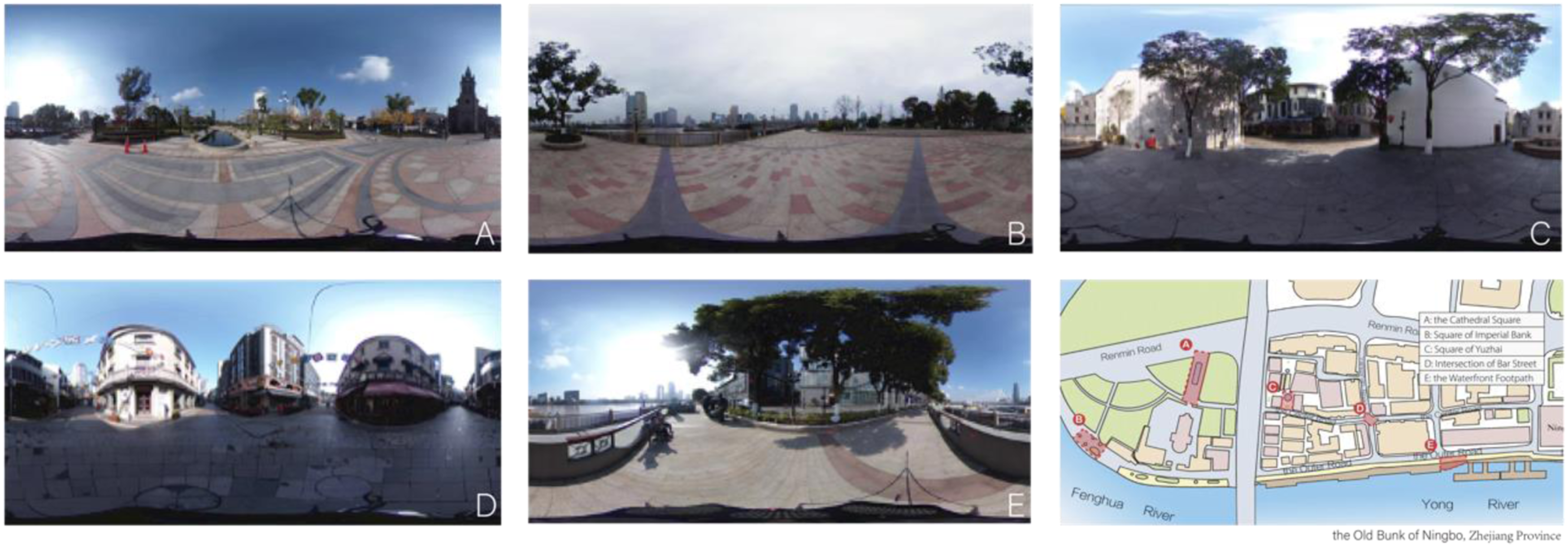
We used a RICHO THETA V (Ricoh Company Ltd., Tokyo, Japan) dual fisheye panoramic camera to obtain panoramic video and audio in each scene. The video and audio were taken in clear weather during the same period on the morning of November 2020. 20 min of video and audio clips were captured from each of the five scenes, and 10 min of video and audio clips were retained after editing to remove clips that might have potential unintended effects on the subjects. In addition, we used a 5-min audio/video clip of the indoor laboratory environment as the exposure for the baseline. The immersive video and audio were displayed on an HTC VIVE VR headset (HTC Corporation, Taiwan, China) via Stream Media Player.
Indicators and questionnaire design
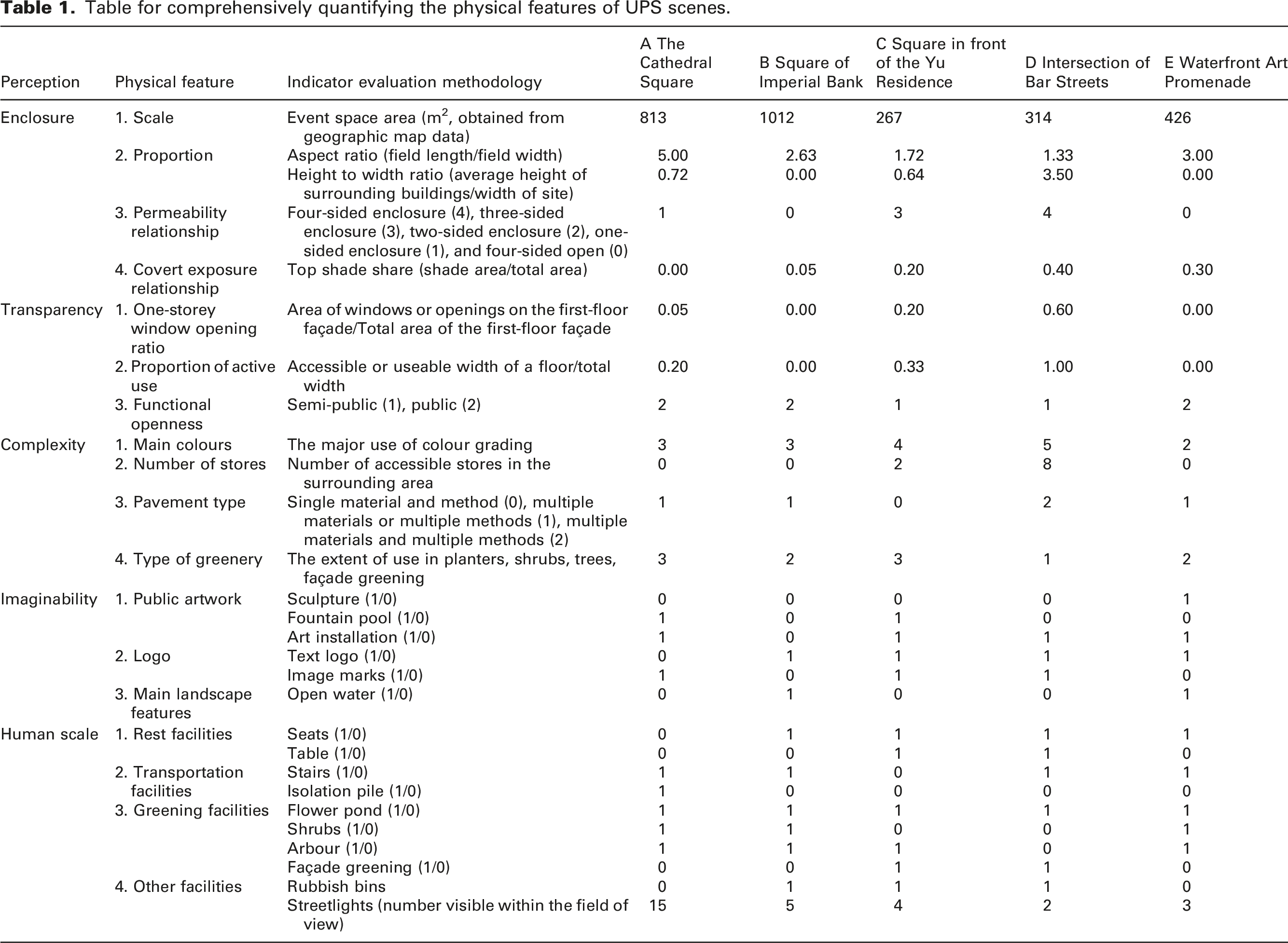
Indicator system for the physical environment features of the UPS scenes
Table for comprehensively quantifying the physical features of UPS scenes.
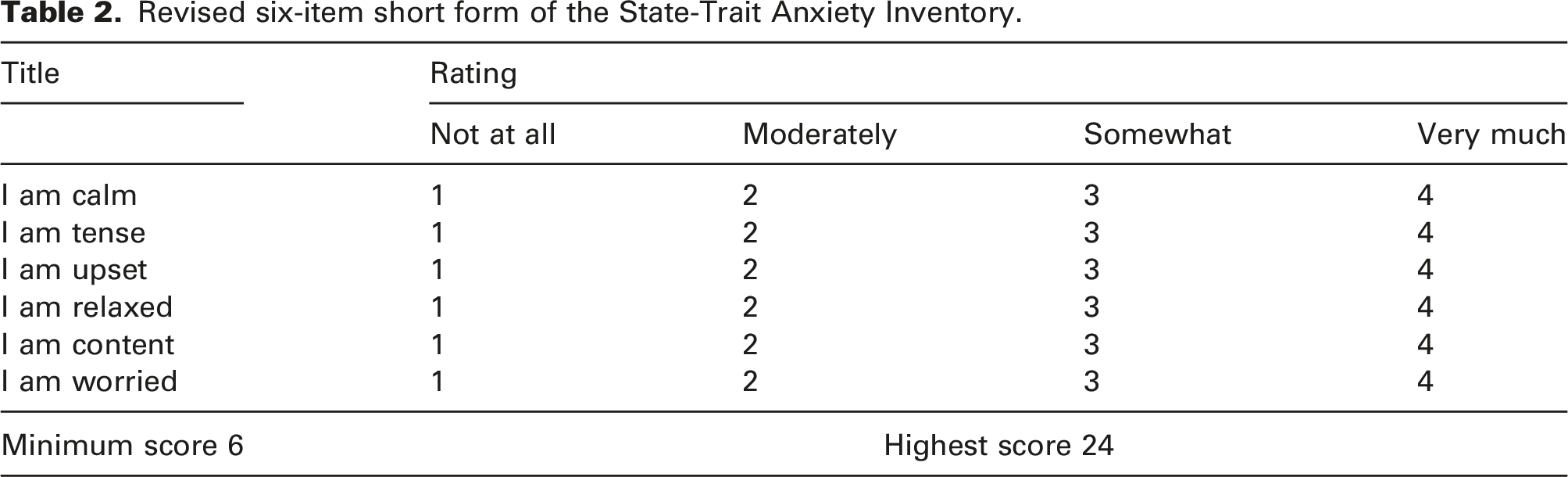
Stated Psychological Responses
Revised six-item short form of the State-Trait Anxiety Inventory.
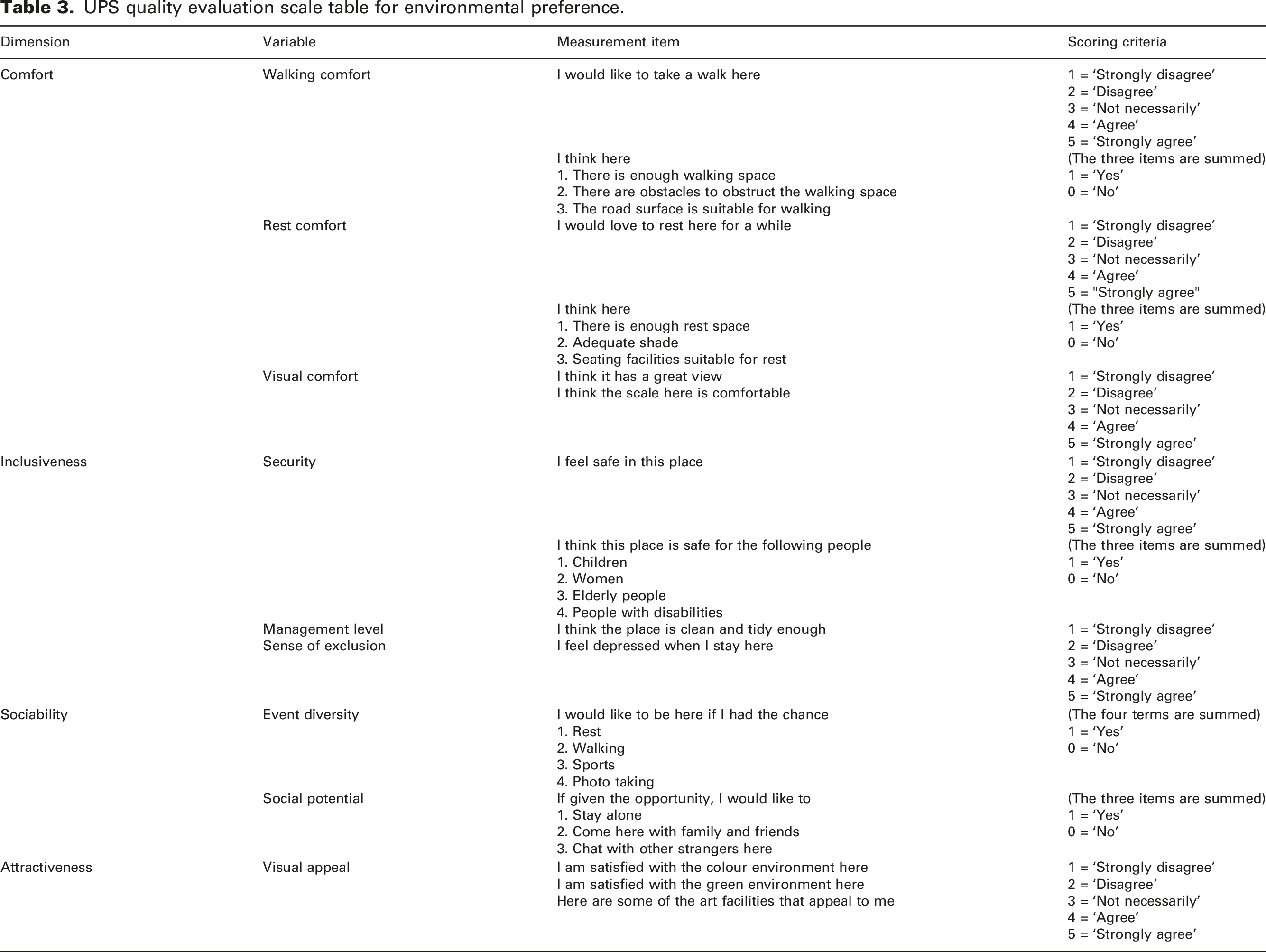
Stated environmental preferences
UPS quality evaluation scale table for environmental preference.
Revealed physiological responses
The subjects’ physiological responses to UPS were obtained using the Emotiv EPOC+ device (EMOTIV Inc., San Francisco, CA, USA), which records the EEG data in real-time. The device has 14 electrode receptors and can calculate six measures of physiological states based on raw EEG data using specific algorithms. These states are Engagement, Excitement, Stress, Relaxation, Interest and Focus, measuring the degree of immersion in the present moment, the degree of having a positive arousal awareness or sensation, the comfort level of facing a current challenge, the ability to stop and recover from a highly focused state, the degree of attraction or aversion to a present stimulus, environment or activity and the degree of attentional focus on a specific task, respectively. 70
The physiological indicators were exported at a frequency of 2HZ, and each set of data consisted of raw values (RAW), which were compared to baseline data to calculate standardized values (SCALE). In this study, the mean of the SCALE values within each exposure interval was used to measure the corresponding physiological response status of the subjects. The standardized rate of change between experiment scenes and baseline phase was used as physiological responses outcome measurement.
Participants
Descriptive statistics of subjects’ socio-demographic attributes.
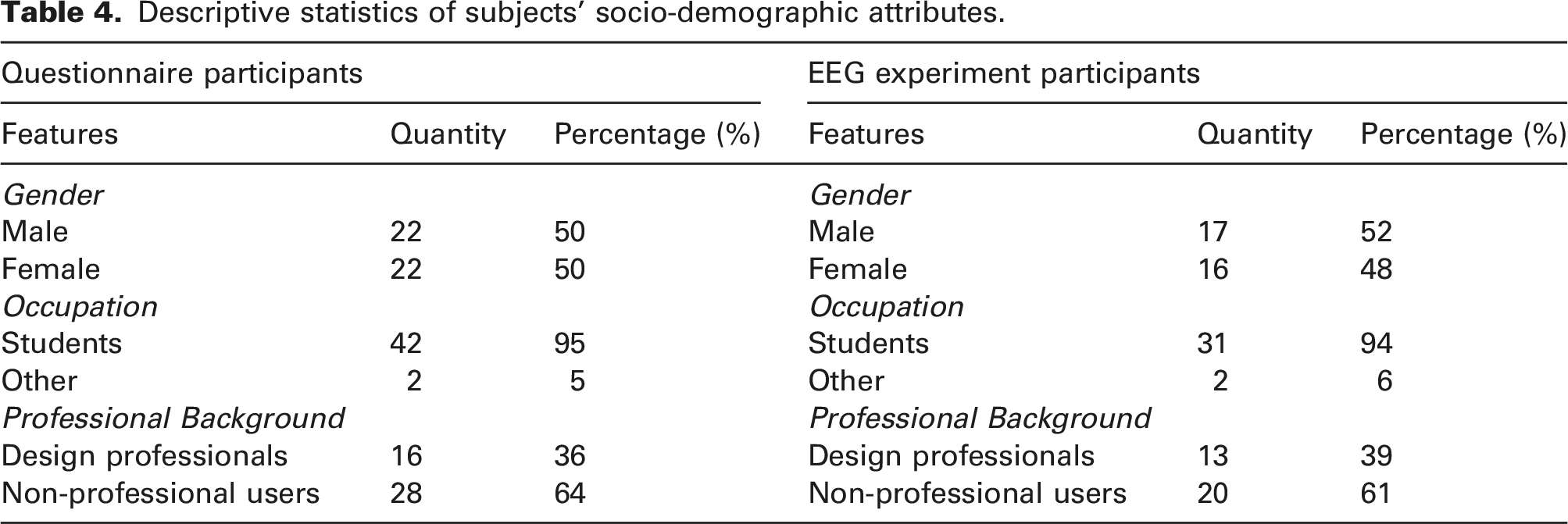
The study strictly adhered to the Declaration of Helsinki and the ethical protocols of Peking University. All participants signed an informed consent form before the experiment and received compensation of 50 RMB after the end of the experiment. In addition, to ensure the objectivity of the experiment, enrollees with a history of epilepsy, colour blindness or other visual impairment conditions were not included as subjects. Also, subjects were asked to avoid smoking, drinking caffeinated or alcoholic beverages and strenuous exercise for 3 h before participating in the experiment to ensure data accuracy.
Experimental procedure
Reception: Subjects were led to a waiting area outside the laboratory to rest. After the subjects felt calm, they were guided to sign an informed consent form.
Preparation: After necessary inspections and the set-up of all the equipment, we guided the subjects into the laboratory, explained the procedure and helped them put on the Emotiv EPOC+ (detailed later) and HMD devices. After confirming their comfort and tolerance, we performed EEG baseline measurements of the subjects.
Scene perception phase: Each subject experienced a total of 2 stages of exposure to the UPS scene (i.e. the testing scene), with a baseline phase before the first UPS exposure and a resting phase between the two main testing exposure stages. In the baseline phase, we displayed the images of the laboratory to help subjects adapt to the VR environment, to improve the realism of the spatial feedback. After 2 min of exposure, subjects were asked to verbally fill in the psychological response questionnaire (using the STAI-6 questionnaire, detailed below). After the baseline stage was completed, we informed the subjects that they were about to enter the first testing scene and then started to play the testing video and audio. The allocation of the testing scene was based on the simple random principle. After 2 min of exposure at the first testing scene, the subjects were asked to verbally fill in the psychological response and environmental preference questionnaire (including the STAI-6 questionnaire and the UPSE questionnaire, detailed below), with questions of the same category asked randomly. At the end of the exposure, there was a 1-min break (i.e. the resting phase), during which the laboratory scene was replayed to calm the subjects. The second testing scene followed the same procedure as the first one.
End-of-experiment phase: After completing the exposure and questioning of both scenes, we informed the subjects that the experiment was over. We assisted them in removing the equipment, and guided them to fill in the basic demographic information questionnaire. Lastly, we organized the materials and guided the subjects to leave (Figure 2). Timeline of experimental procedure.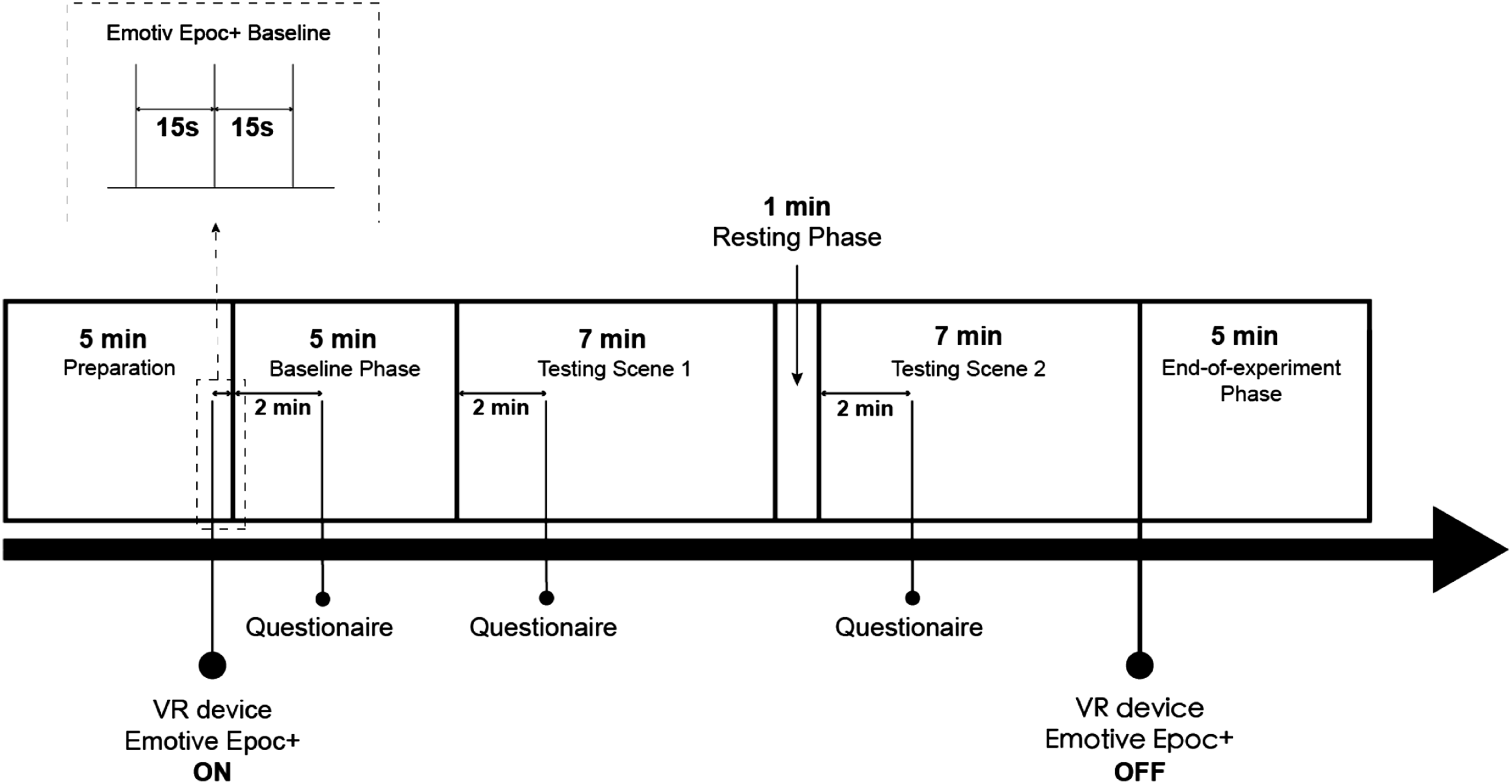
Statistical analysis
After basic descriptive statistical analysis of the experimental data, we first used the Mann–Whitney U non-parametric test to compare the scores of psychological/physiological responses and environmental preferences in each dimension with the overall scores, so as to examine the inter-scene and inter-group differences. Next, we used stepwise multiple linear regression to examine the effects of different physical features on environmental perception results, using the five dimensions of physical attributes of UPS as independent variables, psychological/physiological responses and environmental preference scores as dependent variables. The analysis was also conducted for both the whole sample and each group. In addition, we used the Spearman correlation index to analyze the consistency of the multi-source perceptual results, including psychological/physiological responses and environmental preferences.
Analytical framework
Based on the scope and methodological foundation synthesized in the literature review above, we designed the analytical framework of this study as follows (Figure 3). First, we recruited two groups of subjects with and without educational background on the built environment design. We then record their physiological and psychological responses, as well as environmental preferences in different UPS scenes with different built environment characteristics. Specifically, in synchronized monitoring and interviewing, we used a questionnaire to obtain the stated psychological responses and environmental preferences of the subjects, and simultaneously observed their revealed physiological responses to UPS scenes through physiological measurement. Meanwhile, we established a five-dimensional indicator system to quantify the physical features of UPS scenes. Next, with the empirical data and metrics obtained in the previous steps, we built statistical models to compare the differences in psychological/physiological responses and environmental preferences between the two groups, and then analyzed the correlation between the different environmental features and the subjects’ perception, so as to explain the possible reasons for the differences, and also the design implications. Analytical framework.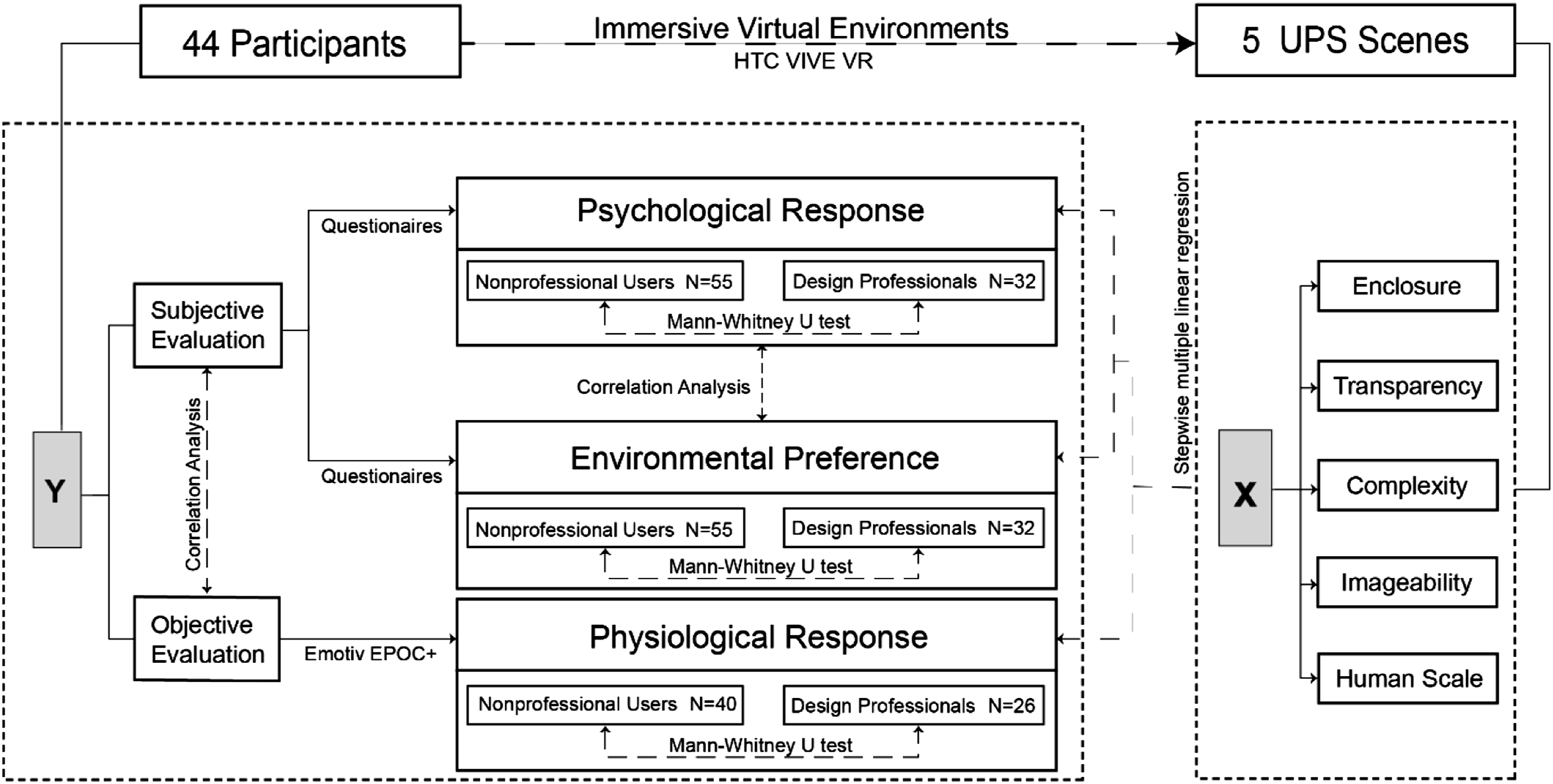
Results
Inter-scene perceptual difference
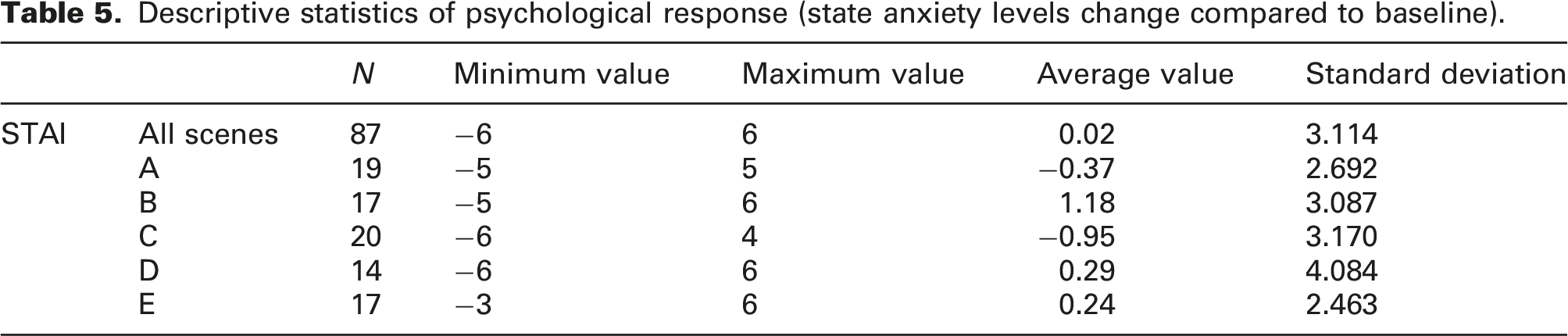
The results, including the psychological/physiological responses and the environmental preferences from the valid samples are shown in Figure 4 (a, c and d for the three types of indicators, respectively; b for pre-post psychological variation; see Table 5 for detailed statistics). In terms of psychological responses as reflected in the subjects’ state anxiety status, after exposure to the experimental scenes, the subjects’ state anxiety status demonstrated changes compared to the baseline scene, and the level of state anxiety in some scenes was increased compared to the baseline stage (Figure 4(a)), reflecting the arousal effect of the respective scenes on the subjects’ psychological states.
57
However, one-on-one Non-parametric Mann–Whitney U tests on the subjects’ changes in the state anxiety levels generally yielded insignificant results (Figure 4(b); see Table 6 for detailed statistics). Inter-scene perceptual difference. (a) Total STAI scores of different stages; (b) psychological responses; (c) physiological responses of all states; (d) environmental preference. Notes: ** p Descriptive statistics of psychological response (state anxiety levels change compared to baseline). Results of the corresponding Mann–Whitney U test for inter-scene psychological response.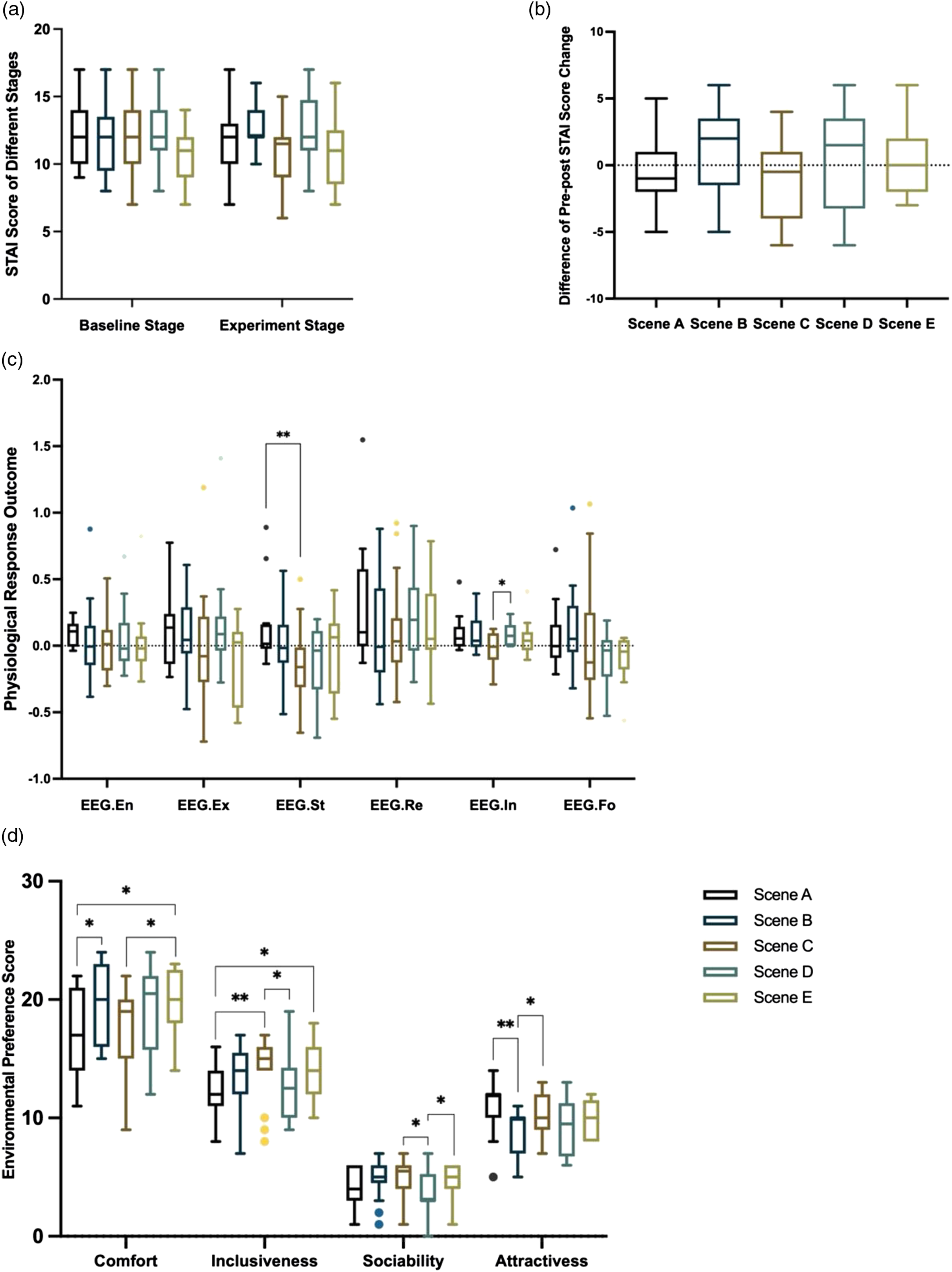

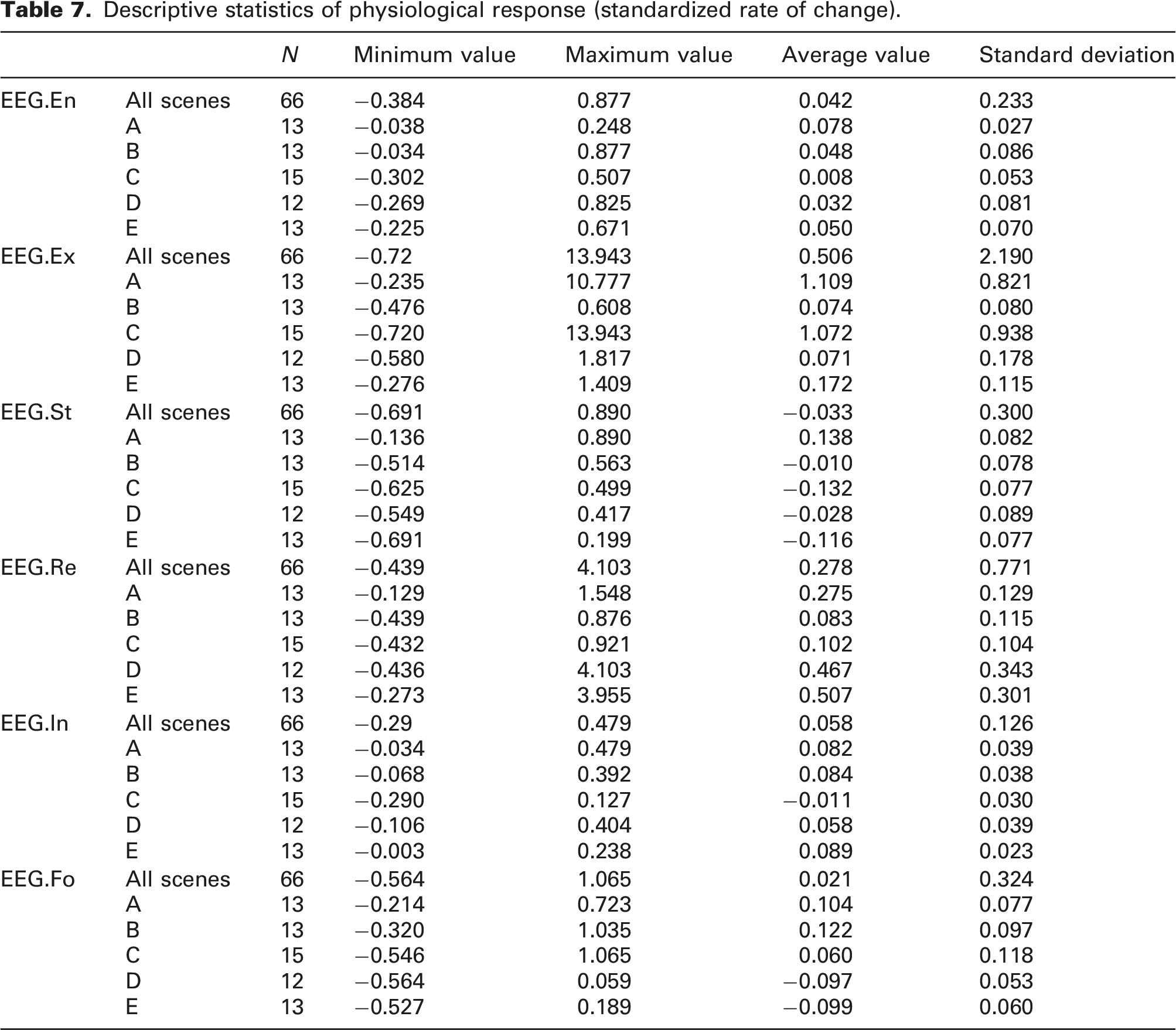
Descriptive statistics of physiological response (standardized rate of change).
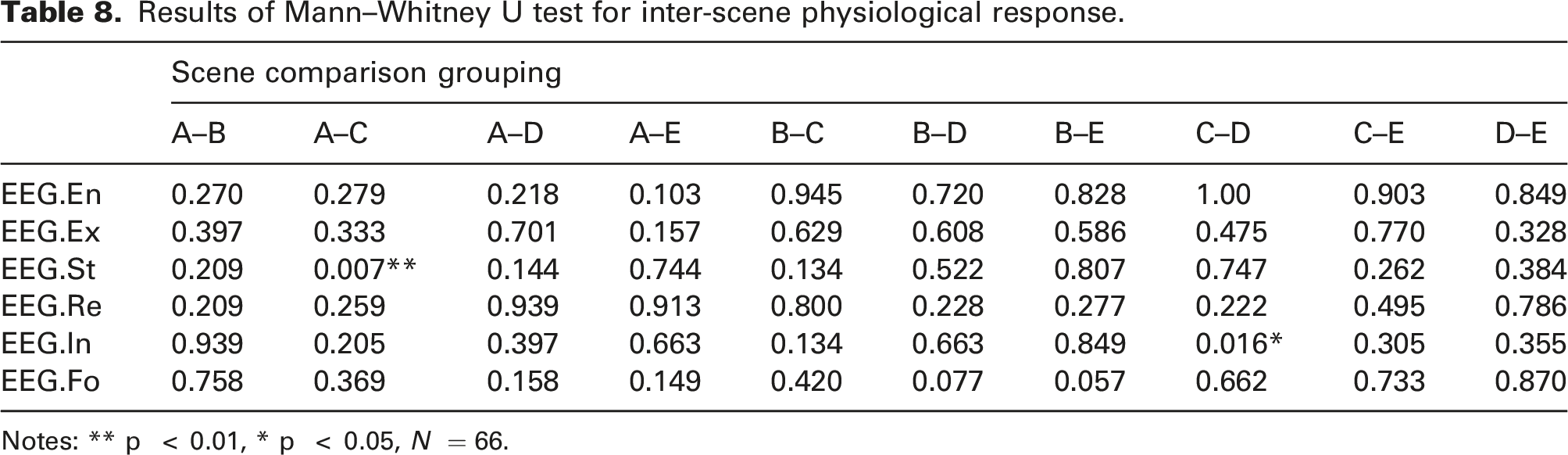
Results of Mann–Whitney U test for inter-scene physiological response.
Notes: ** p
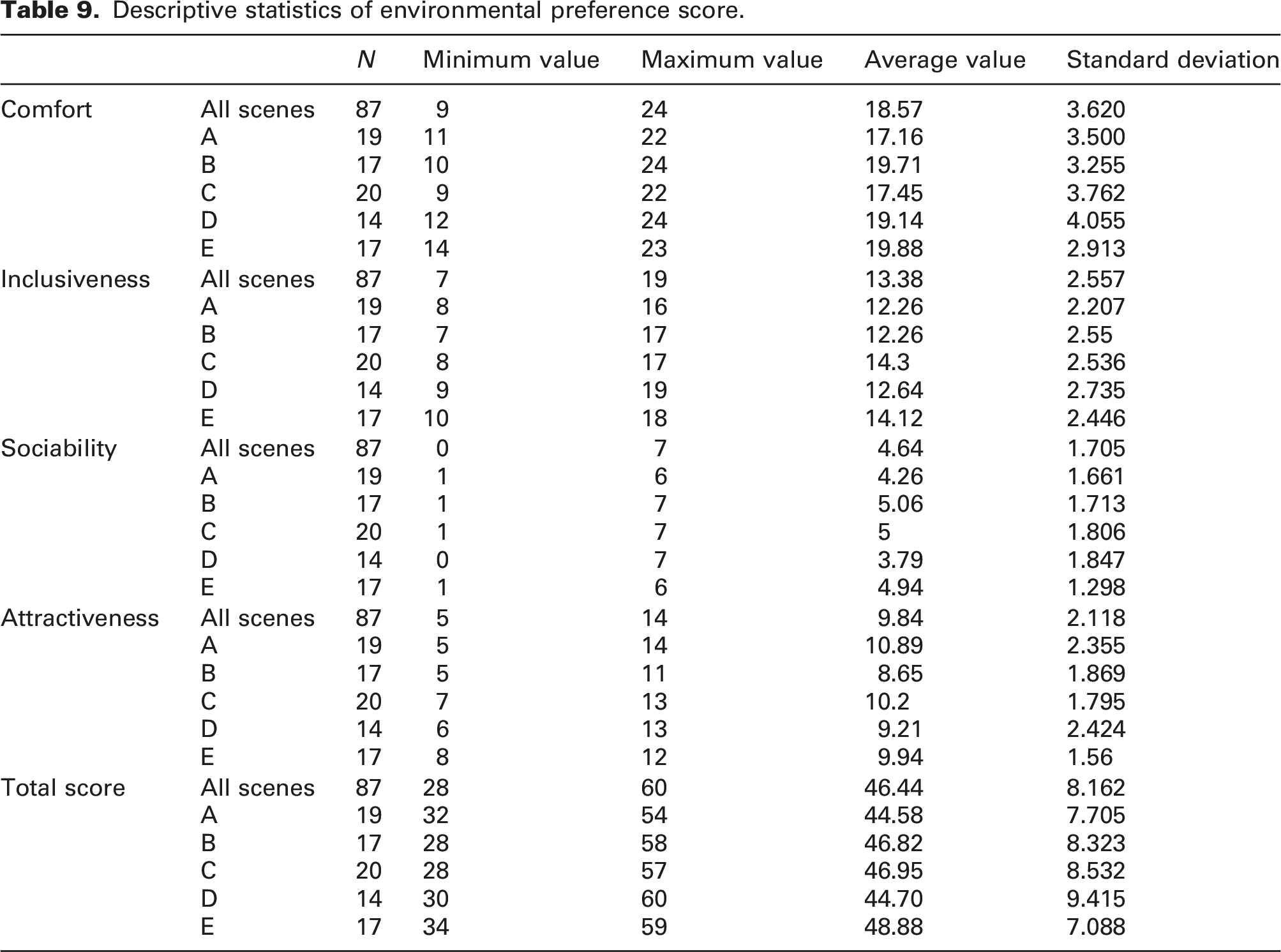
Descriptive statistics of environmental preference score.
Results of Mann–Whitney U test for inter-scene environmental preference.
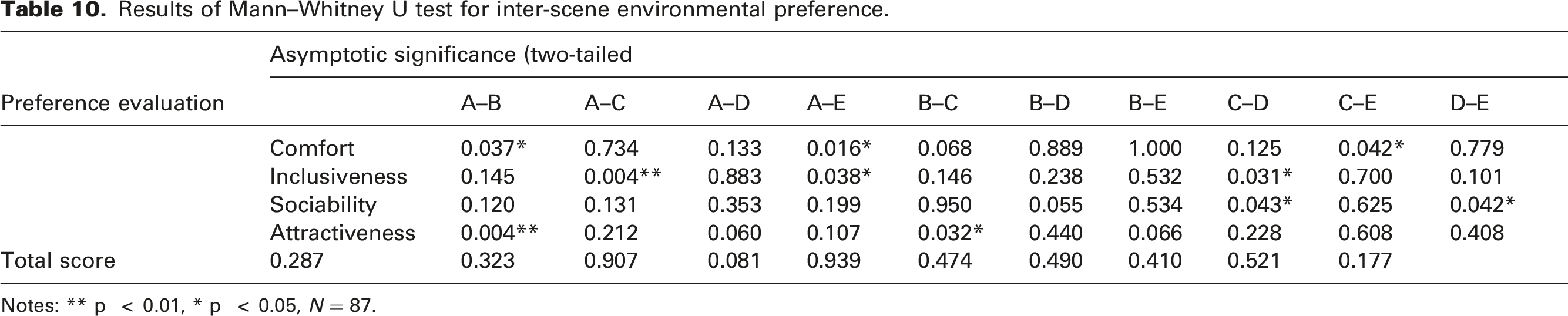
Notes: ** p
Overall, there were arousal effects but no significant differences in the subjects’ psychological responses between scenes. In contrast, some inter-scene differences were found in the subjects’ physiological responses and environmental preferences. The high revealed ratings of the Waterfront Art Promenade on the ‘comfort’ dimension and the low ratings of road intersections on the ‘sociability’ dimension are to some extent consistent with previous studies. 71 These results indicate that the experimental scenes are diverse enough to arouse the participants’ responses and perceptions.
Results of the one-sample K-S test of psychological response, physiological response and environmental preference.
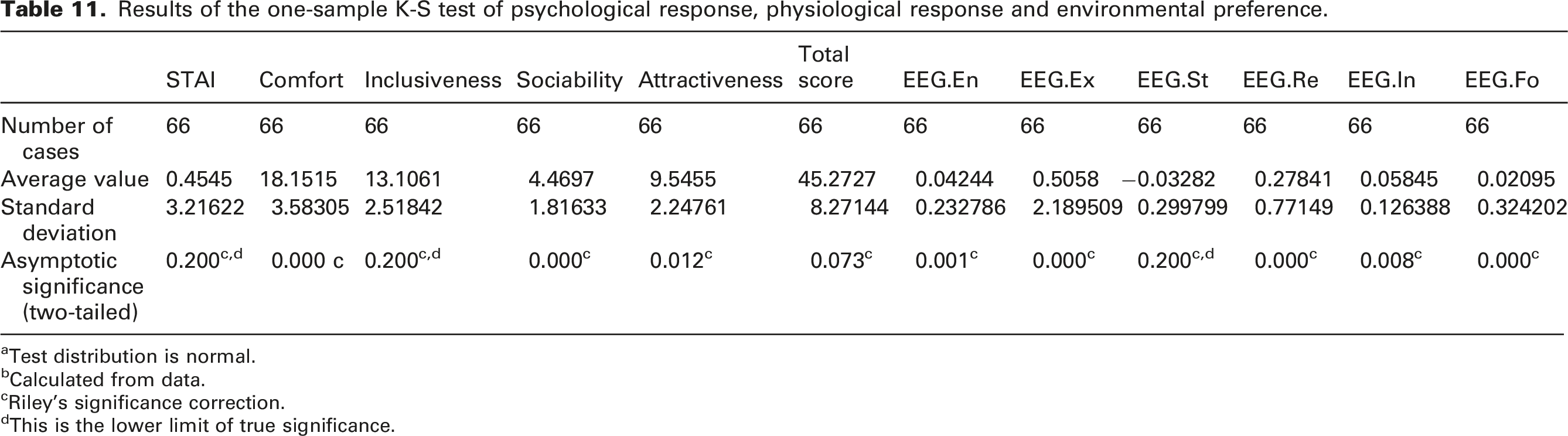
aTest distribution is normal.
bCalculated from data.
cRiley’s significance correction.
dThis is the lower limit of true significance.
Results of Pearson correlation analysis between phycho-physiological response and environmental preference.
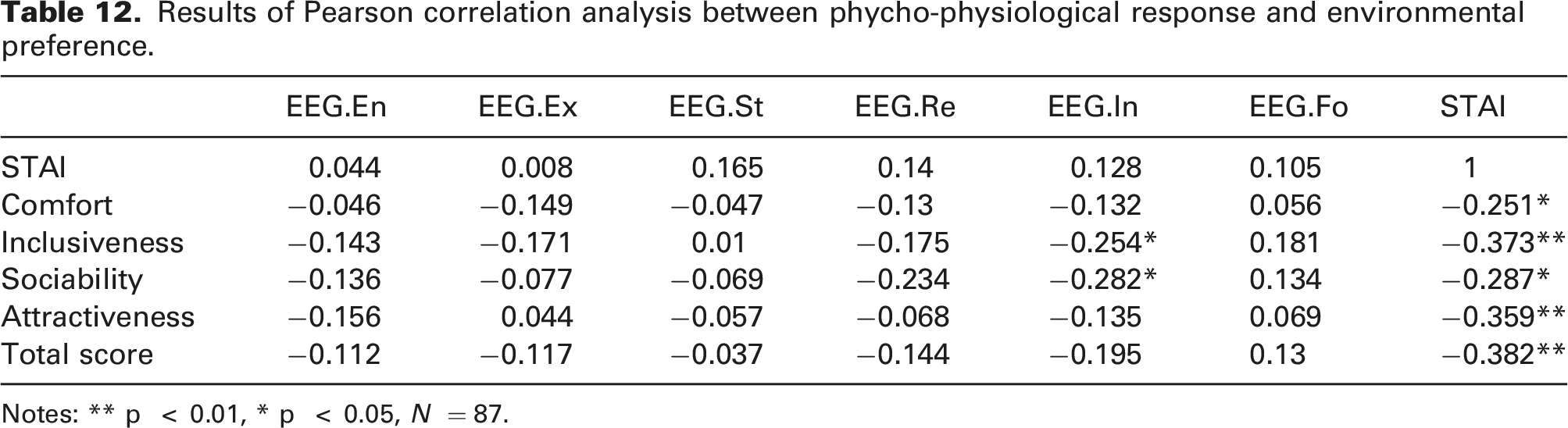
Notes: ** p
Inter-group perceptual difference
Results of the Mann–Whitney U test for inter-group psychological response.

Notes: ** p
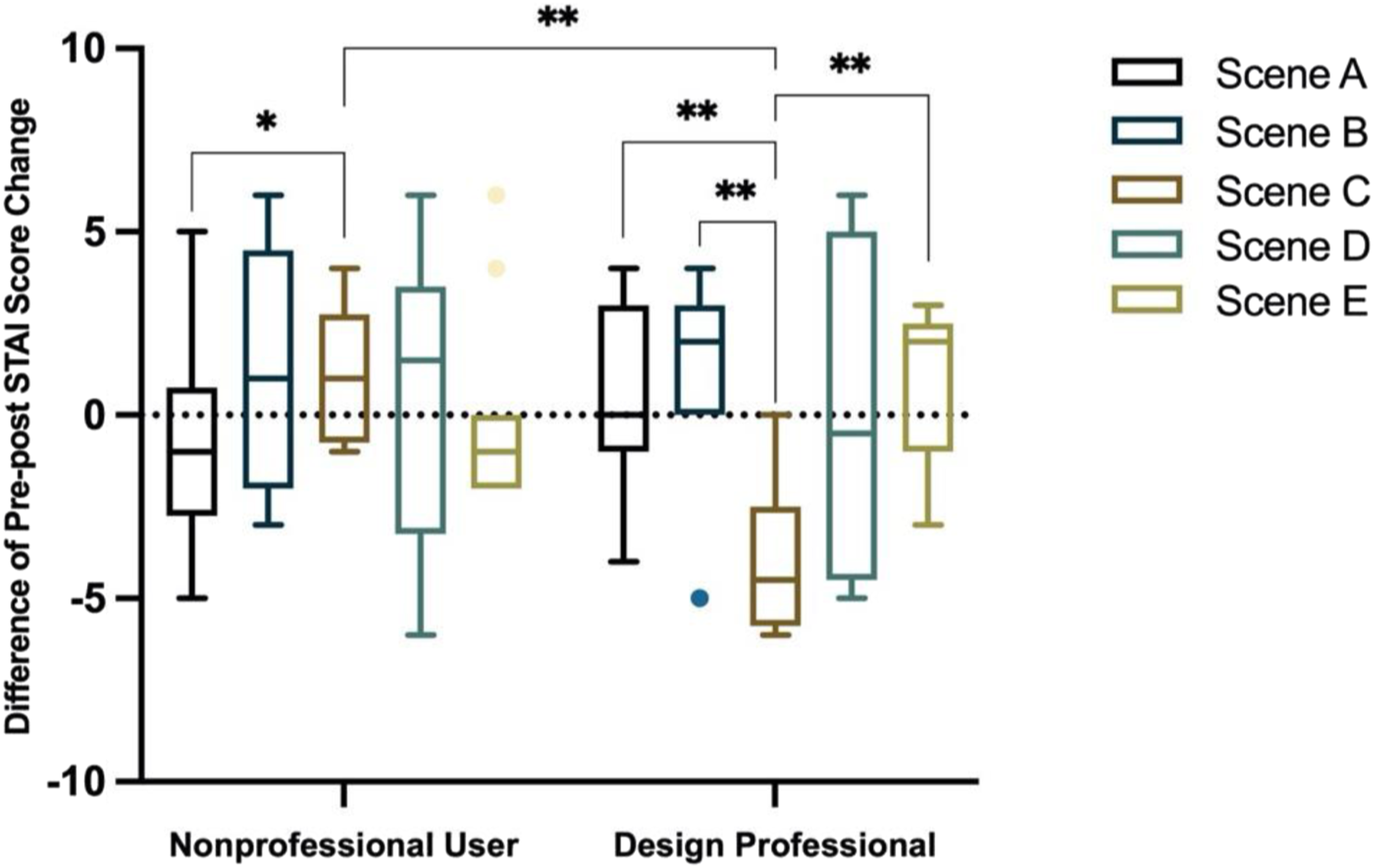
Inter-group psychological responses. Notes: ** p
Results of Mann–Whitney U test for psychological response between groups at different scenes.

Notes: ** p
Results of Mann–Whitney U test for inter-group physiological response.
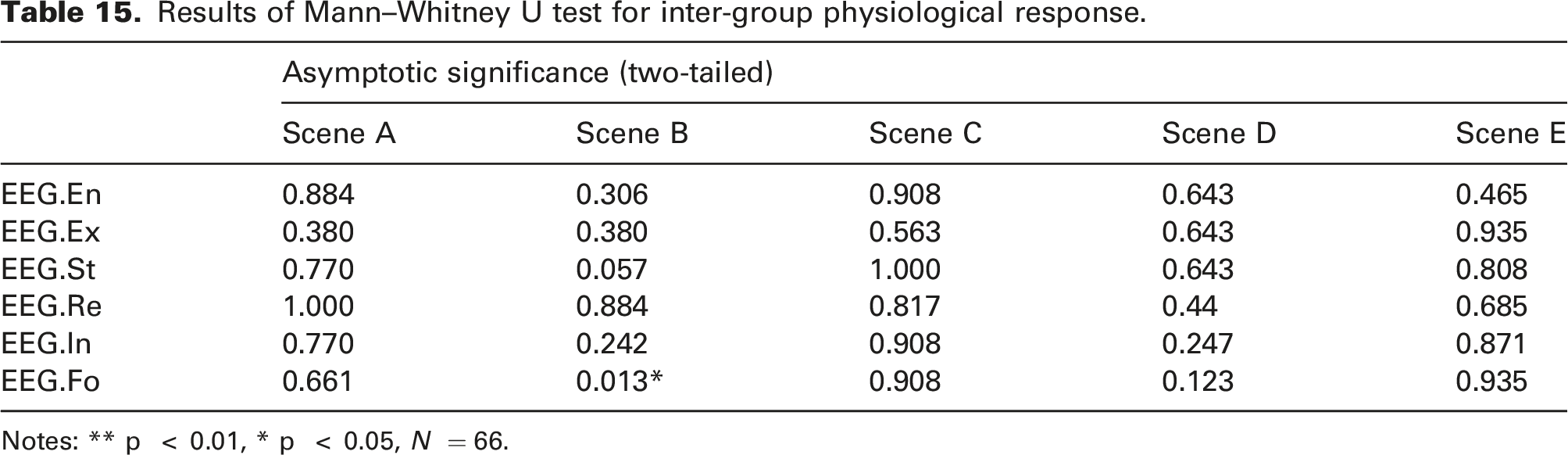
Notes: ** p
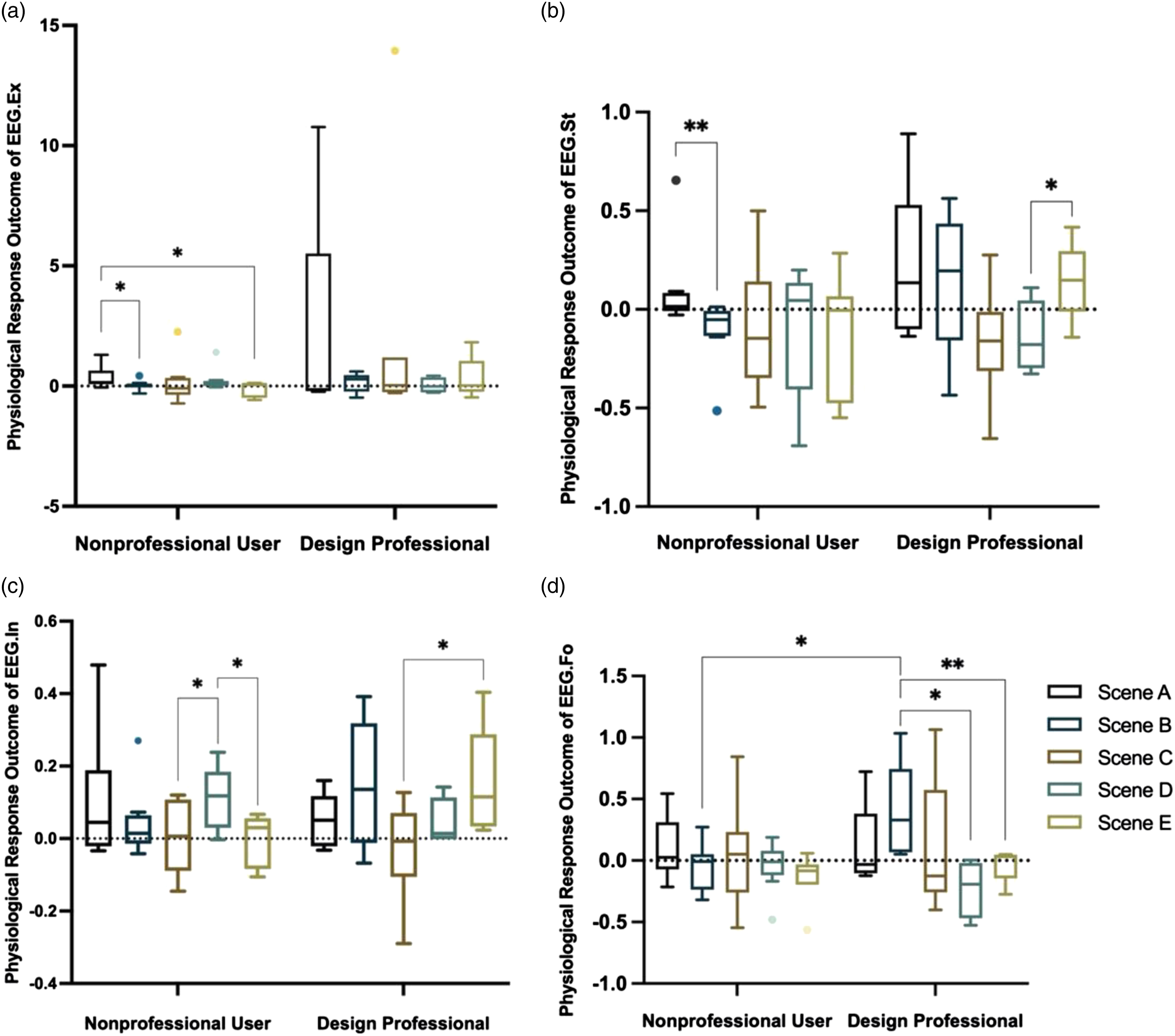
Inter-group physiological responses (a) EEG.Ex; (b) EEG.St; (c) EEG.In; (d) EEG.Fo. Notes: ** p
Results of Mann–Whitney U test for physiological response between groups at different scenes.
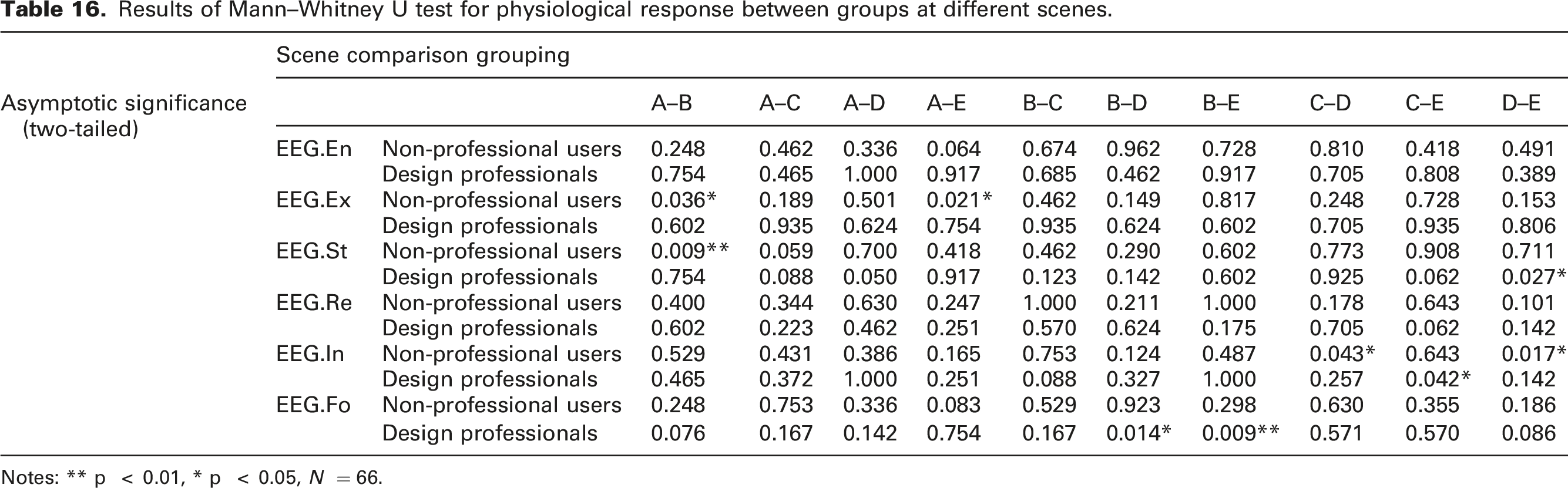
Notes: ** p
Results of Mann–Whitney U test for inter-group environmental preference score.
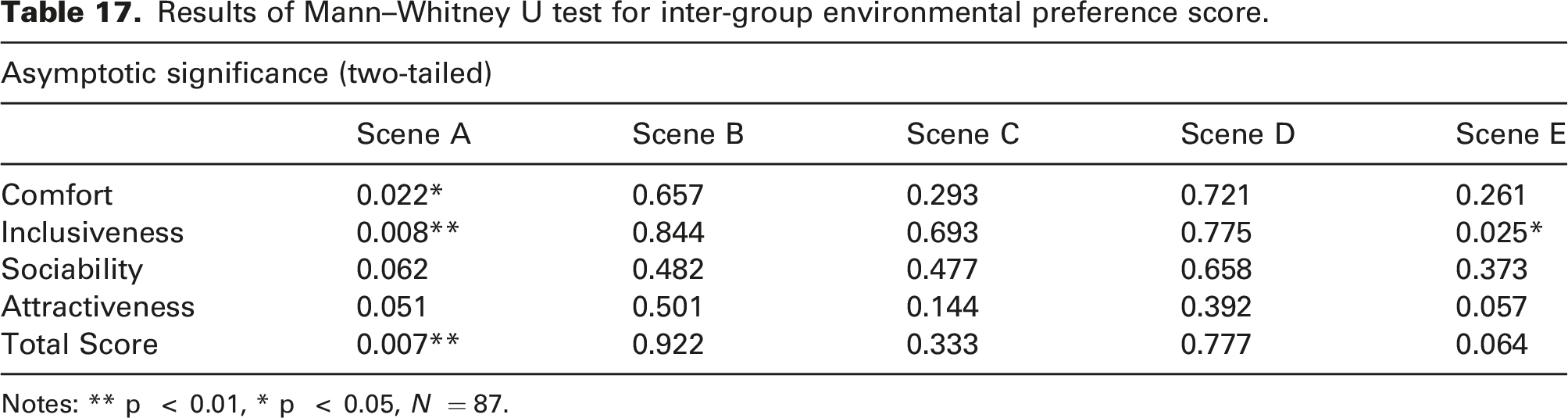
Notes: ** p
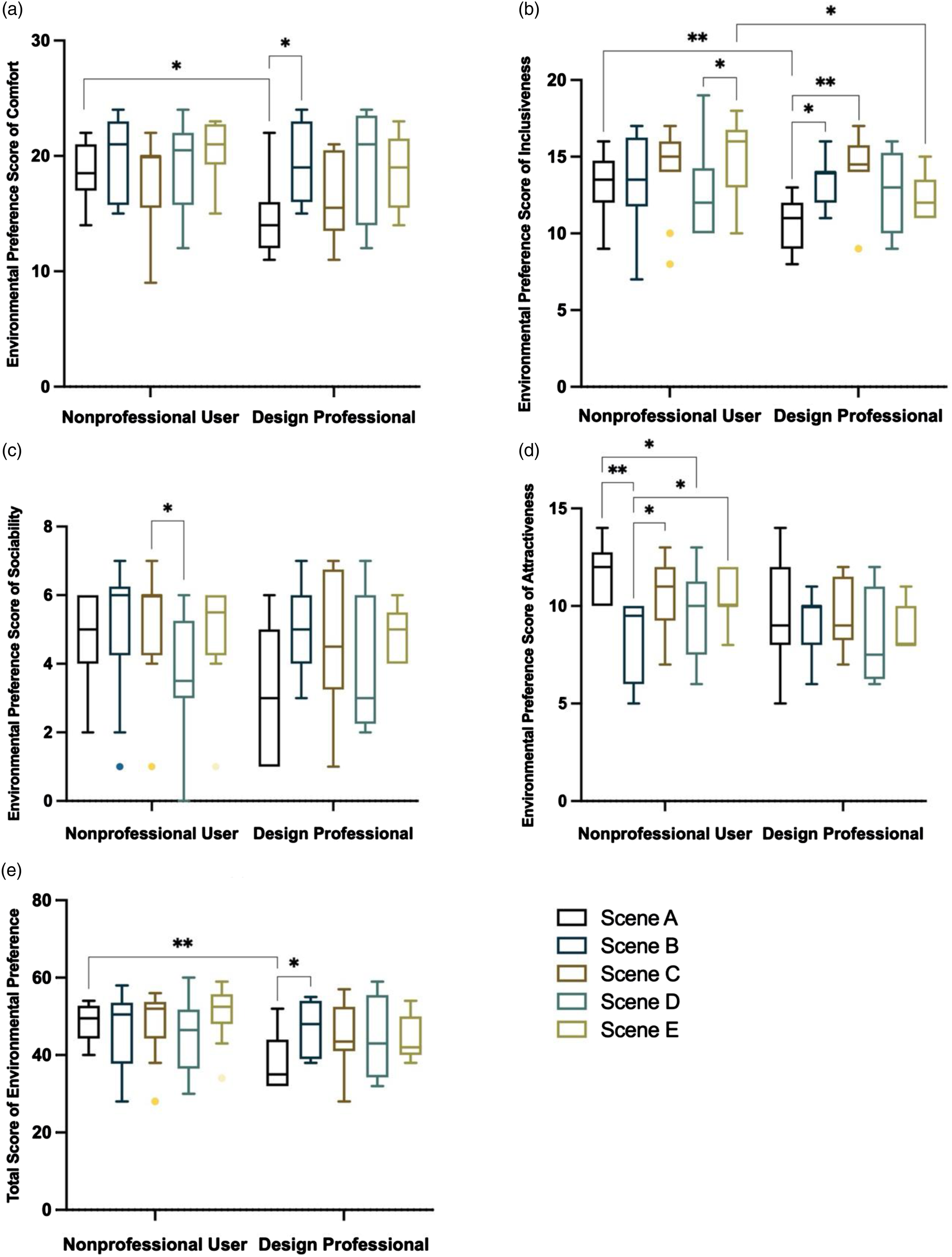
Inter-group environmental preference: (a) comfort score, (b) inclusiveness score, (c) sociability score, (d) attractiveness score, (e) total score. Notes: ** p
Results of Mann–Whitney U test for environmental preference score between groups at different scenes.
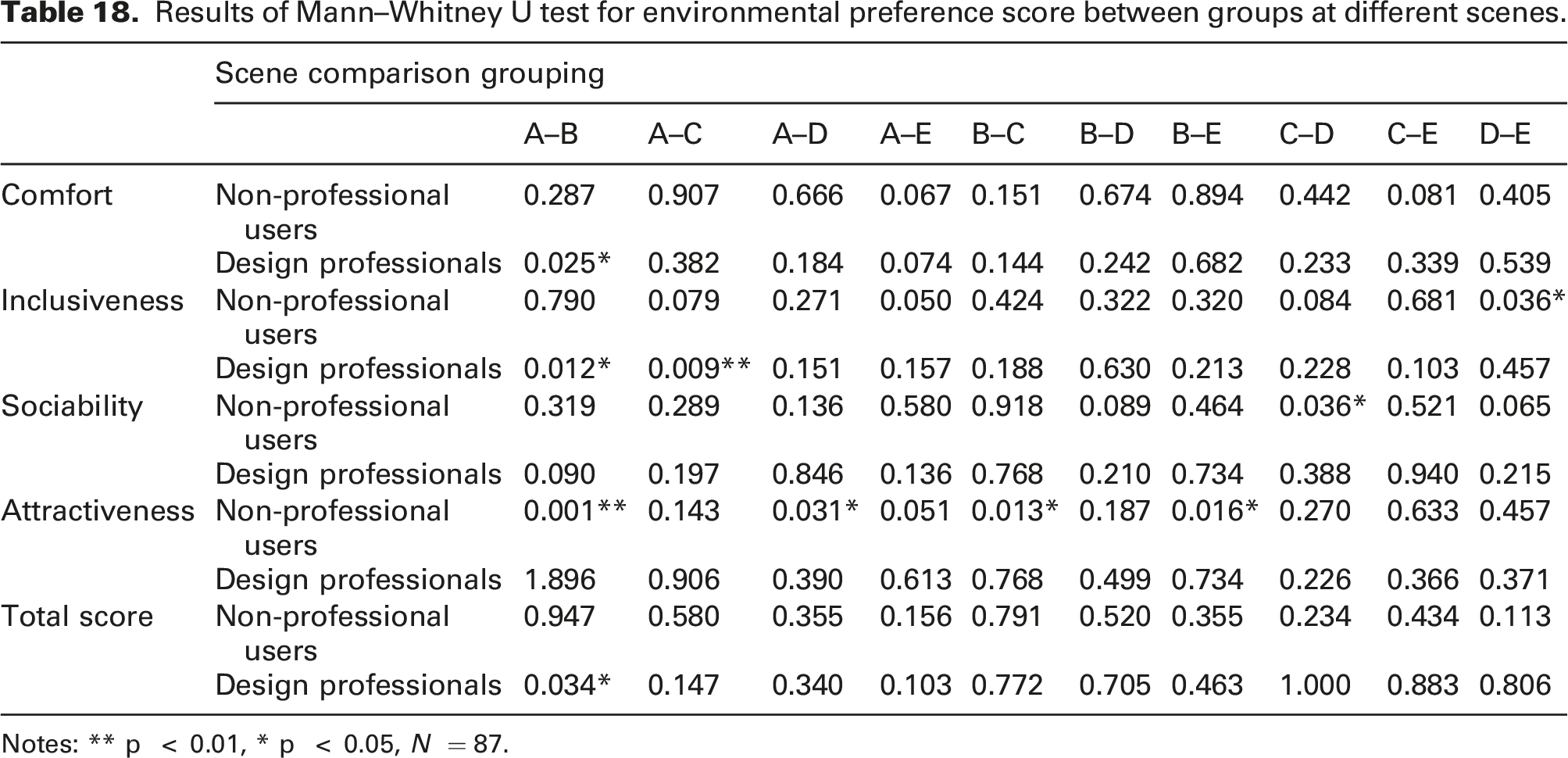
Notes: ** p
Influence of physical features on environmental perception
Selected regression results for all samples.
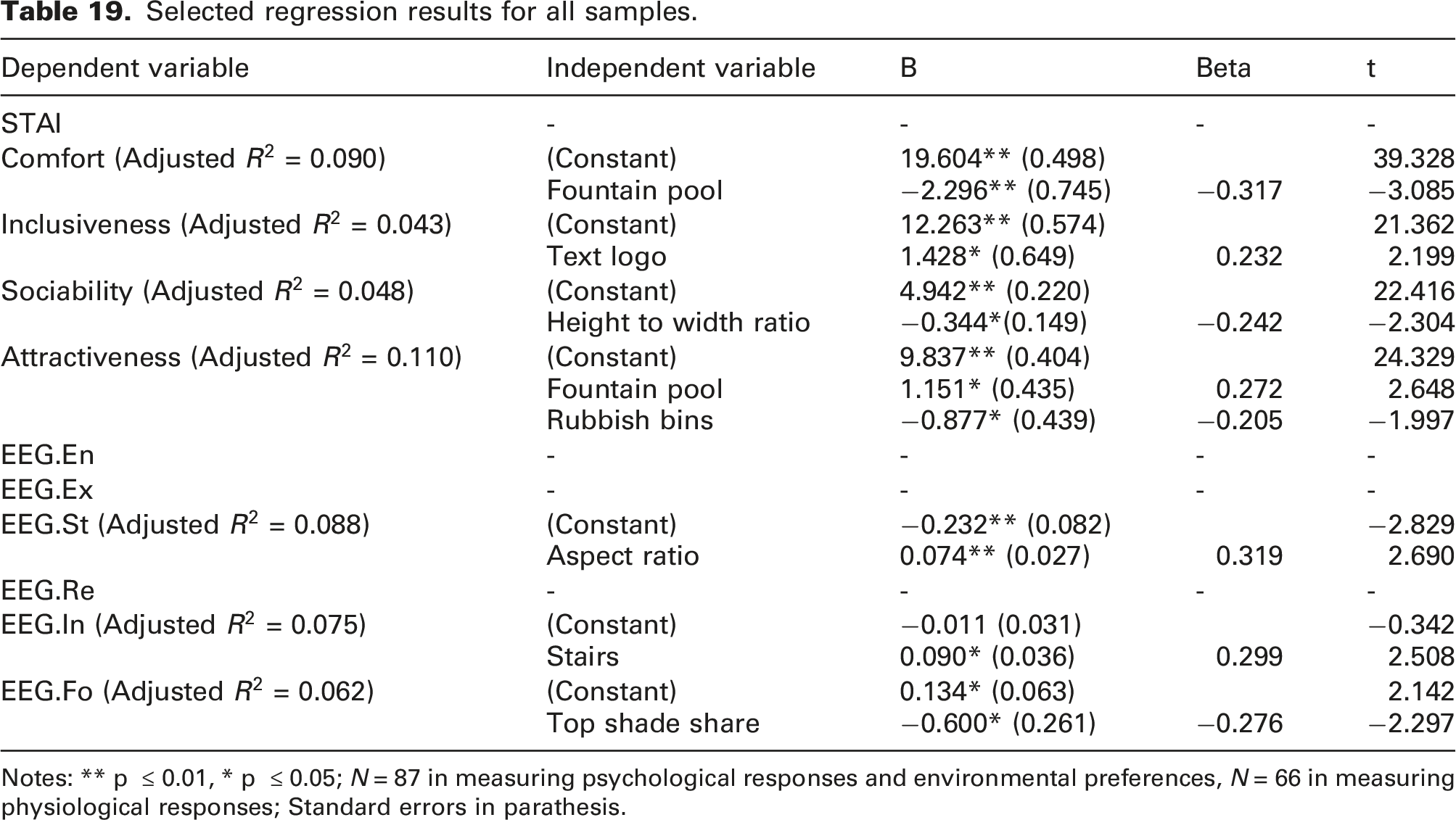
Notes: ** p
Specifically, in terms of the stated environmental preferences, fountain pools and the comfort score were negatively correlated (R2 = 0.090, p = 0.003); text logos and the inclusiveness score showed a positive correlation (R2 = 0.043, p = 0.0031); aspect ratio and the sociability score were negatively correlated (R2 = 0.042, p = 0.032); fountain pools and the attractiveness score were positively correlated (R2 = 0.110, p = 0.010); while rubbish bins were negatively correlated with the attractiveness score. In terms of the revealed psychological responses, stress (EEG.St) was positively correlated with a site aspect ratio (R2 = 0.088, p = 0.009); interest (EEG.In) was positively correlated with stairs (R2 = 0.075, p = 0.015); and attention (EEG.Fo) was negatively correlated with top shade share (R2 = 0.062, p = 0.025).
Regression results for samples from the two groups.
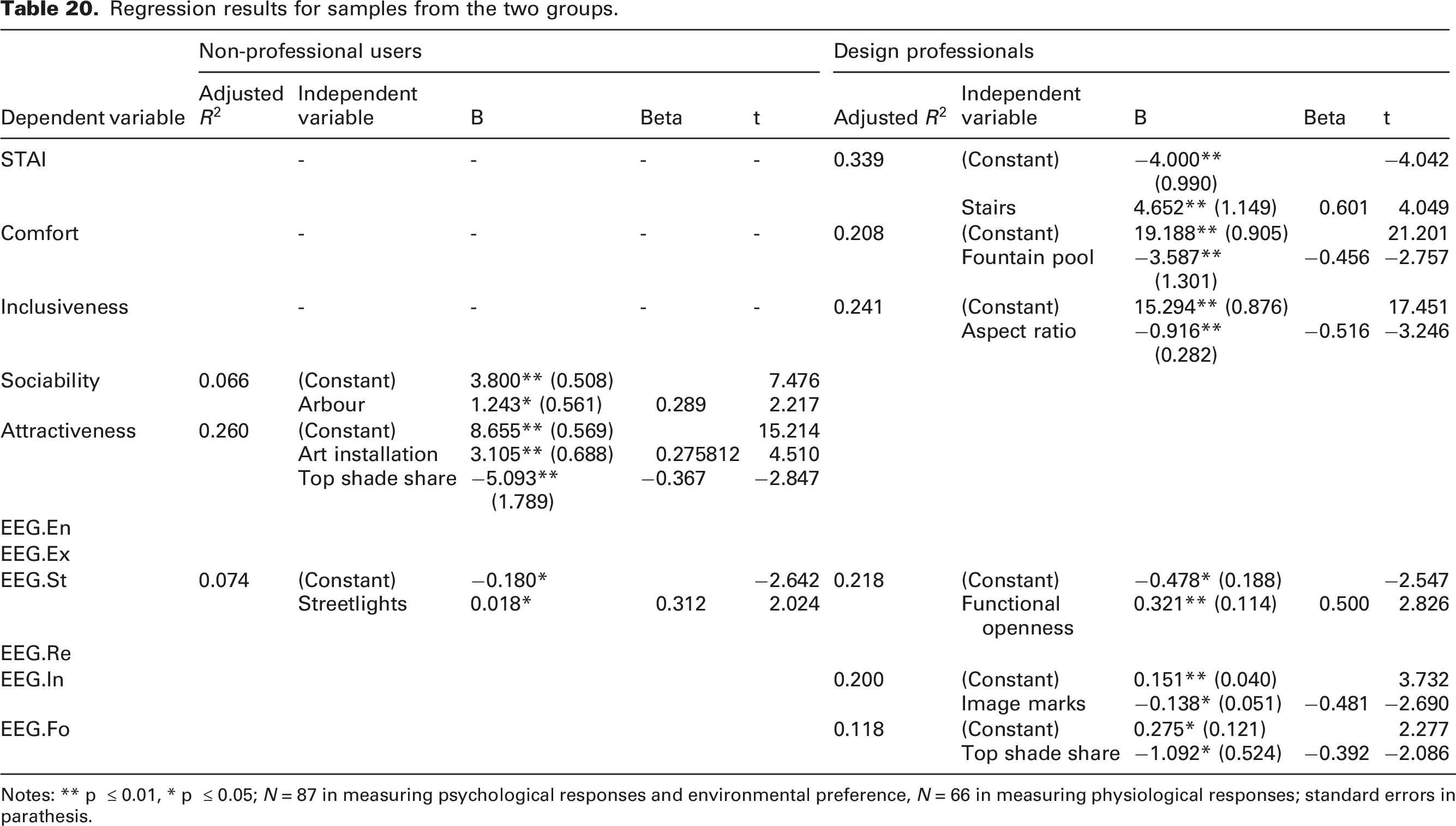
Notes: ** p
Conclusion and discussion
Utilizing IVE and physiological measurement tools, this study revealed the inter-group difference in the perception of UPS with different physical features for people with or without design-related professional backgrounds. With three types of measurements for human’s environmental perception, including psychological/physiological responses and environmental preferences, we revealed the specific patterns of such differences and also their possible causes. Besides, the improved analytical framework for integrating subjective (stated) and objective (revealed) psychological/physiological responses and environmental preferences data developed in this study has methodological value. Meanwhile, the empirical findings of this study regarding the inter-group and inter-scene differences in environmental perceptions may provide a new basis for evidence-based UPS design practices. The study also suggests insights into residents’ perceptions and potential wishes, and sheds light on the plausible enlightenment that may help guarantee an active utilization of spontaneous and social activities as a basis for future UPS designing, in particular a more attractive UPS for non-professional users.
Aspects of Professional Background-driven Perceptual Differences: Psychological/Physiological Responses, Environmental Preferences and Health Implications
The primary finding of this study is that even within the exact same UPS scene, there are significant differences in psychological/physiological responses and in environmental preferences between the two groups who are with or without a professional background in built-environment design. Overall, design professionals’ scores are lower on average than non-professional users on the dimensions of comfort, inclusiveness and attractiveness of the UPS, which is consistent with findings from previous studies that the landscape and architectural designers tend to be more critical and even ‘demanding’ in judging the quality of the built environment, and are more ‘intolerant’ with low-quality design schemes.14,18 Likewise, non-professional users of UPS tend to be more ‘indifferent’ than design professionals judging from their psychological and physiological responses. Meanwhile, the two groups differ in their aspects of concern on different physical environment features of UPS. Differences in the evaluation of UPS scenes by design professionals exist mainly on the comfort and inclusiveness dimensions, while those by non-professional users concentrate on the sociability and attractiveness dimensions. Based on these findings, it can be concluded that there are structural differences between the two groups regarding their sensitivity, priority of concerns and judging criteria of the built environment in psychological, physiological and preferential terms. Such differences may induce health hazards such as anxiety to the general users of the UPS as the designers’ anticipation of the places’ quality and the functionality may deviate from the former’s actual experiences.
Moreover, and for UPS particularly, under the theoretical framework of Gehl 72 and Thompson, 73 activities in the UPS can be classified as necessary activities which are related to walking, spontaneous activities that occur under suitable outdoor conditions, and social activities that depend on the participation of others. In terms of subjective environmental preference, design professionals are more likely to notice site features associated with necessary activities, while non-professional users focus more on on-site features related to spontaneous and social activities. The finding is in line with previous studies on the two groups’ perceptions of natural landscapes, which state that design professionals have a more practical view of the landscape. At the same time, non-professional users are more concerned with the ‘enjoyment’ process. 13
Physical features influencing factors for environment perception: Design takeaways
Beyond inter-group environmental perceptual differences per se, quantified analysis of the relationship between such differences and physical features of UPS reveals additional mechanistic details with distinct operational implications. Overall, for both groups, there are significant differences in the mechanisms of physical environmental features triggering perceptual differences. For design professionals, their state anxiety levels change, comfort scores and inclusiveness scores on the UPS improve with the presence of stairs and deteriorate with the presence of a fountain pool and increased aspect ratio of the site. However, non-professional users are insensitive to these physical features. Instead, for non-professional users, sociability scores are increased by the presence of arbours, probably for the reason as previous studies have concluded that the presence of trees creates small open or semi-enclosed spaces that provide good spaces for interaction.39,74 Also, in terms of attractiveness scores, art installations increase the attractiveness scores of non-professional users, which is also consistent with previous research finding that public artwork enhances the excitement of urban environments and makes landscapes more interesting 37 ; while the increase of the top shade share reduces the group’s attractiveness scores. Further, the factors that elicit physiological response differences between groups are also quite different. For non-professional users, only the presence of streetlights increases their stress levels; whereas for design professionals, things are much more complicated: functional openness is positively correlated with their stress levels; image marks are negatively correlated with their interest levels; top shade share was negatively correlated with their focus levels. In conclusion, there is little similarity in the structure of physical environmental features eliciting perceptual responses and preferences between the two groups.
Practically, the above findings suggest that design professionals’ tendency of being ‘intolerant’ to building environmental quality and ‘sensitive’ to specific physical features may mislead their designs from ordinary users’ perspectives. On this, the revealed patterns and mechanisms of physical environmental features affecting user perception in this paper can, to a certain extent, provide new ideas and specific guidelines for UPS design practice. Designers should pay more attention to the social needs of users, as well as to improve the attractiveness and inclusiveness of UPS by enhancing the presence of arbours and quality art facilities, optimizing the top shade share, and providing necessary textual signage to encourage more people to enter and use UPS. On the contrary, the fountain pool, although being a popular design feature, has a contradictory effect on user perception. Further, the classic design parameter of width-to-height ratio affects the pressure level of users while also affecting the sociability of the site; the presence of stairs also has the dual role of triggering pressure and interest. The appropriate trade-off between these contradictory design elements to create appropriate place experiences in different built environment scenes is an important issue for designers, and the quantitative findings and analytical framework of this paper may provide empirical and methodological references for this task.
Towards a new paradigm of public participation in UPS design
The findings, however, should not only be interpreted within the scope of a particular case study, nor even be limited to specific design takeaways. Rather, they should indicate possible opportunities for building a new paradigm of public participation in UPS design.
The findings imply the potential utility of public participation in the creation of successful UPS. Admittedly, the experts’ knowledge is important for their expertise and awareness of the fundamental UPS quality control. Their focus on more necessary activity-related aspects guarantees the safety, security and the functionality of the UPS design. Users’ knowledge, however, provides useful information on the social and communicational aspects of the UPS design. It can also be a valuable resource to understand the context of the aimed area that awaits to be planned and designed. Therefore, designers should try to overcome the lack of understanding of user needs and their limitations of perception due to professional inertia and try to think from ordinary users’ perspectives as much as possible.
Public participation facilitates the flow of information between designers and users and thus has long been involved in the design process. Indeed, the arrogant early Modernist statements of ‘the design of a city is too important to be left to its citizens’ (Le Corbusier) 75 or ‘lay people have no capacity to choose’ (van der Rohe) 76 have been proven too much paternalism per the famous critics from Kevin Lynch, Christopher Alexander and Jane Jacobs,34,77,78 and have been largely disregarded by today’s designers. Nevertheless, public participation to date has generally been limited within negotiations on the overall goal of the design, or communications of general design ideas between designers and users through simple diagrams, because ordinary users tend to lack the professional skills which designers possess to specifically express their design ideas. The professional thresholds here handicap detailed exchange of ideas between the two parties, and thus the effectiveness of public participation in this style is still questionable. Further, once a UPS has been built, there usually lacks room for remedying any pities caused as a result of the above design process due to potentially high costs, and Post-Occupational Evaluations (POE), whether the public participated or not, are on most occasions only meaningful to future projects, still leaving a prominent gap to fill between the designers and users.
Our approach, in contrast, hints at an opportunity of low-cost, a prior evaluations of detailed design schemes with the aid of the IVE and psychological-physiological monitoring technologies. Designers can now invite anticipated users to enter the IVE, and observe their revealed results, in addition to stated preferences on the alternative design schemes, such that the most genuine response of the users can be obtained which would be of great value in the evolution of subsequent designs. The process can be iterated for several rounds until the evaluations from the two parties converge to a mutually optimal state. In some sense, the procedure described above effectively turns the conventional POE to Pre-Occupational Evaluation (PreOE), which might constitute a somewhat revolutionary change in the paradigm of design.
We are inclined to be optimistic to this prospect as the necessary technological infrastructure involved appears to be ready. Of course, social, communicational and administrative infrastructures and institutions are equally important. For example, the participatory tools can be taken online for planners to ‘broadcast’ their projects to a larger population, and specific feedbacks can be provided that help inform citizens of how their ideas have been addressed. 79 On the policy level, as top-down bureaucratic approach is still dominant in public policy-making in China, 24 strategic approach to incorporate participatory decision-making on the policy level should be given more stress. Former research has found that the use of residents’ input continues to be challenged by categorizations such as seeing their input in a separate box within planning, meaning that the current legislation and policies encourage the reproduction of such categorizations rather than the integration of different types of knowledge. 80 Therefore, it is pertinent that governments must reinforce the role of users’ input and strengthen communication. The role of public participation should also transform from an ostensible stipulation to a real procedural and operative basis. Planners and urban designers should treat the participation input with seriousness and caution. Overall, it is of vital importance to ensure an appropriate balance between the overall planning in the perspective of designers and planners, and the coordination in residents’ input and participation, so as to appropriately strengthen the connection between user’s viewpoints and the policy-making on the normative level.
Limitations and future works
Methodologically, the study demonstrates to some extent the potential and effectiveness of the VR and physiological indicators monitoring technologies in empirical environmental perception research. With the support of these technologies, environmental perception researchers will no longer be limited by time and space constraints but will be able to obtain more accurate data in a more controlled, quantitative, efficient and cost-effective manner. However, this study still has some limitations, such as biosensor accuracy problems and missing data problems due to poor instrument contact. Also, the issue of consistency of multi-source measurement results and its possible neurobiological roots is also a matter to be explored in-depth in future studies. We hope that with future technological advances, the accuracy and stability of related research techniques will be improved, and their practical potential will thus be better explored to support a deeper exploration of the neurobiological mechanisms of human’s environmental perception. Finally, the inevitable lack of subject diversity associated with the convenient sampling method used in this study limits the generalizability of the findings and is also a point worthy of improvement in future studies.
Footnotes
Acknowledgements
The authors would like to thank Ms Ying Wu, Mr Chaoyue Tian and Ms Jielan Zhong for their contributions in early stages of experiment design and execution.
Authors contributions
All authors contributed equally in the preparation of this manuscript.
Declaration of conflicting interests
The author(s) declared no potential conflicts of interest with respect to the research, authorship, and/or publication of this article.
Funding
The author(s) received no financial support for the research, authorship, and/or publication of this article.
