







Abstract
Traditional dwelling has achieved harmony between building and climatic environment, which is one of the most significant prerequisites for sustainability. In this study, Liyuanba traditional dwellings were selected as the representative traditional dwellings in southwestern part of Qinba mountainous area, and passive design strategies extracted from traditional dwellings were utilized to improve its indoor thermal comfort. This research presents an approach in which the energy simulation, orthogonal arrays and range analysis were integrated to analyze the sensitivity of each passive parameter to overall energy-saving performance and to determine how energy consumption can be minimized by the optimal combination of them. The optimized passive strategy could reduce the annual energy consumption of the simulated dwelling by 65.1% compared with that of the original one and increase the indoor air temperature and mean radiation temperature by 4.31°C and 4.35°C in winter, respectively, meeting the requirements of the design standard for energy efficiency for rural residential buildings (GB/T50824-2013). Through the systematic study of passive parameters in the southwestern part of Qinba mountainous area, the optimal combination of passive design strategies could be utilized for the renovation of traditional dwellings to improve the building energy performance under the premise of satisfying the indoor thermal comfort.
Keywords
Introduction
China is actively formulating and implementing effective policies and approaches to achieve peak carbon dioxide emissions by 2030 and is committed to being carbon neutral by 2060. 1 Since 2020, China is responsible for 26.1% of world greenhouse gas emissions, and has been the world’s greatest energy consumer and carbon emitter. 2 In China, the building sector accounts for approximately 40% of energy consumption and this could be a real challenge to the Chinese construction industry to increase energy efficiency and reduce energy consumption, while it is an opportunity for research academics. 3 Furthermore, China has a considerable number of rural regions, which consumes 24% of the total building energy consumption up to 2018. 4 The traditional dwellings in the rural area employed passive strategies, by continuous trial and error,5,6 to adapt to the local climate, improve the indoor thermal environment and reduce energy consumption to some extent. Since passive buildings could lead to over 80%–90% energy savings, 7 most traditional buildings still have the potential for optimization as they were built based on traditional experience without scientific guidance, 5 therefore, it is urgent to systematic optimize the passive design strategy of traditional dwellings to lower building energy consumption, minimize carbon emissions and improve their indoor thermal comfort.
Typically, the building energy consumption could be significantly reduced by active or passive technologies. 8 The active strategy focussed on the electrical equipment, such as refining heating, ventilation, HVAC systems, hot water production, lighting and any other building services applications. However, the logic of passive strategies is different as it seeks to supply more energy-efficient architectural elements, such as building envelope, shape and layout. Passive technologies often have modest additional capital investment costs compared to the potential benefit in energy savings. Numerous studies looked into actual retrofitting projects that used diverse passive and active technologies in different climates.9-12 A passive design strategy is crucial for reducing energy use and improving human comfort as it has many advantages over active technologies, such as: 1) passive structures' effective thermal insulation can maintain a comparatively constant internal temperature and humidity; 2) Passive buildings’ good air tightness can efficiently minimize indoor dust and ensure the indoor sound insulation requirements; 3) Passive buildings’ high efficiency heat recovery can greatly reduce the consumption of primary energy, which could be crucial in lowering energy stress, carbon dioxide emissions and air pollution.8,11-15 In Europe, the ultra-low energy consumption passive houses are increasing at an annual rate of 8%, which demonstrates that the development of green low-carbon passive buildings is a sustainable path to the development of building energy conservation while providing good thermal comfort performance. 16
In recent years, the majority of research studied passive design strategies. Albayyaa et al. 17 and Ascione et al. 18 conducted research in Australia and Italy, where passive design strategies were used for the renovation of existing residential houses and industrial buildings, which improved the energy efficiency rates by 58% and 81%, respectively. Dai et al., 19 Zahiri et al.20,21 and Pajek et al., 22 discussed the use of passive strategies in different types of buildings and simulated the improvement of the indoor thermal environment. Residential buildings in rural regions have also been the subject of certain academic discussions in China. Liu et al.,23,24 Ge et al., 25 Chi et al. 26 and Peng, 27 focussed on the single passive parameter of traditional dwelling; simulated and analyzed its impact on building energy consumption, then quantitatively evaluated and provided the best passive approach. Gao 28 and Zhao 29 et al. tested the indoor thermal environment of traditional houses in specific areas such as the western humid and cold mountainous region and western Henan cold region, and proposed the architectural design principles and strategies suitable for the local climate. Zhang et al. 30 simulated the total energy usage of traditional dwellings in rural areas, and studied the value of passive technologies that could minimize the energy consumption. According to the literature review, the effectiveness of passive techniques could vary depending on building types, usage patterns and climate areas.
As a result, as each region has its own climatic features, living behaviours, local materials, heating and ventilation preference, there is no universal design solution for passive buildings across all climate zones. In addition, despite some researchers' work on rural housing, the majority of academic study is still concentrated on structures in metropolitan settings. Furthermore, researchers who focused on rural residential buildings have not optimized comprehensive passive design methodologies for rural residential structures, which may overlook potentially significant inter-parameter interactions.
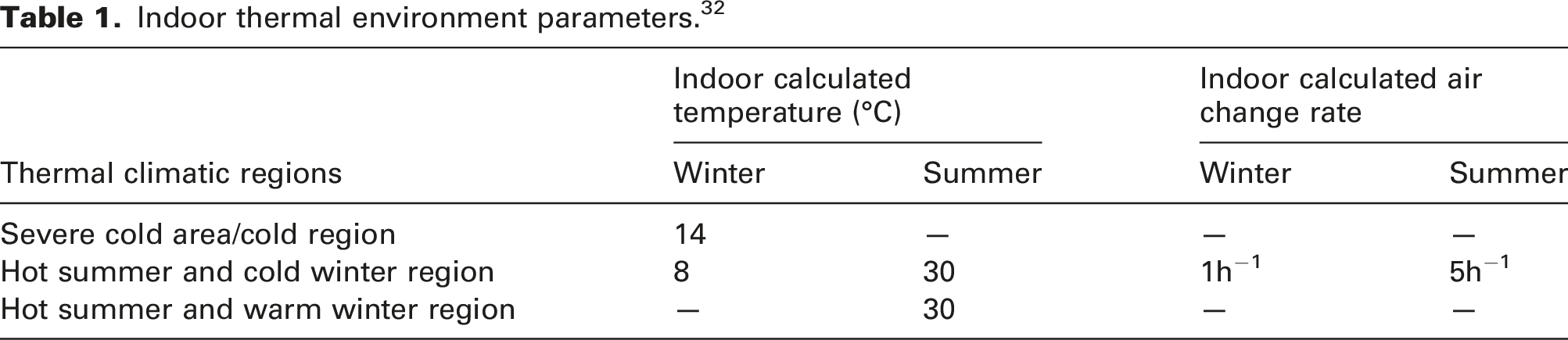
Qinba mountainous area is an important geographical and climate buffer zone between the north and south of China, 31 having a large number of traditional dwellings. Our research team has been studying the traditional dwellings in this area for years and found some problems. As shown in Figure 2, from September 2018 to September 2020, our research team investigated 51 villages in the southwestern part of the Qinba mountainous area and collected 195 valid questionnaires. The main contents of the survey were the current condition of traditional dwellings, the subjective feeling of residents, and the passive design technologies of the constructions. Through the field research and questionnaire analysis, the following problems were found: (1) The physical environmental measurements of traditional dwellings showed that during the winter measurement day, the outdoor temperature was 1.0 ∼ 11.9°C, the outdoor humidity was 57.0% ∼ 92.9%, the indoor temperature was 3.4 ∼ 8.7°C and the indoor humidity was 64.0% ∼ 80.4%. In winter, the indoor temperature during the measurement day was lower than the limit requirement of 8.0°C, 32 and the indoor humidity was greater than 70% most of the time. On the summer test day, the outdoor temperature was 21.7 ∼ 34.2°C, the outdoor humidity was 41.9% ∼ 85.5%, the indoor temperature was 21.5 ∼ 31.2°C and the indoor humidity was 54.3% ∼ 81.4%. In summer, the indoor temperature met the limit requirement of 30°C most of the time, and the indoor humidity met the indoor humidity requirement 32 for 41% of the day. (2) The humid and cold environment could make people feel even colder in winter. Under the condition of heating in winter during the measurement period, with the low temperature and relatively high humidity, which was more than 70% in more than half of the day. 57.48% ∼ 71.65% of residents considered the indoor thermal environment was cold or very cold. (3) The building energy consumption was comparatively high. In winter, 94.49% of households utilized a stove for heating, and each household consumed an average of 1.5 tons of coal and 4.40 × 10⁷ kJ of energy. (4) The thermal performance of the building envelope is poor. The heat transfer coefficients of exterior walls, roof and windows were 2.35 W/(m2·K), 5.88 W/(m2·K) and 6.26 W/(m2·K), respectively. These were much greater than the requirements 32 of 1.5 W/(m2·K), 0.8 W/(m2·K) and 3.2 W/(m2·K), respectively.
Based on the problems we discovered about the indoor thermal environment of traditional dwellings in the Qinba mountainous area and the passive strategies we investigated, the purpose of this study is to analyze the effectiveness of the common passive design parameters for the overall energy-saving performance, then determine how energy consumption could be minimized by the optimal combination of the effective passive design parameters. This research would contribute to the optimal combination of passive design strategy for the renovation of the traditional dwellings in the Qinba mountainous area to improve the building energy performance while satisfying the indoor thermal comfort.
Overview of the research object
Research area
Qinba mountainous area lies virtually at the centre of China, shown in Figure 1(a), at the junction of Shaanxi, Henan, Sichuan, Hubei, Gansu Province and Chongqing City. It is on the border of China’s geographical and climate regions, dominated by numerous mountains, hills and valleys, having the climatic features of hot summer and cold winter region and cold region.
31
Generally, it is a geographical region with poor weather conditions, with high temperatures and high humidity in the summer and low temperatures and high humidity in the winter, resulting in a low degree of comfort.
33
The annual average air temperature in this area is 12 ∼ 15°C, with a relative humidity of 70% ∼ 80% all year around.
5
The Location of Qinba mountainous area.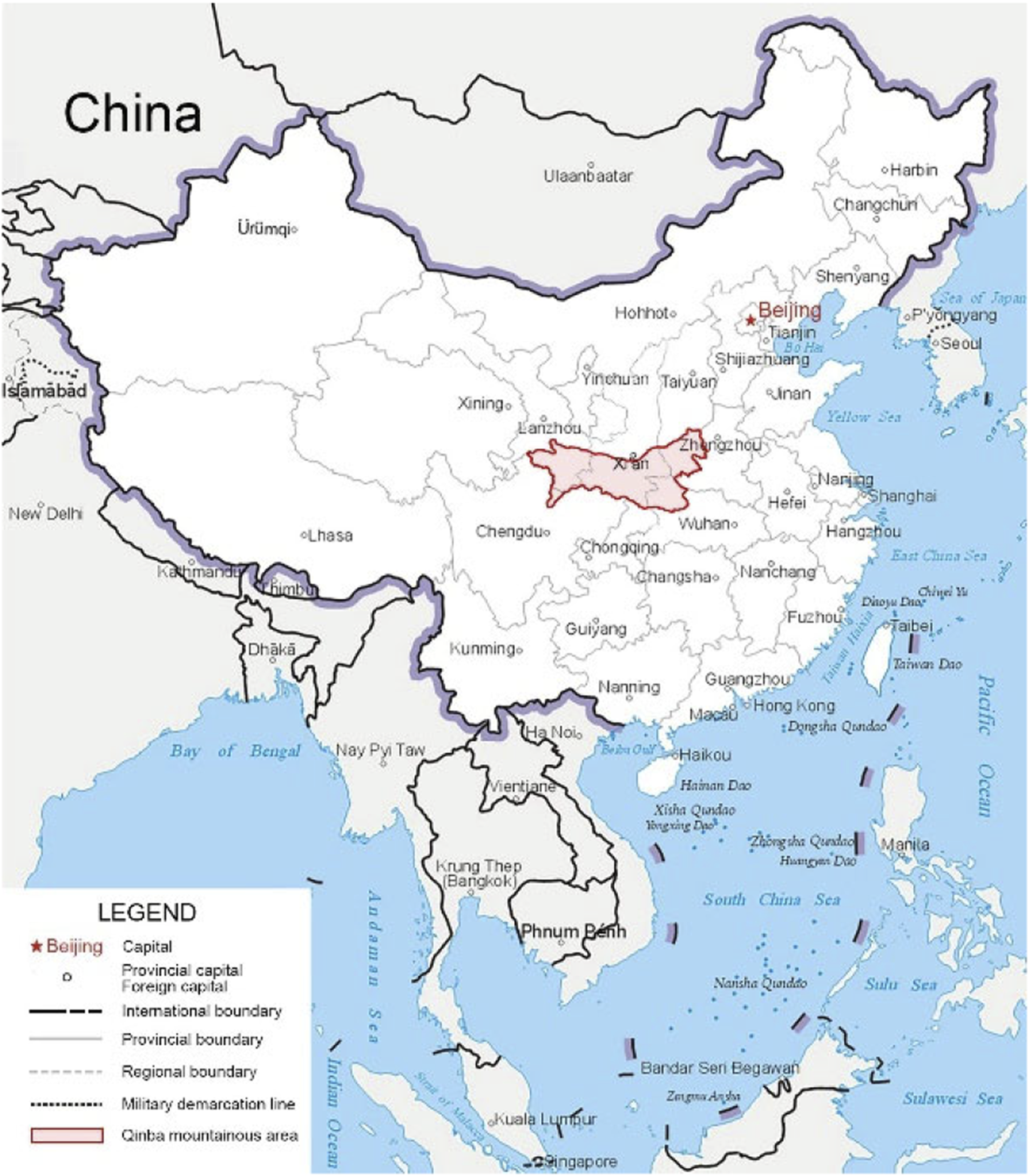
Qinba mountainous area, with its vast landmass and large population, has differences in building structures and envelopes in various regions, so is necessary to study the traditional dwelling in the subregions. According to the investigation result of our research group, the traditional dwellings in Qinba mountainous area showed a trend of decreasing from southwest to northeast in the width of the rooms, the south-facing window to wall ratio, the slope of the roof and the degree of architectural decoration. The dwellings in the southwestern part of the Qinba mountainous area are highly uniform in the building forms and materials, with column and tie wooden construction, long overhang eaves and bamboo clay envelopes.
34
As a result, the southeastern part of the Qinba mountainous area was chosen as the study area in this research, as shown in Figure 2. The key areas and villages of the southeast part of the Qinba mountainous area.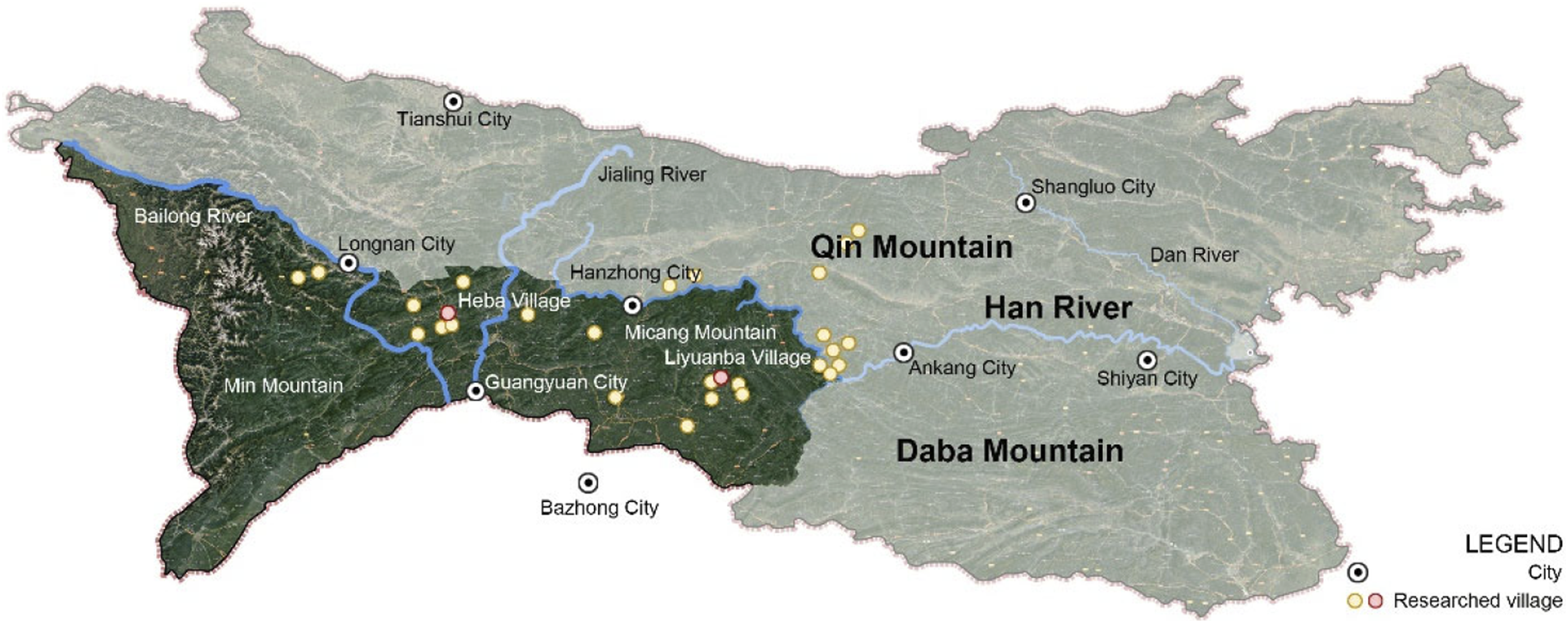
Research structure
The purpose of this research is to define the energy sensitivity of each passive design parameter and to obtain the optimal combination of passive strategies that is suitable for the Qinba mountainous area. Primarily, our research team surveyed the typical traditional dwelling in the southwest part of the Qinba mountainous area. Subsequently, through the literature analysis and computer simulation, each passive design parameter was subjected to a single control variable study to determine its efficacy, and four effective ones were chosen for the reconstruction of traditional dwellings in this area. Furthermore, the orthogonal arrays and range analysis were used to identify the optimal level of each parameter, so as to obtain the optimal combination for the passive design. Lastly, the effectiveness of the passive combination strategy was evaluated by computer simulation. The research framework is shown in Figure 3. Research framework.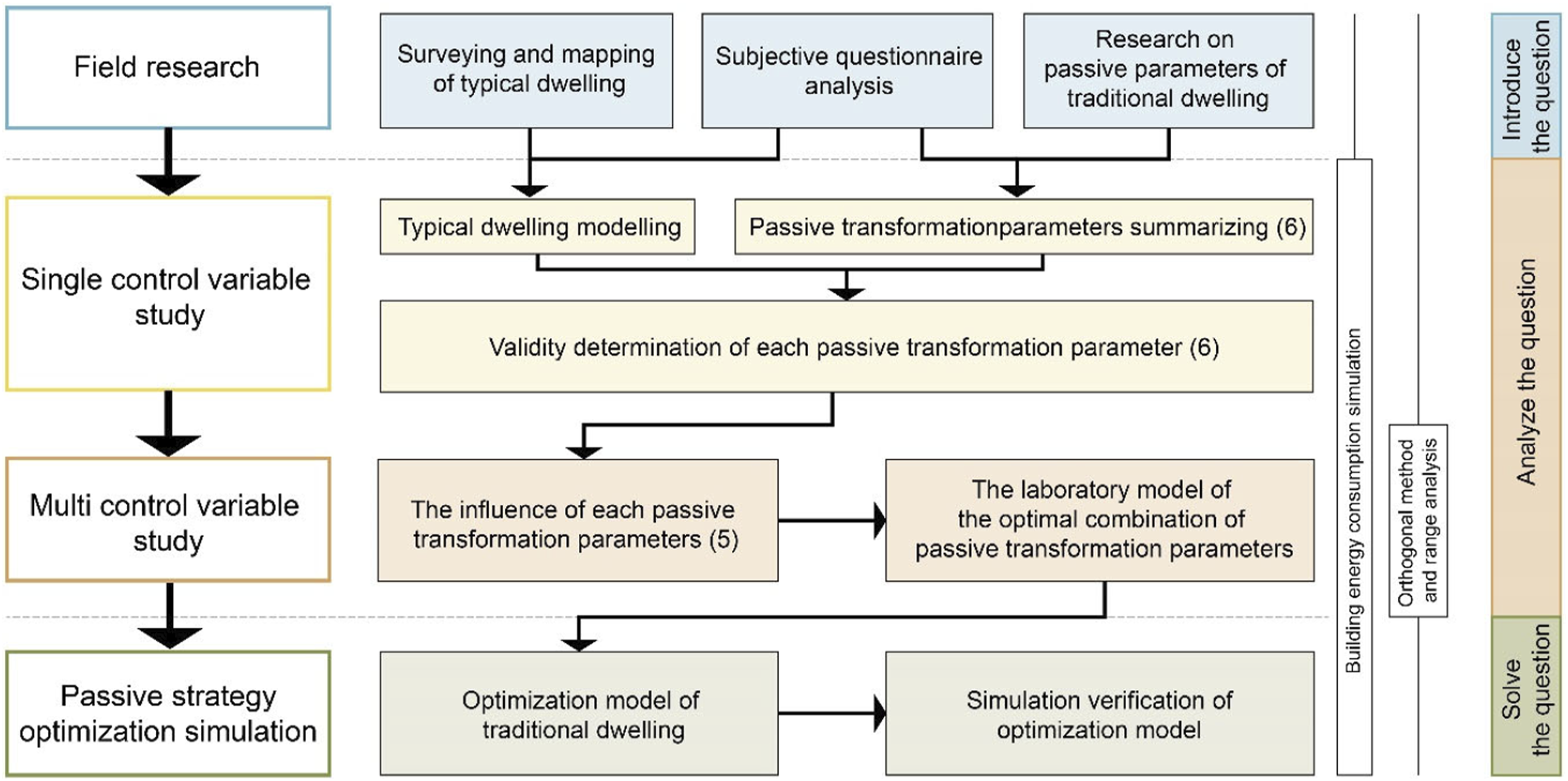
Dwelling description
In this study, the Mashengkai courtyard was chosen as the key research object as it has a typical building form and good construction quality, as shown in Figure 4. This dwelling is located in Liyuanba Village in Bazhong City, listed in the third batch of Chinese Traditional villages. These traditional dwellings were constructed with local materials that are inexpensive and easy to construct. The dwelling presents a quadrangle courtyard, and the main building in this courtyard has a column and tie wooden structure, with bamboo clay walls, tile roof and single glass wooden windows. The building area is 366.42 m2, with a shape coefficient of 0.59. The partially two storey parts have a 1.3 m overhang, and 0.6 m overhang in the eaves. (a) The current condition of the dwelling measured; (b) the layout of the dwelling measured; (c) the physical model of the dwelling measured.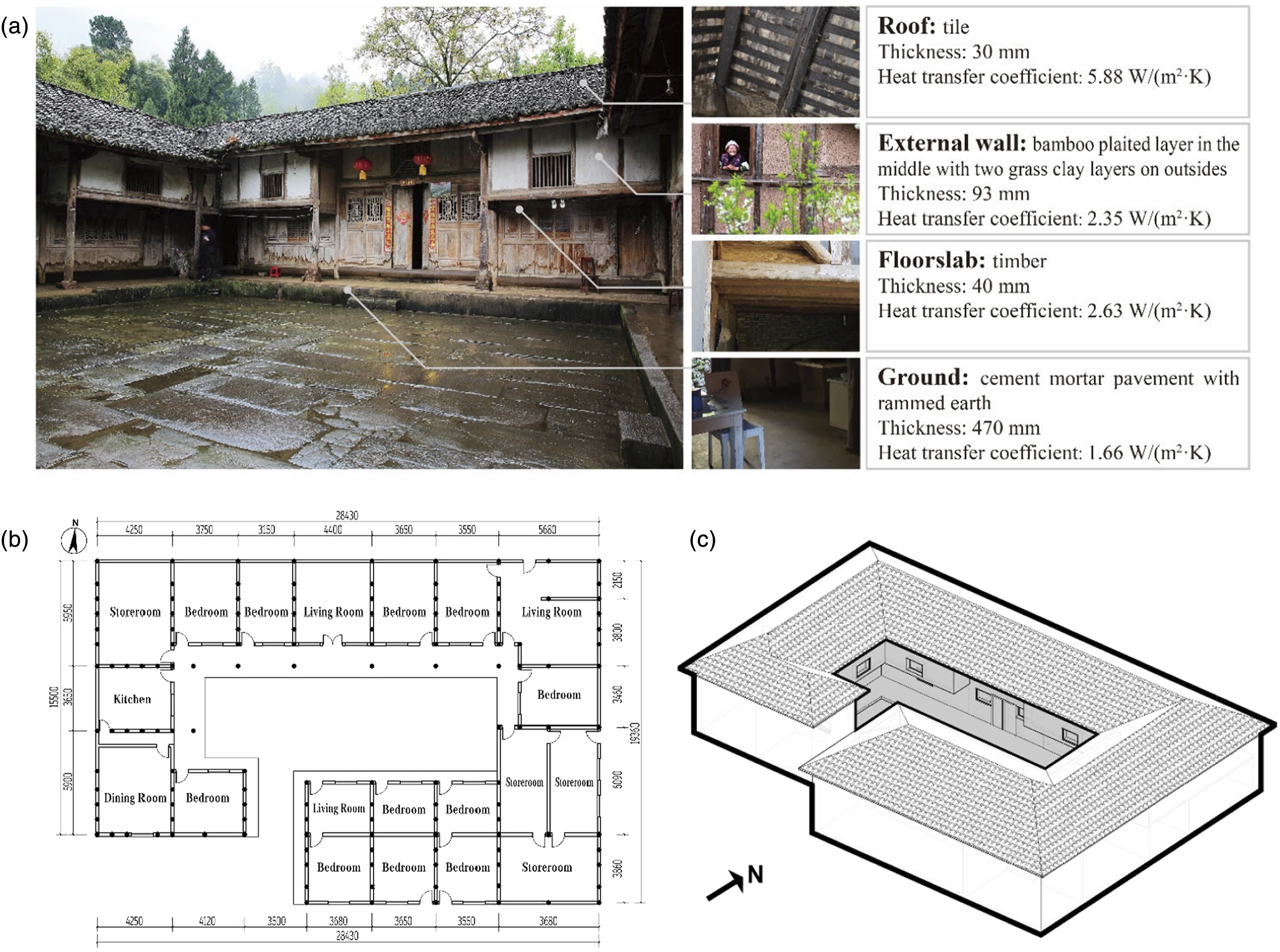
Effectiveness of the single control variable by computer simulation
Computer simulation
In this study, DesignBuilder V6 software and Wudu Meteorological Station typical meteorological data (CSWD) were utilized for energy simulation, as shown in Figure 5. (a) The dry bulb temperature of typical meteorological years in Bazhong City; (b) the relative humidity of typical meteorological years in Bazhong City.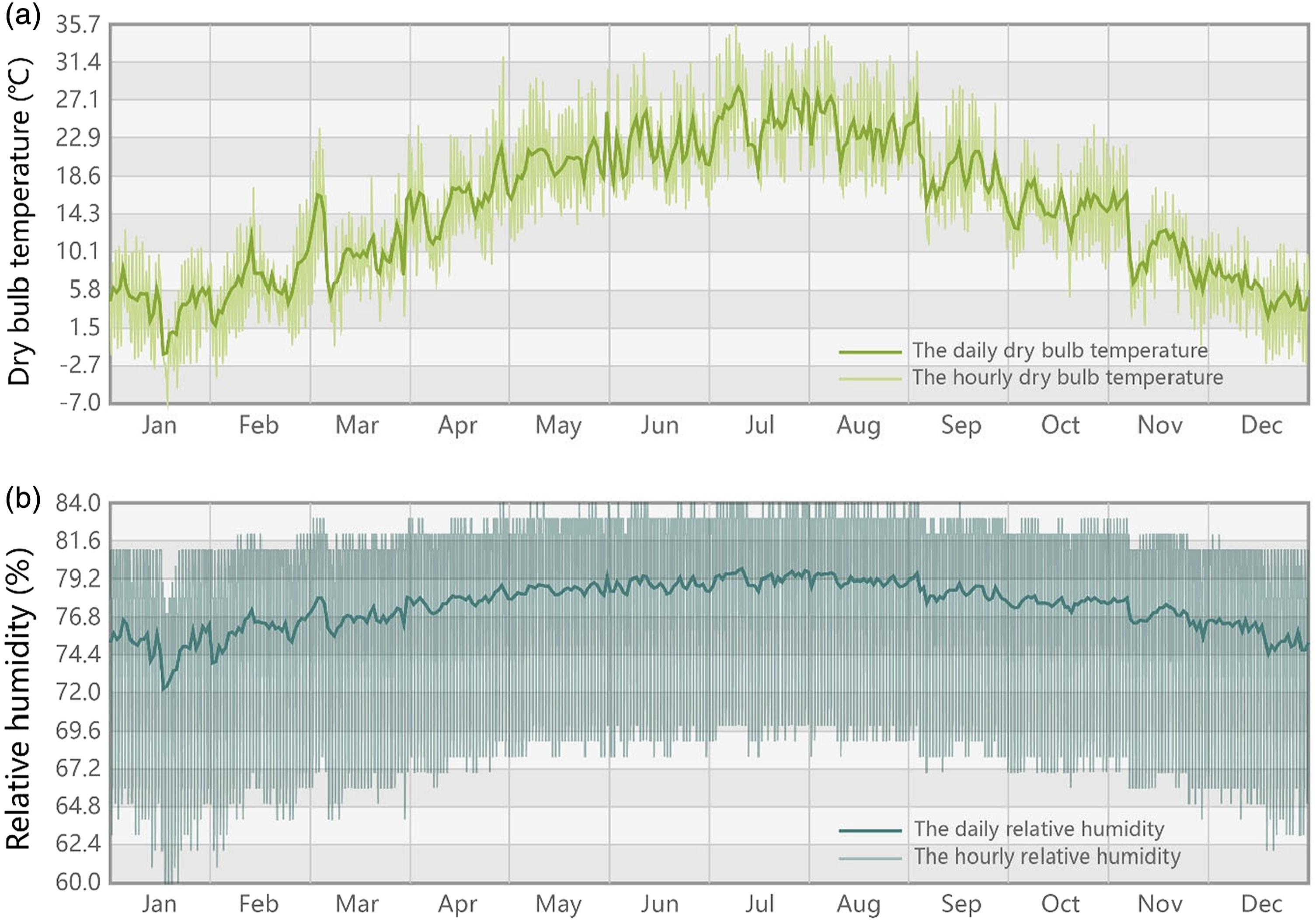
Indoor thermal environment parameters. 32
Passive design parameters
According to the site survey, the traditional dwellings in the Qinba mountainous area used low-cost construction technologies and passive strategies with environmental adaptability that could improve its indoor thermal environment to a certain extent. Based on the literature review and extraction of passive strategies commonly used in hot summer and cold winter areas, our research team screened the passive design parameters that are relatively important to building energy consumption, including building orientation (BO), sunroom depth (SD), overhang depth (OD), courtyard size (CS), window-wall ratio (WWR), window heat transfer coefficient (WHTC), external wall heat transfer coefficient (EWHTC) and roof heat transfer coefficient (RHTC).34,36-41 Since the focus of this study was the transformation of traditional dwellings, passive design parameters such as BO and CS are not applicable to the renovation of old buildings. As a result, the selected six passive design parameters suitable for this research are SD, OD, WWR, WHTC, EWHTC and RHTC. Meanwhile, the economic effectiveness of the renovation of traditional dwellings should be taken into account. Therefore, only the living room, dining room and bedrooms were considered to be renovated. The total area is 248.2 m2, which was used to simulate the thermal environment and to calculate the energy consumption.
Single control variable Analysis
A: SD (Sunroom depth). The southward sunroom has the greatest influence on energy consumption in winter and summer,42,43 so this study only evaluated the sunroom added to the south. The 0.6 m ∼ 1.5 m deep sunroom is appropriate if it is utilized as a functional space.
32
Furthermore, the 1.3 m deep overhang on the upper floor made the sunroom as no more than 1.3 m in order to maintain the facade’s attractiveness. Therefore, in this study, 0.6 m ∼ 1.3 m sunroom depth was set to simulate the annual energy consumption. As shown in Figure 6(a), the sunroom depth was negatively correlated with the annual building energy consumption of the simulated dwelling. Without the sunroom, the annual energy consumption per building area was 45.32 kWh. When the depth of the sunroom was extended from 0.6 m to 1.3 m, the annual energy consumption per the building area was reduced from 43.04 kWh to 41.65 kWh. The energy consumption of the renovated dwelling can be reduced by 5.0% ∼ 8.1% compared with that of the original one. (a) The relationship between the depth of the sunroom and the building energy consumption; (b) the relationship between the external wall heat transfer coefficient and the building energy consumption; (c) the relationship between the roof heat transfer coefficient and the building energy consumption; (d) the relationship between the window heat transfer coefficient and the building energy consumption; (e) the relationship between the window-wall ratio and the building energy consumption; (f) the relationship between the overhang depth and the building energy consumption.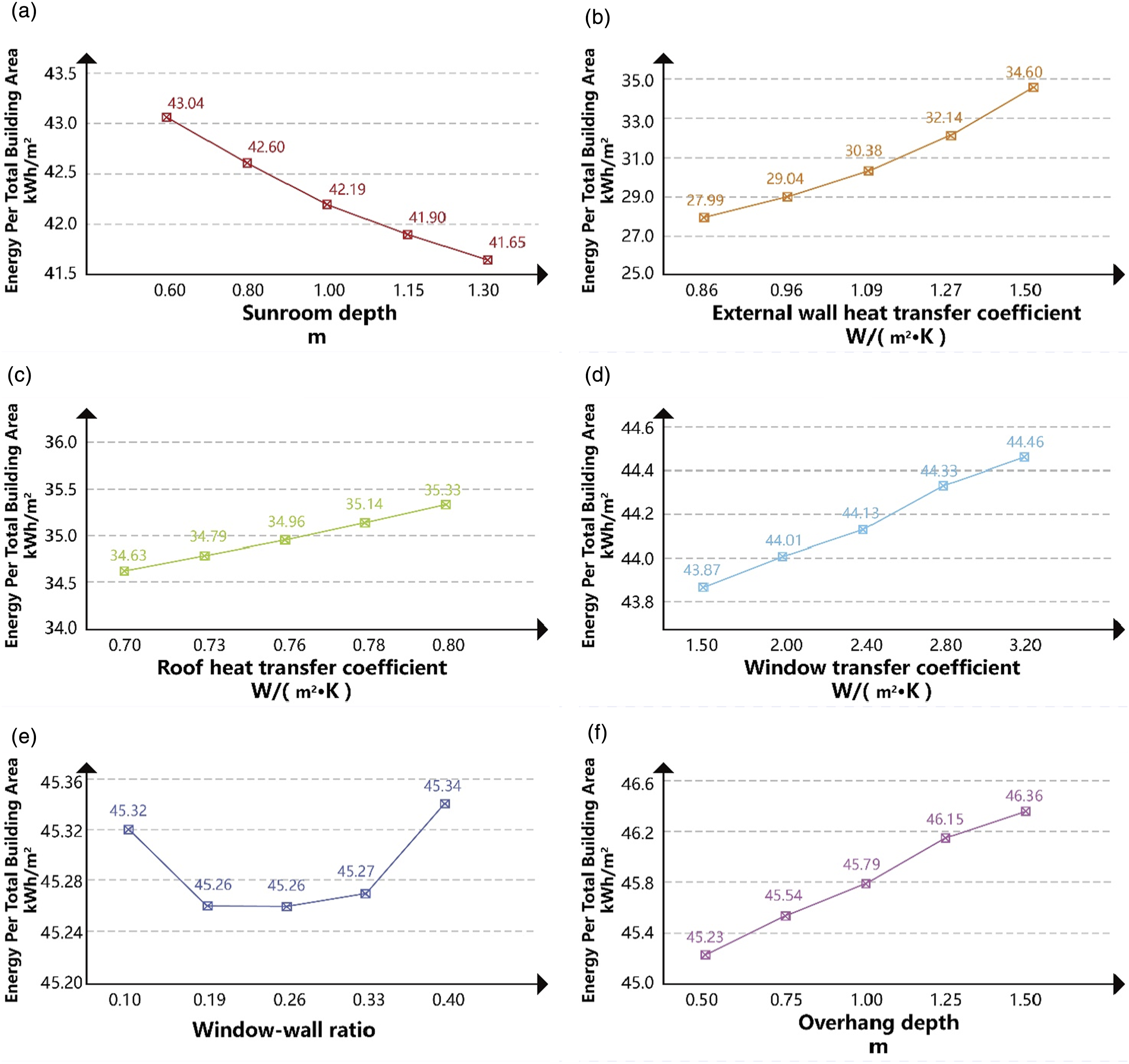
B: EWHTC (external wall heat transfer coefficient). A good thermal insulation and heat storage effect on the exterior wall might ensure a steady interior thermal environment and thermal comfort.27,44 In hot summer and cold winter region, the exterior wall heat transfer coefficient should not exceed 1.50 W/(m2·K). 32 The insulation layer added to the exterior wall is recommended to use the EPS insulation board with a thickness of 20 ∼ 30 mm in rural area in the hot summer and cold winter region. 32 When a 30 mm thick EPS insulation board was utilized for building renovation, the exterior wall heat transfer coefficient of the simulated dwelling was reduced from 2.35 W/(m2·K) to 0.86 W/(m2·K). Therefore, in this study, the exterior wall heat transfer coefficient was set as 0.86 W/(m2·K) ∼ 1.50 W/(m2·K) to simulate the annual energy consumption. As shown in Figure 6(b), the external wall heat transfer coefficient is positively correlated with the annual building energy consumption of the simulated dwelling. When the external wall heat transfer coefficient was reduced from 1.5 W/(m2·K) to 0.86 W/(m2·K), the annual energy consumption per building area would be reduced from 34.60 kWh to 29.77 kWh. The energy consumption of the renovated dwelling can be reduced by 23.7% ∼ 38.2% compared with that of the original one.
C: RHTC (roof heat transfer coefficient). Building roofs with adequate insulation and heat storage could also help to minimize the building energy consumption. In hot summer and cold winter region, the roof heat transfer coefficient should not exceed 0.80 W/(m2·K). The insulation layer added to the roof is recommended to use the EPS insulation board with the thickness of less than 50 mm in housing in hot summer and cold winter rural area. 32 When 50 mm thick EPS insulation board was added for building roof, the roof heat transfer coefficient of the simulated dwelling would be reduced from 5.88 W/(m2·K) to 0.70 W/(m2·K). Therefore, in this study, the roof heat transfer coefficient was set as 0.70 W/(m2·K) ∼ 0.80 W/(m2·K) to simulate the annual energy consumption. As shown in Figure 6(c), the roof heat transfer coefficient is positively correlated with the annual building energy consumption of the simulated dwelling. When the roof heat transfer coefficient is reduced from 0.80 W/(m2·K) to 0.70 W/(m2·K), the annual energy consumption per building area would be decreased from 35.33 kWh to 34.63 kWh. The energy consumption of the renovated dwelling can be reduced by 22.0% ∼ 23.6% compared with that of the original one.
D: WHTC (window heat transfer coefficient). The window with a low heat transfer coefficient could limit the heat transfer between indoor and outdoor temperature differences and manage the indoor solar heat gain. 45 In hot summer and cold winter regions, the window heat transfer coefficient should between 1.50 W/(m2·K) and 3.20 W/(m2·K). 32 Therefore, in this study, the window heat transfer coefficient was set as 1.50 W/(m2·K) ∼ 3.20 W/(m2·K) to simulate the annual energy consumption. As shown in Figure 6(d), the window transfer coefficient is positively correlated with the annual building energy consumption of the simulated dwelling. When the window heat transfer coefficient was reduced from 3.20 W/(m2·K) to 1.50 W/(m2·K), the annual energy consumption per building area would be decreased from 43.87 kWh to 44.46 kWh. The energy consumption of the renovated dwelling can be reduced by 3.2% ∼ 1.9% compared with that of the original one.
E: WWR (window-wall ratio). Some studies indicate that the window-wall ratio in the southern wall of a building has a considerable impact on building energy usage. 25 In this study, according to the building style with a 0.8 m window height of a dwelling in the Liyuanba area, the window-wall ratio was modified by altering the window width, obtaining the result with the maximum allowable window-wall ratio of 0.4. As the measured window-wall ratio of traditional dwellings in this area is 0.1, this study set the window-wall ratio to 0.1 ∼ 0.4 to simulate the building’s annual energy consumption. As shown in Figure 6(e), the window-wall ratio is negatively correlated with the annual building energy consumption of the simulated dwelling. When the window-wall ratio was extended from 0.1 to 0.4, the annual energy consumption per building area was reduced to 45.26 kWh, and then this was increased to 45.34 kWh, showing a trend of decline and then rise. The energy consumption fluctuation range is very small, only accounting for −0.04% ∼ 0.13%.
F: OD (overhang depth). The building overhang could change the indoor thermal environment by affecting the solar radiation. At the same time, the depth of the overhang would affect the indoor lighting and ventilation. For the sloped roofs without an organized drainage system, the depth of the building overhang should not be less than 0.5 m. 46 Therefore, in this study, the depth of the overhang was set from 0.5 m to 1.5 m to simulate the building energy consumption. As shown in Figure 6-(f), the overhang depth is positively correlated with the annual building energy consumption of the simulated dwelling. When the overhang depth was increased from 0.5 m to 1.5 m, the annual energy consumption per building area would be increased from 45.21 kWh to 46.23 kWh. The energy consumption of the renovated dwelling can be reduced by 0.20% ∼ −2.3% compared with that of the original one.
Effectiveness identification of single control variable
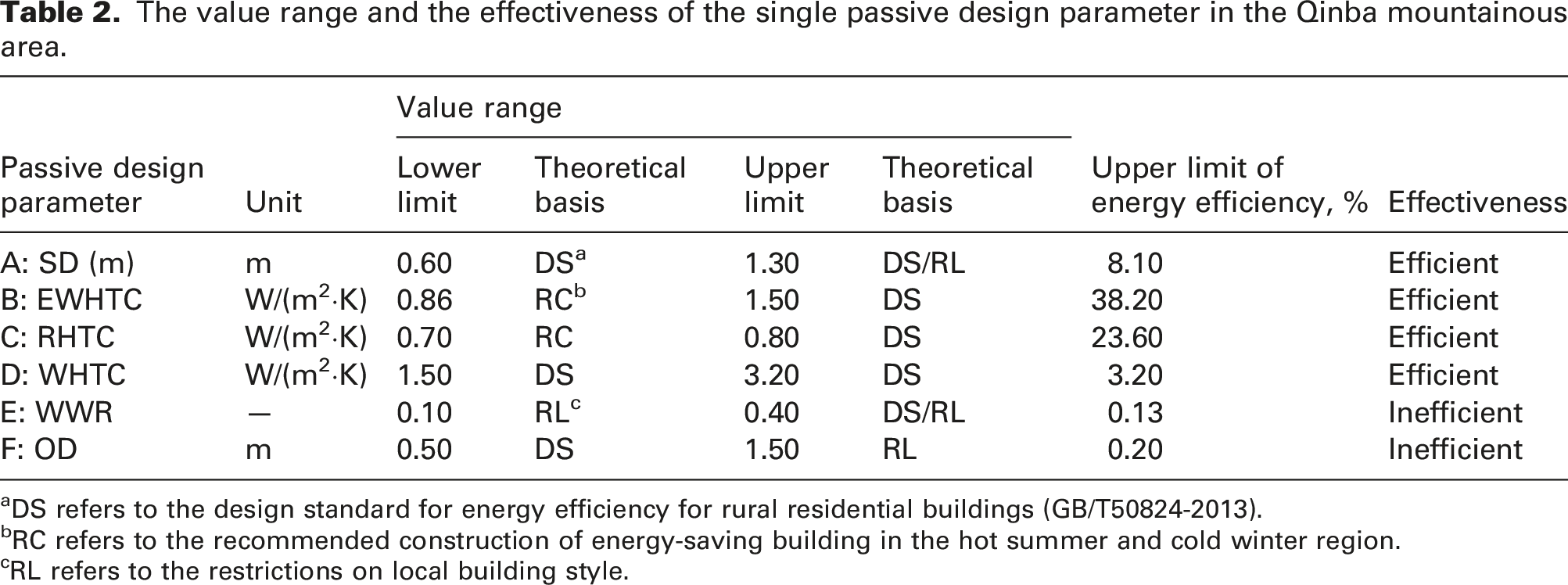
The value range and the effectiveness of the single passive design parameter in the Qinba mountainous area.
aDS refers to the design standard for energy efficiency for rural residential buildings (GB/T50824-2013).
bRC refers to the recommended construction of energy-saving building in the hot summer and cold winter region.
cRL refers to the restrictions on local building style.
Evaluation of the optimal combination of the multi controlled variables by orthogonal method
The multi controlled variables study employs the orthogonal array and range analysis to evaluate the influence of five selected parameters and their interactive effects and evaluated the preferable level between each parameter to obtain the optimal combination of them.
Orthogonal method
To discover the relative importance of each parameter on building energy consumption, all other parameters should be maintained constant while one variable was adjusted to examine how the results would change. Even if four variables in Table 1 were altered on only four levels, as many as 44 (= 256) simulations would be required, making the analysis nearly unfeasible. The orthogonal arrays involved the selection of a subset of the entire simulation to obtain the same experimental results, which would reduce the number of simulations in this research to 16 times.
Multi controlled variables study
Passive design parameters and their values for optimization.
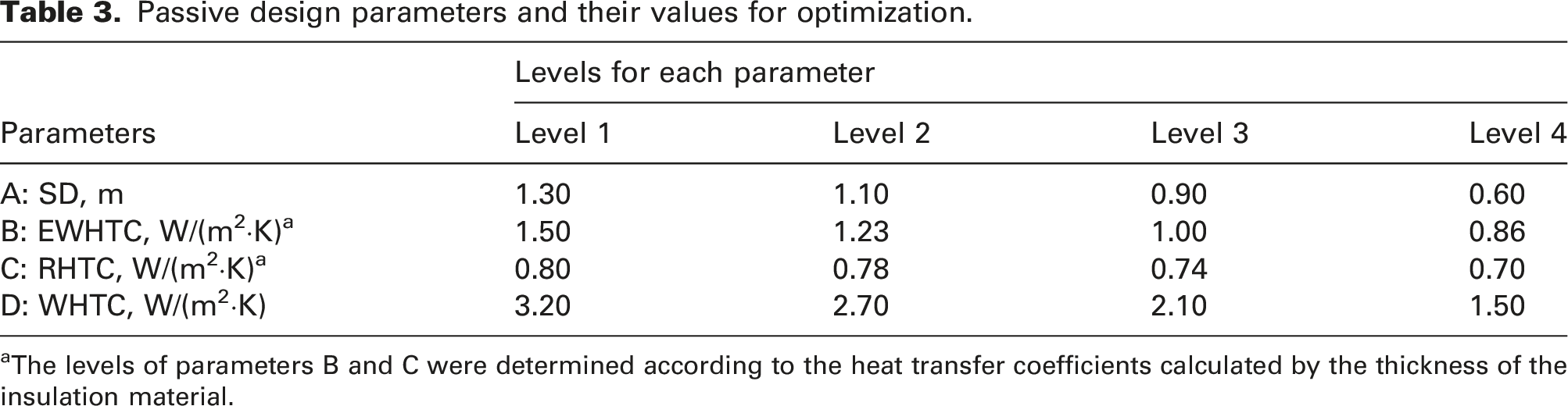
aThe levels of parameters B and C were determined according to the heat transfer coefficients calculated by the thickness of the insulation material.
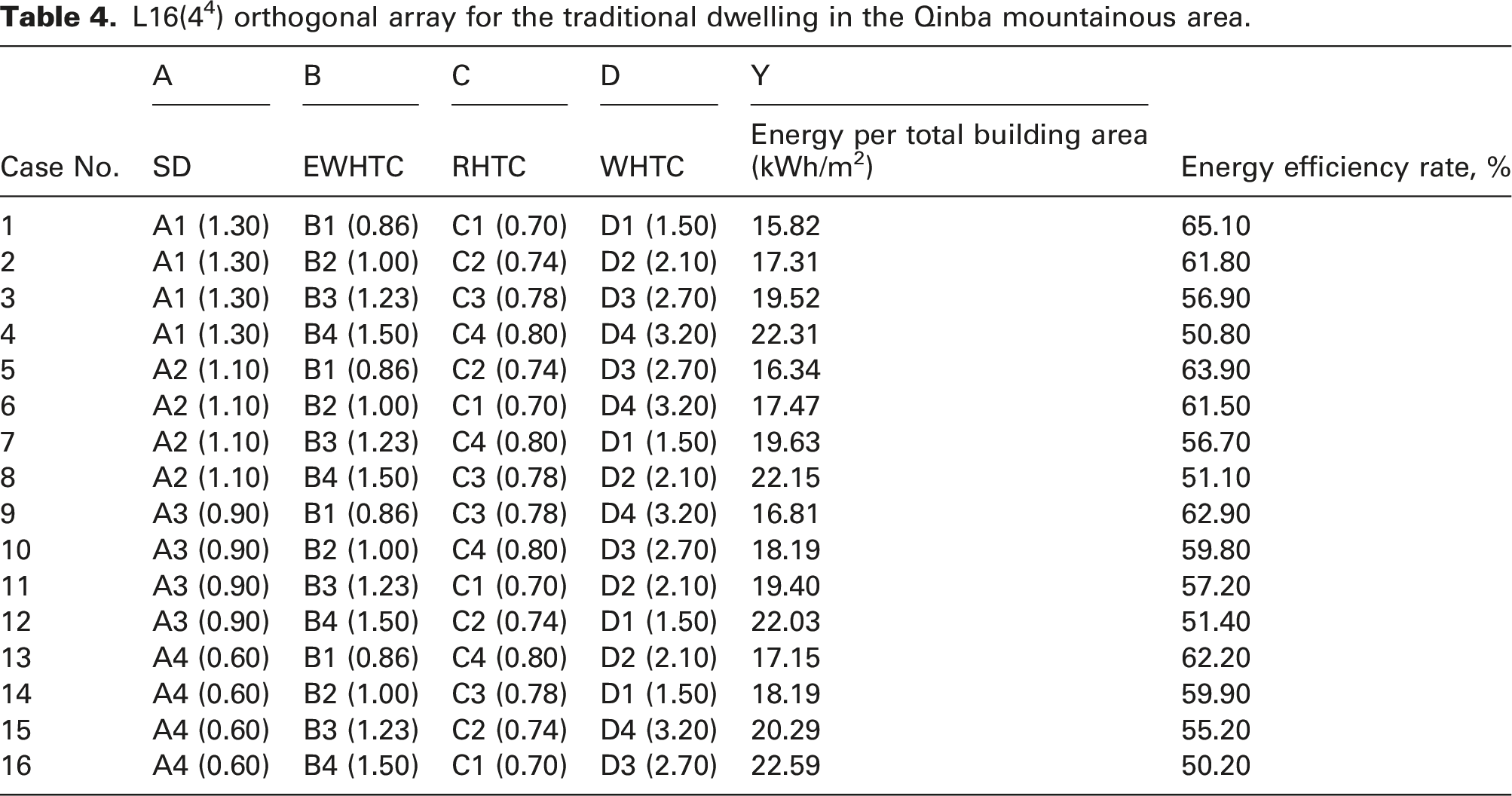
L16(44) orthogonal array for the traditional dwelling in the Qinba mountainous area.
Optimal combination identification of multi controlled variables
The significance of each parameter
The simulation results were subjected to a range analysis. Equations (1) and (2) were used to calculate the relative importance of each parameter.

In Equations (1) and (2),
The difference in the range of each parameter indicates its different influence on the building energy consumption. The larger the range is, the greater the influence of this parameter on the total annual energy consumption. The simulation results in Table 4 were put into Equations (1) and (2) giving results as shown in Equation (3)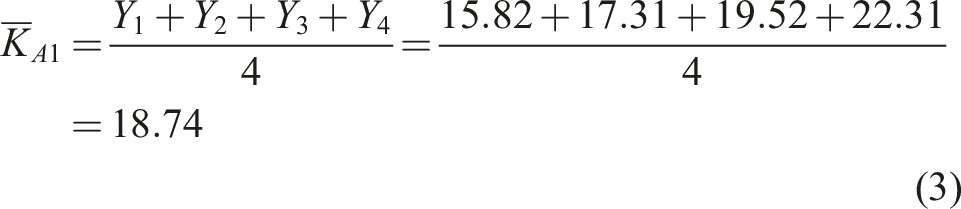

The influence result of multi control variable.
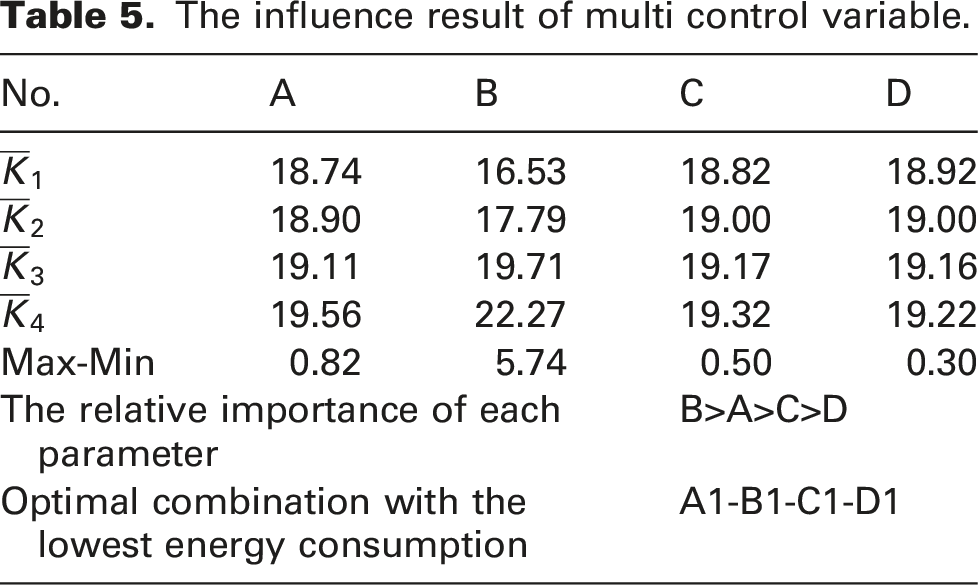
As shown in Table 5, the calculation result is RB>RA>RC>RD, presenting that the passive design parameters that have the greatest influence on the building energy consumption in traditional dwellings in the Qinba mountainous area is the exterior wall heat transfer coefficient, followed by the south-facing sunroom, the roof and the window heat transfer coefficient, respectively. The optimal combination of passive design parameters with the energy consumption of traditional dwellings in this area is A1-B1-C1-D1, which is the dwelling with a 1.3 m deep sunroom, and has 0.86 W/(m2·K), 0.70 W/(m2·K) and 1.5 W/(m2·K) heat transfer coefficients of exterior walls, roof and window, respectively. The energy consumption per total building area of this model is 15.82 kWh.
The energy efficiency analysis of the combination
Through the orthogonal array simulation, the energy-saving efficiency of 16 schemes were calculated, as illustrated in Figure 7. According to China’s building energy conservation targets,
47
the passive optimization of traditional dwellings shows positive results, as shown in the 16 schemes, 1 scheme has the energy conservation rate greater than 65%, 15 schemes have the energy conservation rate between 50% and 65%. Among them, No.1 scheme has the greatest energy-saving rate of 65.1%. No.2, No.5, No.6, No.9 and No.13 schemes have the relatively high energy-saving rate, of 61.8%, 63.9%, 61.5%, 62.9% and 62.2%, respectively. Energy-saving efficiency of the orthogonal experiments.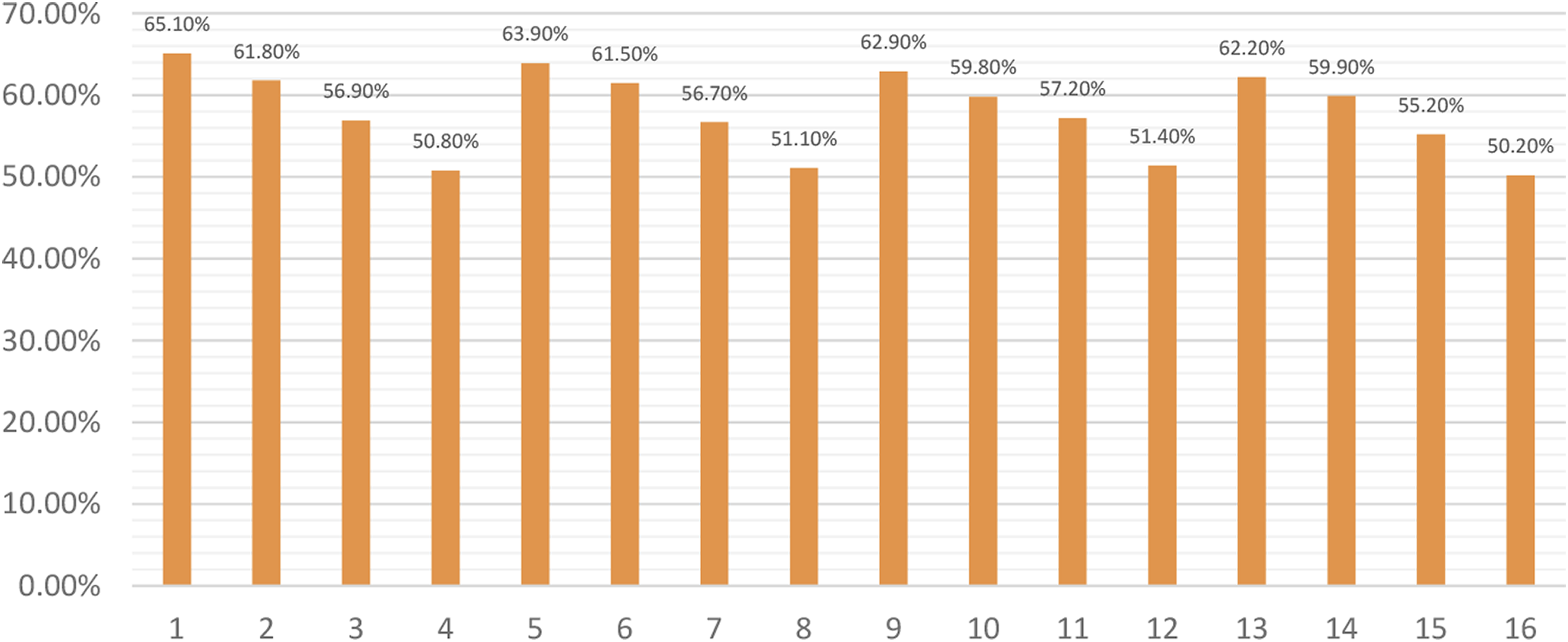
Simulation of the optimization model of traditional dwellings in the Qinba mountainous area
Optimization model of traditional dwellings
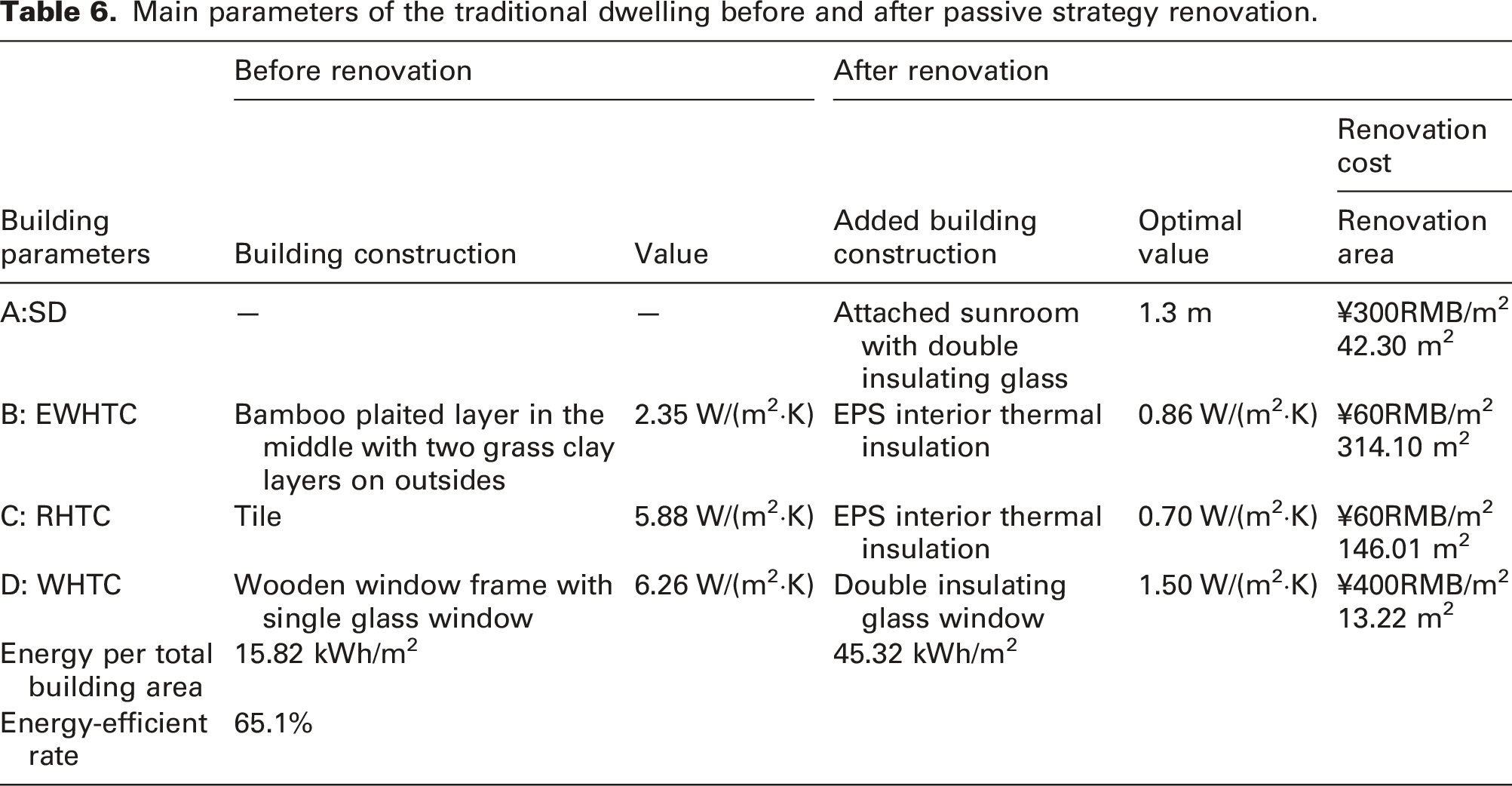
Based on the orthogonal array and range analysis, the optimal passive strategy combination of traditional dwellings in the Qinba Mountainous area was obtained. No.1 scheme showed the combination of A1-B1-C1-D1 has the lowest annual energy consumption per building area of 15.82 kWh/m2 compared with the original one of 45.32 kWh/m2, with an energy efficiency rate of 65.1%.
The construct details and main technical specifications of the passive design parameters before and after renovation are shown in Figure 8 and Table 6. In this research, the No.1 scheme was chosen as the optimization model to further investigate its thermal performance. (a) The improved rooms; (b) the improved model; (c) structural diagram of the typical traditional dwelling before renovation; (d) structural diagram of the typical traditional dwelling after renovation. Main parameters of the traditional dwelling before and after passive strategy renovation.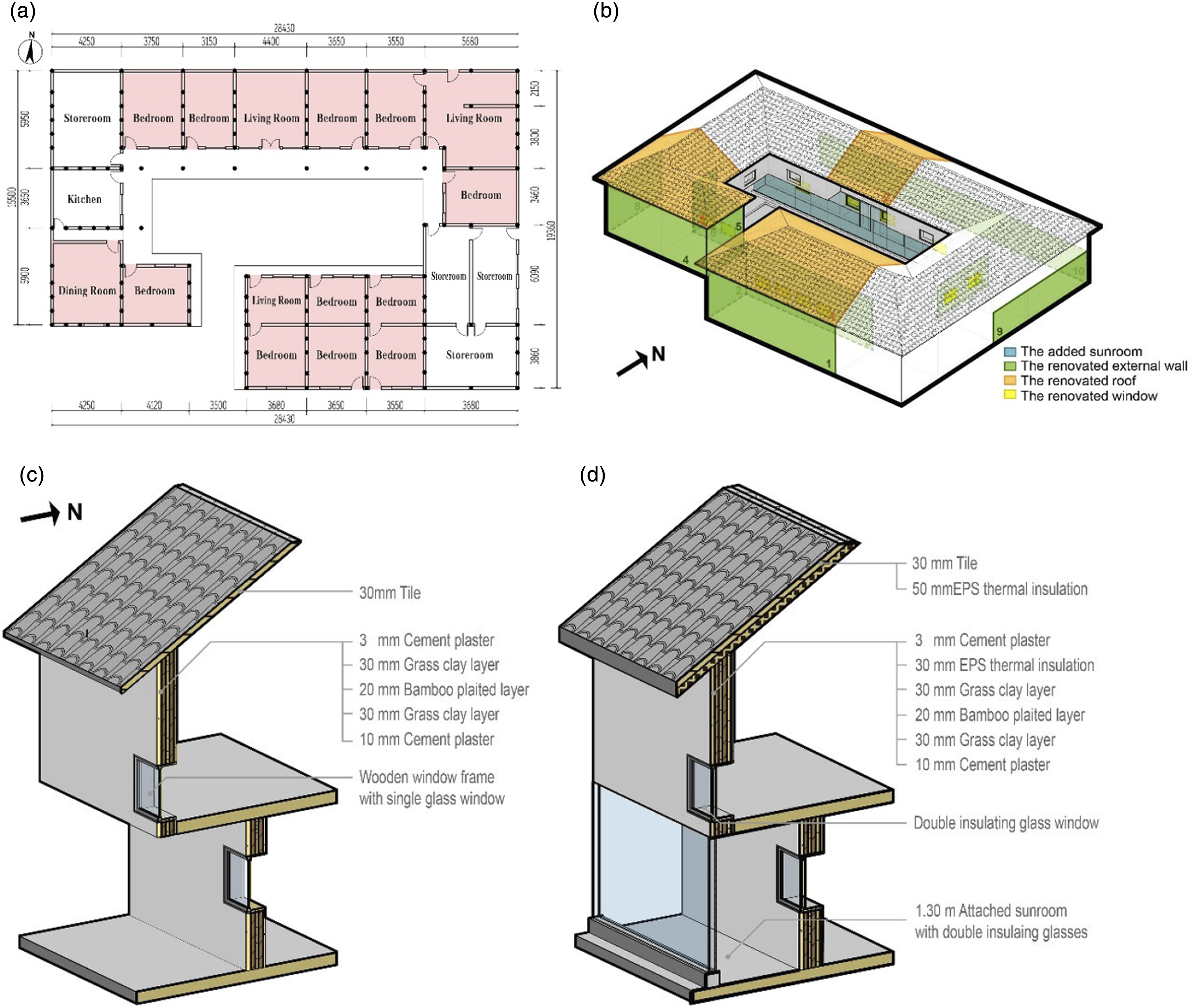
Economic efficiency assessment of the optimization model of the traditional dwelling
As the reconstruction cost of the traditional dwelling is also an important factor to be considered in our research, it requires a reasonable solution that falls within a workable range. Figure 8 and Table 6 show the renovation parts and costs, and the reduction in electricity costs, which were used to calculate the capital payback period. The following text was used to illustrate the basis of the calculation: (1) The renovation funds of traditional houses in rural areas were mainly raised by farmers themselves, supplemented by government subsidies. The Sichuan provincial government, where Liyuanba Village is located, subsidized ¥6000 RMB for renovations and improvements for each traditional dwelling. (2) The residential buildings have a tiered electricity rate in Bazhong City. The graded electricity prices are ¥0.49RMB/kWh for the annual electricity consumption of less than 2160 kWh, ¥0.54RMB/kWh for the annual electricity consumption of between 2161-4200 kWh and ¥0.82RMB/kWh for the annual electricity consumption of more than 4201 kWh, respectively. (3) As shown in Table 6, according to the actual engineering practice,48,49 the cost of materials and labour for the reconstruction of the EPS interior thermal insulation with cement plaster is ¥60RMB/m2. The total price of the double insulating glass window is ¥400RMB/m2. The total price of the attached sunroom with double insulating glass is ¥300RMB/m2.
According to Table 6, the annual energy consumption of No. 1 scheme per building area before renovation is 45.32 kWh and after renovation is 15.82 kWh. As shown in Figure 9, based on the calculation, the capital payback period for the No. 1 scheme is the shortest over 6.3 years. Under normal circumstances, the service life of building insulation materials is no less than 25 years, and the service life of building doors and windows is 10–30 years. Therefore, the renovation of traditional dwellings in the Qinba mountainous area is of significance both from the perspective of economy and sustainable development. The payback period of capital of the traditional dwelling’ renovation.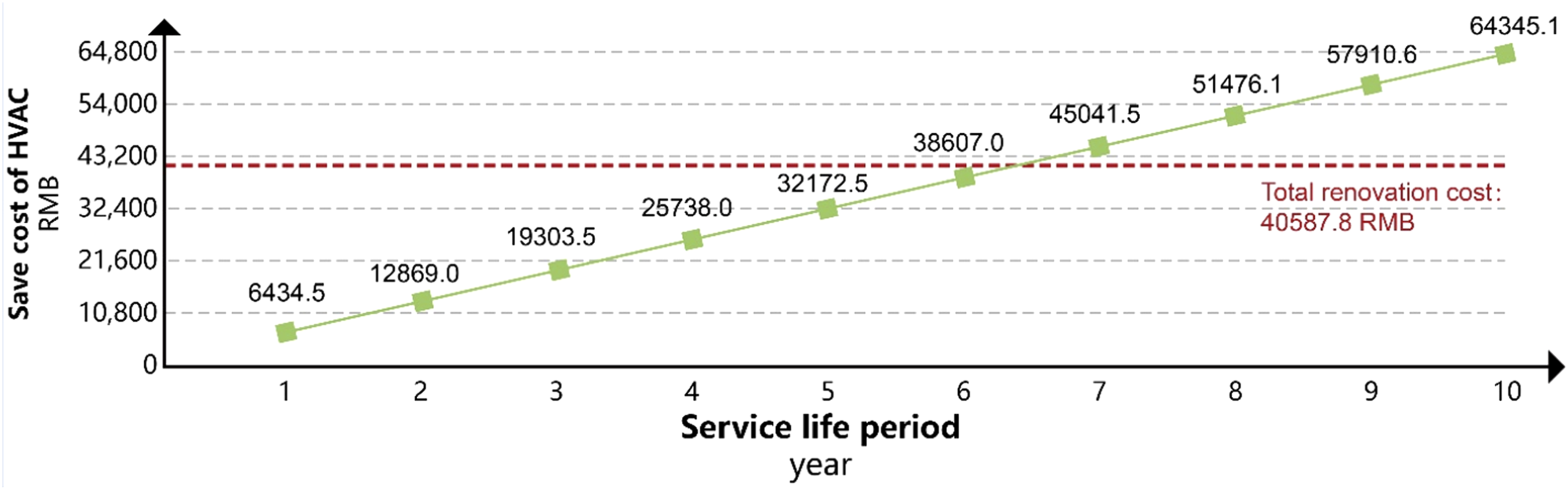
Temperature and humidity simulation of the traditional dwelling before and after optimization
In order to verify the influence of the passive optimization strategy on the indoor temperature and humidity of traditional dwellings, this study simulated the indoor air temperature, the mean radiant temperature and the relative humidity of the research model before and after renovation in winter and summer. DesignBuilder V6 software was used for the simulation, and the main simulation parameters were set according to Table 6. The simulation period in winter and summer was set at the winter design week from 15 January to 21 January and summer design week from 9 July to 15 July, respectively. Without using heating and cooling equipment, the variation curves of the indoor air temperature, the mean radiation temperature and the indoor relative humidity of the simulated traditional dwelling before and after renovation in the winter and summer design week are shown in Figures 9 and 10. The thermal environment of the typical tradition dwelling before and after renovation in winter design week: (a) the air temperature; (b) the mean radiant temperature; (c) the relative humidity.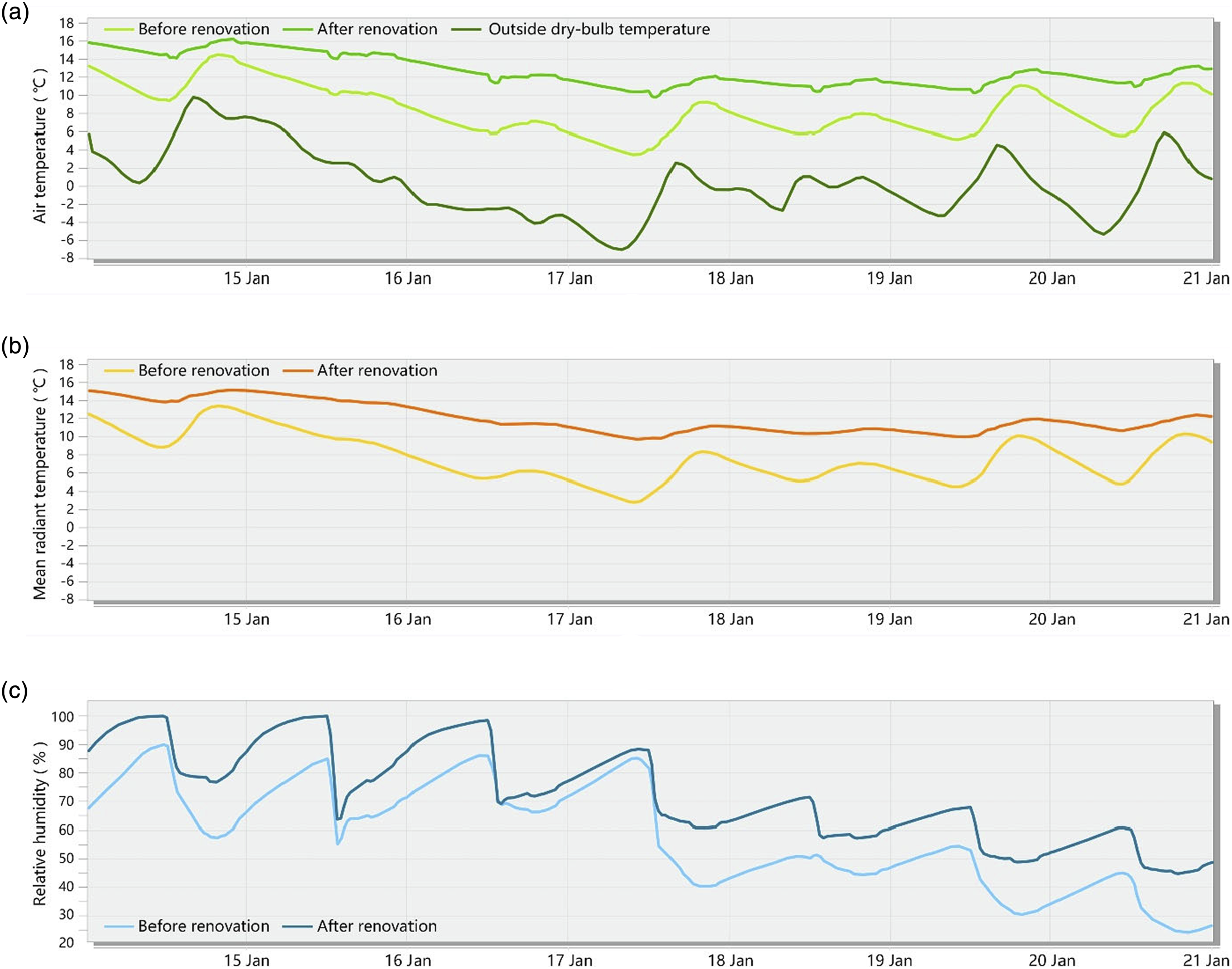
Simulation of the indoor temperature and humidity in winter
(1) The indoor temperature simulation in winter
As shown in Figures 10(a) and 10(b), in winter, the outdoor temperature swings rapidly from −6.2°C to 10.2°C. Before the renovation, the fluctuation ranges of the indoor air temperature and mean radiation temperature were 4.3°C ∼ 15.2°C and 4.3°C ∼ 13.7°C, respectively. After renovation, the wave range of the indoor air temperature and mean radiation temperature was 10.3°C ∼ 16.5°C and 10.1°C ∼ 16.1°C, respectively. Through data analysis, the overall indoor air temperature and mean radiation temperature of the simulated dwelling were 4.31°C and 4.35°C higher than those before the renovation in winter. After the renovation, the all-day indoor temperature of the traditional dwelling could reach more than 10°C, meeting the requirements of the design standard, GB/T50824-2013, for energy efficiency for rural residential buildings that the indoor design temperature would not be less than 8°C without heating in winter in the hot summer and cold winter region.
(2) The indoor humidity simulation in winter.
As shown in Figure 10(c), in winter, the outdoor relative humidity swings from 58% to 97%. The fluctuation ranges of the indoor relative humidity before and after renovation were 24.1% ∼ 90.2% and 44.8% ∼ 99.6%, respectively. After renovation, the indoor relative humidity of the simulated dwelling was increased by 14.46%, substantially greater than the comfortable range of relative humidity of 30% ∼ 70%. As the local outdoor humidity is high in winter, the indoor relative humidity could not be reduced to the comfort range through the passive design strategy but could be adjusted through the dehumidification or heating equipment.
Simulation of the indoor temperature and humidity in summer
(1) The indoor temperature simulation in summer
As shown in 11-a and 11-b, in summer, the outdoor temperature ranges from 18.8°C to 35.6°C. Before the renovation, the fluctuation ranges of the indoor air temperature and mean radiation temperature were 24.1 ∼ 32.9°C and 24.0°C ∼ 32.4°C, respectively. After renovation, the fluctuation range of the indoor air temperature and mean radiation temperature were 24.5°C ∼ 29.2°C and 24.4°C ∼ 28.1°C, respectively. The overall indoor air temperature and mean radiation temperature of the simulated dwelling were 1.25°C and 1.34°C lower than those before the renovation in summer. After the renovation, the all-day indoor temperature of the traditional dwelling could meet the requirements of the design standard, GB/T50824-2013, for the energy efficiency of rural residential buildings that the indoor design temperature should not be more than 30°C without cooling measures in summer in hot summer and cold winter region.
(2) The indoor humidity simulation in summer
As shown in Figure 11(c), in summer, the outdoor relative humidity swings from 50% to 96%. The fluctuation ranges of the indoor relative humidity before and after renovation were 39.0% ∼ 99.2% and 45.0% ∼ 99.3%, respectively. After renovation, the indoor relative humidity of the simulated dwelling was increased by 2.30%, higher than the comfortable range of relative humidity of 30% ∼ 70%. The indoor humidity environment may be improved by increasing the ventilation rate. The thermal environment of the typical tradition dwelling before and after renovation in summer design week: (a) the air temperature; (b) the mean radiant temperature; (c) the relative humidity.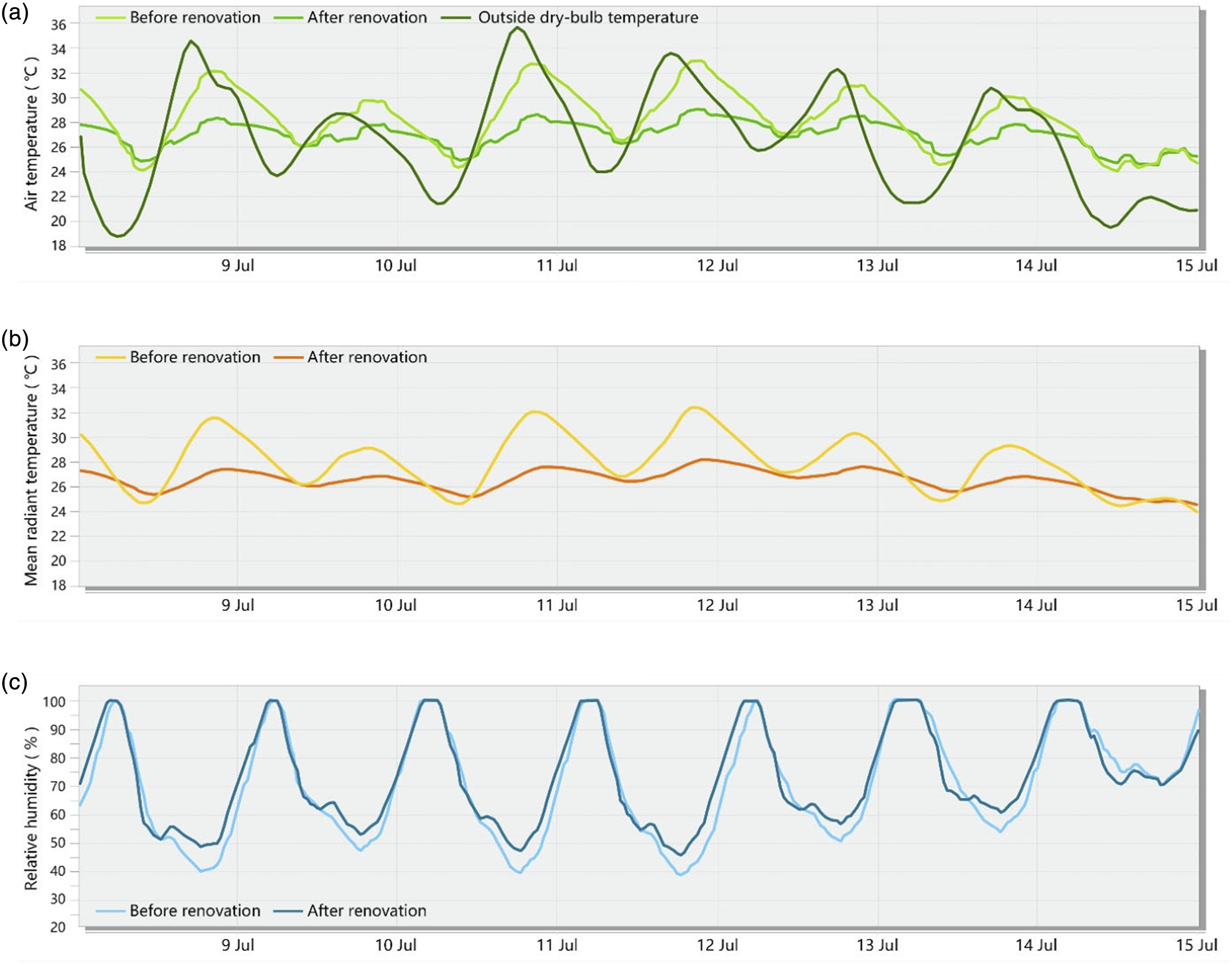
Conclusion
Based on the physical model of the traditional dwelling in the Qinba mountainous area, this research utilized computer simulation and orthogonal arrays to estimate the effectiveness of passive design parameters, evaluated and validated the optimal passive design combination. The conclusions are as follows: (1) Through a single controlled variable study, the energy consumption analysis of six selected passive design parameters suitable for the renovation of old buildings were simulated, and the efficiency of each passive technology on building energy consumption was obtained. The window-wall ratio and overhang depth were judged to be inefficient as they only had a 0.13% and 0.2% impact on the building energy consumption, respectively. The four effective passive renovation parameters for traditional dwellings in the Qinba mountainous area were sunroom depth, exterior wall heat transfer coefficient, roof heat transfer coefficient and window heat transfer coefficient, and the upper limit of the optimized efficiency of building energy consumption was 8.1%, 38.2%, 23.6% and 3.2%, respectively. (2) Through a multi controlled variable study, this research applied the orthogonal arrays and range analysis to evaluate four effective parameters and their interaction effects and identified the preferable level between each parameter. The optimal combination of the four passive design parameters was evaluated and established. The results showed that the passive design parameters that have the greatest influence on building energy consumption in traditional dwellings in the Qinba mountainous area are the exterior wall heat transfer coefficient, followed by the south-facing sunroom, roof and window heat transfer coefficient, respectively. The passive design parameters combined with the lowest annual energy consumption of the traditional dwelling in the Qinba mountainous area is A1-B1-C1-D1, which is the dwelling with a 1.3 m deep sunroom, and has 0.86 W/(m2·K), 0.70 W/(m2·K) and 1.50 W/(m2·K) heat transfer coefficients of the exterior walls, roof and window, respectively. The optimal combination could reduce the annual energy consumption of the simulated dwelling by 65.1% compared with that of the original one. (3) Through energy consumption simulation, this research further investigated the thermal performance of the optimization model. In winter, the indoor air temperature and mean radiant temperature of the traditional dwelling after renovation were increased by 4.31°C and 4.35°C, respectively. Compared to that before the renovation, which could reach more than 8°C all the time, and so met the requirements of the design standard, GB/T50824-2013, for energy efficiency for rural residential buildings. The indoor design temperature would not be less than 8°C without heating in winter in hot summer and cold winter regions. In summer, the indoor air temperature and mean radiant temperature of the traditional dwelling after renovation were 1.25°C and 1.34°C lower than that before the renovation, which may satisfy the requirement that the indoor temperature should be less than 30°C without cooling. Besides, due to the high humidity in the Qinba mountainous area, the indoor relative humidity of the renovated model has not been significantly improved. Combined with local living habits, the indoor relative humidity could be adjusted to a comfortable range of 30% ∼ 70% by using dehumidification or heating equipment in winter and increasing the ventilation time in summer.
Footnotes
Authors’ Contributions
Ziliang Lu and Juan Xu conceived and designed the research; Ziliang Lu and Yulin Hao collected and analyzed the data; Ziliang Lu completed the experiments; Ziliang Lu and Chaoping Hou initiated the overall research question and Juan Xu found funding for this project; Ziliang Lu drafted the paper; Juan Xu and Weijun Gao critically read and revised the draft. All authors read and approved the final version of the article.
Declaration of conflicting interests
The author(s) declared no potential conflicts of interest with respect to the research, authorship, and/or publication of this article.
Funding
The author(s) received no financial support for the research, authorship, and/or publication of this article.
