







Abstract
Various studies have reported that energy consumption in the operation stage in the life cycle of a building has the largest impact on global warming. However, suggesting appropriate practical directions for reducing global warming potential (GWP) is challenging owing to the absence of appropriate standards for GWP according to building energy consumption. In South Korea, environmental data of various buildings have been accumulated based on building life cycle assessment, conducted by adhering to the G-SEED standard for many years. This study aimed to develop a program that can support sustainable design by evaluating the appropriateness of GWP in the building operation stage in a simple manner and consequently suggest directions for efficiently reducing GWP passively or actively. To develop the program, first, GWP standard models were derived for each building’s energy use and source. Subsequently, a program, E2C, was built to assess the appropriateness of GWP emissions according to the energy effective area ratio from the building to be assessed, for each energy use and source, by employing the derived standard models. Finally, the applicability of the proposed program was examined through a case study and it was confirmed that design directions for securing the appropriateness of GWP could be suggested through E2C. Consequently, E2C has the potential to be used in the design stages of sustainable buildings.
Keywords
Introduction
Due to the increasing severity of global warming, efforts to reduce global warming and retain sustainability have been made in the construction sector. These efforts have been implemented through green building certification systems, such as the US Green Building Council’s leadership in energy and environmental design (LEED) in the United States and the building research establishment assessment method (BREAM) in the United Kingdom, Comprehensive Assessment System for Built Environment Efficiency (CASBEE) and Assessment Standard for Green Buildings (ASGB) in Asia.1,2 In South Korea, the green standard for energy and environmental design (G-SEED) has been implemented since 2002 for the reduction of environmental loads from buildings. 3 In addition, certification standards have been reinforced through the adoption of life cycle assessment (LCA) as an additional certification item, aiming to quantitatively evaluate the environmental impacts caused during the life cycle of a building.4,5
In general, a building LCA was conducted for the four stages of a building life cycle: material production, construction, operation and demolition and disposal, based on ISO-14040 6 and ISO-14044. 7 Many studies on building LCA have shown that building energy consumption, in terms of carbon, during the operation stage has the largest impact on the life cycle of a building.8–13 The environmental impacts during the operation stage refer to the environmental risks posed by the energy sources such as electricity and gas that are used for the operation of a building during its service life. They are assessed through the application of the environmental emission factor of each fuel to the energy consumption value. The environmental emission factor is crucial to deriving environmental impact assessment results because its value significantly varies depending on the type of energy used. However, the unconditional changing of the energy source for environmental impact reduction is challenging owing to the regional characteristics and economic efficiency of buildings. Thus, directions that can practically reduce environmental impacts must be suggested. For this, first, environmental impact standards must be set based on the abundant assessment data generated in the operation stage of buildings. Previous studies that assessed the environmental impacts of the operation stage through LCA have mainly focused on the suggestion of building LCA methodologies or the calculation of environmental impact, whereas studies on environmental impact standards are insufficient.14–17
G-SEED LCA has been primarily used to assess the environmental impacts of buildings in Korea, and assessment data have been gradually accumulated with the recent dissemination of G-SEED across the country. 18 At present, efforts to reduce global warming are required in all industrial sectors, and consequently, global warming potential (GWP) data of buildings accumulated through G-SEED LCA can be useful in suggesting standards for the impacts of carbon emissions from buildings. However, Jeong et al. 19 revealed that a practical reduction in the environmental impacts caused by building energy consumption by receiving only the G-SEED certification was difficult, implying that suggesting directions for reducing the environmental impacts in the operation stage using G-SEED certification alone is challenging. Building energy efficiency certification (BEEC), which was implemented for apartments in 2001 and has subsequently been implemented for all building types, can overcome these limitations. Further, studies have reported that a practical reduction of building energy consumption might be possible using BEEC.20,21 In addition, BEEC has also been used as basic data for operation stage assessment in building LCA.22–24 In Korea, referring to the Rules for Building Energy Efficiency Rating Certification legislated by the Korean government, the BEEC has 10 grades from 1+++ to 7 based on the primary energy required per unit energy effective area for each energy use category: air cooling, heating, hot water supply, lighting and ventilation of a building. Thus, various energy data to calculate the environmental impacts of the operation stage can be obtained through the certificate.25,26 In particular, the unit energy effective area calculated through BEEC implies that the floor area that affects each energy use and passive design can be modified to reduce the energy load per area. This is achieved by increasing the ratio of the energy effective area to the gross floor area of the building.27–29 Furthermore, the active design of a building can also be modified by directly increasing the efficiency of air cooling, heating, hot water supply, lighting and ventilation systems or by reducing the primary energy consumption using sustainable technologies.30–33
This study developed a program that can check the appropriateness of the energy effective area and GWP of a building in its operation stage in a simple manner and suggest directions for efficiently managing GWP to support sustainable design using Korea’s G-SEED LCA data and BEEC data. It is aimed at reducing, during the planning and design stages, the contributions of building energy consumption to global warming. To develop the program, first, GWP standard models were derived by conducting regression analysis between the energy effective area rate and GWP for each energy use and source using the existing operation stage data of G-SEED LCA and BEEC. Subsequently, a program that can assess the appropriateness of GWP emissions for each energy use and source based on only the input of the BEEC data of the building was built using the derived standard models. Finally, a case study was conducted using the developed program to examine its applicability. Since there is no appropriate decision making program developed by analysing actual certified data in Korea to support the energy planning by considering the energy effective area of buildings, the methodology derived in this study is expected to be widely used in setting plans for energy facilities and energy utilisation space during the designing stage of Korean buildings. The framework of this study is shown in Figure 1. Research framework.
Materials and methods
GWP standard model development
Assessment data classification for each energy use and energy source.
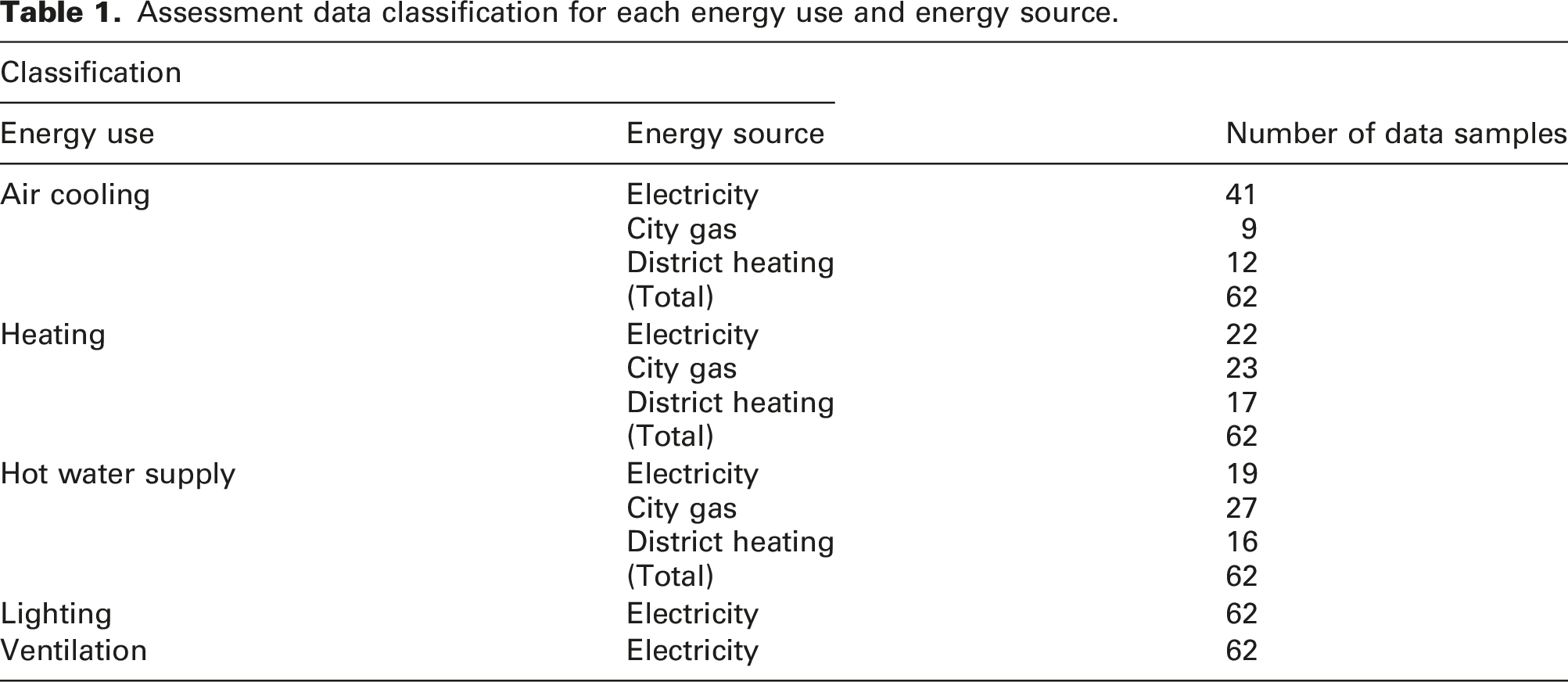
To derive standards for assessing the appropriateness of GWP according to the energy effective area of a building for each energy use and energy source based on this classification system, the energy effective area ratio was used. It is the ratio of the energy effective area to the gross floor area and was calculated based on the energy effective area data for each energy use derived during the building energy efficiency calculation process of BEEC using equation (1) Sample format of GWP standard model.

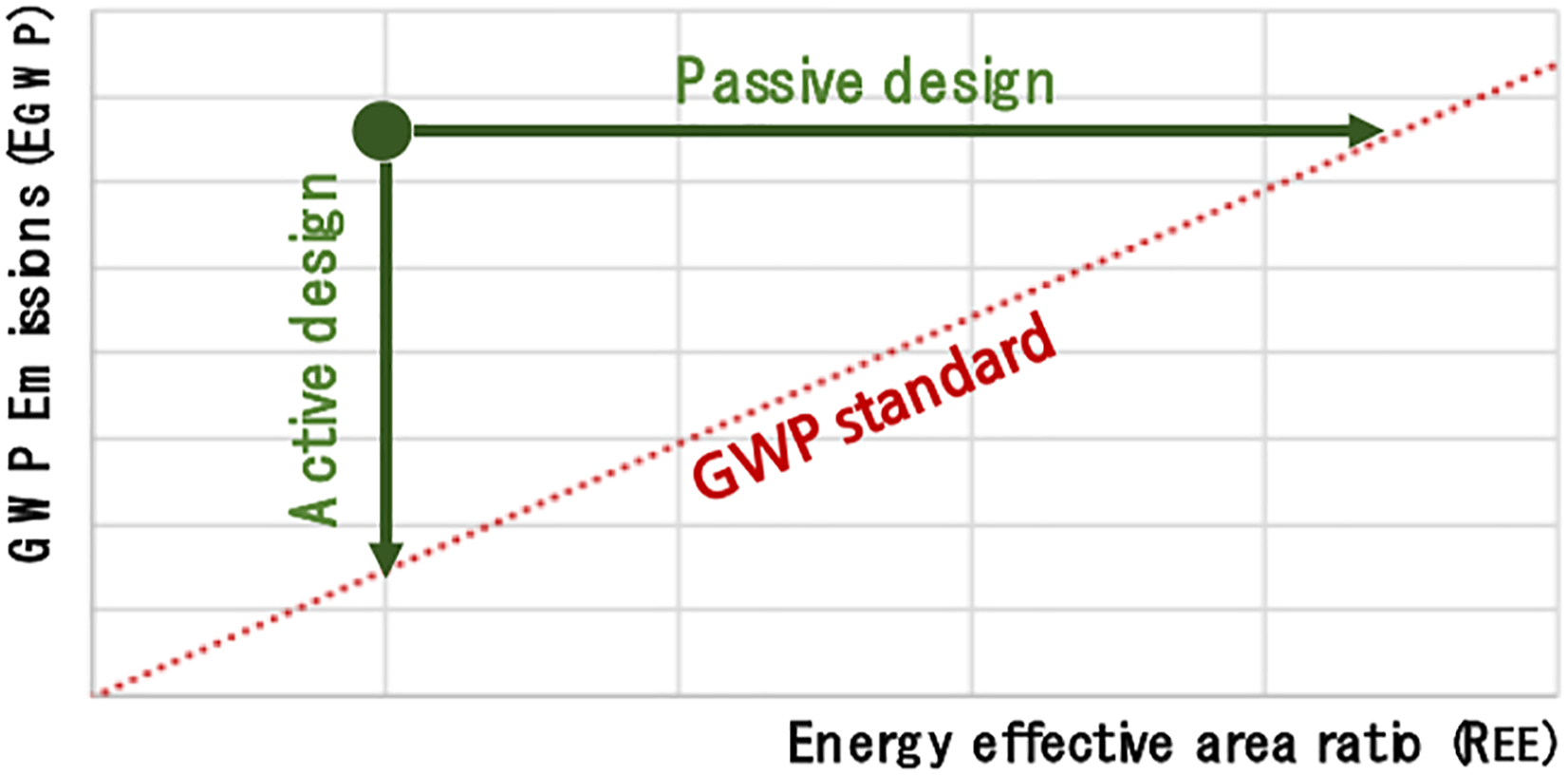
Program development
In this paper, a program, Energy to Carbon (E2C), is proposed to assess the appropriateness of the energy effective area and GWP of each building for each energy use based on the GWP standard regression equations for each energy use and source. The data required for the assessment were the primary energy and energy effective area data of the building to be assessed for each energy use calculated based on Korea’s BEEC. Moreover, the program was developed to facilitate automatic assessment when an energy source was selected after the input of the data. When new data were added, the program allowed the GWP standards to be automatically updated through regression analysis.
Case study
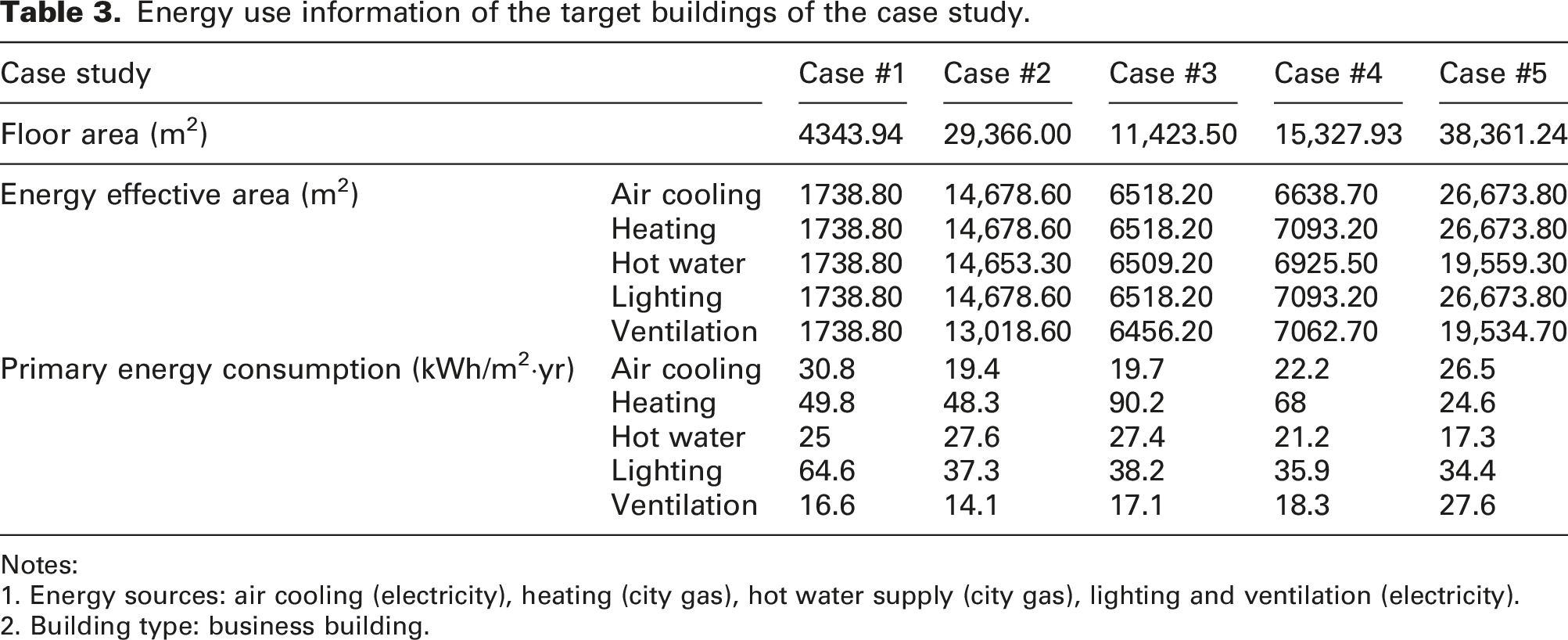
To examine the applicability of the E2C program, a case study was conducted for five buildings with the same energy sources for each energy use, and the results were analysed. Buildings whose energy use-energy source correspondence was air cooling-electricity, heating-city gas, hot water supply-city gas, lighting-electricity and ventilation-electricity were selected as targets. Such building types comprised the largest number of data samples during the derivation of GWP standard models and hence, would reflect the reliability of the results. Finally, for the case study, the BEEC data of each building were collected, and the appropriateness of REE and EGWP was examined.
Results and discussion
GWP standard model
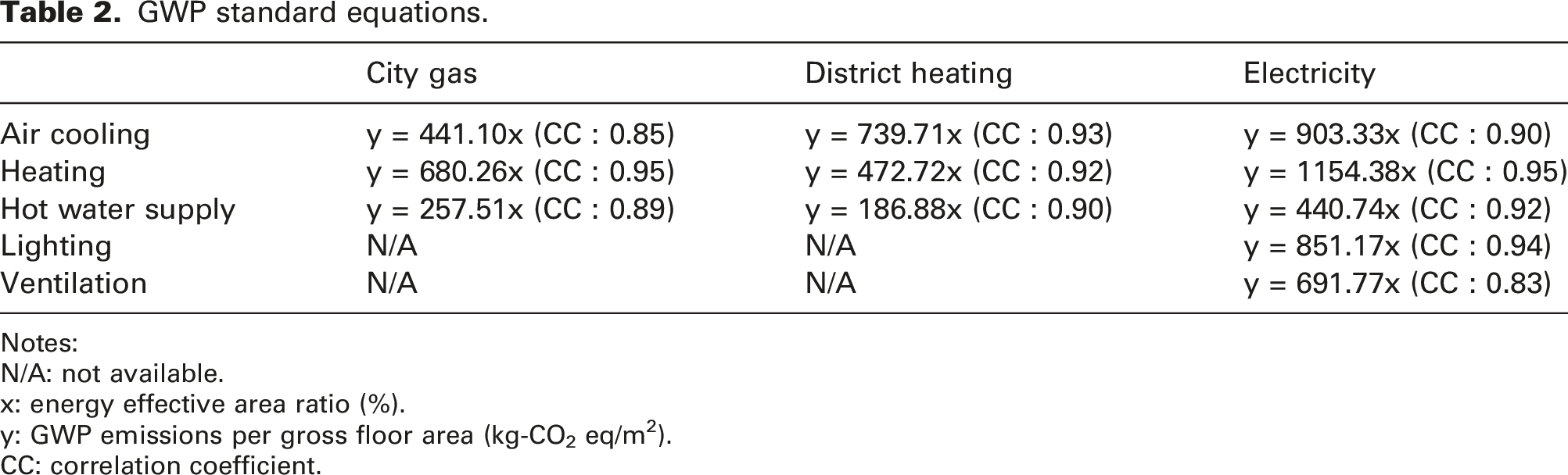
In this study, GWP standard models derived through linear regression analysis between the REE and EGWP for each building energy use and energy source are presented in Figure 3. The correlation coefficient exceeded 0.8 for all energy uses and energy sources, thereby confirming a high linear correlation between REE and EGWP. This indicated that the appropriateness of REE and EGWP of a building could be examined using each linear equation. However, lighting and ventilation were excluded from the analysis target of this study because they use only electricity. As a result, the equations of GWP standards were derived as shown in Table 2. GWP standard models by energy use and energy source. GWP standard equations. Notes: N/A: not available. x: energy effective area ratio (%). y: GWP emissions per gross floor area (kg-CO2 eq/m2). CC: correlation coefficient.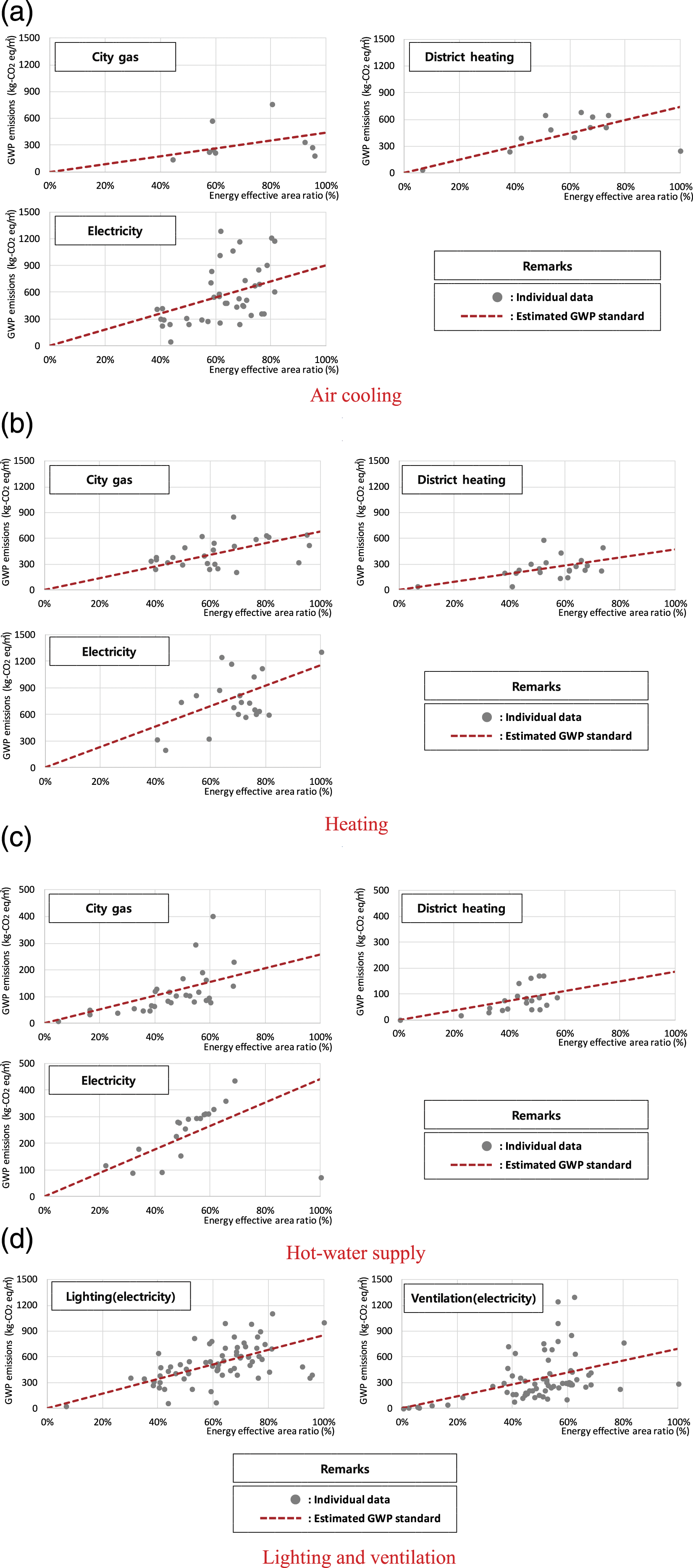
E2C program
The E2C program was developed to assess the appropriateness of REE and EGWP of a building in the planning and design stages of a building project using the GWP standard models for each building energy use and energy source derived in this study. The proposed program automatically calculated REE and EGWP of the building to be assessed from the input energy information obtained through Korea’s BEEC, which were then compared with the GWP standard models to assess the appropriateness of the carbon emissions and energy effective area. The program primarily comprised the cover page, input page and results. It can display the final assessment results in the form of a report.
On the cover page, the title and assessment date of the building project to be assessed were entered, and the Start evaluation function was used to move to the input page. Further, on the input page, the gross floor area of the building to be assessed, the primary energy (kWh/m2·yr) and energy effective area (m2) for each energy use were entered; energy sources must be selected for each energy use. Subsequently, considering the input information, GWP emissions from the assessment target for each energy use were calculated and GWP standards were obtained through the regression analysis of existing DB data according to the selected energy use. Finally, in the results, the calculated GWP emissions and GWP standards were displayed and compared to assess whether the GWP emissions from the building for each energy use were within the standard limits. If the GWP emissions exceeded the standards, the required reduction in GWP emissions or the required increase in energy effective area to improve the efficiency of the interior space of the building was suggested. Figure 4 shows the input page and results of E2C. Main sections of the E2C program (input page and results).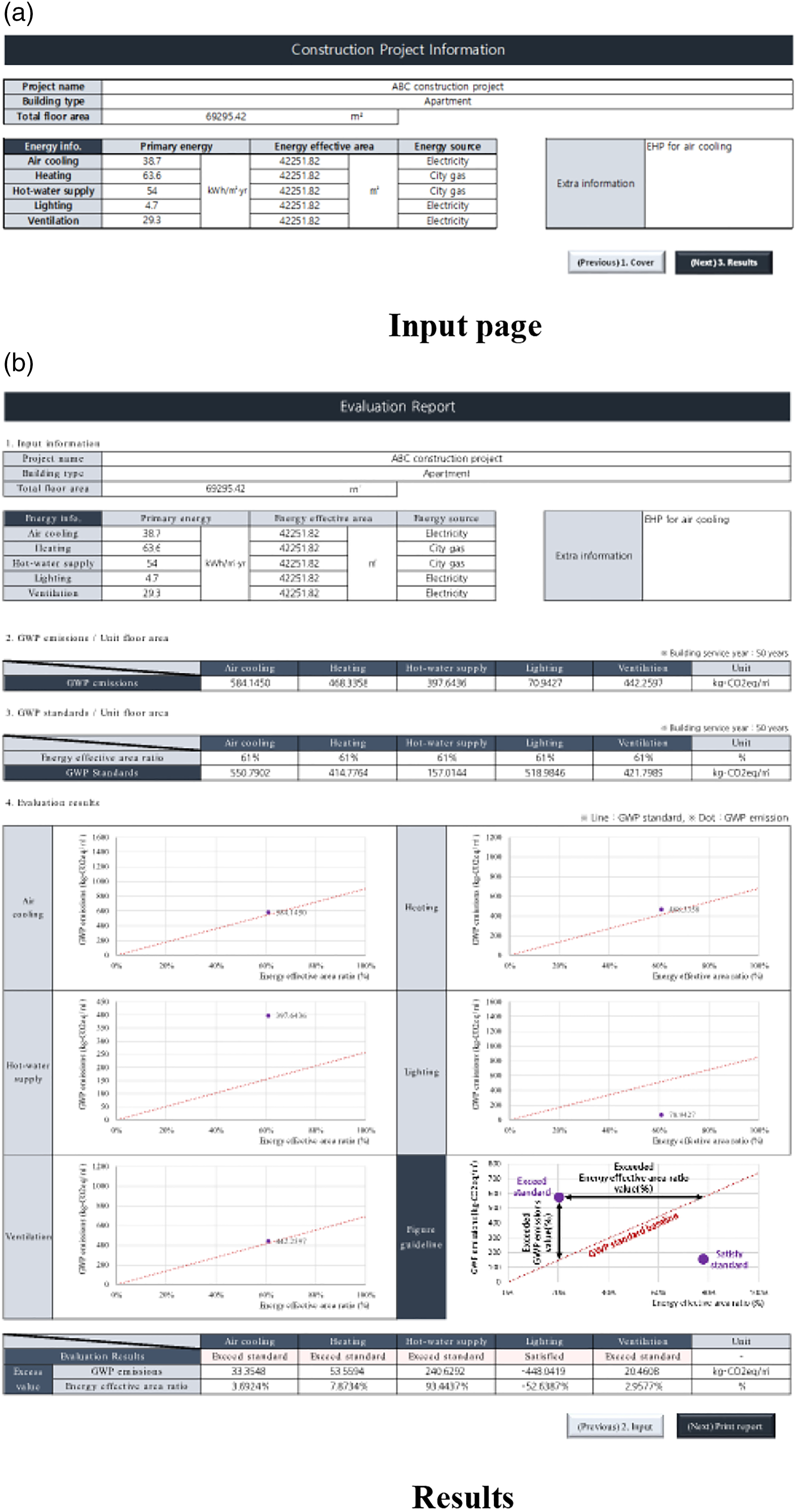
Case study results
Energy use information of the target buildings of the case study.
Notes:
1. Energy sources: air cooling (electricity), heating (city gas), hot water supply (city gas), lighting and ventilation (electricity).
2. Building type: business building.
Figure 5 shows the REE and EGWP graphs of each energy use for all cases. The GWP values from air cooling and ventilation were lower than the standard limit for all five buildings. Further, in the case of hot water supply, cases #4 and #5 adhered to the GWP standard; however, cases #1, #2 and #3 exhibited higher values. Since there was no significant difference from the standard, these GWP emissions were analysed to be in the acceptable range. For heating, cases #3 and #4 exhibited higher emissions than the standard. Whereas, for lighting, cases #1, #2, #3 and #4 showed higher emissions. While most of them were only slightly higher than the GWP standards, the emission from cases #3 and #4 due to heating and lighting, respectively, were significantly higher than the GWP standards. To improve them, EGWP must be reduced by approximately 237.72 kg-CO2 eq/m2 via improvements in the efficiency of the heating system, or REE must be increased by approximately 34.95% through expansion of the heating area for case #3. Further, for case #1, EGWP must be reduced by approximately 299.28 kg-CO2 eq/m2 via improvements in the efficiency of the lighting system; or REE must be increased by approximately 35.16% through expansion of the heating area. Thus, the results of the case study showed that the E2C program could easily assess the appropriateness of GWP emissions from a building according to the energy effective area for each energy use. Moreover, the possibility of identifying design directions for sustainable improvement using the assessment results was confirmed. Case study results.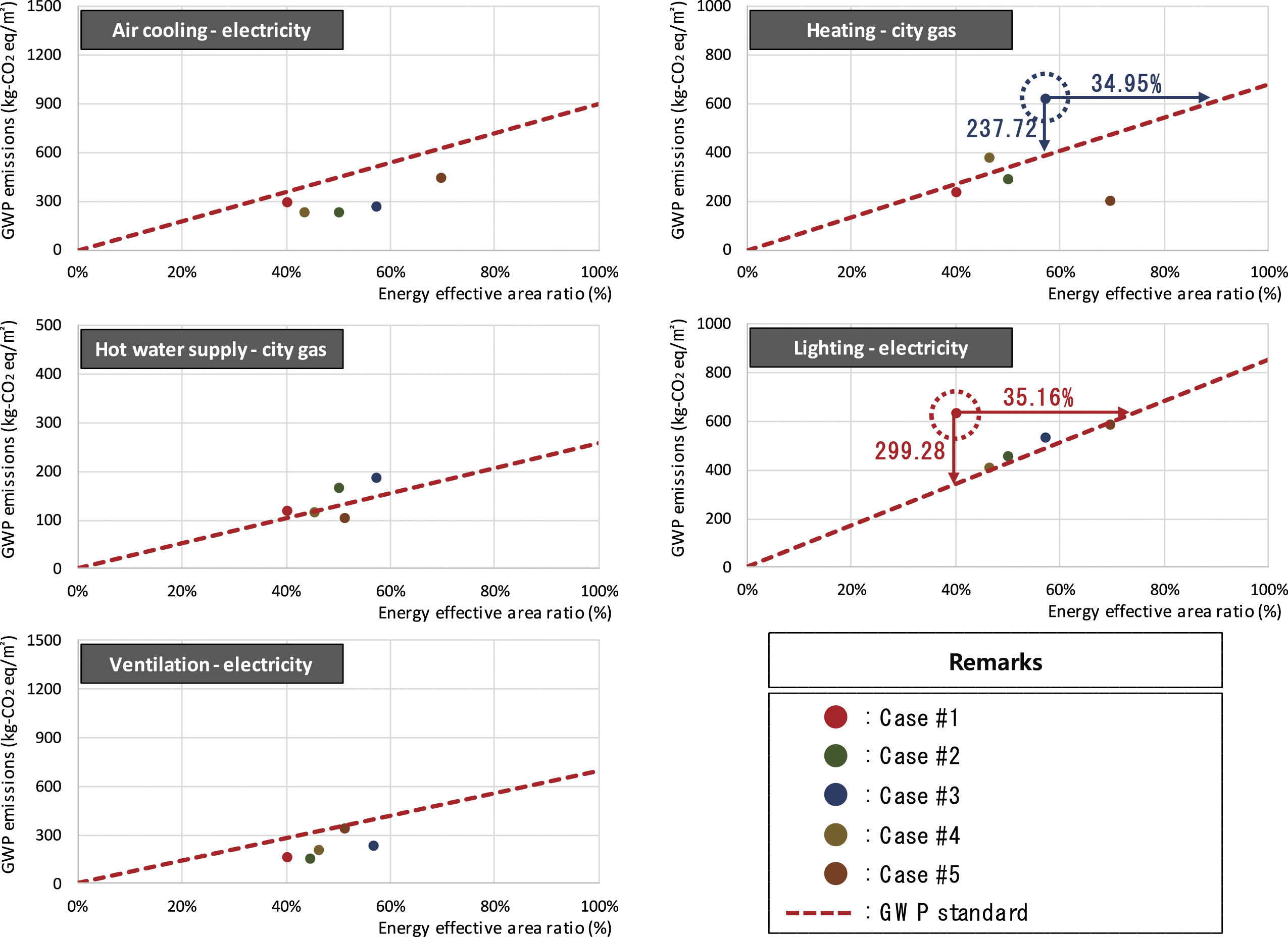
Discussion
In this study, a method of constructing GWP standard models was proposed and an assessment program that used the models was developed to assess the appropriateness of GWP of each energy use category according to the energy effective area during the operation stage. The methodology of this study is reliable since it presented standards by statistically utilising officially evaluated building energy and environmental impact data and it is significant since it can easily examine the appropriateness of building energy using BEEC data alone from an environmental perspective. The technology of E2C is expected to be useful in setting plans for energy systems and energy utilisation space during the design of buildings. Moreover, it is also expected to be widely used for sustainable building certification through LEED and BREAM as well as Korea’s G-SEED.
However, the number of data samples used in the regression analysis of this study to construct GWP standard models was, in a certain measure, insufficient. Thus, it is deemed that the number of data samples must be increased in the future to improve the reliability of the standards. In addition, GWP standards for each building type must be suggested because, although energy systems and utilisation space exhibit different characteristics depending on the building type, the existing data for each building use and energy source could not be classified for each building type in this study. In recent years, BEEC has been more commonly performed for residential and business facilities in Korea. 35 Accordingly, the program can be improved by securing a large amount of data for building types in future research.
Conclusion
This study developed a program to support sustainable building design by assessing the appropriateness between the energy effective area and the GWP corresponding to the use of energy during the lifespan of a building at the planning and design stages. The following conclusions were drawn. 1. The energy use was classified into air cooling, heating, hot water supply, lighting and ventilation for a detailed assessment of the appropriateness between the GWP and energy effective area of a building. Further, the assessment system was classified according to detailed energy sources for each type of energy use. 2. A formula for calculating the energy effective area ratio (REE) was presented using the energy effective area data for each energy use derived during the building energy efficiency calculation process for each classification and the floor area data of each building. In addition, a formula was presented to convert the annual primary energy consumption per unit energy effective area by energy use of each building into GWP emissions per gross floor area (EGWP) for 50 years, similar to the lifespan of buildings assumed in the green standard for energy and environmental design (G-SEED) LCA. 3. For 62 buildings with existing BEEC and G-SEED LCA, the linear correlation between REE and GWP emissions per gross floor area (EGWP) was analysed by collecting energy effective area, GWP and gross floor area data for each energy use and energy source. The correlation coefficient exceeded 0.8 for all energy uses and energy sources, and thus GWP standard models for each energy use and energy source were derived using the linear equations. 4. The E2C program was developed to assess the appropriateness of REE and EGWP of a building at the planning and design stages of a building project with only BEEC data using the derived GWP standard models. 5. Finally, a case study was conducted by selecting five buildings with the same energy sources for each energy use to examine the applicability of the E2C program. The appropriateness of GWP emissions from a building according to the energy effective area for each energy use was confirmed to be easily assessable through the program. Moreover, the assessment results could be used to identify the design directions for sustainable improvement.
Footnotes
Author contributions
All authors contributed equally in the preparation of this manuscript.
Declaration of conflicting interests
The author(s) declared no potential conflicts of interest with respect to the research, authorship, and/or publication of this article.
Funding
The author(s) disclosed receipt of the following financial support for the research, authorship, and/or publication of this article: This work was supported by the National Research Foundation of Korea (NRF) grant funded by the Korean government (MSIT) (No. NRF-2019R1C1C1010475).
