







Abstract
The effectiveness of fire suppression systems in protecting mass timber construction are experimentally investigated for the objectives of life safety and property protection from fire and water damages. The performance of high- and low-pressure water mist systems was compared with sprinkler systems in a residential fire scenario involving exposed mass timber structures. The tested water mist systems and sprinkler systems successfully maintained the room temperature and gas concentrations tenable, but the smoke obscuration deteriorated rapidly. Although the tested systems resulted in fire damage on the exposed mass timber walls, a high-pressure water mist system with wide spray angle demonstrated rapid fire suppression and less damage to the walls. The performance of sprinkler systems was comparable, yet least effective due to the large amount of water used. A large water pool was formed on the floor in all tests with the size proportional to the total water discharged during the test. Also, the moisture contents of the mass timber panels indicated that water could penetrate the floor-wall interface in a typical assembly.
Keywords
Introduction
Mass timber buildings are attracting attention as a carbon-light construction. National building codes are expected to allow the construction of tall mass timber buildings including the use of new technologies and mass timber products, such as Cross Laminated Timber (CLT). Current Canadian regulations are expected to increase the height limit beyond the six-storey allowed for wood frame buildings. The International Building Code (IBC) in the US has allowed a maximum of nine storeys with exposed mass timber construction for residential and business occupancies with sprinkler protection. Exposing mass timber is also allowed for all occupancies with varying height limitations as long as sprinkler protection is provided.
Without resorting to sprinkler protection, these code changes could aggravate the fire safety concerns of the mass timber buildings. Therefore, the effectiveness of sprinkler systems needs to be fully verified for the protection of mass timber buildings involving exposed mass timber elements. Sprinkler systems are the most used fire suppression system in buildings due to their proven effectiveness. In application to mass timber structures, however, there are concerns that sprinkler systems could create post-fire water damage and mould problems in mass timber structures. As an alternative option to sprinkler systems, water mist systems are considered for the protection of timber buildings because they use much less water (e.g. about 90%–50% less water claimed by manufacturers) compared to sprinkler systems.
There is currently no technical guide specifically addressing the design requirements for water mist systems and sprinkler systems in the protection of mid/high rise wood frame buildings, in terms of both protecting occupants as well as minimizing post-fire water damage of the wood structure.1,2 Research is needed to evaluate the performance of water mist systems in comparison to conventional sprinkler systems in mass timber building fire scenarios, and to substantiate potential benefits of water mist systems in minimizing post-fire water damage.
Design objectives of fire suppression systems for the protection of mass timber residential buildings
The main design objective of the suppression system for residential buildings is to ensure life safety of the building occupants. Sprinkler systems are required to limit the severity of the fire so that the system can allow occupants sufficient time to evacuate the building. 3 With its focus primarily on providing life safety, BS 8458 4 requires water mist systems for domestic and residential occupancies to be designed to suppress and control fires. The performance objectives of the conventional sprinkler system specified in NFPA 13, 5 NFPA 13D 6 and NFPA 13R 7 are providing life safety by controlling fire, limiting its effect and decreasing the heat release rate while wetting combustibles and controlling ceiling gas temperature.
However, in the case of mass timber buildings, particularly with exposed mass timber elements, property protection shall be considered, in addition to life safety. BS 8458 4 states that ‘in special circumstances, enhanced performance, reliability and resilience arrangement should be provided’. The special circumstances include when a fire load is greater than that which would normally be found in a residential or domestic occupancy or if the fire hazard is greater than that of a conventional residential or domestic occupancy, and when the building houses vulnerable people. Where property protection is required for minimizing not only fire damage but also water damage, a fire suppression system shall be selected and designed accordingly to meet the objective.
Scope and objectives
To experimentally investigate the performance of different fire suppression systems in application to mass timber buildings, water mist and sprinkler systems were tested for a residential fire scenario in a compartment built with exposed mass timber panels.
8
The performance of the fire suppression systems was investigated with respect to: • Life safety of controlling/suppressing a residential fire and maintaining tenable conditions • Property protection of protecting exposed mass timber structures by limiting fire spread and minimizing potential water damage.
Test description
Test method
The test method was developed considering the following: • Fire scenarios that represent the most severe fire cases in residential occupancy • Repeatability of the test method • Fire scenarios that enable investigation of the involvement of exposed mass timber structures in the fire • Systematic test methods that allow investigation of the performance of water mist systems in comparison to sprinkler systems.
Living room fire scenarios involving upholstered furniture were used in this testing program since the most deadly residential fire scenarios involve upholstered furniture. A living room fire scenario involving upholstered furniture is reported to reach room flashover within 3–5 min while flashover occurred at 11–13 min in the kitchen fire. 9
A numerical modelling study10,11 was conducted to design the test program. The numerical modelling study explored the impact of compartmentation, fuel package arrangements and the exposed mass timber wall and ceiling surfaces on the fire development as well as on the effectiveness of fire suppression.
For repeatability, simulated upholstered chairs were used in this experimental program. The simulated upholstered chairs built with polyether foam sheets are reported to simulate comparable initial fire development to an actual upholstered chair fire, which releases the peak heat release rate of 1.8 MW when placed in a room corner. 12 A corner of a test compartment was built with exposed mass timber walls and ceiling. Details of the test set-ups including the dimensions of the test room and the details of the simulated upholstered chairs were determined considering the current standard test methods of the water mist systems (e.g. UL 2167 13 and BS 8458 4 ) and sprinkler systems (UL 1626 14 ) for residential applications. This approach allowed the comparison of the performance of water mist systems to that of sprinkler systems. Also, the tests were designed to investigate the cases not only with the successful activation but also delayed activation of the suppression system for worse scenarios.
Test room set-up
The dimensions of the test room were approximately 8.53 m (L) × 4.27 m (W) × 2.4 m (H). The walls and ceiling of the room were constructed from light-weight wood frames and sheathed with non-combustible materials.
Ventilation was provided by two doors of 2.2 m height each. One of the doorways was 1.05 m wide and located at the corner opposite the fuel package, and the other one was 0.9 m wide and located on the same side as the fuel package. The openings and natural ventilation conditions were considered following the existing standard test methods (e.g. UL 2167
13
and BS 8458
4
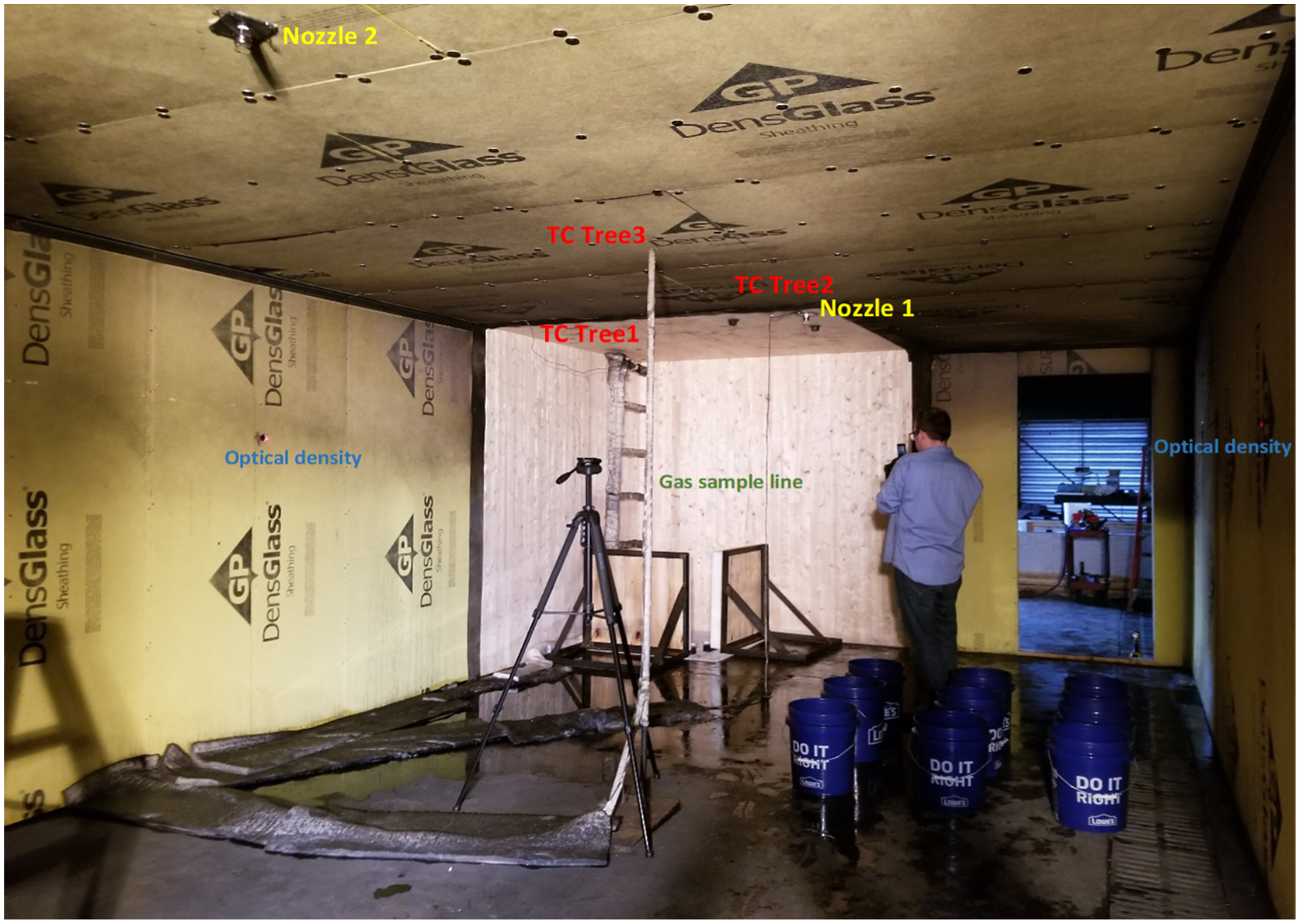
) to arrange repeatable, reproducible and representative ventilation conditions. Although water mist systems can tolerate natural ventilation, strong forced ventilation would deteriorate the performance. Figure 1 shows a schematic diagram of the test room with all dimensions, and Figure 2 shows a photo of the inside of the test room. Test compartment with nozzle layouts and instrumentation. Test compartment and instrumentation.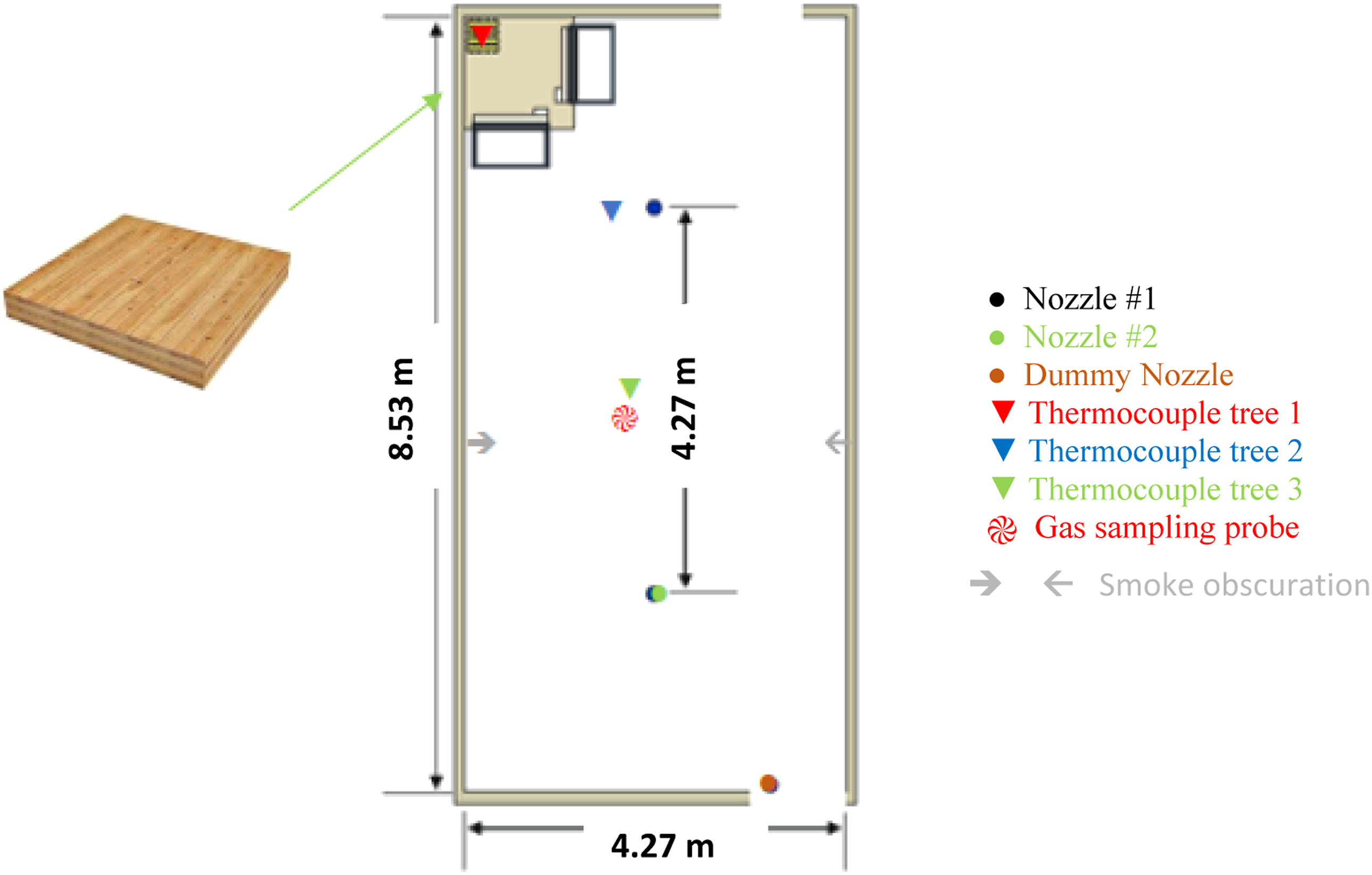
CLT corner
At the corner where the fuel package was placed, the walls and ceiling were built with CLT panels (made from Canadian spruce/pine/fir) with dimensions approximately 2.4 m (L) × 2.4 m (W). To support the corner, the CLT panels were embraced using steel frames, and the ceiling CLT panel was bolted to the roof joists.
Moisture contents of the CLT walls and ceiling were measured before and after the test. Using a pin-type moisture meter, measurements were made at the 14 measurement points shown in Figure 3. Layout of the moisture measurement and the CLT corner. (a) 14 measurement points and pin-type moisture meter. (b) CLT corner.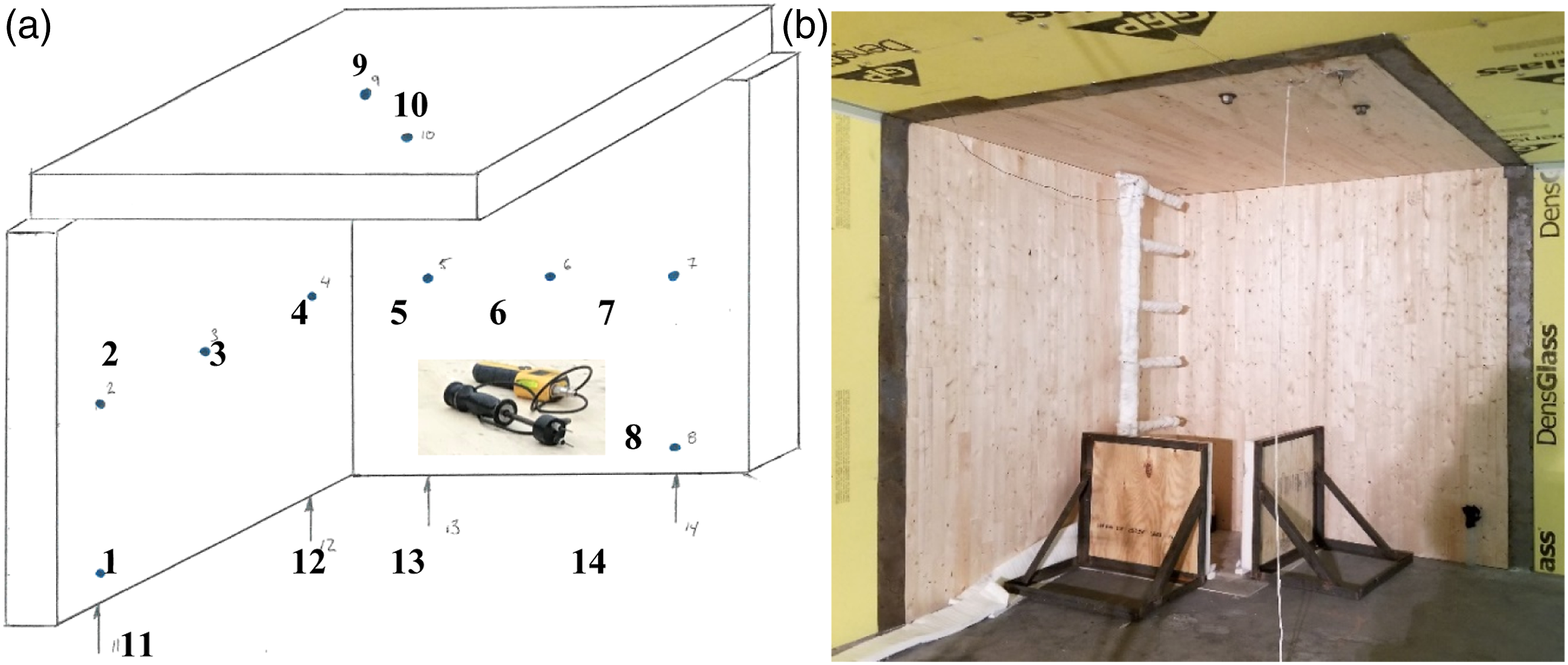
After each fire test, fire damages on the CLT surfaces were photographed and the damaged CLT panels were replaced with new ones for the next test.
Fuel package
A wood crib and simulated furniture were used as fuel for the fire, which is also employed in the standard test protocols of the water mist systems (e.g. UL 2167, 13 FM 5560 15 and BS 8458 4 ) and sprinkler systems (UL 1626 14 ) for residential applications. The wood crib had a cross sectional area of 0.3 × 0.3 m2 and 0.15 m thickness. The wood crib was placed on top of a heptane pan (0.3 m (W) × 0.3 m (L) × 0.1 m (H)). The wood crib was positioned 50 mm from each wall. The dimensions of the simulated furniture were 0.84 m width and 0.79 m height. The simulated furniture was ignited with two cotton wicks soaked in heptane.
Fire suppression system
In this testing program, two high-pressure water mist (HPWM) nozzles, one low-pressure water mist (LPWM) nozzle and one residential sprinkler nozzle types were tested.
Fire suppression systems tested.
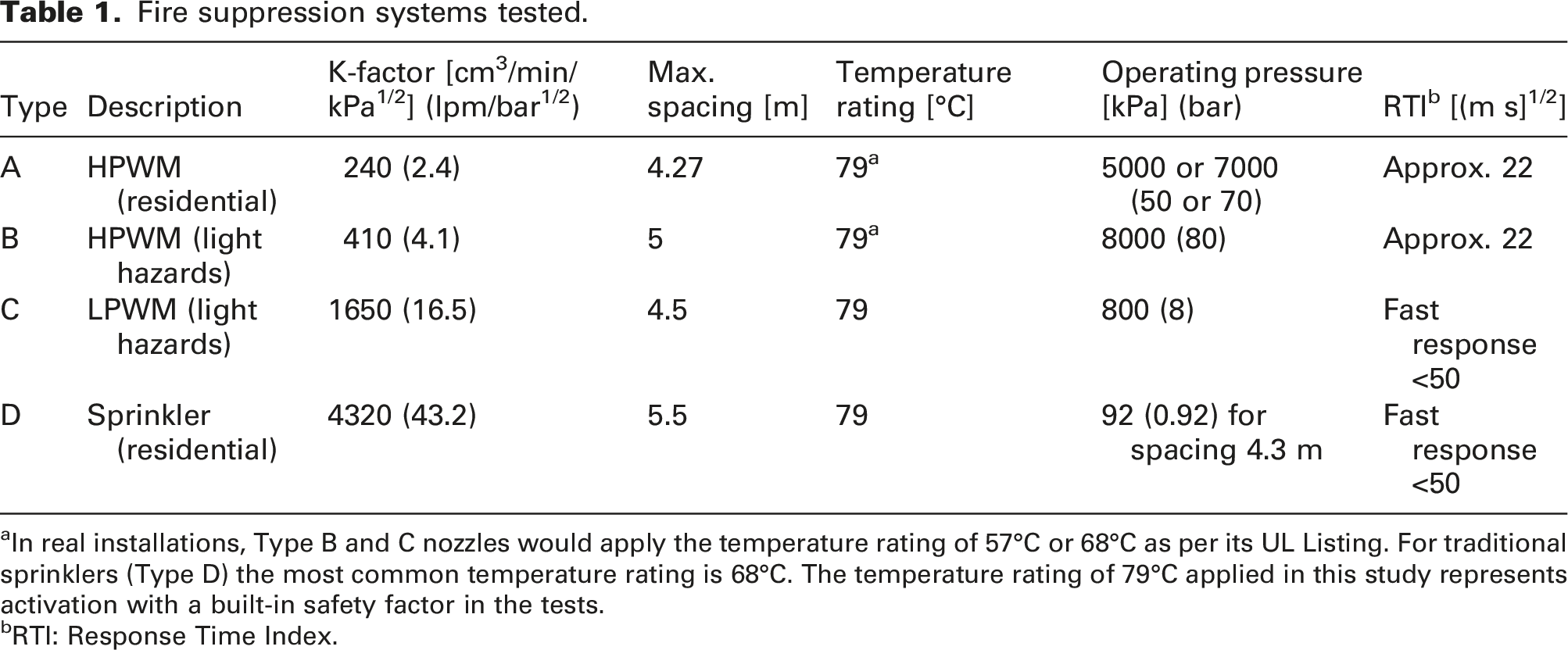
aIn real installations, Type B and C nozzles would apply the temperature rating of 57°C or 68°C as per its UL Listing. For traditional sprinklers (Type D) the most common temperature rating is 68°C. The temperature rating of 79°C applied in this study represents activation with a built-in safety factor in the tests.
bRTI: Response Time Index.
HPWM Type A and sprinkler Type D nozzles are approved for residential applications by UL 2167 13 and UL 1626, 14 respectively. HPWM Type B and LPWM Type C nozzles are approved for Hazard Catergory-1 (HC-1) by FM 5560. 15 Ko et al. 1 provides a review of these hazard classifications and their different design objectives. Thus, the expected performance level of the nozzles is different: Type B and C are expected to perform better than Type A and D as they are designed for property protection in addition to life safety.
The nozzles tested in this study have the K-factor in the range of 240 and 4320 cm3/min/kPa1/2 (2.4 and 43.2 lpm/bar1/2) and the same temperature rating of 79°C. For residential sprinklers, ordinary (57°C–77°C) or intermediate (79°C–107°C) temperature–rated sprinklers are required by NFPA 13, 5 13R 7 and 13D, 6 unless ambient temperatures can exceed 37.8°C. Each nozzle was installed in the test as specified in the manufacturers’ installation instructions.
In each test, two nozzles were installed on the ceiling as shown in Figures 1 and 2, and one dummy nozzle was also installed near the door far side from the fire. Nozzle #1 was installed on the ceiling at a radial distance of 3 m from the fire corner. Nozzle #2 was installed at 4.27 m away from Nozzle #1.
The instrumentation of the test room is shown in Figures 1 and 2. The test room was instrumented with the following: • Three thermocouple trees (each with six thermocouples at 0.4 m spacing) above the wood crib, beside nozzle #1 and at the centre of the room, these are to monitor the performance of the suppression system on fire control and area cooling. • One thermocouple on the CLT ceiling and at each nozzle, which is to monitor the performance of the suppression system on property protection (exposed CLT ceiling). • Water supply line pressure sensor for the HPWM, LPWM and sprinkler systems to detect the activation time. • Pressure sensor at the water supply pumps to detect the activation time. • Pressure sensor at the dummy nozzle to detect the activation time. • Smoke density measurement using a smoke meter across the room at a height of 1.6 m to analyze the room's tenability and monitor the performance of the suppression system on life safety. • Oxygen, carbon monoxide and carbon dioxide concentration measurements using a gas analyzer at the centre of the room at a height of 1.6 m to analyze the room tenability and monitor the performance of the suppression system on life safety. • Buckets to measure water spray density on the floor. • Cameras.
Test matrix
Test matrix.
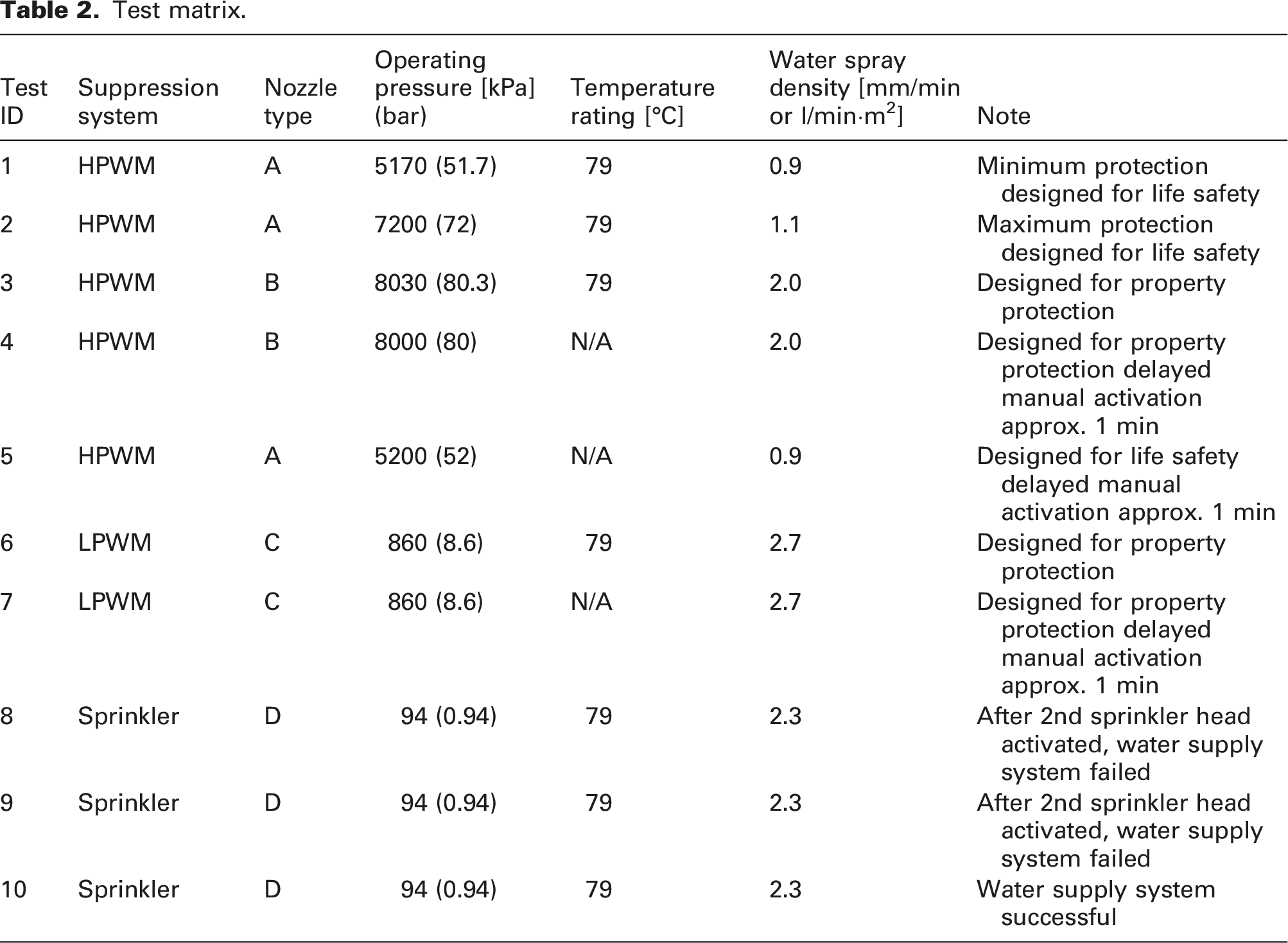
Test results
Fire suppression performance
Each test was started by igniting heptane in the pan below the wood crib located at the fire corner. The simulated furniture was also ignited with two cotton wicks soaked in heptane. After the ignition, the fire developed quickly over the simulated furniture and wood crib. Within about 1 min, the smoke filled the upper part of the room, and the fire grew quickly over the standard fuel package, yet the flame did not reach the ceiling. Initial fire development after the ignition was relatively consistent in each test, which resulted in similar activation times of the first nozzle (#1) installed close to the fire corner.
Nozzle #1 was activated at 1.2, 1.2, 1.2, 1.57 and 1.3 min, respectively, in Tests 1 and 2 (HPWM Type A nozzle), Test 3 (HPWM Type B nozzle), Test 6 (LPWM Type C nozzle) and Test 10 (Sprinkler Type D nozzle). Interestingly, Nozzle #2 was automatically activated only in the sprinkler tests, with an activation time of 2.3 min in Test 10.
In Figure 4, the flame temperatures measured above the wood crib at 0.4 m height in the HPWM (Test 1 and Test 3), LPWM (Test 6) and sprinkler system (Test 10) tests are plotted to compare the performance of each suppression system in controlling fires. After the activation of Nozzle #1, the flame temperatures varied depending on the fire suppression system used in each test, because the fire control performance varied with the nozzle type, operating pressure, spray characteristics and water spray rates. Flame temperature measured above the wood crib at 0.4 m height (Thermocouple Tree 1).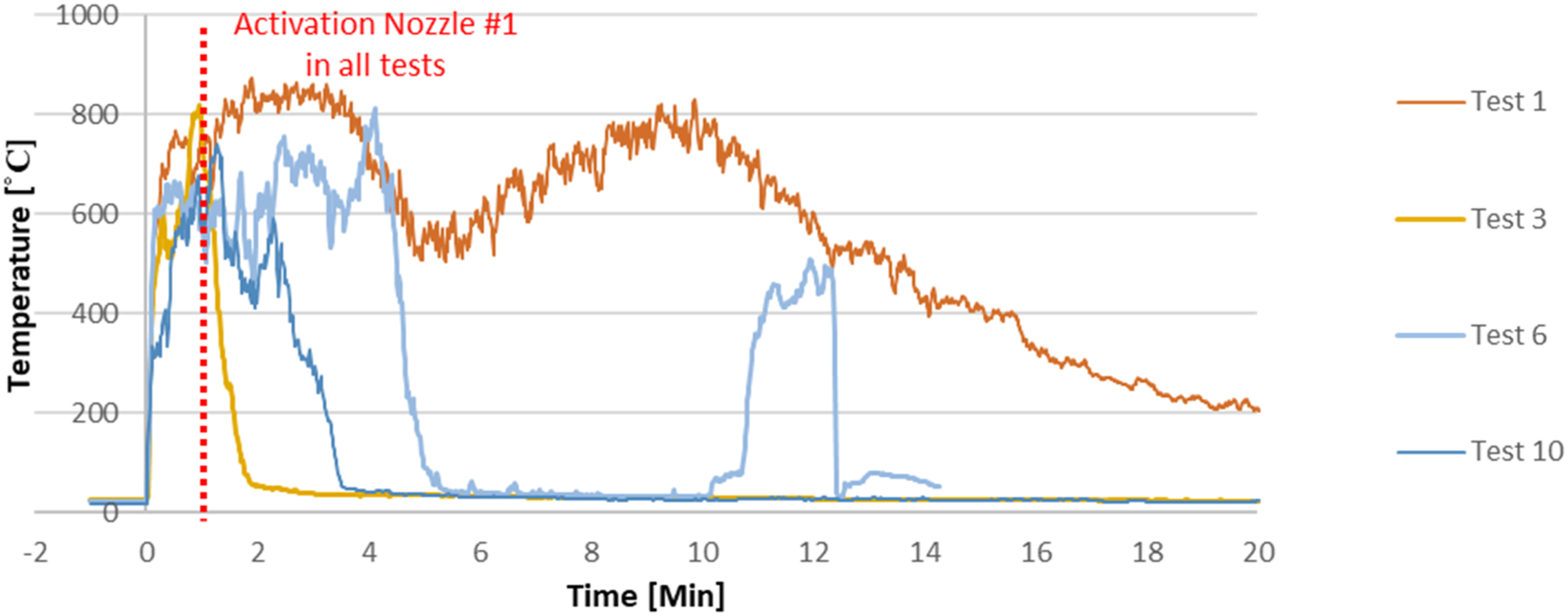
From the test series, the discharge duration affects the fire control of the suppression systems. In general, fire suppression system design parameters include design area and discharge duration, addressing the hydraulic dimensioning of the systems, which are related to the building height/area and the water main supply pressure. Therefore, the current technical standards/guides for suppression systems address the design area or the minimum number of nozzles to operate and the minimum discharge duration (e.g. for residential water mist systems, the dimensioning is for four nozzles for 30 min). However, the minimum design area and hydraulic demand requirements may need to be reassessed in application to residential mass timber buildings where the fuel loading can be very high.
High-pressure water mist systems
Two different types of HPWM nozzles, Type A and Type B, were tested with various operating pressures in Tests 1, 2 and 3. As per the manufacturer’s specification, Type A nozzles used in Tests 1 and 2 sprayed water droplets (i.e. a mean droplet size of approximately 100 microns) finer than the Type B nozzles. However, the spray angle and spray rate of Type B nozzle were much greater than those of Type A. The water spray rates, calculated based on the K-factor and the measured operating pressure, were 0.0173, 0.0204 and 0.0367 m3/min for Type A nozzle-Test 1 and Test 2 and Type B nozzle-Test 3, respectively. These different characteristics of the two nozzles resulted in very different fire control performances. The longest time required to control the flame temperature below 300°C was 17 min resulted from Test 1 with HPWM Type A nozzle, and the shortest time required was 1.5 min in Test 3 with Type B nozzle. Type B nozzle demonstrated rapid control of the fire, leaving a portion of the wood crib and the PU slabs remained unburned.
Low-pressure water mist systems
The LPWM using Type C nozzle sprayed 0.0484 m3/min. The spray angle of Type C nozzles was as wide as that of Type B nozzles, while the Type C nozzle was operated with a much low pressure of 860 kPa (8.6 bar). The estimated water spray density based on the K-factor and the operating pressure of Type C nozzles was 2.7 mm/min, which was 35% higher than that of Type B nozzle. Compared to other types of nozzles, Type C nozzles left the largest wetting pattern on the ceiling (the ceiling height was 2.4 m) since the nozzle also sprayed water partially upward toward the ceiling. The LPWM system limited the fire spread to the CLT panels and suppressed the fire within 4 min from the activation. However, a small flame grew back when the suppression system was closed at 10 min (see Figure 4) since the area cooling and fire control were no longer provided by the system. This indicates that discharge duration should also be carefully specified in designing suppression systems.
Sprinkler systems
In the tests of the water mist systems, only one nozzle was activated in each test, but in the sprinkler system tests, both Nozzle #1 and #2 were activated. The activation time of each nozzle was recorded by monitoring the pressure of the water supply line. In Test 10, Nozzle #1 was activated at approximately 1.3 min from the ignition, yet operating only Nozzle #1 was not fully effective in lowering room temperature, which subsequently activated Nozzle #2 at 2.3 min, at which the ceiling gas temperature reached 128°C. The fire was suppressed in 4 min from the ignition, and the sprinkler system was manually turned off at 10 min.
The water spray density of the sprinkler system was 2.3 mm/min, which was similar to that of HPWM Type B (2.3 mm/min). However, the total water spray rate of the sprinkler system was two times larger than that of the HPWM Type B nozzle since both nozzles (#1 and #2) installed in the room were activated in the sprinkler tests.
Tenability and life safety
The tenability criteria suggested for residential sprinkler systems
3
were as follows: • Room Temperature: 65.6°C at 1.524 m from the floor • Optical density 0.166 1/m, which is equivalent to the smoke obscuration of 31.9%/m (11%/ft) • Oxygen 14% at 1.524 m from the floor • Carbon monoxide 10,000 ppm (1%).
Room temperatures
The tested HPWM, LPWM and sprinkler systems maintained the room temperature at 1.6 m height below the temperature criterion of 65.6°C when automatically activated in Tests 1, 3, 6 and 10. In these tests, the HPWM, LPWM and sprinkler systems also met the requirements by UL 2167 and UL1626 of the room temperature not exceeding 93°C during the test and not exceeding 54°C for more than any continuous 2-min period. However, when these systems were tested with the manually delayed activation, the resulting room temperature at the specified location was much higher than the criterion value. Particularly in Test 4, although the delay time was relatively short of about 1 min, the resulting temperature rise at the location was up to 300°C. Figure 5 compares the room temperature data measured at 1.6 m height at the centre of the test room. Room temperature measured at the centre 1.6 m height.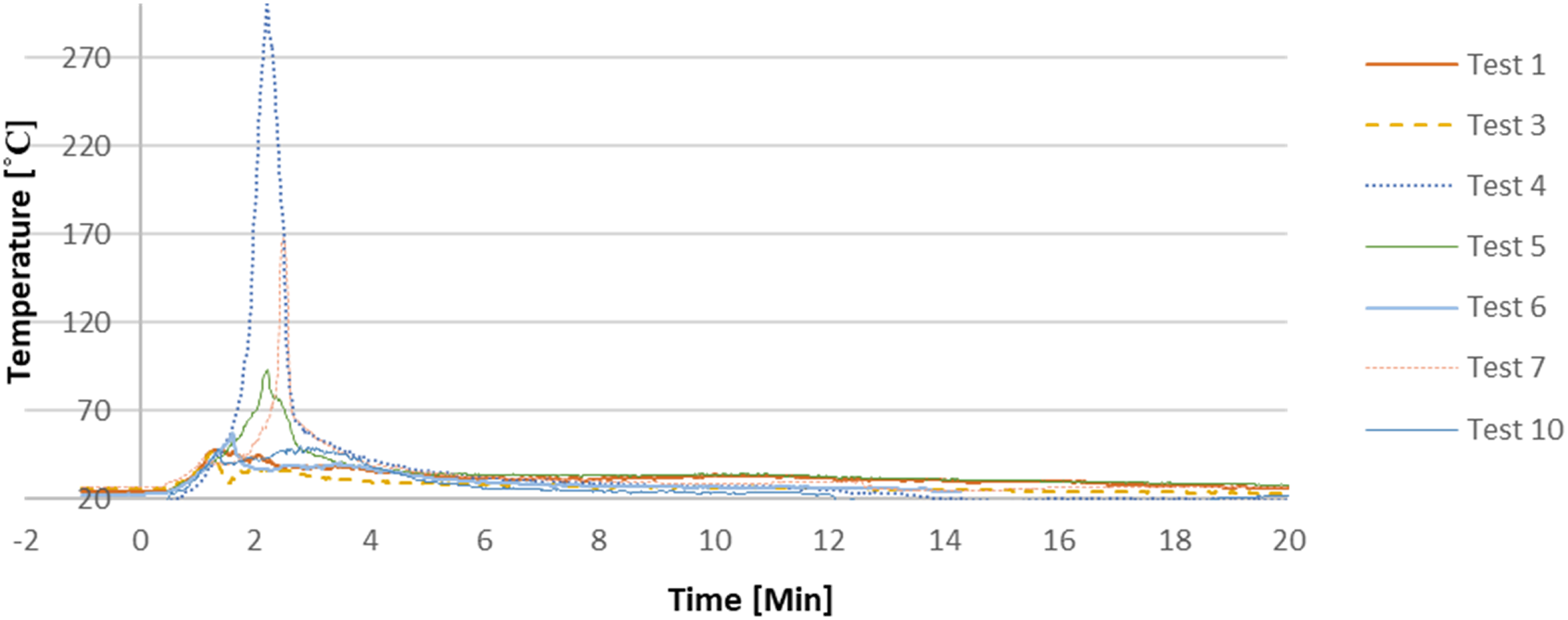
Smoke obscuration and visibility
For residential buildings, the smoke obscuration criterion suggested is optical density (OD) 0.166 1/m, which corresponds to a visibility of 7.81 m for light reflecting signs. Figure 6 compares the OD measured in the tests with sprinkler, LPWM and HPWM systems. The smoke OD measured in the room increased rapidly and reached the criterion value of 0.166 1/m within 2 min from the ignition in all tests. With the delayed activation in Tests 4, 5 and 7, the measured OD was higher than 0.6 1/m. The activation of the nozzle did not improve the smoke obscuration as rapidly as the room temperature, and in all tests, the smoke obscuration was untenable for 10–30 min. While the smoke from the fire contributed most to the low visibility in the room, the water mist droplets discharged from the nozzles of the LPWM and HPWM also contributed to the low visibility in the room. Visibility measured in the test room at 1.6 m height.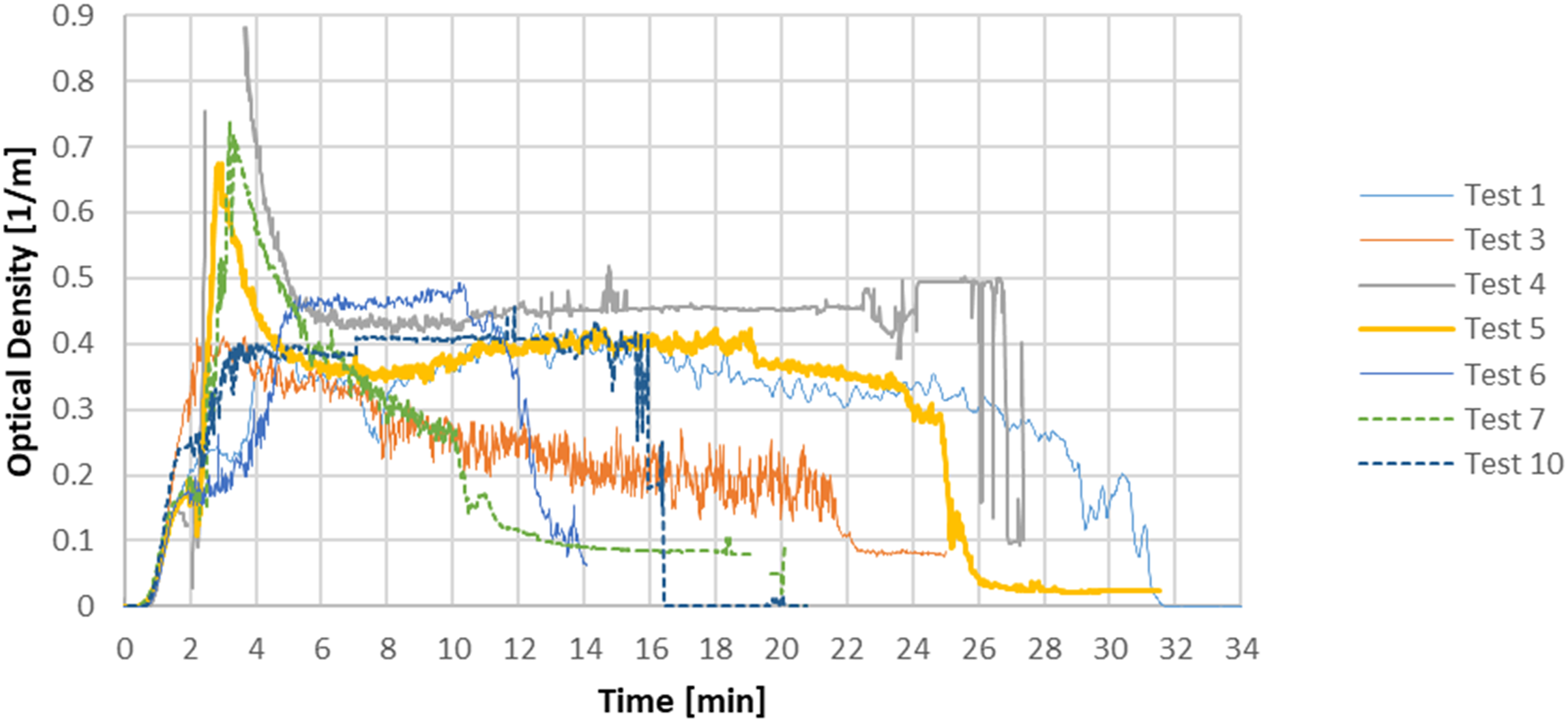
Gas concentrations
The gas samples collected at the centre of the room at 1.6 m height were analyzed to estimate the oxygen and carbon monoxide concentrations in the room. The tested sprinkler, LPWM and HPWM systems maintained both oxygen and carbon monoxide concentrations much lower than the tenable criteria values (i.e. 14% for oxygen and 10,000 ppm for carbon monoxide) when they were automatically activated. However, when the water discharged was delayed by approximately 1 min, the delay significantly affected the oxygen and carbon monoxide concentrations. For instance, in Test 4, oxygen concentration was decreased to 12.7% and the carbon monoxide concentration was increased to 0.7% (7000 ppm) at the time of the first nozzle activation. However, the gas concentrations were recovered within 2 min from the activation of the suppression systems. The oxygen concentrations are plotted in Figure 7. Oxygen concentrations measured in the test room at 1.6 m height.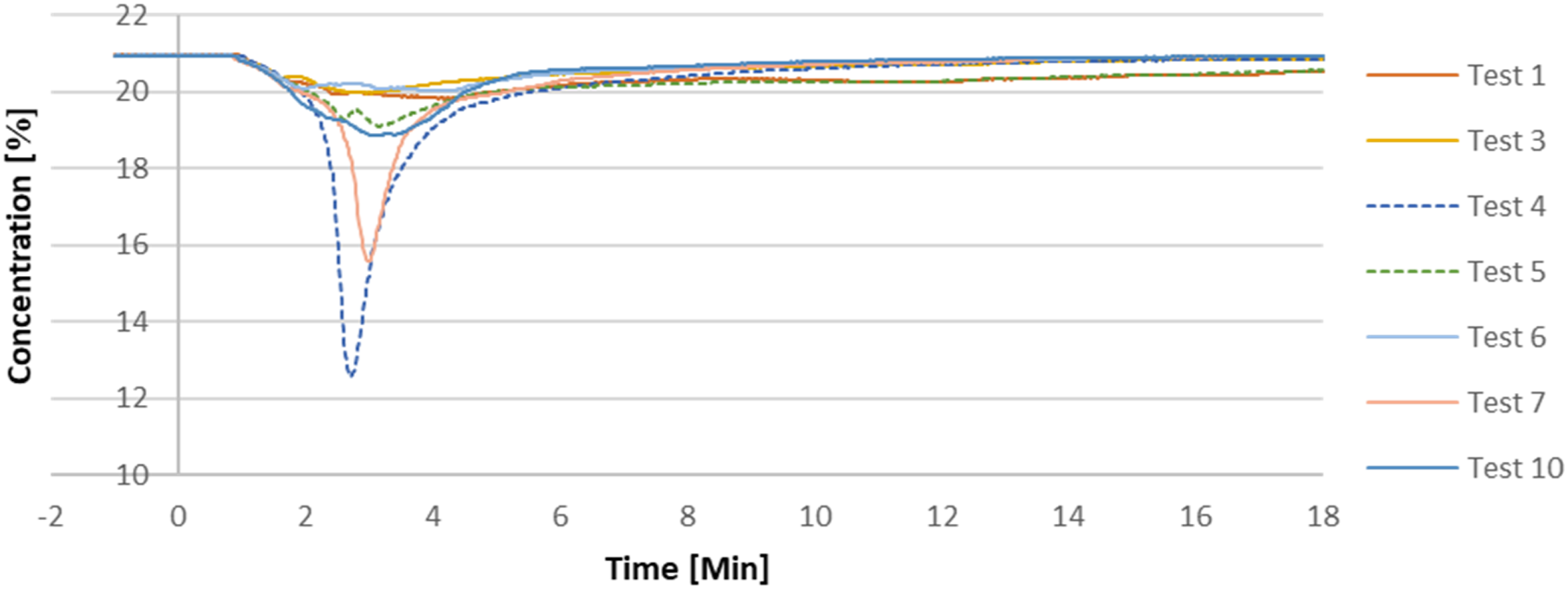
Property protection
Fire damage on CLT panels
To assess the property protection capability of each system, the CLT ceiling temperature was monitored, and the post-fire damage on the CLT panels was also observed. One thermocouple was installed on the CLT ceiling panel at the fire corner to measure the ceiling surface temperature. As shown in Figure 8, initially after the ignition, the CLT ceiling temperature in all tests increased rapidly until the activation of the suppression system. With the normal activation occurring in 1.2–1.5 min, the ceiling temperature was kept lower than 300°C at which wood could go through charring. With the sprinkler system in Test 10, the measured maximum CLT ceiling temperature was 264°C, and the temperature was decreased to 180°C after the first activation of Nozzle #1 and was decreased further after the activation of Nozzle #2. The delayed activation allowed the fire to grow fast so the flame reached the ceiling. The ceiling temperatures measured in Tests 4, 5 and 7 were between 630 and 820°C. The ceiling surface temperature was abruptly decreased with the activation of the HPWM and LPWM. CLT ceiling temperature (the measurement location being above the wood crib).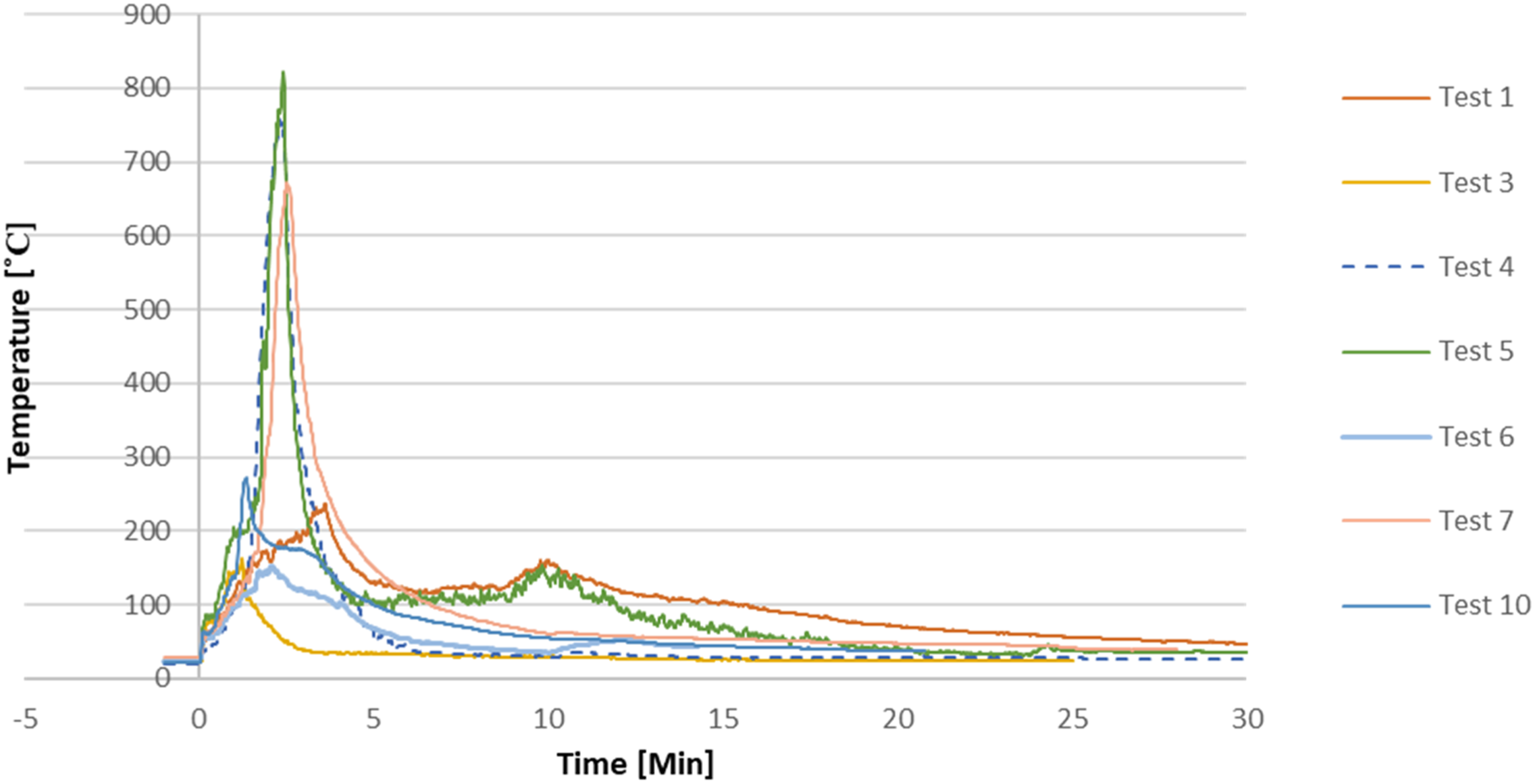
While the HPWM, LPWM and sprinkler systems kept the room temperature tenable, they did not prevent damage on the CLT panels. Nonetheless, when activated, all the tested suppression systems did not result in severe fire damage on the ceiling CLT panel. For the wall panels, however, the HPWM system tested in Test 1 resulted in damage on both sides of the wall panels, with significant charring at the corner mainly due to the wood crib fire. Figure 9 shows the fire damage on the CLT panels from tests 1, 3, 6 and 8. The HPWM system using Type B (in Test 3) nozzles protected the CLT wall panels, leaving only slight charring on the wall panels. Similarly in Test 6, the LPWM system using Type C nozzles provided relatively good protection for the wall panels (see Figure 9). The sprinkler system also provided good wall protection as the water spray angle was wide enough to wet the walls up to ¾ of the room height. Fire damage on the CLT panels.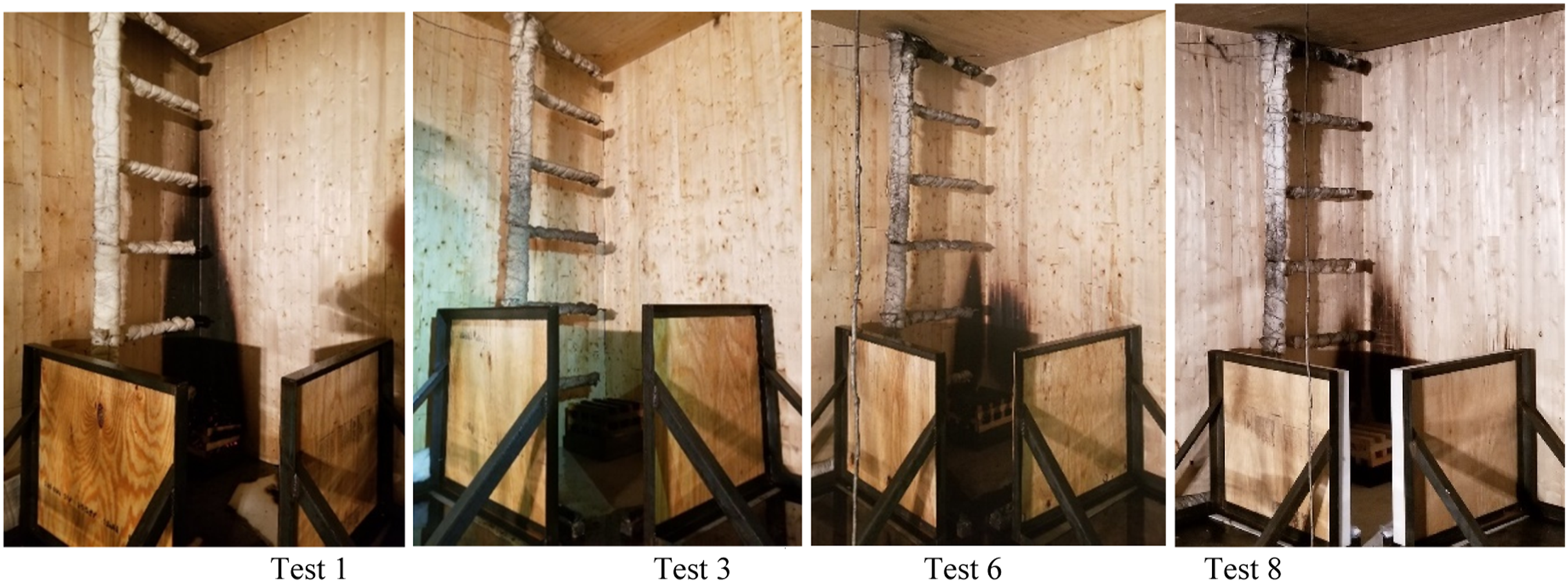
In Tests 4, 5 and 7, the activation of the nozzle was delayed by approximately 1 min. Figure 10 shows the fire damage on the CLT walls and ceiling resulted in these tests. With the delay time of approximately 1.0 and 1.3 min in tests 4 and 7, respectively, the fire spread to the CLT walls and ceiling, and the flame was also penetrating through the joints of the CLT walls and ceiling. The HPWM and LPWM systems effectively suppressed the fire, but the CLT panels were severely damaged. As shown in Figure 10, a large area was burnt, and the depth of charring in some areas was approximately 5–10 mm. When delayed by approximately 56 s in Test 5, the damage on the walls and ceiling was less severe than in Tests 4 and 7. Fire damage on the CLT walls and ceiling with delayed activation of suppression systems.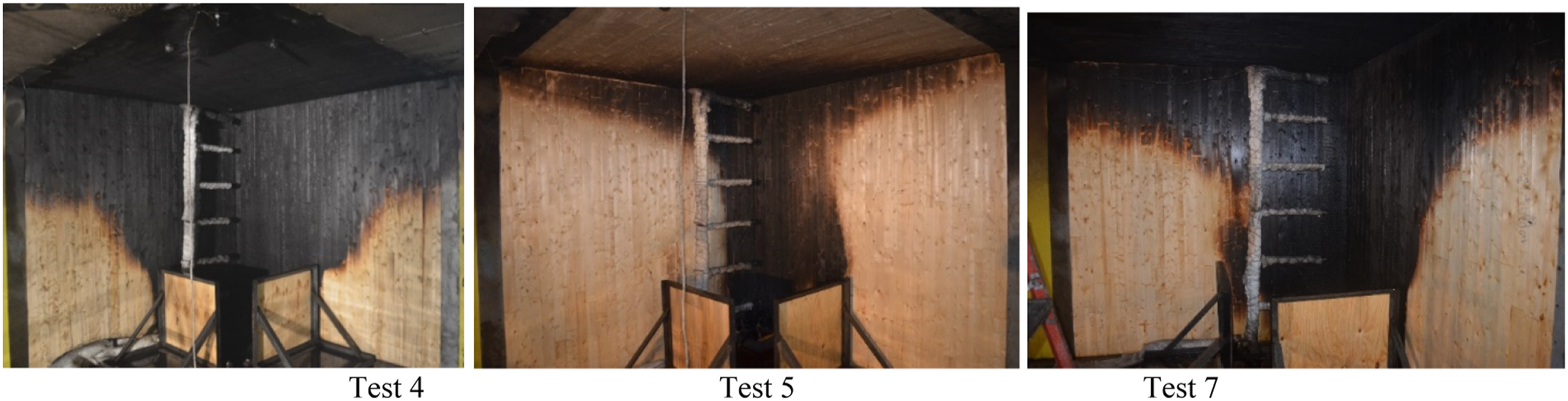
These test results showed that when delayed activation is expected in system designs (e.g. employing dry-pipe systems), the risk of fire spread to the combustible mass timber should be considered. Also, the delayed time requirements for the suppression systems should be re-examined to ensure protection for the exposed mass timber structural elements.
Water damage
The water damage from the tests was assessed based on the moisture content measured on the CLT panels. The average ambient temperature and relative humidity measured during the time duration of the testing were 20 ± 5°C and 56 ± 21%, respectively.
In selected tests, moisture contents were measured on the wall and ceiling panels before and after the fire test at the measurement points on the exposed CLT surface, as shown in Figure 3. The moisture contents were averaged over the measurement points in each test and are shown in Figure 11. Average moisture contents.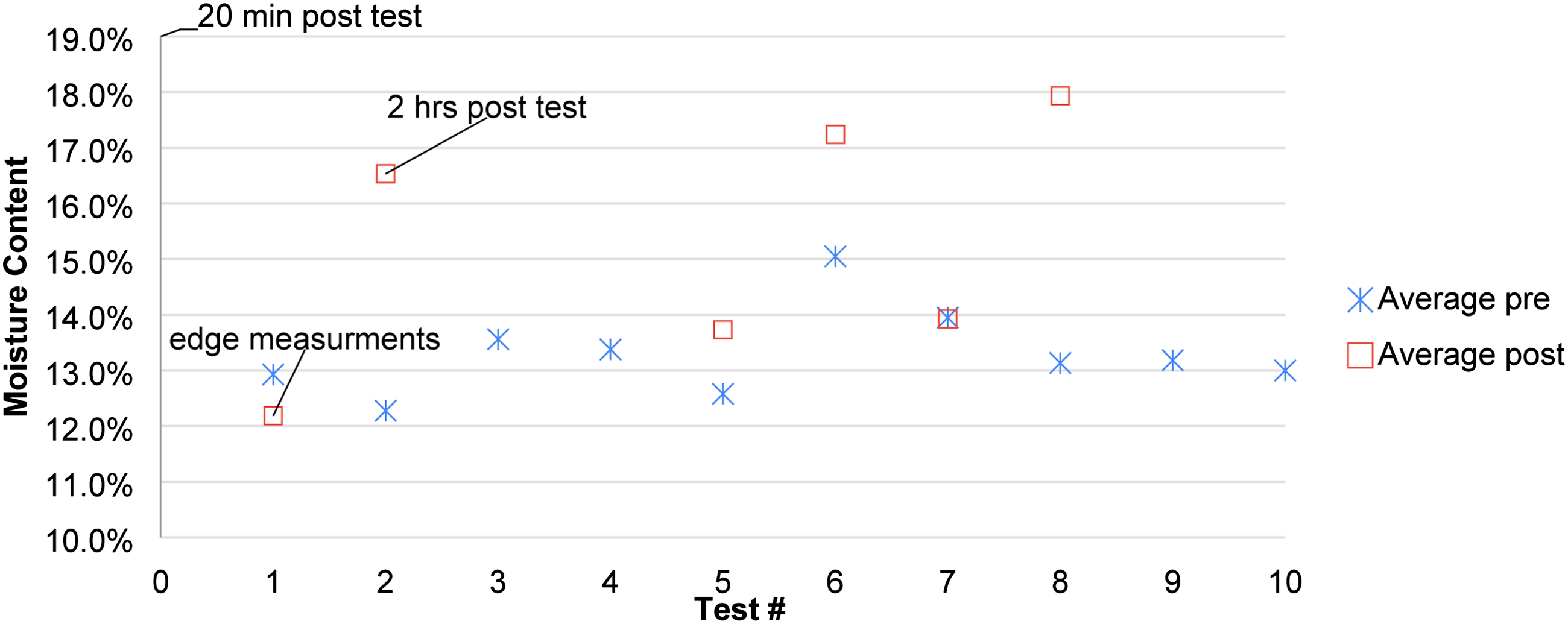
The pre-test moisture contents were similar among the tests, with the average value in the range of 12.3%–15.1% for all tests. After the suppression test, the wet CLT panel surfaces quickly dried. In Test 8, the measurements were made 20 min after the sprinkler test, and the value was 37% higher than the pre-test value. When measured 2 h after the LPWM test (Test 6), the post-test value was 17.2%, which was close to the pre-test measurement of 15.1%. The post-test values measured after 18–24 h were similar to the pre-test value. When measured 18–24 h after Tests 1 (HPWM Type A nozzles), 5 (HPWM Type A nozzles) and 7 (LPWM Type C nozzles), the moisture contents were recovered to the pre-test measurements. Therefore, the recovery of moisture contents was not monitored beyond the time period of 24 h since the changes were not apparent beyond that time.
Water sprayed on the wall and ceiling surfaces was not deeply absorbed into the CLT panels but formed a large pool on the floor. The amount of pooled water appeared proportional to the total water spray rate in each test. Therefore, water penetrated into the joints of the bottom edge of the CLT wall panels. The moisture contents measured on the bottom edges after 24 h from the HPWM test (Test 2) were 35% higher than the pre-test value. In an actual building, it is expected that the water pooled on the floor could cascade down and penetrate deeply to connect structural elements through the joints unless they are sealed.
Discussion
The effectiveness of various fire suppression systems was investigated in a residential fire scenario involving mass timber structures (CLT panels) exposed without protective layers (e.g. gypsum board protection). Selected HPWM, LPWM and sprinkler systems were investigated in a test set-up designed for impartial comparisons of them. A series of tests were conducted using two HPWM, one LPWM and one sprinkler nozzle types in the test room (with dimensions of 8.53 m (L) × 4.27 m (W) × 2.4 m (H)) where two nozzles of each type were installed on the ceiling in each test. The performance of these fire suppression systems was compared for the following: • Maintaining tenable conditions in the test room by controlling/suppressing the fire; and • Minimizing fire and water damage on the exposed mass timber structures.
Life safety is the main design objective of the fire suppression systems for a residential building. To ensure sufficient time for the occupants to evacuate the building, the fire suppression system is required to maintain the room temperature, smoke optical density and gas concentrations below the threshold limits. The tested HPWM, LPWM and sprinkler systems successfully maintained the room temperature and gas concentrations tenable, when they were automatically activated, with no delay. However, the smoke obscuration in the test room deteriorated rapidly and reached an untenable condition within 2 min from the ignition in all tests with the sprinkler, LPWM and HPWM systems.
The tested fire suppression systems were evaluated for property protection in consideration of the following two aspects: • The fire controlling performance to limit the fire spread to the exposed mass timber structures while wetting the combustibles and controlling ceiling gas temperature; and • Potential water damage on the exposed mass timber structures which could be proportional to the total amount of water sprayed by suppression systems.
The fire and the CLT ceiling surface temperature grew very quickly within a short period of time in all tests, yet the intervention of the tested suppression systems prevented significant fire spread to the ceiling. While the ceiling panel was well protected in all tests, the tested systems resulted in some fire damage on the CLT corner wall panels. The largest area was found damaged with a HPWM nozzle (Type A) designed for minimum protection for life safety, and only slight damage was found with the other HPWM nozzle (Type B) designed for property protection. The sprinkler system also provided relatively good protection for the corner walls as the water spray angle was wide enough to wet the walls. The current standards require to have a wide spray pattern for traditional sprinklers but not specifically for water mist systems since wetting is not the main fire suppression mechanism of the water mist systems.
On the other hand, when the fire suppression systems were tested with a short delay (approx. by 1 min) in the water discharge, both the ceiling and wall CLT panels were found severely damaged. In water-sensitive environments, such as mass timber buildings with exposed timber structures, dry-pipe/pre-action systems with inevitable lags in water discharge would be considered to prevent potential water damage in the case of false activation or inadvertent discharges. These dry-pipe/pre-action systems should be designed based on a good understanding of potential fire scenarios and the negative consequences of the delay in the water discharge. For dry-pipe sprinkler systems, the 2019 edition of NFPA 13, 5 NFPA 13D 6 and NFPA 13R 7 require water delivery to a dwelling unit within 15 s from the fire detection whereas, for dry-pipe water mist systems, NFPA 750 16 has no specific time requirement for residential occupancy.
Among the systems tested, the HPWM (Type B nozzle) designed for property protection demonstrated the most effective fire suppression relative to the total amount of water used. The HPWM system (Type A nozzle) used only 1/4 of the total water used by the sprinkler (Type D nozzle) to demonstrate comparable effectiveness in lowering the fire temperature. Consequently, the HPWM systems are expected to minimize the potential water damage to the building. After each fire suppression test, the wet CLT panel surfaces quickly dried, and they recovered the pre-test moisture content values within about 24 h in all tests, regardless of the water spray rate and the system type. However, a large water pool was formed on the floor in particular for the sprinkler system. For this reason, water penetrated the joints along the bottom edge of the CLT wall panels, which could bring concerns for water damage or mould issues.
Conclusion
This study carried out fire suppression tests involving exposed CLT construction materials to address gaps in the existing standards, which do not specifically address design requirements concerning the construction material. The test data provided in this paper support that property protection should be considered as the main design objective of fire suppression systems for the protection of mass timber residential buildings, while life safety is the primary objective. Therefore, in each design case, the fire hazards should be first analyzed considering how the construction material of mass timber and the compartment condition would affect the fire hazards specific to the case. When the hazard assessment indicates high fire loading including relatively large areas of exposed mass timber elements or special hazardous circumstances, property protection should be provided, and water mist systems should be designed and evaluated through full-scale fire tests to meet the design and performance objectives. As presented in this study, a test set-up should be designed to test the system performance limits and to verify the effectiveness of the applications of the design parameters, which include not only the layout/hydraulic dimensioning but also nozzle water spray characteristics, discharge delay/duration and measures to minimize fire and water damage on mass timber.
Footnotes
Authors’ contribution
The first author took the lead in writing the manuscript including the test data analyses, and the co-author provided critical assistance in designing the test program and feedback on the manuscript.
Declaration of conflicting interests
The author(s) declared no potential conflicts of interest with respect to the research, authorship, and/or publication of this article.
Funding
The author(s) disclosed receipt of the following financial support for the research, authorship, and/or publication of this article: This project was financially supported by Natural Resources Canada and National Building Code of Canada, and National Research Council Canada led the tests conducted at the Southwest Research Institute.
