







Abstract
Kitchen indoor air quality (IAQ) has not been well-addressed amongst other IAQ problems at home, despite the fact that cooking is one of the major home activities that can generate high levels of respirable particles and gaseous air pollutants. This study aims at investigating the effects of home kitchen designs on the performance of various ventilation strategies in reducing exposure to IAQ pollutants. The degree of natural ventilation was found to be dependent largely on the relative position of window and door opening, and using mixed ventilation with natural cross-ventilation and mechanical ventilation did not necessarily provide better ventilation. Natural ventilation with the added fume extraction by the exhaust fan could not protect the occupants from high levels of cooking pollutants. Range hood on the other hand could quickly and locally remove particles and gaseous cooking pollutants from the source. The study recommends using a range hood alone during cooking or with single-side natural ventilation to maintain an acceptable IAQ in the home kitchen.
Introduction
Poor indoor air quality (IAQ) at home can be detrimental to health and well-being. In response to the COVID-19 pandemic, the social distancing rules, the closure of schools and work from home policies, people spent significantly more time at home.1,2 The pandemic also caused significant changes in eating habits. People dined out less (−1.26 meals/week, p < 0.001) and cooked more often at home (+1.06 meals/week, p < 0.001). 3
Cooking your own meals may cause IAQ problems at home. According to World Health Organization, 4 about 3.2 million premature deaths were caused by incomplete combustion of cooking solid fuels and kerosene each year. In rural areas or poor countries, previous research into cooking-related IAQ issues mostly evaluated the impacts of different kinds of household fuels. For example, Pervez et al. 5 investigated levels of indoor coarse particles (PM10) in households resulted from the use of stoves fuelled by liquefied petroleum gas (LPG), kerosene, electricity or conventional fuels like coke and cow dung cakes.
In urban areas, people have access to cleaner cooking fuel alternatives such as LPG, natural gas and electricity; concerns relating to kitchen IAQ focus mainly on pollutants emitted from the action of cooking. Cooking has been identified as one of the most significant indoor activities that generate a high level of particulate matter (PM). A review by Abdullahi et al. 6 summarized the empirical evidence, the characteristics and chemical components of PM emitted from cooking. The study also suggested the oxidation of fatty acids from food and edible oil during cooking can lead to aldehyde generation. 7 Cooking was also found to contribute to atmospheric gaseous polycyclic aromatic hydrocarbon (PAH). 8
A number of studies discussed IAQ problems in restaurants, concerning mainly on exposure to PM.9–12 Comparatively, fewer studies focused on IAQ problems at home caused by cooking. The majority quantified the pollutants emitted from domestic cooking and assessed the quality of household IAQ during cooking. Sze-to et al. 13 assessed the exposure of cooking-generated ultrafine particles (UFPs) and fine particles (PM2.5) in the kitchen and the living room and characterized the risk of developing cancer. Militello-Hourigan and Miller 14 studied the IAQ during cooking in nine tightly constructed homes in Colorado. They found that the PM2.5 levels near the kitchen increased significantly during cooking. Similarly, cooking using induction or electric cookers in substandard homes in Hong Kong was found substantially increased PM10 concentration but not carbon monoxide (CO), carbon dioxide (CO2) and volatile organic compounds (VOCs). 15
To further look into the influences of cooking on home IAQ, few studies evaluated the emissions from different cooking methods and the potential health effects. See and Balasubramanian 16 conducted control experiments in a domestic kitchen to investigate the emission of PM2.5 and chemical constituents from five different cooking methods. Deep-frying was found to generate the largest amount of PM2.5 and other chemicals, followed by pan-frying, stir-frying, boiling and steaming. Lu et al. 17 monitored the concentrations of total volatile organic compounds (TVOCs) released from six typical cooking methods and found that, although stir-frying gave rise to more TVOC than quick-frying and deep-drying, the potential carcinogenic risk of exposure to VOCs emitted from deep-frying was higher than the other cooking methods. Zhang et al. 18 also conducted experiments in residential buildings to identify the effects of cooking styles, stove types, cooking temperatures and ventilations on the emission of UFP, PM2.5 and black carbon. Deep-drying, high-temperature and the use of gas stove could lead to high particle emissions.
In addition to cooking methods, home ventilation could also affect the exposure to pollutants generated from cooking. However, only limited research has been published in literature. Kong et al. 19 evaluated the levels of PM during and after cooking under various combinations of range hood, air cleaner and natural ventilation (window). Using natural ventilation alone was found to be more effective in reducing the level of PM than using ventilation devices, and using both was deemed the most effective way to reduce exposure to PM. Using computational fluid dynamics (CFD) simulations, Xu and Gao 20 identified range hood as the most effective ventilation strategy, and contrary to earlier belief, the usefulness of natural ventilation for reducing kitchen particles varies depending on outdoor wind velocity and seasonal weather and thus was not guaranteed.
While some have discussed the effectiveness of various ventilation strategies in reducing PM levels in kitchen, literature review suggests that there is no study discussing the influence of home kitchen designs on ventilation performance in reducing exposure to both particle and gaseous cooking pollutants. Therefore, this study aims at evaluating the effects of relative positions of kitchen windows, door openings and mechanical ventilations on the effectiveness of various ventilation strategies in reducing exposure to IAQ pollutants. A two-stage experiment was conducted in two typical home kitchens in Hong Kong: a semi-open kitchen and a closed kitchen. The first stage was carried out to evaluate the ventilation strategies that could maintain acceptable IAQ in the kitchen using the Chinese-style cooking method with the highest emission. The second stage assessed the ventilation performance of two home kitchens with different designs using tracer gas experiment. This study identified major design factors that influence kitchen IAQ, which could provide useful information on the consideration and improvement of home kitchen designs.
Methodology
Typical home kitchens
To evaluate the effects of home kitchen designs on IAQ, two typical Hong Kong public housing kitchens were investigated. Figure 1 displays the floor plans of the two homes. Both homes were 3- or 4-person flats with an internal floor area of approximately 40 m2. Both the semi-open kitchen and the closed kitchen had a floor area of 3.4 m2, and were equipped with a cooking stove fuelled by town gas, an openable window, an exhaust fan and a range hood. The closed kitchen could be separated from the dining area by closing the door. Besides, the closest nearby window of the closed kitchen was opposite to and away from the stove, and opposite to the door opening of the kitchen; while the window of the semi-open kitchen was right next to the stove, and the opening to the dining area was also on the same side of the kitchen. The range hood exhausts of both kitchens were just next to the exhaust fan with the window below. It is noteworthy that the electrical wiring of the range hood and the exhaust fan of the closed kitchen was made in a way that switching on the range hood would also turn on the exhaust fan, but the exhaust fan can be turned on without turning on the range hood. On the other hand, the exhaust fan and the range hood can be operated separately in the semi-open kitchen. Layout of the public housing flats with (a) a semi-open kitchen and (b) a closed kitchen.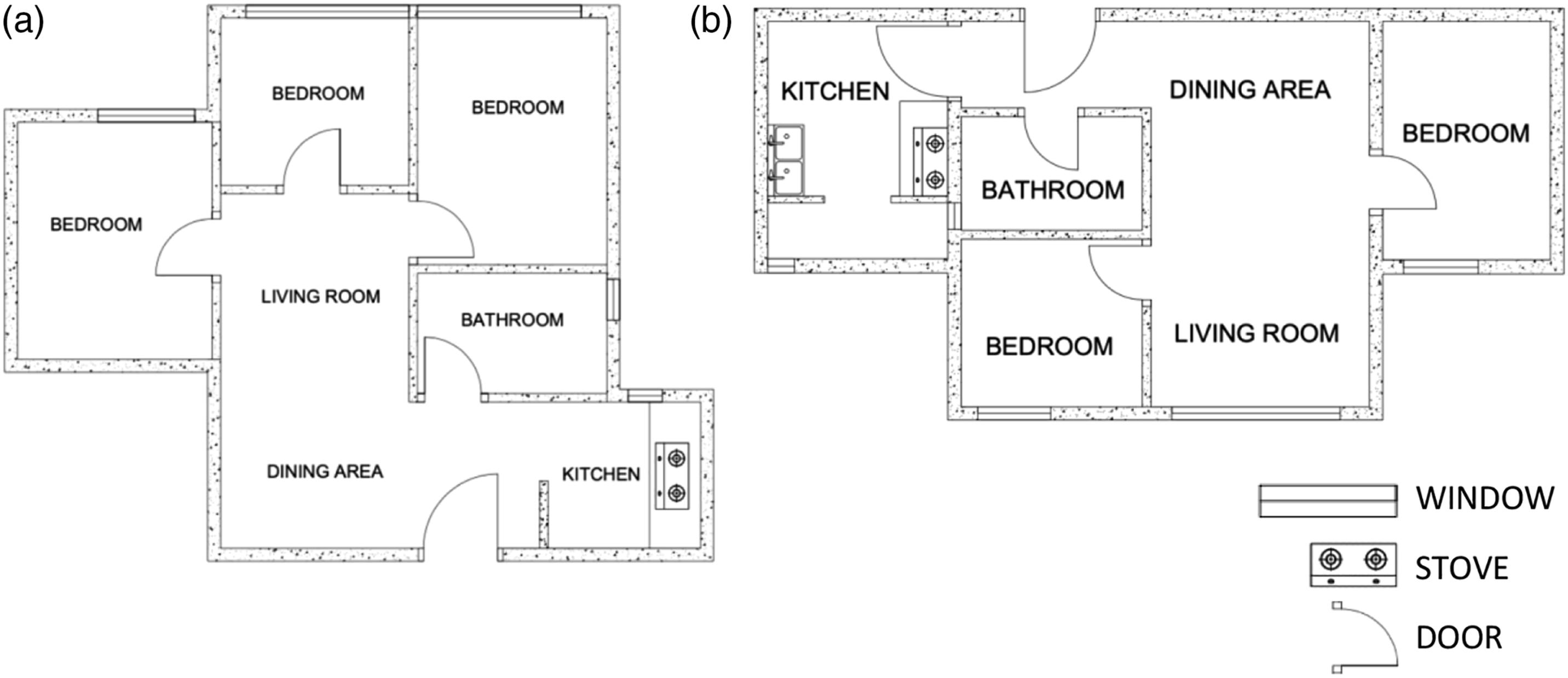
Experimental set-up
In this study, a two-stage experiment was conducted in a semi-open kitchen and a closed kitchen. The first stage served to understand the kitchen IAQ and identify ventilation strategies that could maintain acceptable IAQ in the kitchen. The second stage evaluated the effects of kitchen designs on the ventilation performance of these two home kitchens using a tracer gas experiment. Figure 2 shows the schematic diagram of the two-stage experiment. Schematic diagram of the two-stage experiment.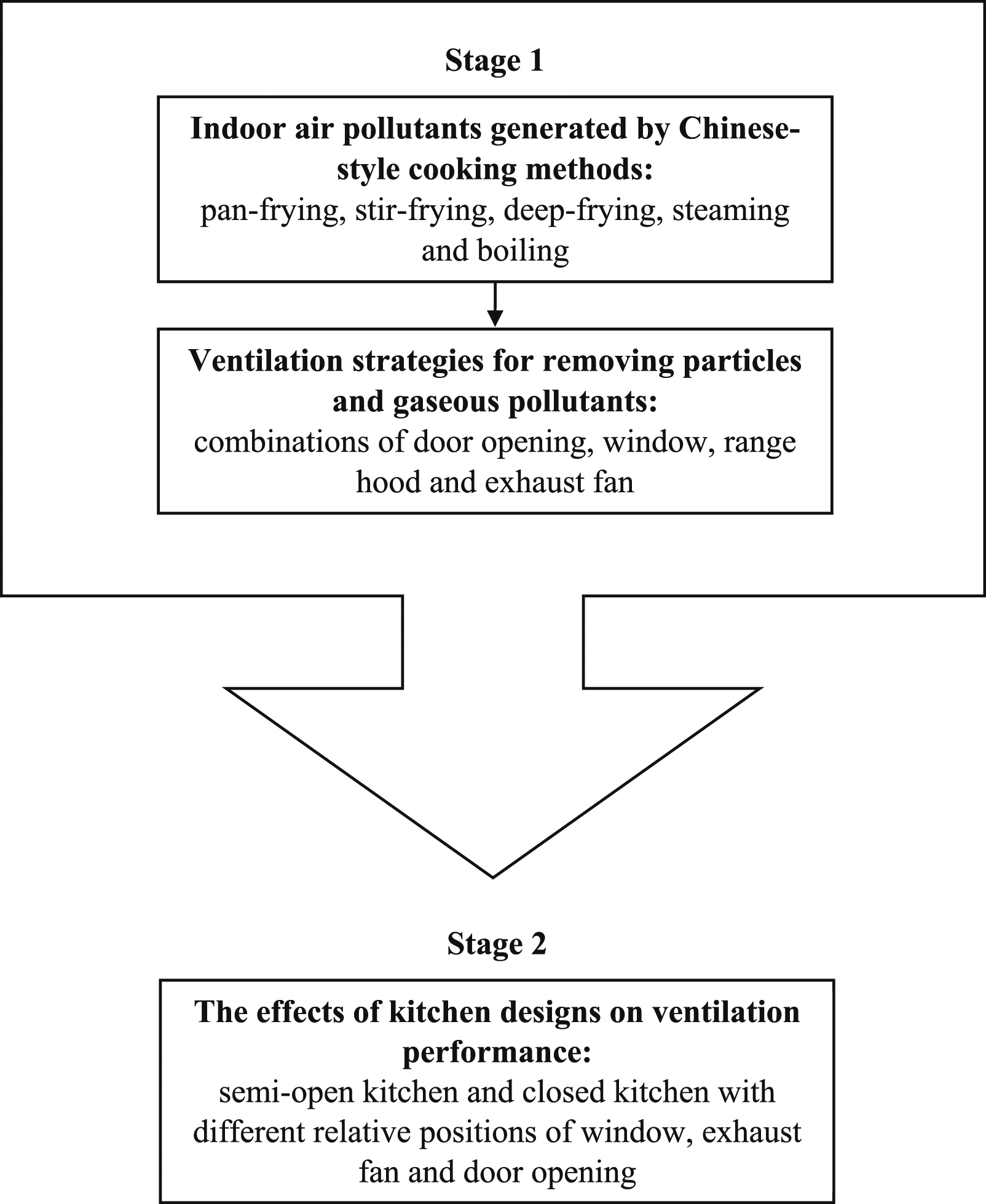
Stage 1
Control experiments were conducted in the semi-open kitchen to identify the cooking method that generates the most pollutants. Chinese-style cooking methods including pan-frying, stir-frying, deep-frying, steaming and boiling were examined. A number of factors have been found to affect the emission from cooking. Gao et al. 21 found that the generation of PM was independent of the types of vegetable oil but had a close relationship with the heating temperature. Li et al. 22 also found that small pieces of food (i.e. larger surface area) would have more contact with the cooking oil thus leading to more emissions. A number of studies also showed the effects of food types on the emission of air pollutants.8,22,23 To ensure the consistency of the experiments, the same type of food, chicken wings of similar sizes and weights, were used. The pre-packaged thawed chicken wings were purchased on the same day of the experiment from a supermarket, and were stored in the fridge at 4°C until they were being cooked. The chicken wings were pat dried and weighed, and only wings that weighed 38 ± 2 g were used for the experiment. 15 mL of peanut oil was used for pan-frying and stir-frying, 415 mL for deep-drying and no oil for steaming and boiling the chicken wing. For all the cooking with oil, a chicken wing was added to the pan when the oil temperature reached 180°C and a medium-low heat was maintained throughout the cooking process. For steaming and boiling, high heat was used to keep the water boiling. One chicken wing was cooked for 5 min using each cooking method and the stove was turned off immediately after the cooking. Throughout the experiment, the window was closed and the exhaust fan and the range hood were not operating to create the worst-case scenario. After each cooking, the kitchen was ventilated completely and the cooking utensils were cleaned thoroughly before the next cooking was taken place. The entire experiment was repeated two times to ensure data consistency.
Specifications of the IAQ sensing device.
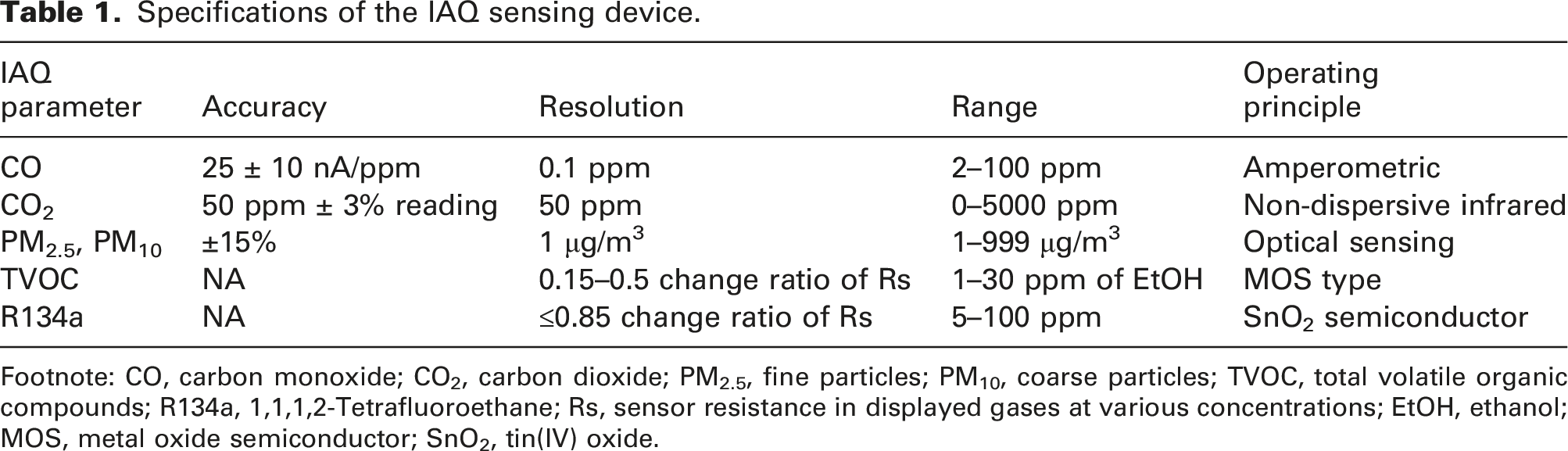
Footnote: CO, carbon monoxide; CO2, carbon dioxide; PM2.5, fine particles; PM10, coarse particles; TVOC, total volatile organic compounds; R134a, 1,1,1,2-Tetrafluoroethane; Rs, sensor resistance in displayed gases at various concentrations; EtOH, ethanol; MOS, metal oxide semiconductor; SnO2, tin(IV) oxide.
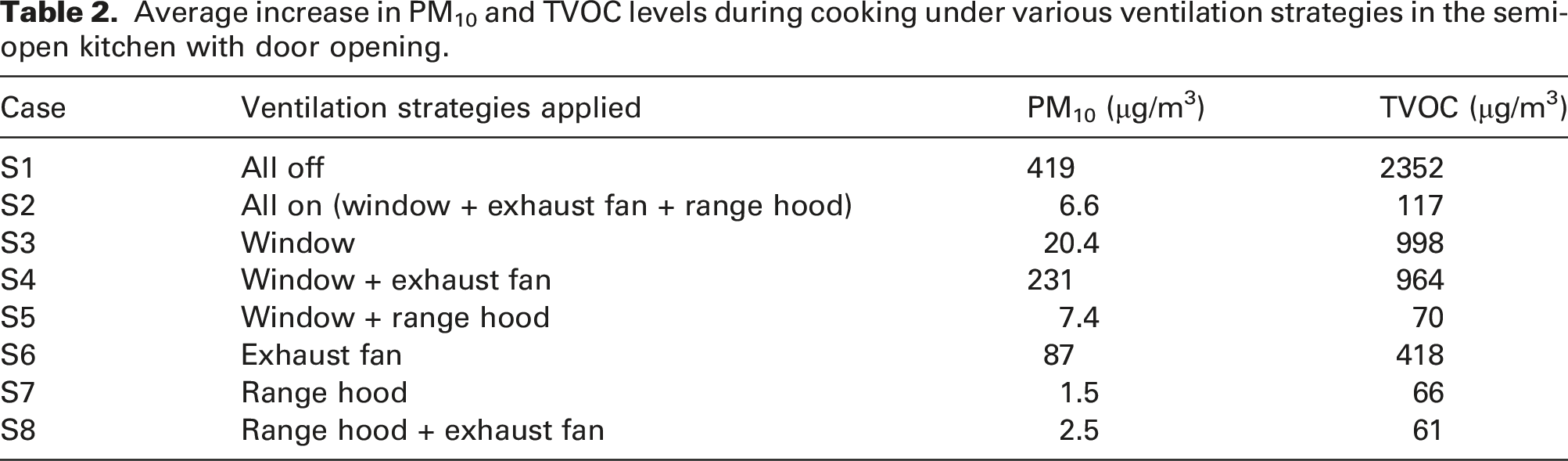
Average increase in PM10 and TVOC levels during cooking under various ventilation strategies in the semi-open kitchen with door opening.
Stage 2

Range and average air change rate per hour (ACH) under various ventilation schemes in the semi-open and closed kitchen.
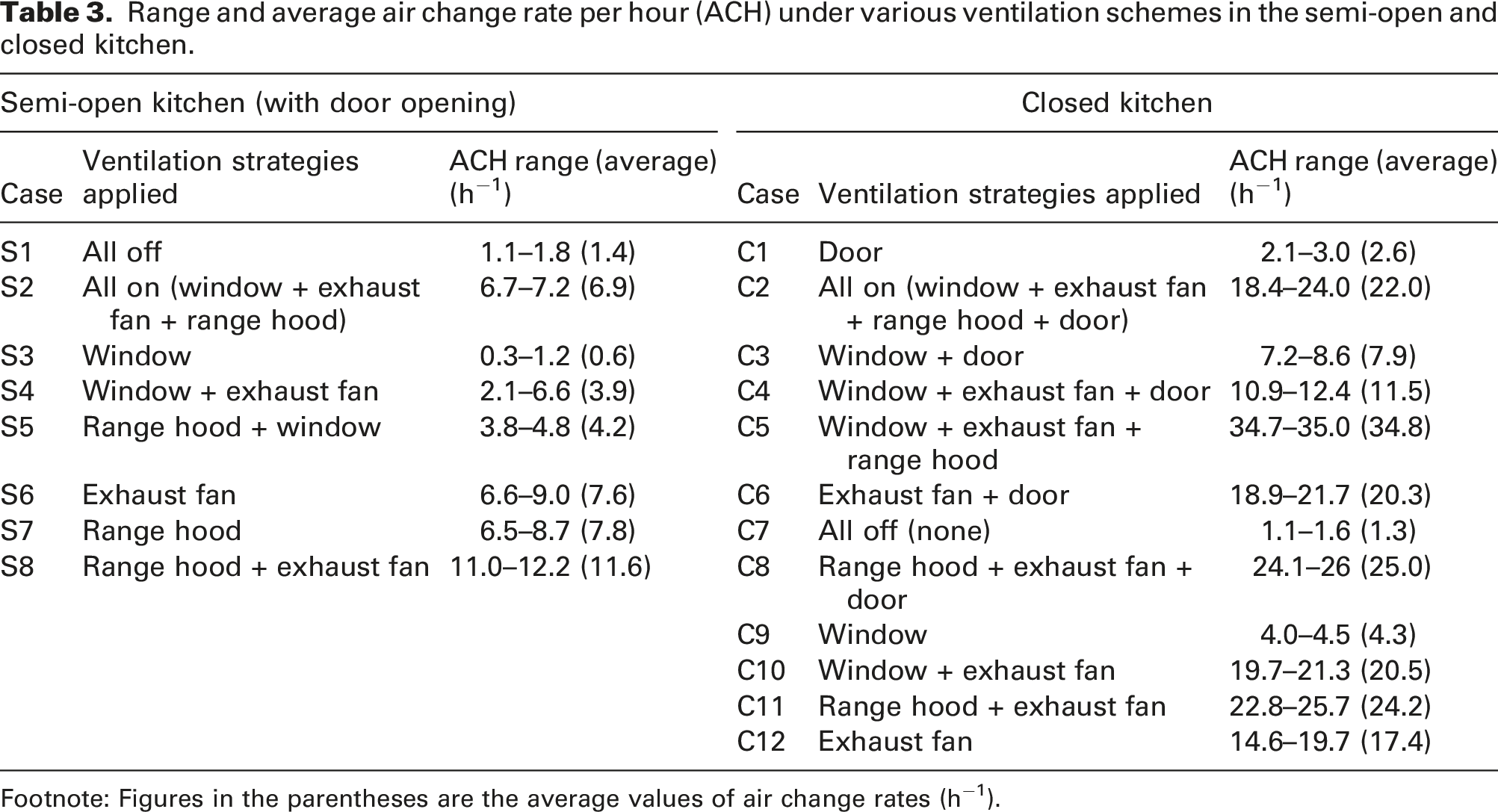
Footnote: Figures in the parentheses are the average values of air change rates (h−1).
Results and discussion
Emission from various Chinese-style cooking methods
Figure 3 shows the changes in CO2, PM10, PM2.5 and TVOC levels in the semi-open kitchen during boiling, steaming, pan-frying, stir-frying and deep-frying. The levels shown in the figures were increments obtained from background values, the absolute values varied with background levels during each sampling period. Compared to the frying methods, boiling and steaming gave rise to higher CO2. As it is a known fact that town gas contains CO2, it is reasonable to detect higher CO2 levels during boiling and steaming under high heat (more burning of town gas). CO2 levels during and after frying mostly fulfilled the IAQ Objectives Good Class 8-hr limit of 1000 ppm, but boiling and steaming exceeded the limit by a few hundred ppm. Despite that, the levels were still considered within the normal indoor range (i.e. 350–2500 ppm), and no significant impact on health would be expected at such levels of exposure.27,28 Changes in (a) carbon dioxide (CO2), (b) coarse particles (PM10), (c) fine particles (PM2.5) and (d) total volatile organic compounds (TVOC) during boiling, steaming, pan-frying, stir-frying and deep-frying of chicken wing.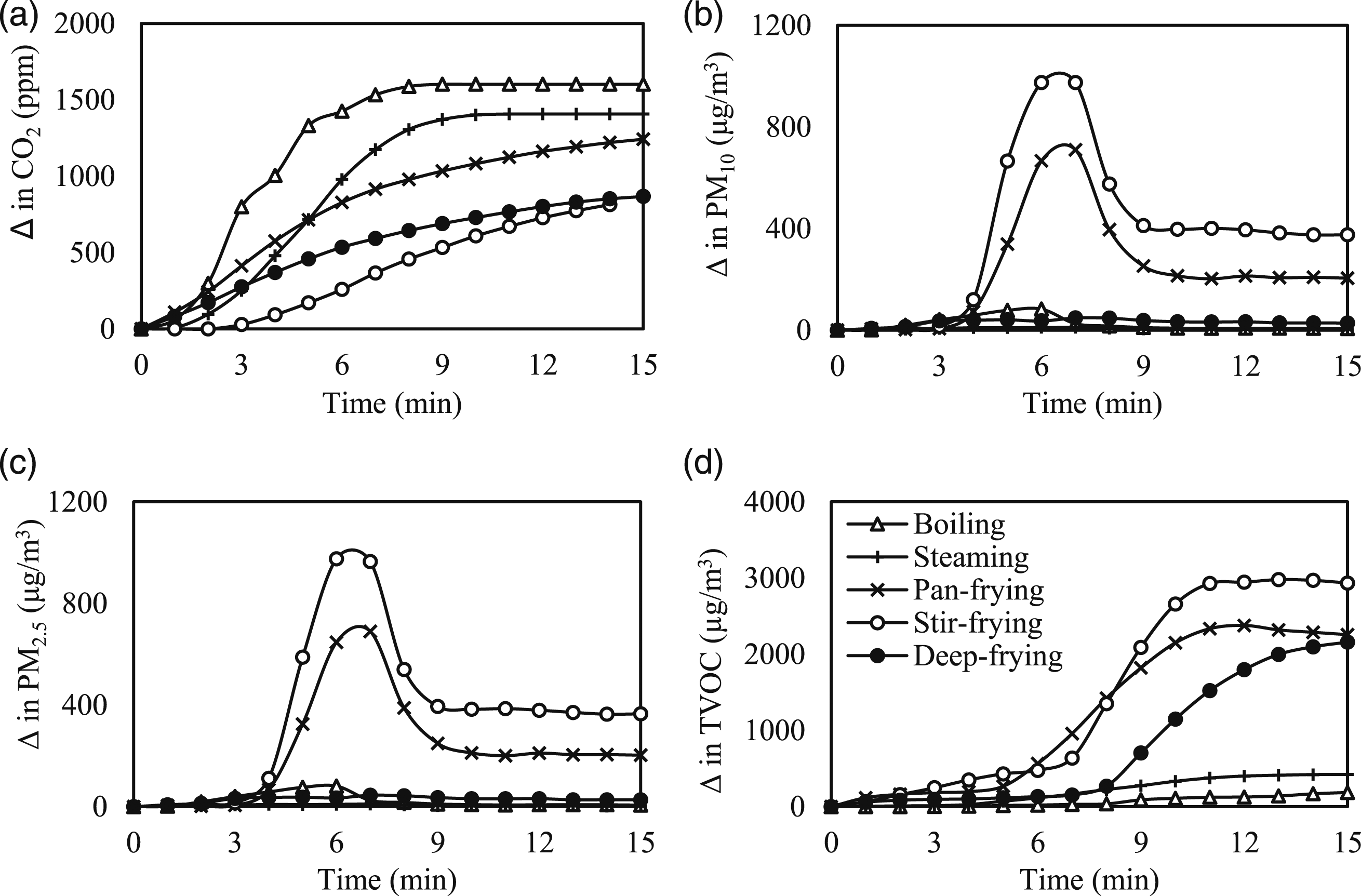
PM10 and PM2.5 levels exhibited similar changes in levels during the sampling period. For stir-frying and pan-frying, PM levels were low and steady during the cooking process but increase drastically and reached a maximum of about 1,000 and 700 μg/m3, respectively, when the stove was turned off after cooking for 5 min. Due to poor ventilation (no window, exhaust fan and range hood), the PM levels retained subsequently exceeded the Good Class 8-hr limit of 100 μg/m3. On the other hand, deep-frying, boiling and steaming of the chicken wing did not produce harmful levels of PM. The results were in contrast to other studies which found deep-frying released more PM than the other cooking methods,16,29 which could be attributed to the choice of food tested. In See and Balasubramanian, 16 plain tofu (soybean curd) was used for testing, which contained high moisture content (87–90%) than the chicken wing (about 69%) used in this study.30,31 Food with high water content was found to cause the volatilization of cooking oil into droplets, the precursor substances of particulates. 32 Completely immersing the tofu in cooking oil for deep drying could potentially produce more PM than stir-frying.
Meat contains higher fat content could produce higher levels of VOCs. 32 All frying methods produced high TVOC concentrations continuously and steadily during cooking and the levels increased significantly after cooking. Again, stir-frying generated the highest level of TVOC compared to other cooking methods, which agreed with Lu et al. 17 Except for boiling and steaming of chicken wing, all frying methods exceeded the Good Class 8-hr limit of 600 μg/m3 to a great extent. No significant increase in CO was observed during all cooking. Overall, stir-frying of the chicken wing was considered to have the highest emission of IAQ pollutants and was adopted in the experiment for testing the ventilation performance and effects of kitchen designs on IAQ.
Ventilation strategies for maintaining acceptable kitchen IAQ
The effectiveness of various ventilation strategies in maintaining acceptable IAQ in the kitchen can be evaluated using the increase and the decay of PM10 (level of PM10 and PM2.5 was similar) and TVOC. Displayed in Figure 4 are the profiles of PM10 and TVOC when the chicken wing was being stir-fried in the semi-open kitchen under various ventilation strategies (S1–S8).
High levels of PM and/or TVOC exceeding the IAQ Objectives were observed in case S1 (all off), S3 (window), S4 (window + exhaust fan) and S6 (exhaust fan). Although the pollutant levels quickly fell back to the background level after the cooking (except for S1), these ventilation strategies were considered ineffective in maintaining good IAQ during cooking, as cooking normally last for a much longer time than the experimental period of 5 min. The worst IAQ was when all ventilation strategies were not applied (S1), whereas high levels of pollutants remained even after the cooking. Without ventilation, the removal of cooking pollutants relied on the dispersion to the dining area and exfiltration to the outdoor environment through gaps. PM levels in case S1 and S4 were statistically the same (p > 0.05, t-test), suggesting that the ventilation performance of using the window and exhaust fan together was poor. On the other hand, case S7 (range hood) and S8 (range hood + exhaust fan) had significantly lower (p < 0.05, t-test) PM and TVOC than other cases, indicating that the range hood was an effective tool to remove particles and gaseous cooking pollutants.
When the window (S3) was used as ventilation, fluctuations of PM10 were observed, suggesting that the degree of ventilation varied with outdoor airflow, and the effectiveness of natural ventilation largely depends on outdoor wind conditions as suggested by other studies.20,33,34
Using the window (S3) or exhaust fan (S6) alone provided better ventilation effects than using them together (S4). This could be explained by the fact that the exhaust fan was installed just above the window, and when they were used together, the airflow might be disturbed, causing undesired re-entrance of pollutants back into the kitchen (i.e. short-circuit of airflow). The same effects were observed when the range hood was applied alone (S7) than together with the window opening (S5) or operating the exhaust fan (S8) or both (S2). According to Table 2 which shows the average increase in pollutant levels during the experiments, using range hood (S7) achieved the lowest PM10 level and second lowest TVOC level amongst all other ventilation strategies, but when it was used with other forms of ventilation, higher average values of pollutants were noted.
In summary, all ventilation strategies using the range hood, especially when it was applied alone, effectively removed cooking pollutants and maintained acceptable IAQ throughout the experiment.
Effects of kitchen designs
The influence of kitchen designs on the ventilation performance of the kitchens was evaluated using the tracer gas decay method. Table 3 showcases the ACH under each ventilation scheme. Again, as the range hood could not work alone without turning on the exhaust fan, there were only 12 ventilation cases in the closed kitchen. All off (none) case (C7) represented the infiltration rate of the closed kitchen. By removing the effect of infiltration, pairwise comparisons of ventilation performance in the semi-open kitchen, closed kitchen with door open and door closed are presented in Figure 5. Increase in levels of (a) coarse particles (PM10) and (b) total volatile organic compounds (TVOCs) during cooking under various ventilation strategies. Red dotted lines indicate the IAQ Objectives Good Class 8-hr limits in the IAQ Certification Scheme for PM10 and TVOC.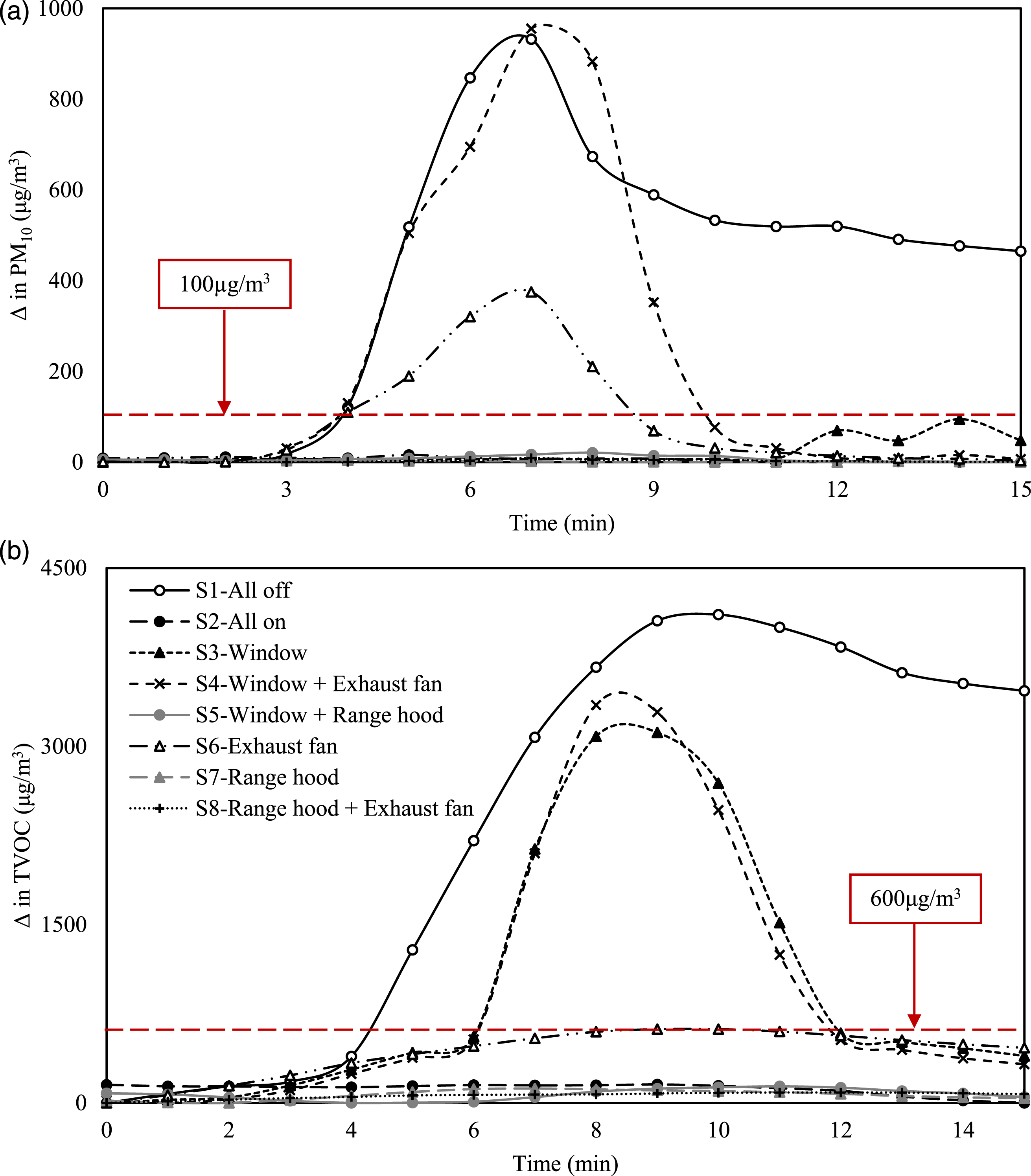
Relative positions of kitchen window, door opening and mechanical ventilations
After adjusting the influence of infiltration in the closed kitchen, door openings in the semi-open and the closed kitchen provided almost the same ACH. When window opening was applied, the ventilation performance in the closed kitchen with the door open was the best amongst the three methods. As mentioned, the effectiveness of window openings as a mean of ventilation depends on outdoor wind conditions and building configurations.20,33,34 Considering that the experiments in the closed kitchen with the door open or closed were conducted on the same day, assuming the outdoor wind conditions were similar, it can be inferred that using a window together with an open door across the kitchen could provide a better ventilation for cooking than closing the door. The result agreed with the results from Kong et al. 20 that natural cross-ventilation provided better ventilation than single-side natural ventilation.
On the contrary, having an opening to the dining area on the same side as the window in the semi-open kitchen did not provide much enhancement to the performance of natural ventilation. Although having window openings perpendicular to each other was found to be effective for cross-ventilation, 34 the opening in this experiment was instead towards the interior of the apartment rather than the outdoor environment. Despite that the doors and the windows of the bedrooms were open in both apartments during the experiment, the additional partition wall of the apartment with semi-open kitchen could obstruct the airflow and reduce the natural ventilation.
Similarly, despite the exhaust fans were of the same power and flowrate, using an exhaust fan in a closed kitchen with the door open provided better ACH than when the door was closed, and the exhaust fan was the least effective in the semi-open kitchen. The results suggested the importance of the relative positions of the window, exhaust fan and door opening in determining the performance of ventilation in the kitchen. When the window and the exhaust fan were on the same side of the kitchen as the door opening, it was less effective in removing cooking pollutants than when the opening was on the opposite side.
When the range hood and exhaust fan were applied together, higher ACHs were anticipated in all kitchens. Increases in the ACH in the semi-open and closed kitchen with the door open were similar (4 h−1 and 4.7 h−1), suggesting that effects of the door opening position appeared to be insignificant in these cases. A higher increase of 6.8 h−1 was recorded in the closed kitchen when the door was closed. It can be inferred that the use of range hood reduced the negative effect of closing the door which limited the fresh air intake.
Effective ventilation schemes
Although the level of PM10 during cooking exceeded the standard when the exhaust fan and door opening were applied (Figure 4), from the ventilation performance evaluation, it achieved relatively high ACH compared to other ventilation schemes. The result suggested that the exhaust fan might not be effective in removing large size particles especially when the emission is high and sudden. On the other hand, the range hood locally removed the particles from the cooking source point (above the stove), therefore a lower PM10 level was attained. Comparison of the performance of various ventilation schemes in the semi-open kitchen and closed kitchen with door open and door closed.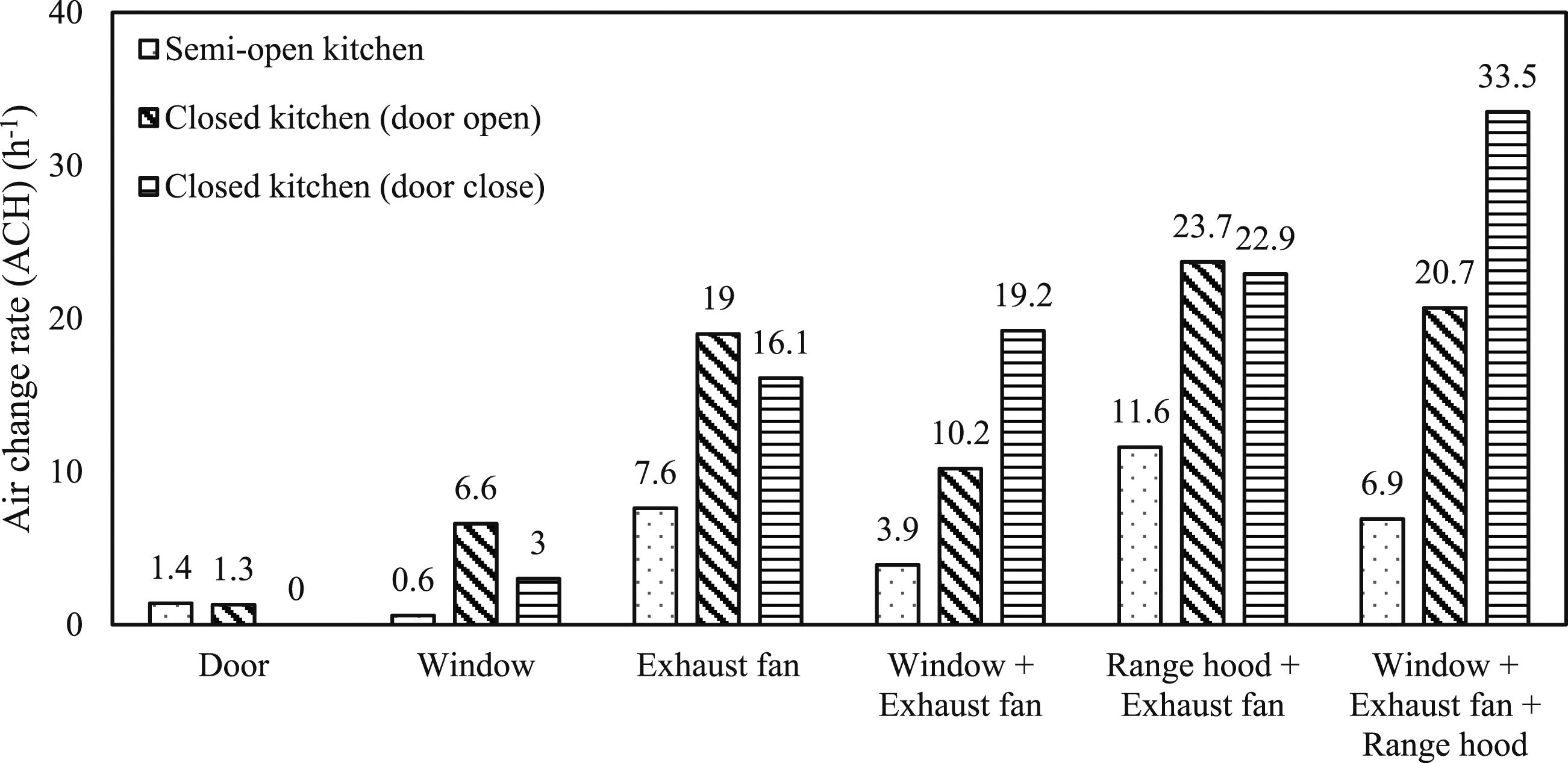
When the window opening and exhaust fan were used, the ventilation effectiveness in the semi-open kitchen and the closed kitchen with the door open both diminished, while it increased in the closed kitchen with the door close. Similar effects were observed when comparing the use of a range hood and exhaust fan with the use of a range hood, exhaust fan and window opening in the said kitchen. It appeared that when window and door openings were applied together with mechanical ventilation, the directional airflow from the kitchen to the outdoor environment was disturbed. The results agreed with those observed in stage 1, that is, S3 and S6 vs S4; S5 vs S7; S2 vs S8. When mixed ventilation with a range hood, exhaust fan and window opening was applied in a closed kitchen with the door closed, the highest ACH was achieved.
Overall, considering both kitchen designs, to achieve acceptable kitchen IAQ, the use of a range hood is suggested as it can remove IAQ pollutants generated from cooking locally. To ensure a high efficiency for the range hood, it is recommended to be used with no or single-side natural ventilation (either window or door opening) to avoid disturbance to the kitchen airflow.
Limitations
This study investigated the ventilation strategies for maintaining acceptable kitchen IAQ and evaluated the effects of home kitchen design on ventilation performance. As only the kitchen environments were considered, the impacts of other rooms in the apartment and the layouts were not examined. To ensure the experimental conditions were consistent to the best possible, the doors and windows of the bedrooms were open in both apartments in all cases.
Conclusion
This study investigated the effects of kitchen designs on ventilation performance in reducing exposure to particles and gaseous pollutants generated by cooking. Two typical kitchen designs, a semi-open and a closed kitchen, were studied. When comparing the ventilation performance of the semi-open kitchen with the closed kitchen with open or closed door, the relative positions of the kitchen window and door openings were found to have significantly affected the air change rate of the ventilation strategies. Having the door open opposite to the window side of the kitchen could greatly enhance the degree of natural ventilation by inducing cross-ventilation. On the other hand, when mixed ventilation (window and mechanical ventilation) was applied, ventilation effectiveness in kitchens with door opening was worsened, while that in the closed kitchen was improved. Results suggested that when mixed ventilation is applied, it is essential to ensure the directional airflow from the kitchen to the outdoor environment is maintained. It was recommended that using a range hood with no or single-side natural ventilation would be able to maintain acceptable IAQ in the kitchen. This study concluded that kitchen designs could greatly affect the performance of various ventilation strategies. Relative positions of the kitchen window, door opening and mechanical ventilation are crucial and should be considered when designing homes with good kitchen IAQ.
Footnotes
Authors’ contribution
Tsz Wun Tsang: conceptualization, methodology, investigation, validation, formal analysis and writing – original draft and visualization. Ling Tim Wong: project administration, supervision and writing – review and editing. Kwok Wai Mui: conceptualization, methodology, funding acquisition, project administration, supervision and writing – review and editing. Poon Ching Yi: methodology, investigation and validation.
Declaration of conflicting interests
The author(s) declared no potential conflicts of interest with respect to the research, authorship, and/or publication of this article.
Funding
The author(s) disclosed receipt of the following financial support for the research, authorship, and/or publication of this article: This work was financially supported by a grant from the Collaborative Research Fund (CRF) COVID-19 and Novel Infectious Disease (NID) Research Exercise, the Research Grants Council of the Hong Kong Special Administrative Region, China (Project no. PolyU P0033675/C5108-20G) and the Research Institute for Smart Energy (RISE) Matching Fund (Project no. P0038532).
