







Abstract

Introduction
Biophilia, a term introduced by American biologist E.O. Wilson 1 in the 1980s, refers to the innate tendency of humans to seek contact with nature and other life forms. Wilson argued that humans have a deep-seated need for closeness to nature, a result of evolution and the survival of our ancestors in natural environments.
Biophilia is, thus, not only an esthetic preference, but also a key factor that affects our physical and mental health. This concept has become the foundation for many sustainable and ecological design practices, especially in the context of biophilic design, which seeks to integrate natural elements into residential and public spaces to enhance well-being.
In recent years, the concept of biophilia has made its way into the built environment, for instance, through the introduction of natural elements such as plants, water, natural light and materials into buildings and urban spaces. This can include green roofs, plant walls, indoor gardens, atriums and the use of natural building materials. Examples include the use of renewable energy sources, water management (such as rainwater harvesting) and natural ventilation. Remodelling homes to provide views of nature outside the window is becoming increasingly popular as part of the biophilic design approach. Interior remodelling may involve moving partitions or rearranging rooms to maximize the natural views available from windows. Enlarging existing windows or adding new ones can greatly improve access to natural views. Using large expanses of glass, such as patio doors or sliding walls, can open interiors to outdoor views. Adding balconies or terraces to homes provides direct access to the outdoors, which is especially valuable in urban environments, to name a few.
This introduction of biophilic design has been propagated by a plethora of staunch supporters, though there is also room for criticism, albeit such criticism has been less vocal. The doubts surrounding biophilia involve several key aspects that need to be critically examined. A romantic view of nature can lead us to idealize it and ignore real environmental problems. The belief that nature is always beautiful and harmonious can affect our ability to recognize threats and the need to protect the environment. In addition, modern technology often replaces direct contact with nature. Our ancestors may have had close ties with the natural world, but we are increasingly experiencing technological nature. 2 Enjoying virtual experiences of nature can weaken our authentic connection to it. In addition, biophilia can sometimes be anthropocentric, focusing only on human benefits. It is necessary to include other forms of life and ecosystems in conservation efforts to make the approach to nature more holistic and sustainable. 3
The collective social experience of the aftermath of lockdown and the COVID-19 pandemic, and the growing awareness of the inevitable consequences of climate change, are having a profound impact on the perception and meaning of biophilia in the context of urban design and architecture. 4 These global crises have highlighted the need for greater closeness to nature and adaptive change in our living and public spaces, which in turn is accelerating interest in biophilic design.
Main challenges and directions
The COVID-19 pandemic
The pandemic has prompted widespread reflection on the importance of living space and its impact on physical and mental health. Periods of prolonged isolation and restrictions on access to public spaces have made people appreciate nature and green spaces more. The home and its immediate surroundings have become focal points of daily life, which has emphasized the importance of integrating natural elements in the design of interiors and living spaces. Biophilic design, which promotes these elements, has gained popularity as a way to improve psychological well-being, reduce stress and increase a sense of connection to nature, even in isolation (Figure 1).5,6 Parklet, a sidewalk extension that provides more space and amenities for people using the street, implemented as part of the Grow Green project in Wrocław, Poland [Photography by Kornelia Kwiecińska].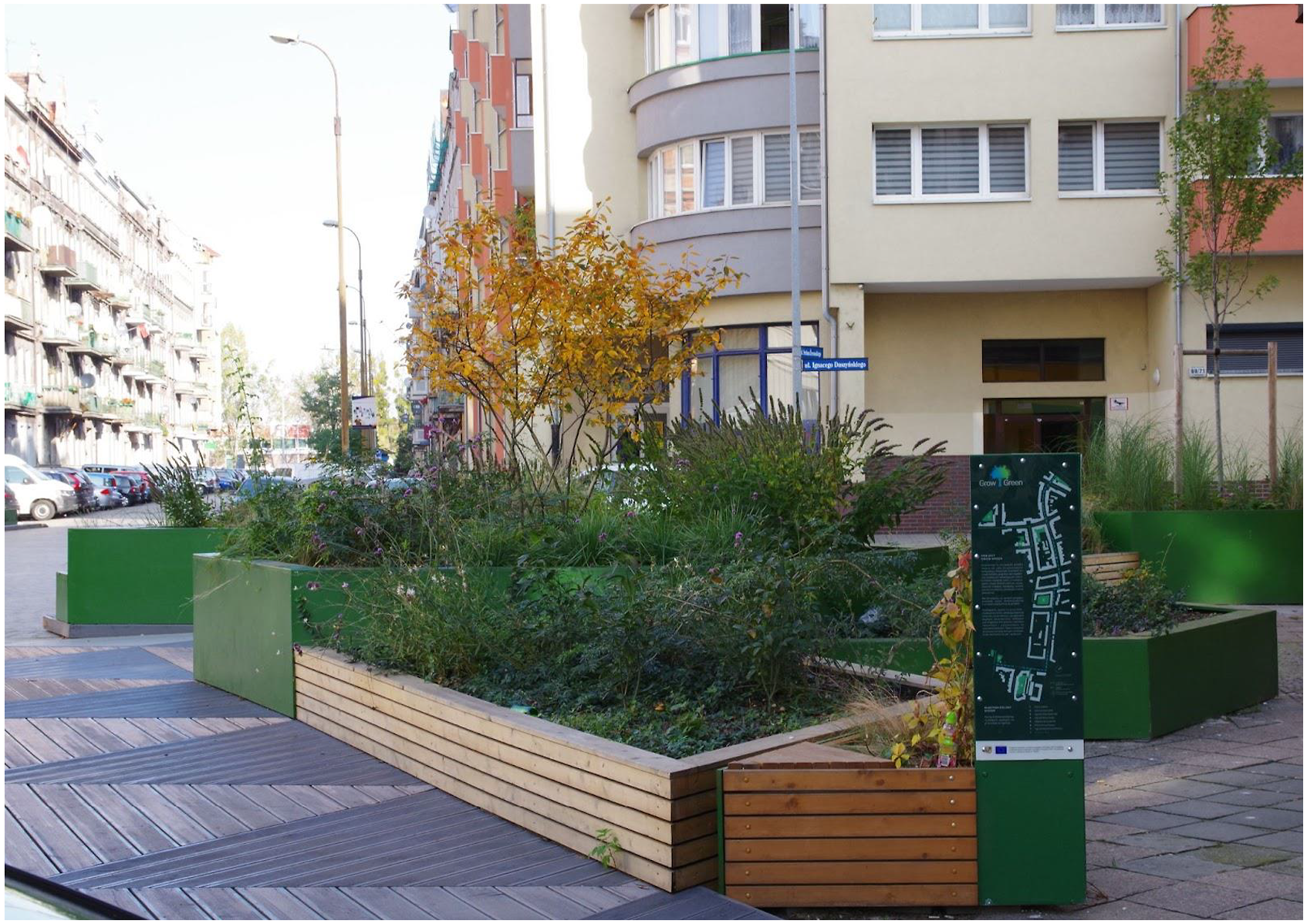
Climate change
Climate change, manifested by extreme weather events, gradual sea level rise, and an increased frequency of heat waves, is contributing to a growing awareness of the need for sustainable development and urban adaptation.7,8 Biophilia as a component of urban design is becoming a key aspect of adaptation, promoting solutions that not only bring more green into cities but also support the resilience of urban ecosystems to climate change. 9 Biophilic design contributes to reducing the urban heat island effect, improving water and air management, as well as increasing urban biodiversity, which is key to climate change adaptation. 10
Social relations
The concept of biophilia has had a significant impact on social relations, helping to shape more supportive, healthy and inclusive communities. 11 This can be seen primarily through the way biophilic design influences the design of public and residential spaces. Biophilic design promotes the creation of spaces that naturally foster social interaction. Access to shared, welcoming green spaces encourages people to spend time outdoors, which fosters local support networks and increases a sense of belonging to the community. Biophilic spaces not only reduce stress levels in individuals but also create a more relaxed and less aggressive social environment.12,13 Biophilic design can increase the physical activity of residents and also encourages chance encounters and the building of social relationships. Green spaces and biophilic design often become educational places where people can learn about ecology, sustainability and the importance of nature for human health. Biophilia, thus, plays a key role in building healthier, more integrated and supportive communities, which directly affects the quality and depth of social relationships.
Workplaces and learning environments
Biophilic design transforms working conditions, quality and productivity by integrating elements of nature into the workplace. Plants filter air, help reduce noise and regulate temperature, resulting in more comfortable working conditions. The presence of natural elements such as plants and natural light increases concentration, reduces stress and improves mental health, resulting in greater job satisfaction. Employees in such environments are more productive.14,15
Integrating elements of nature into schools can significantly improve students’ concentration and cognitive skills, while reducing stress and improving their well-being. Exposure to nature during recess and outdoor activities supports children’s physical and emotional health, resulting in improved academic performance and reduced absenteeism. 16
Risks and objections
While the concept of biophilia has been widely praised for its potential benefits to mental and physical health and the environment, we recognize some risks and objections to the practical application of biophilia in urban and indoor design.
Green spaces and biophilic solutions are often implemented in wealthier areas, which can lead to the exclusion of less affluent communities that would also need access to the benefits of proximity to nature. 17 Biophilic design is used as a marketing tool (or even “greenwashing” practice) to increase the value of real estate or the attractiveness of commercial spaces, sometimes at the expense of true environmental sustainability. Biophilia can lead to an over-idealization of contact with nature, ignoring the fact that nature can also be a source of danger (for instance, allergens, wild animals, etc.). This can lead to designing spaces that are aesthetically pleasing but not necessarily functional or safe for all users.18,19 Implementing biophilic design, especially in urbanized areas, can sometimes lead to unintended negative consequences for natural ecosystems, for example, by introducing non-native plant species that can disrupt local biodiversity. 20
The future of biophilia research
We think that the challenges of biophilia and biophilic design in the future will focus on several key areas. As the world becomes more urbanized, finding space to integrate natural elements into cities is becoming increasingly difficult. The challenge is biophilic design that makes efficient use of limited space, striking a balance between density and access to green spaces. Designers need to take changing climatic conditions into account when designing spaces that can adapt and withstand extreme weather conditions or help mitigate their effects. Also, adapting biophilic solutions to different budgets and ensuring that their benefits are available to a wider population is a key challenge. Increasing awareness of the benefits of biophilia is key to its wider adoption. We believe that communities need to be deeply aware of the potential benefits of biophilic solutions. Biophilic design must balance esthetic needs with functionality, ensuring that spaces are not only beautiful but also practical and safe for users.21,22
Solving these challenges requires an interdisciplinary approach, innovation and collaboration between different sectors such as urban planning, interior design, architecture, ecology, psychology, construction and technology, so that biophilic design can effectively contribute to sustainable development and improve the quality of life for people in different environments. Technological innovations have great potential to support and advance biophilia concepts, making them more effective and widely available. Smart building solutions can optimize the use of natural resources such as sunlight and water, as well as monitor air quality and microclimate conditions. Advanced hydroponic and aeroponic technologies allow plants to be grown in urban indoor conditions, which is particularly valuable in dense urban environments. Technologies such as smart irrigation systems and greywater recycling can maximize urban water use efficiency. Virtual and Augmented Reality can be used to educate and raise awareness about biophilia and its benefits. Big Data and data analysis can help optimize project development as well as enable more precise management of green spaces and gardens.
Final remarks
Biophilia, while often seen as a fashionable concept in design and architecture, goes well beyond being just a fad; rather, it is a necessity driven by deep human and ecological needs. In an era of rapid urbanization and increasing lifestyle-related health problems, as well as climate change and declining biodiversity, biophilia offers important solutions that can improve public health, sustainability and ecological resilience. Biophilic design can help with climate change mitigation by boosting CO2 absorption, controlling precipitation, and minimizing heat stress and the urban heat islands in cities. Biophilia in urban and architectural design allows for the reintegration of natural components into cities, which improves citizens’ quality of life and health. In the face of an increase in health concerns such as depression and anxiety, biophilic design can play an important role in boosting both mental and physical health. Biophilic design encourages the creation of spaces that promote social interaction and the formation of relationships, which is crucial in overcoming social isolation and the development of integrated communities. Biophilic settings can be used to educate people about the environment and encourage them to behave sustainably. These are important factors in developing future generations of ecologically concerned citizens.
Although design trends are changing, the basic human need for contact with nature and the benefits it brings make biophilia an essential element in the design of residential, public and commercial spaces. Introducing elements of nature, such as vegetation, natural light and views of greenery, improves physical and mental health, increases productivity and creativity, and reduces stress. Biophilic spaces foster social interaction, create integrated communities and bring economic benefits, attracting customers and increasing employee satisfaction. All of this emphasizes that biophilia is a necessity, not just a passing fad in architecture and design.
Footnotes
Declaration of conflicting interests
The author(s) declared no potential conflicts of interest with respect to the research, authorship, and/or publication of this article.
Funding
The author(s) received no financial support for the research, authorship, and/or publication of this article.