







Abstract
This study investigated the impact of design parameters on indoor thermal comfort in hotel buildings, using both PMV-PPD and adaptive models. The aim is to provide guidance for improvement in the energy performance and thermal comfort of the accommodation structures, providing analysis extended to the eight Algerian climate zones. The adopted methodology was applied to a reference building hotel in Ghardaïa, Algeria. The energy model was validated through in-situ measurements and then the analysis was extended through EnergyPlus dynamic simulations to assess the influence of 13 design parameters using sensitivity analysis. Results reveal that design temperatures on the hottest days ranged from 34.4°C to 39.3°C, despite external temperatures reaching 45°C. The PMV-PPD model was most affected by space density, ventilation rate, infiltration, ventilation schedules, roof design and azimuth. Conversely, the adaptive model was influenced primarily by ventilation rate, window-to-wall ratio, lighting, space density, ventilation schedules, glazing and azimuth. This study underscores the potential for optimising hotels’ design to enhance thermal comfort and has broader relevance for regions with similar climates to Algeria. The findings offer insights for creating more comfortable indoor environments and fostering sustainable building practices in challenging climates.
Keywords
Introduction
Within the European Union, the building sector accounts for 40%–45% of total energy consumption.1–3 The International Energy Agency (IEA) reports that buildings, including those related to construction, consume over 30% of the world’s total energy. 4 In Algeria, the building sector, comprising both residential and tertiary structures, is responsible for 43% of the country’s total energy consumption. Of this, 34% is allocated to the residential sector, while the tertiary sector consumes 9%, with most of it directed towards space heating and cooling. Hotel buildings account for 3.5% of the energy consumption in this sector. 5 The assessment of design parameters related to thermal behaviour is a crucial aspect of developing new buildings and retrofitting existing ones.
A fundamental aspect in the evaluation of indoor comfort in building design pertains to whether the spaces are mechanically conditioned (MC) or naturally ventilated (NV). ASHRAE Standard 55-2023 6 outlines two primary approaches for comfort analysis: the Predicted Mean Vote and Predicted Percentage Dissatisfied (PMV-PPD) model and the adaptive model. The PMV-PPD model considers six parameters, including metabolic rate, clothing insulation, air temperature, radiant temperature, air speed and humidity. Conversely, the adaptive model relies on two parameters: operative temperature and prevailing mean outdoor air temperature. The choice between these models is closely linked to the type of building, with the adaptive model being suitable for NV and not mechanically conditioned spaces and the PMV-PPD model for MC spaces. Globally, the significance of addressing the thermal performance of both MC and NV hotel buildings is undeniable.
Software-based dynamic simulation tools have witnessed rapid advancements in modelling future scenarios, climate changes, technological developments and urbanisation. Therefore, a comprehensive understanding of model parameter variations, along with their sensitivity and uncertainty, is essential for establishing benchmarks and performance boundaries in building design. In addition to assessing annual thermal comfort hours and energy demand, these tools are employed for life cycle assessments and cost projections. Sensitivity and uncertainty analysis techniques are crucial for identifying influential parameters, reducing the number of iterations and streamlining the design process while maintaining accuracy. 7
Numerous studies have emphasised the significance of designing buildings that are well-adapted to local climates.8–10 Prior studies have explored thermal comfort in hotels in diverse climates, such as India, utilising adaptive comfort models and in-situ measurements. 11 Another study employed dynamic simulations to assess the PMV-PPD comfort model for an Italian reference hotel. 12
In Algeria, the expanding number of hotels reflects the government’s focus on tourism. Nevertheless, the complexity of investigating hotel buildings lies in their diversity in terms of size, location and type. While previous studies have examined various building models using parameters such as insulation, window-to-wall ratio (WWR), ventilation and airtightness, there remains a gap in the measurement of thermal behaviour and energy performance specifically in Algerian hotel buildings. Both NV and MC types require in-depth exploration.13,14
Hence, this paper seeks to evaluate the sensitivity of thermal performance in a large hotel building by utilising local sensitivity analysis (LSA) with the Sensitivity Index (SI). LSA was chosen in this study over global sensitivity analysis (GSA) due to its reduced computational demands and shorter processing times. The analysis explored various parameters, encompassing building orientation, envelope, equipment, occupancy and natural ventilation schemes. The study particularly investigated how different climate types in Algeria influence the sensitivity of various output results and parameters. Furthermore, the study delved into the differences in the ability of NV and MC buildings to adapt to these climatic variations. The results offer architects and engineers’ insight into beneficial or optimal solutions for hotels in retrofitting or developing new buildings with similar geometric and thermal characteristics. A comprehensive investigation into each design strategy can serve as a valuable tool for advancing energy efficiency and cost-effectiveness, forming the foundation for energy policies and benchmarking, benefiting both the public and private sectors. 15
The paper significantly advances the understanding of building thermal comfort and energy efficiency, particularly in the context of hotel buildings in Algeria. The comprehensive approach adopted in this study, employing both PMV-PPD and adaptive models, would allow for the systematic evaluation of the impact of various design parameters on indoor thermal comfort. By conducting sensitivity analysis across diverse climatic conditions, the study generates novel insights into factors influencing discomfort hours, thereby providing valuable guidance for architects, engineers and policymakers involved in building design and energy efficiency initiatives. Furthermore, the focus on the Algerian context adds novelty to the research landscape, offering empirical data and recommendations that can inform the design and retrofitting of hotel buildings not only in Algeria but also in regions with similar climates globally. Overall, the paper’s methodology, empirical findings and practical recommendations contribute significantly to advancing knowledge in the field of building thermal comfort assessment and sustainable design practices.
The study aims to achieve the following objectives: 1. To investigate the impact of design parameters on indoor thermal comfort in hotel buildings, using both PMV-PPD and adaptive models. 2. To apply the adopted methodology to evaluate the indoor thermal environment control to a reference building hotel. The assessments were conducted across the eight climate zones of Algeria using in-situ measurements and dynamic simulations. 3. To assess discomfort hours by exploring parametric variations of 13 design parameters for both the PMV-PPD and adaptive models across the eight climate zones of Algeria. 4. To identify optimal design parameters for both NV and MC spaces through sensitivity analysis (SA).
Methods
The methodology of this study involved several key steps as depicted in Figure 1 providing a visual aid to facilitate an understanding of the methodology. Framework of the study.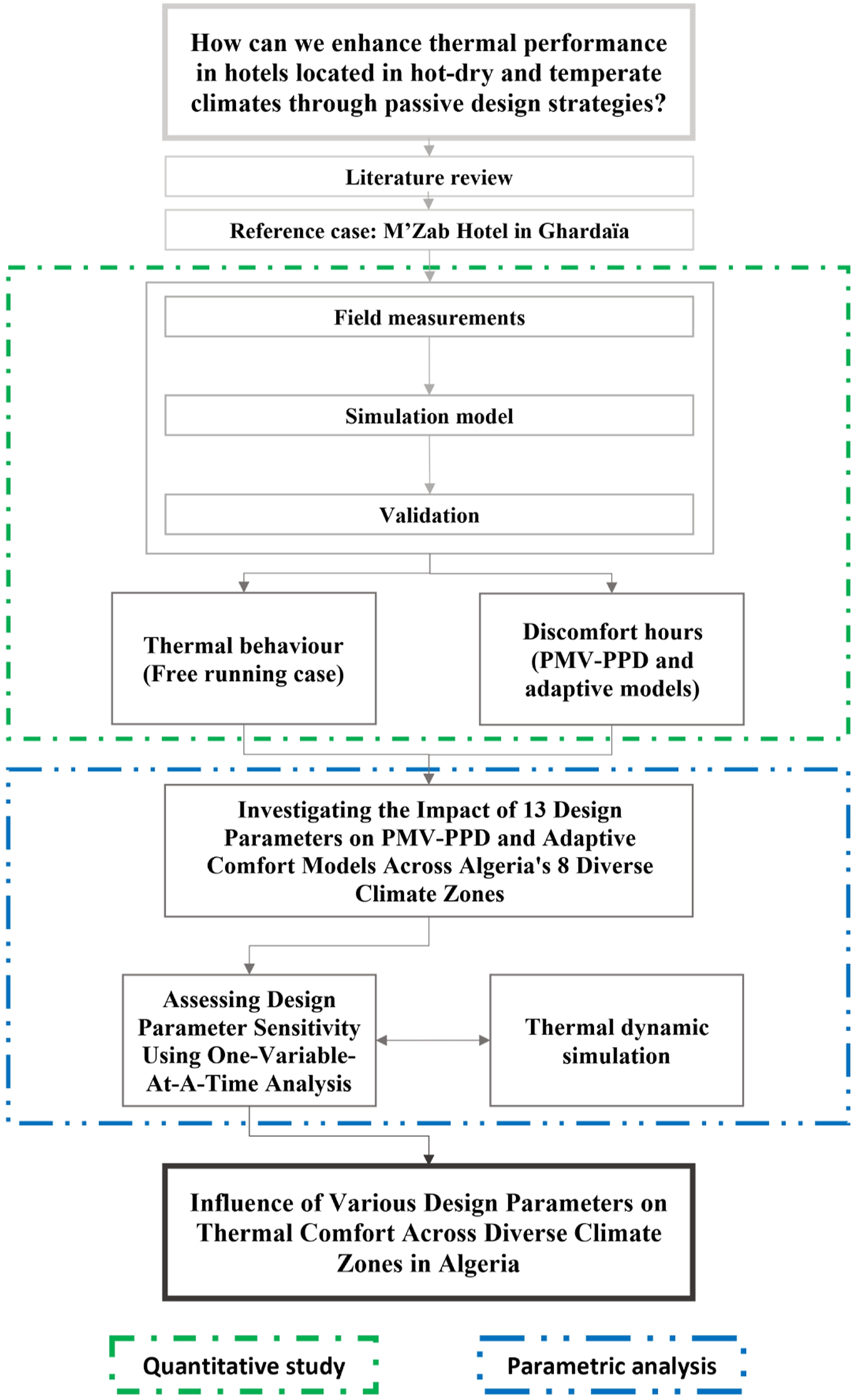
The starting point was to try to answer the question: How to enhance the thermal performance and thermal indoor comfort in hotels located in hot-dry and temperate climates through passive strategies? Consequently, to provide a foundational understanding of the research, the adopted approach commenced with a comprehensive literature review, delving into the subject of sensitivity analysis and prior parametric variation studies finalised to thermal comfort and performance in buildings and in particular in hotels. Furthermore, the analysis of the topography and climate characteristics of the study area was conducted to contextualise the subsequent investigation inherent in the thermal behaviour of the hotel buildings. The core objective of the research was to scrutinise the sensitivity of 13 distinct design parameters used in hotels across the eight climate zones of Algeria, evaluating indoor thermal comfort through both PMV-PPD and adaptive models. After the evaluation of the hotel building stock in Algeria, a reference building was selected to apply the methodological framework that comprised field measurements and dynamic simulations, which were subsequently analysed to glean valuable insights. Field measurements were executed to evaluate the indoor thermal environment during the peak of the summer season (specifically, the end of July and the beginning of August). Following this, dynamic simulations were performed, calibrated to the reference case, to delve into the thermal behaviour of the examined scenario.
A parametric analysis was employed, comparing various design scenarios encompassing azimuth, equipment power, external wall material, glazing, infiltration, internal wall material, lighting, roof material, shading, space density, ventilation schedule, ventilation rate and WWR. Each of these variables was examined about its thermal performance concerning discomfort hours over the year. In this way the study was geared towards a comprehensive examination of design parameters across the eight climate zones of Algeria, to assess the feasibility of implementing these parameters and, when appropriate, to identify potential enhancements in design.
However, the study demonstrates originality in both approach and subject matter. Beginning with a thorough literature review on sensitivity analysis and prior studies related to thermal comfort in hotel buildings, the research integrated topography and climate analysis of the study area, providing contextual depth. The core objective of scrutinising 13 design parameters across Algeria’s climate zones using PMV-PPD and adaptive models was to fill a significant gap in the literature. Employing field measurements and dynamic simulations calibrated to a reference case, the study provided empirical data and insights into indoor thermal environments. The parametric analysis, covering design scenarios from azimuth to ventilation rate, would contribute to the understanding of thermal performance and provided practical design optimisations tailored to diverse climates. Overall, the methodology’s originality lies in its holistic approach, sensitivity analysis and contribution to advancing knowledge in building thermal comfort assessment and passive design strategies, particularly in Algerian hotel buildings.
Literature review
‘Thermal comfort in hotel buildings’: A literature review
Few studies in literature deal with thermal comfort in hotel buildings, investigating the theme from different points of view.
Abdulaali et al. 16 acknowledged the positive contribution of the tourism and hotel industry to a country’s socioeconomic development, reviewing five parameters of indoor environmental quality (air quality, thermal comfort, lighting, visual and acoustic) and their interplay with human comfort.
Wafi, Ismail and Ahmed 17 conducted a comprehensive investigation involving over 900 respondents in a hostel in Malaysia. A questionnaire survey was complemented by the monitoring and daily measurement of climatic factors, which provided insights into occupants’ indoor comfort awareness.
Zineddine, Belakehal and Bennadji 18 evaluated the impact of orientation on the thermal environment in Fernand Pouillon’s architecture in Biskra. Using ECOTECT simulations, it examines how sun and wind orientation affect indoor temperatures, showing that Pouillon’s orientation choices effectively reduce temperature variations. Bohdanowicz and Martinac 19 explored the impact of thermal comfort standards based on ASHRAE Standard 55/92 on energy consumption in the hotel industry. They also investigated the potential of the adaptive approach to reduce energy usage. They concluded that the adaptive approach to thermal comfort management has the potential to become a sensible option even in hotels.
Pinto et al. 20 discussed the potential impacts of climate change and heat waves on the tourism sector and hotel buildings’ infrastructure. They underlined the importance of air conditioning and the resulting increased energy demand to ensure guests’ thermal comfort. The study explored tourists’ perspectives on thermal comfort and air-conditioning systems and compared them with in-situ measurements during the research period.
Borowski, Zwolińska and Czerwiński 21 conducted in-situ measurements in Polish hotel buildings, assessing the acceptability of indoor conditions using the PMV-PPD comfort model. They found that temperature and humidity were generally maintained at satisfactory levels, although CO2 concentration occasionally led to discomfort.
Regarding the application of passive strategies, Naderian and Heidari 22 demonstrated the significance of porches in enhancing thermal comfort in historical hotel buildings in Iran, combining measurements and simulations.
Moreover, Vujošević and Krstić-Furundžić 23 examined the influence of atrium-type hotel buildings in Belgrade on space heating and cooling energy demand. They adopted a simulation approach using the EnergyPlus engine to identify the optimal model for hotels with atriums.
Another study 24 explored energy savings and costs, merging external devices with a self-shading envelope for a multi-storey hotel in Saudi Arabia’s hot-humid climate. Utilising DesignBuilder for modelling, the strategy achieved a 20.5% annual energy reduction with a 2-year payback period. In contrast, an alternative option without shading provided only a 5% savings with an impractical 84-year payback. The study highlighted the cost-effective and impactful nature of the proposed shading strategy in energy-efficient design.
Finally, in the study by Acosta et al., 25 the application of a predictive controller improved the thermal and energy performance in two city hotels. The study compared historical electrical consumption data with simulation results.
Sensitivity analysis and parametric simulation
Sensitivity analysis
SA is a widely used approach in the domains of building energy modelling and simulation. It aims to understand model behaviour and identify input parameters that significantly affect output variations. SA comprises two main categories: LSA and GSA. A screening-based method, which falls under GSA, is designed to determine the significance of parameters while minimising the output variance. This approach allows the evaluation of complex models with numerous input parameters at a lower computational cost and in less time. Other GSA methods, such as variance-based and regression-based methods, require more computational resources compared to screening-based methods. 26
LSA, which employs derivative-based methods and produces a single sensitivity index, is suitable for determining linear models but may fall short in the case of non-linear models. It does not provide information about parameter shape or quantify correlated parameters. It treats each parameter with uniformly distributed variation and calculates the mean while determining extreme variations. The Morris method, which utilises elementary effect measures, is partly global in its approach but still employs the one-at-a-time (OAT) variable technique. However, it cannot determine parameter correlations found in other GSA methods, such as Sobol and FAST.26–28
Studies suggest that screening-based methods, like the Morris method, yield results similar to those of variance-based methods (Sobol method) when ranking parameters in building energy modelling and simulation. SA is valuable for identifying parameters that can be omitted in further optimisation studies. The variance-based method accommodates interaction effects and is suitable for continuous variables but may not be ideal for discrete variables. 29
Zeferina et al. 30 conducted GSA (Morris and Sobol) of 14 parameters related to cooling demand output applied to buildings across six global climates. This study revealed that the ventilation rate had the most significant influence.
Numerous studies have advocated for the incorporation of vernacular architecture design parameters. Hamed 31 established a connection between architectural identity and energy efficiency, emphasising the remarkable energy conservation potential of architectural identity. Nguyen et al. 32 explored vernacular architecture and climate-responsive design in hot-humid climates through several parameters, including envelope and ventilation.
SA is a practical tool for studying building performance, especially during the early stages when parameter modification is still feasible. 33
Sarrazin, Pianosi and Wagener 34 highlighted the importance of two critical decisions in GSA: sampling size and input parameter thresholds. The choice of the SA method is contingent on the model outputs. Morris is often considered a reliable method with low computational requirements and provides a global evaluation of both continuous and discrete variables.
Rodriguez et al. 35 found that obtaining reliable outputs from SA requires a large number of input parameters, and the uncertainty of inputs can significantly impact outputs. Detailed models’ robustness is often utilised to obtain precise SA results.
Yu et al. 36 applied sensitivity indices and LSA across four cities in China with hot summers and cold winters, identifying the most influential envelope parameters in cooling and heating season energy performance. The shading coefficient and WWR were influential during the cooling season, while the wall heat transfer coefficient and shape coefficient played significant roles during the heating season.
The present study adopted the LSA method due to the project’s scale and the numerous input parameters and evaluations across eight climate zones in Algeria for both NV and MC types.
Parametric simulation
Thermal comfort is often described either as a steady state or as an adaptive behaviour that adjusts to varying climates.6,37,38 The literature review reveals that numerous studies have explored building parameters’ effects on indoor thermal environments through parametric variations, but there is not an extended literature focused on defining the most influential parameters for hotels, especially across multiple climate zones with a unified model.
The study 39 evaluated 63 retrofit combinations for a late nineteenth-century historical Victorian house, focusing on internal wall insulation, glazing upgrades and airtightness improvements. Assessing five indicators: energy reduction, cost, payback period, space volume and thermal comfort, the recommended retrofit of £144.71/m2 achieved 51.8% energy reduction with an 18-year payback. EnergyPlus was used for dynamic thermal comfort evaluation.
A study 40 introduced a simulation-based model for optimising green building retrofits, addressing the challenge of balancing energy efficiency and thermal comfort. Using a response surface method, critical parameters were identified for alternative plans aligned with green building standards. Validated on a reference building in Wuhan, the optimal combination of parameters achieved 4% energy savings while improving comfort, providing valuable insights for efficient and comfortable green building development.
Alwetaishi 41 conducted a comprehensive study on the WWR, particularly focusing on its parametric variations. In his investigation, he found that in hot regions, orientations towards the east and south were less favourable for thermal comfort. Specifically, he recommended maintaining a 10% WWR to optimise occupants’ thermal comfort.
Nguyen and Reiter 42 employed parametric study and model calibration to improve thermal comfort in low-cost apartments utilising natural ventilation. They also evaluated the effectiveness of passive strategies in hot-humid climates.
Yao et al. 43 explored various parameters influencing thermal comfort and energy conservation through parametric variation simulations in severe hot and cold climates in China. Yang et al. 44 investigated design parameters affecting building-integrated photovoltaic and thermal double-skin facades, which impact indoor thermal comfort and energy efficiency across three different Australian climate zones using LSA and OAT analysis.
However, the majority of these studies focused primarily on design parameters within temperate or hot and humid climates. There is a noticeable gap in research regarding design choices specifically tailored for severe hot-dry climates, characterised by extended summer periods and harsh environmental conditions. The significance of revisiting design parameters’ thermal behaviour becomes apparent when considering such extreme conditions. This underscores the potential for integrating in-situ measurements, dynamic simulation and sensitivity analysis tools into sustainable building practices.
In this framework, the study aimed to bridge insights from the literature review with practical application by conducting a sensitivity-based analysis of PMV-PPD and adaptive models in an Algerian reference hotel across diverse climate zones. By evaluating the sensitivity of various design parameters, it sought to enhance understanding and optimise thermal comfort in hotel buildings, contributing to the broader body of research on this topic. Leveraging SA and parametric simulation methods, the study endeavoured to identify influential design parameters and optimise thermal comfort across diverse climatic conditions, thereby advancing the understanding of building performance optimisation in hospitality environments.
The work aligns with previous research in the literature by focusing on optimising thermal comfort in hotel buildings, particularly in response to the increasing significance of indoor environmental quality parameters highlighted, 16 and the necessity to address occupants’ comfort awareness as emphasised by Wafi et al. 17 Additionally, the findings complement the exploration of thermal comfort standards and energy consumption in the hotel industry, 19 offering insights into potential strategies for reducing energy consumption while maintaining optimal thermal comfort levels. Furthermore, the investigation extended the understanding of indoor conditions assessed using the PMV-PPD comfort model, as demonstrated by Borowski et al., 21 by conducting SA across multiple climate zones. While previous studies22,23 have explored specific passive strategies and their influence on thermal comfort and energy demand in hotel buildings, this research has broadened the scope by examining a comprehensive range of design parameters affecting thermal comfort in diverse climatic conditions. Through SA and parametric simulation, it provides significant understanding regarding effective design strategies applicable in various contexts, contributing to the broader goals of sustainability and occupant comfort in the hospitality sector.
Case study presentation and model validation
Location and climate
The Algerian landscape is characterised by three distinctive regions defined by their geographical location, natural conditions and cultural heritage
45
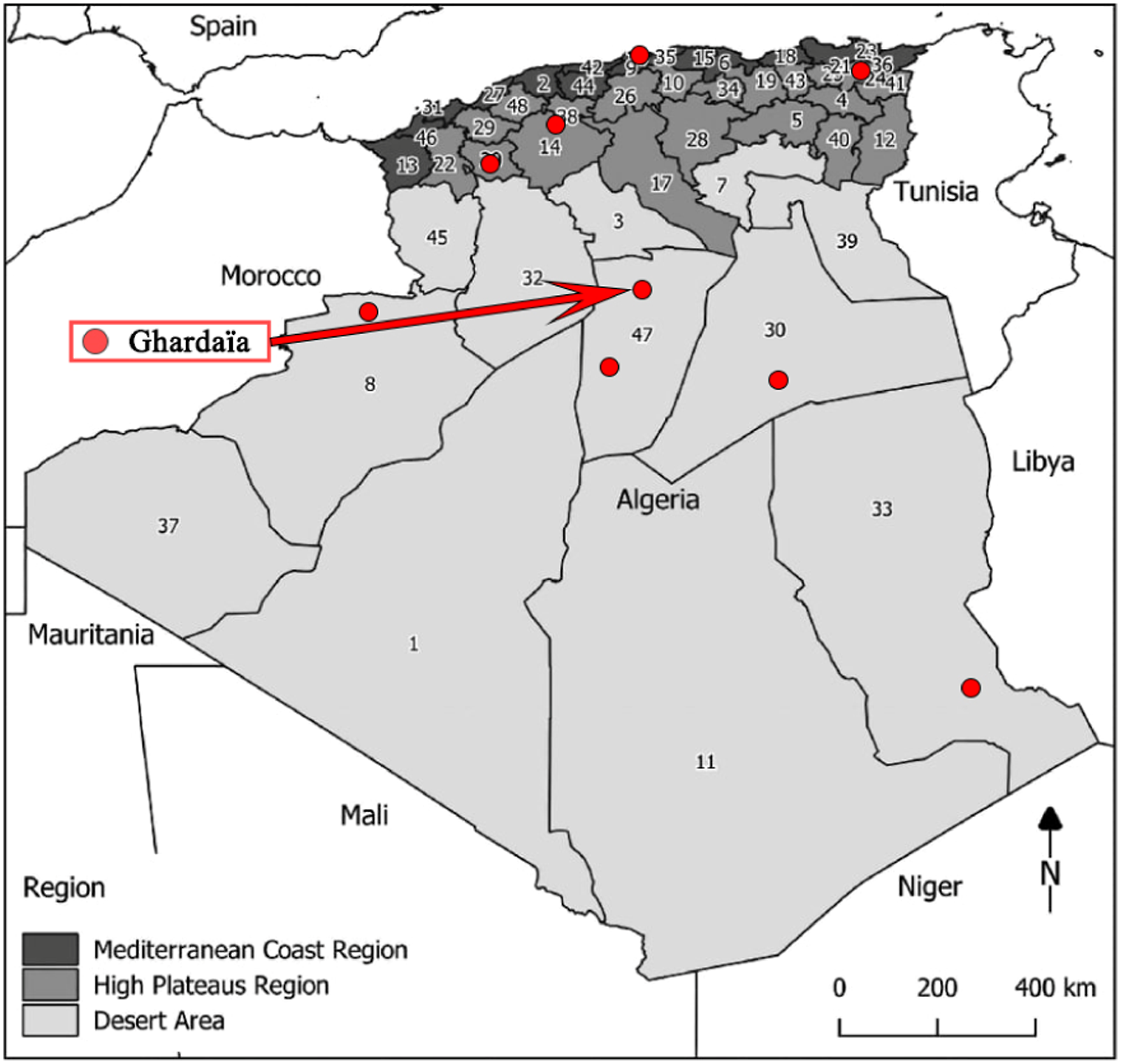
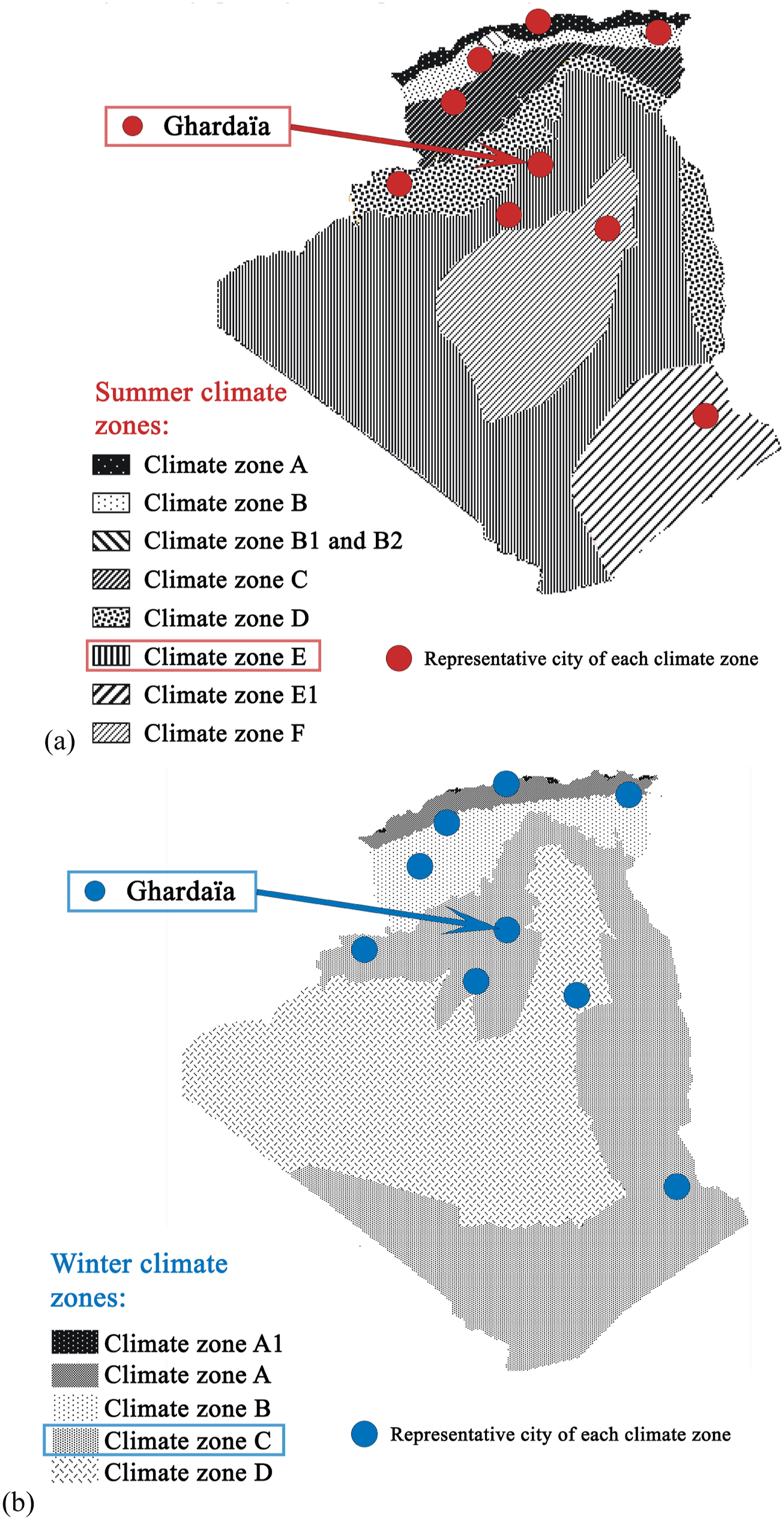
: the Mediterranean coast region, the high plateaus and the southern desert region. These regions encompass Algeria’s 48 provinces, spanning latitudes between 18°N and 37°N and longitudes between 8°W and 12°E. The vast Algerian desert covers approximately 84% of the country’s total land area. Algeria is positioned north of the Mediterranean Sea, east of Tunisia and Libya, south of Mali and Niger and west of Morocco. The country’s climate transitions from temperate and humid along the northern coast to temperate and arid in the high plateaus, ultimately reaching a hot-dry climate in the Algerian desert, characterised by significant seasonal and daily temperature fluctuations. The reference case is situated in Ghardaïa province (No. 47), as depicted in Figure 2. Figure 3(a) and (b) illustrates the summer and winter climate zones in Algeria, as defined by the Algerian Technical Regulation Document (DTR C3-T).
46
Geographic regions and provinces in Algeria. Source: Li et al.
45
Climate zones in Algeria: summer (a) and winter (b) classifications. Source: DTR C3-T.
46
Ghardaïa
Monthly normal climate data for Ghardaïa, Algeria. Source: Meteonorm V8.0.0.13161. 48

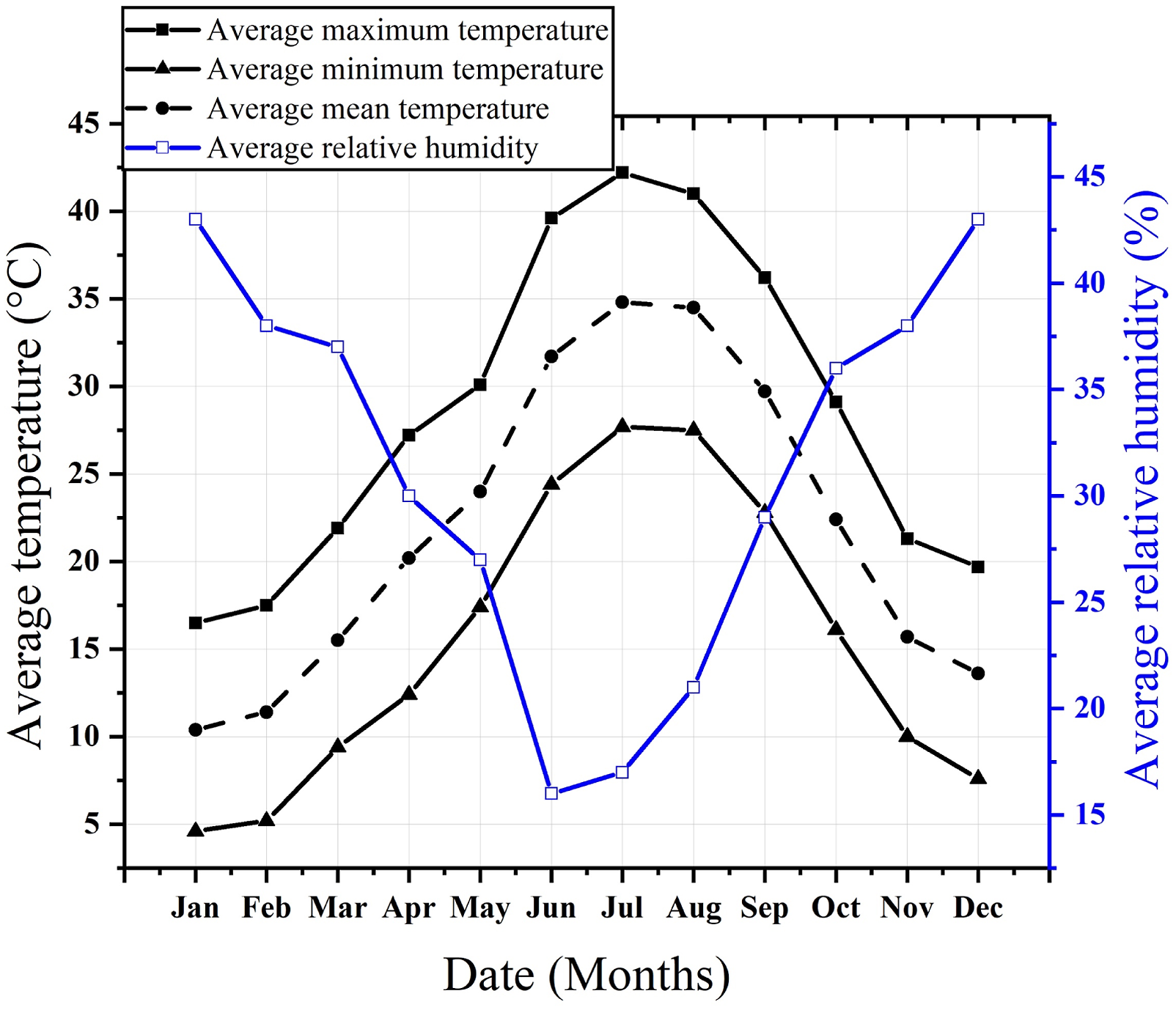
Annual temperature and RH profiles in Ghardaïa, Algeria. Source: Meteonorm V8.0.0.13161. 48
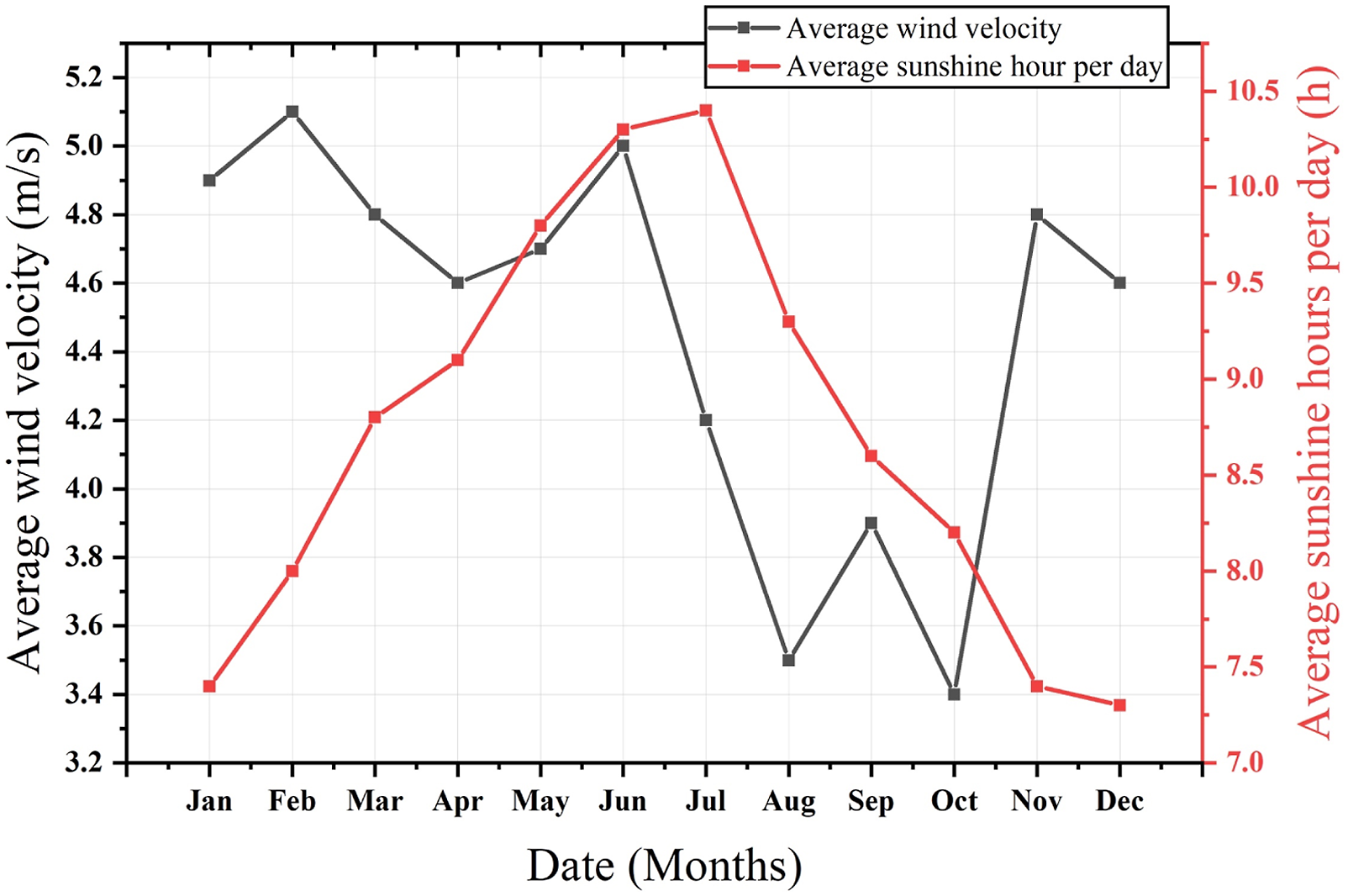
Annual wind velocity and sunshine hours per day in Ghardaïa, Algeria. Source: Meteonorm V8.0.0.13161. 48
M’Zab Hotel, by Fernand Pouillon
Pouillon’s career, took a positive turn after Algeria gained independence in 1962.
49
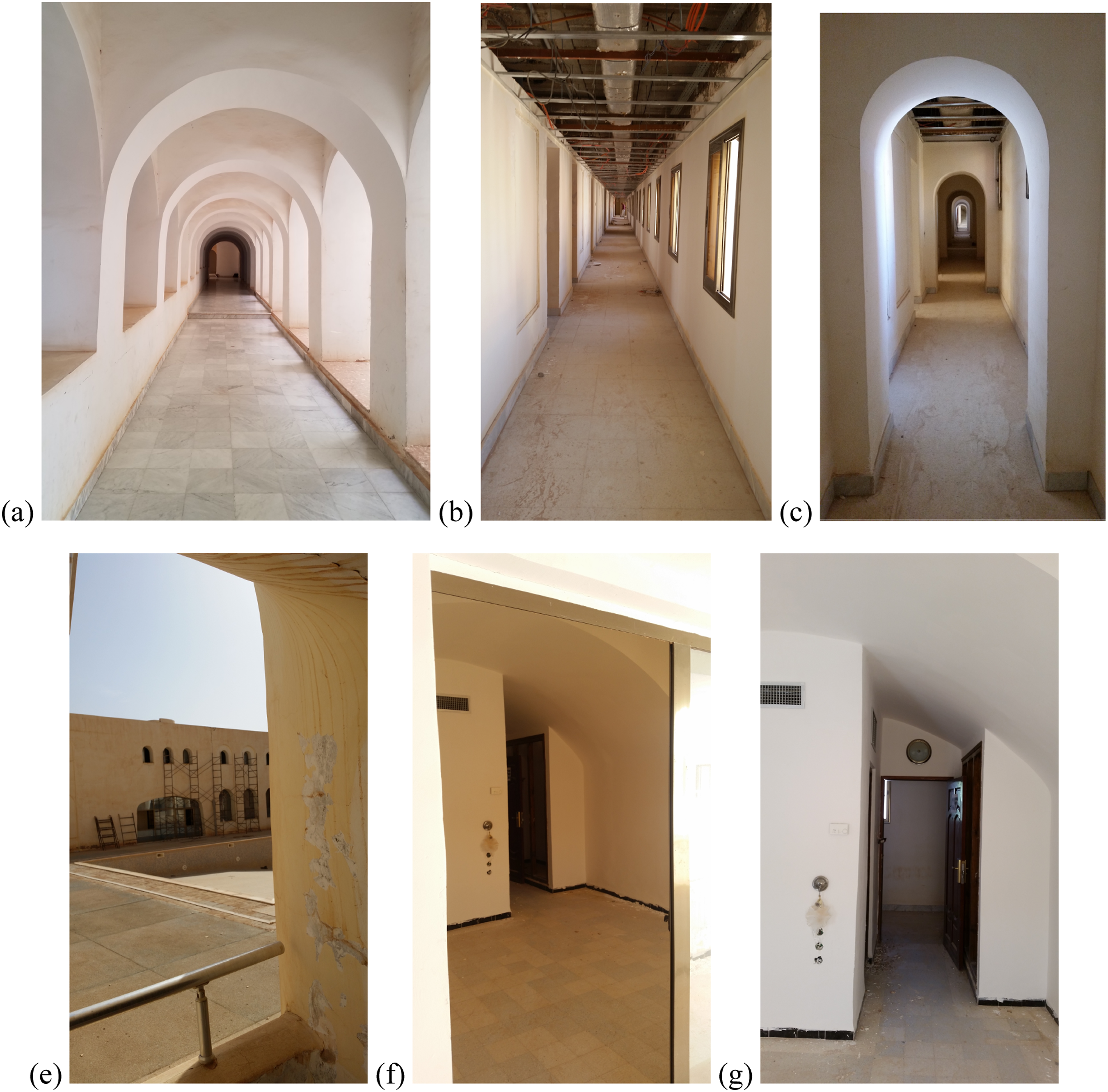
The Algerian government extended an invitation to him, tasking him with the design and supervision of multiple hotels and tourist infrastructure projects throughout the country. Thus, it is possible to choose one of them as a representative of the hotels’ building stock in the country. The study specifically focused on the M’Zab Hotel as a representative example of hotel construction due to its significance and location in the south of Algeria, where a harsh hot-dry climate poses the most challenging conditions. Originally known as ‘Rosthémide’, the M’Zab Hotel, designed by Pouillon, was constructed between 1967 and 1971. With a capacity of 600 bed-places, the hotel was built on the site of an ancient fort ruin, preserving the powerful and enclosed architectural character. The linear structure is harmoniously integrated into the hilly terrain near Ghardaïa, artfully blurring the lines between new and old elements. The seamless fusion of the hotel with its surroundings ensures that visitors experience a sense of protection and balance as they transition from enclosed spaces to expansive vistas of the vast landscape. The hotel exudes an atmosphere reminiscent of a fortified palace rather than a modern hotel. Pouillon’s unique architectural style, characterised by classic and multicultural influences, exemplifies his ability to adapt to the climate, program, physical context and cultural setting, reflecting a regionalist approach with a modern sensibility. During the study, the hotel underwent renovation work, including the restoration of demolished areas, the repainting of walls and various improvements to lighting, air-conditioning and heating systems. The hotel was unoccupied during this period, devoid of users and equipment,50,51 as shown in Figure 6(a)–(d) and Figure 7(a)–(g). External views of the hotel during the renovation period (a, b, c and d). Internal views of the hotel during the renovation period (a, b, c, d, e, f and g).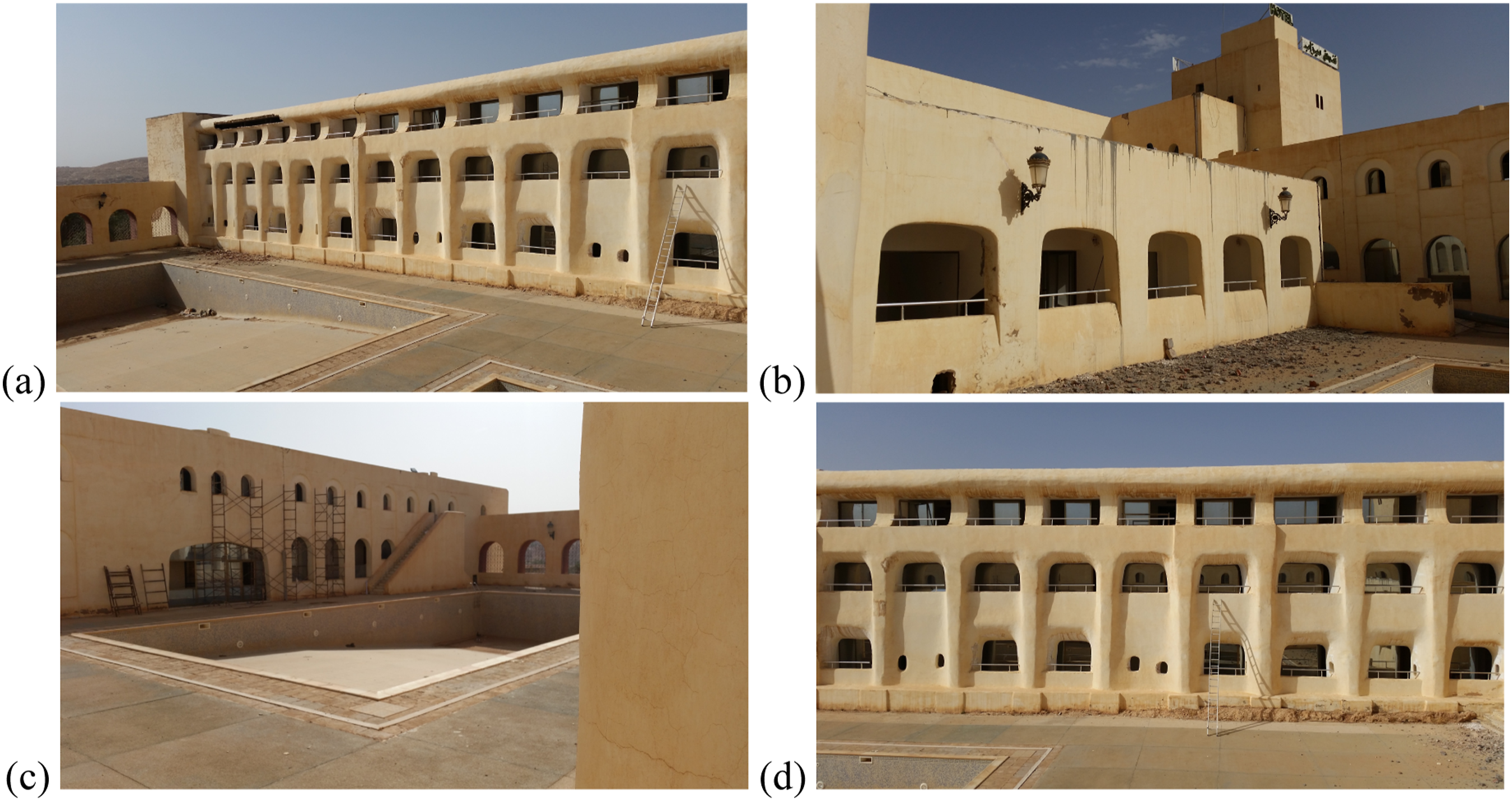
The specific conditions of the chosen Algerian reference hotel, M'Zab Hotel, were selected to fill a research gap in the understanding of thermal comfort assessment in hotel buildings across diverse climate zones. Situated in Ghardaïa, Algeria, the hotel exemplifies the challenges posed by the region’s hot-dry climate. This extreme climate presents an ideal case study for evaluating thermal comfort strategies. Additionally, the M’Zab Hotel’s architectural significance and integration with the local landscape provide valuable insights into how building design can impact occupant comfort in harsh environmental conditions. Through a sensitivity-based study across eight climate zones, the research aimed to identify optimal thermal comfort solutions tailored to both MC and NV hotel buildings, thereby addressing a critical gap in the literature on hospitality building performance optimisation.
Measurements and dynamic simulations
Dynamic simulation
EnergyPlus/DesignBuilder was employed as a simulation tool for evaluating energy requirements, CO2 emissions and occupant comfort within a building. 52 This software encompasses a 3D modelling component and modules for thermal/energy analysis, daylight levels and airflow assessments.
Simulation process
The simulation process encompassed the following key steps:
Climate data
Meteorological data for Ghardaïa were employed, providing hourly data on parameters such as temperature, humidity, solar radiation, cloud cover, wind speed and wind direction. For the analysis of discomfort hours, a reference year, derived as the average of several years (2004–2018), was used for simulations. A (.epw) file containing detailed weather information for all 8760 h of the year was imported. 53
Model of the case study
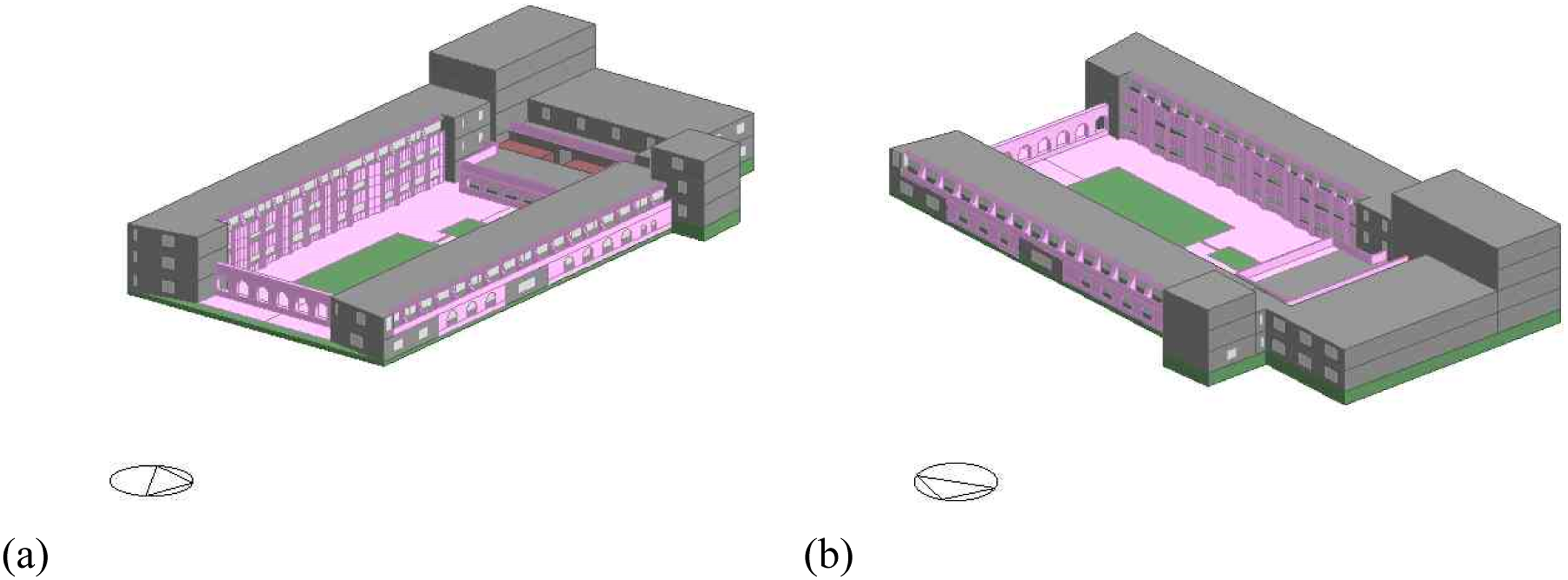
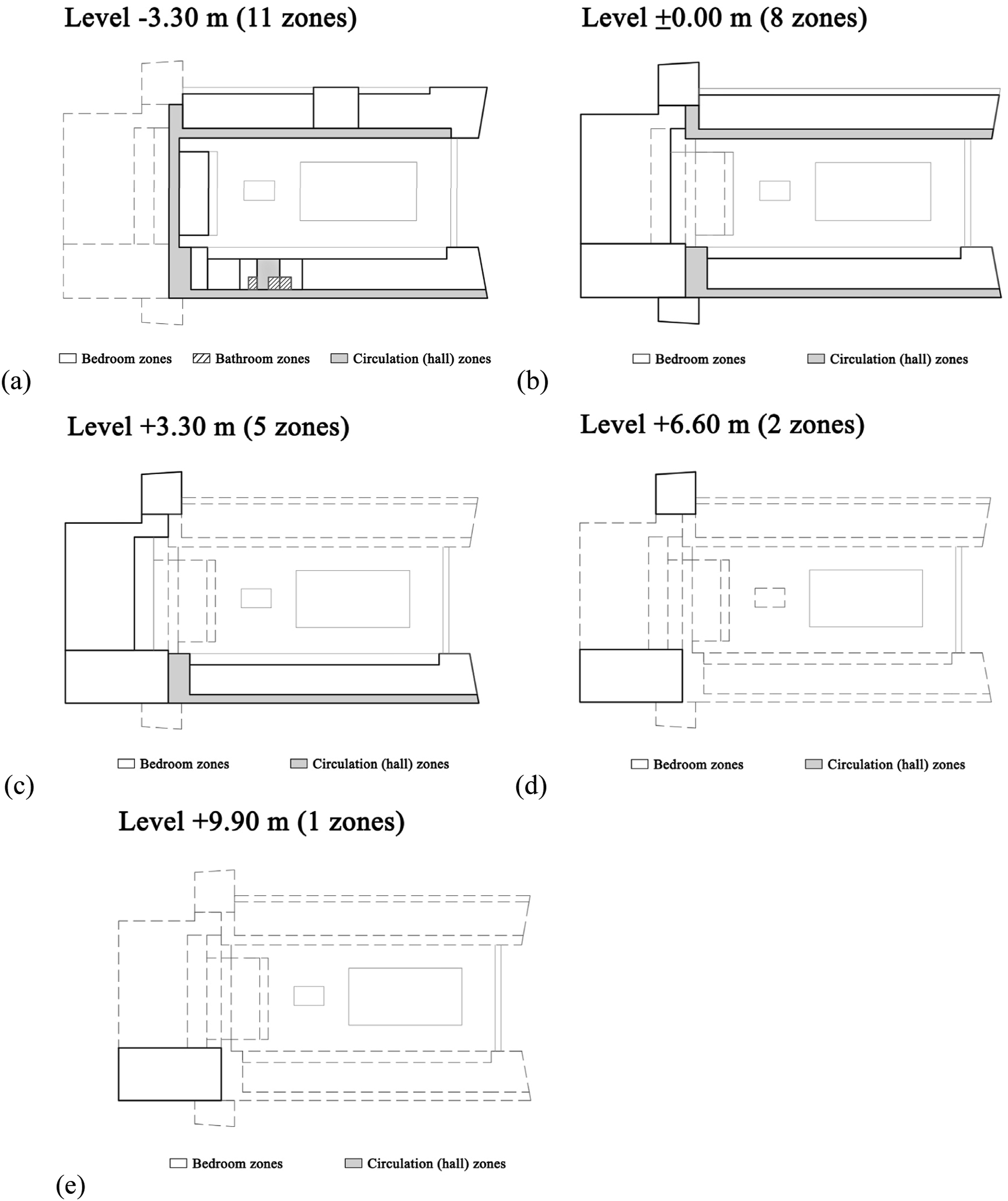
Given the hotel’s considerable size, a specific section, the eastern wing (see Figure 8), was chosen for modelling. This wing consists of three rows of rooms (northern and southern, each with three storeys, and western, with one storey), surrounding a patio. The eastern wall features arches. Each room consists of a bedroom, bathroom, closet and an attic balcony opening onto the patio. Windows are situated in the second loading wall, which faces north. The southern facade is consistently protected by corridor spaces. Each room’s area (bedroom + bathroom) varies from 30 to 70 m2. Each unit was modelled with multiple zones (11 zones in total on the first level, 8 on the second, 5 on the third, 2 on the fourth and 1 on the fifth). Windows open at night if the indoor temperature exceeds 22°C, allowing for night flushing ventilation. Lighting was controlled automatically according to software requirements, as shown in Figure 9(a) and (b) and Figure 10(a)–(e). Hotel roof plan and the modelled eastern section. Case study model: studied units (a) and (b). Case study model: (a) measured floor (highlighted in red) and (b) created zones and floor plans (27 zones in total).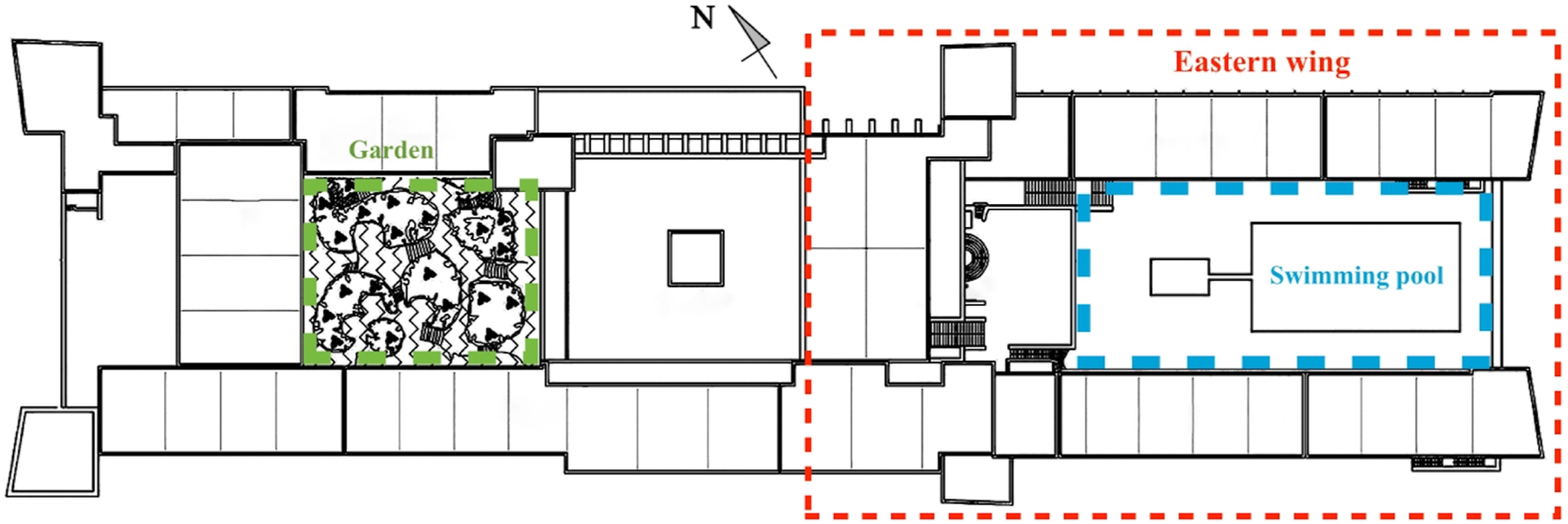
Thermal characteristics
Thermophysical properties of materials used in the study.

Heat exchange resistance of interior and exterior surfaces is 0.14 m2K/W in wall and 0.22 m2K/W in floor. Source: Algerian technical regulation document (DTR C3-T). 46
Standard internal gains from occupants were defined, and air changes per hour (ACH) were calculated, accounting for infiltration and air renewal based on the DTR C3-T equations for both summer and winter conditions. 46
ACHs for envelope’s infiltration were 0.1177 (equation (1)) and 0.055 (equations (2) and (3)) for summer and winter, respectively. The ACH for air renewal of natural ventilation (minimum air renewal exigence of indoor space) was 0.1 (equation (4)) and 0.6 (equations (5) and (6)) for summer and winter, respectively. These rates would influence thermal gain or loss of indoor air, by dividing (Q) over (V), whereas V is the building’s volume equal to 44120.5 m3. Equation (1) was used to determine ACH values:
46
• Infiltration (summer) • Infiltration rate of wind (winter) is defined by equation (2) and the air permeability of the wall ( • Air renewal (summer) is defined by equation (4)






Model’s validation
Field measurements
Field measurements were conducted using a Testo 480 instrument. 54 This instrument was employed to gather detailed information about the indoor thermal environment, facilitating the calibration of the simulation model. Subsequently, the validated model would be capable of predicting discomfort hours over extended periods and various climatic conditions.
Detailed information of instruments.
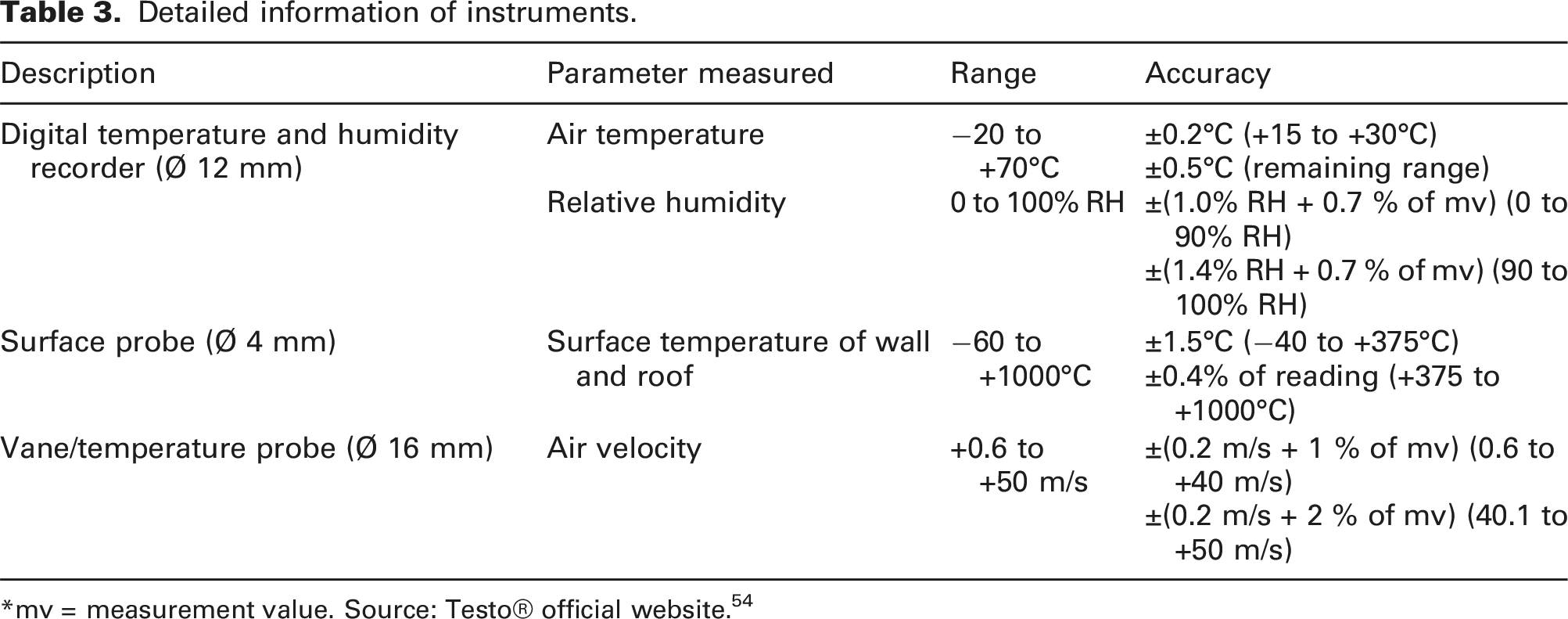
*mv = measurement value. Source: Testo® official website. 54
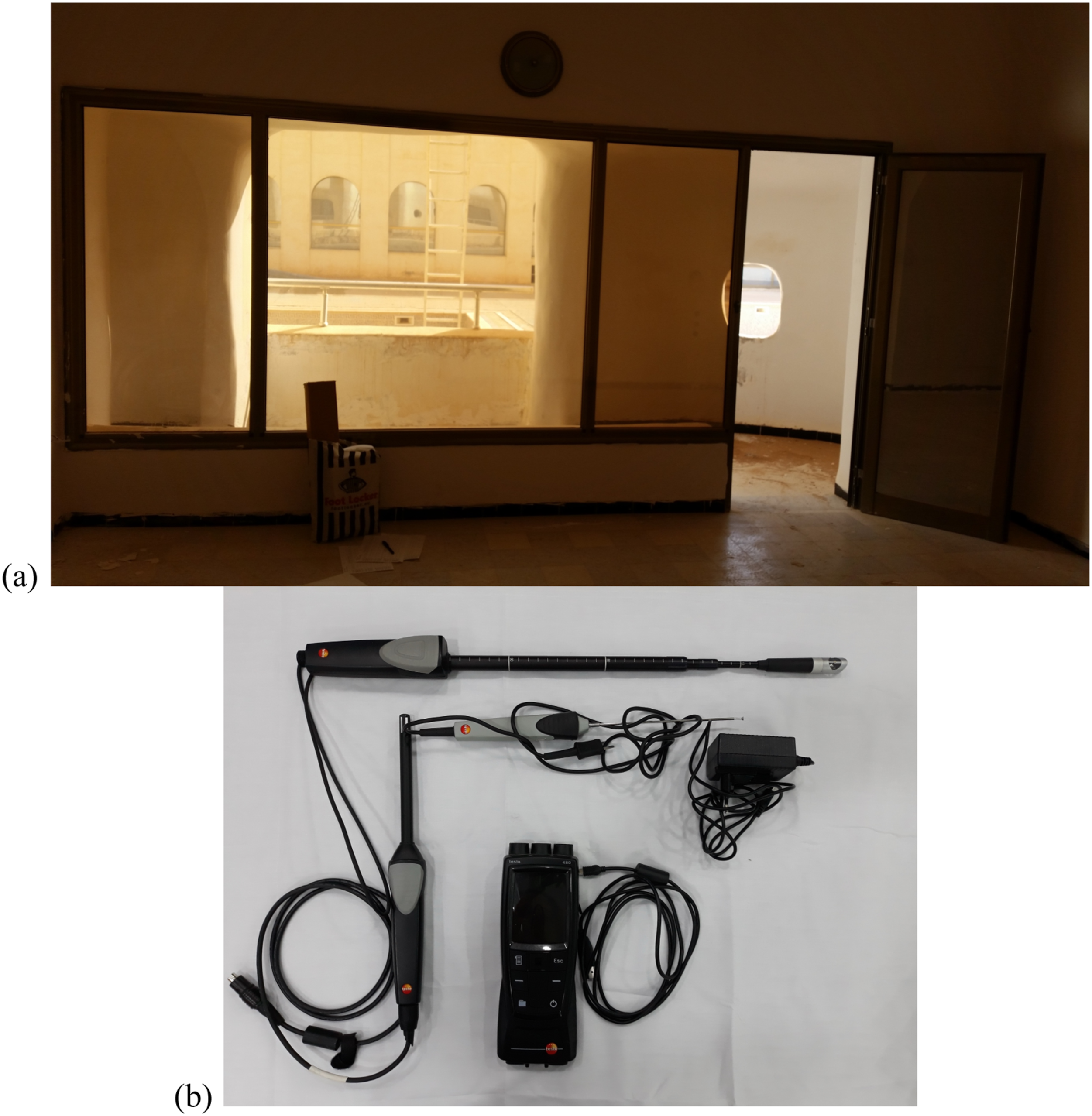
A specific indoor location within the hotel’s rooms was selected for these in-situ measurements. The indoor thermal environment was measured at a central point, positioned at a height of 1.7 m, which corresponds to the standing position of individuals, as recommended by ISO 7726 55 and ASHRAE 55. 6 Outdoor environmental parameters were obtained from a location shielded from direct solar radiation and rain.
Field measurements of air temperature, RH, air velocity and wall surface temperature were conducted with an hourly timestep from 8:00 a.m. continuing throughout the day. The selection of the timestep was made to ensure a balance between capturing detailed data and practical feasibility. The measurement period was chosen to correspond with the hottest period of summer, encompassing three consecutive days in early August (from 06-08-2019 to 08-08-2019). These selected days were representative of the broader summer period, characterised by clear sky and temperatures typical of hot summer weather. The measurements were carried out under natural conditions, with windows open and no active air conditioning in use. The measurement site was situated on the ground floor, oriented towards the northeast and featured a window overlooking one of the hotel’s two large patios (see Figure 11(a) and (b)). Case study and instrument: (a) hotel room layout and window design facing the balcony and patio – measurement location and (b) used instrument (Testo 480).
54
Model’s validation
To validate the model and ensure its capability to describe thermal behaviour over extended periods, comparisons between simulated and measured values were performed. The validation process considered two key metrics: normalised mean bias error (NMBE) (equation (7)) and the coefficient of variation of the root mean square error (CVRMSE) (equation (8)). The model was considered calibrated when NMBE was less than ±10% and CVRMSE was less than 30%.
56

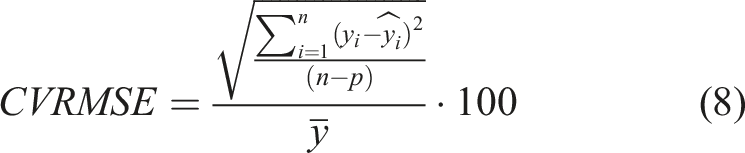
The validation results for operative temperature and RH indicated that the model’s predictions closely matched the actual measurements, with NMBE values within acceptable limits. Figure 12(a) and (b) illustrates these validation results. Model validation results for operative temperature and RH.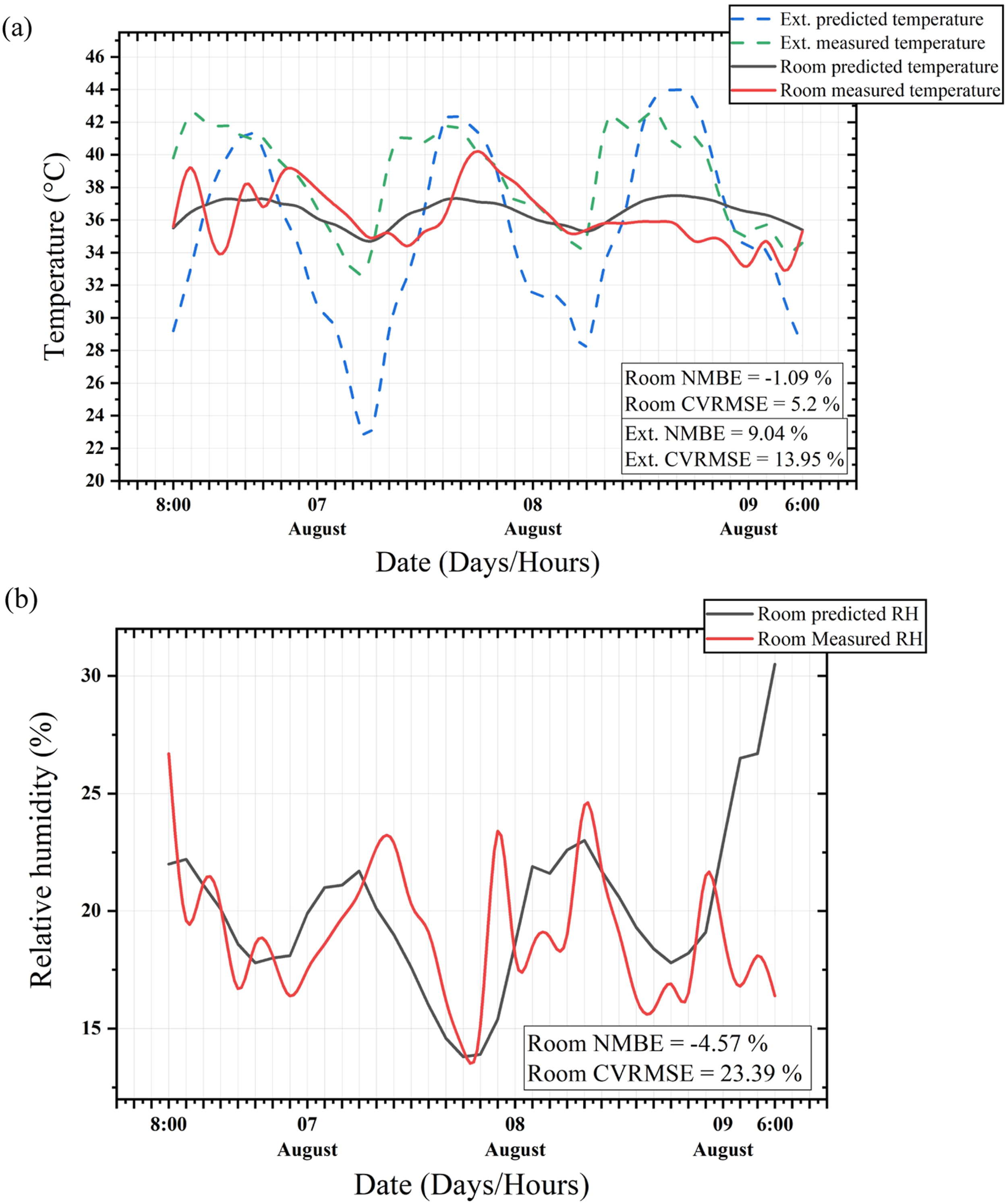
Thermal behaviour (free running case)
After model validation, thermal behaviour was analysed throughout the entire year. The results for the hottest month in summer (30 days from mid-July to mid-August) are presented in Figure 13(a) and (b). These results depict variations in daily temperature degrees, with mean temperatures fluctuating between 33.6°C and 42.2°C, and occasional external temperatures reaching 45.4°C. The findings suggest that ground floor spaces, especially bedrooms, exhibit better adaptability to external heat conditions compared to other floors, due to their direct exposure to the external environment. Typical hottest month temperature extremes in Ghardaïa.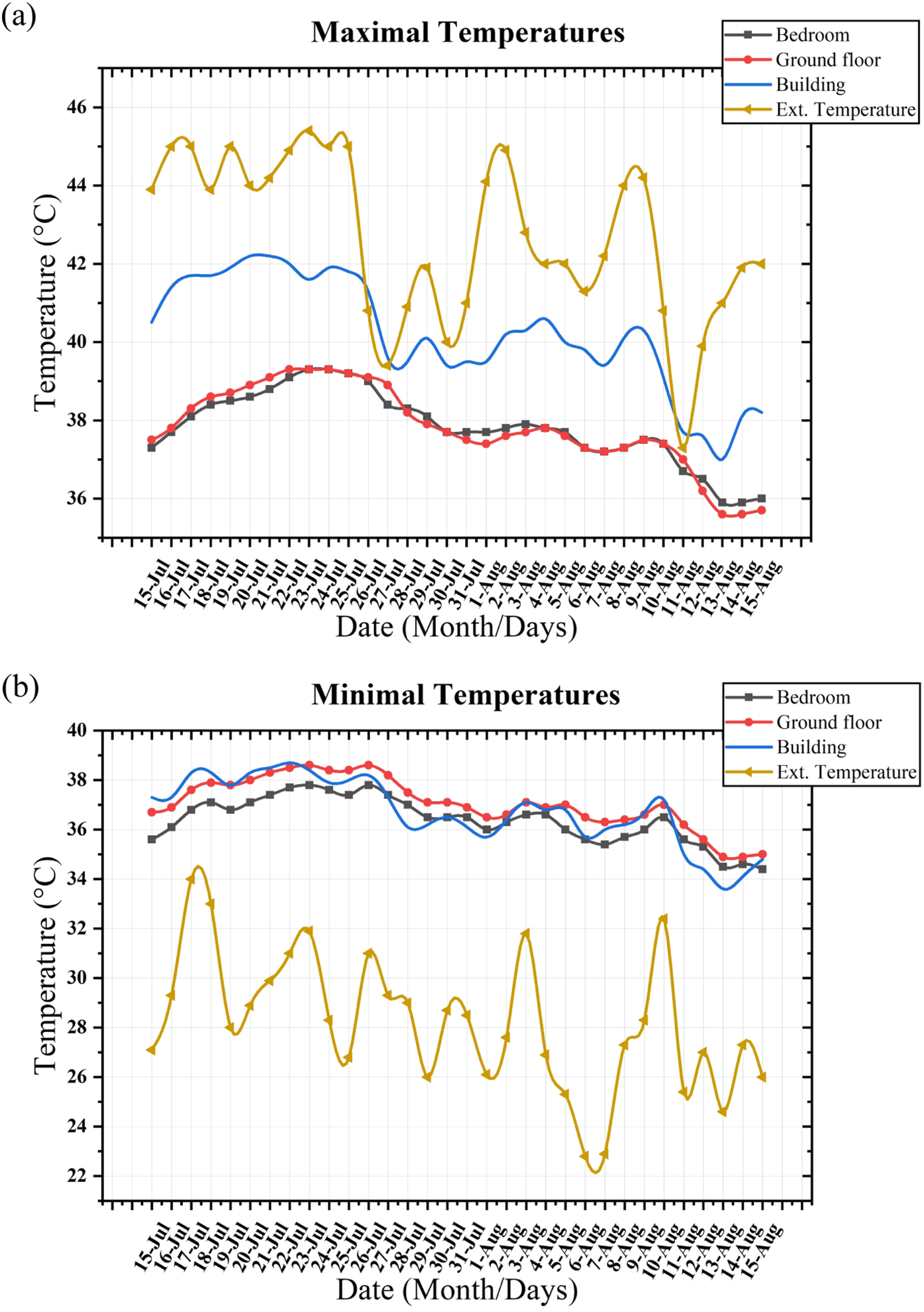
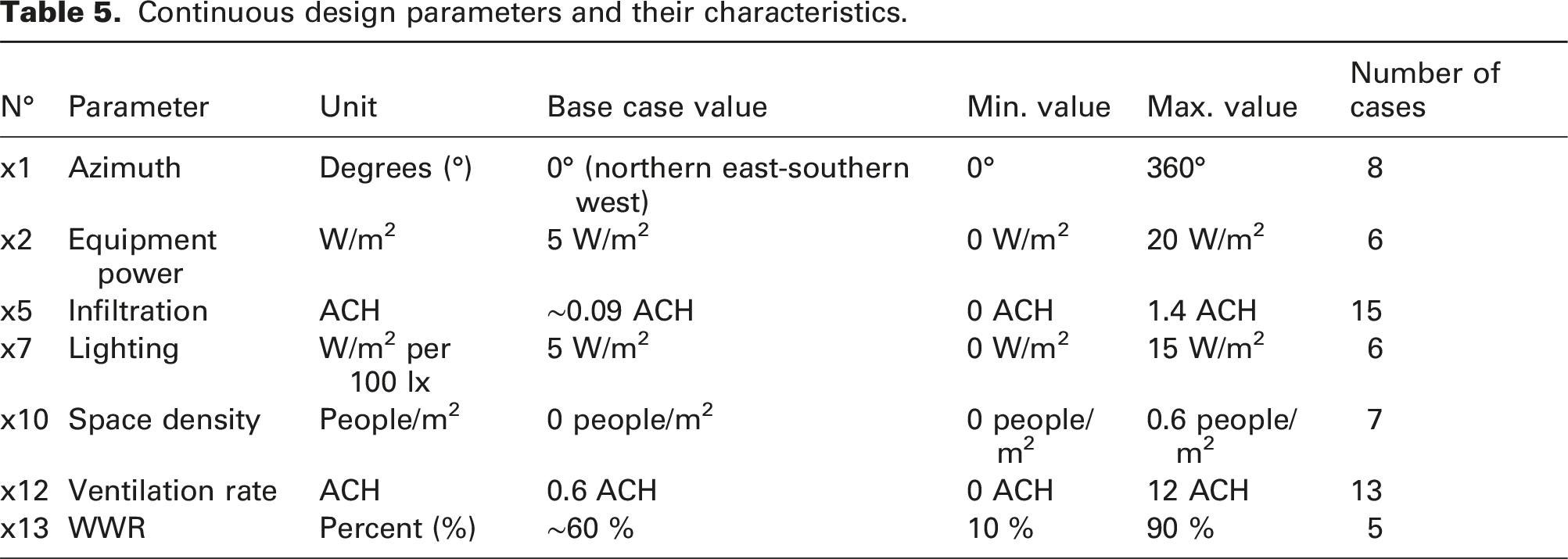
The parametric variations
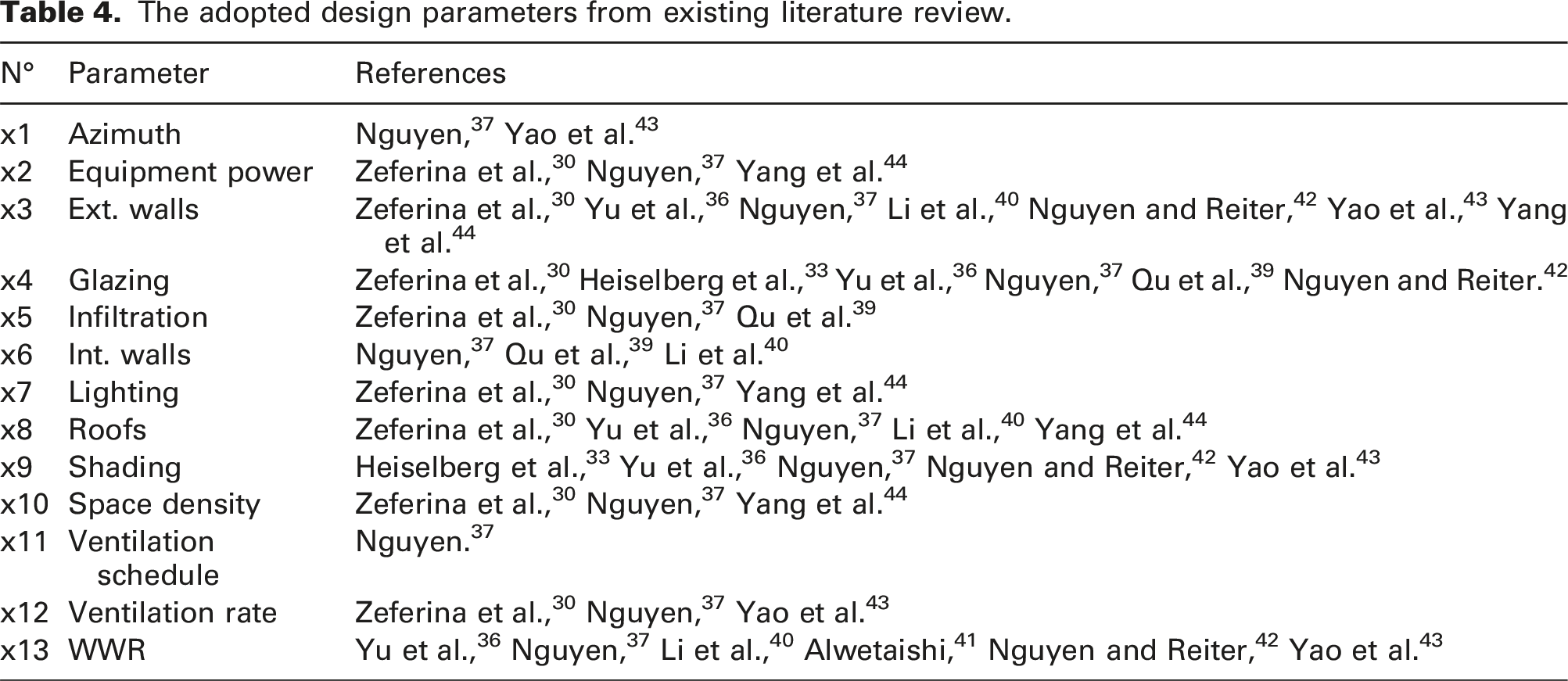
The adopted design parameters from existing literature review.
Continuous design parameters and their characteristics.
Discrete design parameters and their design choices.
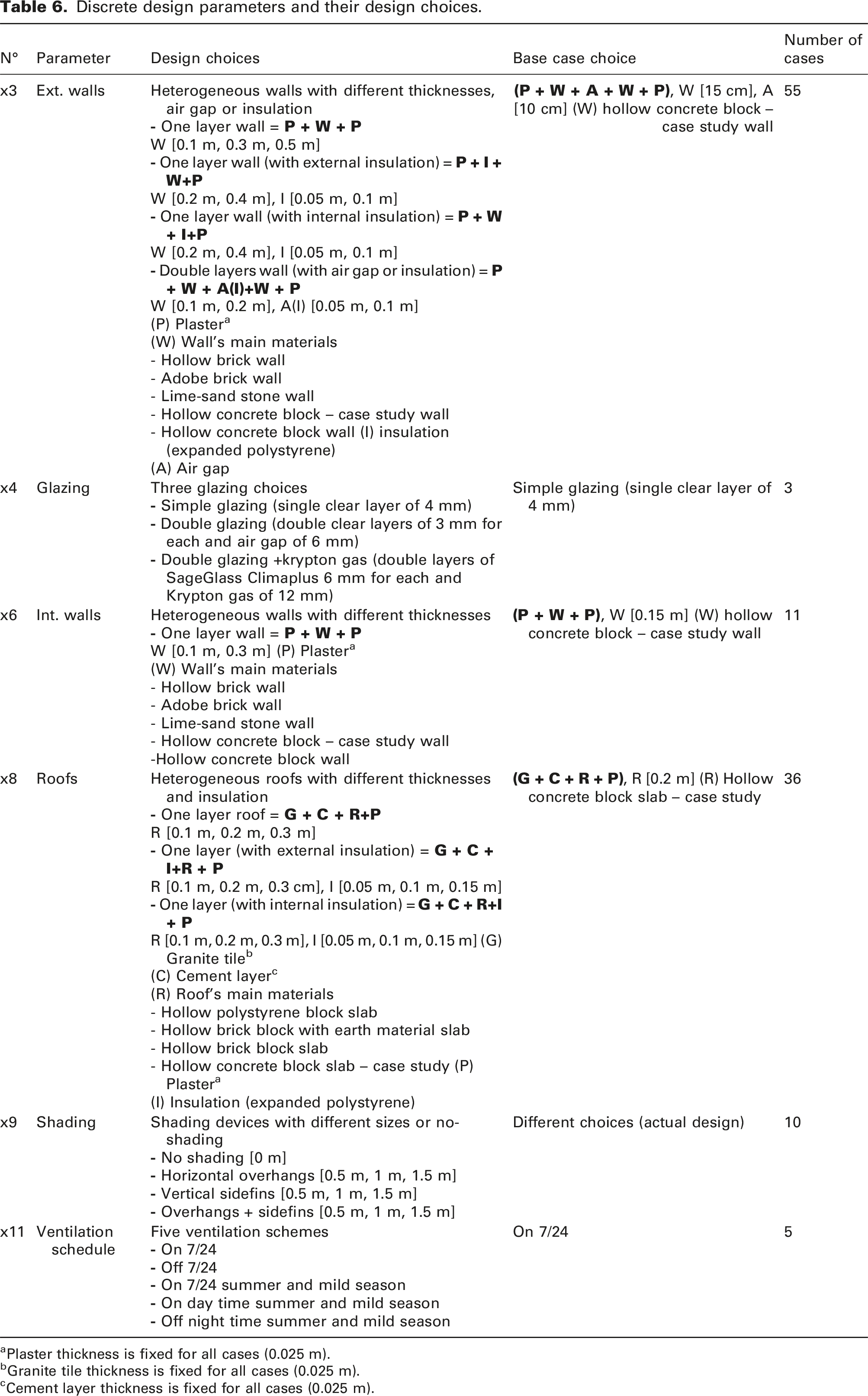
aPlaster thickness is fixed for all cases (0.025 m).
bGranite tile thickness is fixed for all cases (0.025 m).
cCement layer thickness is fixed for all cases (0.025 m).
Thermophysical properties of proposed materials used in parametric variations.
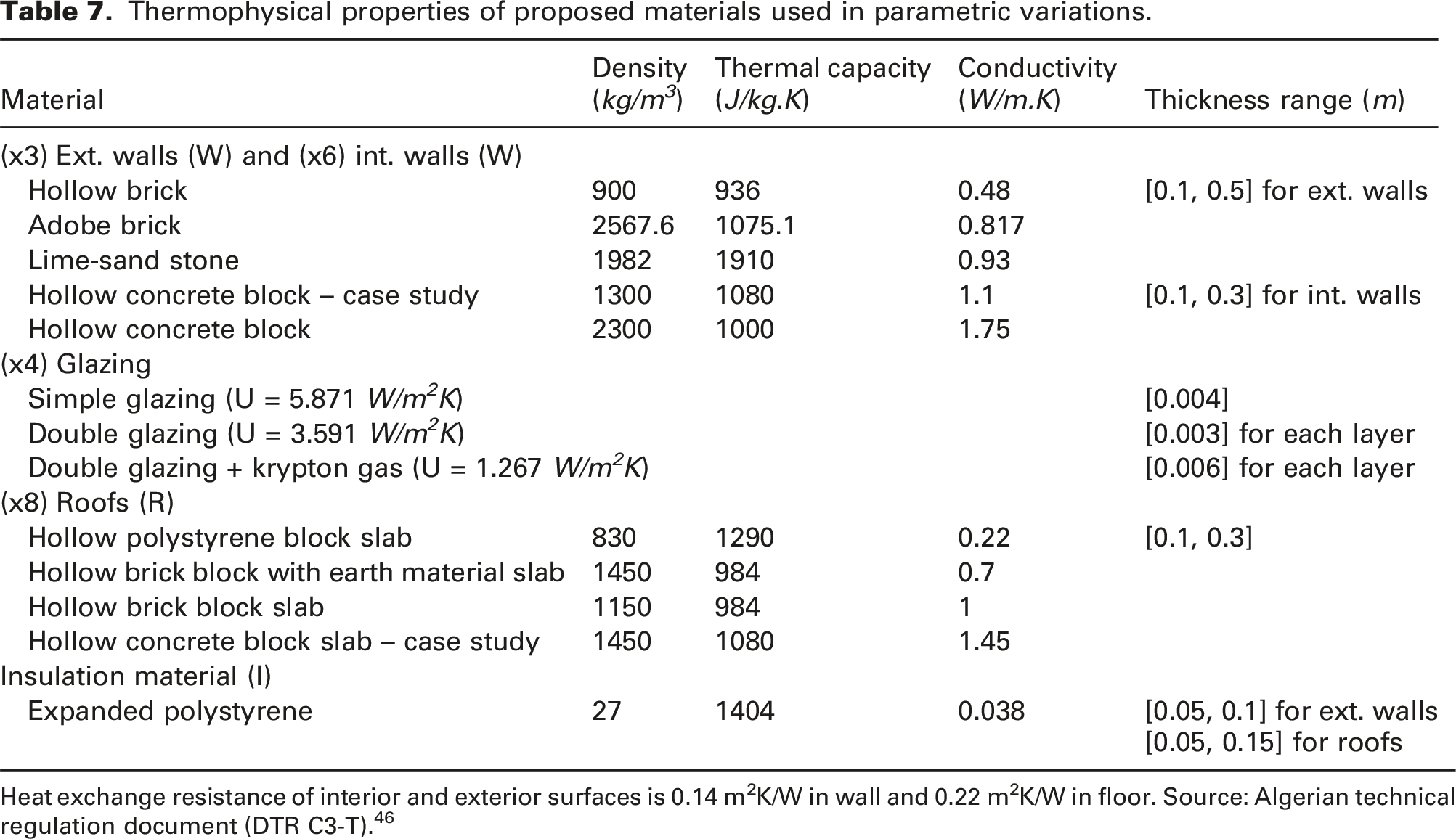
Heat exchange resistance of interior and exterior surfaces is 0.14 m2K/W in wall and 0.22 m2K/W in floor. Source: Algerian technical regulation document (DTR C3-T). 46
Results
Results are presented, focusing on the SA of various parameters in both the PMV-PPD and adaptive models. The discomfort hours data were based on whether the humidity ratio and operative temperature fall within the regions defined by ASHRAE Standard 55-2023 for the PMV-PPD model and whether the operative temperature is within the region specified in ASHRAE Standard 55-2023 for the adaptive model. The impact of 13 selected parameters on discomfort hours for both models was evaluated using the SI, calculated by using equation (9)
33
:
Sensitivity indices (SIs) and parameter rankings for each climate zone.
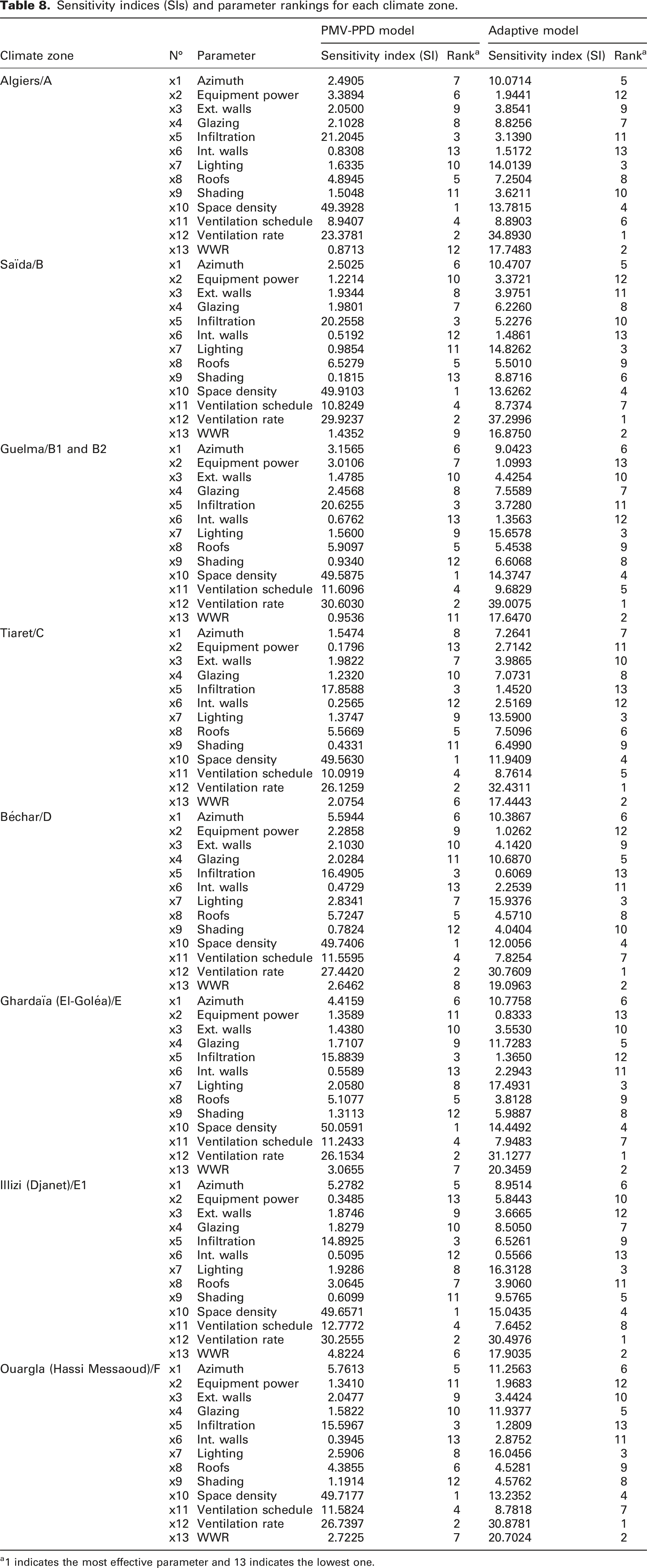
a1 indicates the most effective parameter and 13 indicates the lowest one.
Results of the PMV-PPD model
Analysing the range of outputs for design parameters revealed that variables such as azimuth, equipment power, external walls, glazing, internal walls, lighting, shading and WWR showed similar potential across the eight cities, with median discomfort hours around of 3800 h per year. Discomfort hours median could decrease to 3600 h per year for the roof parameter, go below 3500 h per year for the infiltration parameter and reach around 3300 h per year for the ventilation rate parameter. In cases of space density and ventilation schedules, the median discomfort hours were increased to more than 4000 h per year (Figure 14). SA results for the PMV-PPD model.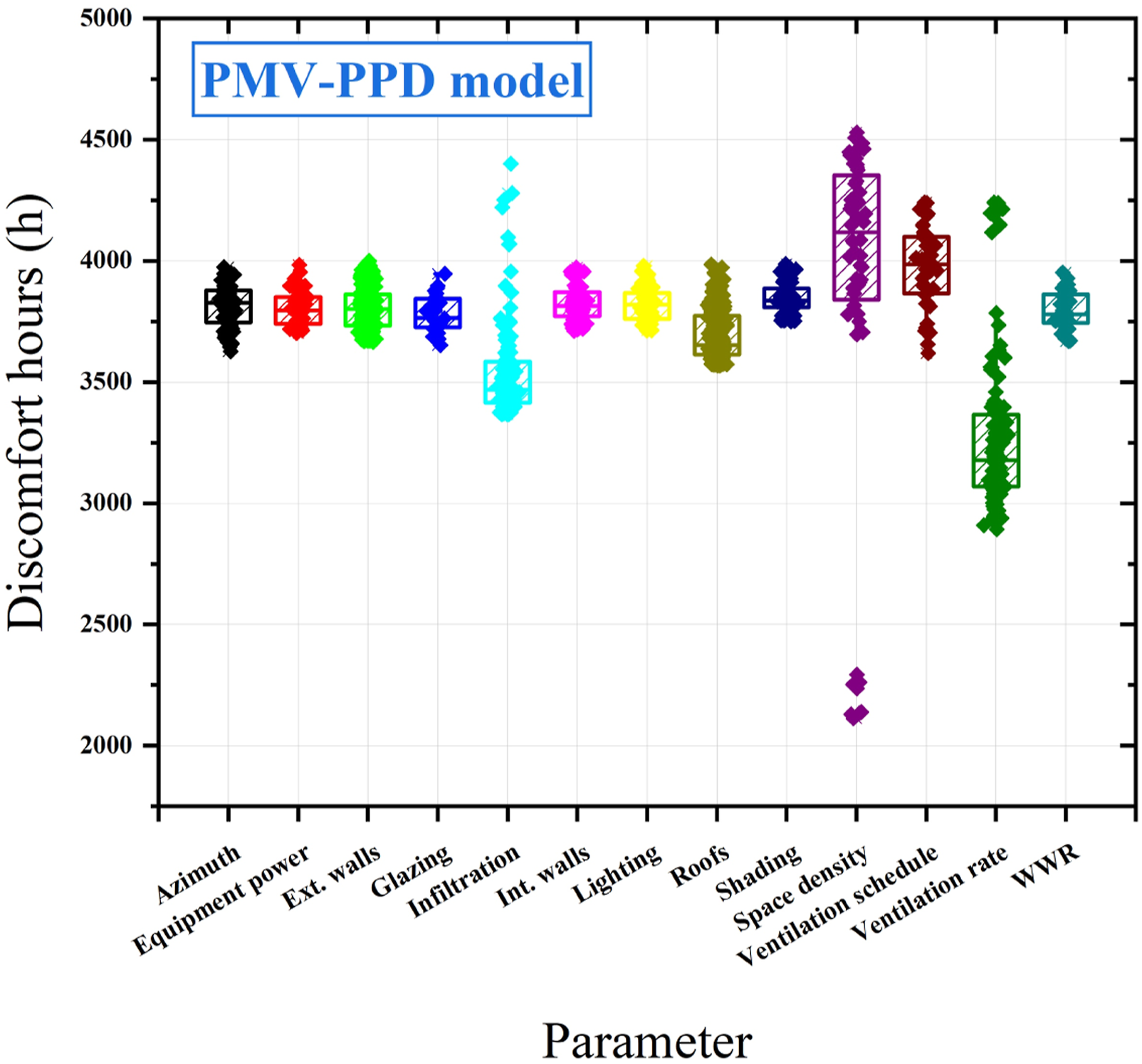
Outliers were observed, indicating increased discomfort hours for the infiltration and ventilation rate parameters and decreased discomfort hours for the space density parameter. This behaviour was due to the significant range of these parameters that affected the output, as reflected more clearly in the SI.
The position of the base case within the range of each parameter indicated the level of design optimisation. When the base case was at the top of the parameter’s range, it indicated the need for further optimisation. When the base case was within the range near the median, it meant that the design met moderate conditions. Finally, if the base case was at the bottom of the range, it indicated that the parameter was well-optimised to reduce discomfort hours. Across all eight cities, the base case or reference case design was consistently positioned at the upper limit of the range, implying that the design was suboptimal and could benefit from further optimisation to reduce discomfort hours (Figure 15). SA results for the PMV-PPD model across different cities.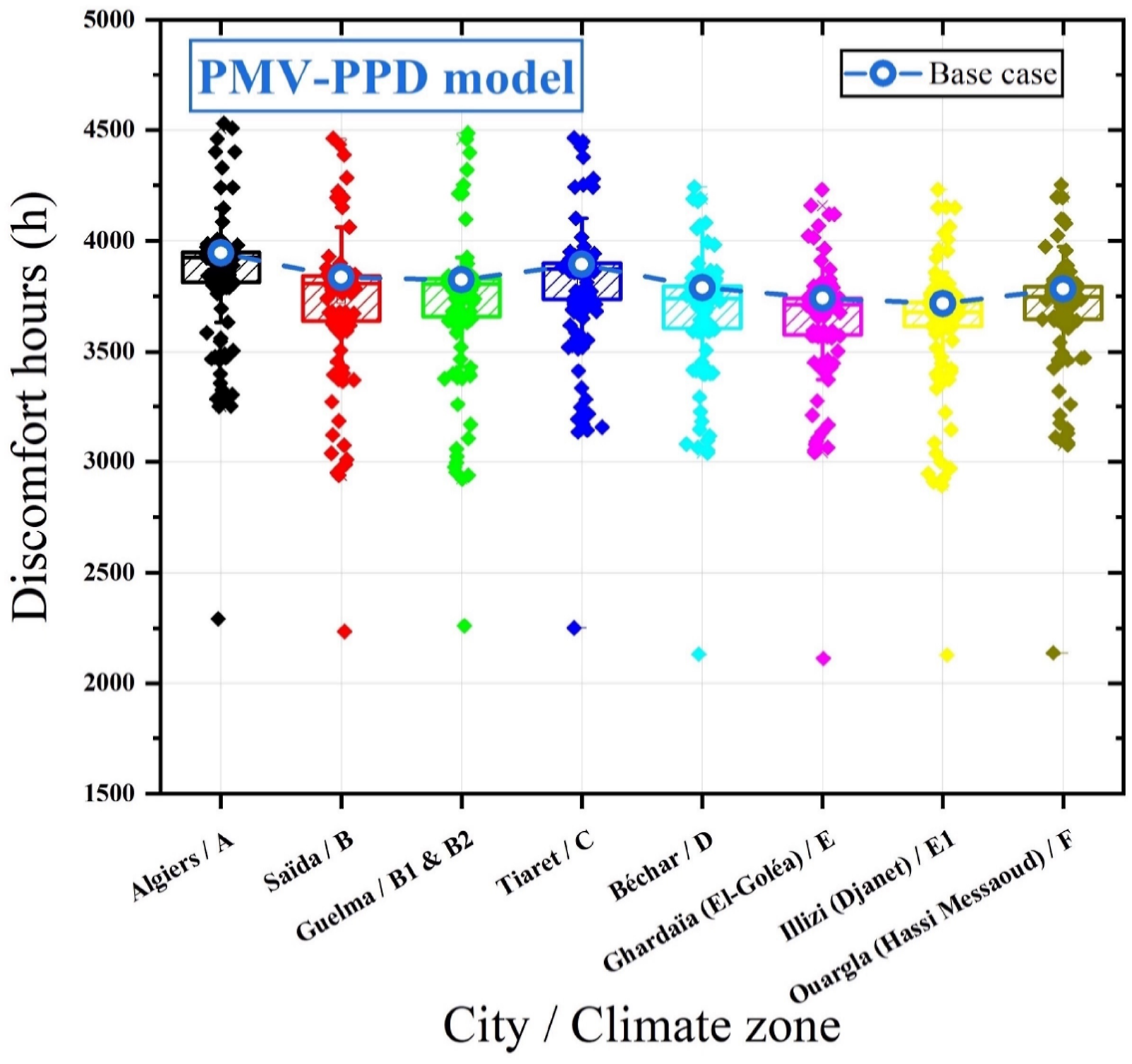
Results of the adaptive model
Exploring the range of outputs for design parameters in the adaptive model revealed that parameters such as azimuth, equipment power, external walls, infiltration, internal walls, lighting, roofs, shading, space density and ventilation schedule exhibited similar potential across the eight cities, with median discomfort hours around 2500 h per year. The median discomfort hours could decrease to 2300 h per year for the infiltration parameter, go below 2000 h per year for the ventilation rate parameter and reach around 2700 h per year for the WWR parameter (Figure 16). SA results for the adaptive model across different parameters.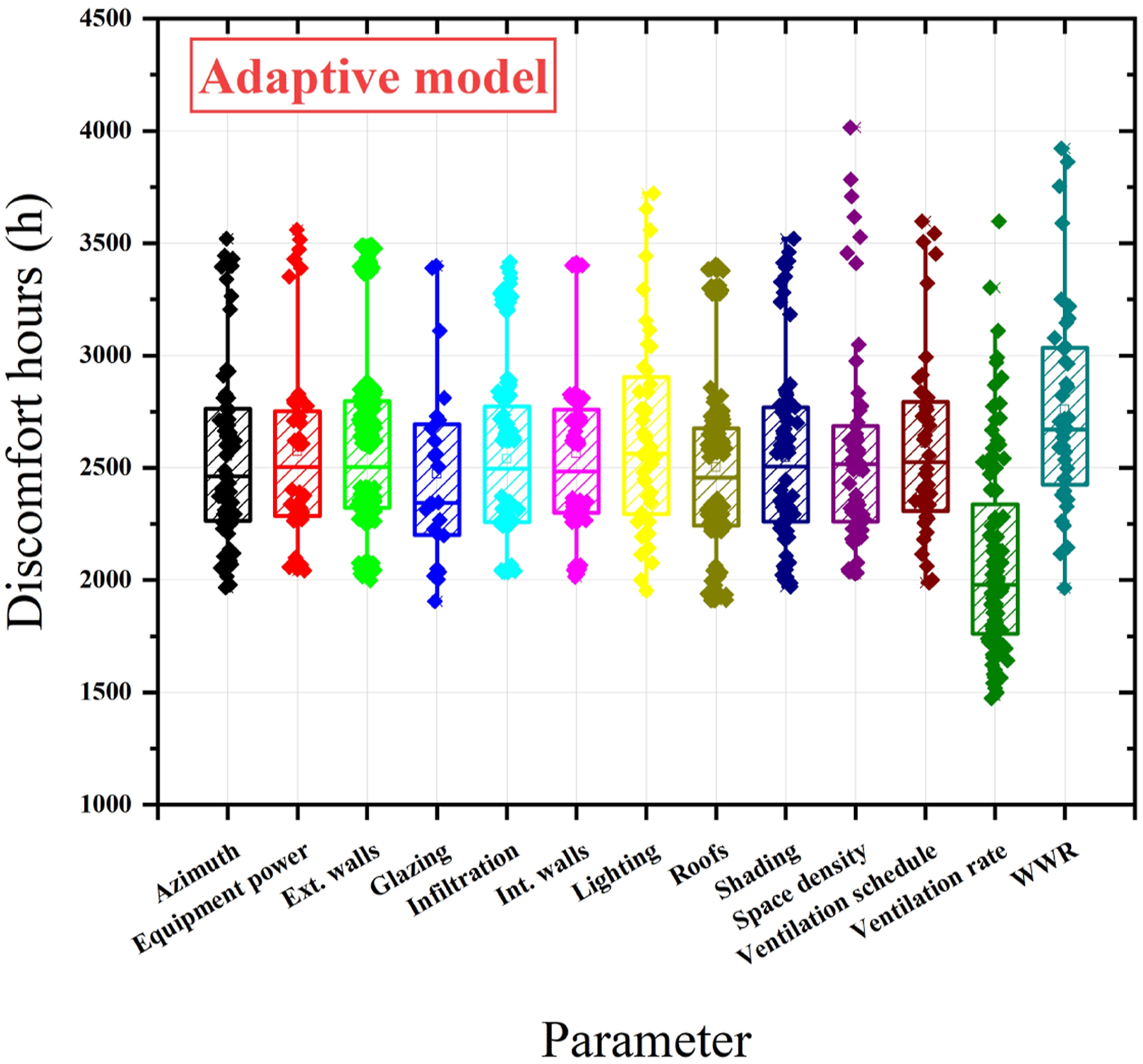
Outliers were observed, indicating increased discomfort hours for parameters such as space density, ventilation rate and WWR. This phenomenon was again related to the substantial range of these parameters affecting the output, as emphasised in the SI (Figure 17). Comparative results of the adaptive model across different cities.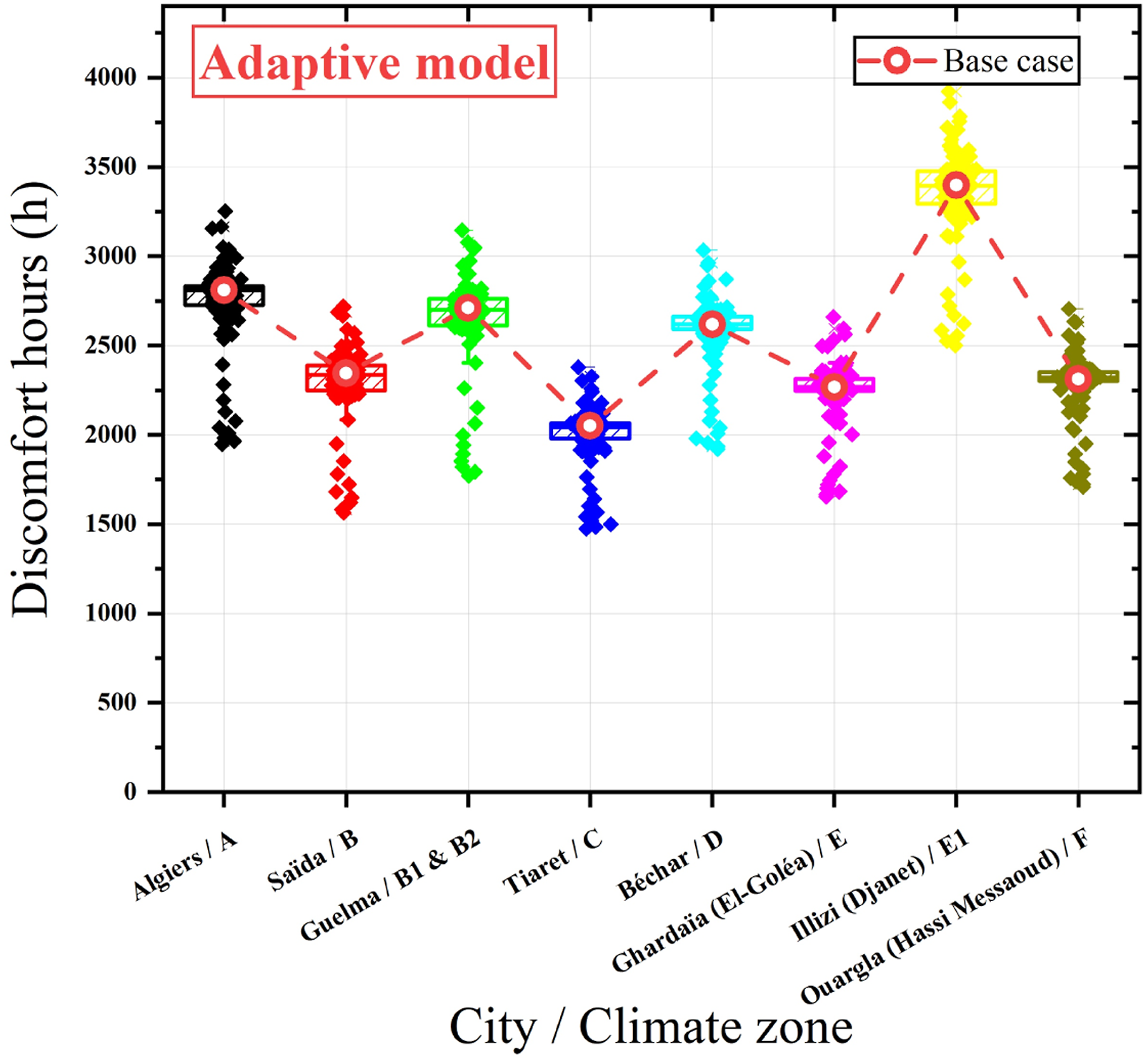
The position of the base case within the range of each parameter in the adaptive model indicated the level of design optimisation. The results differed across the eight cities, with the base case being located at the top or bottom of boxplots for various parameters. This means that the design could be optimised more.
Sensitivity index results
The SIs showed relatively consistent rankings across the eight cities. In the PMV-PPD model, space density was the most influential parameter, closely followed by ventilation rate, infiltration, ventilation schedule, roofs and azimuth. The remaining parameters (WWR, lighting, equipment power, shading, external walls, glazing and internal walls) had relatively similar impacts on discomfort hours.
In the adaptive model, ventilation rate was identified as the most influential parameter, followed by WWR, lighting, space density, ventilation schedule, glazing and azimuth. The other parameters (roofs, shading, external walls, infiltration, equipment power and internal walls) showed relatively similar impacts on discomfort hours.
Table 8 provides detailed information on SI percentages and the ranking of each parameter across the eight cities.
Discussion and implications
The study’s primary conclusion underscores that modifying the studied design parameters can be a highly effective approach to reduce discomfort hours in harsh hot climates and create a more acceptable indoor environment for both MC and NV buildings across various climate zones (Figure 18(a) and (b)). SI of design parameters for PMV-PPD and adaptive models.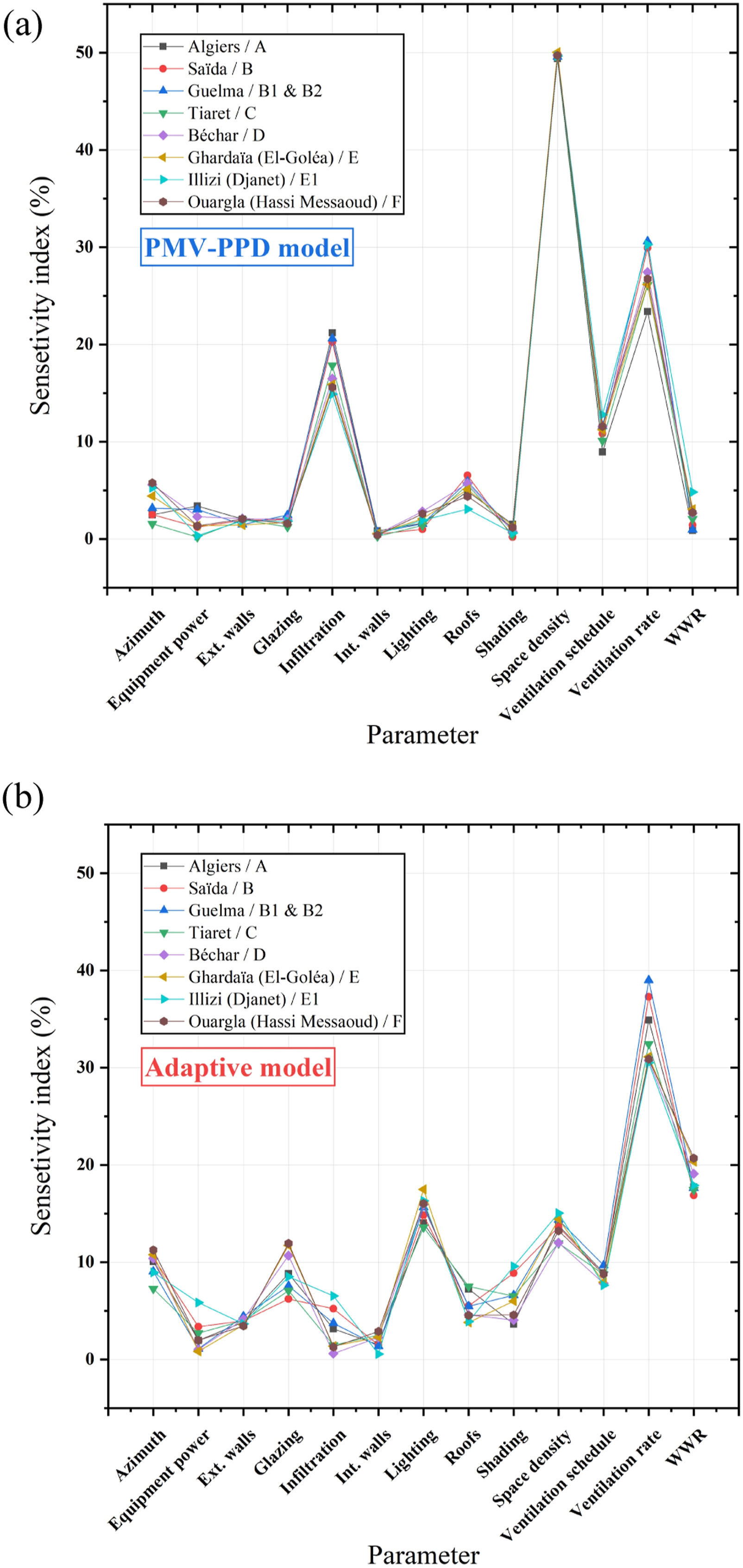
A key aspect to consider is achieving a balance between summer and winter needs in the design process. This balance should be maintained through passive design solutions. For example, during the summertime, solar radiation must be effectively controlled through shading to prevent excess heat gain. Such considerations are critical for the year-round estimation achieved through software simulations.
The parametric variation method employed in this study revealed the varying importance of design parameters across different climate zones. In the PMV-PPD model, the parameters with the most significant impact nationwide, as indicated by the SI and simulations, include space density, ventilation rate, infiltration, ventilation schedule, roofs and azimuth. These parameters are particularly influential due to the PMV-PPD model’s sensitivity to user metabolism and airspeed.
In contrast, the adaptive model highlights ventilation rate as the most influential parameter across the country, emphasising the importance of natural ventilation in expanding the comfort zone. Additionally, WWR, lighting, space density, ventilation schedule, glazing and azimuth were identified as key parameters influencing discomfort hours.
Compared to similar previous studies in the Malaysian context 58 that evaluated free-running ventilation strategies in specific residential building, a key difference emerges regarding the effectiveness of passive cooling strategies. The Malaysian study indicated that free-running ventilation alone may not achieve indoor comfort temperatures without mixed-mode ventilation. Another study in Malaysian context also 59 investigated affordable retrofitting methods for achieving thermal comfort in a hot-humid climate residential setting. It demonstrated the effectiveness of using high-density polyethylene (HDPE) nets as roof covers to reduce convective heat flux and improve compliance with thermal comfort standards. The study suggested that low-cost retrofitting methods can effectively enhance indoor comfort in residential buildings in hot-humid climates. Together, these studies offer complementary perspectives on addressing thermal comfort concerns providing practical solutions for retrofitting residential buildings. Another study 60 on thermal comfort in residential buildings examined comfort temperature ranges and the correlation between indoor and outdoor temperatures. It highlighted the variation in comfort temperatures based on climate and operation modes and discussed the potential for energy savings through adaptation measures such as roof retrofitting, building orientation and shading design. While our study has provided insights specific to architectural design and discomfort hours reduction in hotel buildings, this review offered a broader perspective on comfort temperature variations and energy-saving strategies applicable to residential settings. These results are comparable with the outcomes derived from the current work for Algerian hotels because they both emphasise the importance of passive design strategies and the potential for low-cost retrofitting methods to enhance indoor comfort in different building types and environmental contexts.
Psychometric chart predictions and recommended strategies should be explored and compared with the results obtained in this study. Further investigations should also address SI and uncertainties.
To address the limitations of achieving full thermal comfort passively through design optimisation with LSA and parametric variations, future research should explore active solutions and conduct a GSA using genetic algorithms for optimisation. Moreover, adopting an evaluation system or benchmarking for hotels in different climate regions in Algeria is recommended. Certain parameters can be applied in new constructions, while others can be applied during the refurbishment of existing buildings.
This study serves as a call to action, aiming to draw the attention of researchers, practitioners, decision-makers and architects to the challenges of hotel building design in various Algerian climates and regions with similar climates worldwide. The research encourages a methodological approach to explore the effectiveness of applying design parameters in reducing discomfort hours in both MC and NV buildings.
The approach presented in this study has the potential to significantly reduce discomfort hours in the early design stage and during retrofit projects in diverse Algerian climates and similar climate zones globally. By focusing on the preservation of local resources and cultural techniques, it is essential to ensure the consistent application of strategies for reducing discomfort hours within Algeria’s climatic conditions. This study advocates for future research in the optimisation of indoor environments for both MC (PMV-PPD comfort model) and NV (adaptive comfort model) buildings.
Conclusion
In this study, a comprehensive assessment of the sensitivity of 13 key parameters was conducted and their impact on annual discomfort hours in a reference hotel was discussed. This case study involved an in-depth investigation of a hotel through in-situ measurements and a calibrated dynamic simulation model. Both the PMV-PPD and adaptive comfort models were adopted to assess their performance across the eight climate zones in Algeria. The 13 design parameters were explored for their impact on discomfort hours, using parametric variation and simulations. The findings underscore the potential to optimise design passively, enabling the regulation of thermal performance in hotels located in diverse climates.
The study demonstrates that passive strategies can effectively enhance indoor thermal comfort across various climate zones. The ventilation rate parameter emerges as a crucial design element for both comfort models, while internal walls are identified as having a relatively low impact on the overall outcome. It serves as a real-life test case that has been meticulously examined through LSA in different Algerian climate regions. The study’s application extends to the categorisation of hotels based on discomfort hours, thereby aiding in assessing energy demand for both cooling and heating.
This research offers a generalisable approach to harness the passive design potential for improving indoor thermal comfort in both MC and NV buildings. It provides insights for further exploration and application in the hotel sector and other similar contexts worldwide.
Footnotes
Author contributions
All authors contributed equally in the preparation of this manuscript.
Declaration of conflicting interests
The author(s) declared no potential conflicts of interest with respect to the research, authorship, and/or publication of this article.
Funding
The author(s) received no financial support for the research, authorship, and/or publication of this article.
