







Abstract
With increasing diversity of consumers in the marketplace, marketers have begun to embrace inclusive marketing practices. However, there is still a lack of research on the topic, making it difficult for managers to understand how to design and execute effective campaigns. This study aims to fill this gap by identifying the key factors that contribute toward an impactful inclusive marketing campaign. The study used a sequential mixed-methods approach and first conducted interviews with 29 LGBTQIA+ and non-LGBTQ consumers to gain insights into their perceptions of effective inclusive campaigns. In the study’s second phase, ten industry experts provided inputs for the Fuzzy DEMATEL method to identify critical factors for an effective campaign. The findings revealed seven essential factors: social acceptance of the community, use of community-specific symbols, authentic communication about community issues, top management’s approach, inclusive hiring practices, brand history, and legal market structure, which were then grouped into social, communication-related, brand-related, organization-specific, and other macro-level categories. The study fills an important gap in the inclusive marketing literature and can serve as a practical guide for marketers to design and implement inclusive campaigns.
Keywords
Introduction
According to the American Marketing Association (2017), marketing involves a range of activities, institutions, and processes aimed at creating, communicating, delivering, and exchanging valuable offerings for customers, clients, partners, and society at large. Therefore, marketing serves a diverse society’s needs, and modern marketers must recognize and respond to this diversity to expand their customer base (Grier, 2020; Gurrieri & Reid, 2022). Such changes in traditional segmentation practices (historically grounded in the assumed homogeneity of consumers) have significantly contributed toward establishing inclusive marketing as one of the most discussed concepts in modern marketing discourse. Inclusion is conceived as the social assimilation of diverse worldviews, where equal space and consideration are given to every worldview (Smith et al., 2024). Thus, inclusive marketing is perceived as “a type of integrated marketing approach that is human-centered and driven by shared-values principles emphasizing the value of diversity and development for all” (Rivera et al., 2020).
The current discourse around inclusive marketing focuses on the social change and social justice that such initiatives can provide to diverse customer segments (Demangeot et al., 2019). Inclusive marketing practices have societal effects and generate profits and new business for marketers (Grier, 2020; Napoli et al., 2003). Research by Salesforce indicated that 90% of consumers demand that brands move beyond the “capitalist ideology” to drive social change (Siegel, 2019). Another research by Nielsen highlights the growing purchasing power of ethnic minorities in the U.S. and the need for brands to adopt multicultural marketing strategies (Nielsen, 2018). The success stories of brands like Fenty Beauty and Absolut Vodka lay the foundation for the effects inclusive marketing has on the bottom line and the reputation of the brands (Sebulsky, 2021). Similarity, research in emerging marketing areas such as augemented reality and metaverse based marketing, also calls for keeping inclsion at the core of marketing strategies (Kumar & Agarwal, 2023; Kumar et al., 2024; Schultz & Kumar, 2024). Hence, given the compelling need for inclusion in marketing, it becomes imperative for marketers to understand, adapt and utilize inclusive marketing practices (van Esch et al., 2024). MSI (2020) also corroborates increasing need for inclusivity in marketing.
However, inclusive marketing research remains underdeveloped and limited. The current literature on inclusive marketing focuses predominantly on the customer or brand value added by inclusive marketing practices (e.g. Boyd et al., 2020; Patrick & Hollenbeck, 2021). The second faction of the literature has started to whisper about the social justice and social inclusion that such marketing has begun to provide for marginalized communities (e.g. Licsandru & Cui, 2018; Meshram & Venkatraman, 2022). However, the designing, enacting, and executing successful inclusive marketing practices remain understudied. This study aims to bridge this gap by focusing on inclusive marketing campaigns and providing a set of success factors to consider while designing an inclusive campaign for the Indian market. This is important because success in inclusive marketing practices has resulted in an additional market share, enriched brand image (Grier, 2020), additional sales, and financial gains (Melton & MacCharles, 2021); therefore, the importance of inclusive campaigns cannot be ignored (Fleischman et al., 2024).
Owing to the social embeddedness of inclusive marketing campaigns, the study takes the Indian market as the research context. The Indian market, with its vibrant and huge demographic mix, has become an ideal and challenging contender for designing and executing a successful inclusive marketing campaign. The study focuses on the newest created diversity group, that is, the LGBTQIA+ (lesbian, gay, bisexual, transgender, queer/questioning, intersex, asexual, and + indicates the plethora of identities within this group) customers. In September 2018, the Supreme Court of India decriminalized the colonial-era law on homosexuality. Many national (e.g. Myntra and Times of India) and global brands (e.g. H&M and Nike) started incorporating LGBTQIA+ people and storylines into their marketing efforts, integrating same-sex couples and gender minorities in their marketing campaigns. This attraction is also due to this consumer segment’s increasing purchasing power and loyalty intentions (Lambert et al., 2024; Melton & MacCharles, 2021). These efforts influence the liberal heterosexual, cisgender allies of the LGBTQIA+ communities (Nölke, 2018). Thus, the study aims to codify and stipulate the understanding and definitive goals for a robust, inclusive marketing campaign.
To do so, this study uses a sequential mixed-methods design by employing an inductive approach to explicate the factors leading to the effectiveness of an inclusive marketing campaign. Although the spotlight is often on campaigns that promote inclusivity for LGBTQ+ consumers, it is important to consider the perspectives of those outside of this group, such as heterosexuals and cisgenders. Research suggests that understanding their feelings toward such campaigns or advertisements can have advantages in the constantly evolving marketplace (Aaker et al., 2000; Alahakoon et al., 2024). Thus, both consumer groups are included in the study to make it exhaustive and reliable. This study, therefore, wishes to provide a holistic guide for brand managers wanting to design inclusive campaigns. The study captures the perceptions of the diverse consumer segments to unearth the underlying critical factors for an inclusive campaign. The industry experts evaluate these factors further to determine the critical success factors for designing a more effective inclusive marketing campaign for the Indian market. Thus, the research questions guiding this study are:
RQ1: What are the critical success factors of an effective inclusive marketing campaign in the emerging market of India?
RQ2: Which among these factors are the “causes” and which are the “effects” in enabling such effective campaigns?
The following sections shall focus on the existing literature on inclusive marketing, the current gaps and the need for this study, the methodological procedure, findings, and finally, the discussion and conclusion.
Literature review
Today’s marketplace, marked by consumer diversity, necessitates a shift from one-size-fits-all approaches to tailored, inclusive marketing strategies. This inclusivity, rooted in authenticity, is crucial as consumers are increasingly discerning of insincere practices (Demangeot et al., 2019; Podoshen et al., 2021; Tuli et al., 2023). Traditional segmentation strategies require reevaluation in favor of inclusivity, which aligns individual identity with the environment, offering universally beneficial solutions (Epps & Demangeot, 2013; Melton & MacCharles, 2021; Patrick & Hollenbeck, 2021). Inclusive brands garner positive consumer responses, fostering a sense of belonging among marginalized groups (Chaney et al., 2019; E. L. Ciszek & Pounders, 2020) in real and virtual worlds (Ferraro et al., 2024). However, overlooking vulnerable identities can lead to marketplace violence, with consumers developing brand-damaging coping strategies (Crockett et al., 2003; D. M. Martin et al., 2021).
LGBTQIA+ marketing, in particular, faces challenges. Current practices often rely on stereotypical, ineffective messaging or assimilationist approaches, and potentially undermining LGBTQ+ identities and movements (E. Ciszek, 2017; Lewis et al., 2024; D. M. Martin et al., 2021; Nölke, 2018). Furthermore, there’s scepticism regarding brands’ genuine support for LGBTQ+ inclusion, often perceived as driven by capitalist motives rather than advocacy (E. Ciszek & Lim, 2021; Dobele et al., 2022; Mathenge & Owusu, 2013; Um, 2016). This calls for critically reexamining LGBTQ-inclusive marketing strategies to ensure they authentically represent and support diverse identities.
Current research primarily focuses on inclusive campaigns’ perceived inauthenticity and failure to persuade consumers. Successful initiatives hinge on genuine perceptions of authenticity (Koshksaray et al., 2015; Licsandru & Cui, 2018). To enhance effectiveness, businesses must internalize inclusivity, making it a core part of strategy and innovation and influencing consumer behavior through acceptance and diverse identity representation (Demangeot et al., 2019; Podoshen et al., 2021). Additionally, this internal inclusivity must be mirrored externally. Effective communication should involve cultural primes and congruency enhancement, recognizing varied social identities to improve brand perception (Chaney et al., 2019; Licsandru & Cui, 2018; Perez-Mujica et al., 2014). This approach ensures that inclusivity is deeply ingrained in the business process and market representation.
While the importance of inclusive marketing has been sufficiently established in the literature (Grier, 2020; Licsandru & Cui, 2018; Patrick & Hollenbeck, 2021), the research on effective inclusive marketing initiatives barely touches the tip of the iceberg. For instance, Demangeot et al. (2019) found utility, security, visibility, opportunity, competence, and navigability at the singular consumer level to enhance multicultural engagement in the marketplace. Similarly, at the micro-identity level, Licsandru and Cui (2018) proposed that inclusive (multiethnic) ads affect the identity aspects of ethnic consumers (self-awareness, self-congruity, self-referencing, and self-identification) to instil social inclusion, increasing the ad effectiveness. Podoshen et al. (2021) list the importance of authenticity, that is, negative impact of perceived tokenism and superficial representations on the effectiveness of inclusive marketing. Alternatively, though Melton and MacCharles (2021) propose a multi-level framework for assessing the effectiveness of inclusive marketing (consumer-level, market-level, and cultural-level factors), these factors are narrow (e.g. type of imagery used at the market-level or inclusive attitudes at the consumer-level) and fail to dig deeper into the broader constructs at play. Evidently, extant research focusing on the success factors primarily takes a uni-dimensional perspective, focusing on barely one “cog of a machine.”
The current research in the LGBTQ+ domain, predominantly examines the market viability for gay and lesbian consumers, the nature and impact of targeted advertising, and the behavioral and attitudinal patterns of these consumers (Ginder & Byun, 2015; Grier, 2020; Licsandru & Cui, 2018; Patrick & Hollenbeck, 2021). Table 1 summarizes the literature on LGBTQ-inclusive marketing communication, with the last row displaying the contribution of this study and the research gap the study aims to fill.
Development in the LGBTQ-inclusive Marketing Communication.
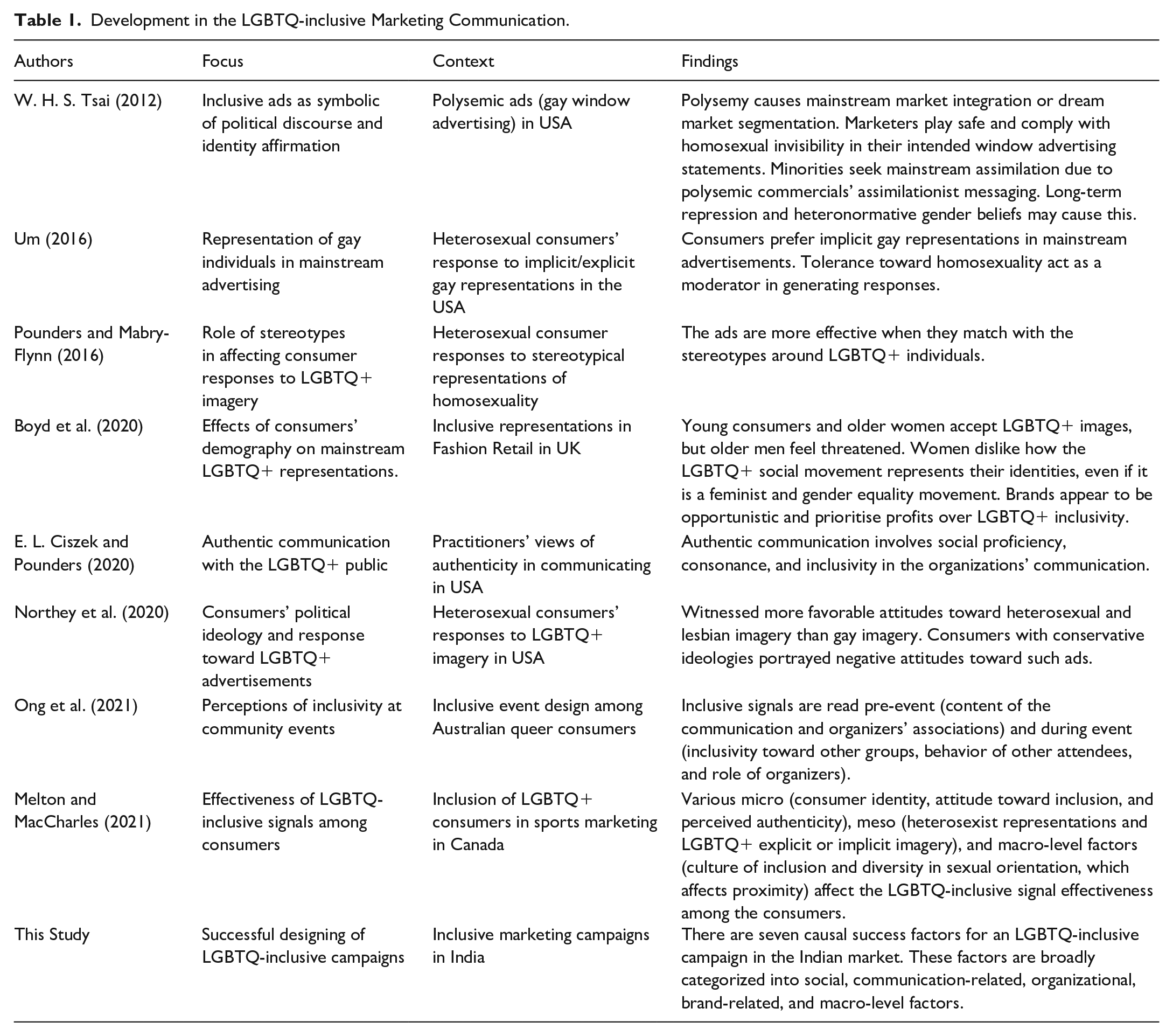
This study addresses a significant gap in LGBTQ+ inclusive marketing, particularly in non-Western contexts like India, offering both theoretical and practical insights. First, it explores the tangible and intangible benefits brands gain from LGBTQIA+ inclusion (Cunningham & Melton, 2014; Melton & MacCharles, 2021). With most research focused on Western markets (Ginder & Byun, 2015), this study shifts attention to the Asia-Pacific region, underexplored in this context (Um, 2016). The increasing trend of inclusive marketing in India following the legalization of same-sex relationships in 2018 highlights the need for this study, especially given the ongoing social stigma and the intersectionality of identities like caste and religion (Si et al., 2018).
Understanding the factors for effective LGBTQ-inclusive campaigns in India is crucial, given the role of such campaigns in a society marked by suppression and marginalization. Adopting a dyadic perspective that considers both consumers and marketers offers a comprehensive view of the factors driving effective inclusive marketing (Licsandru & Cui, 2018). Unique to this study is the use of Fuzzy DEMATEL to differentiate critical factors into cause and effect, a methodology that enriches the understanding of designing effective campaigns and bridges the gap between theory and practice in inclusive marketing.
Methodology
The recent emergence of inclusive marketing phenomenon and its inherent dynamism necessitates an inductive investigation into its nature and the uncertainties it entails. This study adopts an empirical-analytical methodology to examine the factors contributing to inclusive campaigns’ success in the Indian markets. This research employs a sequential mixed-method design, with the initial phase laying the groundwork for the subsequent phase. The first phase identifies key factors for successful inclusive campaigns, involving dialogues with 29 participants, including 14 LGBTQIA+ and 15 heterosexual cisgender individuals. This diverse blend aims to provide a holistic market view and enhance LGBTQ consumer segment representation.
The next phase builds on these insights, involving expert input on inter-rating factors and attributes. These experts specialize in developing inclusive campaigns or managing brand images and inclusive policies in organizations. Based on these expert assessments, we applied the Fuzzy DEMATEL method to determine the primary success factors of inclusive marketing. The study’s comprehensive design is depicted in Figure 1.
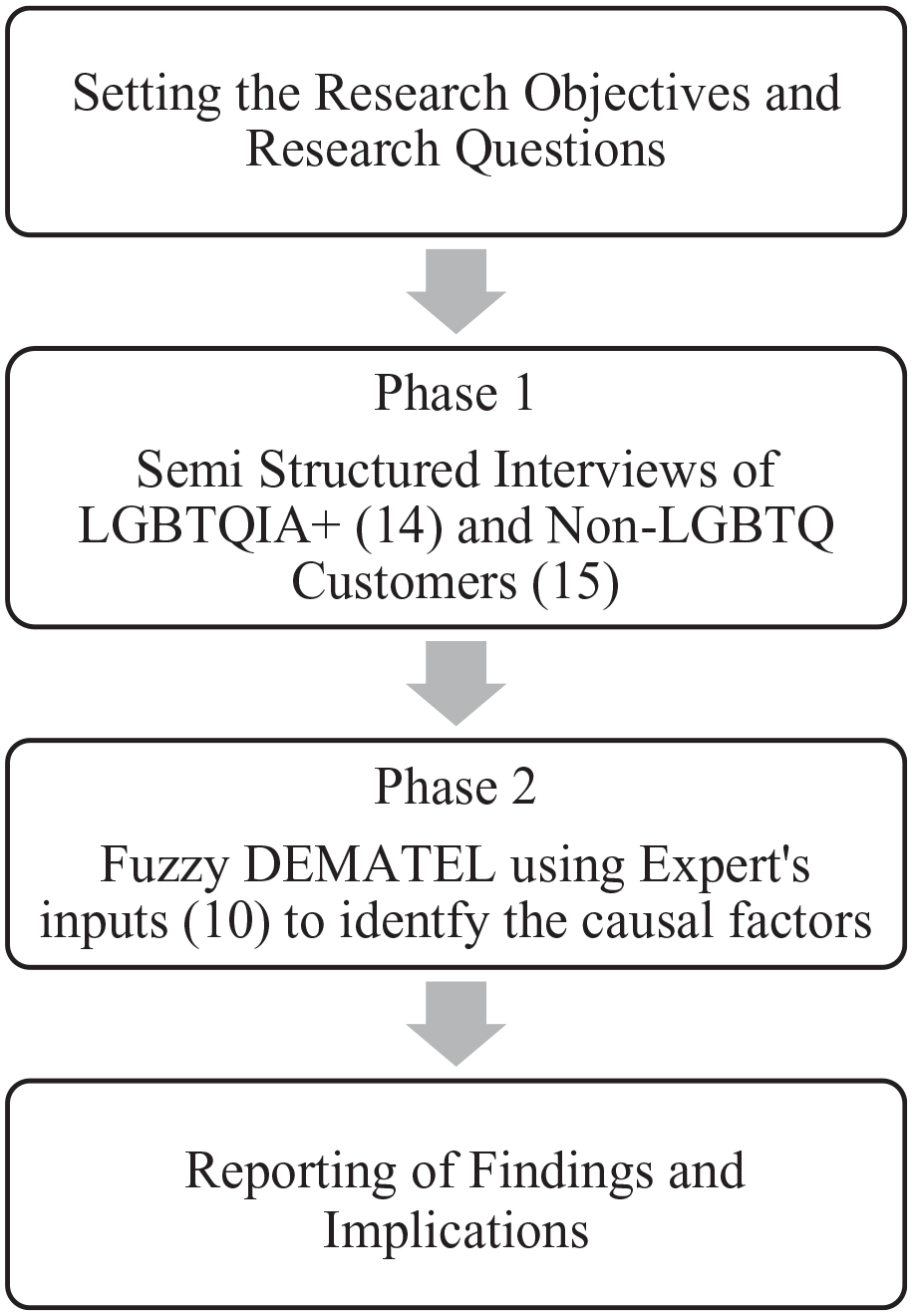
Design of the study.
Phase 1
Phase 1 of this study focused on understanding customer perspectives on successful inclusive campaigns, particularly in the Indian context, where inclusivity is emerging, especially post-decriminalization of parts of section 377 of the Indian Penal Code. Adopting an interpretive and inductive approach, we explored the factors critical to inclusive campaign success amidst India’s diverse demographics and complex social structure.
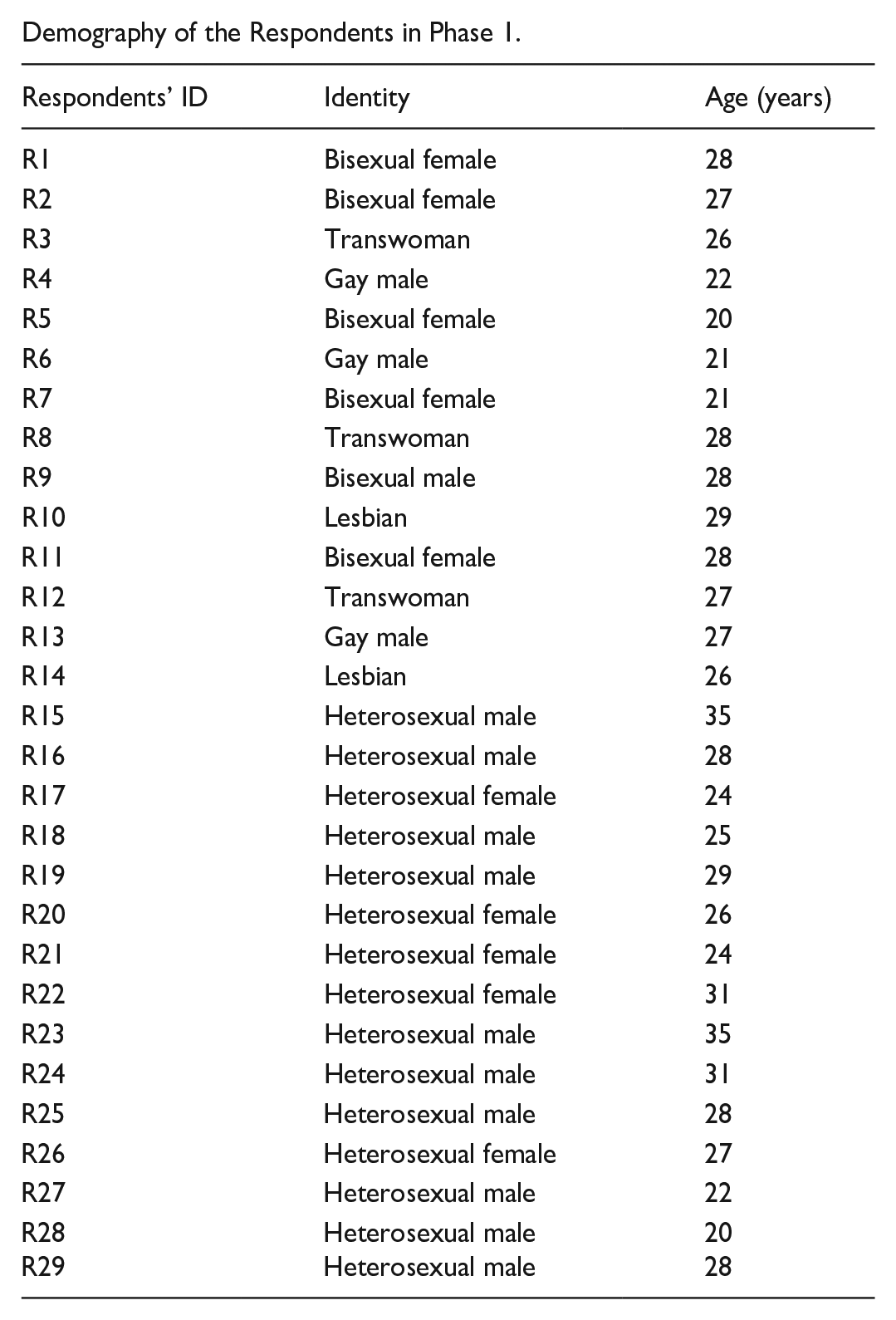
Engaging with the LGBTQIA+ community, a challenging task due to societal hesitance in accepting these groups, involved reaching out through social service organizations, NGOs, self-help groups, and online platforms, including social media. From these efforts, 14 LGBTQIA+ and 15 non-LGBTQ individuals, representing a broad spectrum of Indian consumers, participated in the study, with the former group often requesting anonymity. The research process included in-depth interviews, where respondents were asked to share experiences relevant to inclusivity (Glaser & Strauss, 1967). This method enables capturing the unfiltered responses of the marginalized and stigmatized respondents (Tuli et al., 2024). These conversations, conducted in English and lasting between 45 and 80 minutes, were comprehensive, capturing even the nuances of respondents’ silences on sensitive topics (Charmaz, 2017). The demographic profiles of respondents and the interview protocol are detailed in Appendices A and B, respectively. The subsequent section elaborates on the findings from these 29 semi-structured interviews.
Data analysis
Utilizing Gioia et al.’s (2013) methodology, this study extracted key themes and dimensions vital for inclusive campaigns, capturing respondents’ expressed views and silences. The initial analysis preserved the context and tone, employing in-vivo coding to retain the respondents’ authenticity (Charmaz, 2017). In the second-order analysis, the researcher interpreted these narratives, aligning them with research-centric concepts and themes, thereby enhancing methodological rigor. This approach involved theoretical sampling and saturation, with each response guiding subsequent participant selection and interview adjustments (Glaser & Strauss, 1967; P. Y. Martin & Turner, 1986). The coding process culminated in higher-level abstractions and aggregate dimensions, detailed in Table 2.
Coding Procedure.
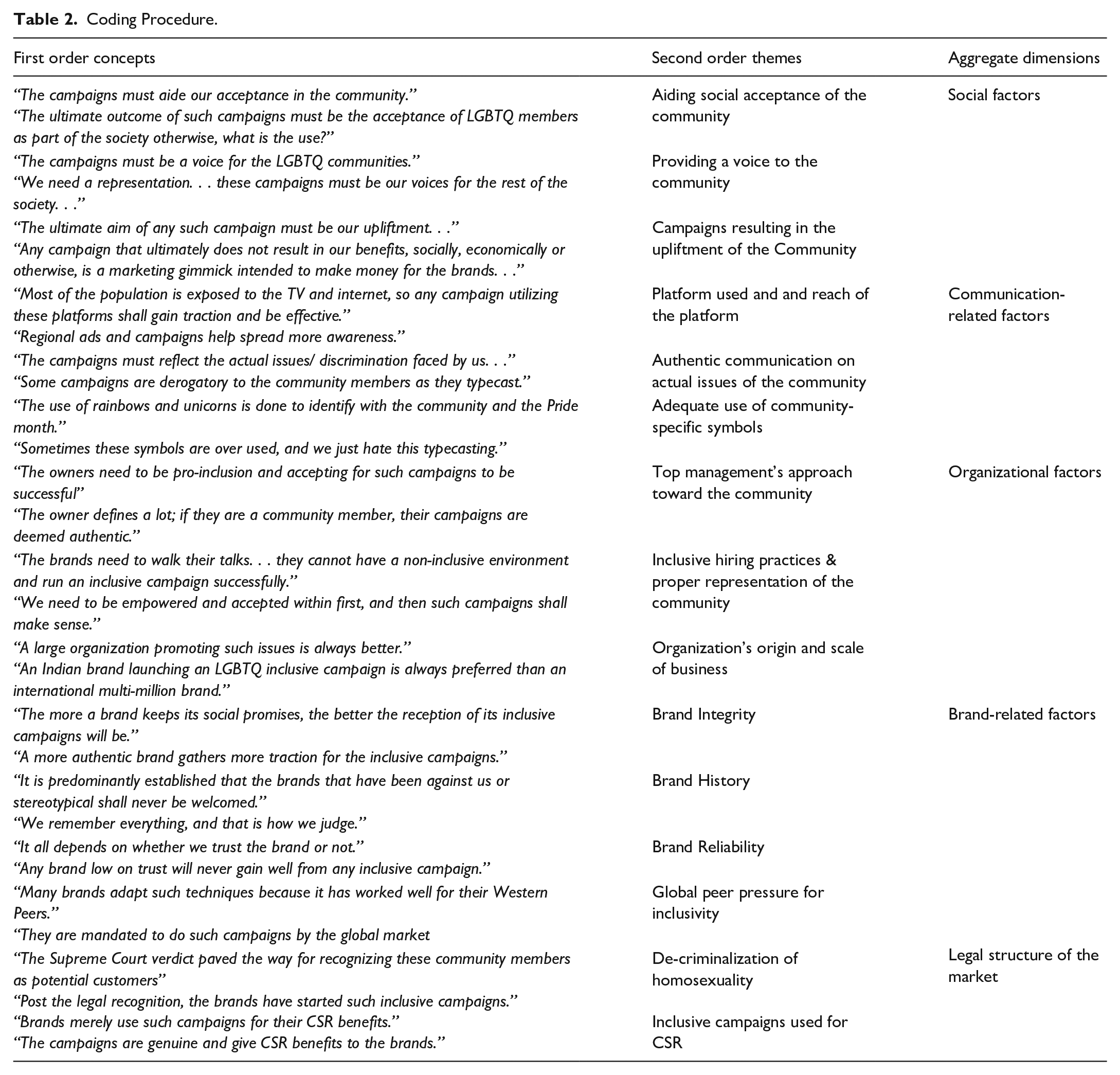
Findings from phase 1
Social factors
The study identifies three major social factors that play a dominant role in evaluation of an inclusive campaign by both the LGBTQIA+ individuals and the heterosexual cisgender alike. The social factors overtly point toward the social values a campaign must project and the ultimate social goals such campaigns must achieve. The majoritarian view was that the campaigns must aid the social acceptance of the communities in a rigid social structure like India’s (critical in the post-colonial Indian context). A bisexual respondent noted:
“So, for me, anything that has a visible change is easy to access. Because, you know, these people, as in the community, we are reluctant to come out. It’s a very stigma sort of thing, very taboo sort of thing, till date. So that keeps us safe, makes us feel secure, and allows us to come out. Doesn’t have to be very cheesy, very colorful, very cheeky. It’s fine. We are normal people. We’re adults, we get it. And yeah, I think that’s all this campaign is doing this, this is a very good initiative”
Campaigns gain success when they transcend stereotypical depictions and raise awareness about the LGBTQIA+ communities’ perspectives and normalcy (Boyd et al., 2020; E. L. Ciszek & Pounders, 2020). Effective campaigns should amplify the voices of these communities, aiming at their upliftment and empowerment. Respondents unanimously agreed that such campaigns should foster social acceptance and empower the communities to assert their rights to social justice and acceptance, paralleling other societal members.
Communication-related factors
The respondents emphasized how digital and non-digital platforms like televised advertisements play a crucial role in spreading awareness and highlighting society’s issues. The respondents highlighted how the mass could be sensitized using sensible and clear televised advertisements highlighting the issues faced by the LGBTQIA+ communities and not portraying the stereotypical imagery mocking the communities to date. The successful campaigns are the ones with a fine sense of balance between the stereotypical symbolisms understood by the majority customer base (heterosexual cisgenders) and the actual struggles and accomplishments of the LGBTQIA+ communities (G. K. Oakenfull & Greenlee, 2005; Pounders & Mabry-Flynn, 2016). The vulnerabilities must be portrayed so society becomes aware and accepting. Appropriate use of community-specific symbols must be maintained so that the campaigns do not turn out as a rainbow-dressing mockery of the community’s values and beliefs. The subtle imagery might not even focus on the stereotypical community symbols and portray the members as humans. A transwoman highlighted:
“In this age of social media, people are getting seen so quickly and easily through viral videos with good content on the platform and the brands are hiring them. . . . I would like them to address the struggles, especially for non-binary people. I will ask them to change their concept of clothing; there are no men and women when it comes to clothing, make it universal and genderless, and shirk the stereotypes around color and style”
Organizational factors
The respondents, especially from the LGBTQIA+ communities, revealed that they closely watch the owners of the major brands pitching for the communities. They assess the owner’s or top management’s stance on promoting LGBTQIA+ inclusion within society and the markets. The respondents use these inputs to assess whether the campaigns launched by these brands are genuine or just eyewash to sound legitimate and inclusive. The respondents, thus, often look at the origins of such brands and business houses and try and assess their general marketing practices (E. Ciszek & Lim, 2021). This is the sole reason why the respondents find smaller brands, especially those owned or run by LGBTQIA+ individuals, as more genuine, and thus, their campaigns are perceived as more authentic.
“I would anytime support businesses hiring inclusively because I feel I have done something. So, if it came to it, I would pretty much support the people, I don’t mean this for the people of the community working there because most of the organization in the name of inclusion are just hiring people at the entry-level position and not even giving them the rights that they deserve. I would rather support the businesses that are owned by the community” [transwoman]
Not to take the credit away from the more prominent brands, the D&I reports provide a good view of their inclusion policy. This forms a formidable basis for the customers to evaluate their claims to being genuine and inclusive, hiring and empowering agents for the communities. A heterosexual female said:
“You have members from the community who are not open, a company hiring such a person might give an advantage to the people to come out. So, this is a really good step and when we talk about discrimination, the community has been discriminated from pretty long time, if we give them these advantages, it is going to work in their favor and they need it”
Also, since the LGBTQIA+ communities are tight-knit, any misbehavior, ostracization, or discrimination within the offices does not go unnoticed, and the news travels far and wide. Hence, decoupling within the organization’s D&I policies shall render such brands’ inclusive campaigns unsuccessful.
Brand-related factors
Respondents pinpointed factors like brand integrity, history, reliability, and global peer pressure for inclusivity as key to the success of inclusive campaigns. This suggests a comprehensive evaluation of a brand’s past, present, and future engagements in inclusivity. Consumers scrutinize the congruence between a brand’s inclusive promises and actual actions, with authenticity being crucial (Podoshen et al., 2021). The brand’s historical support for LGBTQIA+ communities and internal policies toward them also emerged as critical, reflecting the brand’s genuine intentions in its inclusive efforts (E. Ciszek & Lim, 2021; E. L. Ciszek & Pounders, 2020). Additionally, the influence of global market dynamics and peer competition was recognized as influencing factors, underscoring the impact of diverse consumer expectations and competitive pressures on brands’ inclusive marketing strategies.
“Obviously! It matters because now that [brand name] has established that we have done something for the fashion community that promotes or shouts inclusivity, people are driven towards this campaign. . . . If you are at a particular place or platform where you can utilize and include more people, I do not think it’s an option where you say, ‘Oh I don’t want to’, NO!! I think that it is a must as it is very humane. It is not an option where you say that ‘I don’t want to do it’ or I do not feel like it”
Lastly, brand reliability which amounts to the trust put in by the consumers in the brand plays a significant role in the success of an inclusive campaign. This reliability has been built over the years. When consumers perceive a brand’s reliability as negligible, they remain suspicious of inclusive campaigns (Um, 2016).
Legal factors
The historical judgment of the Honorable Supreme Court of India abolished the colonial-era ban on homosexuality in India. The current developments and continuous endeavors of the apex court have tried to provide equal rights to the members of the LGBTQIA+ communities in India. For instance, the 2018 “Navtej” ruling emphasizes the treatment of individuals from the communities to be treated as equal citizens (Express News Service, 2023). These changing legal landscapes in India allowed marketers to open their offerings and tap into this nascent but impactful segment of customers. This forms a two-pronged strategy wherein the inclusive campaigns legitimize and legally broaden the brand’s customer base. A bisexual respondent said:
“This is why the brands also don’t take initiative because they know they stand the chance to lose their heterosexual consumers especially stereotypical, homophobic ones. They were also afraid of the legal proceedings before 377”
However, inclusive campaigns are not untouched by the maligned image of CSR activities in this capitalist era. The use of LGBTQ-inclusive campaigns as CSR is shallow in India (Krishna, 2022); however, the number of such campaigns is increasing. This makes the respondents scrutinize the CSR and inclusion efforts of the brands.
The following Figure 2 summates and categorizes these factors.
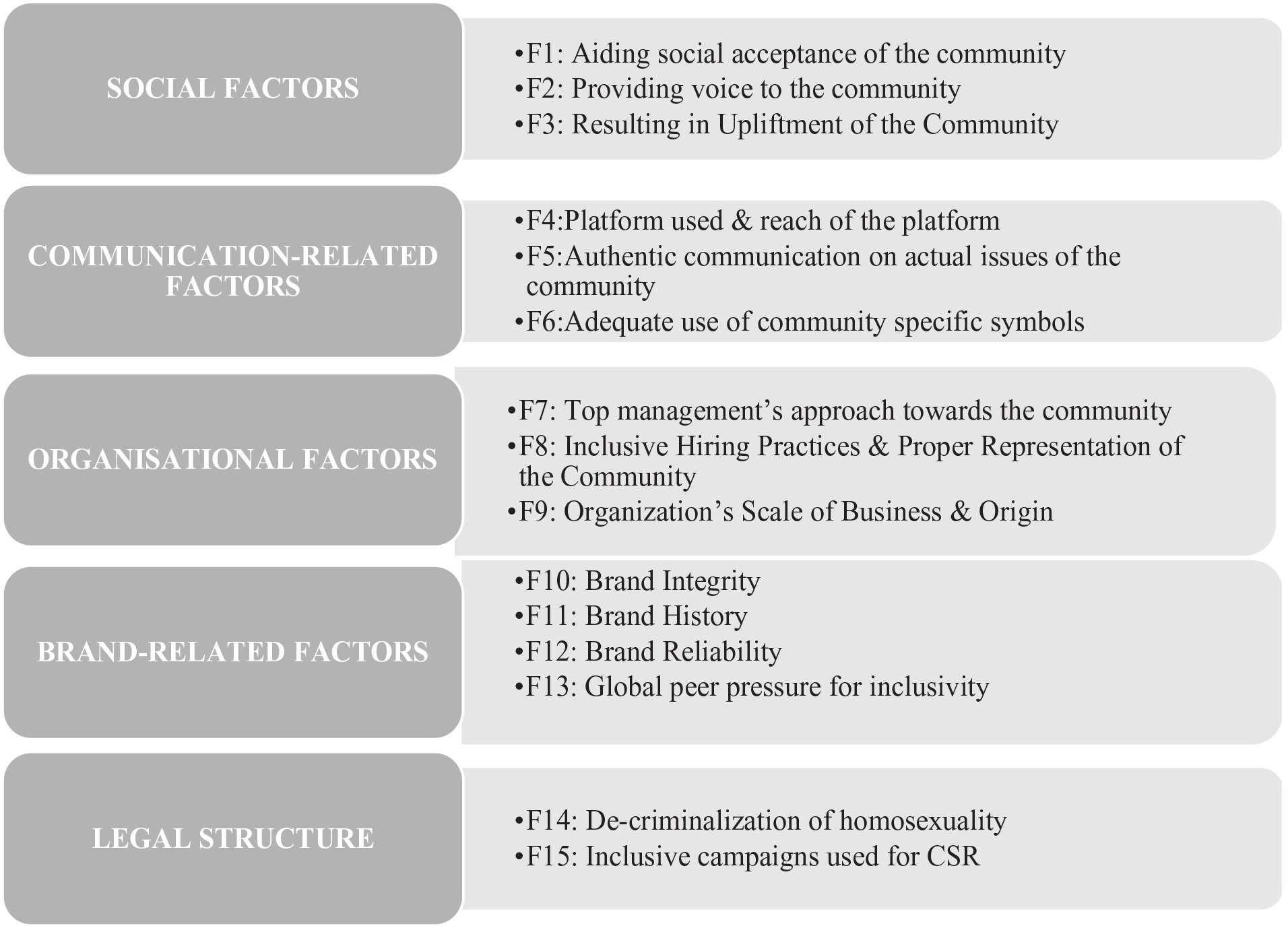
Findings from phase 1.
Phase 2
This phase applies the 15 second-order themes and 5 aggregate dimensions from Phase 1 (see Figure 2) using fuzzy sets (Russo & Confente, 2019; Zadeh, 1996) and the DEMATEL method (Büyüközkan & Ifi, 2012) to identify critical factors for effective inclusive campaigns. DEMATEL, a multi-criteria decision-making method, discerns causal relationships among these sub-factors within the “effective inclusive marketing campaigns” supersystem, analyzing their mutual impacts. It generates a digraph categorizing the 15 subfactors into cause-and-effect groups, highlighting each factor’s impact (Zhou et al., 2011). Focusing on causal factors allows managers to strategically enhance campaigns, acknowledging the interdependencies among these factors and the complexity introduced by the human element in decision-making (Si et al., 2018; S. B. Tsai et al., 2015).
To address the inherent uncertainty in qualitative assessment, particularly when evaluating linguistic preferences, this study employs the Fuzzy Set concept (Berg-Schlosser, 2018; Zadeh, 1996). This approach effectively manages the “fuzzy” nature of qualitative data (Islam et al., 2019) by converting ambiguous linguistic inputs into precise values using Triangular Fuzzy Numbers (TFNs). TFNs provide a swift and accurate means to resolve complex issues, making them a highly suitable tool for intricate decision-making processes (Sadollah, 2018; S. B. Tsai et al., 2015).
Methodological considerations
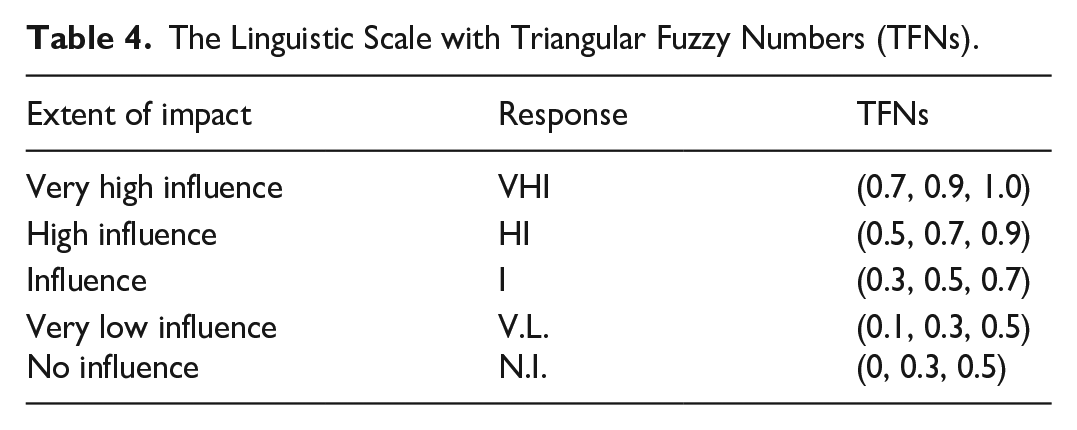
The Fuzzy set converts linguistic responses into fuzzy numbers; thus, a group of individuals’ experiences, ideas, and motivations can be precisely captured and weighed accordingly (Soner, 2021). These membership functions are merely a range of possible outcomes associated with the responses submitted by the experts. For instance, if an expert submits Very High Influence (VHI) as the response, the associations can be as low as 0.7 or 70% to 100% concerning the impact of factor A on factor B. Thus, fuzzification helps capture and quantify the ambiguities in the expert’s responses. Due to the nature and complexity of the problem, a triangular membership function (M.F.) providing faster and simple crisp outputs are selected (Russo & Confente, 2019; Sadollah, 2018). The triangular M.F. is also considered superior to other M.F.s (Zhao & Bose, 2003). Building on the Fuzzy Set Theory approach from Lin (2013a) and Akyuz and Celik (2015), the Fuzzy set, and DEMATEL methods are combined in the following manner to provide a robust solution:
Step 1
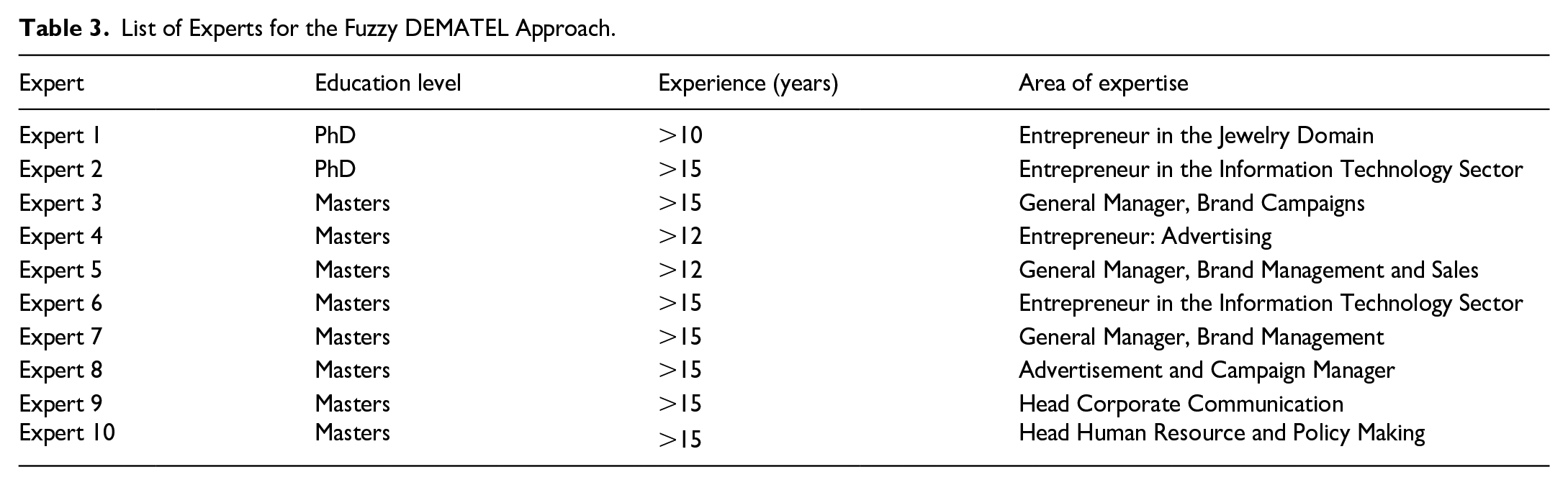
An expert group with relevant experience relating to the problem was selected (refer to Table 3).
List of Experts for the Fuzzy DEMATEL Approach.
Step 2
The factors from Phase 1 of the study were sent to the experts for their intra-factor rating along with the linguistic terms arranged concerning the fuzzy numerical scale (refer to Table 4). Thus, identical fuzzy members were obtained (Berg-Schlosser, 2018; Li, 1999).
The Linguistic Scale with Triangular Fuzzy Numbers (TFNs).
Step 3
The expert group was requested and guided to compare the factors pairwise based on the linguistic values. This allows for the scope of ambiguity between the response options. Fuzzification and de-fuzzification happen in this phase. The expert’s feedback was recorded to assess a favorable solution. A fuzzification process was followed to capture the expert’s opinions as the linguistic inputs by converting these inputs into fuzzy numbers. Then, the de-fuzzification process was systematically followed to gain crisp values from the Fuzzy output sets. This study adopts converting the fuzzy sets into crisp values as proposed by (Opricovic & Tzeng, 2004), using the left and right scores by the fuzzy maximum and minimum; the weighted average determines total weight according to the membership function. Let
Normalization:
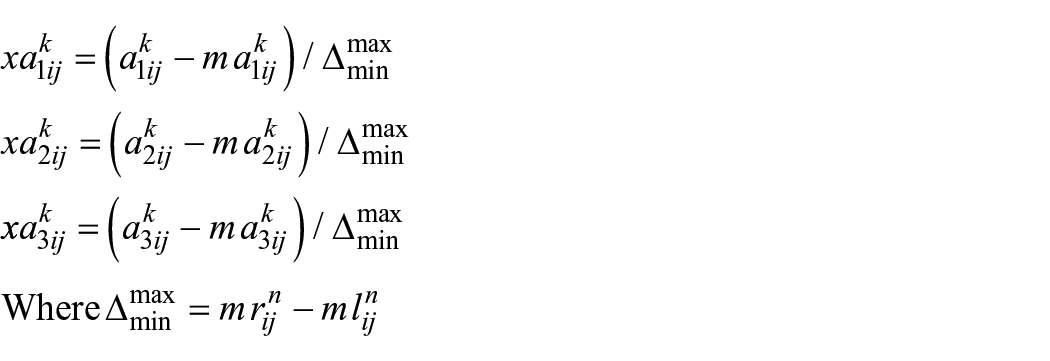
For Computing right (rs) and left (ls) values:

Total Normalized Crisp Values are given by:


Integrated crisp values from different opinions of

Step 4
After obtaining the Integrated Crisp Values, we applied the DEMATEL Method. This structural modeling approach adopts the form of a directed graph. It produces a causal effect diagram capturing the interdependence relationships and the value of significant effect between the factors. This helps segregate the factors into Causal and Effect groups, better explaining a complicated system like this study (Lin, 2013). For evaluating the cause-and-effect factors using DEMATEL, we assumed a system composed of a set of elements
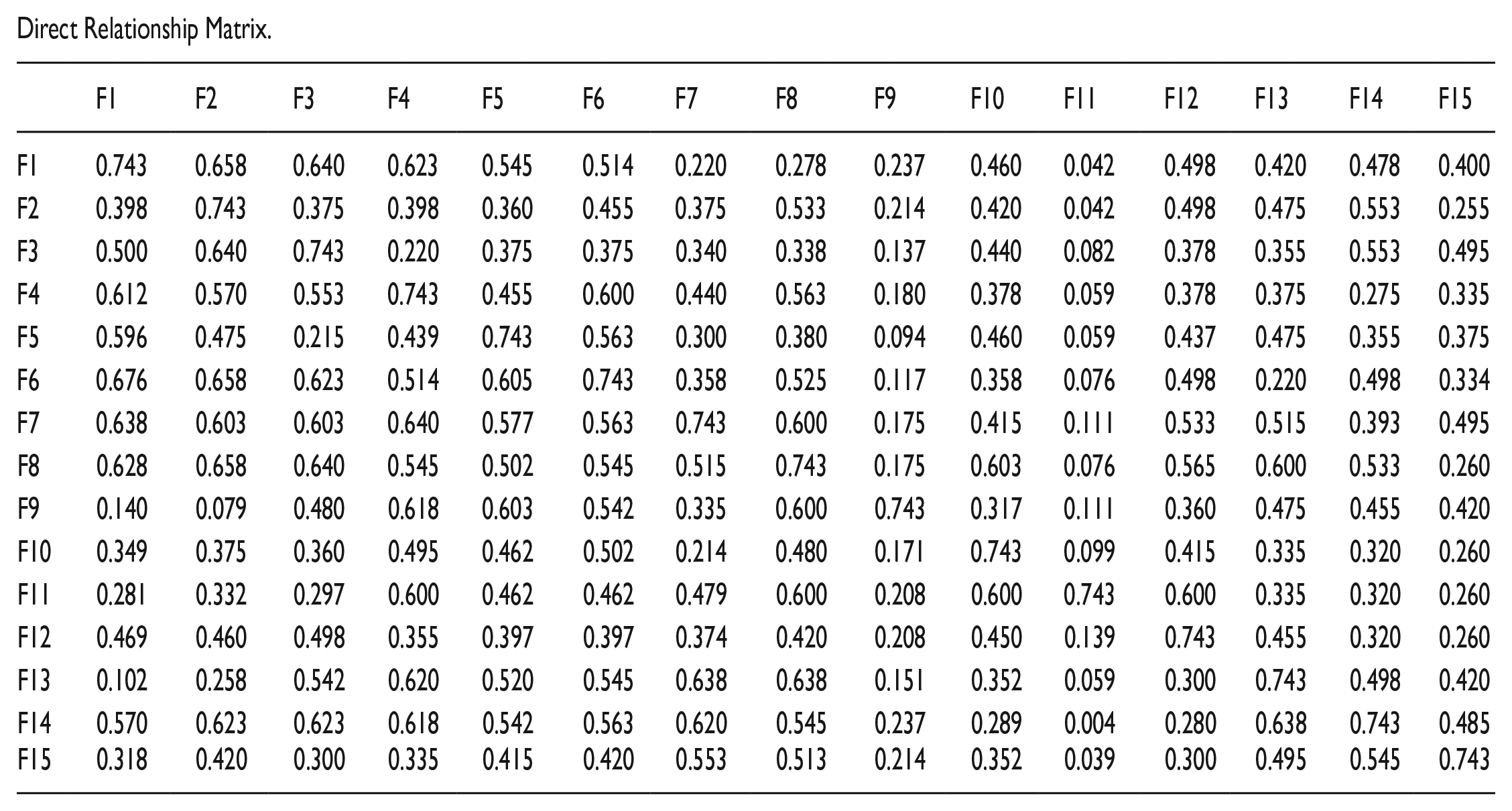
Generating a Direct Relationship Matrix: An initial Direct Relationship Matrix, A is a
Appendix C below shows the Direct Relationship Matrix (Crisp Values)
Step 5
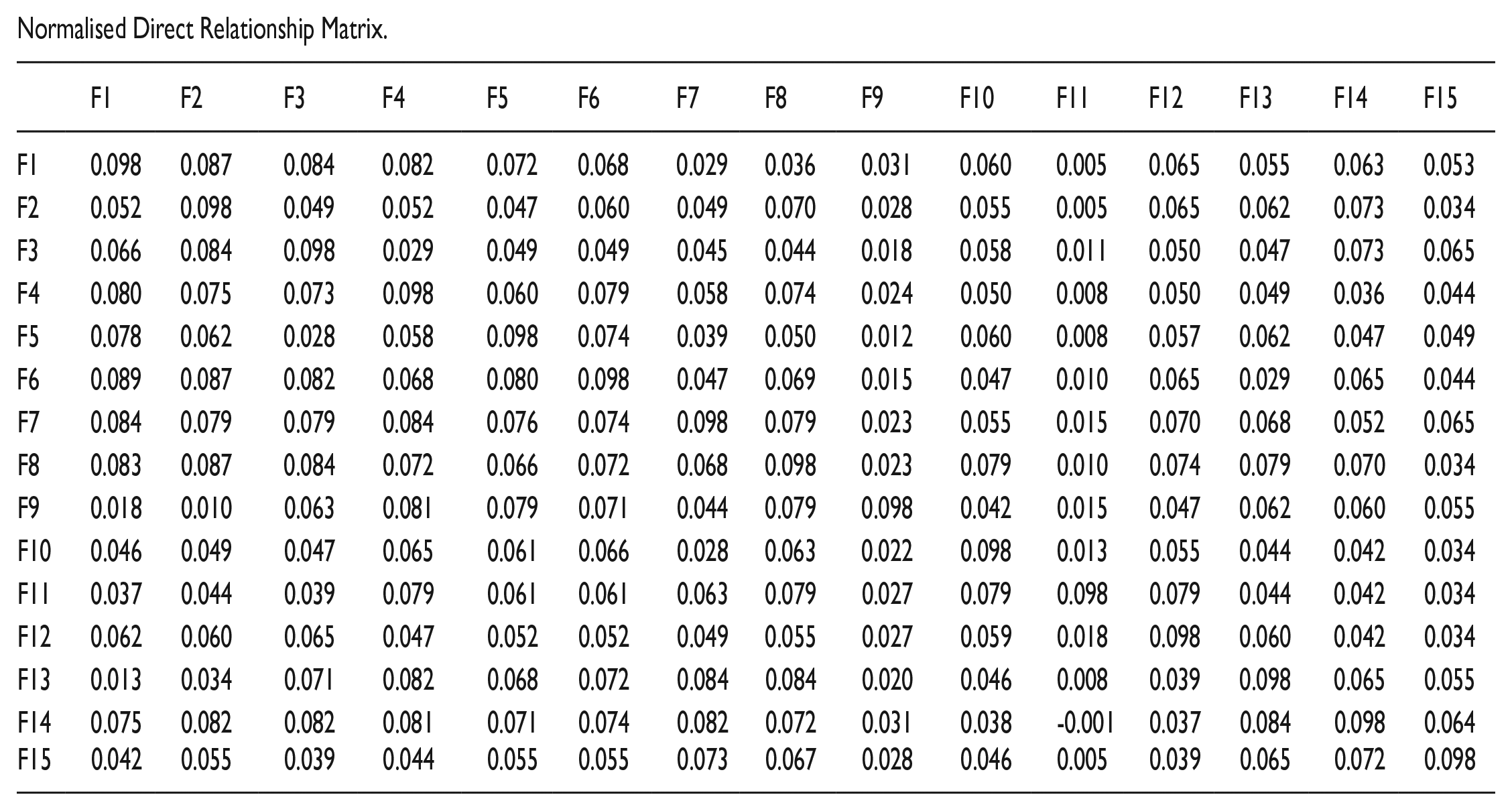
Normalizing the Direct relationship Matrix: For the Direct Relationship Matrix, A above, the Normalized Direct Relationship Matrix, X, can be obtained through:
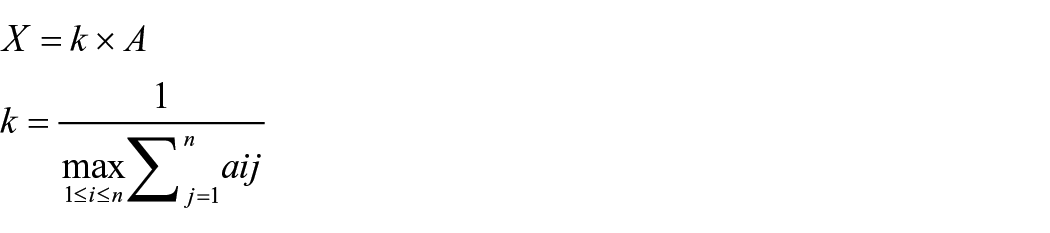
In the case of this study, k= 7.913
The Normalized Direct Relationship Matrix, X is given in Appendix D below.
Step 6
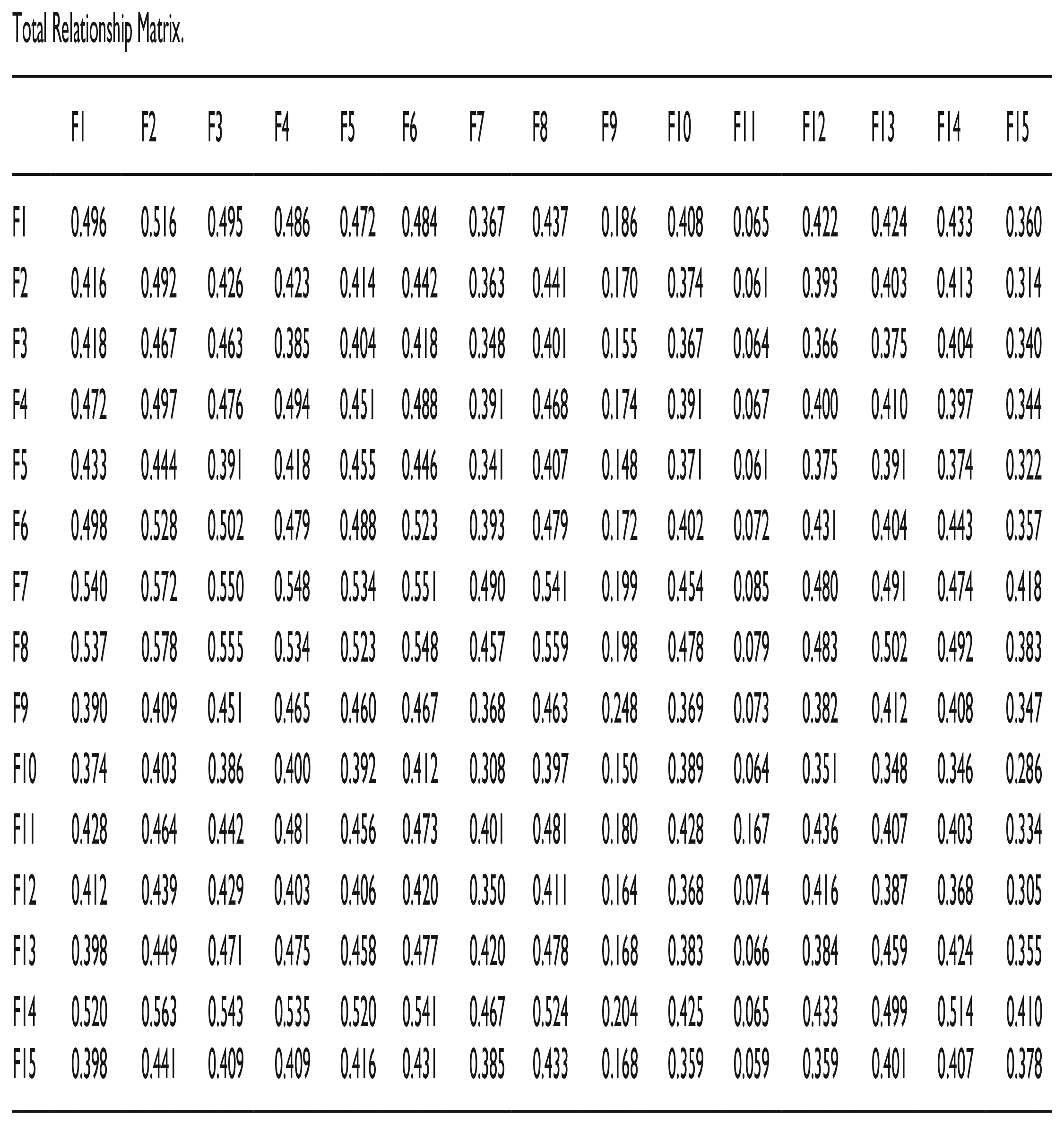
Total Relationship Matrix: After Obtaining the Normalized Direct Relationship Matrix, X above, the Total relationship matrix, T is given by:

Here, I denote an Identity Matrix.
The total Relationship Matrix, T, is given in Appendix E below.
Step 7
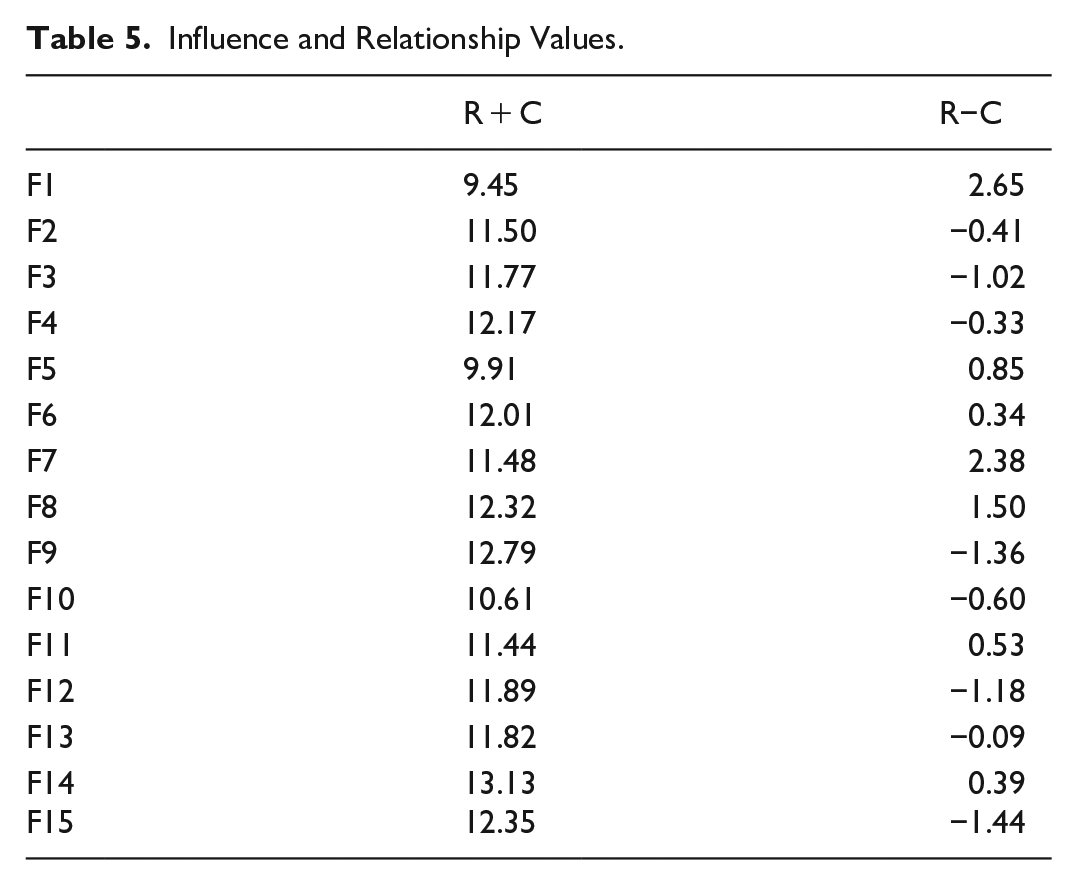
Producing the Influence-Relationship Diagram: The sum of rows and the sum of columns are separately denoted as vectors

This is shown in Table 5 and Figure 3.
Influence and Relationship Values.
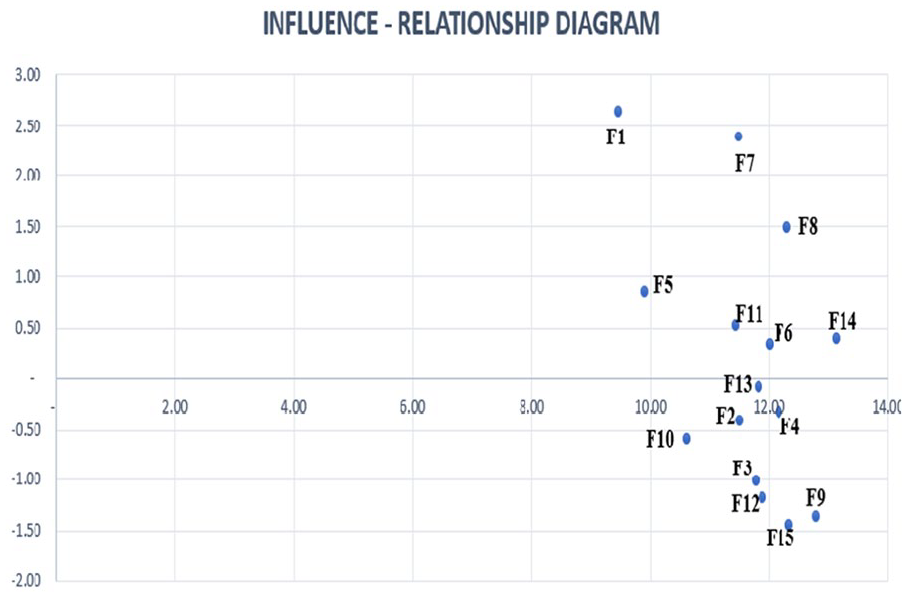
The influence-relationship diagram.
Findings of phase 2
The Fuzzy DEMATEL process revealed the factors F1 (Aiding Social Acceptance of the Community), F5 (Adequate use of Community Specific Symbols), F6 (Authentic Communication about the actual issues faced by the community), F7 (Top Management’s Approach toward the Community), F8 (Inclusive Hiring Practices and Proper representation of the community), F11 (Brand History), and F14 (Legal Structure of the Market) as the causal factors that drive the effectiveness of an inclusive campaign. These factors are representative of the overall Indian market’s opinion as they are generated by the inputs from the LGBTQIA+ and non-LGBTQ customers and cross-rated and classified by the experts who were either brand owners or branding or campaign managers for leading brands in the Indian markets and across the globe.
Discussion
The Fuzzy DEMATEL analysis identifies seven key causal factors crucial for the effective inclusive marketing campaigns. Notably, both consumers and experts ranked “Aiding Social Acceptance of the Community” (F1) as the most critical. This aligns with recent literature emphasizing social inclusion and mainstreaming of LGBTQIA+ communities in marketing (Kipnis et al., 2013; Mashburn & Papalia, 2019; Ulver & Laurell, 2020). Successful campaigns must recognize and respect the cultural identities of marginalized groups, as failure in this regard often leads to campaign ineffectiveness (E. L. Ciszek & Pounders, 2020). Brands enhancing social acceptance improve their image and positively impact consumer self-concept (Licsandru & Cui, 2018). Effective inclusive campaigns, therefore, should focus on mainstreaming LGBTQIA+ identities, raising awareness, and empowering these communities by breaking down systemic barriers (Bone et al., 2014; G. Oakenfull, 2024), thereby elevating the effectiveness of marketing efforts.
The decriminalization of Article 377 in September 2018 has prompted major national brands, such as Amul, Bhima Jewellers, and Titan Raga, to launch LGBTQ-inclusive advertising campaigns. This study identifies F14 (Legal Structure of the Market) as one of the most influential causal factors. It should be understood that the legal structure of the market requires brands to exclude the LGBTQIA+ communities. In addition, marketers tended to mirror the majoritarian slant of marketing campaigns (Spry et al., 2021). The legal structure of the Indian market hindered the change from this status quo despite being socially mandated. Legal and sociocultural factors also influence consumer purchasing behavior (Nölke, 2018). The decriminalization of colonial Article 377 of the Indian Penal Code, paved the way for brands to legally target the LGBTQIA+ consumer segment, which comprises an estimated 2% to 13% of the Indian market (Chaudhary, 2023).
The study reveals that consumer acceptance of inclusive campaigns hinges on evaluating a brand’s policies, especially regarding inclusivity. Factor F8 (Inclusive Hiring Practices and Proper Representation of the Community) highlights the significance of brands genuinely embodying their inclusive messages, as seen in their organizational practices. Both LGBTQIA+ and non-LGBTQ respondents emphasized the importance of brands authentically supporting LGBTQIA+ empowerment within their organizations (Podoshen et al., 2021). Perceived inauthenticity in these efforts risks consumer rejection (Burchiellaro, 2021). Furthermore, Demangeot et al. (2019) and Patel and Feng (2021) suggest that such genuine inclusivity can enhance a brand’s image. This underscores the crucial link between a brand’s internal inclusivity and external marketing communication, indicating that successful inclusive marketing must align with its core values and internal policies.
Regarding the relevance of the campaign’s content, results indicate that an effective inclusive campaign authentically portrays the actual plight of the LGBTQIA+ communities. Thus F6 (Authentic Communication about the actual issues facing the community) emerged as an important factor for an inclusive campaign. The current market is receptive to the harshest realities of the LGBTQ communities. The same customers are critical of stereotypical depictions of the communities, such as a homosexual couple’s excessively feministic behavior (Podoshen et al., 2021). The subtle indications and undertones are evaluated based on the prominent themes in the advertisements and the mission statement for the inclusive marketing campaigns (Bandyopadhyay et al., 2022; Boyd et al., 2020). Customers view even the slightest exaggeration or stereotyping as unnecessary and frequently objectionable (Kipnis et al., 2013), conveying tokenism to acquire a legitimate brand image for the sole purpose of profits (D. M. Martin et al., 2021).
Additionally, the causal factor F5 (Adequate Use of Community-Specific Symbols) stresses that mere “rainbow dressing” will not ensure an inclusive campaign’s success. Instead, customers may be offended by the superfluous use of symbols in inclusive campaigns (Kipnis et al., 2013; W. H. S. Tsai, 2010). Consequently, marketers must walk cautiously when devising inclusive marketing campaigns and using community-specific symbols.
Moreover, consumers evaluate the inclusive efforts of a brand not only based on the media advertisements but also on the statements and attitudes of the brand proprietors (F7: Top Management’s Approach to the Community). Moreover, a discernible bias against LGBTQIA+ CEOs and brand proprietors becomes evident. Any effort undertaken by a brand proprietor from within the LGBTQIA+ community is readily labeled as inclusive. Nevertheless, this bias does not overtly translate into outright discrimination against other brand proprietors. Nonetheless, these non-LGBTQIA+ proprietors are expected to substantiate their impartiality and LGBTQIA+ friendly stance to their clientele (Epps & Demangeot, 2013; Goryunova et al., 2021; Patel & Feng, 2021).
Next, customers evaluate the authenticity of an inclusive marketing campaign based on the brand’s market footprint. Consequently, F11 (Brand History) emerged as one of the most significant success factors in the study. These imprints constitute the brand’s history; any brand perceived as pro-socialist is also perceived to have an authentic, inclusive campaign. The respondents consider the inclusive campaigns of a socially conscious brand more seriously and perceive their authenticity (Um, 2016). Thus, campaigns of influential brands such as Titan Raga are perceived as inclusive. The primary argument presented by non-LGBTQ respondents is that major brands would go the extra mile to increase their market shares by a few decimal points. However, LGBTQIA+ consumers disapproved of the same because of their anti-structural attitude, which questioned the legitimacy of power and dominance even in the market space. According to LGBTQIA+ respondents, the more prominent brands are more likely to engage in inclusive campaigns to cover up their structuralist and conformist past. Thus, the market will only perceive brands’ inclusive campaigns as inclusive if their internal practices, inclusivity reports, or media statements in the past have demonstrated support for inclusion (Chaney et al., 2019).
Other factors on the list were classified as “effect” factors for inclusive marketing campaigns. Although these factors substantially affect inclusive marketing campaigns, they are influenced by the seven causal factors. To illustrate, the effect factor F2 (Providing a Voice to the community) is significantly influenced by the causal factor F8 (Inclusive Hiring Practices and Appropriate representation of the community). These brands’ inclusive policies empower LGBTQIA+ individuals and give them a strong voice. This supports the influence relationship diagram’s findings. Table 6 summarizes the study’s contributions.
Summation of the Findings.
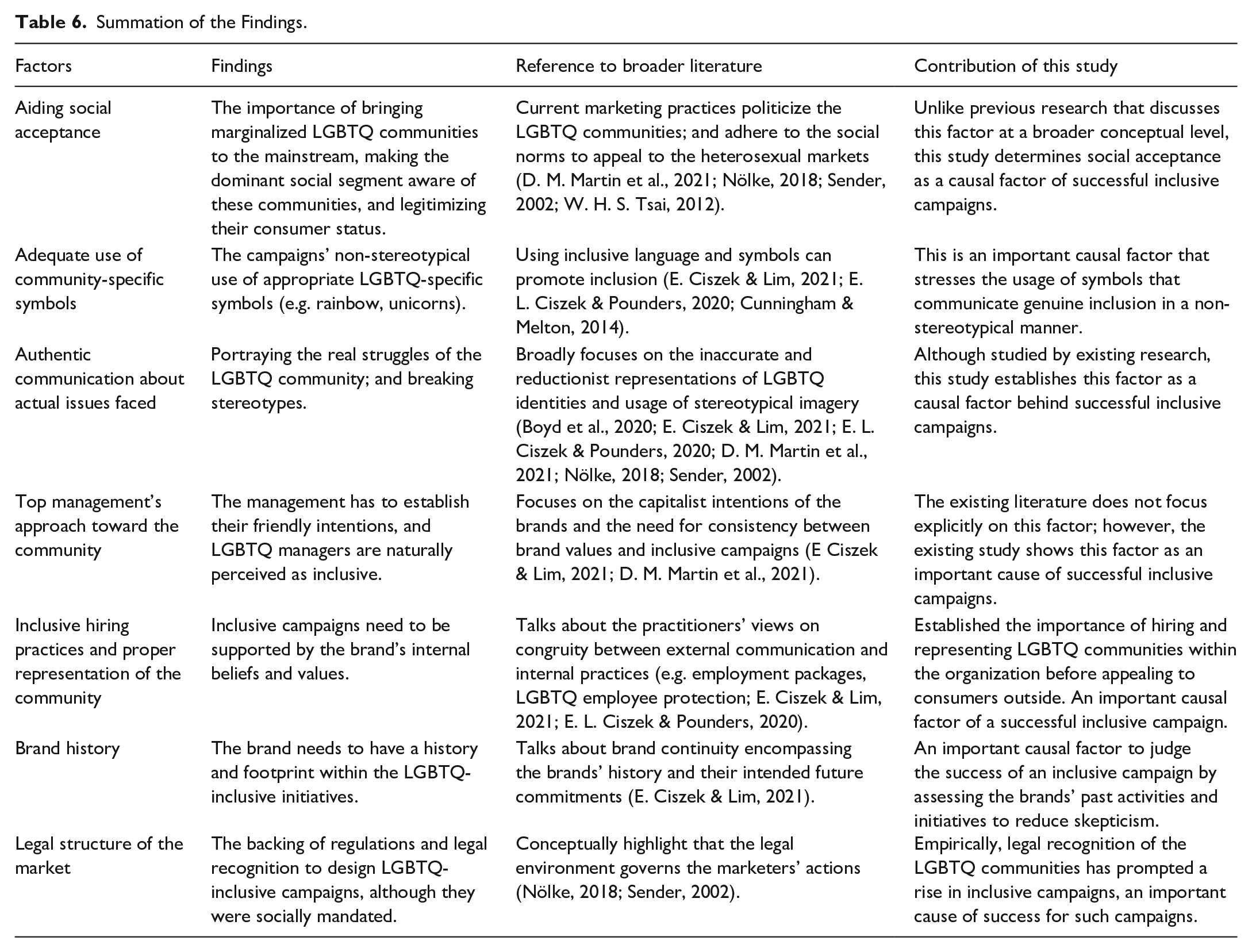
As the table illustrates, these factors have received little attention. While several of these elements have already been mentioned in the literature, some conceptually and some empirically, our study confirms their importance. Our study advances LGBTQ+ marketing research by empirically establishing key factors, like the use of community-specific symbols and top management’s approach, as direct causal determinants of effective campaigns. This significant shift from descriptive to prescriptive analysis in LGBTQ+ marketing literature enhances practical application. Additionally, the dyadic analysis, integrating consumer and practitioners’ perspectives, reveals a deeper understanding of these factors. The focus on authentic representation and inclusive practices reflects an evolution from surface-level inclusion to a more profound engagement with LGBTQ+ identities, aligning with contemporary demands for corporate authenticity and responsibility. This holistic approach, including legal structures, highlights the complex interplay of socio-political factors in diverse and inclusive marketing strategies.
Theoretical implications
This study makes multiple contributions to inclusive marketing and marketing communications domains as discussed below.
Firstly, we contribute to the inclusive marketing literature by identifying the major social, communication-related, organizational, brand-related, and legal factors that play a vital role in the effectiveness of an inclusive marketing campaign. Thus, by combining the factors from the diverse fields of social marketing, brand management, marketing communication, organizational sciences, and legal perspectives of marketing, we aim to provide a holistic framework to evaluate an inclusive campaign and make it effective among consumers. For instance, the study considers factors like “Inclusive Hiring Practices & Proper Representation of the Community” (F8) as important causal factors for an effective inclusive campaign. This factor is a pure human resources and organizational policy design aspect that impacts the overall success of a marketing campaign. Also, the overall policy impact on the Indian market is captured by factor F14 (Decriminalization of Homosexuality) by the landmark judgment of the Honorable Supreme Court of India. This is a critical causal factor in the findings. Thus, extending the previous unidimensional views (Melton & MacCharles, 2021; Podoshen et al., 2021), inclusive marketing must be treated as a strategy taking a holistic view of the organization and the market.
Secondly, the literature on inclusive marketing and marketing communications falls short in assimilating the diverse range of factors and evaluating them to find the critical impacting factors. Hence, the study simultaneously enriches the related literature on inclusive marketing and campaign designing (communications). This study aims to create a clear picture of what makes inclusive campaigns effective. We are doing this by talking to important groups involved: people from marginalized communities, conventional consumers, and those working in the industry. While some of the factors we are looking at have been mentioned before in other studies (as indicated in Table 6), our study is the first to sort them into categories of “causes” and “effects.” This is a big step toward coming up with a theory that makes sense for both customers and industry insiders. The causal influence of the selective factors, as indicated in the study, forms a short guide for the campaign designers to focus on a select few factors rather than diving into a virtual haystack of factors and finding the golden needle. The efforts and resources of the marketeers can be optimized using this study while designing inclusive campaigns for Indian or similar markets.
This study contextualizes the success factors of inclusive campaigns within India’s distinct sociopolitical and sociocultural milieu, addressing a gap in Asian-centric LGBTQ+ inclusion research (Um, 2016). While building on Western research (Ginder & Byun, 2015), it uniquely identifies factors relevant to the Indian scenario, such as legal structure and top management’s approach. Although the findings offer preliminary insights applicable to regions like Singapore or Barbados, which have recently experienced legal advancements for LGBTQIA+ communities, their applicability must be cautiously considered. The insights are deeply rooted in the specificities of India’s socio-cultural context, underscoring the need for a nuanced understanding of diverse national landscapes in applying these findings.
Moreover, our research contributes to a growing corpus of literature that investigates the intersection of marketing and social change, demonstrating how marketing campaigns can shape societal attitudes and promote inclusiveness (Kotler et al., 2019). Despite the fact that some countries may have a greater acceptance of LGBTQIA+ communities than others, it is essential to recognize that acceptance is not uniform across all social strata within these countries. Our research highlights the importance of adapting inclusive marketing strategies to the cultural and societal nuances at play.
Laslty, this study employs a mixed-method approach, combining in-depth consumer interviews and the fuzzy DEMATEL method to understand inclusive marketing campaigns. This dual approach aligns with Sheth’s (2021) recommendation of integrating fuzzy logic into marketing analytics. It offers a comprehensive view by capturing both consumer perceptions and practitioner insights, effectively bridging the theoretical and practical aspects of inclusive marketing and communication.
Practical implications
In our research, we have identified key factors for inclusive marketing campaigns, offering invaluable insights for marketing managers. First and foremost, integrating these critical factors empowers marketers to craft and execute campaigns that resonate with a diverse array of consumer groups and contribute significantly to the broader societal objective of inclusivity. A particularly salient aspect of our findings is the pivotal role of fostering societal acceptance to ensure the effectiveness of inclusive marketing initiatives. Marketers are encouraged to go beyond the immediate goals of their campaigns and work toward elevating the societal perceptions of marginalized populations. This can be effectively accomplished through the utilization of compelling narratives, educational content, and the influence of prominent figures who champion inclusivity and acceptance. Additionally, our research underscores the importance of employing community-specific symbols with careful consideration and sensitivity. It serves as a critical reminder to marketers about the necessity of conducting thorough cultural research to craft truly inclusive campaigns and resonate deeply with their intended audiences.
Secondly, our study provides a strategic roadmap for campaign managers aiming to design and implement effective LGBTQ-inclusive campaigns, particularly in nuanced markets such as India. While not claiming to be a universal solution, the study sheds light on essential focus areas for brands embarking on their inclusivity journey. For instance, the DEMATEL process, highlighted in our research, offers a method for isolating influential factors based on a defined threshold value derived from the Total Relationship Matrix. This approach, detailed in Appendix E and illustrated in Figure 4, showcases the most impactful criteria based on their influence scores. Marketers can precisely target each causal factor by categorizing these factors into cause-and-effect groups, thereby fine-tuning the consequent effects. This structured methodology streamlines the campaign design process and enhances the potential for effective and resonant LGBTQ-inclusive marketing strategies in culturally diverse markets.
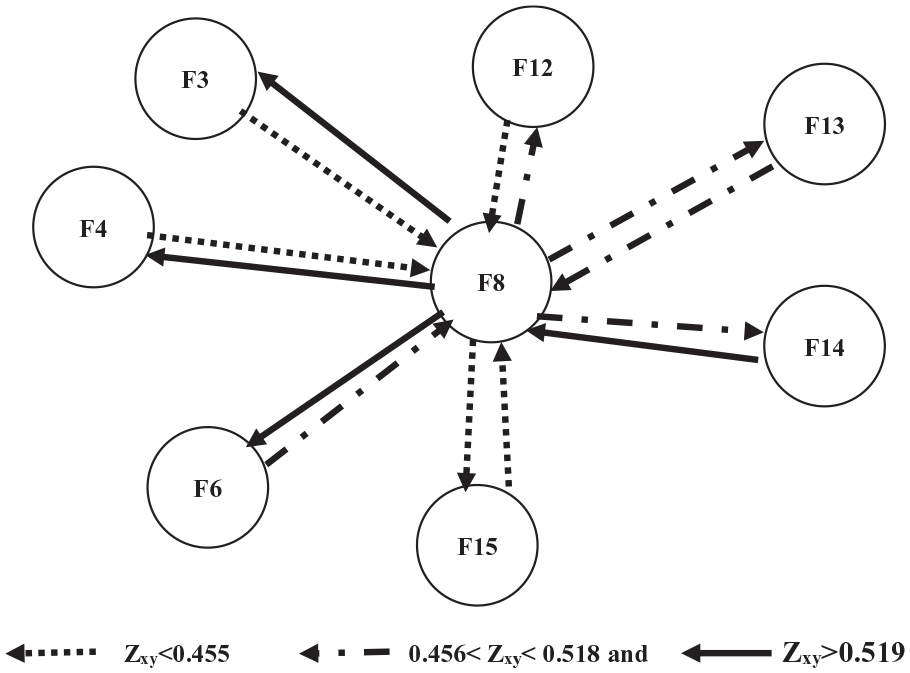
Interplay among the critical factors.
For instance, from Figure 4, the “Decriminalisation of Homosexuality” in India (F14) is the major causal factor for the well-adopted and well-intended “Inclusive Hiring Practices & Proper Representation of the Community” (F8). This authentic, inclusive intent shown by the organizations is also reflected in their inclusive campaigns, and it helps them actually reflect and represent the genuine issues faced by the LGBTQ+ communities (F6). F8 is also an important causal factor contributing to the Resulting in Upliftment of the Community (F3).
The study, thus, aims at optimizing the efforts of marketeers and channeling the organizational resources on improving the most pertinent factors while catering to the Indian market or similar marketspaces across the globe. The positive financial impacts of such optimization are huge. Future studies may cater and delve deeper into the optimization of organizational resources and resultant financial benefits for the organizations.
Limitations, future research, and conclusion
This study provides a comprehensive analysis of inclusive marketing campaigns in India, examining perspectives from LGBTQIA+ individuals, non-LGBTQ consumers, and practitioners. It identifies seven critical factors for effective LGBTQ-inclusive campaigns, offering insights into the nuances and causal elements of inclusivity in marketing. While highlighting these factors, the study acknowledges limitations and suggests future research directions. Its exploratory nature, with a small sample size, invites further investigation using larger, possibly experimental or survey-based methods. Additionally, the study focuses on campaign success without assessing brand impact, an area ripe for future exploration. It also does not differentiate between LGBTQIA+ and non-LGBTQ respondents, presenting an opportunity to compare these groups’ perspectives. Lastly, conducted in the Indian context, the study’s applicability to other cultural settings, such as countries with recent legal changes or persistent social stigma, merits additional research for broader validation.
Footnotes
Appendix A
Demography of the Respondents in Phase 1.
| Respondents’ ID | Identity | Age (years) |
|---|---|---|
| R1 | Bisexual female | 28 |
| R2 | Bisexual female | 27 |
| R3 | Transwoman | 26 |
| R4 | Gay male | 22 |
| R5 | Bisexual female | 20 |
| R6 | Gay male | 21 |
| R7 | Bisexual female | 21 |
| R8 | Transwoman | 28 |
| R9 | Bisexual male | 28 |
| R10 | Lesbian | 29 |
| R11 | Bisexual female | 28 |
| R12 | Transwoman | 27 |
| R13 | Gay male | 27 |
| R14 | Lesbian | 26 |
| R15 | Heterosexual male | 35 |
| R16 | Heterosexual male | 28 |
| R17 | Heterosexual female | 24 |
| R18 | Heterosexual male | 25 |
| R19 | Heterosexual male | 29 |
| R20 | Heterosexual female | 26 |
| R21 | Heterosexual female | 24 |
| R22 | Heterosexual female | 31 |
| R23 | Heterosexual male | 35 |
| R24 | Heterosexual male | 31 |
| R25 | Heterosexual male | 28 |
| R26 | Heterosexual female | 27 |
| R27 | Heterosexual male | 22 |
| R28 | Heterosexual male | 20 |
| R29 | Heterosexual male | 28 |
Appendix B
Appendix C
Direct Relationship Matrix.
| F1 | F2 | F3 | F4 | F5 | F6 | F7 | F8 | F9 | F10 | F11 | F12 | F13 | F14 | F15 | |
|---|---|---|---|---|---|---|---|---|---|---|---|---|---|---|---|
| F1 | 0.743 | 0.658 | 0.640 | 0.623 | 0.545 | 0.514 | 0.220 | 0.278 | 0.237 | 0.460 | 0.042 | 0.498 | 0.420 | 0.478 | 0.400 |
| F2 | 0.398 | 0.743 | 0.375 | 0.398 | 0.360 | 0.455 | 0.375 | 0.533 | 0.214 | 0.420 | 0.042 | 0.498 | 0.475 | 0.553 | 0.255 |
| F3 | 0.500 | 0.640 | 0.743 | 0.220 | 0.375 | 0.375 | 0.340 | 0.338 | 0.137 | 0.440 | 0.082 | 0.378 | 0.355 | 0.553 | 0.495 |
| F4 | 0.612 | 0.570 | 0.553 | 0.743 | 0.455 | 0.600 | 0.440 | 0.563 | 0.180 | 0.378 | 0.059 | 0.378 | 0.375 | 0.275 | 0.335 |
| F5 | 0.596 | 0.475 | 0.215 | 0.439 | 0.743 | 0.563 | 0.300 | 0.380 | 0.094 | 0.460 | 0.059 | 0.437 | 0.475 | 0.355 | 0.375 |
| F6 | 0.676 | 0.658 | 0.623 | 0.514 | 0.605 | 0.743 | 0.358 | 0.525 | 0.117 | 0.358 | 0.076 | 0.498 | 0.220 | 0.498 | 0.334 |
| F7 | 0.638 | 0.603 | 0.603 | 0.640 | 0.577 | 0.563 | 0.743 | 0.600 | 0.175 | 0.415 | 0.111 | 0.533 | 0.515 | 0.393 | 0.495 |
| F8 | 0.628 | 0.658 | 0.640 | 0.545 | 0.502 | 0.545 | 0.515 | 0.743 | 0.175 | 0.603 | 0.076 | 0.565 | 0.600 | 0.533 | 0.260 |
| F9 | 0.140 | 0.079 | 0.480 | 0.618 | 0.603 | 0.542 | 0.335 | 0.600 | 0.743 | 0.317 | 0.111 | 0.360 | 0.475 | 0.455 | 0.420 |
| F10 | 0.349 | 0.375 | 0.360 | 0.495 | 0.462 | 0.502 | 0.214 | 0.480 | 0.171 | 0.743 | 0.099 | 0.415 | 0.335 | 0.320 | 0.260 |
| F11 | 0.281 | 0.332 | 0.297 | 0.600 | 0.462 | 0.462 | 0.479 | 0.600 | 0.208 | 0.600 | 0.743 | 0.600 | 0.335 | 0.320 | 0.260 |
| F12 | 0.469 | 0.460 | 0.498 | 0.355 | 0.397 | 0.397 | 0.374 | 0.420 | 0.208 | 0.450 | 0.139 | 0.743 | 0.455 | 0.320 | 0.260 |
| F13 | 0.102 | 0.258 | 0.542 | 0.620 | 0.520 | 0.545 | 0.638 | 0.638 | 0.151 | 0.352 | 0.059 | 0.300 | 0.743 | 0.498 | 0.420 |
| F14 | 0.570 | 0.623 | 0.623 | 0.618 | 0.542 | 0.563 | 0.620 | 0.545 | 0.237 | 0.289 | 0.004 | 0.280 | 0.638 | 0.743 | 0.485 |
| F15 | 0.318 | 0.420 | 0.300 | 0.335 | 0.415 | 0.420 | 0.553 | 0.513 | 0.214 | 0.352 | 0.039 | 0.300 | 0.495 | 0.545 | 0.743 |
Appendix D
Normalised Direct Relationship Matrix.
| F1 | F2 | F3 | F4 | F5 | F6 | F7 | F8 | F9 | F10 | F11 | F12 | F13 | F14 | F15 | |
|---|---|---|---|---|---|---|---|---|---|---|---|---|---|---|---|
| F1 | 0.098 | 0.087 | 0.084 | 0.082 | 0.072 | 0.068 | 0.029 | 0.036 | 0.031 | 0.060 | 0.005 | 0.065 | 0.055 | 0.063 | 0.053 |
| F2 | 0.052 | 0.098 | 0.049 | 0.052 | 0.047 | 0.060 | 0.049 | 0.070 | 0.028 | 0.055 | 0.005 | 0.065 | 0.062 | 0.073 | 0.034 |
| F3 | 0.066 | 0.084 | 0.098 | 0.029 | 0.049 | 0.049 | 0.045 | 0.044 | 0.018 | 0.058 | 0.011 | 0.050 | 0.047 | 0.073 | 0.065 |
| F4 | 0.080 | 0.075 | 0.073 | 0.098 | 0.060 | 0.079 | 0.058 | 0.074 | 0.024 | 0.050 | 0.008 | 0.050 | 0.049 | 0.036 | 0.044 |
| F5 | 0.078 | 0.062 | 0.028 | 0.058 | 0.098 | 0.074 | 0.039 | 0.050 | 0.012 | 0.060 | 0.008 | 0.057 | 0.062 | 0.047 | 0.049 |
| F6 | 0.089 | 0.087 | 0.082 | 0.068 | 0.080 | 0.098 | 0.047 | 0.069 | 0.015 | 0.047 | 0.010 | 0.065 | 0.029 | 0.065 | 0.044 |
| F7 | 0.084 | 0.079 | 0.079 | 0.084 | 0.076 | 0.074 | 0.098 | 0.079 | 0.023 | 0.055 | 0.015 | 0.070 | 0.068 | 0.052 | 0.065 |
| F8 | 0.083 | 0.087 | 0.084 | 0.072 | 0.066 | 0.072 | 0.068 | 0.098 | 0.023 | 0.079 | 0.010 | 0.074 | 0.079 | 0.070 | 0.034 |
| F9 | 0.018 | 0.010 | 0.063 | 0.081 | 0.079 | 0.071 | 0.044 | 0.079 | 0.098 | 0.042 | 0.015 | 0.047 | 0.062 | 0.060 | 0.055 |
| F10 | 0.046 | 0.049 | 0.047 | 0.065 | 0.061 | 0.066 | 0.028 | 0.063 | 0.022 | 0.098 | 0.013 | 0.055 | 0.044 | 0.042 | 0.034 |
| F11 | 0.037 | 0.044 | 0.039 | 0.079 | 0.061 | 0.061 | 0.063 | 0.079 | 0.027 | 0.079 | 0.098 | 0.079 | 0.044 | 0.042 | 0.034 |
| F12 | 0.062 | 0.060 | 0.065 | 0.047 | 0.052 | 0.052 | 0.049 | 0.055 | 0.027 | 0.059 | 0.018 | 0.098 | 0.060 | 0.042 | 0.034 |
| F13 | 0.013 | 0.034 | 0.071 | 0.082 | 0.068 | 0.072 | 0.084 | 0.084 | 0.020 | 0.046 | 0.008 | 0.039 | 0.098 | 0.065 | 0.055 |
| F14 | 0.075 | 0.082 | 0.082 | 0.081 | 0.071 | 0.074 | 0.082 | 0.072 | 0.031 | 0.038 | -0.001 | 0.037 | 0.084 | 0.098 | 0.064 |
| F15 | 0.042 | 0.055 | 0.039 | 0.044 | 0.055 | 0.055 | 0.073 | 0.067 | 0.028 | 0.046 | 0.005 | 0.039 | 0.065 | 0.072 | 0.098 |
Appendix E
Total Relationship Matrix.
| F1 | F2 | F3 | F4 | F5 | F6 | F7 | F8 | F9 | F10 | F11 | F12 | F13 | F14 | F15 | |
|---|---|---|---|---|---|---|---|---|---|---|---|---|---|---|---|
| F1 | 0.496 | 0.516 | 0.495 | 0.486 | 0.472 | 0.484 | 0.367 | 0.437 | 0.186 | 0.408 | 0.065 | 0.422 | 0.424 | 0.433 | 0.360 |
| F2 | 0.416 | 0.492 | 0.426 | 0.423 | 0.414 | 0.442 | 0.363 | 0.441 | 0.170 | 0.374 | 0.061 | 0.393 | 0.403 | 0.413 | 0.314 |
| F3 | 0.418 | 0.467 | 0.463 | 0.385 | 0.404 | 0.418 | 0.348 | 0.401 | 0.155 | 0.367 | 0.064 | 0.366 | 0.375 | 0.404 | 0.340 |
| F4 | 0.472 | 0.497 | 0.476 | 0.494 | 0.451 | 0.488 | 0.391 | 0.468 | 0.174 | 0.391 | 0.067 | 0.400 | 0.410 | 0.397 | 0.344 |
| F5 | 0.433 | 0.444 | 0.391 | 0.418 | 0.455 | 0.446 | 0.341 | 0.407 | 0.148 | 0.371 | 0.061 | 0.375 | 0.391 | 0.374 | 0.322 |
| F6 | 0.498 | 0.528 | 0.502 | 0.479 | 0.488 | 0.523 | 0.393 | 0.479 | 0.172 | 0.402 | 0.072 | 0.431 | 0.404 | 0.443 | 0.357 |
| F7 | 0.540 | 0.572 | 0.550 | 0.548 | 0.534 | 0.551 | 0.490 | 0.541 | 0.199 | 0.454 | 0.085 | 0.480 | 0.491 | 0.474 | 0.418 |
| F8 | 0.537 | 0.578 | 0.555 | 0.534 | 0.523 | 0.548 | 0.457 | 0.559 | 0.198 | 0.478 | 0.079 | 0.483 | 0.502 | 0.492 | 0.383 |
| F9 | 0.390 | 0.409 | 0.451 | 0.465 | 0.460 | 0.467 | 0.368 | 0.463 | 0.248 | 0.369 | 0.073 | 0.382 | 0.412 | 0.408 | 0.347 |
| F10 | 0.374 | 0.403 | 0.386 | 0.400 | 0.392 | 0.412 | 0.308 | 0.397 | 0.150 | 0.389 | 0.064 | 0.351 | 0.348 | 0.346 | 0.286 |
| F11 | 0.428 | 0.464 | 0.442 | 0.481 | 0.456 | 0.473 | 0.401 | 0.481 | 0.180 | 0.428 | 0.167 | 0.436 | 0.407 | 0.403 | 0.334 |
| F12 | 0.412 | 0.439 | 0.429 | 0.403 | 0.406 | 0.420 | 0.350 | 0.411 | 0.164 | 0.368 | 0.074 | 0.416 | 0.387 | 0.368 | 0.305 |
| F13 | 0.398 | 0.449 | 0.471 | 0.475 | 0.458 | 0.477 | 0.420 | 0.478 | 0.168 | 0.383 | 0.066 | 0.384 | 0.459 | 0.424 | 0.355 |
| F14 | 0.520 | 0.563 | 0.543 | 0.535 | 0.520 | 0.541 | 0.467 | 0.524 | 0.204 | 0.425 | 0.065 | 0.433 | 0.499 | 0.514 | 0.410 |
| F15 | 0.398 | 0.441 | 0.409 | 0.409 | 0.416 | 0.431 | 0.385 | 0.433 | 0.168 | 0.359 | 0.059 | 0.359 | 0.401 | 0.407 | 0.378 |
Acknowledgements
The authors would like to thank Prof. Madhushree Nanda Aggarwal for her constant support and guidance throughout the work.
Declaration of conflicting interests
The author(s) declared no potential conflicts of interest with respect to the research, authorship, and/or publication of this article.
Funding
The author(s) received no financial support for the research, authorship, and/or publication of this article.
