







Abstract
Supermarkets are among the most frequently visited retail environments, yet they are commonly understood as transactional spaces defined by price, convenience, and efficiency. This study examines how routine shopping practices can, over time, generate meaningful consumer-place relationships. Drawing on affordance theory and place attachment literature, we conceptualise supermarkets as accumulated storescapes: environments in which significance develops through familiarity, habit, and repeated engagement rather than isolated encounters or curated experiences. Using mobile ethnography with shoppers in Australia and the United Kingdom, the study traces how ongoing interaction with store environments gives rise to two distinct relational outcomes. Place affinity reflects instrumental reliance and alignment with personal identity without emotional attachment, while place attachment involves emotional investment, a sense of ownership, and resistance to change. The findings demonstrate that even ordinary retail settings can create enduring forms of attachment, not through spectacle or premium branding, but through stable routines, predictable layouts, and everyday use. By emphasising temporality as a central process rather than background context, this research extends servicescape and retail attachment theory and clarifies how place meanings accumulate through practice. It also offers practical insight for managers seeking to cultivate resilient customer relationships that extend beyond price competition or convenience alone.
Introduction
Supermarkets are among the most frequently visited commercial spaces, yet they remain theoretically marginal in research on place, meaning, and attachment. At the same time, grocery shopping is recognised as an activity connected to identity, beliefs, and a sense of community (Elms et al., 2016), while supermarket settings are still predominantly framed as functional, transaction-oriented spaces rather than as places that can nurture emotional, symbolic, or identity-based bonds (Johnson et al., 2015; Johnstone & Conroy, 2008; Shaw & Sullivan, 2013). This creates a paradox: retail spaces that anchor everyday habits and social practices are treated analytically as practical environments, whereas place attachment is assumed to arise primarily in curated, distinctive, or experientially rich contexts (Seamon, 2020). While there is substantial work on servicescapes and retail experience, the temporal development of the sense of place through regular, repeated engagement in grocery stores remains weakly theorised.
Servicescape literature has demonstrated that store environments influence consumer perceptions and behaviours (Bitner, 1992; Essardi et al., 2022; Slack et al., 2020). Even studies acknowledging the experiential influence of servicescapes (Pecoraro et al., 2021) rarely explain how ongoing interactions generate familiarity or belonging over time. Much of this literature assumes that snapshot evaluations sufficiently capture environmental impact, overlooking the longer-term processes through which meaning gradually accumulates through repeated engagement. Research rightly recognises the physical, social, and symbolic dimensions (Rosenbaum & Massiah, 2011), yet the field remains focused on customers’ immediate responses to discrete encounters (Turley & Milliman, 2000).
Rosenbaum and Massiah (2011) highlight that servicescape stimuli can generate person–place attachments, yet the temporal development of these attachments, particularly in ordinary, frequently visited environments, remains comparatively under-explored. In supermarket contexts, where shopping is embedded in household rhythms and personal histories, understanding how familiarity and emotional significance emerge through routine, predictable encounters is needed. From this perspective, it is easier to explain why some stores are experienced as personally valued over time while others remain purely functional.
This study addresses this gap by examining how frequent, predictable interactions within supermarket environments give rise to distinct forms of place-based relationships. Drawing on affordance theory (J. Gibson, 2014; J. J. Gibson, 2014) and place attachment literature (Proshansky, 1978; Scannell & Gifford, 2010), we explore how ongoing interactions cultivate a sense of place that extends beyond utilitarian value.
Utilising an ethnographic approach (Low, 2016), we gathered qualitative participant-generated data across the United Kingdom (UK) and Australia to examine how supermarket shoppers form attachments through everyday shopping practices. Since these processes develop slowly through repeated actions and experience, they are hard to observe with methods that rely on recalling events or only involve one visit. This makes ethnography particularly well suited to capturing how place-based meanings take shape in situ over time.
We conceptualise these environments as accumulated storescapes: the lived, cumulative experience of the servicescape, fashioned through daily habits, memories, and expectations rather than isolated encounters. This framing shifts attention from momentary evaluations of store design to the ways retail environments are gradually reconfigured through use. Some connections remain lighter and more flexible, reflecting functional affinity, while deeper bonds show greater resilience and form attachment without reliance on spectacle or premium branding. Distinguishing this affinity from attachment matters: affinity relationships are switchable in response to price/range movements, whereas attachment shows stronger resistance to competitive moves. Against this backdrop, we ask: how do routine, repeated interactions within supermarket environments give rise to differentiated forms of place‑based relationships, and under what conditions do these evolve from functional affinity into emotional attachment?
Background
Servicescape literature provides a well-developed account of how the physical, social, and symbolic elements of service environments influence customers’ emotional, cognitive, and behavioural responses (Bitner, 1992; Rosenbaum & Massiah, 2011). Research has largely focused on design elements such as layout, lighting, and ambience (Nair et al., 2022), while more recent studies have explored sensory co-creation (Espitia et al., 2025). Together, this literature establishes that service environments are not neutral backdrops but actively influence how customers interpret and engage with service encounters. However, it has tended to prioritise discrete, momentary experiences of space, often examining customer responses within specific service encounters or single visits (Kandampully et al., 2023). Although the social and symbolic dimensions are acknowledged, less attention has been paid to how practices and attachments emerge gradually through repeated engagement with the same environment. As a result, existing interpretations struggle to explain the mechanisms through which familiarity and emotional meaning emerge through frequent encounters.
Humanistic and phenomenological views hold that places gain importance through repeated daily experiences, memories, and expectations rather than isolated events (Seamon, 2020; Tuan, 1977). Scholars have similarly distinguished between “fast” and “slow” processes of place-making, arguing that while some interpretations emerge immediately, deeper attachments develop through prolonged and repeated interaction (Borghini et al., 2021; Raymond et al., 2017). In locations such as supermarkets, these slow processes are particularly important, as shopping is sustained through ordinary, recurring practices.
Bitner’s (1992) research on servicescapes laid the groundwork for the concept of storescape, and subsequent retail research adapted this framework to shopping contexts, using the term to highlight how layout, atmospherics, merchandising, and employee interactions are deliberately configured to influence shoppers’ perceptions and actions (Gorji et al., 2021; Rosenbaum & Massiah, 2011; Turley & Milliman, 2000). Rather than redefining the storescape, this study shifts attention to its temporal dynamics, emphasising how shoppers learn to navigate the space efficiently, develop expectations about product placement and availability, and form emotional associations with past experiences. Through repetition, the retail environment becomes layered with personal and social resonance, transforming from a functional setting into a meaningful place. This extends existing research by addressing its limited attention to how deeper attachments and place-based understandings develop through sustained engagement.
This perspective illustrates how even ordinary retail spaces can become integrated into consumers’ sense of self. We propose that recurring shopping habits enable customers to integrate supermarkets into their everyday lives, customs, and self-concepts. Over time, familiar layouts and predictable shopping patterns reduce cognitive effort and create a sense of ease and belonging, while moments of novelty or disruption contribute to memory formation and anticipation. In this way, attachment is not produced by atmosphere alone, but by the ongoing alignment between environmental affordances and shoppers’ evolving practices and expectations.
Affordance theory has been used in marketing and service research to understand how environments influence consumer behaviour, particularly regarding service quality, customer experience, and loyalty (Kandampully et al., 2023; Li et al., 2023). While previous studies generally focus on single service encounters, this study applies affordance theory to everyday retail settings, showing how repeated interactions build consumer-store relationships (Borghini et al., 2021). We then integrate affordance theory, place attachment, and accumulated storescape perspectives. As we outline in the following sections, adopting this approach enables us to examine how a store’s design, sensory elements, and social dynamics shape the consumer experience. We argue that retail environments are not merely sites of transactions. By positioning supermarkets as accumulated storescapes, our study extends servicescape research by explicitly theorising how repetition and temporal layering contribute to the development of place attachment. This perspective clarifies how everyday shopping environments become personally valued through sustained engagement, providing a foundation for understanding long-term customer-store relationships beyond momentary satisfaction or utility.
Conceptual Framework
This paper employs an integrated theoretical framework to explore how people form and maintain attachments to retail environments, especially grocery stores. Emerging from storescape research, it considers the practical interactions customers have with the physical elements of the store and the connections that develop from them. Viewing these environments as accumulated storescapes highlights that customer-store relationships are formed by long-term practices and experiences, not just immediate perceptions. Affordance theory further supports this view by showing how retail spaces encourage or enable specific behaviours, influencing how customers make sense of these environments. These aspects contribute to the development of place attachment, showing that customer–store relationships are influenced not only by the material qualities of the environment but also by the symbolic and experiential connotations customers associate with them.
The first perspective we apply is rooted in Gibson’s (1979) theory of affordances, which focuses on how individuals engage with their environment through embodied interaction (J. J. Gibson, 2014). “Affordances” refer to the possibilities for action an environment provides, arising from the relationship between environmental features and individuals’ intentions, skills, and perceptions (J. Gibson, 2014). In the context of grocery shopping, affordances are expressed through spatial and sensory cues embedded in the storescape. Elements such as signage, product arrangement, and self-service systems invite particular ways of moving, browsing, and transacting in the store. Through repeated visits, shoppers gradually become attuned to environmental cues, facilitating familiarity and efficiency in navigating the store. We propose that place-based relationships emerge when a store’s affordances reliably meet customers’ daily needs and expectations. When this alignment occurs consistently, supermarkets support not only functional activities but also habitual practices. These continual affordance-driven interactions establish conditions wherein functional dependence may evolve into more profound forms of place-based association, such as place attachment.
Affordance Theory: Understanding Everyday Store Interactions
An affordance is neither an objective property nor a subjective property; or it is both if you like. An affordance cuts across the dichotomy between the subjective and the objective and helps us understand its inadequacy. It is equally a fact of the environment and a fact of behaviour. It is both physical and psychical, yet neither. An affordance points both ways, to the environment and to the observer. (J. Gibson, 2014, p. 121)
Affordance theory provides a valuable framework for this paper, enabling an analysis of how our participants interact with retail environments through immediate, embodied encounters. Instead of viewing the environment as passive or abstract, this approach highlights individuals’ active role in interpreting their surroundings in light of the functional possibilities available at the time. In supermarkets, affordances can be understood through spatial and sensory cues embedded within the store layout. Wide aisles, for example, afford ease of movement and visibility; self-service checkouts and staffed counters afford different ways to engage in transactions; signage and product placement afford wayfinding and decision-making. Over time, this familiarity creates a sense of ease and recognition, anchoring the store within the rhythms of daily life.
We argue that these experiences arise when the affordances of the space align with a shopper’s individual needs, preferences, or expectations. The repeated alignment between what the store affords and what the shopper seeks lays the foundation for various types of connections to place. In this way, affordance theory provides valuable insights into how regular interactions not only support functional behaviour but also promote place-based attachment. We examine how these ongoing interactions can facilitate different types of associations to the supermarket, including shopping practices that reflect personal identity and feelings of association with the store.
Building on this, shoppers’ repeated engagement provides the conditions for place attachment to develop. As the storescape consistently supports what shoppers need to do, it influences what the store signifies to them. In the next section, we use place attachment theory to show how these accumulated exchanges can lead to different forms of relationship with the supermarket, ranging from practical reliance to identity expression to a deeper sense of belonging. This approach aligns with Raymond et al. (2017) who state that a sense of place can emerge both rapidly through immediate experience and more gradually through repeated interactions. In our context, supermarket affordances operate at both levels: they influence moment-to-moment shopping behaviour while also contributing to the long-term development of place-based familiarity and attachment.
Place Attachment in Everyday Retail Spaces
Retail spaces are not just places where people go to shop; they also serve as environments where individuals express who they are and imagine who they might become. To explore this idea, this paper continues the humanistic-phenomenological perspective within the context of place attachment. Seamon (2020) extends Tuan’s perspective by showing how places also structure individual and shared identities. He emphasises the importance of environmental features and repeated social interactions in cultivating a sense of belonging, leading to what he calls “place realisation” (Seamon, 2020, p. 38). This concept refers to the tangible, felt presence of a place, or how a space is experienced as distinct and meaningful. For example, Seamon (2020) describes the “London-ness of London” to illustrate how a city can embody a unique, recognisable character that is deeply felt by those who engage with it (p. 38). These ongoing interactions between people and their environments add emotional depth to places and influence how they are perceived, lived, and understood in everyday life.
These perspectives align with broader place attachment theory, which suggests that attachment develops through the activation of emotions, beliefs, and behaviours influenced by continuous engagement with a specific place (Proshansky, 1978). It traditionally emphasises the advantages consumers gain from these bonds (Debenedetti et al., 2014) and the implications of their experiences (Ilovan & Markuszewska, 2022; Manzo, 2005). For Tuan (1977), a deep attachment to a place is with “familiarity and ease, with memories of sounds and smells of communal activities and homely pleasures accumulated over time” (p. 159). Places continue to serve as sources of meaning and belonging where attachment grows through repeated experiences, personal memories, and social interactions (Scannell & Gifford, 2010). Even ordinary retail locations, lacking spectacle or emotionally resonant brand experiences, can act as settings for fostering attachment, ultimately leading to consumer communities and brand loyalty (Rosenbaum et al., 2005). In other words, just as coffee shops (Waxman, 2006), workplaces (Inalhan & Finch, 2004), and tourist destinations (Dwyer et al., 2019) can be seen as places of attachment, the same principles within a supermarket setting are also fundamentally formed by dramatising the “aspirations, needs, and functional rhythms of individuals” (Tuan, 1977, p. 178).
Scholars have conceptualised place attachment as having various dimensions. Firstly, how well a place serves a functional need, otherwise known as place dependence (Khaidzir & Kamal, 2023), where the emphasis is on how a person develops an attachment to a place based on how it fulfils their fundamental wants, rather than alternative places. In a retail setting, this could be managed by offering lower prices and a perceived high product quality. Secondly, the integration of a place into one’s self-concept and personal values is referred to as place identity (Lewicka, 2008; Proshansky, 1978). Place identity is closely connected to memories and personal history, making specific locations more than just physical spaces (Scannell & Gifford, 2010). When a place aligns with an individual’s sense of self, it becomes a symbol of personal significance. For successful retailers, this encompasses the design aesthetics, cultural cues, and spatial arrangement, creating a narrative that sets the store apart. Finally, place belonging goes beyond identity and encompasses the sense of being accepted and valued within a particular environment. This sense of belonging is often found in spaces where social relationships develop, encouraging habitual behaviours and strengthening emotional bonds to the place (Inalhan & Finch, 2004; Scannell & Gifford, 2010). Place belonging emerges when customers feel recognised, so the store feels like their space.
While the concept of sense of place has been explored in residential and recreational settings (Tian & Wise, 2025; Westerholt et al., 2022), its application to retail environments, such as supermarkets, has received relatively little attention (Andreu et al., 2006; Bhatt et al., 2020). To date, retail research generally indicates that store variety, store atmosphere, service quality, and layout are associated with positive consumer sentiment (Essardi et al., 2022). Emphasis is on the overall store layout and customer shopping paths throughout the visit, rather than on the finer, more nuanced interactions that occur in specific areas of the store. Understanding emotional responses to retail settings is equally important, as these not only influence shopping behaviour but also mediate the environment’s impact on consumer actions (Manthiou et al., 2020). More recently, it has been proposed that shopping behaviour is influenced by the sense of place rather than solely by their evaluation of the shopping area itself (Van den Berg et al., 2021).
According to Badrinarayanan and Becerra (2019), attachment to a store is a relatively underexplored concept. There has been some exploration of place attachment within specific types of retailing, such as fashion (Shaw & Sullivan, 2013), department stores (Gorji et al., 2021), and general shopping regions (Van den Berg et al., 2021). Yet, there is perhaps an assumption that places such as the grocery store, whilst having some emotionally laden experiences for the shopper (Cakici & Tekeli, 2022), and creating rituals around the care for others (Miller, 2004), their potential to become places of attachment is limited (Goidanich & Rial, 2012). This shift moves the focus from a primarily economic viewpoint to a more sociocultural framework. The shared understandings forged or co-created with the supermarket brand play a pivotal role in defining the overall sense of place.
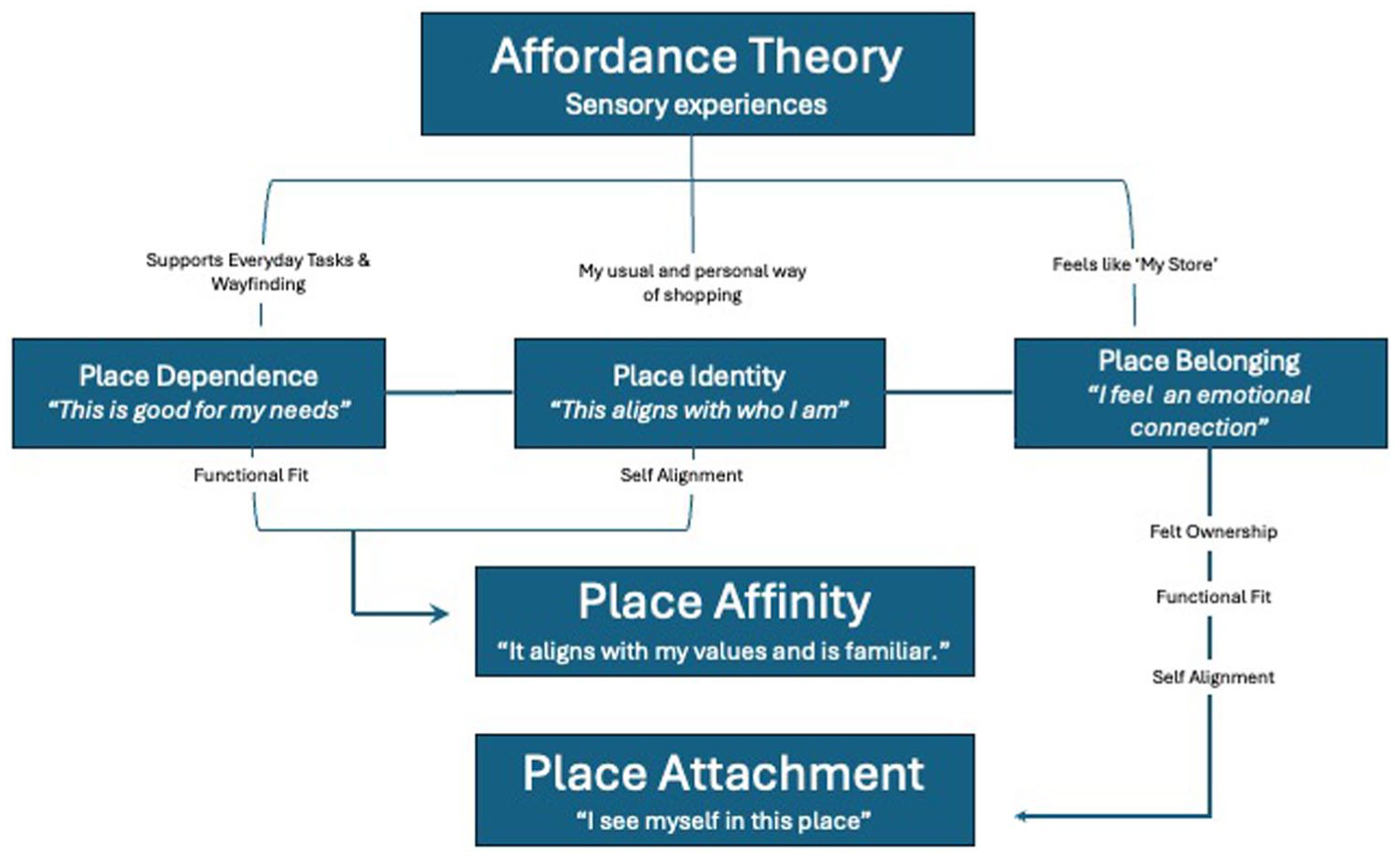
We propose that the sensory experiences embedded in the retail environment serve as affordances, enabling shoppers to create a sense of place. This process unfolds through the store’s ability to meet functional needs and fit (place dependence), support the development of consumer self-alignment by repeatedly purchasing available brands (place identity), and cultivate an emotional connection with the retail space (place belonging) that brings a sense of ownership. Through the interaction of these dimensions, place attachment emerges as a bond between the consumer and the retail environment. How these connect affordance theory to place attachment is presented in Diagram 1.
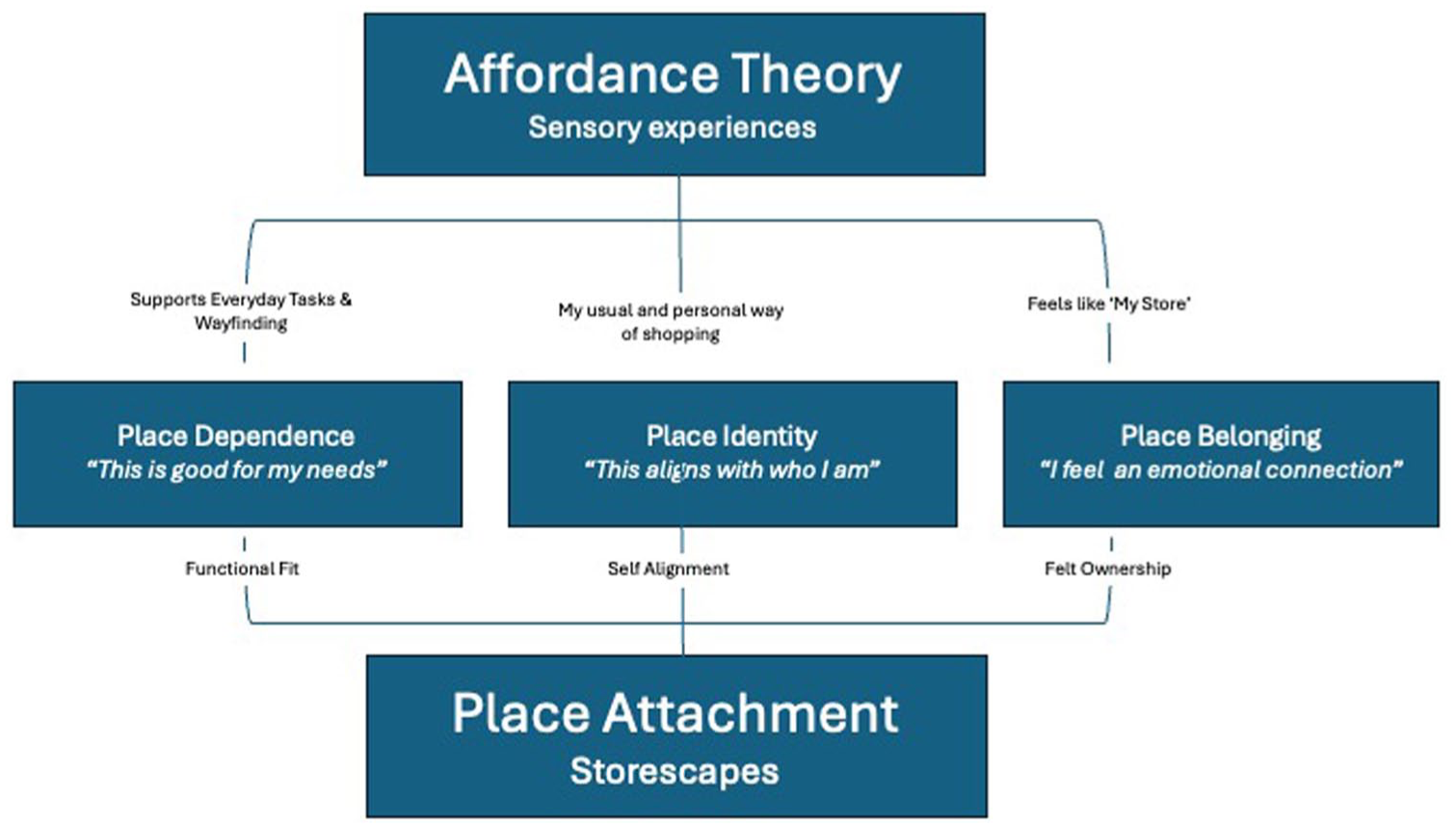
Proposed theoretical model.
The diagram shows how affordances within the supermarket set the foundation for developing place attachment. Functional elements that support everyday tasks and store wayfinding enhance place dependence by indicating a strong, purposeful fit. These routines become part of personal and household practices, underpinning place identity through perceived self-alignment. As these habits are repeated and recognised, some shoppers develop emotional cues that make the environment feel like “my store,” fostering a sense of place belonging and felt ownership, where the store feels familiar and meaningful to them.
Together, these stages demonstrate how the practical and sensory qualities of the storescape gradually raise a sense of attachment to the retail environment. We suggest that retailers can encourage place attachment, yet many focus on practical benefits and on appealing to who their shoppers see themselves as. Those who nurture an emotional bond with customers are more likely to stay resilient amid competitive pressures.
Research Method
We applied mobile ethnographic methodology so our participants could immerse themselves in the store’s space and capture authentic interactions. This is an ethnographic research method in which participants use their smartphones to document real-time experiences through imagery, text, or audio in natural settings, providing rich, in-the-moment insights that minimise recall bias and reveal behaviours, emotions, and interactions that may not surface through traditional interviews or surveys. Our participants became content creators over a series of grocery shopping visits. This reduced reliance on recall bias provided an opportunity to collect cognitive and emotional data simultaneously (Schwarz, 2007).
Our shoppers were given access to a qualitative data collection app on their phones, so they controlled what they discussed, photographed, and wrote to us. Unlike traditional collection methods in retail settings, this study gathered data in situ and in the moment, rather than relying on participants’ recollections after the fact. Meanwhile, the research team became virtual observers as images, videos, and text appeared in real-time on the web-based discussion board linked to the app. Whilst our shoppers could not see others in the study, the research team were alerted when data was uploaded from the field and could then use this information to guide the next series of shopping visits. Participants chose which evidence to upload, and the online conversations with the research team provided direction and guidance, helping them remain focused on the study’s purpose while also allowing them to explore unanticipated insights. Ethics approval for ethnographic research (H14385) was obtained before data collection commenced
We conversed with participants remotely across Australia and the UK for this study. These locations were selected for their cultural similarity and for their accessibility to distinctive stores. In the UK, consumers have a range of retail options, with at least five major supermarket chains, Sainsbury’s, Asda, Tesco, Morrisons, and Aldi, alongside several smaller retailers. In Australia, consumer choice is primarily between three major supermarkets, Woolworths, Coles, and Aldi, which dominate the market despite the presence of some localised, smaller grocery stores. This contrast enables us to examine whether routine-driven place relationships and affordance pathways operate similarly under conditions of higher versus lower store choice, strengthening the transferability of the findings across comparable grocery markets.
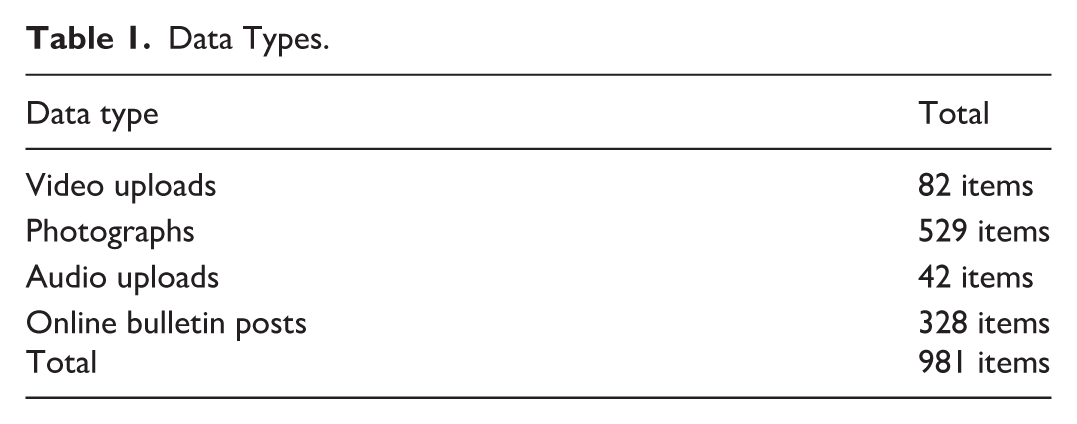
Twelve shoppers in each country (n = 24) were recruited via a professional marketing agency to upload their data over a 4-week period. Since Aldi was the only store available in both countries, all shoppers were repeat customers, though they did not exclusively buy their groceries there. This provided detailed insights into potential attachment processes but may have limited our ability to examine individuals who are new to the store brand or who do not currently shop at Aldi. Due to the ethnographic nature of the study, the sample size did not need to be large, as the data were expected to be rich and complex. Slightly more were female (64%), but households included younger/older families, couples, and single persons, ranging in age from 32 to 70 years. This mix was deemed appropriate because we aimed to generate in-depth, contextual insights from participants who could best explain the phenomenon, ensuring variation, nuance, and contextual understanding. Over the 4 weeks, they were asked to complete three main grocery shops at their preferred stores. For each shopping occasion, they were to use the mobile app to upload any photos, videos, or voice recordings they considered significant. They could also upload their reflections about their shops directly to the bulletin board. This was noted as data triangulation encompassing voice recordings, two distinct forms of visual imagery and text messages. A total of 1,017 distinct artefacts were uploaded by our sample across all data collection methods.
Given the methodology used, data transcription was complex. As a starting point, some videos were excluded from analysis because they either a) lacked any descriptive discussion, so researchers could not ascertain the imagery’s purpose, or b) were so brief that it was unclear whether any analysis could be included. Further, a small number of text messages were too short and unrelated to the research. Several photos were also repeated, perhaps by error. These were removed from the analysis, so the final number of artefacts totalled 981, as outlined in Table 1.
Data Types.
Voice recordings from audio and video files were transcribed into text and combined with the written components from the discussion board. The research team watched the video footage, and several members noted patterns in behaviour. The team members viewed these videos independently and without prior discussion, providing an avenue for investigator triangulation that supports inter-coder reliability (Denzin, 2017; Thurmond, 2001). The researchers reviewed the types of products participants recorded, how long they recorded, what they recorded, whether anyone else interacted with them (e.g., family members), and whether they continued recording outside the store. It was noted that many photos could be grouped into patterns, with themes emerging, allowing them to be assembled into larger groups rather than examined individually. Initial inter-coder agreement was 81%, indicating acceptable reliability (O’Connor & Joffe, 2020), and all disagreements were resolved through discussion until consensus was reached.
Textual data was then analysed using Leximancer 5, a software tool for text analysis and mining that applies natural language processing to support topic modelling, sentiment analysis, and word frequency analysis. The outcome is a series of concept maps that visually represent relationships between phrases (or seeds) and concepts (or themes). This process yielded a rich, multifaceted dataset that offered insights into our participants’ everyday lives. The results of which will now be discussed.
Results
To gain an initial understanding of our participants’ voices, we reviewed the entire dataset and the themes identified by Leximancer. Price awareness, product selection, and store navigation emerged as key themes. For example, one participant told us: I had dark chocolate on my shopping list and was looking for any dark, plain chocolate. Lots of options on display and (I) chose the essentials brand. It wasn’t easy to see as it was on the lowest shelf, but the price was amazing. I always love browsing the middle. This section as usual looked appealing (“Margot,” UK).
Although these patterns showed how shoppers rationally interpret the store environment, they did not yet clarify whether or how emotional meaning or attachment develops. Therefore, we compared shopping experiences at Aldi and non-Aldi stores, where contrasting store qualities become clearer, allowing us to explore the emergence of place attachment. Aldi was the only supermarket to feature in both the UK and Australian participant groups, providing a consistent basis for comparison. Additionally, Aldi stores generally have a smaller product range and a standardised layout. Other supermarkets in this study offer greater variety and more options for browsing and choice. Comparing these two types of store environments helped us understand how different shopping habits and store experiences develop in response to the storescape. We now turn our attention to the Aldi data.
Aldi Results
When focusing on Aldi shopping visits, Leximancer revealed a more layered view of the main themes and correlated word seeds. While Aldi remained the central theme and the most frequently mentioned, the next most significant was Store, closely connected to concepts relating to the store environment. This is shown in Figure 1.
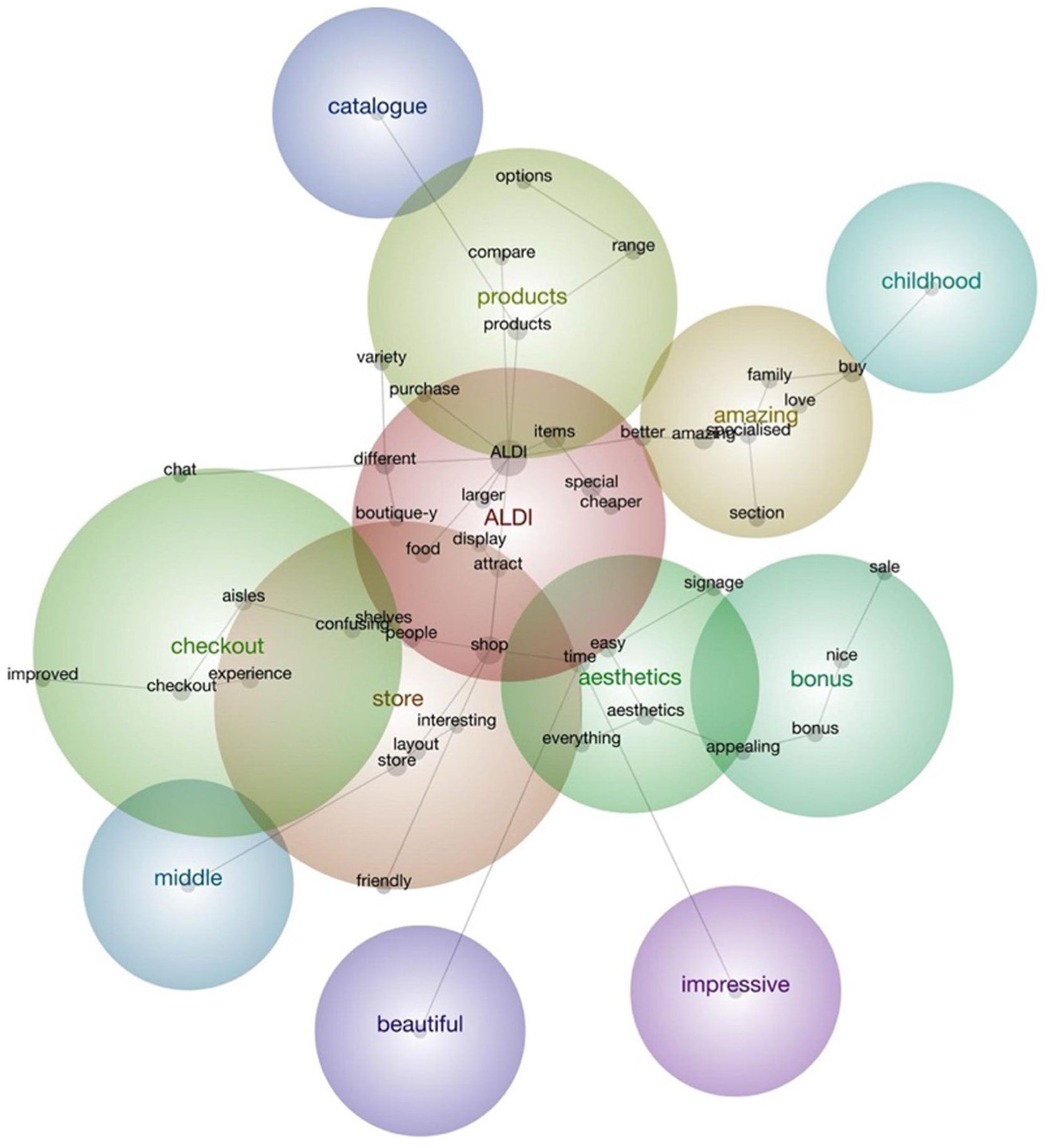
Aldi themes.
Although some of these themes appeared less frequently than those presented in Table 2 below, their overlap with the core ideas offers valuable insight into how participants engage in the space during their shopping visits. For instance, Aesthetics overlaps both the Aldi and Store themes, while concepts such as Middle, Beautiful, and Impressive were also discussed within the context of the physical space.
Aldi Shopping.
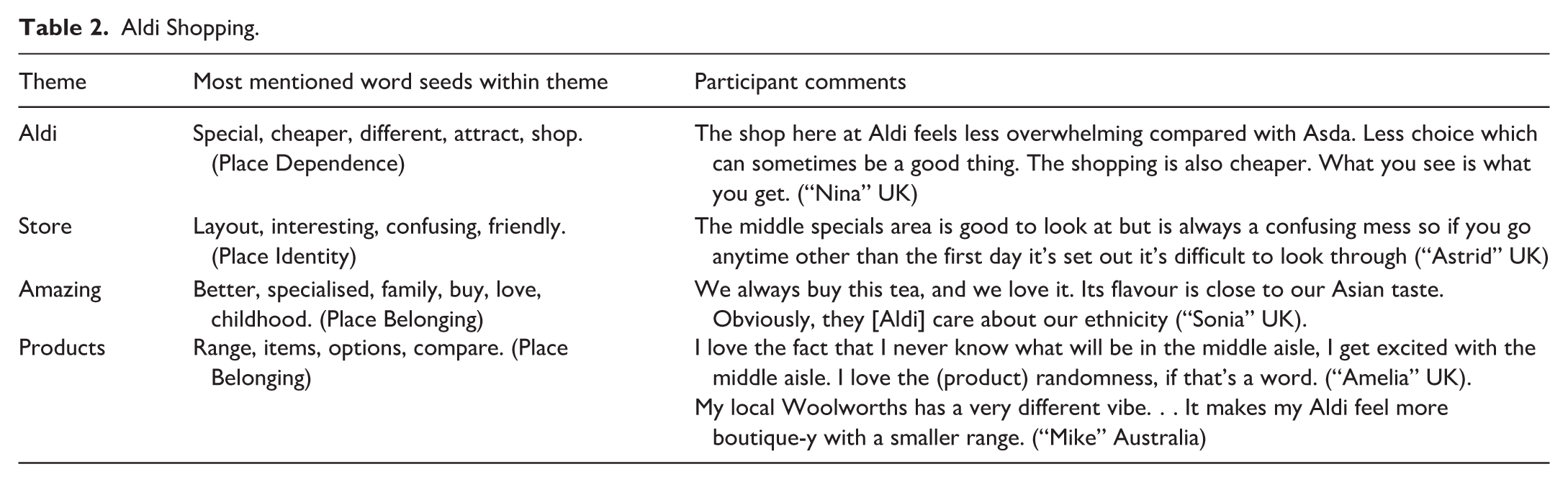
Taken together, these themes highlight how shoppers establish various types of connections with Aldi stores. The smaller product range and familiar layout make Aldi easy to navigate and dependable, reflecting place dependence: “Aldi feels less overwhelming compared with Asda. Less choice which can sometimes be a good thing.” Shoppers move through the store easily, reflecting place identity, while also engaging in routine: “The middle specials area is good to look at but is always a confusing mess.” Participants also described feelings of enjoyment and familiarity, indicating the development of place belonging, where Aldi feels like “our store.” “It makes my Aldi feel more boutique-y with a smaller range,” and “Obviously, they [Aldi] care about our ethnicity and people.” In this way, the consistent Aldi storescape supports the gradual development of place attachment through habitual practice.
The use of expressive words (e.g., love, amazing, excited) when describing their shopping: I love the (product) randomness, if that’s a word, suggests that Aldi shoppers display a mix of emotional commitment and transactional satisfaction as their practical needs are met. An example of this is shown in Photo 1, featuring a shopper who shared both her feelings and reasoning behind her decisions and then uploaded photos of the product that inspired her noted delight: I love how there is always new things to buy or new good items I can use in my busy life, for example these smoothie frozen packs I took a photo of. . . these just make it a whole lots easier for me to pick one out and chuck it in my lunch bag and make it at work, super excited to try these. (“Anna,” Australia)
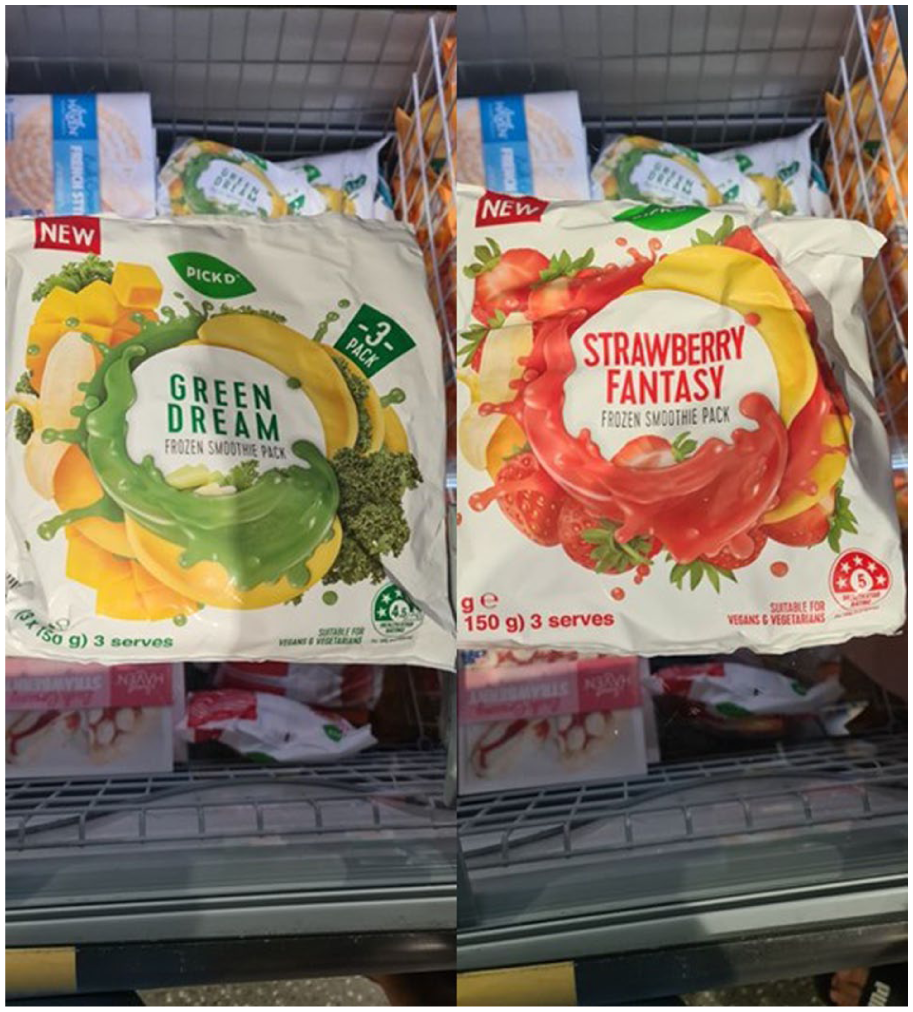
Anna’s Aldi smoothie frozen packs.
We put forward that the emotional tone of the data when participants shop at Aldi connects them to the place via an Affordance of Anticipation by sparking curiosity about what they might find during their shop “super excited to try these,” balanced by the rational appeal of low prices “the shopping is cheaper.” This creates a belief that they’re getting a great deal, makes them proud of their shopping choice, and deepens their relationship with the retailer.
The Special Buys placed in the middle of the store also emerged from the Affordance of Anticipation. The thrill of uncovering unexpected bargains and limited-time products creates a sense of pleasure, similar to treasure hunting: “I love the fact that I never know what will be in the middle aisle, I get excited with the middle aisle.” This makes shopping at Aldi more enjoyable and memorable than the predictable experience often found in other supermarkets. As “Nina” said when we asked about her anticipation of Special Buys Photo 2.
I went to the special buy section and I’m amazed at how familiar the Mexican meal kits are! It’s almost comical and the price is very different. (“Nina” UK)
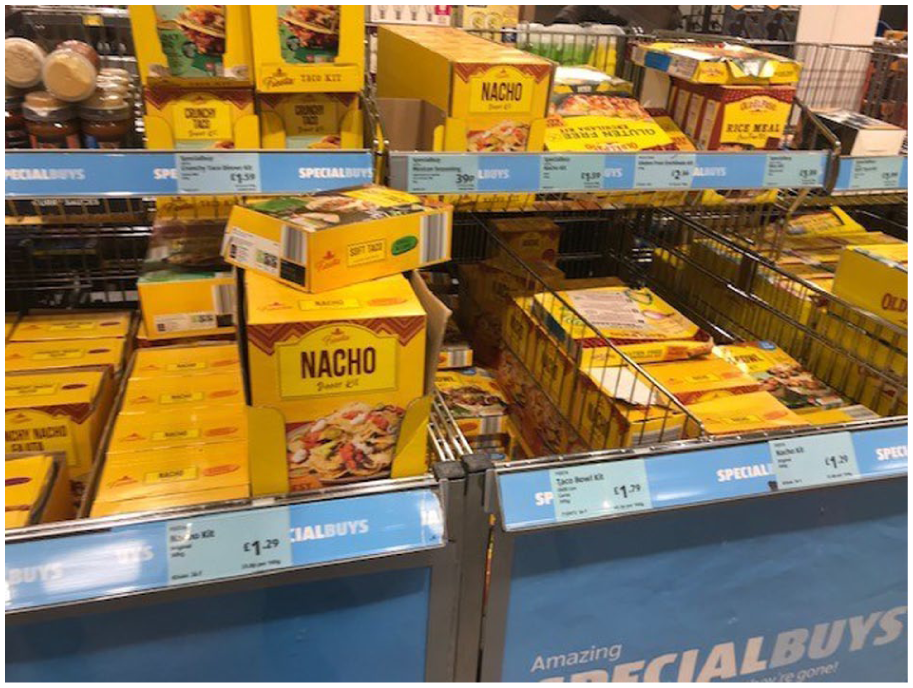
Nina’s Mexican meal kits.
These findings illustrate how Aldi’s storescape encourages place dependence through its own branded products offered at competitive prices and promotes place identity via shared, recognisable shopping practices, such as regularly browsing the “middle aisle.” The middle aisle was a recurring theme, with participants describing it as a ritualistic part of their shopping and making a point of visiting it each time to discover what unexpected items might be on offer: “I love the Special Buys section! Each week I get excited when the brochure comes out.”
A combination of these factors, along with participants’ expressions of excitement about what they might discover and their perceptions of the store, even links to memories of past purchases and how these are brought into the present, “Ovalteenies are sentimental from my childhood,” signals the development of a sense of place belonging, where Aldi feels like “our store.” This also reflects a form of ceremonial behaviour that plays a central role in creating a sense of belonging and strengthening emotional attachment to place. It supports the work of Beresford and Hirst (2020) who found that Aldi shoppers disassociated the retailer from traditional supermarket connotations and instead crafted personal relationships aligned with their lifestyles and goals.
We use the term Affordance of Anticipation as an analytical label to describe recurring sets of affordances observed in the data. These are not suggested as new types of affordances beyond Gibson’s original conceptualisation; rather, they reflect how different store configurations invite specific ways of engaging with the supermarket. The Affordance of Anticipation refers to the interaction between a consistent storescape and rotating novelty, which encourages return visits and a sense of discovery. These labels, therefore, organise emerging patterns rather than redefine the concept of affordance itself. As a result, we argue that grocery shopping becomes more than just a functional task; it becomes an emotionally resonant activity through which shoppers develop an attachment to the store.
As this result was a combination of shoppers from the UK and Australia, we then analysed each set by country to establish if there were any geographical differences. The Leximancer results were not remarkable or distinct, so we determined that Aldi, across both locations, had a similar impact on our shoppers. We then focused on how our participants shopped at their other preferred supermarkets.
Non-Aldi Stores
We collated the data for the remaining supermarkets, noting that, unlike Aldi, there are different stores in the UK than in Australia. From this initial run, Leximancer identified four main themes: Shop, Buy, Appealing, and Price, which were consistently mentioned across both countries, supporting our decision to combine these data into “non-Aldi” stores. The results are presented in Figure 2.
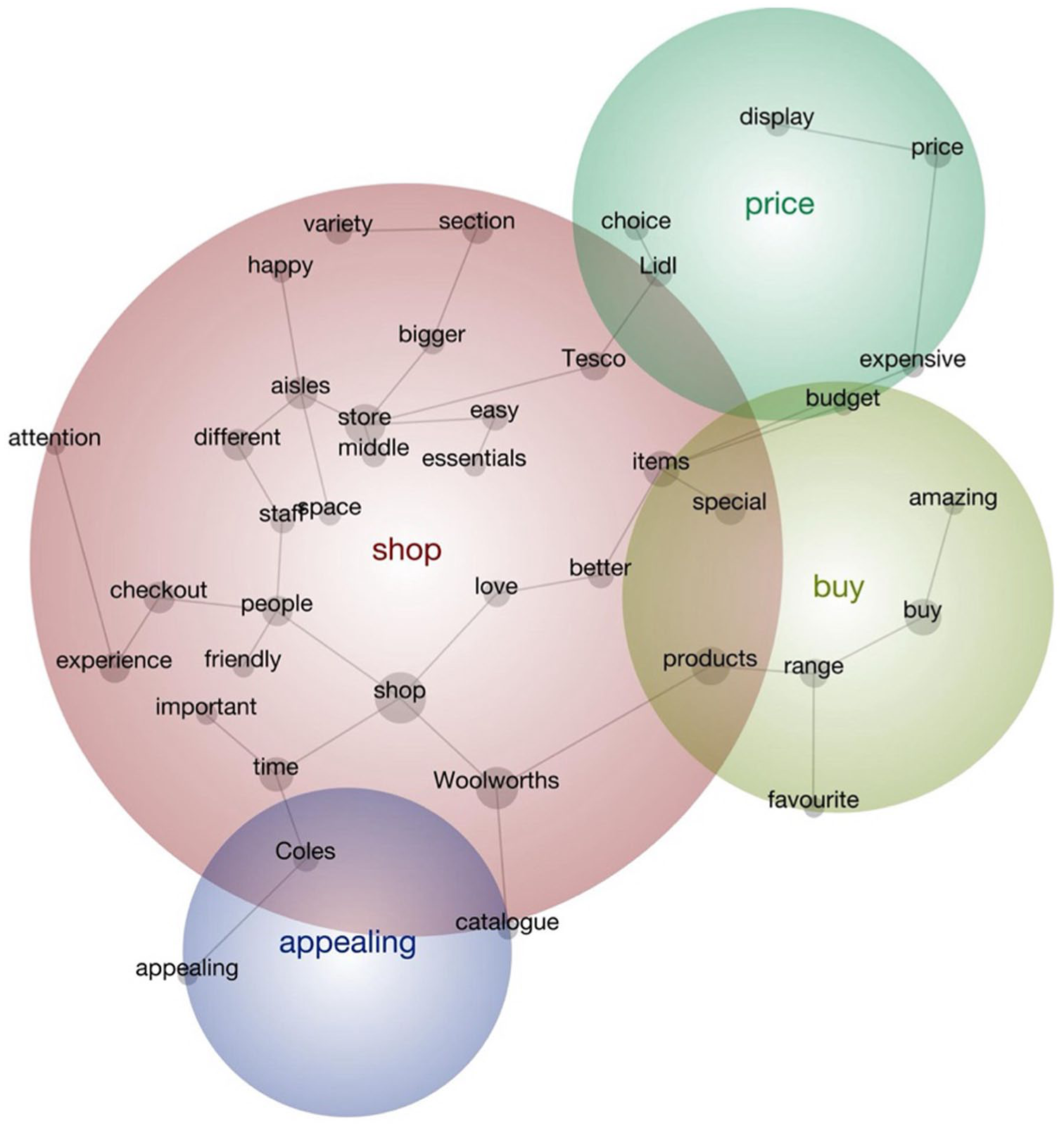
Non-Aldi themes.
Unlike the Aldi map shown in Figure 1, these themes highlighted traditional expectations of grocery shopping, mostly around pricing, product range, and the store (Nilsson et al., 2017). The key retailers mentioned included Tesco and Lidl in the UK, whilst Coles and Woolworths covered the Australian market. There were the occasional mentions of Iceland, Sainsbury’s and Waitrose, but not enough to form word seeds. Some discussion of how these retailers compared to Aldi also appeared, but most of our participants focused on their shopping experience and highlighted what mattered most to them. These are outlined in Table 3.
Non-Aldi Shopping.
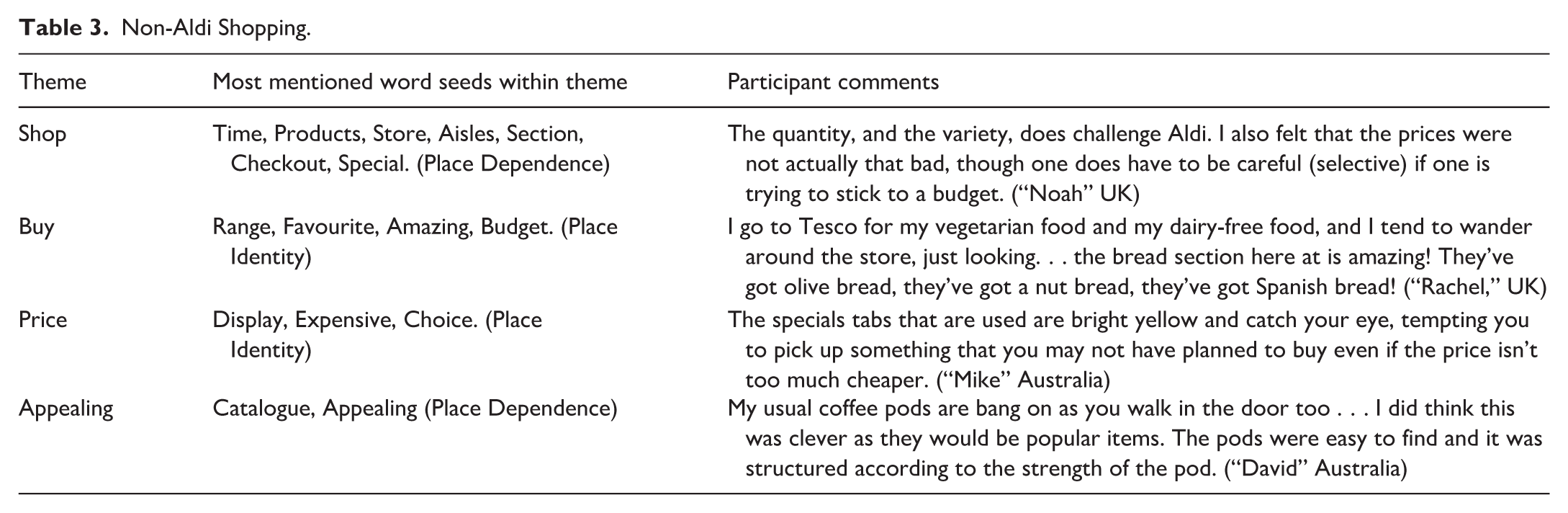
At first glance, these results are not unexpected and align with previous supermarket studies (Essardi et al., 2022; Filipe et al., 2017; Nilsson et al., 2015), with participants mentioning the importance of price, the available range, and the overall shopping experience in general: “tempting you to pick up something that you may not have planned to buy.” What we didn’t observe to the same extent was the sense of place attachment that emerged from the Aldi shopping occasions. Instead, participants who shopped here tended to focus on utilitarian aspects such as convenience and special offers, indicating a sense of place dependence. Elements of place identity were also evident as shoppers reflected on past experiences and how these influenced their ongoing preferences for certain retailers. For instance, one participant noted, “I love how large the fresh flowers are when you first walk in (at Coles), it just gives a great vibe when walking into the shops. Also, the bakery section so that freshly cooked smell of bread just hits you and it was amazing” (“Amelia,” Australia).
We propose that non-Aldi stores offer an Affordance of Customisation. This refers to environments that provide a broader selection of brands and specialty items, allowing shoppers to choose “what suits us”: “I go to Tesco for my vegetarian food.” This flexibility enables shoppers to align their shopping habits with routines and identities already established in their daily lives. However, while this affordance encourages practical compatibility and sometimes reinforces lifestyle-based identity, it does not consistently create the familiarity or sense of “our store” that characterises the Aldi context. Instead, non-Aldi stores tend to facilitate dependable preference-based shopping without necessarily becoming a place of belonging. They lack the social or emotional ties associated with place attachment; these stores rely on place dependence, with competitive prices, product availability, and easy-to-navigate layouts making them reliable choices. To capture this different form of engagement, one that resembles place attachment but lacks an emotional element, we introduce the concept of “Place Affinity” to describe a consumer-store relationship characterised by familiarity and functional preference, without the emotional or relational depth associated with place attachment.
Whilst the term has been applied in other contexts to describe tourist destinations (Williams & McIntyre, 2011) and specific geographic locations (Joseph & Pasupathi, 2025), it has not yet been considered within the concept of attachment to retail places. Place affinity refers to a positive yet largely instrumental connection in which shoppers value a store because it meets their needs and values, but do not feel a sense of ownership or belonging. Unlike place attachment, which involves emotional implication and a felt sense of place, affinity represents a lighter, more practical affiliation. This distinction helps us understand consumer-retailer relationships that fall between simple convenience and deeper attachment, and explains why some supermarkets become “our store” while others remain purely functional. This is shown in Diagram 2.
Place affinity and place attachment.
Discussion
The findings show that supermarket environments support different forms of place relationships that emerge through ongoing engagement rather than isolated encounters. These vary in depth, ranging from functional reliance to more emotionally grounded affiliations with differing levels of resilience to change and competition. By distinguishing between place affinity and place attachment, this study clarifies why some retail relationships remain stable yet switchable, while others exhibit greater resilience over time. Taken together, these findings resolve the paradox by demonstrating that supermarkets, commonly framed as functional, can nonetheless nurture emotionally grounded place relationships through repeated engagement. Rather than attributing these outcomes solely to store atmosphere, the findings highlight how routine practices and affordance alignment create unique relational patterns. These insights have several implications for servicescape, affordance, and place attachment theory, which we outline below.
Theoretical Contributions
This research contributes to servicescapes, sense of place, and consumer-retailer interactions by exploring a neglected perspective: how regular supermarket trips cultivate various types of place-based attachment that go beyond brief assessments of store features. Although earlier research has examined how design, sensory signals, and social factors influence the in-store experience, it has fundamentally overlooked how these experiences accumulate over time through sustained engagement. Our findings show that supermarkets generate two distinct forms of connection: Place Affinity and Place Attachment, each emerging from different affordance pathways created by stability, novelty, and everyday practices. Taken together, these insights extend current theory by explaining how routine, repetition, and affordance alignment generate distinct relational outcomes that earlier servicescape and place attachment models have not accounted for.
Our findings indicate that Place Attachment includes all three dimensions: felt ownership or belonging to the retailer (place belonging), self‑alignment with personal identity (place identity), and a functional fit with household needs (place dependence). In contrast, Place Affinity encompasses only two of these: place dependence and place identity. This distinction clarifies that valued consumer-retailer relationships may, in the absence of an emotional component, be traditionally associated with attachment. By clearly distinguishing these aspects, this study builds on current ideas about place based relationships and opens up opportunities to explore routine driven associations that earlier models have ignored.
The findings further advance theory by demonstrating that emotional bonds can develop in “ordinary” retail contexts that lack visual drama or themed design, challenging the assumption that place attachment requires symbolically rich or socially curated environments. Viewed through the lens of accumulated storescapes, repeated visits and familiar routes create a deeper connection with a store, extending servicescape theory by shifting attention from short-term environmental effects to longer-term lived experiences. Using affordance theory, we can better understand how anticipation-driven and customisation-driven environments form unique shopper relationships in retail. Together, these insights redefine supermarkets as important social and experiential spaces and expand the concepts we use to understand how customers connect with commercial locations.
This study distinguishes between Place Affinity and Place Attachment, highlighting how these relationships are differentiated through everyday engagement. It encourages closer attention to ordinary consumption spaces and the gradual habits that make these places significant to consumers. By addressing the limited theorisation of temporality in prior servicescape and retail attachment research, this study offers a clearer conceptual mechanism for understanding how commonplace store environments become meaningful over time. In doing so, it reframes temporality not as background context but as a central process through which these distinctions are formed and differentiated.
Managerial Implications
From a managerial perspective, the findings suggest that not all customer–retailer relationships are equivalent. While many supermarkets successfully cultivate functional reliance through price, range, and convenience, these factors alone may result in place affinity rather than emotional place attachment. The comparison between Aldi and non-Aldi stores illustrates how consistent layouts, combined with elements of novelty, can evoke anticipation, ritual, and familiarity, thereby supporting deeper emotional bonds.
To encourage place attachment, retailers should prioritise how elements such as store layout, product selection changes, and sensory experiences reinforce customers’ regular habits over time, rather than focusing solely on quick decisions or operational efficiency. Managers should recognise the difference between customers who rely on a store because it works and those who feel a sense of belonging to it, as these relationships may differ in their resilience to competitive pressure and change.
Limitations & Future Research
Several limitations should be acknowledged. All participants in this study were existing Aldi customers, even though they shopped at other grocery stores. This sampling approach provided valuable insights into how attachment develops through repeated interactions with the storescape. However, it also means the findings may not fully reflect the experiences of new customers or those not familiar with the store. This study explores how participants describe their relationships with the store through their lived experiences. While this approach provides valuable insight into activities over a four-week period, extended longitudinal research could more effectively illustrate how these relationships develop or change over time. Lastly, the study was conducted in Australia and the United Kingdom, two countries with relatively similar supermarket formats and market conditions. This was chosen to examine markets with more grocery store options versus fewer; the findings may not fully translate to retail environments with different competitive structures or levels of brand familiarity. Future investigations could explore how attachment either forms or fails to form among shoppers across various retail settings.
Conclusion
This research shows that routine interactions in supermarkets can create different forms of consumer place relationships, challenging the assumption that emotional attachment is the primary, or only, mode of connection to retail environments. The differentiation between Place Affinity and Place Attachment shows that stable, identity-aligned relationships can emerge without emotional attachment. Integrating affordance theory, place attachment, and accumulated storescapes, the findings explain how everyday practices and familiarity render store environments meaningful over time. In doing so, the study repositions supermarkets as analytically important sites for understanding how ordinary spaces become meaningful places in consumers’ lives.
Footnotes
Authors’ Note
Institution where research was conducted: Western Sydney University, Parramatta NSW, Australia.

Ethical Considerations
The study was approved by the Western Sydney University (Ethical Clearance Reference Number: H14385) on September 1, 2021. All participants provided written informed consent prior to participating.
Funding
The authors received no financial support for the research, authorship, and/or publication of this article.
Declaration of Conflicting Interests
The authors declared no potential conflicts of interest with respect to the research, authorship, and/or publication of this article.
Data Availability Statement
The datasets generated during and/or analysed during the current study are not publicly available due to the data format, including video, personal recordings, and photos, noting potential risk to participant confidentiality and anonymity. Some data may be available from the corresponding author on reasonable request.