







Abstract
As consumer demand for corporate accountability intensifies globally, understanding how brand transparency drives ethical purchasing decisions becomes critical for sustainable business success. This study explores the influence of observability-based brand transparency on socially conscious purchasing, focusing on the mediating role of brand social responsibility and the moderating effect of consumer karmic belief in an emerging market context. Using a three-stage mixed-methods approach, comprising an exploratory qualitative study (Study 1), a primary quantitative study analyzing data from 402 consumers (Study 2), and a subsequent quantitative validation study (Study 3)—results from partial least squares structural equation modeling (PLS-SEM) indicate that observability-based brand transparency significantly enhances socially conscious purchasing, with brand social responsibility acting as a key mediator. Consumer karmic belief significantly moderates the relationship between brand social responsibility and socially conscious purchasing, while fuzzy-set qualitative comparative analysis (fsQCA) reveals that high observability-based brand transparency is a highly relevant contributing condition that plays a foundational role in driving socially conscious purchasing, underscoring transparency’s pivotal role in ethical consumption. This study extends signaling theory and social identity theory by identifying cultural-spiritual moderators and configurational pathways in an emerging market, offering strategic guidance for managers developing transparency communication strategies tailored to emerging markets.
Keywords
Introduction
Recent global surveys reveal compelling evidence of consumer commitment to sustainable purchasing behaviors. Research indicates that 80% of consumers are willing to pay premium prices for sustainably produced goods, with 85% experiencing climate change impacts firsthand (PwC, 2024). Products with environmental, social, and governance claims captured 56% of market growth from 2017 to 2022, representing nearly half of $400 billion in analyzed retail sales (McKinsey & NielsenIQ, 2023). While 78% of consumers demand greater corporate transparency and 94% show increased loyalty to transparent brands, consumers demonstrate willingness to pay up to 12% more for environmentally responsible products (DWF Group, 2024).
The global shift toward sustainable and ethical consumption has gained unprecedented momentum, particularly in developing countries, where rapid economic growth intersects with increasing environmental and social consciousness (Li & Tong, 2024). This phenomenon of socially conscious purchasing, encompasses purchasing behaviors that consider broader societal impacts beyond individual needs (Witkowski & Reddy, 2010), has become a defining characteristic of contemporary consumer behavior. Recent research reveals that sustainable consumption behaviors are influenced by complex interactions between individual factors such as self-identity and psychological ownership (Mishra et al., 2023), social norms (Saleem et al., 2025), cultural-spiritual factors like Buddhist-inspired mindful consumption principles (Ngo et al., 2025), and corporate social responsibility communication effectiveness (Romano et al., 2023). However, the mechanisms through which brands can effectively communicate their social responsibility to consumers in emerging markets remain underexplored, particularly regarding brand transparency’s role in facilitating ethical consumption decisions.
To understand the drivers of socially conscious purchasing in emerging markets, this study examines four interconnected constructs. Brand transparency represents the extent to which companies openly share information about their operations, values, and practices with stakeholders (Montecchi et al., 2024), specifically through observability-based brand transparency, defined as “the extent to which a brand’s value creation and value delivery processes can be equated to the products services associated with the brand” (Montecchi et al., 2024). When consumers observe these transparent practices, they form brand social responsibility perceptions, defined as “consumers’ perceptions of the extent to which a brand reflects the human values related to social responsibility” (Grohmann & Bodur, 2015), which captures consumer evaluations of whether brands authentically embody socially responsible values rather than merely engaging in superficial activities (Moehl & Friedman, 2022). However, the interpretation of these transparency signals varies based on consumers’ underlying belief systems, particularly consumer karmic belief, defined as “the acceptance and internalization of the fundamental principle that good or bad actions lead to valence-congruent outcomes in the future” (Mo et al., 2022), which may moderate responses to perceived social responsibility in Asian emerging markets where karmic beliefs are culturally embedded (White et al., 2019). This process ultimately manifests in socially conscious purchasing, defined as consumer behavior where individuals “examine the values that motivate socially conscious and frugal consumer behaviors” and make purchasing decisions based on companies’ social and environmental impact (Pepper et al., 2009), representing consumers’ deliberate choices to support brands that align with their social values while avoiding those that contradict their ethical principles.
As illustrated in Table 1, which juxtaposes the current study against foundational research to identify theoretical discontinuities, the existing literature reveals a fragmented theoretical landscape. While foundational studies posit that cognitive factors such as perceived consumer effectiveness (Wesley et al., 2012) and environmental knowledge (Kozar & Hiller Connell, 2013) are primary predictors of responsible purchasing, Table 1 highlights that these linear cognitive models often overlook the specific signaling mechanisms and cultural boundary conditions relevant to emerging markets. Contrary to the assumption that effectiveness beliefs automatically drive behavior, subsequent research reveals that these mechanisms are highly conditional, with studies finding that the translation of values into action is significantly moderated by spiritual beliefs (Saleem et al., 2018) or is subordinate to personal norms (Saleem et al., 2021). These inconsistencies highlight an incomplete understanding of transparency’s role in socially conscious purchasing decisions. Despite the growing interest in ethical consumption, three critical research gaps impede a comprehensive understanding of this phenomenon in emerging markets. This systematic comparison in Table 1 exposes three critical research gaps that this study addresses. First, while brand transparency is recognized as a key driver of trust, prior research has predominantly conceptualized it as a broad, multidimensional construct (Schnackenberg & Tomlinson, 2016), often conflating voluntary disclosure with the actual visibility of practice. Consequently, the specific impact of observability-based brand transparency remains underexplored as a distinct signaling mechanism. Second, the cognitive mechanisms translating transparency signals into behavioral intentions are not fully understood. Although studies have examined mediators like consumer effectiveness (Wesley et al., 2012), there is a paucity of research identifying brand social responsibility as the specific diagnostic cue that consumers use to assess corporate authenticity before committing to a purchase (Grohmann & Bodur, 2015). Third, existing models of ethical consumption are largely Western-centric, often overlooking culturally specific spiritual drivers such as consumer karmic belief. Unlike secular justice beliefs, karmic beliefs represent a distinct moral causal system prevalent in Asian markets (Mo et al., 2022), yet their role as a boundary condition shaping consumer responses to transparency signals has been neglected.
A Summary of Relevant Studies on Socially Conscious Purchasing.
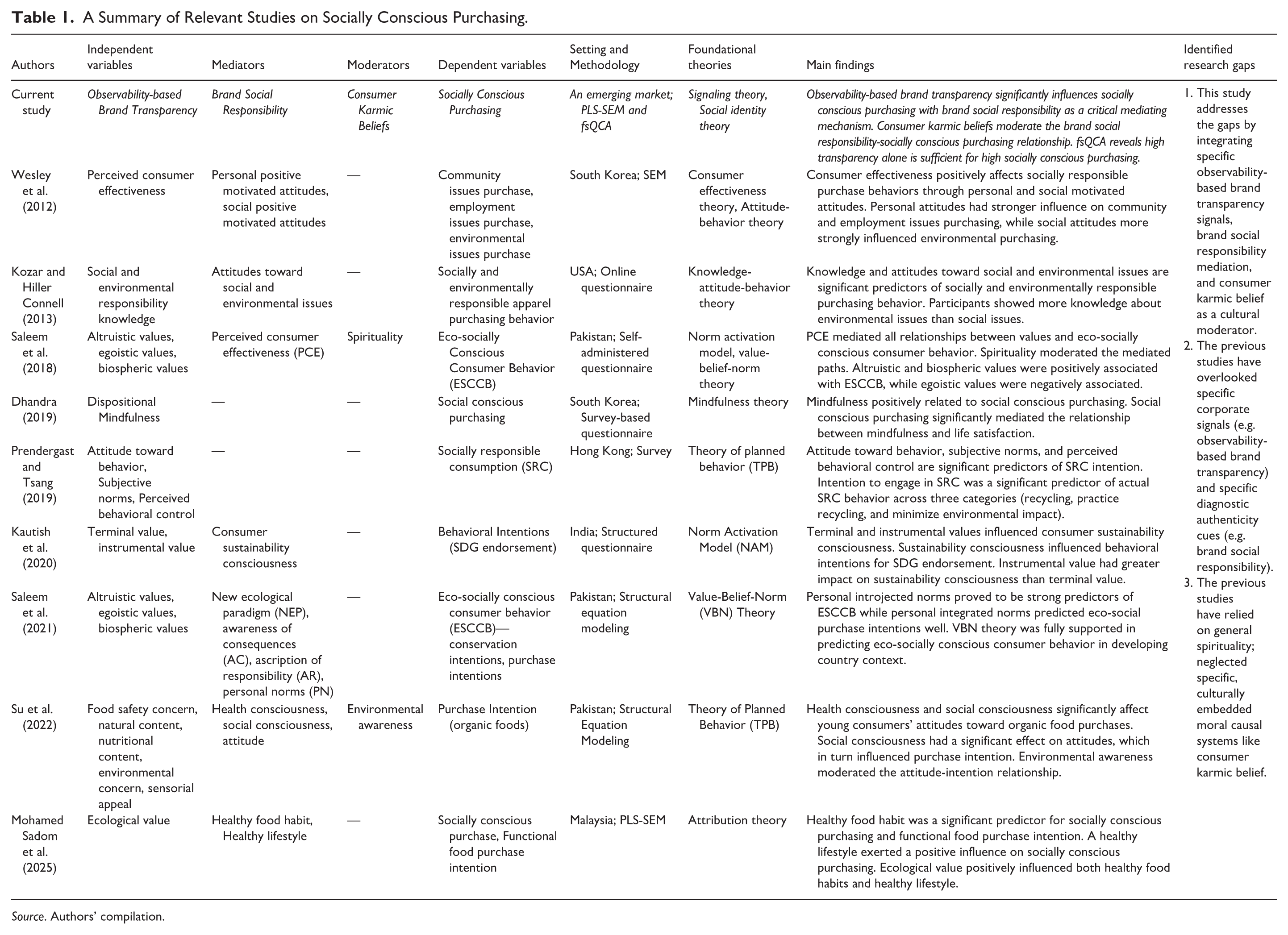
Source. Authors’ compilation.
In response to identified research gaps, this study investigates how observability-based brand transparency influences socially conscious purchasing in emerging markets, examining the mediating role of brand social responsibility and the moderating effect of consumer karmic belief. We aim to answer the following research questions: (
This study offers several significant contributions to both theory and practice. Theoretically, we advance signaling theory by demonstrating how observability-based brand transparency serves as a specific type of credible signal that directly influences ethical consumption behavior, extending signaling theory beyond traditional marketing contexts into the domain of corporate transparency and social responsibility communication in developing markets (Connelly et al., 2011). Second, we expand social identity theory by revealing how consumer karmic belief, as cultural-spiritual identity markers, moderates consumers’ responses to corporate social responsibility signals, thereby integrating cultural psychology perspectives with signaling mechanisms and addressing calls for more culturally sensitive models of ethical consumption (Reed et al., 2012). Third, we identify brand social responsibility as a critical mediating mechanism that explains how transparency signals translate into socially conscious purchasing, illuminating the cognitive pathway through which observable corporate practices influence ethical purchasing decisions and building on previous work examining mediators between corporate communications and consumer behavior while focusing specifically on social responsibility perceptions (White et al., 2019). Practically, our findings offer organizations insight into developing culturally sensitive transparency communication strategies that leverage consumers’ spiritual values to enhance ethical consumption.
Theoretical Framework and Hypotheses Development
Signaling Theory and Social Identity Theory
This study’s theoretical framework combines signaling theory (Spence, 1978) and social identity theory (Tajfel et al., 1979) to explore how observability-based brand transparency impacts socially conscious purchasing via brand social responsibility perceptions, moderated by consumer karmic belief. Importantly, these theories are not treated as interchangeable explanatory lenses. Signaling theory primarily accounts for how observability-based transparency functions as a costly and credible signal that reduces uncertainty regarding a brand’s social responsibility, whereas social identity theory explains why consumers internalize these signals and enact socially conscious purchasing as an expression of identity-consistent behavior. This complementary integration allows us to capture both the informational and identity-driven mechanisms underlying ethical consumption.
Signaling theory explains observability-based brand transparency as a credible signal reducing information asymmetry about corporate social responsibility in emerging markets, where evaluating authenticity is challenging (Connelly et al., 2011). Observability-based brand transparency, being costly and hard-to-imitate, signals genuine brand social responsibility, countering greenwashing perceptions (Montecchi et al., 2024). Social identity theory complements this by showing consumers’ cultural–spiritual identities shape their interpretation of brand social responsibility signals (Reed et al., 2012). Within this perspective, consumer karmic belief, rooted in cultural norms of moral reciprocity (Mo et al., 2022), functions as an identity-relevant belief that informs how such signals are interpreted and internalized, thereby motivating socially conscious purchasing as an expression of moral values. Importantly, although consumer karmic belief exhibits relative stability at the individual level, we conceptualize it not as a purely dispositional personality trait but as an identity-relevant cultural–moral belief system. Drawing on insights from cognitive and cultural psychology, belief in karma represents a culturally transmitted moral causal belief that shapes how individuals make sense of moral actions and their consequences (White, 2025). Such belief systems have been shown to influence attributions of justice and prosocial behavior across diverse cultural contexts, suggesting that they provide a moral framework through which individuals evaluate moral self-worth and appropriate conduct (Goyal & Miller, 2023; White & Norenzayan, 2019). In culturally embedded contexts, such beliefs become salient identity anchors that inform moral self-definition and guide identity-consistent consumption behavior.
To ensure conceptual clarity, the boundaries of consumer karmic belief are explicitly delineated across three interrelated roles in this study’s framework. First, at a macro-environmental level, it functions as a cultural belief system, a culturally transmitted framework of moral causation that shapes how individuals comprehend moral actions and their future consequences (White et al., 2019). Second, at a micro-psychological level, this cultural framework is internalized as a moral identity anchor (Mo et al., 2022). It provides the specific moral criteria and self-definitions through which individuals evaluate their own moral self-worth. Third, at a behavioral and analytical level, it acts as a moderator. Because consumers use this internalized identity to interpret external corporate signals, stronger consumer karmic beliefs amplify an individual’s sensitivity to brand social responsibility, thereby strengthening the translation of these perceptions into socially conscious purchasing.
The integration operates across levels: signaling theory highlights observability-based brand transparency’s direct effect on socially conscious purchasing by reducing uncertainty and its role in forming accurate brand social responsibility perceptions (A. Lee & Chung, 2023), while social identity theory explains why brand social responsibility perceptions lead to socially conscious purchasing (Suryavanshi et al., 2023) and why consumer karmic belief strengthens this relationship by enhancing sensitivity to moral signals (Xue & Mattila, 2024).
Hypothesis Development
Observability-Based Brand Transparency and Socially Conscious Purchasing
The relationship between observability-based brand transparency and socially conscious purchasing can be understood through signaling theory and social identity theory, which emphasize how observable corporate practices serve as credible signals influencing consumer behavior through identity-based mechanisms (Reed et al., 2012). In developing markets characterized by information asymmetries and weaker institutional frameworks, observability-based brand transparency represents a critical signaling mechanism enabling brands to communicate authentic values directly to consumers seeking ethical consumption options (Kozar & Hiller Connell, 2013; Wesley et al., 2012). From a signaling perspective, observability-based transparency functions as a costly and difficult-to-imitate signal that enables consumers to infer genuine social responsibility. These inferences, in turn, activate identity-relevant motives, motivating consumers to engage in socially conscious purchasing to affirm their moral self-identity.
While empirical evidence shows positive relationships between transparency and ethical consumption behaviors, scholarly debate persists regarding whether transparency effects operate directly or require intermediate cognitive processes, with Dhandra (2019) suggesting transparency automatically translates to ethical consumption benefits while mediation perspectives argue intermediate perception processes are essential (Saleem et al., 2018, 2021). However, previous studies predominantly examined general transparency concepts rather than specific dimensions like observability, creating conceptual ambiguity about effective mechanisms driving ethical consumption (Montecchi et al., 2024), while existing research largely focused on developed markets, leaving gaps about how transparency signals function in developing environments (White et al., 2019). Our qualitative findings indicate observable corporate practices directly motivate ethical consumption choices, with signaling theory explaining this mechanism by suggesting observability-based brand transparency serves as a costly signal that credibly communicates corporate authenticity, reducing information asymmetry and enabling informed ethical choices (J.-A. Lee et al., 2025). Therefore:
Observability-Based Brand Transparency and Socially Conscious Purchasing: The Mediating Role of Brand Social Responsibility
The mediated relationship between observability-based brand transparency, brand social responsibility, and socially conscious purchasing can be understood through signaling theory and social identity theory, which explain how observable corporate practices serve as credible signals that shape consumer perceptions of social responsibility, subsequently influencing ethical consumption behavior (Connelly et al., 2011; Reed et al., 2012). However, critical analysis reveals significant theoretical inconsistencies in existing literature. While Wesley et al. (2012) demonstrated that consumer effectiveness influences socially responsible purchasing through motivated attitudes, their focus on individual psychological factors overlooks how corporate signaling mechanisms shape these attitudes. Similarly, Kozar and Hiller Connell (2013) found that knowledge and attitudes predict responsible purchasing behavior, yet failed to examine how corporate transparency practices contribute to knowledge formation. Saleem et al. (2018, 2021) examined mediation through perceived consumer effectiveness and personal norms, respectively, but neither study addressed how corporate transparency signals influence these mediating variables, creating critical gaps in understanding corporate antecedents of consumer perceptions. Our qualitative findings support this mediation mechanism, as Vietnamese consumers articulated: “Transparent brands are more likely to be socially responsible . . . they show their values openly” (Participant 2, 9). Signaling theory explains this mediation by suggesting observability-based brand transparency serves as credible evidence enabling consumers to differentiate between authentic and superficial corporate social responsibility claims, thereby enhancing brand social responsibility perceptions that drive socially conscious purchasing (Huang & Lin, 2020). Therefore:
Brand Social Responsibility and Socially Conscious Purchasing: The Moderating Role of Consumer Karmic Belief
The moderating role of consumer karmic belief in the brand social responsibility and socially conscious purchasing relationship is clarified through social identity and signaling theories, which highlight how cultural-spiritual beliefs shape consumer responses to corporate social responsibility signals (Reed et al., 2012; Tajfel et al., 1979). While the notion of moral causation exists globally, the influence of karma is not uniform across cultures (White et al., 2019). Unlike secular justice beliefs (e.g. Belief in a Just World) prevalent in Western contexts, karmic beliefs in Asian emerging markets represent a culturally distinct “moral causal belief” system deeply embedded in spiritual traditions (Kopalle et al., 2010; Mo et al., 2022). Therefore, we do not assume a universal function of karma; rather, we conceptualize consumer karmic belief as a context-specific boundary condition.
From a social identity perspective, this specific cultural embeddedness suggests that consumer karmic belief functions as a heightened moral identity lens through which individuals interpret brand social responsibility. Consumers with stronger karmic beliefs are more likely to internalize responsible brand actions as morally consequential, thereby strengthening the translation of brand social responsibility perceptions into socially conscious purchasing. This identity-based interpretation is consistent with moral psychology, which emphasizes consequence-based moral schemas as drivers of ethical decision-making in culturally grounded contexts (Li et al., 2025). Social identity theory posits that consumers with strong consumer karmic belief exhibit heightened cultural-spiritual identities, enhancing their motivation to align consumption with perceived brand social responsibility due to moral reciprocity and consequence-based decision-making (Mo et al., 2022). However, prior research has limitations, often overlooking specific cultural beliefs like karma while focusing on general spirituality (Saleem et al., 2018), demographics (Su et al., 2022), or situational factors (Mohamed Sadom et al., 2025). Contradictory findings on universal versus individual responses to social responsibility (Dhandra, 2019; Prendergast & Tsang, 2019) underscore the need to examine cultural belief systems as boundary conditions. Our qualitative findings from Vietnamese consumers with strong consumer karmic belief confirm this moderation, as they linked ethical purchasing to positive karma: “Good actions bring good results . . . buying from ethical brands creates positive karma” (Participant 1, 15). Social identity theory supports this, suggesting consumer karmic belief strengthens moral identities, increasing sensitivity to brand social responsibility signals and ethical consumption. Therefore:
Taken together, we propose the conceptual model is given in Figure 1.
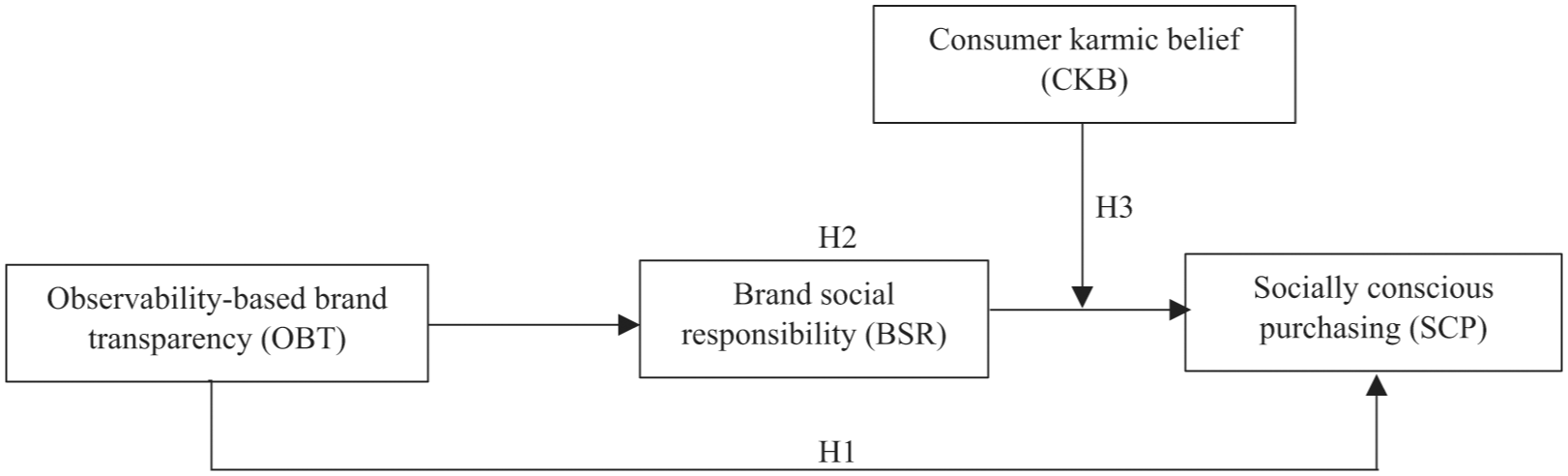
Conceptual model.
The Mixed-Methods Design
To rigorously investigate the complex mechanisms linking observability-based brand transparency to socially conscious purchasing, this study adopts a sequential mixed-methods research design (Creswell & Clark, 2017). Given the fragmented theoretical landscape regarding ethical consumption and the need to explore culturally contingent boundary conditions in emerging markets, a single methodological approach is insufficient to capture the nuances of these phenomena. Accordingly, we first conducted an exploratory qualitative study (Study 1) to investigate the interrelationships among key concepts and uncover participants’ authentic experiences, ensuring the theoretical framework is grounded in the empirical reality of Vietnamese consumers. This qualitative phase was subsequently followed by two confirmatory quantitative studies (Study 2 and Study 3) designed to empirically test the proposed theoretical model and validate the hypothesized relationships. By doing so, we leverage the complementary strengths of both methodologies to examine both symmetric effects and asymmetric configurational patterns, thereby enhancing the robustness and contextual validity of our findings.
Study 1: Qualitative Study
Design and Methodology
Study 1 served three critical purposes: (1) to validate the relevance and cultural appropriateness of transparency and karmic belief constructs within the Vietnamese consumption context, (2) to identify salient dimensions of these constructs as experienced by Vietnamese consumers, and (3) to inform appropriate scale item selection for Study 2’s quantitative measurement, ensuring measures capture locally meaningful manifestations rather than imposing Western conceptualizations (Douglas & Craig, 2007).
To investigate the interrelationships between observability-based brand transparency, brand social responsibility, consumer karmic belief, and socially conscious purchasing, we conducted in-depth semi-structured interviews with 20 Vietnamese consumers possessing karmic beliefs. This approach allows researchers to examine intricate phenomena and uncover participants’ authentic experiences while maintaining adaptability to investigate emergent concepts (DeJonckheere & Vaughn, 2019). We employed criterion-based purposive sampling combined with snowball sampling, initially identifying participants through community centers and spiritual organizations in Ho Chi Minh City and Hanoi. Selection criteria included: (1) Vietnamese citizenship with established karmic belief systems; (2) minimum 18 years old with independent purchasing authority; (3) documented engagement in ethically-motivated consumption; and (4) demographic diversity across age, education, and occupation.
The sample comprised 12 female and 8 male participants, averaging 29.4 years in age. Individual interviews lasting 15 to 20 min were conducted in-person following a semi-structured interview protocol comprising open-ended questions exploring: (a) perceptions of brand transparency and specific transparency practices valued (“What does it mean when a brand is transparent to you? Can you describe brands that demonstrate transparency?”); (b) understanding and personal interpretation of karmic beliefs (“How do your karmic beliefs influence your daily decisions?”); (c) connections between transparency, social responsibility, and karma (“Do you see any relationship between how transparent a brand is and your karmic beliefs?”); (d) purchasing decision-making processes for ethical products (“Walk me through how you decide to buy from socially responsible brands”); and (e) cultural factors shaping these perceptions (“How does Vietnamese culture influence your views on brand responsibility?”). This protocol enabled systematic data collection while allowing flexibility for emergent themes (Kallio et al., 2016). Individual interviews lasting 15 to 20 min were conducted in-person, recorded with consent, and transcribed according to established qualitative methodology standards (Creswell & Poth, 2016). Participants received gift vouchers in recognition of their contribution.
Qualitative Data Analysis
We employed a reflexive thematic analysis methodology (Braun & Clarke, 2006), implementing a structured six-stage procedure encompassing data familiarization, initial coding, theme construction, theme validation, theme refinement, and final reporting. Our analytical framework adhered to established qualitative coding standards, initially constructing a detailed coding schema incorporating operational definitions for core concepts drawn from transparency, corporate social responsibility, karmic belief systems, and ethical consumption research domains. Open coding was executed through NVivo 15 software, with dual-researcher independent coding of each transcript to ensure coding consistency, facilitating pattern recognition and meaning interpretation while preserving theoretical adaptability (Naeem et al., 2023). Subsequently, axial coding consolidated primary codes into secondary themes via continuous researcher dialogue and theoretical triangulation, with focused coding integrating these themes into five principal theoretical categories: observability-based brand transparency perceptions, brand social responsibility assessments, consumer karmic belief impacts, socially conscious purchasing practices, and cultural contextual elements. Our analytical strategy integrated inductive and abductive logic (Timmermans & Tavory, 2012), commencing with inductive coding to facilitate organic theme emergence, subsequently applying abductive reasoning to connect identified patterns with established signaling theory and social identity theory frameworks.
Results
Our analysis revealed five primary thematic clusters, including brand transparency mechanisms, social responsibility through transparency pathways, perception to action processes, karmic beliefs as a moral compass, and cultural context considerations. The first cluster indicated that observability-based brand transparency drives trust through brand openness, uncertainty reduction, and quality signaling, with participants noting “When brands show us how they make products, I trust them more . . . transparency means honesty” (Participant 3, 12), emphasizing how observable practices enhance consumer confidence (Montecchi et al., 2024). The second cluster revealed that brand social responsibility perceptions emerge through ethical signaling and commitment demonstration, as one participant explained “Transparent brands are more likely to be socially responsible . . . they show their values openly” (Participant 2, 9). The remaining clusters demonstrated that socially conscious purchasing is driven through value-based purchasing and impact awareness, consumer karmic belief influences through moral reciprocity and consequence awareness, with participants noting “Good actions bring good results . . . buying from ethical brands creates positive karma” (Participant 1, 15), and cultural context factors affect traditional influence and community orientation. These qualitative insights provide crucial empirical grounding for our conceptual model. Rather than merely identifying isolated variables, the findings confirm the specific causal mechanisms operating in this context: consumers interpret observability-based brand transparency as a credibility signal (
Study 2: Quantitative Study
Research Method
Measurement
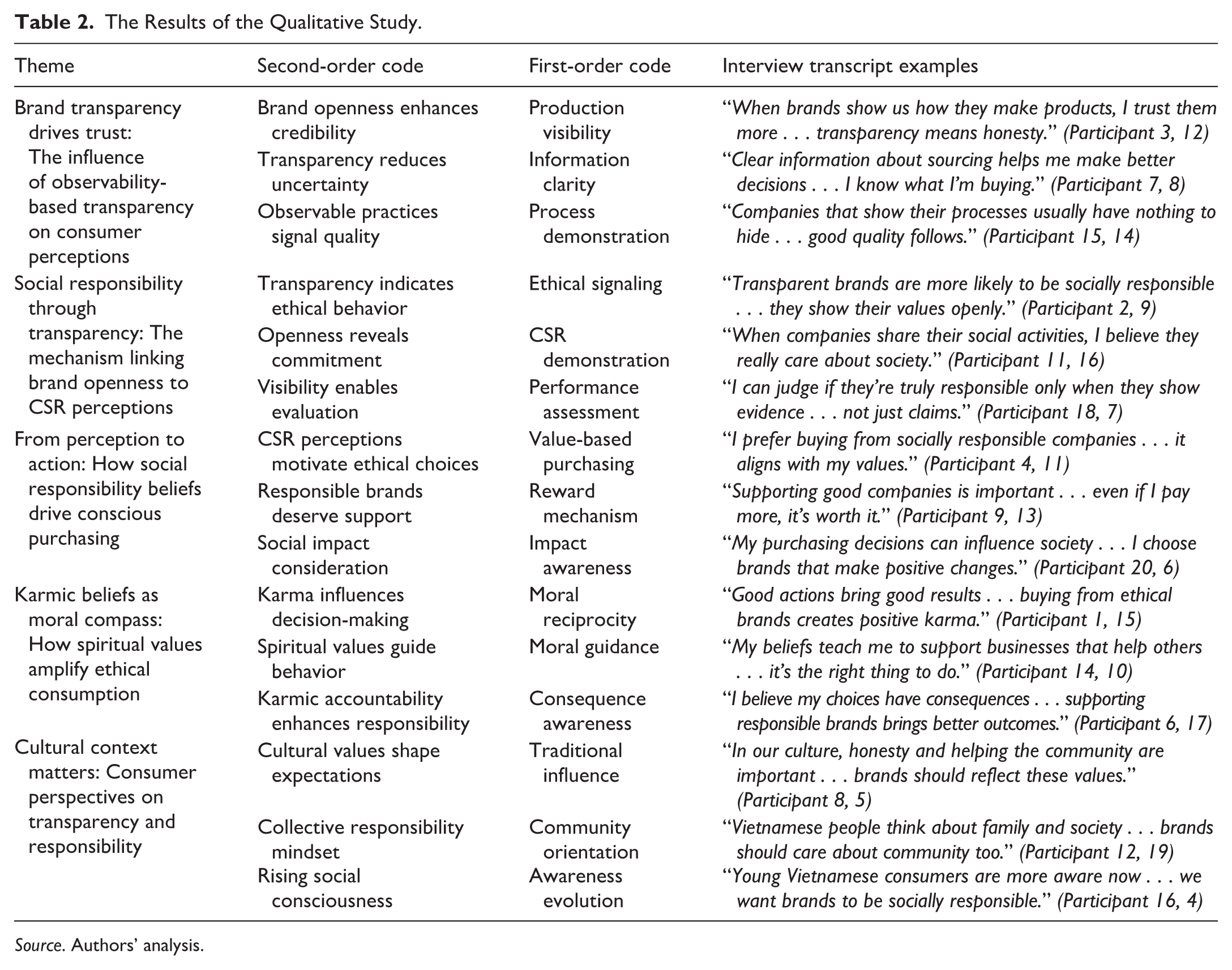
Following rigorous literature examination and expert consultations, we developed a comprehensive survey instrument measuring four key constructs using a 5-point Likert format. For observability-based brand transparency, while Montecchi et al.’s (2024) original observability dimension comprised five items covering production processes, sourcing locations, and quality disclosure, we strategically selected three items that specifically captured production process visibility and sourcing transparency. This selection was theoretically grounded in our qualitative findings (Table 2), which revealed that participants particularly emphasized “production visibility,” “process demonstration,” and “information clarity” as critical transparency indicators (“Companies that show their processes usually have nothing to hide . . . good quality follows”—Participant 15, 14; “When brands show us how they make products, I trust them more”—Participant 3, 12). These three items align with the disclosure-as-observable-evidence conceptualization that emerged from our interviews, where transparency was understood not merely as information provision but as visible, verifiable demonstration of production practices that consumers can assess and evaluate (Schnackenberg & Tomlinson, 2016). This approach ensures construct validity while maintaining theoretical coherence with our qualitative insights.
The Results of the Qualitative Study.
Source. Authors’ analysis.
For consumer karmic belief, from Mo et al.’s (2022) original 7-item scale, we selected four items capturing moral reciprocity and consequence awareness—the dimensions most salient in our Vietnamese context. Our qualitative analysis (Table 2) revealed participants’ karmic beliefs primarily manifested through ethical causality in consumption decisions (“Good actions bring good results . . . buying from ethical brands creates positive karma”—Participant 1, 15; “I believe my choices have consequences”—Participant 6, 17), consistent with Buddhist-Confucian philosophical traditions emphasizing moral accountability in daily conduct (Kopf, 2012; Yao, 2000), rather than purely metaphysical cosmology.
Brand social responsibility (four items adapted from Grohmann & Bodur, 2015) evaluating brand fairness and caring behaviors, and socially conscious purchasing (four items adapted from Pepper et al., 2009) focusing on ethical consumption behaviors. Pilot testing with 50 consumers yielded reliability coefficients above .7 for all constructs, with items translated and back-translated following cross-cultural research protocols to ensure measurement equivalence.
Data Collection
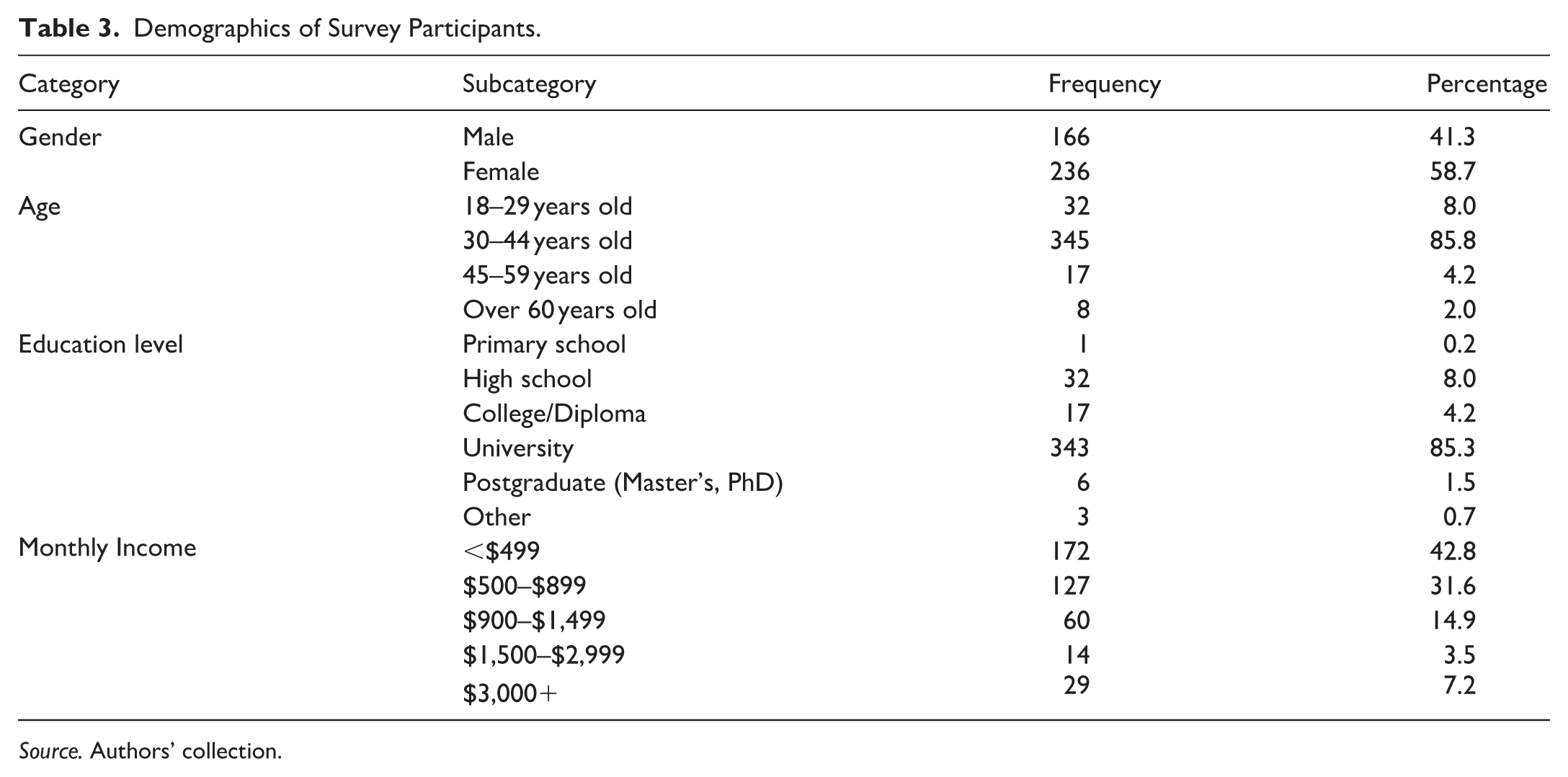
To evaluate our conceptual framework, we collected data from consumers in Vietnam during Vesak 2025, a context particularly suited for examining the intersection of cultural-spiritual beliefs and ethical consumption behavior in developing economies. The United Nations Day of Vesak 2025, held in Vietnam, provided an ideal empirical setting due to its gathering of Buddhist practitioners and culturally-conscious consumers who possess strong karmic beliefs essential for our research framework, with the event’s focus on Buddhist teachings and mindful living practices ensuring participants possessed the karmic belief systems central to our theoretical model (Mo et al., 2022). We employed convenience sampling combined with purposive sampling to identify appropriate participants based on two primary criteria: minimum age of 18 years with independent purchasing decision-making authority, and demonstrated engagement with Buddhist practices and karmic belief systems verified through preliminary screening questions about karma and moral reciprocity (Reed et al., 2012). Following methodological recommendations for minimizing common method bias (CMB) in research (Podsakoff et al., 2012), we implemented structured data collection protocols during the 3-day Vesak celebration period, with survey instruments developed in English and subsequently translated into Vietnamese following rigorous translation-back-translation procedures to ensure conceptual equivalence (Brislin, 1970). We employed face-to-face survey administration conducted by trained research assistants familiar with Buddhist cultural contexts, which proved particularly appropriate given the spiritual nature of the event where personal interaction facilitated higher participation rates among attendees. From our systematic approach targeting event participants over the 3-day period, we initially received 485 responses, with 83 responses (17.1%) excluded following rigorous data screening procedures based on predetermined criteria: incomplete surveys, participants under 18 years of age, and responses showing clear response bias patterns, resulting in 402 complete and valid responses representing a response validity rate of 82.9% and adequate statistical power for our analyses according to recommended guidelines for PLS-SEM and fsQCA methodologies (Hair et al., 2019; Ragin, 2008; Table 3).
Demographics of Survey Participants.
Source. Authors’ collection.
Measurement Validation
Common Method Bias (CMB)
To address potential common method bias (CMB) concerns from single-source data collection, we performed Harman’s single-factor test (Podsakoff et al., 2012), revealing that the first factor accounted for 31.24% of total variance, well below the 50% threshold indicating problematic CMB. Four distinct factors with eigenvalues greater than 1.0 collectively explained 61.81% of variance, confirming adequate discriminant validity among constructs, indicating that CMB is unlikely to significantly confound our findings.
Measurement Items Validity
We conducted confirmatory factor analysis (CFA) to evaluate the validity of all constructs in our conceptual model. Analysis of the measurement model demonstrated excellent fit with the empirical data: χ²(84) = 159.07 (χ²/df = 1.89), RMSEA = 0.05, SRMR = 0.04, CFI = 0.96, TLI = 0.95, GFI = 0.95, AGFI = 0.93, and NFI = 0.92, all meeting or exceeding recommended thresholds (Hair et al., 2019). The chi-square difference test comparing the estimated model to the null model (Δχ² = 1,774.77, Δdf = 21, p < .001) further confirmed the superiority of our hypothesized model structure over alternative specifications.
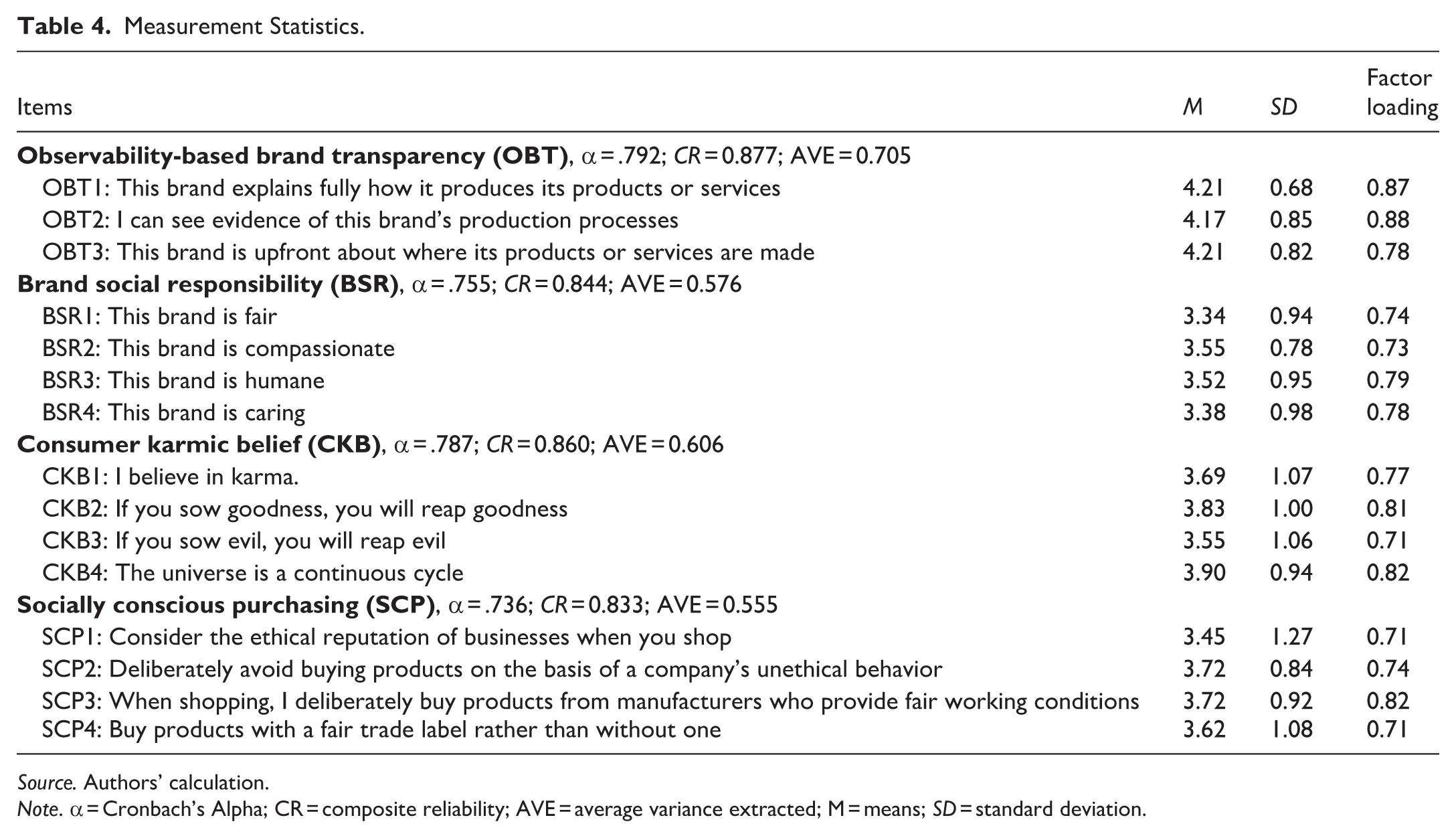
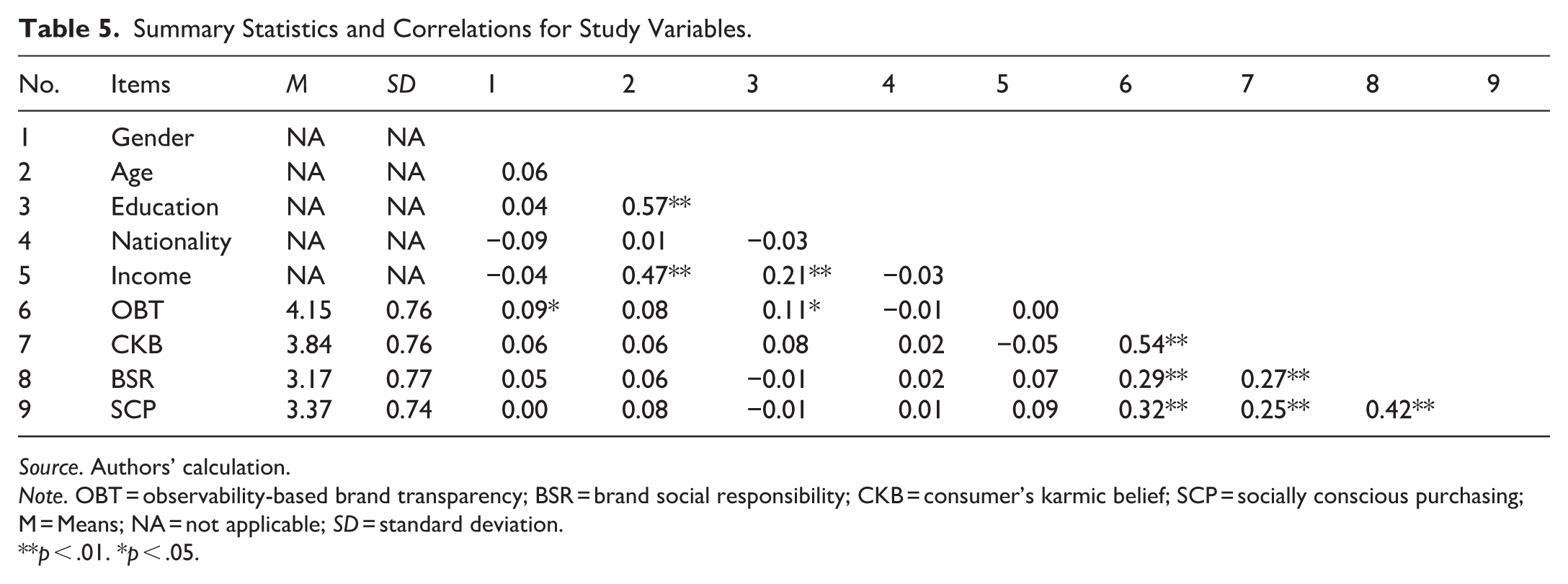
Our measurement model demonstrated strong psychometric properties across all constructs. As shown in Table 4, all constructs exhibited excellent reliability with Cronbach’s alpha values (.74–.79) and composite reliability values (.83–.88) exceeding the .70 threshold (Hair et al., 2019). Convergent validity was confirmed through substantial factor loadings (0.71–0.88) and AVE values (0.56–0.71) surpassing the 0.50 criterion (Fornell & Larcker, 1981). Table 5 demonstrates that inter-construct correlations (.25–.54) were below the square root of AVE shown in Table 4 for each construct, supporting discriminant validity. Additionally, the heterotrait-monotrait (HTMT) ratios ranged from 0.02 to 0.69, all below the conservative 0.85 threshold, further confirming discriminant validity between constructs (Henseler et al., 2015). These results collectively confirm the reliability and validity of our measurement model, providing a solid foundation for structural equation modeling analyses.
Measurement Statistics.
Source. Authors’ calculation.
Note. α = Cronbach’s Alpha; CR = composite reliability; AVE = average variance extracted; M = means; SD = standard deviation.
Summary Statistics and Correlations for Study Variables.
Source. Authors’ calculation.
Note. OBT = observability-based brand transparency; BSR = brand social responsibility; CKB = consumer’s karmic belief; SCP = socially conscious purchasing; M = Means; NA = not applicable; SD = standard deviation.
p < .01. *p < .05.
Results of Hypotheses Testing
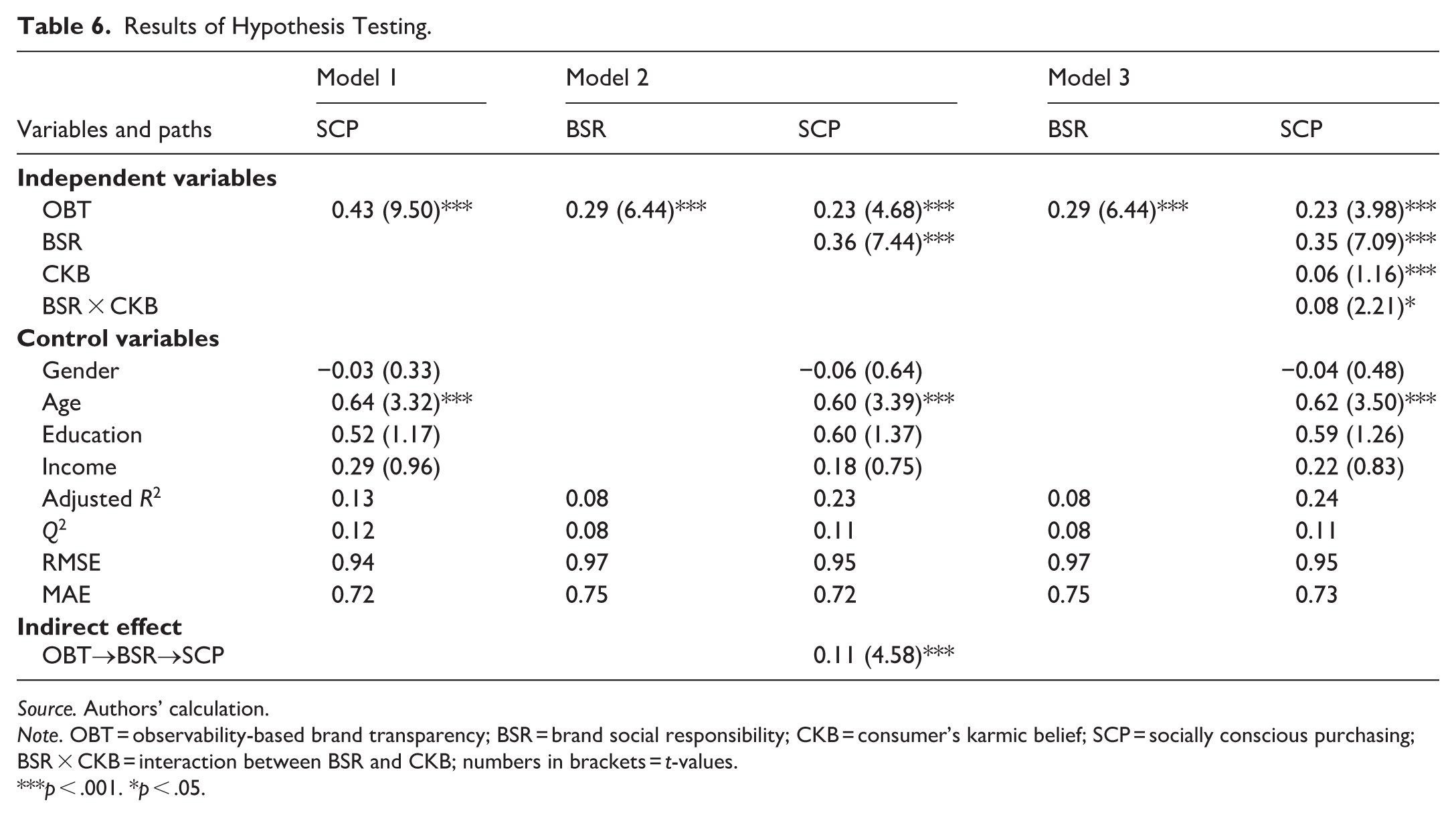
This study specifically selected PLS-SEM over covariance-based structural equation modeling (CB-SEM) to test the hypotheses. This choice is theoretically and methodologically justified because our primary research objective is predictive and explanatory, aiming to evaluate a complex conceptual framework that integrates both mediating and moderating mechanisms. Additionally, PLS-SEM is highly robust and does not require strict assumptions of multivariate normality, making it the most appropriate and rigorous method for our empirical data (Hair et al., 2019). The PLS-SEM analysis (Table 6) demonstrated that our theoretical model accounts for 24% (adjusted R²) of variance in socially conscious purchasing and 8% of variance in brand social responsibility, with Q2 values of 0.11 and 0.08 respectively, indicating satisfactory predictive capacity (Hair et al., 2019). Model fit assessment revealed acceptable performance with Root Mean Square Error (RMSE) ranging from 0.94 to 0.97 and Mean Absolute Error (MAE) values between 0.72 and 0.75, supporting our conceptual framework’s validity.
Results of Hypothesis Testing.
Source. Authors’ calculation.
Note. OBT = observability-based brand transparency; BSR = brand social responsibility; CKB = consumer’s karmic belief; SCP = socially conscious purchasing; BSR × CKB = interaction between BSR and CKB; numbers in brackets = t-values.
p < .001. *p < .05.
Control variable analysis reveals that age consistently predicts outcomes across specifications (β = .60–.64, p < .001), while remaining demographic factors show limited significance. The model’s explanatory capacity and predictive accuracy validate our integrated theoretical approach for understanding ethical consumption in developing market contexts.
FsQCA Approach
Fuzzy-set Qualitative Comparative Analysis (fsQCA) provides a configurational perspective complementing our PLS-SEM analysis by examining complex causal combinations rather than isolated net effects (Ragin, 2014). We calibrated data into fuzzy sets ranging from 0 to 1 using established thresholds for membership criteria (Kaya et al., 2020).
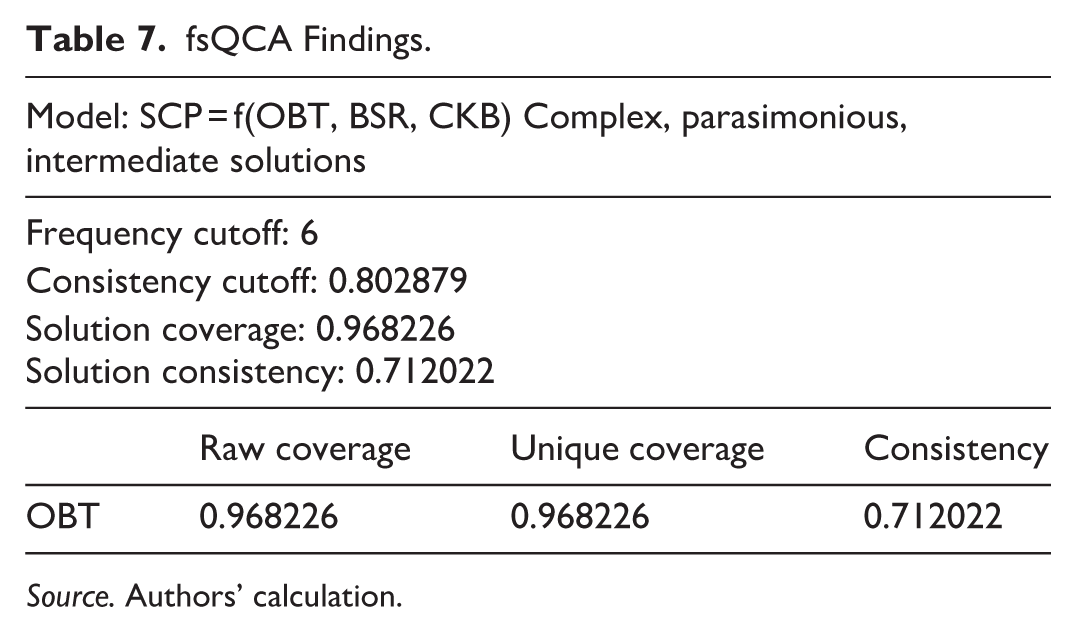
Table 7 presents fsQCA results examining socially conscious purchasing as an outcome of observability-based brand transparency, brand social responsibility, and consumer karmic belief configurations. The solution demonstrates robust consistency (.712022) and excellent coverage (.968226), indicating effective explanation of socially conscious purchasing outcomes (Ragin, 2008). Using standard thresholds with a frequency cutoff of 6 and a consistency cutoff of .802879, a single significant pathway emerged: observability-based brand transparency showed substantial raw coverage (.968226) with identical unique coverage and moderate consistency (.712022). This reveals that observability-based brand transparency represents a fundamental contributing condition for achieving high socially conscious purchasing behavior. While its high coverage demonstrates its widespread relevance, the consistency below the recommended .80 threshold (Fiss, 2011; Ragin, 2008) suggests that transparency signals operate most effectively when combined with other contextual factors in developing markets. These results complement our PLS-SEM findings by confirming transparency as a highly relevant condition for ethical consumption, revealing asymmetric relationships and configurational complexity in ethical consumption behavior.
fsQCA Findings.
Source. Authors’ calculation.
Study 3: Quantitative Study to Validate the Findings of the Study 2
Research Design, Measurement Scale, and Data Collection
Study 3 employed a quantitative survey design to cross-check the findings of Study 2 and address concerns regarding sample generalizability. While Study 2 data was collected at VESAK 2025, Study 3 aimed to replicate findings using a representative sample of general Vietnamese consumers to eliminate selection bias and enhance external validity.
To ensure sample representativeness, validity, and reliability, we contracted a professional market research firm specializing in consumer research across Viet Nam. The firm distributed online surveys nationwide between December 2025 and January 2026, employing quota sampling to achieve demographic balance across gender, age, education, and income levels reflective of Viet Nam’s consumer population. Screening criteria required participants to be at least 18 years old with recent brand purchase experience within the past 6 months.
Following rigorous literature examination and expert consultations, we employed the comprehensive survey instrument measuring four key constructs used in the Study 2, using a 5-point Likert format: observability-based brand transparency (three items adapted from Montecchi et al., 2024); brand social responsibility (four items adapted from Grohmann & Bodur, 2015); consumer karmic belief (four items adapted from Mo et al., 2022); and socially conscious purchasing (four items adapted from Pepper et al., 2009).
To mitigate common method bias, several procedural remedies were implemented (Podsakoff et al., 2012): anonymity assurance, construct separation across survey sections with intervening demographic questions, and reverse-coded items for key constructs. After eliminating incomplete responses, 281 valid questionnaires were retained for analysis, exceeding minimum PLS-SEM requirements (Sarstedt et al., 2017). The sample comprised 58.7% female respondents (n = 165) and 41.3% male respondents (n = 116), with age distributed across five ranges: 18 to 29 years (8.0%, n = 23), 30 to 44 years (85.8%, n = 241), 45 to 59 years (4.2%, n = 12), 60 to 74 years (1.4%, n = 4), and 75+ years (0.6%, n = 1). Education levels spanned four categories: high school (8.0%, n = 23), college/diploma (4.2%, n = 12), university (85.3%, n = 240), and postgraduate degrees (2.5%, n = 6). Monthly income was distributed across five ranges: <$499 (42.8%, n = 120), $500 to $899 (31.6%, n = 89), $900 to $1,499 (14.9%, n = 42), $1,500 to $2,999 (3.5%, n = 10), and ⩾$3,000 (7.2%, n = 20). This demographic profile aligns with Vietnam’s emerging middle-class consumer segment (Pham & Truong, 2025).
Data analysis employed PLS-SEM using SmartPLS 4.0 for model assessment and Hayes PROCESS Macro to examine moderation and mediation effects (Hair et al., 2019; Hayes, 2015).
Results
Common Method Bias (CMB)
To address common method bias, we implemented procedural controls including anonymity assurance, construct separation, and reverse-coded items, alongside statistical assessments (Podsakoff et al., 2012). Harman’s single-factor test revealed the first unrotated component explained 46.23% of variance, below the critical 50% threshold indicating problematic bias, with four components collectively accounting for 76.24% of variance. The marker variable technique using a theoretically unrelated construct (“Do you prefer the color red?”) demonstrated minimal deviation between original (.219–.719) and adjusted correlations (.211–.716), with all relationships maintaining high significance (p < .001) and a common method variance estimate of merely .01. These convergent findings confirm that common method bias does not substantially confound the relationships among study variables.
Measurement Model Evaluation
We assessed the measurement model through construct reliability, convergent validity, and discriminant validity. As shown in Table 8, internal consistency was robust, with Cronbach’s alpha coefficients ranging from .863 to .901 and composite reliability (CR) values between .907 and .931, all exceeding the .70 threshold (Hair et al., 2019). Convergent validity was established as average variance extracted (AVE) for all constructs ranged from 0.709 to 0.812, surpassing the 0.50 benchmark. Individual item reliability was confirmed with outer loadings ranging from 0.786 to 0.911, indicating strong indicator-construct relationships. Discriminant validity was evaluated using the Fornell-Larcker criterion and HTMT ratios. The square root of AVE for each construct (ranging from 0.842 to 0.901) exceeded the highest inter-construct correlation (.669), satisfying the Fornell-Larcker criterion (Fornell & Larcker, 1981). All HTMT values remained below the conservative 0.85 threshold, with the highest value being 0.806, providing strong evidence of construct distinctiveness (Henseler et al., 2015). These results collectively confirm the measurement model’s reliability and validity.
Measurement Statistics.
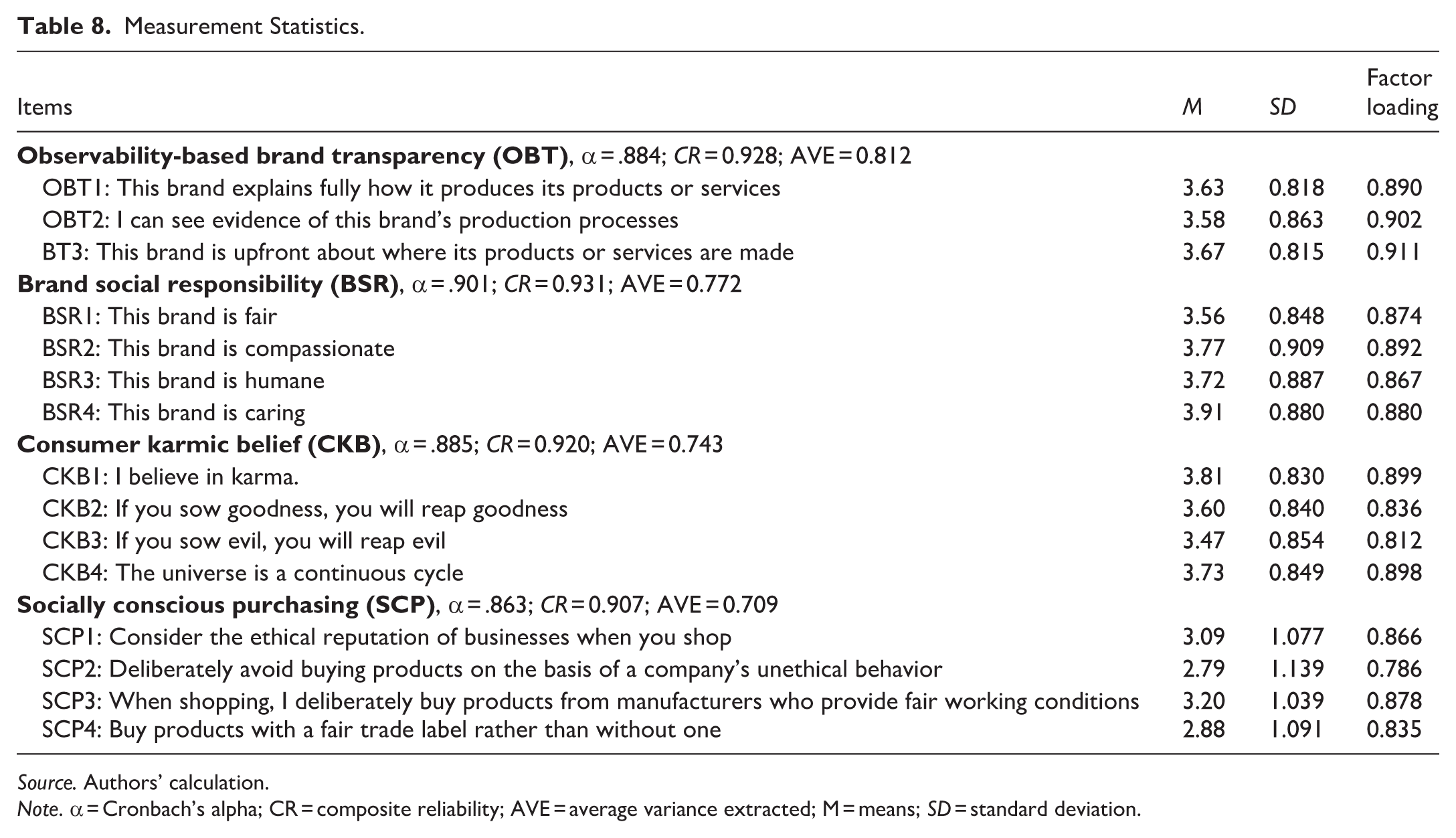
Source. Authors’ calculation.
Note. α = Cronbach’s alpha; CR = composite reliability; AVE = average variance extracted; M = means; SD = standard deviation.
Structural Model Evaluation and Hypothesis Testing
We first evaluated the structural model’s explanatory power and predictive relevance. As presented in Table 9, the adjusted R2 values indicated that the model explains substantial variance in brand social responsibility (.297) and socially conscious purchasing (.199 in Model 3). The Q2 values were consistently positive (ranging from 0.104 to 0.288), confirming adequate predictive relevance, while SRMR values remained below the 0.08 threshold (0.624 to 0.953), indicating acceptable model fit (Hair et al., 2019). Control variables (gender, age, and education) showed no significant effects, suggesting robustness of the hypothesized relationships.
Results of Hypothesis Testing.
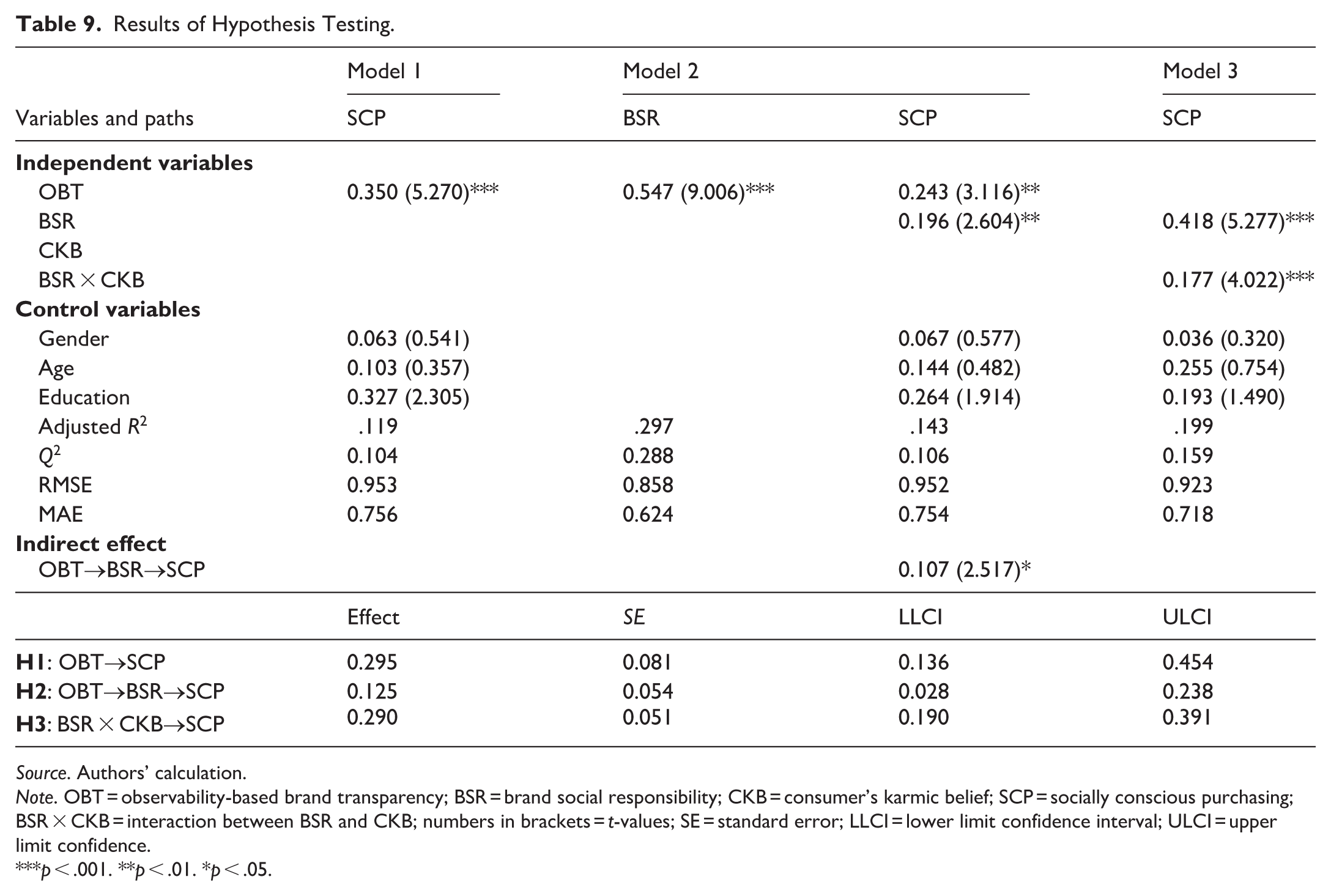
Source. Authors’ calculation.
Note. OBT = observability-based brand transparency; BSR = brand social responsibility; CKB = consumer’s karmic belief; SCP = socially conscious purchasing; BSR × CKB = interaction between BSR and CKB; numbers in brackets = t-values; SE = standard error; LLCI = lower limit confidence interval; ULCI = upper limit confidence.
p < .001. **p < .01. *p < .05.
Regarding hypothesis testing, the bootstrapping results provided comprehensive support for the proposed framework.
Finally, we examined the moderating role of consumer karmic belief (
Discussion and Conclusion
Discussion
Our findings reveal significant pathways through which observability-based brand transparency drives socially conscious purchasing behavior in an emerging market context. All three hypotheses were supported, demonstrating robust validation of our theoretical framework. The PLS-SEM results confirm that observability-based brand transparency positively influences socially conscious purchasing both directly (
Beyond validating the proposed relationships, these findings also invite a closer comparison with prior transparency research. Our findings depart from much of the prior literature by demonstrating that observability-based brand transparency exerts a direct and substantial effect on socially conscious purchasing, rather than brand transparency conceptualized as a broad, multidimensional construct (e.g. Foscht et al., 2018; Kang & Hustvedt, 2014; Lin et al., 2017; Sansome et al., 2024). Whereas prior studies largely explain ethical consumption through consumer-centric psychological drivers such as perceived consumer effectiveness (Wesley et al., 2012), attitudinal evaluations (Kozar & Hiller Connell, 2013), and personal or moral values (Saleem et al., 2021), our study deliberately isolates observability to capture how firm-initiated transparency signals are interpreted by consumers. This focus suggests that making value creation and delivery processes visible can independently motivate socially conscious purchasing, without relying primarily on internal consumer predispositions. Moreover, in contrast to prior research that treats spirituality or environmental awareness as contextual moderators (Saleem et al., 2018; Su et al., 2022), our findings show that consumer karmic belief functions as a culturally embedded moral belief system that amplifies the translation of perceived brand social responsibility into socially conscious purchasing, extending earlier sustainability research that emphasizes ethical and environmental consciousness in shaping responsible consumption (Kautish et al., 2020).
Theoretical Implications
Our study offers several significant theoretical contributions to brand transparency and ethical consumption literature in emerging market contexts. First, we extend signaling theory (Spence, 1978) by demonstrating how observability-based brand transparency functions as a specific credible signal that directly influences socially conscious purchasing behavior, addressing calls to unpack transparency mechanisms where information asymmetries are particularly pronounced in emerging markets (Montecchi et al., 2024). This advancement moves beyond general signaling theory applications by establishing observability-based brand transparency as a distinct transparency dimension that enables consumers to directly observe and evaluate corporate authenticity signals, thereby reducing information uncertainty in contexts where traditional institutional trust mechanisms may be underdeveloped.
Second, we contribute to social identity theory (Tajfel et al., 1979) by revealing how consumer karmic belief, as culturally embedded spiritual identity markers, moderate consumers’ responses to corporate social responsibility signals in an emerging market context. This integration of cultural-spiritual identity dimensions with signaling mechanisms advances theoretical understanding of cultural boundary conditions in ethical consumption, particularly by demonstrating how beliefs about moral reciprocity and karmic consequences shape consumer interpretation of brand social responsibility signals in emerging markets where spiritual values remain prominent (Cheng et al., 2024).
Third, we identify brand social responsibility as a critical mediating mechanism that explains how transparency signals translate into socially conscious purchasing decisions, illuminating the cognitive pathway through which observable corporate practices influence ethical consumption behaviors (Kutaula et al., 2024). This contributes to both transparency and consumer behavior literature by establishing brand social responsibility as the missing link between corporate signaling and consumer behavioral outcomes, advancing understanding of how consumers process and respond to transparency communications in emerging market contexts.
Fourth, our multi-method approach combining both qualitative and quantitative research using PLS-SEM and fsQCA provides methodological innovation by revealing both symmetric relationships predicted by signaling theory and asymmetric configurational patterns, addressing methodological limitations in previous transparency research and offering new insights into complex causal pathways in emerging markets (Besharat et al., 2024). This methodological contribution demonstrates that while signaling theory explains linear relationships, configurational analysis reveals that high observability-based transparency is a critical foundational element that contributes to driving socially conscious purchasing.
Finally, by focusing specifically on an emerging market where cultural-spiritual beliefs play prominent roles in consumption decisions, we provide much-needed theoretical contextualization to ethical consumption research that has predominantly examined developed market contexts, responding to calls for more culturally-sensitive models that account for spiritual values in consumer behavior (Prikshat et al., 2024). Crucially, this contextualization does not imply that the findings are irrelevant to developed markets. Because concepts of moral causation exist across various global cultures (White et al., 2019), this study extends the applicability of established theories by demonstrating how these underlying cultural-spiritual boundary conditions operate. This insight bridges the gap between developing and developed market contexts, thereby enhancing the generalizability and cultural sensitivity of transparency and ethical consumption theories.
Practical Implications
Our findings offer several actionable implications for brands operating in emerging markets seeking to enhance socially conscious purchasing behavior. First, managers should prioritize developing observability-based brand transparency initiatives as strategic communication assets rather than superficial marketing tactics, as our results demonstrate that transparency directly enhances socially conscious purchasing with a strong effect size, requiring investment in comprehensive supply chain visibility systems, detailed production process documentation, and accessible consumer communication platforms that demonstrate authentic value creation processes. In practice, this may involve adopting traceability technologies (e.g. QR codes, digital tracking tools), publishing verifiable sourcing and production data, and enabling consumers to directly observe how ethical standards are implemented across the supply chain. From a signaling perspective, these actions strengthen signal credibility by increasing observability and reducing information asymmetry, thereby enhancing consumers’ confidence in the authenticity of brands’ social responsibility claims.
Second, brands should focus on building authentic social responsibility practices rather than surface-level CSR activities, as our findings demonstrate brand social responsibility’s critical mediating role in converting transparency into ethical consumption, with companies establishing measurable social impact programs that resonate with local cultural values and engage in genuine community development initiatives. Managers are encouraged to move beyond symbolic CSR by setting clear social performance metrics, partnering with credible third-party organizations, and regularly reporting tangible social outcomes to reinforce perceived authenticity and trust. Such practices not only reinforce transparency signals but also provide consumers with socially meaningful cues that can be internalized as part of their moral self-concept, consistent with identity-based consumption mechanisms.
Third, marketing strategies should be culturally-sensitive and specifically tailored to consumers with strong spiritual beliefs, as our results confirm consumer karmic belief significantly moderates the brand social responsibility-socially conscious purchasing relationship, involving development of region-specific campaigns that resonate with cultural-spiritual frameworks prevalent in emerging markets and emphasize moral reciprocity themes that align with karmic principles. For example, CSR narratives may highlight how responsible business practices contribute to positive social consequences over time, thereby reinforcing moral self-concepts and motivating identity-consistent purchasing among spiritually oriented consumer segments. Importantly, managers should avoid overt moralizing messages and instead employ subtle storytelling approaches that allow consumers to voluntarily align brand choices with their culturally grounded moral identities.
Fourth, transparency communication should be designed incrementally in emerging markets, starting with core production processes and expanding to comprehensive value chain visibility, as confirmed by our fsQCA findings showing observability-based brand transparency alone can drive ethical consumption, suggesting emerging market consumers respond particularly well to step-by-step transparency revelations that build trust progressively. Managers may operationalize this approach by sequencing transparency disclosures–initially focusing on the most salient ethical concerns (e.g. labor conditions or environmental impact) before gradually extending transparency to upstream and downstream activities as consumer trust deepens. To facilitate implementation, firms may adopt a phased transparency roadmap with clearly defined milestones, performance indicators, and consumer feedback mechanisms to continuously refine transparency strategies over time.
Limitations and Future Research
While our study provides valuable insights, several limitations should be acknowledged that also open avenues for future research. First, the focus on a single emerging market limits generalizability, suggesting future cross-cultural comparative studies across diverse emerging economies with varying economic development levels and cultural-spiritual orientations, thereby enabling examination of cross-cultural and institutional boundary conditions of the proposed signaling–identity mechanism. Second, our cross-sectional design constrains causal inferences, indicating the need for dynamic, longitudinal, or experimental research to investigate how observability-based brand transparency functions as an evolving signal over time, including learning effects, signal fatigue, or credibility recalibration. Third, the quantitative approach could be enhanced through mixed-methods research exploring how cultural-spiritual beliefs influence transparency signal interpretation, while our focus on Buddhist event attendees may introduce selection bias requiring broader population studies. Future research may further extend the model by incorporating alternative psychological pathways beyond social identity, such as moral emotions or consumer skepticism, and by examining downstream firm-level outcomes of transparency strategies (e.g. brand equity, advocacy, or resilience to greenwashing backlash), as well as actual purchasing behavior rather than intentions, to strengthen both theoretical scope and empirical validity.
Footnotes

Funding
The authors disclosed receipt of the following financial support for the research, authorship, and/or publication of this article: This research is partly funded by Foreign Trade University and partly funded by University of Economics Ho Chi Minh City (Funding Number: 2025-10-23-3235).
Declaration of Conflicting Interests
The authors declared no potential conflicts of interest with respect to the research, authorship, and/or publication of this article.