







Abstract
Background:
The selection of a medical specialty is influenced by multiple factors, with personality traits potentially shaping career preferences. This study examines the personality traits and their impact on interest in surgical specialty among Swedish medical students, considering gender and comparing students and practicing surgeons.
Methods:
The Big Five Inventory was used to assess personality traits of medical students and surgeons in a cross-sectional study. The students were recruited from Umeå University and the University of Gothenburg, whereas the included surgeons were recruited from hospitals across Sweden. The data were collected between the 29th of August 2022 and the 2nd of December 2024. Differences in personality traits were analyzed using analysis of variance (ANOVA) and analysis of covariance (ANCOVA), adjusting for age and gender.
Results:
The participants were 276 fourth-year medical students and 471 Swedish surgeons. Statistically significant differences were found between medical students who preferred surgical specialization compared to students preferring non-surgical specialization, with lower neuroticism (p = 0.007), higher extraversion (p = 0.01), and, after adjustment for gender and age, higher conscientiousness (p = 0.045) in the group who preferred surgical specialization. Female students scored higher than male students in conscientiousness (p < 0.001), agreeableness (p = 0.047), and neuroticism (p = 0.002). Female students scored higher in neuroticism than female surgeons (p = 0.005) and lower in conscientiousness (p = 0.043), while male students had lower conscientiousness scores than male surgeons (p < 0.001).
Conclusions:
This study suggests that a combination of personality traits distinguishes Swedish medical students with interests in surgery from medical students with interest in non-surgical specialization. This difference is likely shaped by an interplay of student selection and professional socialization.
Context and relevance
Prior research, primarily from North America and Western Europe, establishes a distinct personality profile linked to a surgical career: higher conscientiousness and extraversion and lower neuroticism. The evidence before this study, however, lacks investigation in highly egalitarian contexts like Sweden, leaving the universality of this profile unclear. This study, comparing medical students and surgeons, found that despite the strong gender-equality norms in Sweden, students preferring surgery still showed this characteristic profile. The added value of this research is confirming this association in a new societal context. The implications of all available evidence suggest a combination of self-selection toward surgery based on personality, followed by professional socialization that further amplifies these traits, suggesting a dynamic person-environment fit model over purely innate predisposition.
Background
Over recent decades, a decline in surgical career interest among medical students has raised concerns regarding recruitment and retention within surgical residency programs, increasing interest in factors affecting specialty choice. 1 Medical students’ selection of a specialty is a multifaceted decision influenced by an interplay of external and internal factors. Key determinants such as lifestyle considerations, work–life balance, and personal preferences vary across different national contexts.2,3 In addition to contextual aspects, internal characteristics such as personality traits are believed to play a role in specialty selection. 4
Personality refers to characteristic patterns of thoughts, feelings, and behaviors. As shown in medical training, personality affects how individuals respond to professional demands, while the training environment itself also can shape how these traits are expressed. 5 A substantial body of research has identified personality differences between surgeons and physicians in non-surgical specialties, with surgeons typically scoring higher on conscientiousness and extraversion and lower on neuroticism and agreeableness. 6 Previous research on medical students’ personalities and specialty preferences found that students who score high in extraversion and low in neuroticism tend to lean toward surgical specialties. Conversely, students with high openness, agreeableness, and conscientiousness preferred non-surgical specialties.4,6 –10 Much of this literature is, however, limited to North American and Western European contexts and often fails to adequately consider how broader societal factors, such as cultural norms, gender equality, and inclusivity, may influence personality expression and career choice. 10 Given the importance of contextual factors, the institutional commitment to gender equality in Sweden, as reflected in its high Social Progress Index ranking, 11 provides a suitable environment to investigate if such factors affect personality profiles and specialty choice.
This study aims to examine the association between the personality traits and surgical specialty preference among Swedish medical students. Furthermore, it seeks to compare the personality profiles of medical students with those of practicing surgeons in Sweden to establish whether the patterns of personality traits linked to surgical interest align with or diverge from those described in the international literature.
Methods
Study design
This cross-sectional study included medical students and Swedish general and orthopedic surgery specialists. The manuscript adheres to the STROBE (Strengthening the Reporting of Observational Studies in Epidemiology) reporting guidelines for cross-sectional studies (STROBE checklist provided in Supplementary Material). 12 Throughout this manuscript, the term gender is used to denote self-reported gender identity (female, male, or non-binary).
Ethics approval and consent to participate
The study was exempt from requirements for approval by the Swedish Ethical Review Authority under Swedish law (dnr 2022-02941-01) and was conducted in accordance with the ethical principles of the Declaration of Helsinki. 13 Written informed consent was obtained from all participants.
Settings and participants
The participants were fourth-year medical students at two Swedish universities: Umeå University and University of Gothenburg. All students who completed their rotation in orthopedic and general surgery, consisting of 8 weeks of clinical practice and lectures, were invited to participate in the study during mandatory lectures or by email, using contact information registered by their medical program. The participants accessed the survey via a QR code. The data were collected between the 29th of August 2022 and the 2nd of December 2024. Specialty preference was assessed using a single question: “Which specialty are you currently considering for your future career?” Participants were categorized into two groups: those who preferred surgical specialties, for example, surgery, orthopedics, and gynecology (hereafter referred to as the Surg-Pref group) and those who preferred non-surgical specialties, for example, internal medicine and family medicine (the Non-Surg-Pref group). A previously published cohort of Swedish specialists in general surgery and orthopedic surgery served as a reference. 14 The data from this cohort were collected between the 29th of August and the 12th of December 2022 and from 28th of September to 15th of December 2023. 14 The surgeons were recruited with a convenience sampling method, through emails to the heads of the surgical departments or by personal invitations. The participants in both cohorts were informed about the study’s purpose and procedures, and that their participation was voluntary.
Variables and data sources
Participants responded to questions about personality traits as measured by the self-reported and validated Swedish version of the Big Five Inventory (BFI) scale. 15 BFI measures the five broad domains of the Five-Factor Model (FFM): neuroticism (versus emotional stability), extraversion (versus introversion), openness (versus conventionality), agreeableness (versus antagonism), and conscientiousness (versus disinhibition). 16 These traits are dimensional and not inherently positive or negative; their adaptiveness is often context-dependent. For example, high conscientiousness may foster reliability and achievement, but in extreme forms, it can manifest as maladaptive perfectionism or compulsivity. Similarly, agreeableness encompasses facets from compassion to gullibility, and high openness can range from creativity to unconventional behavior. The BFI is widely used in medical research and showed cross-cultural validity.17 –19
The online survey tool EasyQuest was used for data collection. 20 The participants ranked their level of agreement for 44 questions on a five-point Likert-type scale ranging from “I strongly disagree” (1) to “I strongly agree” (5). Each personality trait was evaluated with 8–10 questions. Feasible scores (minimum and maximum) for each trait were: openness 10–50 points (p) (10 questions), conscientiousness 9–45 p (9 questions), extraversion 8–40 p (8 questions), agreeableness 9–45 p (9 questions), and neuroticism 8–40 p (8 questions).15,21
Statistical methods
Frequencies and proportions were used to present demographic data of continuous variables for medical students and surgeons. Differences in mean personality scores between students and between students and surgeons were assessed using analysis of variance (ANOVA) and analysis of covariance (ANCOVA), within a general linear model framework. Multiple comparisons in the ANCOVA were adjusted using the Bonferroni correction. The results were adjusted in three models: model 1 was adjusted for age, model 2 for gender, and model 3 for both age and gender. This approach was chosen since personality traits have been shown to evolve during early and late life stages and the higher proportion of women in the student cohort. 21 Effect sizes for unadjusted analyses were estimated using Cohen’s d. The results were presented as mean values with 95% confidence intervals (CIs) and corresponding p-values. A two-sided p-value of ⩽ 0.05 was considered statistically significant. All statistical analyses were performed using SPSS version 29.
Results
Participants
In total, 276 medical students participated, comprising 87 (31.5%) male, 188 (68.1%) female, and one (0.4%) non-binary student. A reference group of 471 surgeons was included from the previously described cohort, with 224 general surgeons and 247 orthopedic surgeons. 14 Among the surgeons, 268 (56.9%) were male, 202 (42.9%) were female, and one (0.2%) was non-binary. Detailed demographic characteristics are presented in Table 1. Of the 136 (49%) medical students in the Surg-Pref group, 42 (30.9%) were male and 94 (69.1%) were female. Of 140 (51%) medical students in the Non-Surg-Pref group, 45 (32.1%) were male, 94 (67.1%) were female, and one (0.7%) was non-binary.
Characteristics of the study population presented as counts and proportions (%).
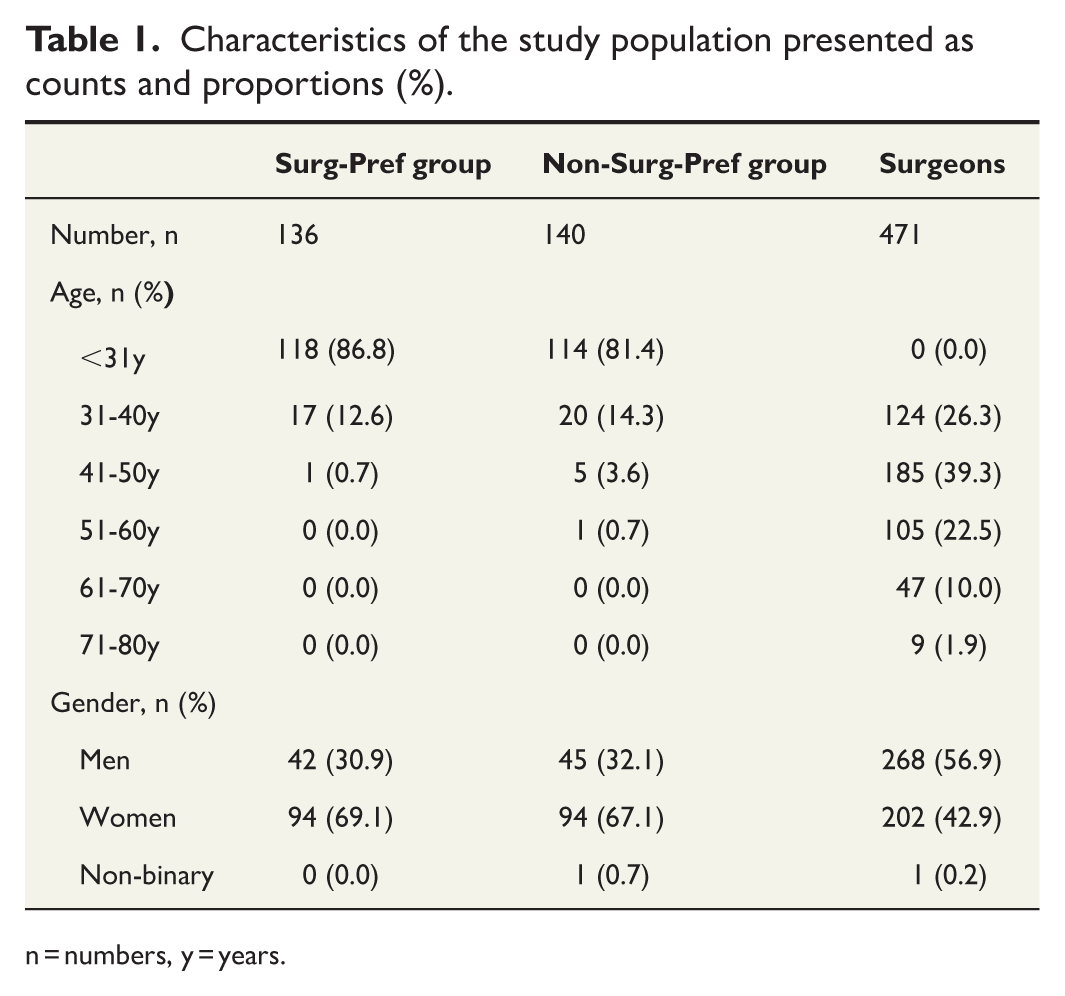
n = numbers, y = years.
Reference cohort of general surgeons versus orthopedic surgeons
No statistically significant differences were detected in personality profiles between general and orthopedic surgeons across the five personality traits: openness (p = 0.058), conscientiousness (p = 0.68), neuroticism (p = 0.42), extraversion (p = 0.34), or agreeableness (p = 0.79).
Surg-Pref group versus Non-Surg-Pref group
Neuroticism and extraversion showed statistically significant differences between students in Surg-Pref groups versus Non-Surg-Pref groups, both in the unadjusted analysis and in adjusted models (Table 2), with Surg-Pref students reporting higher extraversion and lower neuroticism. There were no statistically significant differences in conscientiousness in unadjusted analysis, but students in Surg-Pref group showed higher conscientiousness scores when adjusted for gender (p = 0.05) and gender and age (p = 0.045). The differences in extraversion and neuroticism showed small Cohen’s d effect sizes in the unadjusted model (Table 2).
Comparison between students in Surg-Pref and Non-Surg-Pref groups, presented as mean values with 95% confidence intervals (95% CIs).
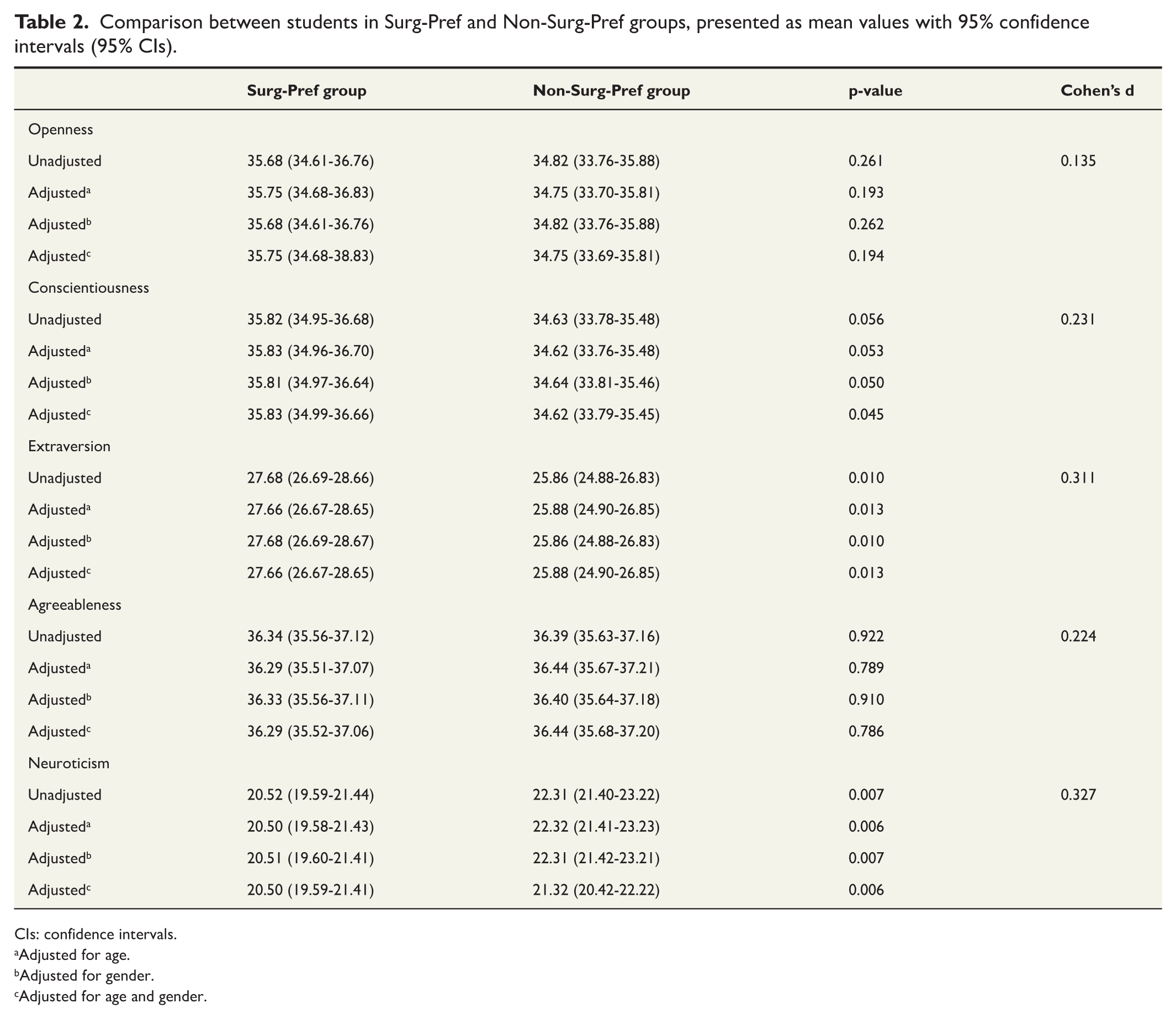
CIs: confidence intervals.
Adjusted for age.
Adjusted for gender.
Adjusted for age and gender.
Gender differences in the personality traits of medical students
Female students demonstrated higher conscientiousness and neuroticism in unadjusted and age-adjusted analyses compared to male students. No differences were observed for openness and extraversion. Agreeableness was significantly higher in female students in the unadjusted analysis (p = 0.047). Differences in agreeableness and neuroticism showed small effect, and conscientiousness showed a moderate Cohen’s d effect (Table 3).
Comparison between all male and female students, presented as mean values with 95% confidence intervals (95% CIs).
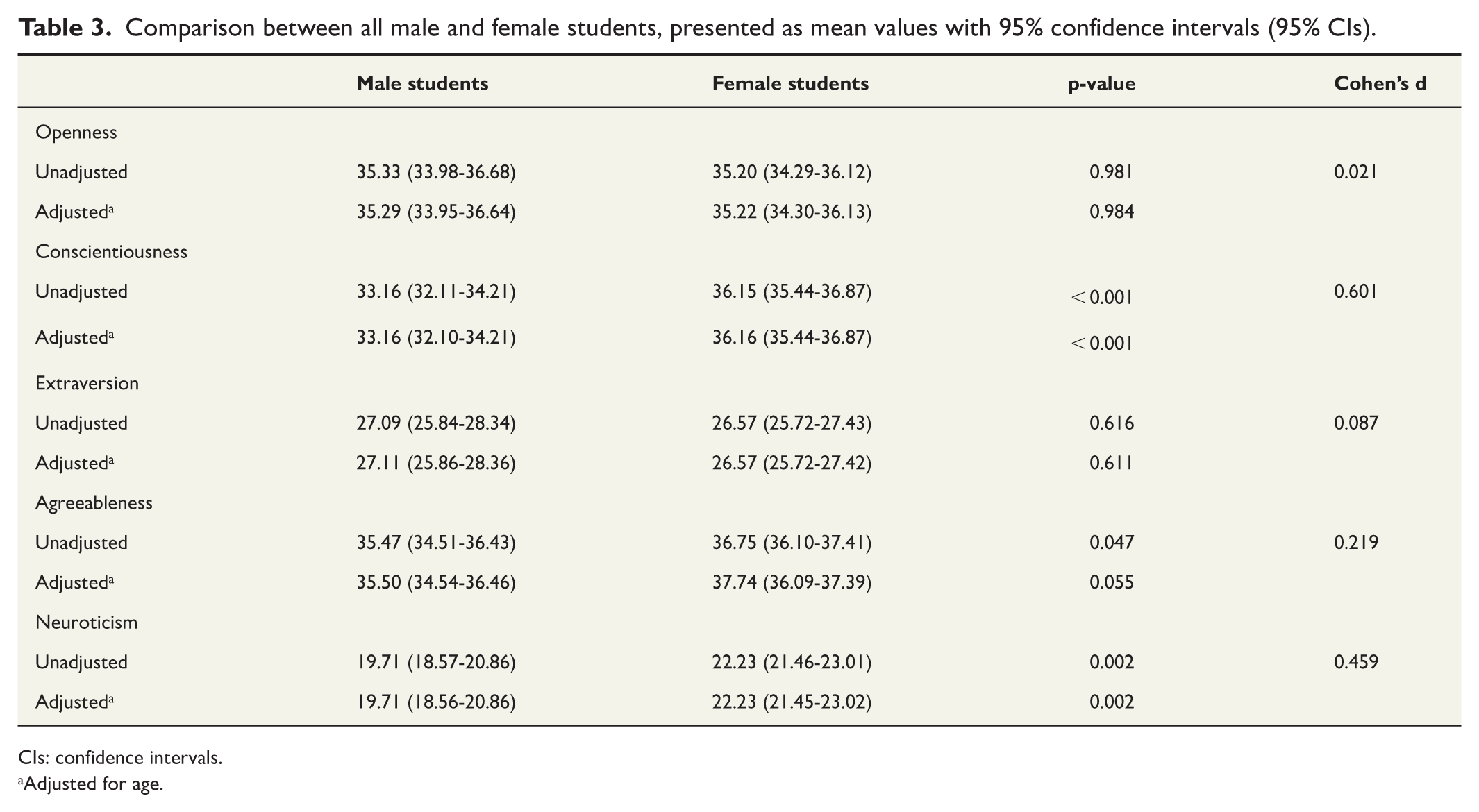
CIs: confidence intervals.
Adjusted for age.
Comparison of practicing surgeons and students in Surg-Pref and Non-Surg-Pref groups
A comparison of personality traits between students in Non-Surg-Pref group and practicing surgeons revealed statistically significant differences in conscientiousness (p < 0.001) and neuroticism (p < 0.001) in the unadjusted analysis and adjusted models, with a moderate Cohen’s d effect size (Table 4). Surgeons showed significantly higher levels of extraversion than students in Non-Surg-Pref group in unadjusted analysis (p < 0.001) and adjusted models, with a small Cohen’s d effect size (Table 4).
Comparison between surgeons and students in the Surg-Pref group with the Non-Surg-Pref group, presented as mean values with 95% confidence intervals (95% CIs).
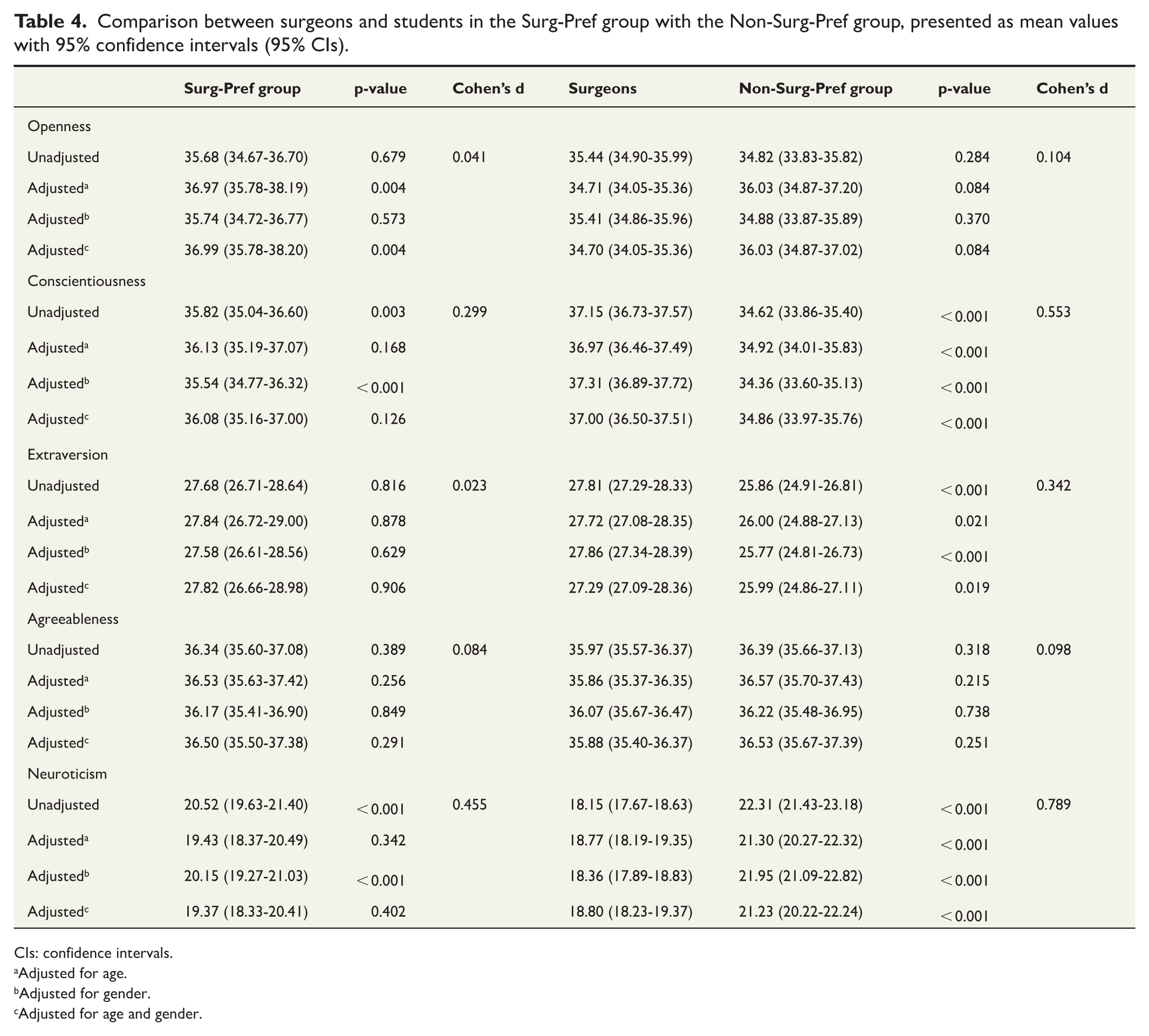
CIs: confidence intervals.
Adjusted for age.
Adjusted for gender.
Adjusted for age and gender.
For medical students in the Surg-Pref group compared to surgeons, openness was significantly higher when adjusted for age (p = 0.004) and age and gender (p = 0.004). Unadjusted analysis revealed lower conscientiousness (p = 0.003) comparing Surg-Pref medical students to surgeons, with a small Cohen’s d effect size. This difference persisted after adjusting for gender (p < 0.001). Neuroticism was significantly higher for students in the Surg-Pref group than for surgeons in the unadjusted analysis (p < 0.001) with a small Cohen’s d effect size and after adjustment for gender (p < 0.001) (Table 4).
A comparative analysis of Surg-Pref students with practicing surgeons of the same gender
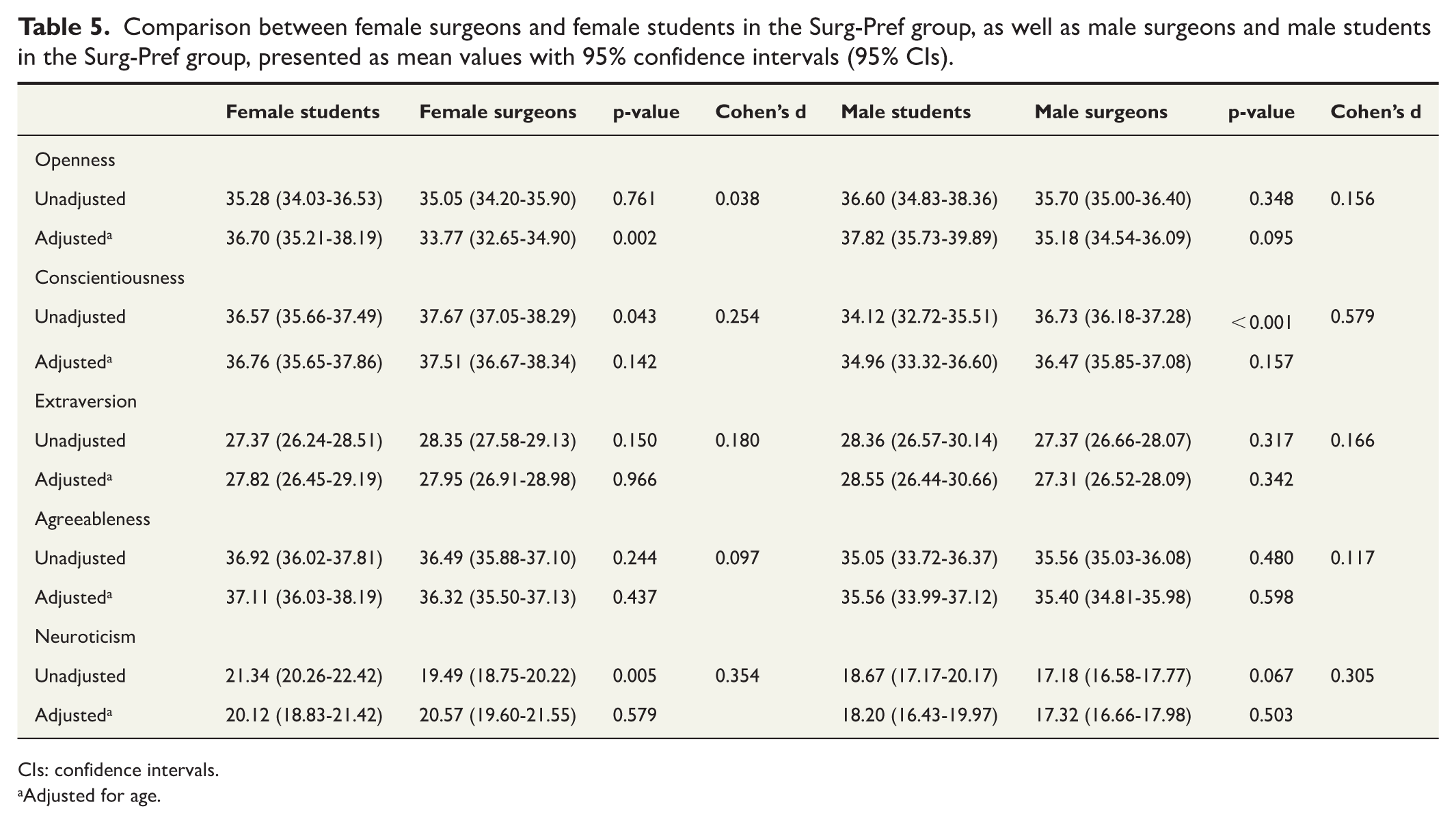
Comparing personality traits of female students in the Surg-Pref group with female surgeons, there was a difference in conscientiousness, with female medical students scoring lower, in the unadjusted analysis (p = 0.043) with a small Cohen’s d effect size, but no significant difference when adjusted for age. No difference was noted in extraversion and agreeableness. When adjusted for age, openness was higher in Surg-Pref female students than female surgeons (p = 0.002). Female medical students in the Surg-Pref group had higher scores for neuroticism than female surgeons in the unadjusted analysis (p = 0.005) with a small Cohen’s d effect size. No difference in neuroticism was seen after adjusting for age.
Unadjusted analysis comparing male medical students in the Surg-Pref group and male surgeons showed lower conscientiousness (p < 0.001) among medical students with a moderate Cohen’s d effect size; however, this difference was no longer significant after adjusting for age. We found no differences between male surgeons and Surg-Pref male medical students in neuroticism, openness, extraversion, or agreeableness (Table 5).
Comparison between female surgeons and female students in the Surg-Pref group, as well as male surgeons and male students in the Surg-Pref group, presented as mean values with 95% confidence intervals (95% CIs).
CIs: confidence intervals.
Adjusted for age.
Discussion
This study compared the personality profiles of Swedish medical students based on their preference for a surgical or non-surgical specialization and contrasted them with practicing surgeons. Three main findings emerged. First, students who preferred surgical specialization displayed lower neuroticism, higher extraversion, and higher conscientiousness compared to students who preferred non-surgical specialization. Second, female students reported higher levels of conscientiousness, neuroticism, and agreeableness, compared to male students. Third, when comparing practicing surgeons with medical students with a preference for surgical specialization of the same gender, we found that unadjusted analyses suggested gender-specific differences. Surgically interested female medical students showed higher neuroticism and lower conscientiousness, and male medical students demonstrated lower conscientiousness compared to practicing surgeons of the same gender. These disparities were, however, attenuated after adjusting for age, indicating that age, rather than career stage, could explain these personality variations.
The finding that medical students interested in surgery demonstrated higher conscientiousness and extraversion alongside lower neuroticism is consistent with prior research on personality profiles of surgeons at various stages of training.7 –9,10,22,23 This profile is characterized by emotional stability (low neuroticism), disciplined organization (high conscientiousness), and a disposition for interpersonal engagement and personal agency (high extraversion).10,23 This combination of traits could be expressed in behaviors that align with some of the demands of surgical career such as teamwork, leadership, and attention to detail. 24 The extent to which personality differences influence specialty choice relative to other determinants, such as lifestyle considerations, interests, or mentorship, cannot be determined from our data.
In the present cohort, these distinctions were seen after students have been exposed to the surgical environment. As other studies have identified similar traits in students prior to any surgical exposure,7,25 the etiology of these differences remains unclear and warrants further investigation.
Sweden has a tradition of commitment to gender equality and egalitarian values, with a unique blend of collectivism and individualism, 26 and gender-equal motivational factors for specialty choice. 27 This led to a hypothesis that such a context would minimize personality-based differences in specialty choice. The finding that significant differences emerged nonetheless suggests that this combination of personality traits may be a more universal feature in surgical career selection and not confined to specific cultural settings.
The cross-sectional nature of the current and prior studies precludes causal inference regarding why medical students with interest in surgical specialization show a unique combination of personality traits.7,9,25 It is important to note that no studies to date have correlated this specific combination of traits with objective measures of performance. At present, it is impossible to discern whether this personality profile is a prerequisite or a consequence of exposure to surgery. However, our findings that practicing surgeons exhibit significantly lower neuroticism and higher conscientiousness than students without preference for surgical specialization, even after adjustment for age, are consistent with a dynamic, two-way process of person-environment fit. 28 An initial self-selection likely occurs, where individuals might gravitate toward surgery based on inherent traits. 29 Subsequently, the demands of surgical training appear to socially and contextually amplify these characteristics through adaptation and attrition, where the individuals adjust to the culture of surgery or leave the specialty. 30 This interpretation is supported by the present results, that show the most pronounced expression of each trait among practicing surgeons, followed by surgery-interested students, and finally by those favoring other specialties. The process of professional socialization, which demands developing coping mechanisms and acquiring new habits, likely accelerates the age-related increases in conscientiousness and emotional stability observed in the general population. 30 Thus, this particular personality profile might be understood not as either innate or acquired but as the product of a self-reinforcing cycle where predisposition and professional molding interact. 31 Nevertheless, we acknowledge that cross-sectional data cannot establish temporal relationships, and longitudinal studies following students from medical school through residency are needed to test the proposed person–environment fit model.
The present findings also indicate that Sweden’s ambition to support an egalitarian cultural environment did not eliminate gender-related differences in personality expression. Female students reported higher conscientiousness and neuroticism than their male counterparts, echoing the broader literature on gender and personality traits. 32 The gender differences in conscientiousness and neuroticism within the student cohort were echoed by comparison between students with surgeons of the same gender. This pattern suggests different support needs at a group level: female students may benefit from initiatives focused on building resilience, such as targeted mentorship.33,34 Conversely, male students, who demonstrated lower conscientiousness, may benefit from support in strengthening these traits through goal-setting and accountability measures.35,36
In conclusion, this study supports the presence of differences in personality profiles in medical students interested in surgical career compared to students without a preference for surgical specialization. These findings suggest the need for personalized mentorship, based on awareness of gender differences in personality at a group level. Future research should move from a variable-centered to a person-centered approach. This paradigm recognizes heterogeneity by identifying subpopulations, rather than assuming homogeneity across a population 37 and allows for inquiries regarding how surgeons with diverse personality profiles manifest equally effective clinical behaviors and how these behaviors correlate with surgical outcomes.
Strengths and limitations
A major strength of this study is the inclusion of medical students and practicing surgeons, allowing a comparison across different stages of career development. The inclusion of students from two universities improves generalizability within the Swedish context. The study, however, also has limitations. The use of a convenience sampling method may introduce selection bias, and self-reported personality assessments are subject to response bias. For example, as students were invited via email and registered by their medical program, we were unable to determine if the invitation to participate was received and thus accurately estimate the participation rate. We, however, found a relatively high completion rate of 68%, lowering overall selection bias. While the study adjusts for age and gender, other factors, such as prior clinical experience, mentorship exposure, or academic performance, could influence career preferences. Furthermore, the lack of data on factors such as ethnicity, socioeconomic background, relationship status, and significant life events restricts a deeper contextual analysis of how these factors may influence specialty choice. The presence of a single non-binary respondent precluded gender-based analysis for this group. The cross-sectional design limits the ability to assess how personality traits evolve. Another limitation is that, despite its validation and widespread use, the BFI fails to differentiate between subcomponents of traits, as, for example, conscientiousness could be categorized into industriousness, order, and self-control. 38 Specialty preference was measured at a single time point and may not capture long-term career intentions. Longitudinal studies are needed to examine the stability of these associations over time.
Furthermore, the observed gender differences in personality may partly reflect broader societal influences, such as differential socialization expectations, rather than innate factors.
Implementation and significance
The practical and educational significance of these findings is twofold. First, the presence of a distinct combination of personality traits in Swedish medical students preferring surgical specialization does not suggest that recruitment strategies should seek a specific personality archetype. Instead, efforts should focus on showcasing the diversity in intellectual and practical challenges of surgery to attract a broad range of medical students. Second, the observed patterns of higher conscientiousness and neuroticism among women, and lower conscientiousness among men, hold relevance for tailoring surgical education. The effect sizes observed in this study were small to moderate by conventional benchmarks. However, in the context of surgical education, a high-stakes environment where stress management and reliability affect patient outcomes, even modest differences in traits may carry practical significance. For instance, a small difference in neuroticism can influence a student’s perception of and resilience to the stressful surgical environment, while a difference in conscientiousness can impact adherence to procedural checklists critical for patient safety.
Surgical educators should shift from selective filters to personalized, proactive development while remaining aware of gender differences at a group level. This means using resilience training for trainees high in neuroticism and structured goal setting with feedback to build conscientiousness. A mentor approach is key, allowing senior surgeons to dynamically “push” or “pull” based on individual needs, helping balance risk-taking and caution. By shifting the focus from selecting for a presumed innate fit to developing the potential present in all students, surgical education can foster a resilient, conscientious, and diverse workforce, enhancing learner well-being and patient care.
Supplemental Material
sj-docx-1-sjs-10.1177_14574969261459277 – Supplemental material for Understanding personality in surgical career development: A cross-sectional study of Swedish medical students and surgeons
Supplemental material, sj-docx-1-sjs-10.1177_14574969261459277 for Understanding personality in surgical career development: A cross-sectional study of Swedish medical students and surgeons by Johan Wänman, Leif Berglund, My Blohm, Per Jolbäck and Aleksandra McGrath in Scandinavian Journal of Surgery
Footnotes
Acknowledgements
We thank Sebastian Mukka for input on the concept and study design.
Author contributions
The study was conceived and designed by P.J., who developed the research questions and designed the survey instrument. Data collection was carried out by P.J., J.W., and A.M. Data analysis was conducted by P.J, L.B., and J.W., with input from M.B. and A.M. on interpretation of results. The initial draft of the manuscript was written by J.W. and A.M. M.B., P.J., and L.B. contributed to critical revision of the manuscript and provided important intellectual content. All authors read and approved the final manuscript and agree to be accountable for all aspects of the work.
Availability of data and materials
The datasets used during the current study are available from the corresponding author on reasonable request.
Clinical trial registration
N/A.
Declaration of conflicting interests
The authors declared no potential conflicts of interest with respect to the research, authorship, and/or publication of this article.
Funding
The authors disclosed receipt of the following financial support for the research, authorship, and/or publication of this article: This work was supported by the Program Council for the Medical Program, Umeå University.
Supplemental material
Supplemental material for this article is available online.

References
Supplementary Material
Please find the following supplemental material available below.
For Open Access articles published under a Creative Commons License, all supplemental material carries the same license as the article it is associated with.
For non-Open Access articles published, all supplemental material carries a non-exclusive license, and permission requests for re-use of supplemental material or any part of supplemental material shall be sent directly to the copyright owner as specified in the copyright notice associated with the article.
