







Abstract
The nonlinear Mathieu-Duffing oscillator is a basic model of parametrically driven dynamical systems with nonlinear coefficients, and it serves as an important model for the study of such phenomena as bifurcation, chaotic transitions and resonance instabilities in engineering structures and physical systems subjected to periodic external excitations. In this work, a non-perturbative analytical approach is proposed to analyse a coupled parametric nonlinear oscillatory system and to determine its dynamical features with much more computing efficiency. The proposed methodology is based on He’s frequency formulation, which systematically linearises weakly nonlinear ordinary differential oscillators, avoiding the fundamental limitations of classical perturbation methods and being effective for large amplitude nonlinear oscillatory regimes. A prominent contribution of this work is the extension of the non-perturbative framework to the consideration of linked oscillator systems, which is a unique application domain for the method. The analytical conclusions are validated by symbolic computation in Mathematica. It is found that there is strong conformity with the original governing equations for different parametric configurations. The stability study is conducted under different operating situations, and it always shows the accuracy, analytical tractability, and numerical accuracy of the procedure. The global dynamical behavior of the system is also characterized by bifurcation diagrams, which identify critical parameter-dependent transitions, and the largest Lyapunov exponent, which quantitatively distinguishes between periodic and chaotic oscillatory regimes and defines the threshold conditions for the onset of chaos. The results agree with the conclusion that the non-perturbative technique is a powerful, and efficient for the analysis of parametrically stimulated nonlinear dynamical systems.
Keywords
1. Introduction
Dynamical systems whose governing ODEs contain time–periodic coefficients are generally classified as parametrically excited systems. Since the eighteenth century, such systems are extensively studied to understand a wide range of wave phenomena occurring in both fluid and solid media. In contemporary research, parametric excitation has become increasingly important in several areas of science and engineering, including mechanical resonators, optical systems, and microwave devices. 1 One of the simplest and most representative mathematical models used to describe these systems is the Mathieu oscillator. The DO serves as a classical model of nonlinear ODEs and is widely used to describe nonlinear dynamic behavior in many physical systems, particularly micro-mechanical resonators. When parametric excitation was incorporated into the DO, the resulting system is often referred to as the Mathieu–DO. 2 Both linear/nonlinear ODEs of the Mathieu type attract significant attention due to their wide range of theoretical and practical applications. Several of their important properties can be understood within the general framework of ODEs with periodic coefficients. Over the years, numerous perturbation techniques have been developed and applied to obtain approximate analytical solutions for these equations.3–6 Among these techniques, the MTSM is commonly employed, as it allows the analysis of weakly nonlinear ODEs by introducing a small parameter into the formulation. 7 Finding reliable analytical solutions of nonlinear problems has long attracted considerable attention, mainly because nonlinear ordinary differential ODEs are inherently more complex than linear ones. In many cases, perturbation techniques are traditionally applied to study ODEs subjected to periodic excitation. However, when nonlinear effects are present, the analysis becomes considerably more challenging, particularly when the nonlinear terms interact with periodic components of the system. The NPA deviates from all earlier models by integrating and thus rectifying specific shortcomings identified in prior research. This divergence is not only incremental but signifies a significant methodological progress. Moreover, whereas references1–7 offer a significant foundation, their methodologies do not encompass the entirety of situations and scenarios that NPA seeks to address. We trust this explanation underscores the innovation and importance of the proposed methodology, and we are willing to amend the work to clarify this distinction if required.
The 2DOF Mathieu–DO is significant as it provides more precise representation of complex nonlinear dynamical systems defined by linked oscillations, parametric excitation, and notable nonlinear stiffness effects. Unlike 1DOF models, the 2DOF system can encompass substantial phenomena such as internal resonance, mode coupling, energy transfer, bifurcation, and chaotic motion, commonly seen in engineering structures, MEMS devices, aerospace systems, and mechanical vibrations. The study is essential in understanding stability characteristics and developing suitable vibration control and nonlinear dynamic analysis methods. The fundamentals and applications of nonlinear systems in science and engineering were analyzed by exploring the dynamic behavior of a connected cubic-quintic damping fractal system. 8 The analytical and numerical approaches to analyze the dynamic properties of coupled dynamical systems, incorporating two periodic excitations and distributed time delays, were investigated. 9 A 2DOF asymmetric dynamic oscillator with fractional damping was investigated through the analysis of the Jeffcott rotor system with horizontal support, focusing on the dynamic behavior of its resonance and attraction domain structures. 10 A novel methodology in investigating the nonlinear dynamic behaviors of a belt-driven, two-coupled friction oscillator was analyzed. 11 Initially, Buckingham’s theorem was employed to generate several dimensionless and physically significant parameters. Their associations with the steady-state reactions of the system were elucidated by numerical simulations. A novel mapping technique called the sticking phase plot was created to document the transition process of stick–slip motion. A 2DOF piecewise nonlinear system model incorporating a fractional differential term was developed. 12 The harmonic balance approach was employed to analyze the 2DOF piecewise nonlinear system with a fractional differential term, resulting in the achievement of the system’s amplitude–frequency curve.
Despite the wide range of practical applications of nonlinear phenomena, deriving an exact analytical solution, or even a close approximation, remains a challenging task of theoretical physicists. Nonlinear ODEs are inherently more complex than the linear ones, which has encouraged the development of various analytical alternatives. Consequently, the asymptotic analysis of nonlinear ODEs has attracted considerable attention from Mathematicians. Techniques such as the small parameter method and the averaging approach were applied to study weakly nonlinear equations. 13 The HPM was used to obtain accurate asymptotic approximations, particularly in problems involving low-intensity acoustics. In addition, MTSM was widely employed to determine the behavior of oscillatory systems. However, the reliance on a limited number of assumptions or parameters may sometimes lead to inconsistent results. 7 In most perturbation or asymptotic techniques, identifying an appropriate small parameter is an essential step toward constructing a realistic mathematical representation of the governing equations. The increasing popularity of HPM-based approaches has improved the prediction of solutions for many nonlinear ODEs. 14 For example, HPM was applied to obtain analytical approximations for magnetic spherical pendulum systems 15 ; meanwhile Moatimid et al. 16 used the method to address various problems in fluid mechanics and dynamical systems. Nevertheless, despite these developments, applying HPM to non-conservative oscillators still presents certain challenges. Further progress was therefore made to enhance the analytical capability of HPM in nonlinear vibration theory, especially for systems of coupled damped nonlinear oscillators. Within this context, HFF was introduced as a simple and efficient technique in studying conservative nonlinear oscillators. 17 This formulation was originally proposed by the Chinese Mathematician Prof. J-H He. The DO was examined in relation to periodic vibration behavior under generalized ICs. 18 To further extend the HFF, oscillators were classified into two limiting cases. 19 The cubic–quintic DO was used to demonstrate the accuracy and computational simplicity of this approach, and a direct technique in analysing this system was proposed. 20 This method offers an efficient and reasonably accurate way to estimate the frequency of nonlinear conservative oscillators. Several studies have also presented demonstrations and improvements of the optimized HFF of nonlinear oscillators.21,22 Moreover, a direct frequency expression of fractal systems was derived based on the HFF, providing a useful tool in investigating fractal vibration phenomena through straightforward calculations and reliable results.
The examination of 2DOF of MDO yields significant experimental and practical understanding of nonlinear dynamics of interconnected mechanical, electrical, and structural systems influenced by periodic and parametric excitations. This model experimentally summarizes the intricate interactions of nonlinearity, coupling, and parametric resonance, allowing researchers to replicate and scrutinize phenomena such as mode coupling, internal resonance, bifurcation, chaos, and amplitude modulation in laboratory environments utilizing coupled beams, mass-spring systems, or MEMS resonators. These experimental validations are essential in enhancing analytical and computational predictions of dynamic behavior under multi-frequency excitations. Insights from this oscillator are crucial of the design and vibration management of aerospace structures, vehicle suspensions, precision instruments, and energy harvesting systems, where the optimization of nonlinear stiffness and damping is essential to prevent instability or improve performance. Moreover, comprehending the parametric domains of stability and chaotic transitions facilitates the formulation of resilient control techniques and adaptive materials that can preserve structural integrity under fluctuating loads. The 2DOF of MDO functions as a theoretical framework and a practical instrument in enhancing nonlinear system analysis and engineering design in several fields. A study closely related to MDO was recently carried out by Barakat et al. 2 23 in the case of the cubic DO. In their work, the stability of the trivial solution was examined through perturbation analysis of the nonlinear system. The analysis relied mainly on the MTSM, while different resonance mechanisms were considered, including parametric resonance and internal resonance under parametric excitation. The authors also investigated the stability criteria that are associated with combined parametric resonances. Additionally, the behavior of the system was discussed in the non-resonant region, where the characteristics of the resulting limit cycles were analyzed. More recently, the NPA has attracted attention in the analysis of dynamical systems. Several studies have reported the use of NPA in stability investigations across different areas of dynamical system research.24–30
The authors of31–34 concentrate on innovative advances in nonlinear fractional dynamical systems and mathematical physics, especially in the fields of variational principles, sensitivity analysis, Hamiltonian structures, and soliton dynamics. In addition to examining nonlinear fractional equations, these studies offer analytical methods for obtaining precise and approximative wave solutions with applications in the engineering and physical sciences. Additionally, the works enhance the theoretical foundation of fractal and fractional calculus and promote its applications in contemporary nonlinear research by helping to comprehend the stability and dynamical behavior of complicated fractional systems. Furthermore, analytical and numerical studies on nonlinear interactions and internal resonance in mechanical systems such as n-layer X-shape vibration isolators have advanced the understanding and prediction of nonlinear dynamic performance for engineering applications greatly. 35
This paper incorporates the NPA of coupled nonlinear ODEs, specifically the Mathieu oscillators, which extends to this research
30
and represents a novel approach in the NPA methodology. Consequently, two coupled linear ODEs are derived in contrast to the nonlinear ones. To elucidate the presentation of the essay, the remainder of the material is structured as follows:
2. Problem construction
This Section is devoted to providing a theoretical overview of the model by describing its core assumptions, describing the principal variables and parameters, and outlining the mathematical framework that dictates its behavior. This formulation arranges the groundwork of the ensuing study and offers the essential context in comprehending the model’s characteristics, constraints, and relevance to the issue.
2.1. Governing ODEs
The following ODEs represent a set of coupled, damped, nonlinear oscillators influenced by parametric (time-periodic) stimulation. Such systems frequently occur in mechanical vibrations, MEMS resonators, nonlinear optics, and structural dynamics. We will elucidate the physical significance of each term individually, followed by a comprehensive physical interpretation. The nonlinear coupled system under consideration is given as:


The physical significance of this equation has been elucidated as follows:
This system visually represents two interconnected vibrating entities that exchange energy while oscillating due to internal restorative forces, damping effects, and periodic external stimulation. The damping terms denote energy loss due to friction or resistance, whereas the restoring forces function to return each body to its equilibrium position. The nonlinear effects indicate that the system’s stiffness fluctuates with displacement, signifying that the response is not proportional to the applied motion, especially at high amplitudes. The interrelationship between the two entities indicates that vibrations in one directly affect the motion of the other, leading to energy transfer and synchronized or complex oscillations. Periodic excitation refers to an external time-dependent energy source, such as rotating machinery, electromagnetic forces, or structural vibrations, that can induce resonance and intricate dynamic behavior. This system can physically replicate consistent mechanical structures, nonlinear vibration dampers, aeronautical frameworks, MEMS systems, or other engineering systems where nonlinear interactions and time-dependent excitations are critical.
Furthermore, equations (1) and (2) contain parametric excitation terms of the form
The variables
Interpretation in a physical context: Cubic word indicates Duffing-type nonlinearity. Quintic and septic words represent higher-order corrections. May induce frequencies contingent upon amplitude jump phenomena, and multi-stability
External excitation of one mode affects the other. Simultaneous external field acting on both coordinates.
This system simulates: Two weakly damped, highly nonlinear oscillators exhibiting nonlinear coupling and parametric excitation near double a reference frequency. Common bodily manifestations encompass: Coupled nonlinear beams or plates. They are nonlinear vibration dampers. Mechanically systems with parametric excitation
This setup can demonstrate: Internal resonance.
Finally, these ODEs characterize a 2DOF nonlinear vibrating system with damping, pronounced polynomial stiffness nonlinearities, nonlinear modal coupling, and parametric excitation, encapsulating intricate energy exchange and resonance phenomena observed in sophisticated mechanical and micro-scale systems.
To achieve this, we adopt the introduced transformation; the averaging operator is defined by
30
:

The periodic stiffness is defined as function
After substituting the average parametric coefficients obtained from equation (3) into the original governing system, the parametric excitation terms




Applying the adopted analytical technique to the original nonlinear coupled ODEs with periodic parametric excitation, the system can be reduced to the following form. A graphical comparison is presented in Figure 1, to demonstrate the equivalence between the original and the transformed systems. The following figures are plotted in accordance with the subsequent data sample: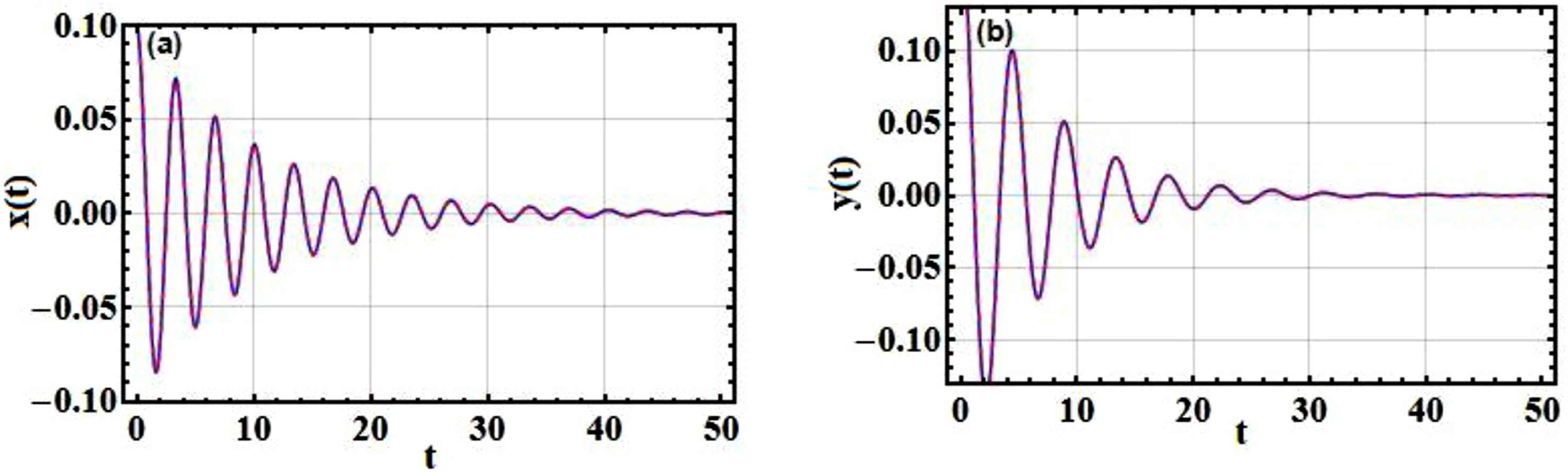

Following the same methodology that was previously adopted,
30
the next step is to convert the newly obtained autonomous system into an equivalent linear ODEs. Consequently, the governing ODEs are reduced to the following autonomous linear ones:


As earlier stated, the objective is to convert the coupled nonlinear ODEs as presented in equations (1) and (2) into an equivalent set of linear ODEs. To achieve this, two assumed (trial) forms of the solution are introduced of the nonlinear ODEs as specified in equations (1) and (2), as follows:

Equation (10) is considered as a trial solution, which represents an assumed form of the system response used as an initial approximation in the analysis. This form may later be modified if necessary. The expressions in equation (10) are obtained using the following standard ICs:

The next step is to derive the corresponding linear ODEs. Following the approach adopted in the previous studies, the equivalent damping term can be expressed as follows
30
:


Conversely, the associated equivalent frequencies can be obtained as follows:


To facilitate a clearer analysis of the system, the objective is to transform the coupled ODEs as agreed in equations (8) and (9) into simplified linear and decoupled forms. This procedure aims to represent the system in a more manageable structure by separating the two variables




The obtained mean–square expressions provide a practical way to address the complex behavior of such systems by allowing the evaluation of key dynamic parameters and simplifying the nonlinear interactions between the variables. This approach is widely used in the analysis of nonlinear vibration problems, as it simplifies the calculations while still producing reasonably accurate results.




Accordingly, the system can be represented by the following decoupled equations:


The obtained ODEs are now uncoupled, which simplifies the study of the system dynamics. This separation allows stability and resonance characteristics to be examined more easily. Accordingly, the total frequencies


Employing equations (22) and (23) into equations (26) and (27) then using equations (12) to (15), one gets


We can write:




Accordingly, the solutions of equations (24) and (25) have the form


3. Results and discussion
In this Section, the dynamic behavior of the system is examined through graphical pictures. The analysis focuses on time histories, phase-plane trajectories, and stability characteristics to provide a clear understanding of how the system response progresses under different parameter settings. These graphical results are used to illustrate the influence of the governing parameters on the overall dynamic behavior, particularly in terms of transient response, steady-state motion, and stability limits. By comparing the responses obtained from the original system, the analytical formulation, and the corresponding linear model, the reliability of the adopted approach can be clearly assessed. The following figures present detailed insights into the system’s behavior and highlight the agreement between different solution methods, as well as the conditions under which stable motion is achieved.
In Figure 2 the responses of (a), and (b): Shows time histories of the responses 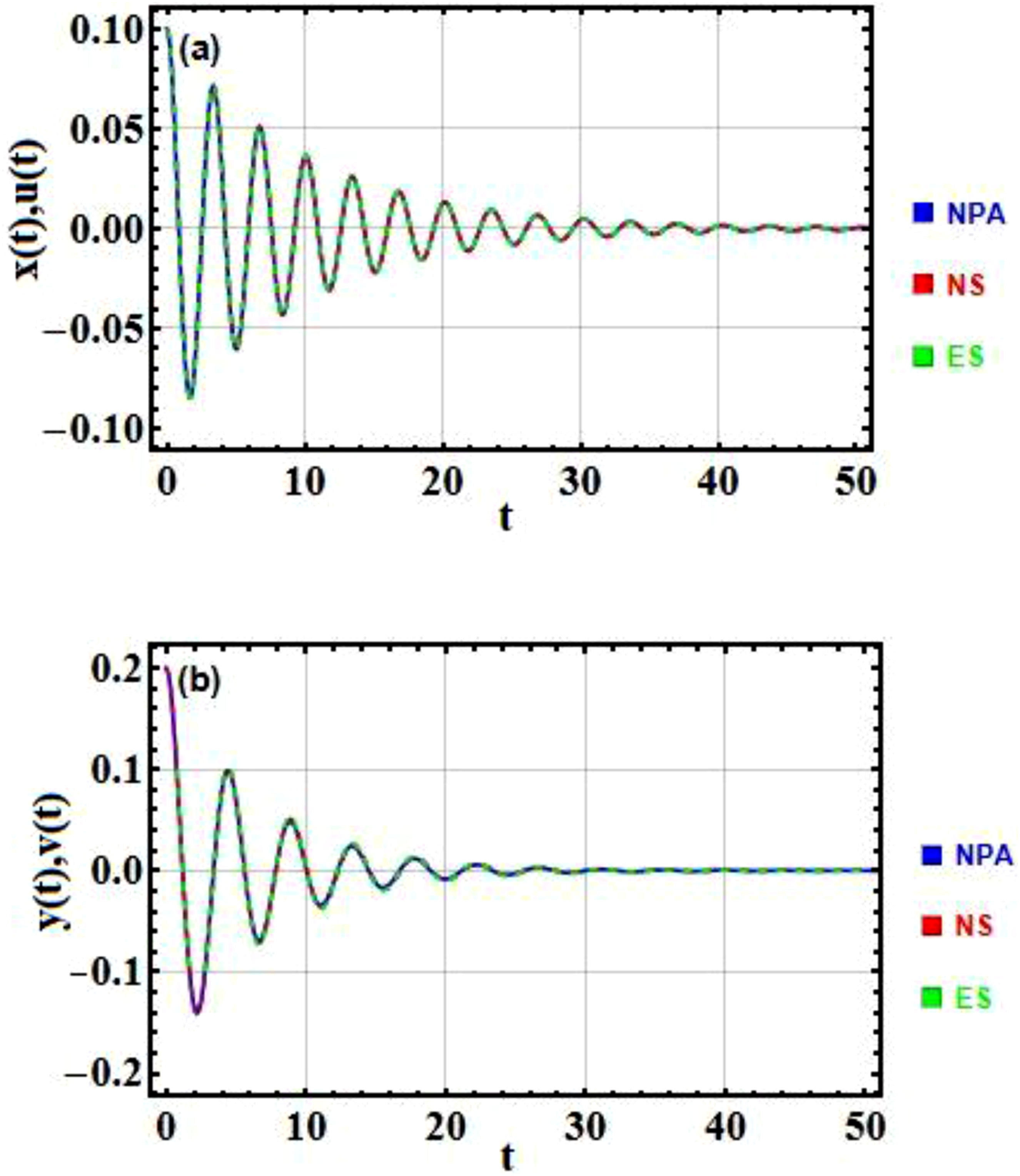
As time progresses, the oscillations decrease gradually, indicating stable behavior governed by damping. The analytical results (blue curves) follow the original system response (red curves) closely over the entire time interval, showing no noticeable difference in either amplitude or frequency. The exact linear solution (green curves) shows a similar decay pattern, the three solutions become almost identical. This confirms that the analytical and linear models provide an accurate representation of the time-history behavior of the original system. For more convenience, consider the following data:

Figure 3(a) and (b) show the absolute errors between the numerical and the approximate analytical solution for (a), and (b): Absolute error between the numerical and approximate analytical solutions for 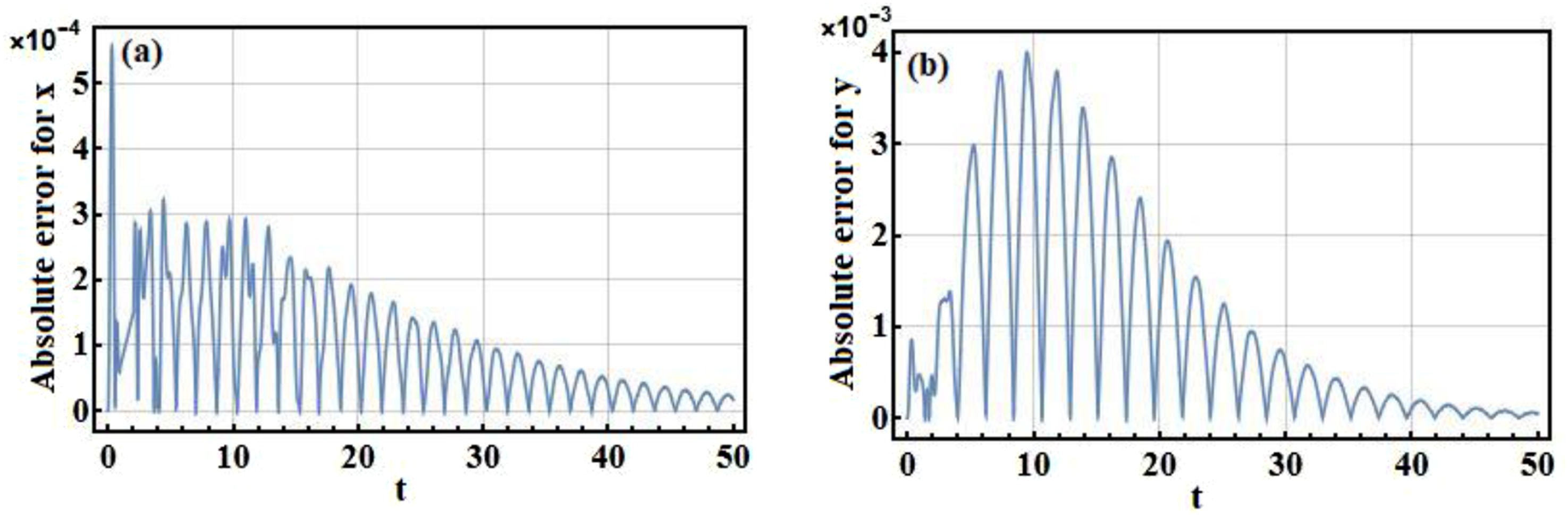
To gain further insight into the system behavior, the influence of selected parameters on the dynamic response is examined. Figure 4 and Figure 5 show how the system response changes when the parameter Shows time histories and phase portraits for different values of Displays time histories and phase portraits for different values of 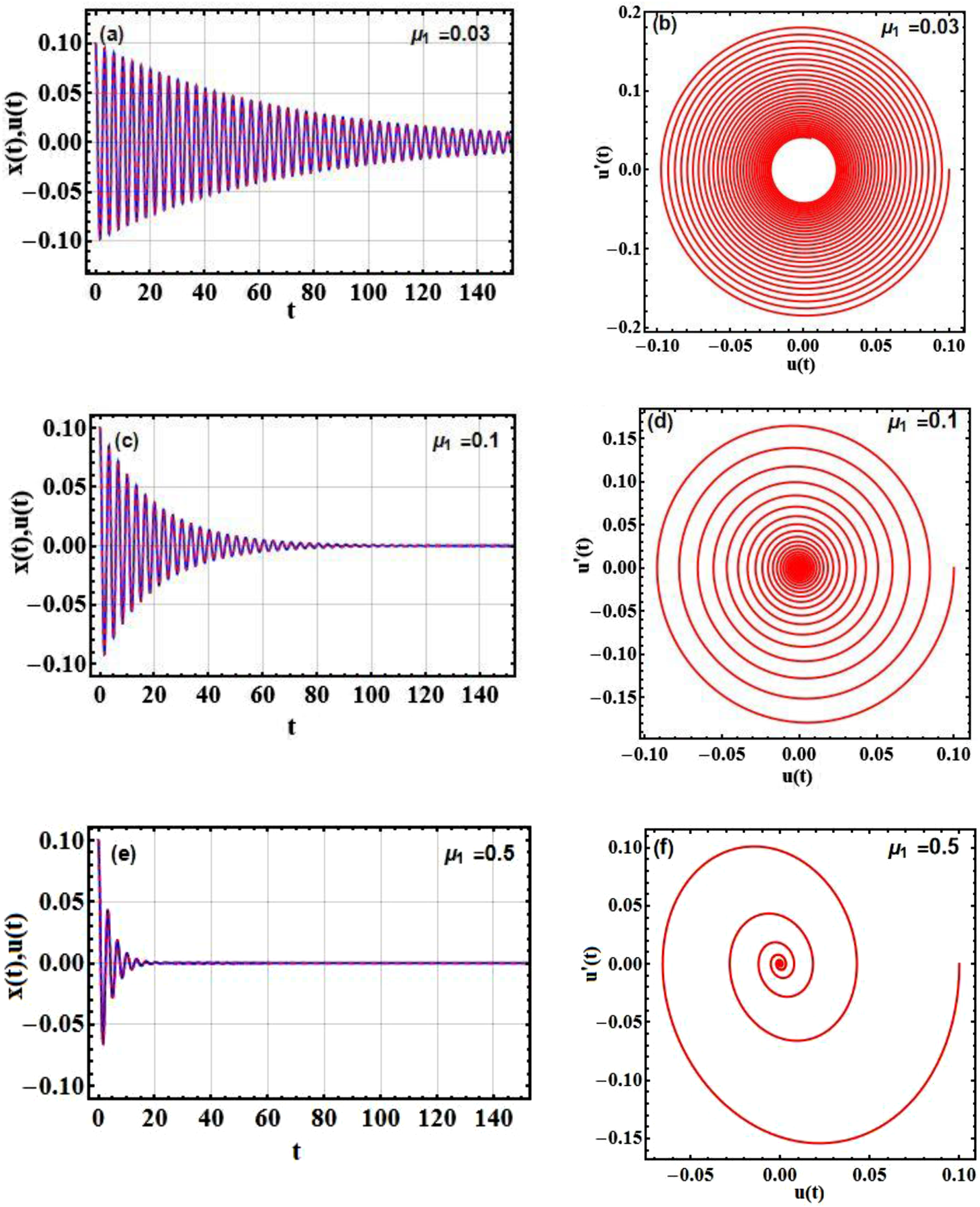
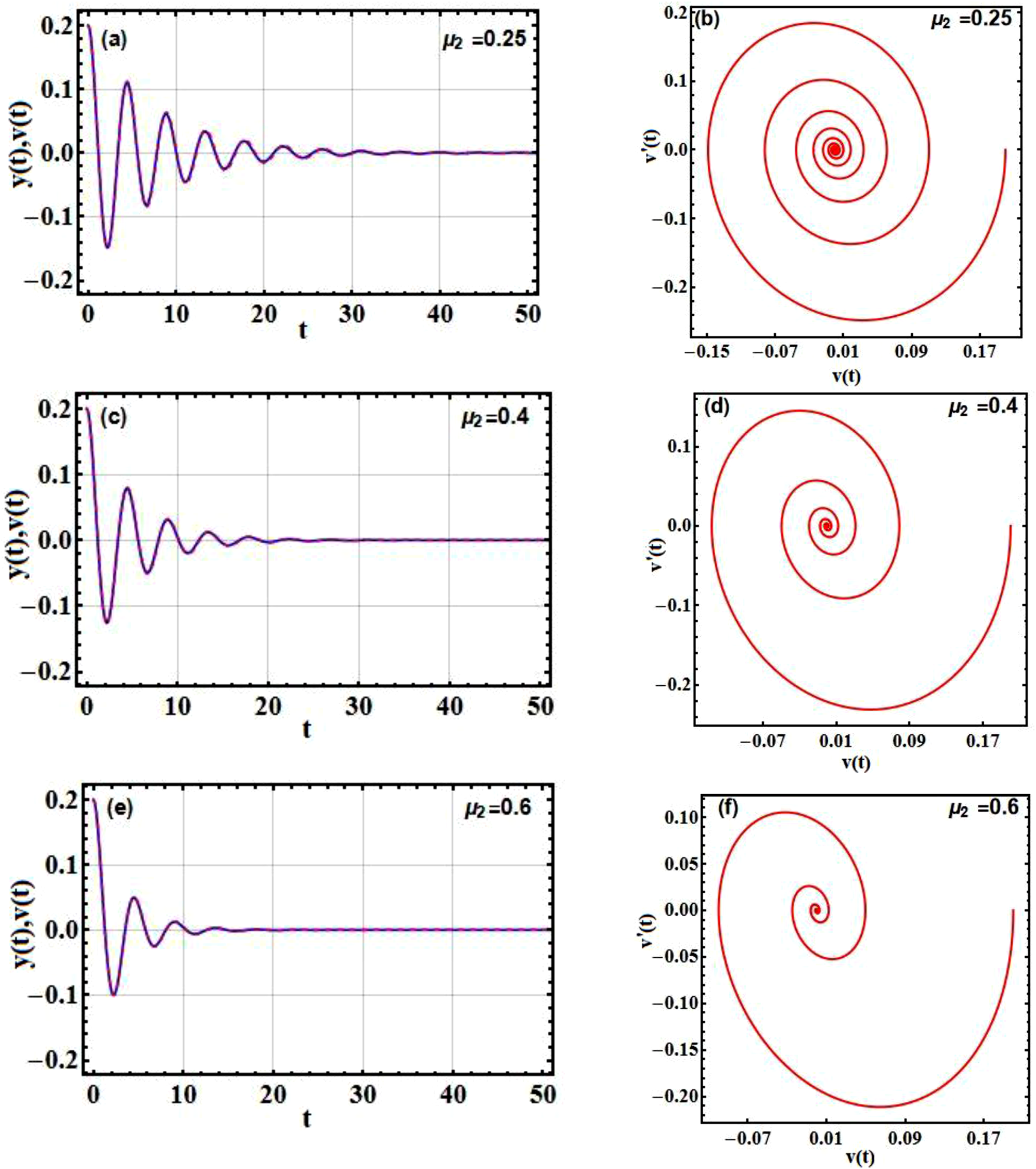
From time histories, the oscillation amplitude decreases with time in all cases. When
Figures 6(a), (c) and 6(e) show the time domain responses of the displacement variables Time-domain responses and corresponding phase portraits of the variables 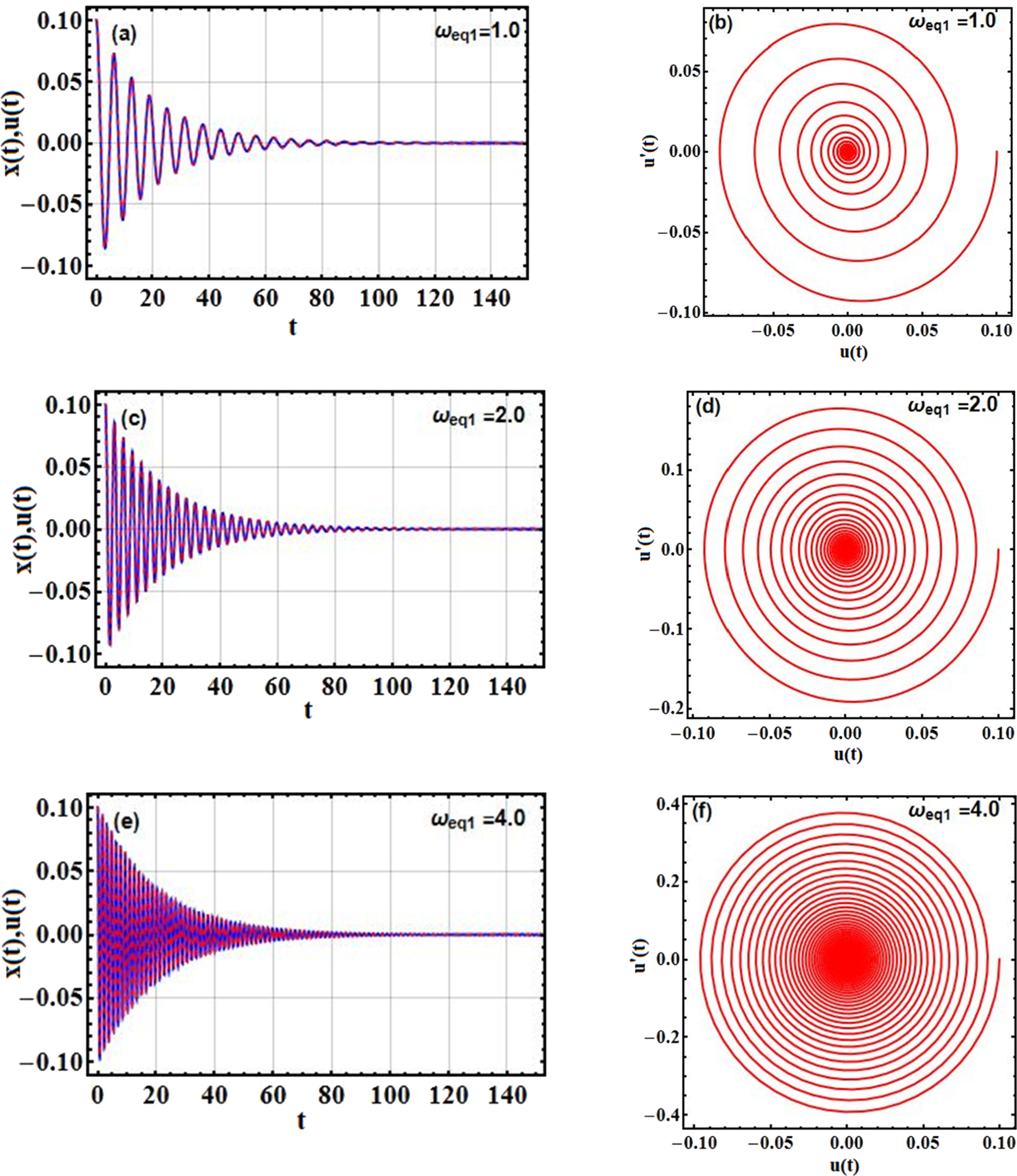
Figures 7(a), (c), and (e) show the time histories of Time-domain responses and corresponding phase portraits of the variables 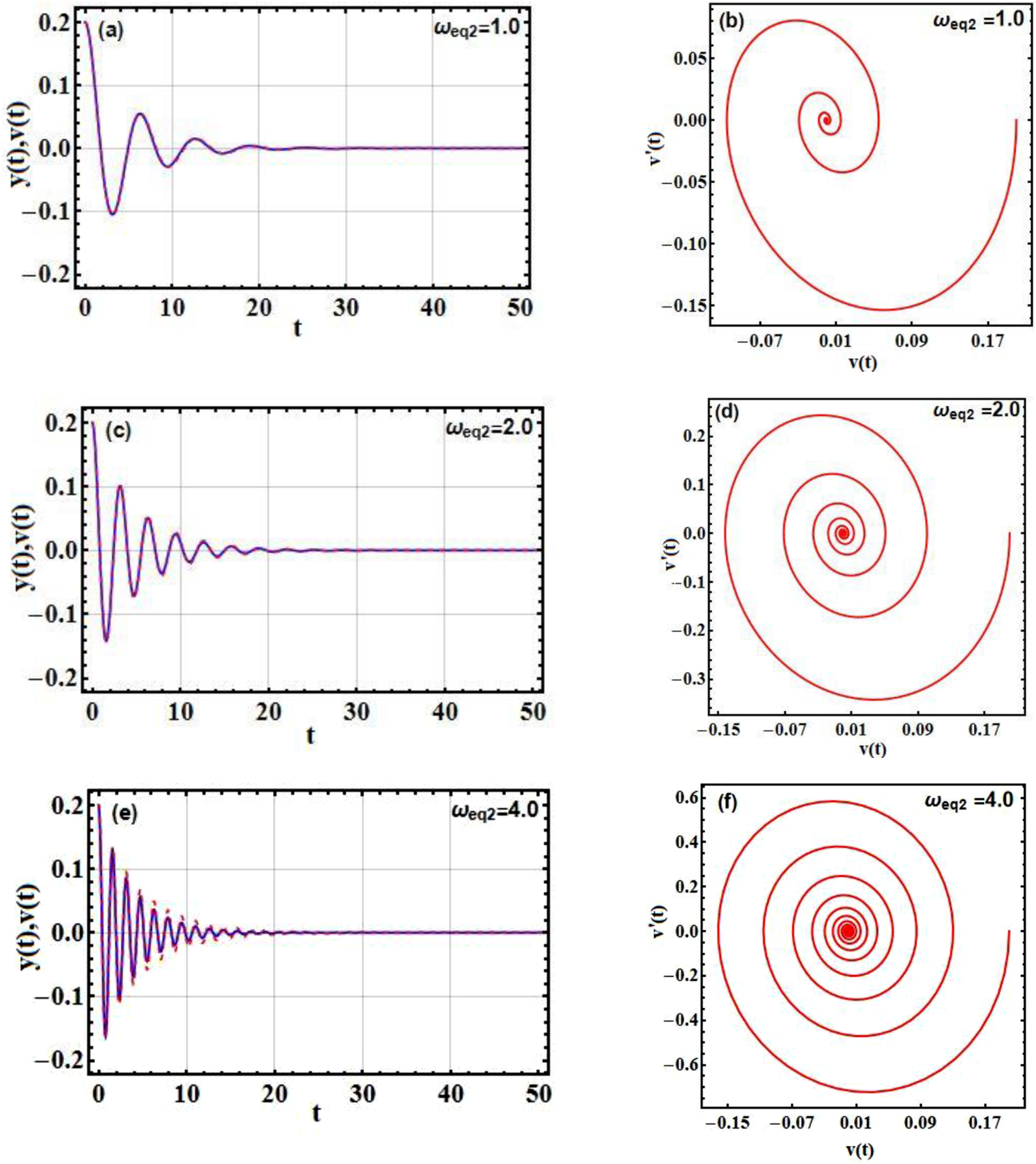
Figure 8 illustrates the stability boundaries in Shows stability curves versus 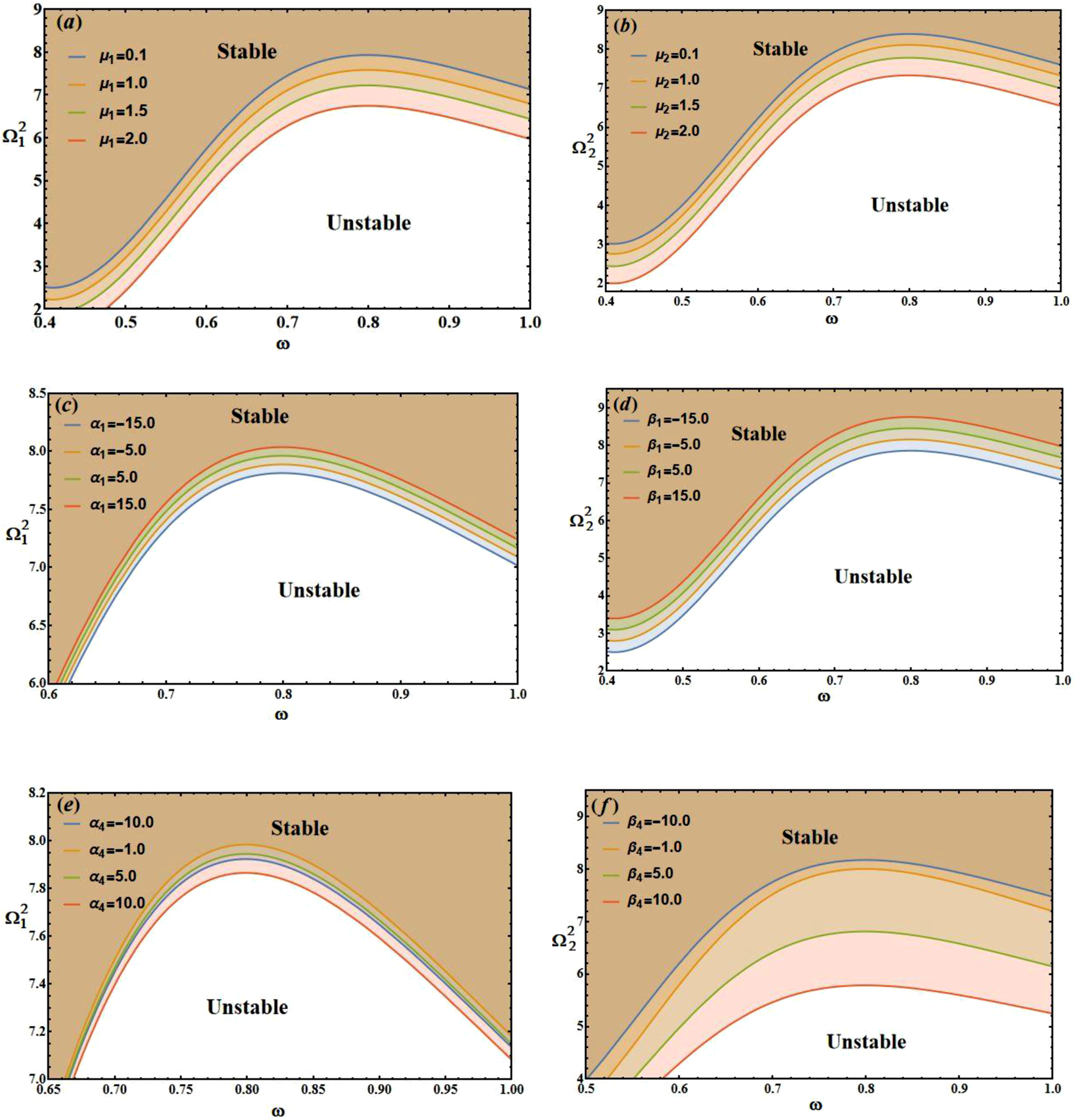


Figure 8(d) examines the influence of the nonlinear coupling parameter

Variations in
Finally, Figure 8(f) considers the nonlinear control parameter
4. Chaotic response
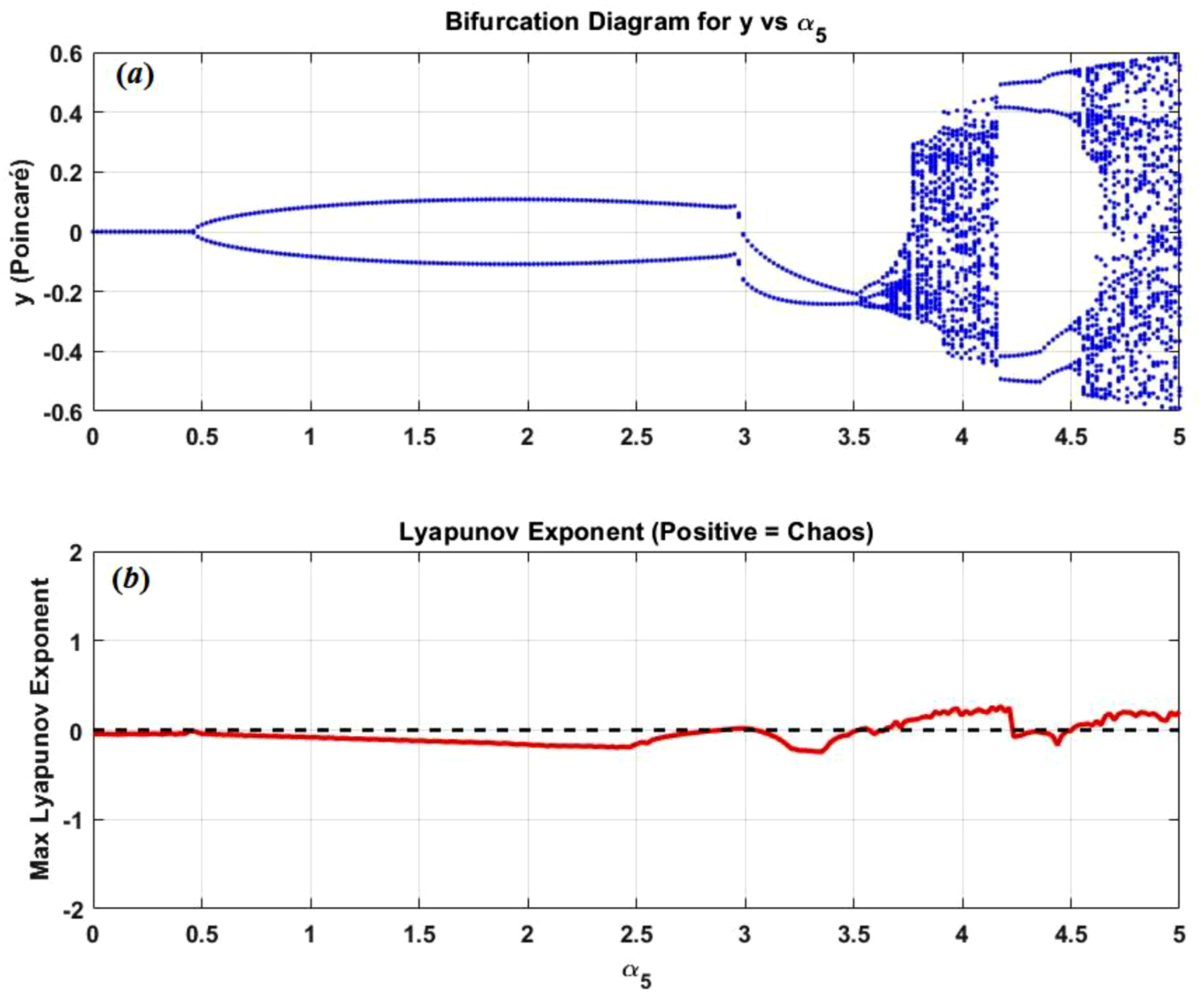
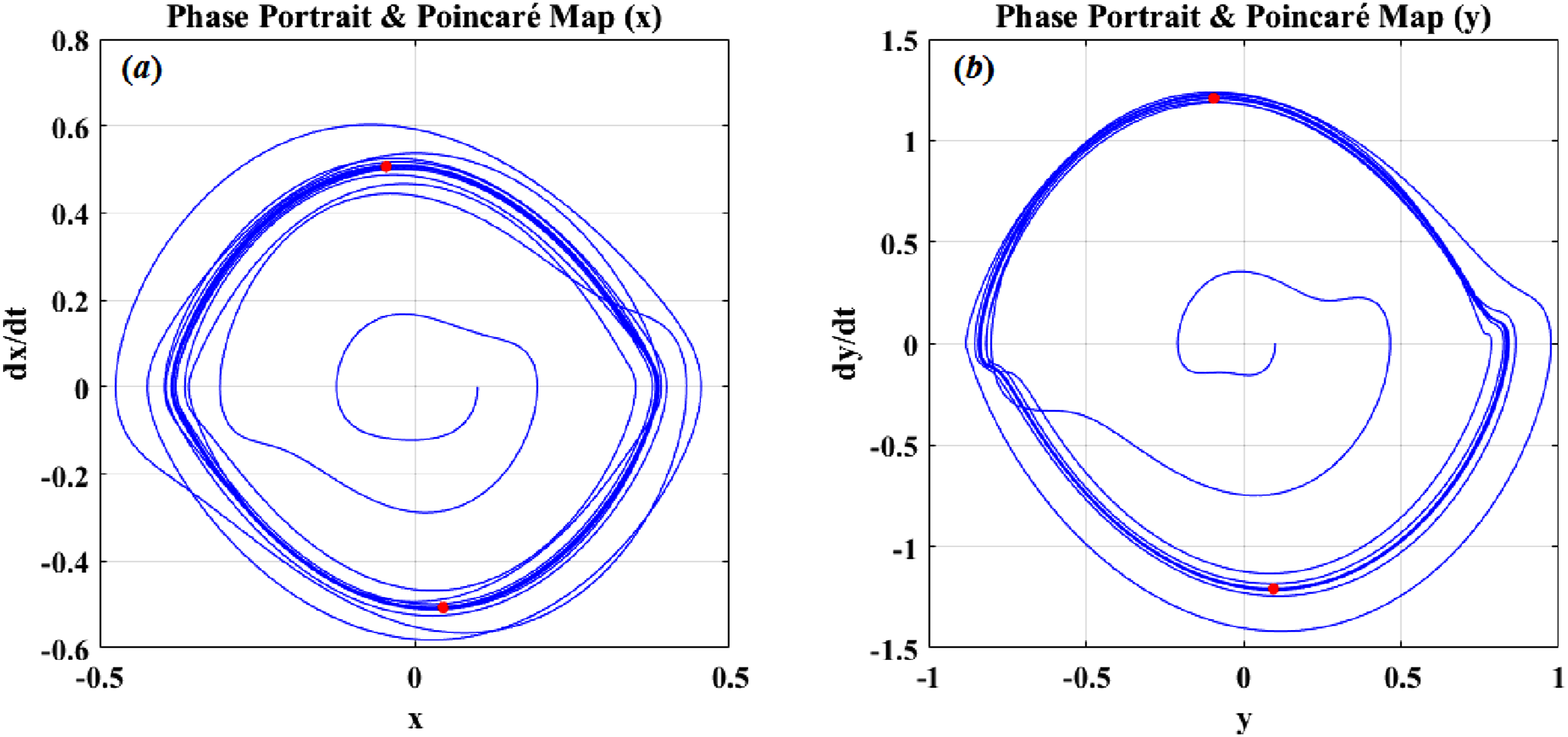
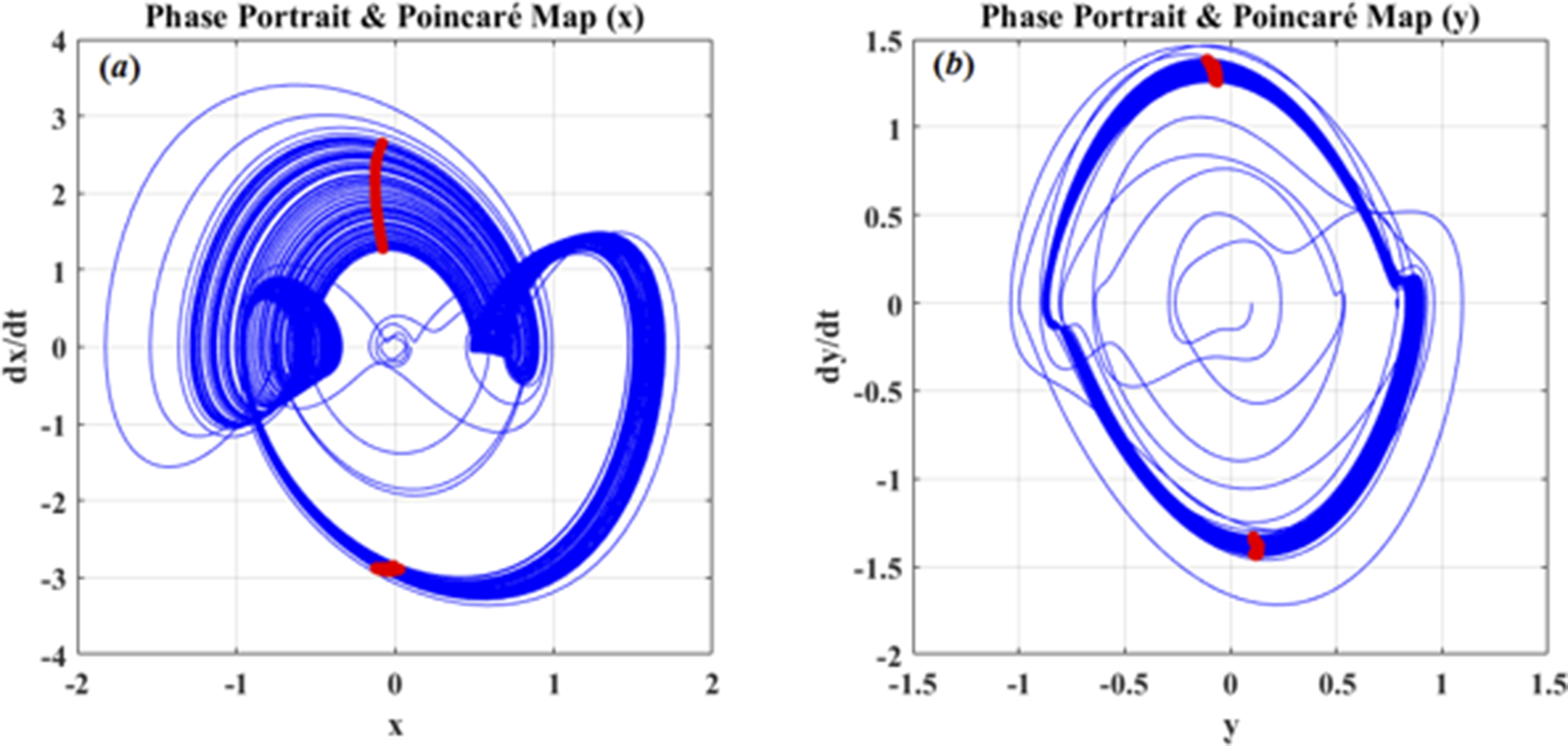
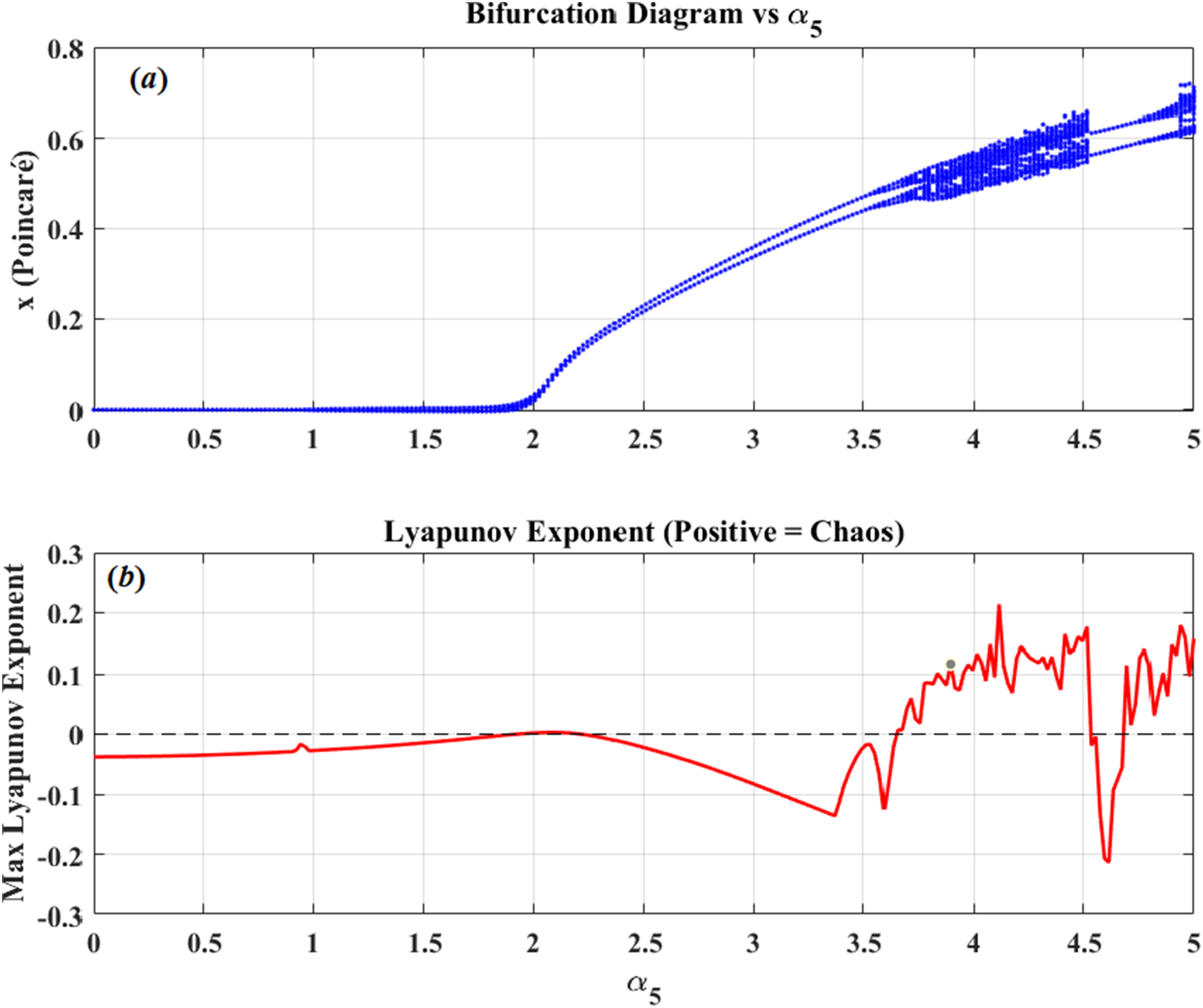
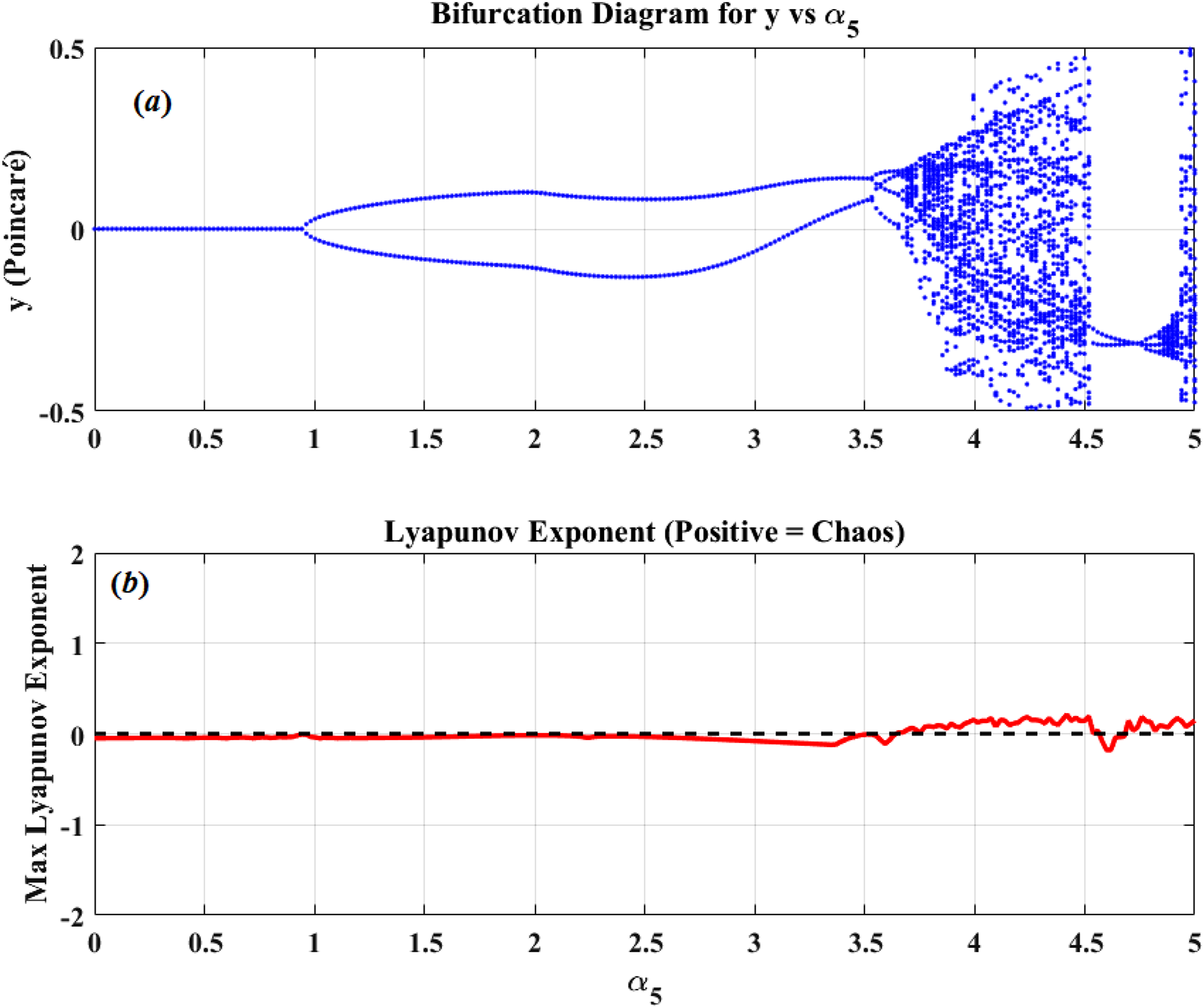
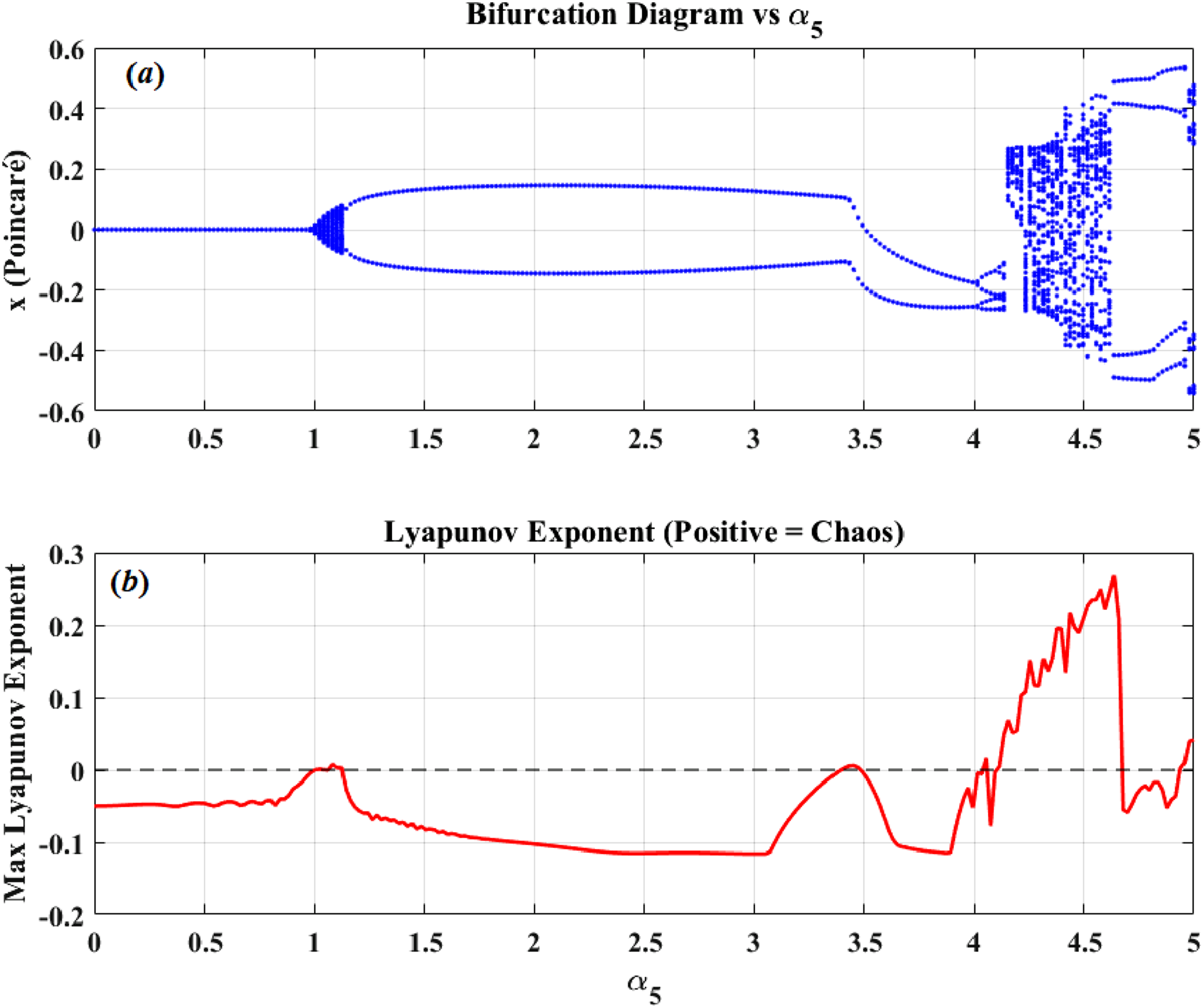
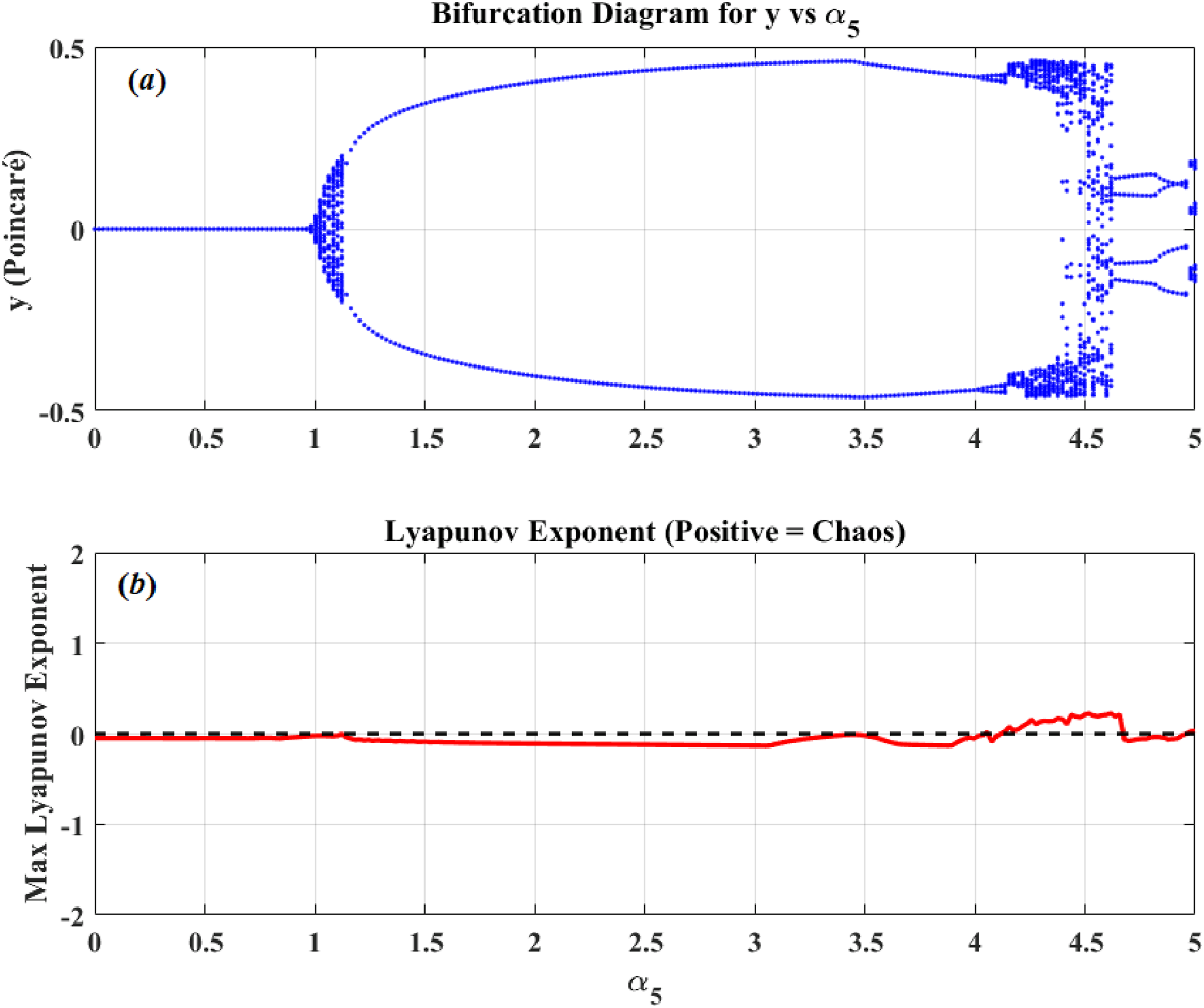
In this Section, we show that a dynamical model’s chaotic behavior36,37 must be examined to comprehend how sensitive the system is to changes in the parameters and ICs. The BD shows how variations in a control parameter led to qualitative changes in the dynamics of the system. To do this, we build the BD for the nonlinear equations (1) and (2) to distinguish between the various motion types and to show the parameter ranges where the system behaves in a periodic or chaotic manner.
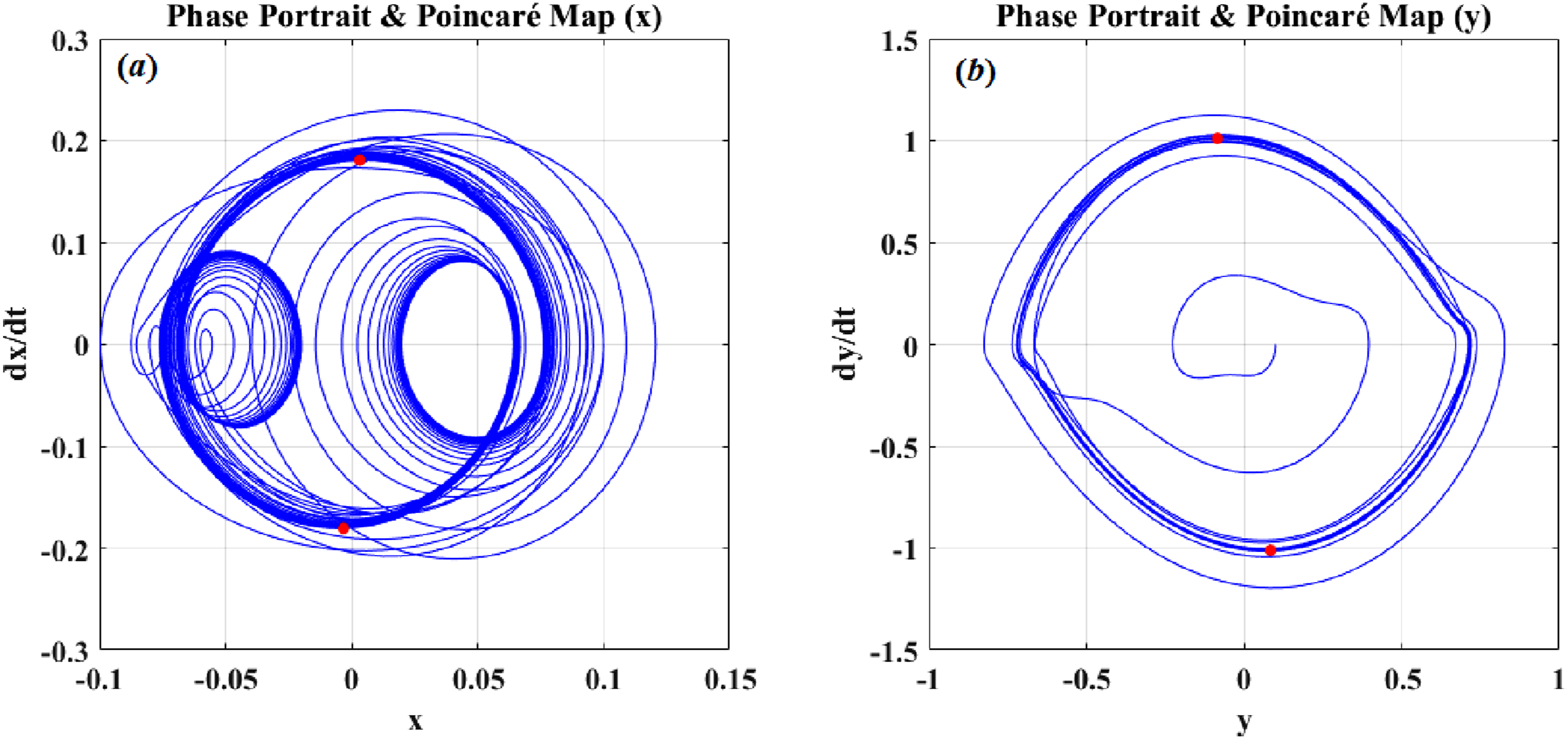
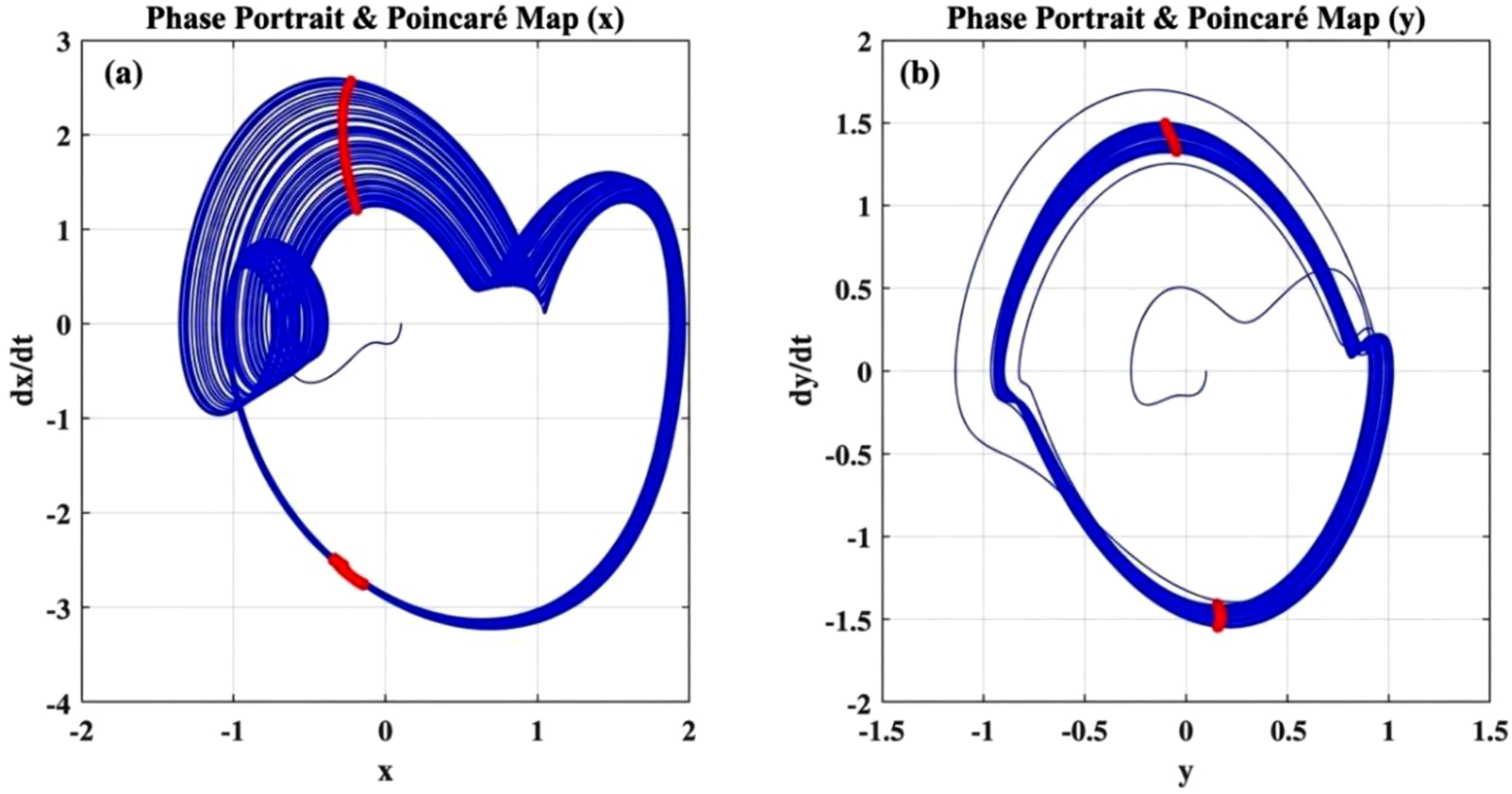
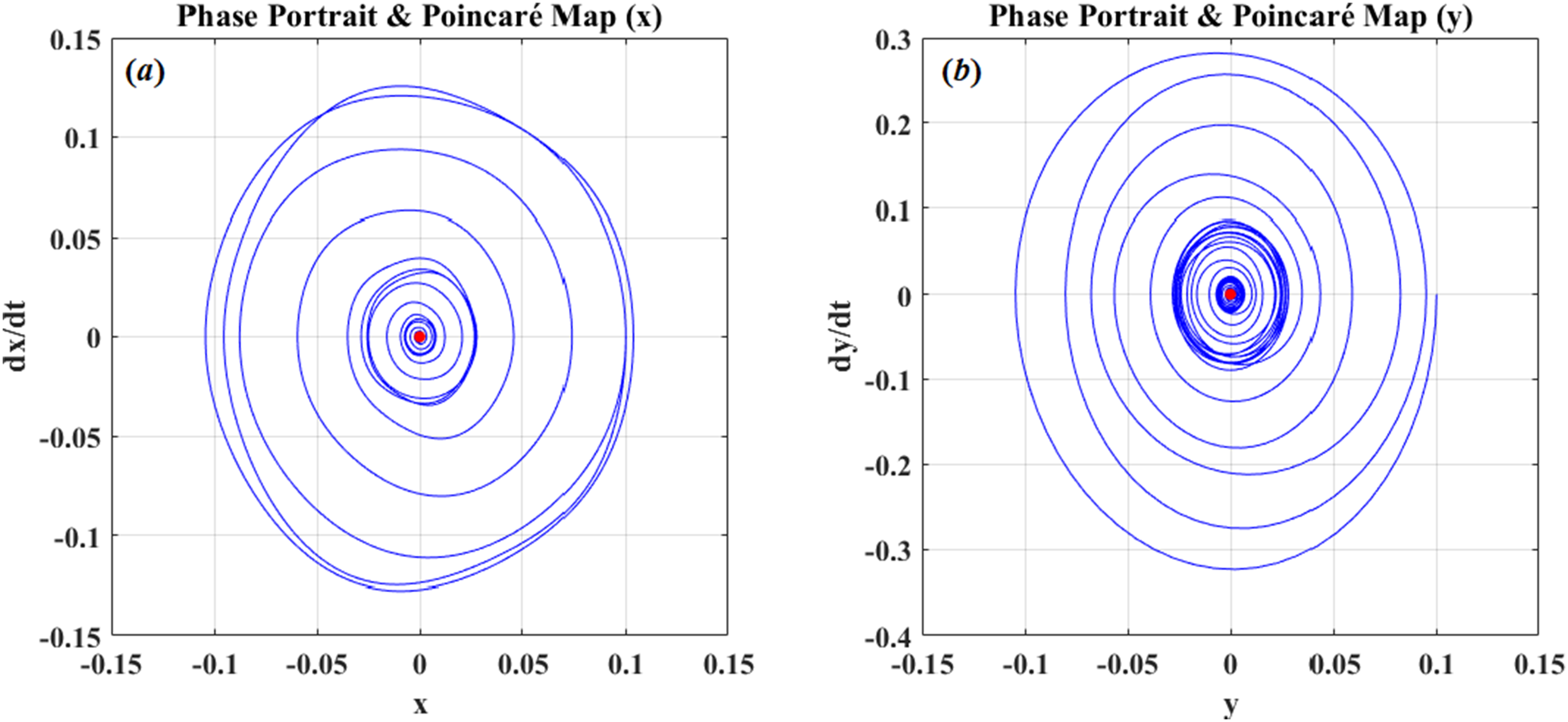
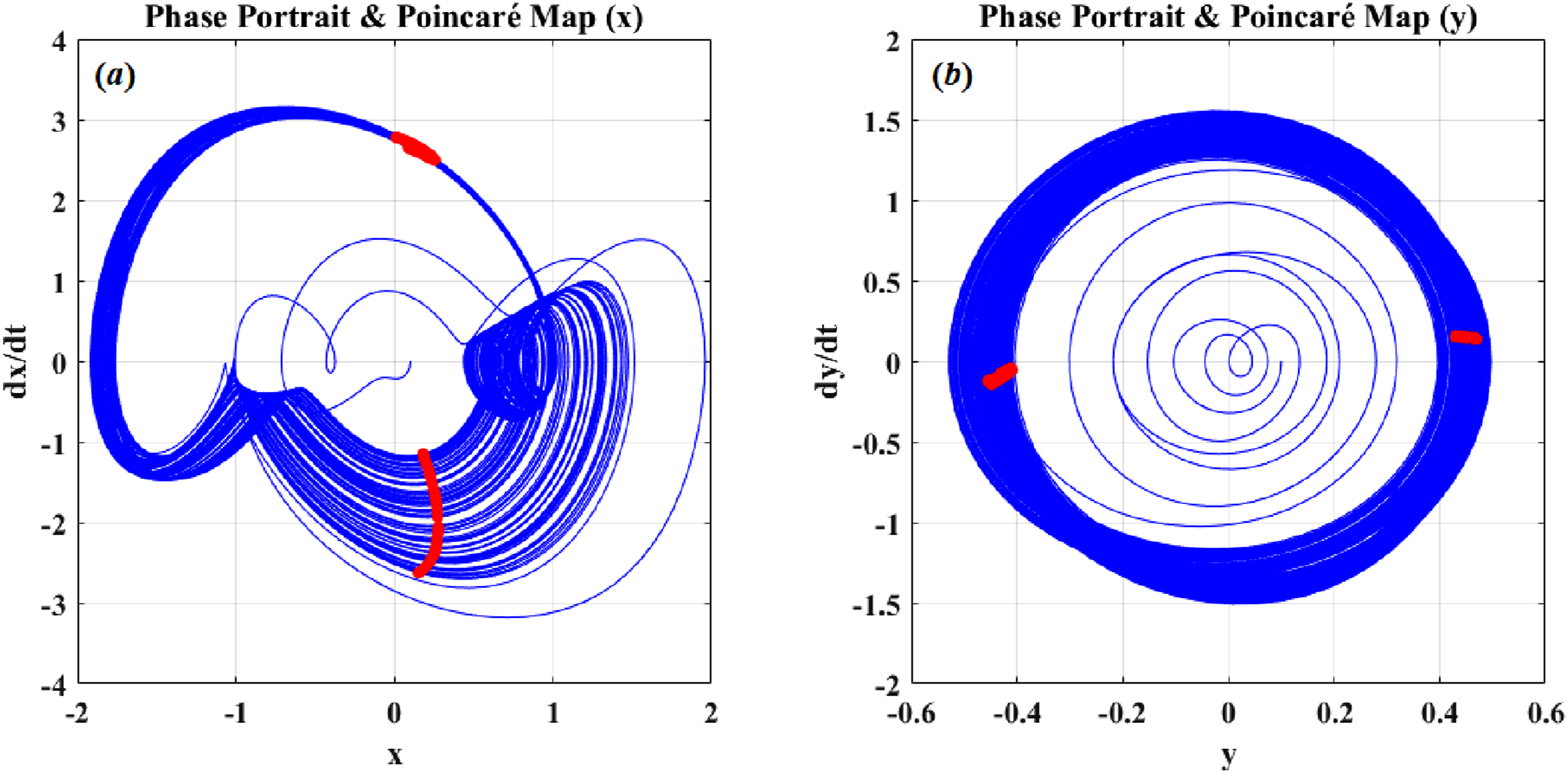
Solving ODEs alone in studying nonlinear dynamical systems is insufficient; it is essential to study the nature of the system and how it responds to the changes of the parameters. Here, we employ a combination of some analytical tools as BDs, which illustrate changes in system behavior, and LEs, which act as a measuring of the disorder of the system, in which a positive value indicates chaotic behavior. Additionally, we use PMs and phase portraits to realize the nature of stability and disorder. Furthermore, we investigate the effect of different frequencies Shows the BDs of Shows the BDs of Shows the phase portrait and Pioncaré maps for the variables Shows the phase portrait and Pioncaré maps for the variables The bifurcation diagrams of The bifurcation diagrams of The phase portrait and Pioncaré maps for the variables The phase portrait and Pioncaré maps for the variables The bifurcation diagrams of The bifurcation diagrams of The phase portrait and Pioncaré maps for the variables Shows the phase portrait and Pioncaré maps for the variables 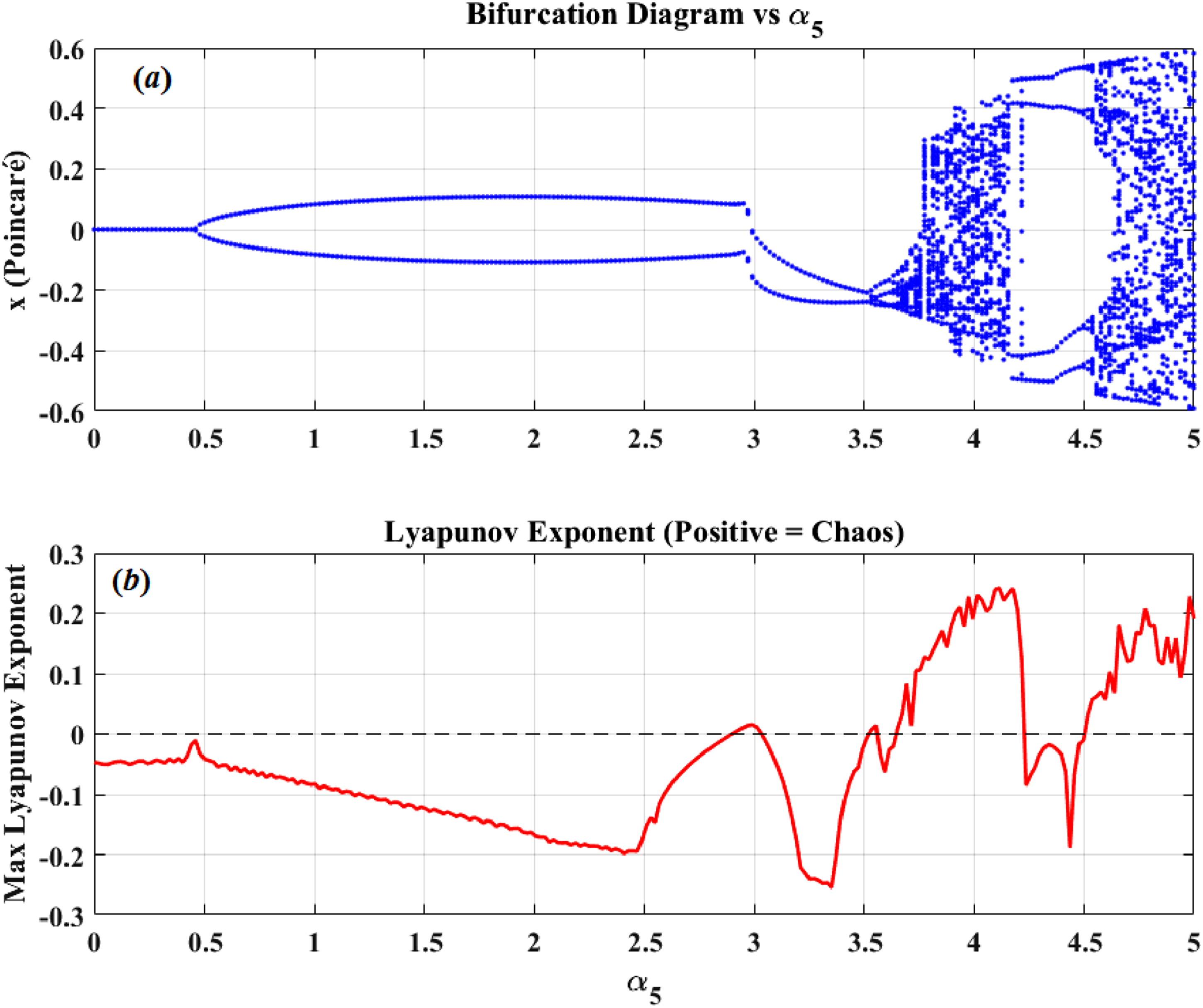
5. Conclusions
The dynamics of a coupled nonlinear parametric oscillatory system were examined in the current work using an NPA to evaluate the efficacy of the suggested methodology. By converting the original nonlinear ordinary differential equations into comparable linear forms, the main idea of the chosen method avoids the drawbacks frequently connected with conventional perturbation approaches. The current formulation is especially useful for systems displaying strong nonlinearities and large-amplitude oscillations because it does not rely on the existence of a small perturbation parameter, unlike traditional asymptotic procedures, except for the use of appropriate series expansions.
Additionally, the established framework makes it possible to evaluate the frequency-amplitude relationship efficiently, which is essential for building successive approximations of the system response under parametric excitation. Additionally, with improved mathematical simplicity, numerical efficiency, and practical application, the suggested methodology offers a fresh analytical viewpoint for researching coupled nonlinear oscillators.
Stability maps in many parameter planes were used to examine the system’s stability properties under different parameter settings. The obtained results showed that raising the damping coefficients significantly decreases the instability caused by parametric excitation by expanding the stable operating zones and shifting the stability boundaries upward. Furthermore, because the effective stiffness is amplitude-dependent, it was discovered that the nonlinear stiffness coefficients, especially the cubic Duffing-type nonlinearity, considerably altered the location and form of stability areas. Additionally, through nonlinear energy exchange between the interacting oscillatory modes, the nonlinear coupling parameters helped to expand the stable region.
Phase portraits, PMs, BDs, and LLEs were used to further investigate the system’s global dynamics. As the excitation parameters increase, the system response shifts from regular periodic oscillations to period-doubling bifurcations and ultimately into chaotic motion, according to these nonlinear dynamical tools. The long-term stability and the beginning of chaos were better understood because of the LLE analysis’s successful differentiation between periodic and chaotic oscillatory regimes. All things considered, the current findings offer insightful knowledge of the stability and nonlinear dynamical behavior of parametrically excited coupled oscillatory systems and could be a helpful foundation for examining comparable nonlinear models found in contemporary scientific and engineering applications.
Footnotes
Acknowledgments
The researchers would like to thank the Deanship of Graduate Studies and Scientific Research at Qassim University for its financial support (QU-APC-2026).

Authors contributions
Funding
The researchers would like to thank the Deanship of Graduate Studies and Scientific Research at Qassim University for its financial support (QU-APC-2026).
Declaration of conflicting interests
The authors declared no potential conflicts of interest with respect to the research, authorship, and/or publication of this article.
Data Availability Statement
The datasets used and/or analysed during the current study available from the corresponding author on reasonable request.