






Abstract
The analysis offers a thorough analytical examination of the auto-parametric pendulum vibration damper, focused on enhancing vibration mitigation in engineering structures via accurate modelling of nonlinear systems and optimization of energy transfer processes. The work aims to enhance the practical application of auto-parametric pendulum vibration dampers in engineering systems. The non-perturbative approach offers a distinctive framework that does not depend on Taylor series expansions. The primary objective of the non-perturbative approach is to transform nonlinear ordinary differential equations of time varying control systems into analogous linear ones. Approximate solutions are obtained without employing series expansions, unlike conventional perturbation methods. The study seeks to advance beyond traditional perturbation methods to evaluate the behaviour of systems exhibiting small-amplitude parametric fluctuations. To generate successive approximations that define the system’s nonlinear parametric behaviour, it is crucial to precisely delineate the relationship between frequency and amplitude. The numerical implementations are employed to validate the derived parametric formulation, which demonstrates significant agreement with the original governing ordinary differential equation. The influence of several factors on the stability of equilibrium states is systematically analysed. The findings indicate that the proposed strategy is very successful, thoroughly validated, and intuitive. Moreover, it could be extended too many applications in dynamical systems and fluid dynamics. The multiple-time scales method is employed to assess the stability structure for a more comprehensive analysis of the system’s behaviour. The morphology of the bifurcation curves alters significantly with variations in the bifurcation parameters. Phase portraits, Poincaré maps, and bifurcation diagrams are employed to do a comprehensive bifurcation analysis. As the excitation amplitude rises, it detects changes from periodic to chaotic motion. The method facilitates the differentiation and classification of the many dynamic reactions exhibited by the system.
Keywords
1. Introduction
As some of the first models to demonstrate nonlinear behaviour, pendulum systems are crucial in expanding our knowledge of nonlinear physics. Among them, the cart-pendulum system is a traditional mechanical arrangement that is the subject of much control theory research in recent decades. Despite the apparently straightforward dynamics of the cart-pendulum system, numerous traditional nonlinear control techniques are useless. Stabilizing this system is a crucial aspect of its study. The cart-pendulum system is a notable mechanical system of 2DOF. The system has emerged as a prominent physical prototype in nonlinear regulator. To comprehend their dynamic reactions, a broad range of pendulum-based dynamic models were thoroughly examined, including basic pendulums, 1 double pendulums, 2 inverted pendulums, 3 parametrically stimulated pendulums, 4 and spring-coupled pendulums. 5 Various pendulum system configurations are the subject of several studies. Specifically, the employment of a moveable dynamic absorber placed in the longitudinal or transverse direction of an excited pendulum was improved the efficacy of weakly damped systems. 6 Additionally, the application of oscillatory control to a 3DOF pendulum mounted on a cart was thoroughly studied. 7 The persistence of bounded periodic oscillations, stability criteria, and bifurcation behaviour was well studied. The stability properties of idealized multi-pendulum systems under external harmonic stimulation were examined. 8 Furthermore, they examined the dynamics of a spherical pendulum under horizontal stress. 9 The angular displacement in the horizontal plane and the inclination angle with respect to the vertical axis are 2DOF. To facilitate NI, a mathematical formulation was created, and colour-coded distributions of the maximal Lyapunov exponent were used to show the findings. Additionally, attractor structure visualisations utilizing Poincaré sections and trajectory density maps on a chosen control plane were shown. The dynamics of a 2DOF auto-parametric pendulum connected to a damped subsystem were studied. 10 Using the proper generalized coordinates, Lagrange’s formalism was used to obtain the governing equations of motion. Furthermore, the complicated vibrational behaviour of a recently suggested 3DOF of auto-parametric system was analysed. 11 A damped DO served as the primary subsystem, and it was connected to a secondary subsystem that was represented by a damped spring-pendulum arrangement. The mathematical modelling of a dynamical system connected to a piezoelectric device was investigated. 12 The NPA in contrast to other methodologies of traditional perturbation provides a novel conceptual base that enhances flexibility and expands applicability. NPA distinguishes itself from prior models by integrating and rectifying specific shortcomings identified in earlier research. This divergence is not only incremental but signifies a significant methodological progress.
A variety of engineering systems, including rotating machinery, aeroplanes, and civil infrastructure (such as buildings, bridges, and dams), are widely designed and used in practical applications in recent years. A thorough analysis of both traditional and modern advancements in the identification of nonlinear dynamical systems was provided. 13 The purpose of this study was to provide an overview of the main approaches that were documented in the literature, validate those using NI and experimental research, evaluate their advantages and disadvantages, and suggest potential directions further research. Engineering constructions are susceptible to varying degrees of vibration from a variety of factors, including seismic activity, wind forces, vehicle loads, and imbalanced rotational components, regardless of how complex or simple their geometric arrangements or material behaviours. 14 By examining several approaches from other fields, the function of damping in identifying structural degradation was investigated. 15 It evaluated the use of damping in fibre-reinforced composite and reinforced concrete structures, identified the critical factors influencing damage identification through damping characteristics, and suggested future lines of inquiry to enhance the efficacy of damping-based detection methods. Furthermore, high vibrations raise the danger of instability and possible failure by seriously impairing structural performance, decreasing durability, and increasing maintenance requirements. A useful dynamic feature that lessens system vibrations to a manageable level is structural damping. The on-going loss of energy caused damping and its fluctuations. 16 A technique in determining Coulomb and viscous friction coefficients from the responses of a harmonically excited dual-damped oscillator with linear stiffness was provided. Established analytical solutions for non-sticking reactions activated close to resonance were used in the identification process. Both internally and externally connected to elements like boundary conditions, geometric changes, material deterioration, were examined. 17 Based on complicated mechanics, structural damping is frequently divided into three groups. The hydrodynamic or aerodynamic forces applied to the structures were the source of fluid damping. 18 Second, intricate atomic and molecular interactions within materials were the source of material damping. 19 Third, it was recognised that Coulomb friction between parts of a structural system caused structural damping. 20 For the purpose of characterising damping, several simpler models were proposed, such as Coulomb frictional damping models, hysteretic damping models, and viscous damping models. 21 One basic model of a parametrically driven system with cubic nonlinearities is the Mathieu–DO. Parametric resonances and related limit cycles appear at both fundamental and combination resonance frequencies in multi-DOF systems were studied. 22 The subject of piezoelectric active thin-walled structures has garnered significant interest over the past two decades. An isogeometric finite element formulation for shell structures composed of composite laminates, incorporating piezoelectric layers defined by electro-mechanical coupling, was investigated. 23 A selection of examples from the existing literature was examined to illustrate the applicability of the proposed numerical tool and evaluate its performance. Semi-nonclassical controller effects, including strain gradient, nonlocal, and Gurtin–Murdoch surface/interface theories, were introduced for the analysis of nonlinear vibrations in piezoelectric nanoresonators, in contrast to classical theory. 24 The attributes of nonlinear oscillators featuring quasi-linear terms in mechanical engineering were analysed. 25 A revised frequency formulation for this category of nonlinear oscillator was also introduced. Although the mathematical proof was absent, illustrative examples were included to showcase the notable simplicity and dependability of the method. Comprehending the dynamics of nonlinear vibrations in stringer-stiffened shell structures is essential for improving the stability and efficacy of advanced aerospace and marine systems. These systems frequently demonstrate intricate responses owing to geometric and material complexities, necessitating analytical approaches adept in accurately capturing essential dynamics. Three effective analytical methods for deriving closed-form expressions for the nonlinear frequency of such systems were examined: He’s adaptive location point-based formulation, the square error minimization frequency formulation, and the Hamiltonian-based frequency-amplitude formulation. 26 These methods offer rapid and straightforward solutions for analyzing nonlinear oscillators without requiring complex iterative procedures. The nonlinear frequency of the stringer-stiffened shell is determined by each method and validated against both exact analytical solutions and numerical results. Novel coupled vibration energy harvesting systems were intentionally constructed and examined to exploit nonlinearity and structural coupling effects, utilizing a nonlinear X-shaped structure linked to piezoelectric harvesters via two distinct mounting configurations (horizontal and vertical cases). 27 Deliberate nonlinearities were incorporated to enhance energy harvesting efficiency. Nevertheless, limited findings are documented regarding the combined exploitation of bistable and quasi-zero stiffness structures or mechanisms to improve ocean energy conversion in the literature. A unique bistable electromagnetic wave energy converter was proposed, featuring a bio-inspired X-shaped supporting structure and a mechanical motion rectifier. 28
Chinese mathematician Professor Ji-Huan He created an effective technique known as He’s frequency formula to deal with nonlinear oscillations. The amplitude-frequency equations of nonlinear oscillators were summarised and an improvement was suggested. The chosen location affects both the original and modified versions, and there are currently no set standards for site selection. 29 To solve the problem, the weighted residuals approach was used. It was crucial to quickly evaluate the amplitude-frequency correlation of a nonlinear oscillator exhibiting discontinuity. 30 This approach produces an approximation result with adequate precision and little processing. A location point selection criterion was introduced. 31 Many authors use He’s frequency formula with great success. In order to solve a nonlinear oscillator with a given frequency, a different trial function was presented. The technique’s effectiveness was demonstrated using the DO. 32 He’s frequency formula shows an effective approach to dealing with nonlinear oscillations and is derived from an old Chinese mathematical technique. A modified version of the formulation was suggested after a different theoretical analysis of it showed its dependability and practicality in real-world situations. 33 By contrasting a nonlinear oscillator with its linear equivalent in a domain where oscillations were studied, a formula connecting the amplitude and period of an ODE was obtained. 34 Algebraic techniques using an inequality that restricts the divergence between linear/nonlinear functions are used to evaluate the nonlinear period. A number of examples were given that contrast the approximation with He’s frequency formula. 35 The amplitude-period formula depends on an integer that is ideally chosen for certain cases. A thorough solution defining a conservative nonlinear oscillator’s ideal period is given. A conclusive conclusion that was shown to be a good estimate of the exact time in many common circumstances is made possible by the inclusion of an adequate weight function in the objective functional. 36 By analysing the residuals of two trial solutions, He’s frequency formula determines the connection between frequency and amplitude in a nonlinear oscillator. Even though this approach can yield extremely precise results, there is room for improvement. It is possible to improve the residuals computation without compromising accuracy. The extremely nonlinear DO was recorded as a model to verify the accuracy and approach of the solution. 37 There are examples in the literature where the NPA was applied to study non-conservative oscillation, focusing on specific scenarios and using advanced techniques to study a particular kind of nonlinear vibration. The NPA is an independent approach that doesn’t depend on perturbation expansions to function. The NPA finds it difficult to comprehend the fundamental elements of a problem, in contrast to perturbation theory, which effectively produces starting series terms and yields polynomial approximations. From a polynomial approximation to the NPA conclusion, this approach used an approximate analytic continuation on occasion 38–48. This method makes use of cutting-edge methods and strategies that go beyond conventional constraints, allowing for a more thorough understanding of complex challenges.
Investigating a unique framework of the analysis of an APVD holds extensive experimental and useful consequence in varied engineering and industrial fields. It enables researchers to formulate sophisticated mathematical models and NI to comprehend the intricate nonlinear dynamics of the system, encompassing stability analysis, resonance occurrences, and energy transfer mechanisms. These investigations enhance experimental validation techniques by utilizing high-precision sensors, accelerometers, and motion capture devices to assess the damper’s response under various operating situations. The framework facilitates the design of controlled laboratory experiments that investigate the impacts of modifying system characteristics, including mass, length, damping coefficients, and excitation frequencies, yielding useful insights in optimizing damper efficiency. This research has extensive applications in structural engineering, automotive industries, aerospace systems, and mechanical vibration control. In civil engineering, APVD can be incorporated into tall structures and bridges to alleviate vibrations induced by wind, seismic activity, or automobile traffic. In automotive engineering, these dampers can improve ride comfort and vehicle stability by efficiently dispersing vibrational energy inside suspension systems. Aerospace applications encompass the mitigation of undesirable oscillations in aircraft structures and spacecraft components, hence enhancing safety and performance. Furthermore, in mechanical and industrial gear, such dampers can be utilized to extend the lifespan of spinning equipment by reducing vibrations that contribute to wear and failure. The innovative framework enables the creation of intelligent, adaptive vibration control strategies through sophisticated control algorithms, resulting in improved efficiency and real-time adaptability in dynamic settings. The merger of experimental and practical methodologies in the examination of APVD enhances theoretical understanding and fosters innovations across many engineering applications. To be easily followed: The remainder of the present work is structured as follows: Section 2 specifies the issue formulation; Section 3 describes the NPA’s methodology and approach validation. Section 4 provides the stability analysis. This Section encompasses time history procedure, and phase plane structure. The chaotic motion is depicted in Section 5. Section 6 presents the main findings from the primary results.
2. Formulation of issue
Consider a damped main oscillator coupled to an APVD. A harmonic stimulation Shows the model of APVD.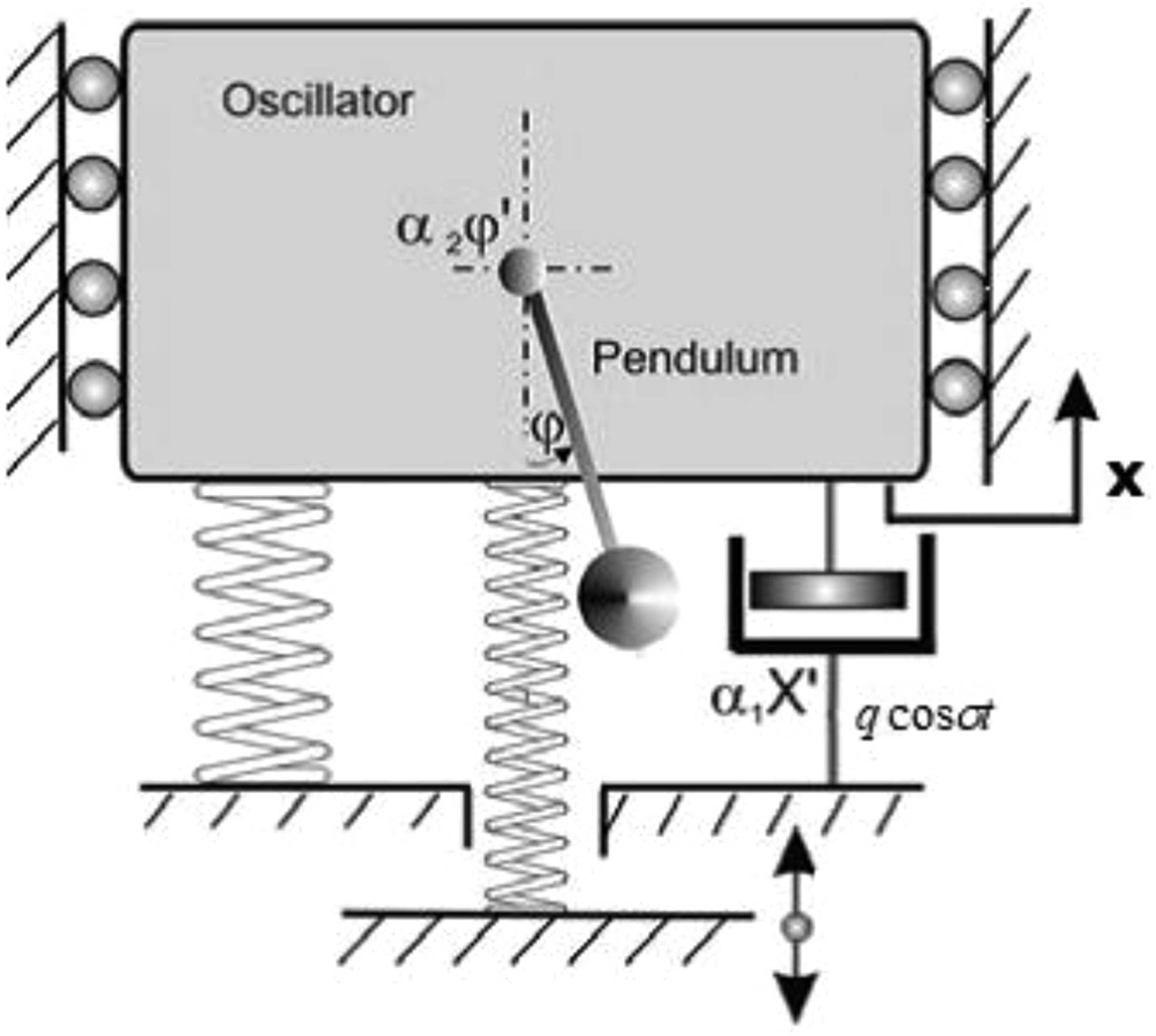

It should be noted that Eq. (1) includes coupling terms between terms between the oscillator and the pendulum.
The second equation may be formulated as follows:

Eqs. (1) and (2) were derived using Lagrangian mechanics and describe the interaction between the primary system and the pendulum, where the energy transfer can lead to effective absorption. 39
3. Methodology of solution
Following our previous work 40 in analysing the NPA of 2DOF, therefore, Eqs. (1) and (2) may be formulated as follows:
To apply the NPA, we firstly assume two guessing (trial) solutions of each equation. For Eq. (1), assuming the trial solutions as follows:

Trial solutions are thought of as informed suggestions that might not immediately result in a precise linear solution. The phrase acknowledges that the initial assumption may need to be improved or modified, reflecting their temporary nature. Iterative techniques use a trial solution as a starting point and apply consecutive improvements to get closer to the right answer over time. It is frequently used in analytical methods to provide a broad form of the solution, which is then modified by adding the system’s particular boundary conditions or constraints. Additionally, the ICs are addressed as
40
:

As previously shown,
40
the correspondent frequency is shown as:

Moreover, the equivalent coefficient of damping may be determined as
40
:

The equivalent linear ODE is then specified as:

To could be complete the process without missing the external force in the stability discussion, the right hand side must be integrated w.r.t.

It should be noted that the NPA primarily addresses secular terms, which pertain exclusively to the odd functions. Since the function
The normal standard formula of Eq. (8) assumes that

It follows that


Now, the objective is to transform Eq. (10) into the following comparable equation with constant coefficients:

Utilizing parallel procedures to those given by41–51 regarding to Eq. (10), the total frequency may be attained as:


The form of

Again, the trial solutions of Eq. (2) could be assumed as follows:

Once more, applying the previous procedure for Eq. (2) and parallel to Eq. (7), one gets the following characteristics.

Furthermore, the equivalent frequency is given as follows:

The equivalent linear ODE of Eq. (2) is defined as:



The simplification of Eqs (11). and (19) yields:




3.1. Approach validation
Typically, an auto-parametric pendulum damper is made composed of a pendulum that serves as a nonlinear energy sink connected to a main configuration (like a plate or a beam) that is sensitive to base or external stimulation. The system becomes auto-parametric due to a parametric resonance of the pendulum caused by the main system’s excitation. The objective of NPA is to convert the APVD as a nonlinear ODE into a linear one without requiring minor changes or approximations. The NPA in the current oscillator has several characteristics, including:
Where linear or weakly nonlinear approximations fail, NPA manages large-amplitude movements. Large pendulum swings, non-sinusoidal responses, and nonlinear coupling effects are all examples of APVD. NPA is not dependent on tiny parameters (e.g., small damping, small excitation, weak coupling) like perturbation techniques (e.g. multiple scales). This makes it possible to investigate global dynamics, such as amplitude-dependent frequency shifts and hardening/softening stiffness effects. APVD functions close to internal resonance conditions, which are usually 2:1 between the pendulum and the structure. NPA reveals the nonlinear energy exchange between modes, which perturbation approaches could overlook or distort. It draws attention to frequency-energy dependency, which is a crucial aspect of nonlinear systems. The facilitation of the prediction of energy distribution on the pendulum and the visualization of energy transfer routes.
As previously shown, it is beneficial to match the nonlinear ODEs and their corresponding linear ones in order to support the NPA. A data of the pertinent constants is chosen to achieve this goal as:

To validate our outcomes, it is appropriate to use the MS to draw the numerical solutions of the nonlinear ODEs with their linear ones. For this purpose, using the above data to draw and compare the functions Authorises the correspondence concerning values of 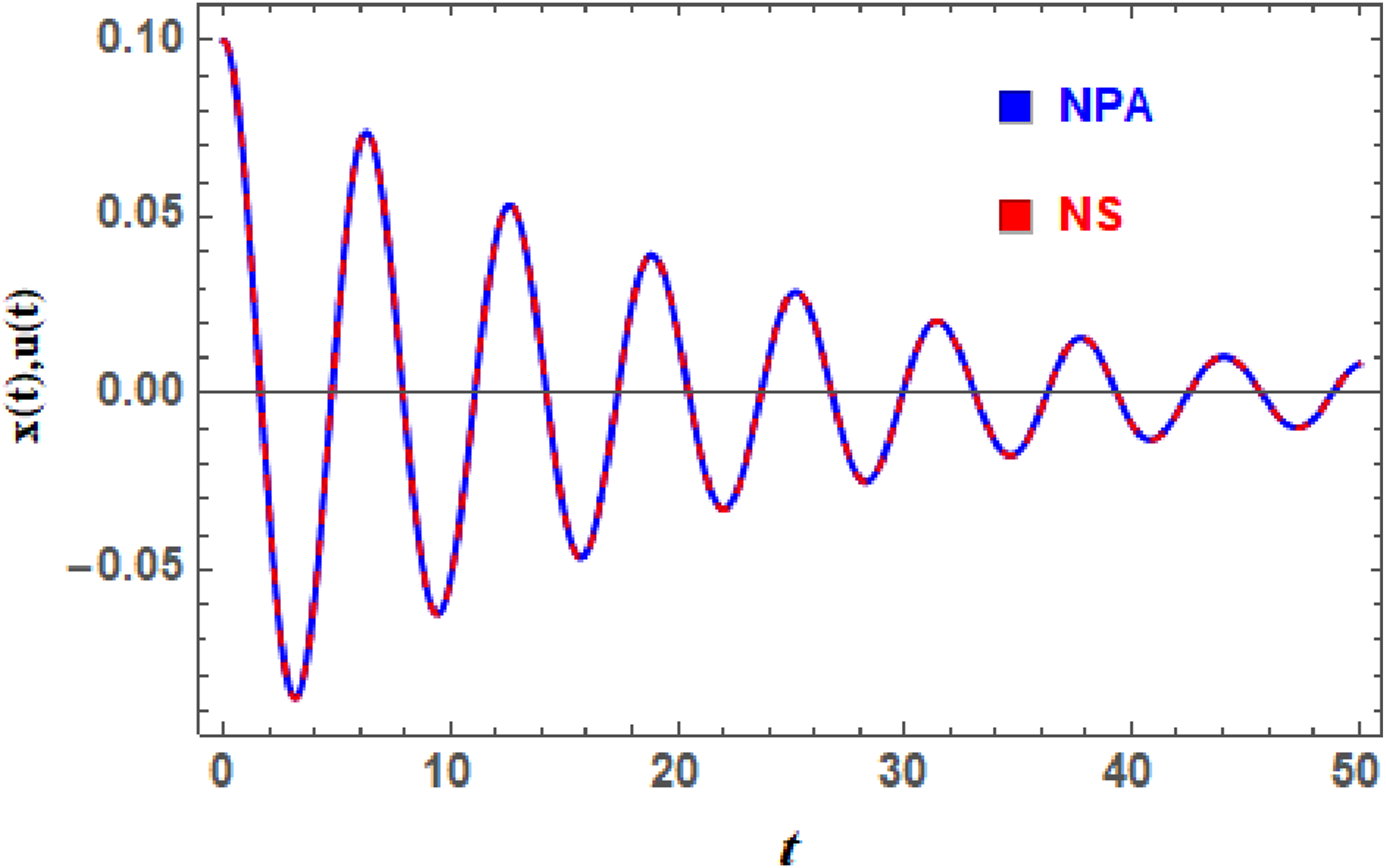
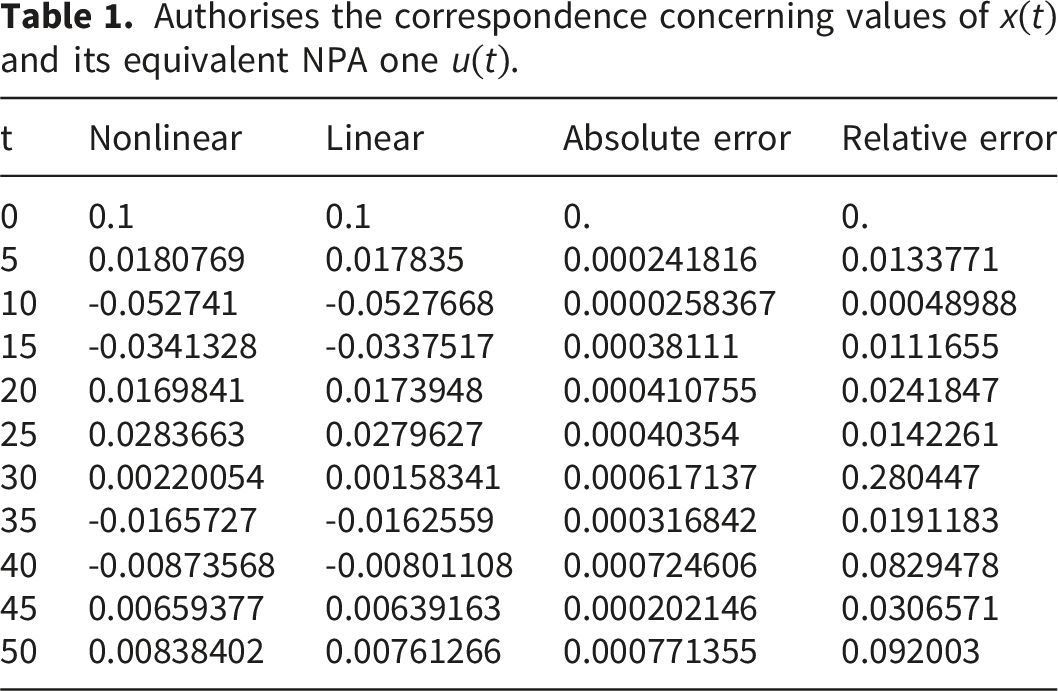
The persistent concordance between nonlinear and linear ODEs through the NPA stems from techniques that directly examine the complete nonlinear framework without depending on minor perturbations. Methods such as the HPM, Adomian decomposition, and variational techniques provide accurate or systematically convergent approximate solutions that maintain the intrinsic characteristics of nonlinear systems. These methods demonstrate that given particular transformations, constraints, or asymptotic conditions, nonlinear ODEs can display solution structures that substantially resemble their linear equivalents, hence maintaining consistency in their dynamical behaviour. This agreement is especially important in situations where NPA expansions are inadequate, providing a more resilient foundation for comprehending nonlinear processes. It should be indicated that the absolute error in the previous figure is estimated and found to equal 0.00048.
Once more, the second comparable equations as given in Eqs. (2) and (18) gets the following Figure 3 and Table 2. Approves the correspondence between the NS of 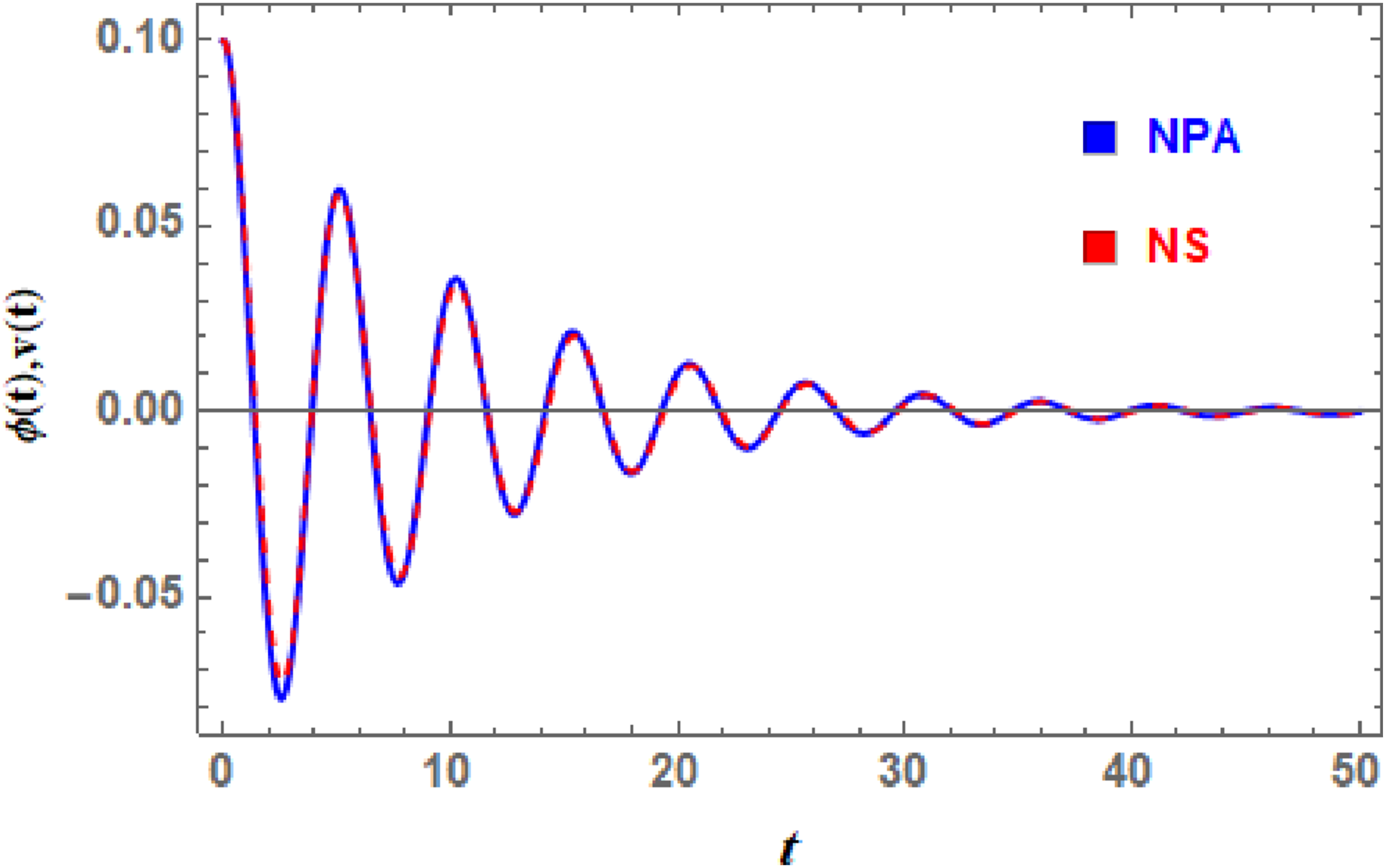
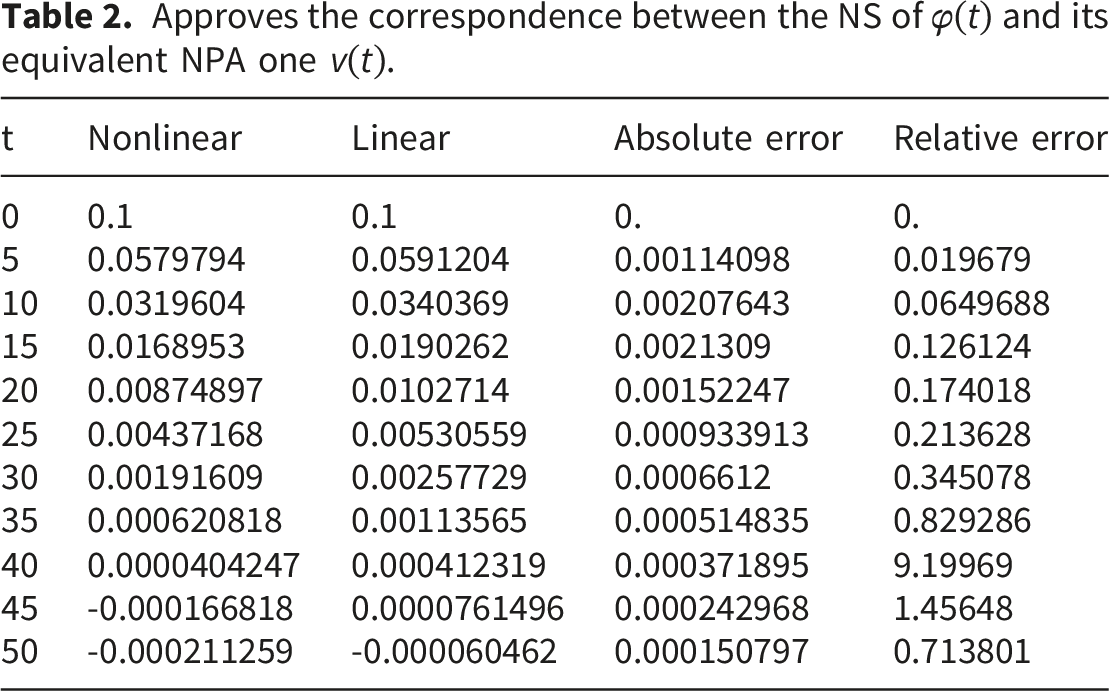
The enduring agreement between nonlinear and linear ODEs via the NPA arises from methods that thoroughly investigate the entire nonlinear structure without relying on negligible perturbations. Techniques such as the HPM, Adomian decomposition, and variational methods yield precise or systematically convergent approximate solutions that preserve the fundamental properties of nonlinear systems. These methods illustrate that under specific transformations, constraints, or asymptotic conditions, nonlinear ODEs can exhibit solution structures that closely resemble their linear counterparts, hence preserving consistency in their dynamical behaviour. This agreement is particularly significant in scenarios where NPA expansions are insufficient, offering a more robust basis for understanding nonlinear processes. The absolute error in the preceding figure is calculated to be 0.00096.
3.2. Error estimations
i. Absolute Error:
The absolute error displays the numerical discrepancy between the estimated and actual values. A more accurate estimate is shown by a lower absolute error, which shows that the computation closely resembles the actual data. ii. Relative Absolute Error:
The relative absolute error is quantified by the ratio between the error and the original value. This concept is essential to the experimental sciences, engineering, and physics, where precise quantities and approximations are required for precision, strategy, and analysis. A large relative error denotes a substantial deviation from the actual number, endangering the precision and reliability of calculations, whereas a small relative error shows a fairly similar approximation with less volatility. It may be expressed numerically as:
4. Stability outline
As an extension of the NPA, the present goal is to examine the stability of the structured APVD framework. The stability diagrams of the analogous coupled linear system specified in Eqs. (9) and (15) are shown to guarantee clarity. Tables 1 and 2, together with Figures 2 and 3, show how reliable this strategy is. It is more practical to study the appropriate replacement ODEs proposed in Eqs. (9) and (15) under the examined conditions rather than directly analyzing the nonlinear system supplied in Eqs. (1) and (2). Considering the current example that deals with nonlinear stability, this strategy turns out to be a novel, simple, and effective substitute that performs better than conventional approaches. Furthermore, a variety of nonlinear systems may be analyzed using this method. Therefore, the two oscillators’ stability requirements may be stated as follows:
Figures 4–10 are designed to examine the stability diagram with respect to the two restrictions (20). As shown in Eqs (16). and (17), inequalities of the parameters Specifies the stabilizing effect of the displacement damping coefficient Specifies the destabilizing effect of the angular damping coefficient Indicates the destabilizing effect of the initial amplitude Displays the stabilizing effect of the initial amplitude Shows the stabilizing effect of the coupling coefficient Shows the stabilizing effect of the coupling coefficient Shows the dual effect of the excitation amplitude 
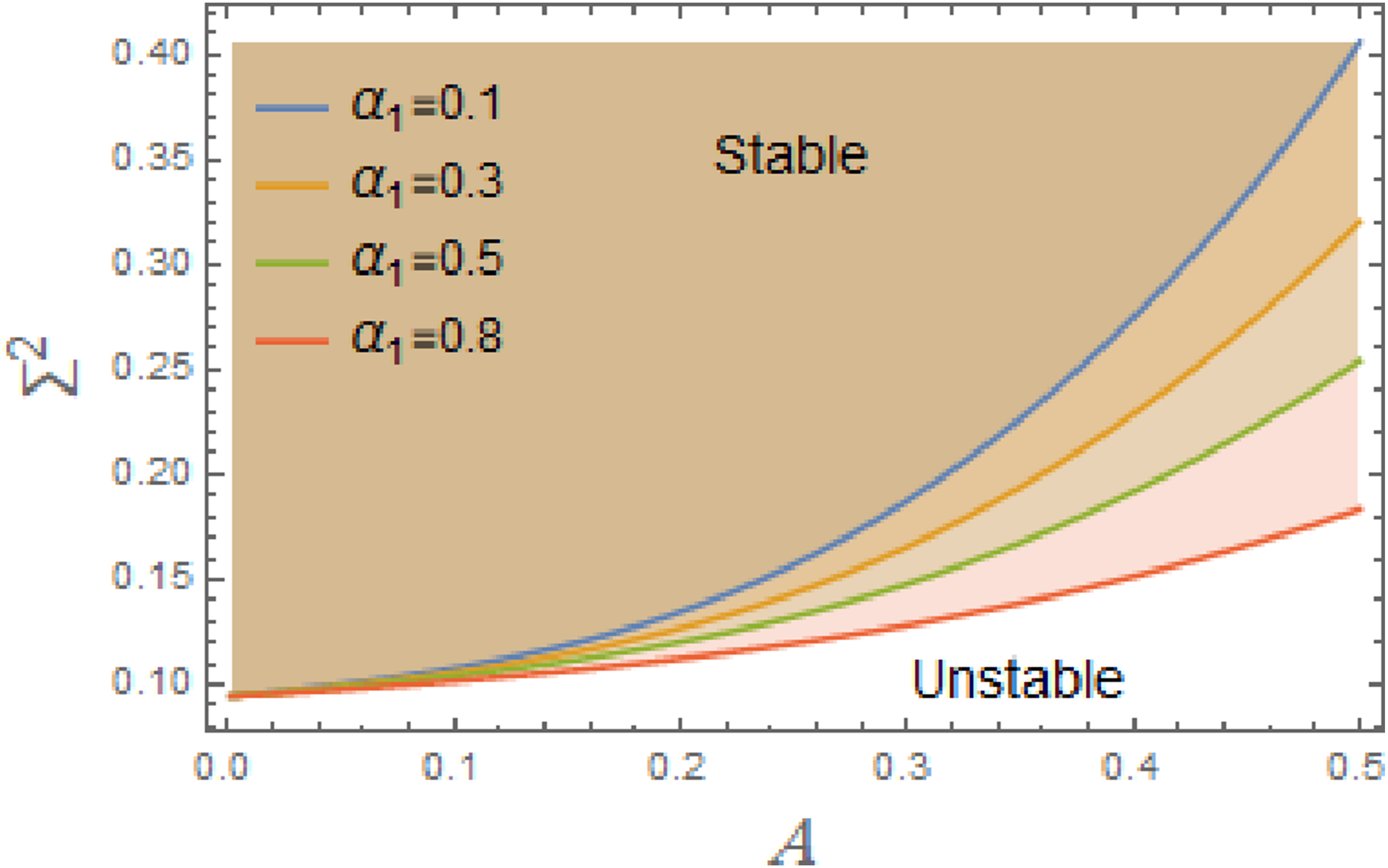
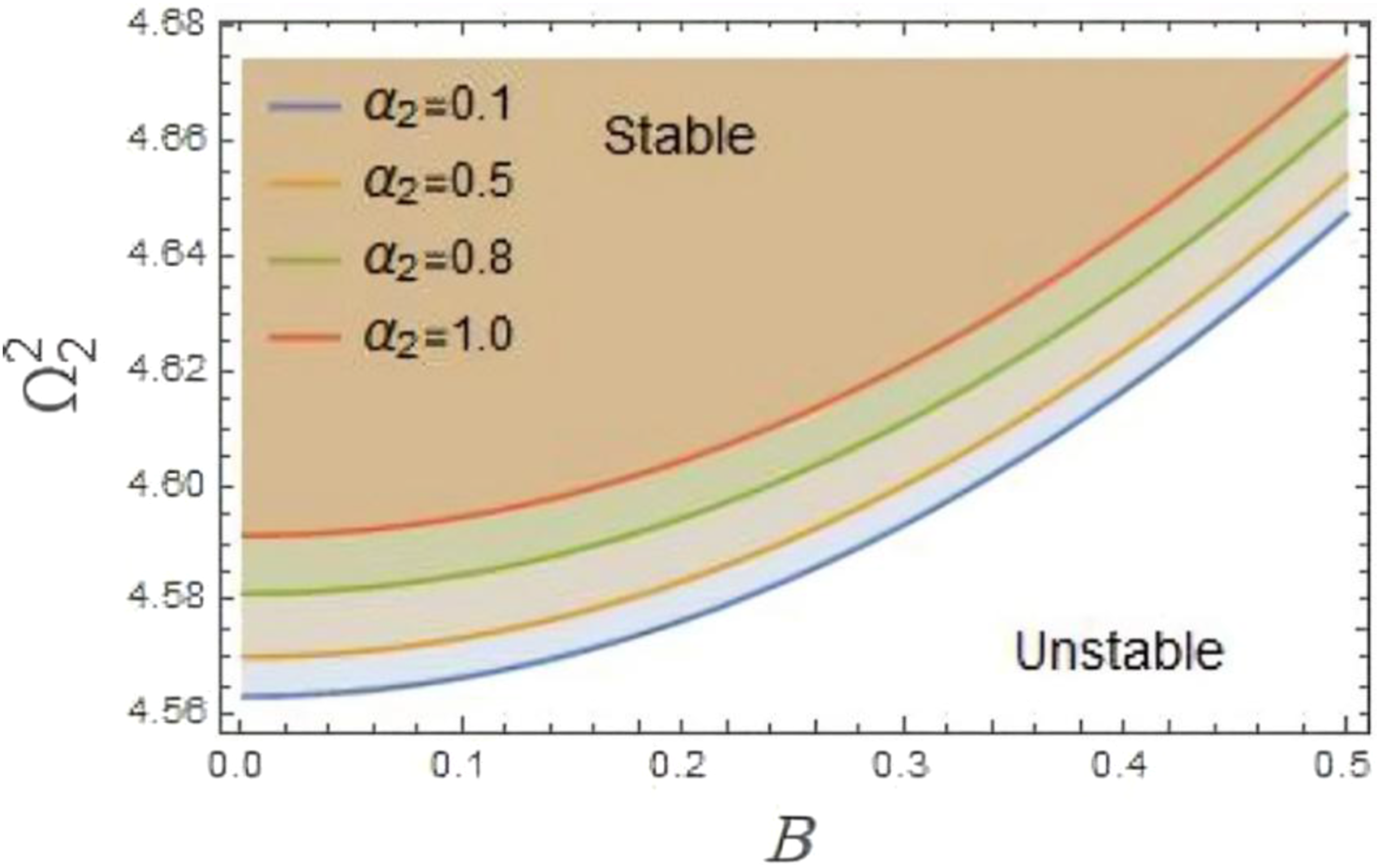
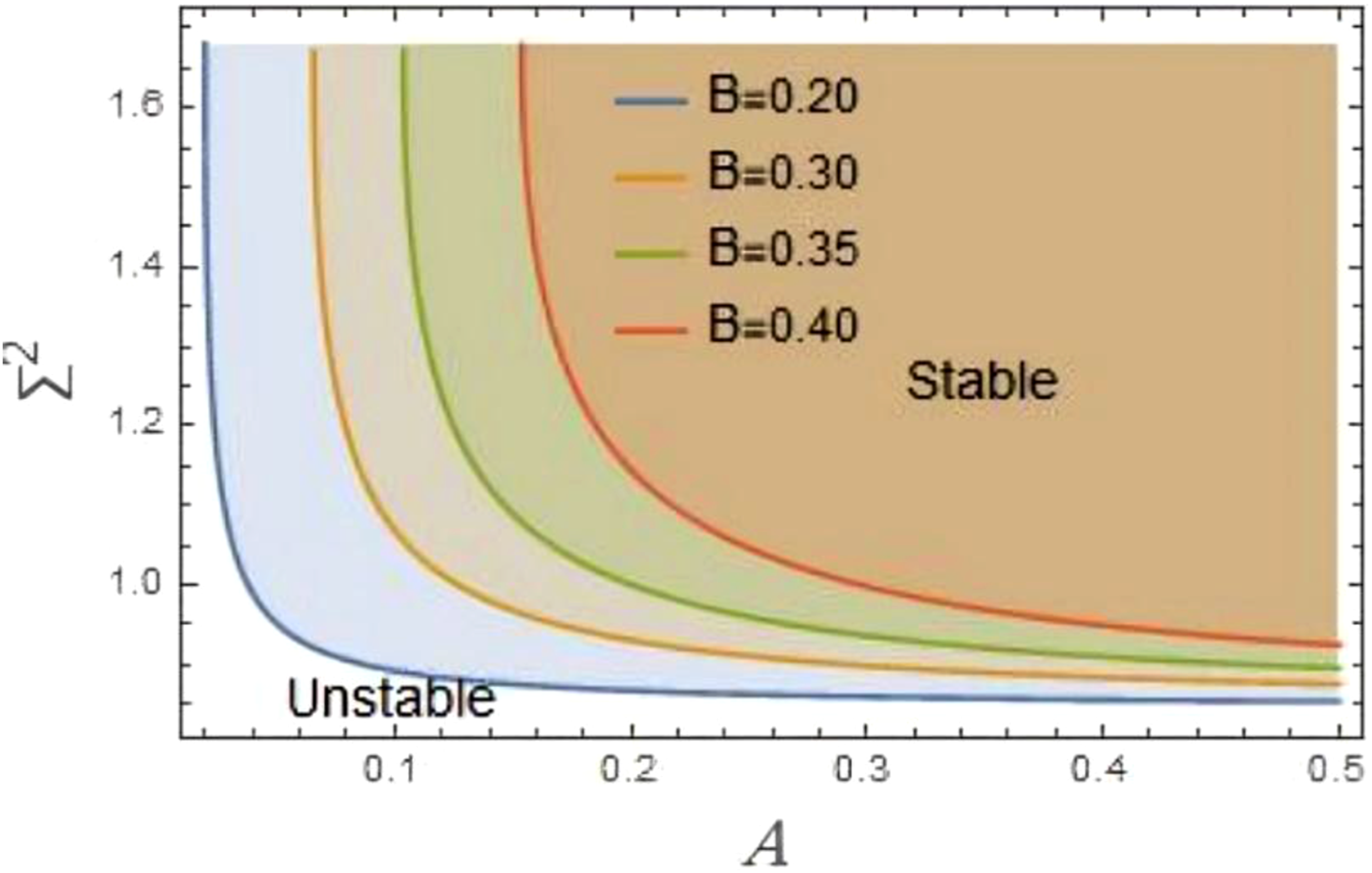
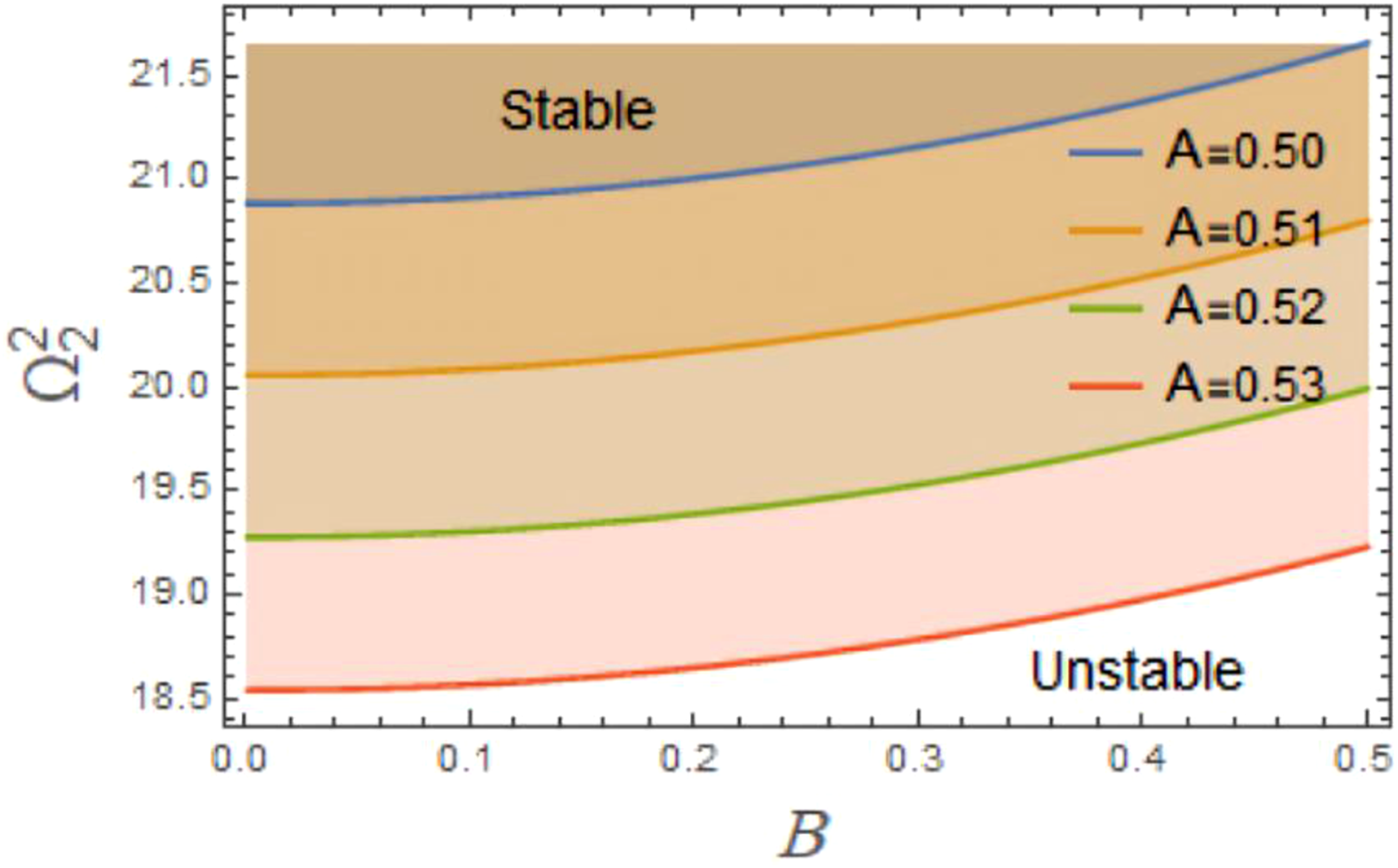
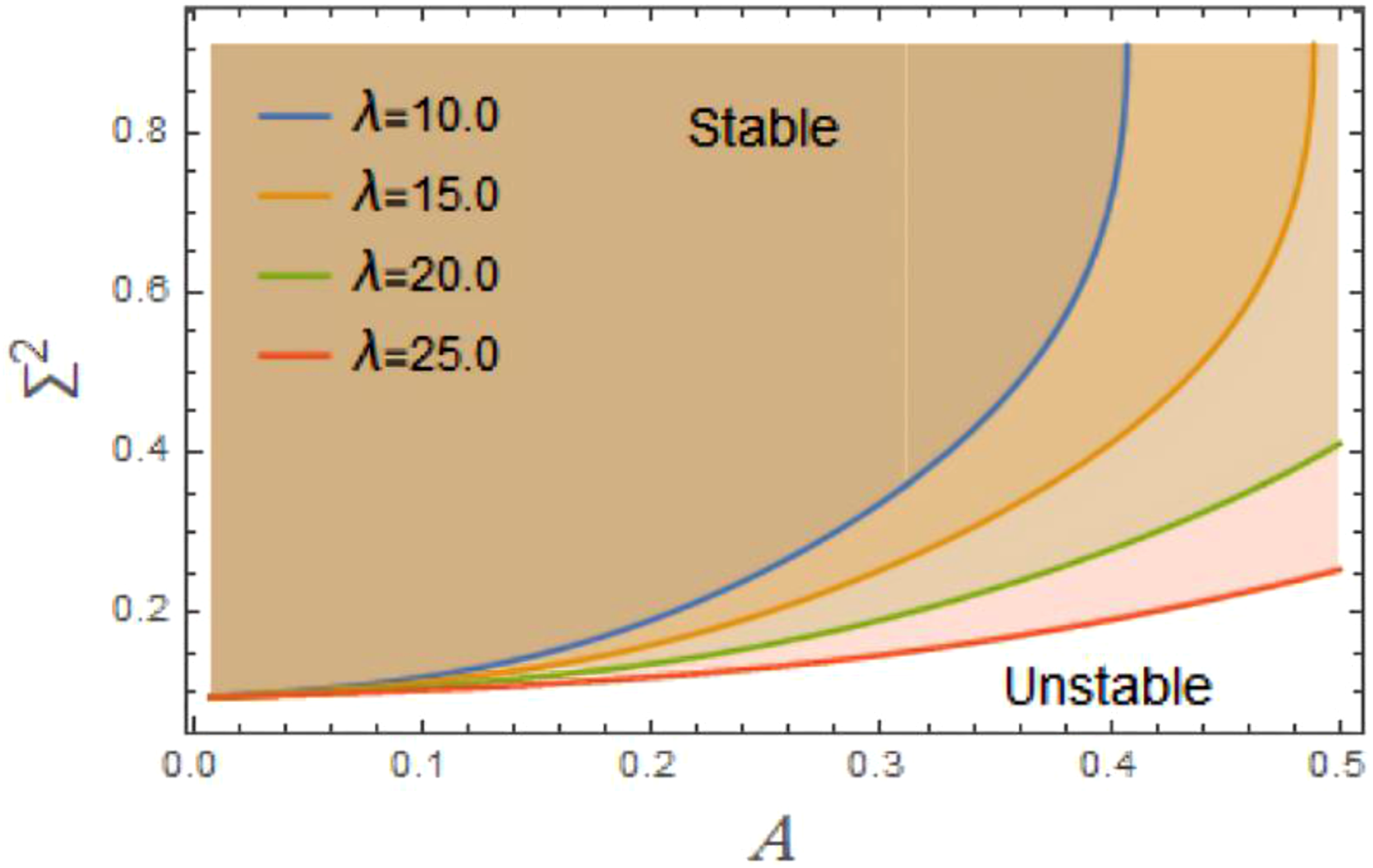
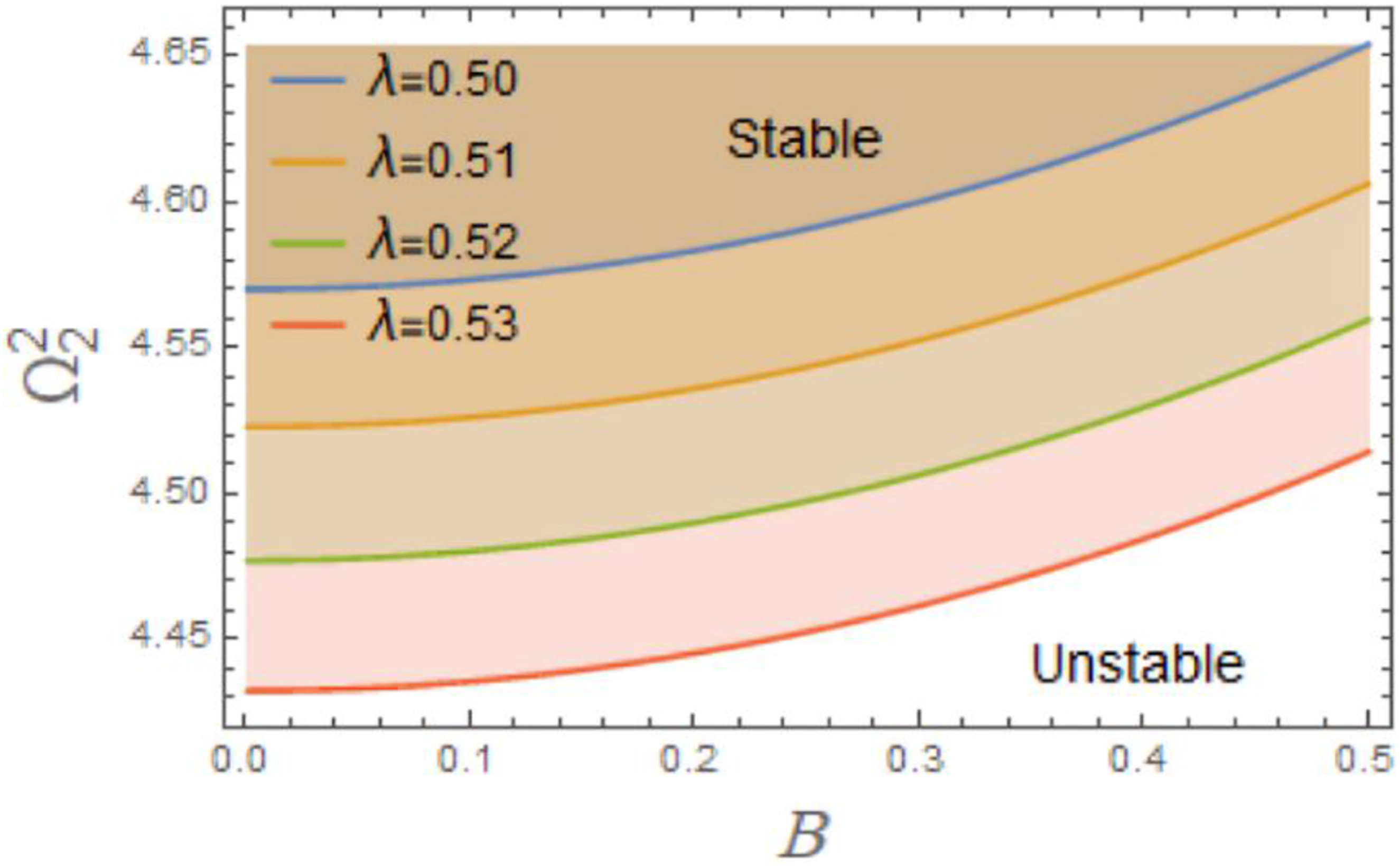
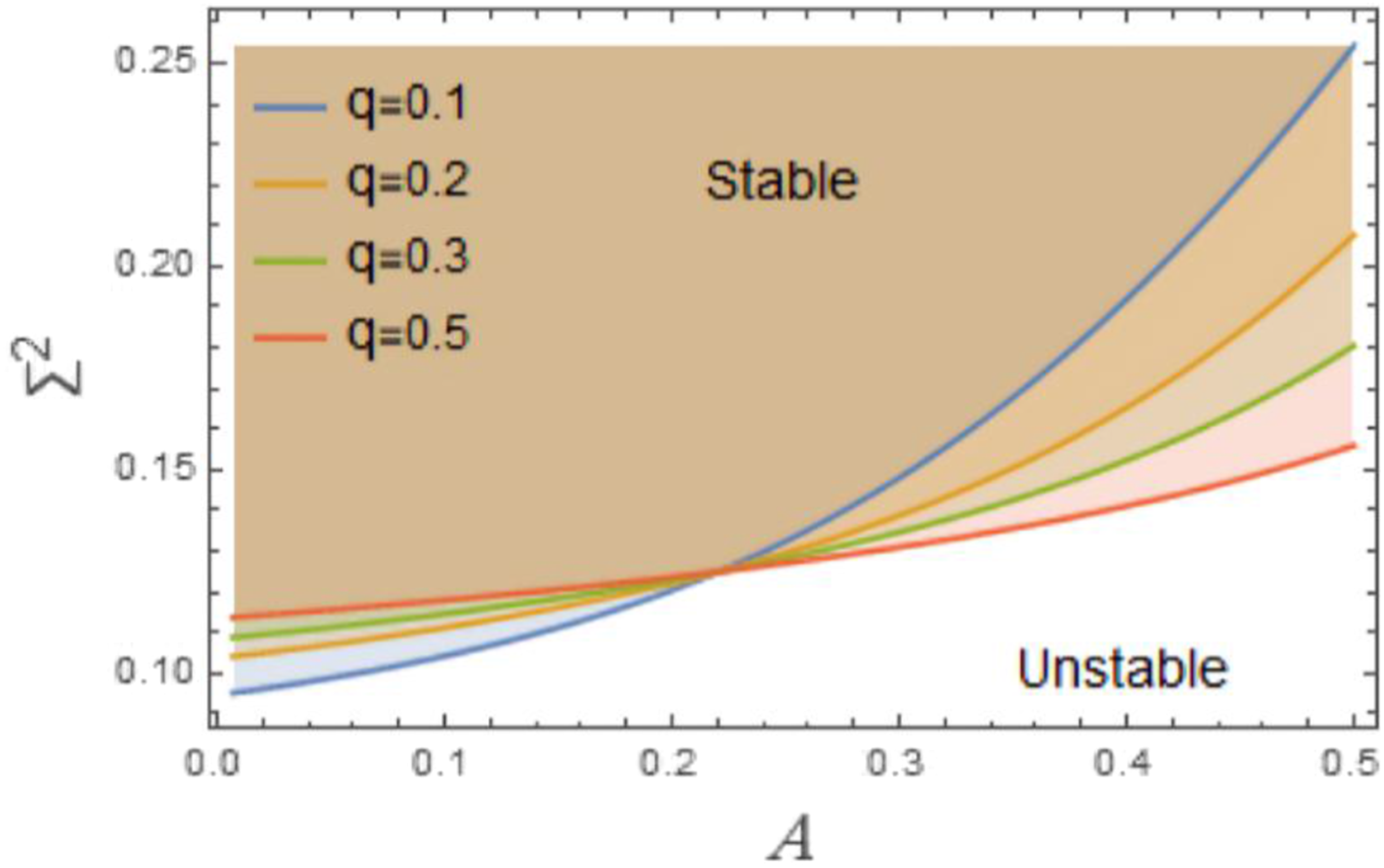
In the NPA, the stability configuration of an APVD refers to the collection of stable/unstable response regimes that the coupled oscillator may display under various parameter and excitation conditions. The stability configuration in the APVD has physical relevance since it indicates whether or not the pendulum functions as a dependable vibration absorber. The stability configuration study of the APVD is significant physically. In a stable design, energy is gradually transferred from the main structure into the pendulum and dissipated by damping. This indicates the direction of energy flow. When this energy transmission is disrupted or fails in an unstable configuration, the fundamental structure vibrates excessively (poor damping performance). The pendulum’s capacity to absorb vibrations is directly related to its stability. Stability maps are used by engineers to avoid operating frequencies that cause the damper to destabilize. Through stability analysis, we can determine the ideal pendulum length, mass ratio, and damping to optimize energy pumping, reduce structural vibration amplitude, and ensure robust stability across a wide frequency range. The pendulum’s stability configuration indicates when it will remain in small-angle oscillations (the safe area), move to quasi-periodic or chaotic states (uncontrolled energy transfer), or enter big oscillations or rotations (unstable, dangerous).
Figures 4 and 5 show the stability area with the variation of the oscillators’ damping coefficients
Figures 6 and 7 are schemed to inspect the influence of the amplitudes
Figures 8 and 9 indicate the influence of
Furthermore, Figures 10 and 11 are conspired to discuss the effects of the excitation force factors Shows the destabilizing effect of the excitation frequency 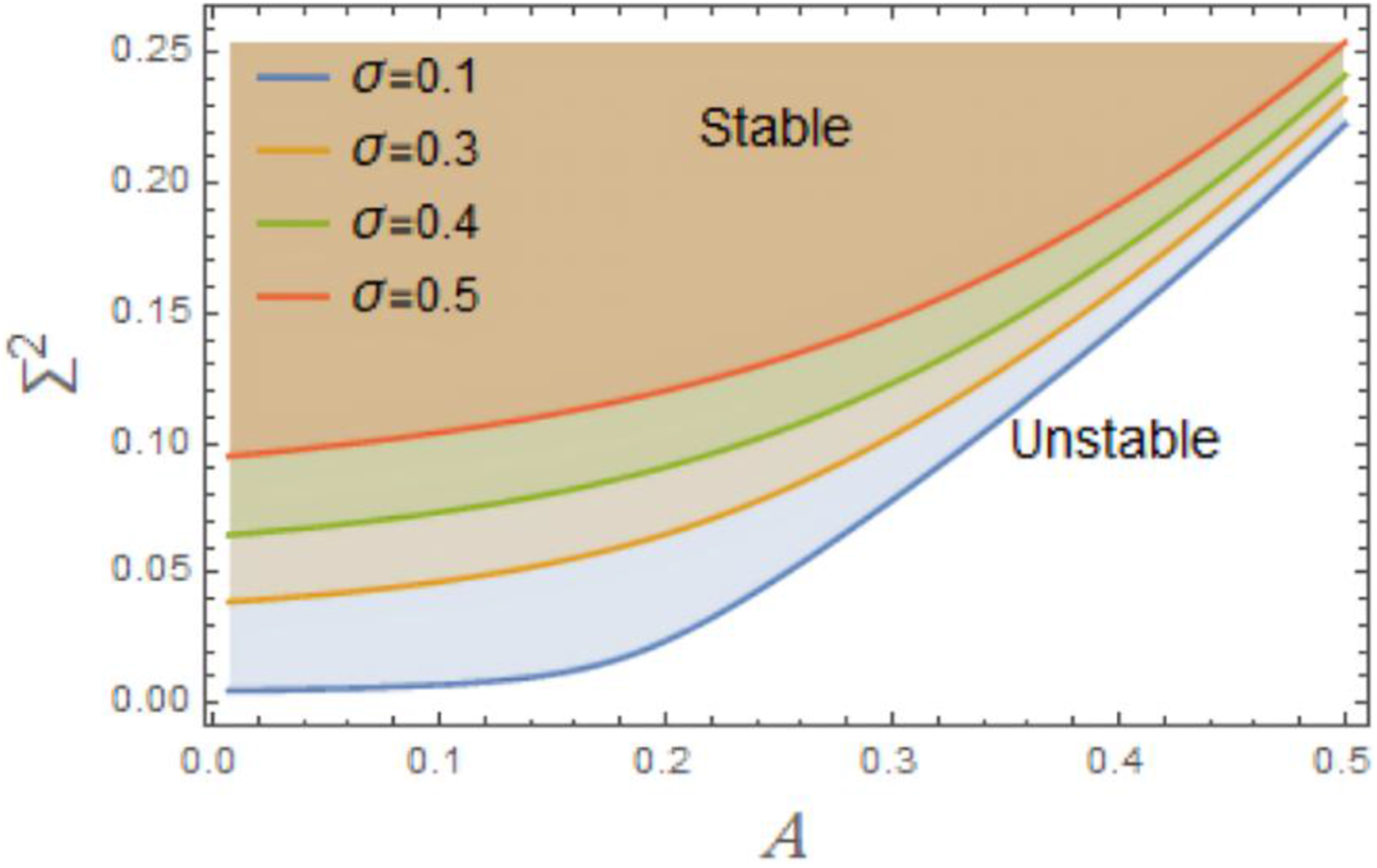
4.1. Time history examination
By discussing the APVD time history, we may determine the operating regime (trivial, captured periodic, quasi-periodic, or chaotic), quantify targeted-energy-transfer events, and resolve the whole transient–to-steady development of the coupled
Consequently, the solutions of Eqs. (7) and (18), utilizing NPA, are graphically illustrated with respect to time through Figures 12–16, using the following data: Shows the influence of the primary amplitudes Shows the impact of the primary amplitudes Shows the influence of the coupling coefficient Displays the impact of the damping factors Displays the impact of the excitation coefficients 
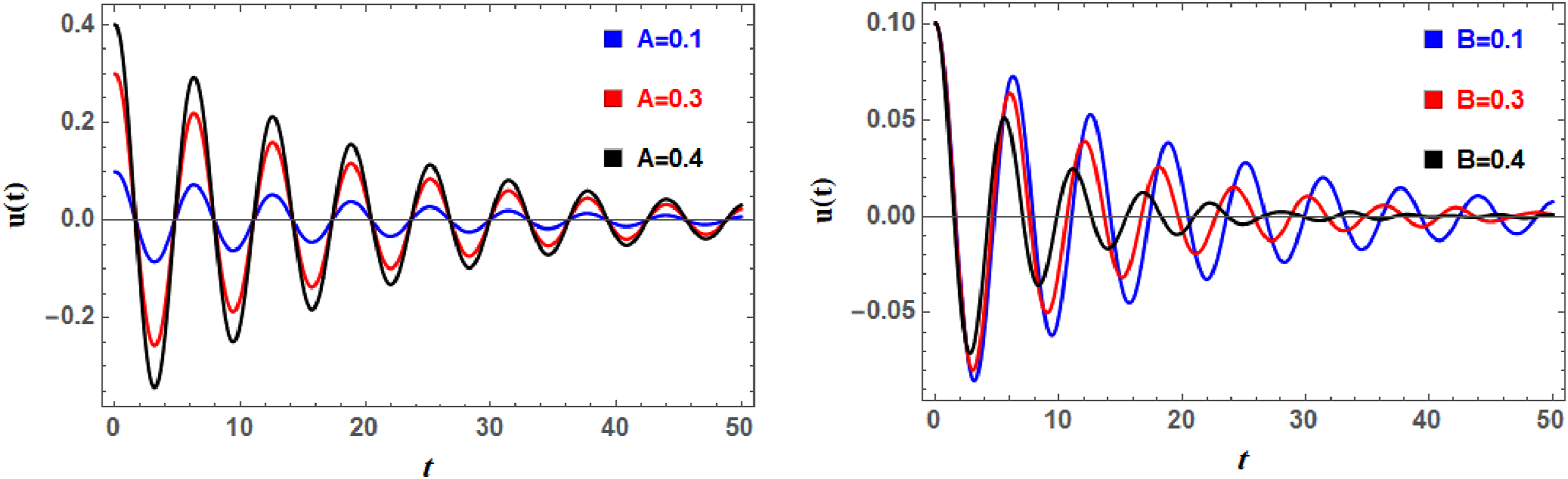
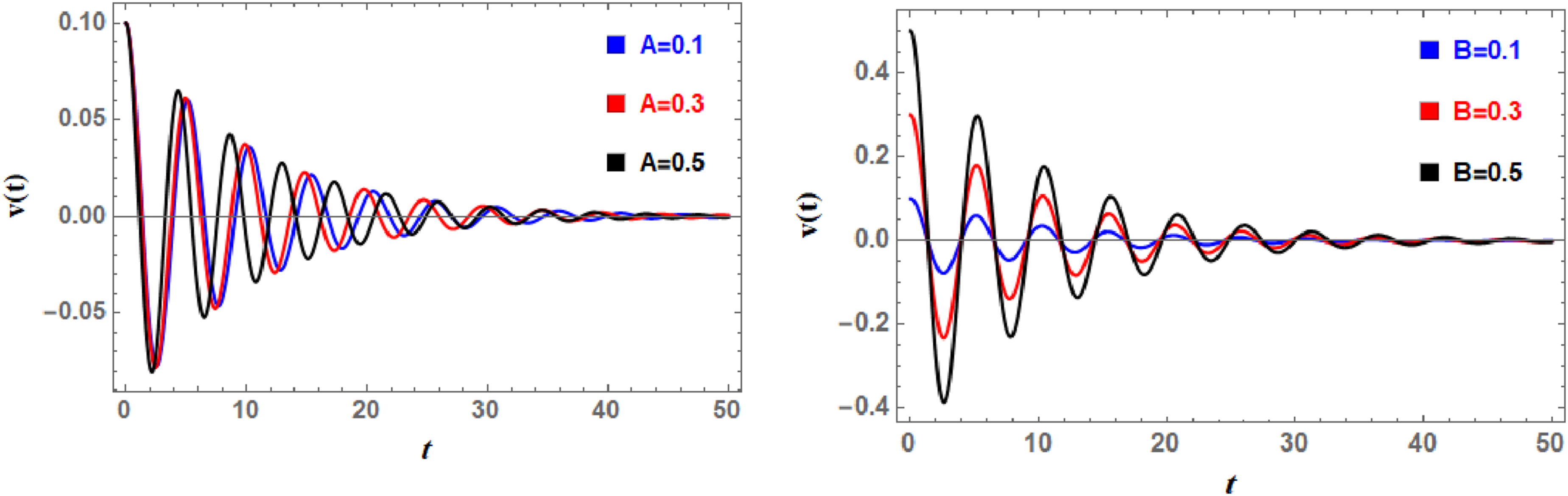
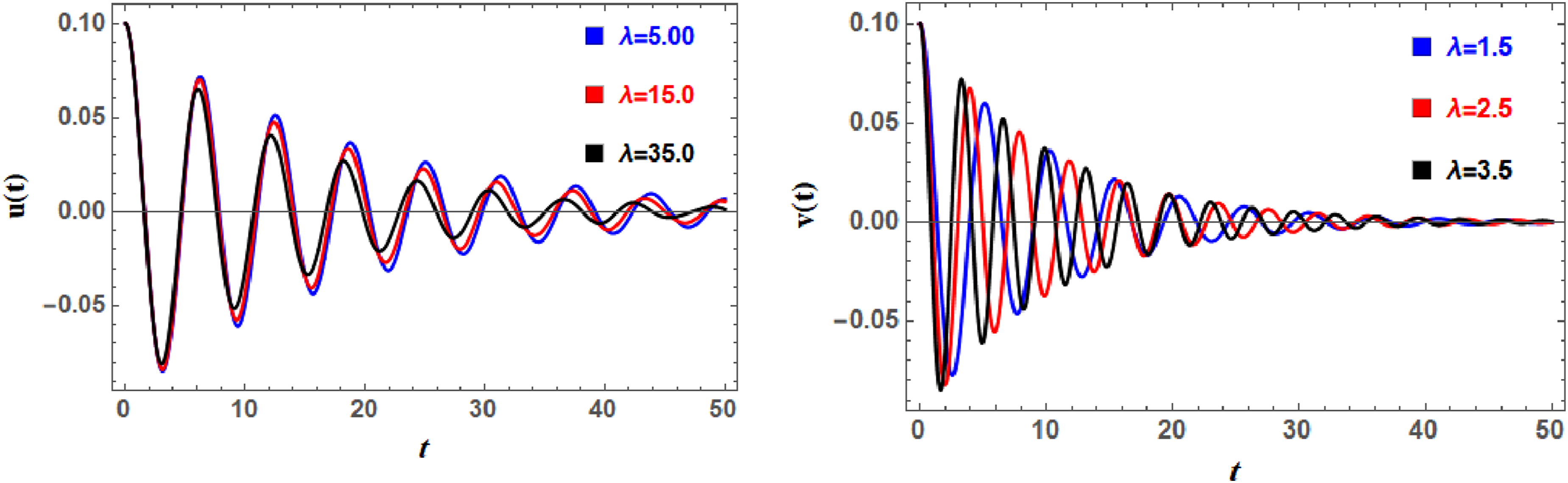
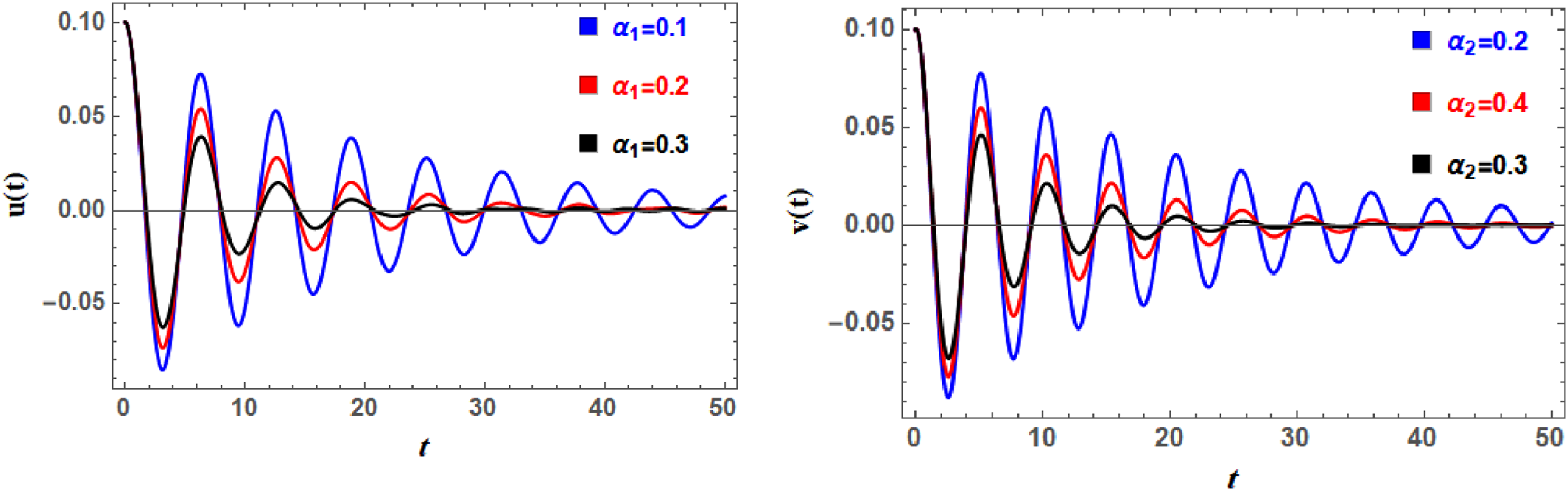
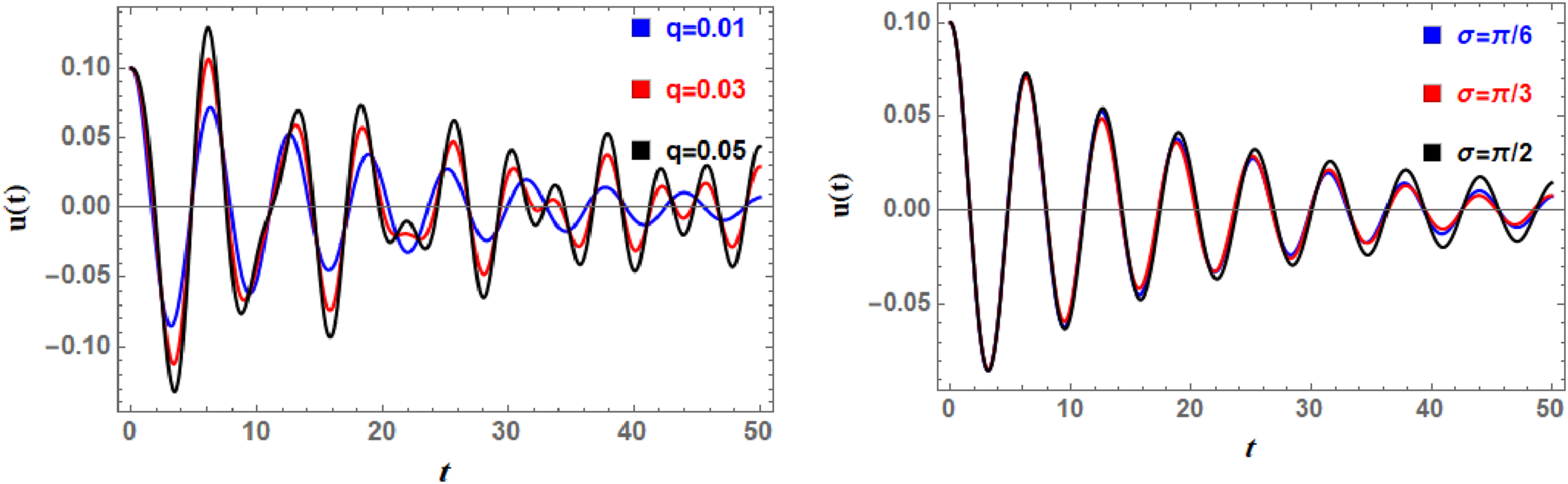
Based on the mentioned factor, this data differs from graph to graph. The purpose of Figures 12–16 is to examine how the postulated parameters affect the performance of and over time. It is clear from the time-history waves in the figures that these parameters have an impact on the waveform shape, number of oscillations, and amplitudes of both solutions.
Figures 12 and 13 show the effects of the oscillator’s starting amplitudes
Figure 14 specify the influence of the coupling coefficient
Figure 15 are plotted to examine the influence of the damping coefficients
The forcing amplitude
4.2. Phase plane structure
Deep insight into the coupled dynamics of the main structure and the pendulum is provided by the analysis of phase plane configurations for the APVD system. State trajectories, such as uu’ and vv’, can be plotted to identify stable, periodic, and unstable regimes that are difficult to discern from time histories alone. Phase pictures in the stable case show restricted oscillations and efficient energy transfer in the form of converging spirals or closed limit cycles. Smooth circular or near-periodic loops in the phase plane indicate synchronized energy exchange between the main structure and the pendulum when forcing and damping are adjusted to their ideal values. The trajectories, on the other hand, spread outward, cross over themselves, or display dispersed patterns under inadequate parameter tuning or severe forcing clear signs of instability, quasi-periodicity, or chaos. Consequently, the phase plane serves as a diagnostic tool, showing the basins of attraction, illustrating how beginning circumstances change toward various attractors, and indicating if the absorber stabilizes or destabilizes the coupled motion. The phase plane studying significance performs in many applications, as:
Analyze how oscillatory stability is affected by amplitudes and predict when a system will become chaotic. Assess how well energy is distributed and transmitted in interconnected systems. Optimize stable and predictable motion characteristics in engineering designs. Examine nonlinear occurrences in mechanics and physics applications that are caused by amplitude.
Because of the aforementioned features, the connections between the periodic corresponding NPA functions Shows the 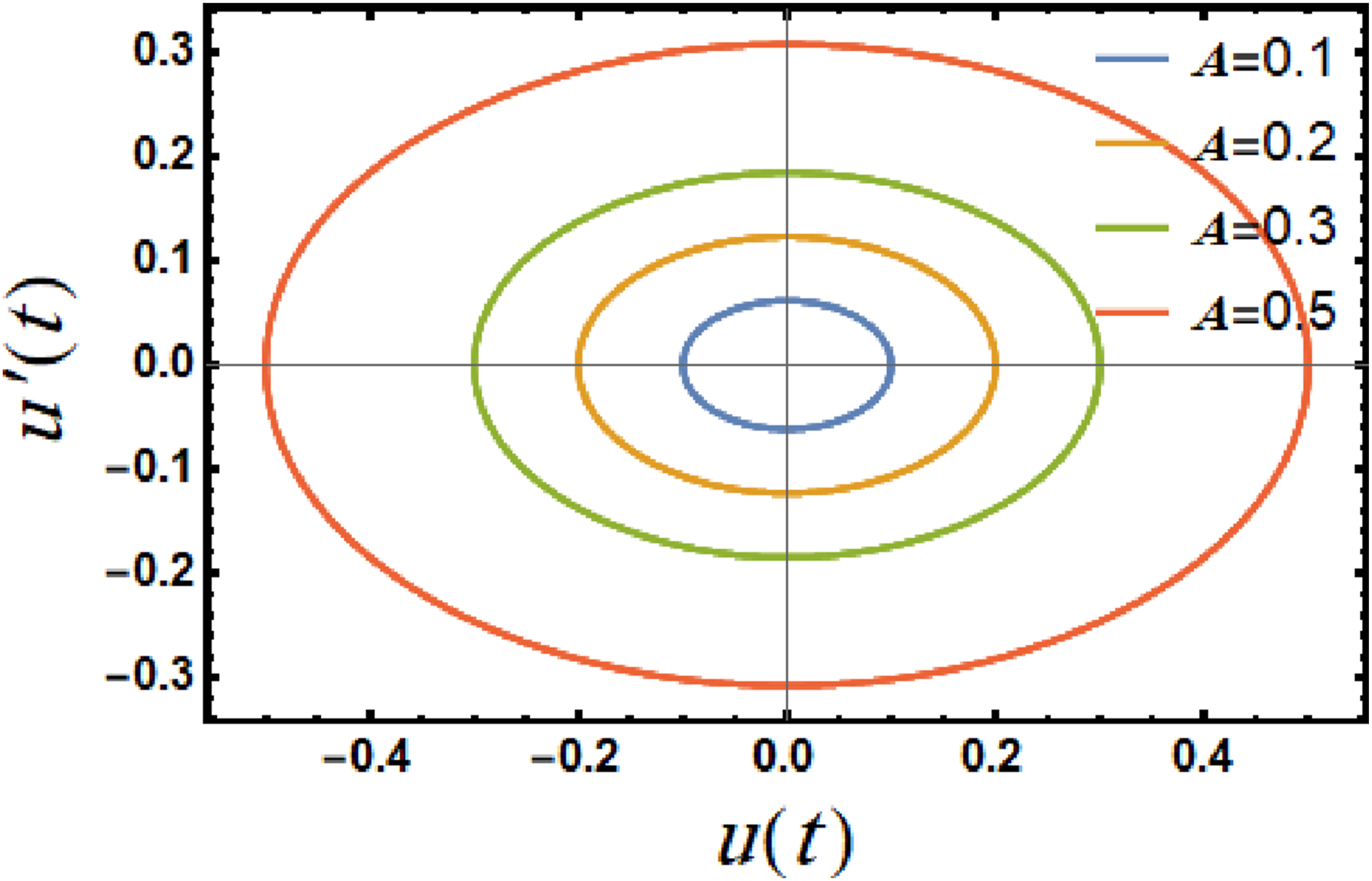
Figure 17. is schemed to inspect the phase-plane trajectories of
Similarly, the same effects are found on the trajectories of Displays the 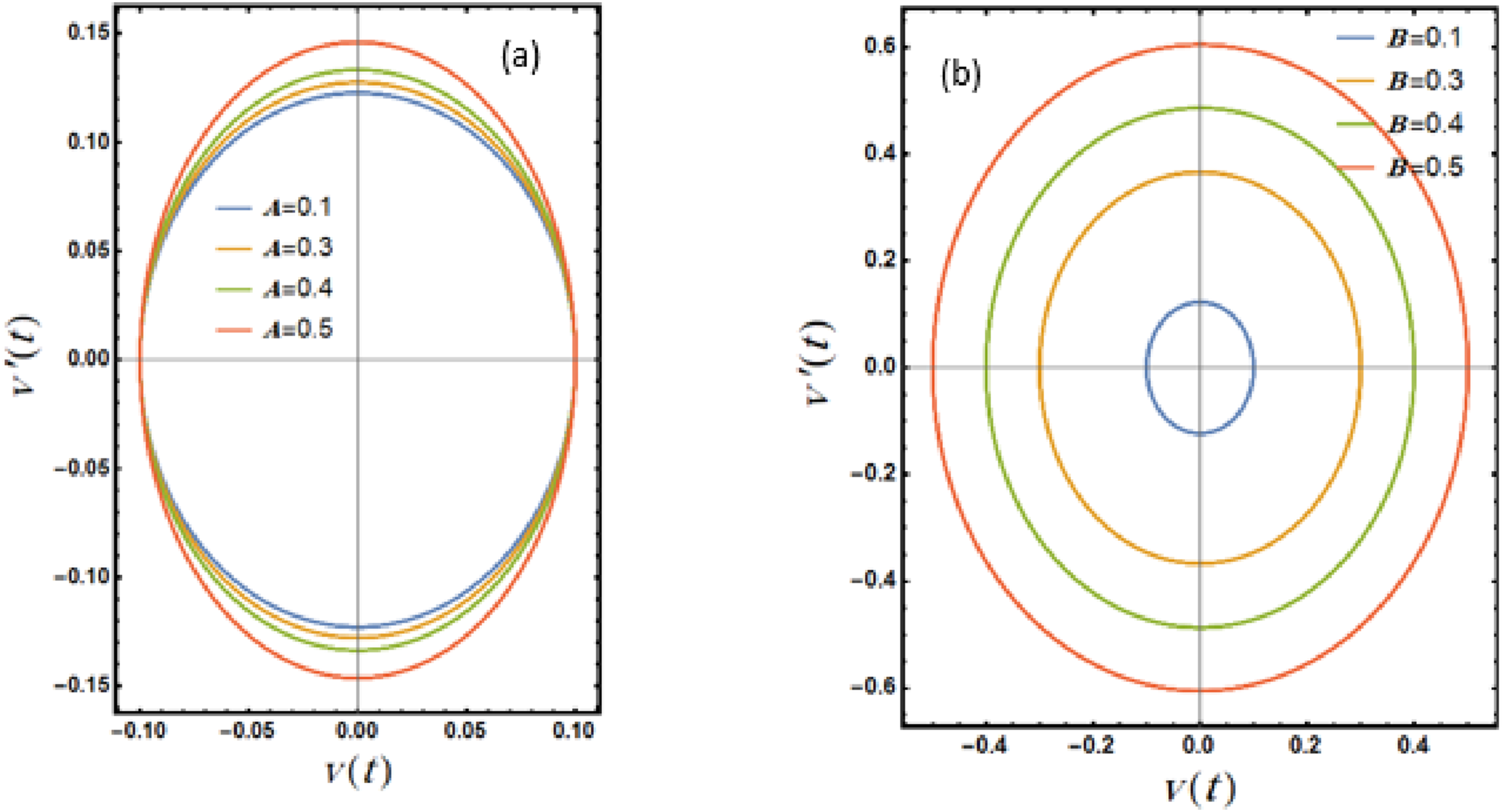
Figure 19(a) and (b) illustrate the impacts of the damping factors Displays the phase planes 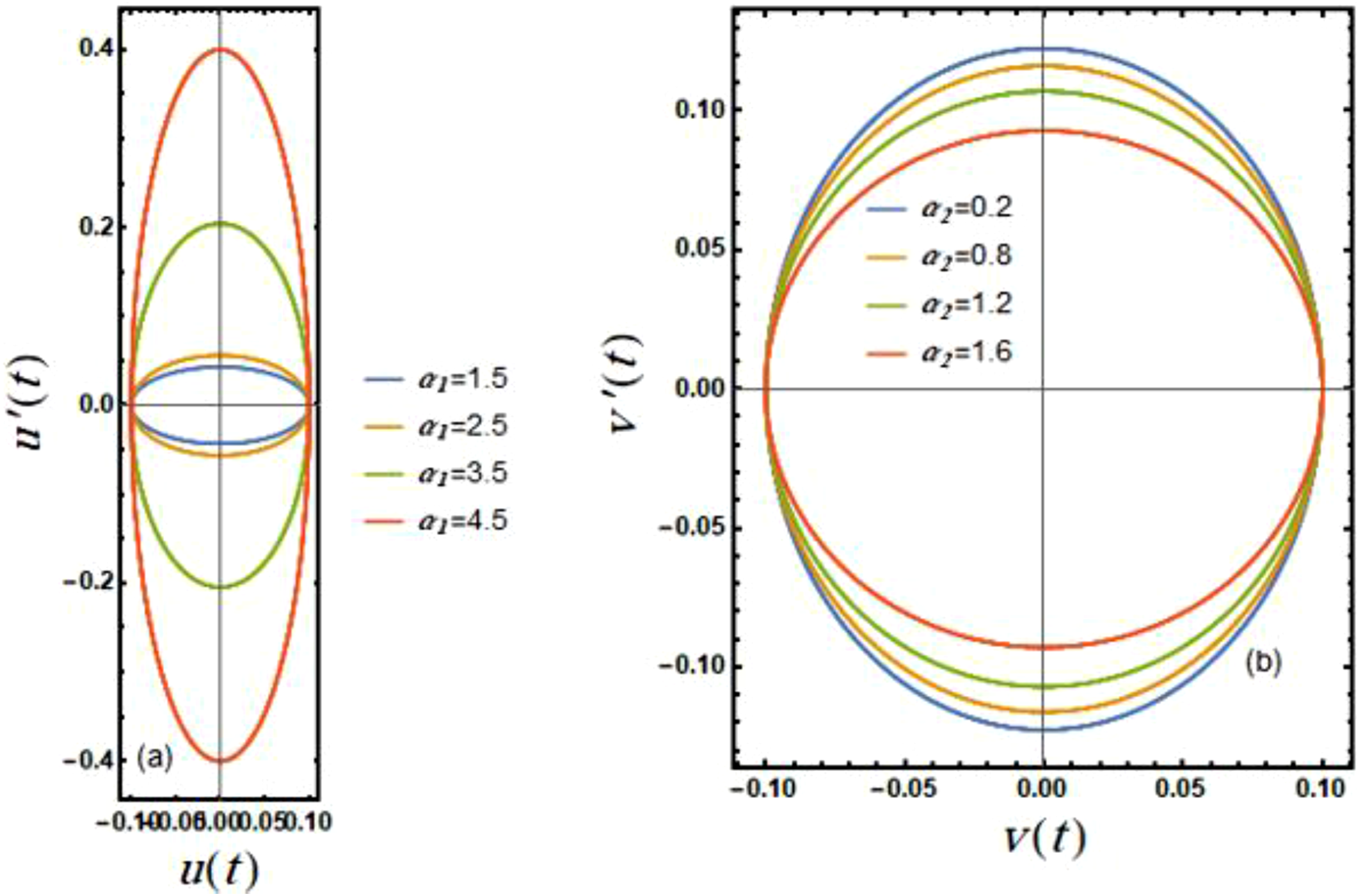
5. Chaotic behavior
The BDs of the dynamical systems can be examined to find the critical moments, where the system’s personality fundamentally changes. Then, you zoom in on one of those moments and use the PM to understand the intricate structure of its new, complex behaviour.
40
One shows you when the drama happens; the other shows you the face of the drama itself. Bifurcation curves graphically depict how a system behaves when a parameter changes.38–40 The formation of new equilibrium points or periodic cycles is an instance of a transitional phase in the system’s behaviour that they identify.38–40 The bifurcation charts of Shows the BD of Shows PMs, and phase portraits of Shows PMs, and phase portraits of 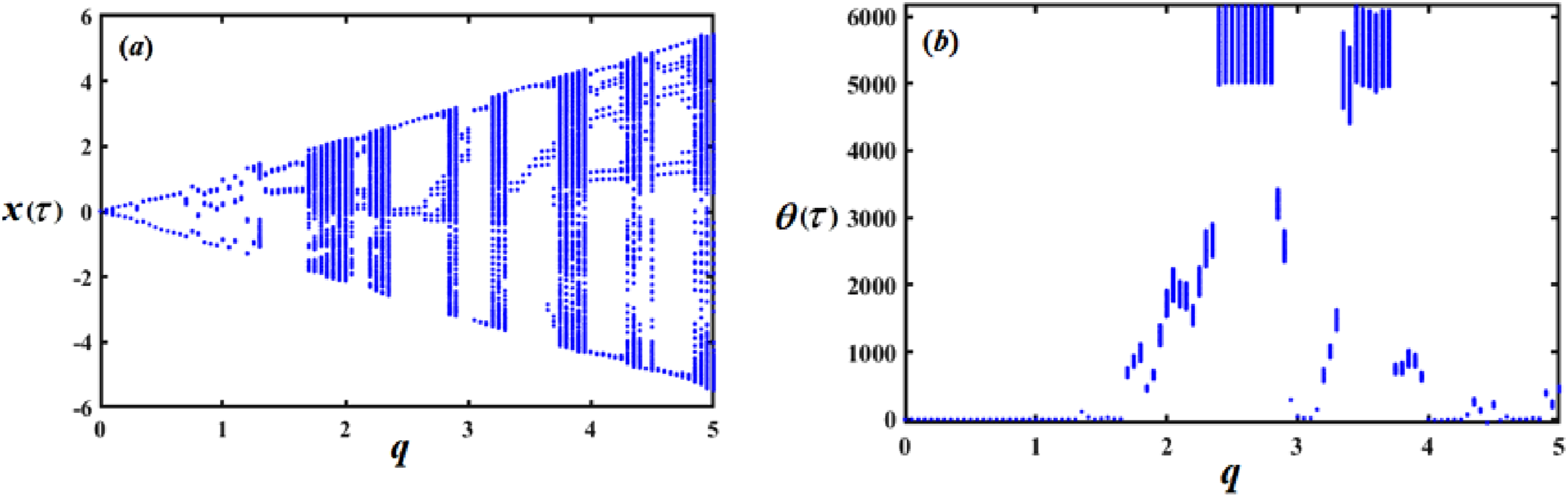
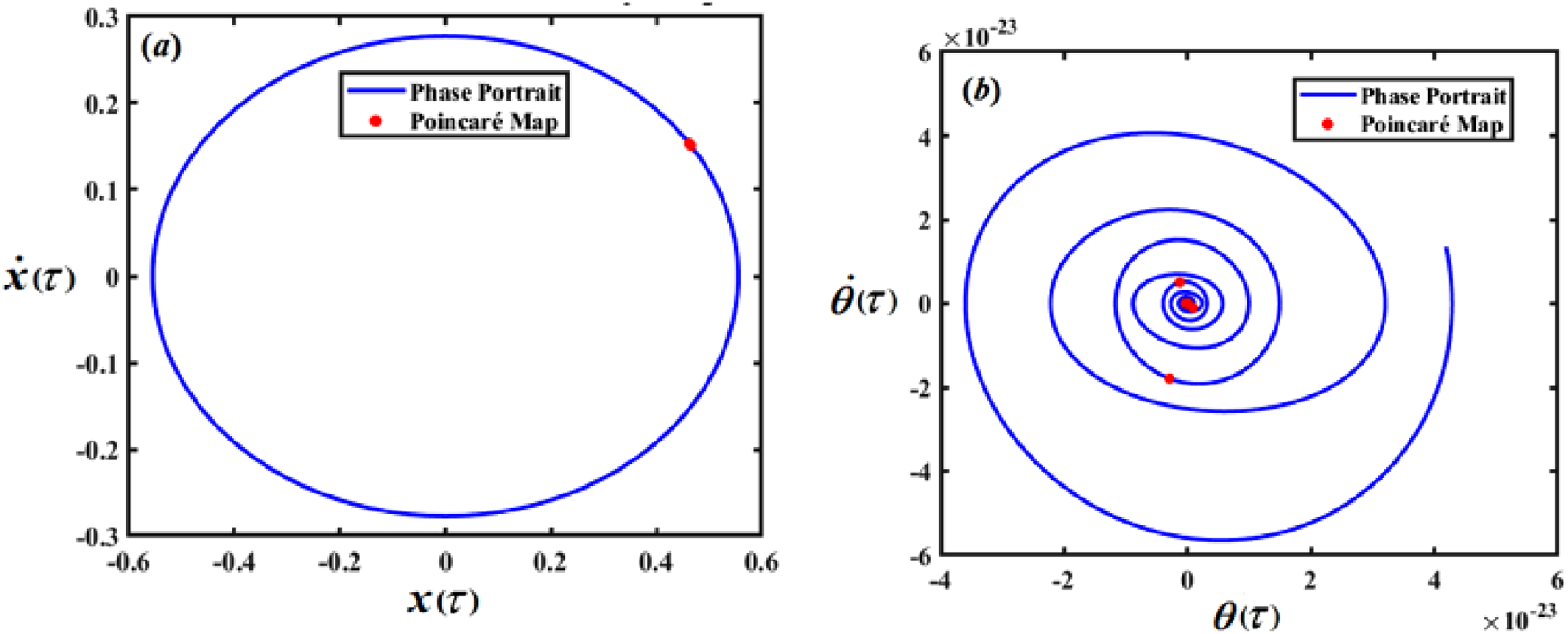
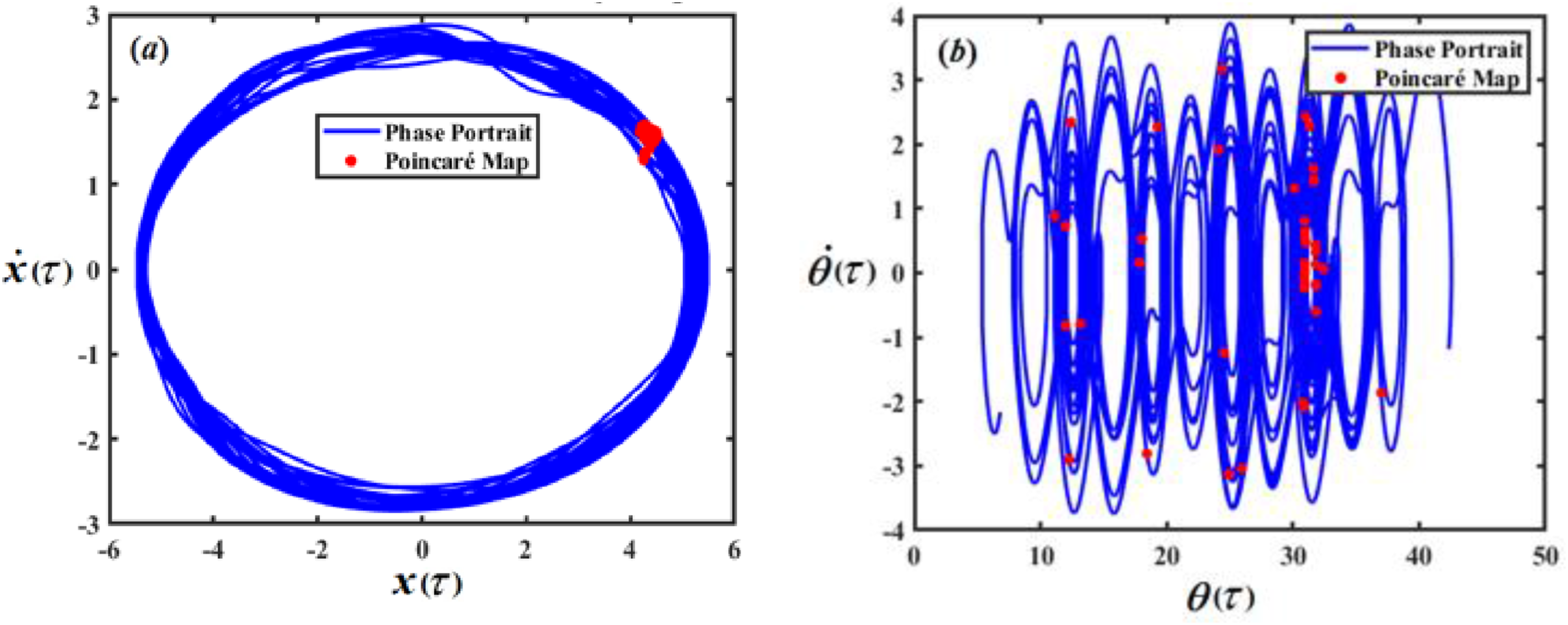
A dynamical system’s behaviour as a parameter changes is represented graphically using bifurcation curves. The bifurcation diagrams of
6. Conclusions
The current work offered a more thorough comprehension of how vibration suppression is controlled by auto-parametric coupling between a main structure and a pendulum absorber. The NPA captures the system dynamics without linearization, revealing the true nonlinear properties, including multi-frequency interactions, stability transitions, and potential chaotic reactions. The findings demonstrated the opposing stabilizing/destabilizing impacts of damping coefficients, starting amplitudes, excitation levels, and coupling parameters. This opposition emphasized the fine balance needed for efficient energy transfer: initial energy in the main system encourages suppression, meanwhile initial pendulum energy destabilizes the host structure; primary damping improves stability, although pendulum damping reduces absorber efficiency. Furthermore, factors such as excitation, forcing amplitude, and the coupling coefficients affect whether the system diverges into unstable motion or achieves regulated vibration mitigation. Physically speaking, this means that the APVD was a nonlinear energy redistributor rather than just a passive absorber, and its efficacy was dependent on precisely adjusting its parameters. Engineering applications that needed targeted vibration management under nonlinear and coupled oscillatory situations, such as tall buildings, bridges, ship rolling, and aerospace structures, depend on such understanding. The NPA limitations could be summarized as, the methodology applies to any weakly nonlinear oscillator described by an ODE, the ICs remain unaltered, the initial amplitude must be below one. The results of the current study could be summarizing in the following points: (1) The damping coefficient of the main structure stabilized the main system; contracts (2) The damping coefficient of the pendulum destabilizes pendulum motion; expands (3) The Initial amplitudes stabilized the pendulum by injecting energy into pendulum motion and destabilized the main displacement by feeding back oscillatory energy. (4) The coupling coefficient stabilized both the main displacement and the pendulum by strengthening coupled energy exchange. (5) The excitation force played a dual role, where moderate levels activate absorption, but excessive forcing destabilized both motions. (6) The excitation amplitude destabilized the system by amplifying nonlinear oscillations.
Recent developments include semi-active and active control systems that improve resilience to resonance by adapting to excitation frequencies. Methods used encompass NI, analytical modelling, and experimental validation of applications in skyscrapers and bridges. Future research may focus on smart materials, real-time sensors, and machine learning to optimize energy transfer and vibration mitigation in complex systems.
Footnotes
Acknowledgement

Author Contributions
Funding
Declaration of conflicting interests
The authors declared no potential conflicts of interest with respect to the research, authorship, and/or publication of this article.