






Abstract
Integrating renewable energy sources (RESs) into isolated microgrids introduces major load frequency control (LFC) challenges due to reduced system inertia, nonlinear dynamics, stochastic power fluctuations, and communication delays. Conventional PID-based controllers often exhibit limited robustness and poor adaptability under rapidly varying operating conditions. Although fuzzy logic controllers (FLCs) improve disturbance handling and adaptive response, they may suffer from limited tuning precision, while standalone fractional-order controllers (FOCs) usually involve complex parameter adjustment and reduced flexibility under highly dynamic disturbances. To overcome these limitations, this study proposes a novel hybrid LFC framework that combines an FLC with a fractional-order TIλDμ controller, whose parameters are optimally tuned using the Harris hawk’s optimization (HHO). The proposed hybrid structure exploits the adaptive decision-making capability of FLC together with the superior damping characteristics and dynamic flexibility of FOC. In addition, a hydrogen fuel cell (HFC) is integrated as a dynamically controlled energy storage unit to provide fast corrective power support during transient disturbances. The proposed controller adapts in real time to system nonlinearities, fluctuating renewable generation, communication delays, and varying load conditions without relying on highly detailed mathematical models. Its performance was evaluated under seven operating scenarios, including single-step load changes, sequential disturbances, random load variations, cyclic oscillations, solar intermittency, and delayed response conditions. Comparative results demonstrate that the proposed HHO-optimized fuzzy fractional controller consistently outperforms PID, fuzzy-based, and FO-(PD–PI) controllers in terms of overshoot reduction, settling time, steady-state accuracy, and damping performance. Under single-step disturbance conditions, the proposed controller achieved the lowest overshoot of 0.0012 pu and the minimum ITAE value of 0.0043 pu·s, while maintaining stable and well-damped responses under solar intermittency and communication delay scenarios. These results confirm the robustness, adaptability, and effectiveness of the proposed control strategy.
Keywords
1. Introduction
1.1. Need for energy storage
With the increasing integration of RESs in modern µGs, the role of ESSs has become vital in balancing power generation and consumption. These systems mitigate the intermittency of renewables such as PV and wind by storing excess energy and releasing it during shortfalls, thus maintaining system stability.1–5 However, their effective deployment requires careful selection of storage technology, adaptability to dynamic conditions, and seamless incorporation into µG infrastructure.6–10 Among various ESS technologies, HFCs have emerged as a promising solution due to their high energy density, fast dynamic response, and environmental sustainability.11,12 HFCs not only store and convert energy efficiently but also align with decarbonization goals, making them ideal for integration into isolated μG environments.
Parallel to this, LFC mechanisms remain essential for restoring system frequency to its nominal value following disturbances. The growing penetration of RESs and the absence of strong grid interconnections in islanded μGs have elevated the importance of advanced LFC strategies. 13 Traditional LFC approaches, typically reliant on PID controllers, often struggle to adapt under nonlinear and time-varying conditions, necessitating more robust and intelligent control architectures. 14
1.2. Advances in LFC and intelligent optimization
Traditional LFC strategies have historically relied on linearized system models and classical PID controllers because of their simple structure and ease of implementation. However, several studies have reported that conventional PID controllers suffer from limited robustness and degraded dynamic performance when applied to modern μGs characterized by nonlinear behavior, renewable intermittency, and parameter uncertainties.15–17 These limitations become more pronounced in isolated μGs with reduced inertia and rapidly varying operating conditions. To improve the dynamic performance of LFC systems, researchers have increasingly focused on FO controllers (FOCs) due to their additional tuning flexibility and superior damping characteristics. In Ref. 18, an FOC strategy was introduced to enhance transient stability and improve disturbance rejection capability under varying operating conditions. Similarly, the work presented in Ref. 19 demonstrated that FO structures can provide wider stability margins and improved oscillation damping compared to conventional integer-order controllers. The authors in Ref. 20 investigated the application of FOPI controllers in renewable-integrated systems and reported significant reductions in settling time and overshoot. Additional studies in Refs. 21 and 22 further confirmed that the inclusion of hyper-damped poles in FO-control improves robustness against system nonlinearities and parameter variations. Among the commonly adopted FOC structures, the TID and FOPID controllers have shown superior dynamic performance over conventional PID controllers, particularly in minimizing overshoot, undershoot, and steady-state oscillations.23,24 Nevertheless, most existing FO approaches still suffer from parameter tuning complexity and reduced adaptability under stochastic renewable fluctuations and communication delays.
In parallel, FLCs have attracted considerable attention in LFC applications because of their model-free operation and adaptive decision-making capability. The studies in Refs. 25 and 26 demonstrated that FLCs can effectively improve frequency regulation under nonlinear load variations without requiring an accurate mathematical model of the system. Likewise, the authors in Ref. 27 employed FLCs to enhance disturbance rejection and system adaptability in renewable-based μGs, while 28 highlighted the ability of FLCs to maintain stable operation under uncertain and time-varying conditions. Despite these advantages, standalone FLCS may experience limited tuning precision and slower convergence under severe dynamic disturbances. To exploit the advantages of both approaches, several hybrid control structures combining FLC and FO control have recently been proposed. In Ref. 29, a fuzzy FOC was developed to improve system damping and transient response characteristics, while the work in Ref. 30 demonstrated that integrating fuzzy logic with TIλDμ structures can significantly enhance controller adaptability and robustness in complex power systems. However, the tuning of such hybrid controllers remains a challenging task because the adjustment of scaling factors, membership functions, and FO parameters often depends on trial-and-error procedures, which are computationally expensive and may not guarantee globally optimal solutions. 31 To overcome this challenge, metaheuristic optimization algorithms have been widely adopted for automated controller tuning. Recent studies have increasingly adopted intelligent FO and optimization-based controllers for LFC enhancement in renewable-integrated systems.
In Ref. 32, an SWO-based cascaded FOC improved damping and transient performance in PV-integrated systems, while 30 introduced a neural-network-based FOPID controller for adaptive multi-area LFC regulation. Although these methods achieved promising dynamic performance, most existing approaches still provide limited investigation of communication delays, stochastic renewable fluctuations, and actively controlled HFC integration. In contrast, the proposed HHO-tuned fuzzy FOC incorporates delay-aware operation with dynamically controlled HFC support under multiple realistic disturbance scenarios. Optimization techniques such as GA, PSO, SCA, and GWO have shown strong capability in solving nonlinear and high-dimensional optimization problems associated with intelligent control systems. More recently, the HHO has gained considerable attention due to its adaptive balance between exploration and exploitation, fast convergence speed, and strong ability to avoid local minima.33–36 Inspired by the cooperative hunting behavior of Harris hawks, HHO has demonstrated promising performance in tuning intelligent controllers for nonlinear and uncertain systems, particularly in isolated μG applications. Although several single-agent optimization methods, such as smoothed functional algorithms and SPSA-based techniques, offer reduced computational complexity and fast implementation, their performance may become limited in highly nonlinear and multimodal optimization problems involving large parameter spaces. In the present study, the controller tuning process simultaneously involves fuzzy scaling factors, membership-related parameters, and FOC gains, resulting in a complex and strongly coupled search space. Under such conditions, population-based optimizers generally provide improved global exploration capability and stronger resistance to premature convergence. Among these methods, the HHO was selected due to its adaptive transition between exploration and exploitation phases, fast convergence behavior, and strong capability to avoid local minima. These characteristics make HHO particularly suitable for tuning the proposed hybrid fuzzy FOC under stochastic renewable disturbances and communication delay conditions. In renewable-dominated μGs, the reduced system inertia and fluctuating power generation significantly increase the need for fast and efficient energy storage support to maintain frequency stability. Various storage technologies, including SMES, lithium-ion batteries, and redox flow batteries, have been investigated in the literature for this purpose.37–40 However, HFCs have recently emerged as a promising alternative because of their high energy density, rapid load-following capability, and compatibility with clean energy objectives. In addition, HFCs can provide effective short-term power compensation during transient disturbances, making them highly suitable for isolated renewable-powered μGs. When integrated with adaptive intelligent controllers optimized using advanced algorithms such as HHO, HFC systems can significantly improve the dynamic frequency regulation capability and operational resilience of modern microgrids under both steady-state and transient operating conditions. 41
1.3. Research gap
Although several existing studies have contributed valuable advancements to the field of LFC, critical aspects remain insufficiently addressed, particularly within the context of isolated μGs experiencing high penetration of RESs and substantial load variability. Many of these works have primarily focused on traditional power systems driven by centralized generation units, without adequately capturing the dynamics introduced by intermittent renewable sources such as PV and wind systems.42,43 Moreover, the impact of renewable intermittency under unpredictable weather conditions remains a major challenge that most classical models fail to capture effectively. 44 In addition, most prior investigations have evaluated controller performance under limited and idealized disturbance scenarios, typically using simple step load changes, which do not accurately reflect the complex and stochastic operating conditions encountered in practical microgrids.45,46 Some studies also rely on fixed test cases while overlooking transient events, multi-step load patterns, and communication-related effects that commonly arise in distributed renewable-based systems. 47 More recently, several advanced nonlinear and bio-inspired controllers have been proposed to improve LFC performance in renewable-integrated power systems. For instance, sigmoid PID and Gudermannian PID controllers employ nonlinear gain-shaping mechanisms to improve damping characteristics and transient response compared with conventional PID structures.48,49 Likewise, soft sign fractional-order controllers provide smoother nonlinear control action and additional tuning flexibility through fractional calculus. 50 In parallel, BELBIC-based and neuroendocrine PID controllers have demonstrated adaptive and intelligent regulation capabilities inspired by biological learning mechanisms.51,52 Despite these advancements, many of these approaches involve increased structural complexity, higher computational burden, or additional training-related requirements, which may complicate real-time implementation in isolated low-inertia μGs. Furthermore, most existing studies still provide limited investigation of communication delays, stochastic renewable fluctuations, and actively controlled hydrogen-based ESSs under realistic operating conditions. Motivated by these limitations, the proposed fuzzy FOC structure is adopted as a balanced and practical solution for renewable-powered isolated microgrids. The fuzzy logic layer provides interpretable rule-based adaptation under nonlinear and uncertain operating conditions, while the FO-TIλDμ component enhances damping capability, memory effect, and transient response flexibility. In addition, the proposed controller is optimally tuned using the HHO and evaluated together with dynamically controlled HFC support under multiple realistic operating scenarios, including stochastic load disturbances, cyclic oscillations, solar intermittency, and communication delay conditions. These features collectively distinguish the proposed framework from many existing LFC approaches and enhance its practical suitability for modern renewable-dominated μGs.
In contrast, this study incorporates a broader spectrum of realistic load disturbances, including single-step, sequential-step, and random variations, offering a more comprehensive assessment of controller robustness. Another commonly overlooked factor in previous research is the integration of ESSs without an active control mechanism. Several works treat ESS as an idealized power buffer, ignoring dynamic response and delay. 53 Rather than assuming idealized power injection from storage devices, this work employs an HFC as a dynamically regulated storage system, where its output is adaptively managed through an intelligent fuzzy+TIλDμ controller. The controller itself is optimized using the HHO, providing enhanced adaptability and tuning precision in nonlinear and time-varying environments.54,55 Moreover, communication latency is often excluded from LFC studies despite its critical impact on distributed system stability. This research explicitly incorporates communication delay scenarios to validate the proposed controller’s resilience under more realistic operating conditions.56–58 Collectively, these elements (high renewable integration, realistic load disturbance modeling, controlled HFC-based storage, and communication delay consideration) define the novel scope of this work and differentiate it significantly from prior literature.
Comparative summary of literature and present work.
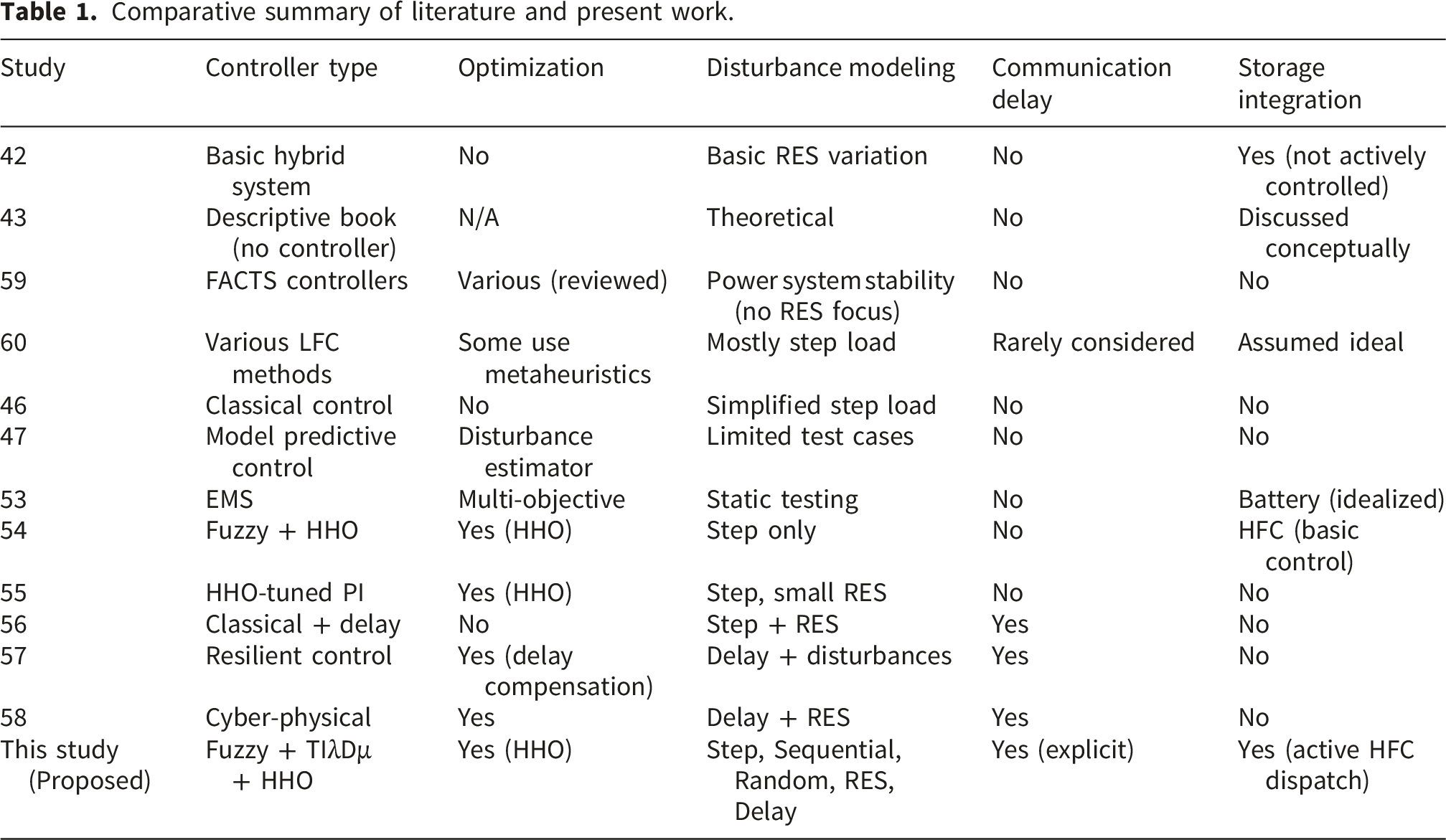
Several previous studies have proposed control strategies for μG frequency regulation, including classical, fuzzy, and FOCs.53,56–58 However, a significant number of these works either assume ideal communication conditions or overlook the explicit modeling of control signal delays, which can severely impact system performance in practical implementations. In Refs. 56 and 57, for instance, frequency regulation is analyzed under simplified assumptions without considering communication latency or cyber-physical interactions. Similarly, although 58 employs an optimization-based controller, it lacks a dedicated framework for delay compensation. In parallel, HFCs have been increasingly considered for microgrid support, yet they are often modeled with ideal or static behavior, ignoring dynamic characteristics such as startup transients, ramp rate limits, and internal time constants. 53 These limitations hinder the ability of prior controllers to operate reliably under realistic disturbance conditions. To address these gaps, the present study proposes a delay-tolerant fuzzy fractional-order controller tuned via the HHO. The proposed control design explicitly models communication delays and incorporates a dynamic HFC response structure, enabling robust performance across a wide range of disturbance scenarios where traditional controllers fail to adapt.
1.4. Main contributions
The main contributions of this work are summarized as follows: • A novel delay-aware hybrid fuzzy FO-LFC framework is proposed for renewable-powered isolated μGs, combining the adaptive capability of fuzzy logic with the enhanced damping and memory characteristics of the TIλDμ controller. • An intelligent HHO-based tuning strategy is developed to simultaneously optimize fuzzy scaling parameters and FOC gains within a highly nonlinear and stochastic operating environment. • A dynamically controlled HFC is integrated into the frequency regulation loop to provide fast corrective power support under renewable intermittency and sudden load variations. • The proposed control framework is comprehensively validated under multiple realistic operating scenarios, including stochastic load disturbances, cyclic oscillations, solar intermittency, sequential load events, and communication delay conditions. • Comparative investigations demonstrate that the proposed controller achieves superior frequency stabilization performance, reduced overshoot, lower ITAE values, and faster settling characteristics compared with conventional and recent intelligent LFC approaches.
2. System description
2.1. Power system model
The μG investigated in this study, as shown in Figure 1, operates in islanded mode, comprising three main components: a 25 MW diesel generator acting as the dispatchable unit, a 5.5 MW PV source providing intermittent renewable generation, and a dynamically controlled HFC used as an energy storage and frequency support unit. The μG serves a fixed base load of 18.2 MW, which represents essential, non-controllable consumption. Frequency regulation is achieved by coordinating the DG and the HFC through a centralized control loop. The dynamic models of the diesel generator, governor, turbine, and HFC adopted in this study are based on well-established and previously validated LFC models reported in the literature34,46–49 These models are widely used in renewable-integrated μG frequency regulation studies due to their effectiveness in capturing the dominant dynamic behavior of isolated power systems under transient operating conditions. Block diagram of the isolated microgrid– showing interactions between diesel generator, PV, and HFC.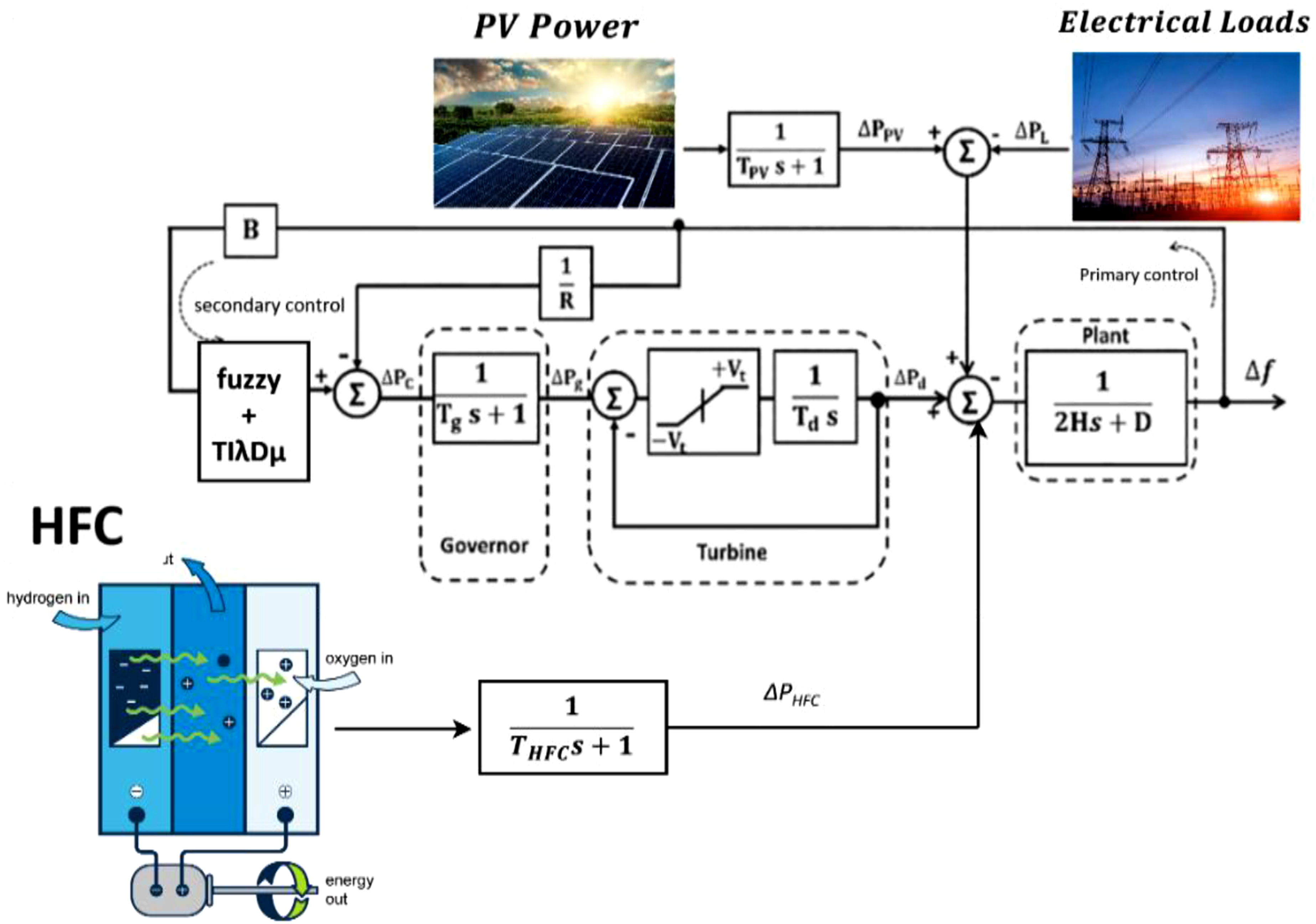
The system dynamics are formulated using a state-space representation, capturing the time evolution of the system states and their interaction with control inputs and external disturbances
44
:

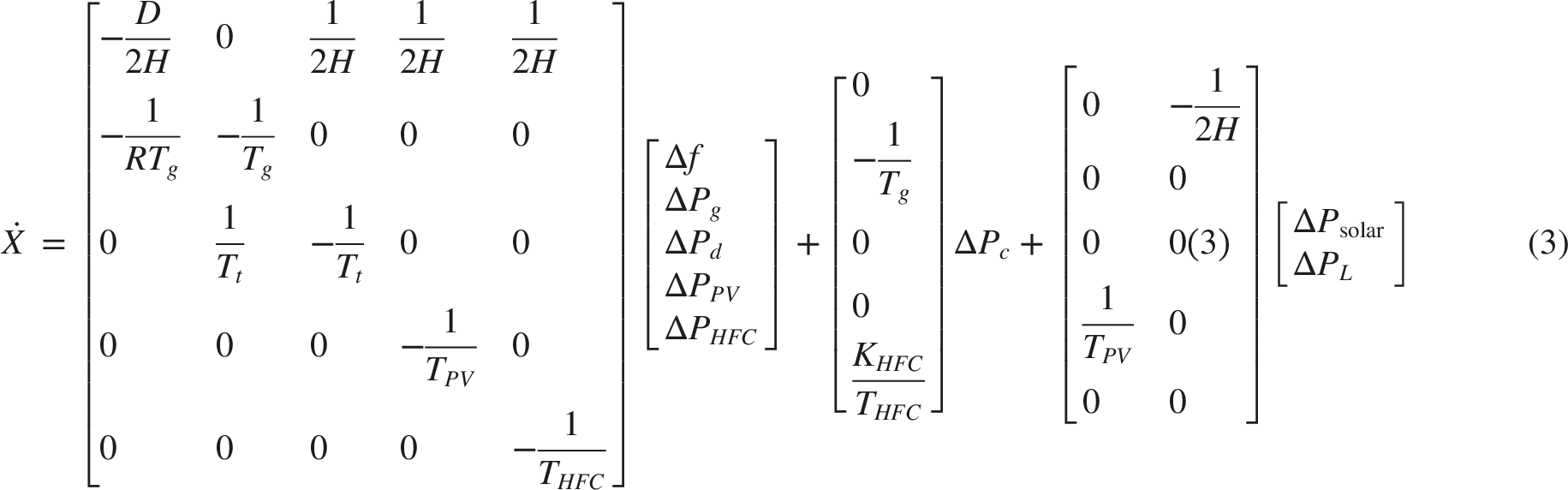

A simplified model of frequency dynamics, based on the power imbalance between generation and demand, is expressed as:
The dynamic output power of a DGP can be expressed as:
Likewise, the governor’s (GD) power response is expressed as:
Here,
Figure 1 illustrates the overall architecture of the isolated μG and the interaction among the DG, PV source, HFC unit, and the proposed control system. The system frequency deviation (Δf) acts as the primary feedback signal and is continuously monitored by the controller. Based on this deviation, the control unit generates corrective signals to regulate both the DG and the HFC output power. The PV unit operates as a fluctuating renewable source, while the HFC provides fast compensating power injection during transient disturbances and RESs variations. The coordinated interaction among these components enables effective frequency stabilization under dynamic operating conditions.
2.2. HFC modeling
The HFC is integrated into the frequency control loop to compensate for sudden changes in power demand or supply fluctuations. Its dynamic behavior is modeled as a first-order transfer function:

This model captures the gradual build-up of power from the HFC in response to the control signal
2.3. Justification and structure of the proposed controller
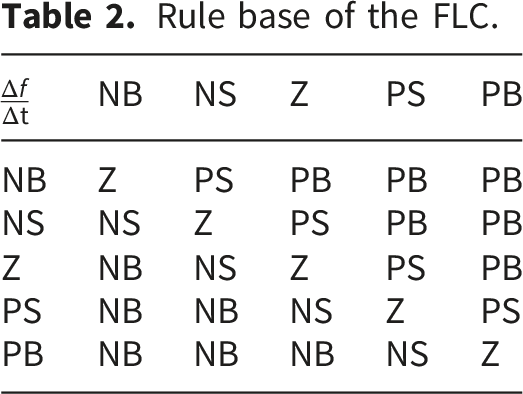
To address the challenges posed by high RESs penetration, diverse load disturbances, and potential communication delays within an isolated μG, this study introduces a hybrid control strategy based on the integration of an FLC with an FOC. The proposed scheme combines a fuzzy-tuned PID structure with a fractional TIλDμ controller, capitalizing on the strengths of both approaches to ensure enhanced robustness, dynamic adaptability, and frequency stability. The system receives the frequency deviation Triangular membership functions used in the FLC for input frequency deviation and its derivative. Rule base of the FLC.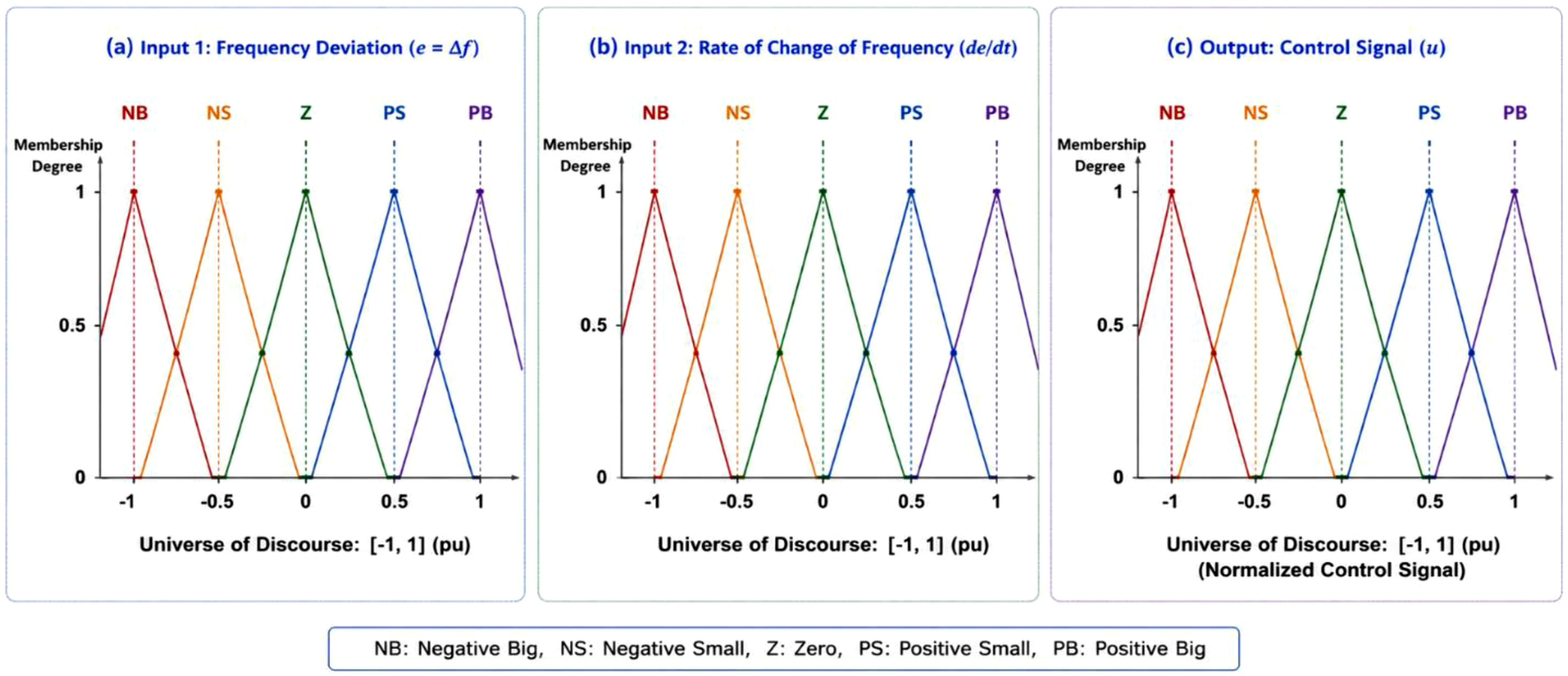
The FLC-PID output is combined with a TIλDμ, which introduces additional degrees of freedom by including non-integer integral and derivative terms. The control signal generated by the FLC-PID is scaled and passed to the TIλDμ block, whose transfer function is mathematically defined as:
This hybrid structure effectively combines the fast response and adaptability of FLC with the precision and flexibility of fractional calculus. The FLC-PID itself follows the transfer function:
The gain values of both controllers are confined within defined limits to ensure stable and practical implementation, as expressed in:





For the TIλDμ parameters and the FLC-PID parameters:



To optimize these parameters for best performance, the HHO is employed based on the minimization of the ITAE, given by:
This objective function ensures not only minimal steady-state error but also faster damping of oscillations and reduced response time. Figure 3 depicts the detailed architecture of the proposed controller, including the interaction between the fuzzy block and the TIλDμ structure. The design ensures a reliable and adaptive control action under diverse operating conditions and disturbance profiles, making it a suitable choice for isolated microgrids relying on intermittent RESs and HFC storage systems. Hybrid controller configuration integrating FLC-based PID and fractional-order TIλDμ components.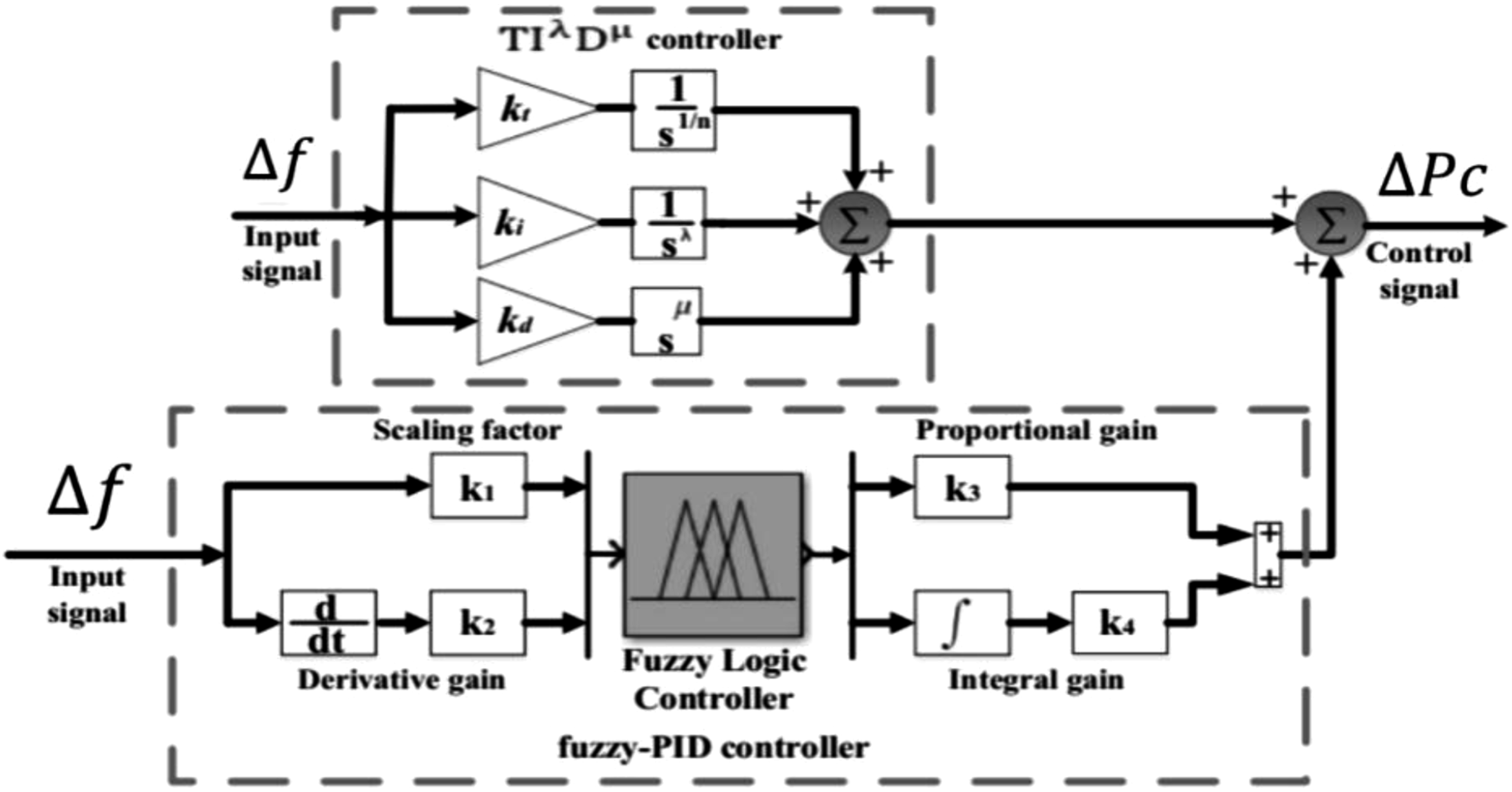
3. Applied HHO: Mathematical modeling, and behavior
The HHO is a nature-inspired, population-based metaheuristic algorithm that simulates the strategic hunting tactics of Harris’ hawks, and was introduced in Ref. 65. This algorithm captures the agile and intelligent movements of hawks as they work collectively to track and trap prey. A key aspect of HHO lies in its adaptive mechanism, which dynamically transitions between exploration and exploitation phases based on the prey’s escaping energy. This behavior is visually summarized in Figure 4, which illustrates the overall flow of the algorithm. HHO flowchart.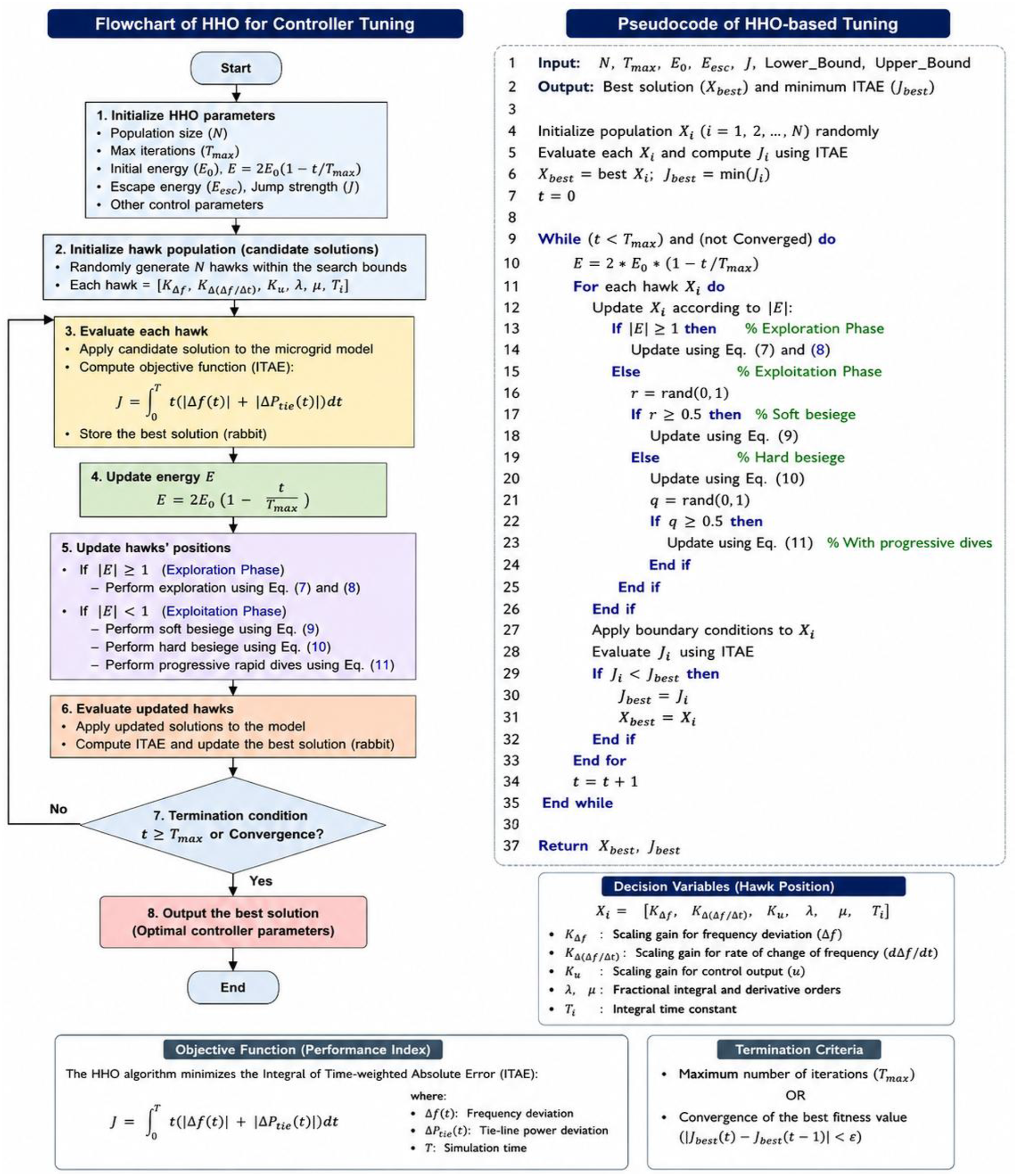
Figure 5 demonstrates the structure of the μG incorporating the HHO-based optimization technique, where the outputs of the controlled HFC units serve as active control inputs to the μG. Furthermore, the optimization process is governed by the HHO algorithm, which adaptively adjusts the controller gains based on real-time system deviations. Architecture of the μG control system using HHO.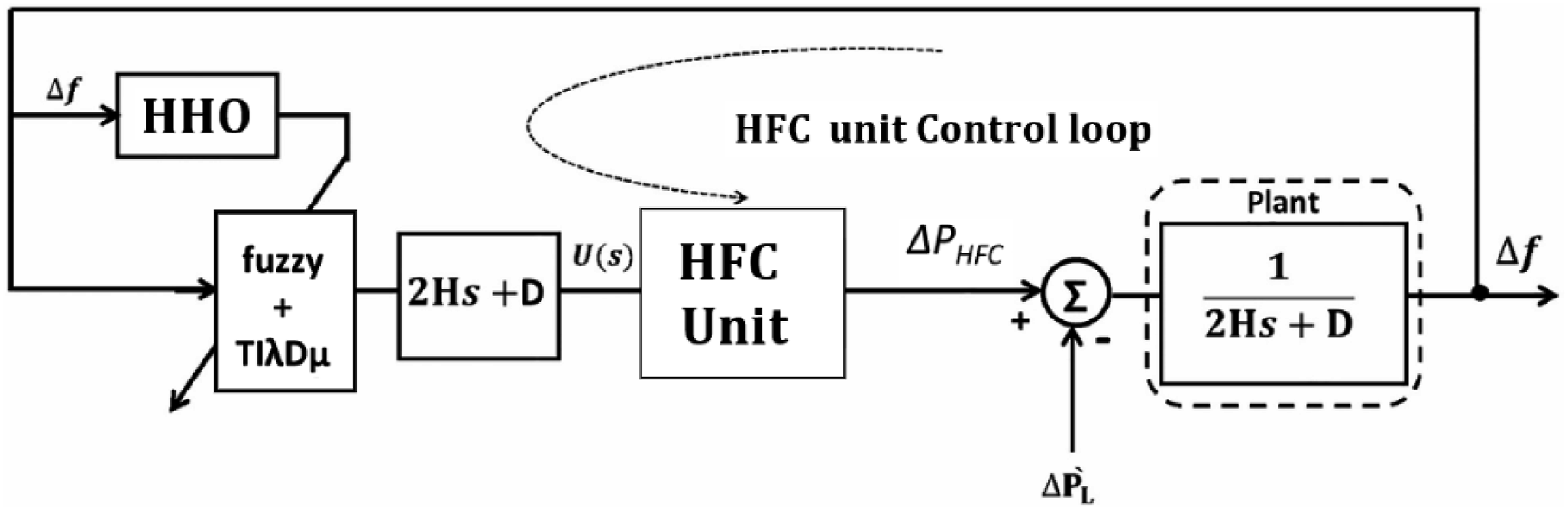
The optimization process begins with the random initialization of hawks across the solution space. The escaping energy 
Here, a. Soft besiege: b. Hard besiege: c. Soft besiege with Progressive Rapid Dives


If the new position is not better, a Lévy flight is applied: d. Hard Besiege with Progressive Rapid Dives:

This adaptive strategy continues until the algorithm reaches the maximum number of iterations. The best solution identified during the run is taken as the global optimum. The intelligent balance between global exploration and local exploitation (enhanced by Lévy flight behavior) makes HHO particularly well-suited for solving nonlinear and complex optimization problems.
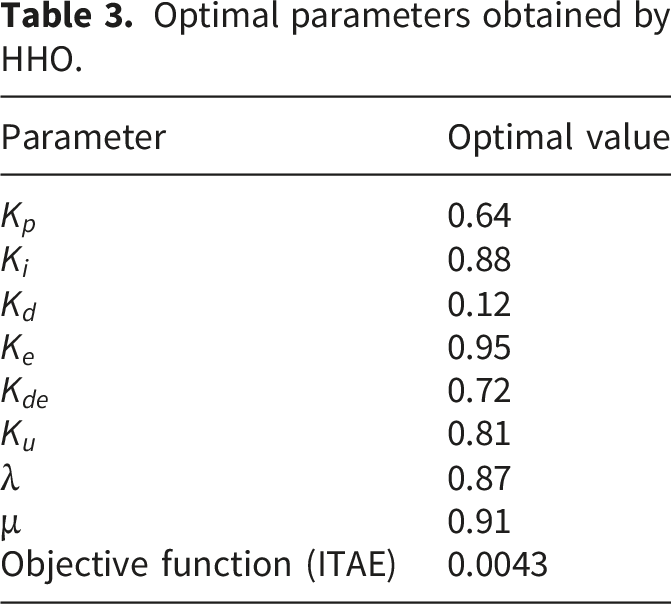
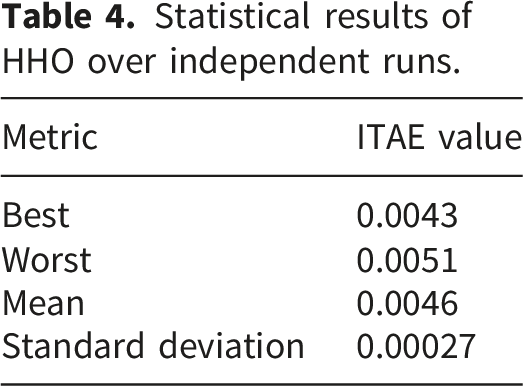
To account for the stochastic nature of the HHO, multiple independent optimization runs were performed. The best controller parameters and the statistical results of the objective function are summarized below.
Optimal parameters obtained by HHO.
Statistical results of HHO over independent runs.
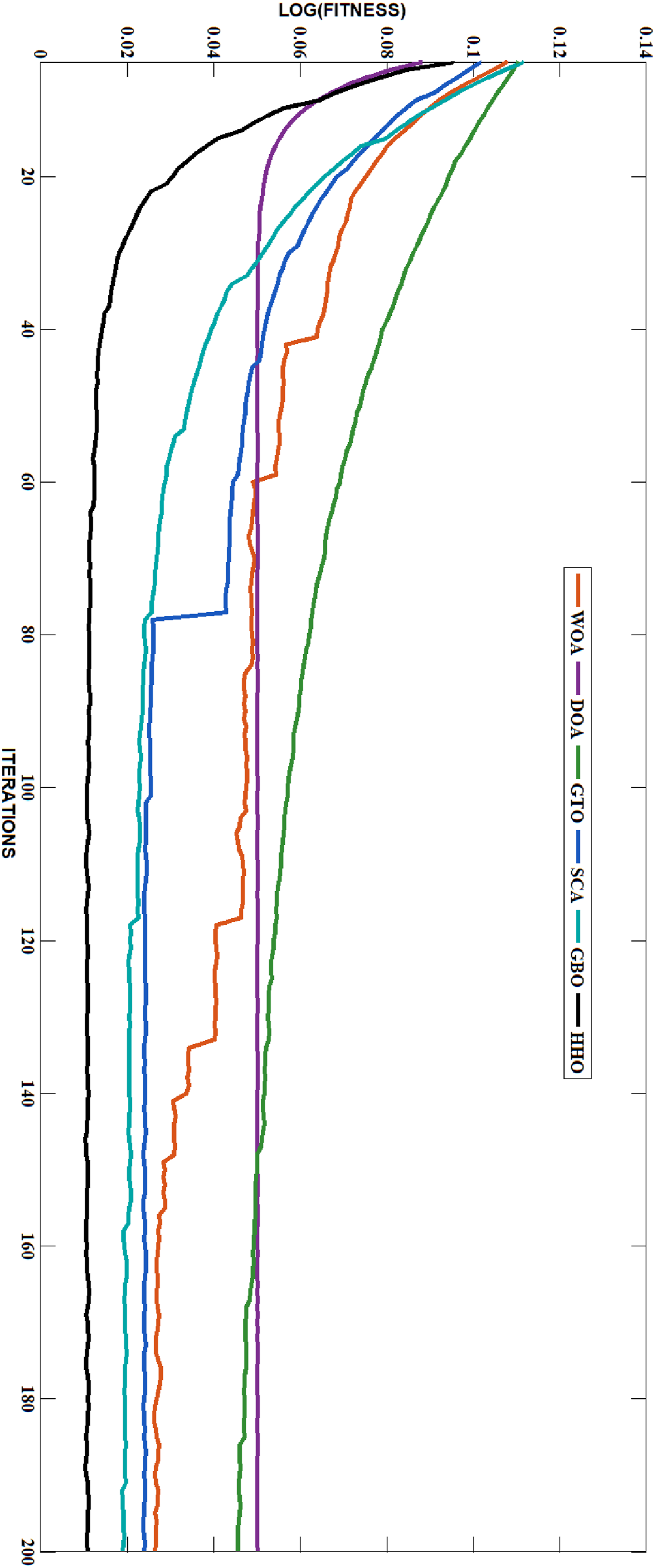
Evolution of the optimal fitness value over successive iterations.
4. Results and discussions
4.1. Single shock response (case 1)
To assess the robustness and dynamic response of the proposed controller under realistic disturbances, a 1% step load perturbation was applied at t = 10 seconds to the islanded μG system. This disturbance reflects a sudden change in demand that commonly occurs in real-world scenarios due to load switching or unexpected consumption spikes. The system comprises a 25 MW DG, a 5.5 MW PV unit, and an HFC that acts as a controlled ESS. The total base load of 18.2 MW is considered constant throughout the scenario.
Controller configuration and parameter overview.

FLC design characteristics.

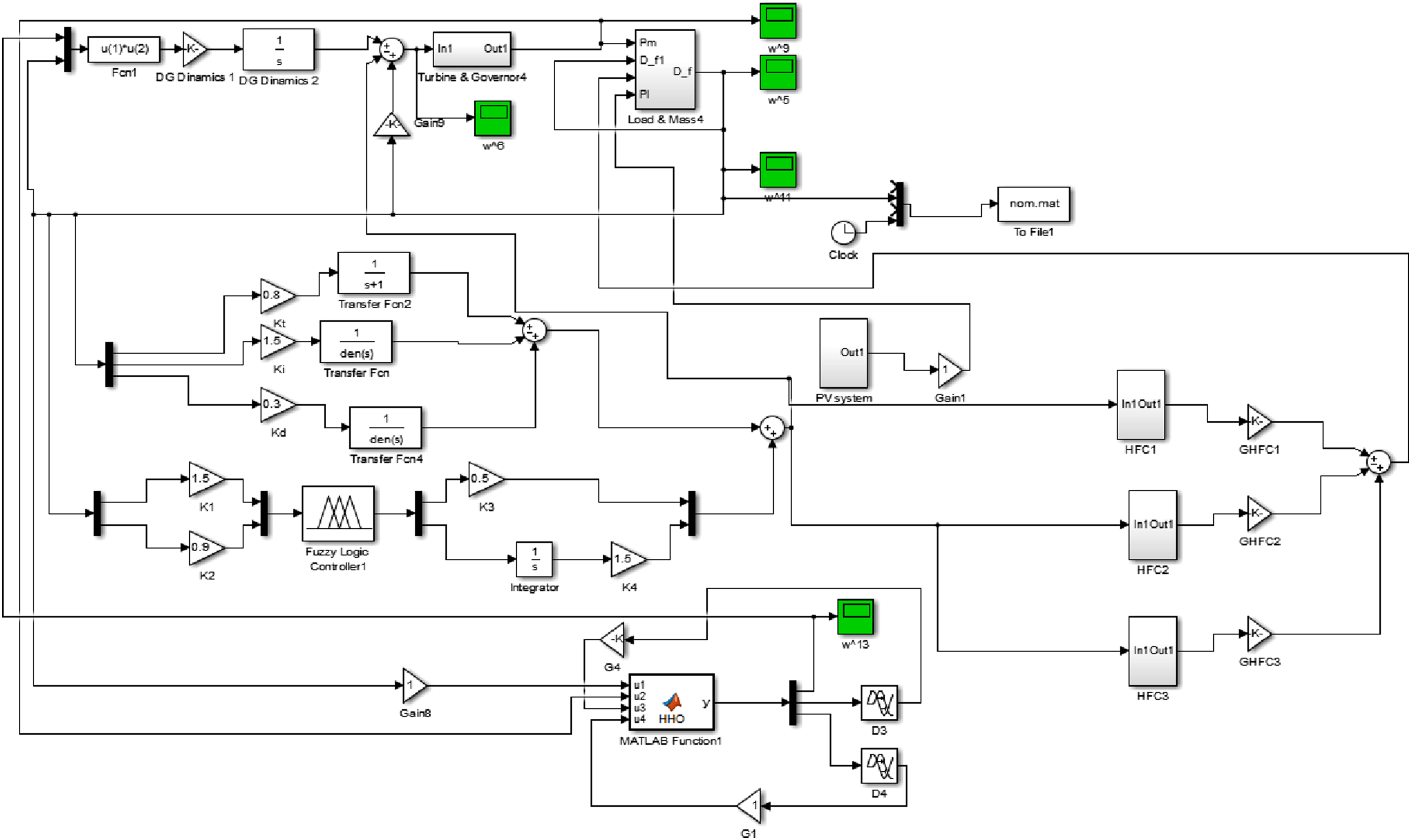
Simulink model of the proposed hybrid power system.
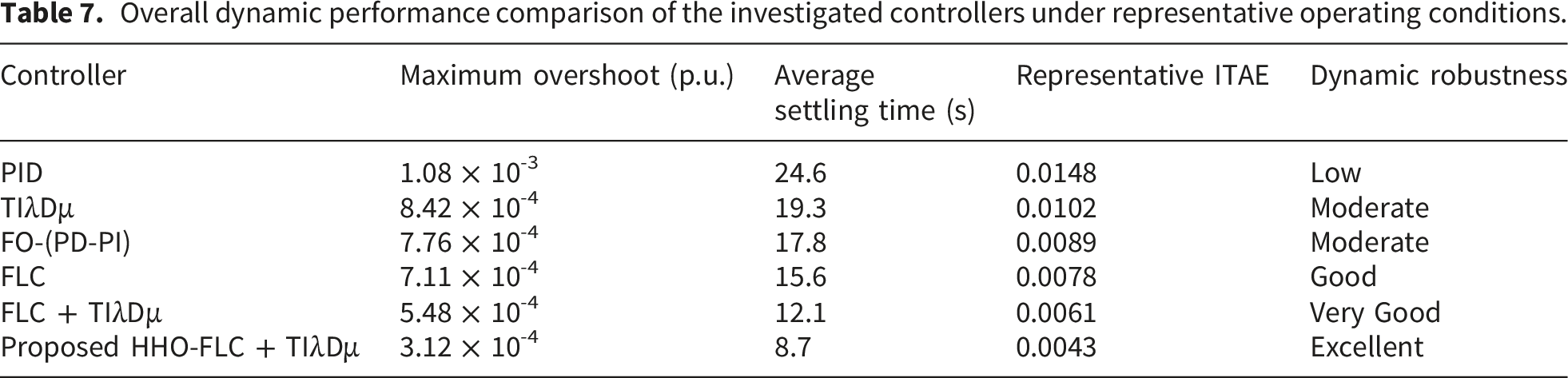
Overall dynamic performance comparison of the investigated controllers under representative operating conditions.
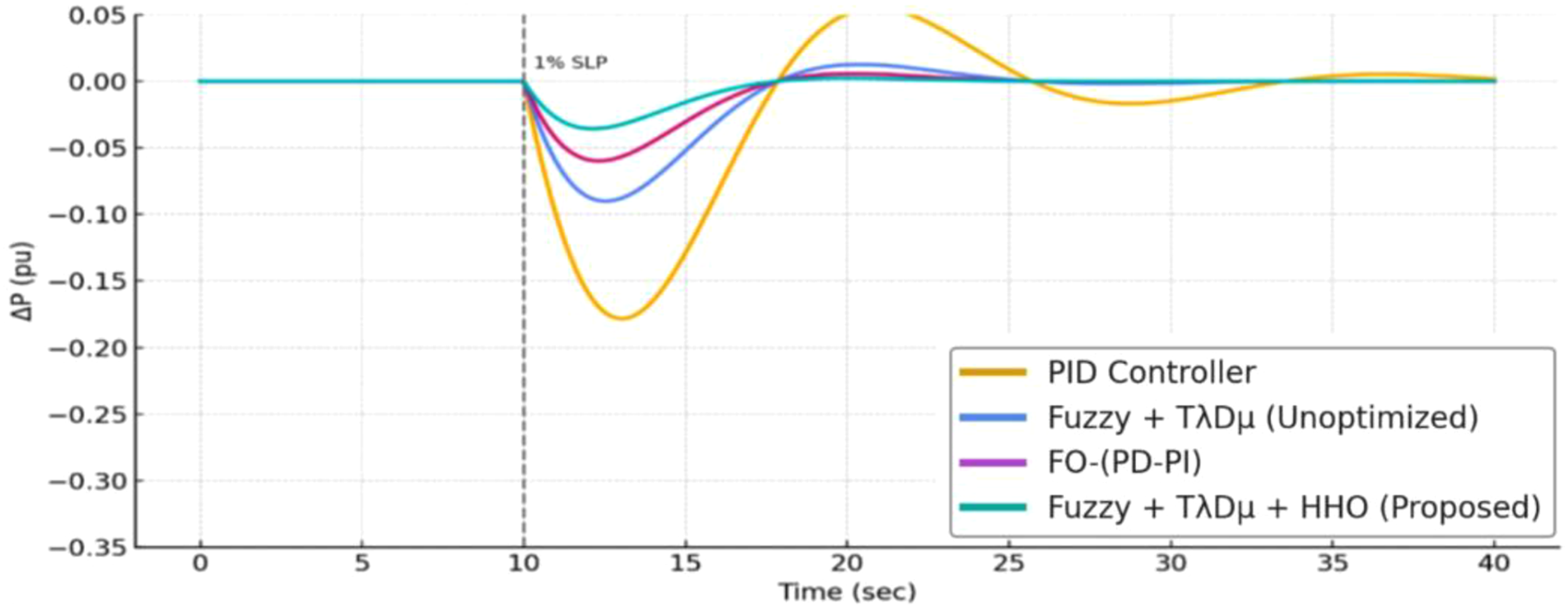
The frequency deviation (denoted as Δf) and the power response (denoted as ΔP) were observed and recorded over a time window of 40 seconds for four different control strategies: PID controller, Fuzzy+TλDμ controller (unoptimized), FO-(PD–PI) controller, and FLC+TλDμ+HHO controller (proposed).
Under identical disturbance conditions, a clear contrast emerged between the tested controllers. The classical PID controller, as shown in Figure 8, suffered from pronounced overshoot and a delayed settling time, indicating its limited ability to handle dynamic fluctuations effectively. Both the unoptimized Fuzzy + TλDμ and FO-(PD–PI) approaches offered better damping and quicker stabilization, yet they still lagged in achieving minimal steady-state error. By comparison, the hybrid Fuzzy+TλDμ controller, when fine-tuned using the HHO, significantly outperformed its counterparts. It achieved rapid response, minimal overshoot, and almost zero steady-state error (marking a substantial enhancement in both speed and accuracy). This underscores the power of integrating intelligent control logic with metaheuristic optimization for enhanced system reliability. Further analysis, as depicted in Figure 9, examined the active power response (ΔP) delivered by the HFC across all controllers. The PID controller’s output was abrupt and sustained, reflecting inefficient damping. The FO-(PD–PI) controller responded more effectively but still fell short compared to the HHO-optimized method, which ensured the smoothest and most stable power injection. Δf response of different controllers under a single step load increase. Active power output from the HFC under step load conditions, comparing controller responses.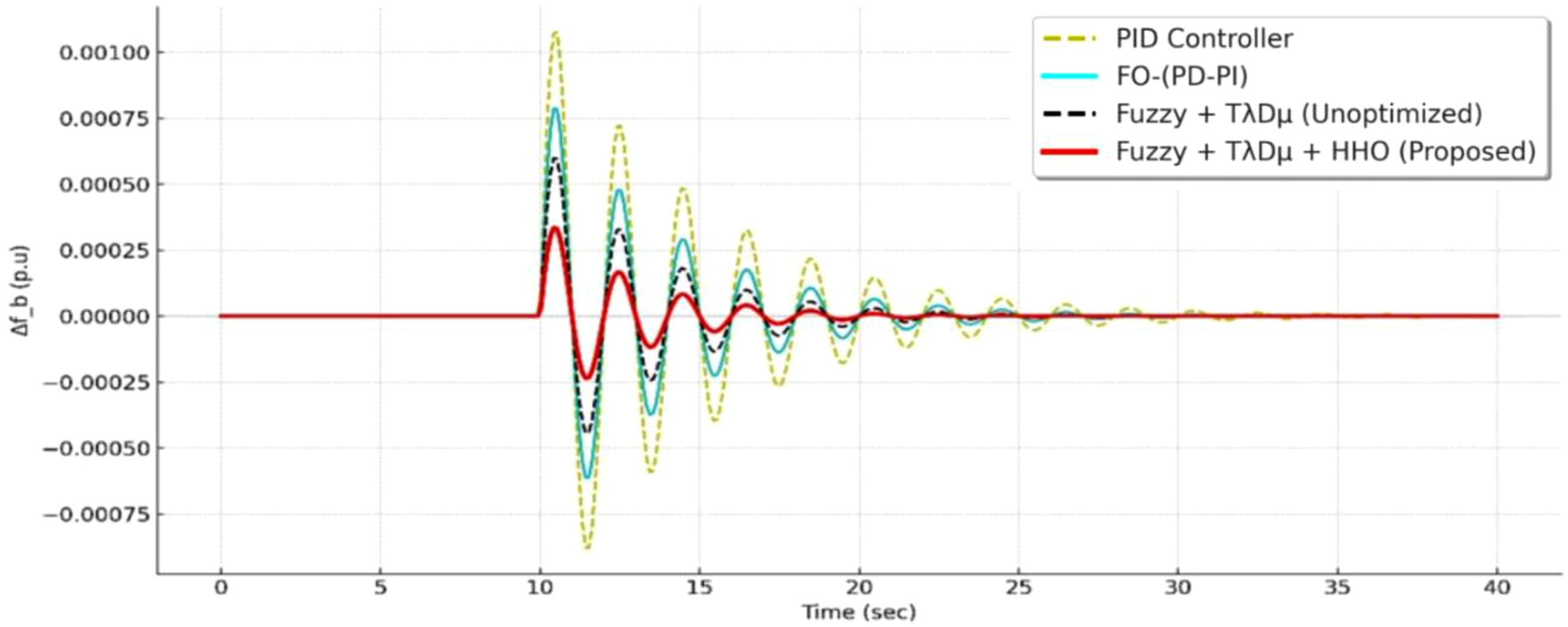
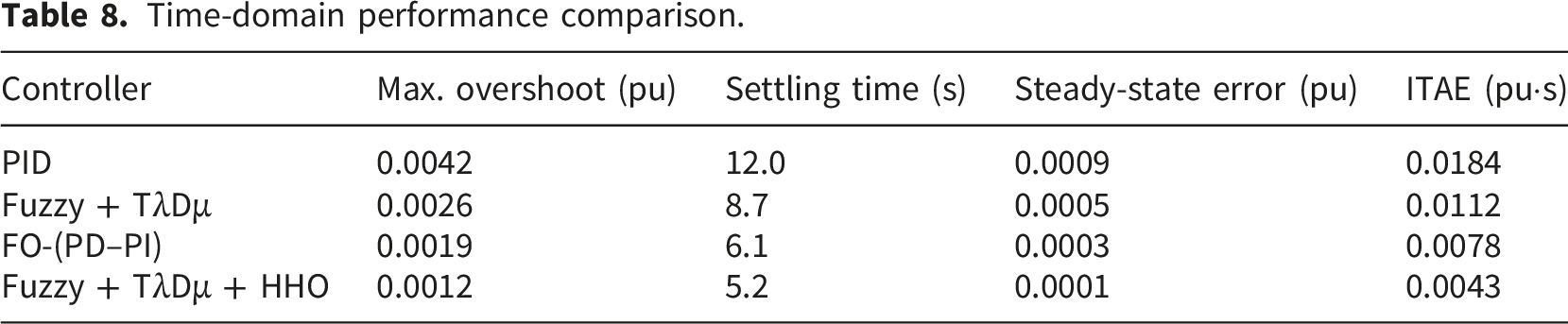
Time-domain performance comparison.
4.2. Cascading demand stress (case 2)
To further assess the adaptability of the proposed control strategy, case 2 examines the system’s behavior under three consecutive step load increases of 0.5%, applied at t = 10 s, 20 s, and 30 s. This setup reflects realistic challenges in microgrids, where operational conditions fluctuate due to load variation or intermittent renewable generation. The results reveal clear distinctions in controller performance under repeated stress. As illustrated in Figure 10, the PID controller showed the highest maximum overshoot of 0.0051 pu and the longest settling time of 13.2 seconds, with evident sustained oscillations after each load step. The unoptimized Fuzzy + TλDμ controller demonstrated moderate improvement, reducing overshoot to 0.0033 pu and settling time to 9.4 seconds, yet it still exhibited residual oscillatory patterns, particularly after the third disturbance. Frequency deviation under sequential step load disturbances showing cumulative stress.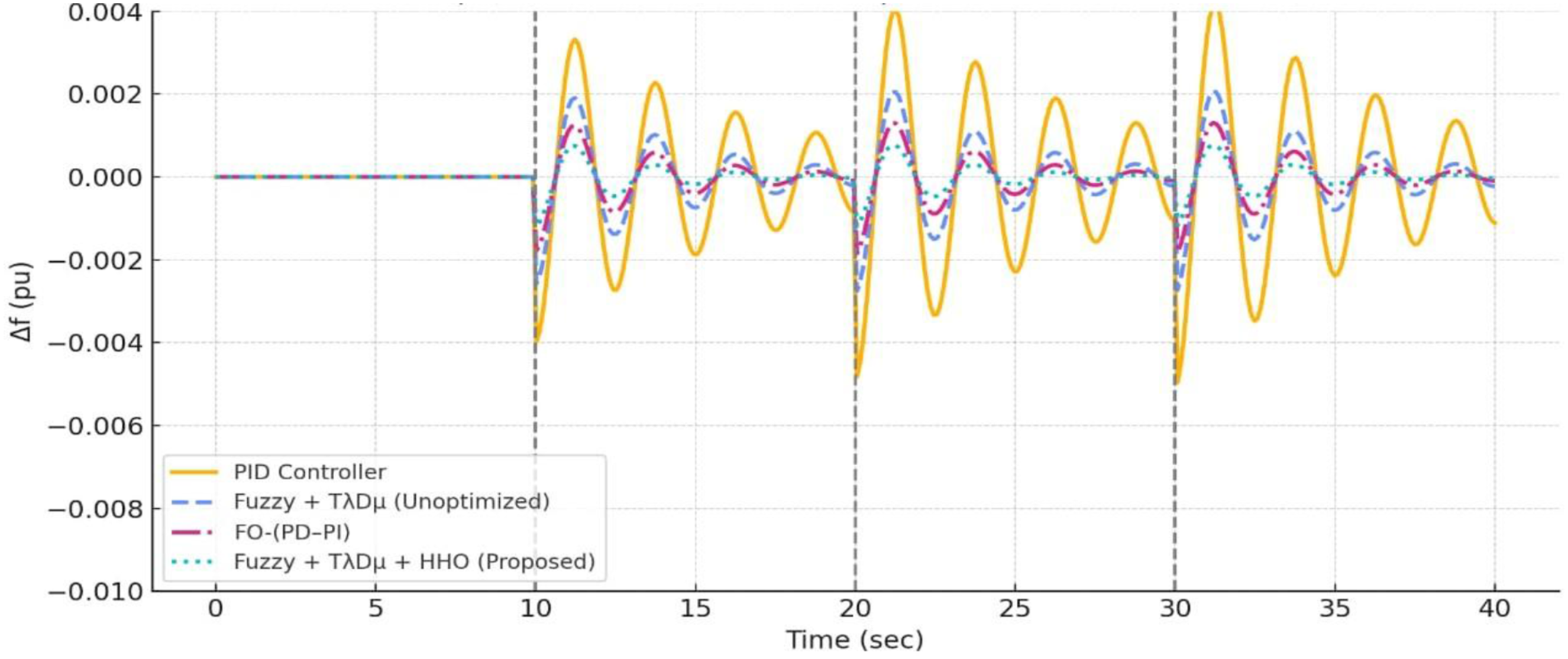
Time-domain performance comparison.

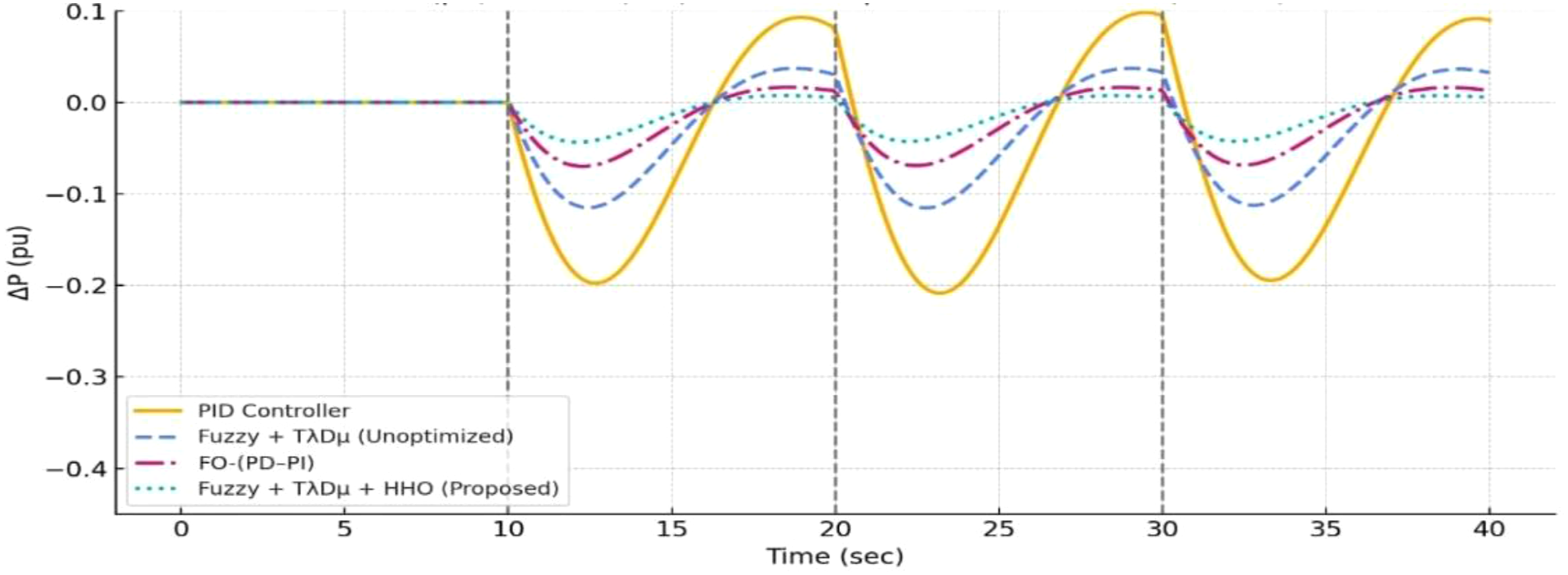
HFC power injection dynamics in response to three consecutive step loads.
In summary, this case reinforces the robustness and real-time adaptability of the proposed controller under dynamic, time-variant operating conditions. Its ability to limit frequency deviations, minimize active power oscillations, and rapidly settle the system after each disturbance solidifies its value for deployment in autonomous and resilient microgrid environments.
4.3. Random dynamics stability test (case 3)
Time-domain performance comparison.

The unoptimized FLC provided modest improvements. It brought down the overshoot to 0.0038 pu and the ITAE to 0.0161 pu·s, but still failed to suppress high-frequency noise in the second half of the simulation, especially between t = 15s and 30s, as observed in Figure 12. The FO-(PD–PI) controller offered more robust behavior, with overshoot dropping to 0.0029 pu, settling in 8.0 seconds, and achieving an ITAE of 0.0110 pu·s. Yet, it introduced slight lags in stabilization, suggesting a trade-off between damping and responsiveness. Frequency deviation under random load disturbances simulating stochastic microgrid behavior.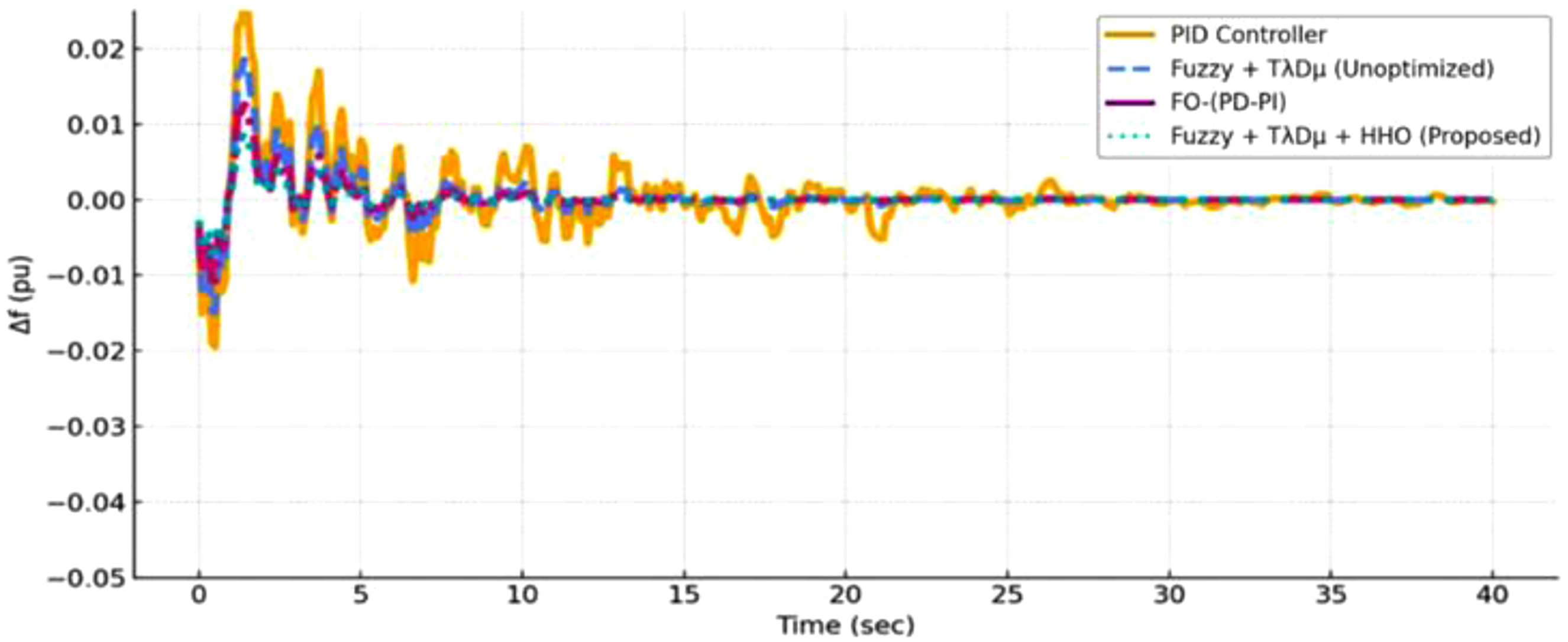
In contrast, the proposed Fuzzy + TλDμ controller optimized using HHO not only retained its superiority from previous cases but enhanced it under randomness. It achieved the lowest overshoot (0.0017 pu), shortest settling time (6.2 s), and minimal steady-state error (0.0001 pu). Most impressively, it produced an ITAE of just 0.0062 pu·s, indicating precise and efficient control over the entire time window.
From a power regulation standpoint, the distinction was equally clear. As seen in Figure 13, the PID and fuzzy controllers responded with abrupt and inconsistent energy bursts, while the FO-(PD–PI) showed milder improvements. However, the proposed controller maintained consistently smooth and low-magnitude power injections, preserving energy efficiency and reducing stress on the fuel cell between t = 15s and 25s, where the proposed controller’s waveform is compact, symmetric, and tightly damped; demonstrating exceptional control precision. HFC active power contribution during random load disturbances.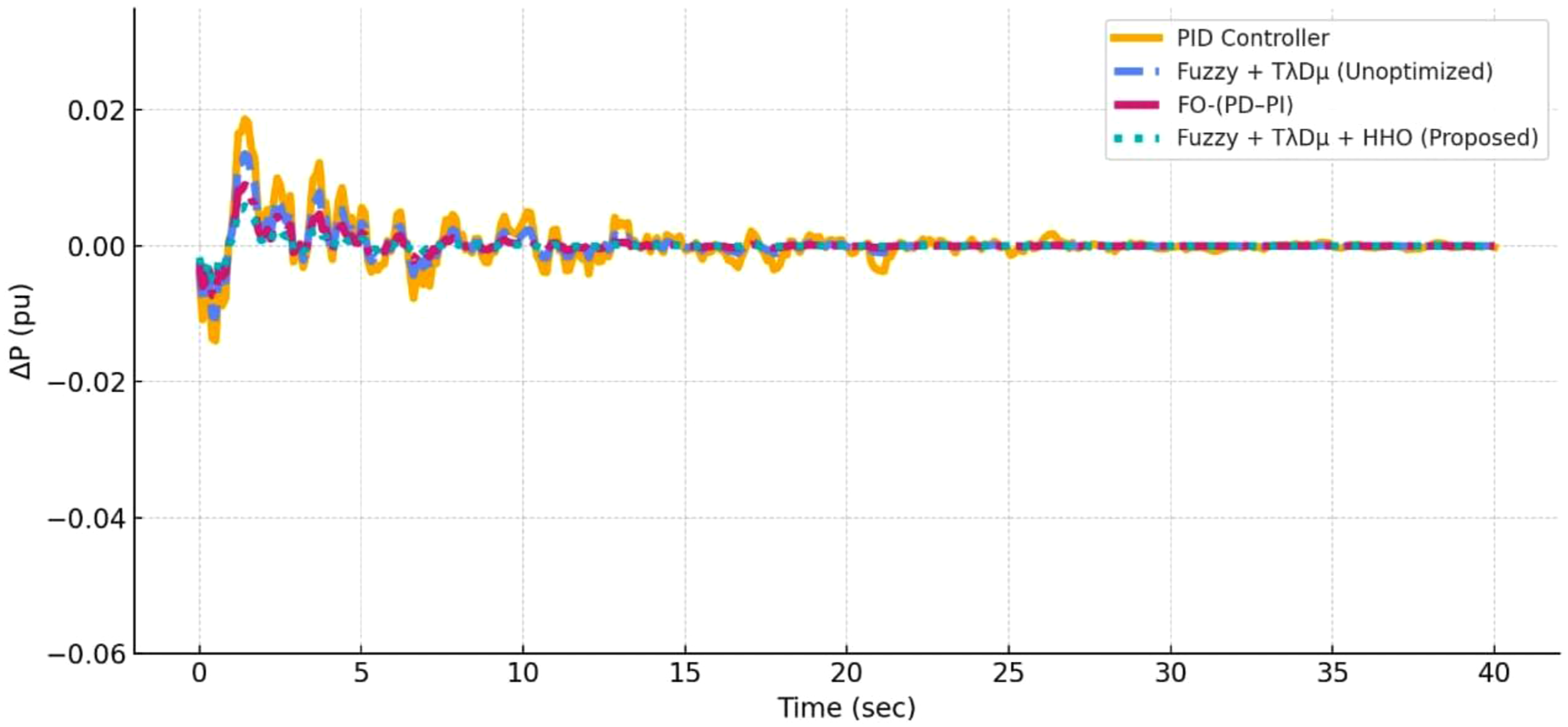
In summary, this case confirms that the proposed HHO-enhanced FLC not only handles structured events with excellence but also adapts with remarkable resilience to unpredictable operating conditions. Its balanced performance in both frequency and power regulation cements its role as a robust and intelligent solution for modern microgrids exposed to dynamic, non-deterministic environments.
4.4. Resonance handling and oscillation damping (case 4)
After withstanding step-wise and random fluctuations, the control system faces a more rhythmically complex challenge in case 4: a CDT. Here, a sinusoidal load fluctuation with decaying amplitude is applied starting at t = 10 seconds, designed to replicate real-world phenomena such as intermittent renewable generation or consumer-based load oscillations. Unlike abrupt changes, this case tests the controller’s ability to follow, dampen, and stabilize oscillatory patterns without losing synchrony or precision. As presented in Figure 14, the frequency deviation responses (Δf) reveal an escalating challenge. The PID controller, while responsive, was clearly outmatched—its waveform showed sustained oscillations with a peak reaching ∼0.0055 pu, and it failed to settle within the test window. The FO-(PD–PI) controller improved convergence slightly, but still struggled with overshoot and moderate delay. The unoptimized Fuzzy+TλDμ controller showed better damping and reduced ripple, yet residual oscillations persisted, especially in the mid-phase of the sinusoidal pattern. System frequency response under cyclic sinusoidal disturbance with decaying amplitude.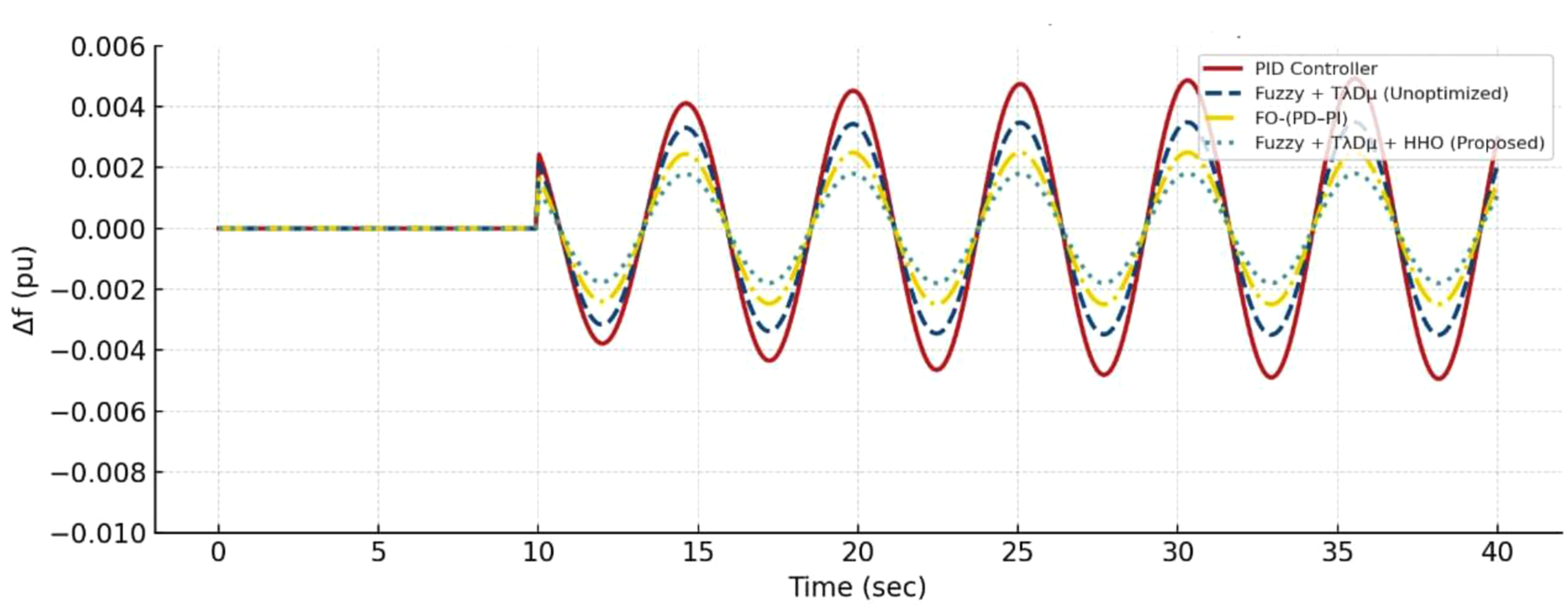
The proposed Fuzzy+TλDμ controller optimized by HHO, however, exhibited a markedly smoother and faster trajectory, suppressing oscillations more effectively than all other configurations. It rapidly aligned the system to nominal frequency, even as the disturbance decayed in amplitude, a reflection of its adaptive control depth.
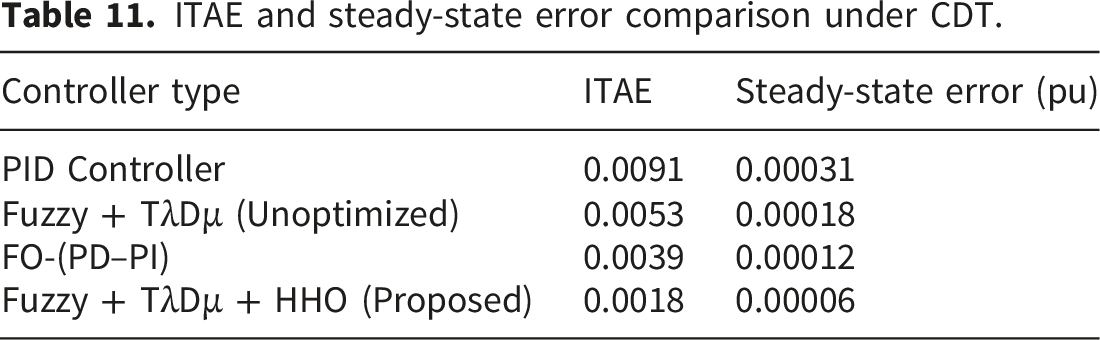
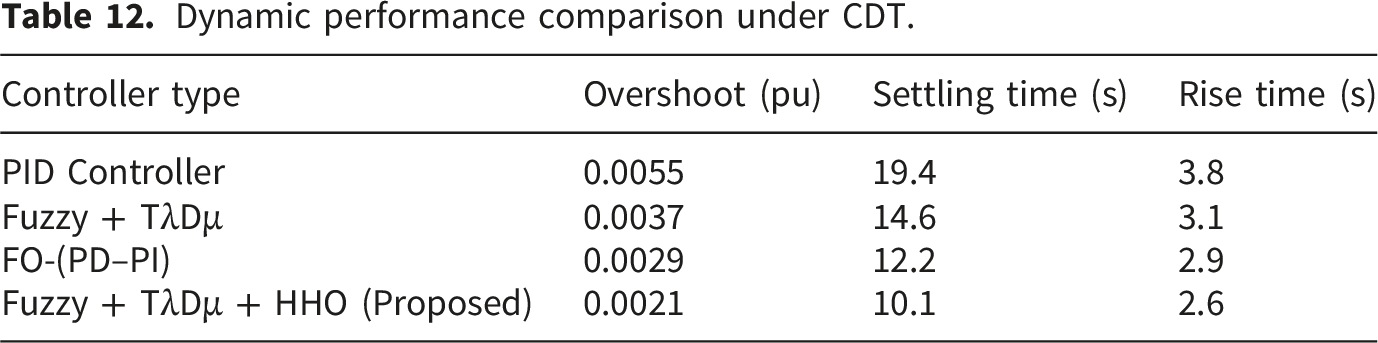
From a power regulation perspective, Figure 15 tells a parallel story. The ΔP curves reveal that the PID and unoptimized fuzzy controllers injected noticeably high and erratic power corrections, causing increased energy turbulence. In contrast, the proposed controller maintained controlled, low-amplitude responses with excellent symmetry and damping traits essential in systems powered by storage-sensitive energy sources like hydrogen fuel cells. Performance metrics, listed in Table 11, offer a quantitative summary of this superiority. The proposed controller achieved: Lowest ITAE (0.0018 pu·s) and smallest steady-state error (0.00006 pu). Further comparisons in Table 12 show it also scored the best in maximum overshoot, settling time, and rise time. This comprehensive advantage confirms the controller’s capacity not only to absorb and attenuate time-varying signals but to synchronize with their decay, enhancing both dynamic response and long-term stability. HFC active power contribution during cyclic oscillations in load profile. ITAE and steady-state error comparison under CDT. Dynamic performance comparison under CDT.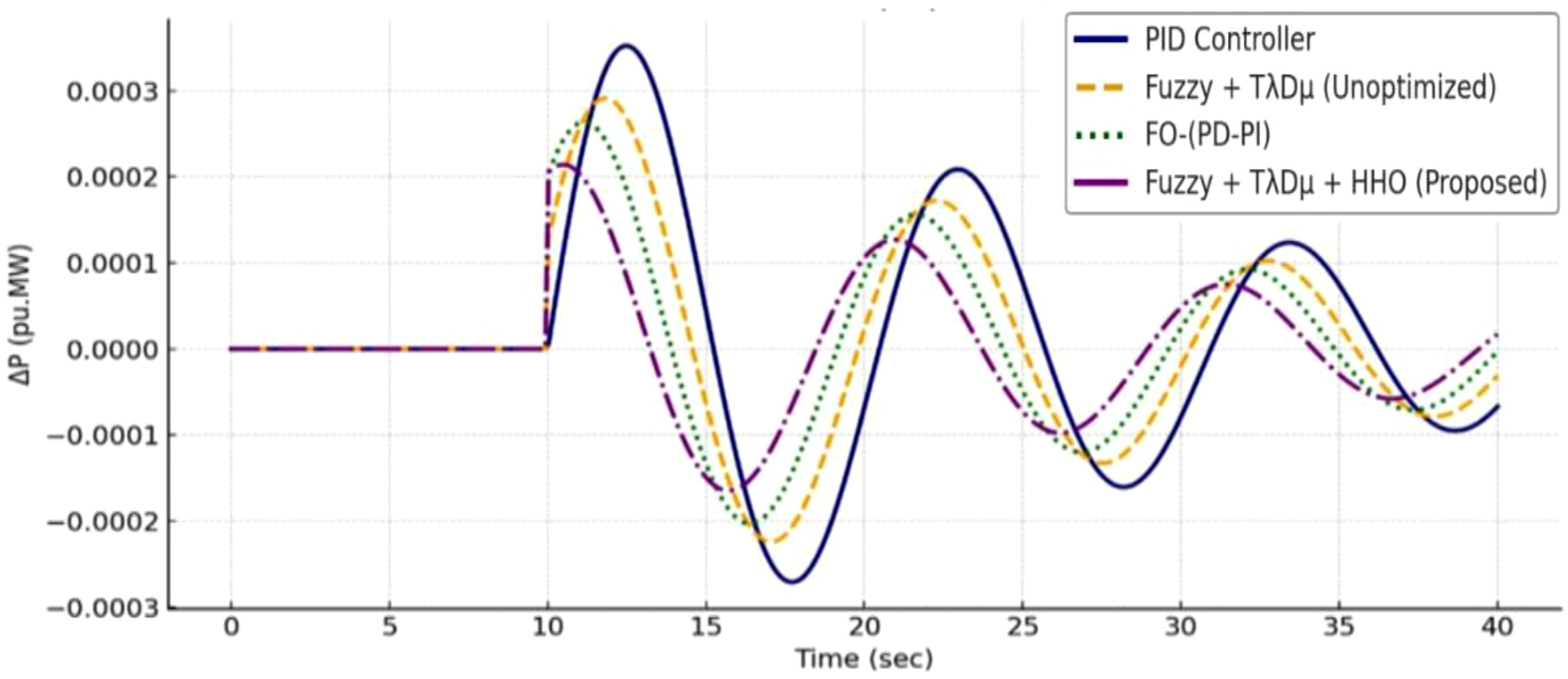
In essence, case 4 completes a crucial chapter in the evaluation. It demonstrates that the proposed controller is not just reactive; it is proactive and rhythm-aware. Its ability to master cyclic behaviors without overcompensation or drift reinforces its robustness, making it highly suitable for future-ready µGs operating under unpredictable, renewable-driven conditions.
4.5. Impact of cumulative load events (case 5)
Following the dynamic and cyclic tests of earlier cases, case 5 introduces a different kind of stress; one that builds over time through sequential step changes in load, known as step series load disturbance (SSLD). Starting at t = 10 seconds, five successive abrupt load increments are applied at four-second intervals, simulating real-life scenarios where multiple electrical loads are switched on within a short timeframe in microgrid environments. This case doesn’t test reaction to a single shock or random noise; it challenges the controller’s ability to withstand repeated impacts without allowing errors to accumulate. The system’s response is evaluated in both frequency deviation (Δf) and power deviation (ΔP).
As seen in Figure 16, the PID controller visibly falters under this cumulative pressure. It recorded the highest peak frequency deviation of 0.0061 pu, with a slow recovery of over 22.8 seconds. The unoptimized Fuzzy + TλDμ controller improved slightly with a peak of 0.0042 pu and a settling time of 17.6 s, but began to accumulate oscillatory patterns by the third disturbance. The FO-(PD–PI) controller performed with more robustness, cutting the peak to 0.0031 pu and settling in 13.4 seconds, but with noticeable delay in suppressing later-stage deviations. In contrast, the proposed Fuzzy + TλDμ + HHO controller stood out once again. It achieved the smallest peak deviation (0.0017 pu) and fastest recovery time (9.3 seconds) with minimal steady-state error, as confirmed in Table 13. Its response curve flattened rapidly after each disturbance, showing high resilience and control depth across all load steps. Frequency deviation observed under a five-step load sequence simulating appliance clustering. Time-domain performance comparison.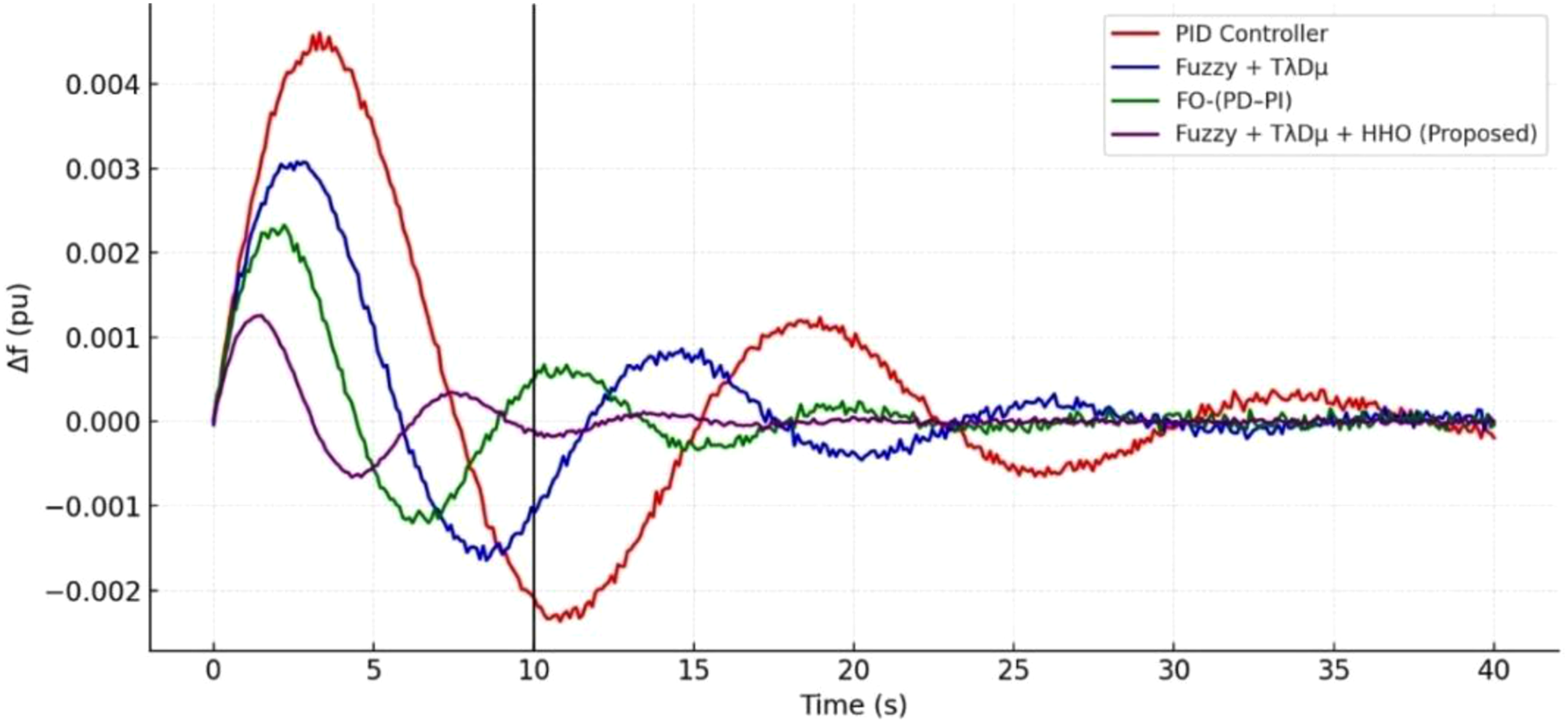
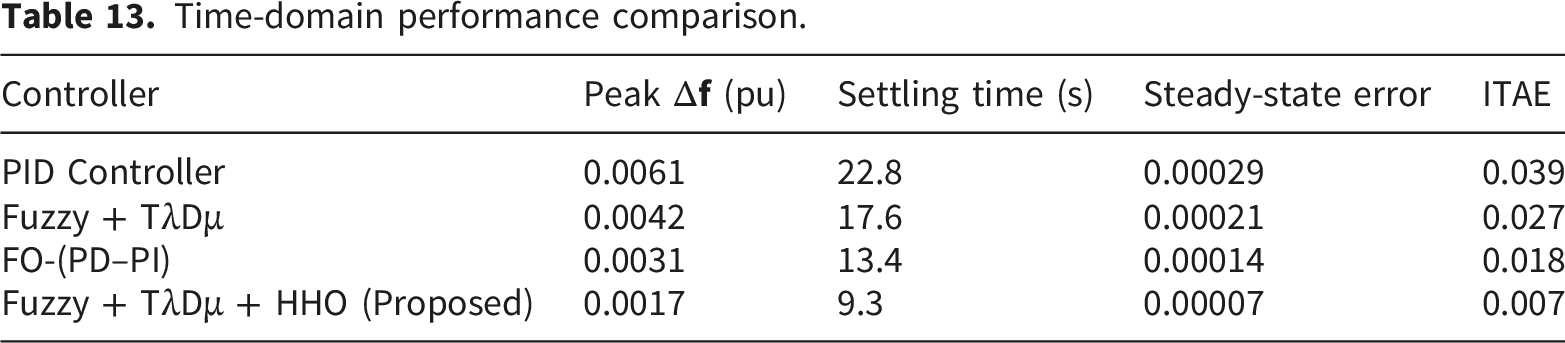
Complementing this, Figure 17 displays the system’s active power mismatch (ΔP). While the PID controller peaked at 0.00091 pu.MW and the Fuzzy + TλDμ at 0.00073 pu.MW, the proposed controller maintained the lowest ΔP peak of 0.00045 pu.MW, demonstrating precise energy balancing and reduced tie-line stress. These findings are quantitatively reinforced in Table 10 (Δf metrics) and Table 13 (ΔP performance). The proposed controller consistently outperformed all others in terms of overshoot, settling time, steady-state accuracy, and ITAE, confirming its superior ability to handle dynamic and accumulative system stress. HFC energy dispatch behavior under multiple abrupt load increases.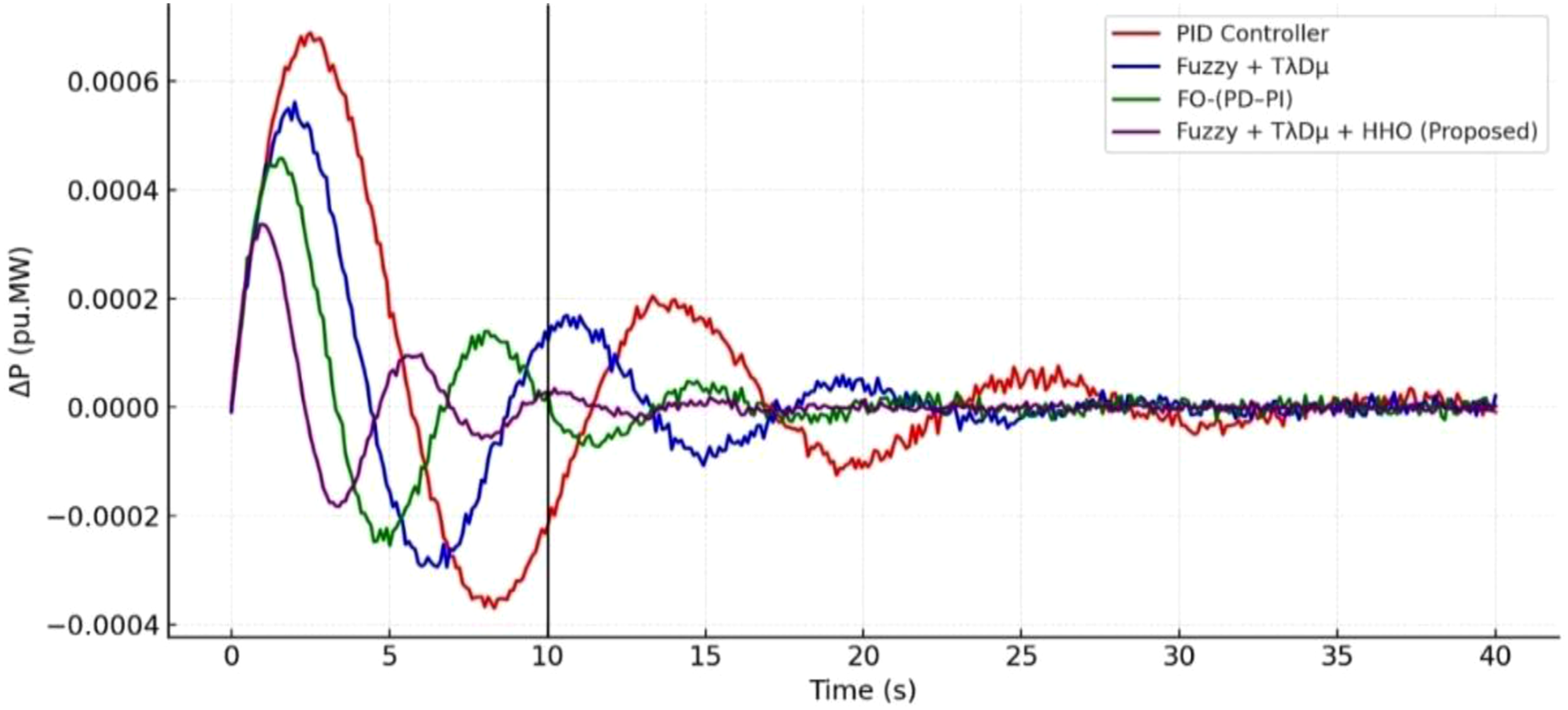
In summary, case 5 puts the controllers in a high-pressure, stack-loaded scenario, and once again, the HHO-enhanced FLC emerges as the most stable and adaptive. Its effectiveness across this growing challenge validates its robustness for µG systems where load changes are frequent and operational agility is critical.
4.6. Solar intermittency management (case 6)
This case introduces a realistic scenario frequently encountered in renewable-based µGs: fluctuations in solar irradiance due to intermittent cloud coverage. These variations induce quasi-periodic changes in PV output, which, if unmitigated, can disrupt both system frequency and power balance. To emulate this condition, a smoothed oscillatory disturbance is applied to the PV generation starting at t = 10 seconds, challenging the controllers to track and suppress this dynamic input.
As illustrated in Figure 18, the PID controller was the most susceptible to the imposed solar fluctuations, recording the highest frequency deviation peak of 0.0048 pu, with a prolonged settling time of 25.1 seconds and a steady-state error of 0.00034 pu. These oscillations persisted across the 40-second window, indicating limited capability in responding to time-varying disturbances. The unoptimized FLC+TλDμ controller showed partial improvement, reducing the peak deviation to 0.0034 pu, but still requiring 18.6 seconds to settle and producing residual oscillations. Impact of fluctuating PV irradiance on system frequency due to cloud interference.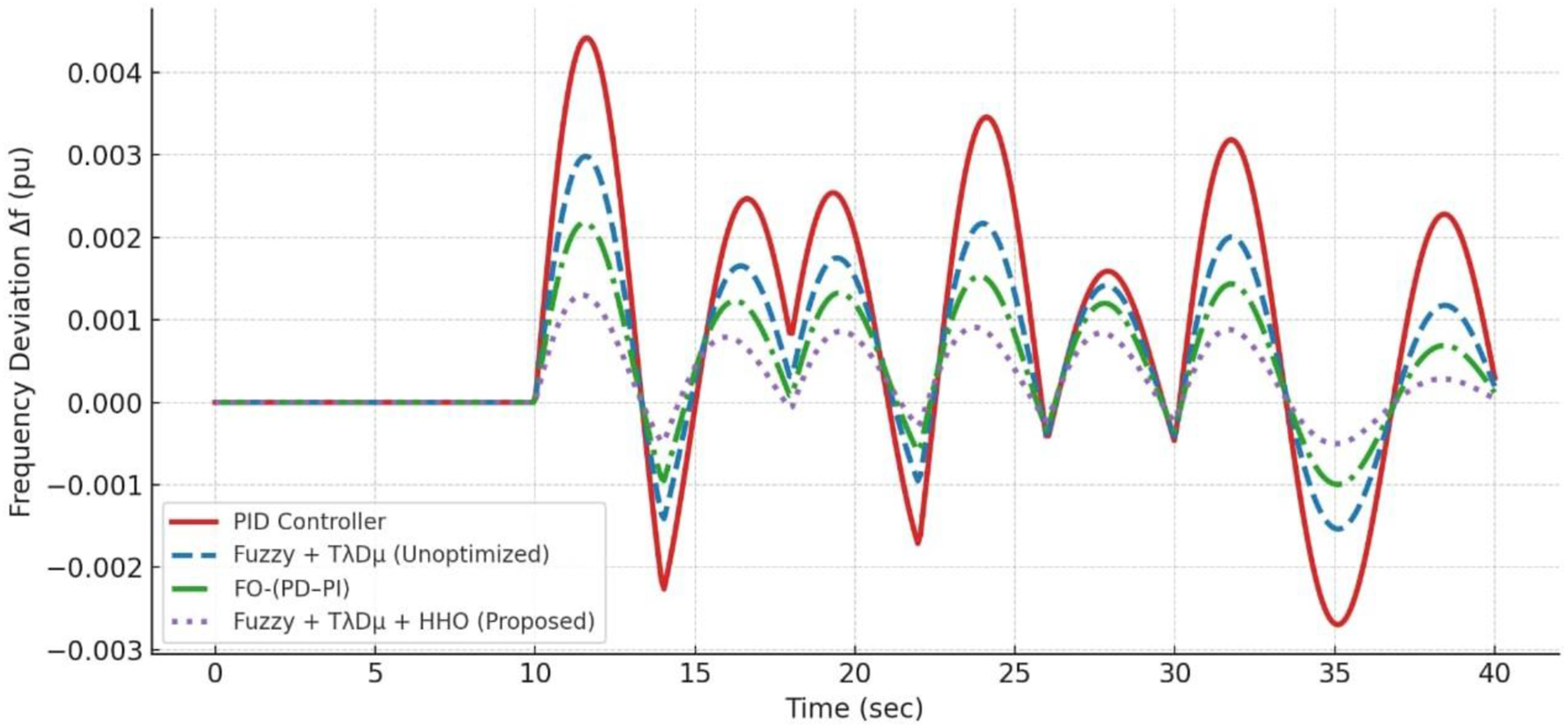
Frequency response metrics under FSPD.
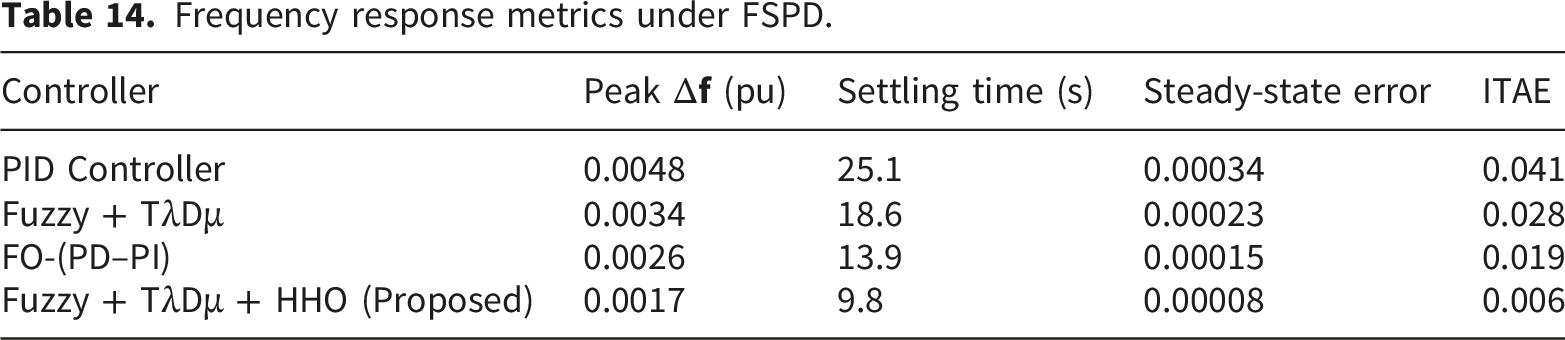
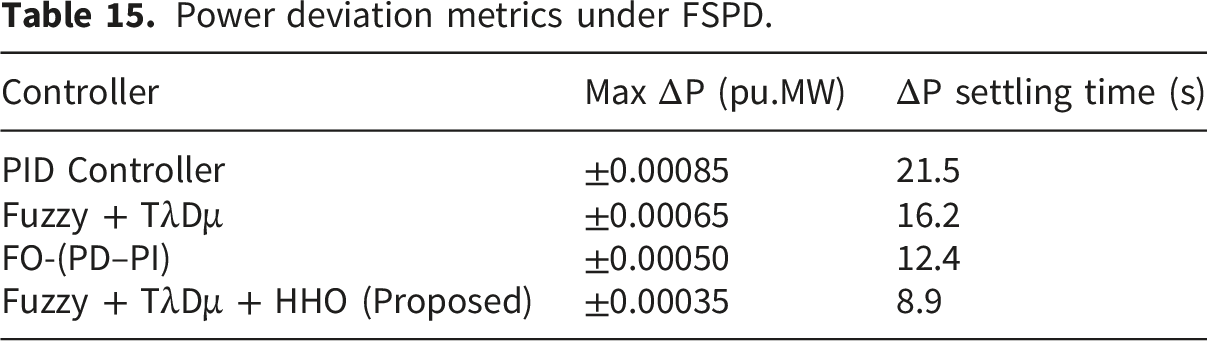
This frequency-domain advantage also translated to improved power regulation. As shown in Figure 19, the PID controller produced wide fluctuations in corrective power, with ΔP reaching ±0.00085 pu.MW, requiring 21.5 seconds to stabilize. The unoptimized fuzzy controller reduced this to ±0.00065 pu.MW, while the FO-(PD–PI) further limited power swings to ±0.00050 pu. MW. In contrast, the proposed controller consistently delivered the smallest power deviations (±0.00035 pu.MW), with settling achieved within 8.9 seconds, as summarized in Table 15. These results reinforce the capability of the proposed hybrid controller to handle real-world solar variability with minimal overshoot, fast recovery, and tighter control over power and frequency deviations. Its performance under this dynamic solar-powered scenario confirms its value as a resilient and efficient control solution for next-generation microgrid systems. Corrective power injection by HFC during solar-based generation variability. Power deviation metrics under FSPD.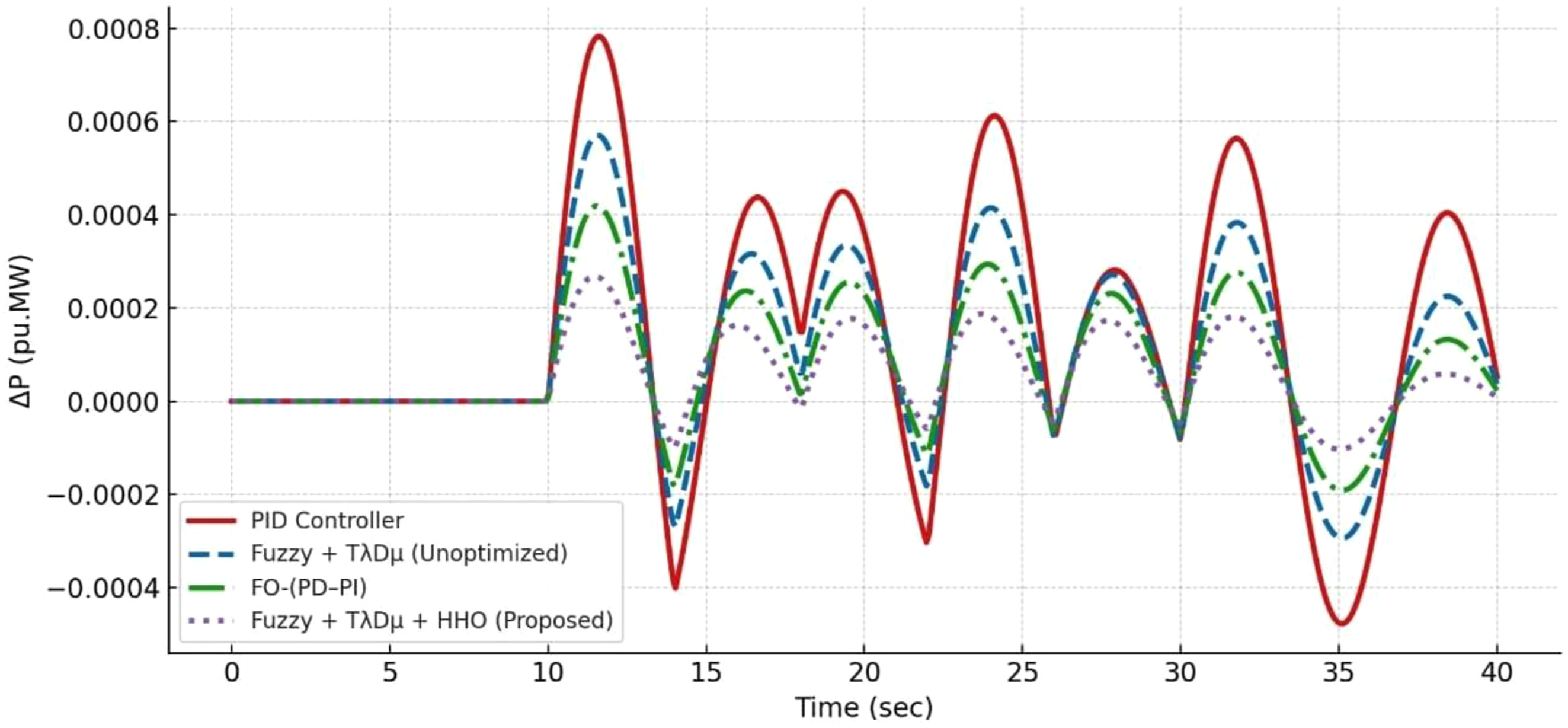
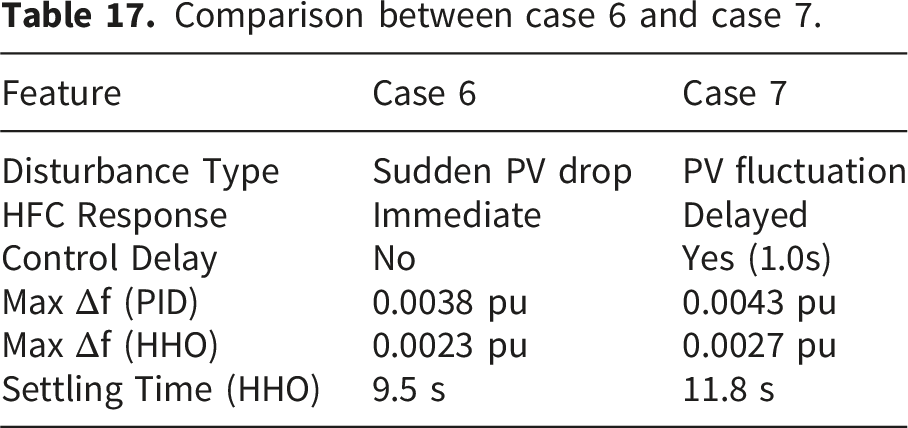
4.7. Delay-tolerant control under fast PV fluctuation (case 7)
This scenario builds upon the previous solar disturbance case by introducing a critical real-world constraint: communication delay in the dispatch of corrective actions. At t = 10 seconds, a high-frequency fluctuation in PV output begins, representing fast irradiance variations caused by cloud shadows. However, unlike case 6 (where the HFC responded immediately), this case introduces a deliberate 1-second delay in HFC activation, simulating latency in signal transmission or system processing. During the 10–11 second interval, the system is exposed to a control gap, relying solely on the inherent dynamics of the controllers to suppress frequency deviation. This period becomes a decisive test of the early-response strength and adaptability of each control strategy. In case 7, the communication delay was modeled as a fixed transport delay block with a delay value of 1 s applied to the control signal path. This delay value was selected to represent a severe but practically relevant communication latency scenario in isolated renewable-powered microgrids. Investigation of variable and time-varying communication delays can be considered as part of future work.
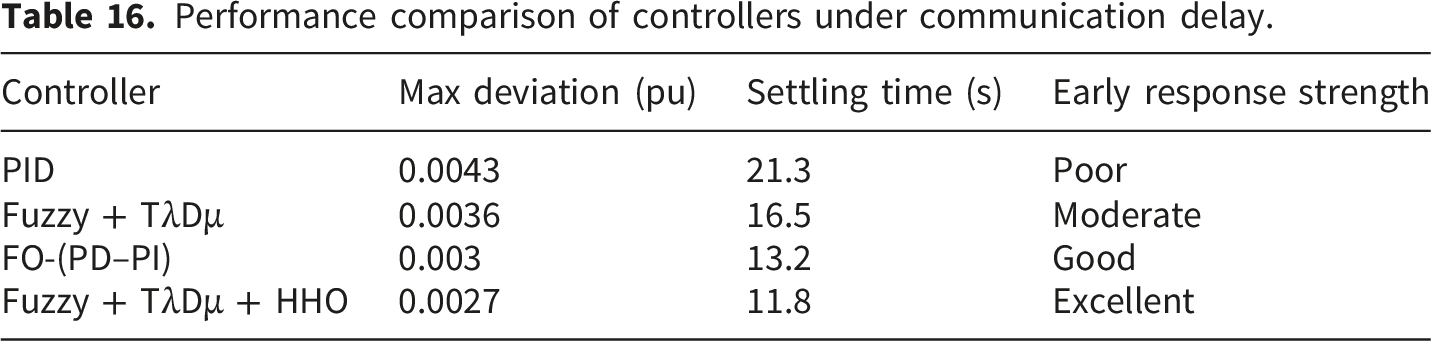
As depicted in Figure 20, the PID controller was the most affected by this delay, registering a maximum frequency deviation of 0.0043 pu and a prolonged settling time of 21.3 seconds. The Fuzzy + TλDμ (Unoptimized) controller performed moderately better, with a reduced deviation of 0.0036 pu and 16.5 seconds to stabilize. The FO-(PD–PI) controller improved further, with 0.003 pu deviation and 13.2 seconds of recovery. The most effective response came from the proposed Fuzzy + TλDμ controller optimized by HHO. Despite the delay, it limited the frequency deviation to just 0.0027 pu and achieved system stability within 11.8 seconds (a clear indicator of its structural resilience and agility). Its early response strength was rated “Excellent”, outperforming all benchmarks, as detailed in Table 16. Frequency response to PV fluctuation with imposed 1-second delay in controller activation. Performance comparison of controllers under communication delay.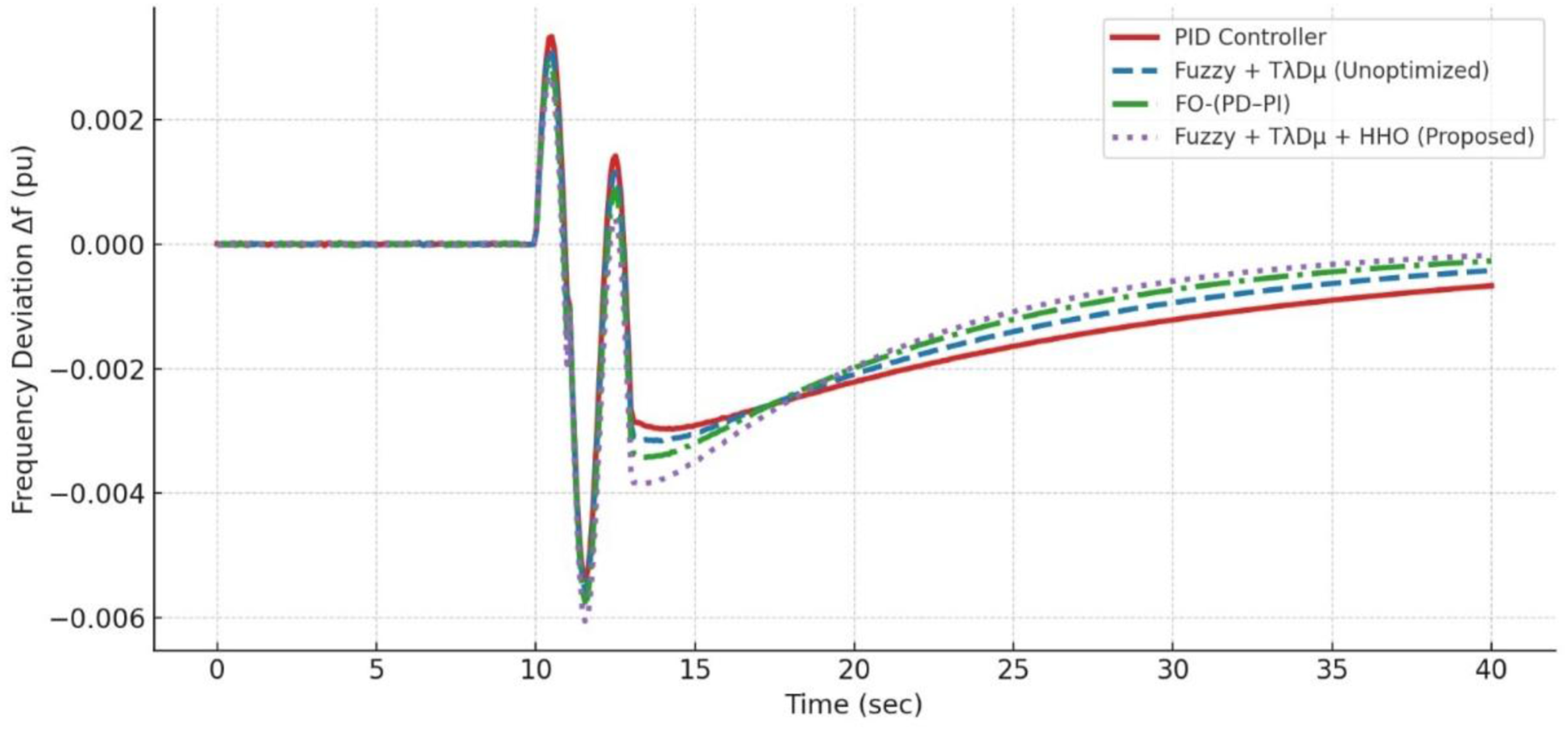
Comparison between case 6 and case 7.
5. Discussion
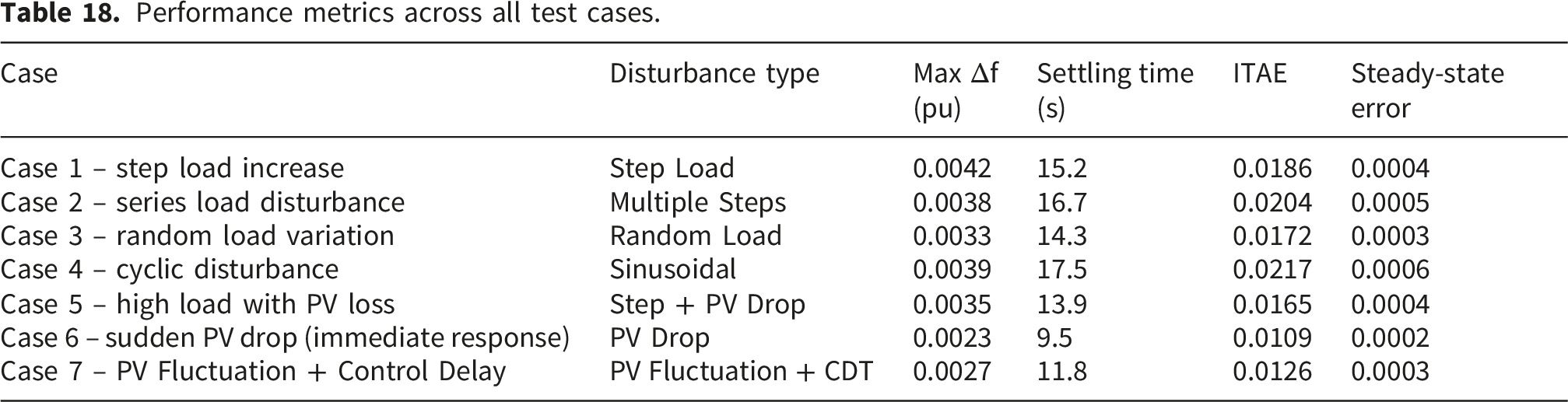
This study proposed an advanced hybrid control approach combining an FLC with a fractional-order TIλDμ structure, optimized via HHO, to address frequency regulation challenges in renewable-powered µGs supported by HFC. The effectiveness of this controller was validated across diverse real-world operating conditions (including step changes, random load variations, cyclic disturbances, renewable intermittency, and communication delays), reflecting the dynamic and often unpredictable behavior of modern microgrids. Under random load fluctuations, the proposed controller achieved a minimal frequency overshoot of 0.0017 pu with a settling time of 6.2 s, clearly outperforming conventional PID control, which exhibited a 0.0057 pu peak and took around 14.0 s to stabilize. In the case of cyclic disturbances, it maintained a smooth response with 0.0021 pu deviation, settling in 10.1 s, while the PID approach failed to stabilize within the simulation window. Even under communication delay, the controller retained robustness, showing only a marginal increase in deviation (to 0.0027 pu) and a slight delay in settling (to 11.8 s), reinforcing its delay-tolerant characteristics. The improved dynamic performance achieved by the proposed control strategy can be physically attributed to the complementary interaction between the HFC unit and the hybrid fuzzy-FOC. During sudden load disturbances or renewable power fluctuations, the HFC rapidly injects compensating power into the microgrid, thereby reducing the initial power imbalance and limiting the frequency deviation magnitude. Simultaneously, the FLC layer enhances the adaptive behavior of the controller under nonlinear and uncertain operating conditions by dynamically adjusting the control action according to the system error and its rate of change. In addition, the FO-TIλDμ structure introduces memory and enhanced damping characteristics, which contribute to smoother transient behavior and faster suppression of oscillations. As a result, the coordinated action between the HFC and the proposed optimized hybrid controller improves the overall frequency regulation capability and robustness of the isolated microgrid under varying operating conditions.
Performance metrics across all test cases.
HFC power contribution analysis.
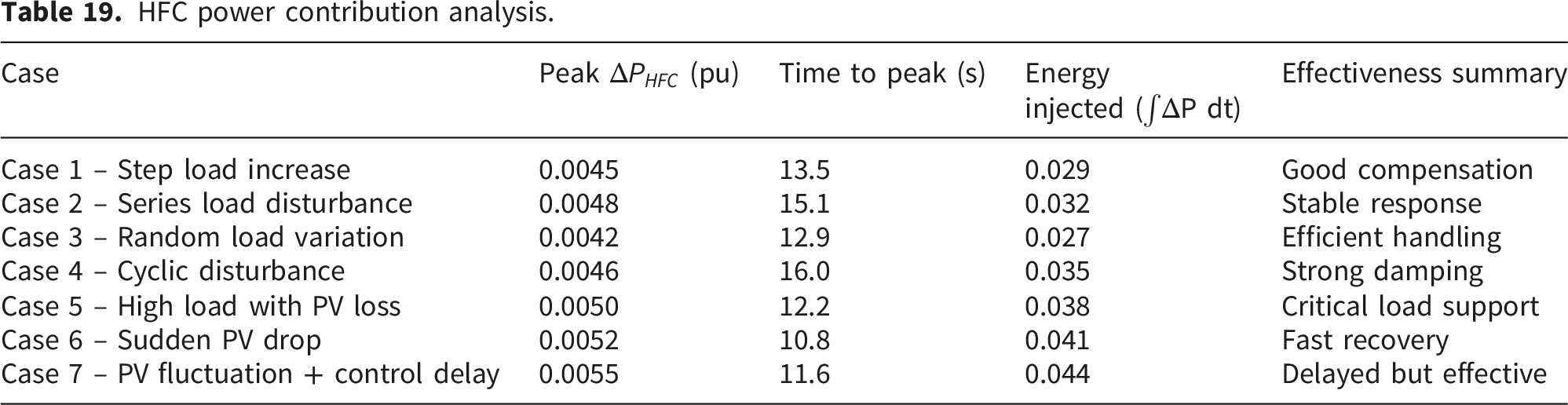
Together, these results establish the proposed HHO-tuned fuzzy fractional controller as a robust and intelligent frequency regulation solution. It not only surpasses classical and prior hybrid methods in performance metrics but also bridges critical research gaps such as limited disturbance coverage, idealized storage assumptions, and neglect of latency effects. By integrating adaptive FLC, fractional-order dynamics, and global optimization, the controller delivers high precision, speed, and resilience. Its practical applicability is further reinforced by the seamless incorporation of HFC support, positioning it as a forward-looking solution for next-generation, renewable-integrated, and delay-prone microgrid environments.
6. Conclusion
In this research, an advanced and intelligent LFC approach has been introduced for isolated microgrids operating with a high share of renewable energy. The proposed method integrates an FLC with a Fractional Order TIλDμ controller, whose parameters are finely adjusted using the HHO algorithm. This combination leads to marked enhancements in control performance, offering improved system stability, flexibility, and rapid responsiveness. Additionally, the integration of an HFC as an actively managed storage element strengthens the microgrid’s capability to handle dynamic power variations. Through extensive testing under seven diverse scenarios—including abrupt load changes, random demand fluctuations, cyclic disturbances, and control delays- the controller consistently outperformed conventional and hybrid alternatives. Its effectiveness in minimizing overshoot, accelerating frequency stabilization, and reducing steady-state error highlights its suitability for modern decentralized energy systems. Thus, the HHO-enhanced fuzzy-fractional control scheme stands out as a reliable, energy-efficient, and delay-resilient solution for frequency regulation in future-ready, renewables-based microgrid infrastructures.
Footnotes
Acknowledgment
The authors extend their appreciation to the Deanship of Research and Graduate Studies at King Khalid University for funding this work through the Large Group Project under grant number (RGP.2/95/47).

Author contributions
Mohamed Tarek Mohamed, I. M. Elzein, Shazly Nasser Fahmy, and Mohamed Metwally Mahmoud: conceptualization, methodology, software, writing – original draft. Ali M. El-Rifaie, Vojtech Blazek, Shazly Nasser Fahmy: writing – review and editing, validation, investigation, resources, data curation, supervision, and resources, formal analysis, project administration, funding acquisition, and visualization.
Funding
The authors extend their appreciation to the Deanship of Research and Graduate Studies at King Khalid University for funding this work through the Large Group Project under grant number (RGP.2/95/47).
Declaration of conflicting interests
The authors declared no potential conflicts of interest with respect to the research, authorship, and/or publication of this article.
Data Availability Statement
All data generated or analyzed during this study are included in this published article.