







Abstract
Trafficking in persons is estimated to affect millions of individuals worldwide. In Thailand, police officers are considered key actors in identifying, responding to, and investigating potential cases of human trafficking. Despite their significant role and national recognition as integral personnel in Thailand's efforts to combat human trafficking in various capacities, we know little about police officers’ perceptions and understanding of this phenomenon. Using survey data, we examine levels of myth endorsement among a sample of 522 Thai police personnel. Results indicate that significant differences exist between certain groups of officers based on individual-level characteristics, with officer status, belief and victim blame, and self-reported training being particularly salient. Generally, police in this study tend to endorse many common human trafficking myths. The implications and directions for future research are discussed.
Human trafficking is an issue that has received increasing attention from the public and government bodies, but there remains a need for empirical research on this topic. The scope of the issue is significant; it is estimated that approximately 50 million people are in situations that amount to modern-day slavery on any given day. The International Labour Organization (ILO), Walk Free, and the International Organization for Migration (IOM) define modern-day slavery as an umbrella term that principally includes the components of forced labor and forced marriage. Both circumstances include situations in which exploitation through threats, violence, abuse of power, deception, or some form of coercion is present. Human trafficking, in its various forms, often aligns with forced labor—impacting an estimated 27.6 million people (International Labour Organization, 2022). While global estimates of the number of individuals in situations of forced labor are staggering, certain geographic areas are particularly prone to conditions that contribute to trafficking in persons. Southeast Asia has long been considered a human trafficking hot spot (Global Slavery Index, 2023). Thailand, specifically, is a major source of transit and a destination country for human trafficking, with an estimated 400,000 victims in the country (Global Slavery Index, 2023; Sorajjakool, 2013). Sociopolitical, contextual, and economic factors contribute to an environment in which not only do certain segments of the Thai population have a propensity to become victims of human trafficking, but migrants are particularly vulnerable to exploitation; cultural barriers, the lack of basic resources and services, and challenges related to social and economic integration contribute to this unique vulnerability (International Labour Organization, 2022). As the issue of trafficking in persons has persisted and become an area of focus for the international community and public officials in Thailand, legislation has been introduced to formally define human trafficking and outline legal punishments for offenders.
The turn of the 21st century marked a critical moment in the effort to combat forced labor and trafficking in persons with passage of the United Nations Protocol to Prevent, Suppress and Punish Trafficking in Persons Especially Women and Children as part of the Convention Against Transnational Organized Crime (United Nations, 2000). This was an initial effort to establish a uniform, international definition of human trafficking. Efforts to conceptualize and combat human trafficking have also occurred within Thailand. Thailand has maintained legislative focus on combating human trafficking. For example, with the passage of the Anti-Trafficking in Persons Act , Thailand imposed more serious penalties for those involved in the perpetration of human trafficking, provided a broader, more encompassing definition of the crime, and increased the resources available to victims (Kingdom of Thailand, 2008). With enactment of this legislation, the definition expanded to cover all forms of trafficking (e.g., labor trafficking, male victims), not solely sexual exploitation. In part, the impetus behind the Anti-Trafficking in Persons Act (2008) was for Thailand to become more aligned with international standards and the United Nations (UN) (2000) Palermo Protocol. Thailand's definition of human trafficking aligns with the UN Protocol, with each defining trafficking as the recruitment, transport, or harboring of persons using force, fraud, or coercion for the purpose of exploitation. With ratification of the UN Palermo Protocol in 2013 and further clarification regarding specific examples of exploitation through a 2017 amendment, Thailand has made an international commitment to addressing human trafficking by moving toward a unified international definition. Currently, human trafficking remains a significant focus for the Royal Thai Police (RTP), government bodies, and non-governmental organizations (NGOs) in Thailand (Royal Thai Government, 2022). Existing research on the role of law enforcement in identifying and investigating potential cases of human trafficking underscores the salience of the individual police officer’s ability to accurately understand human trafficking (Farrell, 2012; Farrell et al., 2019; Gallagher & Holmes, 2008). As police develop more accurate perceptions, a desired outcome is that law enforcement personnel will be better equipped to accurately identify potential victims and provide necessary services through a victim-centered approach (Bales & Lize, 2007; Gallagher & Holmes, 2008).
An area of focus in the human trafficking landscape is the disparity between the estimated number of cases or individuals in conditions that amount to trafficking in persons and the number of cases identified by law enforcement (Farrell, 2014; Farrell & Pfeffer, 2014; Gallagher & Holmes, 2008). There is also a larger scale, general misunderstanding of the realities of human trafficking (Bonilla & Mo, 2019; Jahic & Finckenauer, 2005) to which law enforcement officers are not immune. Specific to police, scholars have attributed law enforcement’s difficulties identifying potential cases of human trafficking to the crime itself being new and evolving (Farrell & Pfeffer, 2014), to the lack of focus—especially at a local level—on the issue, resulting in the insufficient allocation of resources (Farrell et al., 2014), and to a lack of understanding and training among frontline personnel (Farrell, 2014; Gallagher & Holmes, 2008; Newton et al., 2008). In addition, victims perceive that their voices are not heard by police officers in cases of human trafficking (Farrell et al., 2019). Although police and frontline officials have an increased likelihood of encountering potential victims of human trafficking during the course of their routine activities (Farrell et al., 2019; Gallagher & Holmes, 2008), we know relatively little about their individual understanding and perceptions of human trafficking. Because of the nature of human trafficking as a crime that is often hidden in plain sight, victim hesitancy in reporting, and the victim’s lack of awareness that they may be in a circumstance that amounts to human trafficking, police identification of and response to human trafficking is especially critical (Gallagher & Holmes, 2008; Newton et al., 2008).
Although the RTP emphasizes the importance of the police’s role in identifying, responding to, and investigating human trafficking, we are largely unaware of Thai police officers’ perceptions and knowledge of this issue. Most research in this area has been conducted in the United States, with studies generally finding that a lack of understanding to varying degrees is commonplace (Farrell, 2014; Farrell & Pfeffer, 2014; Farrell et al., 2008, 2010, 2014; Gallagher & Holmes, 2008; Newton et al., 2008). Specifically, police officers and other key actors have demonstrated their ineffectiveness in distinguishing between human trafficking and smuggling, differentiating between severe forms of human trafficking, identifying labor and sex trafficking, and knowing the elements of that make up human trafficking (Gallagher & Holmes, 2008; Newton et al., 2008). Studies conducted outside the United States have similarly found a lack of understanding among police officers (Irwin, 2016; Muftić, 2013; Nguyen et al., 2020). It is evident that identifying cases of human trafficking is an arduous task (Farrell et al., 2010), but measures such as training and establishing clear policies have been found to be effective in improving officer understanding (Farrell, 2012; Gallagher & Holmes, 2008). In Thailand, efforts have been made to enhance the capabilities of the police—particularly in improving victim identification and understanding the indicators of human trafficking (Royal Thai Government, 2022). Thai police officers have a central role in the prevention, identification, investigation, and prosecution of human trafficking crimes (Pink, 2013; Royal Thai Government, 2022). This study provides an important cross-sectional examination—using survey data—of police officers’ perceptions of human trafficking in Thailand by specifically examining their adherence to and endorsement of human trafficking myths. We further examine perceptual differences between different subgroups of Thai police. Finally, we examine individual-level characteristics that significantly predict perceptions of human trafficking myths.
Literature review
The landscape of human trafficking in Thailand
Experts have underscored the salience of comprehensive and collaborative approaches to anti-human trafficking (Gallagher & Holmes, 2008; International Labour Organization, 2022; United Nations Office on Drugs and Crime [UNODC], 2022). The early 2000s marked a turning point in the global effort to mitigate human trafficking with the United Nations Convention Against Transnational Organized Crime and the establishment of the Protocol to Prevent, Suppress and Punish Trafficking in Persons, especially Women and Children. It was not until 2013 that Thailand ratified this protocol; prior to ratification, Thailand had instituted the Anti-Trafficking in Persons Act in 2008 to provide a clearer definition of human trafficking, enact harsher penalties for offenders, provide victims with necessary services, and demonstrate an overall increased commitment to anti-trafficking measures (Muangtham, 2016; Ninsri, 2008). The United Nations (2000) recognizes trafficking in persons as: The recruitment, transport, transfer, harboring, or receipt of persons, by means of threat or use of force or other forms of coercion, of abduction, of fraud, of deception, of the abuse of power, or of a position of vulnerability or of the giving or receiving of payments or benefits to achieve the consent of a person having control over another person, for the purpose of exploitation. Exploitation shall include, at a minimum, the exploitation of the prostitution of others or other forms of sexual exploitation, forced labor services, slavery or practices similar to slavery, servitude or the removal of organs. (p. 2)
The scope of the human trafficking landscape in Thailand is notable. The Global Slavery Index (2023), for example, estimates that in 2021 more than 400,00 individuals were living in modern-day slavery. In Thailand, victims of labor trafficking are often, although not exclusively, found in domestic work, agriculture, and the fishing industry (Chan, 2018; Human Rights Watch, 2018; Soraojjakool, 2013; Stephens, 2016). Thailand's economy relies heavily on its tourism industry, but embracing tourism has exacerbated income disparities and resulted in certain segments of the population becoming more prone to trafficking schemes (Raghu, 1997). Specifically, sex tourism is a prevalent issue in Thailand (Blackburn et al., 2010). The forced commercial sexual exploitation of adults and children—although not as significant as labor trafficking in terms of the number of cases—does occur and remains an area of concern and focus for Thai government officials and police (Davy, 2014; Ngamkham & Raksaseri, 2018; Pink, 2013).
The police role
There are significant challenges associated with combating human trafficking. Because human trafficking is considered a “hidden crime,” the police’s role in identifying potential victims can be difficult (Farrell, 2012; Farrell et al., 2019). Compared with human trafficking, certain crimes are more routine and more likely to be reported to the police (e.g., assault, property crime). Human trafficking is more of a hidden crime because victims are less likely to self-report or recognize that their circumstances may amount to trafficking in persons (Farrell et al., 2019). Elements such as coercion, dependency on perpetrators, fear of retaliation, and concern about reporting due to individual status (e.g., undocumented migrant, commercial sex worker) contribute to the hidden nature of human trafficking where more police proactivity may be needed to identify potential victims (Farrell, 2012; Farrell et al., 2019). Victim cooperation, willingness to report, and self-recognition as a victim are other challenges at the nexus of human trafficking and the police’s role in identifying potential victims (Clawson & Dutch, 2008; Farrell et al., 2014; Gallagher & Holmes, 2008). Law enforcement bodies are frontline personnel who have an increased likelihood of encountering situations of human trafficking during the course of their regular duties (e.g., drug raids, domestic calls). Several studies have highlighted the pivotal role of law enforcement as frontline personnel tasked with identifying potential victims of human trafficking, connecting suspected victims with adequate resources, and investigating cases (Farrell, 2014; Farrell et al., 2008, 2015; Newton et al., 2008).
Empirical findings from studies conducted in the United States stress the importance of law enforcement officers in identifying, investigating, and prosecuting human trafficking cases, as well as the challenges associated with these tasks (Farrell et al., 2014; Gallagher & Holmes, 2008). One challenge is the relatively new legal definition of human trafficking (Farrell et al., 2014). Other challenges include avoiding victim blaming while providing adequate resources and encouraging victim participation throughout the investigative process (Cunningham & Cromer, 2016; Menaker & Franklin, 2015; Silver et al., 2015). In addition, officers face challenges in understanding the overall nature of human trafficking as a localized issue (Farrell et al., 2008, 2014). Although challenges exist at the organizational and individual levels, certain measures have shown promise. Targeted training and education have been shown to be useful in enabling police to better understand the realities of human trafficking and how to identify potential victims (Clawson et al., 2006; Gallagher & Holmes, 2008). As Gallagher and Holmes (2008) explain, “In most situations, suspected cases of trafficking will be brought to the attention of frontline officials and not to their specialist colleagues” (p. 326). Frontline officers are likely to encounter cases of human trafficking simply by engaging in their regular duties, and they have the responsibility to be adequately prepared under these circumstances (Farrell et al., 2019; Gallagher & Holmes, 2008). Some scholars have suggested that law enforcement officers are an underutilized resource in detecting human trafficking, emphasizing the need for resources, support, and training for these individuals (Gallagher & Holmes, 2008).
Police perceptions of human trafficking
Numerous challenges affect police officers’ ability to identify and investigate instances of human trafficking accurately and efficiently. First, there is the issue of understanding the nature of human trafficking. Officers in local law enforcement agencies often presume that trafficking is not a localized issue, but rather a problem for federal agencies (Farrell et al., 2008). Police officers may be unclear in their interpretation of the circumstances that constitute human trafficking (Farrell & Pfeffer, 2014; Farrell et al., 2014). Research has found that law enforcement officers can conflate human trafficking and related concepts (e.g., human smuggling). These definitional similarities pose a challenge in identifying potential victims (Newton et al., 2008). Moreover, there is an apparent ambiguity differentiating prostitution and sex trafficking (Farrell et al., 2008, 2014; Gibbs & Strohacker, 2023). It is salient that local police officers develop these skills given their likelihood of encountering individuals in trafficked circumstances (De Baca & Tisi, 2002; Farrell et al., 2008). An incomplete understanding of human trafficking has been shown to negatively impact victims and reduce the effectiveness of law enforcement in their identification (Farrell et al., 2008; Newton et al., 2008).
Among the general population, perceptions about the reality of human trafficking are often shaped by the media's framing and reporting of these crimes. Oftentimes, the focus remains on crimes involving child sexual exploitation, painting an incomplete picture of the human trafficking issue (Bonilla & Mo, 2019; Wilson et al., 2006). From the police perspective, officers can engage in victim blaming due to the victim's perceived complicity (Cunningham & Cromer, 2016; Farrell et al., 2008), and victims may not be perceived as legitimate in situations of co-offending (e.g., prostitution, illegal migration) (Farrell et al., 2014). Trafficked persons tend to be arrested or detained for unlawful activities, often resulting in an unwillingness to cooperate with legal authorities during the reporting process (Gallagher & Holmes, 2008).
A series of recent studies conducted in the state of Pennsylvania have further contributed to our collective understanding of police perceptions of human trafficking by examining the perspectives of police officers and police chiefs using surveys and in-depth interviews (Gibbs & Strohacker, 2023; Gibbs et al., 2023; Reis et al., 2022). Gibbs et al. (2023) examined rural police chiefs’ understanding of human trafficking and found experience to be a significant factor in predicting whether a respondent viewed human trafficking as a local problem. Moreover, qualitative interviews indicated that there was a tendency for interviewees to conflate human trafficking and prostitution. In another study, police officers’ perceptions differed based on tenure and training (Gibbs & Strohacker, 2023). Reis et al. (2022) focused on training and experience as predictive factors, finding them to be significant for certain outcomes. In sum, these studies each underscore the potential salience of training and experience in predicting officers’ perceptions and understanding of human trafficking. The studies also provide evidence demonstrating the tendency of officers to conflate human trafficking with prostitution or sex trafficking (Gibbs & Strohacker, 2023; Reis et al., 2022).
To our knowledge, the current study is the first to explore police officer perceptions of human trafficking in Thailand. There are, however, some examples of research that have examined the issue in other contexts. Using a mixed-methods approach, Nguyen et al. (2020) examined police officers’ abilities to identify sex trafficking victims in Vietnam. Because police officers tend to conflate human trafficking and prostitution, this study sought to examine their ability to distinguish between the two. Most officers in this study were able to recognize international sex trafficking but were mostly unaware of domestic trafficking. In addition, officers exhibited a tendency to stigmatize female sex workers trafficked for prostitution, underscoring the significance of negative attitudes toward sex work in successfully being able to identify trafficking victims. Interviews with officers further suggested the need for a comprehensive approach to training and educating police personnel. Interviewees explained that training was too infrequent, resulting in an inability to adequately respond to the ever-changing nature of human trafficking crimes (Nguyen et al., 2020). In a study examining law enforcement officers’ perceptions of sex trafficking, Muftić (2013) examined the attitudes of border police in Bosnia and Herzegovina. Adherence to prostitution myths, training, and officer sex were found to be salient predictive factors determining an officers’ support of punitive sanctions for trafficking victims. Officers in the sample who adhered to prostitution myths were more likely to be in favor of punitive sanctions for trafficking victims, whereas officers with training were less likely to hold such punitive attitudes toward victims (Muftić, 2013). Using data from state police officers in Australia, Irwin (2016) found that police officers’ ideas of human trafficking were consistent with the legal definition; however, several officers tended to confuse human trafficking with smuggling. Moreover, police officers in this sample were mostly unaware of their specific human trafficking policies and procedures—with the exception of superior officers of higher rank (Irwin, 2016). Collectively, the findings from these studies suggest that law enforcement personnel face various challenges in terms of their understanding of the realities of human trafficking and avoiding myth adherence. Whether the same characterization can be made of police officers in Thailand remains unknown.
Thai police training and education
In Thailand, the Royal Police Cadet Academy (RPCA) serves as the primary institution dedicated to training and producing police officers for the RTP (Cheurprakobkit, 2023; Cheurprakobkit et al., 2000; Khruakham & Cheurprakobkit, 2020). Prospective police officers take part in a 4-year education and training program. Upon completion, graduates become commissioned police officers. To enter the RPCA, candidates must be high school graduates and are required to complete a series of tests including written and physical examinations. Several years ago, the RPCA made headlines worldwide for its decision to ban women from enrolling (Fullerton, 2018). As of 2019, the RPCA began to admit only men, although it continued to allow women to become police officers via other avenues. Much of the training and education at the RPCA can be described as paramilitaristic, but the contemporary RPCA curriculum aims to provide officers with a well-rounded knowledge base and the skills necessary to transition seamlessly into the role of a commissioned RTP officer. RPCA graduates receive a bachelor's degree in public administration; subsequently, graduates become commissioned officers of the RTP. Several studies have relied on samples of Thai police cadets to examine the different types of training and education received (Cheurprakobkit, 2023; Khraukham & Cheurprakobkit, 2020).
During their education and training in the academy, cadets receive instruction on topics like legal and procedural knowledge in policing, ethics, interrogation, and investigations. More recent additions to the curriculum include instruction focused on traffic enforcement, cybercrime, and community policing (Cheurprakobkit, 2023). Cadets even participate in a unique virtual parents training program, where they spend time with a family in a rural area. The program aims to improve public relations and instill in cadets a strong moral character (Cheurprakobkit, 2023). All cadets are educated about human trafficking laws, with the option to take courses in which human trafficking as a subject is more of a focus. The RPCA Police Science faculty have a partnership with the United Nations Office on Drugs and Crime (UNODC) to instruct cadets on human trafficking. Although optional, cadets can learn about the topic through this collaboration, and may also receive education about online child sexual exploitation through a partnership with the Korean National Police University.
The current study
This study adds to the existing literature by examining police perceptions of human trafficking in Thailand—a geographic location where human trafficking is currently a national-level focus. Although trafficking in persons has been identified as a significant issue and area of focus for the RTP, little is known about how police perceive human trafficking and whether they adhere to common human trafficking myths or misconceptions. As frontline personnel, an accurate understanding of the realities of trafficking in persons may have implications for victim identification and the overall quality of the response provided. Given the dynamic status of human trafficking in the region and police officers’ recent role refinement as key actors in identifying potential instances of human trafficking, empirical research centered on understanding individual perceptions is warranted. This study fills an evident gap by examining individual police officer perceptions of human trafficking in Thailand through the collection and analysis of survey data. The primary research questions of interest are:
Methods
Population and sample
Primary data collection occurred over a 2-week period in the spring of 2023. Surveys were administered using two modalities: (a) in-person administration in a group setting; and (b) online. The sample is derived from two primary sources: (a) police cadets currently attending the RPCA; and (b) commissioned police officers within the RTP. Using stratified systematic sampling, surveys were administered to RTP cadets based on their RPCA classification (first year, second year, third year, fourth year). The total number of cadets in the RPCA hovers consistently around 1200 individuals (approximately 300 cadets per classification). Within the RPCA, cadets are distinguished and differentiated based on their year in the institution. These imminent officers, depending on their year within the institution, have differing educational and training experiences. Surveys were administered to cadets in a group setting at the RPCA. 1 On average, the survey took 30 to 45 min to complete. The total number of in-person surveys completed by cadets was 389.
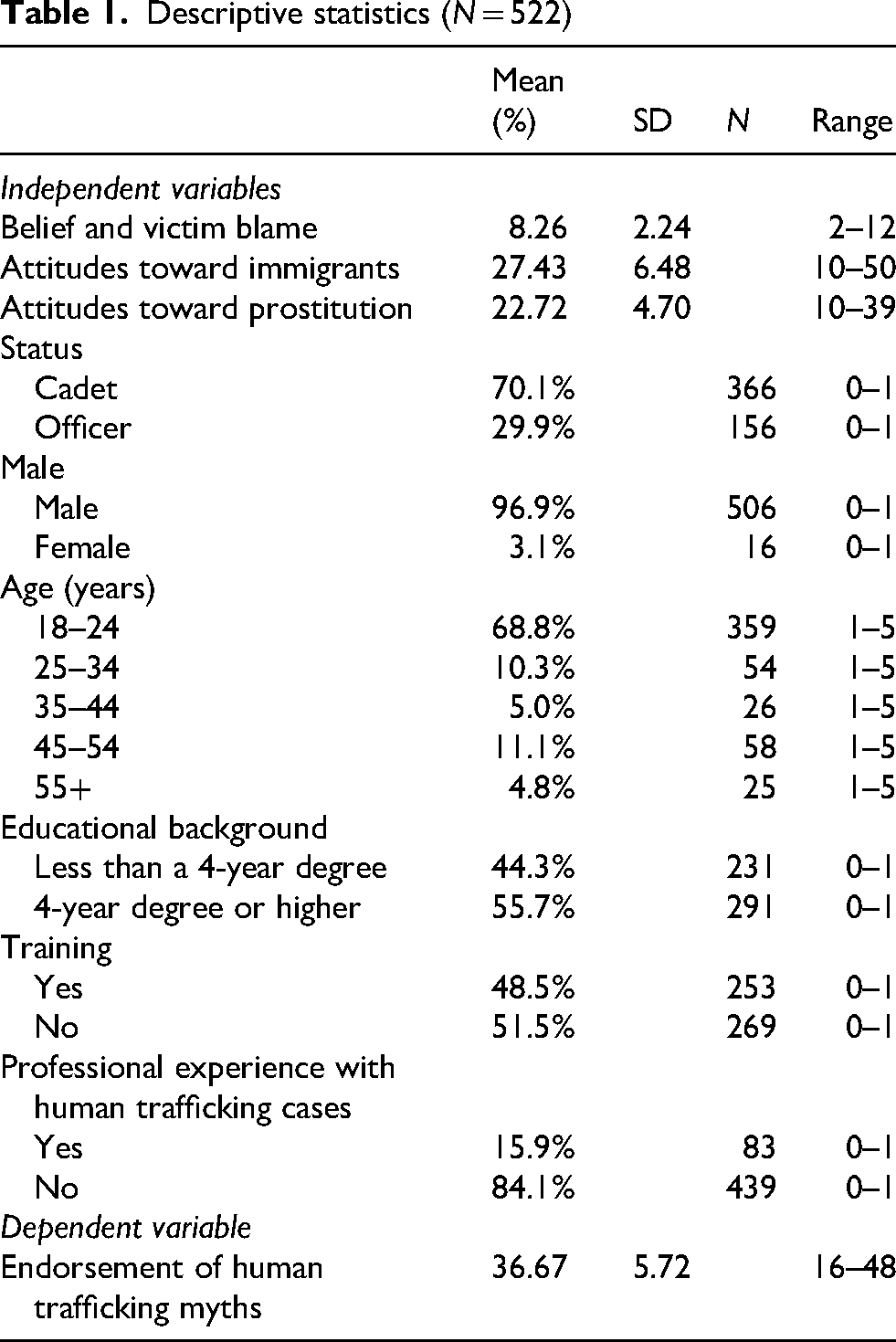
Data were also collected from a sample of currently commissioned officers within the RTP using a similar strategy. Organizationally, RTP officials can be broadly divided into three primary categories: (a) administration; (b) crime prevention and suppression; and (3) crime prevention and suppression support/education/service. The current study sample includes officers in the crime prevention and suppression organizational structure (e.g., Metropolitan Police Bureau, Provincial Police Region 1–9) and randomly selected officers within the crime prevention and suppression support/education/service (e.g., Central Investigation Bureau [CIB], Immigration Bureau, Cyber Crime Investigation Bureau [CCIB]) organizational umbrella. Given their location in Bangkok—the primary data collection site—officers in the Immigration Bureau and CIB responded to the survey using the in-person format. To reach commissioned officers in the various provincial police regions and CCIB, surveys were also made available via an online platform and disseminated to randomly selected officers in these various organizational subunits. In sum, surveys administered to commissioned officers were completed through two modalities: in-person for officers from the CIB and Immigration Bureau because of their centralized location in Bangkok—the primary data collection site; and online for officers from the CCIB, Metropolitan Police Bureau, and provincial regions throughout Thailand. Thirty-eight officers randomly selected from the CIB and the Immigration Bureau completed the in-person survey. The online survey was provided to 130 currently commissioned officers. Of the 130 randomly selected officers who received an invitation to take part in the study, 118 completed the online survey, resulting in a 90.8% response rate. The total number of completed surveys between cadets and officers and in-person/online formats was 545. Given that the number of individual respondents with missing data constituted less than 5% of the overall sample (18 cases), these cases were omitted from the analysis (Mertler & Reinhart, 2016). Five cases were identified as univariate or multivariate outliers and were dropped from the analysis. The final sample in the current analysis comprised 522 police personnel—366 cadets and 156 commissioned officers. The current study sample reflects the population of cadets by drawing from all academic classifications within the RPCA, as well as officers from diverse organizational divisions within the RTP and geographic locations in Thailand. Descriptive statistics for the study population are given in Table 1.
Descriptive statistics (N = 522)
Survey design and translation
The primary purpose of the survey was to empirically examine and better understand Thai police perceptions of human trafficking. In the context of Thailand—and to the authors' knowledge—there have been no empirical examinations of police officers’ and/or cadets’ perceptions of human trafficking. To do this, the survey included several previously validated scales to examine police perceptions. The survey included items to assess theoretically relevant concepts based on prior literature. These include victim blame, belief, attitudes toward prostitution, attitudes toward immigrants, relevant demographic characteristics, training, and professional experience.
The survey was first drafted in English and subsequently translated into Thai prior to administration. The author and primary investigator of this research project collaborated with several Thai police personnel who are fluent in English to ensure an accurate translation of survey items. The translation followed a multistep verification process with multiple translators to ensure accuracy. During the translation process, there were a few instances in which the direct translation was slightly modified to maintain the conceptual integrity and purpose of the survey item. The translators ensured that the survey items conveyed the intent of the item in English. Next, the survey was pre-tested using a sample of Thai police. Pilot testing serves multiple purposes including to establish content validity, to provide an initial evaluation to further improve questions and instructions, and to gain an understanding of how much time should be allotted to complete the survey (Creswell & Creswell, 2018). Eight individuals participated in the pilot testing. Based on feedback from these participants, some additional minor modifications were made for further clarification.
Dependent variable
Endorsement of human trafficking myths
Myths surrounding human trafficking are commonplace and may negatively contribute to the ability of frontline and official personnel to identify potential victims of human trafficking (Cunningham & Cromer, 2016; Gonzalez-Pons et al., 2020; Polaris Project, 2023). Perceptions of human trafficking were examined through a series of items from the Human Trafficking Myths Scale (Cunningham & Cromer, 2016). Eight items comprise this composite measure. 2 Items related primarily to false beliefs about trafficking, victim characteristics, and victim agency. The Human Trafficking Myths Scale uses a Likert-type scale. Participants rated each of the statements on a from 1 to 6, where 1 = definitely false, 2 = mostly false, 3 = probably false, 4 = probably true, 5 = mostly true, and 6 = definitely true. For example, items include “Human trafficking is another term for smuggling,” “Human trafficking must include elements of physical force, restraint, bondage, and/or violence,” and “Human trafficking must involve some form of travel, transportation, or movement across state or national borders.” Higher values indicate a greater level of adherence to and endorsement of human trafficking myths (α = .69).
Independent variables
Belief and victim blame
Belief and victim blame have been found to be relevant in examining individual attitudes toward crimes like prostitution, interpersonal violence, and human trafficking (Cunningham & Cromer, 2016; Franklin & Menaker, 2015; Menaker & Franklin, 2015; Menaker & Miller, 2013; Silver et al., 2015). The current study used a short vignette (Cunningham & Cromer, 2016) to examine belief and victim blame. The scenario is as follows: At 13 years of age, (gender neutral name) ran away from home to get away from an abusive father. Within a couple of days, (name) was befriended by a man who said he would take care of (name). (Name) had sex with him in exchange for shelter, food, and clothing. The man said he would keep (name) safe, but soon he began to make (name) do sexual acts with other people for money.
Attitudes toward immigrants
Given the nature of trafficking in persons in Thailand—including the presence of many non-Thai migrants who are at a relatively increased risk of being victimized—we account for attitudes toward immigrants by including the Negative Attitudes Toward Immigrants Scale (NATIS) (Varela et al., 2013). Considering the migrant status of a potential victim may be a salient determinant for individual perceptions and subsequent responses. This composite measure consists of 10 items. 3 Items include, for example, “Immigrants do not have valid reasons for leaving their native country,” “Immigrants in large groups are dangerous,” and “Immigrants are a threat to national security.” Because the NATIS was developed in the United States, several items reference the United States or “America.” In these instances, the translated survey replaced wording relating to the United States or America with Thailand, Thai, or Thai nationals. For example, one item on the original NATIS reads, “Immigrants’ culture(s) dilutes American culture.” This item, translated to Thai reads, “Immigrants’ culture(s) dilutes Thai culture.” The NATIS uses a 5-point Likert-type scale from 1 to 5, where 1 = completely disagree, 2 = disagree, 3 = neutral, 4 = agree, and 5 = completely agree. Higher total values on this scale suggest more negative attitudes toward immigrants (α = .83).
Attitudes toward prostitution
Prostitution myths have been found to be important in empirical examinations of attitudes toward human trafficking (Cunningham & Cromer, 2016) and in individual justification of the exploitation women and minimizing perceptions of harm (Cotton et al., 2002; Farley et al., 2003). To assess attitudes toward prostitution, this study utilizes the Attitudes Toward Prostitution Scale (ATPS) (Sawyer & Metz, 2009). The ATPS has been demonstrated to have good factor validity with its three subscales, good face and content validity, and adequate internal consistency and reliability (Sawyer & Metz, 2009). 4 The 10-item ATPS uses a Likert-type scale, ranging from 1 to 4, where 1 = strongly disagree, 2 = disagree, 3 = agree, and 4 = strongly agree. The three subscales are (a) social/legal support of prostitution, (b) beliefs about prostitutes, and (c) family values related to prostitution. An individual with higher values, overall, suggests the person is endorsing beliefs that are not consistent with the reality of sex work. Alternatively, an elevated total attitude score suggests that the individual thinks prostitution is acceptable and paying for sex aligns with their values and beliefs (α = .75).
Demographic characteristics
Several survey items were included to capture individual demographics. Respondent age is measured categorically (1 = 18–24, 2 = 25–34, 3 = 35–44, 4 = 45–54, and 5 = 55 or older). Male is a dichotomous variable (0 = female and 1 = male). Education is a dichotomous variable (0 = less than a 4-year degree and 1 = 4-year degree or higher). The respondent's status is also a dichotomous measure (0 = cadet and 1 = officer).
Training
Targeted training and specialized training have been shown to be effective in law enforcement responses to human trafficking (Farrell et al., 2008). To account for whether an individual has participated in any type of training, respondents were asked, “Have you ever received any human/sex trafficking training?” Training is a dichotomized variable, where 0 = no and 1 = yes.
Professional experience with human trafficking
Respondents were asked about their professional experience with trafficking in persons cases. Participants were asked to respond to the statement, “I have dealt with human trafficking in my professional responsibilities.” Professional experience is a dichotomized variable, where 0 = no and 1 = yes.
Analytic strategy
Analysis of the results proceeds in several stages. First, general data trends and descriptive statistics are examined. Overall trends and descriptive statistics of pertinent individual survey items are then discussed. Next, t-tests are used to examine mean group differences for theoretically relevant variables of interest. To examine what factors are most influential in predicting police perceptions of human trafficking myths, multiple linear regression is used to estimate this relationship. SPSS version 29 was the main software used in the analyses.
Preliminary analyses of the data indicated that there were no violations of linearity, normality, or homoscedasticity. Outliers were identified by calculating Mahalanobis distance in a preliminary regression procedure, and cases exceeding the chi-square criteria were dropped from the analysis (Mertler & Reinhart, 2016). Furthermore, tolerance and variance inflation factor values were examined for variables included in the regression analysis using the collinearity diagnostics. The values fall within the acceptable range, suggesting multicollinearity was not an issue.
Results
Several notable findings can be gleaned from examination of the collective responses to individual survey items used to assess human trafficking myth endorsement. First, there is an overall tendency among those sampled to adhere to common human trafficking myths. For example, 60.7% of participants responded that it is “mostly true” or “definitely true” that human trafficking is another term for smuggling. Some 67.8% responded that it is “mostly true” or “definitely true” that elements of physical force such as bondage or restraints must be present for human trafficking to occur. Most individuals surveyed also responded that it is “mostly true” or “definitely true” that people who are trafficked from other countries are always illegal immigrants (60.5%) and that a person who is trafficked will always feel negatively toward the person(s) trafficking them (74.7%). Conversely, respondents expressed more nuanced perceptions when asked whether victims will tell authorities they are being trafficked as soon as they have the opportunity, and that human trafficking must involve some form of travel, transportation, or movement across state or national borders. In sum, most items reflected an overall endorsement of several common human trafficking myths. Figure 1 shows the sample response distribution for individual items of the Human Trafficking Myths Scale.
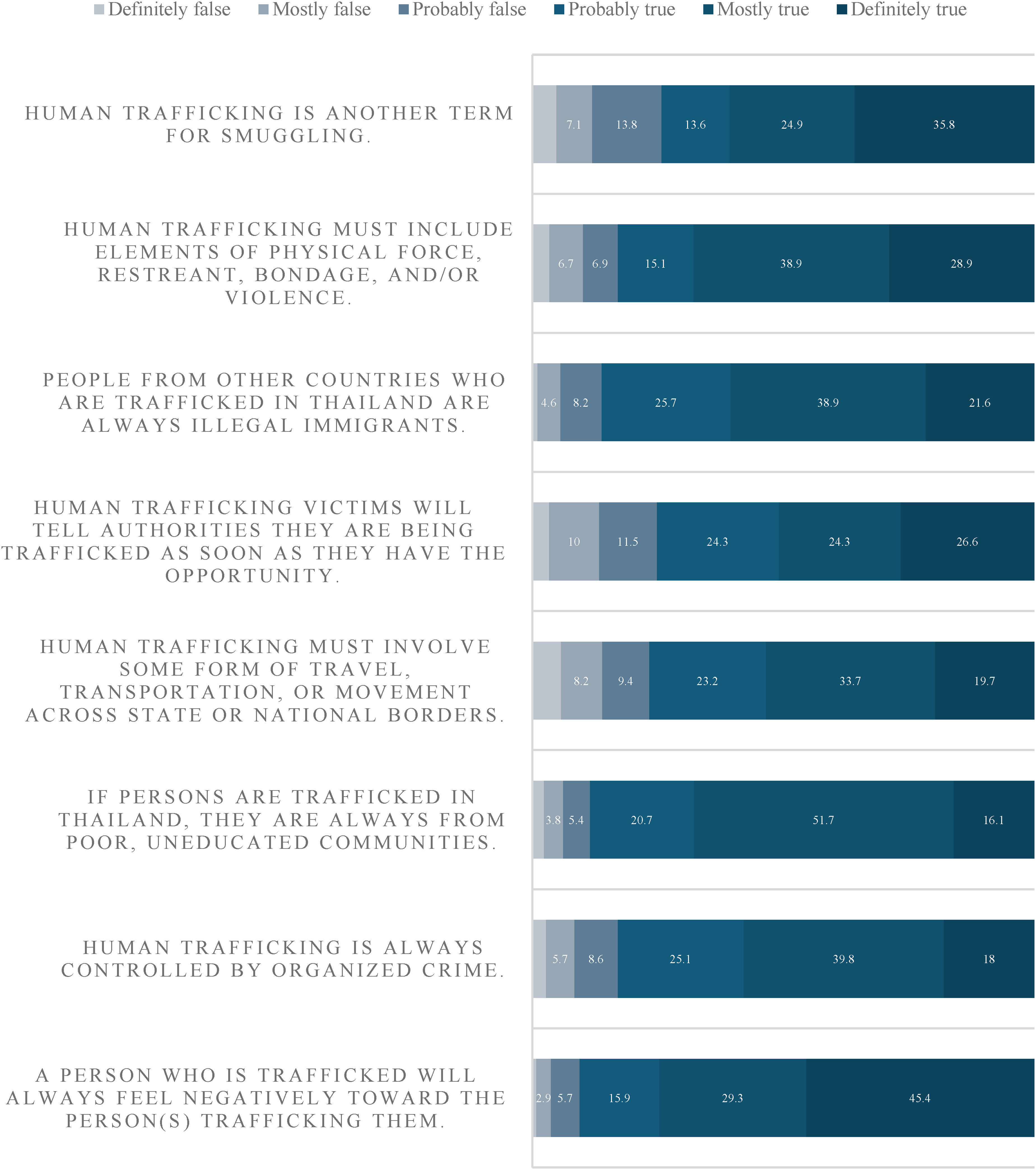
Percentage responses to individual items of the Human Trafficking Myths Scale.
A series of t-tests were conducted to examine perceptual differences between subgroups of police officers. First, there are significant differences in perceptions of human trafficking based the level of education as operationalized in this study [t(509.38) = 4.67, p < .001]. Those with less than a 4-year degree (M = 37.94) had significantly higher values than those with at least a 4-year degree or higher levels of education (M = 35.66). Compared with those with higher education levels, those with lower levels of education were significantly more likely to endorse human trafficking myths. There are significant differences between those who had self-reported having participated in some form of human trafficking training and those who had not [t(520) = 3.68, p < .001]. Compared with those with training, individuals without training (M = 37.55) were significantly more likely to express perceptions consistent with human trafficking myths. Police personnel with training (M = 35.73) had significantly lower values for the endorsement of human trafficking myths composite measure. Officers and cadets similarly had significant differences in their perceptions of human trafficking [t(262.73) = 8.01, p < .001]. Cadets in the sample had significantly higher values (M = 37.96), demonstrating a greater propensity to endorse human trafficking myths compared to their officer counterparts. Officers had significantly lower scores (M = 33.63), suggesting their more accurate and comprehensive understanding. Lastly, those individuals self-reporting professional experience with human trafficking-related responsibilities (M = 34.00) demonstrated significantly lower scores on their endorsement of human trafficking myths—suggesting a more accurate understanding [t(520) = 4.73, p < .001]. The group of respondents with training was significantly less likely to adhere to common human trafficking myths than their counterparts (M = 37.17). These results can be found in Table 2.
Independent samples T-test results
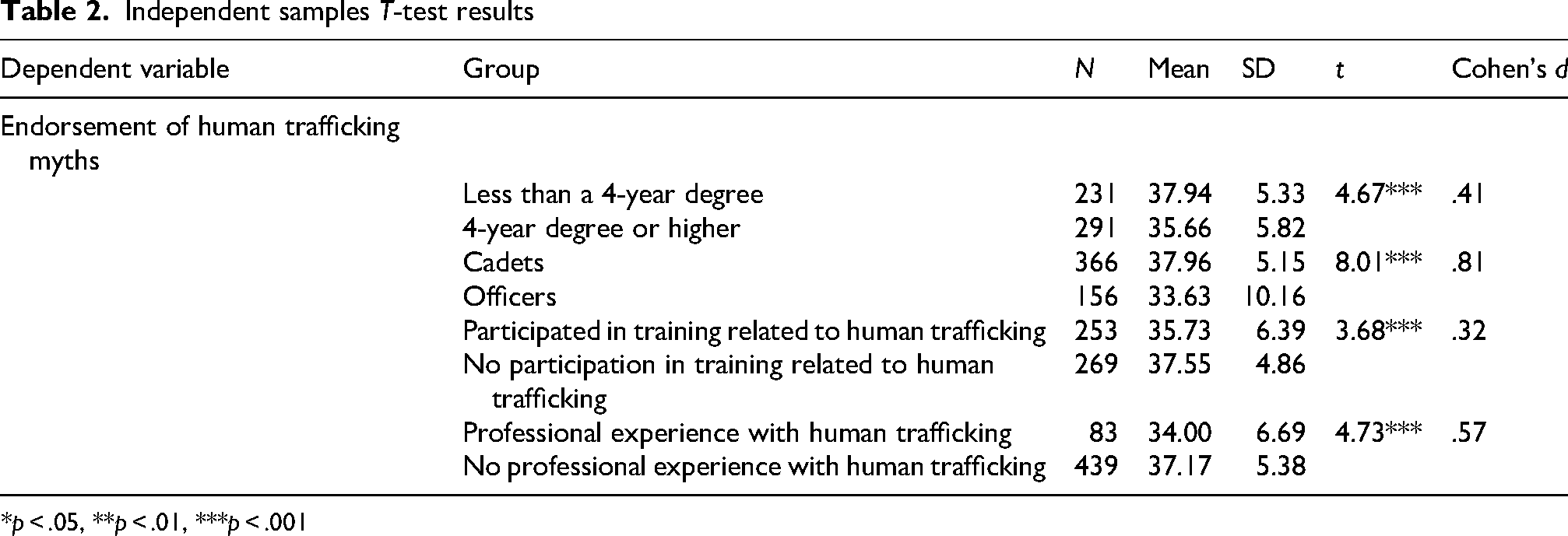
*p < .05, **p < .01, ***p < .001
To examine what factors are most influential in predicting police perceptions of human trafficking, multiple regression was conducted. The model was statistically significant F(12, 509) = 7.67, p < .001, explaining 15.3% of the variance in the outcome variable. The respondent's status (officer or cadet) (β = −.27, b = −3.37, t = −2.15, p < .05), belief and victim blame (β = .13, b = 0.322, t = 2.66, p < .01), and whether the individual received or participated in a human trafficking-related training (β = −.10, b = −1.12, t = −2.23, p < .05), significantly contributed to the model. When compared with cadets, officers in the sample were significantly more likely to have lower values on the outcome variable assessing endorsement of human trafficking myths. These results indicate that officers are less likely to endorse common human trafficking myths and misconceptions. These findings also suggest that as values for belief and victim blame increase, individuals are significantly more likely to endorse human trafficking myths. In other words, higher levels of belief and being less likely to blame a victim of trafficking in persons are associated with higher values on the composite measure for the endorsement of human trafficking myths. Finally, compared with those police personnel in the sample who had not participated in a human trafficking specific training, those who self-reported having participated in training were significantly more likely to have lower values in their endorsement of human trafficking myths, demonstrating a reduced propensity for myth endorsement among trained police personnel. These results are displayed in Table 3.
Multiple regression model for endorsement of human trafficking myths (N = 522).
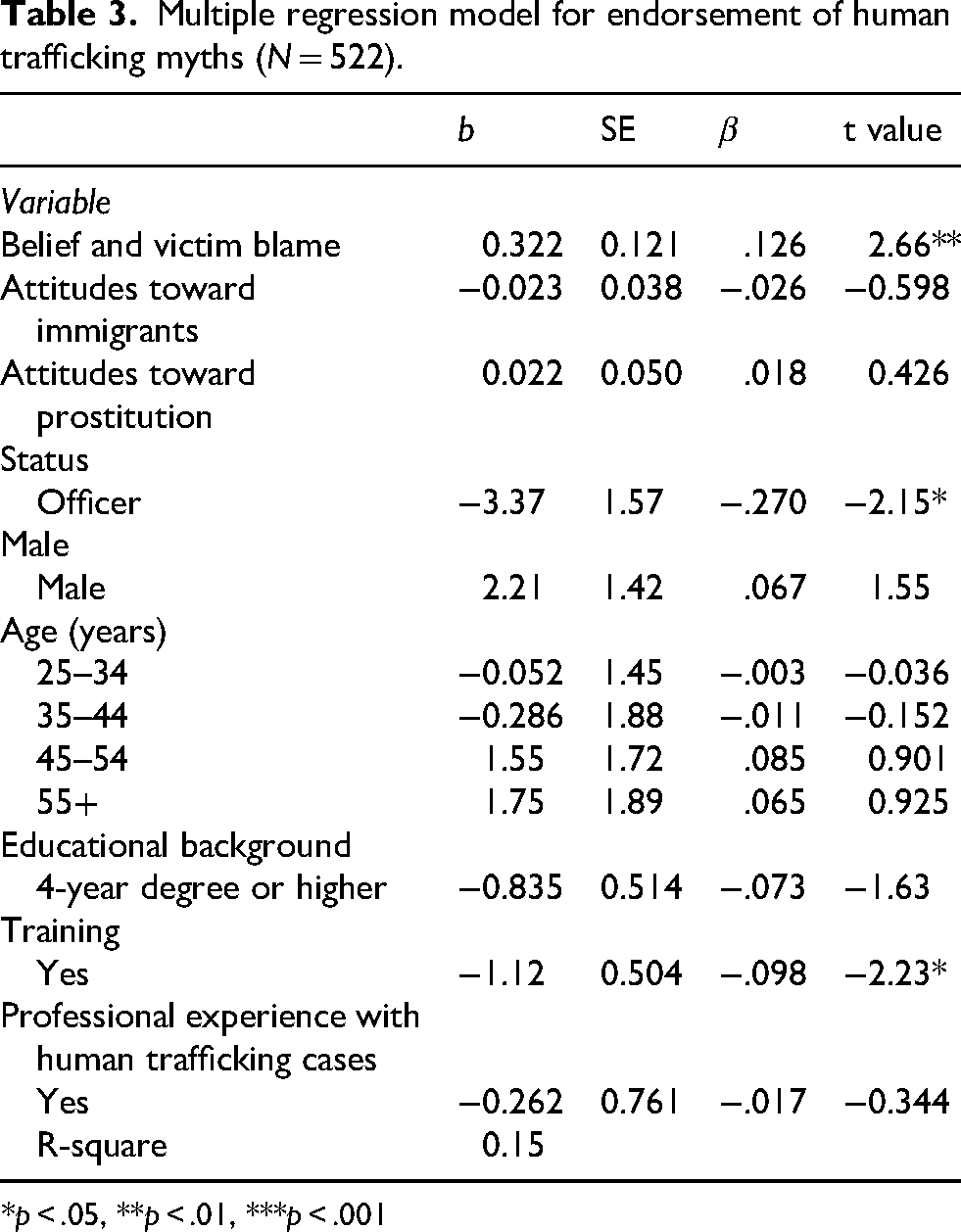
*p < .05, **p < .01, ***p < .001
Discussion
The purpose of this study was to examine the perceptions of human trafficking held by Thai police. Specifically, we examined Thai police officers’ endorsement of common myths and misconceptions surrounding the issue of trafficking in persons. Data were collected from surveys administered to 522 current and imminent police personnel, capturing a comprehensive snapshot of contemporary understanding. The results suggest that RTP personnel, in general, endorse many human trafficking myths. This article makes an important contribution to our understanding of police perceptions toward an increasingly salient, transnational phenomenon that is also an area of focus for Thai police and other stakeholders (e.g., NGOs, Royal Thai Government). A few key findings are discussed here.
First, most police personnel included in the sample tended to endorse common human trafficking myths and misconceptions. Although there is limited evidence assessing public perceptions and understanding of human trafficking specifically in the context of Thailand, these findings are consistent with research in other cultural contexts, demonstrating the public's inaccurate understanding of trafficking in persons (Bonilla & Mo, 2019; Polaris Project, 2023). Police, who are not immune to the prevalence of human trafficking myths present within broader society, can be susceptible to the influence of myths and misconceptions as portrayed in the media and perpetuated in other social interactions. Empirical evidence from the United States and other countries similarly suggests that police perceptions are more aligned with common myths and misconceptions (e.g., conflating human trafficking with smuggling, unawareness of the basic definitional elements of human trafficking, an inability to identify labor or sex trafficking) (Gibbs et al., 2023; Irwin, 2016; Muftić, 2013; Newton et al., 2008; Nguyen et al., 2020). These results demonstrate that RTP personnel do adhere to several myths, suggesting the possible need for an increased focus on the education and training that officers receive in the identification and processing of suspected victims. Indeed, Thai officials have outlined the important role of frontline personnel (police officers) in identifying potential instances of human trafficking; as such, a basic, individual-level understanding of the realities of this phenomenon is necessary to improve police identification and referral practices. For example, misunderstanding the substantive difference between human trafficking and smuggling, perceiving that human trafficking requires elements such as physical force and bondage, and viewing movement across state or national borders as a condition of trafficking in persons are possible impediments to police succeeding in their role as frontline personnel. Alternatively, knowledge of key human trafficking indicators and intervention based on a victim-centered approach have shown promise in improving practice (Bales & Lize, 2007; Farrell, 2012; Farrell et al., 2008; Winterdyk & Sundberg, 2009).
Second, there are several group-level differences in study participants’ perceptions of human trafficking myths. Most notably, this study finds significant differences between cadets and officers, between those who self-reported having participated in human trafficking training and those who have not received any training, and between those who have professional experience encountering human trafficking and those who do not. Compared with cadets, officers demonstrated a more accurate understanding of human trafficking. Prior research examining differences between these two groups has similarly found distinctions in attitudes and perceptions (Boivin et al., 2020; Garner, 2005). As cadets move into their roles as commissioned officers, they are exposed to new organizational and occupational cultures, receive additional training, and gain personal experience on the job—collectively, these factors have been attributed to attitudinal and perceptual differences (Bennet, 1984; Haar, 2001; Van Maanen, 1975). In addition, training has been identified as a primary focus for improving police officer identification of and responses to human trafficking (Farrell, 2012; Farrell et al., 2008; Gallagher & Holmes, 2008). Those who self-reported having participated in training did not endorse human trafficking myths to the degree that those without training did. Although there was a statistically significant difference between those who self-reported having engaged in human trafficking-related training, the difference was not substantial. Overall, police personnel in this sample tended to endorse common human trafficking myths; however, those with training were slightly less inclined to endorse common myths and misconceptions. This study is an important initial step to empirically evaluate police perceptions of human trafficking in Thailand, but future research should explore factors such as the training content, how the training is administered, who provides the training, and the duration or recency of the training. Professional experience also differentiated respondents in their perceptions of human trafficking, with those having not dealt with human trafficking cases being significantly more likely to endorse human trafficking myths. In part, this finding points to the potential relevance of learning through doing as officers with experience appear better equipped to confront human trafficking from an informed perspective.
Lastly, the regression analyses revealed several statistically significant factors predicting the outcome variable. Existing research underscores the salience of an individual's levels of belief and victim blame when examining attitudes toward specific criminal offenses (e.g., human trafficking, prostitution, interpersonal violence) (Cunningham & Cromer, 2016; Franklin & Menaker, 2015; Menaker & Miller, 2013; Silver et al., 2015). The finding that higher levels of belief and being less likely to victim blame were significantly and positively related to respondents’ endorsement of human trafficking myths was somewhat unexpected. In the current sample, because respondents are more likely to believe and less likely to blame victims, they were also more likely to endorse human trafficking myths. There are a few possible explanations that may help explain these findings. RTP respondents in the sample who were more likely to believe and less likely to blame victims may be more empathetic and compassionate, and such a stance could cause them to be more receptive to any human trafficking-related information, including myths. Relatedly, those with higher levels of belief and those who are less likely to victim blame might have increased exposure to accurate information and myths surrounding trafficking in persons. Such exposure could result in an increased likelihood of encountering and endorsing myths. Moreover, cognitive dissonance may exist—given the complex nature of human trafficking and prevalence of contradictory information—in which police in the sample who believe and support victims at greater levels may also endorse myths to reconcile the multifaceted realities of human trafficking.
An individual's status, whether an officer or cadet, was also a significant predictor. Compared with cadets, RTP officers were significantly less likely to endorse human trafficking myths. Indeed, there are notable differences between these groups. In addition to the variables controlled for in the model, younger cadets may be more likely to be exposed to news and misinformation related to human trafficking because they have greater reliance on technology and social media as a news source (Fletcher & Nielsen, 2018; Olson et al., 2011). Future studies may consider measuring individual exposure to human trafficking in news and social media. Although professional experience with human trafficking did not significantly predict endorsement of human trafficking myths, whether police participated in human trafficking-related training did. This finding is consistent with extant literature demonstrating the importance of effective training in improving police attitudes and understanding of human trafficking among frontline personnel (Farrell, 2012; Farrell et al., 2008; Gibbs & Strohacker, 2023; Gibbs et al., 2023; Reis et al., 2022; Wilson et al., 2006). Those who self-reported having participated in a targeted training were significantly less likely to endorse human trafficking myths.
Implications, limitations, and directions for future research
These findings point to several implications for RTP personnel and police leadership. Related to the findings and discussion around the directionality of belief/victim blame, additional targeted workshops or continued professional training may be necessary for both cadets prior to entering into their commissioned officer roles and for currently commissioned officers. Increasing understanding of the realities and nature of human trafficking among frontline personnel (police officers) has shown promise in producing positive outcomes such as becoming better able to recognize a potential victim of human trafficking (Clawson & Dutch, 2008; Clawson et al., 2006; Farrell, 2012). As the endorsement of human trafficking myths is common among police personnel in the current sample, a meaningful way forward may be continued emphasis on hands-on, scenario-based training—which RTP officials have invested in (Royal Thai Government, 2022). Thai police are important actors in identifying, reporting, and investigating potential cases of human trafficking within their recently established National Referral Mechanism (Royal Thai Government, 2022). Because of the nature of human trafficking as more localized than is often perceived (Farrell et al., 2008, 2014), and despite the existence of specialized units within the RTP dedicated to combating human trafficking, police at all levels and in various provincial jurisdictions stand to benefit from training and messaging affirming the phenomenon as one that requires localized attention (Farrell, 2012).
Educational workshops and scenario-based trainings, such as those conducted in collaboration with IOM Thailand or UNODC, may produce positive effects (Avenell, 2008; Farrell, 2012; Smith, 2010). Continued training and educational efforts should be centered on imparting accurate information about the realities of human trafficking and assessing training effectiveness for actual cases of human trafficking. Incorporating training workshops at early intervention stages (e.g., while attending the RPCA) may also yield positive results. Subsequently, trained police officers may respond in a manner more aligned with trauma-informed care, thereby reducing the likelihood of revictimization. Trauma-informed care in relation to police involvement with human trafficking can include recognizing signs of human trafficking and altering responses to avoid re-traumatizing victims, avoiding judgment or blame, creating a safe environment for victims, prioritizing the victim's needs, connecting victims with needed resources, and enhancing collaborative partnerships with victim service providers (Farrell et al., 2019). Police play a key part in the immediate identification and needs assessment process for potential victims of human trafficking, but specific training outlining how best to engage in these processes to meet short- and long-term needs are likely needed. Thailand should maintain its focus on trauma-informed care approaches and training provided to officers in collaboration with NGOs (Royal Thai Government, 2022). These findings raise several important questions that merit further attention from researchers. For example, how consistent is the training provided? Are officers assessed pre- and post-training to examine understanding? What is included in the training curriculum? These questions may help guide future research on training effectiveness in relation to police identification of and responses to human trafficking.
The current study is not without limitations. To the authors’ knowledge, this is one of the first studies to explore police perceptions of human trafficking in Thailand, but the results do not reveal the ability of officers to identify potential cases of human trafficking in practice. Although attitudes and perceptions are a salient starting point of empirical inquiry, future research should explore RTP officers’ efficacy in the field. The differing modalities of survey distribution allowed us to systematically sample police personnel from various organizational umbrellas; however, possible differences could exist between online and in-person responses that may be masked by officer status because no cadets completed the survey online. One concern might be the social desirability factor or honesty with online respondents feeling greater anonymity. Conversely, the in-person surveys had advantages such as higher response rates, the ability to control the environment, and the capability to provide the informed consent and study purpose orally. These findings highlight the potential utility of training in differentiating respondents who are less likely to endorse human trafficking myths from those who generally endorse myths. Empirical evaluations of trainings are necessary to determine the effectiveness of such measures, and future studies may more precisely pinpoint the effectiveness of training by examining the recency of training. Limitations may also exist related to the survey items and measures utilized in this study. Although previously validated in other cultural contexts, this study was a first attempt at exploring human trafficking myth endorsement among Thai police. Future research may also consider refining the measures for select demographic characteristics (e.g., officer status, age) to better account for potential variation among respondents. Relatedly, the professional experience with human trafficking variable may be refined to more specifically assess individual experience with human trafficking, whether more direct (e.g., investigated, made an arrest, received a report) or indirect (e.g., observed a case, filed paperwork). Furthermore, qualitative data collected from interviews with police leadership may reveal important nuances not captured through the survey data analyzed here. A final limitation worth noting relates to the generalizability of these findings to the specific context of Thailand.
By examining Thai police perceptions of human trafficking and levels of myth endorsement, this study makes a unique contribution to the extant literature focused on the nexus of law enforcement personnel and trafficking in persons. Human trafficking, including law enforcement's role in combating this crime, continues to receive significant attention from international organizations, national leaders, and local authorities (Farrell, 2012; Farrell et al., 2015; UNODC, 2022). These findings suggest that, given RTP's general endorsement of common myths, the police role in prevention, identification, response, and investigation processes may be an area where continued efforts toward improvement should be directed. In Thailand, police officers’ perceptions and understanding of human trafficking—specifically, their levels of myth endorsement—may be malleable if presented accurate information. As police personnel develop more accurate perceptions of human trafficking through exposure to valid information, we may expect improved practices and outcomes.
Footnotes

Ethical considerations
This study received ethical approval from the Sam Houston State University IRB (IRB-2022-279) on September 15, 2022.
Funding
The authors received no financial support for the research, authorship, and/or publication of this article.
Declaration of conflicting interests
The authors declared no potential conflicts of interest with respect to the research, authorship, and/or publication of this article.
Notes
Author biographies
Appendix
Human Trafficking Myths Scale Items
Negative Attitude Toward Immigrants Scale (NATIS) Items
Attitudes Toward Prostitution Scale (ATPS) Items