






Abstract
The current study aimed to investigate the mediating role of self-regulation between dark triad traits and workplace bullying victimization among Punjab Police personnel in Pakistan. A cross-sectional correlational research design was used. Data were collected using a purposive sampling technique. Standardized tools – the Dark Triad scale, Negative Acts Questionnaire-Revised and Self-Regulation Scale– were utilized in this research. The total sample size was N = 200. Results showed that the dark triad traits – Machiavellianism, narcissism and psychopathy – had a significant negative relationship with self-regulation. The dark triad also showed a significant positive relationship with workplace bullying and its subscales, including person-related bullying, work-related bullying and physical intimidation. Results also revealed a significant negative correlation between self-regulation and workplace bullying, including its subscales. Furthermore, self-regulation partially mediates the relationship between the dark triad and workplace bullying victimization. Notably, the prevalence of dark triad and workplace bullying victimization is more pronounced among male police personnel, whereas self-regulation is more prevalent among female police personnel. Addressing these dynamics through targeted interventions could foster healthier workplace environments and reduce instances of bullying and victimization.
There is widespread belief that the police force carries a lot of responsibility in a society, and dealing with criminals and overcoming everyday obstacles are unquestionably admirable endeavours (Haleem et al., 2024). The police system often cultivates a cautious and conservative outlook due to its foundational role in maintaining law and order within society. This perspective is shaped by constant exposure to potential threats, criminal behaviour and societal unrest, which reinforce a risk-averse mindset (Skinner, 2024; Walters, 2024). Being a police officer is widely regarded as a tough and demanding job, and the responsibility of dealing with criminals and facing daily dangers is admirable. However, in today's society, the role of the police often leads to conflict, exposing both the positive and negative aspects of the police force. This tension highlights the complexities of law enforcement, in which acts of bravery and service co-exist with moments of controversy and criticism (Perez-Floriano & Gonzalez, 2019). Many studies have examined the mindset of police officers. Some suggest that the structure of the police system cultivates a cautious and conservative outlook, whereas others propose that individuals with specific personality traits are naturally drawn to law enforcement. Institutional culture and individual traits interplay with these views and influence the attitude and conduct of members of the police force (Paoline et al., 2021).
The stressful conditions under which the police have to work, the authority of the state that police officers represent, and the frequent need to intervene in conflict situations all demand that police officers should have certain personal attributes that allow them to work efficiently under pressure. However, together with these positive attributes, some darker psychological traits might also be present that tend to affect officer behaviour and decision-making, and can lead to serious consequences.
Paulhus and Williams (2002) proposed the notion of the dark triad to refer to three social maladaptive personality traits, namely Machiavellianism, narcissism and psychopathy, that are related in that individuals with these traits tend to promote themselves, and are emotionally cold, duplicitous and aggressive. When present in people in power, e.g. law enforcement officers, these characteristics can have crucial consequences. Machiavellianism is marked by deceitful conduct and self-interest, narcissism by an exaggerated sense of self-worth and admiration seeking, and psychopathy by a lack of planning and forethought, cold-heartedness and unrepentant selfishness. Although some of these characteristics may provide temporary benefits, including strategic thinking or confidence, their dark side, including a lack of ethical consideration and interpersonal manipulation, may be problematic, particularly in high-stress professions such as policing. Indeed, it has been demonstrated that people high in dark triad traits tend to become disconnected from moral and ethical norms, which allows them to commit unethical acts and rationalize and justify them (Espinosa & Clemente, 2021; Maftei & Holman, 2022).
Bullying, also commonly known as peer bullying, is aggression that involves the physical and/or psychological maltreatment or abuse of one person or group of people by another (Barros, 2024). This form of aggression may occur in different settings and have different forms either in a face-to-face situation or in an online community. It can involve direct aggression, threats or verbal abuse, making it a pervasive issue (Sorrentino et al., 2019). Workplace bullying is becoming an established term, posing challenges for both organizations seeking to address the issues of bullying at work and victims, who may not know how to describe their situation.
Gale et al. (2019) proposed that the concept of harassment in the workplace undergo the same process as the idea of sexual harassment in the 1980s and 1990s. Harassment is defined as behaviour that has the effect of humiliating, intimidating or coercing someone through personal attack (Shah et al., 2024). To prevent sexual harassment, the development of laws and regulations was accompanied by a struggle to define the term, and it took many years before agreement on the concept was reached. Workplace bullying can compromise an individual's self-regulation, because persistent exposure to hostile behaviours can erode emotional control and impede the ability to effectively manage one's reactions and responses in professional settings (Giorgi et al., 2016). Studies investigating the relationship between these traits and bullying victimization across various contexts suggest that the observed positive relationship may stem from the fact that some individuals who exhibit dark traits may also be victims or may become victims after engaging in bullying behaviour (Fanti & Kimonis, 2012; Linton & Power, 2013). The given relationship can also be explained by the adverse characteristics of the perpetrators of bullying, since they do not usually see the effects of victimization in the same way (Pineda et al., 2022).
Workplace bullying is a sophisticated phenomenon, and it depends on an array of individual and situational variables, one of which is gender. Research has suggested that the way in which bullying is evaluated may have a huge impact on its reporting and conceptualization. There is varied evidence of gender disparity in victimization in the workplace (Lauritsen & Heimer, 2008). Studies indicate that some members of the minority gender in an organization are possibly more vulnerable to victimization (Flores et al., 2020). With the police force being predominantly composed of men, female officers may feel more vulnerable in certain departments (Rabe-Hemp & Schuck, 2007), although gender representation varies across different units.
Self-regulation explains how an individual learns to establish when to commence, when to sustain and when to end goal-directed actions using internal and external signs (Mayo et al., 2025). It is also considered as self-generated considerations, approaches and activities that are concerned with accomplishing individual purposes (Zimmerman, 2008). According to social cognitive theory, the four components – goal setting, self-observation, self-judgement and self-reflection – collectively form the phenomenon of self-regulation (Goetz et al., 2013). Self-regulation refers to an individual’s ability to restrain and inhibit instincts, focus attention and temper emotions (Javed et al., 2022; McClelland et al., 2018).
Our research aimed to examine the connections among the dark triad (narcissism, psychopathy, and Machiavellianism), victimization of workplace bullying and the mediating association of self-regulation among the Pakistani Punjab Police officers. Identification of the role of personality traits in workplace bullying victimization and how self-regulation might reduce the consequences of bullying is necessary because law enforcement is a stressful occupation and the police force is hierarchical. Researchers have often portrayed police personnel as perpetrators of workplace bullying. However, work also suggests that police organizations themselves may experience significant levels of workplace bullying internally by seniors (Lynch, 2002). The sample in the current study included employees of Punjab Police in managerial or supervisory positions. These people can be subject to particular types of workplace bullying because of their prominence, power and accountability (Ariza-Montes et al., 2014). Their role could also impact on their perception, experience and reporting of bullying. In an attempt to enhance workforce performance, welfare and working conditions, the findings of this study might help to provide valuable knowledge regarding the psychological processes occurring within law enforcement agencies.
Methods
A cross-sectional correlational research design along with non-probability purposive sampling was used to collect the data. Participants included police officers of various ranks, including inspectors, sub-inspectors and assistant sub-inspectors, each fulfilling different roles based on their experience and rank. Inspectors and sub-inspectors primarily serve in supervisory roles, whereas assistant sub-inspectors typically act as field officers, supporting sub-inspectors. Data were collected by physically visiting multiple police stations and distributing survey forms. Initially, the survey was distributed to 276 personnel, of whom 223 responded; 53 employees did not complete the survey. After data screening, 200 (n = 60 inspectors, n = 65 sub-inspectors, and n = 75 assistant sub-inspectors) responses were obtained for analysis. Of the respondents, 65% were male and 35% were female. After obtaining approval from the ethics review committee, the researcher approached various police stations to collect data. Survey forms and informed consent forms were distributed to the officers. Ethical standards outlined by the American Psychological Association were strictly followed, including assurances of confidentiality and the right for participants to withdraw from the study at any time. The sample size was selected according to the guidelines of Cohen (1988), namely five or seven cases per predictor variable. The following measures were used: the Dark Triad scale, Negative Acts Questionnaire-Revised (NAQ-R) and Self-Regulation Scale.
Dark Triad Scale
The Dark Triad scale developed by Jones and Paulhus (2010) and translated by Gul-e-Seher and Fatima (2016) was used to measure the dark triad personality traits of narcissism, Machiavellianism and psychopathy among police personnel. This shorter version of the Self-Report Questionnaire comprises 27 items and has three subscales: narcissism, Machiavellianism and psychopathy. It was a five-point Likert scale and the score ranged from strongly disagree to strongly agree. The internal consistency of the Dark Triad scale was Cronbach's alpha = .87; for the subscales Cronbach's alpha = .77 (narcissism), Cronbach's alpha = .78 (Machiavellianism) and Cronbach's alpha = .80 psychopathy.
Negative Acts Questionnaire-Revised
The NAQ-R developed by Eniarsen et al. (2009) was adapted and translated for the current study to measure perceived exposure to bullying and victimization at work among police personnel. It has 22 items with 3 subscales: person-related bullying, work-related bullying and physical intimidation behaviours. Response categories in the NAQ-R range from 1 to 5: 1, never; 2, now and then; 3, monthly; 4, weekly; and 5, daily. The internal consistency of NAQ-R was Cronbach's alpha = .92, for the subscales Cronbach's alpha = .88 (personal bullying), Cronbach's alpha = .85 (work-related bullying) and Cronbach's alpha = .89 (physical intimidation behaviours).
Self-Regulation Scale
The Self-Regulation Scale developed by Schwarzer et al. (1999) was used to measure the degree of self-regulation among Punjab Police personnel. The scale comprised of 10 items answered on a four-point Likert scale, ranging from not at all true (1) to exactly true (4). The internal consistency of Self-Regulation Scale was .76.
Results
Table 1 demonstrate significantly high alpha reliability coefficients for the dark triad (.89), workplace bullying (.80) and self-regulation (.95).
Alpha Reliabilities for the Dark Triad, Workplace Bullying, and Self-Regulation (N = 200)

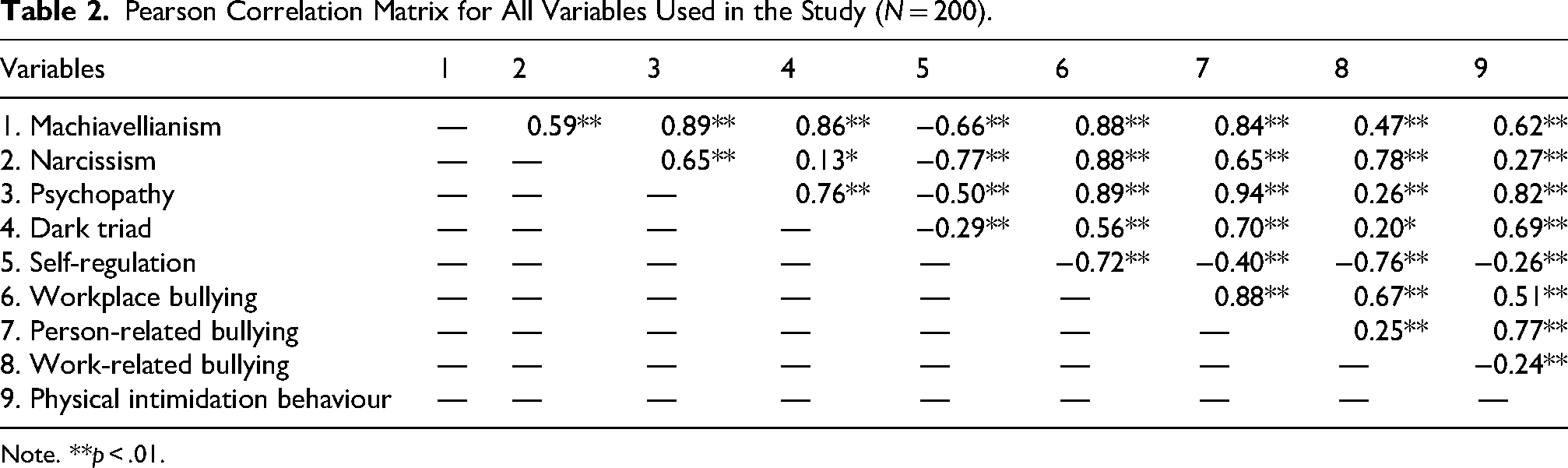
Table 2 illustrates the relationships between variables in the study, with the dark triad – Machiavellianism, narcissism and psychopathy – demonstrating a significant negative relationship with self-regulation. This suggests that individuals with manipulative, self-centred or impulsive traits may struggle to effectively manage their thoughts, emotions and behaviours in their professional roles. The dark triad also showed a significant positive relationship with workplace bullying and its subscales, including person-related bullying, work-related bullying and physical intimidation behaviour. This suggests that individuals with the dark triad not only engage in bullying, but may also experience bullying victimization. Individuals with the dark triad may experience workplace bullying despite often being perpetrators. Their manipulative and antagonistic behaviour can provoke retaliation, social exclusion or power struggles, making them vulnerable to victimization. Results also revealed a significant negative correlation between self-regulation and workplace bullying, including its subscales. This suggests that individuals with lower self-regulation are more vulnerable to workplace bullying victimization.
Pearson Correlation Matrix for All Variables Used in the Study (N = 200).
Note. **p < .01.
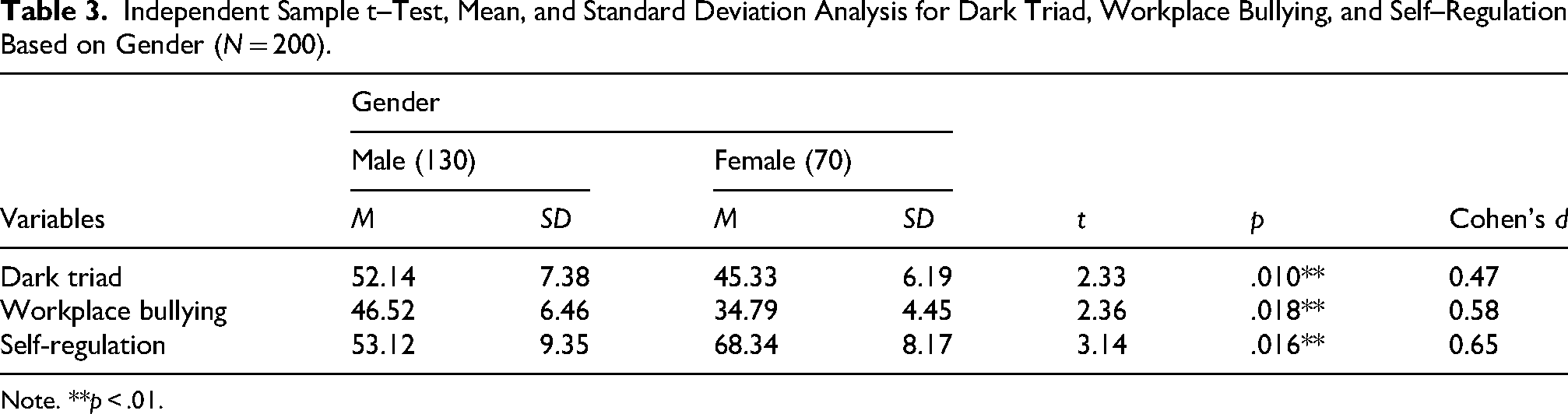
Table 3 provides means and standard deviations for the dark triad, workplace bullying and self-regulation based on gender among police personnel. Results revealed that dark triad traits and workplace bullying were found more often in male police personnel, whereas self-regulation was found more often in female police personnel.
Independent Sample t–Test, Mean, and Standard Deviation Analysis for Dark Triad, Workplace Bullying, and Self–Regulation Based on Gender (N = 200).
Note. **p < .01.
Mediation Analysis
Figure 1 shows the indirect effect of self-regulation between Machiavellianism and workplace bullying victimization among Punjab Police personnel. The regression weight for Machiavellianism subsequently reduced from model 1 to model 2; i.e., from 0.88 to 0.74 with a ΔR2 value of 0.03, F(2,297) = 658.78, p < .001, but remained significant, confirming that self-regulation partially mediates the correlation between Machiavellianism and workplace bullying.
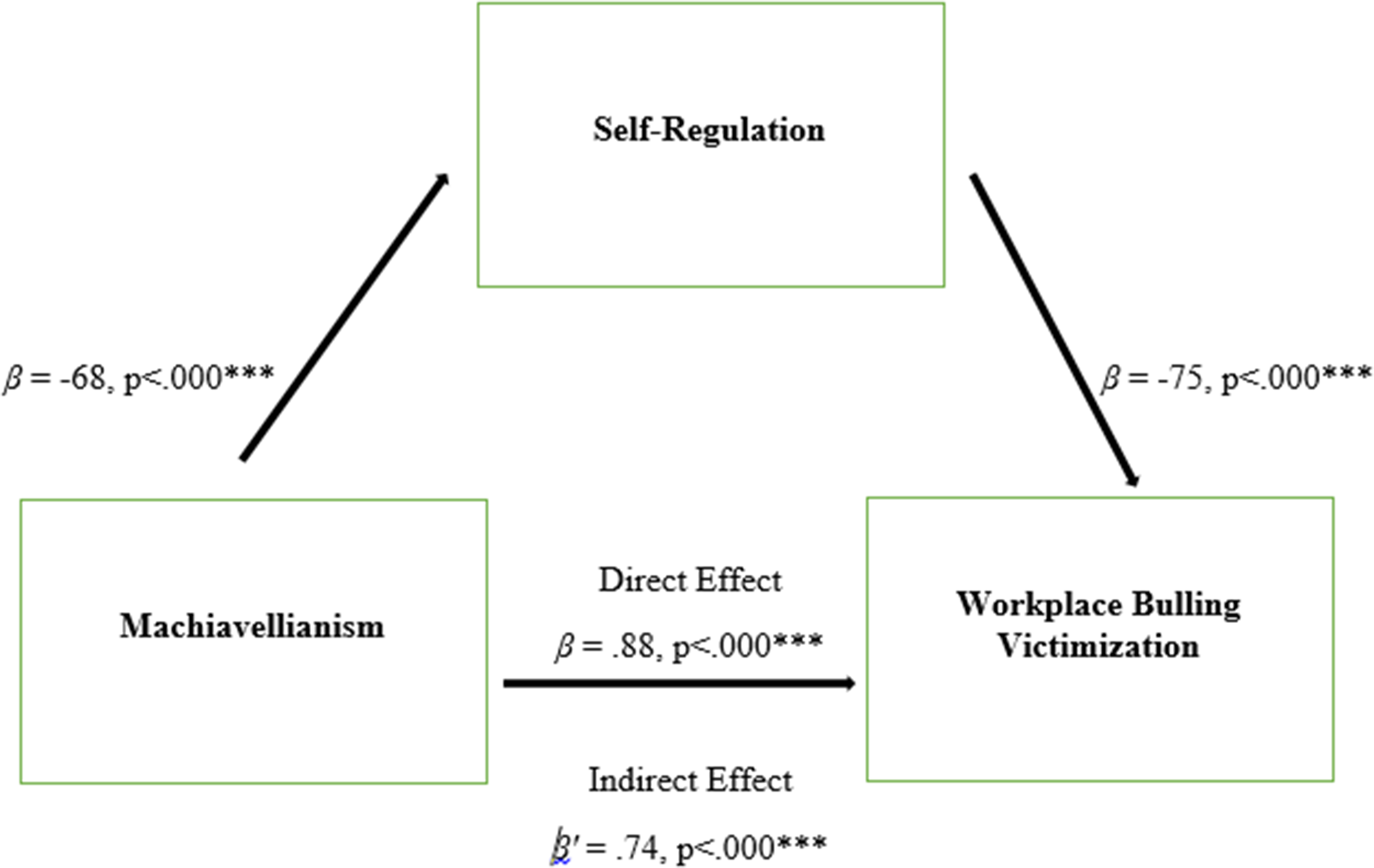
Indirect effect of self-regulation between Machiavellianism and workplace bullying.
Figure 2 shows the indirect effect of self-regulation between narcissism and workplace bullying victimization among Punjab Police personnel. The regression weight for narcissism subsequently reduced from model 1 to model 2; i.e., from 0.85 to 0.80 with a ΔR2 value of 0.05, F(2,297) = 547.63, p < .01, but remained significant, confirming that self-regulation partially mediates the correlation between narcissism and workplace bullying.
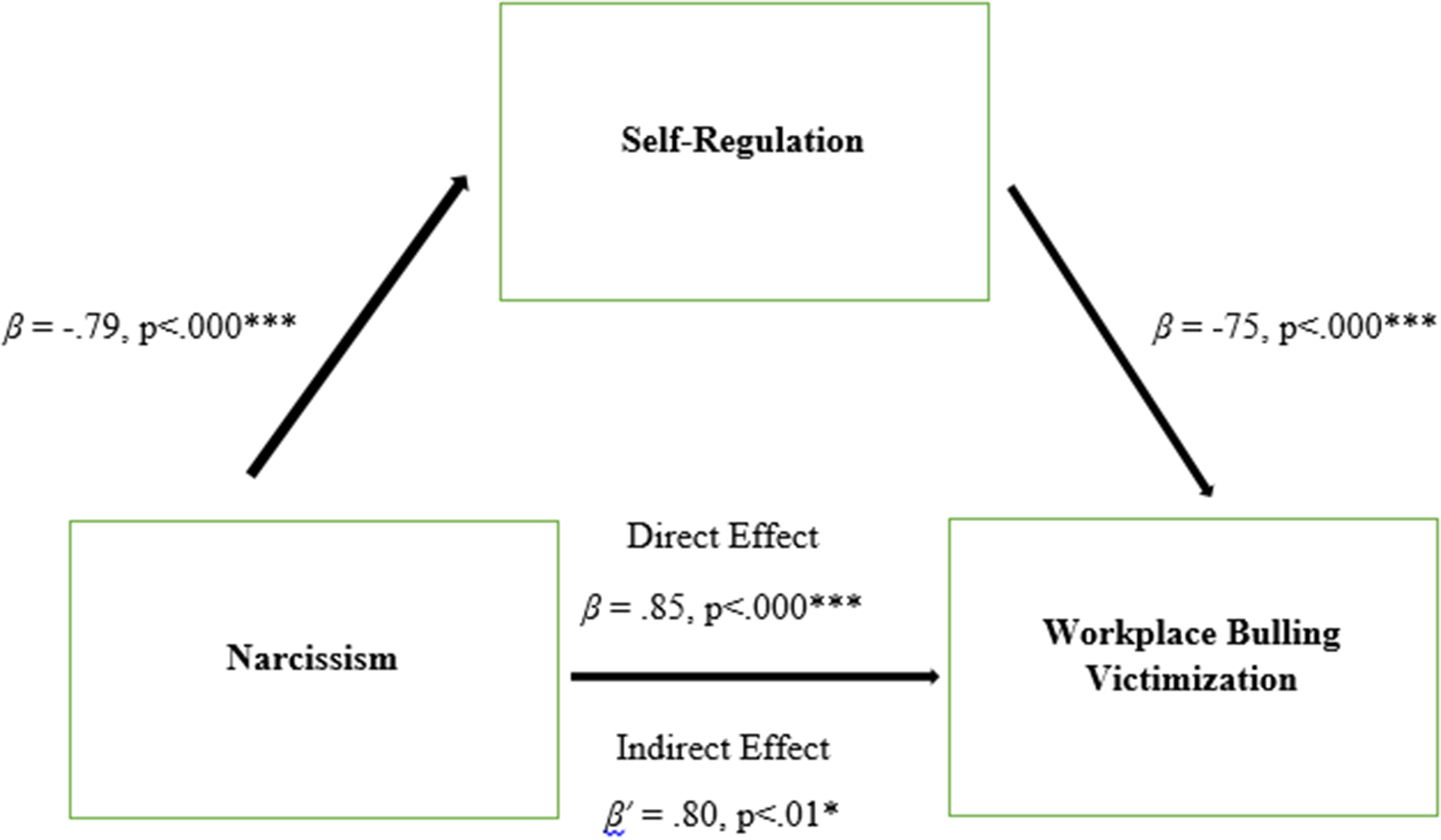
Indirect effect of self-regulation between narcissism and workplace bullying.
Figure 3 shows the indirect effect of self-regulation between psychopathy and workplace bullying among Punjab Police personnel. The regression weight for psychopathy subsequently reduced from model 1 to model 2; i.e., from 0.89 to 0.36 with a ΔR2 value of 0.09, F(2,297) = 1251.71, p < .001, but remained significant, confirming that self-regulation partially mediates the correlation between psychopathy and workplace bullying.
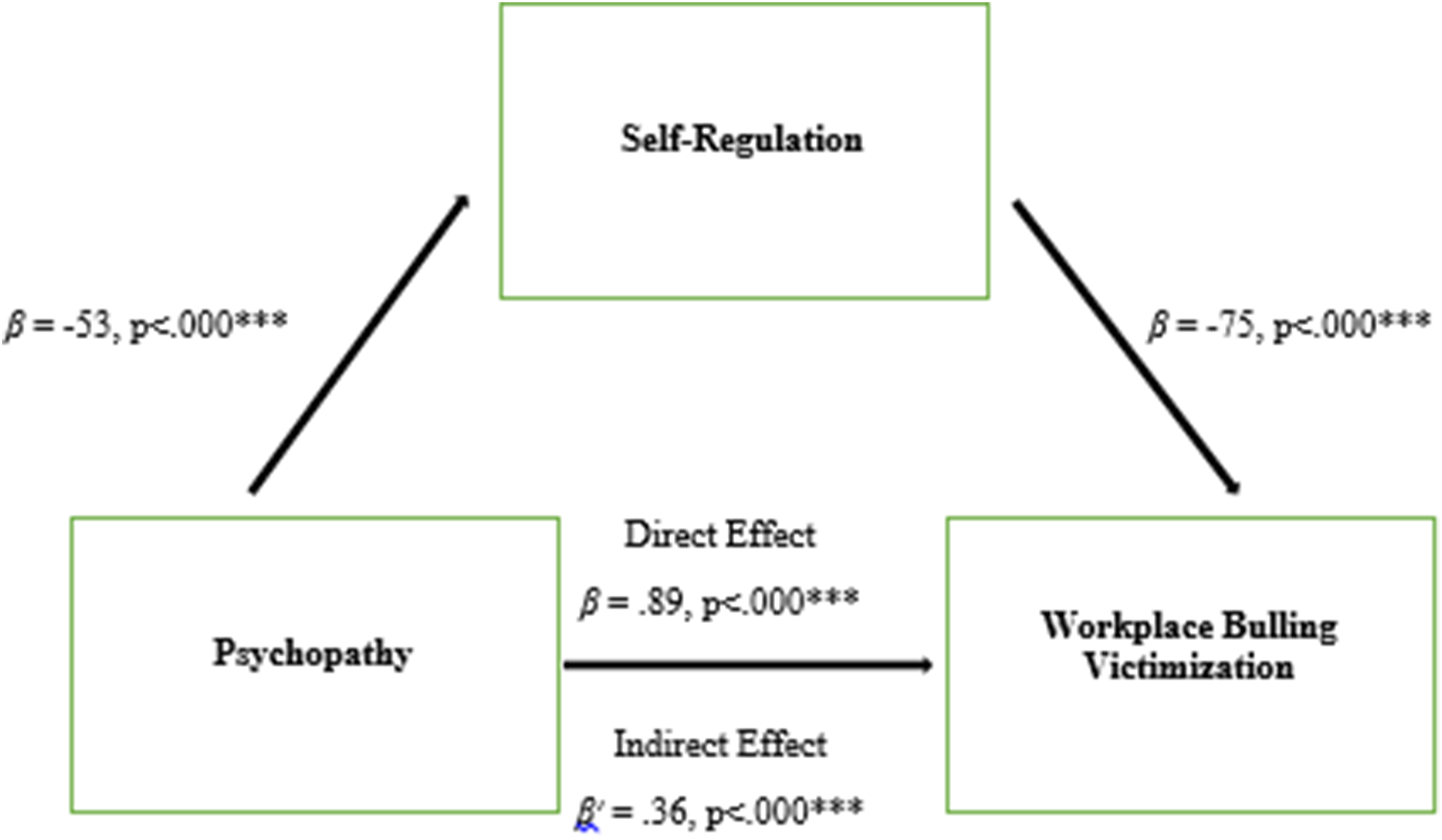
Indirect effect of self-regulation between psychopathy and workplace bullying.
Discussion
A police officer's role is to maintain law and order in the community by protecting the public and their property, preventing crimes, reducing fear of crime and improving overall quality of life. This study focused on police personnel in Punjab, Pakistan, to examine the relationship between the dark triad, workplace bullying victimization and self-regulation. The hypothesis posited a significant positive relationship between the dark triad and workplace bullying victimization, and a negative relationship between the dark triad and self-regulation. The study's findings shed important light on the connections between workplace bullying, the dark triad and self-regulation among Punjab Police officers. The correlation matrix further reveals key dynamics in the police force by highlighting significant relationships between these variables.
First, the substantial association shown between psychopathy and Machiavellianism supports earlier findings that these three dark triad traits are interconnected. This implies that people who have one of these features are more likely to display traits linked to the other. The findings are aligned with the literature (Smith, 2024). According to Paulhus and Williams (2002), the dark triad traits share the same characteristics, including social antagonism, self-enhancement, emotional detachment and a tendency towards aggression.
Second, the results showed that the dark triad were significantly negatively correlated with self-regulation. Employees with high levels of Machiavellianism tend to feel a greater sense of injustice when their exceptional performance is not recognized by superiors. This perceived rejection demands more self-regulation resources for them to process, making them more prone to experiencing self-regulation difficulties and engaging in moral disengagement (Baumeister et al., 2005; Marcus & Schuler, 2004). Narcissistic self-regulation is maladaptive owing to difficulties in mentalization, emotional dysregulation, automatic reactions and a tendency to make inappropriate adjustments in response to feedback (Bothma, 2023).
Lastly, psychopathy is also associated with reduced self-regulation, because individuals with this personality construct typically exhibit impaired empathy and remorse, along with traits such as boldness, disinhibition and egocentrism, all of which likely contribute to diminished self-regulatory capacity (Strauman, 2017).
Our results also showed a significant positive correlation between the dark triad and all subtypes of workplace bullying victimization, although the literature has shown that a higher level of dark triad traits is associated with being a bully. However, the results of the current study regarding the relationships between dark tetrad traits and various bullying factors, including victimization, reveal findings that may be explained by the fact that some bullies can also be victims, and vice versa, highlighting overlap between the roles of bully and victim in certain cases. Falla et al. (2022) suggests that cognitive restructuring and moral disengagement in bullying victims may contribute to their adoption of aggressive behaviours. These people can be taught to perceive aggression as a successful tactic, and this can make them bullies themselves. Also, they can distort the meaning of their being victimized, thinking that aggression is appropriate conduct. Another study revealed that bullying victimization has also been connected to narcissism (Jang et al., 2023). Otherwise, studies that have considered these traits separately have reported positive correlations between a high level of psychopathy or narcissism and the status of the victim of bullying (Antoniadou et al., 2019; Backe & Dankvardt, 2018; Despoti et al., 2021).
The outcome of the mediation analysis shows that self-regulation partly mediates the connection between dark triad traits and victimization to workplace bullying. This implies that self-regulation moderates the relationship between the dark triad and bullying experiences, particularly with respect to both bullying perpetration and victimization. The dark triad is a concept that includes three personality traits – Machiavellianism, narcissism and psychopathy – that have some common features such as social antagonism, self-enhancement, emotional detachment and aggression. People with these characteristics tend to be involved in different types of bullying behaviour such as open aggression and manipulation, at the same time, such people can also become victims of bullying behaviour because they have less control over their emotions. Self-regulation means having the capacity to control one’s thoughts, feelings and actions, and people with high capacity of self-regulation are in better position to deal with interpersonal disagreements. Individuals with dark triad traits, however, are not good at self-regulation and this may cause emotional dysregulation, careless actions and antagonize others. The result of partial mediation suggests that self-regulation explains some connections between the dark triad and victimization to workplace bullying (Antoniadou et al., 2019; Backe & Dankvardt, 2018; Baumeister et al., 2005; Bothma, 2023; Despoti et al., 2021; Marcus & Schuler, 2004; Strauman, 2017).
Remarkably, the results also indicate gender differences in the dark triad traits, bullying victimization and self-control among the Punjab Police employees. Specifically, male police officers exhibited more workplace bullying victimization and dark triad traits, and female police officers exhibited improved levels of self-regulation. One of the possible factors related to this gender gap could be attributed to the organizational culture of police force and/or cultural norms and expectations about gender roles and behaviours. The results for gender differences are in line with past studies (Ozturk, 2021; Rosander et al., 2020). Previous research indicates that men tend to self-identify as victims of workplace bullying more than women. This does not mean that bullying is experienced more by men. Instead, it could be related to differences in perception, reporting style or self-labelling tendencies. Men and women may, for example, interpret negative behaviours in the workplace differently or differ in their willingness to self-identify as “victims”. Rosander et al. (2020) argued that gender differences with regard to perceived victimization can, at times, be moderated by how individuals cognitively interpret and define the experience of bullying. Therefore, it can be suggested that the gender differences found in the current study could be attributed to differences in the patterns of reporting, rather than actual differences with regard to the prevalence of victimization.
Conclusion
Most research has concentrated on examining the “dark” personalities of bullies, often overlooking the potential presence of these traits in their victims. Understanding the characteristics of both bullies and victims is crucial for developing more targeted intervention programmes and preventive strategies that address the personality factors contributing to both bullying and victimization.
Limitations and Future Directions
This study has yielded valuable insights; however, it is important to acknowledge a few limitations. First, the cross-sectional design of the study complicates the determination of causal relationships among the observed associations. Longitudinal studies could be beneficial in exploring the temporal links between variables. Future research could enhance understanding by incorporating diverse data collection methods, such as behavioural assessments or observer ratings.
Replication studies involving a variety of samples from different organizational and cultural backgrounds would be useful in validating the strength of the associations identified. By recognizing the factors that contribute to these behaviours, organizations can develop training programmes and targeted interventions to create a more respectful and supportive workplace for all employees.
Footnotes

Funding
The authors received no financial support for the research, authorship, and/or publication of this article.
Declaration of Conflicting Interests
The authors declared no potential conflicts of interest with respect to the research, authorship, and/or publication of this article.