







Abstract
Although we know how and why players cheat in videogames released on consoles or via PC, we know less about perceptions and practices surrounding cheating in social networks games. Such games offer players a style of gameplay—often without an ending and with a free-to-play model—that is quite different from other types of games. In addition, new audiences and demographics are being exposed to this type of games and are playing them. How do players decided what is fair and unfair in such games? How do they cheat? This study begins the process of answering those questions by examining how the definition of cheating and its practices have evolved with the rise in popularity of Facebook games. The answers indicate that players often dismiss the seriousness of social network games, and thus cheating was either not needed or not a part of gameplay expectations.
Keywords
Introduction
What does it mean to cheat in Farmville? Is it any different from using a cheat code in Smash Brothers or buying gold to advance in World of Warcraft? Although we know how and why players cheat in more traditional videogames such as those released on consoles or via PC, we know less about perceptions and practices surrounding cheating in games like Gardens of Time and CityVille 2. Such games offer players a style of gameplay—often without an ending, with a free-to-play (F2P) model, and that is also metered via energy to limit activities—that is quite different from other types of games. In addition, the rise of games on platforms such as Facebook has meant that new audiences and demographics are being exposed to games and are playing them—individuals who may not have extensive experience with other types of videogames. How do such players decided what is fair and unfair in such games? How do they cheat? These are questions that have yet to be investigated in the realm of social network games. This study begins the process of answering those questions by examining how the definition of cheating and its practices have evolved with the rise in popularity of social network games on sites such as Facebook.
Cheating in videogames
Early work exploring how players define and enact cheating practices found that there is often great diversity in how individuals define cheating on a personal basis. Although the majority of players feel that cheating is anything that gives a player an unfair advantage, beyond that there is little consensus (Consalvo, 2007). For example, for some players, cheating can be consulting a guide or walkthrough for a game, or even asking a friend or family member for help. For others, such elements are not considered that serious, but hacking the code of a game or employing cheat codes would be thought of as cheating. For a final group of players, cheating must involve other players—one cannot cheat in a single player game—one must actively work to gain advantage (via various means) against others (Consalvo, 2007).
Just as there are multiple definitions for cheating, there are many reasons why players cheat. By far the most prevalent reason that players cheat is because they become stuck in some part of the game—either a game is too difficult, it is buggy, directions are unclear, or they have little interest in multiple attempts to solve a puzzle; and so players will employ some form of cheat (looking up an answer in a frequently asked questions (FAQ), using a code to get past a certain level) to move past the troublesome part of the game. Another reason players cheat is to play god—sometimes players want access to all elements of a game immediately, without ‘earning’ them via sequential play. Players often justify this type of cheating, often stating they have already completed the game and thus cheating is okay, as they have successfully completed the game’s challenges on their own.
A third reason players cheat is to fast-forward through events, levels or situations they find boring or not to their liking. A common example would be gold buying in massively multiplayer online games (MMOGs), where players do not wish to endlessly grind in order to gain the gold required for some particular item. In this instance players distinguish between interesting and uninteresting parts of a game, and have decided that they would rather skip the uninteresting parts, via various methods. Finally, players can cheat to gain advantage over other players. Players might hack a game to give themselves access to more powerful weapons or the game’s code in order to win more easily, to level up more quickly or to gain access to greater in-game wealth. Here, players may also enjoy annoying or upsetting other players in the process, but the chief concern is to gain advantage not against the game—but compared to other players (Consalvo, 2007).
Other researchers studying cheating in videogames have noted similar findings. In their studies of the tween-targeted web-based game Whyville, researchers Kafai and Fields found that players were quite active in creating sites with answers to the game’s many science-based puzzles, and that such transgressive practices actually demonstrate that players ‘are invested in Whyville, in promoting others’ success on Whyville, and in displaying their knowledge of Whyville’ (2009: 18). In such cases, Kafai and Fields argue that cheating ‘becomes a part of learning’ (p. 18). Looking more closely at the types of cheats created by players, Fields and Kafai also found that the creation of cheats and cheat sites indicated there was ‘a social and creative value in cheats that goes beyond purely logistic motives’ (2010: 83) and further that ‘creating or posting the cheats also positions players as knowledgeable participants of the Whyville community’ (p. 18).
Studying online cheating more broadly, Duh and Chen (2009) created a taxonomy of 15 common cheating methods, including collusion, compromising passwords, exploiting bugs, social engineering and other factors, although they did not test to see which were the most popular or agreed upon forms of cheating. Dumitrica takes the study of online cheating further, investigating how cheating occurs in the game NeoPets (2011). She finds that the four types of play where cheating occurs include ‘using an autobuyer, exploiting a physical limitation deriving from the software, using a hidden cheat code, and relying on an optimal strategy’ (p. 26). All methods are employed to accumulate more in-game wealth and that ultimately cheating ‘can be interpreted as a widespread culture, encouraged by and embedded in the structure of the world itself’ (p. 33) where this wealth ‘opens new ways of experiencing the world’ (p. 33). Dumitrica concludes that cheating becomes a way to demonstrate that the player is dedicated to the game, and a way to achieve greater wealth within it at the same time (2011).
Researchers have also studied the negative consequences of cheating in online communities. Blackburn et al. (2012) studied cheaters in Valve’s Steam Community to determine how embedded such individuals were in social and interactive networks, and what penalties accrued to those labeled as cheaters. Cheating on Steam is heavily policed, with Valve employing its proprietary Valve Anti-Cheat (VAC) service that ‘detects players who cheat and marks their profiles with a publicly visible, permanent VAC ban’ (p. 83). Blackburn et al.’s study found that cheaters are mostly undistinguishable from non-cheaters, but that ‘cheaters end up having more cheater friends than the non-cheaters have’ (p. 89) and ‘cheaters lose friends over time compared to non-cheaters, an indication that there is a social penalty involved with cheating’ (p. 89). They conclude that those who do not cheat ‘have a vested interest in maintaining the quality of the shared social space’ and will work to separate themselves from those who they can see have been caught cheating.
Although social network games are relatively new, we have begun to see studies that question what cheating in such games might encompass. In 2010, Nazir et al. investigated the use of phantom user profiles, used specifically ‘in order to achieve a strategic advantage within social games’ (p. 1). They argue that many social network games push players to accumulate large numbers of ‘friends’ as part of the game, and that some players create phantom profiles in order to gain advantage. However, their central concern is in creating software programs that can detect such phantom profiles, rather than helping us understand how players employ such profiles, and how they impact gameplay over time and across multiple players.
Other work on social network games suggests that the goals and rewards of such games can be quite different from traditional, console-based games, and thus there might be differences in types of and approaches to cheating. For example, Consalvo found that in the majority of popular social network games, players had two central means of advancement: reliance on player networks and/or the purchasing of virtual currency (2011). To advance players can fast-forward through unappealing content or time requirements imposed by the game through purchasing advancements that otherwise require help from other players or simply waiting. Thus, in such games players who wish to fast-forward through content can do so legally, rather than resort to cheating. In addition, such games are often simplistic enough that getting stuck is largely eliminated as a problem, so cheating to get past such barriers is also greatly reduced.
To sum up, although cheating in online game environments continues to occur, the advent of social network games has created new types of play environments that eliminate certain situations where players might feel compelled to cheat. Yet we still need to better understand how or why players might cheat in such games, and if their definition of what it means to cheat in a game has changed as the games themselves have changed.
Methods
The purpose of our study then was to see how beliefs and definitions relative to cheating might have changed with the rise in popularity of social network games. This paper is based on responses to an online survey. Participants were recruited via Facebook and Twitter, following the snowball method, through different calls on game forums and thanks to a story about the study posted on Gamezebo.com.
The online survey consisted of 48 questions. The survey offered both closed-ended and open-ended spaces for respondents to express themselves. It also included questions regarding participants’ demographic information and game preferences. Participants were asked about their perceptions of cheating in social network games as well as about their interaction with their family members in these games (as part of a related study). It included questions about how players enact different strategies to advance gameplay in social network games (such as creating different Facebook accounts, purchasing currency, logging into someone else’s account, using external software, etc.) can be considering cheating, about the type of cheating-related practices users engage in and about the differences between cheating in a social network game compared with doing so via more traditional PC-based or console-based gameplay.
Our survey was designed to answer the following research questions:
How do players define cheating in social network games?
What cheating-related practices do players engage in while playing social network games?
How is cheating in social network games conceptualized differently by players, compared to cheating in more traditional console- and PC-based games?
Demographics and play preferences
One hundred ninety-five people began the survey, with 151participants (77.4%) completing it. The age range of respondents was 18–70 years old. 1 The breakdown was: age 18–29, 32.2%; age 30–39, 35.5%; age 40–49, 13.7%; age 50–59, 12%; age 60–69, 4.9%; age 70+, 1.6%. The highest concentration in ages was between 30 and 39 (Figure 1).
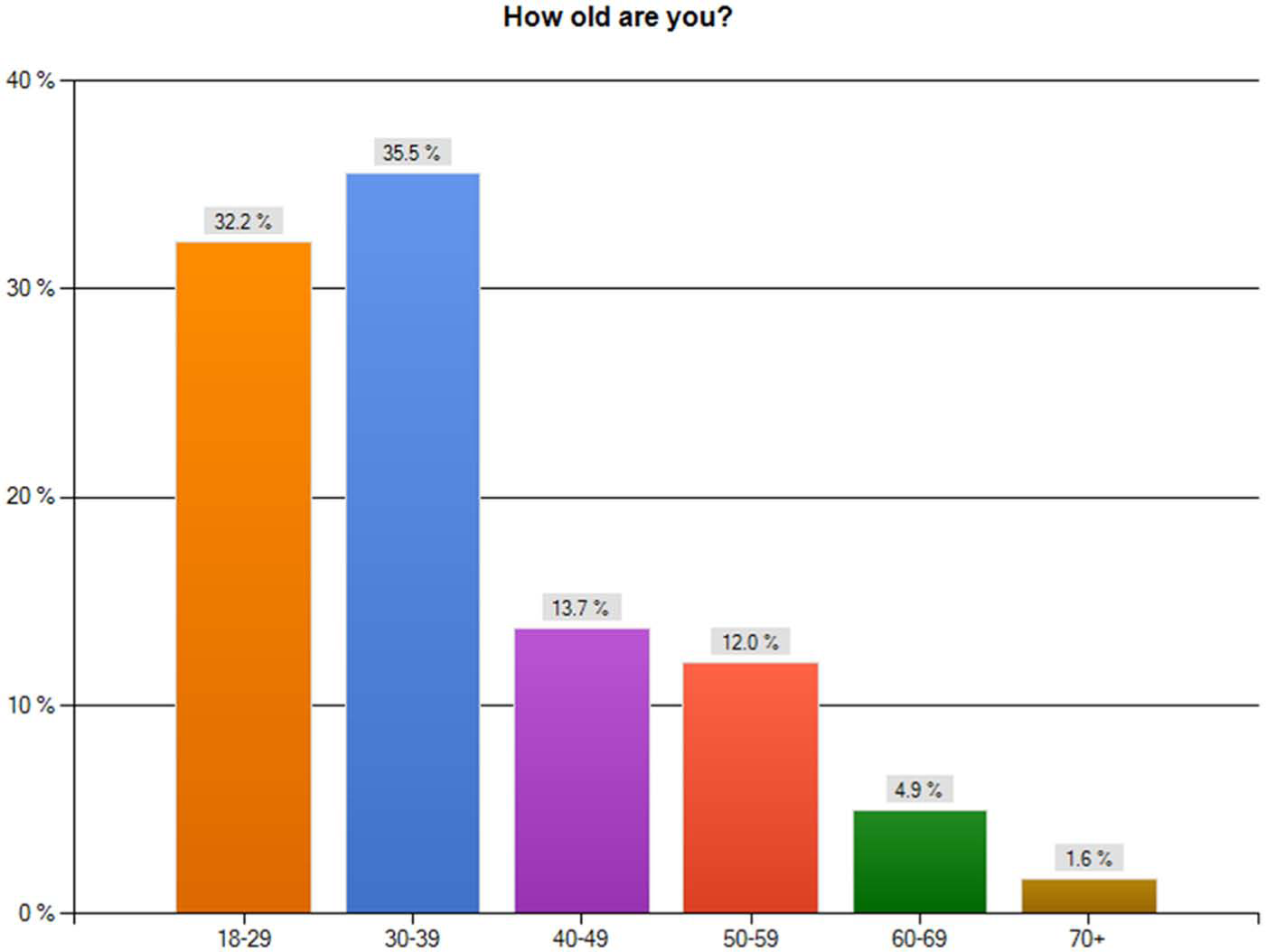
Age range of survey participants.
The survey also included a question about the respondent’s highest level of completed education. The breakdown was: Grade School, 0.5%; High School, 21.9%; CEGEP, 2 College, 20.2%; Bachelor’s Degree, 27.3%; Master’s Degree, 19.1%; Professional Degree (MFA, PhD, JD, MD, DVM, etc.), 9.3%; and other, 1.6% 3 (Figure 2). This data suggests that our response pool was fairly diverse in its sampling of participants, although it does differ from typical distributions of Facebook users more generally, with this group being more educated overall. According to one recent study (Skelton, 2012), 57% of Facebook users have ‘some college’ education (compared with 21.7% of ours), 24% have a Bachelor’s or higher degree (54.1% of our sample had the same), 10% have a high school degree (21.7% of our sample had a high school degree) and 9% less than high school (just 0.6% of our sample fell into this category). 4
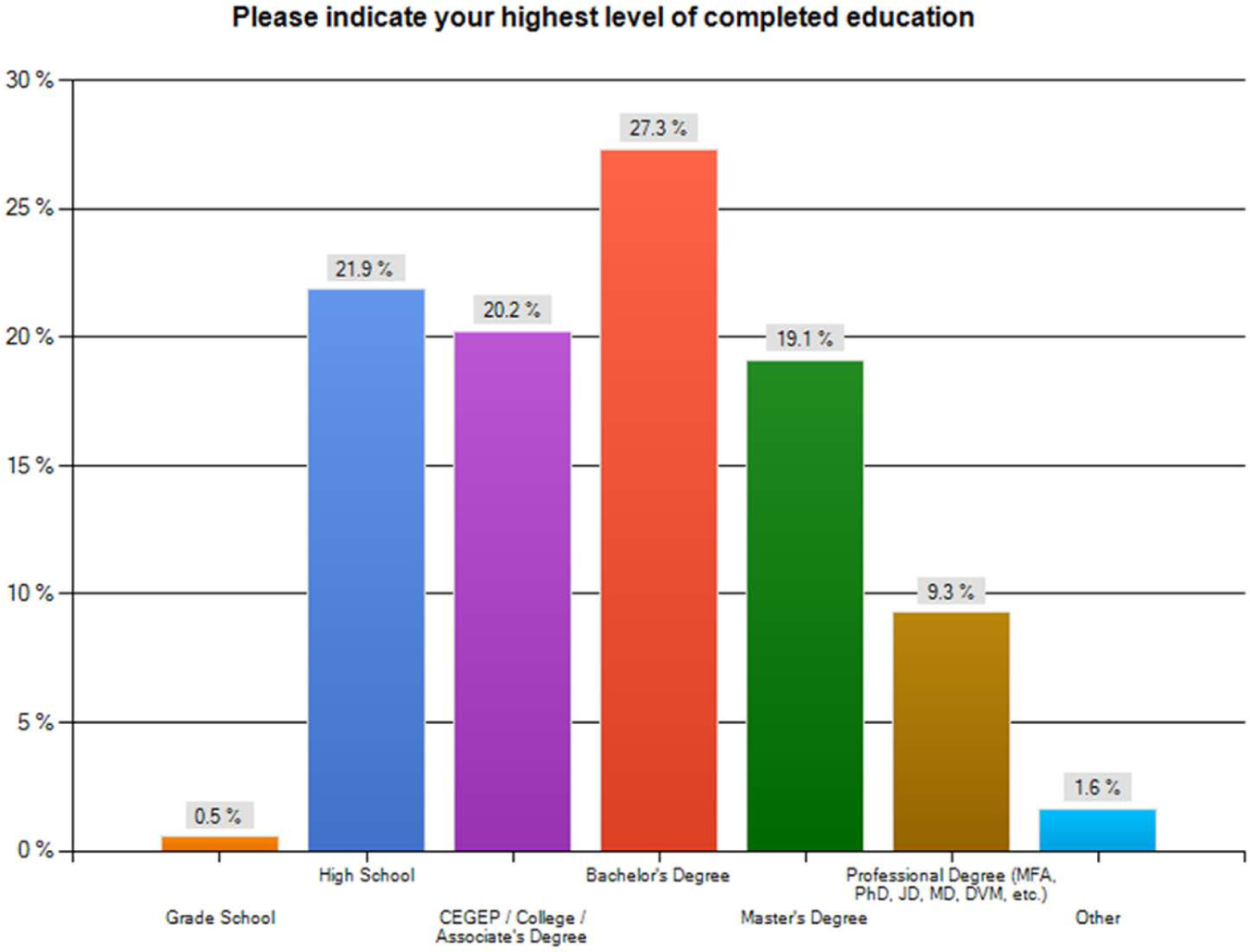
Education level of survey participants.
The survey also included the question ‘How often do you play Facebook games?’ Overall our respondents played quite frequently, suggesting that although they may play games that some consider ‘casual,’ many are not casual in how they approach their play (Juul, 2009). A small group—8.2%—reported playing more than once an hour. Nearly half of participants admitted to playing more than once a day (42.6%), followed by 27.9% participants that played once every few days, and 21.3% of participants that played once a day (Figure 3).
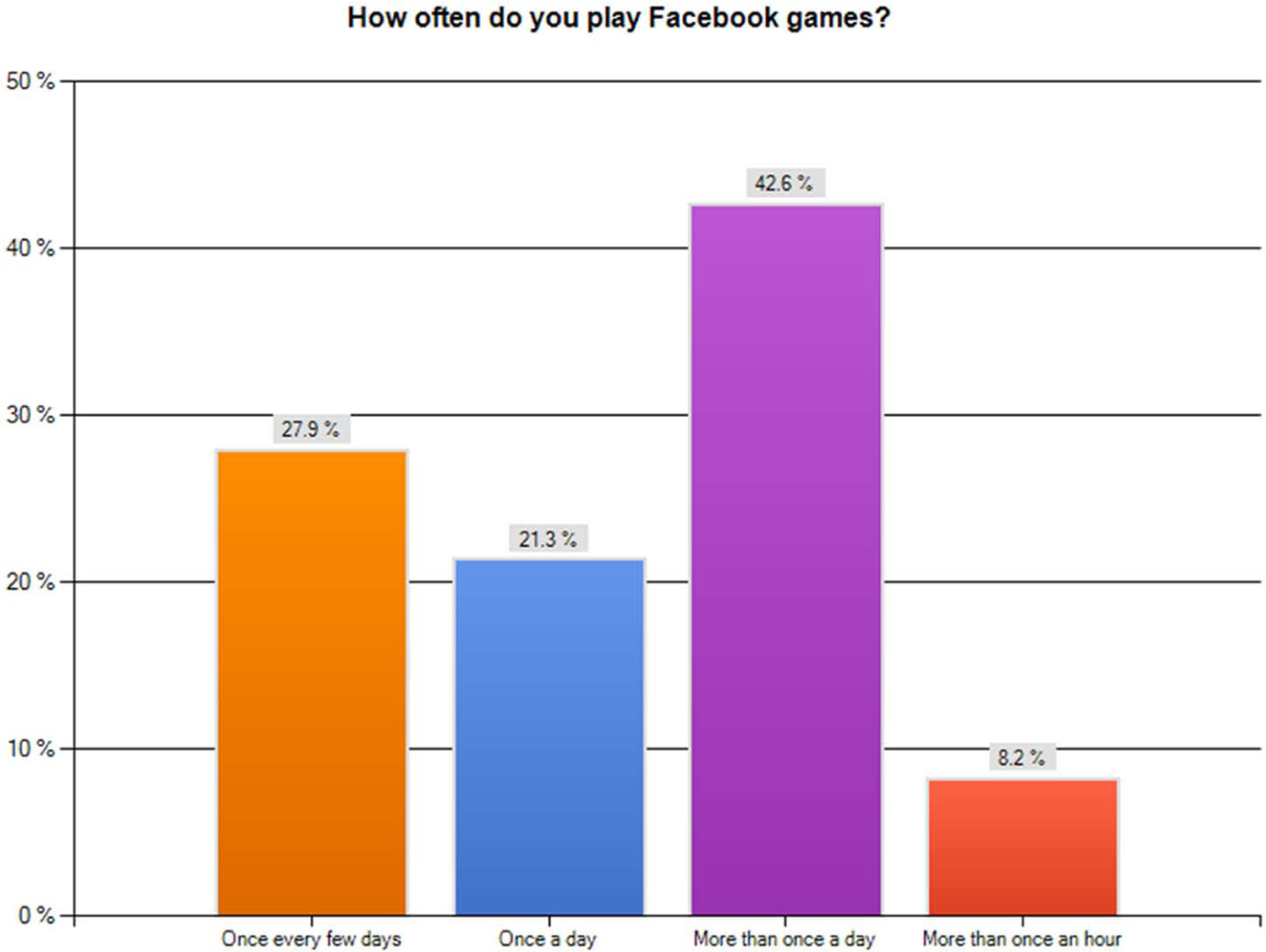
How often do you play Facebook games?
The majority of the respondents (57.0%) said they play or had played mainly ‘build and harvest’ games (such as Farmville, Pioneer Trail, Castleville, Cityville, etc.), which likely contributes to determining their understanding of particular game mechanics, social interactions, rules and, as a result, cheating, as opposed to if they had played different types of games, such as poker, strategy or word puzzle games. 5
How players define cheating in social network games
Players define cheating differently depending on their own experiences and understandings of games and their boundaries. In our study, we asked various questions regarding what can be considered cheating in social network games as well as the specific open-ended question ‘How would you define cheating?’ answered by a total of 103 participants. Within the responses, we identified two main groups of players: those who define cheating in relation to their understanding of a game’s social norms and those whose definitions are associated with a game’s formal rules.
In the first group, we included those players who define cheating in a social network game as breaking with the social behavior that is expected of players. That is to say, to cheat is to gain unfair advantage by the use of different methods or do something socially irresponsible. Within this group respondents mentioned methods such as employing external software to advance gameplay, such as bots, snag bars or auto playing applications. 6 In that sense, one of the respondents answered that ‘cheating would be something that provides an unfair advantage compared to the position of the players. Hacks and cheats are mechanisms that remove the competitive/cooperative/creative dimension to the game.’
Other participants also referred to the use of paratexts (YouTube videos, dictionaries, external information) as cheating. One of them explained …consulting cheating sites and using that info, such as Words With Friends supposedly has cheat sites where one can type in their given letters and receive a list of possible words they could play, words that most people have heard of. (…) Also, YouTube has a lot of videos of glitches in Facebook games that people can exploit to get further in the game.
Finally, respondents in this group also alluded to different practices related to interactions with other players, such as using other players’ accounts to their benefit or having multiple accounts/identities. For example, one of the participants felt that cheating included ‘taking advantage of other players without their knowledge or permission (i.e. logging into their account to send yourself gifts) and advancing at the expense of others in the game.’
A second group defined cheating as playing outside of the formal game rules. It is remarkable that respondents differentiated among the Terms of Service of social network sites, the game’s programmed rules and their own self-perception of the rules. Rules are not the same thing for every player. For instance, one of the respondents defined cheating as ‘violating the terms of use, and using codes and auto collect programs that were not created by the company who created the game,’ while another respondent simply defined cheating as ‘working outside of what I perceive to be the game’s rules.’
In addition to asking for players’ individual definitions of cheating, our survey included the question ‘Which of the following things would you consider to be cheating in a social network game? Choose all that apply,’ where respondents could choose what they thought of as cheating from the following list of options:
adding strangers as neighbors;
logging into someone else’s account to advance your own game play;
logging into someone else’s account to advance their game play;
convincing someone to play a Facebook game to help you advance;
using cheat codes;
purchasing currency or point cards;
using a ‘snag bar’ or other external programs that collect items from other players;
none of the above.
We gathered 136 answers, with the distribution shown in Figure 4.
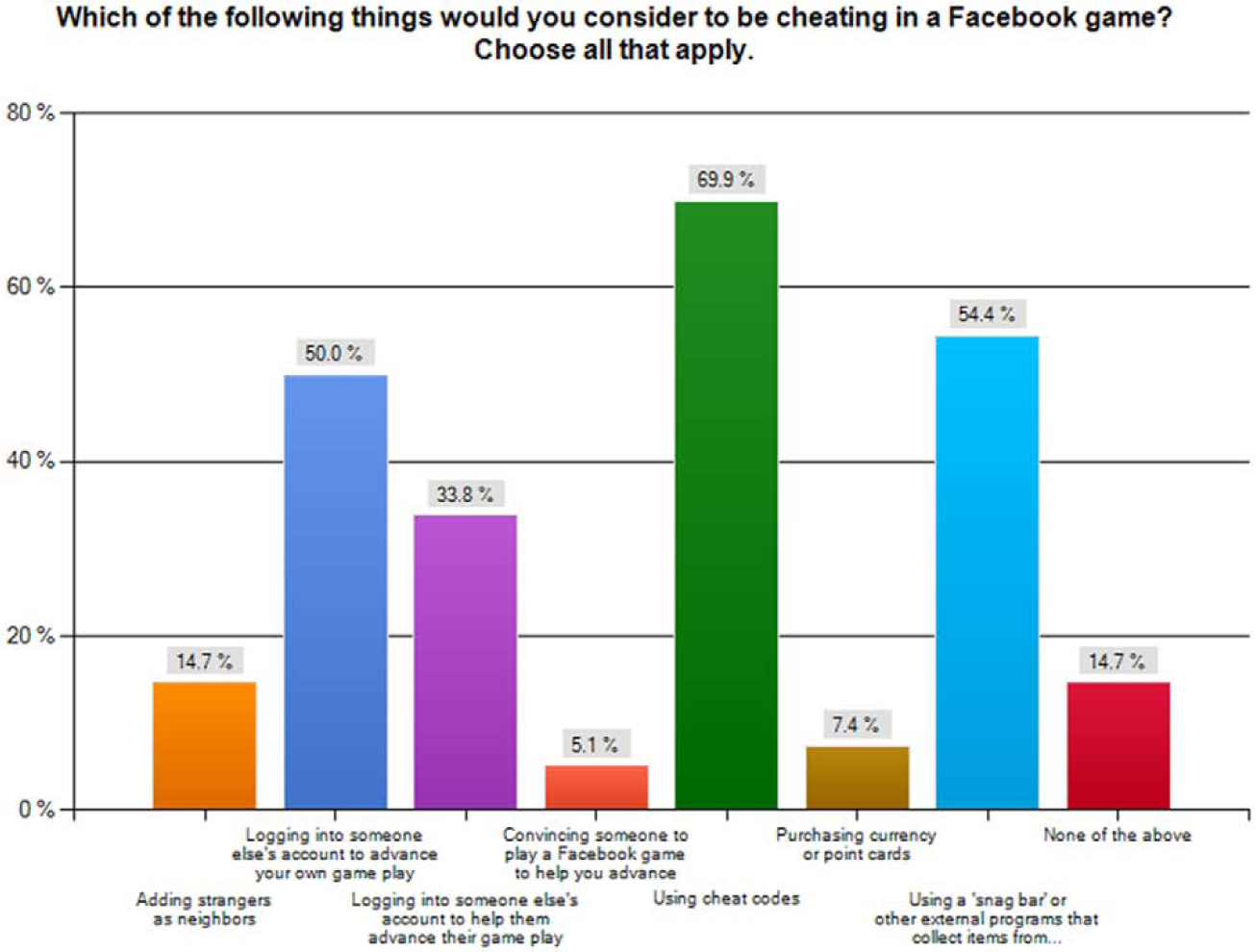
Elements that players consider to be cheating in social network games
The majority of the participants considered the use of cheat codes (69.9%) and external programs (54.4%) as cheating, something that was also reflected in their definitions of cheating, as seen above. It is notable that half of respondents—50%—considered logging into someone else’s account to advance their own gameplay as cheating but only 33.8% felt that logging into someone else’s account was cheating when the aim was to help another player with their gameplay. This suggests that for some participants, specific actions or practices do not determine what is cheating but instead the purposes or motives behind those actions or practices instead do.
Finally, just 14.7% considered adding strangers as neighbors to be cheating, and only a small percentage of respondents considered convincing someone to play a game to help you advance (5.1%) or purchasing currency or point cards (7.4%) as cheating. It is particularly notable that such a small group considered purchasing currency to be cheating—considering that the practice has only recently been embraced by game companies, particularly in F2P and social network game spaces. Obviously if the companies are the ones selling or promoting game currency, players see the practice as an accepted part of gameplay, but with MMOGs that do not officially allow the purchasing of currency, the practice has long been considered one of the worst forms of cheating by a much larger group of players.
Cheating while playing social network games
Besides asking for the respondents’ definitions of cheating, we also wanted to know about the types of cheating practices that participants actually engage in while playing social network games. To do so we included questions such as ‘Have you ever used cheat codes in a Facebook game to advance gameplay?’, ‘Have you ever made another account solely to advance in a Facebook game?’, and so on. Participants admitted to playing social network games to help friends (65%) or family (58.3%), to ask friends (52.1%) or family (50%) to play a social network game in order to advance their own game play, and to add strangers (53.9%) to do the same. Other relevant cheating-related practices that a high number of participants admitted to included the purchase of currency (40.2%), the creation of multiple accounts (31.1%) and logging into someone else’s account (20.6%). The use of cheat codes was a much rarer practice among participants, as only 8.2% admitted to doing so.
We also tried to understand the relationship between these different behaviors and engagements with cheating-related practices and the participants’ own definitions of cheating by asking various questions such as ‘Would you consider it cheating if someone convinced a friend or family member to play a Facebook game solely for the purpose of advancing gameplay?’ followed by the opened question ‘Why or why not?’ In this particular case, 92.5% of the respondents did not consider it cheating to convince a friend or a family member to play a social network game to advance their own gameplay, a practice that half of the participants admitted to engaging in for several reasons. Firstly, some felt that this practice was not against the rules: ‘It’s not exactly cheating because it doesn’t sound like that person is abusing any rule, but it is a little strange.’ Others commented that the game actually forces you to do so and so it is an accepted part of one’s strategy: ‘Social games require us to add friends/strangers to advance to a level or get what is needed to continue in the game. Therefore, it is NOT cheating, it is playing the game as the developers intentionally wrote the game!’
We found similar responses when asking if players considered it cheating if someone added strangers solely to advance gameplay, another practice that more than the half of the participants (53.9%) admitted to engaging in. Of the respondents, 88.9% did not consider it cheating because they felt it was part of the social experience of the game, but also because this practice is not considered harmful for anyone involved: ‘There is a mutual benefit, and not everybody has a huge network of actual friends/family/colleagues that they wish to annoy with game crap.’
In the case of logging into someone else’s account, something that only 20.6% of participants admitted to doing, about half—51.1%—considered it cheating mainly because it deals with private information: ‘I wouldn’t ever do this. Log-ons should be private. Allowing access for the sake of gaming also allows that person to access other information.’ However, some participants distinguished between doing it with or without the owner’s consent and understood that it can also mean cooperation: ‘If they give me access, it’s because it advances both of us, and so we don’t compete, but cooperate.’
Regarding the creation of multiple accounts, despite there being only about a third—31.1%—of participants who admitted to engaging in such a practice, the majority of the respondents (59%) did not consider it cheating. In its favor, some said that this practice is the only way to solve certain parts of some games. Contrarily, other participants commented that it is against both Facebook terms of use and norms of the game (its social aspect): Dishonesty equals cheating. It also violates the basic premise/purpose of the game, which is to get people to play together. It’s the equivalent of playing chess with yourself or cheating at solitaire. It’s still cheating because you aren’t playing the game by the rules, both explicit and implied.
With respect to purchasing currency, something that 40.2% of participants acknowledged having done at some point, an overwhelming majority (92.4%) did not consider it cheating. The most common answer within their responses was that this is the business model of this type of game: ‘Well, that’s how the gamemakers and Facebook owners make money. Without that, there probably wouldn’t be any games because there would be no profit. How is it cheating if you are pouring your hard earned money in it?’ Other reasons why participants did not consider purchasing currency to be cheating included the availability of this practice to all the players equally and its inclusion as part of the rules of the games (‘it is not cheating because the game currency is part of the game, it is allowed by Facebook and the game developers’).
Finally, the use of cheat codes, a practice that just 8.2% of participants employ, was considered by 72.2% as cheating. Nevertheless, participants differentiated between utilizing cheat codes when playing against oneself and doing so when playing with someone else. While in the first situation the use of cheat codes was fine for some respondents, in the second it became an unacceptable behavior for most participants. The main reason was that it leads to unfair game play, giving advantage to some players over others. For example, one of the participants said: They are called ‘cheat’ codes for a reason. Codes that give an unfair advantage upset the balance of gameplay and are cheating. They give certain players advantages that other players do not have access to and can completely topple a game system if not controlled.
Cheating in social network games versus console- and PC-based games
Although past studies have found that many players believe cheating can mean different things when considering single player and multiplayer games, most research has not examined how players believe cheating might be different based on the platform on which play takes place. We were interested in investigating this question, particularly because in other venues we have heard players respond that social network games are not ‘real’ games and thus one cannot cheat at them. In our survey we asked players ‘is cheating in a console or computer game different than cheating in a Facebook game?’ In response, roughly a third of respondents (34.6%) answered that it is different in some way (Figure 5). We examined responses to the question by age, to see if there were any generational differences. However, no consistent pattern could be identified, with 18–29 year olds and 40–49 year olds answering ‘yes’ at roughly the same rate as the mean (37.1% and 35.3%, respectively) but with 30–39 year olds being less likely to say yes (only 22.4%) and older players much more likely to say that cheating was different (52.4% and 66.7%) (see Figure 6). With the older respondents being more likely to see a difference, we can surmise that perhaps more of them still see console games as single player games (see answers below) where cheating might not matter so much compared to when one plays against other people. However, the variance between younger groups of respondents is more puzzling and should be investigated in future studies.
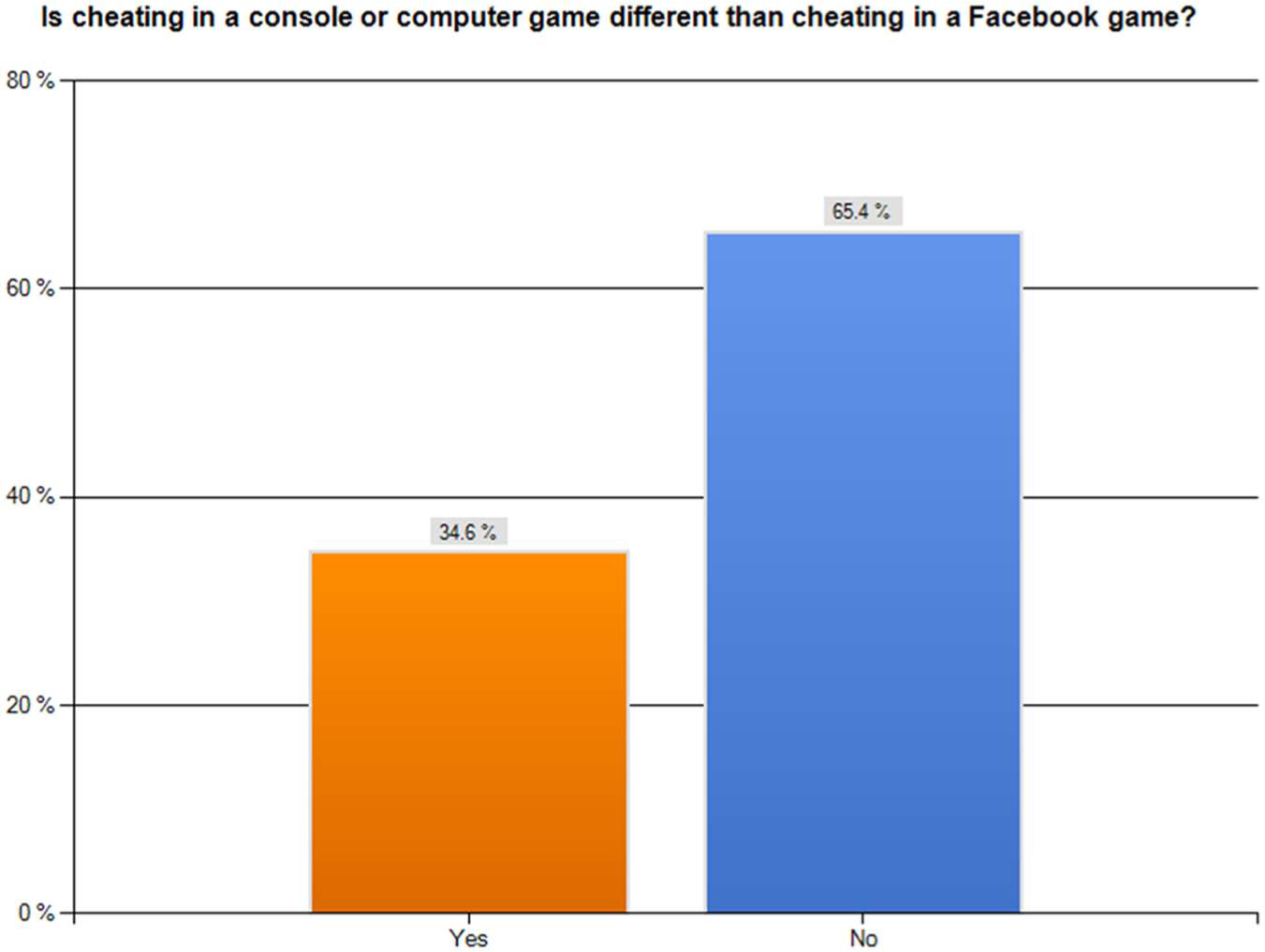
Response to the question of whether cheating in a console or computer game is different than cheating in a Facebook game.
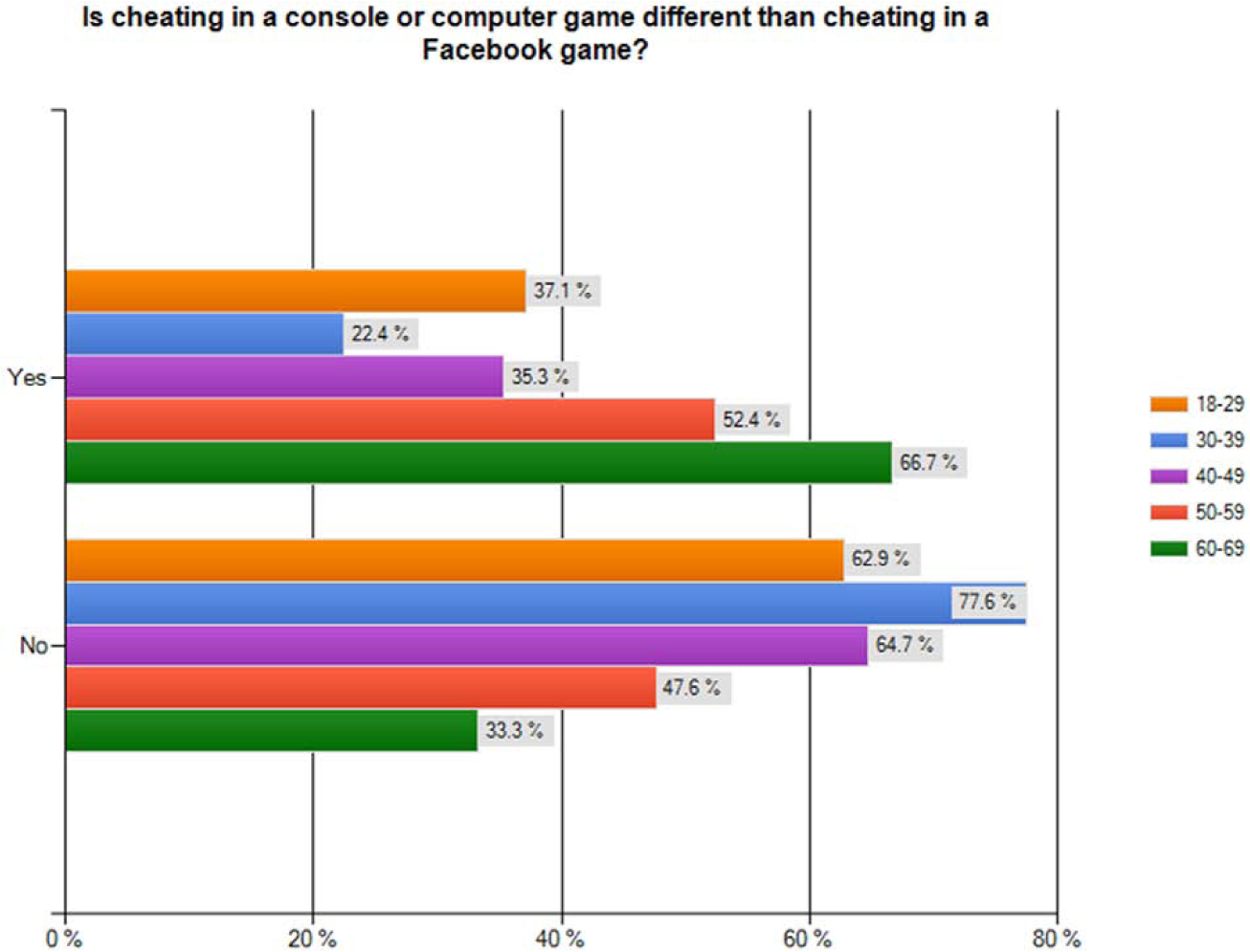
‘Is cheating in a console/computer game different from cheating in a Facebook game?’, by age range.
As a follow up to this question we also included an optional open-ended question, asking ‘how is cheating in a Facebook game different than in a console or computer game?’ We received 41 answers to the question, which provide interesting insights into how players of such games perceive them, particularly in relation to other types of videogames. The largest share of respondents (18 of 41 or 44%) wrote that the main (or only) difference was due to the multiplayer nature of social network games. As one explained, ‘On FB, you have human competitors. In console/download games, you or the computer are your competitor.’ Similarly, another individual suggested ‘the social aspect makes it different.’ Curiously, for many of these respondents console and computer games were equated with single player games generally—it was assumed by many of them that other types of computer games, or games played via console, were not social in nature. A few did clarify: ‘In computer games I played against the computer and not another person. I used cheats and walkthroughs to advance in some games. This did not impact any other player but did help me finish the games.’ Another stated ‘if there is no social aspect to the game, then cheating is an acceptable behavior.’ Yet it is striking that for many players we surveyed, console and computer games continue to be associated with the stereotype of the gamer playing alone, in contrast with the social element found in games on platforms like Facebook.
The next theme to emerge in answers was a dismissal of the seriousness or intensity of social network games. Individuals stated that they played such games for relaxation rather than competition, and thus cheating was either not needed or not a part of gameplay expectations. One person wrote ‘it’s the level of tension: Facebook games are less emotionally involving.’ Another added, ‘A Facebook game, however, doesn’t require your best, it’s just small flash games.’ Others who made similar statements argued that the ‘stakes’ were lower in Facebook games. Thus, rather than being about cheating another person, cheating in this case was differentiated by its lack of utility—if such games are only for relaxation, are simple or not competitive, why would one want to cheat?
There were also individuals who took opposing stances on whether or not cheating was different in social network games compared to PC and console games. A few (three) felt that ‘cheating on Facebook is more about getting yourself ahead, but it doesn’t really adversely affect anyone. Cheating on multiplayer games on console or pc is usually about tweaking the rules so you can *win* more easily, in the sense that other people lose.’ In contrast, another player argued, ‘Facebook social games are one giant leaderboard. It is never acceptable to cheat to get your way up a leaderboard in any type of game. Using the money cheat in the computer version of the Sims isn’t the same as beating a challenge on Facebook using a bot that another player might have had to use real money or spend a long time to do so.’
A few other answers were offered by players, suggesting that social network games were both harder as well as easier to cheat at; that the legal structures were different from console and computer game frameworks, that technical issues made cheating different, and that the real-life identity of players of social network games made it a different experience. However, we would need surveys of more individuals or more in-depth research on these particular differences before we could say with any certainty that they were important issues for a broader population of players.
For different individuals, cheating meant different things for social network games. Clearly for a few, the games were seen as non-competitive spaces, where cheating might allow one player to do well, but in no way adversely affected the performance or rewards of another player. For others, the leaderboards and rankings offered by most such games meant that cheating would also put non-cheaters at some sort of disadvantage, even if it only meant not doing as well as others, rather than specifically losing in some way.
Such differences of opinion demonstrate that cheating as a practice is continually being contested and redefined, as new platforms and genres of games appear, and as more people become players and have to confront such issues for themselves. We also found persistent traces of old stereotypes of single player games and anti-social gamers present among those we questioned. While some respondents did clarify that they only meant single player console or computer games, for others the universe of such games was conceptualized largely as a whole—as a site that was not for multiplayer gaming, unlike the space of social network games.
Conclusions
Cheating in videogames continues to be a moving target, with game rules and norms, platforms, and player beliefs and practices all helping to shape how cheating is defined and enacted. For example, the great majority of social network games use a F2P model that encourages the purchase of virtual currency. Players now see that practice, which can help speed up certain game processes or allow access to exclusive items or areas, as a regular and accepted part of gameplay, whether or not they purchase such currency themselves. Having game developers institutionalize practices that in other contexts were considered as ‘fast-forwarding’ or ‘playing god’ has led to players no longer considering those actions as cheating—they are instead accepted, alternate forms of play. What is more, in our study players explicitly referred to those practices as a ‘new business model,’ making clear that purchasing currency or objects is not a prohibited practice in social network games.
Another key conclusion of this study is that player perceptions of a game’s platform influence how games are perceived, including definitions of cheating in different types of games as well as how much effort or strategy is required to play successfully. Many of our respondents associated computer and console games with solo gameplay, while identifying Facebook games with multiplayer games. We also received a significant number of responses that related Facebook games with a relaxing pastime, which at the same time equated computer and console games as being based on competition. One of the reasons for these two associations could be that more than the half of the respondents (57%) claimed to play ‘build and harvest’ games, which are asynchronous multiplayer games that foreground cooperation and the accumulation of large friend or social networks. This could also influence such players’ understanding of what constitutes cheating.
The social aspect was also a key consideration in how players defined cheating. Among the various definitions of cheating that we gathered, we identified a group that understood cheating as breaking with the ‘proper’ social behavior that is expected of players, that is, to the game’s social norms. In these definitions, cheating is not determined by specific practices but by their effects. Moreover, we noticed that in social networks games purposes or motives behind practices matter: 50% of the respondents considered logging into someone else’s account to advance their own gameplay as cheating, but only 33.8% felt that way when the objective was to help another player with their gameplay.
We also identified a group of respondents who defined cheating as playing outside the formal rules of the game. However, we discovered that there is disagreement between players regarding what ‘formal rules of the game’ means, which also affects their understandings of cheating. For some participants, the rules are determined by the Facebook Terms of Service, while for others the rules are more specifically the game’s programmed or coded rules. The way in which participants understand the rules of the games is also pertinent, since it shapes their definitions of the practices that can be considered as cheating. For example, for some respondents, the creation of multiple accounts is the only way to solve certain parts of some games and a practice not explicitly prohibited by the programmers, while for others, this practice violates the Facebook Terms of Service and therefore it can be considered as cheating. As mentioned before, the platforms where the games are hosted affect players’ perceptions and definitions of cheating.
Finally, we noticed recurrent references to privacy in players’ definitions of cheating. For example, when asked if logging into someone else’s account could be considered as cheating, some participants answered in the affirmative, arguing that their profile in a social network deals with private information. This is in contrast to studies of players of MMOGs and competitive multiplayer games such as Counter-Strike, where anonymity among players is more common. Thus, future studies should consider how playing with real profiles affects players’ gameplay and their attitudes towards various practices. Are players less willing to cheat when they play with their real identities? Do they play differently than in other social games (e.g. MMOGs) because they include private information in their profiles? How do players deal with the differences between the Facebook Terms of Services and the requirements of the games to advance gameplay? What does it mean for the future of social networks? These are questions in need of further study and we will be exploring them more extensively in a follow-up paper based on data from player interviews and open-ended survey data.
Footnotes
Funding
This research received no specific grant from any funding agency in the public, commercial or not-for-profit sectors.