







Abstract
Scholars have observed that children can promote Internet adoption among adults by positively influencing skills acquisition. However, it is also possible that children discourage online engagement by adults, who may lean on them to act as proxy users. Both processes have been theorized, but the net result of these opposite effects has not been empirically tested. This study provides such a test, sourcing data from large-scale surveys in six Latin American countries. The results indicate that the presence of children is negatively correlated with Internet use by adults. This suggests that the intergenerational transfer of Information Communication Technology (ICT) skills from children to adults is outweighed by leaning effects, whereby parents rely on children to perform online tasks for them, ultimately discouraging engagement.
Whereas the Internet is interwoven in almost every aspect in the lives of youth, many adults have more limited or, in some cases, no online engagement. Scholars have found this generational divide to be associated with several factors, including attitudes toward new technologies (Neves et al., 2013; Reisdorf and Groselj, 2015), lifecycle changes that constrain time allocated to online activities (Barrantes and Cozzubo, 2016), and deficits in Information Communication Technology (ICT) skills (Hargittai and Hsieh, 2013; Helsper and Reisdorf, 2013).
Scholars have also observed that children may help bridge this generational gap by motivating and supporting Internet adoption by adults in the family (Correa et al., 2015; Katz, 2010). For example, children can help change attitudes and motivate experimentation with unfamiliar technologies (Courtois and Verdegem, 2016). In addition, children may act as “local tech experts,” helping adults develop the necessary skills for effective use (Livingstone, 2007).
Other studies, however, cast doubt on the relevance of the intergenerational transmission of motivation or skills from children to adults (e.g. Enyon and Helsper, 2015; Selwyn, 2004). These studies caution against broad claims regarding a positive “child effect” on Internet adoption by adults, pointing to critical mediating factors such as children’s age, family composition, household socioeconomic status, and language skills (Correa, 2014; Van den Bulck et al., 2016). Rather, they suggest a more complex, bidirectional process of mutual guidance and co-learning among family members (Clark, 2011).
An issue that has received considerably less attention in the literature is whether proxy use by children inhibits Internet use among adults in the household. As much as children can be theorized to help bridge motivational and skill gaps for adults with limited Internet engagement, their presence may also obviate the need for other family members to experiment with unfamiliar technologies and acquire skills themselves, since children can be relied upon to act as proxy users. This is analogous to a common finding in studies of language brokering among immigrant families, in which children compensate for parents’ limited language abilities (e.g. Kam, 2011).
In contrast to the more common assumption about an intergenerational transfer of motivation and skills from children to adults (henceforth the “learning effect”), this study explores the hypothesis of a “leaning effect,” whereby proxy use by children holds back direct online engagement by adults. The learning and leaning effects are theorized to occur simultaneously as a part of the technology domestication process within families (Silverstone and Haddon, 1996). Along these lines, our main goal is to empirically test the net impact of these distinct forces on online engagement by adults in households where children are present.
The data are sourced from large-scale household surveys in six Latin American countries (Bolivia, Colombia, Ecuador, Mexico, Peru, and Uruguay). These countries were selected based on the availability of comparable data, and are representative of the different contexts found in the region. Bolivia is among the least developed countries in Latin America, and faces numerous challenges to promote Internet adoption, including low population density, a rugged topography, and the marginalization of the indigenous population. On the other end, Uruguay is a high-income country (per the World Bank’s classification) where Internet adoption levels are comparable to that of advanced countries. The remaining four are upper middle-income countries representative of the more typical context found throughout the region.
The study makes several unique contributions to scholarship on digital inequality and the family dynamics of Internet adoption. Previous research has rarely considered how the activation of children for proxy Internet use may be associated with lower levels of direct online engagement. Several studies have noted that proxy use often precludes the need for non-users to experiment with unfamiliar technologies or acquire skills themselves, in particular when family resources are readily available (Reisdorf et al., 2012; Selwyn et al., 2016). However, to our knowledge, the strength of this leaning effect has not been tested empirically with survey data.
In addition, the study advances our understanding of the factors that affect digital inequality in contexts of low to moderate levels of Internet adoption. This contrasts with much of the existing literature about proxy use and the child effect, which is situated in advanced countries with high levels of residential Internet penetration and overall use. Finally, the use of very large samples drawn from nationally representative household surveys allows for testing hypotheses within specific age groups, as well as the use of matching techniques that help approximate causal effects. This significantly mitigates self-selection problems found in conventional regression analysis with cross-sectional data, thus strengthening the validity of results.
Prior literature and research questions
The child effect in new media adoption
Scholarship on the family dynamics of media adoption has traditionally followed the parent-to-children path. In particular, parental mediation has been extensively studied in the context of television and the enforcement of rules regarding time limits and types of content (Nathanson, 2015). The emergence of new media technology began to gradually increase attention to the reverse path. For example, early studies about the diffusion of personal computers found that the presence of children contributed to family adoption and skills learning among adults (e.g. Dutton et al., 1987).
These results were corroborated by early studies about Internet adoption. For example, in the mid-1990s, Kiesler et al. (2000) provided a computer and Internet connection to 93 families in the Pittsburgh area. The authors found that teenagers quickly emerged as “family gurus” to which others turned for help. In another study conducted among Flemish families during the same period, Van Rompaey et al. (2002) found that children played a critical role in family decisions to subscribe to the Internet (at the time, a relatively new technology) by promoting awareness and emphasizing educational uses.
As the pace of Internet diffusion accelerated, scholarly attention to the role of children in promoting adoption, providing support, and brokering use began to increase. Katz (2010) found that children played a critical brokering role in media technology use among immigrant families in the United States, thus facilitating integration in local communities. Gonzalez and Katz (2016) corroborated these findings by showing how second-generation Hispanic children in the United States support their parents in the adoption of new technologies for the purpose of communicating with relatives in their home country. A study by Barbosa Neves et al. (2013) provides further evidence of the intergenerational transmission of skills by examining ICT adoption among older adults (64+) in Portugal. Combining a small-scale survey with in-depth interviews, the study found that grandchildren played a critical role in motivating and supporting grandparents in the use of the new technologies, including mobile phones and the Internet.
Only a handful of studies have examined these patterns in the Latin American context. Based on a small-scale intervention that provided Internet-enabled tablets to low-income families in three Mexican communities, Mariscal et al. (2016) report rich ethnographic evidence of bottom-up transmission of skills from children to parents, driven largely by communication needs with distant family members. A study by Correa (2014) employs a mixed-methods design that includes a survey of children–parent dyads in three schools in Santiago de Chile. The results indicate that children play an important brokering role in adults’ acquisition of Internet skills, but also find that children report helping parents significantly more than adults report being helped by children. Given the self-reported nature of the measurements, the question of whether children are over-reporting skills transmission to adults, or parents are under-reporting learning from children, is left unanswered.
A critical appraisal of the child effect
A closer examination of the evidence regarding the bottom-up transmission of motivation and Internet skills from children to adults reveals that the interpretation of findings is often ambiguous. For example, in an ethnographic study with low-income immigrant families in the Los Angeles area, Horst (2009) offers the following interview transcript from one of her subjects, a 12-year old who taught her mother, a single parent from El Salvador, how to send emails to relatives: [I taught her] how to send emails, but sometimes, I check it first, because she does it wrong. And I taught her how to like… sometimes she wants to upload pictures from my camera, and I show her, but she doesn’t remember, so I have to do it myself. Mostly, I have to do the picture part. (p. 167)
The author presents this and other excerpts as evidence that children play a key brokering role as family technology experts, helping parents domesticate new technologies and learn new skills. However, this excerpt may also be interpreted as evidence that proxy use by children reduces incentives for adults to acquire online skills themselves. In other words, it appears that “learning from” and “leaning on” occur simultaneously in the context of what Livingstone (2002) calls the domestic infrastructure, making it difficult to disentangle one process from the other.
Other studies also offer mixed findings regarding the children-to-adult transmission path. Hargittai (2003) reports that interviews with 66 adults suggest that children are one of the primary sources of Internet technical support in the family. However, experimental findings based on actual measurements of online skills reveal that the presence of children is associated with lower skill test scores. The author suggests this is because parents delegate the more complex tasks to children rather than developing these skills themselves.
Mixed findings are also reported by Correa et al. (2015) in a study based on data collected from a self-administered mail survey in the city of Austin. The authors find evidence of a positive child effect, but warn that this effect should not be overstated since children are mentioned as one of several complementary sources of technology learning (the primary being self-learning). The study also points to critical mediating factors such as age, gender, and socioeconomic status. This is consistent with earlier results from studies about the acquisition of computer skills, which found that children play a peripheral role in adults’ technology learning (e.g. Selwyn, 2004).
Similar results are reported by Enyon and Helsper (2015) in the UK context. In a survey-based study the authors find that, on average, the presence of children is positively associated with Internet use by adults. However, the effect is found to be age-dependent: while no effects are found for parents of children below the age of 10, parents of older children are more likely to use the Internet both at home and at other locations. In addition, the study finds that the presence of children has no effect on self-reported Internet confidence or skills. Overall, given the limited effects detected, the authors conclude that children’s role as digital experts should not be overstated.
Other studies have addressed this question by focusing on proxy use (or indirect use) and the social or family resources most commonly activated by Internet non-users (Dutton and Blank, 2013; Selwyn et al., 2016). In these studies, children and grandchildren are consistently reported as the main sources of proxy use, far outnumbering other sources. For example, Blank (2013) reports that, in the UK context, children and grandchildren are cited by 64% of non-users who have activated a proxy user in the past year, compared to 35% who mention friends and 22% who mention a partner/spouse. This suggests that at the heart of proxy use is an intergenerational process in which children and teenagers are called upon to offset the limited online experience and abilities of adults in the family. Dolničar et al. (2018) corroborate these findings by showing that, in the Slovenia context, Internet non-users with children or grandchildren are significantly more likely to have asked someone to use the Internet on their behalf.
Research questions
A review of the extant literature suggests that much remains to be understood about the role of children in the adoption of the Internet by parents and other adults in the family. In particular, it reveals a complex process of intergenerational brokering and role negotiation, in which two effects coexist: a learning effect, whereby children motivate adoption and support the acquisition of skills by parents (even if modestly), and a leaning effect, whereby children act as proxy users, inhibiting direct use by adults themselves.
The main research question that motivates this study can be formulated as follows:
RQ1: Does the presence of children in the household increase or reduce Internet use by adults?
As noted, previous studies reveal that the child effect is mediated by several intervening factors. Among the most important are children’s age and family socioeconomic status. Enyon and Helsper (2015) indicate that older children (10+) are significantly more likely to influence parents’ Internet skills and engagement than younger children. They attribute this to the fact that experience with new media naturally increases with children’s age, as do opportunities to develop skills outside the family setting, which can then be transferred back to adults in the household. A related research question thus follows:
RQ2: How does children’s age affect the magnitude or direction of the effect on Internet use by adults in the household?
There is also evidence suggesting that child effects are stronger in low-income households. As Correa et al. (2015) report, low-income parents are less likely to be exposed to new technology at work and have fewer opportunities to develop Internet skills through social networks. In such contexts, children are likely to play a more important role as digital experts, bringing home information and expertise unavailable to their parents. This raises the following question:
RQ3: How does family socioeconomic status affect the magnitude or direction of the child effect on Internet use by adults in the household?
Research context
Latin America provides a fertile context to study how children affect residential Internet access and individual use. In wealthier countries, very high levels of household penetration and individual use (typically above 80%) present a research challenge, given that non-users represent a small (and shrinking) subset of the population (e.g. Büchi et al., 2016; Van Deursen and Helsper, 2015). By contrast, relatively high levels of digital inequality in most Latin American countries provide more information and enable the use of statistical techniques that are unfeasible in studies with small numbers of non-users.
Internet adoption varies significantly throughout Latin America. Table 1 presents residential Internet penetration and individual use estimates for the six countries included in this study for the 2014/2015 period. As shown, countries like Uruguay (as well as others in the Southern Cone such as Argentina and Chile) had adoption levels comparable to those of more developed nations. By contrast, in lower income countries, such as Bolivia, only about a third of the population used the Internet on a regular basis. Colombia, Ecuador, Mexico, and Peru are representative of the more typical situation in the region, with individual Internet use hovering near the 50% threshold.
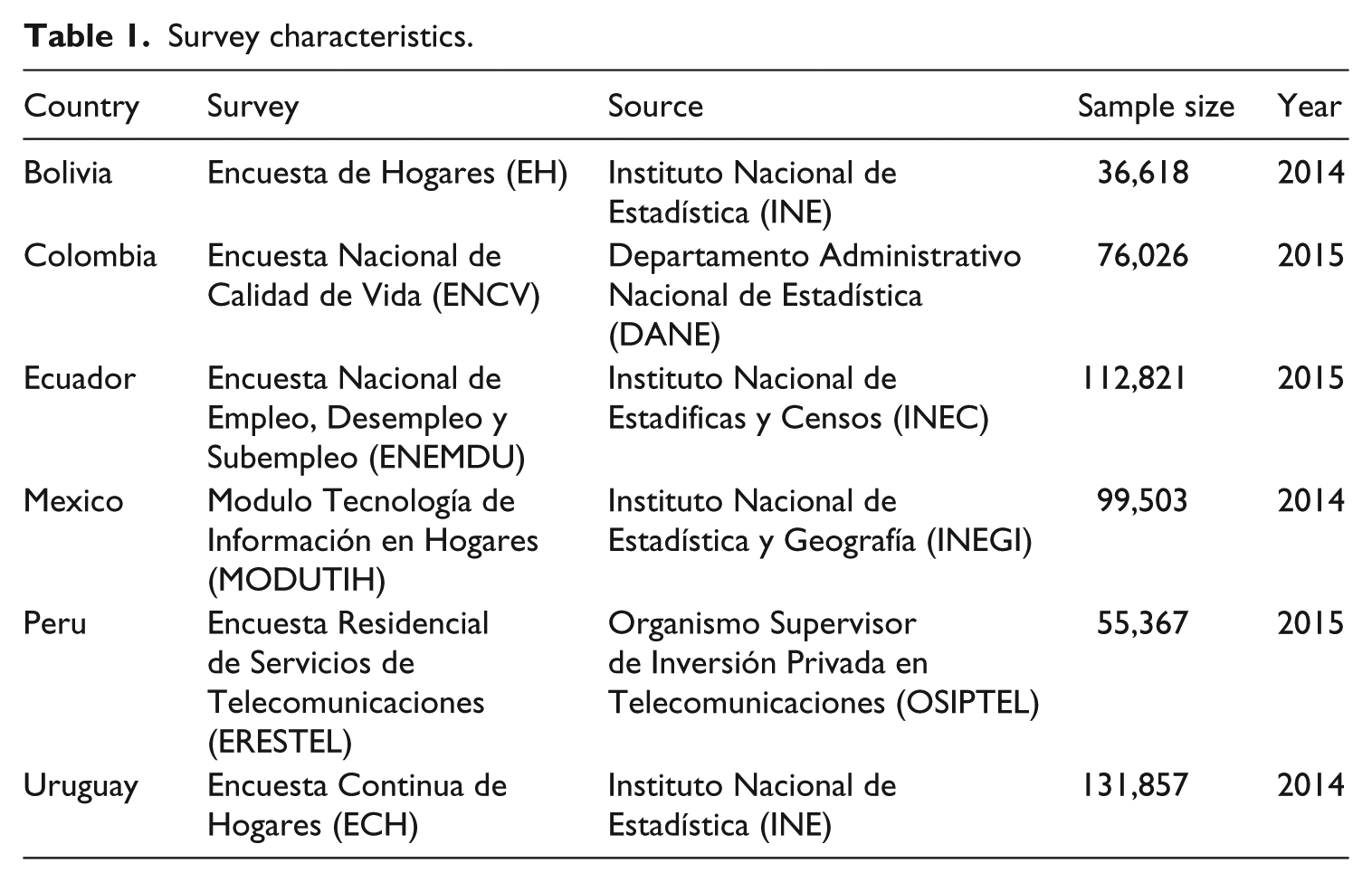
Survey characteristics.
As expected, there are also very significant variations in household penetration and individual use within countries. For example, in Bolivia, a household in the top-income quintile was about 10 times more likely to be connected than a household in the lowest quintile. By contrast, an individual in the top-income quintile was about five times more likely to use the Internet compared to an individual in the lowest quintile. This difference is explained by the combination of affordable mobile broadband alternatives as well as the nearly ubiquitous presence of public access locations (from cybercafés to libraries and telecenters) throughout the region (Berglind, 2016; Proenza and Girard, 2015).
Another relevant dimension to the study of digital inequality in Latin America (and elsewhere) is the urban–rural connectivity gap. With the exception of Uruguay, the countries in our sample present rugged topographies, persistent poverty in rural communities, and major infrastructure deficits outside the main urban centers. As a result, both residential access and individual Internet use are significantly lower in rural areas. For example, in Colombia, average residential penetration drops from 45.2% in cities to 5.9% in rural areas. Gaps for individual use are somewhat smaller but remain high. Similar gaps are found in the other countries in our sample.
Overall, the research context for the six countries included in the study is representative of the situation throughout the region. About half of the adult population in Latin America remains unconnected, with large differences by income and location (Galperin, 2018). The situation worsens in low-income countries such as Bolivia, where only about one in three adults used the Internet on a regular basis. How the presence of children affects household access and individual Internet use must be examined against this backdrop of low to moderate levels of adoption and large connectivity gaps within countries.
Methods
Data sources
The data used in this article is sourced from household surveys conducted by national statistical offices in Bolivia, Colombia, Ecuador, Mexico, Peru, and Uruguay. These are nationally representative, large-scale surveys implemented on an ongoing basis throughout the year. Interviews are administered to heads of household or spouses, who in turn provide information on other household members. Originally designed to track basic socioeconomic indicators, such as employment and poverty, these surveys have recently incorporated a small set of questions about residential Internet access and Internet use.
It is important to note that survey methods are not uniform across countries. As shown in Table 2, there are variations in sample size, as well as differences in the questionnaires administered that are noted throughout the analysis. Due to these differences, each country is analyzed separately, and comparisons should be interpreted as indicative of common patterns rather than as precise estimations of differences.
Household penetration and individual use (in %).
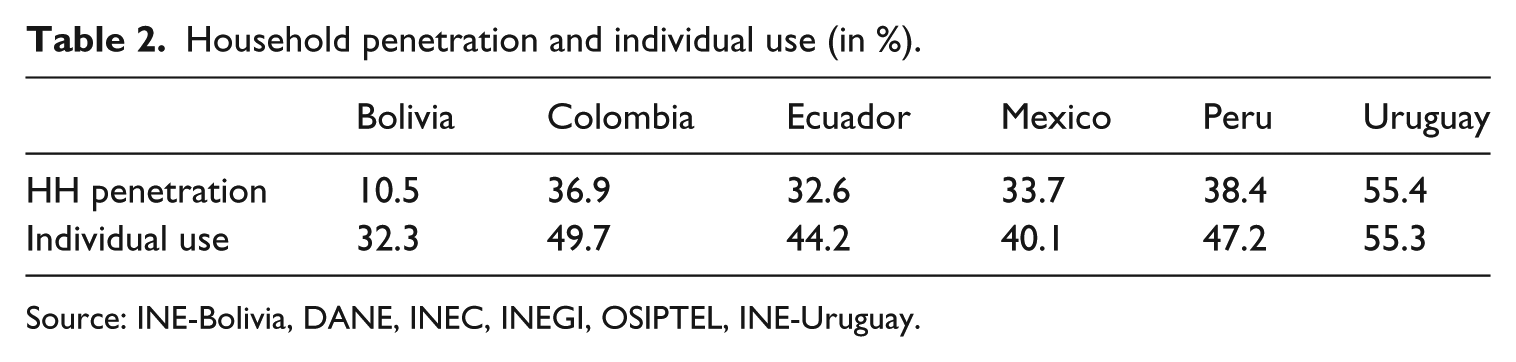
Source: INE-Bolivia, DANE, INEC, INEGI, OSIPTEL, INE-Uruguay.
All surveys use probabilistic stratified sampling for urban and rural conglomerates. Each national statistical office provides the individual and household sample weights that adjust for nonresponse rates. These weights are used to compute all estimates in the analysis that follows.
Measures: independent and outcome variables
Presence of children
The independent variable of interest is the presence of children in the household. We restrict our analysis to children between the ages of 5 and 17. This corresponds to the expected schooling age in the countries analyzed.
Residential Internet access
The surveys record the presence (or absence) of a residential Internet connection in the household, regardless of technology type or connection speed/quality.
Individual Internet use
The surveys record individual Internet use for each household member. The wording of the question varies slightly in each country, but essentially refers to having used the Internet (regardless of location or access device) within a certain time period. Unfortunately, the reference period used differs across countries. In Colombia, Ecuador, Mexico, and Peru, the question refers to Internet use in the past 12 months. However, Bolivia and Uruguay employ a more restrictive definition based on use within the past 3 months and 1 month, respectively. To some extent, this limits the comparability of results from these two countries. However, it does not affect the accuracy of the estimates since each country is modeled separately.
Measures: covariates
Since the data are drawn from general household surveys, our datasets contain a large number of sociodemographic indicators. Based on the extant literature reviewed above, the following variables are used as controls in the models.
Age and gender
The surveys record the age and gender of the head of household as well as those of other household members.
Education
The surveys record the maximum educational attainment of all household members. This variable is categorized as follows: (1) incomplete primary school, (2) complete primary school, (3) incomplete secondary school, (4) complete secondary school, (5) incomplete college degree, and (6) complete college degree or above.
Income
The surveys record individual and total household income from all sources, including pensions and government cash transfers.
Household size
This is computed based on the number of household members reported by the head of the household or spouse.
Urban/rural location
The definition of rural location differs across the countries in the sample. For each country, we use the definition used by the corresponding national statistical office.
Employment status
For each of the listed household members, surveys record employment status (employed/unemployed) and labor force participation (active/inactive).
Language
In Bolivia, Ecuador, and Peru, surveys record the primary language spoken in the household. We employ a dichotomous categorization that separates Spanish-speaking households from those where an indigenous language is spoken primarily. This information is not available for Colombia, Mexico, and Uruguay.
Empirical strategy
The analysis involves a two-step empirical strategy. First, we run a series of multivariate regression models (ordinary least squares or OLS) which estimate the likelihood of residential Internet access and individual use conditional on demographic covariates, including the presence of children (our main variable of interest). Given our large sample sizes, significance levels (p values) alone are inadequate to interpret results, since it is possible to identify statistically significant effects that are negligible in magnitude (Kline, 2005). Rather, the analysis emphasizes effect size, which is calculated from the regression coefficients for our variable of interest (the presence of children in the household) as the percentage change over the mean of the dependent variable in each model.
Next, we employ a matching procedure that approximates the causal effect of children on Internet use by adults. Matching refers to a family of statistical techniques developed specifically to estimate causality in cross-sectional data (Rosenbaum, 2010). The main difference with conventional multivariate regression is that matching creates counterfactuals that allow for more plausible causal estimates of the effect that the variable of interest has on the observed outcomes.
As Li (2012) argues, the fundamental problem of causality is how to reconstruct the outcomes that are not observed. Regression analysis allows for isolating the effect of the variable of interest from the effect of other (observable) covariates. However, causal inferences cannot be drawn because assignment to the variable of interest (or “treatment” variable) is non-random. An answer to this problem would be randomization in an experimental setting, which ensures that the treated and the control groups are balanced on all observed and unobserved characteristics. However, because the presence of children cannot be randomized, other techniques are needed to estimate the causal effect of interest.
This study uses propensity score matching (PSM), a technique widely used in the social sciences for the estimation of causal effects with cross-sectional survey data (see Harder et al., 2010). The general idea behind PSM is to correct for self-selection bias by balancing background characteristics between the treated and the control groups. In our case, the decision to have children (our “treatment”) may be correlated with factors that also affect Internet use, thus biasing estimates of the true effect that the presence of children has on Internet adoption. With PSM, balancing is accomplished by calculating the propensity to treatment for each subject in the sample. Based on this propensity score, the PSM algorithm pairs each treated subject with one or more non-treated subjects, and the causal effect is calculated from this matched sample (Guo and Fraser, 2009).
Matching techniques have been in use in other fields for several years, but have only recently gained a foothold in communication and media studies. For example, Valenzuela et al. (2014) use PSM to examine how social media use affects protest behavior among the youth in Chile. Similarly, Im and Meng (2016) use this technique to analyze public opinion and attitudes regarding welfare policies in China, while Fletcher and Nielsen (2017) use PSM to examine incidental exposure to news on social media. In all cases, PSM is used in combination with cross-sectional survey data to strengthen the causal interpretation of results.
In this study, we start by modeling the likelihood that children are present in the household, from which a propensity score is obtained for each respondent. Based on these scores, a matched sample is created using nearest neighbor matching. Nearest neighbor identifies, for each respondent living with children, a comparison unit (i.e. a respondent living without children) whose propensity score is the closest. Given our large sample sizes, we use 1:1 matching which helps reduce the bias of the estimated coefficients. In the final step, effects are estimated by averaging the differences between the matched pairs of subjects.
Linear regression results
Residential Internet access
We begin by estimating the probability of having Internet access at home, conditional on demographic characteristics. The results corroborate that the presence of children has significant positive effects on the likelihood of having residential Internet access (Table 3). The magnitude of the effect ranges from relatively small in Peru (marginal effect coefficient = 0.025/dependent variable mean = 0.334 ≈ 7.5% increase over the average household penetration level) up to 36% in Colombia (marginal effect coefficient = 0.094/dependent variable mean = 0.261 ≈ 36% increase over the average household penetration level). The exception is Bolivia, where the presence of children is found to be not statistically significant.
Probability of Internet access at home (OLS model).
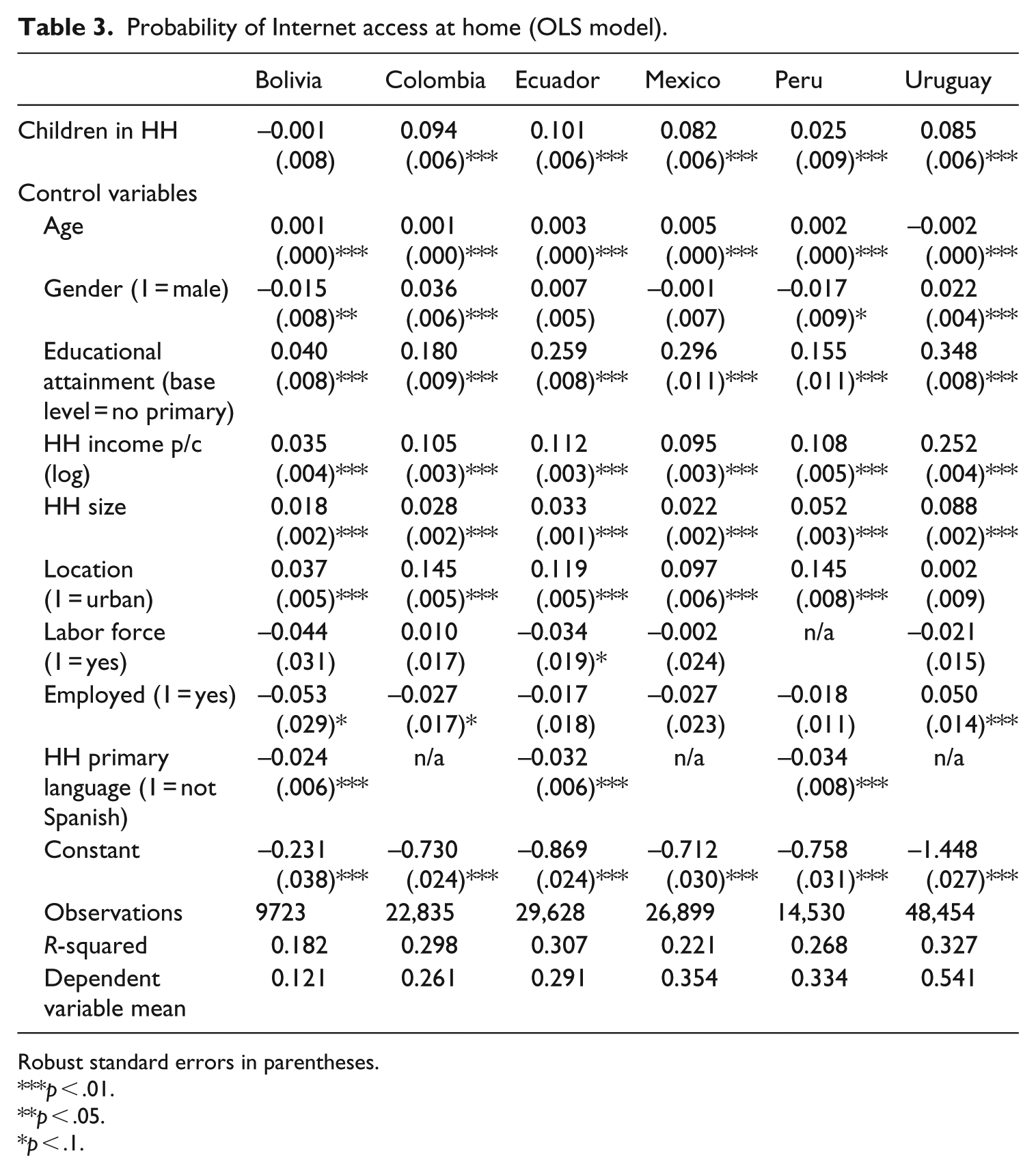
Robust standard errors in parentheses.
p < .01.
p < .05.
p < .1.
Prior studies indicate that the magnitude of this effect should increase with children’s age (e.g. Rudi et al., 2015). Following the findings by Enyon and Helsper (2015), we divide children into two age groups: young children (5–10 years old) and older children (11–17 years old). From Table 4, we observe that OLS coefficients for young children are either not significant (Colombia, Ecuador, and Mexico) or marginally but significantly negative (Bolivia, Peru, and Uruguay), while coefficients for older children are always (significantly) positive. Furthermore, in all cases the lower bound of the confidence interval for older children does not overlap with the upper bound of the confidence interval for young children. This confirms that, as theorized, the positive effect on residential access is primarily driven by the presence of older children, with effect size ranging from a 12.7% increase over the average penetration level in Bolivia up to 42.3% in Colombia.
Probability of Internet access at home by children’s age (OLS model).
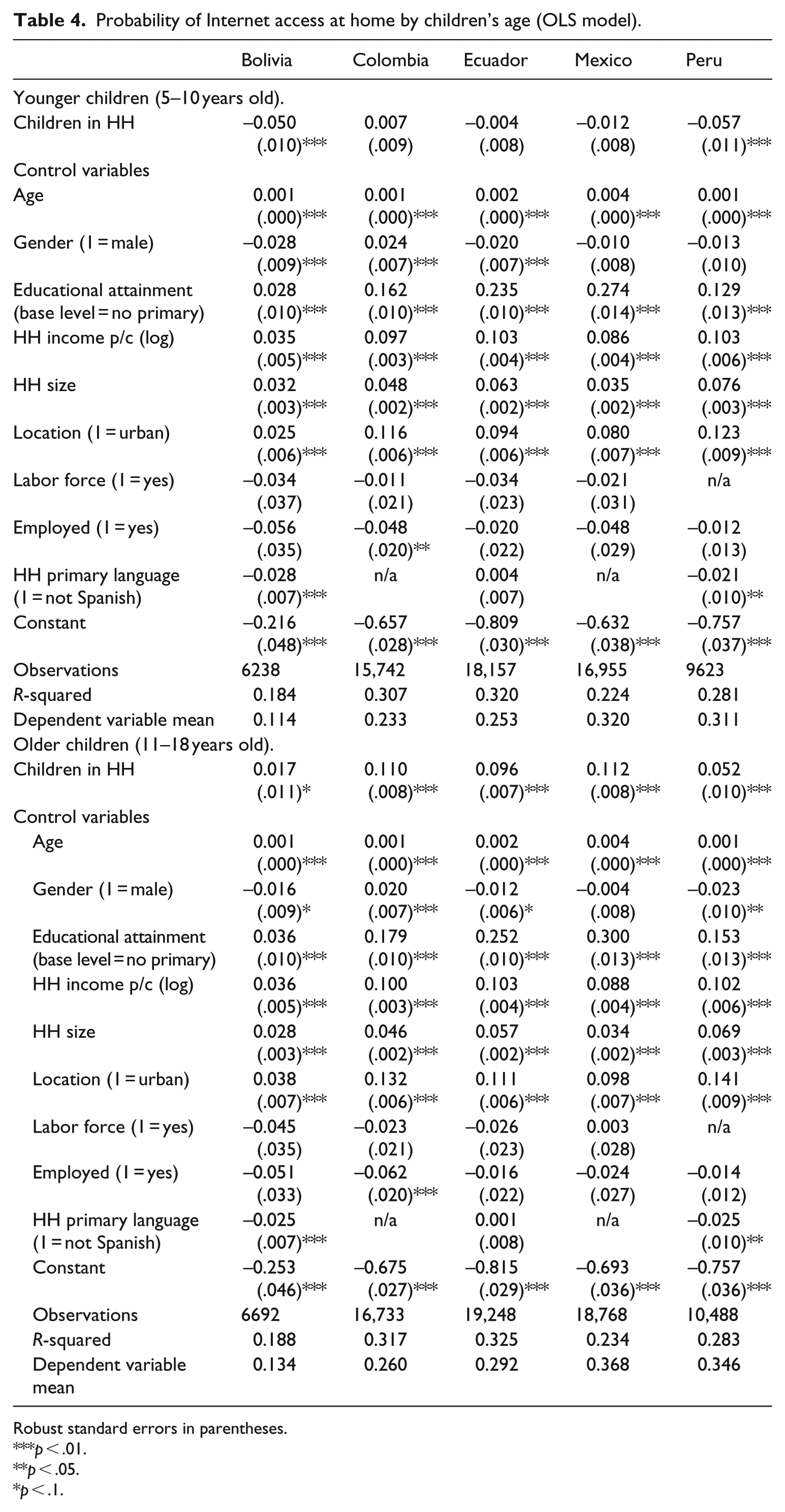
Robust standard errors in parentheses.
p < .01.
p < .05.
p < .1.
Internet use
We begin to address RQ1 by replicating the linear regression model used for household access. We nonetheless introduce two important control variables that are known to affect Internet use: the availability of a computer (or similar device such as a tablet) at home, and the availability of residential Internet access. By adding these controls, the model isolates the direct effect of children on Internet use by adults from the indirect effect it exerts through the increased likelihood of having a computer and residential Internet access (which as shown above is significant in magnitude).
The results in Table 5 indicate that the presence of children is negatively correlated with Internet use by adults. The effect is remarkably consistent across countries, and while small in magnitude in Colombia, Ecuador, and Mexico (about −3.5%), it increases to about −10% in Peru, and −13% in Bolivia. In other words, a Bolivian adult living with children is about 13% (−0.046/0.360 = −0.127) less likely to use the Internet on a regular basis, regardless of age, income, education, gender, and the availability of technology at home, among other control variables. This suggests that leaning effects may be stronger than commonly assumed, outweighing the intergenerational transfer of motivation and skills (the learning effect).
Probability of Internet use (OLS model).
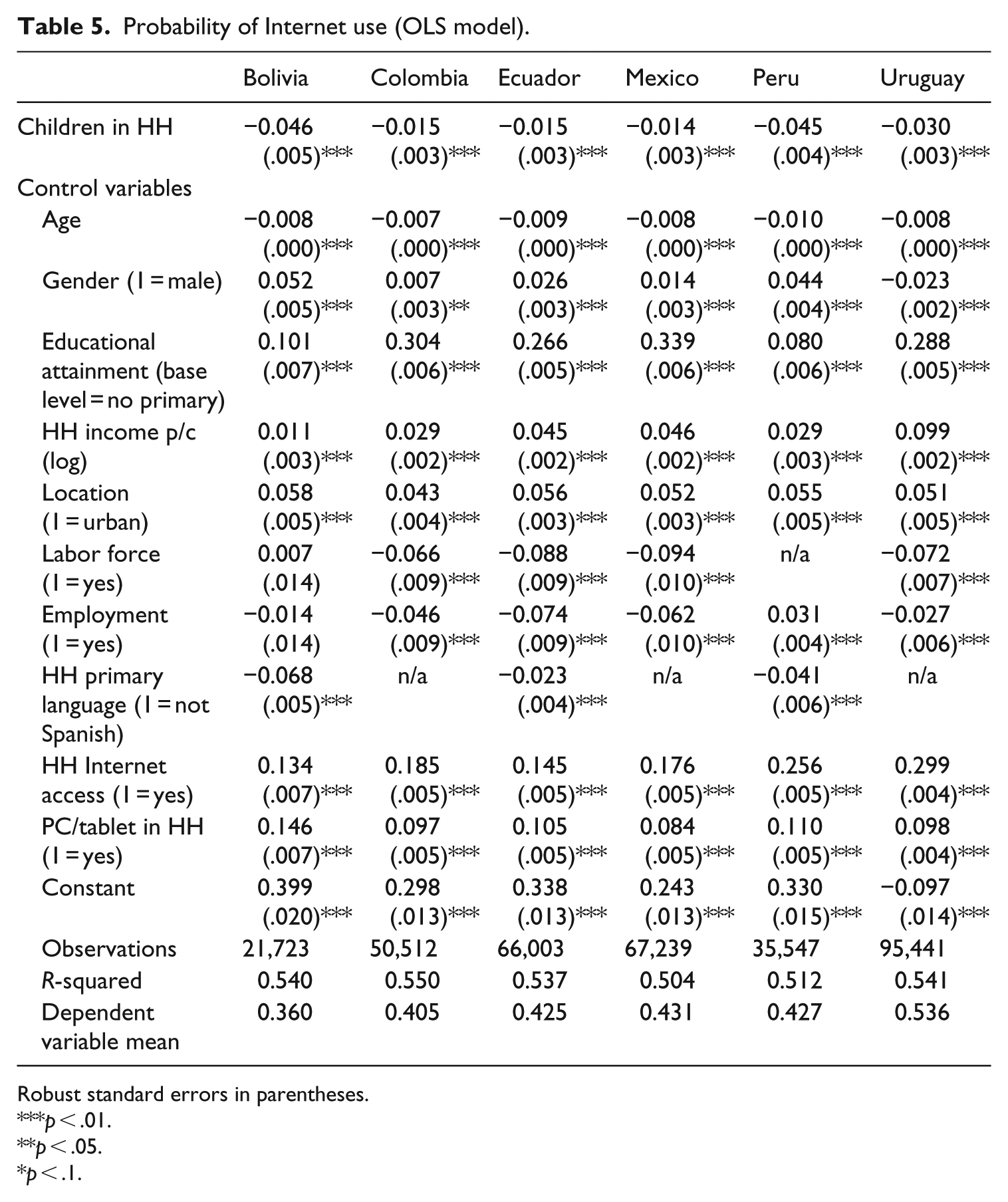
Robust standard errors in parentheses.
p < .01.
p < .05.
p < .1.
Next, we examine whether these results vary with children’s age, as posited in RQ2. If adults rely on children as proxy users, one would expect to find stronger leaning effects as children’s age increases. To answer this question, we begin by separately estimating the model for younger (5–10 years old) and older children (11–17 years old). The results are presented in Table 6.
Probability of Internet use by children’s age (OLS model).
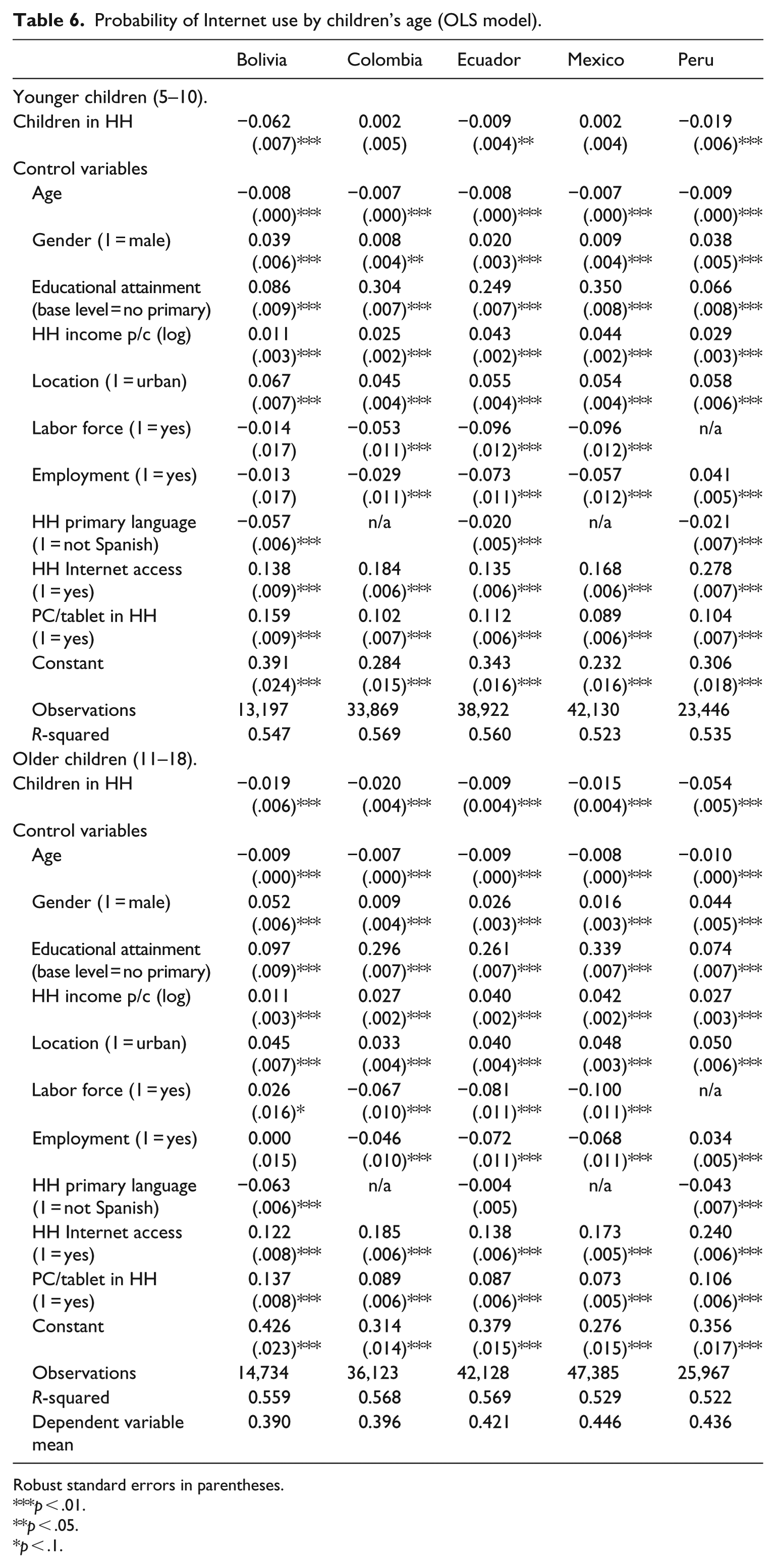
Robust standard errors in parentheses.
p < .01.
p < .05.
p < .1.
The results generally show a larger leaning effect for parents of older children, thus corroborating our interpretation of findings. For example, in Uruguay and Peru the magnitude of the effect doubles from about 5% for younger children to over 10% for older children. The exceptions are Ecuador, where the magnitude of the effect remains unchanged in the two age groups, and Bolivia, where the effect is larger for younger children.
It is worth noting that in Colombia and Mexico the presence of young children has no effect on Internet use by adults, whereas a small but statistically significant leaning effect (of about 5%) is observed for older children. This raises the question of a tipping point in children’s age, after which adults start relying on them as proxy users. Taking advantage of our very large sample sizes (76,026 in Colombia and 99,503 in Mexico), we replicate the model for subsamples for each age group for children aged 5–17 in these two countries. Each of these models thus estimates the effect of having children of a particular age (from 5 to 17) on the likelihood of Internet use, conditional on the same covariates.
The results are shown in Figure 1, which reports marginal effect coefficients (along with 95% confidence intervals) for the presence of children in each of the separate age models. 1 The results suggest that a tipping point exists somewhere between the ages of 9 and 10, after which leaning effects are consistently observed. This is better visualized in the case of Colombia, where the coefficient decreases almost monotonically, turning negative between the ages of 9 and 10. The results for Mexico, albeit more noisy, reveal a similar pattern.
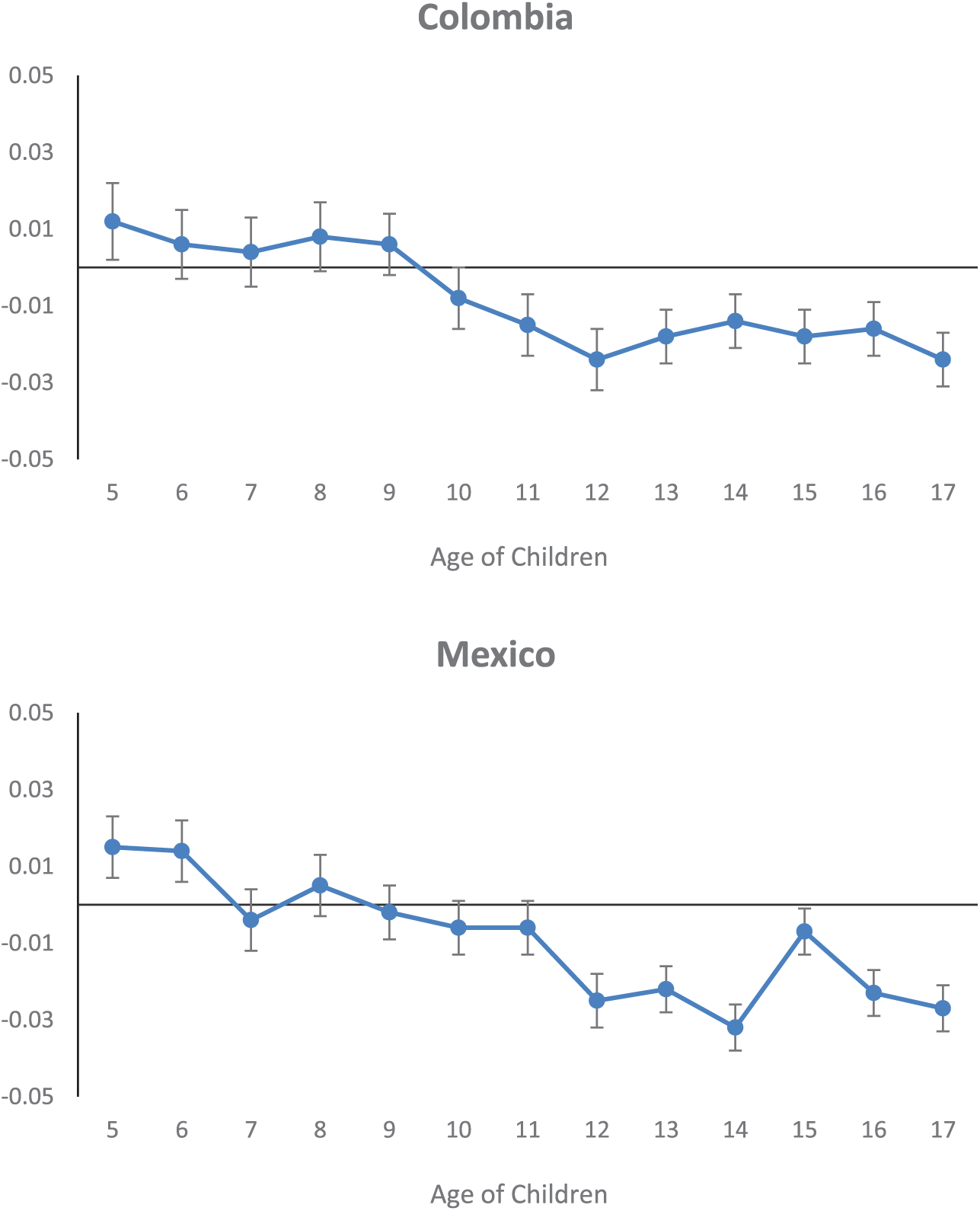
OLS coefficient (β) and 95% confidence interval for the variable Children in the Household by children’s age.
As noted, prior studies also suggest that children’s role as technology brokers is particularly important for low-income parents, who are less likely to be exposed to new technologies through employment or other social networks. To address this question (RQ3), we divide the sample into income quintiles and separately re-estimate the model for Internet use. Figure 2 presents marginal effect coefficients (along with 95% confidence intervals) for the variable of interest (the presence of children in the household) across income quintiles.
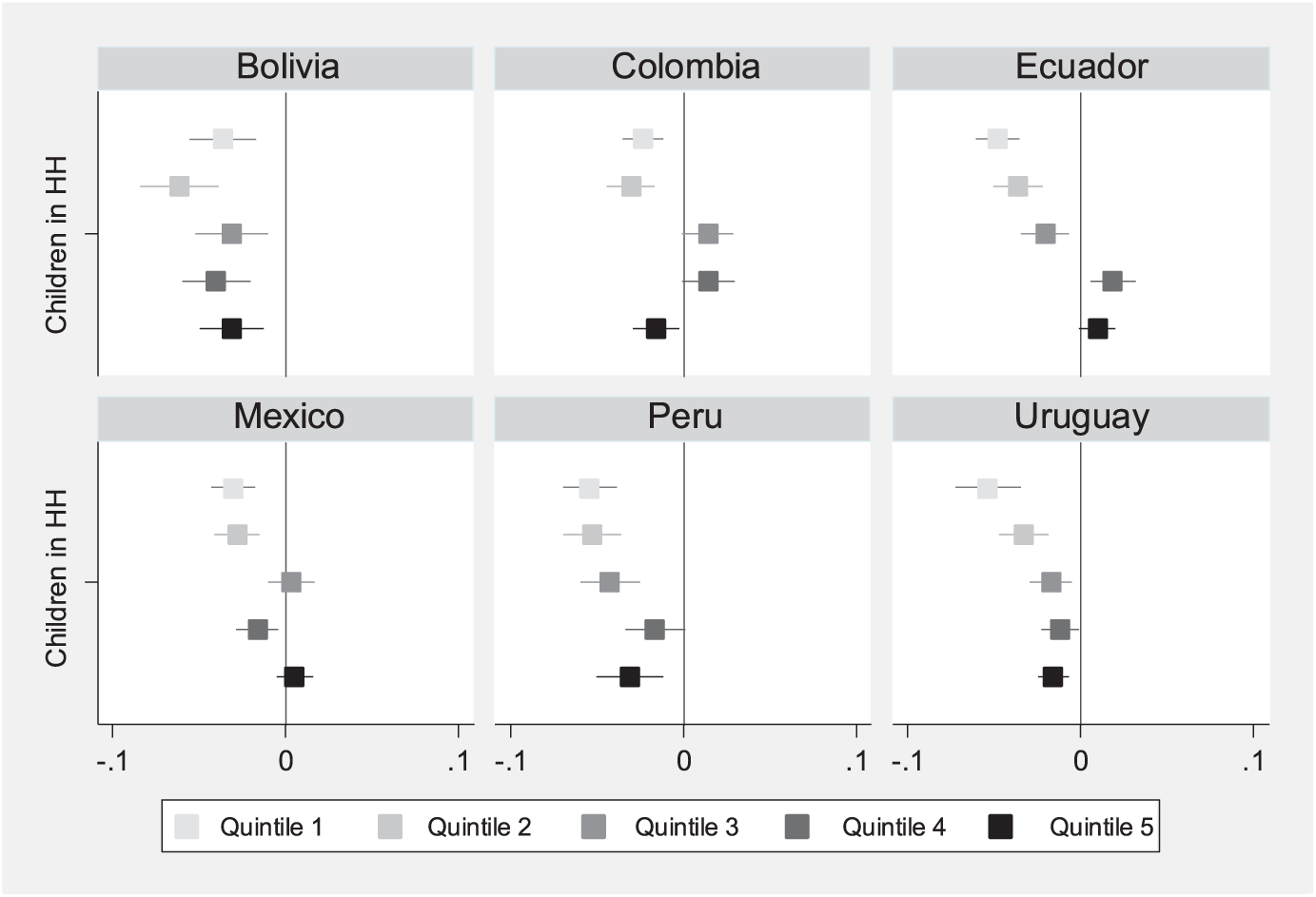
OLS coefficient (β) and 95% confidence interval for the variable Children in the Household by income quintiles.
The overall results are inconclusive, as no clear pattern emerges from the different country estimates. Leaning effects are found to be the strongest for the lowest income quintile in four countries (Ecuador, Mexico, Peru, and Uruguay), which suggests that low-income parents are more likely to rely on their children as proxy users. This interpretation is consistent with findings from studies in the US context (e.g. Katz, 2010). However, no clear pattern emerges as incomes rise, suggesting the need for further research in this area.
Is there a causal effect? PSM results
The above results from multivariate regression analysis suggest that the bottom-up transfer of motivation and skills from children to adults may be outweighed by leaning effects, whereby parents rely on children to perform online tasks for them, ultimately reducing online engagement. In this section, we use a matching technique to valid these results and approximate a causal interpretation.
The first step involves the estimation of a probit model for the presence of children in the household based on sociodemographic indicators, including income, age, gender, educational attainment, employment, and location. For simplicity, we skip presentation of results from this first-stage estimation, offering instead a balance check for the covariates before and after matching. Figure 3 presents the reduction in self-selection bias achieved through PSM, calculated as the difference of the means in the treated (with children) and non-treated (no children) groups as a percentage of the square root of the average of the sample variances. As shown, PSM significantly reduces pre-existing differences between respondents with and without children. This results in a matched sample that significantly improves on the unmatched sample used in the previous section.
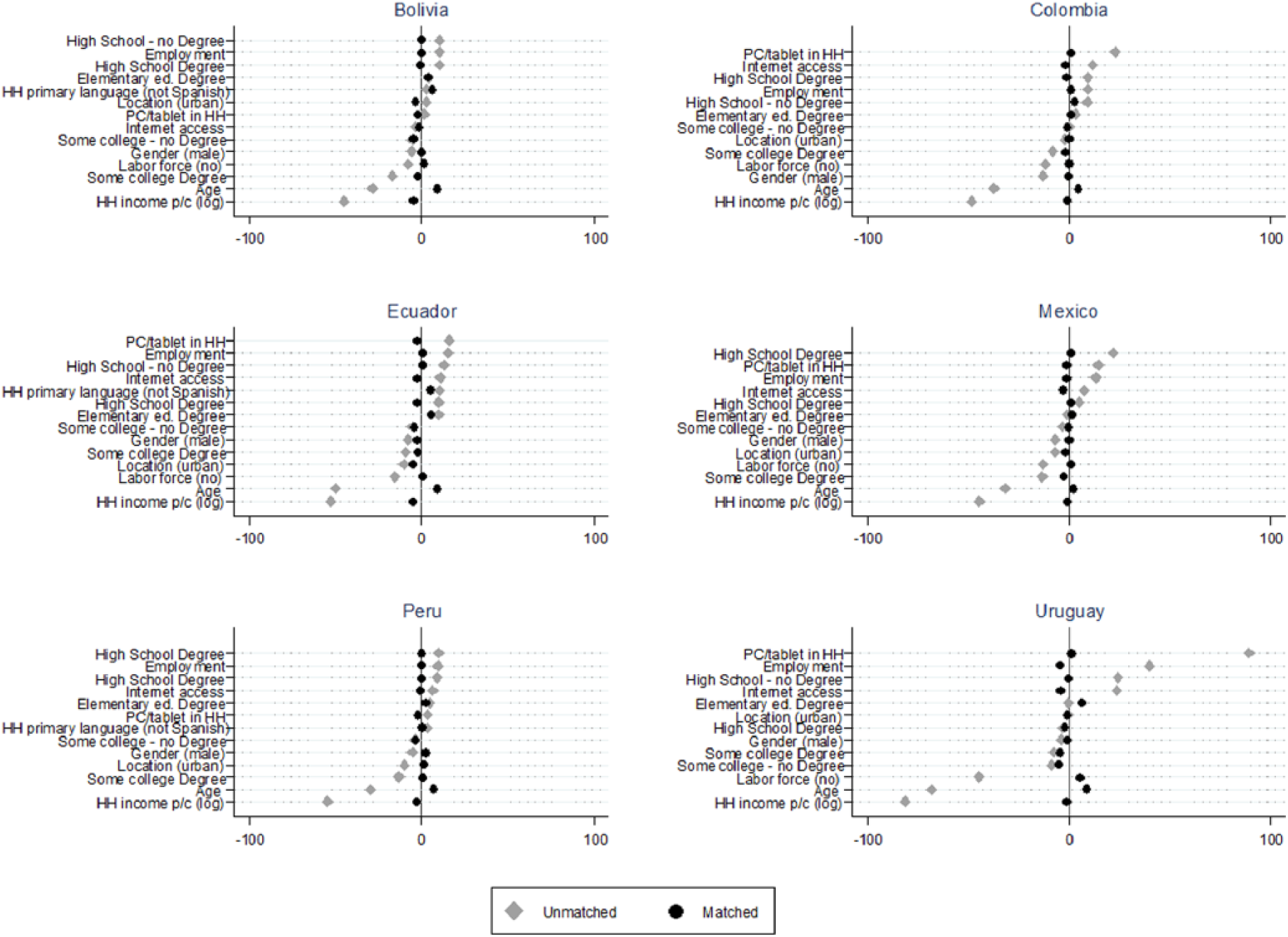
Balancing check for covariates in unmatched/matched samples (% standardized bias).
In the second step, the average treatment effect is calculated as the mean difference in Internet use between respondents with children and their matched counterparts (no children). We follow the method developed by Abadie and Imbens (2016) for the calculation of standard errors, which takes into account that propensity scores are estimated (from the probit model in step 1) rather than known.
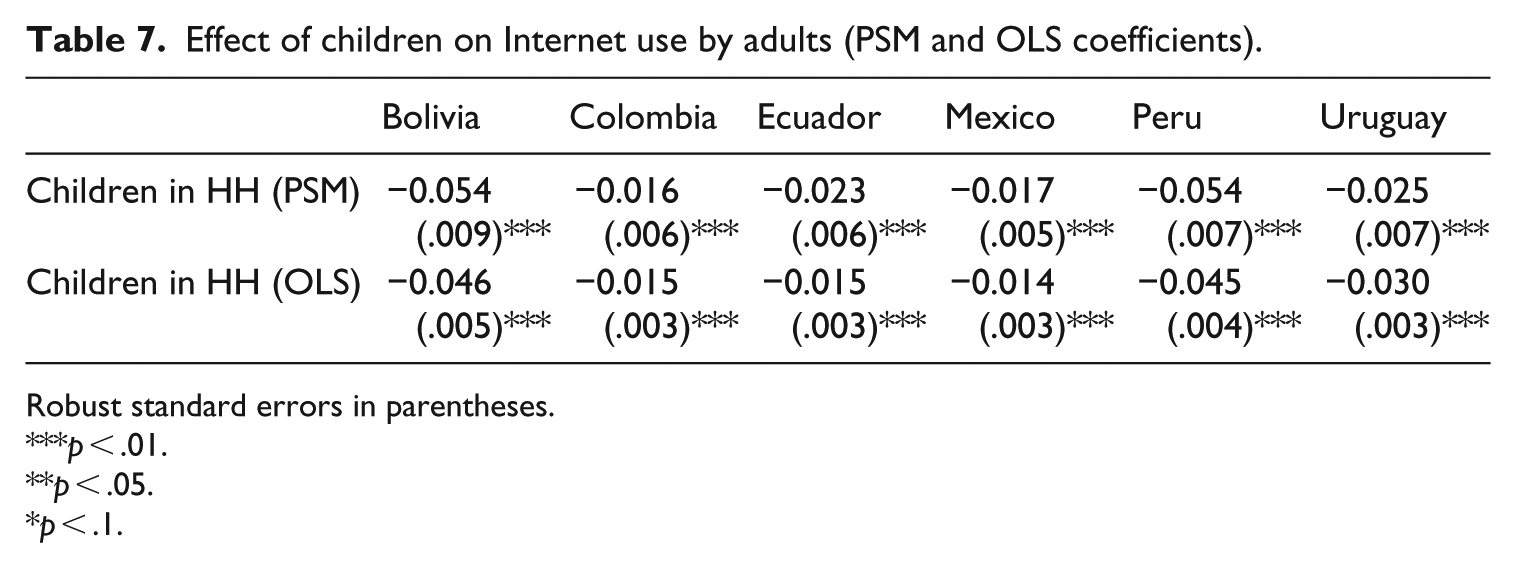
Table 7 presents PSM estimates for the effect of having children on Internet use by adults. The table also presents previous estimates from the multivariate regression analysis to facilitate comparison (from Table 5).
Effect of children on Internet use by adults (PSM and OLS coefficients).
Robust standard errors in parentheses.
p < .01.
p < .05.
p < .1.
The results corroborate the key findings from the multivariate regression models: the presence of children in the household results in lower Internet use by adults. Further, they suggest that standard regression analysis may be underestimating the true causal impact of children. In five of the six countries, the PSM coefficients are larger than the OLS coefficients. Overall, the matching procedure supports a causal interpretation of the results obtained from the regression models.
Discussion and limitations
Several studies have documented the unique role that children play with respect to family choices in the adoption of new technologies, including the Internet. At the same time, results regarding their role in mediating engagement by parents or other adults in the family have found mixed results. This is likely due to the fact that scholars are observing two simultaneous forces. While children help adults domesticate new media technologies by transferring skills and stimulating use (the learning effect), they also act as proxy users, obviating the need for adults to experiment with the technology and acquire the skills themselves (the leaning effect).
Our findings suggest that, in the context of countries with low to moderate levels of adoption, the intergenerational transfer of motivation and skills from children to adults is (on average) outweighed by leaning effects whereby parents rely on children to perform online tasks for them. Despite some variations in effect magnitude, the findings are remarkably consistent across six countries with significant differences in Internet adoption levels. However, since our data are from 2014/2015, it remains to be seen whether these results persist over time as overall adoption levels increase, or whether similar patterns exist in wealthier countries.
There are several shortcomings to this study which call for caution in the interpretation of results. First, we lack indicators of Internet skills, either direct or through self-reported measurements. We are therefore unable to examine how variations in skills for children and adults affect our results. This is an important limitation, given consistent findings in the literature regarding the role of skills in new media adoption (Enyon and Helsper, 2015; Livingstone et al., 2017; Livingstone and Helsper, 2007).
Second, we lack direct observations of the mechanisms at play. Based on the extant literature, our interpretation of results is based on the assumption that children act as proxy users for adult family members. This interpretation is consistent with studies of Internet non-users, which suggest that proxy use inhibits experimentation and the acquisition of skills, and that children are the most common source of proxy use (Blank, 2013; Dolničar et al., 2018; Reisdorf and Groselj, 2015; Selwyn et al., 2016). The fact that leaning effects increase with children’s age further validates this interpretation. In addition, the PSM estimates strongly suggest causality rather than spurious correlation driven by confounders such as income, gender, or other demographic factors that are known to affect online engagement.
Third, our information about ICT equipment in the household is limited to the availability of residential Internet service and the presence of a PC or similar access device. As shown in Table 5, both variables are strongly correlated with individual Internet use in all countries examined. However, we lack more detailed information about Internet service quality/speed, which can vary greatly in the Latin American context (see Galperin and Ruzzier, 2013).
Given these limitations, we are unable to completely rule out alternative interpretations for the results observed. For example, it is possible that adults living with children simply have less time than comparable adults in households without children, thus reducing opportunities for developing online experience and skills. However, this interpretation is inconsistent with the finding that leaning effects increase with children’s age, since time constraints for parents will tend to ease as their children grow older.
The attention to family composition (including the presence of children) should not overlook its interaction with other factors that research has shown to be core determinants of online engagement. As Silverstone and Haddon (1996) argue, technology appropriation involves multiple dimensions of family capital. This is corroborated by the results in Tables 3 to 6, which show educational attainment, urban/rural location, household income, and language spoken at home to be strongly associated with the likelihood of residential Internet access and individual Internet use.
Finally, while we observe a negative correlation between individual Internet use and the presence of children in the household (and PSM estimates validate a causal interpretation of these findings), more in-depth research is needed to untangle learning from leaning effects as both occur simultaneously in the technology adoption process. Our findings do not invalidate previous studies which demonstrate how children help parents domesticate new technologies in specific socioeconomic contexts. Rather, they call for more attention to the unintended consequences of proxy use, and the multiple ways in which children and parents influence each other in the context of a rapidly evolving new media environment. In particular, the inconclusive results for RQ3 suggest the need to examine the role that children play in Internet adoption among low-income families, as well as to further explore how digital inclusion initiatives can promote intergenerational skills transfer and technology co-engagement among family members.
Footnotes
Funding
The author(s) received no financial support for the research, authorship, and/or publication of this article.