







Abstract
Utilizing online surveys of 729 US and 469 Chinese respondents, this study examines the mediated relationships between age and misinformation via fear of missing out (FoMO) and digital literacy in two different cultures. Results suggest that senior citizens are uniquely vulnerable to misinformation as the victims, in that they are less likely to check on suspicious content and that they are also less motivated to share information online in general. In contrast, youngadults have a greater propensity to be the spreaders of misinformation if not made suspicious of the content due to their stronger motivations to share information online. FoMO and digital literacy significantly mediate the relationship between age and motivations to share information and the one between age and reactions to misinformation, respectively. Sociocultural differences vary the intensity of these mediated relationships. Theoretical and practical implications are discussed.
Misinformation, broadly defined as information lacking factual evidence (Nyhan and Reifler, 2010), has received increasing academic attention since the 2016 US presidential election (Li, 2020). Despite the outcry that online misinformation poses serious threats to our society, research in recent years has discoverd that the impact of misinformation is far from uniform. As the digital divide theory reveals, a divide can manifest not just in access/knowledge but also in motivation and outcome, such that certain interactions with and via communication technology could be more appealing and impactful to some segments of the public but not to others (Scheerder et al., 2017; Van Deursen and Van Dijk, 2019). In the case of abilities to evaluate misinformation and motivations to share it online, a key dividing factor that has drawn growing scholarly attention is age. Senior citizens aged 65 and above were found seven times more likely to fall for fake news—a special type of misinformation defined as “false, often sensational, information disseminated under the guise of news reporting” (Collins-Dictionary, 2017) compared to young adults below 40 (Guess et al., 2019). This finding is unsettling even when research suggests fake news online only makes up a tiny fraction of Americans’ information consumption diet (Grinberg et al., 2019; Guess et al., 2019).
On the one hand, existing literature suggests a motivation divide, such that senior citizens, compared to young adults aged 18 to 39 who are constantly checking updates, liking, commenting, and sharing likely due to the fear of missing out (FoMO), are overall less active online despite their fast-growing adoption of the Internet in the past decade (Pew Research Center, 2021a, 2021b). On the other hand, senior citizens also face a knowledge divide due to lagging digital literacy (see Oh et al., 2021), referring to one’s technical, cognitive, and social-emotional competencies in dealing with digital technology (Ng, 2012).
These divides highlight the noteworthy role of age when it comes to misinformation. While young adults seem to be less vulnerable to misinformation online due to their significantly higher digital literacy, they are more likely to transmit misinformation, especially if they are not consciously thinking about what they are passing along online (Bago et al., 2020; Pennycook and Rand, 2019). As a result, misinformation can still travel through them to prey on others (Laato et al., 2020; Vijaykumar et al., 2021). With the majority of scholarly attention devoted to young adults (e.g., Chen et al., 2015; Oh and Syn, 2015), little is known about senior citizens’ motivations to share information online and how they would react to misinformation. When individuals are highly motivated to share information online, they are more likely to also pass along misinformation when they have higher levels of FoMO and lower digital literacy. More work, therefore, is needed to understand the cognitive and psychological mechanisms on why age plays such a noticeable role in nuancing the impact of misinformation.
Building on the extant literature (Guess et al., 2019; Roberts and David, 2020; Seo et al., 2021), this study aims to empirically investigate senior citizens and young adults’ motivations to share information, their reactions to misinformation online, and the associated explaining mechanisms. To expand the representativeness of the findings, we also explore the moderating effect of sociocultural contexts (the U.S. and China). Understanding who is likely to spread as opposed to fall prey to misinformation in different cultures will advance our knowledge building about the unequal impact of misinformation and help practitioners and policymakers develop more targeted and efficient interventions against misinformation.
Theoretical background
Information sharing
Information sharing refers to “the volitional conveyance of information generated or obtained by one entity to another entity” (Akbulut et al., 2009: 4). In the online context, information sharing can be understood as the exchange of ideas, opinions, facts, and other content among users through functions like posting, liking, commenting, and sharing. While there are many reasons why individuals share information online, motivation theories such as Social Exchange Theory and the Intrinsic and Extrinsic Motivation Model (Deci and Ryan, 2013; Hall, 2003) have revealed three universal categories that explain how individuals seek internal or external rewards for sharing information online.
First, keeping oneself connected to the surrounding social environment is one of the most fundamental human motivations for survival (Bordia and DiFonzo, 2004). In fact, keeping updated with the latest happenings and maintaining social connections can be considered the most common reason why people go online (Barker, 2009). Through the exchange of information, individuals can avoid feeling loneliness and alienation and obtain a sense of connectedness and companionship (Chen, 2016; Oh and Syn, 2015). Enhancing one’s competence, in addition, is another well-known reward people seek through participating in sharing behaviors (Deci and Ryan, 2013). For example, sharing information can be used strategically to build one’s reputation as always “in-the-know” online (Chen et al., 2015; Oh and Syn, 2015). That said, sometimes people share information simply because they enjoy so (e.g., passing time), even if no tangible external rewards are guaranteed (Chen, 2016). As previously found, using social media for entertainment/escapism is a notable intrinsic motive that keeps people engaged with various activities online (Lin and Lu, 2011).
Previous studies have noted age in driving Internet use due to different age groups’ distinctive life stages and familiarity with various information and communication technologies (ICTs) (Leung, 2013). In particular, due to their heavy use of the Internet (Pew Research Center, 2021a, 2021b), young adults are expected to be more motivated to share information than senior citizens online.
H1: Compared to senior citizens, young adults are significantly more motivated to share information online.
Fear of missing out
Young adults are significantly more likely to use ICTs, particularly social media, largely due to their “desire to stay continually connected with what others are doing” (Przybylski et al., 2013: 1841),” aka FoMO (Reer et al., 2019; Tandon et al., 2021). While it is well agreed on the positive correlation between FoMO and social media engagement (Barry and Wong, 2020; Oberst et al., 2017; Roberts and David, 2020), prior literature, however, is incongruent as to the relationship between age and FoMO.
Some argue that senior citizens’ reliance on the Internet is triggered by their growing feelings of isolation and loneliness offline (Brashier and Schacter, 2020; Silverman, 2019; Wason et al., 2019). Others point out that senior citizens are not the only group suffering FoMO (Barry and Wong, 2020; Lee et al., 2019). Young adults in and outside the U.S. tend to suffer more FoMO as they constantly engage in online activities such as checking, liking, commenting, and sharing (e.g., Weaver and Swank, 2021; Zhou, 2019), which, in turn, further exacerbates their anxiety to catch up with everything online.
As previous literature revealed, one of the most crucial functions of sharing information is to keep individuals connected to their surroundings (Chen, 2016; Oh and Syn, 2015). It is, therefore, important to investigate how seniors and young adults’ information-sharing motivations could be driven by their susceptibility to FoMO.
RQ1: How will FoMO mediate the relationship between age and individuals’ motivations to share information online?
Reactions to misinformation
With respect to how age impacts individuals’ proper reactions to misinformation, one stream of evidence suggests that seniors aged 65 or above are more likely to believe in misinformation than their young counterparts (Grinberg et al., 2019; Guess et al., 2019) because they are less adept at separating factual news statements from opinions (Gottfried and Grieco, 2018) and discerning sponsored news sources (Amazeen and Wojdynski, 2020). Another stream of evidence, however, shows that young adults were more likely to share misleading COVID-related claims (Laato et al., 2020; Vijaykumar et al., 2021) and the ability to distinguish fake from true news increases with age (Allcott and Gentzkow, 2017; Pennycook and Rand, 2019).
Social transmission of misinformation varies not just as a function of one’s desire to share information but also one’s willingness and capability to verify suspicious information. While young adults are much more active on the Internet than senior citizens, they generally also have greater abilities to check on misinformation in response to the content they suspect. As such, we expect seniors and young adults to react to misinformation differently online.
H2: Compared to young adults, senior citizens are less able to properly react to misinformation online (i.e., check on misinformation).
Digital literacy
While senior citizens may have accumulated greater knowledge over time for assessing information in offline contexts (Brashier and Schacter, 2020), their wisdom could still fall short in the online world that requires a new set of technical, cognitive, and social-emotional competencies to properly handle digital technology, that is, digital literacy (Ng, 2012). Different from media literacy, “the ability to access the media, to understand and to critically evaluate different aspects of the media and media content and to create communications in a variety of contexts” (Koltay, 2011: 213), digital literacy is commonly used to exclusively refer to the effective use of ICTs. Despite many definitions of this term, the existing literature has agreed that digital literacy includes technical (operating ICTs), cognitive (critical thinking in the process of using ICTs), and social-emotional (understanding and abiding by social norms when using ICTs) skills to deal with digital technology (Ng, 2012).
Due to less experience with the Internet and their subsequently low digital literacy, senior citizens tend to evaluate information using heuristic cues, such as their familiarity with its source or its popularity (Guess et al., 2019; Seo et al., 2021; Wason et al., 2019). This renders them particularly vulnerable to online misinformation. However, young adults with more Internet experience and higher digital literacy could also unwittingly fall for misinformation without verification (Khan and Idris, 2019) due to their overconfidence in their ability to recognize misinformation (Bago et al., 2020; Pennycook and Rand, 2019). As such, it is imperative to further understand how age is associated with individuals’ reactions to misinformation via digital literacy.
RQ2: How will digital literacy mediate the relationship between age and individuals’ reactions to misinformation online?
Sociocultural difference
The degree to which age impacts one’s information sharing and reactions to misinformation via FoMO and digital literacy may also vary significantly by different sociocultural contexts. Individualism, which is more prevalent in Western countries including the U.S., is defined as the orientation toward self, privacy, and independence. Conversely, collectivism refers to a greater emphasis on interdependence and loyalty to in-groups composed of family and close friends and is frequently observed in Eastern countries such as China (Hofstede, 2011). While social interactions in individualistic cultures center around relatively large but loosely connected and less enduring networks, members of collectivistic societies invest more time and effort in fewer yet closer and more enduring relationships (Jackson and Wang, 2013; Stump and Gong, 2020).
Although the “individualism vs. collectivism” comparison may have oversimplified the distinctions between China and the U.S., previous literature still finds this contrast a meaningful approach to understanding the overall sociocultural differences between the two countries (e.g., Li et al., 2018; Lu and Guy, 2019). Specifically, in relation to ICT use, previous literature has shown that individuals in high-individualism countries rely on the Internet more heavily than those in high-collectivism countries (e.g., Jackson and Wang, 2013) and that people from collectivistic cultural backgrounds mainly use social media to strengthen close ties with those they already know offline (e.g., Stump and Gong, 2020). How members of different cultures develop and maintain social relationships is likely to determine the extent to which their experienced FoMO, which in turn, influences their motivations to share information online.
In addition, while Internet penetration has skyrocketed in China in recent years (CNNIC, 2020), the relatively shorter history of technology adoption, nevertheless, makes digital literacy in China, on average, lower than the U.S. (Lee-Johnson et al., 2016). This could have important implications for how individuals in the two countries react to misinformation. Therefore, it is crucial to understand how sociocultural differences moderate the relationships between age, FoMO, digital literacy, information sharing, and reactions to misinformation.
RQ3: How will age’s impact on individual motivations to share information online via FoMO be moderated by sociocultural differences (i.e., the U.S. vs. China)?
RQ4: How will age’s impact on individuals’ reactions to misinformation online via digital literacy be moderated by socio-cultural differences (i.e., the U.S. vs. China)?
Method
Participants
A total of 729 US participants were recruited via Lucid. Like Amazon Mechanical Turk and Qualtrics Panel, Lucid is increasingly recognized as a reliable source for recruiting online respondents by scholars who rely on quality national samples (e.g., Flores and Coppock, 2018; Wood and Porter, 2019). Coppock and McClellan (2019) assessed the data quality collected via Lucid and concluded that it was “suitable for evaluating many social scientific theories and can serve as a drop-in replacement for many scholars currently conducting research on Mechanical Turk or other similar platforms” (p.1). To ensure response diversity in terms of age, the US quota sample was conducted to include 300 (41.15%) participants aged below 65 and the rest aged 65 or above (429, 58.85%). Due to the unavailability of Lucid in mainland China, the data collection was managed via a large research university in Southern China. Similar to the US part, the quota sample of 469 participants in China included about half (210, 44.87%) of them aged below 60 and 258 (55.13%) aged 60 or above. As the two countries differ from each other in classifying the age for “senior citizens,” US participants aged 65 + were regarded as seniors (e.g., Jain, 2016), whereas those in China aged 60 + were viewed so according to the official guidelines (Central People’s Government of the People’s Republic of China, 2021).
363 (49.79%) of the US respondents were males, 364 (49.93%) were females, and 2 (0.27%) self-identified with a nonbinary gender identity. The US respondents on average aged 61.39 (SD = 16.30, Min = 18, Max = 93). Among the Chinese respondents, 152 (32.41%) respondents self-identified as male and 314 (66.95%) as female. Three (0.64) of them self-identified as nonbinary. Their average age was 50.69 (SD = 23.68, Min = 18, Max = 90). The Chinese and US samples have similar distributions in terms of participants’ education levels. 318 (43.62%) of the US participants had a high school diploma or lower education, 303 (41.55%) had an undergraduate degree, and 108 (14.82%) had a postgraduate degree (e.g., M.A., Ph.D.). Similarly, 200 (42.74%) of the Chinese participants had a high school diploma or lower education, 218 (46.58%) had an undergraduate degree, and 50 (10.68%) had a postgraduate degree.
Procedure
A Qualtrics link was sent to recruit respondents in the U.S. via Lucid in October 2021. In the same month, a Sojump link was sent to recruit respondents in China. Like Qualtrics, Sojump is one of the largest online-survey tools commonly used by academics in China. All participation was on a voluntary basis. Upon indicating their consent to participate in this study, respondents were directed to answer a few demographic questions such as age, gender, and residence, followed by questions about their FoMO and digital literacy. Afterward, they were instructed to answer questions about their motivations for sharing information online and their reactions when encountering misinformation online. To minimize the differences generated by administering the survey in cross-country settings, we conducted the survey in the same order and format in both countries. The survey was first constructed in English and translated into Chinese. The translation was done by a native Chinese speaker in the US research team who is also fluent in English and was further fine-tuned by the Chinese team. Participants in both countries had to be older than 18 to participate in the study and were free to withdraw themselves from this study at any time for any reason. Further analysis using time as a predictor suggested that individuals’ time spent on the survey in both China and the US did not significantly impact any of the dependent variables under study.
Independent variable
Age
Age was measured by asking respondents to fill in their age in years (M = 57.21, SD = 20.20, Min = 18, Max = 93). As previous literature has repeatedly found senior citizens significantly more vulnerable to misinformation than their young counterparts (e.g., Barberá, 2018; Guess et al., 2019), we coded age into three groups: young (18–39 years old; N = 282; 23.56%), middle-aged (40–64 years old for the US participants and 40–59 years old for the Chinese participants; N = 228; 19.05%), and senior (65 years old and above for the US participants and 60 years old and above for the Chinese participants; N = 687; 57.39%).
Dependent variables
Motivations to share information
Nine items adopted from Chen (2016) and Chen et al. (2015) were used to rate their agreement on a 7-point Likert scale (1 = “strongly disagree” to 7 “strongly agree”). Due to the scarcity of preexisting scales, we conducted an exploratory factor analysis using SPSS 24 with a varimax rotation to test the factor structure of the nine items (see Appendix 1). The Bartlett’s test of sphericity (significant at p < .001) and the Kaiser–Meyer–Olkin measure (.93) suggested that factor analysis was suitable. The factor analysis suggests three dimensions of response accounting for 82.93% of the total variance. The first dimension was labeled “staying connected,” which included four items about sharing information for connecting with the latest updates of either recent events or one’s social networks (M = 4.89, SD = 1.35, Cronbach’s α = .91). The second dimension was categorized as “staying influential,” including three items about sharing information making individuals look good and influential to others (M = 3.88, SD = 1.59, Cronbach’s α = .90). The third dimension was named “staying engaged” including two items that sharing is a way to simply pass time or kill boredom (M = 4.35, SD = 1.57, Cronbach’s α = .88).
Reactions to misinformation
Five items adapted from Ştefăniţă et al. (2018) were used to measure respondents’ reactions to suspicious information. Respondents were asked to indicate their agreement on a 7-point Likert scale (1 = “strongly disagree” to 7 = “strongly agree”) with these items when they suspected something they saw online might be false. An exploratory factor analysis revealed a two-factor structure of the five items that accounted for 77.15% of the total variance (see Appendix 2). The first factor was coded as “effortful checking” as it included three items on making efforts to “check sites specialized in detecting incorrect information,” “look for the information source,” and “verify what other people say online about that piece of information” (M = 4.63, SD = 1.50, Cronbach’s α = .82). In contrast, the other factor labeled as “heuristic checking” consisted of two items about individuals relying on some heuristic cues—“the source’s reputation” and “journalists’ reputation” (M = 4.49, SD = 1.54, Cronbach’s α = .78). The Bartlett’s test of sphericity (significant at p < .001) and the Kaiser–Meyer–Olkin measure (.78) also suggested that factor analysis was appropriate for the data.
Moderating variable
Sociocultural differences
Sociocultural differences were measured by different countries dummy coded as the U.S. = 0 (729, 60.85%) and China = 1 (469, 39.15%).
Mediating variables
Fear of missing out
Adopting the scale from Przybylski et al. (2013) that was developed and validated in the context of social media with a high level of internal consistency, we used ten items to measure respondents’ FoMO. Respondents were asked to indicate, on a 7-point Likert scale, how strongly they agreed with statements such as “I fear others have more rewarding experiences than me,” “I fear my friends have more rewarding experiences than me,” and “I get anxious when I don’t know what my friends are up to” (see Appendix 3) (M = 3.59, SD = 1.38, Cronbach’s α = .93).
Digital literacy
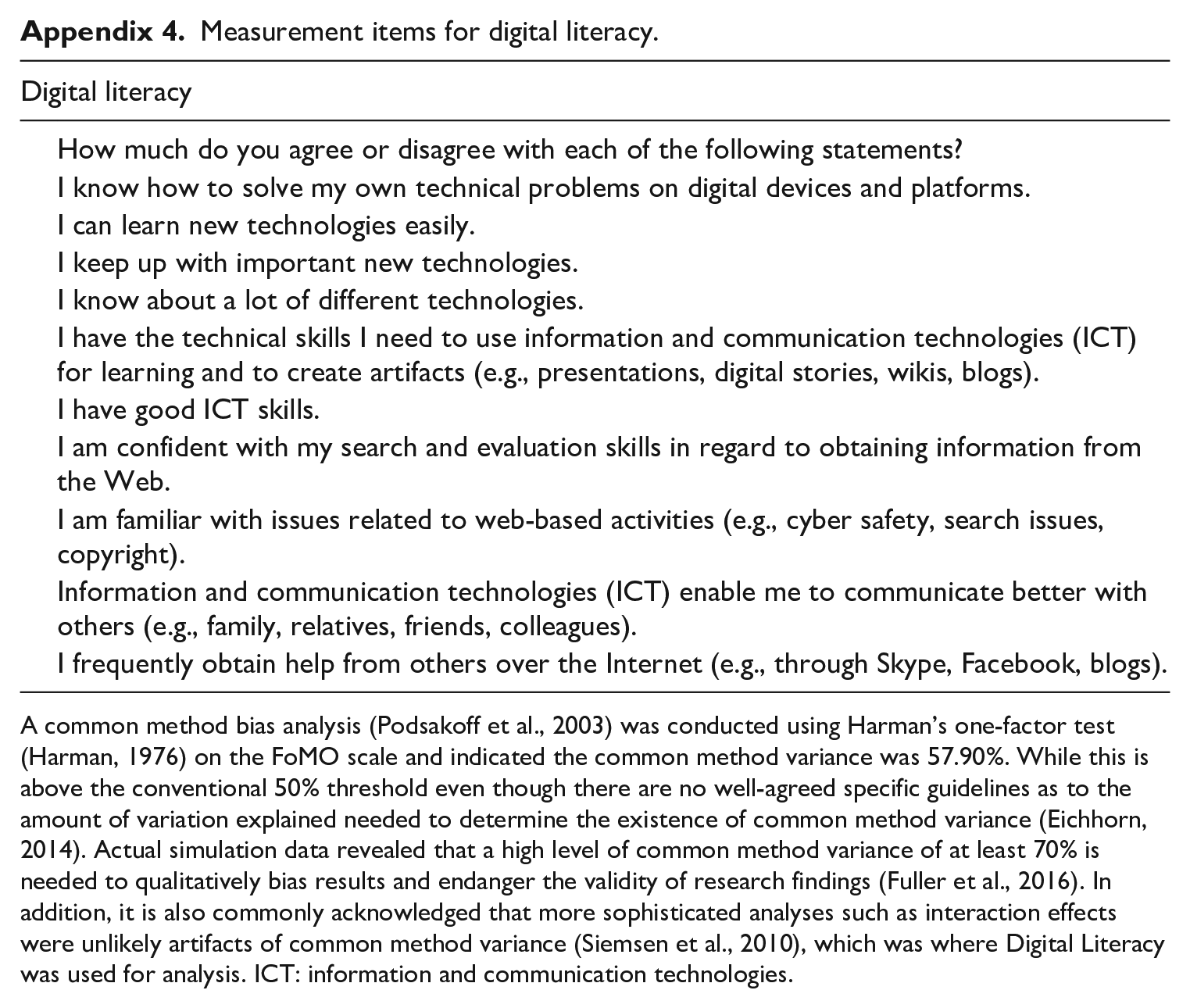
Digital literacy was measured by ten items borrowed from Ng (2012). Respondents were asked to rate, on a 7-point Likert scale, how strongly they agreed with the statements such as “I know how to solve my own technical problems on digital devices and platforms,” and “I am confident with my search and evaluate skills in regard to obtaining information from the Web” (see Appendix 4) (M = 4.09, SD = 1.40, Cronbach’s α = .93).
Data analyses
H1 and H2 were tested using the statistical program SPSS version 24. PROCESS Macro Model was used to examine the RQs. Before data analyses, we checked to make sure all dependent variables were normally distributed and the assumptions for each analysis were met.
Results
Age differences
A one-way multivariate analysis of variance (MANOVA) was conducted to test H1 and H2. This analysis reveals a significant main effect for age, Wilks’Λ = .77, F(10, 1786) = 25.12, p < .001, partial η2 = .12. The univariate analysis indicats that age has a significant main effect on all three dimensions of information-sharing motivations, F(2, 897) = 34.73, p < .001, partial η2 = .07 for “staying connected,” F(2, 897) = 100.87, p < .001, partial η2 = .18 for “staying influential,” and F(2, 897) = 56.40, p < .001, partial η2 = .11 for “staying engaged,” as well as the reactions to misinformation, F(2, 897) = 48.66, p < .001, partial η2 = .10 for “effortful checking” and F(2, 897) = 50.76, p < .001, partial η2 = .10 for “heuristic checking.” As Table 1 shows, senior citizens constantly report the lowest motivation to share information online while young adults aged 18 to 39 express the highest motivation. Senior citizens are also least likely to check misinformation either heuristically or effortfully compared to their young counterparts who are most likely to do so. The middle-age group consistently score between the senior and young adult group across the board. H1 and H2 are both supported.
Age differences in the motivations for sharing information and reactions to misinformation online.
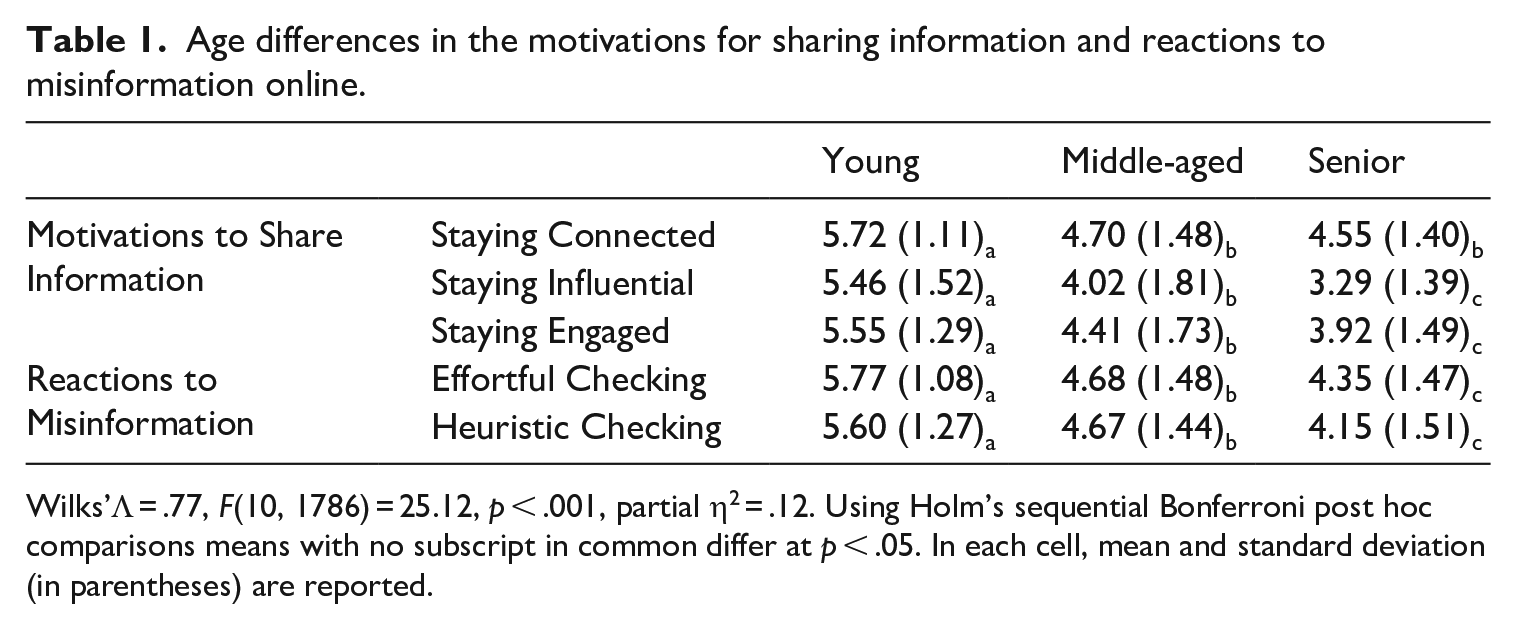
Wilks’Λ = .77, F(10, 1786) = 25.12, p < .001, partial η2 = .12. Using Holm’s sequential Bonferroni post hoc comparisons means with no subscript in common differ at p < .05. In each cell, mean and standard deviation (in parentheses) are reported.
Online information sharing motivations
RQ1 asks how the relationship between age and online information-sharing motivations would be mediated by FoMO. RQ3 further enquires how cultural differences might moderate the mediated relationship aforementioned. Three moderated mediation analyses were performed using Andrew Hayes’ Process Macro Model 58 (Hayes, 2017; Preacher and Hayes, 2008), with each dimension of the motivations (staying connected, influential, and engaged) as the dependent variable Y, the continuous variable age as the independent variable X, culture as the moderator W, and FoMO as the mediator M. The 95% bias-adjusted confidence intervals from 50,000 bootstrapped samples were generated to test the significance of the moderated mediation effects.
Staying connected
The analysis reveals that together the entered factors account for 29.15% of the total variance explaining individuals’ information sharing for staying connected with the latest happenings. Age significantly decreases such motivation to share information via decreasing FoMO. In addition, the fully mediated relationship between age and sharing information for staying connected via FoMO significantly varies by sociocultural differences (95% CI = [.0196, .0291]), such that age reduces the motivation significantly more for the US respondents (b = −.028, SE = .002, 95% CI = [−.0320, −.0231]) than for their Chinese counterparts (b = −.003, SE = .001, 95% CI = [−.0047, −.0017]) (Figure 1). Simple-slopes analysis of sharing information for staying connected was conducted for the US and Chinese participants at ±SD of the average age. When aged below the average age (57.21), participants in both countries are similarly motivated to share information for staying connected. However, when aged above 57.21, the US participants expressed significantly lower motivations than their Chinese participants (Figure 2).
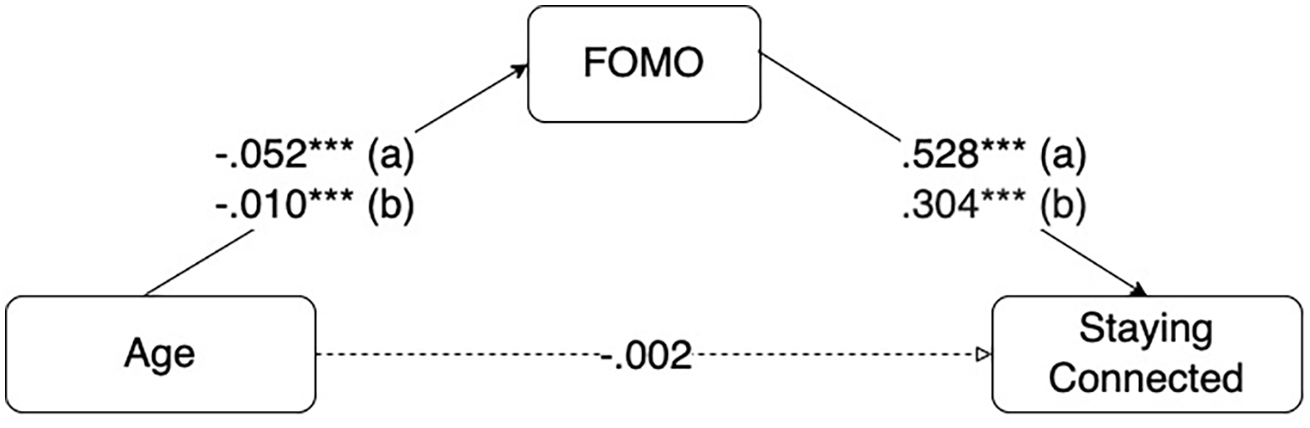
The moderated mediation between age and sharing information online to stay connected.
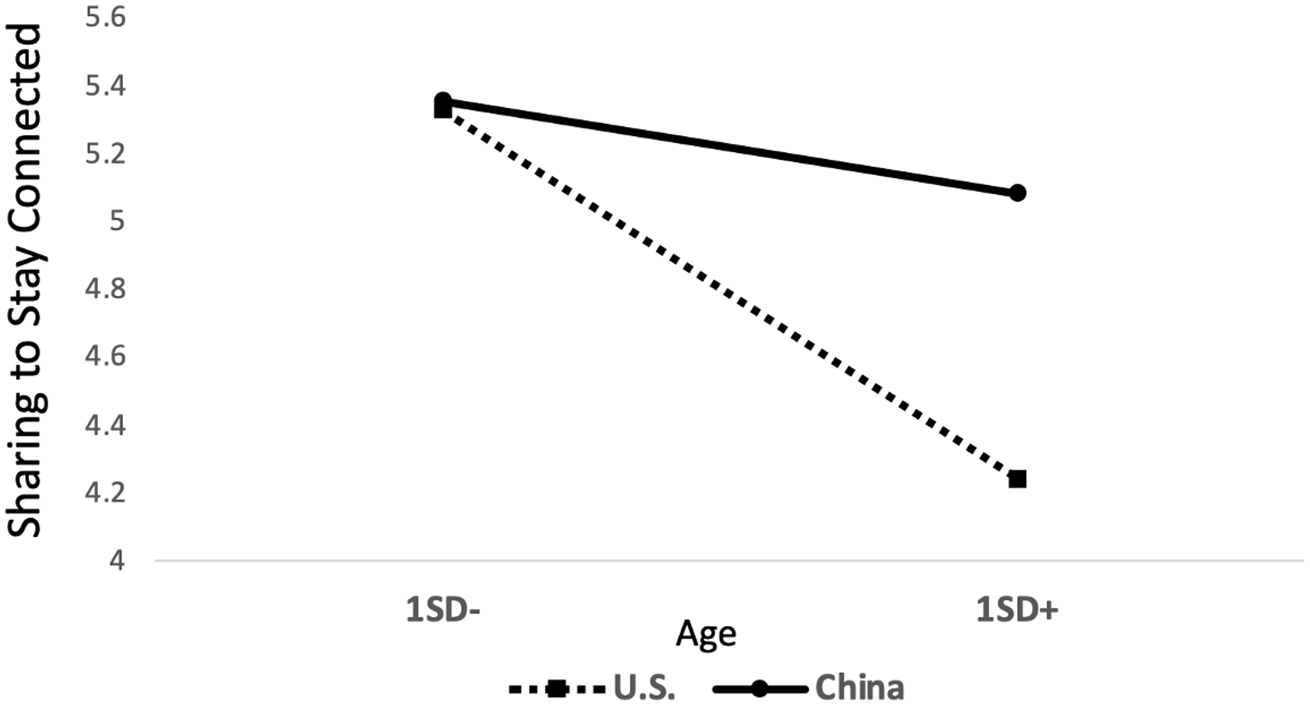
The Age × Culture interaction on sharing information online to stay connected.
Staying influential
Another moderated mediation analysis reveals that together the entered factors account for 49.36% of the total variance explaining individuals’ motivation to share information for staying influential to others (e.g., to be impactful or look good). Similar to the previous motivation, age significantly reduces individuals’ motivation to share information for the sake of being influential via decreasing FoMO. In addition, this fully mediated relationship significantly differs by sociocultural differences (95% CI = [.0316, .0448]). Age reduces the motivation more for the U.S. respondents (b = −.044, SE = .003, 95% CI = [−.0501, −.0375]) than for their Chinese counterparts (b = −.006, SE = .001, 95% CI = [−.0080, −.0036]) (Figure 3). As illustrated in Figure 4, simple-slopes analysis at ±SD of the average age suggests that for Chinese participants their motivations to stay influential through sharing information online stay invariant regardless of if they aged above or below the average age (57.21). However, for the US participants, those aged above the average age report significantly lower motivations than participants younger than 57.21 years old.
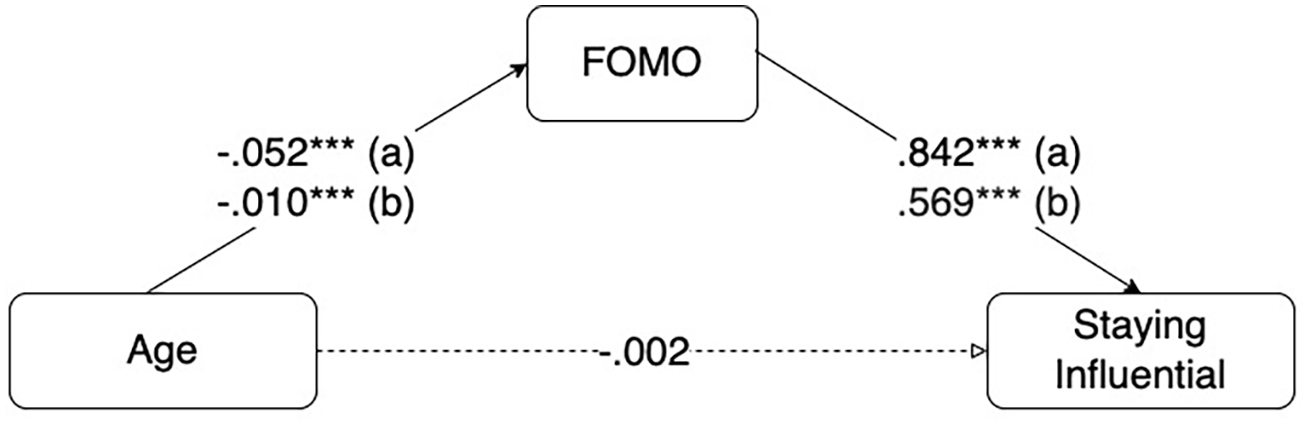
The moderated mediation between age and sharing information online for staying influential.
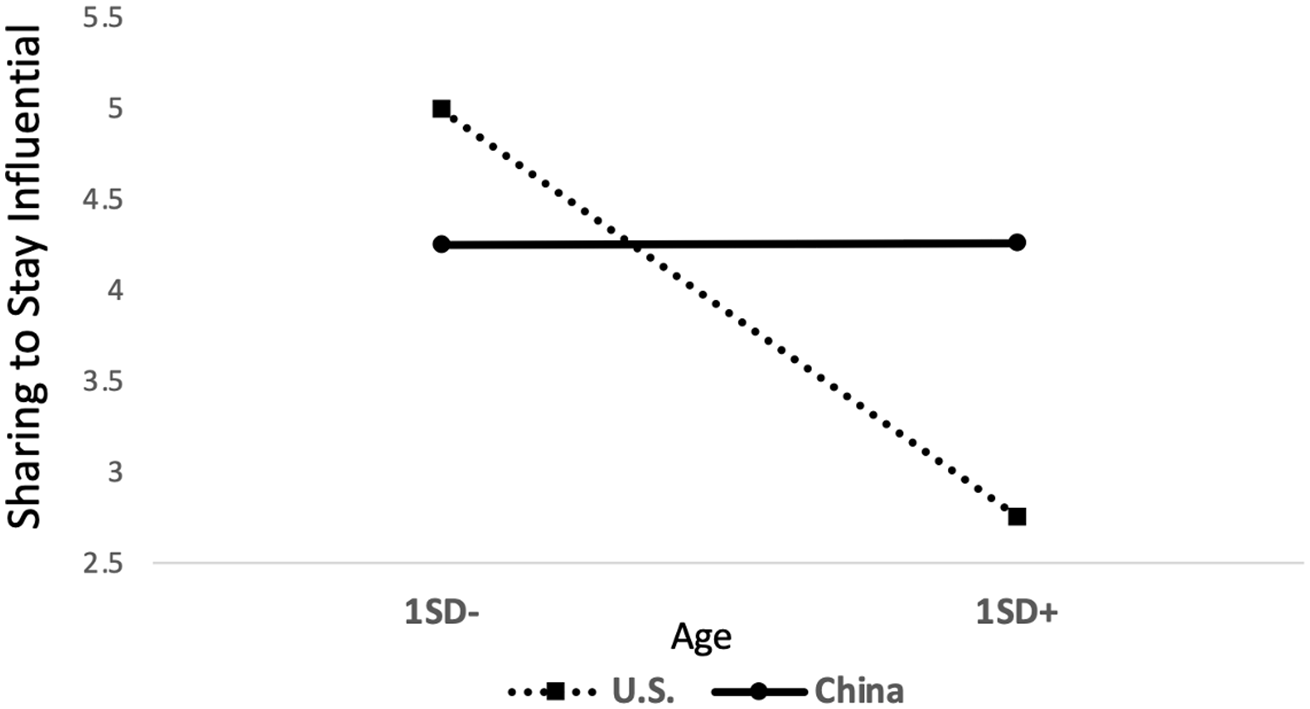
The Age × Culture interaction on sharing information online to stay influential.
Staying engaged
The last analysis reveals that together the entered factors account for 30.15% of the total variance explaining individuals’ motivation to share information for staying engaged. As with the previous two motivations, age’s negative impact on this motivation is fully mediated by FoMO. In addition, the mediated relationship between age and sharing to stay engaged via FoMO is also culture-dependent (95% CI = [.0253, .0376]). Age reduces the motivation more for the US respondents (b = −.035, SE = .003, 95% CI = [−.0407, −.0287]) than for their Chinese counterparts (b = −.003, SE = .001, 95% CI = [−.0051, −.0018]) (Figure 5). Similar to the previous two dimensions, simple-slopes analysis was conducted for the US and Chinese participants at ±SD of the average age. As illustrated in Figure 6, Chinese participants’ motivations to stay influential through sharing information online are similar to those aged above and below the average age of 57.21. However, the US participants aged above 57.21 report significantly lower motivations than those younger than average.
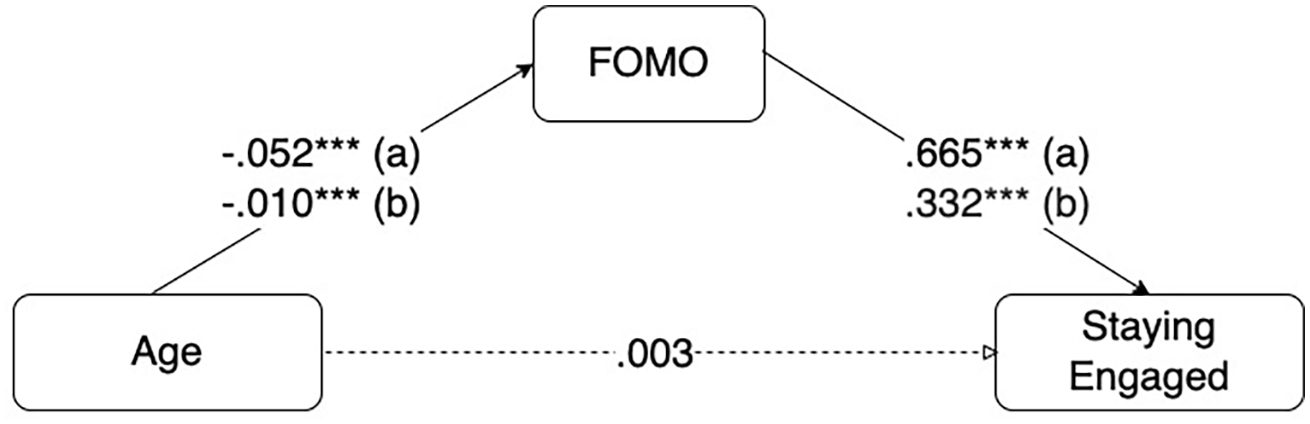
The moderated mediation between age and sharing information online for staying engaged.
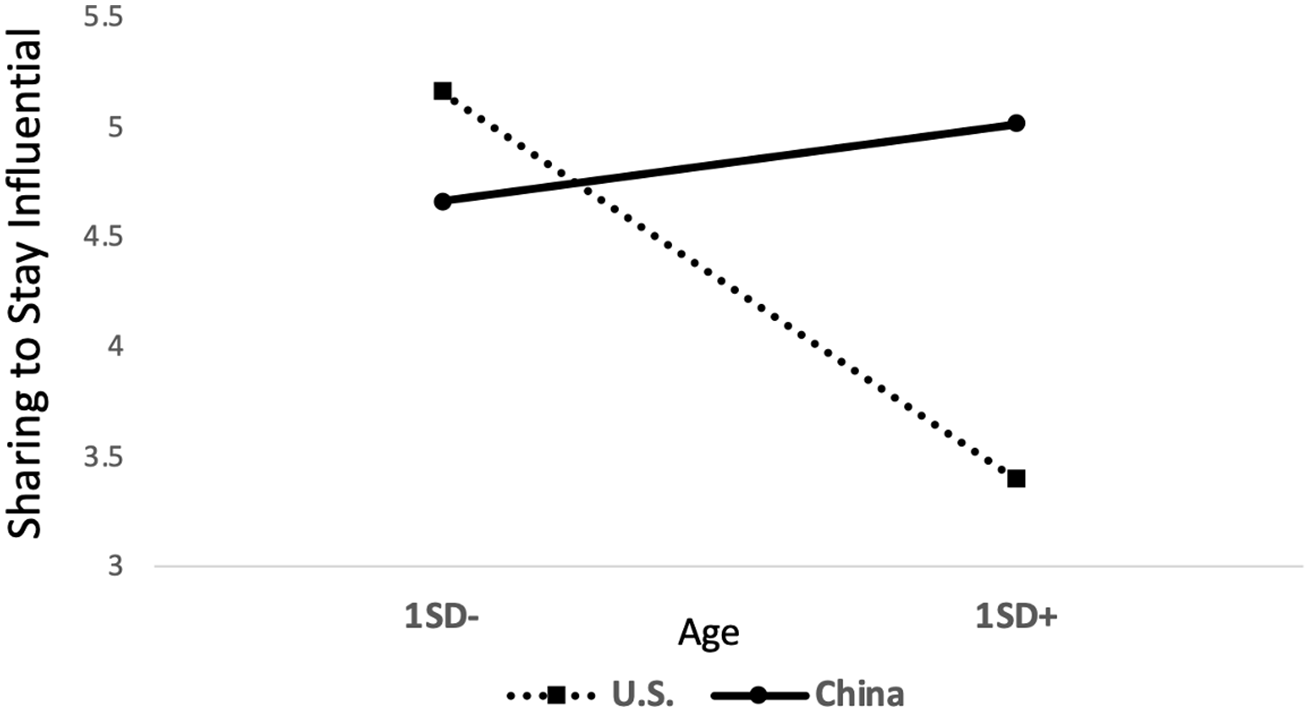
The Age × Culture interaction on sharing information online to stay engaged.
Reactions to misinformation
The remaining two RQs ask how the relationship between age and reactions to misinformation online would be mediated via digital literacy (RQ2) and how the mediated relationship might be moderated by sociocultural difference (RQ4). Two moderated mediation analyses were performed using the same model and procedures employed before, with the two types (effortful vs. heuristic checking) of reactions to misinformation online as the dependent variable Y and digital literacy as the mediator M.
Effortful checking
A moderated mediation analysis reveals that together the entered factors account for 40.61% of the total variance explaining individuals’ effortful checking (e.g., verifying the content via fact-checking websites). Getting older makes individuals significantly less likely to report that they will make efforts to check on misinformation due to lower digital literacy for both the US (b = −.027, SE = .002, 95% CI = − .0314, −.0222]) and Chinese respondents (b = −.030, SE = .007, 95% CI = [−.0457, −.0184]), and the full mediation does not vary by sociocultural differences (95% CI = [−.0194, .0091]) (Figure 7).
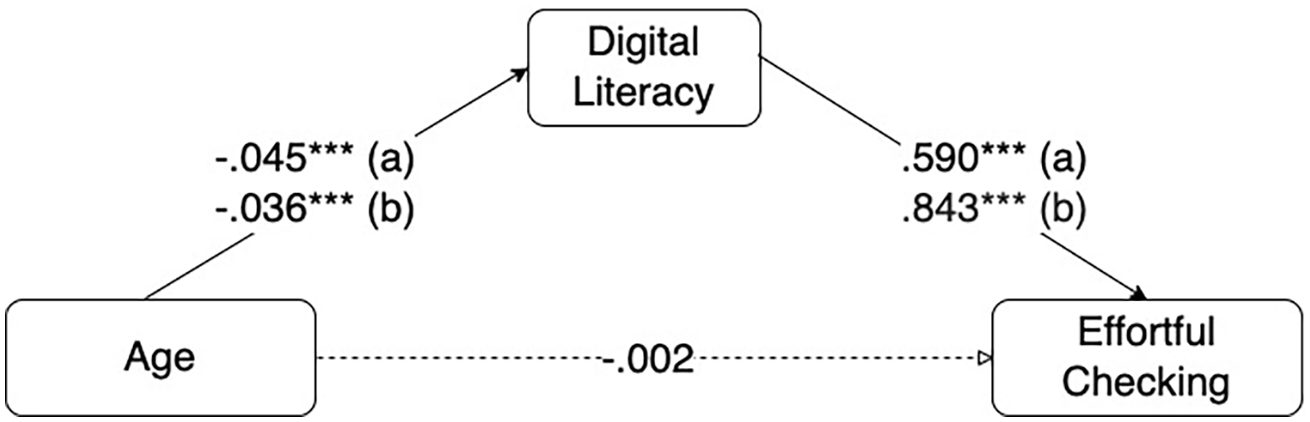
The moderated mediation between age and effortful checking.
Heuristic checking
The same moderated mediation analysis was performed on heuristic checking, that is, relying on the reputation of the information sources (media outlets and journalists). Together these factors account for 20.68% of the total variance explaining heuristic checking. Similar to effortful checking, age decreases the likelihood of checking on suspicious content using heuristic cues by reducing digital literacy. This partially mediated relationship, similar to effortful checking, does not significantly differ by sociocultural differences (95% CI = [−.0011, .0165]). Age reduces heuristic checking for both the US respondents (b = −.018, SE = .002, 95% CI = [−.0232, −.0137]) and the Chinese counterparts (b = −.010, SE = .004, 95% CI = [−.0185, −.0032]) in a similar fashion (Figure 8).
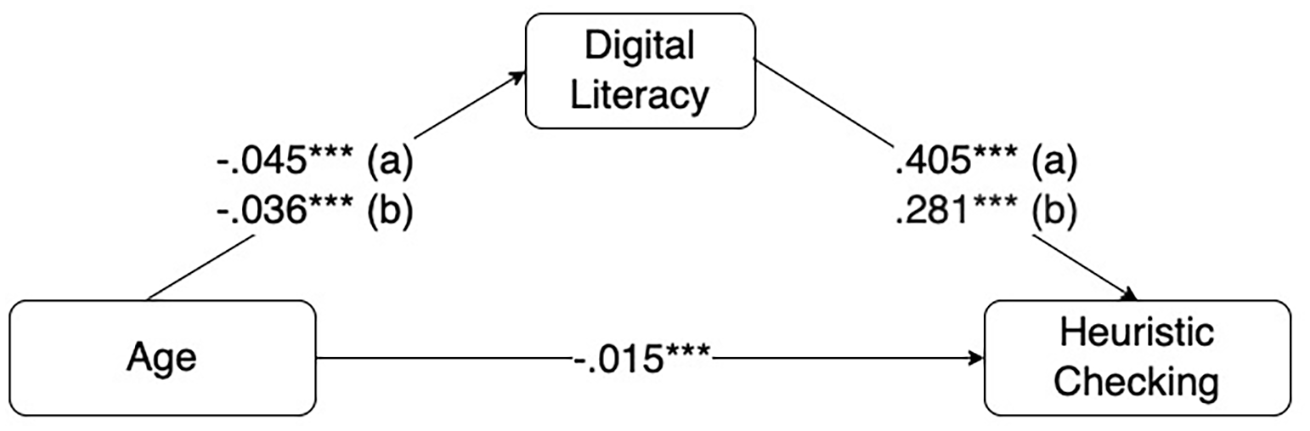
The moderated mediation between age and heuristic checking.
Discussion
This comparative survey research study explores the role of age in relation to the motivations for sharing information online and reactions to misinformation between the U.S. and China. Results of the MANOVA reveal that senior citizens are less motivated to share information for the purpose of staying connected with the latest happenings, being influential to others, or simply keeping themselves engaged. This suggests that young adults are significantly more likely to be spreaders of online content, true or false. In contrast, middle-aged individuals tend to be between senior citizens and young adults.
The contrast between senior citizens and young adults adds to the existing literature regarding the unequal impact of misinformation on different age groups, such that senior citizens are not only much more likely to fall prey to misinformation (Grinberg et al., 2019; Guess et al., 2019) but they are also less likely to spread misinformation due to their significantly lower motivations to share information online in general. On the other hand, young adults are significantly more likely to serve as a proxy for misinformation due to their overall stronger motivations to share information online. This can be particularly problematic if they are not consciously suspecting and/or checking the content veracity and just share information to avoid FoMO. As previous literature informs, the prevalence of misinformation is more of a product of laziness and blind sharing rather than motivated reasoning (Bago et al., 2020; Pennycook and Rand, 2019).
Interestingly, our study also directly asks participants’ reactions to misinformation and reveals that young adults report significantly stronger inclinations to verify either by using some heuristic cues such as the reputations of the information sources or making efforts to check the content accuracy through fact-checking websites. This suggests that although young individuals are significantly more motivated to share information online, they are also less likely to fall victim to misinformation when they are aware of the potential falsity of the content. In contrast, senior citizens are significantly less likely to check suspicious content either heuristically or effortfully. This puts them in a uniquely vulnerable position to misinformation such that they are more likely to believe misinformation, but they are not extending its damage to others online. Young adults, in contrast, seem to be more positioned to serve as spreaders rather than victims of misinformation due to their stronger motivations to share information online and, at the same time, higher tendency to check the content when they suspect it might be false.
Our moderated mediation analyses further explain the intriguing difference between senior citizens and young adults. The significant role of FoMO in fully mediating the relationship between age and all three dimensions of motivations reveals that young adults are much more apt to share information online due to their higher levels of FoMO. This is consistent with previous literature that the FoMO will increase individual activities online (Roberts and David, 2020). The power of FoMO in driving information transmission online can be alarming if young adults are not discrete about what they share online but simply follow the need to reduce FoMO through their online sharing activities. Senior citizens, on the other hand, are less motivated to share online as they are less prone to the influence of FoMO.
When young people become suspicious of the veracity of online information, they are more likely to check the content, thanks to their significantly higher digital literacy. Their higher inclinations to verify misinformation provide them some protection compared to senior citizens. On the contrary, the finding that senior citizens are much less likely to verify misinformation either heuristically or effortfully explains why they are in such a vulnerable position online. Even if they are not going to actively share misinformation to harm others, they themselves are likely to fall prey to misinformation online due to low digital literacy.
The moderated mediation analyses also reveal interesting patterns regarding sociocultural differences: The mediating role of FoMO in promoting information online is consistently more pronounced for the US respondents than for the Chinese respondents. Such a finding is likely due to the more collectivistic societal structure of the Chinese culture (Hofstede, 2011), which affords individuals more and stronger offline connections with others (e.g., family ties, friendship, and coworkers). In contrast, in a society endorsing personal freedom and independence rather than shared responsibilities, individuals are more likely to suffer FoMO and seek to compensate for their social needs (Jackson and Wang, 2013; Stump and Gong, 2020).
Digital literacy is particularly valuable in encouraging both the Chinese and the US participants to conduct investigations on questionable content online, even if they may be more reliant on heuristic cues such as the reputations of the information sources. While the dual models of information processing such as the Heuristic Systematic Model (Chen and Chaiken, 1999) and the Elaboration Likelihood Model (Petty and Cacioppo, 1986) suggest more favorable outcomes associated with effortful deliberations, fast, heuristic information processing still has its unique advantages in certain circumstances (e.g., limited time) when applied appropriately (Lau and Redlawsk, 2001).
Specifically in the context of misinformation online, relying on some heuristic cues such as the information sources’ reputations does not necessarily render one’s evaluations flawed as empirical evidence indeed suggests a strong negative correlation between the source quality and misinformation spread (e.g., Berinsky, 2017; Pennycook et al., 2020). Although cues of this sort can potentially bias one’s decision-making and are prone to errors (Lau and Redlawsk, 2001), heuristic checking is certainly much more desirable than no checking at all. That said, effortful checking is still more ideal for its benefits in slowing down the spread of misinformation (Bago et al., 2020; Pennycook and Rand, 2019).
As digital literacy can increase both types of checking on misinformation as revealed in our research study, it is imperative to raise awareness of its role and support digital literacy education as part of our general education programs. There have been growing organizational efforts worldwide to promote digital literacy by training digital literacy advocates (e.g., The National Digital Inclusion Alliance; 1 Digital Unite 2 ). In the U.S., several states such as California (Jones, 2017), Illinois (Medlin, 2021), and Florida (Brady, 2021) have taken actions to introduce digital literacy education curricula into primary and secondary education. Nongovernment sectors also take part in this movement, initiating education programs specifically targeting senior citizens (e.g., Senior Planet 3 ’s “How to Spot Fake News” workshop or a website such as Techboomers 4 ). Nevertheless, public (especially senior citizens’) accesses to and acceptance of these literacy programs are still low, rendering the evaluations of their efficacy difficult and scarce.
Theoretical implications
This research contributes to the existing literature regarding the unequal impact of misinformation (Grinberg et al., 2019; Guess et al., 2019) by revealing the nuanced relationships between age and misinformation. Rather than simply confirming prior findings that senior citizens are particularly susceptible to misinformation, our study further explicates their unique vulnerability to misinformation such that seniors are much more likely to fall victim to misinformation rather than spreading it online due to their low FoMO and digital literacy. In contrast, young adults are better positioned to be spreaders rather than victims of misinformation thanks to their significantly higher FoMO and digital literacy. The intriguing nuance between “spreaders” and “victims” in relation to misinformation via FoMO and digital literacy invites more research to explore the complicated impact of misinformation on select subgroups instead of treating these groups as a homogeneous population. In addition, our study is also among the very first to add the dimension of different sociocultural contexts (i.e., U.S. vs. China). Interestingly, the sociocultural differences do not really change how young adults and senior citizens react to misinformation. Rather, they intensify the impact of FoMO in motivating online information sharing for the US participants more than their Chinese counterparts.
Practical implications
This study also offers significant practical implications to policymakers, practitioners, and educators. To begin with, this study highlights the need to offer digital literacy programs for senior citizens aged 60 and beyond as they are significantly less likely to check on misinformation due to lower levels of digital literacy than young adults. Scholars have repeatedly pointed out that senior citizens are often the laggards in technology adoption (Lin et al., 2020; Peacock and Künemund, 2007) and are, therefore, treated as the “forgotten cohort” in the tech industry. This, in return, feeds into senior citizens’ reluctance toward technology and digital literacy education (Schreurs et al., 2017). Second, although young adults aged below 40 are significantly more skilled with technology that enables them to check misinformation more, they can be “dangerous” in spreading misinformation if not made aware of the potential falsity of the presented content due to their stronger motivations to share information as a result of FoMO online. This finding calls for more scholarly and professional efforts to experiment with creative designs (e.g., Pennycook et al., 2020) that can prime young adults to actively think about content accuracy online. Third, in light of the role of FoMO in driving (mis)information sharing, we should brainstorm different ways (e.g., offer more diverse platforms for individuals to connect with others in real life) to reduce blindly sharing information online for the sake of social connections, especially in the U.S.
Limitations and future directions
As with other research, this study has some limitations on which future research can be built. First, due to the issue of social desirability (Fisher, 1993), we did not directly measure motivations for misinformation sharing. Instead, we measured motivations to share information, true and false, online. Future research should develop some creative ways (e.g., implicit measures) to directly measure individuals’ intrinsic and extrinsic motivations to share misinformation online. Although the findings of this survey research imply that senior citizens are more likely to be the victims and that young adults are more likely to spread misinformation online if they are not consciously thinking about content accuracy, this nuanced difference still needs to be further tested with carefully designed experimental research. By the same logic, while our findings suggest decreasing FoMO and increasing digital literacy could curtail the spread of misinformation, future research should further test these causal relationships using appropriate methodologies such as longitudinal surveys or experiments. In addition, despite the long-established individualism-collectivism contrast between the US and Chinese cultures (Hofstede, 2011), such a dichotomy has also received criticism for being too simplistic (see Oyserman et al., 2002). Future research should take into consideration other factors such as the length of residence, geo-locations, education levels, and Internet/social media use to further nuance sociocultural differences and replicate the current findings in more cultural contexts.
Conclusion
This study explores how senior citizens differ from young adults in their motivations to share information online and how they would react to misinformation. Results confirm that senior citizens aged 60 and above are likely to fall prey to misinformation as they are less likely to check on misinformation either heuristically or effortfully. In contrast, young adults aged 18 to 39 are significantly more likely to share information online, but they express more willingness to verify information when they suspect the content is false. As we continue to observe the persistence of various misinformation online, understanding the believers versus the sharers of misinformation- and the underlying explanations in different sociocultural contexts offers us a meaningful direction to enrich our understanding of the nuanced impact of misinformation in our society.
Footnotes
Appendix
Measurement items for digital literacy.
| Digital literacy | |
|---|---|
| How much do you agree or disagree with each of the following statements? | |
| I know how to solve my own technical problems on digital devices and platforms. | |
| I can learn new technologies easily. | |
| I keep up with important new technologies. | |
| I know about a lot of different technologies. | |
| I have the technical skills I need to use information and communication technologies (ICT) for learning and to create artifacts (e.g., presentations, digital stories, wikis, blogs). | |
| I have good ICT skills. | |
| I am confident with my search and evaluation skills in regard to obtaining information from the Web. | |
| I am familiar with issues related to web-based activities (e.g., cyber safety, search issues, copyright). | |
| Information and communication technologies (ICT) enable me to communicate better with others (e.g., family, relatives, friends, colleagues). | |
| I frequently obtain help from others over the Internet (e.g., through Skype, Facebook, blogs). | |
A common method bias analysis (Podsakoff et al., 2003) was conducted using Harman’s one-factor test (Harman, 1976) on the FoMO scale and indicated the common method variance was 57.90%. While this is above the conventional 50% threshold even though there are no well-agreed specific guidelines as to the amount of variation explained needed to determine the existence of common method variance (Eichhorn, 2014). Actual simulation data revealed that a high level of common method variance of at least 70% is needed to qualitatively bias results and endanger the validity of research findings (Fuller et al., 2016). In addition, it is also commonly acknowledged that more sophisticated analyses such as interaction effects were unlikely artifacts of common method variance (Siemsen et al., 2010), which was where Digital Literacy was used for analysis. ICT: information and communication technologies.
Funding
The author(s) disclosed receipt of the following financial support for the research, authorship, and/or publication of this article: The data collection in China for this research project was supported by the Major Program of the National Social Science Foundation of China (No:15ZDB142).
