







Abstract
Amid a warming planet and a surge in digital activity precipitated by COVID-19 lockdowns, the ecological impacts of cloud infrastructures are of increasing interest to scholars and publics. Deemed “essential workers,” data center operators maintain server uptime by keeping equipment cool (via air conditioning). Failure results in overheating and a state of service interruption called downtime. Drawing on ethnographic research in data centers, this article introduces the concept of thermotemporalities to illustrate how time, temperature, and expertise converge in novel formations. By attending to the embodied practices and discursive pronouncements of data center operators, I reveal how uptime (cold) and downtime (hot), a binary opposition, are performative genres rather than discrete referents. Emerging out of this dyadic interplay, I locate a species of aspirational identity I call thermomasculinities.
Keywords
Introduction: heat synch
Media’s materiality is composed and recomposed in relation to shifting temperatures.
New England, USA
“Before containment, the data center was a chaotic place,” a data center technician says to me, straining to be heard over the mechanical din of roaring servers. We stand beneath the crystalline dome of a containment structure my interlocutors refer to as “gable C3.” Within this pressurized glass container, refrigerated air seeps upward from the raised-floor plenum beneath my feet, riffling through tiny perforations in specialized floor tiles. The ingress of cold air is palpable on my skin, causing me to shiver. A trained ear can discern when the miniature fans inside of the computers are revving up to compensate for rising temperatures. Heat sinks grafted onto server circuit boards soak up the waste energy of computation, exchanging heat with flowing air molecules to keep component temperatures stable. Without the cooling supplied by industrial-scale air conditioners known as CRACs (Computer Room Air Conditioners), however, the fluid medium of air warms quickly, and the fragile operations of transistors destabilize as electrons become unruly.
It is for this reason that the server exhaust ports face away from us, Tom Haines, my guide to this glass world, explains. The aisle beyond the gable in which we are standing is hot with the air of server exhaust. Such is the configuration of the entire facility, an alternating pattern of containerized cold aisles and open hot aisles to vent server exhaust. This is an approach to climate control in data centers called “cold aisle containment” (Figure 1). Containment optimizes HVAC (heating, ventilation, air conditioning) efficiency by minimizing the mixture of cold and warm air over server racks. “No matter the intensity of the IT load—payroll, online gaming, crypto—containment will keep the heat at bay 24/7/365,” Tom says gesturing to the servers twinkling asynchronously around us. “Time moves differently here, the data center is like a city that never sleeps . . . and heat, heat is the only thing that slows it down.”
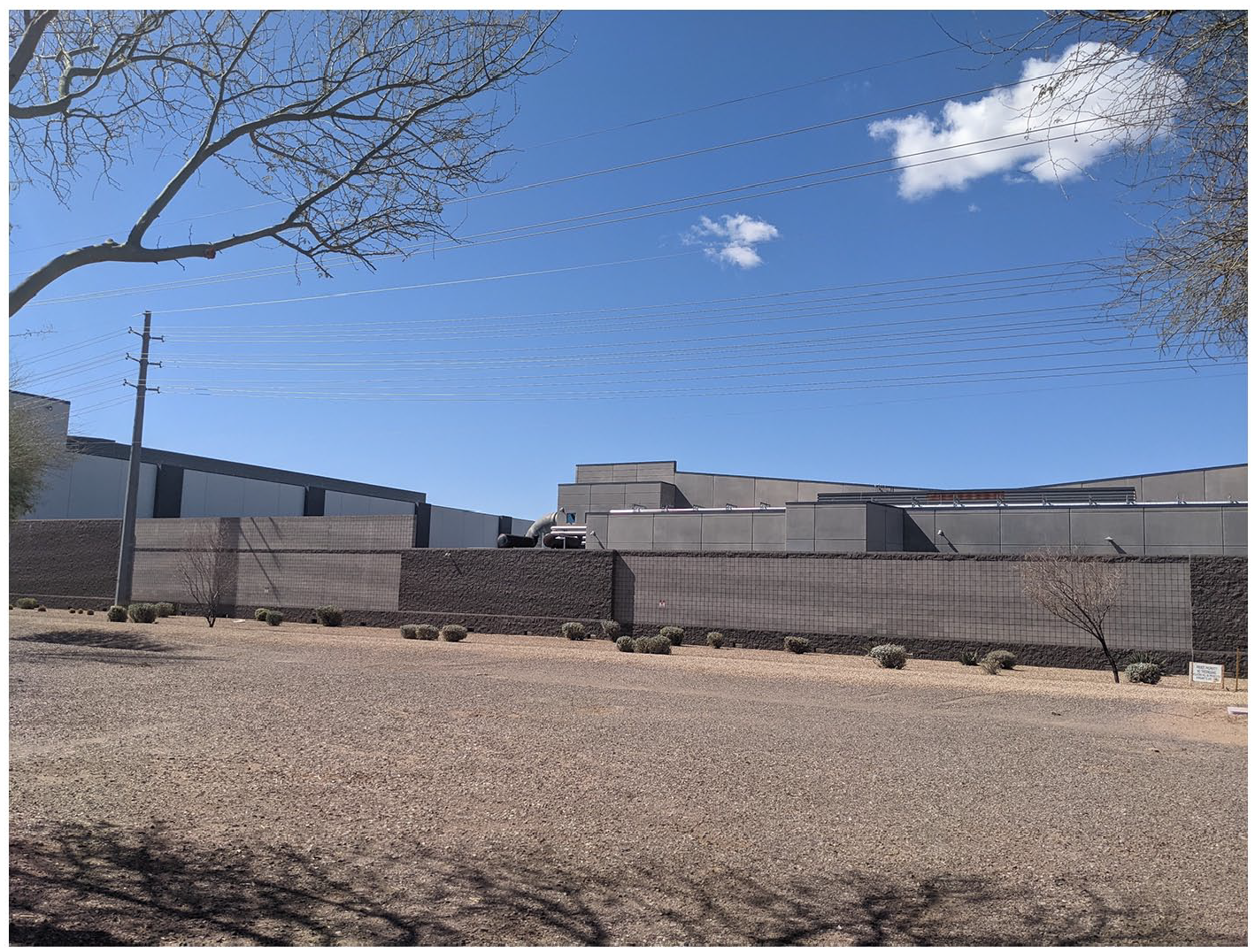
A data center in Arizona, USA (photo by author).
Thermotemporalities, thermomasculinities
I open this article with media scholar Nicole Starosielski’s (2016) observation that “media’s materiality is composed and recomposed in relation to shifting temperatures” (p. 294). Following Tom Haines’ claim above that “heat is the only thing that slows” time in the data center, this article asks how “shifting temperatures” may also be crucial to understanding digital media’s temporality (Starosielski, 2016: 294). Since the 1990s, anthropologists have argued against the universality of time (Munn, 1992), documenting the high variability and relativity of temporal experiences across communities (Zeitlyn, 2020). Time, as Tom describes it, is not subject to the waxing or waning of daylight. Rather, the 24/7/365 world of computer servers is sustained through a constant provisioning of cold dynamically apportioned to the heat of “computational traffic” (Velkova, 2016). Designed to operate at low humidity conditions and ambient temperatures between 60 and 80º F, servers require unceasing refrigeration to thrive (Moro, 2019; Pacific Gas and Electric Company (PG&E), 2012; Webb, 2016). Increases in demand for computing resources must be mitigated by a proportional response in volumetric cooling to avert equipment failures. The data center is punctuated by thermal rhythms. The only constancy in this “city that never sleeps” is one of thermodynamic flux, of hot and cold hermetically partitioned, and of computational heat cyclically abated by refrigerated chill.
In data center industry parlance, uptime refers to a state of continuous, uninterrupted functioning of IT equipment, a chill homeostasis that data center operators strive to sustain perpetually. Counterposed to the perpetual cool of uptime is the periodic heat of downtime, an episode of cataclysmic failure or “heat death” (Moro, 2019) that data center operators work tirelessly to prevent. Like the nineteenth-century paper mills and textile factories reliant on temperature controls to achieve media standardization (Cooper, 1998; Moro, 2019; Starosielski, 2016), data centers demand unrelenting chill to facilitate digital capitalism. Answering Geoffrey Bowker’s (2015) call to name the “complex temporalities” that subtend infrastructure, this article introduces the analytic of thermotemporalities to describe the conjuncture of time, temperature, and expertise in data centers. In what follows, I draw on ethnographic fieldwork I conducted among data center operators to illustrate how these thermotemporalities emerge in the embodied practices and discursive pronouncements of research participants, focusing on the binary opposition of uptime and downtime. Additionally, I locate examples of similar thermotemporal discourses in prominent industry publications and professional blogs. By the article’s end, I sketch a pervasive, deeply socialized thermotemporal complex with a decidedly masculine character. I employ linguistic anthropological concepts to argue that uptime and downtime are not merely referents for discrete events, but are, rather, animating discourses through which technicians perform an aspirational masculinity (Goodwin, 1994; Silvio, 2010), a second analytic I call thermomasculinities. To further the wider applicability of these analytics, I consider how thermotemporalities and thermomasculinities contribute to and are intensified by larger-scale formations like anthropogenic climate change and the COVID-19 pandemic.
Method
This article is based on 16 months of ethnographic fieldwork I conducted in data centers and relevant industry events in the United States, Puerto Rico, and Iceland between 2015 and 2021. Relying on participant observation and anthropological research methods (Günel et al., 2020), my fieldwork activities included assisting technicians with routine equipment installations and maintenance procedures, participating in personnel trainings, and attending professional conferences. Additionally, I conducted three dozen qualitative interviews with data center technicians, executives, and industry vendors. To maintain the anonymity of my research participants, I refer to specific individuals with pseudonyms. Provided that my research participants work in smaller scale data centers (Tiers 1 and 2) and are responsible for managing both HVAC and IT infrastructure (roles that are typically separated in higher tier data centers), my findings may be less relevant or applicable to the larger-scale, “hypervisible” data centers taken to be emblematic of the industry as a whole (Holt and Vonderau, 2015: 80).
Cooling servers, warming planet
The same environmental processes by which air conditioning ensures the thermal and operational stability of computers then create the very externalities that raise the heat of the entire planet, in turn demanding ever more extreme strategies of thermal control. (Jeffrey Moro, 2019)
Coursing through fiber-optic cables thinner than human hairs, plumbing the abyssal depths of the world-sea to cross continents, bits circulate at the speed of light, carried by imperceptible frequencies to their receivers in networked devices. Every search query, status update, or email proliferates energy that ultimately dissipates as heat. The cloud is hot matter, not cool ether. Heat pervades the vast assemblage of infrastructures of the Cloud which include undersea cables (Starosielski, 2015), Internet exchange centers (Burrington, 2015), cell towers (Holt and Vonderau, 2015), and data centers (Ensmenger, 2018; Hogan, 2018; Johnson, 2019a, 2019b; Velkova, 2016; Vonderau, 2019). Obscured by the sheer complexity of its geographically disparate parts, “cloud” is an opaque metaphor that conceals the ecological footprint of the material processes and exchanges precipitated by tech companies (Amoore, 2018). Perhaps nowhere is this magic trick of muted culpability more evident than in data centers, the vibrant archives filled with servers that emit heat as they metabolize energy and facilitate digital capitalism, governance, and more.
Philosopher John Durham Peters (2015) characterizes the electricity that feeds data center grids as “repressed fire” in that “at one end or another of the gastrointestinal tract . . . there is inevitably smoke and ash” (p. 126). Data centers are overwhelmingly powered by the finite biomatter that political theorist Timothy Mitchell (2009) calls “buried sunshine” (p. 401). In North America, electricity consumed by data centers is drawn from “mixed” energy grids, where renewable energy sources like nuclear, wind, or solar are dwarfed by coal (Özden-Schilling, 2015). While data centers are often touted by tech companies as “green” infrastructures, their carbon footprint exceeds that of air travel (Holt and Vonderau, 2015: 82) at over 1% of global emissions (IEA, 2022; Hu, 2015: xxv). Given that the typical energy consumed by a single data center is equivalent to that of 80,000 homes, Tom’s characterization of his facility as a sleepless “city” is fitting (Burrington, 2015; Ensmenger, 2018: 4; Hu, 2015: 79; PG&E, 2012).
In the opening vignette, Tom insists that heat “slows” down the data center, because heat has the capacity to disrupt server functions. The Internet must be constantly air conditioned to fulfill tech company promises to customers that data will be accessible anytime, anywhere, that servers will continue churning along at whatever cost. Tech companies encourage users to continuously generate and upload content that they then sell to advertisers for profit, a “surveillance capitalism” that intensifies the ecological toll of the cloud by increasing demands for data storage (Mosco, 2015). Greenpeace estimates that the sum of digital content in 2013 was 5 exabytes (Cook et al., 2017). This same amount of data is now being generated every few days (Cook et al., 2017). With the outbreak of the COVID-19 pandemic, global lockdowns resulted in an unprecedented uptick in digital activity. 2020 was a year that “tested the resilience of the network,” one data center executive conveyed to me in a ZOOM interview. As data production continues to trend upward, the demand for more data centers follows, a techno-economic shift that Mél Hogan (2021) calls the “Data Center Industrial Complex.” Data centers have become the essential infrastructures of digital capitalism. With their never-ending expansion seemingly naturalized by markets, the ecological impacts of their ceaseless operation are thereby muted (Figure 2).
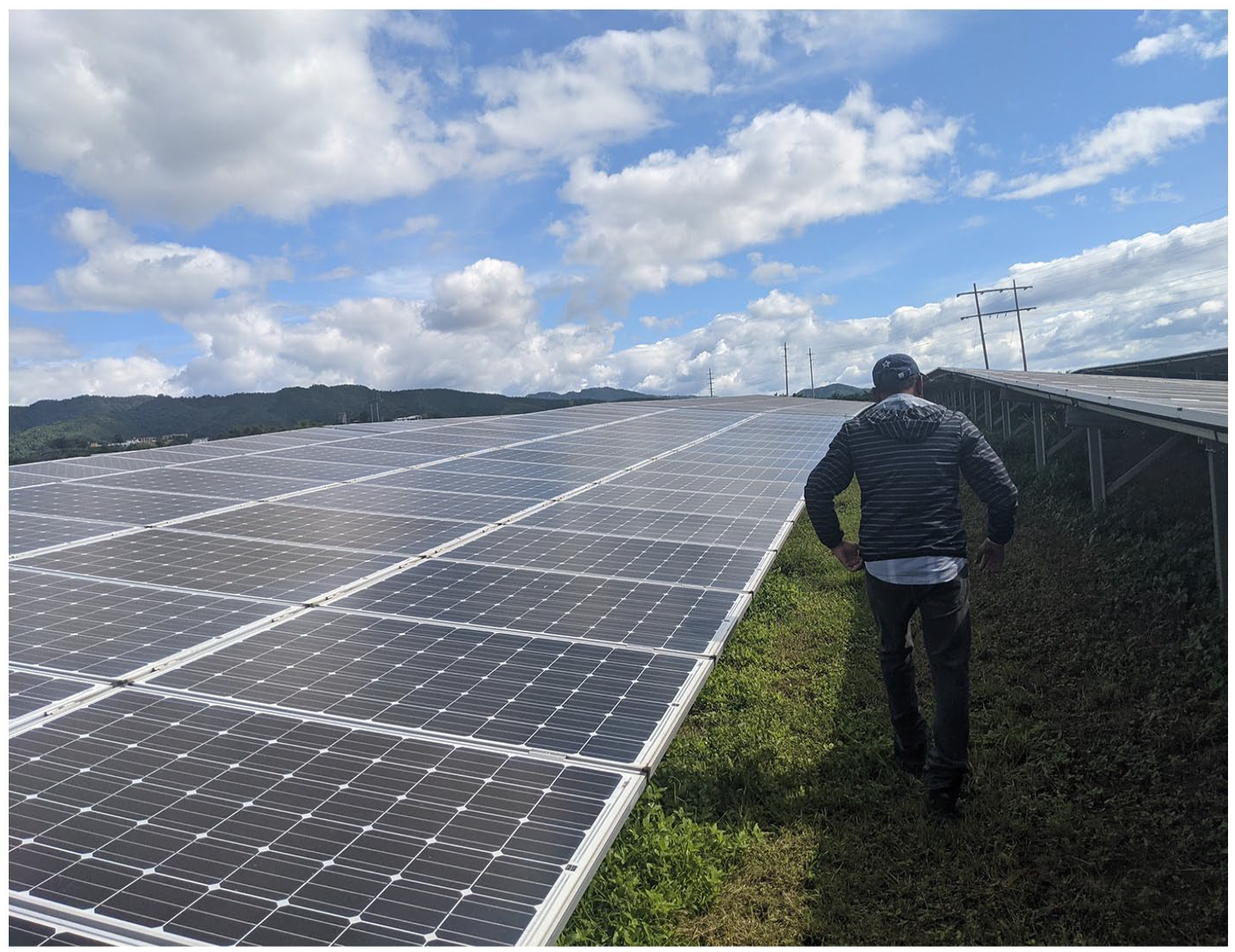
A solar farm in Puerto Rico (photo by author).
Denaturalizing digital heat
At the turn of the millennium, natural scientists claimed that a coalescence of ocean acidification, melting ice caps, rising sea levels, and greenhouse gas emissions had inaugurated a new geological epoch called Anthropocene (Crutzen, 2006). In the years since its invocation, a range of alternatives have been formulated to describe with greater specificity and historical accountability, particular ecological crises and their asymmetric impacts on communities (Gonzalez Monserrate, 2022; Haraway, 2016; Mentz, 2019; Moore, 2017; Parikka, 2014; Yusoff, 2018).
In the wake of criticism by activists and publics mobilizing against data centers for their visible ecological impacts (Bosker, 2019; Cook et al., 2017; Vonderau, 2019), tech companies are rebranding themselves as ecologically conscious actors, taking measures to minimize carbon emissions, while continuing to construct more data centers and even the energy infrastructures required to power them (Hogan, 2018). One such “carbon redemptive” measure is the harnessing of cold climates to facilitate data center cooling via a technique called “free cooling” (Gonzalez Monserrate, 2022; Johnson, 2019b; Vonderau, 2019). By siting data centers in the Arctic where temperatures are cool year-round, tech companies have the capacity to cool servers by cycling ambient air instead of relying on air conditioning. In this instance, nature is “infrastructuralized” (Carse, 2012; Vonderau, 2019) for the “hardware” of digital capitalism (Hogan, 2018). The result is an “elemental irony” (Moro, 2019); the data storage industry seeks to mitigate the warming precipitated by its infrastructures by “housing” data in the planet’s last bastions of cold (Johnson, 2019b). The futility of these arctic overtures notwithstanding (Gonzalez Monserrate, 2022), a subtext emerges: digital heat and the thermal control measures wielded to counteract it are posited as natural rather than cultural.
By closely interrogating the material properties of the elements that subtend digital infrastructures, Nicole Starosielski (2016) excavates the “cultural logics” that “underwrite” thermal regimes (p. 298). Silicon and copper, for example, have highly variable properties in nature. Before incorporation into circuits or microprocessors, these raw elements must first be “purified” through various chemical transformations that augment their conductivity and molecular stability, enabling them to realize “a digital order defined by speed and precision” (Starosielski, 2016: 298–299). The most fundamental elements of computational infrastructures are thus purified to such a degree that their capacities to generate heat appear natural (Starosielski, 2016: 300). If the heat generated by the materials used to build computing equipment found in data centers is reflective of cultural values, then it stands to reason that the methods by which data centers are cooled, are similarly cultural rather than natural.
Like the homeostatic chill of uptime in data centers, climate activists call for specific industry reforms to reduce the degree of planetary warming, to maintain a cool equilibrium to support capitalist civilization. Failure to stop climate change results in downtime on a calamitous scale; a planet rendered uninhabitable (Haraway, 2016), its flourishing decimated in a heat death caused by the whirring machinery of digital capitalism. In this way, Anthropocene might be read as a thermotemporality—a complex in which time, temperature and expertise are inexorably hinged. Public discourses about climate change illustrate this thermotemporal complex. For example, the precise dates of portended dystopian futures hinge on specific degrees of warming, amid the contestation and politicization of scientific expertise by diverse publics (Haraway, 2016). While the Anthropocene plays out on a planetary stage, the thermotemporalities of the data center occur on a micro-scale, in everyday talk and quotidian practices. In what follows, I illustrate how the cyclical ebbing of server heat calibrates the temporal experiences (thermotemporalities) and professional identities of data center operators (thermomasculinities).
Downtime: masculinity besieged
The practices of “bumming,” pranking, and other forms of technical display that originated in the university computer labs of the 1970s form the basis for a rich culture of masculinity within computing communities . . . the most conspicuous features of this masculinity . . . are not so much a reflection of the essentially gendered nature of the activity but are instead the by-product of attempts . . . to elevate the status of their discipline . . . one might argue . . . that computer [professionals] . . . rather than being insufficiently masculine, have elevated the performance of masculinity to an extreme. (Nathan Ensmenger, 2015: 65)
Some hours after my tour of gable C3, Tom instructs me on how to properly snake cables through the underfloor plenum to minimize airflow obstruction. I gingerly tug on a coiled hydra of wiring, careful not to over-flex the elastic bands and loosen individual strands. The cold, dry air tickles my arms as I reach into the compartment below the tiles. Tom critiques my form, cautioning that years of poor ergonomics will take its toll on me when I am “a much older man.” Before I can respond, an alarm starts to shriek. Tom runs off to gable C5, accompanied by a pair of frenzied technicians. I watch as they place standing fans in what seem like random locations and frantically pry open floor tiles to rapidly cool a rack of overheating servers. The air is thick with dread and the men are nearly silent as they rapidly diagnose and act on the problem. Before my eyes, Tom’s vision of a segregated world of media heat and mechanical cool disintegrates, and the “chaos” that he warned about when I first arrived takes hold. For Tom and his anthropological observer, time freezes, our breaths quickening, sweat dripping from brows, until, wordlessly, breathlessly, the cold returns and the alarms silence. Color returns to the pale faces of the technicians around me, signaling the return of the cool composure of uptime.
Heat death
In the early 2000s, thermal dramas such as the one I recall above were more common than today given technological advances in automation, sensing, and data center engineering (Crosby, 2020; Miller, 2008). In data centers with fewer resources, however, thermal runaway is still a daily concern for operators like Tom. Avoidable thermal outages lead to the “blacklisting” or “scarlet lettering” of employees, an industry veteran informed me. Even one conspicuous failure can significantly tarnish the reputation of anyone deemed responsible. This is largely due to the high monetary cost of downtime for data center companies, estimated in one industry study to be US$8851 per minute (Ponemon Institute, 2016). An entire genre of industry periodicals dedicated to analyzing spectacular downtime episodes indicate how downtime can also be “damaging” to the image of companies (DCD Team, 2017; Hurley, 2016; Jones, 2011; Miller, 2007, 2008, 2009, 2010, 2011, 2012, 2013).
In dozens of interviews I conducted with data center professionals, I observe a pattern of avoidance and deflection when I bring up the topic of downtime. As one participant framed it, talking about “it” is “bad luck.” The more I probed, the greater resistance I met, as if the mere utterance of the word might manifest its occurrence (McIntosh, 2005). A week after the thermal incident I observed in gable C5, I asked Tom Haines to explain why downtime is a taboo subject:
The data center manager is a fear-based individual. His fear is human error, mechanical error, power failure, generator failure . . . His whole job is to take every possible action so that failure doesn’t occur, so that redundancy kicks in . . . In the industry “downtime” is something of a dirty secret. It’s the skeleton in the closet. No one wants to admit that they’ve had downtime. It’s kind of . . . emasculating . . . but most, if not all, data center managers experience it. It’s why they call the industry mission-critical, it’s why they recruit ex-Navy guys—they’ve weathered the siege before. They know how to put up a fight [emphases added].
Driven by “fear,” haunted by the specter of thermal “siege,” Tom narrates the data center manager as a valiant figure that must “fight” to triumph over the crucible of downtime, or fail and be “emasculated.” This militaristic theme is echoed by blog contributors in articles titled “Combating Downtime” (Normandeau, 2016) and “Defeating Data Center Downtime” (Woolverton, 2021). Such discourses signal that Tom is not alone in characterizing the data center as a besieged battlement, where “defense is the best offense” (Spears, 2016). Downtime, as Tom invokes it, is more than a state of service interruption or thermal runaway, it is a proving ground through which masculinity is conferred or denied (Butler, 1990). A similar dynamic unfolds in Julian Orr’s ethnography of photocopier technicians, who routinely narrate successful repair jobs or installations to their peers as heroic, masculine feats (1996). Tom genders the “data center manager” as a man by default, as if any alternative were unthinkable. Having conceded that “all data center managers experience” the “emasculation” of downtime though seldom admit it, Tom illustrates how shared experiences of failure shape formations of masculinity in data centers (Halberstam, 2011). Unlike the neophytes transformed by esoteric rites into men (Beasley, 2013; Gutmann, 1997), the men of the data center are routinely made and unmade; their becomings and unbecomings bound to the up and down of thermal tides they strive to control but cyclically fail to tame.
Gender in the data center
In the first two decades of the postwar era, computing institutions were primarily staffed by women (Ensmenger, 1998; Hicks, 2017; Light, 1999). It was only after a strategic program of “professionalization” in the 1960s that computer work became resignified as cerebral and masculine, rather than rote and feminine (Ensmenger, 1998; Haraway, 1990; Hicks, 2017). Historians of computing and information technology document how women were systematically shut out of computing vocations, their contributions to early programming erased, and their positions reassigned to professional men (Ensmenger, 2012; Hicks, 2017; Light, 1999). During this period, a new masculinity emerged, one in which disheveled appearances and diminishing physiques became emblematic of “geeky” manhood (Ensmenger, 2015). In the 1970s, computer operators would routinely tax their bodies to their limits, challenging each other to see how long they could operate computing equipment without sleep or food (Ensmenger, 2015). Institutional professionalization and the concomitant masculinization of IT culture lead to a gender flip in the workforce that persists into the twenty-first century (Wynn and Correll, 2018: 157–158). According to the National Center for Women in Information Technology (NCWIT), women hold only 25% of IT jobs in the United States, and represent less than one-quarter of the computing labor force worldwide (NCWIT, 2021; Serenko and Turel, 2021: 43).
In data centers, women’s lack of representation may be intensified by the added dynamic of women’s marginalization in mechanical and electrical trades (Cooper, 1998; Weston, 1998). As one technician opined to me, “it is rare to see women programmers or software engineers . . . but it is even rarer to meet a woman who can do the tech stuff alongside the mechanical and HVAC—the trades that are traditionally male.” Consistent with this technician’s observation, a study conducted by the Uptime Institute shows that nearly a quarter of global survey respondents reported that they had no women in their data center operations teams (Uptime Institute, 2021). At Microsoft, 29.1% of workers identify as women, but only 16.6% are in “technical” positions (Robb, 2018). While some have attributed this technical disparity to a lack of STEM training or “interest” on the part of women (Clark, 2012; Curry, 2019; Goetz, 2017; Gonsalves, 2019; Riccio, 2016), others point to structural barriers and a hostile workplace culture for women and nonbinary aspirants seeking employment (Goetz, 2017; Kenny and Donnelly, 2020; Serenko and Turel, 2021; Wynn and Correll, 2018).
When I ask research participants why there are so few women in data centers, “choice” is a recurring theme in responses. “Choice” reinforces the futuristic image of IT as a progressive enterprise, while affording some plausible deniability for the scarcity of women employees. Implicit in the notion of “choice” are marked essentialist claims about women’s “choices” and what leads to those choices, as a blog contributor below demonstrates:
Men and women are biologically different. People generally recognize that hormones . . . affect a person’s behavior, so why is it so far-fetched to believe that women might—as a general rule—be more drawn to one field than another? This is not to say that women are incapable, but they may tend to have strengths or interests in different directions. (Clark, 2012)
The notion that women are “capable” but simultaneously, as an effect of a biological determinant such as “hormones,” may be ’drawn’ to other fields, naturalizes women’s exclusion and “choice” not to pursue IT careers. Marc Jones, a data center executive, asserted to me in an interview that “women are emotional” but their inherent emotionality is not a liability in data centers, because servers and air conditioners are “inanimate” objects. Essentialisms are also marshaled by industry critics, who suggest that “females think differently” and that including more women in leadership positions may lead to greater profitability (Curry, 2019).
Given that women used to outnumber men in the information technology sector, many scholars dispute “choice” is an insufficient framework to explain women’s contemporary marginalization (Serenko and Turel, 2021; Turkle, 1988). One explanation is what scholars call the “glass slipper” effect, a phenomenon in which “gender-embodied occupational social identities,” stabilized through popular discourse, lack of visible role models, workplace culture, and recruiting practices conspire to dissuade interest (Kenny and Donnelly, 2020: 327). While the few women who work in data centers lament their experience of isolation amid ranks of “balding heads” (Riccio, 2016), others describe an openly hostile, “hypercompetitive” work atmosphere, where they must “fight against the sea of men” to be heard, especially regarding technical matters (Curry, 2019). Carrie Goetz (2017), a 30-year IT veteran, writes that a supervisor “kept a calendar on the wall, and any time a woman was in a bad mood, he would mark a red X on that date to predict cycles of . . . behavior.” Carrie is not alone in her experience. Between 2010 and 2016, employees at Microsoft filed 238 complaints alleging incidents of gender discrimination or sexual harassment (Dawn-Hiscox, 2018). Perhaps most emblematic of women’s marginalization in data center culture is a blog entry titled, “Server Room in the Women’s Restroom” (Miller, 2008). The author recounts how a resource-strapped company had to relocate its servers to a handicapped stall in a women’s bathroom, to “restrict access” in a cost-effective manner (Miller, 2008). One commenter decodes the article’s subtext, chiding that the servers are secure because “there are no women in the data center” (Figure 3).
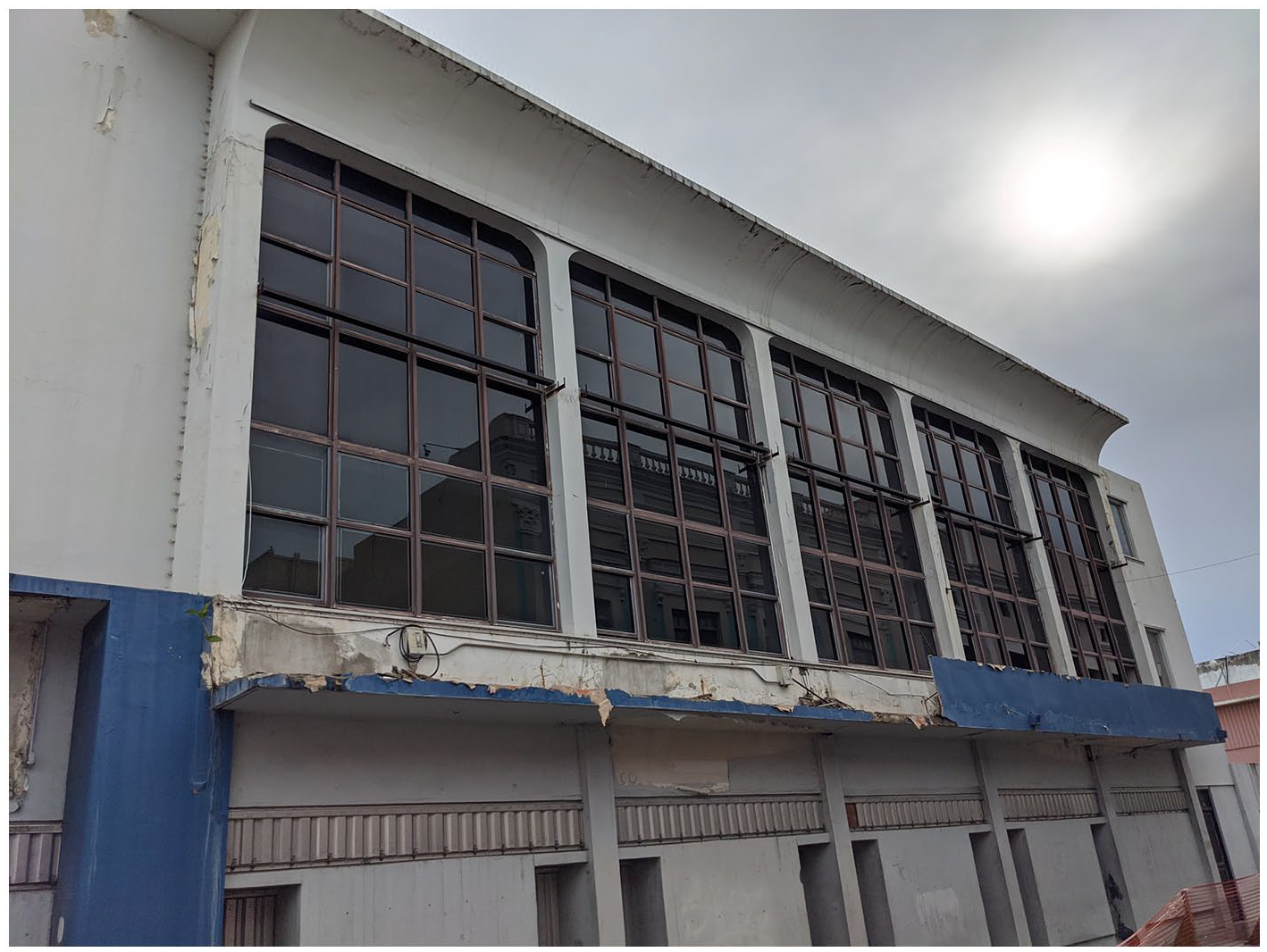
A data center in Ponce, Puerto Rico (photo by author).
Febrile masculinity
In a ballroom at a 2018 data center meet-up overlooking the Boston seaport, I watch the January chill seep against a window pane, dappling the city skyline with condensation. Between sips of merlot that stain his brown lips bright purple, data center manager Mike Sloan admits that “uptime is an unhealthy obsession” that keeps him up at night. I press the issue, asking how he copes with the stress of facility management. “It’s not something we like to discuss, but I know a lot of guys who suffer from cardiac issues,” Mike continues, draining the remainder of his glass, gesturing for the waiter to bring another. “Does that include you?” I ask. “Got diagnosed with hypertension . . . I’m only forty.” Mike gestures to his phone, where an application displays a real-time thermal map of his facility, a mostly blue-green infrared sea. “It’s because of this,” he says almost whispering, “the fires I have to put out, the fires I take home with me every night—it’s making me sick.”
For weeks after the event, I continued corresponding with Mike via email. In one email, Mike apologized for his “lack of composure” that night, informing me of his plans to take a short holiday to “cool-off,” suggesting that he was “burnt-out.” Given the high financial and reputational cost of failure both to the company and the individual responsible for any avoidable downtime that occurs in a data center, Mike’s “hypertension,” reflects a conscious linking of the “health” of servers and the technicians responsible for their care. “Burnt-out” data center managers need vacation time to “cool off,” or otherwise risk making an error that might lead to downtime. “Cooling off,” it seems, is about regaining “composure,” a “composure” that “burn-out” diminishes. As Jeffrey Moro (2022) writes, hot and cold possess “mediatic qualities.” In the world of data centers, the thermal is at once metaphor and material, it exists simultaneously as a feature of experience and a fixed property, an interface of nature and culture that is only intelligible through a process Stefan Helmreich calls transduction, the conversion of signal fro medium to another (2009: 214). In this case, heat is construed not only as a waste product of computation, but also what Mary Douglas (1966) describes as “matter out of place,” a “pollutant” that a cool composure keeps at bay. When Mike claims that the data center is making him “sick,” he cannot help but frame this sickness in thermal terms (“burnt out”). Mike indexically links his own health to the operational “health” of his data center, using temperature as a shared diagnostic.
European colonists in the alien conditions of the tropics similarly framed heat and humidity as contaminants. Colonial administrators reported a persistent “tropical inertia,” a “depleting,” “destabilizing” atmosphere that “enfeebled” the intellect, vigor and fecundity of White men “sacrificing” their health to bring civilization to colonies (Anderson, 1997: 1346, 1353, 1366). Bourgeois White masculinity withered in the miasma of “deforming” heat, especially the “mental apparatuses” of White men which were “better matched” to the cool, temperate conditions of the European metropole (Anderson, 1997: 1366). For the colonial administrators, temperature was not only a medium that describes hot or cold, but masculinity and femininity, and civilization and savagery. In Puerto Rico, a tropical setting that early twentieth century American physician Dr W. W. King described as “nerve shattering” (Anderson, 1997: 1354), data centers managers like Ricardo Ortiz Rosa must contend with a constant of high heat and humidity.
I met with Ricardo in the San Juan metropolitan area in September of 2020. Before entering his data center, I was prompted to fill out a medical questionnaire that screened me for symptoms of COVID-19 and any recent potential exposures to the virus. Upon arrival, I sanitized my hands and shoes as instructed before submitting to a digital temperature check at the first security checkpoint. The thermometer beeped once over my forehead, signaling that that my body temperature was not in the febrile range of +100º F. Ricardo and I proceeded into the facility, his face concealed behind the white duck-bill of an N95 mask and a pair of foggy safety goggles. Ricardo led me past air-conditioning units and aisle sensors that informed me that the tropical heat was abated by maintaining a chilly 62º F above most of the server racks. “My great fear is to catch a fever,” Ricardo said, adjusting a blanking panel to subtly increase aisle airflow to a rack of blinking servers:
If I get COVID, I have to stay home for weeks, a month, who knows? Then who is going to move the tiles around or change out blanking panels if it gets too hot? Who is going to deal with cooling if the power goes out? How my data center operates reflects on me, I don’t trust anyone else with it.
Just like Mike, Ricardo interprets a lapse in his own health as a potential lapse in the health of “his” data center. More than fear of thermal runaway of IT equipment (ambient temperatures of 80º F or higher), Ricardo fears rising temperatures in his own body (a fever of 100º F or higher). Ricardo’s company policy stated that any febrile employee would be furloughed until they could prove that they were not infected with COVID-19. Given the higher network demands associated with the Puerto Rican government’s “encierro” (lockdown) and mandated curfew in the months following the outbreak of the COVID-19 pandemic, Ricardo’s thermal fears are amplifying. With his livelihood and reputation hinged to controlling heat of both a mechanical and epidemiological sort, I was not surprised to learn that his experience of time had shifted. “This year has felt like twelve” he remarked to me, lifting his mask to take a sip of water. The thermotemporal intensification Ricardo is experiencing is not unique to Puerto Rico, as the explosive demand in digital services rendered data center personnel as essential workers worldwide (Crosby, 2020).
Uptime: a virile art
The clockwork of male careers has proved easier to join than to change. More women . . . have careers . . . but careers themselves still fit into the same giant clock. (Hochschild, 2011: 28)
At a convention center in Atlanta in 2018, I set my conference pamphlets down at a high-top table and introduce myself to a pair of data center managers. We speak quietly among ourselves, as the keynote speaker on stage begins his remarks on best practices to maintain uptime in the data center. The speaker, Robert Gray, shifts to the conversational, albeit scripted portion of his talk, inviting the audience to participate. “Can anyone tell me why we call it Uptime? What is the up in Uptime anyway?” I take notes as he speaks, observing how the crowd quiets with interest. Marc, one of the attendees at my table shouts, “It’s Viagra! Don’t listen to him, he’s trying to sell you Viagra!” Many in the crowd roar with laughter, a woman across from me visibly scoffs. Robert tells Marc dismissively to “speak for yourself” before proceeding to the next slide in his PowerPoint.
Manly refrigeration
More than a virile pun for the “up” in uptime, the Viagra joke resonated deeply with the men gathered in the salon, as if the link between air conditioning and virility were natural or obvious. Robert Gray, a self-styled guru and “thought leader” on data center airflow management and cooling, did not appear surprised by the content of the outburst, furthering the joke by singling out Marc, with his “speak for yourself” retort. After Robert’s talk, I followed up with Marc about his Viagra comment. He told me, it was an “inside joke,” one that requires some background on the history of data center cooling to comprehend. With little provocation, he began chronicling the “olden days” of the data center, when the job of the manager was to “make rooms cool at whatever cost,” a method I have since learned is called “flood cooling.” In these “wild west” days, as Marc recounts, IT racks were arranged like desks in a classroom all facing the same direction, hot and cold air mixing chaotically in their wake.
In the early 2000s, airflow management and thermodynamic models were widely distrusted, a “dark art” that only the “geekiest” or most well-resourced managers employed, Marc recounts (Miller, 2009). What ensued was an era that Marc described as “whack-a-mole” cooling, where the heroic manager “hunted” pesky hotspots flooding areas with more and more tons of cooling to snuff out thermal anomalies by brute application. Although advances in technology have vastly improved cooling efficiencies, Marc claimed that many of the industry veterans have not yet adapted their mentalities. They prefer to trust their “guts” and “senses” over dizzying screens with reams of provisional data from sensors and models (Figure 4) (Henke, 1999; Paxson, 2012). They prefer to see heat as a besieging enemy and cold as a heroic salve. The “up” in Uptime is thus about the cultivation of manhood and a kind of thermal mastery, the triumph of “man-made weather” over formless heat (Cooper, 1998).
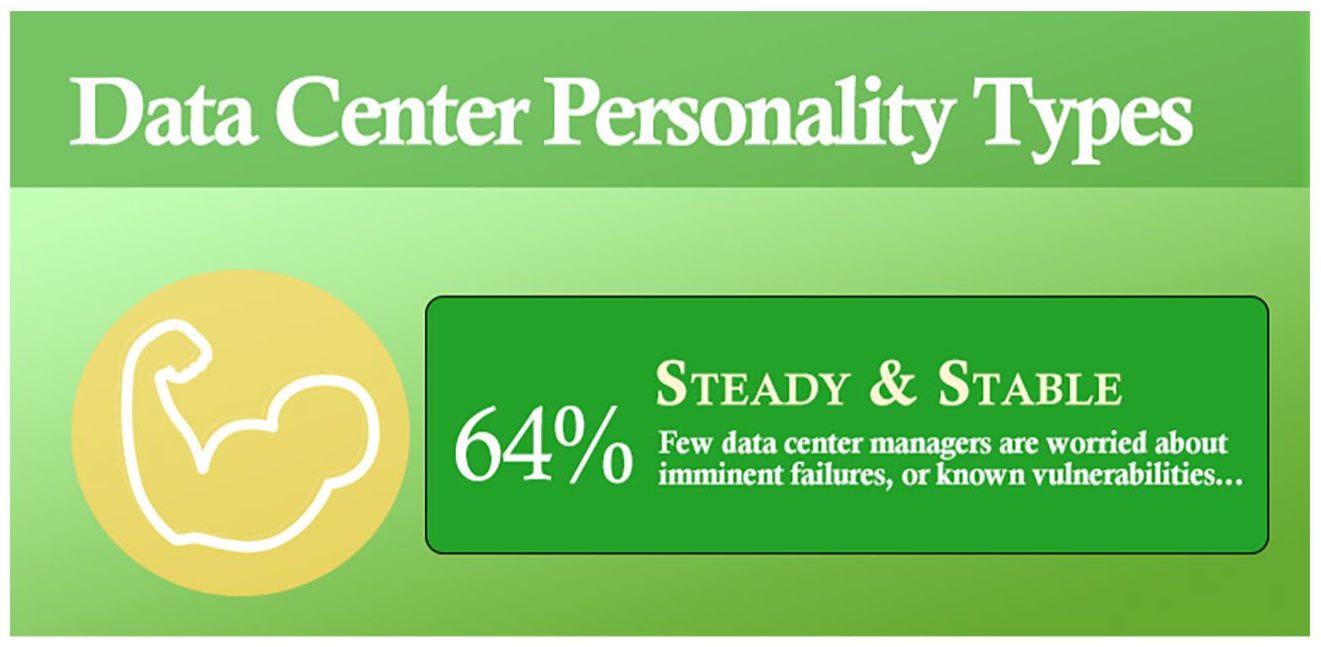
Data center personality test (reproduction by author).
Keeping your cool
In 2015, a prominent industry vendor ran a survey called “Personalities in the Data Center!” on their blog (Castle, 2015). The survey, “based on the psychometric method,” measured personality traits of data center managers, displaying the tallied results in an infographic (Castle, 2015). The survey indicated that 62% of respondents identified as “steady and stable,” a finding captioned with “few data center managers are worried about imminent failures, or known vulnerabilities” (Castle, 2015). Represented by an icon of a bulging bicep, the “steady and stable” trait also appears to be communicating an aspirational brand of masculinity, one vastly different from the anxious scenes I sketched with Tom, Mike, and Ricardo. Mirroring the homeostatic chill of whirring air conditioners, data center operators strive to be cool even under duress. In an op-ed, one writer warns against “the Narcissistic feeling of having everything under control” that often leads the “chairman of any data center” on the path to downtime (Rojas, 2017). The aspiration is to create a worry-free “chilly climate,” to perform thermostatic control and technical mastery, rather than admit fault or incompetence (Wynn and Correll, 2018: 150). Anthropologist Alexander Taylor (2021) observes in European data centers that while “IT failure is an inherent part of everyday working life in the cloud,” the emphasis on uptime underwritten in service-level agreements and vendor contracts, creates “intense pressure” for data center professionals to realize an impossible ideal of infallibility. This behavior, this penchant to emphasize success and to deny or mute failure, is replicated by data center companies in their promotional materials.
On the websites of data center companies, uptime is displayed prominently as a percentage (99.x%) to inspire the confidence of potential customers. The (99.x%) percent reflects the portion of the year that servers are operational. Data centers are ranked in ascending tiers based on the levels of infrastructural redundancy in place to prevent or minimize downtime (Taylor, 2021). A Tier 1 data center, for example, hovers around 99.671% uptime (28.8 minutes of downtime) whereas, a Tier 4 data center promises a superior rating of 99.995% (26.3 minutes of downtime), according to the Uptime Institute (2013). Uptime in this capacity, is not merely a temporal referent but an emblem of technical mastery, linguistically skewed to inspire client confidence rather than doubt. Histories of thermodynamics describe the fashioning of energy in terms of work and waste to increase the productivity and profitability of Victorian industry (Daggett, 2019: 111). Data centers are ranked by how often they succeed, rather than how often they fail, or as my research participants suggest, how often the data center is cold instead of hot.
The fear of downtime coupled with the masculine struggle to sustain uptime indefinitely through wasteful “flood cooling” techniques, might explain why the data center industry took so long to implement sustainable initiatives, opines Lynn Fischer, one of the few women I was able to interview. For many data center managers in the early 2000s, minimizing the use of air conditioners to conserve energy was met with fear and skepticism, because the threat of a thermal outage was thought to be too great a risk (Miller, 2009). Lynn, an early adopter of airflow management techniques that helped her reduce energy waste in her data center by shutting off redundant air conditioners, describes her efforts to convince “male colleagues” to follow suit as “futile.” She claimed that biases against women and their technical capacities made it impossible for her to be heard above the din of the “cock fight.” Shortly after our chat, Lynn emailed me a scientific study that measures differences in air-conditioning “behaviors” between men and women in industrial settings. The authors find that “generally . . . males consume 1.2e1.5 times more cooling energy than females” (Wang et al., 2019), a conclusion that Lynn claims “backs up” her insights about the intrinsically “wasteful” habits of men who run data centers.
Conclusion: thermotemporalities, thermomasculinities
Central to the social and cognitive organization of a profession is its ability to shape events in the domain of its scrutiny into phenomenal objects around which the discourse of the profession is organized. (Charles Goodwin, 1994: 626)
The late sociolinguist Charles Goodwin argued that the technical jargon he observed in courtrooms or archeological dig sites was not purely referential or descriptive in function. Per Goodwin (1994), specialized language is charged with “phenomenal” and performative capacities that contour “professional vision” and subjectivities. In the data center, uptime and downtime are not discrete referents for success or failure, cold or hot, and masculinity or femininity. They are, rather, “animating” discourses (Silvio, 2010), thermal–temporal genres that data center managers harness to perform success or avert cataclysm, to become men or unbecome them. First, there is downtime, a word so scalding with failure, that its very invocation is feared or avoided (McIntosh, 2005). Linguistic anthropologists might describe this quality as perlocutionary force (Duranti, 2004), referring not to the content of the word but the expected, or in this case, feared, effect of its utterance. In the inverse, uptime is a “word that succeeds” (Brown, 1986). Like the companies that prominently display figures of 99.x% uptime on websites and pamphlets, the data center manager repeats the cool mantra of uptime to precipitate his success. The data I present in this article show that these thermotemporalities are not only invoked but embodied, as Mike’s “burn out,” and Ricardo’s dilated experience of time signal.
Philosopher John Durham Peters (2015) writes that “temperature is a medium.” Hot and cold are not merely sensations or discrete molecular states, they are vehicles of meaning that stand in binary opposition. Claude Levi-Strauss (1966) deployed this opposition as an analytic to contrast the enervation chaos of civilization (hot societies) with the homeostatic equilibrium of so-called “primitives” (cold societies). In the data center, heat is about the dissolution of form, “chaos” as Tom described it, but also the relinquishing of control. Heat death is a descent into the dark void of nature, which is marked feminine (Merchant, 1980). European colonists similarly reviled tropical heat as chaotic and feminizing (Anderson, 1997). In data centers, heat portends contamination while cold promises purification—the “up” in uptime (Douglas, 1966). Cold connotes form, “composure,” and order. While entropic heat periodically triumphs in data centers with downtime, populating faraway screens of devices with “server not available” error messages (Conaway, 2016; RM Willet, 2019), the operator ultimately prevails at a rate of 99.x% (Taylor, 2021), wielding elemental and dispositional coolness to quell the siege of media heat with uptime. It is in this crucible of cyclical failure and heroic triumph, of manly refrigeration repelling formless, feminine, heat, that the data center operator is thermomasculinized.
Amid a surge in digital activity precipitated by a global pandemic and a mounting ecological crisis of planetary warming, data centers churn along, metabolizing carbon as they cool. To sustain the uptime of capitalist civilization, data center technicians tirelessly evacuate the heat exhaust of digital capitalism, even as the cooling they strive to perpetually sustain warms the Earth. The Anthropocene is thus a thermotemporal scheme, the calamity it portends not entirely unlike the scene of a data center blaring with thermal alarms as downtime strikes. In this article, I have marshaled ethnographic data to illustrate how a performative species of masculinities emerges in the thermotemporal interstices of cool uptime and hot downtime. The thermomasculine episodes I recount empirically substantiate Nicole Starosielski’s (2016, 2021) theorization of the thermal as cultural.
Footnotes
Acknowledgements
I would like to thank Drs Stefan Helmreich, Graham Jones, Heather Paxson, Alix Johnson, Mél Hogan, Beth Semel, Jia Hui Lee, and Luisa Reis-Castro, for their mentorship and assistance shaping this dissertation project and Karen Gardner, Carolyn Carlson, and Stephanie Brandao Carvalho, for their administrative and logistical support on my behalf. I would also like to thank the many individuals in the data centers who participated in my study, the anonymous reviewers who provided valuable feedback on drafts of this article, and the Language & Technology Lab at MIT, for generously hosting a workshop to help me improve this piece.
Funding
The author(s) disclosed receipt of the following financial support for the research, authorship, and/or publication of this article: This article would not have been possible without financial support from the Kelly Douglas Research and Teaching Fund, a financial hardship grant from the MIT’s Office of Graduate Education (OGE), an honorarium from the MIT Schwarzman College of Computing, and travel funding from the History, Anthropology, Science, Technology, & Society (HASTS) doctoral program at MIT.
