







Abstract
“Flexible time” as a myth in platform labor has been destructed by critical media scholars. However, while previous studies have answered the question of what platform time “isn’t,” most failed to go further in analyzing what “it is.” Based on the 6-month fieldwork, this study aims to re-construct the temporal politics of platform labor in the online food delivery industry in China. Specifically, we employ an inherently relational perspective to analyze three differential temporal themes constructed by heterogeneous actors, namely the “daily time” by third-party subcontractor, “event time” by platform, and “poaching time” by rider. In the investigation of multiple temporalities, this article also uncovers the asymmetrical “relational balancing” among heterogeneous actors in platform labor.
The platform economy has been receiving widespread academic attention for nearly a decade, and its extraordinary rate of growth is presented in the expansion and capitalization of platform companies on a global scale (Collier et al., 2017a). A long-standing focus of study has been the critical investigation of flexibility in platform labor (Kenney and Zysman, 2016; Ravenelle, 2019; Rosenblat, 2018; Rosenblat and Stark, 2016; Schor and Attwood-Charles, 2017; Sun et al., 2021). In particular, as an increasingly common employment practice in recent years (Wood, 2018), flexible scheduling is among the popular topics in platform studies of temporality (Chen et al., 2019; Chen and Sun, 2020; Maich et al., 2018).
Ironically, despite of the platforms’ promises about their employees’ autonomy in labor time and a flexible start and quit mechanism, as a technology-driven temporal structure of labor, “flexible work” itself is subject to the strict control of algorithmic rules (Oppegaard, 2021). In reality, not only does flexible work deviate from what it promises, but it makes laborers work longer and grow more dependent on the platform (Collier et al., 2017b; Schor, 2021).
Although it is commonly argued that “flexible time” fails to accurately describe the temporal order that platform workers are in (Anwar and Graham, 2021; Cano et al., 2021; De Stefano, 2016a; Schor et al., 2020; Sun et al., 2021), previous studies are still insufficient in describing what type of temporal order(s) platform workers encounter daily. To explore further the theoretical potential of temporal issues of platform labor, in the investigation of the temporal politics of Meituan, China’s leading platform-based food delivery company founded in 2014, this study aims to employ an inherently relational perspective, which emphasizes the multi-temporal structures constructed by heterogeneous actors in platform economy and their persistent conflicts and negotiations. Online food delivery services have penetrated large and small Chinese cities. There are more than 10 million food delivery riders in China, and the entire industry’s size is projected to reach US$135.2 billion by 2022 (CSDN, 2022). Apart from the ever-expanding market, Meituan has repeatedly compressed the time allocated for deliveries in the name of algorithmic optimization. Under such acceleration, flexibility is often sacrificed in the platform’s insatiable desire for less time and more efficiency to the point where flexible work amplifies time anxiety.
In this article, the first author conducted 6-month fieldwork as a Meituan rider in Hefei, the capital city of Anhui Province. The data were collected through both participant observation in labor station (local subcontractor for riders), riders’ gathering spots, WeChat groups and interviews with 32 local riders as well as one station manager. Based on the fieldwork, the study attempts to re-construct the temporal orders of platform labor in the Chinese online food delivery industry from perspectives of riders, third-party subcontractors as well as the platform, and further reflects on the temporal politics in platform labor.
In the first part, the article gives an overview of researches on flexibility and platform labor, as well as advocates an inherently relational perspective in the investigation of temporal issues in online delivery industry. The second part of the article explains how we conducted the fieldwork in Hefei. In the analytical section, the article summarizes the core findings into three themes: the “daily time” constructed by third-party subcontractors, the “event time” by the platform, and the “poaching time” by riders. The three types of time mentioned earlier reveal complex temporal politics in platform labor. In the “Conclusion” section, the theoretical implications and limitations of this study are discussed.
Constructing temporalities in platform labor
In retrospect, “algorithmic control” has been widely employed to deconstruct flexible time (De Stefano, 2016b; Oppegaard, 2021; Rosenblat and Stark, 2016; Wood et al., 2019). Although platform companies promise their workers to “be your own boss” and “work as much as you want to” to highlight the workers’ autonomy in labor time and a flexible start and quit mechanism (Cano et al., 2021), it also use automated adjustment and algorithmic control to achieve real-time monitoring of their employees, which directly disintegrates the flexibility and freedom advertised by flexible time (Rosenblat and Stark, 2016). Such a “pseudo-flexible time” exacerbates the occupational risks behind algorithmic control and further worsens working conditions. In particular, when flexible time and income are discussed together, most platform workers have no choice but to work longer for stable incomes, which considerably restricts the flexibility of flexible work (De Stefano, 2016a).
Although studies of algorithmic control have deconstructed platform labor’s temporal flexibility, it does not necessarily lead to renewed construction of a more vivid and dynamic picture of it, for as a platform-dominant approach (Maddox, 2021), the emphasis of algorithmic control may largely obscure local conditions (Sun, 2019), labor communities (Wood and Lehdonvirta, 2022), local regulatory structures (Karanović et al., 2021), and dynamic interactions among heterogeneous actors (Soriano and Panaligan, 2019). As Sharma (2014) noted, time is about “the micropolitics of temporal coordination and social control between multiple temporalities” (p. 7). Thus, the construction of labor time must be embedded into the lived experience and “temporal interdependence” (Sharma, 2014: 20) of heterogeneous actors.
As Schüßler et al. (2021) argued, platform is a “dynamic sites of contestation and conflict” and should be understood as “a multi-faceted relational structure.” It does not mean that the platforms and their algorithmic control are no longer significant in labor time. Instead, platforms should not hold a dominant position in temporal issues as the power of the algorithmic control is “mediated by workers’ market situations” (Schor et al., 2020). In recent years, scholars of platform labor have been reminded of the “emergent form of resistance that responds to the reconfigured working conditions” (O’Meara, 2019). Echoing this trend, Chen and Sun (2020) investigated “the mundane, and sometimes opportunistic, tactics deployed” by online delivery riders to re-construct their temporality. The emphasis of workers in the studies earlier has also reminded us that the power relations are “far from being one way and from the top down” (Chen, 2018). Instead, platform workers may strategically regain some autonomy from the platform (Chen and Soriano, 2022).
While existing studies have contributed significantly in broadening our understanding of platform labor, it is possible to expand further on the following two aspects. First, while temporal structures are “differentially imagined, regulated, and practiced” (Sharma, 2014: 79) by heterogeneous actors, most previous studies still tend to approach the temporal issues in platform labor as a whole, without fully considering the possibility of heterogeneous actors in constructing differential temporal structures. For instance, De Stefano (2016a) describes it as “just-in-time workforce” from the perspective of the worker, while Wood (2018) summarizes the temporal mode of the platform economy as “powerful times.” However, multiple temporalities institutionalized in the “temporal organizations, expectations and rules of state bodies, companies, civic organizations and technologies systems” (Kitchin, 2023: 13) are not fully uncovered. In other words, it remains to be unclear from existing studies how heterogeneous actors construct their differential temporalities in a localized context and how these temporalities are entangled together.
Second, as Li (2022) has argued, in previous studies of platform labor, other actors apart from the platform and workers have often been either classified into a “control-versus-autonomy debate” (see also Shapiro, 2018), or handled as the secondary background and context. For instance, while most studies of platform labor time mainly focused on either platforms (Cano et al., 2021) or riders (Huang, 2023; Tassinari and Maccarrone, 2020), few study investigated in detail the temporal construction of third-party subcontractor in online delivery industry, while its importance has been acknowledged in the study of on-demand economy (Van Doorn, 2017), online delivery service (Sun et al., 2021), and other domains of platformized cultural production (Liu et al., 2023).
Therefore, the article adopts an internally relational approach, foregrounding multiple temporalities constructed by heterogeneous actors as well as their interactions within and between these temporalities. Such an approach emphasizes that temporalities of platform labor is not given (i.e. flexible time) but generative and interdependent. It is neither top-down approach nor bottom-up, but emerges from “social and relational contours” (Sharma, 2014: 14). Thus, based on the analysis earlier, the first question we attempt to answer in this article is what temporal structures heterogeneous actors construct in their respective contexts and how they interact and influence each other.
Furthermore, the investigation of multiple temporalities may also facilitate us to investigate the power relations among heterogeneous actors in platform labor. As Kitchin (2023: 13) noted, temporality is a structuring relation of power. Sharma (2014) also introduced the term power-chronography as a way of “locating how temporality operates as a key relation of power” (p. 138). Specifically, researchers of platform labor time have also investigated the dynamic negotiation between platform and its workers (Zheng and Wu, 2022) to reveal the politics of uneven temporal orders. Chen and Sun (2020) went further to illustrate “the underlying depreciation and dismantling of workers’ time in the formation of the asymmetrically information power between the company and workers,” which they termed “temporal arbitrage.” Based on the contributions of previous studies, this article attempts to include more heterogeneous actors (i.e. third-party subcontractors, customers, facilities, and software) to display their complex “power geometries” (Zheng and Wu, 2022). Therefore, the article also attempts to answer how differential temporalities that heterogeneous actors construct contribute to our reflection on power relations in platform labor.
Heterogeneous actors in Meituan
In this article, we employ a relational perspective to explore the multi-temporal structures constructed by heterogeneous actors in Meituan, a Chinese leading online food delivery company. To be more specific, the actors this article mainly focuses on include online delivery platform Meituan, third-party subcontractors including labor stations and labor service companies as well as platform riders.
Meituan’s delivery riders can be divided into two categories based on differences in management and labor time (Figure 1). The first category is part-time and full-time crowdsourced riders who sign contract with and are managed by non-local labor service companies. They get paid on a daily or weekly basis. The other category is outsourced riders. They comprise the bulk of Meituan’s delivery forces and are under the comprehensive planning and management of the local labor stations that they fall under. They are paid monthly. Labor service companies and labor stations gain the power to recruit and manage riders by contracting with Meituan, while neither type of riders signs any form of labor contract with the platform. Furthermore, it is also important to notice the non-contractual interactions between riders and the platform, specifically through App interface and algorithms.
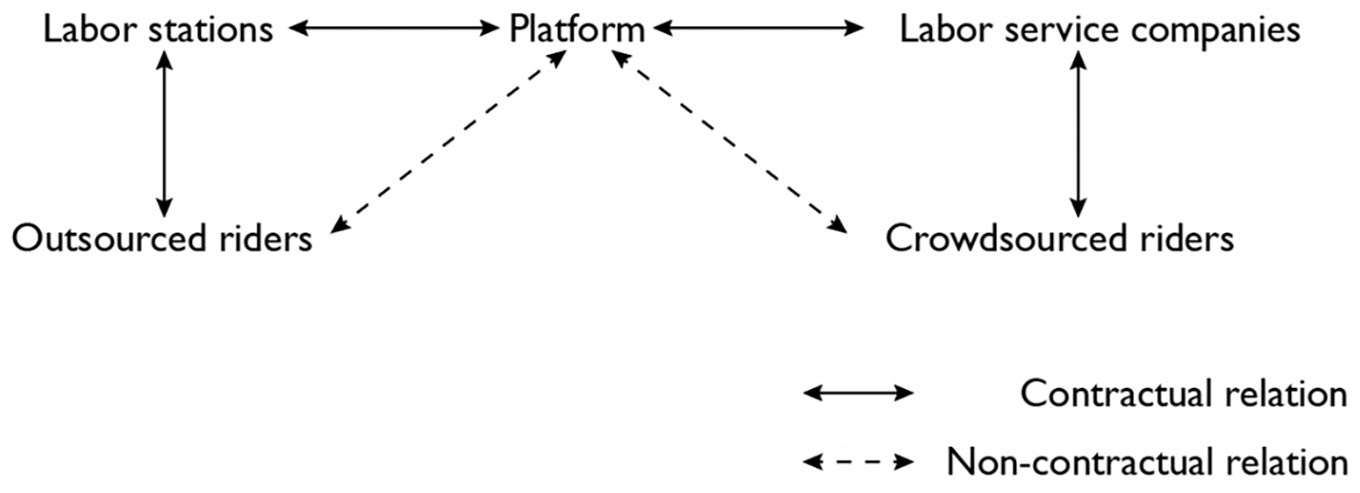
Managerial structure of outsourced and crowdsourced riders in Meituan.
Methods
In this study, the first author conducted a 6-month field investigation in Hefei, Anhui Province from 3 March to 19 August 2020. The specific site, Luogang Community, was chosen for the following three reasons. First and foremost, Luogang Community contains all elements of food delivery in a relatively small area, which enabled us to observe how the whole food delivery logistics are woven, maintained, and repaired. Within a radius of 4 km, this community contains densely populated residential districts, two large food markets, two community squares, several food streets, office buildings, and transportation hubs. The labor station in which we participated is located on its main street (Figure 2). Second, there were no confirmed cases in this community during the COVID-19 pandemic. In consideration of the strict zero-COVID control policy during COVID-19 in China, the local government was able to implement a flexible and loose management policy, and the food delivery service here was largely unblocked, which enabled us to work continuously in the field. Third, being born in Hefei, the first author is familiar with its environment and culture, which also facilitated our entry into the field and ensured the quality of follow-up investigations.
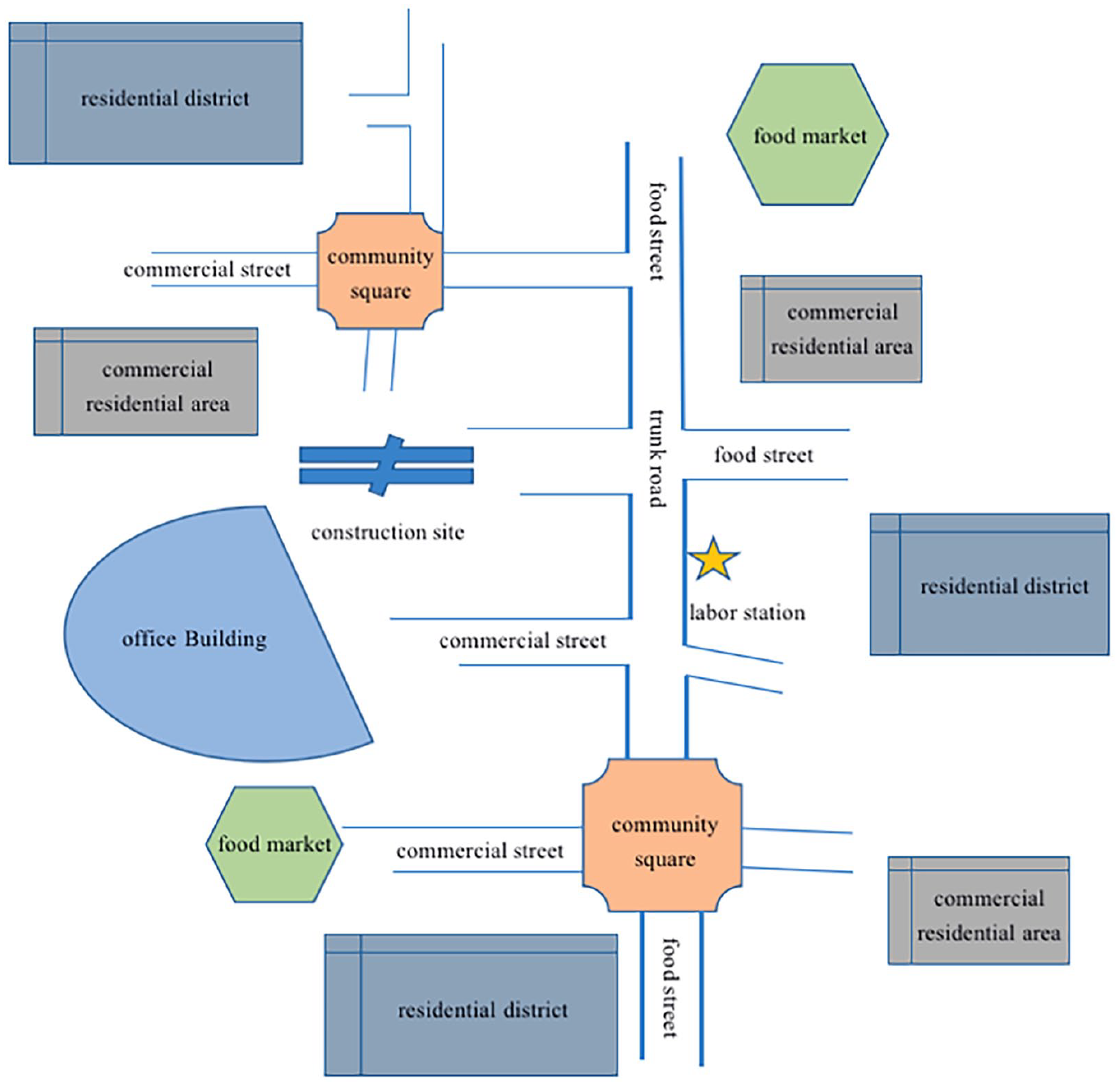
Spatial layout of our field site, Luogang community, Hefei, China.
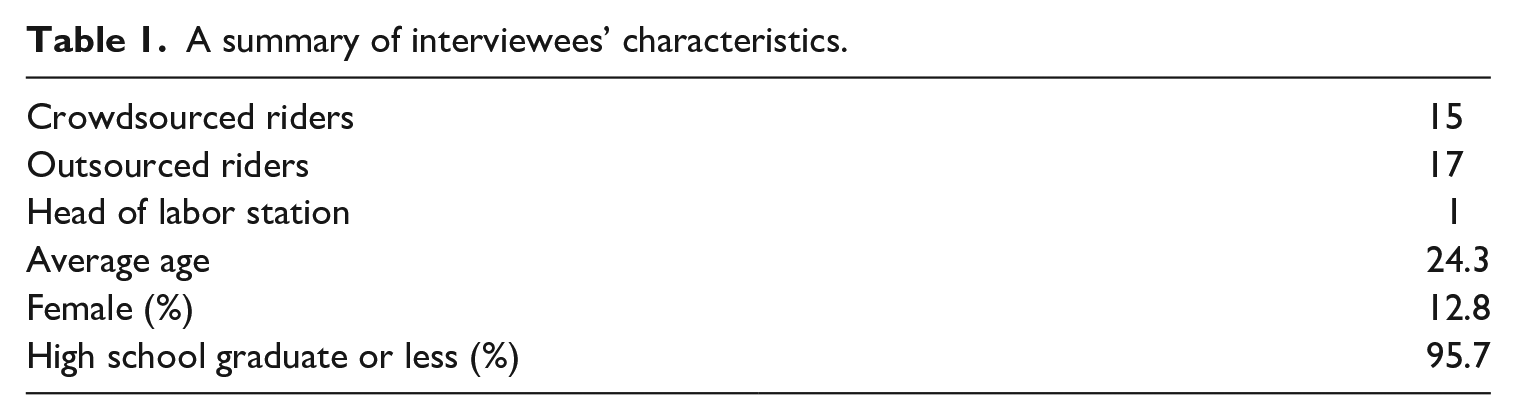
During the 6-month fieldwork, the first author collected field data as a delivery rider. Being a rider allowed us to obtain firsthand experience and offered us the chance to meet and chat with crowdsourced and outsourced riders in the labor station, their gather spot (usually near restaurants and food markets) and fast food restaurants where riders had a meal. During the participant observation, the first author also collected data from the morning briefing and WeChat groups in which the station manager sent notices or solve disputes. In total, 33 people were interviewed in this study (Table 1). The interviewees include 17 outsourced riders, 15 crowdsourced riders, and one head of a labor station.
A summary of interviewees’ characteristics.
Adopting a semi-structured format, our interviews with riders covered a wide range of topics, including their work rhythm, their experience about flexible time and algorithm control, and how they handled the relations with the platform and third-party subcontractor. In addition, our interviews with the station manager focused on how third-party subcontractor kept a balance between algorithmic control and station’s intervention, as well as how to ensure efficient and sustainable labor output. Each interview lasted 60–90 minutes, and was conducted in Mandarin or Anhui dialect. The personal information of all interviewees is processed anonymously, and their names in the article are pseudonyms.
We employed grounded theory (Glaser and Strauss, 1967) in analyzing the field data without any theoretical preconception. The data were coded initially along the lines of riders’ work experience, management by third-party subcontractors and platform-subcontractor-rider relations till the conceptual framework “temporality” emerged. Then the three authors read and discussed the field data together back and forth to identify three key themes: daily time by third-party subcontractor, event time by platform and poaching time by rider. Furthermore, we coded the interactions among three actors in constructing each type of time. As a explorative study, we attempted to display a relational and dynamic picture of temporal politics.
Daily time: routinizing the mobilization
In the delivery services that this article focuses on, the duration and rhythm of work for the outsourced riders are managed by labor stations, whereas the labor time of crowdsourced riders are typically routinized by labor service companies. The temporal structure that the stations and labor service companies construct for the riders is referred to as “daily time,” which means the recurring routines of work time that occur to riders on a daily, weekly, or monthly basis.
Temporal structure by labor station and labor service company
Labor stations and labor service companies construct daily time for riders in different ways. Labor stations use the volume of stable orders generated from different locations as a reference to dividing a city’s business clusters into grids of pianqu (zone within which a labor station dispatch orders) with practically effective borders. Each such zone covers 3–8 km of urban space. The relatively steady inflow of orders that a station enjoys within a pianqu is the prerequisite for establishing “daily time.” As Da Zhang, the manager of Luogang labor station, explained, The scope that each station covers is mainly decided by the volume of orders, which will gradually stabilize after a certain amount of time, thereby also mapping out a somewhat stable area for order deliveries.
The spatial management of orders within a given scope is rather strict due to its relatively stable customer demand. In this situation, the station will assign outsourced riders with morning, noon, and night shifts, and the labor times for the noon and evening peaks are generally fixed, which is far from the irregular labor constructed by “temporal flexibility.” In reality, a rider’s labor time resembles a systematic labor model characterized by a clock-in and clock-out mechanism (Figure 3). For station, such a mechanism serves to respond to delivery orders that could be initiated by customers at any time. In so doing, the temporal pressure from customers can be included into a station’s “daily time” to form an instant feedback loop between customers and riders.
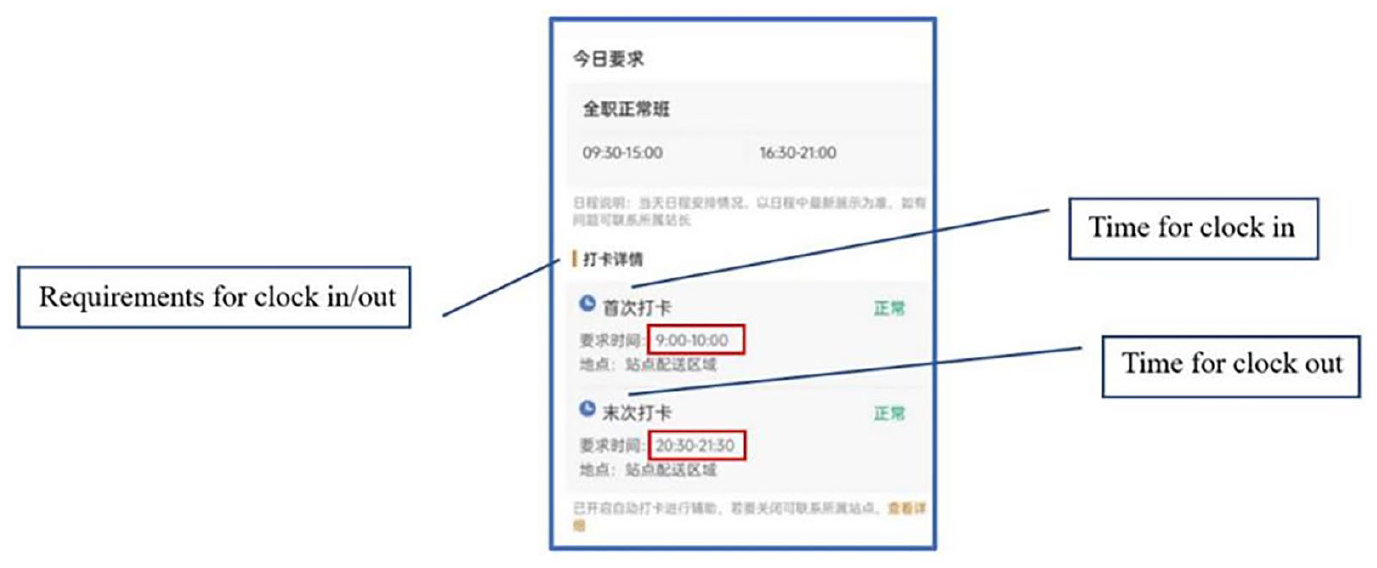
An app that requires outsourced riders to clock in and out on time.
However, because riders differ regarding their familiarity with and experience in platform labor, the orders that a new rider gets every day are a far cry from those of an experienced rider. To balance the working time of their riders, stations carry out routine and dynamic adjustments to the cap of orders that a rider may deliver. This form of artificial intervention constructs a temporal structure that differs from the algorithm-based automated order distribution. An emergency announcement in the WeChat group illustrates such intervention: EMERGENCY ANNOUNCEMENT: Riders can deliver no more than 45 orders for today. If you’ve already reached this cap, please take yourself offline after the evening peak (For instance, can you still accept orders when you’ve delivered 38 orders by 3 p.m.? Answer: Yes, but please be offline after the evening peak).
Compared with labor stations, labor service companies routinize “daily time” with week as the smallest unit and regularly release “delivery plans,” such as the “Happy Delivery Plan” (Figure 4), in the name of the platform that offer algorithmic privileges. This data-driven gamification (Van Doorn and Chen, 2021) allows labor service companies to reallocate the labor resource and build up relatively stable working rhythm. Crowdsourced riders can apply for such plans, after which labor service companies will select qualified candidates based on their labor data, and sign a 1-week deal with them. During this 1-week period, the algorithm will prioritize these chosen crowdsourced riders when assigning high-quality orders and the riders will need to accept the orders within the required time and ultimately complete a required amount of orders. Such deals can be renewed. As a crowdsourced rider named Xiao Shu explained, Many crowdsourced riders are happy to be part of Happy Delivery Plan. The deal feels similar to clocking in for work. We work as “outsourced” among the crowdsourced riders. Labor service companies use incentive plans like this to mobilize the crowdsourced riders.
In sum, the labor stations and labor service companies create “daily time” that differs from the flexible work schedule in their dynamic relations with the riders and the platform, and that more importantly, ensures the sustainable output of labor.
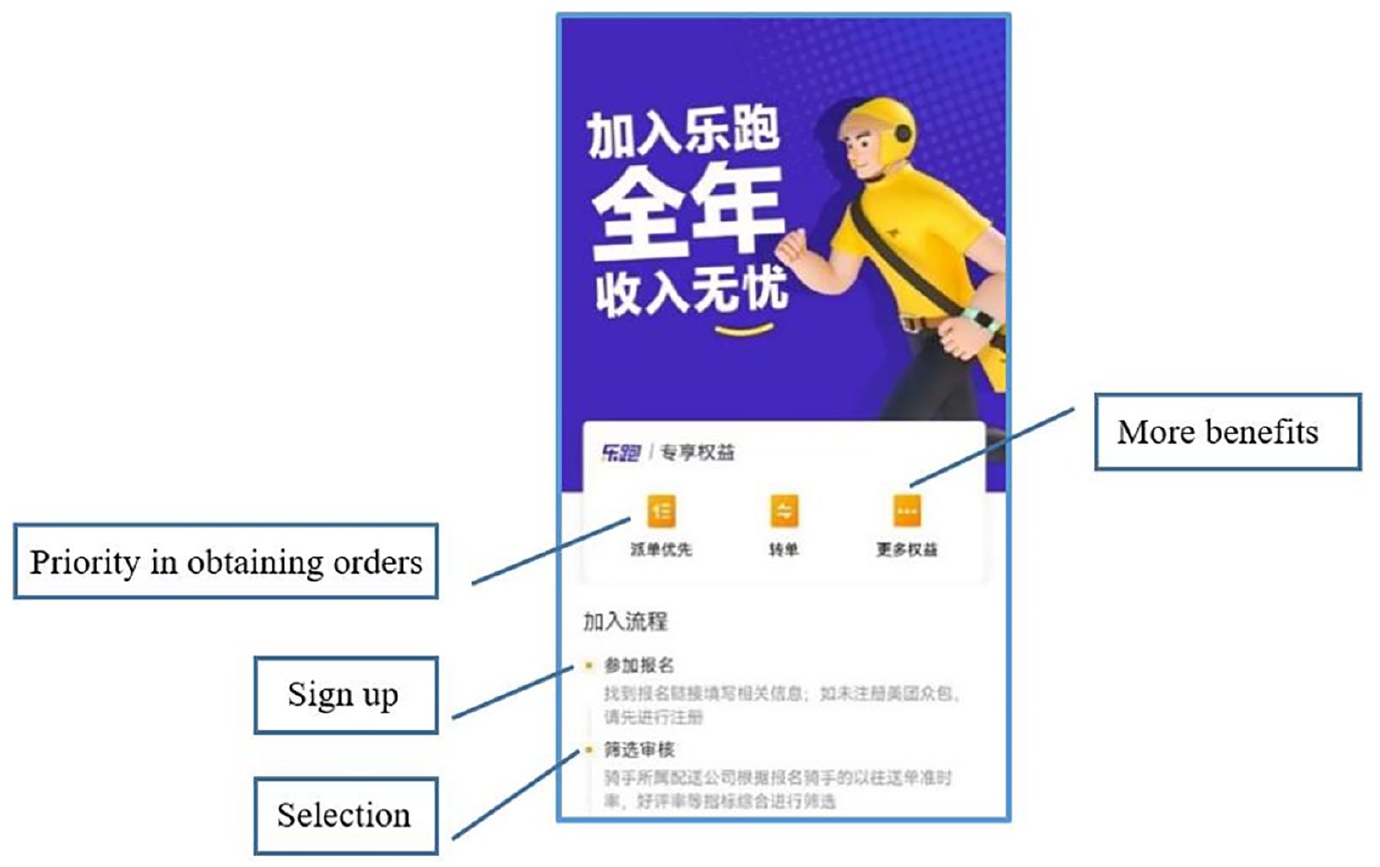
A “happy delivery plan” poster.
The routinization of temporal exceptions
For labor stations, the key to a sustainable output of labor also lies in routinizing the exceptions in “daily time.” For instance, through active intervention, labor stations turn special time slots (e.g. bad weather) into the routine labor time model, thereby ensuring their efficiency. Below is a notice in the WeChat group that the station manager sent to the riders a day before the monsoon rain season arrived: Bad weather forecast for tomorrow, riders on break are to return to work, and make no less than 30 deliveries. Riders on normal shifts need to make no less than 40 deliveries and work for 9 hours, 4.5 hours of which should be during rush hours.
For a station, rainy day is a special case in the “daily time” structure. To include this exception as part of daily time’s temporal structure, a station would issue specific rules on the delivery duration and minimum delivery targets to maintain relatively stable processing of orders made in its pianqu during special time slots.
In addition, since rider resources sometimes cannot match up to the overly abundant delivery orders that surge up in the local business clusters, especially during peak hours, some orders will inevitably be left without a rider. To best ensure that order delivery is smooth during the peak hours, labor station managers will tentatively assign orders that cannot be assigned by the algorithms to busy outsourced riders to appear as though they are delivering them, and then reallocate these orders to other riders who are freed up. The station’s term for the routinization of this “exception” is Guadan (order reallocation).
Guadan displays a labor station’s systematic intervention of the algorithm’s control, whereby in this scenario of localized platform labor, the power to distribute orders has shifted from the platform/algorithms to local labor stations. Furthermore, the dynamic interactions between the station and outsourced riders in the “secondary distribution” of orders further maintains daily time’s routinized construct of the rider’s work rhythm.
Self-restraining of labor stations
It is important to notice that a labor station’s dominance over “daily time” does not guarantee its central position. More specifically, the dynamic negotiation among platform, station, and rider renders the station-dominated “daily time” unable to form a centralized control mechanism over labor. In the case of Meituan, both the platform’s complaint channel and the collective “challenge” from the rider communities play an important role in the labor station’s self-restrain.
The platform so zealously maintains the overall balance of stations in a city as a means to maximize their service quality and efficiency in each pianqu. Although the platform has delegated the power to manage the workers to the stations, it still makes an effort to provide an online channel for the riders to make complains on management misconducts. By utilizing this feedback mechanism, the platform is able to monitor the stations for any rule breaking, which further ensures that the platform economy complies better with the ever-demanding regulations and public attention imposed. This pragmatic strategy allows the platform to prevent the stations from over-exploiting the surplus value of their workers. This can be reflected from how a station’s riders would call the platform’s customer service hotline to bypass their immediate supervisor, the station manager, to lodge a complain and in so doing, force the station manager to act. To save himself from the trouble, the station manager Da Zhang warned his riders in the WeChat group, Calling the platform’s customer service hotline doesn’t solve the issue, and if anything, results in me getting fined, which means you won’t have a good time either. So, if you have an issue, the station is the first line of problem solver for you.
Moreover, experienced outsourced riders are aware of the relation between labor stations and the platform, and would exploit this knowledge to force the station to adopt a more reasonable “daily time” structure by boycotting as a group against unreasonable arrangement in “daily time,” such as late-night delivery (delivering orders after 11 pm). A outsourced rider named Da Xu explained, In order to be part of the delivery platform’s franchise, labor stations usually have quite a bit of deposit money with the platform, which makes them afraid of being reported. Here at this station, quite a few riders once had a group boycott against late-night deliveries, and finally the station manager had no choice but to buy the riders’ dinner and make appeasements.
Hence, there is a persistent “balancing” among riders, stations, and the platform regarding “daily time” during platform labor and the platform’s drive to make profits. Although this balance is not equal, its process reveals how an intermediate organization constructs a flexible yet stable temporal structure between a macro entity of technology and capital (the platform) and micro individuals working for the platform (riders).
Event time: the logic of acceleration
Compared with the labor stations and labor service companies, the temporal structure constructed by platform is more specific, time-sensitive, and formalized, and we refer to as “event time.” The “event” is the phases occurring in the process of completing an order, from accepting the order to going to the shop, collecting the food, delivering, and completing the delivery. The rider’s location and the time at every phase of the process are captured, uploaded, and processed by smartphones and location service medium. Accordingly, the uninterrupted repetition which completely shatters the myth of “flexible time” in platform labor.
The constructive logic that the platform’s “event time” follows is two-fold. One, standardization. As a linear order of labor, “event time” is split into several explicit and standardized procedures to manage and regulate the “exceptions” that occur during the labor process, as well as to improve efficiency and customer experience. Two, acceleration. The algorithmic optimization that “event time” relies on will continuously compress the average time given to make each delivery. In order to adjust themselves to this time crunch, riders would resort to management (i.e. collaboration with the station or other riders) and technical (i.e. upgrading their tools of transportation) strategies to “keep up.” This section will expand on the two aspects of temporal logic mentioned earlier.
Using “event time” to legalize punishment
To maintain “event time” and further strengthen the sustainable output, the platform would set an estimated time of arrival (ETA) for every delivery order and punish riders who fail to deliver within the ETA. The direct result of such a punishment is that they cannot accept orders for hours or even days on end, and these bans usually occur on noon or evening peaks. However, the disputes are usually far more complicated and cannot be solved by ETA alone. In handling such disputes, platform simply defines itself as an “information and service provider,” whereby apart from assigning orders and setting the ETA, the drafting of all specific punishment rules are the responsibilities of labor service companies.
Apart from referring to the platform’s ETA as a standard, labor service companies have also devised a detailed list of exemptive situations (Table 2). In doing so, by fully specifying the range of scenarios in which crowdsourced riders retain the right to file a grievance, the labor service company is in fact legalizing the “event time” as the basis of punishment. In this sense, it has in reality completely avoided the rights responsibilities relation caused by the “event time.”
Situations where crowdsourced riders are exempted from overtime delivery.

If the compression of “event time” is to promote the sustainable output of platform labor through the logic of acceleration, in this detailed list of exemptive cases, the circumstantial negotiations among riders, station, and platform still exist. The influence of algorithms in the localized platform labor is often restricted by the dynamic coordination between the workers and third-party subcontractors. Strategic utilization of temporal relay and portable sources of energy, among other methods are all efforts that attempt to shift away from the meticulous control that the platform imposes on the workers, which in turn could reduce the risk of labor and increase stability in labor income. Of course, the third-party subcontractors’ intervention, done on behalf of the platform, is to eliminate factors that could threaten the labor efficiency and stability.
Transferring orders
It should be noted that the platform-dominated “event time” and its logic of acceleration are not algorithm-controlled. A typical strategy to cope with “event time” is zhuandan which refers to the collaboration between riders or a rider and the station to transfer orders. The phenomenon of zhuandan is manifested to certain degrees in both the outsourced rider and crowdsourced rider communities.
Under the first circumstance of zhuandan, outsourced riders may often need to make deliveries to destinations that fall outside of their designated business cluster. In this case, as long as they remain online, the algorithms will continue to assign new orders within that vicinity. However, since the riders are most likely unfamiliar with the parts of the city that are beyond their daily delivery scope, there is a significant rise in the probability of overtime deliveries. In order to get riders back to their routine business clusters, the station will manually assign an order that starts within the rider’s vicinity and ends in said business clusters. In doing so, the outsourced riders are “pulled back into the business clusters” (Figure 5).
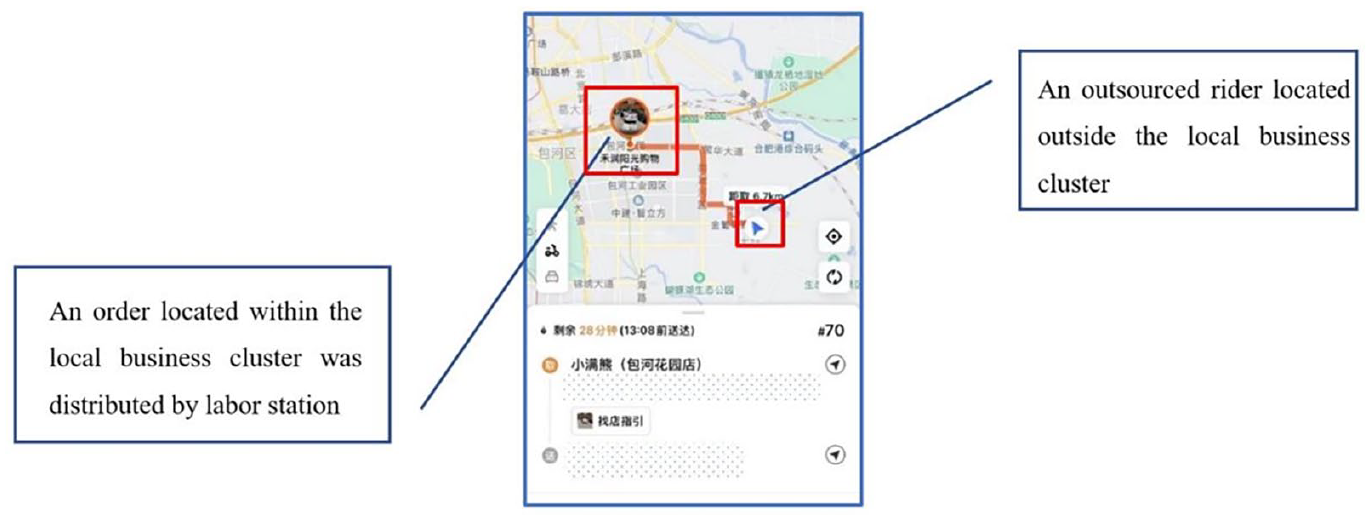
“Pulling” a outsourced rider back into the local business cluster through a manually assigned order.
Under the second circumstance of zhuandan, crowdsourced riders often transfer orders that they have no time for to riders who might be closer to the destination or have more time so as to reduce the risk of overtime delivery caused by “event time” (Figure 6). As a crowdsourced rider named Xiao Zhu said, Zhuandan is quite common among crowdsourced riders. Sometimes I have quite a few pending orders, and the algorithm would automatically assign an order that’s very far from where I am. If I don’t transfer that order, I’ll definitely not make it on time. Crowdsourced riders are not like outsourced riders, we watch each other’s backs.
Hence, although event time displays the immense control that the platform/algorithm has over the labor process, the zhuandan of labor stations and riders dilute, to some extent, the temporal pressure and overtime risk caused by the “event time” and its logic of acceleration. This reveals the dynamic negotiations among heterogeneous actors in event time.
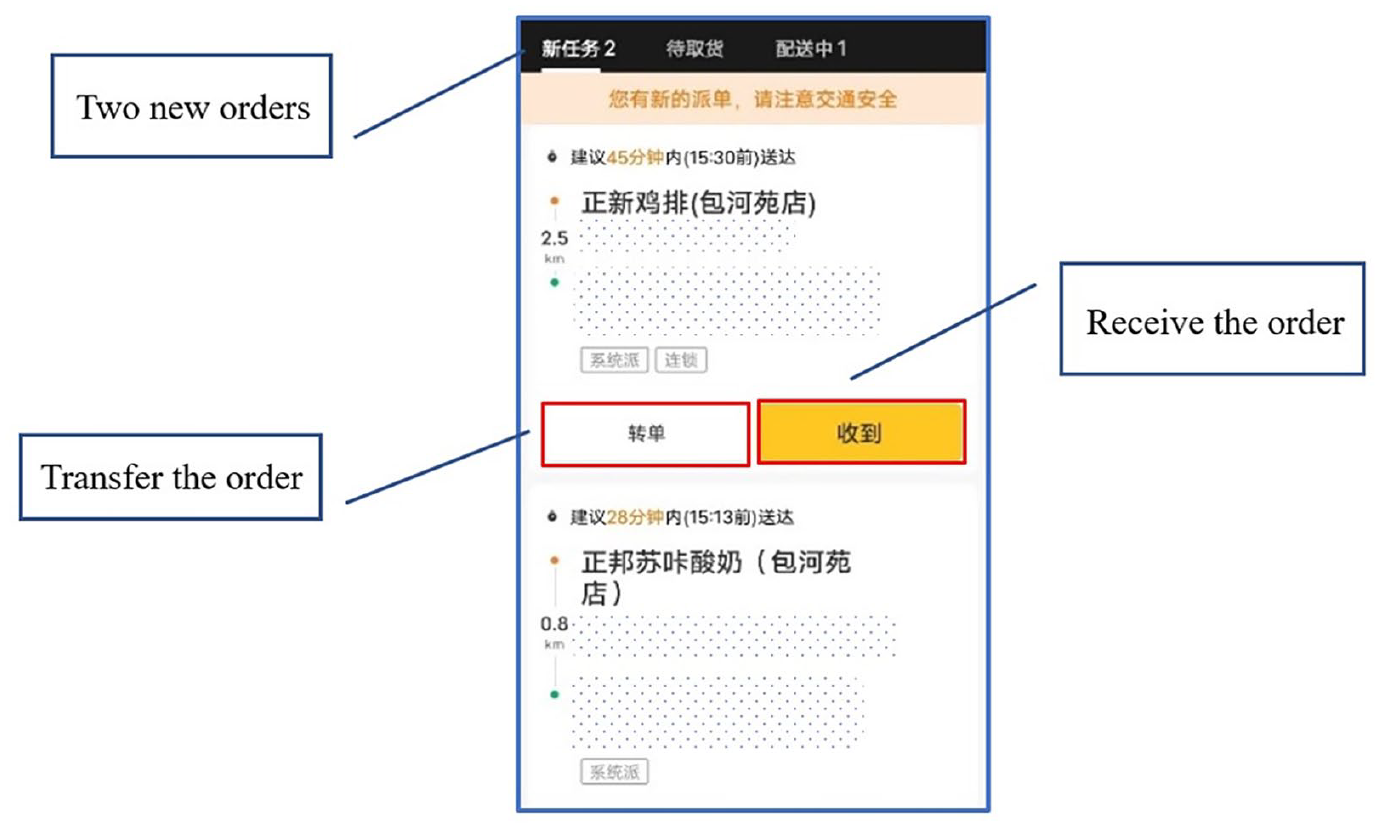
Crowdsourced riders receiving a delivery order that can be transferred.
Acceleration through batteries
To cope with time pressure, outsourced and crowdsourced riders are also very likely to illegally modify their scooters by installing over-powered batteries to make them faster. As a crowdsourced rider named Xiao Dong told us, The scooter frame, battery, and battery compartment have all been modified. When riders who’ve modified their scooters see traffic police from a distance, they’ll slow down to 15 mph, when they’re out of the officer’s sight, they’ll blast through at 40–50 mph.
Apart from buying illegally over-powered batteries, battery rental is a more convenient alternative for the riders. Self-help battery rental cabinets of different brands are usually scattered in a city’s business clusters or where the transportation networks is dense (Figure 7). The fact that self-help battery rental services are decisive, to a large degree, of the actual influence that “event time” has on the riders’ labor rhythm. This is because the accessibility to battery changing services (especially if such services are close by) will reduce the risk of overtime.
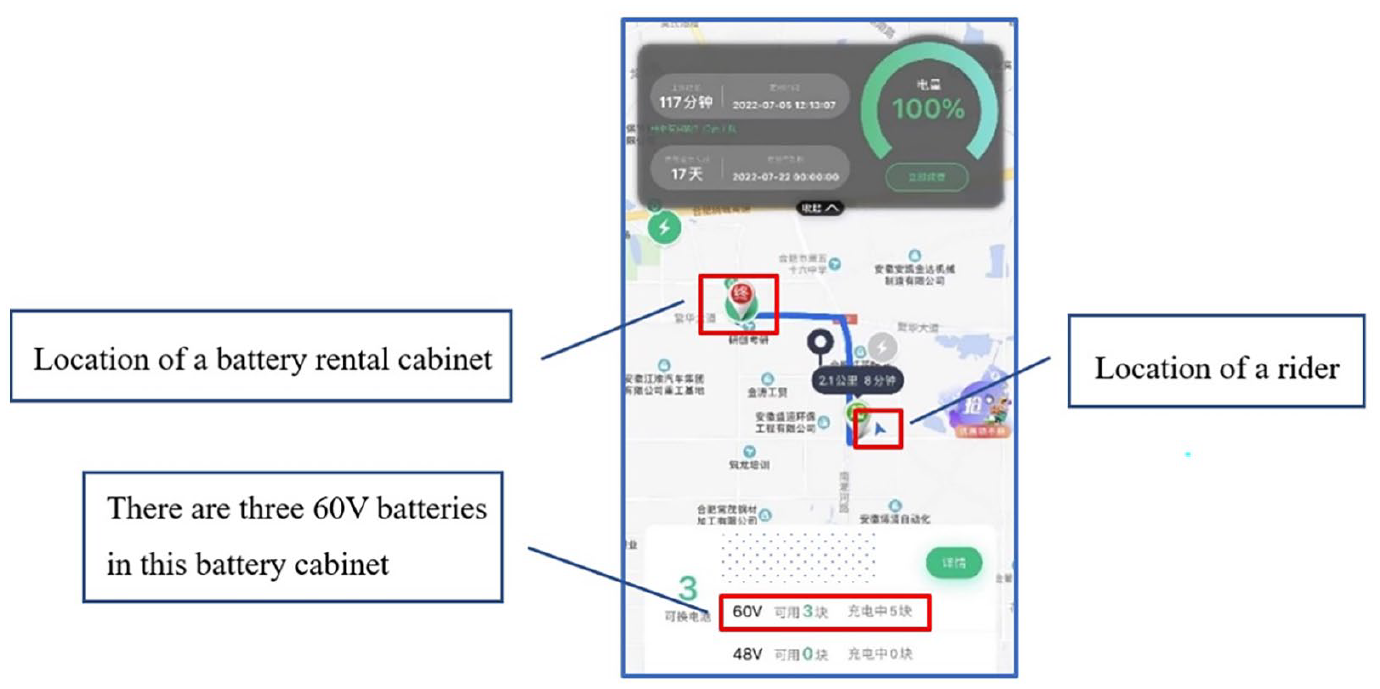
An app that guides riders to nearby battery rental cabinets.
In order to respond to the platform-dominated “event time,” riders flexibly utilize the energy resources afforded by portable batteries to reduce the risk of overtime, as the platform set an ETA for every delivery order through algorithms. In other words, the compression and acceleration of “event time” by platforms is widely embraced by riders using modified scooters to make their deliveries faster. This unexpected cooperation improves delivery efficiency.
In addition, although getting complaints or negative reviews from customers due to late deliveries is almost unavoidable, the associated temporal pressure is, more often than not, alleviated through the APP’s technical rules in “event time.” When an order is accepted, the ETA that the algorithm provides to the customer is not a fixed time, but a “period of time” that could span from a few minutes to half an hour. In other words, the temporal pressure imposed by customers is integrated and transformed into a compromise between efficiency and risk by the platform’s event time.
Poaching time: snatching time from platform
Relative to the “daily time” and “event time” perceivable and constructed with technology and by the organization, there is another more obscure type of time constructed by artificial tech products such as waigua (program plugins to snatch up quality orders) and dianjiqi (a technical device making order snatching faster), or cheating behavior (e.g. closing smartphone positioning). Waigua, dianjiqi, and closing positioning are used by riders to snatch up new orders or escape overtime penalty, which presents a fascinating temporal dynamic for platform labor whereby the rider is like a poacher who uses the affordances of technology to “poach” orders or time. Hence, this article refers to this type of time as “poaching time.”
For riders, “poaching time” is made possible from the relative separation of algorithmic management and organizational management between the platform and third-party subcontractors. The platform’s priority is to ensure that each order can be delivered on time, whereas that of the labor station is whether its riders can provide sustainable labor. Given this situation, the goal of “poaching time” is to find a compensation that rests in the “loophole” between technology and organization. The riders do not damage the core interest of the platform or the third-party subcontractors as they poach time. Meanwhile, “poaching time” has become a option for riders to get compensated from the time crunch and increase their competitive edge.
Snatching orders with waigua
Waigua is widely discussed in the rider community. It is program plugins that tap into the platform’s crowdsourced rider app and, as the rider app releases new orders, work in tandem to snatch up those orders. Riders can set standards for orders to snatch in a hacking software’s user interface, such as orders that pay 5 yuan or above, are within 1 km to collect and 5 km to deliver, and allow you to make up to two orders in one instance. Once the conditions are set, the waigua refreshes the rider app’s order acceptance interface 100 times per second, or once per 0.01 second. Using waigua to “instantly snatch” orders has become an essential way for some riders to challenge the basic labor rules that the platform establishes.
Interestingly, riders’ attitudes toward how the platform handles the waigua are diverse. Quite a few riders believe that the platform and labor service companies do not actually care much about this issue. The opinions of these riders can be summarized as such from an instrumental rationality perspective, the “poaching time” that “instant order snatching” with waigua has created intricately dovetails with the profiting model of the platform, as well as the supply and demand relation between the two and the need for real-time urban delivery. As a crowdsourced rider named Xiao Zhu explained, Although the number of riders continues to rise, the number of those who use waigua remains more or less the same. More riders mean lower unit price, and there will always be those that are willing to deliver, even with lower prices. So, if there are more waigua to instantly snatch away orders, it is beneficial for the platform to drive down the unit price of an order.
More practically, in the process of platform labor, the officially unapproved “poaching time” plays the role of an interest compensator. The act of snatching up orders with waigua not only grants riders with more quality orders and improves their competitiveness, but also alleviates a common concern that platform workers face: income precarity. The direct impact of effectively increasing riders’ labor income is that the riders have higher stickiness and reliance on the platform, which in turn can guarantee, to a certain degree, the stable output of platform labor.
In addition, for riders that do not use waigua, the time politics of “instant order snatches” reveals more profoundly, on the value rationality level, their reflections on working for a platform. These riders are not particularly concerned with to what extent management can improve the playing field, but with the “existence” of the waigua. An outsourced rider named Xiao Deng told us how he adjusted his mentality: There’s this saying, “once you’re into the waigua, there’s no going back.” It is too complex and too tiring to think about how to cheat the system every day, not to mention having to worry about getting caught. So, I say, why bother? There is honor in not using waigua, and I despise those who do.
Therefore, waigua software as a technological medium and the “poaching time” that its constructs have become symbols that some riders use to explain why they cannot get orders and establish themselves as righteous and honest workers who frown upon unfair competition. More specifically, riders who do not resort to cheating confirm or reaffirm their belief in the value of honest labor, justify, and moderately accept the various issues that accompany platform labor (e.g. unfair competition, high labor risk, unstable income). All these do objectively stanch the loss of platform workers, which in turn adds labor stability among the rider community.
Phone dianjiqi
Apart from using program script-based waigua embedded in the platform’s apps to gain an edge, riders also use external or physical dianjiqi to make order snatching faster. Normally, snatching orders requires the act of frequently tapping the screen of a smartphone with one’s fingers. This creates a potential problem: when there is a surplus of riders within a business cluster during special time slots, new orders are “immediately seized up.” When this happens, riders would need close synergy between their reaction and tapping speed to tap on the “snatch order” icon on the screen in very short intervals to have a chance of snatching it up. Due to a lack of experience, many rookies find it hard to get orders. Hence, they resort to using dianjiqi (Figures 8 and 9) to replace their fingers and achieve rapid tapping in a given time, thereby increasing their likelihood of “snatching orders.” A crowdsourced rider named Xiao Liu shared with us his satisfaction with such dianjiqi: I use one of those manual dianjiqi that you can preset to start tapping a few seconds in advance. Once it starts, the dianjiqi will tap a fixed number of times per second and will keep tapping regardless of whether there is a new order. The hit rate is actually quite right.
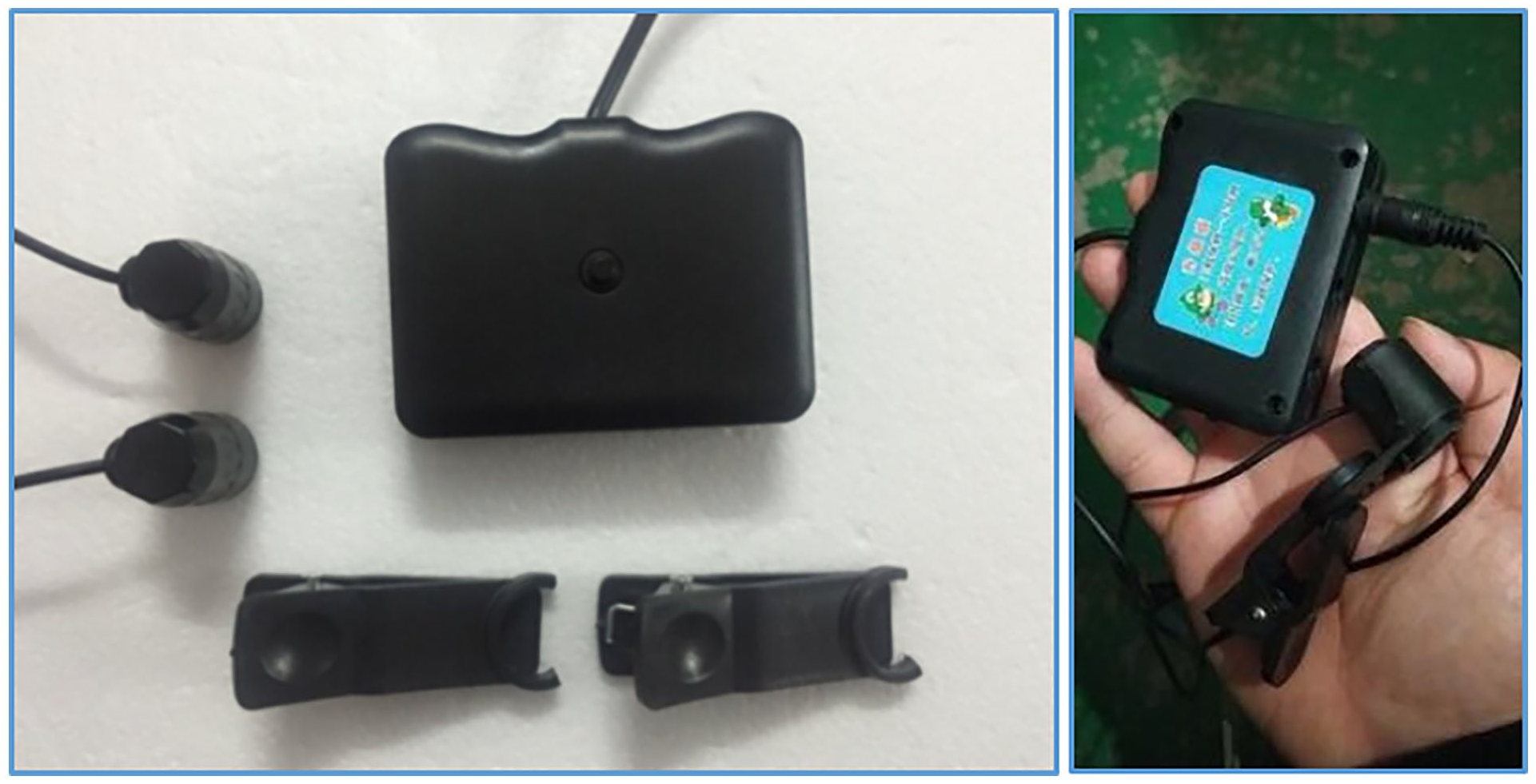
“Twin-headed” auto dianjiqi that can be purchased on e-commerce platforms (left).
Closing positioning
In addition, apart from snatching orders to “poach” time, riders would often temporarily “disconnect” from the Internet to avoid the platform’s monitoring of overtime delivery, thereby gaining more time. The logic behind how disconnecting from the Internet can avoid overtime penalty is relatively straightforward: When a delivery is still underway, crowdsourced riders would tap on the “delivery completed” button on their end, and then strategically disconnect from the Internet by switching to the flight mode. Unable to monitor riders’ real-time location, the platform cannot determine whether they tap on the completion in advance. Of course, for riders to be unpunished, they would also need the consent from the customers. For customers, their consent depends largely on their sympathetic reflection on ETA and the authority of algorithms. For riders, this is a way to bypass the platform’s unreasonable labor demands.
In the labor station of our fieldwork, there was an arresting poster in the lobby that read, “tapping on delivery completed in advance is prohibited” (Figure 10). However, while labor stations explicitly forbid their riders from confirming a delivery is completed in advance, since both the rider and the station will be fined should the platform detect such behavior, such bans are rarely implemented in the localized labor scenario. In reality, the stations will do their best to provide solutions to riders so that they can get away with tapping on delivery completed in advance to “poach” time. Some station managers would go so far as to tell riders what to say to avoid customer complain. Such a prepared narrative can be as follows: “Dear valued customer! I am your delivery rider, and have already reached your building. Please bear with me for two minutes as I make my way upstairs to you. Thanks for your patience.”
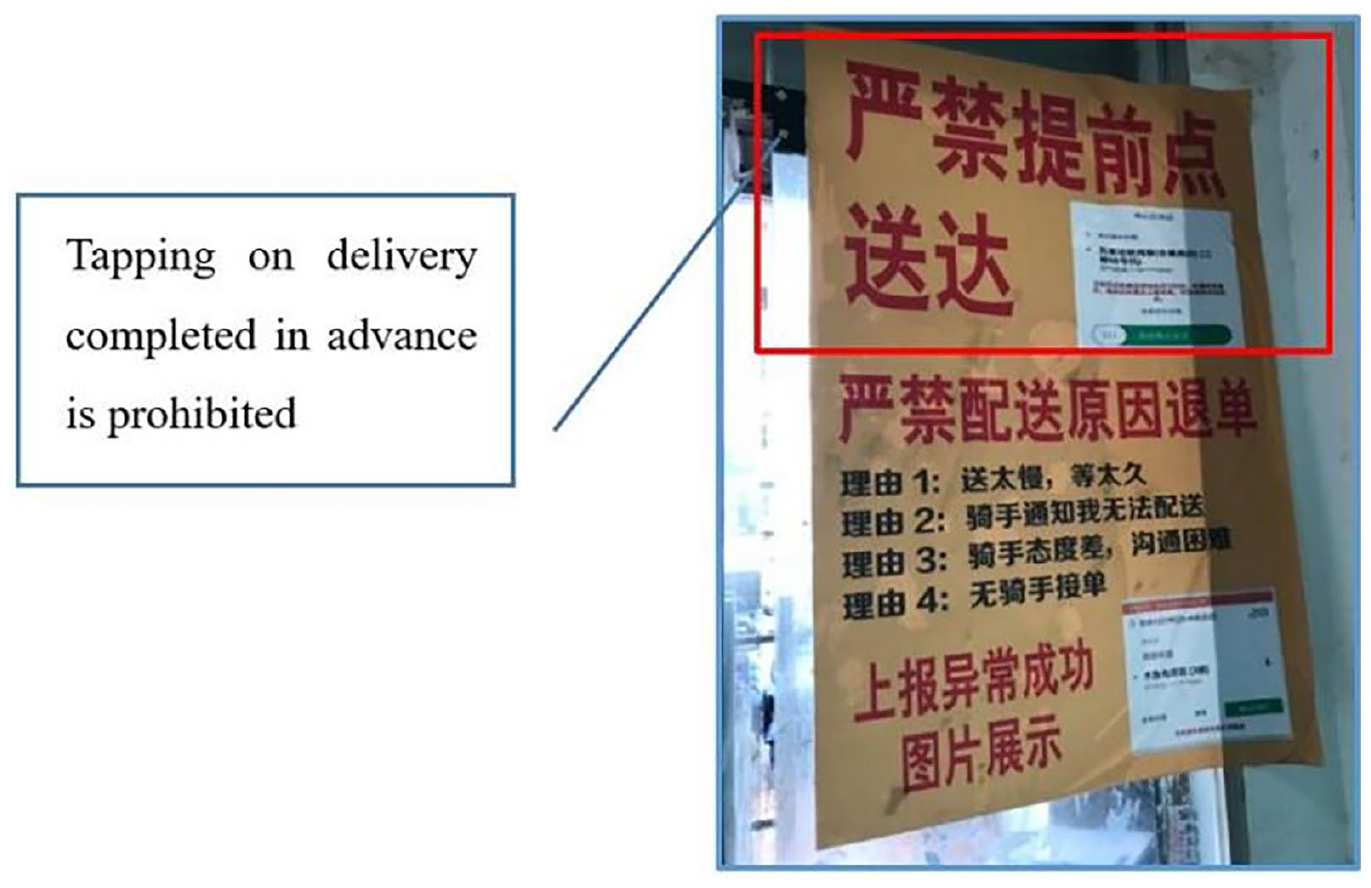
A poster in a labor station’s lobby.
In sum, the “poaching time” constructed by waigua, dianjiqi, and closing positioning is embedded, in a distributed manner, into both the daily time and event time, whereby “poaching time” exists in the crevice between the other two types of time. This is a form of temporal practice that dwells in the limbo between regulation and exile. Poaching time brings decentralized and creative destruction to the order of time constructed and maintained by the station and platform. However, simultaneously, it is also a display of riders proactively seeking and actively trying to create labor stability, such as stability in income and state of mind.
Conclusion
This study focuses on how heterogeneous actors (riders, third-party subcontractors and platforms) construct different temporal structures in the food delivery industry of China, namely the third-party subcontractor’s “daily time,” the platform’s “event time,” and the rider’s “poaching time.” More importantly, as the article shows, every type of time and its labor scenario is constructed through the dynamic interactions among platform, third-party subcontractor and rider. Thus, transcending “flexible time,” the study determines multi-temporal structures in Chinese online delivery industry.
The politics of such multi-temporal structures further reveals power relations among heterogeneous actors in the localized labor context. Such relations exist in the binary structure constructed by both the platform’s algorithmic management and third-party subcontractors’ organizational management, the tension and coordination within which place workers in an asymmetrical “relational balancing,” or the persistent interest negotiations among heterogeneous actors around temporal issues. The relational balancing is different from both the ever-entangled binary equilibrium of “control-versus-resistance” as well as the one-sided control that platform and third-party contractors jointly impose on the workers out of their mutual benefits. This implies that the power relations shaped by multiple temporalities should be treated as a continuum.
More specifically, the “event time” formulated by the platform’s algorithmic management allows labor modes across different regions to be standardized, and thus becomes the temporal order that workers and third-party subcontractors have to follow. However, for “event time” to have an actual impact, the platform would have to embed the workers in localized labor scenarios, and manage its tension with third-party subcontractors. Faced with the de-contextualized and standardized “event time,” third-party subcontractors need to re-contextualize it by constructing “daily time,” a more localized type of labor time that buffer the conflict between riders and the platform as well as maintain a relatively stable labor output. The fact that the platform’s algorithmic management and third-party subcontractors’ organizational management are relatively separate from each other sets the stage for a power “vacuum” in the binary structure which allows workers to embed their opportunistic endeavors (Chen and Sun, 2020) of “poaching time” into the temporal power relations and continue to search for ways to self-compensate and alleviate mental stress. Thus, the interdependence and conflicts of multiple temporalities construct heterogeneous actor’s relational balancing in platform labor’s binary structure.
It should also be noted that the “relational balancing” among heterogeneous actors is asymmetrical. On one hand, actors have different priorities: platform’s pursuit for efficiency, third-party subcontractors for sustainable output, and riders for income; on the other hand, the binary structure that the platform and third-party subcontractors construct out of algorithmic management and organizational management respectively shapes the fundamental temporal order of the labor process in a continuous and powerful manner. In this sense, the temporal power relations created by the heterogeneous actors are asymmetrical, leaning toward the maintaining and fixing of the platform labor’s binary structure.
Methodologically speaking, we argue in this article that temporality is not about certain form of “uniform time” (Sharma, 2014: 8) or given temporal mode. Thus, following phenomenological tradition, temporal politics of platform labor should be uncovered within the inherently relational “intersection zone” of heterogeneous actors. Furthermore, the emphasis of multiplicity and heterogeneity may also facilitate researchers to discover “hidden” actors in a given platformized industry. As the article shows, while third-party subcontractors play a crucial part both in constructing daily time and mediating between platform and riders in event time and poaching time, its subjectivity has been largely ignored in previous studies. Likewise, in the study of other domains of platform labor, scholars also remind us to keep a watchful eye on heterogeneous actors including businesses, governments, nonprofits, and other groups (Poell et al., 2022 [2021]: 35, see also Evans and Schmalensee, 2016).
We believe that contextual and relational descriptions of labor “process” may offer more possibilities for platform labor studies in future. However, as far as “food delivery” is concerned, due to the heterogeneity of platforms, as well as the social and cultural context of the geographical regions that they are situated in, a general conclusion on platform labor’s temporal politics and dynamic stability still requires more comparative investigations.
Footnotes
Funding
The author(s) received no financial support for the research, authorship, and/or publication of this article.
