







Abstract
Algorithmic conspirituality is the belief that social media algorithms have the capacity to know users intimately and convey personally meaningful messages at the exact right moment to revelatory effect. Through a thematic analysis of TikTok videos, this study explicates this concept by identifying five distinct dimensions of its expression on TikTok—(1) relational, (2) injunctive, (3) personal, (4) spiritual, (5) conspiratorial—and explaining their relationship with the platform’s affordances—(1) connectedness, (2) personalization, and (3) social creativity. We then connect the emergence and impact of this phenomenon to the possibility for persuasion and behavior changes through normalization of messaging in areas such as mental health, smoking, attention deficit/hyperactivity disorder (ADHD), and body dysmorphia that could lead to positive and negative health outcomes.
Introduction
Highly tailored algorithmic feeds have led to social media content that feels meant for the viewer, leaving consumers feeling like the algorithm knows them and is conveying special meaning through the content appearing in their feed. For instance, a video depicting a young man in a dark room pointing to the words above him, “If you see this it’s a sign you need to smk [smoke]” (Figure 1). This video, posted on TikTok, has over 3000 views and dozens of comments like “Thanks for reminding me” and “Just smoked 10 mins ago but ig [I guess] it’s time for another.” In another video, a young woman dances as she references the caption of her video “No hashtags because if you’re seeing this you’re either Autistic, Neurodivergent, or disabled” before asking those who agree to follow her account (Figure 2). Comments on this video include “I’m starting to believe it  ” and “Bruh I feel like the algorithm knows something about me that I don’t
  .”
.”
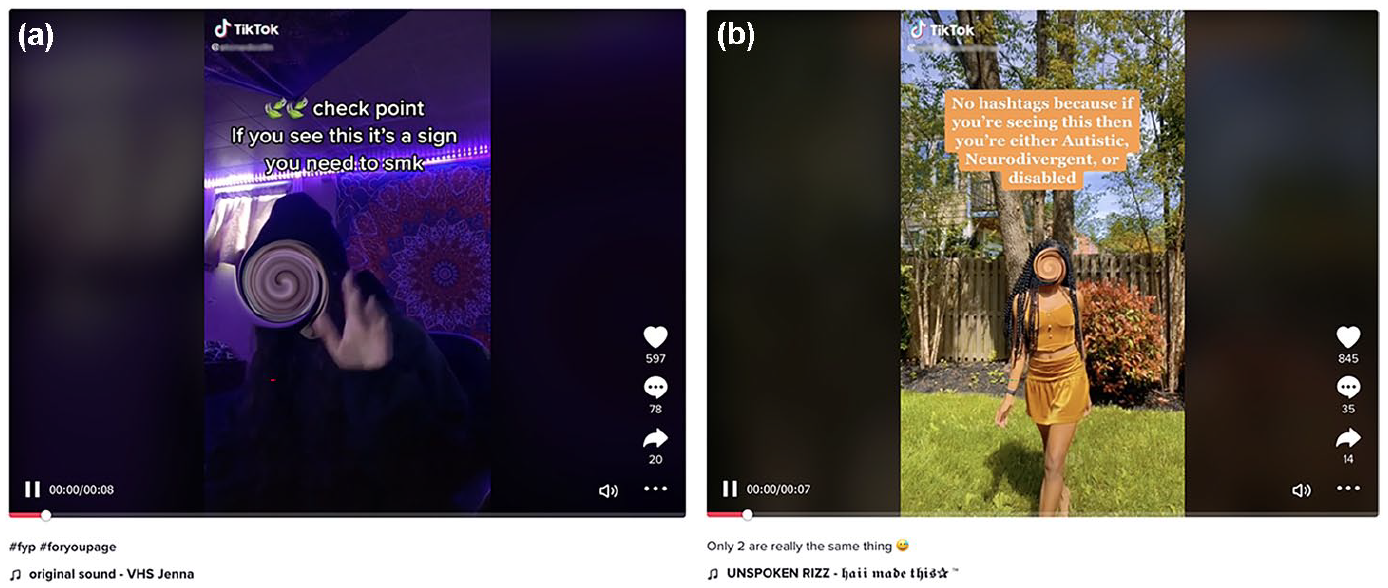
Posts depicting algorithmic conspirituality.

Connectedness affordance.
Situated within different topical domains, these videos demonstrate algorithmic conspirituality (Cotter et al., 2022). Algorithmic conspirituality captures a trend of religious-like faith in the perceived cosmic and revelatory power of algorithmic curation on social media platforms like TikTok. This phenomenon has developed as a result of increases in the perception of algorithmic decision-making as less biased than decision-making by humans (Burrell and Fourcade, 2021; Helberger et al., 2020), the perception of algorithms as powerful entities capable of feats beyond their present technical capacity (Ames, 2018; Singler, 2020; Thomas et al., 2018), and the rise and convergence of conspiracy theories and new age religion (Ward and Voas, 2011).
While the sociohistorical factors that contribute to the rise of algorithmic conspirituality have been theorized, questions about specific characteristics and affordances remain. To address these questions, we conducted a thematic analysis of TikTok videos (n = 289) collected via an anonymous survey, researcher curation, and keyword searches. Through an inductive, iterative process, we developed a coding scheme to capture descriptive characteristics of the videos. Then, looking across the emergent codes, we synthesized higher-level observations about algorithmic conspirituality. We identified three affordances: social creativity, connectedness, and personalization, which give rise to five dimensions of algorithmic conspirituality: relational, injunctive, personal, spiritual, and conspiratorial. In addition, we discuss how algorithmic conspirituality videos normalize ideas, attitudes, and behaviors in different domains, and can have a persuasive effect on users.
Literature review
Algorithmic conspirituality
Algorithmic conspirituality is used to describe investments in algorithmic ways of knowing and the rise of what Ward and Voas (2011) call “conspirituality” (Cotter et al., 2022). It explains the perception of “revelatory connections” that people seem to have with content algorithmically recommended to them on social media, read as a kind of “cosmic intervention.” Algorithms are seen as powerful tools for understanding the world around us (Fisher, 2020), as they are viewed as more objective than humans (Burrell and Fourcade, 2021; Helberger et al., 2020). Furthermore, they are seen as capable of knowing individuals intimately, providing unique insight about their subjectivity and opportunities for improvement (Fisher, 2020).
Algorithms have also attained a sublime status (Ames, 2018), wherein users overestimate their technical capacity granting them a providential status. Users often believe algorithms capable of delivering the “right” content, at the exact moment of need, as if by divine intervention (Ames, 2018; Bucher, 2020; Singler, 2020). These developments align with the increasing belief in conspiracies and new age spiritual practices (Aupers, 2012; Ward and Voas, 2011). Introducing the term “conspirituality,” a portmanteau of conspiracy and spirituality, Ward and Voas (2011) posited the intersecting prominence of conspiracy theorizing and new age spirituality practices.
Building on this, Cotter et al. (2022) defined algorithmic conspirituality as “spiritualizing beliefs about algorithms, which emerge from occasions when people find personal, often revelatory connections to content algorithmically recommended to them. Algorithmic conspirituality represents an understanding of such experiences as a kind of algorithmically mediated cosmic intervention” (p. 2913). This concept opens new avenues of inquiry for studying beliefs about and attitudes toward social media algorithms, particularly questions about algorithmic persuasion (Soffer, 2021; Zarouali et al., 2022).
Platform affordances
Social media affordances represent uses or interactions available to and/or realized by users from a particular platform through the features that it provides (Lee, 2022). Evans et al. (2017) described these affordances as “platform qualities,” a “multi-faceted relational structure between an object/technology and the user that enables or constrains potential behavioral outcomes” (p. 36). Affordances have been differentiated as materializing from constraints implemented by the designers versus those that stem from users’ interaction with the system and with each other (Bucher and Helmond, 2018).
Research on TikTok has noted the platform’s unique affordances, which arise from unique features, or structural elements and design attributes, that make up the application. For example, TikTok’s affordance of “social creativity” (Kaye et al., 2022) emphasizes engaging content and collaboration over engaging creators or connecting friends (Zulli and Zulli, 2020: 2), and “spreadability” of information due to the centrality of algorithmic curation (Kaye et al., 2022). Previous research has investigated how TikTok’s affordances have been appropriated for spreading health-oriented information (Song et al., 2021), and learning languages (Lee, 2022). In this study, we focus on the role of TikTok’s affordances in generating algorithmic conspirituality videos, which draws attention to the platform’s “For You Page” (FYP), or the algorithmically curated main landing page for users (Smith, 2021).
Persuasibility of algorithmic conspirituality
Classic models of media influence postulate the central role of social intermediaries (Katz and Lazarsfeld, 1955; Lazarsfeld et al., 1948). The two-step flow model emphasizes the importance of “opinion leaders,” who act as vectors for media messages, which they receive, interpret, and disseminate to their networks (Katz and Lazarsfeld, 1955). Algorithms can also be seen, like opinion leaders, as secondary gatekeepers in the two-step flow of communication (Soffer, 2021), particularly as people rely on algorithmic social media for information (Newman et al., 2022). While in nascent stages, the impact of algorithms as vehicles of persuasion has been examined in research (Gunaratne et al., 2018; Kim et al., 2019; Zarouali et al., 2020, 2022). This research discusses the role of social influence, and users’ belief that algorithms provide more expert advice than humans would. For instance, Gunaratne et al. (2018) demonstrated that financial advice procured from algorithmic calculation versus crowdsourced advice was significantly more persuasive, indicating the authority and social influence of algorithms. Meanwhile, Kim et al. (2019) showed that providing an anti-smoking public service announcement (PSA) developed by an algorithm was more effective in encouraging smoking cessation as compared with people who received a random set of non-tailored PSAs.
To explain such findings in a broader context, recent work has sought to catalog the persuasive power of algorithms. “Algorithmic persuasion” refers to “any deliberate attempt by a persuader to influence the beliefs, attitudes and behaviors of people through online communication that is mediated by algorithms” (Zarouali et al., 2022: 1078). Likewise, Soffer (2021) argues that algorithms function similarly to opinion leaders by providing media consumers with the feeling of being “personally addressed,” though leaving information mediation in the “hands of machines” is often seen as objective and neutral (p. 298).
Although algorithms now play a central role in the flow and influence of media messages, social networks and opinion leaders continue to have lasting impacts on which messages stick (Soffer, 2021). Algorithmic curation intersects with the “curation practices” of other actors: users themselves, their social ties, content creators they follow, and advertisers (Thorson and Wells, 2016). The ways various actors create content and their choices in when, where, and how to distribute content online matter for what users ultimately see in their feeds. Thus, scholars have begun extending the conceptual two-step flow to a three-step flow with digital social networks as principal channels of information exchange between opinion leaders and the public (Jensen, 2009). Social media influencers have gained a prominent role as both opinion and taste leaders (Ki and Kim, 2019), as they cultivate a sense of intimacy with their followers (Abidin, 2015). Moreover, algorithmic curation can deepen the persuasive effect of parasocial relationships via algorithmic persuasion (Zarouali et al., 2022), since the more similar to influencers users feel, the greater the strength of the parasocial relationship (Yuan and Lou, 2020).
Research questions
Based on the above, we ask the following research questions:
Research Question 1 (RQ1). What platform features support the occurrence of algorithmic conspirituality?
Research Question 2 (RQ2). What platform affordances give rise to algorithmic conspirituality?
Research Question 3 (RQ3). What dimensions of algorithmic conspirituality are observable within our data?
Research Question 4 (RQ4). Is there a persuasive effect of algorithmic conspirituality observable within our data?
Methods
To answer these questions, we performed a thematic analysis of TikTok videos. This allowed us to create concept groups inductively and iteratively through immersive analysis of the data and repeated team meetings for coding comparison. This process was repeated to produce themes as “analytic outputs” (Braun and Clarke, 2022) that captured the nature of the content as refined by the research team across multiple discussion sessions.
Phase 1
Data collection
We collected TikTok videos in two phases. In the first phase, we employed a multi-pronged strategy to systematically collect a diverse sample of videos. The centrality of algorithmic curation on TikTok and its opaque nature (Burrell, 2016) make it challenging to collect data by searching the platform itself (Kanthawala et al., 2022). Since each user’s FYP is unique and changes temporally, it is not possible to build a “typical” or “average” dataset of videos. Therefore, we relied on three sources of videos that eventually formed our dataset: (1) survey, (2) researchers’ curated TikToks, and (3) TikToks collected through keyword searches, and popular audio (“sounds”) circulated on the platform.
Using Qualtrics, TikToks depicting algorithmic conspirituality were crowdsourced from users. The survey was distributed via researchers’ personal Twitter accounts, and eventually snowballed. Participants were entered into a drawing for one-of-five $20 gift cards. The survey added 20 videos to our primary corpus.
Simultaneously, members of the research team added 87 additional videos representing algorithmic conspirituality as identified in their FYPs via routine TikTok use. Following Cotter et al. (2022)’s description of this phenomena, the research team included TikToks which communicated the idea that the content had been predestined for the putative viewer, as realized by platform’s FYP algorithm. We used search phrases adopted from Cotter et al. and those gleaned from crowdsourced TikToks and videos in the researchers’ FYPs, which are listed in Table 1.
TikTok data collection search “keywords.”
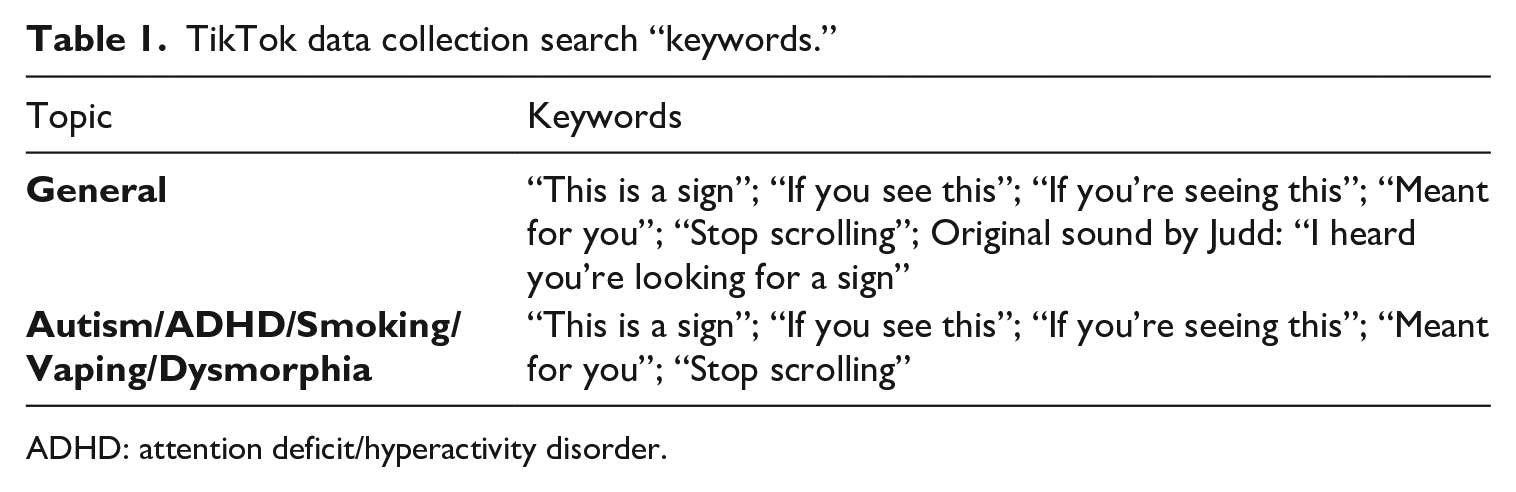
ADHD: attention deficit/hyperactivity disorder.
Finally, videos were collected using search terms via TikTok’s search function (Table 1). These terms were also selected based on Cotter et al. (2022) and other similar phrases/sounds emerging in earlier steps. Fifteen videos were selected from each of the searches (random numbers between 1 and 100 were generated, and corresponding videos in search results were selected). This added 89 videos to the primary corpus, after eliminating one duplicate. Across three data sources, a total of 196 videos formed our primary corpus of data.
Coding
A subset of 15 randomly selected TikToks from the primary corpus was assigned to four members of the research team. The researchers reviewed the videos and created memos noting themes they observed. Initial codes emerged from discussions of the memos and were consolidated into a codebook. The final codebook included codes for content features, message features, and an exclusionary category to eliminate videos that did not match the definition of algorithmic conspirituality. 1 Researchers then independently coded 50 TikToks each using the finalized codebook. All data were analyzed in NVivo.
Phase 2
Data collection and coding
The initial TikTok corpus exhibited a substantial presence of content from mental health and wellness domains, as revealed organically through the coding process. As elaborated in our results below, we noted a generally positive and normalizing impact of conversations around mental health in our data. Still, the prevalence of these topics invited questions about the potential for algorithmic conspirituality videos to normalize stigmatized mental and physical health topics and/or influence high stakes decision-making among viewers in relation to these topics. To explore the persuasive impact of algorithmic conspirituality TikToks in greater depth, we sampled additional health-related TikToks portraying algorithmic conspirituality, particularly those with a potential for negative impacts on viewers. The topics chosen reflect hotspots for problematic narratives advanced in the previously discussed literature (Hobbs et al., 2021; Rutherford et al., 2022). They included smoking, vaping, attention deficit/hyperactivity disorder (ADHD), autism, and body dysmorphia. Notably, these topics are especially salient on TikTok because they affect younger audiences in high volume (Bucknell Bossen and Kottasz, 2020; Centers for Disease Control and Prevention, 2022), and the majority of the platform’s users are under the age of 30 (Matsa, 2022; Vogels et al., 2022).
Nineteen videos from the original corpus reflected mental health themes and were placed into Phase 2 corpus. We collected additional videos for each topic using the same search strategy used for the primary corpus (Table 1) to create a mental health and wellness themed corpus. This secondary corpus consisted of 112 TikToks (19 from the original dataset and 93 from the new searches). These videos were coded by two researchers according to our original codebook, with the intent to examine any differences within this subset of data as compared with the primary corpus.
Results
Overall, our findings were consistent across both phases of data collection. From our coding and discussions, we noted the emergence of several themes. Through an additional layer of analysis of these themes, we observed five dimensions of conspirituality. Moreover, while coding TikToks, we noted that the dimensions of conspirituality emerged from certain platform affordances. Through iterative discussions, we identified three platform affordances that precipitate the dimensions. Our results have, therefore, been organized at two levels. First, we identify TikTok’s platform affordances that give rise to algorithmic conspirituality. Next, we describe dimensions of conspirituality that emerge from these affordances, as identified across our dataset.
Affordances giving rise to algorithmic conspirituality
We identified three primary affordances provided by the TikTok platform. This section answers RQs 1 and 2.
Connectedness
While all social media platforms facilitate connections between creators and users, TikTok offers some novel features that manifestly afford connectedness, namely, stitches, duets, video replies to a comment, reusable sounds and the aggregation of videos using a sound. These features allow creators to respond to one another’s content directly and publicly, and to memetically “riff” on other creators’ content, creating bounded discursive spaces, or “imagined collectives” emerging from interplay between users, platform infrastructure, and practices (Boyd, 2011). Users’ sense of connectedness on TikTok establishes an expectation for relationship building with other users, parasocial or otherwise, and occasions the possibility of direct interaction.
In our dataset, the affordance of connectedness contributed to the expectation that an algorithmic conspirituality video would reach an individual user for a reason, namely a connection between the creator and viewer. In multiple subgenres of videos, we identified creators communicated the notion that they had an intimate understanding of viewers and/or their lives. For example, in one subgenre, creators noted highly specific characteristics, that they expected to share with those who saw their video. In one such video, the creator stated in overlaid text “love to all my fellow (closeted) bisexual babes who will never date women bc they’re in committed relationships with golden retriever gamer boys.” Here, the sense of connectedness TikTok affords seems to have inspired an intuition on the creator’s part that she could speak directly to a subset of users with whom she shared a highly specific identity and associated experiences. In another subgenre, we saw creators inviting viewers to take some action, as premised on a mutual connection. For example, in one video (Figure 2), an ex-Mormon creator told viewers via overlaid text “I heard you’re looking for a sign. Well, this is it. Quit Mormon.org [. . .] start using swear words, drink a coffee, book for 1st session to get that tattoo . . .” In videos like this, the anticipated connection with viewers that creators imply acts as a mechanism through which they can convincingly encourage viewers to do something, whether it is taking a break, cutting their hair, or leaving the Mormon Church.
As these examples suggest, the affordance of connectedness, thus, maps to the relational and injunctive dimensions of conspirituality to be discussed shortly.
Personalization
Much of the uniqueness of TikTok comes from its affordance of personalization. Though personalization is not unique to TikTok, it is more dominant relative to other social media platforms. TikTok is known for its “eerily” accurate tailoring of content (Mercado, 2021), which follows from its emphasis on the algorithmic inference of users’ interests rather than accounts users elected to follow. This makes personalization from algorithmic curation more conspicuous and central to the platform experience as users receive a variety of content from previously unknown accounts all reflecting their passive expression of preferences (e.g. via watching, liking, etc.). Even those with limited technical understanding of social media algorithms still have a sense of the relative uniqueness of their experiences on TikTok. While some platforms like YouTube have long relied on algorithmic recommendation, rather than user-elected subscriptions or following, TikTok invites a more uniform use that prioritizes passive scrolling through the FYP feed. By contrast, YouTube, for example, features a landing page populated with rows of videos users can select from to watch, which mainly come from accounts users have viewed in the past or to which they have subscribed. TikTok’s more uniform, passive experience makes well-tailored algorithmic recommendations seem more remarkable, as they appear to be less connected to more explicit, intentional expressions of preferences.
In our dataset, we saw creators cleverly appropriating this affordance by inventing genres of videos that make personalization even more salient and, perhaps, spiritually meaningful. For instance, we observed one subgenre of video in which creators produced multiple versions of the same video with slightly different concluding messages. Here, the idea was that different individuals would see different versions of the video depending on how the FYP algorithm understood them. The version of the video that reached an individual was presented as the one meant for her. As an example, Figures 3 and 4 show screenshots from three different versions of a video, which all began with overlaid text that read “I made 3 of these [videos], if you see this one, thats [sic] how you will spend your 2021.” The unique overlaid text that concluded the three versions of the video stated, respectively, “You will get in a healthy relationship,” “Money will be coming to you,” and “You will have an hourglass body.”
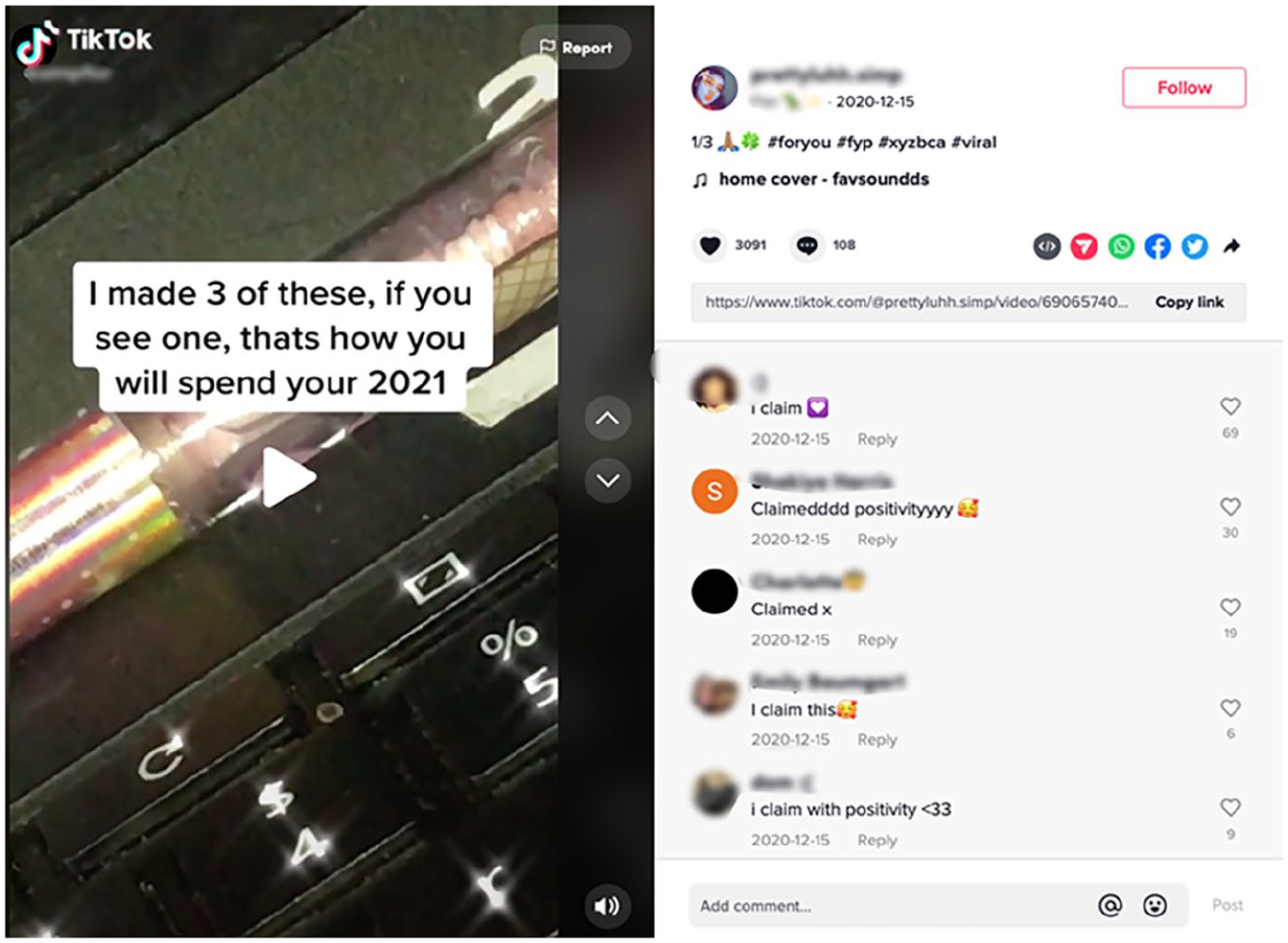
Personalizing for the algorithm.
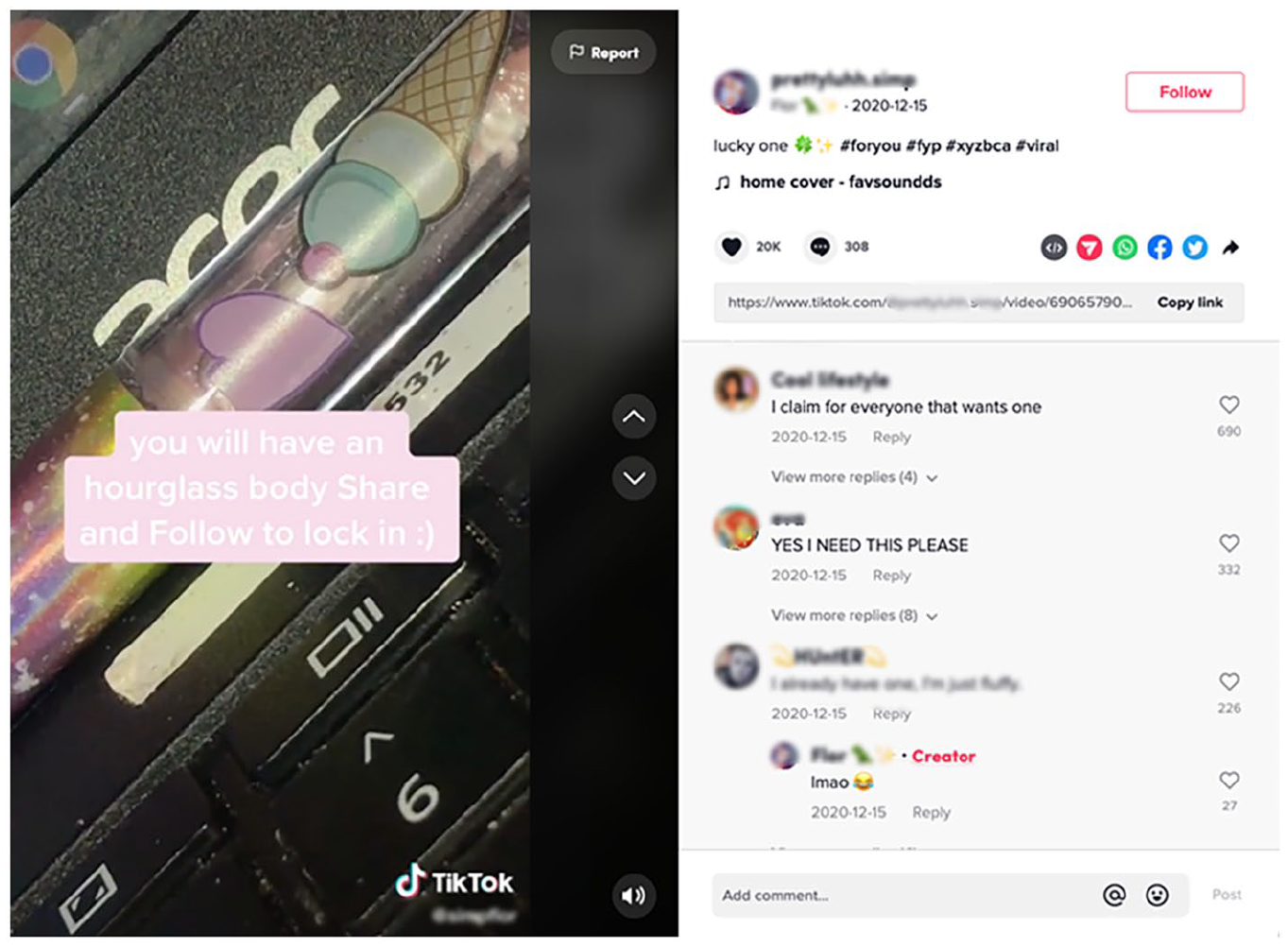
Personalizing endings for the algorithm.
Videos like this reflect creators’ active role in constructing algorithmic conspirituality and invite a heightened sense of being seen and known by the FYP algorithm. When a user sees a video she does not follow but that uniquely speaks to her, this can foster a perception of the FYP algorithm as powerful. Such a perception feeds the expectation of routinely receiving personally meaningful or resonant content. It also gives weight to videos that speak in grand existential terms to users. As videos appear to be personally relevant to individual users without users having to directly communicate their needs, interests, and desires, creators have an opportunity to craft messages that capitalize on the significance users may assign to them. Consequently, the affordance of personalization allows for the personal, injunctive, and spiritual dimensions of algorithmic conspirituality to take shape.
Social creativity
TikTok affords social creativity, wherein creators collaboratively produce work based on cumulative actions. Kaye et al. (2022) define socially creative platform features as direct functionalities provided by platforms that allow creators to support each other in their creative endeavors. TikTok’s features contribute to this social creativity. These features allow users to collaborate while creating content in different ways and encourage work that is inspired from or engaged with existing content. Past work has shown that this allows creators to reinterpret ideas and bring in new perspectives that produce novel content and increases spreadability (Kaye et al., 2021; Kaye et al., 2022).
Several videos in our data exhibited social creativity. For example, in one video, a creator used the stitch feature to misdirect users into first believing the video opposed vaping, before mocking this view by showing herself vaping (see Figure 5). However, the most common feature affording social creativity was the “use this sound” feature wherein videos reused music or commentary from other videos. Most videos that employed this feature used popular songs or commentaries from videos that had gone viral. Frequently, the background music was not related to the content, but was simply used to increase spreadability, as clicking the song would lead the viewer to a page with all the videos that used that sound. Reusing sounds allowed users to interact and communicate with one another by simply engaging with their content. This ease of interaction required no direct communication, and creators could simply engage with different kinds of content in a facile manner to produce creative new genres. Hence, creators utilized these socially creative features to produce hyper-specific, novel content with the expectation that the FYP algorithm would deliver it to those with whom it resonated. This contributes to the relational dimension of algorithmic conspirituality.
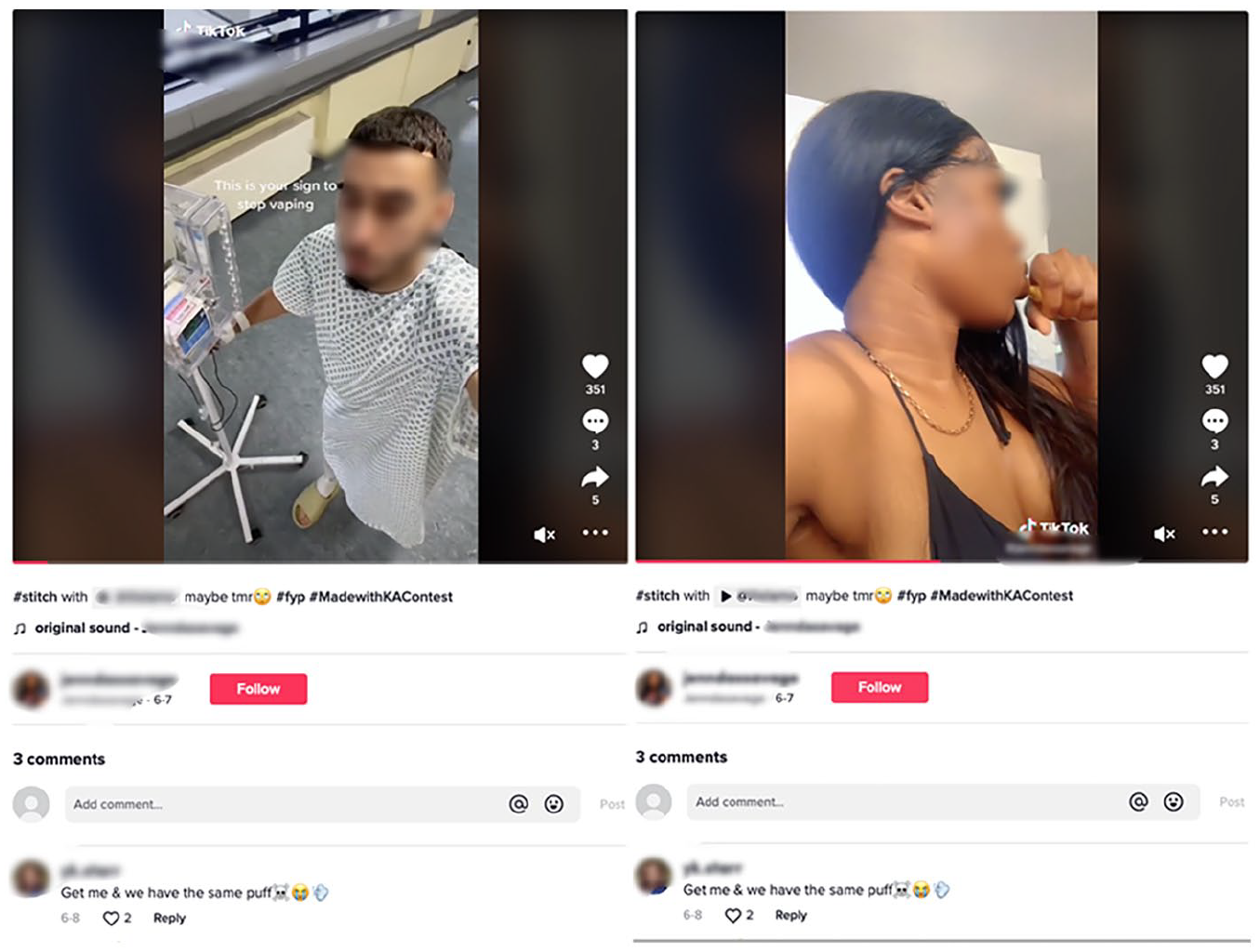
Relational dimension.
Dimensions of algorithmic conspirituality
We observed the emergence of five major dimensions of algorithmic conspirituality in our data. Below we explicate each of these dimensions individually, and then elaborate their role in persuasion via the algorithm.
Relational
Our data contained videos that highlighted connecting and building community with others, usually strangers, as algorithmically mediated. Such videos display three characteristics. These are:
Shared dimensions of identity: These videos highlighted commonalities between the creator and the viewer (e.g. “Are you a woman? A reader? A liberal?”), which evoked an unstated bond between the two. Implications of such shared experiences include imitation of modeled behavior (Shteynberg and Apfelbaum, 2013). Repeated exposure to content, by the same or multiple creators, that is algorithmically guided and highlights feelings of shared experiences, establishes an expectation that users are part of broader communities.
Intimate knowledge of viewers’ experiences: These videos featured creators implying knowledge about viewers’ experiences. Here, creators seemed to develop content under the assumption that it would reach the intended audience because the algorithm knows where to disseminate it. These videos shared stories and experiences with the underlying assumption that viewers would understand the context of the content because both parties had similar knowledge or information. For example, readers would receive videos from book reviewers or authors (#booktok) and people overcoming traumatic experiences would see videos discussing mental health topics (#mentalhealthtok).
Expressing wisdom and/or affirmations: Because experiences are segmented into common spaces, creators also expressed compassion or provided advice, and affirmations. This, again, affirms the idea that the creators believed that videos would reach their intended audience who would value such content. Such videos also suggested the possibility of generating a sense of intimate connection between creators and users.
The above characteristics underscored the various ways in which algorithmic conspirituality videos build relational dynamics between creators and viewers. While people might follow specific creators, most often it is that shared space (or subculture) that seemed to allow the videos to gain significance.
Injunctive
Another theme came from the frequent encouragement of viewers to take some action or anticipate a future state or experience. This occurred most often in the “this is a/your sign” videos, which tended to enjoin viewers to do something. The underlying idea of this theme was “giving permission” to engage in some behavior, which could be a positive behavior (e.g. quit vaping) or a negative behavior (e.g. go smoke). These videos would seemingly show up on a viewer’s FYP at the right moment and “allow” them to partake in a behavior. Such ideas align with normalization of specific behaviors. Injunctive norms (Cialdini et al., 1990) are those norms that help an individual decide what behaviors are socially acceptable or not based on peer opinions. In essence they are “expectations of society or persons important to individuals about the behaviours to adopt” (Trelohan, 2022: 138). Because TikToks usually reach people most aligned or interested in specific content, viewers tend to (or are assumed to) be peers or people of importance. When TikToks in our data gave viewers permission to partake in specific behaviors, they provided information about what is approved or disapproved in similar social circles, possibly creating social pressure (Trelohan, 2022). For instance, in one video (Figure 6), the creator tells viewers: “if your [sic] seeing this . . . go smoke.” Overall, such norms can make ideas, attitudes, and behaviors among similar social groups seem natural, given, or right, which can be positive (e.g. de-stigmatization of mental health conditions), but also dangerous if they encourage risky behaviors (e.g. smoking).
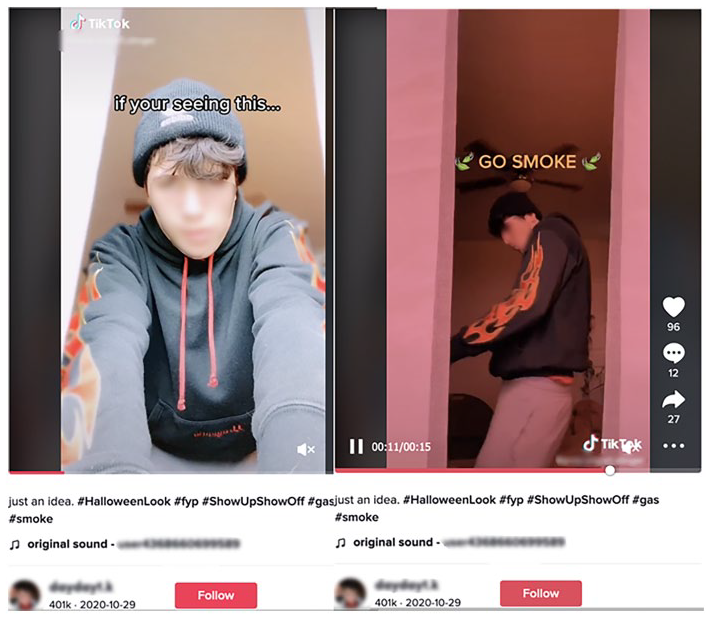
Injunctive dimension.
Personal
Creators sought to target their messages to highly specific audiences, often presenting them as if directed toward an individual user personally and reflective of that individual’s reality at a particular moment. Thus, the videos were not positioned as “broadcast” messages, intended for any user on the platform. As Scannell (2000) put it, they did not follow a “for-anyone structure,” in which a message appeared to be “useable and useful for anyone (no matter who)” (p. 6). Rather, creators sought to reach a clearly defined audience with specific traits (such as, sociodemographic traits, political, or cultural preferences, and/or experiences). For example, in one video (Figure 7), the creator communicated via overlaid text: “if you’re seeing this you’re probably liberal, vaccinated, pro BLM, feminist af, LGBTQ or an ally, atheist, breaking traumatic generational cycles. Welcome, new friend!.” As this video exemplifies, in many cases, creators explicitly named the characteristics of the audience they intended to reach, though in other videos the specific audience was more implicit.
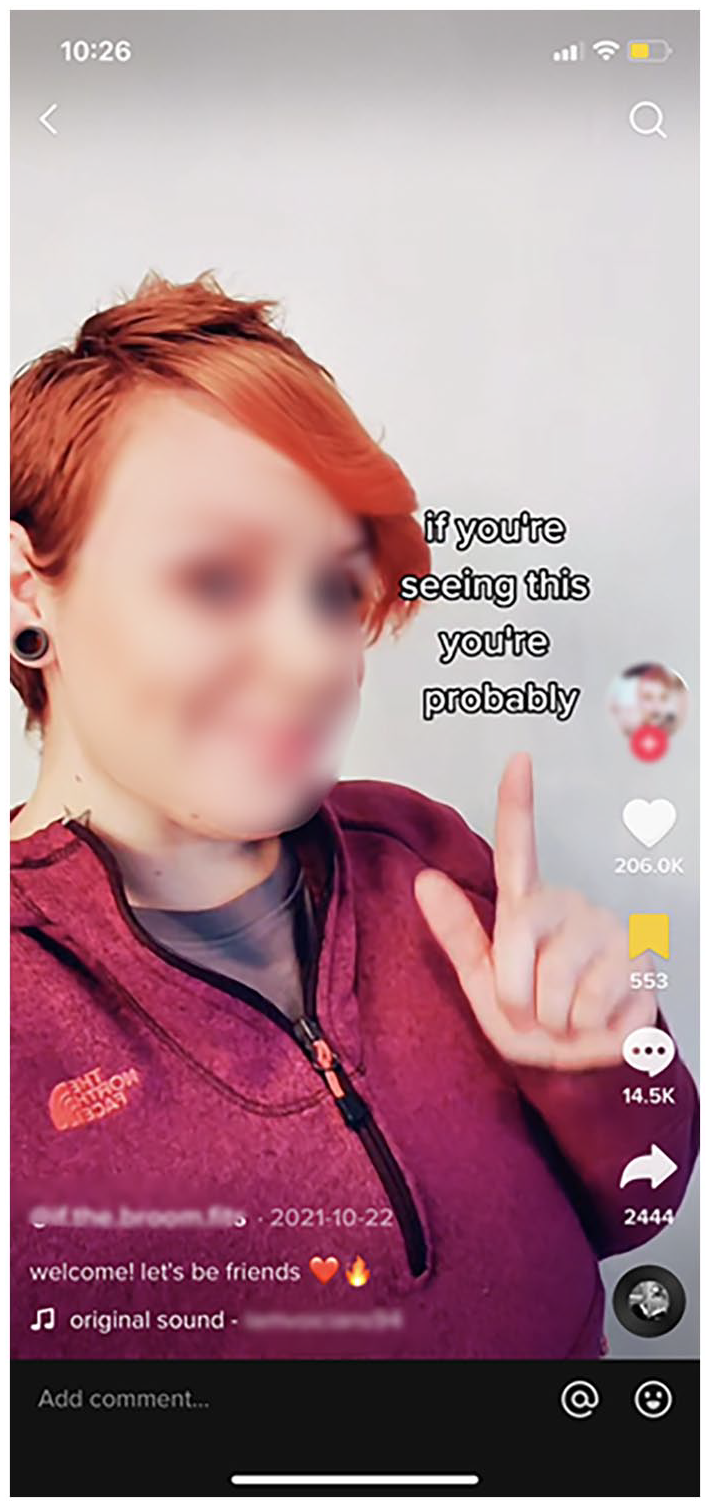
Personal dimension.
The personal nature of videos in our dataset gave their messages the veneer of a precise audience, even when their message was positioned in general terms. While creators seemed to have a clearly defined audience in mind, in reality they could never know exactly whom their messages reached. This resulted in a style of video that resembles the “direct look-to-camera of the [TV] newsreader”: “It implicates a someone someplace to receive it who turns out, in each case, to be ‘me’” (Scannell, 2000: 7). Thus, many videos required users to find the personal significance of messages. This was usually the case for videos in which the creator told the viewer her fortune or what was to come for her. For example, in one video (Figure 8), the creator began by telling viewers to think of a person they had feelings for and “If you don’t have feelings for anybody right now, then this video’s probably not for you.” After shuffling and choosing three tarot cards, she told viewers: I think that [your crush is] wanting a union with you. They are wanting to get together with you at some point in time. But I think . . . they just have a lot on their plate right now that they’re dealing with . . .
Thus, many videos in our dataset purported to offer advice or insight tailored to an individual, though they presented it in vague enough terms to apply to a variety of individuals. Nevertheless, given these videos’ framing, many individual viewers very likely received these videos as if the message is meant for them personally.
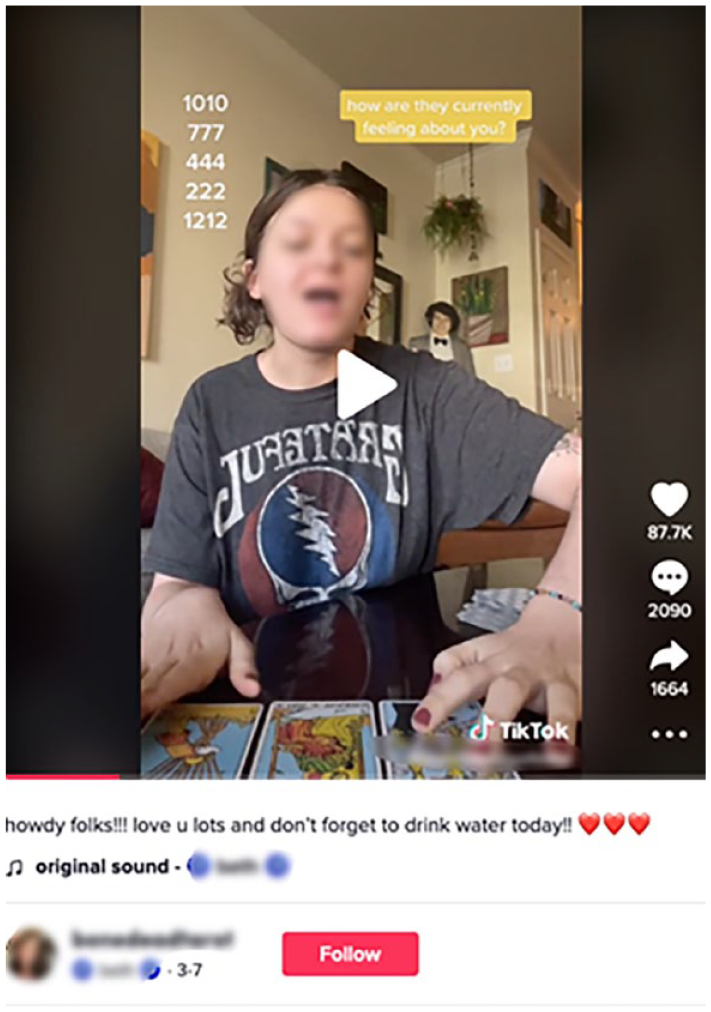
Personal dimension.
Spiritual
Our data contained spiritual sentiments, premised on a religion-like faith in “the algorithm” or the app (as synecdochally representing algorithmic curation). Many of the videos, like chain mail, roughly resembled the historical tradition of writing religious letters as “vehicles of divine grace, texts bringing spiritual and physical healing” (Frauhammer, 2018: 57). We saw this particularly in videos that offered compassionate wisdoms or affirmations or promised positivity. For example, in one video a man relayed: If you’re seeing this video right now, it’s not by accident. You’re supposed to see it. You’re not damaged goods or broken. [. . .] But what you are is important, and you’re loved. [. . .] I promise you that better times are right around the corner.
This creator spoke directly to the viewer in selfie view, offering an intimate kindness seemingly designed to reel them in from despair. While many videos imparted promises like this one, we also observed some that required viewers to act to realize some desired future outcome. We saw this in a “manifesting” discourse across several videos, wherein creators invited viewers to give an “offering” or “prayer” by “liking,” commenting, watching, or sharing a video. For example, in one video (Figure 9), underneath the message “this is your sign!!,” the creator displayed two lists of normative beauty ideals under the headings “option a” and “option b,” with “like & follow” placed underneath the former and “use sound” underneath the latter. The creator, thus, encouraged viewers to perform the action that corresponded with the list of traits they desired as a means of manifesting them. In the comments, users stated “Claiming option A” or “CLAIMING B.”
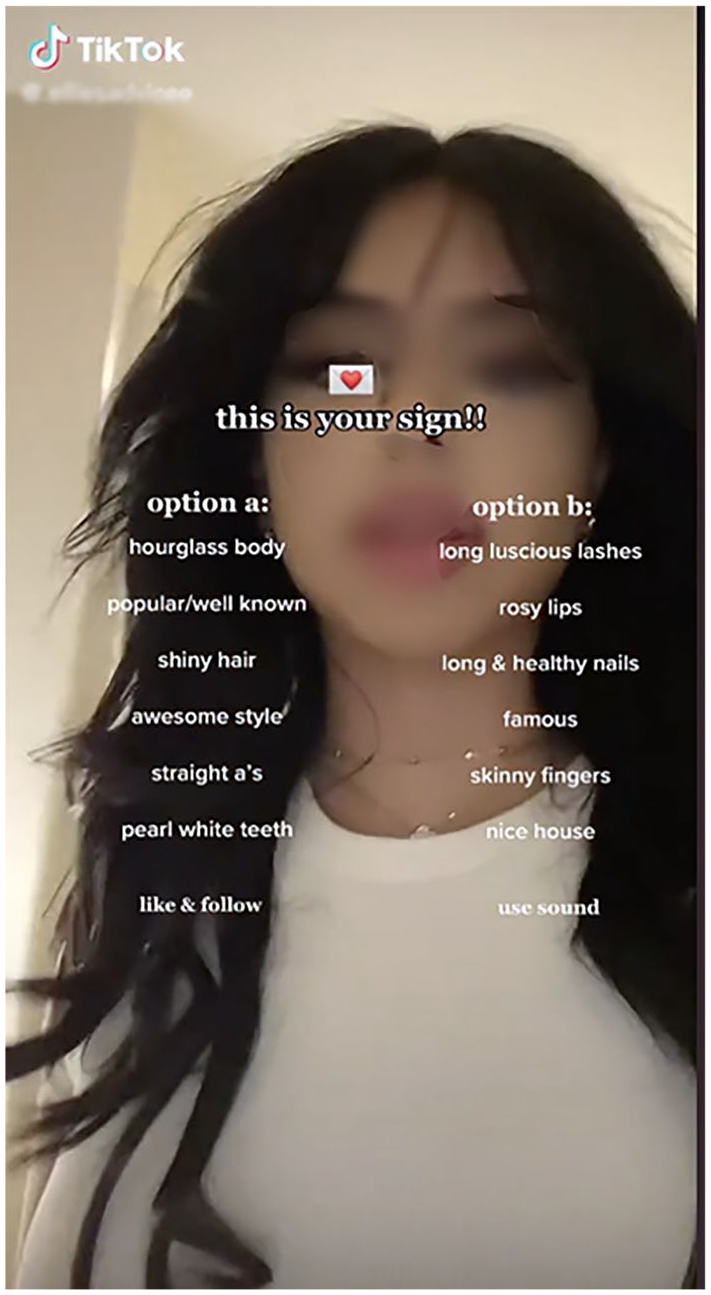
Manifesting through action.
Creators here de-emphasized their role, configuring themselves as a vessel through which the FYP algorithm says what it “wants” to. This ascribes creators with the power of a prophet or religious seer, whereas their content was positioned as gospel. Even when responding to videos that highlighted some personal attribute of the creator (e.g. the creator claims “I have ADHD”), many commenters still responded by highlighting the algorithm’s power with statements like “the algorithm is getting too specific.” Similar to how a prophet might communicate their deity’s wishes or plans while lacking the power to alter those plans, it was implied that even if this video creator did not create this specific video, the information it contained would still be true (e.g. this video is your sign that you should smoke, but even if you did not see this video, you should still go smoke). Invoking the presumed power of the algorithm in their videos suggests the weightiness of creators’ content and, perhaps, serves as a technique for competing in the new age spiritual marketplace (Redden, 2016). This technique naturally supports creators selling spiritual products and services (e.g. tarot readings). Moreover, while most videos in our dataset did not purport to “sell” spirituality, they did assume viewers’ familiarity or acceptance of them, and familiarity with the genre could prime users to be more accepting of new age beliefs in the future.
Conspiratorial
Conspiracy theories and conspiratorial thinking display distinct characteristics. Specifically, Ward and Voas (2011: 108) suggest the hallmark of conspiratorial thinking is that in which “nothing happens by accident, nothing is as it seems, and everything is connected.” This definition is the underlying basis of conspirituality, as proposed by them and by extension of algorithmic conspirituality as proposed by Cotter et al. (2022). Where we often see creators build the notion of content being “meant for” audiences, our data repeatedly suggested that users found personal connection to videos by claiming the algorithm knew them too well. Through comments such as “Tiktok is so scary with timing,” “I feel seen and targeted at the same time,” “When the tiktok algorithm knows me better than my friends and family,” “Dear tiktok: no one asked you to come at me like that,” we note that users address their comments specifically to TikTok, and not to a higher spiritual entity. Here, they are not manifesting, or ascribing magical powers to the platform, but instead very clearly noting the algorithm’s role in providing them with relevant content. Consequently, they conclude they are being called out so as to enlighten them or to prompt an action, for instance, “. . . TikTok is trying to tell me something I swear.” This is in line with Cotter et al. (2022) who suggested the conspiratorial dimension of algorithmic conspirituality manifests in part through speculation about TikTok’s data collection, noting a comment in which the “user implies, in conspiratorial terms, that [TikTok] had listened to and extracted data from their conversation” (p. 2923). Such reactions mark the inception of conspiratorial thinking, involving the invisible “powers-that-be” behind TikTok. This uncertainty is the prime condition for the development of conspiratorial thinking (Abalakina-Paap et al., 1999; Farias and Pilati, 2023). Where our data does not discuss specific conspiracy theories (which is beyond the scope of this research), it does exemplify the underlying construction of conspiratorial thinking. Much like Marwick and Partin (2022) describe knowledge-making to sustain the QAnon conspiracy theory, built on the affordances of social media, we posit a similar construction of ideas that organically appear within comments, but then are sometimes supported by creators who insinuate the TikTok algorithm will disseminate the videos to the correct people, for example, “i need to stop asking if this is relatable because i know i’ve never had an original thought ever and this tik tok will find my people #adhd” or “Did the algorithm drop you in the right spot?!”
Normalization and persuasion
We noted an underlying thread of norms and normalization within our data. Each dimension described adds to this notion in distinct ways. Relational algorithmic conspirituality reflects the viewers’ connections to similar other users, injunctive algorithmic conspirituality gives people the permission to engage in a behavior, personal algorithmic conspirituality emphasizes introspection, spiritual algorithmic conspirituality heightens the idea of mysticism and religious archetypes, and conspiratorial algorithmic conspirituality plants the seeds of conspiratorial thinking by suggesting TikTok’s algorithm knows more about the user than would be reasonably expected from disclosed data collection practices. Therefore, with every dimension, individuals are further surrounded by the notion that not only are they not alone in certain thoughts or behaviors, but these are also, in fact, encouraged.
Where we observe injunctive norms within one of our dimensions above, descriptive norms are those which explicate standards of behaviors among the majority of people (Cialdini et al., 1990). These norms have been used as the theoretical basis for behavior change in past research. Knowing what others are normatively able to do makes people follow suit. The role of the algorithm in highlighting similarities between creator-viewer pairs, as well as viewer–viewer pairs (in comments, for instance), creates a space ripe for normative messaging. This is because TikTok’s affordances allow descriptive norms to reach audiences. The connectedness and social creativity affordances discussed above allow the platform to be siloed into abstract, porous sub-cultures or spaces with which people deeply identify. For example, WitchTok is a community of millions of users who seek to learn witchcraft through TikTok (Barnette, 2022). Members of this subculture know the rules and practices of their group, and adhere to them, not because they are being made to, but simply because that is the normative practice of their community. While users might bleed into other subcultures, the overlapping Venn diagram of people within different subcultures can bring in slightly different, but similar viewpoints to the community at large.
Social norms have been successful in persuading audiences to partake in behavior change. This has been especially explored within health and prosocial behavior change literature (Reid et al., 2010). Within our own data we noted direct and indirect attempts of persuasion. Where some creators directly asked viewers to engage in certain behaviors, others encouraged it through their own actions or highlighting how everyone within a subculture was doing something similar.
Therefore, the interplay between the dimensions of algorithmic conspirituality, affordances of TikTok, and the norms created on the platform, lead to the ideal environment for persuasion. Figure 10 presents an overview of these findings.
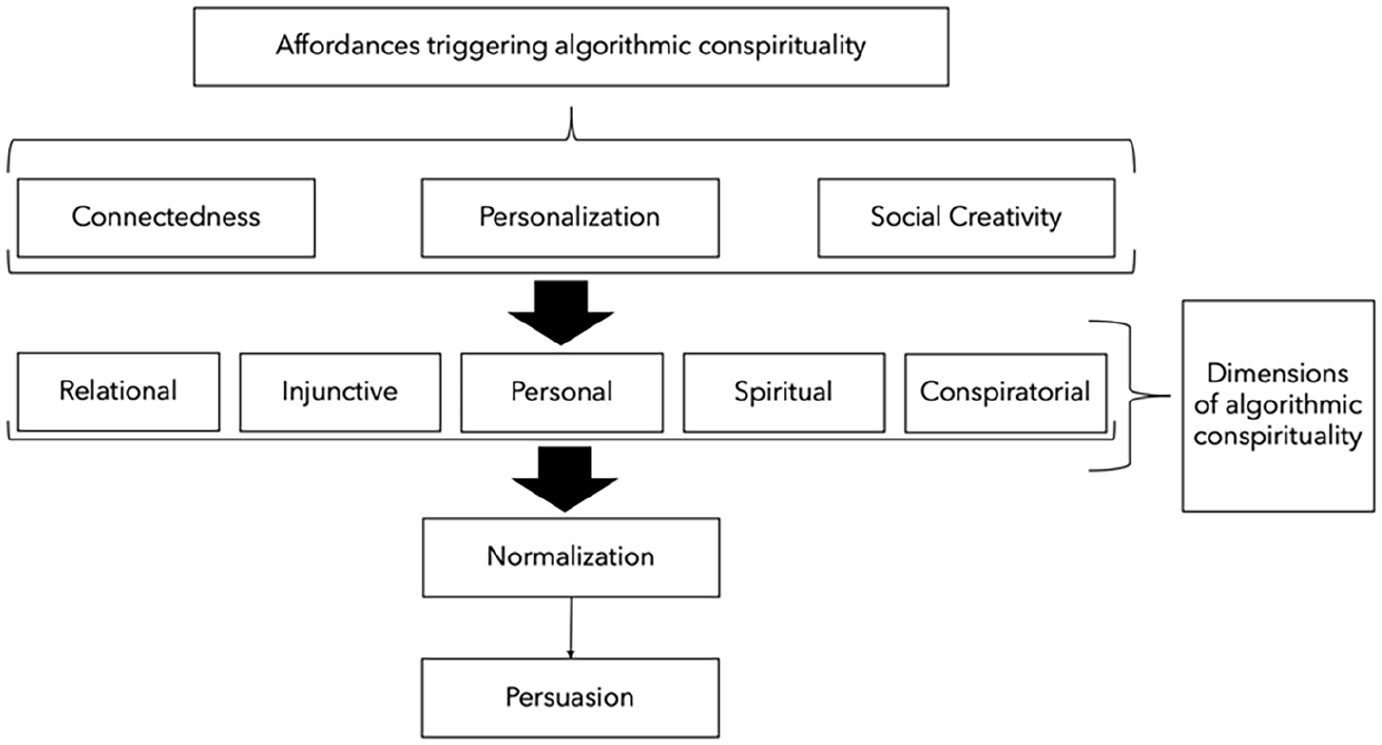
Overview of algorithmic conspirituality.
Discussion
Through a thematic analysis, we extended Cotter et al.’s (2022) concept of “algorithmic conspirituality,” by mapping the contours of this phenomenon and identifying platform affordances contributing to its emergence. We observed five dimensions underlying algorithmic conspirituality (relational, injunctive, personal, spiritual, and conspiratorial) and three affordances that help trigger it (connectedness, personalization, and social creativity). In addition, we noted the role of norms and the attendant persuasive possibilities.
Serendipitous timing of algorithmic conspirituality videos as arriving at just the right moment can give the impression they carry greater significance for the individual viewer. However, whether such a TikTok has a positive or negative impact depends on context. For example, videos addressing mental health have the potential to normalize and destigmatize high-stakes psychological struggles, as seen in past research (e.g. Greenebaum, 2018). Exposure to videos of similar others discussing experiences that mirror viewers’ can emphasize that they are not alone in their challenges and that it is possible to overcome or manage them. Alternatively, dangerous behaviors, such as smoking, vaping, or eating disorders, may be normalized, with such videos providing evidence that similar others engage in these behaviors.
In addition, we note that persuasion may occur as a by-product of the perceived relevance and resonance of algorithmic conspirituality. Our dataset focused on videos with specific keywords highlighting that they were “meant for” specific viewers, which might enable social learning (Bandura and Walters, 1977). Algorithmic conspirituality videos “teach” viewers about the almost-magical ability of the algorithm to provide them with content that is highly relatable, or “meant for” them. This attitude can in turn be extrapolated to other videos where creators do not explicitly reference algorithmic conspirituality via phrases like “if you see this, it’s meant for you.” Through a cyclical process, exposure to videos where creators make algorithmic conspirituality explicit could train users to have more faith in the FYP algorithm and, thus, grant greater credence to the content it serves up, generally. Future research can examine how this phenomenon occurs even without explicit markers.
Second, TikTok is a leading source of information for younger audiences (Maddox, 2022; Matsa, 2022). Highly curated content with repeated exposure of similar topics is akin to what the Cultivation Theory proposes (Gerbner, 1970), where repeated exposure to the same information can cultivate a false reality or representation of the world. It is possible that harmful or inaccurate information can be repeatedly shared, and misinformed ideas can be cultivated via algorithmic conspirituality videos.
Third, we note the role of the algorithm as an “influencer.” Just as parasocial relationships with influencers mediate and can render informational content more persuasive, we suggest that users may form a parasocial relationship with the algorithm itself. Comments in our data, such as “the algorithm is getting too specific” or “commenting so the algorithm brings me back for part 2!,” suggest that many users believe the FYP algorithm to be capable of knowing them intimately. Indeed, algorithmic conspirituality videos may encourage users to develop algorithmic imaginaries (Bucher, 2018) premised on unique connections to the algorithm, like spiritual relationships with the divine. Under such an understanding of the FYP algorithm, the information relayed to users in TikTok videos may carry more weight, just as information conveyed by opinion leaders does in the two-step flow model. This also points to how users view the algorithm as a discrete actor independent of its creators—in this case the developers at TikTok—which could have implications for how people view and use algorithmically curated content. Tensions between social media users and platform developers have been mounting recently. If people view the algorithm as separate from those who create it, the implications might include continued faith in the algorithm and the content it serves, while being critical of platform developers. Future work must examine the implications of this observation by engaging with users first-hand.
Finally, we note that while TikTok’s highly curated algorithm (Chu et al., 2022; Hern, 2022; Smith, 2021; Zhang and Liu, 2021) makes it especially ripe for the occurrence of algorithmic conspirituality, other social media platforms also use algorithmic curation to guide their content. TikTok was the earliest in making this curated feed the primary form of content delivery (rather than having friends or followers primarily populate a feed). This is evidenced through the affordances identified in our results above, the combination of which make TikTok unique in allowing the rise of algorithmic conspirituality. Its success, however, has led to other large platforms emulating and adopting similar strategies. For instance, Twitter, like TikTok, now has “For You” and “Following” feeds, and Meta (Heath, 2022) dramatically ramped up content from algorithmically recommended accounts on Instagram and Facebook in the last few years. This indicates that while TikTok may be unique in this regard, other platforms are aiming to achieve the same goal. Furthermore, the dependency on the algorithm learned by users is also likely to cultivate expectations they take to other platforms. In addition, many creators create for more than one platform and the success of conspirituality-type content on TikTok provides a template to develop similar content on other platforms, thereby, in effect creating the conditions for such content to jump to these other platforms. Future research must examine these creator perspectives in more detail.
Footnotes
Funding
The author(s) received no financial support for the research, authorship, and/or publication of this article.
