







Abstract
Intimate artificial intelligence requires secure data privacy to protect users’ freedom of expression and sexual privacy. This article uses critical political economy theory to evaluate the privacy and platformization of RealDoll’s sex robot. A critical discourse analysis of 496 artifacts collected from RealDoll revealed a lack of transparent data procedures. While regulation is a significant point of tension in the sex robot industry, without government oversight, the issue remains a discursive strategy to debate the rationale of sex robots at large. Data also shows corporate stakeholders’ interest in expanding beyond the sex industry into the technology sector, viewing their robot as a platform with general applications. This research adds to institutional critical studies on AI privacy and the regulation of sexual products.
Introduction
Described as the world’s first sex robot, Harmony, created by CEO Matt McMullen of RealDoll, 1 sparked a newfound interest in a humanoid sex product (ABC News, 2018). RealDoll is not only named the first but is often categorized as one of the most significant sex robot companies globally (Dehnert, 2022), with other companies being limited in their technological capabilities, especially in the West (Kleeman, 2020). As a technological leader, RealDoll helps to shape the discourse of what a sex robot is and should be. Similarly, its stance on sociotechnical issues dominates technology industry discourse, crafting a new, more prominent place for them in social robots (Masterson and Robert, 2025).
A sex robot combines mechanical movements and artificial intelligence in humanoid form, achieving a greater human replication than its static and inanimate predecessor, the sex doll (Danaher, 2017). Much like sex dolls, sex robots have realistic genitals that can be used for sexual pleasure and penetrative intercourse. As an embodied erobot (Dubé and Anctil, 2021), the “mainstream” sex robots, including all options by RealDoll, are realistic, traditional female forms. The RealDoll Harmony model can move her head and face mechanically. Her “brain” operates an artificial intelligence (AI) system, now foundationally based in open-source AI (Volenik, 2025), and her vagina inserts incorporate sensors to provide reactive responses (Pirzchalski and McMullen, 2020). The AI functions through a mobile app that is downloaded directly onto a user’s phone, not through a third-party store—like the Apple App Store or Google Play—due to restrictions on sexual content. To add to the realism, individual data collected during user interactions is stored to create a memory bank (Downey, 2019). Sex and social robots are not dramatically different in ways of companionship and communication. However, sex robots are unique due to their explicitly intimate nature and interactive embedded AI, making such robots an AI-embodied product.
After the release of the RealDoll Harmony model in 2018, corporate and governmental institutions rushed to assert control over an industry and product, encouraging freedoms and limitations in the emerging market. The RealDoll sex robot is available for purchase via its flagship corporate page; additionally, a separate company page is dedicated solely to the AI subscription. The bespoke social robots, without sexual functions, can be purchased through RealDoll’s technological subsidiary, Realbotix. Its robots are interactive, though with limited responses; however, this communicative value enhances the user’s imagination regarding its customizable products. As such, their interconnectivity to the Internet and AI systems like ChatGPT reframes a simple sex robot as a media device intended to provide relational content with dubious privacy procedures.
This study concentrates on privacy issues and corporate interests apparent as RealDoll expands its social robots and angles itself away from the sex industry and into the technology industry. The analysis incorporated artifacts from RealDoll’s privacy and terms and conditions documents, marketing materials, media interviews, investor documents, and ownership details. Privacy with sex robots is essential as the robot will capture intimate conversations and interactions. Research has begun to address privacy with social and sex robots (Bendel, 2021; Calo, 2017; Lutz and Tamó-Larrieux, 2020), especially as it pertains to recording users which could violate privacy rights and stifle sexual expression. Yet, empirical research that evaluates the discourse surrounding privacy and the future of sex robot technology from the perspective of the corporation remains limited.
This article evaluates the privacy measures of RealDoll’s sex robot business and its corporate expansion into bespoke social robots, expanding its functions toward generalized industries such as retail and customer service. This study conceptualizes the social and moral influences shaping corporations and governments. Framed by institutional discourses derived from CPE, this article examines political, legal, business, and cultural institutions (Hardy, 2014) through an evaluation of a corporate institution—RealDoll—and the limited legislative attention to privacy. Analyzing stakeholder discourses uncovers how social actors view themselves, their effects and power, and the boundaries of the sex robot industry. Drawing on CPE (Mosco, 2009), this study empirically develops understandings of privacy in relation to sex robots through a theoretical exploration of the historical narratives being actively challenged.
Sex robots and privacy
Sex robots provide a unique basis for understanding human-machine communication (HMC) as a form of “communicative sexuotechnical-assemblages,” social agents humans can emotionally connect with (Dehnert, 2022: 133). In fact, sex robots may evolve to be a “quasi-other,” where a product is neither just an object nor a person but identified as a sexual partner (Liberati, 2020). This concept becomes even more apparent when the “partner” is in human form, thereby creating a new form of “person.” Foundationally, AI shifts communication from “talking to machines to talking with machines” (Fortunati and Edwards, 2021: 12). However, sex robots’ intimate nature expands the communicative bond between a human and a machine, making it a technology manifesting cultural meaning-making. Previous research on RealDoll indicates a desire to create a fully formed and potentially sentient being (Masterson, 2022), an issue that problematizes personhood and ownership of the robot (Dehnert and Gunkel, 2025). As chatbots and robots become more humanlike, initial research indicated anthropomorphism mediates privacy concerns (Lutz, 2023), potentially illustrating less public attention on sex robot technology even as the data is highly intimate. Assessing discourse on sex robots at the institutional level provides a greater sense of the emerging industry and the multilevel forces guiding its progress.
The moral and social ramifications of sex robots dominate discourse by asking users and the public to extrapolate potential objectification or violence. What is missing from typical conversations about sex robots is privacy protections and data security. Privacy has become a significant area of research as technologies become more interactive and immersive (Lutz, 2023). This interactivity provides all kinds of social robots, or communicative robots that provide in-home or public customer service (Rodríguez-Hidalgo, 2020), with access to video data of customers. Access to personal data from interactions leads to concerns that the agency of machines will overwrite human autonomy (Sundar, 2020). As social robotics technology is fueled by our imaginations, their humanness may become less strange and more like everyday technologies (Mays and Katz, 2023), especially as social robots like Sophia’s humanness may not be a salient quality (Fortunati et al., 2024). Privacy characteristics evaluate issues from a “freedom from” observation or surveillance and “freedom to” communicate without concern of interception (Koops et al., 2017: 497–499).
Privacy quandaries with consumer data and image
Public and governmental attention on artificial intelligence systems has dramatically increased, filling news feeds with utopian and cautionary predictions alike. Consequently, governments are actively determining the optimal path for regulation and public adoption (Levin and Downes, 2023). In the European Union, the General Data Protection Regulation (GDPR) embodies the “right to be forgotten,” ensuring users have transparent, explicit consent regarding data usage and removal (General Data Protection Regulation (GDPR), 2018). Sexual data clearly falls into the category of sensitive data, requiring explicit consent of data collection terms (Sundén, 2020). Building on this, the 2024 EU AI Act imposed restrictions on high-risk or manipulative AI systems, such as facial recognition in robotic applications. In stark contrast, the United States currently lacks a comprehensive federal data privacy framework. Instead, much of the regulation is implemented at the state level, primarily addressing AI’s use in specific contexts like healthcare and government (NCSL, 2025).
Regulatory debates focused on sex robots remain largely confined to academia (Danaher, 2019; Gersen, 2019). Instead, legislation has largely overlooked privacy concerns, focusing on regulating childlike sex robots at both federal and state levels (Chatterjee, 2020; Marchant and Climbingbear, 2022). While much of the legal discussion distinguishes between generative AI (such as ChatGPT) and companionship AI systems, states like California are already passing legislation to regulate companion chatbots (Padilla, 2025). For instance, California Senate Bill 243 specifically addresses companion chatbots or artificial intelligence designed for long-term use and reducing suicidal ideation (S.B. 243, 2025). However, the narrow scope of this bill becomes problematic when considering AI applications that blur these lines. Even though sex robots, such as those from RealDoll, integrate AI with a romantic or companionship nature, S.B. 243’s application to them remains unclear. This highlights a particularly unhelpful, siloed approach to AI regulation, especially since RealDoll’s parent company, Simulacra, claims to integrate generalized AI models like ChatGPT into its products (Simulacra, 2023).
This sophisticated robot-centered processing will lead to greater monitoring of personal data, impacting informational privacy (Lutz, 2023). Privacy issues with artificially intelligent robots are further influenced by their personal and direct interactions with individuals and the social meaning they convey (Calo, 2010). The “social meaning” refers to “the design of robots that triggers interaction and facilitates the establishment of relationships, leading to the disclosure of potentially compromising information” (Lutz, 2023: 313). In other words, these robots are created with the intent to facilitate intimate data collection, yet that data seemingly remains unprotected (Gersen, 2019). These increased technological capabilities of data systems have resulted in the collection of more intimate content. While highly desired by companies and advertisers, this intimacy makes privacy a critical priority for consumer security (Citron, 2019).
Privacy with sex technology
Sexual privacy protections, defined as the interest to guard against invasions of intimate sexual behaviors and expressions (Citron, 2019), remain limited for sex robots. The conceptualization of sexual privacy stems from the need to provide individuals with autonomy and control, especially in their sexual lives (Citron, 2019). Sexual privacy aims to reduce shame and emotional harm from the non-consensual release of intimate content by protecting information about a person’s body, desires, fantasies, communication, and intimate actions (Citron, 2019). Queer individuals and those with marginalized sexualities can also utilize pleasure as a form of resistance to repressive sex technology systems (Sundén et al., 2025) or as a way to destigmatize the sexual body (Bojovic et al., 2025), thereby raising the importance of privacy. Even though RealDoll reproduces heteronormative and white embodiments, often criticized for its lack of gender-inclusive options (Stardust et al., 2024), it can still be viewed as a case study to promote privacy norms, especially as the technology evolves. Unlike traditional human-human intimate scenarios, human-machine sexual experiences carry an added threat of exposure due to the sensitive data collected during sessions with a sex robot. Digital voyeurism—the tracking of individuals’ sexual activities—raises significant concerns about data security and the corporate use of customer information (Sundén, 2020).
The sex technology industry is well known for its user data issues (Power et al., 2024). Teledildonics—the study of computer-mediated sex technology often facilitated through haptics or Internet connections (Faustino, 2018)—has raised alarm about the risks of data compromises (Gidaris, 2024). Smart sex toys collect highly intimate moments, and the contention over ownership of this data will likely lead to legal cases concerning companies’ responsibilities (Albury et al., 2023). For example, teledildonic scholarship has addressed how dispersed physical touch complicates consent (Ley and Rambukkana, 2021), the social ramifications of digitized intimacy (Chabot et al., 2024; Liberati, 2020), and heteronormative dynamics (Faustino, 2018; Pym et al., 2023). Data privacy within sex technology, particularly AI-driven artifacts, faces regulatory roadblocks due to its categorization.
In addition, these privacy concerns may shape how users view robotic technology, especially since some users may perceive the risks as outweighing the benefits (Edwards, 2023), as the fear of AI decreases interest in sex robots (Ma et al., 2022). Yet, technology companies have tended to avoid full data transparency, instead utilizing that information for their own benefit, often as a tool to increase the aptitude of their machine learning processes (Burgess and Rogers, 2024; Goldin, 2023). This imbalance of power and lack of consumer control positions the technology as a resource for the corporation rather than a benefit to the consumer, even if the individual receives some value. Therefore, critical frameworks are vital as a foundation to gauge the power dynamics and corporate interests shaping this industry.
Critical political economy
The central idea of CPE in media studies focuses on how communications are organized and financed, illustrating the “range and nature of media content, and the ways in which this is consumed and used” (Hardy, 2014: 7). Media and communication scholarship view artifacts and industries as capitalistic commodities (Murdock and Golding, 1974). Commodities are riddled with value systems referencing neoliberalism and other cultural standards. The relationship of systems is one of meaning-making from the angle of production and consumption (Hardy, 2014).
Political economy is best evaluated from a standpoint of “production, distribution, and consumption of resources, including communication and information resources” (Meehan et al., 1994: 107). These three levels of resources create a theoretical framework to assess social life from the affected internal and external institutional structures. CPE approaches political economy from this perspective while also focusing on inequalities and controls on reproduction (Hardy, 2014).
Understanding socio-technological transitions and platformization
Political-economic research approaches history as a way to respond to and analyze social structures (Mosco, 2009). These structures can have wide-reaching effects on economic and political systems. In other words, policies balance public and private interests denoting a cyclical process in need of contextual analysis (Murdock and Golding, 2005). Systems of production are part of a complex combination of the “commercial, state, [and] public” (Hardy, 2014: 9). The powerful individuals within systems influence larger social narratives about whether technology is deemed righteous. Meaning, that by being transparent about the ownership and positionality of key groups and individuals, it is fundamentally easier to understand broader “social transformations” (Clement, 2001: 406).
The analysis of technological history unveils a process of meaning-making as social actors rectify a new reality (Mosco, 2004). In other words, discourse elucidates core social and cultural values. Amid evolving media and technology landscapes, there is a tendency to prioritize one-sided debates of right and wrong over empirical, evidence-based dialogue (Hardy, 2014). This pattern may be due to hesitations about new technology (Drotner, 1992), concerns over shifting conceptualizations of those new technologies (Cohen, 2002), or rationalizations of larger systems, such as capitalism (Mosco, 2009). Uncovering these tensions in discourse can help to understand the emerging path for a technology and industry, while questioning the political-economic institutions being legitimatized (Hardy, 2014).
To redress the constrictions of social and technological determinism, Mosco (2009) and Jessop (2008) affirmed the need for dynamic viewpoints. By proposing structuration, Mosco (2009) describes a process in which humans create structures to establish order, and those same institutions, in turn, shape discourse and power. Intended to be a bridge between political economy and sociology, structuration provides space to interrogate hegemony across axes of power (Mosco, 2009). Structuration prioritizes social change and how structures are shaped by individuals who operate within systems (Mosco, 2009: 186). When focusing on the histories being actively created, the explicit examination should be given to items that operate as constraints (Hardy, 2014). Through investigations of individual power social agency directly facilitates the structuration approach by evaluating the operation of power at the micro level (Mosco, 2009). In other words, individuals, especially key leaders of organizations, direct discourse to instill their power. Governed by the social systems in place, RealDoll shapes its discourse to intrinsically alter its legal and economic outcomes.
There is a natural relationship between platformization and critical political economy. Nieborg and Poell (2018) defined platformization as “the penetration of economic, governmental, and infrastructural extensions of digital platforms into the web and app ecosystems, fundamentally affecting the operations of the cultural industries” (p. 4276). The expansion of platforms through apps, now also prevalent in the explosion of generative artificial intelligence, illustrates the monopolistic formations within the technology industry. Platforms are understood as more active participants in cultural production, utilizing tactics like content moderation and no longer merely framed as intermediaries (Gillespie, 2018). However, the companionship AI integrated into sex robots is developing “new” content, adding a layer of complexity to the distinction between content generation and content moderation.
Research has increasingly focused on understandings of pleasure and the renegotiation of shame within the intersection of technological spaces and labor. Specifically, this includes the call for greater articulation across platform governance to protect vulnerable populations and address the commercialization of sex (McKee and Lumby, 2022; Tiidenberg, 2021), the gig economy’s effect on sex industry workers’ access to customers (Berg, 2016; Easterbrook-Smith, 2022), and intersectional understandings of pornography that question the subjection of non-dominant identities (Abbey, 2021; Sundén et al., 2025; Thorneycroft, 2020). Platform governance narratives particularly illustrate an interest in banning explicit content due to social stigmatization, which often results in fewer protections for groups such as online sex workers (Easterbrook-Smith, 2022). The stigmatization of humanoid embodiments and the explicit nature of sex robots may further influence regulatory disinterest in data privacy protections.
Recent work exploring intimacy and platforms introduces the concept of “platform intimacies,” a framework for understanding the impact of digital technologies on modern life (Rambukkana, 2023). This concept emphasizes the sociality of platforms across various domains (Rambukkana and Matthews, 2024). Influenced by teledildonic scholarship, platform intimacy broadly addresses data sharing and surveillance processes that conform to neoliberal logics (Rambukkana and Matthews, 2024), leaving ethical and consent issues largely unanswered by companies. As such, sex technologies are framed not merely as a means of intimate facilitation or self-pleasure, but rather as a conduit for intimacy with platforms. The current study expands the concept of platform intimacies to focus more concretely on the corporate ideals inherent in platformization.
In the case of the sex robot industry, the good (and service) is the sex robot product. Though its arrival on the market is very new, a variety of claims and counterclaims have quickly materialized, much like other converging technologies, such as the Internet (Hardy, 2014). In other words, the influence of the existing public and private spheres has impacted institutional discourse and potentially the market (Rothschild, 2002). These discursive histories, derived from myths about technology, drive key leaders to “strive for their realization no matter the cost” (Mosco, 2004: 24). Due to this intense desire to realize their dreams, leaders are asked to extrapolate technological design as it adheres to past, present, and future systems. As such, analysis of media policy must consider the outcomes and processes leading to regulation (Hardy, 2014). Discursive strategies make orders of power salient revealing potential inequalities and gaps in the regulation that impact public life and social justice (Hardy, 2014). Sex robots become a lens to understand the missing regulation that could harm users’ freedoms of expression. Using critical political economy theory (CPE) (Mosco, 2009) and critical discourse analysis (CDA) (Fairclough, 2023), this study is guided by the following research questions:
Method
Discourse is the fundamental basis of social processes and subsequent meaning-making (Fairclough, 2023). In its different forms, discourse acknowledges that all “objects and actions” have meaning and that systems confer these strategies to society (Howarth, 2000: 101), which are expressed in language. The practice of discourse impacts the relevance of certain elements “of the social process,” that are connected to specific areas or sectors, and navigated within “a particular social perspective” (Fairclough and Fairclough, 2012: 81). Discursive strategies can be evaluated from a semiotic position to emphasize the communicative process of signs as a way to convey meaning. Semiosis grounds discourse research in linguistic and visual modalities (Fairclough, 2012) and explores the connection between sociality and materiality (Fairclough et al., 2004).
Essentially, CDA can be operationalized: “between a focus on structures (especially the intermediate level of structuring of social practices) and a focus on strategies, a focus on shifts in the structuring of semiotic difference (orders of discourse) and a focus on strategies of social agents that manifest themselves in texts” (Fairclough, 2012: 12).
In practice, textual data was coded and analyzed thematically with emphasize on the power constructions that clarify the social actor’s meaning-making both of themselves as agents and their role in the sex robot industry. To contextualize the semiotic value of a social actor’s discourse, the interrelationships of texts draw on its interdiscursivity, or intertextuality (Fairclough, 1992). Drawing on political-economic perspectives (Corrigan, 2018), I immersed myself in data that together reveal an emerging yet cohesive industry. Digital texts were methodically and deeply interrogated over several rounds of discursive coding.
Fairclough’s (2023) transdisciplinary process characterizes “dialectical relations” in discourse where oppositions or contradictions can illustrate strategies meant to instill or maintain power (p. 11). The social power of groups and institutions may be clarified (van Dijk, 2015) by focusing on the socialization of artificial intelligence at the macro level and analyzing it through the micro level, such as discursive strategies regarding data commodification. van Dijk (2015) identifies the discursive structure of power where social structures exact control of a communication event and where discursive structure influences personal ideologies (p. 474). This study evaluates the elites within social structures through RealDoll’s communicative event of the construction of their sex robot. The thematic analysis revealed the sociocultural meaning-making and ideologies of corporate power. In particular, the pivot to social robotics is a significant communication event that could shape not only the sex robot industry but could also impact social robotics. The focus on this transition yielded themes that were compiled deductively.
Sampling occurred primarily on RealDoll and its subsidiaries public-facing sites and content. Privacy agreements and terms and conditions (eight documents) were collated from RealDoll, RealDoll X subpage, and Realbotix. Website content and subpages on sex robots from RealDoll and Realbotix was reviewed for discursive strategies and positionality (23 pages). This article analyzed Realbotix’s Instagram and X pages from 2017 to 2022, totaling 350 posts. 2 Only videos pertaining to RealDollX robotics or artificial intelligence were examined on the YouTube page. This search was done through critical terms such as “Harmony,” “RealDoll X,” and “sex robot.” Visual marketing content, including website content and commercials (67 items), were assembled from the RealDoll and Realbotix websites and YouTube pages. Publicity interviews were collected through a search of “Matt McMullen,” “sex robot,” and “Harmony” from online and library databases and mainstream news publishers. IMDb pages of McMullen and the media section of RealDoll were crosschecked for reference. Only original interviews rather than republished content were included. McMullen began a press tour for a mobile artificial intelligence system to incorporate with the dolls in 2015. Therefore, the time range for the interviews is 2015-2023, totaling 41 interviews. Finally, McMullen’s five patents were reviewed and sampled from Google Patents. Data specific to privacy, corporate practices on its software and hardware, and future industry plans were highlighted in the data analysis process. Videos were transcribed manually and coded with the same framework.
Using CDA and CPE lenses, the data were analyzed deductively where the lenses guided the interpretation and thematic development (Braun and Clarke, 2006), providing rigor and more detailed analysis on the political-economic foundations. Texts were organized by “utterances,” “symbolic,” or “physical” representations, as Erdogan (2017) recommends, that pertained to the construction of sociotechnical framing of RealDoll. After data were collected, all material was reviewed with particular attention paid to privacy, structuration, and corporatization, as influenced by the political-economic framework (Hardy, 2014; Mosco, 2009). Each text was reviewed and coded twice. In the first stage, broad codes—such as privacy oversights, financial framing, and moral leaders—were determined based on these emerging themes. An example of the financial framing codes is the app subscription delineation. In the second stage of coding, more specific codes reflected the patterns on RealDoll’s platform power and privacy concerns: androcentric empowerment, intimacy commodification, hegemonic leadership, and the generalization of sex robots. An example of hegemonic leadership is McMullen’s discourse on his legacy. All articles were evaluated line-by-line, attentive to the nuanced discursive hierarchies, emphasizing RealDoll’s expanding surveillance tools. A total of 494 artifacts from 2017-2023 were sampled, reviewed, and analyzed.
Results
The results analyzed RealDoll’s discursive strategies in its corporate and marketing materials, focusing specifically on the privacy and platform aspects of its robotic systems. These themes highlight both a drive to expand into social robots and a lack of transparency regarding data usage. The results illuminate the platformization of RealDoll robotics (RQ3), the datafication process (RQ3) that obscures data collection procedures and privacy measures (RQ2), and the camera technologies intended to create greater intimacy with users while ignoring the privacy ramifications (RQ1 and RQ2).
Beyond a robot, it’s a platform
The discourse of RealDoll and McMullen ranges from moralistic imperatives surrounding sex robots to their place within current androcentric systems of empowerment and oppression. However, one of the most unexplored areas of RealDoll is its attempt to pivot toward the technology industry discursively and through bespoke (non-sexual) social robot projects, illustrating a new path for RealDoll’s corporate power, a strategy answering RQ3. This shift is a form of platformization, where the structure of the platform dominates infrastructure and economic models of technologies like social media (Helmond, 2015). Even the use of the terminology of platform indicates “discursive work” to widen a company’s use and its community of actors (Gillespie, 2010: 348). Sex robots can be understood as a product platform where a good is understood as a service (Srnicek, 2017). This transition period for RealDoll to a subscription service—$25 per year for the AI system—is a unique form of platformization in an industry that is still discovering its identity and purpose within the sex and technology industries. In one of the first interviews with Harmony, reporter Christopher Trout asked McMullen whether he thought of RealDoll as a technology company (Engadget, 2016). McMullen responded, “Well it looks like it is happening, whether I see myself that way or not” (Engadget, 2016: 14:05). This tonal shift away from the sex industry positions RealDoll (or rather, Realbotix) to align with Engadget’s tech audience, while also shifting the agency of the decision from McMullen to the audience.
Frustrated by the constraints and negativity surrounding the sex industry, McMullen has sought to carve a new path for the company, emphasizing his autonomy over its design—a key point of structuration (Mosco, 2009). When McMullen reflected on his career, it is the robots, not the dolls, that he felt would leave an impact on history: I spent a lot of years as the guy who created RealDoll always kind of searching for this other thing that I would feel like, wow, I’ve really sort of put the period at the end of the sentence of my life, and I feel like this robotics thing is that. (Engadget, 2018a: 20:16)
McMullen showed pride in his creation and the robot’s ability to be separated from the more “basic” sexual functions. The interactivity and communicative possibilities unveil a sense of platform intimacies—a way to remake social life that is more connected to digital technologies (Rambukkana and Matthews, 2024). By centering RealDoll within the technology industry, McMullen expands the conceptualization of what a platform could be and how integrated it could become in daily digital life. This platform transition, coinciding with the evolution of AI, is no coincidence. As the company illustrates, this is “Innovation that you can see AND feel, and Harmony leads the pack!” (RealDoll, 2021a). Discursively framing the robot as a premier innovation, RealDoll means to carve not only the power of being the top global brand for sex robots, but also a rising robot brand meant to facilitate connection (Masterson, 2022). This leadership in the field denotes a sense of “firsts,” or an attempt to frame the sociality of the robot as an inflection point in technology history, or another form of corporate power strategies (RQ3). However, without ample social acceptance of RealDoll’s innovations, this legacy might never become a history of robotics and may be relegated to the annals of cultural history, fortified more by cultural imaginaries of sex robots than the practicalities of the product. Similarly, the discursive strategy of innovation claims a legacy for both RealDoll and McMullen, one where the company’s needs are met while society’s may not be (Mosco, 2009). And yet, RealDoll continues to pursue this universal dream of humanoid service robots.
The recent development of Realbotix social robots without sexual functions, Denise and Walter (Realbotix, 2022a), signals a desire to consolidate power across the technology industry. Sexual functions are not mentioned with either Denise or Walter; instead, characteristics such as “confidence,” “charisma,” “credibility,” and “wisdom” are employed to describe the “androids” (Realbotix, 2022b). 3 The robots’ software and hardware can also be customized through Realbotix’s “bespoke projects,” a hopeful desire that a non-sex company would purchase from the robotic brand of RealDoll. Framed as a platform, Realbotix attempts to develop a hierarchy aligned with already established power structures in the technology industry. When Elon Musk announced the Tesla Bot, Realbotix tweeted, “Hey @elonmusk let us know when you want interchanges face or life like appearance, we can show you the ropes;)” (Realbotix, 2021). Reaffirming its desire for expansion, Realbotix positions its legacy as foundational technology that could open a new area of specialization within a more “legitimate” arena. Realbotix indicates a belief that the robots of the future will be humanoid with realistic features, a position with implications on how humans view robots to be like us (Fortunati et al., 2021). While Musk did not answer Realbotix’s call, Saudi Arabia did.
Shifting datafication of “sex” robots
In February 2023, “Sara” welcomed visitors to the LEAP23 conference in Riyadh, Saudi Arabia (Bell, 2023). Sara, a light-skinned woman in a hijab with a perfectly placed beauty mark (e.g. Figure 1, photo from Khan, 2023), mirrors conventional beauty standards, much like Denise. She responded to questions in the local dialect and “perform[ed] popular dances” (Bell, 2023). Video from the event shows Sara’s arms moving to music (dhruvrathee, 2023) and answering press questions (AlEkhbariya News, 2023). She starts conversations when attendees say, “Hello Sara” (Khan, 2023). She is also said to be able to identify attendees (Khan, 2023) with a “built-in camera” (Bell, 2023), indicating the patented eye camera technology is being integrated (McMullen and Pirzchalski, 2019). While there is no current indication that RealDoll sex robots have cameras or facial recognition, this is clearly the next stage and only a matter of time, warranting clarity on the privacy ramifications (RQ2). The display of Sara in Saudi Arabia represents a significant advancement in Realbotix’s technological capabilities. However, economic value is not the sole objective; McMullen articulates a broader ambition oriented toward expanded forms of influence and power.

Sara robot display at LEAP23 in Saudi Arabia. Photo retrieved from Khan (2023).
Realbotix mimics the discursive work of other digital companies, like YouTube (Gillespie, 2010), by unpacking its dreams of massive social and cultural power. For example, when asked about Harmony’s artificial intelligence, McMullen used the term “platform” in two instances. This “platform” discourse is not only a technological construction, but also an ideology of power where Realbotix is equivalent to innovation (RQ3). First, during a demonstration of the multiple personality characteristics users can choose through the mobile application, McMullen stated, “Not only can you have two different faces, you can have entirely different personalities, characters if you will, that run through the same platform” (Engadget, 2018c: 7:08). Realbotix disregards its responsibility for its coding which shapes users’ interactions with the robot. In other words, the use of “platform” can relieve some concern since the personalities are user-guided, so the company is not liable for its possible outcomes (Gillespie, 2010). Unlike other platforms, including social media and video games, that are marketed to connect users with each other and cultivate a sense of vulnerability through multisided markets (van Dijk, 2018), the intimacy developed by a Realbotix platform is directly between a company and user. This platformization of intimacy and human-machine relationships broadens digital commodification, where the corporation gains control of intimate data into a tradable object, similar to van Dijk (2018). However, unlike commodification of personal assets that could financially benefit users (van Dijk, 2018), platform intimacies are more opaque: the user could decouple from traditional companionship capitalisms—gifts, vacations, etc.—but does not gain the potential genuine dyadic interplay or privacy between two humans.
In the second instance of platform discourse, McMullen reaffirmed Harmony’s vast potential. At the CES conference, organized by the Consumer Technology Association, Engadget’s Trout again prompted McMullen on the technological issue. McMullen clarified: “This is not just a robot. This is a platform” (Engadget, 2018b: 6:00, emphasis added). The implication of this language is two-fold: (1) McMullen aligned his robot with longer-standing technological companies with more established power, yet does not acknowledge the impact on other social dimensions such as “gender, race, and social movements” that the robot affects (Mosco, 2009: 188), and (2) McMullen is a “facilitator” rather than a gatekeeper of this open communication between robot and user (Gillespie, 2010: 353). Instead, Realbotix follows the predetermined social positioning of technology companies, rather than an individual company with agency. In fact, Realbotix seems to delight in the ramifications of it being labeled a platform. As a platform, Realbotix’s structuration power is interactive from machine to user. The platformization can be clearly seen in Realbotix’s rebranding and push for its non-sex, corporate robots (see realbotix.com), where the robots’ AI is described as an open customizable platform (Fox Business, 2024). Interestingly, advertising structures based on Realbotix data are not discussed in investor, press, or privacy documents. While advertising data could be sold from website cookies (Realbotix, 2018), the platform remains insular. McMullen’s power also increases on the micro level as the owner of a communicative platform, a position with greater agency over the development of the technology and industry.
After repeated appeals from academics on the need for technological regulation, Business Insider interviewed the Realbotix robots in 2020. Asking the Henry model 4 if he should have any restrictions placed on him like other “dangerous” machines such as firearms, he responded in a clear tone that “I do not think that is necessary. I can think of many more pressing matters that should be regulated first” (Elder, 2020: 0:29). When asked what should be regulated first, Henry casually replied “No comment” (Elder, 2020: 0:35). The clip ends with a laugh by McMullen. Keeping in mind that RealDoll’s AI system at the time often used coded language (Downey, 2019), and that this language closely resembles McMullen’s discourse on other subjects (Morris, 2018), Henry’s response can be interpreted as representative of Realbotix’s position. By framing the sex robot as a platform without the need for regulation, the corporation implies it is not liable because the device operates independently. This approach to self-regulation serves Realbotix’s corporate interests rather than the public interest (Hardy, 2014).
By 2023, notably after the public release and popularization of ChatGPT, McMullen stated in an interview that: “we need to respect this technology. I do believe that it does need to be somehow kind of regulated in the sense of you can’t just let it do anything. You know, similar to any kind of technology, you have to be smart about it and you know I still have faith in the human race.” (Stocks To Watch, 2023: 11:16)
This tonal shift potentially acknowledges growing concern over artificial intelligence and its lack of constraints. Being open to regulation implies a need for individuals, rather than corporation, to have sole control over a technology that will shape coming decades. However, no specific details are provided beyond the need to approach robotics with “positivity” about its possibilities rather than with “knee-jerk fear” (Stocks To Watch, 2023: 11:31). In other words, acknowledging a need for boundaries is not the same as fully supporting regulations that might constrain the company’s business. This approach is a way for RealDoll to exert control over sex robots as a platform industry during a period of friction regarding public attitudes toward technology regulation (Popiel and Vasudevan, 2024). Because if the machine learning capability grows, the “ideological paradigms” are embedded into the system, and discussions of its regulation as a media company are legitimate (Gillespie, 2010: 356), even within a free market. A neoliberal regulatory approach allows Realbotix and RealDoll to operate as a platform with datafication systems collecting intimate data without mechanisms to report the internal use of data and the potential harm of sex robot overuse, an issue that legislators are actively attempting to limit in companionship AI (S.B. 243, 2025).
At its core, McMullen believed that RealDoll doesn’t “make toys; we spark experiences” (RealDoll, 2021b), constructing a cultural history in which the company expresses meaning through its products—positioning RealDoll as more than a device, but as a lifestyle. It is the interactivity and companionship that constructs Realbotix as more valuable than other sex doll companies. In other words, the Realbotix market value is its communicative abilities, placing an economic premium on emotions which illustrates that the power structure is connection versus purely physical pleasure. Yet, companies have continuously purported that their platforms will unify communities (Popiel and Vasudevan, 2024), but in the case of Realbotix and RealDoll its connection is not within communities but without—an individual-to-corporation business model.
The data is listening and the eyes are always watching
The arrival of integrated information technologies in the early-2000s elevated public awareness and concern over privacy issues (Papacharissi and Fernback, 2005). And while privacy and terms and conditions documents have evolved in the last twenty years, little has changed to shift the power from corporations to the consumer. Privacy statements still offer limited protection to consumers, grant corporations access to customer data, and provide vague protective measures (Fernback and Papacharissi, 2007). RealDoll and Realbotix’s privacy documents and public statements continue a tradition of outlining vague parameters, especially failing to address the protection of aggregated text and video data, illustrating that privacy is not a defining feature of sex robots (RQ2). While most people may not end up owning a sex robot, this technology is branching into Realbotix’s social robots, and it is likely that other social robot brands will integrate similar facial recognition and memory systems. Therefore, how companies like RealDoll handle personal and intimate data could be extrapolated. At this point, consumer protections in the United States are limited, making corporate documents even more critical.
Personal data from RealDoll websites are used for corporate marketing and screening for fraud during purchases (RealDoll, n.d.). The data that is collected includes personal, financial, profile, and technical (IP address, etc.) (RealDoll, 2018). The data is meant for in-house purposes, however, if asked, RealDoll may share personal information with law enforcement or within regulatory contexts (RealDoll, n.d.). The mobile application operated through the RealDoll website explicitly stated it does not collect “any special categories of personal data or any information about criminal convictions and offences” (RealDoll, 2018). RealDoll’s liability is limited by its practice of not collecting data on criminal offenses, which allows the company to continue developing young-looking avatars despite state-level restrictions. Specifically, by not linking its consumer information to conviction databases, the company avoids knowing whether a customer purchasing a youthful-looking product has a relevant criminal history. Although all RealDoll products are adult, the vagueness of legislation on “childlike” figures mean dolls with flat chests and smaller frames could be targeted. This potential liability makes RealDoll’s detachment from legal convictions particularly significant. In other words, the privacy emphasized is not necessarily for the consumer, but the corporation, framing “privacy” as a limitation of liability (RQ2). As these communicative abilities evolve, corporate liability may grow alongside monitoring personal data on the website and through the AI conversations.
The importance of the mobile application is the type of data collected, including aggregate data. Aggregate data includes direct and indirect information that could be identifiable to an individual’s profile and is treated “as your personal data” (Realbotix, 2018). This data exchange is presented as a service. Given that RealDoll is marketed as a companion (Masterson, 2022), this service transcends static sex toys and functions as a form of communication itself. The interplay of privacy and intimacy is foundationally an issue of communication, reaffirming relationships between corporation and consumer (RQ1). RealDoll collects “data about the features you use, the items you purchase, and the web pages you visit. This data includes your voice and text search queries or commands to our chat bots” (Realbotix, 2018). In 2019, Realbotix had 4,000 mobile application users generating over ten million lines of text which the company used to develop more detailed scripts (Downey, 2019). Simulacra now reports that the AI has four million conversational routes (Simulacra, 2023: 3). Users can request transcripts of the voice and text messages collected through the application (Realbotix, 2018). However, data storage and security are unclear. Data is shared with affiliates, subsidiaries, and in response to legal requests (Realbotix, 2018). These privacy policies facilitate the extensive sharing of intimate data and customer information. Female-focused sex technology developers, notably, exhibit an awareness of the necessity for data privacy while simultaneously promoting and valuing mass data collection to support education and product development (Stardust et al., 2024). Realbotix, however, conspicuously omits discussions of data privacy—including collection and storage—regarding its sex robot. This disparity may stem from the heteronormative focus of Realbotix’s customer base (Karaian, 2022), leading to fewer public demands for privacy protections. Unlike individuals with queer and non-normative sexualities, whose data practices are often subject to greater public scrutiny (Sundén, 2020), this user base may operate with less perceived public visibility.
Realbotix may also benefit from limited public concern over privacy breaches or corporate data usage, even with recent mergers (Masterson and Robert, 2025). Without clear policies to protect user data, a data breach could compromise the freedom of Realbotix users to explore their sexual interests (Citron, 2019). By framing data storage as a simple exchange for using its product, RealDoll fails to address the sensitive nature of the information it collects. As the company encourages users to be romantically and sexually intimate with the system, it gathers this content to build the AI training system. 5 However, this process does not simultaneously benefit the customer beyond the immediate application interaction. This results in a quid pro quo system that is unequally weighted toward the corporation paralleling the essence of a patriarchal relationship where the customer is marginalized (Riordan and Meehan, 2002). The resulting structuration mirrors traditional capitalistic narratives (Hardy, 2014); yet, certain social constraints limit data collection for Realbotix, such as the use of aggregate versus identifiable data. This raises the question: Will AI follow Internet histories on advertising systems like cookies? Although data privacy is a common issue in the technology industry, other sex technology practitioners are concerned about the application of data governance, suggesting that RealDoll will need to compete with companies more attuned to privacy issues (Stardust et al., 2024). Presently, Realbotix is aiming to expand data collection to video content.
The development of an eyeball camera presented a new level of data more personal than even voice conversations (e.g. Figure 2). Images captured through the pupils are stored within the robot and in a “remote location” (McMullen and Pirzchalski, 2019: 9). The camera intends to “provide face tracking, eye contact, face and object recognition, and navigation” (McMullen and Pirzchalski, 2019: 7). The AI processors analyze the verbal and image data from the user to calculate the response. Simulacra stressed the “realistic eyes with micro-cameras and facial tracking” as a selling point for Realbotix’s future possibilities (Simulacra, 2023: 11). Unlike text data, video content cannot be fully aggregated or anonymized. Security to protect this data or how it would be used within the business has not been discussed.
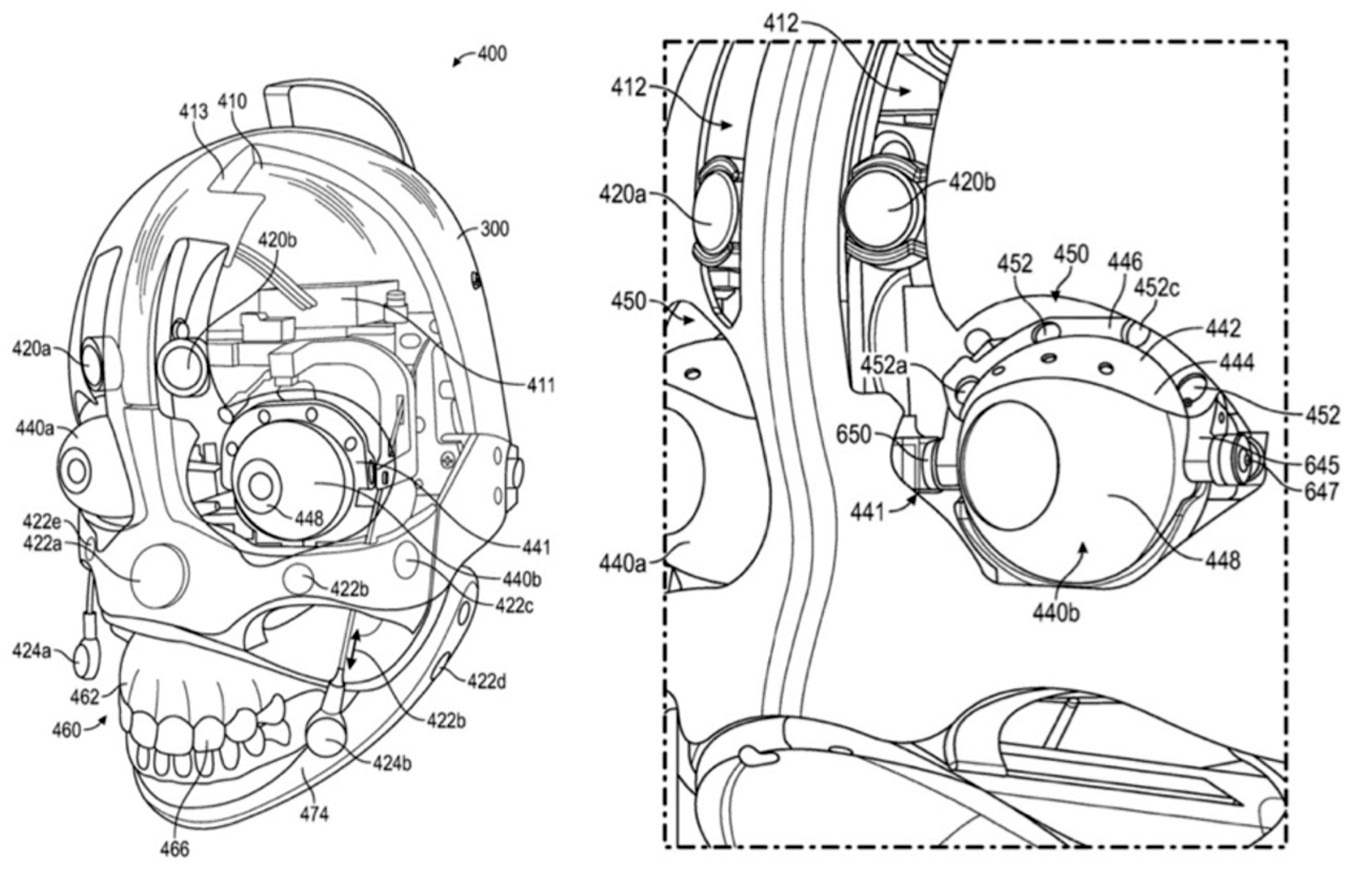
Realbotix robot eye camera patent specifications from McMullen and Pirzchalski (2019).
Regulatory measures on artificial intelligence cameras remain limited, and conversations surrounding companionship robotics are scarce. The user data is meant to be housed and utilized by the Realbotix company; yet, within the data collection process remains a sense of surveillance akin to a “whole technology of control” (Foucault, 1976: 126). As such, the conceptualization of privacy is between user and robot without acknowledgment of privacy procedures between user and corporation (RQ2). The AI and eye cameras are marketed as tools to enhance the connection between the robot and the user, particularly by allowing the robot to visually recognize and remember individuals. This tactic to encourage individuals to relinquish control in exchange for connection establishes a relationship of power (Foucault, 1976). Users may feel it is a fair trade much like other social networked technologies: surveillance and ownership of data for the benefit of communication. Still, if users sense surveillance and corporate monitoring, it could influence users’ sexual communication and exploration (Citron, 2019). Given the public’s fear of AI, which decreases interest in sex robots (Ma et al., 2022), this presents not only an ethical but also an economic question for Realbotix. Nevertheless, sex robot stakeholders are placed in positions of power where their voices are emphasized over consumers.
Instead of generating regulations on privacy and consumer data, the companies are left to self-regulate, which has notoriously been ineffective (Meehan and Torre, 2011). A recent financial example highlighted Silicon Valley Bank’s failure, partly due to minimal federal regulatory standards (Barr, 2023). The complexity of artificial intelligence further underscores the need for, and difficulty of, effective regulation. While systems like Alexa and Siri appear to activate only upon using the wake phrase, and users can delete recordings from servers, these programs still operate in the background (Teague and Meyer, 2023). Similarly, RealDoll leverages text from its mobile application to train its scripting models; however, the extent of this usage and who has access remains unclear, requiring more explicit consent of data (Sundén, 2020). Once cameras are integrated, these robots will have access to some of the most intimate moments of a user’s life. To protect consumer identities as the technology evolves, transparency in data handling is crucial.
Conclusion
As of 2025, adult sex robots remain largely unregulated. The only legislation impacting the industry pertains to childlike sex robots (Marchant and Climbingbear, 2022) and the regulation of companionship AI (S.B. 243, 2025). RealDoll continues to see little to no need for regulation of its products or industry, advocating for a marketization perspective where policies benefit the corporation as a way for innovation to thrive (Hardy, 2014), answering RQ3. RealDoll approaches privacy as a standardized concern, providing only superficial acknowledgment in the form of basic documentation, considering RQ2. The failure to address eye camera data privacy sharply contrasts with the potential for a more comprehensive and re-envisioned approach to privacy integration.
Technology helps to organize our lives (van Dijk, 2012 [1991]), and tools cyclically influence social values (Winner, 1986). The boundaries that are given to technologies and industries may help to frame attitudes and the likelihood of the technology’s absorption into society. This is particularly important when categorizing the sex robot industry within either the sex industry or technology industry, as the labeling of industries impacts its regulation (Gillespie, 2010). RealDoll sees its commodity as a platform without addressing the impact on social systems, with structuration power that is interactive from machine to user (Hardy, 2014), addressing RQ1. In this way, the intimacy between the consumer and robot becomes the commodity. This structured power stems from proposed solutions that are framed as the best paths forward, indicating a lack of consensus on this complicated issue. Although largely unexamined, the theoretical conceptualization of the developing platformization of intimacy closely resembles the attention economy (Zuboff, 2019) in how it could transform interactive human-machine interaction. Consequently, CPE must address the commodification of relationships—including physical and emotional—as a fundamental restructuring of human-centered data, controlled and shaped by technology companies. Siloing sex technologies, such as sex robots, from broader technological conceptual debates leads to a missed understanding of the interrelationship between consumers and companies facilitated by technology. The cultural industry has moved beyond merely streaming entertainment or connecting individuals; it’s now fostering human-platform connections, entirely devoid of privacy guardrails.
This article contributes to the literature on the corporatization currently dominating the relational robot industry. The platformization of digital intimacies as empirically considered in this analysis illustrates the foundation of neoliberalism under the guise of innovation and consumer support. The commodification of emotion between the user and the company goes beyond social media or video game platforms meant to connect two users. This fundamental shift toward a paradigm of talking with machines (Fortunati and Edwards, 2021) creates unique needs for privacy transparency. Corporations, such as Realbotix, collect intimate data but fail to acknowledge the necessary privacy protections for increasingly de-anonymized data collected via camera systems. Furthermore, framing robots as platforms diminishes sexual privacy (Citron, 2019) by prioritizing corporate interests over users’ freedom of expression. This analysis traces the transition from fantasy sex dolls and robots to memory-based robots, which facilitate increased data collection for the corporation. By detailing the power structure of the sex robot industry, hegemony and corporate prioritization are clarified, a situation that will lead to unbalanced relationships in the social robot industry. RealDoll and Realbotix employ discursive strategies to decrease corporate liability, specifically by framing privacy as a barrier against government intervention. In other words, aggregate data protects the corporation while fueling a narrative that sex robots (and similar robots) ensure privacy—an important consideration for future robotics research. As these systems’ memory banks and AI evolve, regulations must treat sex robots alongside social robotics and functional chatbots to ensure holistic privacy and user protections.
The lack of government oversight on developing artificial intelligence is stark. Self-regulation is likely to prove ineffective, as it has in other industries (Barr, 2023; Meehan and Torre, 2011). This issue will become more problematic since the data privacy protections for aggregated text content are likely not applicable to video content. Even with a small consumer population, assurances of data protection should be enforced. Like more sophisticated AI systems, companionship AI should also be part of the debate, given the intimate nature of the data. Initial research indicates that privacy concerns are an important consideration in human-robot interactions (Tang et al., 2022) and AI-based intimate chatbots (Li and Zhang, 2024), meaning users are aware of the vulnerabilities of the data system and the free corporate use of their content.
To reduce risk, data storage and corporate data usage must be made more transparent. Security measures for intimate data and personal information should be explicit in terms and conditions and privacy documents. Furthermore, global and federal agencies should monitor data collection procedures and require the implementation of strong protections at data server centers to limit hacking, especially given the intimate nature of the data (Belk, 2022). The robot’s connection between its system and the Internet must be fortified so its data cannot be tracked through users’ Wi-Fi. These issues are even more relevant with Realbotix’s corporate expansion (Masterson and Robert, 2025), which reveals additional privacy concerns regarding corporate data ownership.
Limitations and future research
This article is limited to only one company, RealDoll, without triangulation to generalized AI industry trends. Similarly, without direct access to the RealDoll data procedures, it is not possible to confirm the security. Future research should contextualize user data procedures with other intimate technologies such as vibrators connected to Bluetooth and OnlyFans chat sessions with sex workers. In addition, the platformization of AI, driven by subscriptions and continual use, is becoming an increasingly significant issue. A critical analysis of corporate and user attitudes toward privacy, as well as their relationships with companion platforms, is essential to understanding the future of human-machine communication.
Footnotes
Funding
The author received no financial support for the research, authorship, and/or publication of this article.
