






Abstract
How does media discourse on digital election interference affect political polarisation? This study investigates this question using a survey experiment conducted in the United Kingdom in 2024. Respondents were exposed to fictitious news stories about digital interference during the 2019 UK general election, and the treatment varied information about which party benefitted from the interference. Attitudes were subsequently measured across ideological, affective and perceived polarisation. The results indicate that news about digital election interference does not increase polarisation at an aggregate level. However, respondents reported higher levels of perceived societal division and affective polarisation against ideological opponents when the opposing party benefitted from the interference. These findings contribute to ongoing discussions regarding digital harms and democratic interference, pointing to the need to consider the effects of interference in democratic processes that stem from the public discourse on the event.
Keywords
Digital election interference, such as the use of digital disinformation campaigns and the deployment of coordinated fake accounts, has been used in attempts to shape voter behaviour and opinion formation. Despite extensive research on the identification and nature of these campaigns (Keller and Klinger, 2019; Nonnecke et al., 2021), empirical evidence of their effectiveness has revealed ambiguous results, raising important questions regarding the frequency with which these interference campaigns succeed (Eady et al., 2023). However, a related challenge to democracy that has been less explored is the effects stemming from the current discourse on digital election interference. This is important because, regardless of whether these interference campaigns achieve their intended goals, the discourse surrounding them – suggesting that citizens are artificially manipulated and that electoral processes are compromised – may still have effects on the way citizens relate to their political surroundings and other people in the electorate (Benkler, 2019, 2020; Jungherr et al., 2020; Karpf, 2019).
This study explores the consequences of public discourse surrounding digital election interference by examining the causal effects of exposure to media narratives about such interference on a previously unexplored outcome: political polarisation. Political polarisation is regarded as one of the most pressing risks to democratic stability (McCoy and Somer, 2019; World Economic Forum, 2024) and is often a key goal of digital interference campaigns, making it a particularly relevant outcome to consider (Bradshaw and Howard, 2019; Shahbaz and Funk, 2019). The drivers of political polarisation are complex and multifaceted. However, the state and nature of citizens’ news media environments are often argued to be one key factor in its amplification or mitigation (Kubin and Von Sikorski, 2021). Media narratives about digital election interference may thus contribute to processes of political polarisation by portraying a situation with high political stakes, illicit and covert political action, and where certain political actors are often described as benefitting from the campaign over others.
To investigate if and how media portrayals of digital election interference influence political polarisation, I conducted a survey experiment in the United Kingdom in the spring of 2024. Respondents were exposed to a fictitious news story about an interference campaign using coordinated fake accounts during the 2019 general election, and the experimental treatment varied the beneficiary of the interference (Labour Party, Conservative Party or no specified beneficiary). The respondents were subsequently asked questions to measure their attitudes across three dimensions of political polarisation: perceived, affective and ideological polarisation.
Contrary to what one might expect, the findings suggest limited effects on polarisation on an aggregate level. Nevertheless, caution might be warranted when one political actor is perceived to benefit from such interference. More specifically, when respondents read that their opposing party benefitted, they reported heightened levels of perceived political division and affective polarisation toward ideological opponents. These patterns suggest that asymmetrical polarisation could occur between those who perceive themselves as beneficiaries of the campaign and those who do not.
This study provides causal evidence of how media portrayals of digital election interference influence political polarisation and gives some support to those arguing that digital election interference could have harmful effects regardless of the direct effectiveness of the interference campaigns themselves. Since one key aim of these interference campaigns has been to generate political division and amplify polarisation, these findings indicate that public narratives about interference may inadvertently play a role in helping these campaigns achieve their objectives. This suggests that it is important that news media balance their responsibility to keep the public informed with avoiding exaggerated alarmism, as the discourse surrounding interference campaigns could shape democratic attitudes and influence political cohesion in and of itself.
Digital election interference
The recent increase in attention to digital election interference stems from a series of high-profile cases in which foreign governments attempted to influence national elections and referendums through the use of digital and social media platforms. Two early cases that received international attention were the US 2016 presidential election (Mueller, 2019) and the 2016 Brexit referendum (Intelligence and Security Committee of Parliament, 2020), where the Russian Internet Agency was accused of running information operations to support particular political actors, sow discord, intensify divisions and weaken democracy – and they are far from the only examples of democratic processes with similar accusations (Bradshaw and Howard, 2019; Shahbaz and Funk, 2019).
Digital election interference is understood here as intentional and illicit actions by political actors to manipulate an election using the internet and digital platforms (Levin, 2021; Shahbaz and Funk, 2019). This can take various forms – both of a more legal and technical nature – but the most popular approach involves manipulating the online information environment, especially in more advanced democratic societies (Shahbaz and Funk, 2019). It involves promoting or suppressing particular political actors or ideas, distracting or diverting online communication from particular topics, and spreading polarising messages to drive division around particular political issues or events – for example, the integrity of democratic elections (Wendling and FitzGerald, 2025). Such tactics have raised concerns that these interference campaigns could have adverse political effects, such as increasing societal division and polarisation (Bail et al., 2018; Howard et al., 2018).
While the prevalence of information-based digital interference campaigns is widely acknowledged, research on their impact remains inconclusive. Direct effects from contact with these interference campaigns on social media platforms are considered rare, and mobilising offline political activity has proven significantly more challenging than generating social media engagement with inauthentic users or questionable content (Karpf, 2019). Empirical studies have shown that exposure to digital interference campaigns can influence certain online behaviours, including online post frequency and sentiment (Dutta et al., 2021). However, attempts to connect online exposure to these campaigns with longitudinal survey data to assess changes in attitudes or behaviours have not found substantial attitudinal shifts following contact with these interference campaigns (Eady et al., 2023).
The uncertainty regarding the effectiveness of interference campaigns has led some researchers to caution against the current rhetoric surrounding digital election interference and its potential impact on democracies (Benkler, 2019, 2020; Jungherr et al., 2020; Karpf, 2019). They argue that exaggerated narratives of risks and impact may distort public perception of the functioning of democratic institutions and the electorate’s sentiments, even without convincing evidence of effects on voter opinions or behaviours. Such narratives often portray interference actors as ‘digital wizards’ who can manipulate public sentiment at will (Karpf, 2019). Media narratives that depict democratic systems as flawed and the public as manipulated may, paradoxically, fuel the same societal distrust and conflict that these campaigns often seek to induce in the first place (Benkler, 2019, 2020) and could undermine the idea that citizens are informed actors capable of holding political elites accountable (Karpf, 2019). It could also lead to overly restrictive policies that limit online freedoms and divert resources away from more pressing democratic challenges (Jungherr et al., 2020).
Recent empirical studies looking at the effect of alarmist disinformation discourse have shown how this can lead to increased dissatisfaction with democracy, reduced confidence in electoral outcomes, diminished trust in established news sources and heightened support for restrictive regulation of online speech (Hameleers, 2022; Jungherr and Rauchfleisch, 2024; Ross et al., 2022). Relatedly, election fraud claims can erode confidence in electoral outcomes and integrity, even when these claims are false or hypothetical (Berlinski et al., 2023; Kuk et al., 2024). This suggests that claims of digital election interference, whether true or not, could influence how individuals relate to democratic institutions.
Interference campaigns commonly target a key concern for democratic stability: political polarisation. Nevertheless, as noted above, many existing studies focus on how narratives about election fraud and disinformation undermine satisfaction and confidence in political and democratic institutions. The potential of public discourse to amplify political polarisation has remained underexplored. Addressing this gap, I argue that news coverage – as a proxy for public discourse – of digital election interference could potentially shape three dimensions of political polarisation: perceived, affective and ideological polarisation.
Linking digital election interference, news exposure and political polarisation
A strong tradition of research links polarisation and democratic resilience. Severe polarisation is argued to foster an ‘us vs them’ mentality, create distrust of opposing groups, amplify conflict, undermine social cohesion, impair the will to compromise and ultimately challenge democratic governance (McCoy and Somer, 2019). Many factors contribute to processes of political polarisation, but one important driver is the media environment, which can shape individuals’ knowledge and perceptions of political reality (Kubin and Von Sikorski, 2021). Media voices often frame digital election interference as a challenge to democracy, highlighting questions about elections’ fairness, legitimacy and integrity, and pointing to culprits or beneficiaries. These narratives could increase the likelihood of seeing society as politically divided and extreme by calling attention to electoral malpractice and activating partisan identities by highlighting how certain political actors benefit from such interference. Thus, I argue that these media narratives, regardless of whether or not they are true, could potentially contribute to political polarisation along three separate but interconnected dimensions: perceived, affective and ideological polarisation.
H1a. Individuals exposed to information about digital election interference will express higher levels of perceived political division compared to the baseline.
H1b. Individuals exposed to information about digital election interference will perceive other citizens as having extreme political views to a larger degree than the baseline.
I further explore this relationship by examining two plausible outcomes regarding the role of partisanship in moderating these perceptions. On the one hand, the effects of perceived digital election interference could vary by partisanship. Individuals who see their opponents benefitting from interference may perceive society as more politically divided, as interference benefitting the opposing party may foster fears that the system is biased or manipulated to their disadvantage. Meanwhile, individuals seeing their preferred party as the beneficiary may experience a less intense adverse reaction due to cognitive dissonance from exposure to negative information connected to their preferred party, leading them to justify the interference as less threatening or problematic to align their interpretation with their political identities (Festinger, 1954). On the other hand, the adverse effects may persist even when one’s preferred party benefits, as individuals may likewise recognise the ethical implications of interference and anticipate a polarising backlash from their political or ideological opponents, leading to a similar sense of general societal division regardless of partisan alignment. Balancing these dual considerations, no pre-registered hypothesis was posed for the effect of partisanship, but this will be exploratively tested within the first set of hypotheses.
H2a. Individuals exposed to information about digital election interference will express higher levels of aggregated affective polarisation compared to the baseline.
H2b. Affective polarisation will increase more among individuals who do not express partisan support for the group that was promoted by the interference campaign, compared to those who do express partisan support for that group.
H3a. Individuals exposed to information about digital election interference will express higher levels of ideological polarisation compared to the baseline.
H3b. Ideological polarisation will increase more among individuals who do not express partisan support for the group that was promoted by the interference campaign, compared to those who do express partisan support for that group.
Methodology and experimental design
To explore these hypotheses, I conducted a survey experiment in the United Kingdom in March 2024. The United Kingdom presents a relevant context for studying the effects of media narratives on digital election interference on political polarisation. After the Brexit referendum, British media reported that digital election interference had occurred and speculated on whether it had skewed online political discourse and compromised the democratic process (Mostrous et al., 2017; Simon, 2019). The idea that external political actors could threaten British democratic processes entered the public consciousness and caused doubts about several elections, both before and after the Brexit vote (Savage, 2020). Public opinion trends have also suggested increasing political, social and regional divisions, especially following the contested Brexit vote. The public has also started to perceive the country as politically divided, and that politicians, legacy and social media are to blame for these increasing rifts (Juan-Torres et al., 2020; The Electoral Commission, 2023).
The study was administered in Qualtrics and carried out through Prolific. Participants had to reside in the United Kingdom and be at least 18. Before answering any survey question, all participants consented to conduct the study and to have the collected data used for research purposes. A pre-screener for political partisanship was used to balance the number of Labour and Conservative voters in the data. Participants were also pre-screened based on their ex-ante consent to participate in studies that involve deception. Survey data, including demographic and session information, were retrieved from Qualtrics and matched with data from Prolific using participants’ Prolific IDs. The complete merged dataset consisted of 4021 observations. Individuals who submitted duplicate responses, did not consent to participation, or exceeded the maximum time limit for completing the study were excluded from the dataset. 2 Respondents failing both manipulation checks were excluded from the treatment group. The final sample included 3779 observations and was gender-balanced, predominantly white, with English as their first language and British nationality. The sample is slightly skewed towards individuals with higher education who identify as working or middle-class and report being somewhat or very interested in politics. Despite quota sampling for equal parts Labour and Conservative voters, there is a bias in the sample towards Labour voters. Comparing the collected survey data with the demographic data provided by Prolific shows indications that some respondents, particularly those previously identifying as Conservative and Green party voters, have since changed their partisanship (Supplemental Appendix A).
Following an initial survey collecting demographic and pre-treatment information, participants were assigned to one out of 10 treatment conditions: nine experimental conditions and one control group (n ≈ 378). The treatment groups were presented with a text resembling a news article on digital election interference (Figure 1). The treatment text suggests that British voters might have encountered coordinated fake accounts before the 2019 general election and that this campaign distorted the online political debate, which might have affected voting behaviour. Thus, this treatment uses one of the most common digital election interference tactics – the coordinated use of fake accounts – to spread political messages and distort online information environments. Within the treatment groups, two fully crossed experimental conditions were present that were connected to the source of the campaign and the political party that benefitted from it. This study will focus on the political party as the treatment factor of interest. The control group receives no treatment and acts as a baseline for the experiment.

Experimental treatment text. 3
The decision to focus on the 2019 election is based on its comparatively lower level of news coverage of digital election interference while still being a recent election. This case selection aims to minimise the potential bias introduced by participants having previously encountered similar information about the same election before joining the study (Druckman and Leeper, 2012). The treatment was presented without indicating the news brand – for example, ‘The Guardian’ or ‘The Telegraph’. This decision was made to mitigate the skewness that might otherwise have been introduced by individual perceptions of the news brands rather than the treatment text. The treatment is intended to serve as a proxy for the broader public narrative surrounding concerns about digital electoral interference.
Following the treatment, participants were asked questions about the three dimensions of political polarisation. Perceived polarisation is measured using two variables connected to perceptions of societal division and extremity (Lee, 2022). These capture two important and complementary dimensions of perceived polarisation: perceived changes in the attitudinal distribution (that distinct groups are being formed) and perceived attitudinal dynamics within these groups (that they are moving away from some moderate middle-ground). Respondents indicated how strongly they agree with the statement ‘more and more Britons have extreme political views these days’ and to what degree they think Britons are politically divided today. While Lee (2022) intended to use the two measurements in an index to measure the aggregated level of perceived polarisation, correlation tests here showed low internal consistency, making them unsuitable for a joint index (Cronbach’s alpha = 0.531, correlation = 0.35). Instead, the measurements are used and analysed separately to measure perceived political division and political extremism.
Affective polarisation is measured using the commonly used ‘feeling thermometer’, in which respondents were asked whether they feel warm or cold toward certain political groups (Iyengar et al., 2012). 4 They were asked about their feelings toward people who vote for or support either the Labour Party or the Conservative Party – indicating partisanship – and people who identify as either left-wing or right-wing – indicating political ideology. Higher thermometer ratings indicate that the respondent feels more favourable towards the group in question, and lower ratings indicate that they feel less favourable. The values from the feeling thermometers were then used together with a variable indicating the respondents’ preferred party (from which I infer a left-right ideological position) to calculate the measurements for affective polarisation. More specifically, the measurements were constructed by calculating the difference between the respondents’ preferred and opposing party (those preferring the Conservative party to the Labour party) and preferred and opposing ideological position (those preferring a left-wing party to a right-wing party). Higher values on these measurements thus indicate a greater distance between the warmth expressed toward one’s own political party or ideological camp than those on the opposing side, interpreted as higher affective polarisation (Iyengar et al., 2019). The measurements are calculated using the following approach:


For comparability across variables, the thermometer was normalised using the min-max normalisation. Analyses are conducted only with individuals who indicated partisan preferences categorised as belonging to the Labour Party or the Conservative Party or being more ‘left-wing’ or ‘right-wing’ – excluding centrist voters and voters not indicating any clear political preferences (n = 205). This generates two measures for affective polarisation – one for the opposing political party and one for the opposing ideological position. Cronbach’s alpha (=0.747) and correlation test (=0.62) indicate internal consistency between the concepts, making them suitable for generating a joint measurement index.
Ideological polarisation is measured using two variables. One indicates how strongly respondents support their preferred party, with higher values indicating a stronger partisan identification, which will be interpreted as higher polarisation. The second one indicates where respondents place themselves on the political left-to-right scale (strong left-wing to right-wing). Compared to the left-right measurement for affective polarisation – which measures the affective distance between one’s own and the opposing ideological position – this measure captures the strength of one’s own ideological position, where values towards the ends of the scale indicate stronger left-wing or right-wing self-identification, interpreted as higher ideological polarisation. The latter variable is transformed from a 0–10 scale to a 0–5 scale in which respondents placing themselves at the end of the scale (0 or 10) will be recorded as having the highest level of left-or-right-wing identification, and 5 will be recorded as having the least amount of ideological identification on the left-right scale. The variable is recoded as shown in Table 1.
Recoded values for left-right-wing identification.
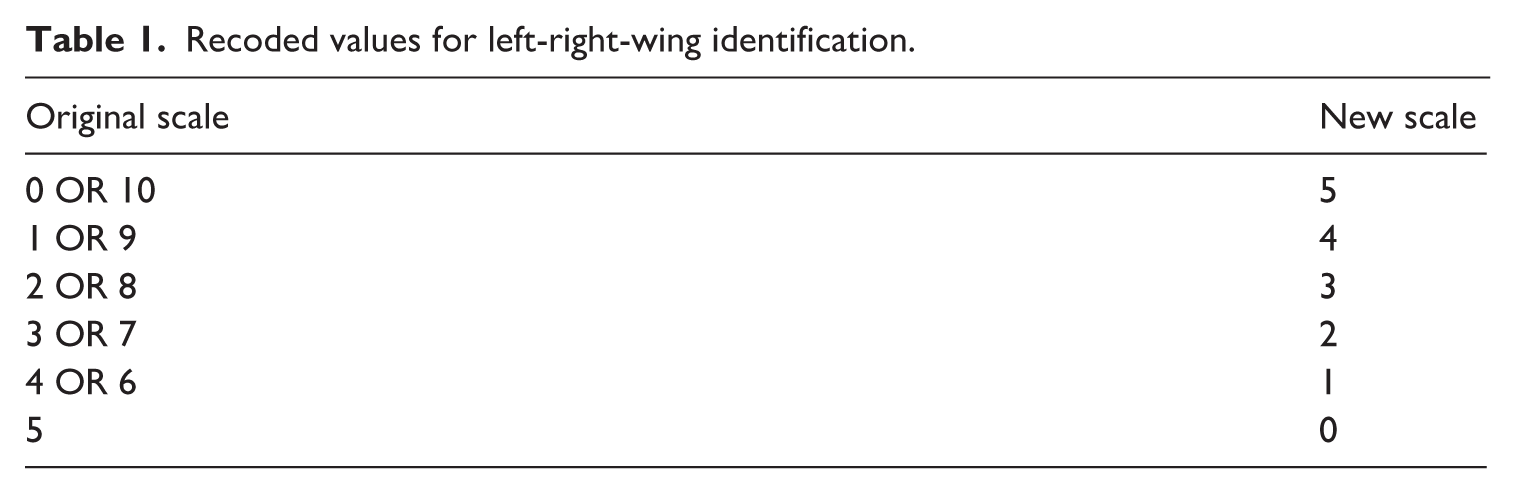
To make the two variables for ideological polarisation comparable despite their different scales, I normalise them using the min-max normalisation. Tests for internal consistency of the two variables show that they have low shared variance (Cronbach’s alpha = 0.414, correlation = 0.26), indicating that the two variables should be analysed separately rather than jointly. 5
I test the treatment effects on the polarisation measurements using linear regression with a binary treatment variable to indicate treatment status. To compare the effects of exposure to information in which the respondent’s preferred party benefits from interference, I use the treatment condition data on the promoted party and respondents’ self-reported partisan preferences. This allows me to create a treatment variable indicating whether the treatment partisanship ‘matched’ or ‘did not match’ the respondents’ partisanship. For example, if the respondent indicated that they preferred the Labour Party, and the treatment indicated that the interference promoted the Labour Party, this would constitute a ‘match’. In contrast, if the promoted party had been the Conservative Party, it would constitute a ‘no match’. To visualise the results, I present the treatments’ average marginal effects (AMEs) on the outcome variables. The AME represents the predicted average change in the outcome variable when moving between treatment conditions. The change is expressed in the units of the outcome variables, which, in this case, all range between 0 and 1. This provides an intuitive interpretation of the effect size from the regression, allowing me to grasp the treatments’ impact on the outcomes (Arel-Bundock et al., 2024). Robust standard errors are also used throughout the regressions due to some indications of heteroscedasticity. To account for the potential of type-I errors due to the multiple hypothesis testing, I report both p-values and adjusted p-values (q-values) for the stated hypotheses using the Benjamini–Hochberg correction method (Benjamini and Hochberg, 1995). The q-values are reported to enhance the study’s transparency and facilitate our understanding of the strength and reliability of the relationships.
Analysis and results
Perceived polarisation
First, I test whether exposure to information about digital election interference increases respondents’ level of perceived polarisation. Most respondents expressed perceptions of political polarisation, reporting that they think Britons are either ‘somewhat divided’ or ‘very divided’ in their political opinions. Most respondents also ‘somewhat agree’ with the statement that more Britons hold extreme political views these days. When we compare the binary treatment condition, which compares the status of having received any treatment at all, to the control group, it is hard to discern any differences (Figure 2, see also Supplemental Appendix B).
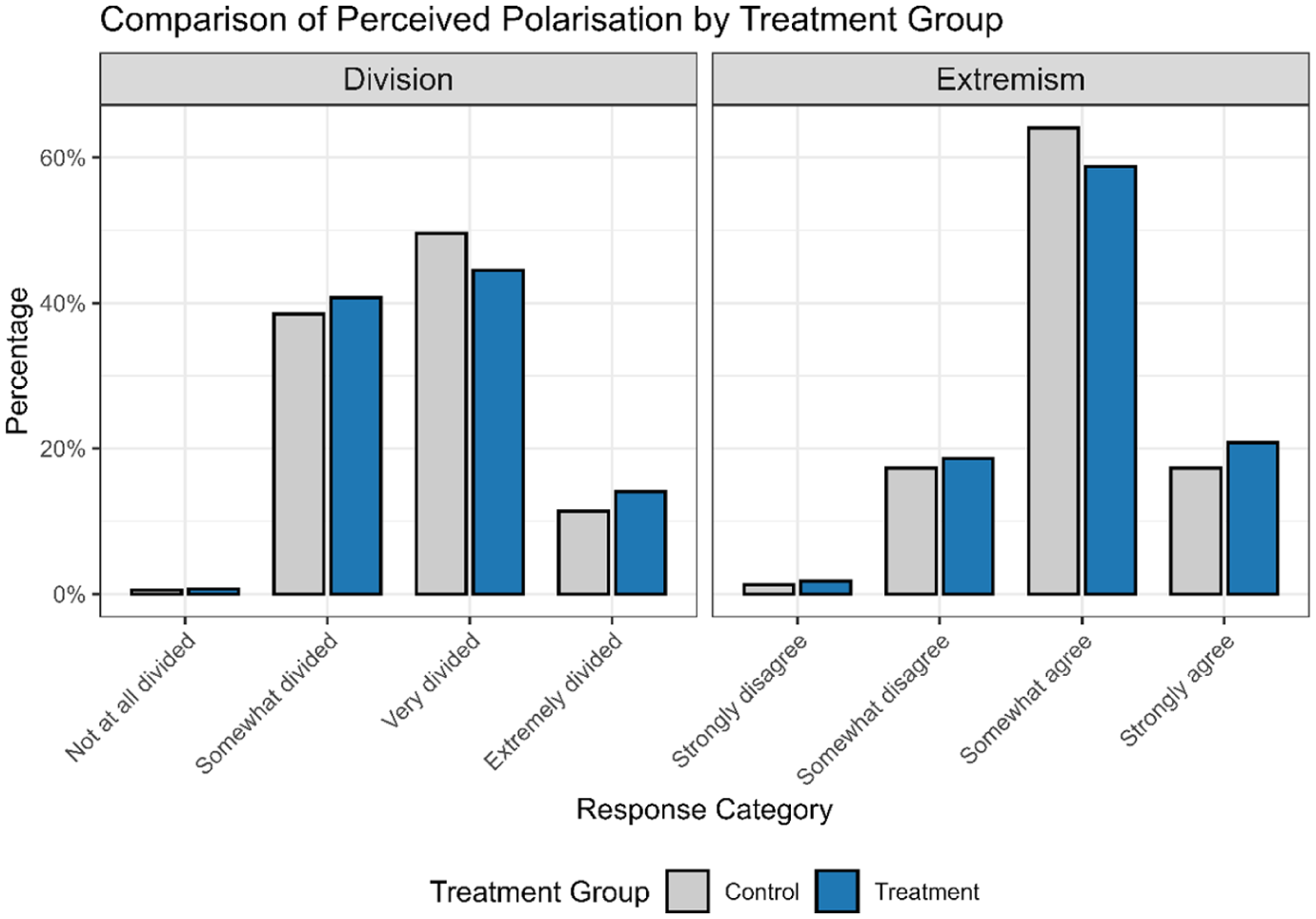
Distribution of responses comparing the control and treatment groups for perceived division and extremism.
To test the effect of receiving information about digital election interference on perceived polarisation, I regress the two measurements of perceived polarisation on the binary treatment variable. This will allow testing the effect of receiving information about digital election interference on perceived political division and extremity. The regression shows that the treatment alone has no significant effect on the measurements for perceived polarisation (Supplemental Appendix B). This means that exposure to information about digital election interference alone has no significant effect on either of the measurements for perceived polarisation (p = .97 and .73, respectively). 6 The AME plot confirms no measurable increase in probability, as we cannot see any statistical difference from zero (Figure 3). This means we cannot confirm that exposure to the treatment alone increases perceived polarisation. Thus, H1a and H1b are rejected.
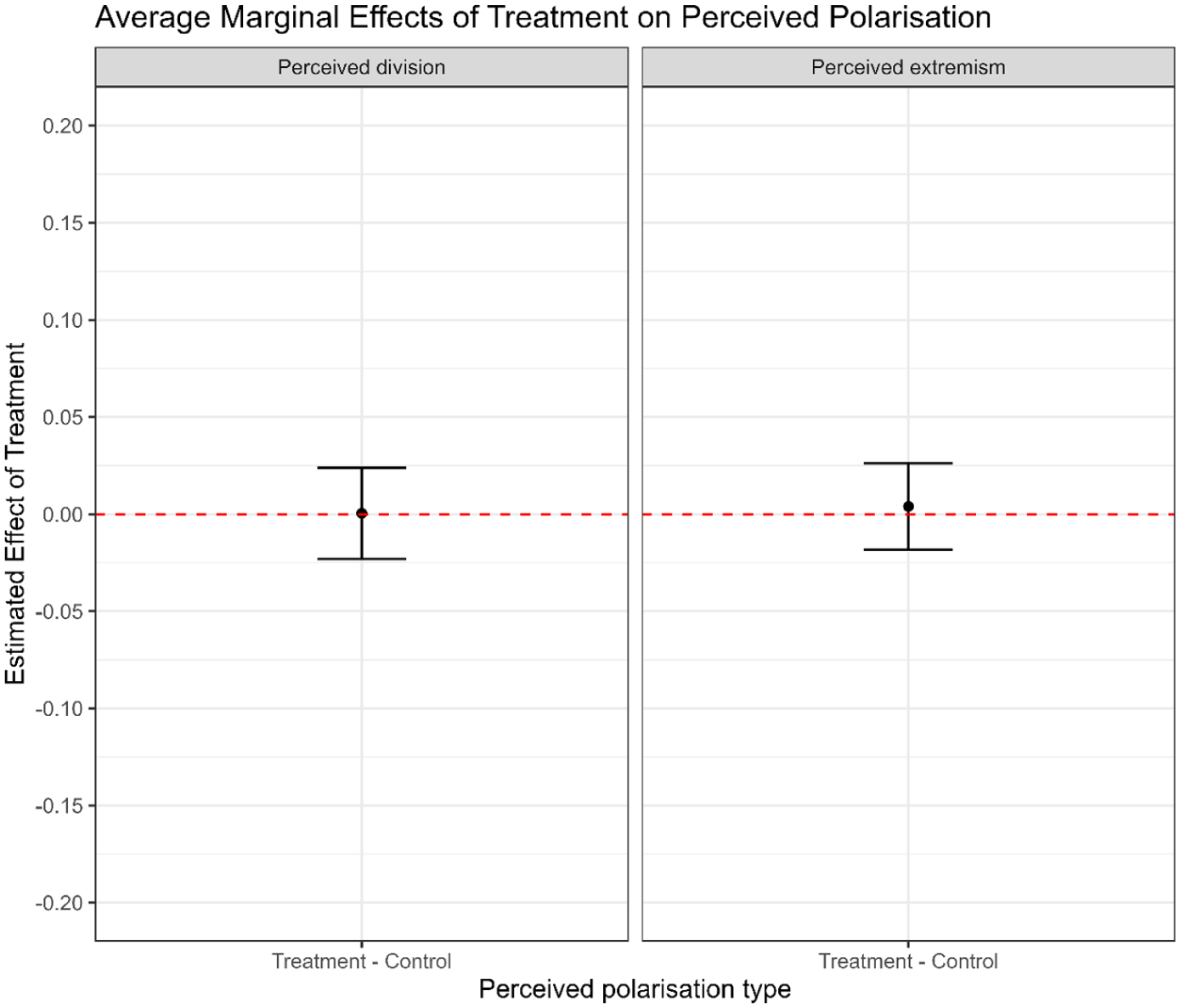
Average marginal effect of binary treatment condition on perceived division and extremism.
I also explore whether respondents react differently depending on whether their preferred party is promoted by the interference campaign (a partisan match) versus when the opposing party is promoted (no partisan match). I regress the outcomes on the partisan match variable, which indicates whether the respondent was exposed to treatment information that matched their partisan preferences (Supplemental Appendix B). The regression shows a weak but significant effect of the ‘no-match’ condition compared to the ‘match’ condition on perceived division (p = .01, q = .09) but not for perceived extremism. This means that respondents whose partisanship did not match the partisanship promoted in the treatment express slightly higher levels (on average 0.026 units on a 0 to 1 scale) of perceived societal division than those exposed to information about their party. The AME plot reaffirms this pattern (Figure 4). This indicates that individual partisan alignment matters for how information about digital election interference is interpreted and that it has the potential to shape perceptions of societal division in particular while not necessarily being coupled with increased perceived political extremism. 7
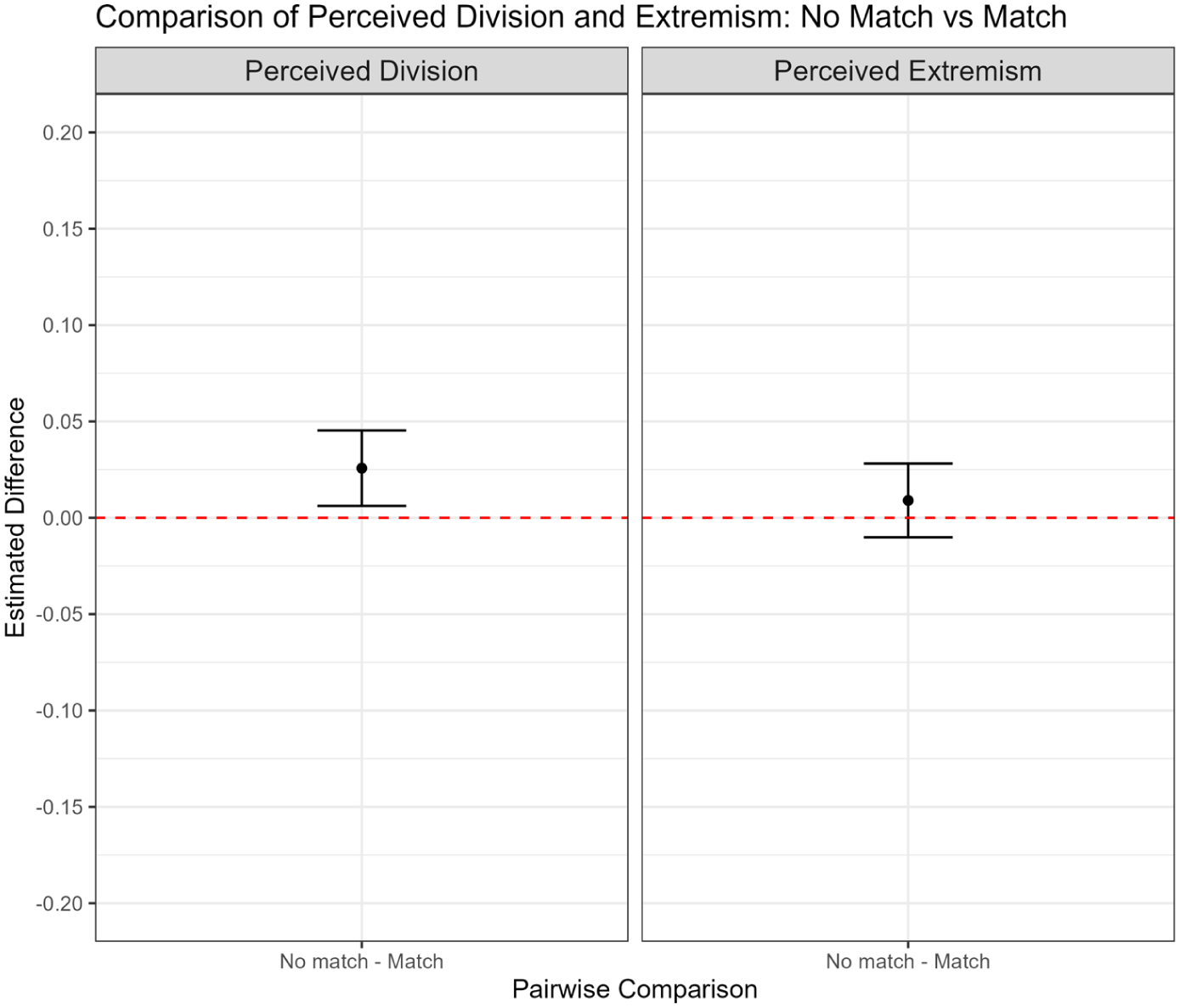
Pairwise comparisons between partisan ‘match’ and ‘no-match’ treatment on perceived division and extremism.
Affective polarisation
Next, I test whether exposure to information about digital election interference increases respondents’ affective polarisation level. Most respondents have answers that hover around zero, indicating little difference in their expressed ‘warmth’ towards individuals from their preferred or opposite party or ideological position (Figure 5) – an indication of low affective polarisation. There are more observations to the right of 0 than to the left, meaning that the respondent rated a higher value on the feeling thermometer for the party/ideological position on their preferred side of the political spectrum compared to the opposite side. Higher values correspond to a more significant ‘gap’ between their ‘in-party/ideological position’ compared to the ‘out-party/ideological position’. It is hard to see any observable difference between the two treatment conditions, and initial comparisons even reveal a slight movement in the direction of less affective polarisation (Supplemental Appendix C).
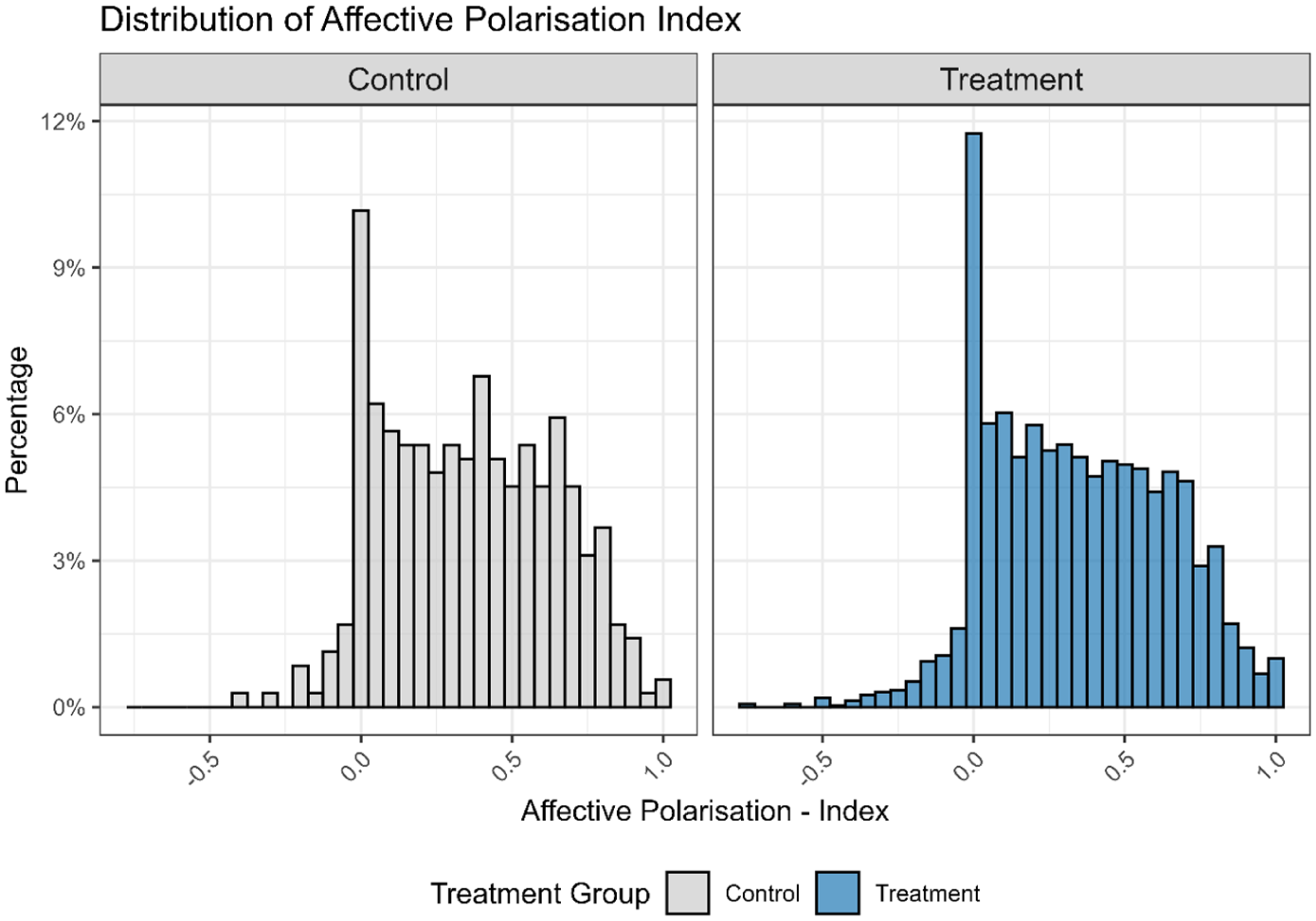
Distribution of responses of affective polarisation between the treatment and control groups.
First, I regress the affective polarisation index on the binary treatment. This regression reveals a small negative effect of the treatment on affective polarisation, which is not statistically significant (p = .31, q = .62). This means the treatment alone has no statistically significant effect on the outcome (Figure 6). Consequently, H2a is rejected.
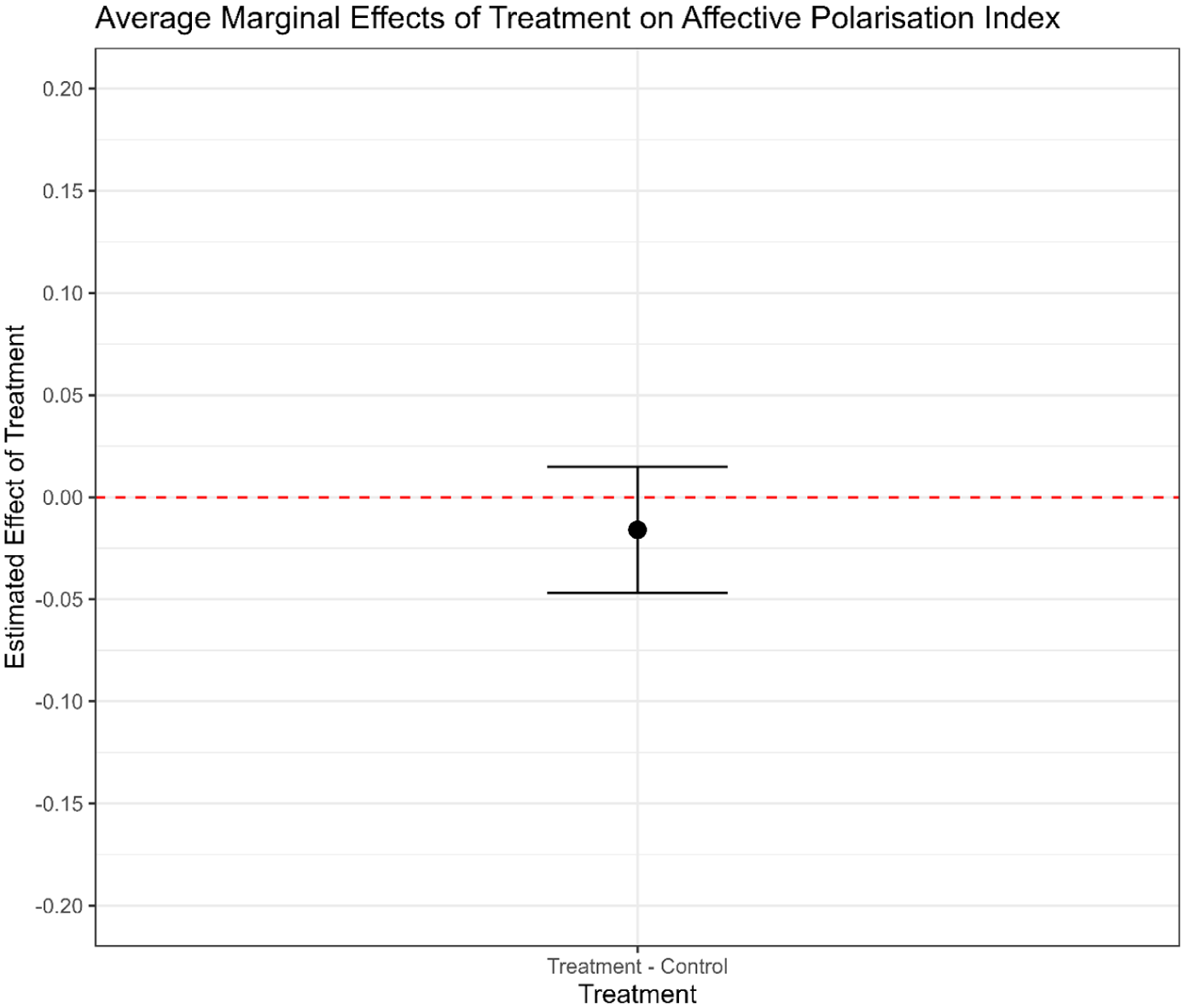
Average marginal effect of binary treatment condition on affective polarisation.
Next, I explore whether there are differences stemming from whether or not the partisanship expressed in the treatment matches the respondents’ political preferences. I regress the outcome on the treatment variable, which indicates whether respondents’ partisanship matched treatment partisanship. A weak positive effect (0.021 unit increase on a 0 to 1 scale) for the ‘no-match’ condition (p = .09, q = .26) indicates that respondents exposed to information concerning their political opponents report slightly higher levels of affective polarisation (Figure 7). To explore this further, I examine the two polarisation components separately to see whether the two components that constitute the index might have effects going in opposite directions. I find that affective polarisation against ideological opponents (people who identify as ‘left/right wing’ compared to the respondents’ position) drives the main effects on affective polarisation, with clear differences between the ‘match’ and ‘no-match’ conditions. Those exposed to their political opponents benefitting from the interference campaign reported higher levels of affective polarisation against ideological opponents compared to those seeing their own party as benefitting (on average, 0.026 units increase on a 0 to 1 scale, p = .016, q = .094). The same pattern is not noticeable for the measurement of affective polarisation against people supporting the ‘opposite party’ (Figure 8). Furthermore, comparing all treatment conditions suggests that it might be those seeing their own party benefitting that are systematically reporting lower levels of affective polarisation (Supplemental Appendix C.3.). This gives partial support for H2b. 8
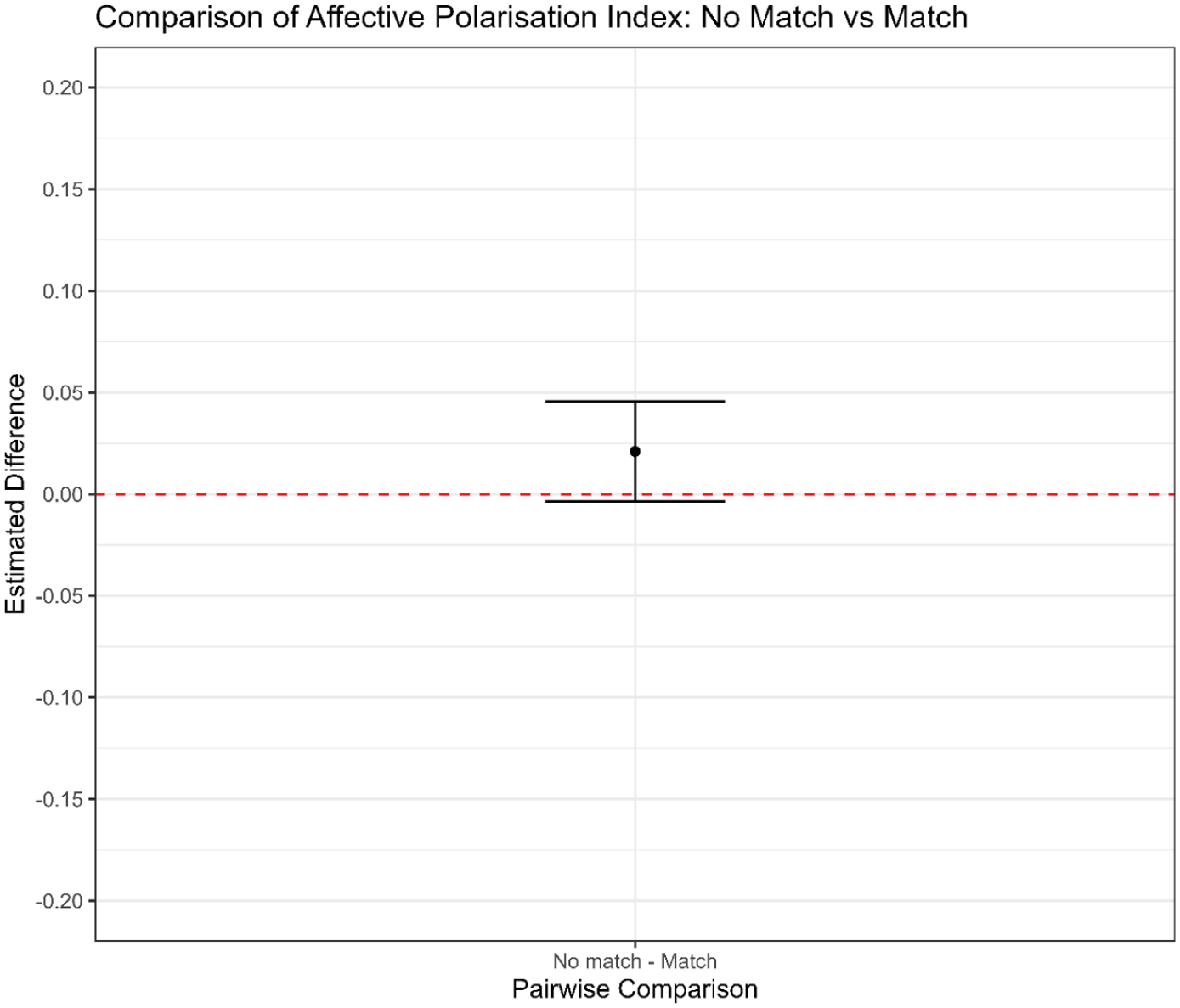
Pairwise comparisons between partisan ‘match’ and ‘no-match’ treatment on affective polarisation.
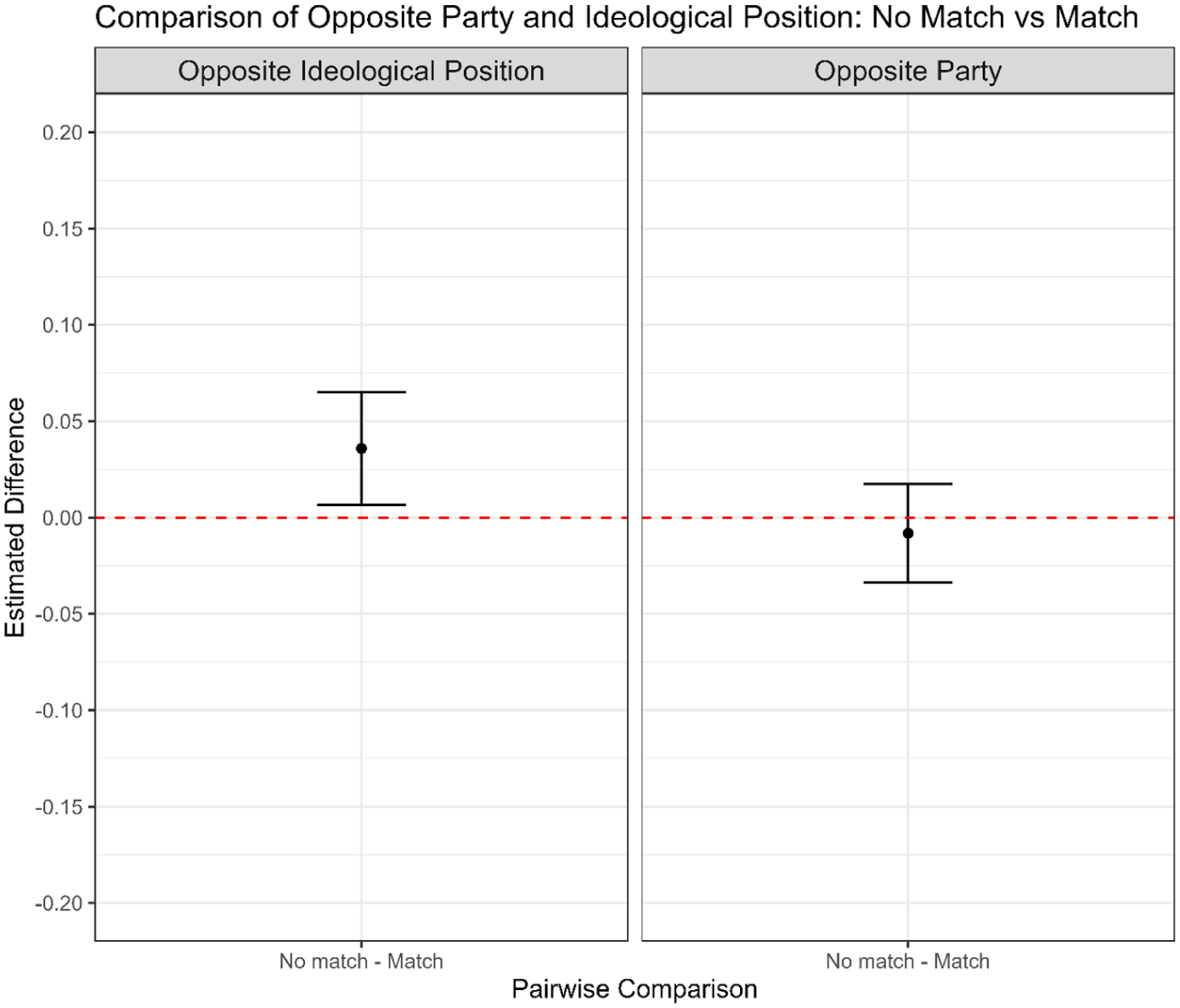
Pairwise comparisons between partisan ‘match’ and ‘no-match’ treatment on affective polarisation against individuals with opposite ideological identities (left) and partisan identities (right).
Ideological polarisation
Finally, I test whether exposure to information about digital election interference affects ideological polarisation. Respondents seem to express stronger support for their preferred party than for the degree to which they see themselves as belonging firmly to some ideological position along the left–right axis. There are minimal differences in the shape of the distributions between the control and treatment conditions (Figure 9). A comparison of the means between each measurement also suggests very few observable differences between the treatment and the control group (Supplemental Appendix D). To formally test the hypotheses, I regress the two outcome variables on the binary treatment variable (Supplemental Appendix D). The regression reveals no significant differences between the treatment and the control group for either measurement (p = .8619, q = .96 and p = .87, q = .96). The same pattern can be seen when visualising the AME of the treatment, with both measurements hovering around zero (Figure 10). Thus, H3a is rejected.
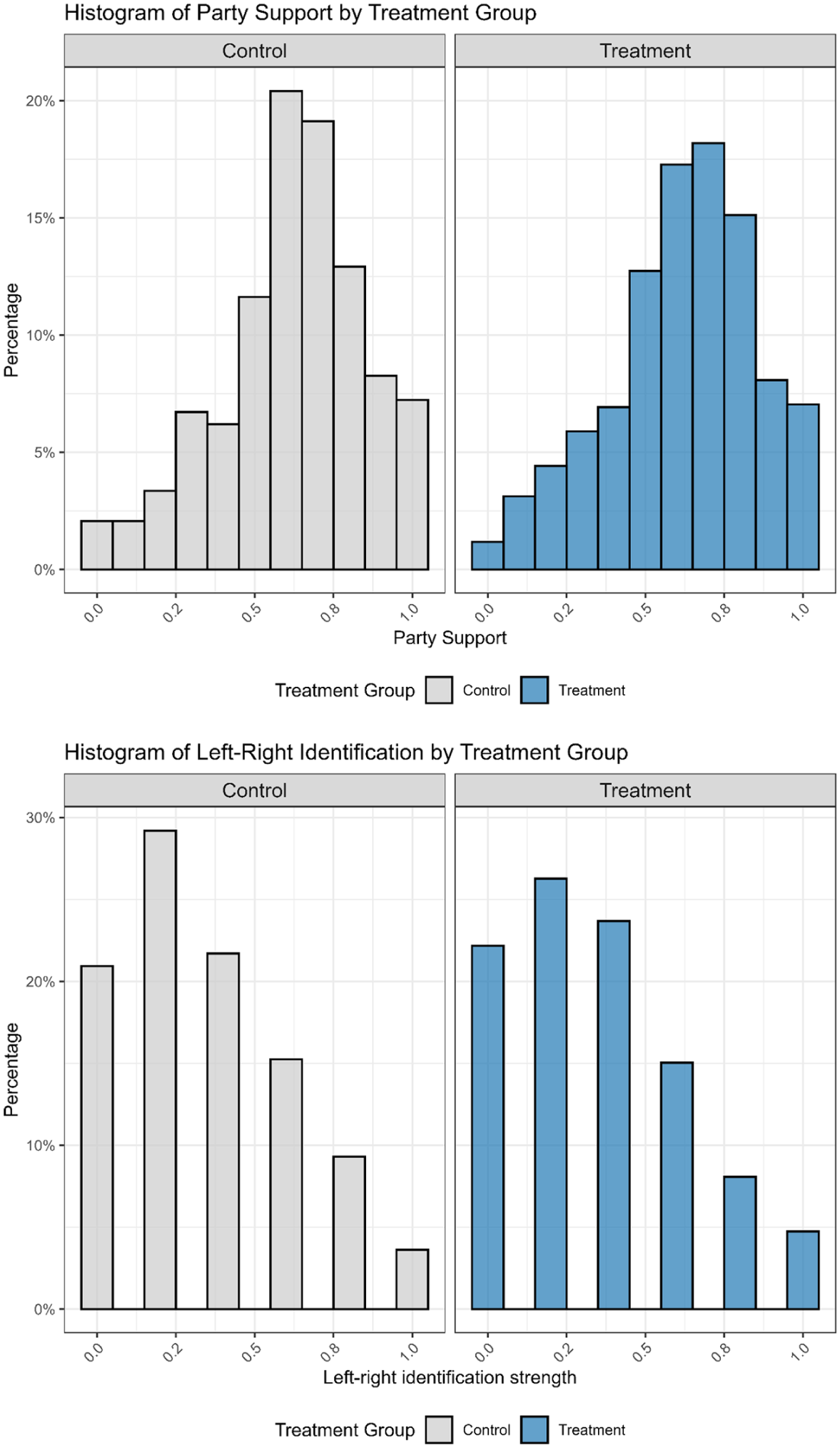
Distribution of responses of ideological polarisation, measured as strength of party support and left- and right-wing identification between the treatment and control groups.
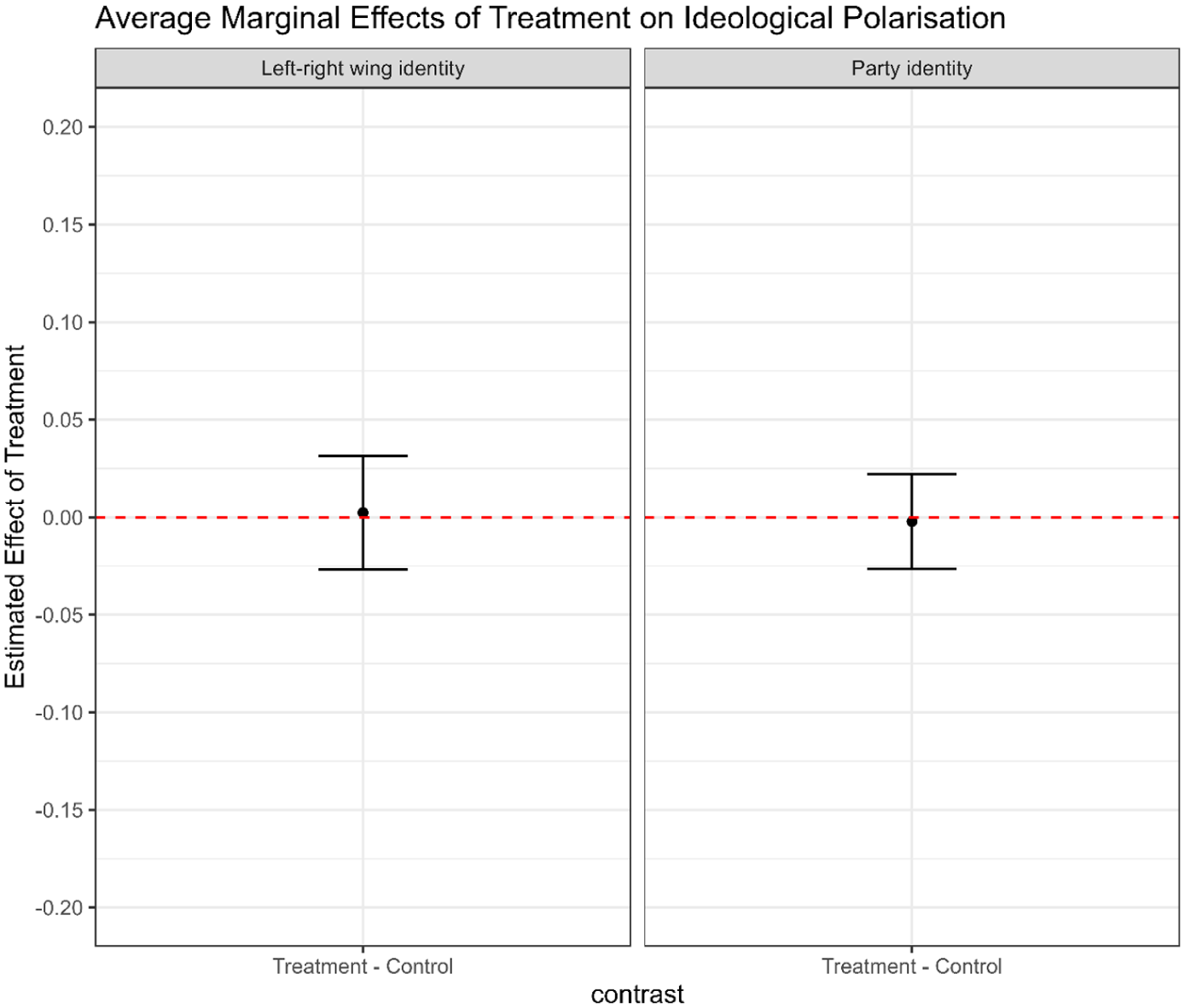
Average marginal effect of binary treatment condition on ideological polarisation measures.
I also regress the two outcomes of ideological polarisation on the treatment for partisan ‘match’, and, in contrast to the other two polarisation dimensions, there are no indications of any measurable difference between the ‘match’ and ‘no-match’ conditions (p = .1392, q = .33 and p = .89, q = .96). This is also visually clear across the pairwise comparisons as the measurements consistently hover around zero (Figure 11). Thus, H3b is also rejected.
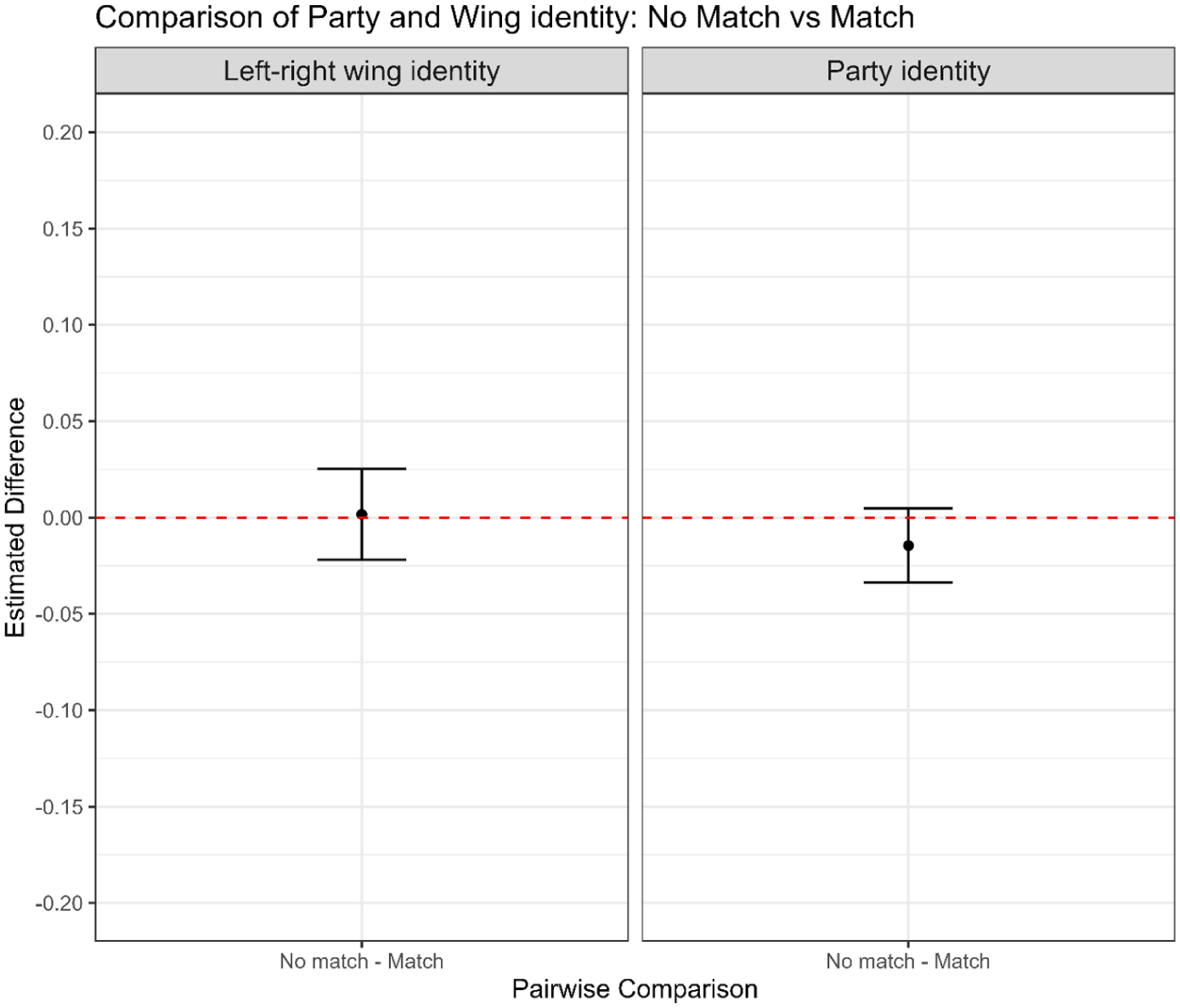
Pairwise comparisons between the treatment of partisan ‘match’ and ‘no match’ on ideological polarisation measures.
Discussion and conclusion
This study offers insights into whether and how media narratives about digital election interference could trigger political polarisation and in which dimensions polarisation might occur. There has been reason to expect that media narratives about interference campaigns might induce the same discord and division that such campaigns seek to induce in the first place (Bradshaw and Howard, 2019; Shahbaz and Funk, 2019). However, this study shows that exposure to narratives about digital election interference alone does not significantly increase polarisation in the three dimensions explored: perceived, affective and ideological polarisation. This suggests that such narratives may not as easily influence the public as some might have feared, which could ease at least some concerns. It is possible that the lack of significant effects could suggest some degree of resilience within democratic societies where individuals are not easily swayed by momentary information inputs in their perceptions of the state of their political environments and fellow citizens.
Nevertheless, some heterogeneous patterns might warrant caution and further exploration. These patterns suggest potential asymmetrical polarisation between those who perceive themselves as benefitting from the campaign and those who do not. Such exposure could polarise opinions, particularly within the dimensions of perceived and affective polarisation.
The study reveals that when respondents perceived their political opponents as benefitting, perceived societal division increased more than when their preferred party benefitted. However, no evidence was found that perceived political extremism would be impacted. One way to interpret these discrepancies is that respondents might have interpreted digital election interference supporting the opposition party as evidence of interference to amplify societal differences and create conflict. This could induce a heightened sense of division as it suggests that online political conversation is being pushed in a polarised direction through artificial means, in the direction of increasing societal division. However, as the treatment focused on two mainstream parties and did not portray them or their supporters as holding extreme views, but instead highlighting the manipulative tactics involved, respondents might not perceive the political environment as more extreme, only as more divided.
The perception that political opponents benefitted was also associated with higher levels of affective polarisation against ideological opponents compared to when the respondents’ preferred party benefitted. Further exploration shows that it might be those seeing their preferred party as benefitting who report lower levels of affective polarisation compared to all other treatment conditions (Supplemental Appendix C.3). This could indicate that individuals undergo some internal justification process when they see their preferred party as involved in questionable political activities. This is in line with previous research showing individuals being willing to trade in some democratic principles for partisan interests, especially in politically polarised environments (Svolik, 2019).
The study only finds evidence that the treatment affects affective polarisation towards ideological opponents. No measurable effects were connected to affective polarisation against partisan opponents. One way to interpret these findings relates to the discrepancies between the party identification in the collected partisan data and the pre-screened data. If party identities become more fluid, respondents might no longer feel as strongly tied to one political party and may be more open to switching between parties. This could mean that party animosity becomes less pronounced as party affiliations are less consistent. There were similar indications of this following the 2024 British General Election, where many formerly Conservative voters abandoned the party for other alternatives (McDonnell, 2024). Left- and right-wing ideological identities might be more stable and reflect deeper values or belief systems. Therefore, these ideological categories might trigger stronger emotional reactions, tapping into more deeply rooted beliefs about how society is constructed and carrying stronger prejudices. These findings highlight that the measured effects are not universal but dependent on individual and contextual factors, such as partisan alignment.
Some aspects should be considered when interpreting these results. The electoral success of the Conservatives in the 2019 election presents both opportunities and challenges for this study. While a closer electoral race could have made respondents more reflective about the potentially decisive impact of the interference, the 2019 election provides a relatively hard test of the hypotheses, making the significant findings all the more noteworthy. However, given these factors, caution is warranted when interpreting some of the insignificant results, as the measurements used might not have been sensitive enough to capture some of the impact of digital election interference narratives on political polarisation with a one-time treatment. Real-life exposure would likely be more iterative, often leading to stronger and more persistent effects (Lecheler et al., 2015), which means that a one-shot treatment might underestimate effect sizes. The delay between the 2019 election and the data collection might also have challenged participants’ ability to recall or imagine concerns about past digital election interference, potentially leading to an underestimation. Significant and ongoing dynamic shifts in the voter base could also have dampened the observed effect sizes, as previous partisan alliances might have been weakened. In addition, it is worth noting that capturing complex individual attitudes through survey items and feeling thermometers might not capture all the cognitive, emotional, and behavioural dimensions of polarisation, including the distinction between policy-based and identity-based dislike, accounting for contextual factors or implicit biases (Carlin and Love, 2024; Torcal and Harteveld, 2024).
Similar caution is warranted when reflecting on the specificities of the UK case. It is not unlikely that the processes and dynamics studied here could also be identified elsewhere. As digital election interference (and media coverage of it) becomes increasingly common, one can expect similar dynamics to extend beyond the British context. The finding that the left-right ideological position might matter more than party identification further supports this argument, as it suggests that these effects might not be as tightly bound to a party system with two dominant parties as in the United Kingdom. In multi-party systems, where ideological divides still dominate political discourse, the dynamics of political polarisation observed here might still be prevalent. Nevertheless, there are reasons to reflect on the extent of these generalisations. For instance, the finding that the two components of perceived polarisation did not correlate to the expected degree raises important questions about how to accurately capture the phenomenon of perceived polarisation in the British context.
Finally, future research should address the impact of long-term exposure effects. This should include considering the volume and nature of repeated exposure to digital interference narratives with attention to the magnitude of the effects and the extent to which they may contribute to cumulative polarisation dynamics that may emerge over time. The cumulative effects are worth particular attention due to the harmful effects of severe and pernicious polarisation (McCoy and Somer, 2019). Likewise, exploring how the effects of reporting on digital election interference vary across different contexts, including comparing various political or media systems and various electoral contexts such as variations in win margins and the partisanship of the winning party, is also a promising avenue for future research.
Supplemental Material
sj-docx-1-nms-10.1177_14614448251410509 – Supplemental material for Divide and conquer? The impact of media narratives on digital election interference on political and perceived polarisation
Supplemental material, sj-docx-1-nms-10.1177_14614448251410509 for Divide and conquer? The impact of media narratives on digital election interference on political and perceived polarisation by Emelie Karlsson in New Media & Society
Footnotes
Acknowledgements
The author thanks participants at the 10th Conference of the International Journal of Press/Politics (IJPP), the Swedish Interdisciplinary Research School in Computational Social Science (SIRCSS), Oskar Hultin Bäckersten, Alexandra Segerberg, Pär Zetterberg, Carl Öhman, Maria Nordbrandt Bergström, Katrin Uba and Joakim Kreutz for constructive comments on previous versions of the paper. This work was supported by the Wallenberg AI, Autonomour Systems and Software Program – Humanity and Society (WASP-HS). The author further thanks Stiftelsen Lars Hiertas Minne and Karl Staafs fond för frisinnade ändamål for funding the data collection of this study.
Author contributions
Not applicable as this is solo-authored.
Consent for publication
All participants provided written informed consent confirming that they agreed that the collected material could be used as empirical data for research purposes. They also consented to the use of the data in subsequent scientific publications without the need for further consultation. This process was completed before respondents began the survey.
Consent to participate
Participants voluntarily chose to take part in the study. Before participation, all respondents provided informed consent to engage in studies involving potential deception. Before beginning the survey, they gave written consent to participate in this study, agreeing to have their provided information collected, stored and processed in a pseudonymised format.
Data availability
Anonymised data that supports the findings of this study and the script to reproduce them are available from the corresponding author upon reasonable request.
Ethical considerations
This study has been approved by the Swedish Ethical Review Authority (approval no. 2024-00547-01) 2024-03-05.
Funding
The author disclosed receipt of the following financial support for the research, authorship and/or publication of this article: This work was supported by Stiftelsen Lars Hiertas Minne [application no FO2023-0570]; Karl Staaffs fond för frisinnade ändamål [date of decision 2023-11-15]. This work was also supported by the Wallenberg AI, Autonomous Systems and Software Program – Humanity and Society (WASP-HS).

Supplemental material
Supplemental material for this article is available online.
Note: In the preregistration the concept “coordinated inauthentic behaviour” was used instead of “digital election interference using coordinated fake accounts”. This change is purely semantic to make it clearer to the reader what the empirical phenomenon in question is. The underlying theoretical concept remains consistent.
Notes
Author biography
References
Supplementary Material
Please find the following supplemental material available below.
For Open Access articles published under a Creative Commons License, all supplemental material carries the same license as the article it is associated with.
For non-Open Access articles published, all supplemental material carries a non-exclusive license, and permission requests for re-use of supplemental material or any part of supplemental material shall be sent directly to the copyright owner as specified in the copyright notice associated with the article.
