






Abstract
This study examines how former teenage hostages use TikTok to process and present their captivity and its aftermath. Through a qualitative thematic analysis of 67 TikTok videos created by adolescent survivors of the October 7 Hamas attack on Israel, the study explores how platform-specific affordances—viral trends, POV storytelling, dark humor, and digital memorialization—shape trauma narratives. Findings reveal that TikTok enables young survivors to renegotiate their post-captivity identities through participatory storytelling, humor as a coping mechanism, and the integration of personal grief into collective digital memory. The study situates these practices within theories of trauma representation, adolescent identity development, and Goffman’s dramaturgical model, illustrating how TikTok serves as both a space for self-expression and a site of performative meaning-making. By bridging digital media studies with trauma psychology, this research highlights the evolving role of social media in shaping adolescent resilience and identity reconstruction.
Introduction
Social media platforms have profoundly reshaped how individuals document and process both personal and collective trauma. While Twitter, Facebook, and Instagram have long served as sites for real-time conflict reporting, digital activism, and public grieving, TikTok has emerged as a distinctive space for trauma narration—particularly among younger users (Stahl and Literat, 2023). Unlike earlier platforms where dissemination depends on social networks, TikTok is defined by algorithmic discovery that centers content rather than interpersonal ties (Gerbaudo, 2024). Its For You Page exemplifies an “item-centric” model that organizes publics around shared aesthetics or affective tones rather than social relationships, marking a departure from traditional “networked publics” (Abidin, 2021b). Through short-form videos, viral sounds, POV formats, and trend-based mimicry, creators often “play to the algorithm,” adapting their narratives to platform-native conventions. These affordances make TikTok particularly conducive to stylized expressions of adversity that circulate through trends and memetic imitation within algorithmically clustered publics (Bhandari and Bimo, 2022). While past research has examined TikTok’s role in mental health discourse (Pruccoli et al., 2022), identity performance (Stahl and Literat, 2023), and political engagement (Literat and Kligler-Vilenchik, 2019), less attention has been given to its function in processing war-related trauma and captivity experiences.
On 7 October 2023, the Palestinian terror organization Hamas launched a large-scale attack on Israeli communities, killing over 1000 civilians and abducting 251 hostages, including children and teenagers. The attack marked a major escalation in the ongoing conflict between Israel and Hamas and was followed by an extended Israeli military campaign in Gaza, during which tens of thousands of people were killed and widespread destruction occurred. 1 In late November to early December 2023, a negotiated hostage exchange led to the release of 85 hostages, including several adolescents who returned to Israel after weeks in captivity. This study examines how former teenage hostages utilize TikTok to process and present their captivity and its aftermath. While not the focus of this study, reports suggest that both the Israeli government and Hamas have supported unofficial digital advocacy, including efforts to amplify content by independent creators. These include Israeli initiatives that mobilize civilian influencers, 2 and Hamas-linked strategies that promote emotionally charged portrayals of suffering, 3 contributing to a highly contested digital media environment.
Research on digital trauma narratives highlights how social media fosters community support and reshapes memory practices. Yet, little attention has been given to how adolescents specifically use these platforms to construct their post-trauma identities. Adolescents process adversity through peer-driven interaction, humor, and creative engagement (Uhls et al., 2017), making TikTok an especially relevant space for exploring their coping mechanisms. This study builds on existing literature in digital trauma research and adolescent psychology by examining how teenage survivors reconstruct their experiences in ways that reflect both resilience and the pressures of social media visibility (Nesi et al., 2018). By analyzing the themes and patterns in their TikTok content, this study seeks to answer the following question: How do former teenage hostages use TikTok to process and present their captivity and its aftermath?
Literature review
Media representation of trauma and conflict
Meek (2016) argues that cultural trauma is shaped and sustained by visual media that configure how societies feel, remember, and identify with suffering. Traditional media often framed war through institutional lenses, emphasizing heroic or humanitarian narratives (Allen and Seaton, 1999). Visual media, particularly photography, has served as a central conduit for such affective and ideological work. Azoulay’s (2008) “civil contract of photography” positions trauma images as ethical encounters but also highlights how such depictions can privilege emotion over context and reduce lived experience to consumable tropes (Stahl and Literat, 2023; Ziberi et al., 2023).
Algorithmic systems amplify emotionally charged content to optimize engagement. Hobbs (2020) calls this “algorithmic propaganda,” while Rieder et al. (2018) and Thorson et al. (2021) show that platforms like YouTube and Facebook promote spectacle and emotional resonance, reinforcing ideological alignment and shaping affective economies.
Beyond aesthetic and affective amplification, TikTok’s political architecture introduces further complications in the circulation of trauma narratives. The platform’s algorithmic moderation practices, designed to manage scale and reduce harm, have often resulted in arbitrary censorship and “shadow-banning”—particularly of marginalized users. Steen et al. (2023) demonstrate how creators developed coded language (“algospeak”) to navigate these opaque constraints, revealing a structural tension between visibility and safety. These tendencies are particularly consequential in the context of information warfare. Bösch and Divon (2024) analyze how during the war in Ukraine, TikTok’s remixable features, particularly its audio layering tools, were instrumentalized for computational propaganda, enabling the viral spread of misleading or state-curated content. These findings highlight that TikTok is not merely a site of self-expression or storytelling; it is a deeply politicized media infrastructure that intervenes in the visibility, framing, and affective resonance of conflict.
In recent years, the rise of participatory and algorithmic media platforms has further transformed how trauma is expressed and encountered. Tambuscio and Tschiggerl (2023) show how trauma is now expressed through ephemeral, multimodal formats—memes, trends, hashtags—that merge sincerity with performance.
Recent studies on TikTok emphasize the platform’s role in fostering trauma-related content, with users leveraging TikTok’s features to share experiences, build community support, and reduce mental health stigma (Divon and Eriksson Krutrök, 2024; Pruccoli et al., 2022). Unlike traditional platforms that primarily serve as archives of personal experiences, TikTok enables trauma expression through participatory storytelling, where users actively shape and reinterpret their narratives in ways that resonate with platform-wide trends. For adolescents, these affordances are particularly significant, as social media plays a crucial role in identity formation and emotional processing (Stahl and Literat, 2023; Uhls et al., 2017).
Scholars have examined how TikTok creators, especially youth and users navigating social precarity, strategically manage visibility through emotional expression and platform-native aesthetics. Abidin (2021a) describes how young users participate in TikTok’s affective cultures by blending authenticity with performative play, additionally highlights the emotional labor involved in sustaining visibility within attention economies. Jaramillo-Dent et al. (2022) show how users develop tactics to balance self-expression with algorithmic legibility, using stylistic adaptation and vernacular creativity to maintain presence without compromising safety. Taken together, these works highlight how affective expression and the pursuit of visibility inform evolving practices of identity construction on algorithmic platforms.
The rise of user-generated content has reshaped conflict reporting, with platforms enabling real-time, personal documentation that challenges traditional journalism. This shift calls for new theoretical tools to understand how trauma and media co-produce meaning (Pinchevski and Richardson, 2022). The digital landscape has also amplified the role of visual media in humanizing trauma and conflict. Ziberi et al. (2023) highlight the role of photojournalistic images in constructing global narratives about refugees, noting how visual signifiers elicit emotional responses and shape public perceptions. Tambuscio and Tschiggerl (2023) argue that social media platforms not only facilitate personal storytelling but also contribute to the construction of digital collective memory, allowing the users to create public acts of remembrance and meaning-making.
This shift raises questions about authenticity and appropriation in trauma narratives. While digital platforms offer tools for self-expression, they also embed these narratives within economies of attention, where trauma can become aestheticized, gamified, or strategically performed for visibility (Pinchevski and Richardson, 2022). The media’s role in portraying trauma presents both opportunities and ethical complexities. Meek (2016) critiques the heroization often embedded in cultural trauma narratives, which can distort the reality of modern mass suffering.
Across different conflict zones, including Ukraine and Gaza, TikTok has been increasingly utilized as a site for visualizing trauma and asserting narrative control. In the Ukrainian context, women creators have used platform-native aesthetics to express resistance and national solidarity, through visually coded performances articulating grief and civic identity (Kalnes and Bjørge, 2025). Similarly, in Gaza, creators and activists document lived realities of destruction and loss, employing symbolic imagery and affective intensity to mobilize empathy and global attention (Yarchi and Boxman-Shabtai, 2023). These practices parallel the Israeli teenage returnees’ efforts to craft visual languages of trauma and resilience that are both personally meaningful and socially legible.
Goffman’s dramaturgical model in the context of war and trauma
Erving Goffman’s dramaturgical model conceptualizes identity performance through “front stage” and “back stage” behaviors, especially relevant in digital contexts where individuals curate their self-presentation amid tensions between authenticity and visibility during trauma and war (Goffman, 1959).
This dynamic echoes Meyrowitz’s (1985) critique of Goffman’s spatial distinctions, suggesting that electronic media dissolve the boundaries between front and back stage. Meyrowitz argued that electronic media collapse the separation between audiences and performers, exposing backstage behaviors to public view and creating hybrid social spaces where private performances acquire public visibility. In the age of algorithmic visibility, this boundary collapse is accompanied by what Maly (2025) terms digital face-work, where users must manage their self-presentation in relation to the platform’s sociotechnical structures. Platforms not only host performances but also actively co-shape them through algorithmic directives, affordances, and attention economies, transforming Goffman’s interaction order into a digital one where authenticity, intimacy, and visibility are strategically negotiated. Among adolescents, whose identity develops within public digital environments, the pressure to appear both authentic and socially desirable shapes how they frame trauma (Nesi and Prinstein, 2015).
During times of war and political upheaval, self-presentation assumes critical significance as individuals manage narratives of survival and resistance. During conflicts such as in Syria, displaced populations used digital media to sustain collective identity and morale (Kozman and Melki, 2018). These performances exemplify Goffman’s “impression management,” intensified among adolescents by digital peer pressures and the pursuit of validation (Bullingham and Vasconcelos, 2013; Uhls et al., 2017).
Goffman’s dramaturgical lens also sheds light on the role of collective performances during traumatic events. During the Russian invasion of Ukraine, social media facilitated the reimagination of war narratives, enabling individuals to highlight material consequences while minimizing personal suffering (Primig et al., 2023). This collective storytelling reflects Goffman’s idea of mutual reinforcement among performers, as users engage in identity co-construction while adapting to platform-specific constraints (Papacharissi, 2012). Digital platforms demand simultaneous management of multiple personas, “multiple temporal selves” (Kerrigan and Hart, 2016), while algorithmic structures constrain self-presentation, privileging content aligned with platform trends (Kaplan, 2024).
TikTok affordances, humor, and the mediation of trauma
Young people increasingly turn to social media as a space to share trauma narratives, often leveraging humor, trends, and irony as tools to navigate their emotional struggles. Adolescents, in particular, use humor as a means of coping with distressing experiences, as humor enables emotional regulation and provides a sense of control over difficult situations (Ruch and Hofmann, 2017). As adolescents navigate their captivity and its aftermath, their engagement with TikTok reflects broader patterns of identity exploration and renegotiation in digital spaces, aligning with research on how teenagers use social media as a site for self-presentation and meaning-making (Boyd, 2014).
Several studies have emphasized humor and meme-based storytelling as central to coping with war-related trauma on TikTok. In Ukraine, creators frequently use POV formats and audio memes to reflect the absurdity and irony of everyday life under bombardment, serving both as subtle acts of resistance and mechanisms for alleviating despair (Divon and Eriksson Krutrök, 2024; Marino, 2024). This memetic layering not only mitigates despair but also enables subtle resistance through culturally specific codes. The Israeli teenage returnees exhibit comparable tactics, particularly in their ironic rankings of traumatic events or use of trending audio to reframe captivity.
Humor and whimsy are particularly effective for enabling indirect communication of trauma, as they provide emotional distance and a degree of control over how distressing experiences are shared. Memes, for instance, serve as a vehicle for cultural commentary and personal expression, allowing young people to process serious topics such as sociopolitical conflict or pandemics through irony and satire (Literat and Kligler-Vilenchik, 2019). In politically repressive contexts, humor takes on additional significance as a form of resistance, offering young users a subtle means to critique norms and raise awareness about systemic issues without openly confronting authority (Elsayed, 2016). This suggests that TikTok serves not just as a platform for trauma disclosure but as a space where humor helps mitigate distress while reinforcing social bonds.
Despite these benefits, the use of humor and trends in digital trauma narratives is not without challenges. While humor can serve as a protective mechanism, helping young users navigate stigmatized issues like mental health, it may also obscure the seriousness of the underlying trauma. Platforms like Instagram and TikTok encourage whimsical, trend-aligned content that amplifies engagement but can trivialize distress (Bhandari and Bimo, 2022). These risks underscore the importance of creating supportive digital environments that strike a balance between enabling creativity and fostering meaningful discussions about trauma.
From anonymous storytelling to the use of subversive humor in politically charged videos, adolescents blend creativity and resilience to articulate their pain (Khvorostianov, 2025). These practices illuminate the complexities of modern trauma-sharing, where platforms shape both the tone and reach of narratives, offering unique opportunities for community-building and emotional buffering while requiring careful navigation to avoid potential pitfalls (Primig et al., 2023).
The technical and cultural affordances of platforms like TikTok and Instagram shape the ways trauma narratives are shared, often transforming serious topics into creative and emotionally resonant content. Features such as short videos, trends, memes, music overlays, and filters encourage users to present their experiences in informal and often whimsical ways. TikTok, in particular, facilitates this through tools like “Use this Sound” and “Duet,” which enable users to remix and reinterpret their stories while participating in collective trends (Matamoros-Fernandez, 2023; Zulli and Zulli, 2022). Moreover, TikTok’s “For You Page” (FYP) algorithm is item-centric and curates via interaction patterns (Williams and Thompson, 2022). This algorithmic structure not only influences what stories gain prominence but also encourages creators to frame their trauma narratives in ways that resonate with platform-wide aesthetics and participatory practices. These findings align with broader studies of algorithmic visibility, which show how affectively charged content, especially that which evokes outrage, empathy, or fear, is amplified to optimize engagement (Hobbs, 2020; Rieder et al., 2018; Thorson et al., 2021).
Youth-centric conflict narratives on social media
Social media has revolutionized how young people in conflict zones communicate their experiences, creating a new form of “teen journalism” that amplifies their voices on a global scale. Unlike traditional war reporting, which often relies on external journalists or media outlets, platforms like TikTok enable adolescents directly affected by conflict to document their lives in real time. This democratization of narrative control has allowed youth to bypass traditional gatekeepers, fostering a raw and immediate portrayal of conflict that resonates deeply with peers and broader audiences worldwide (Gordon and Tirosh, 2024; Yarchi and Boxman-Shabtai, 2023). For instance, Ukrainian refugee children have used smartphones to maintain emotional resilience, share their displacement experiences, and preserve cultural identities, demonstrating the vital role digital tools play in articulating trauma and maintaining community ties (Khvorostianov, 2025).
The use of creative storytelling tools—such as short videos, remixing, and trends—further distinguishes these youth-driven narratives from traditional media formats. TikTok, in particular, has emerged as a crucial platform for conflict documentation, blending personal stories with visual and auditory elements that emphasize relatability and emotional engagement. Refugees like Valeria Shashenok have leveraged TikTok to redefine the stereotypical portrayal of victims, presenting themselves as strong and multidimensional individuals who use “political playfulness” to navigate their experiences (Gordon and Tirosh, 2024). Similarly, during the Russian–Ukraine war, TikTok creators engaged in remixing practices that transformed images of destruction into emotionally charged content, shaping how audiences understand and empathize with distant suffering (Divon and Eriksson Krutrök, 2025; Primig et al., 2023). This blend of immediacy, creativity, and authenticity has allowed young users to shape public discourse on conflict in ways that traditional media cannot.
Method
Research approach
This qualitative study employed an interpretive approach grounded in thematic analysis (Cho and Lee, 2014) to examine how former teenage hostages represent captivity on TikTok. The analysis was informed by a constructivist understanding of meaning-making, assuming that social media posts both reflect and shape lived experiences of trauma. This approach was selected to capture the subjective, affective, and performative dimensions of online self-representation, emphasizing how participants construct coherence and agency through platform-specific affordances.
Corpus
The dataset comprises TikTok videos published by Israeli teenagers abducted by Hamas on 7 October 2023, and later released in a hostage exchange. Users were identified through publicly available lists of abductees under the age of 18, cross-referenced with verified TikTok accounts personally managed by the teenagers themselves. Only accounts that posted original content directly related to the war, captivity, or its aftermath were included, while profiles containing only unrelated or generic posts were excluded.
From the 38 identified abductees, 10 maintained active TikTok accounts and therefore comprise the study’s focus. The initial dataset contained 195 videos posted up to October 2024. Of these, 97 explicitly referenced captivity or war. To avoid overrepresentation from one prolific user, 19 of their videos were randomly selected, resulting in a final corpus of 67 videos. This sampling strategy ensured balanced representation across participants while preserving the thematic diversity of the dataset.
Data collection
The dataset was systematically reviewed and downloaded, with detailed descriptions recorded. Each video was described in detail, including visuals, text (e.g. captions, hashtags), and audio (dialogue, music).
Data analysis
The analysis followed a thematic coding approach, identifying patterns inductively (Geertz, 2008). The process comprised four stages: thick description of each video, open coding, refinement of codes, and categorization into broader conceptual themes. For example, codes such as “use of POV formats to simulate lived experience,” “ironic ranking of traumatic events,” and “integration of family images into digital memorials” emerged through close engagement with the material. Codes were grouped into four themes: TikTok-native formats, dark humor, grief and memory, and family/collective identity. To ensure analytic rigor, a third of the corpus was independently double-coded by a research assistant. The resulting code sets were discussed collaboratively, and discrepancies were resolved through reflective dialogue and comparison across videos. This served as an internal validation process, supporting consistency and depth in the thematic framework.
While no qualitative analysis software was used, manual coding was purposefully selected to promote deeper analytic engagement with the material. As Deterding and Waters (2021) note, although software offers flexibility and efficiency, manual approaches can enhance transparency and support the iterative refinement of concepts, especially when working with emotionally complex, interpretive data.
Given that TikTok is a public platform yet often hosts sensitive and traumatic content, especially involving minors, this study adopted Markham’s (2012) framework of “fabrication as ethical practice,” which enables researchers to represent the essence of data while protecting participant anonymity. This approach has been operationalized in various ways: for example, Divon and Eriksson Krutrök (2024) used actual screenshots with identifying details (e.g. usernames, faces) blurred, while Trillò et al. (2021) created artist’s impressions of “ideal types” to illustrate dominant visual motifs without reproducing specific user-generated posts. Following this tradition, the current study chose to represent key posts using AI-generated illustrations created with the DALL·E image generation model within ChatGPT, designed to capture the emotional tone, stylistic features, and visual structure of the original videos—without revealing faces, names, or locations. All illustrations were reviewed by a research assistant familiar with the original content, who confirmed that they remained faithful to the source material while ensuring non-identifiability. In addition, all names were changed to pseudonyms. This ethical stance aligns with the Internet Research: Ethical Guidelines 3.0 of the Association of Internet Researchers, which emphasize heightened responsibility toward vulnerable subjects, especially minors and individuals sharing trauma-related content, even when data are publicly accessible (Franzke et al., 2020).
All videos analyzed in this study were created in Hebrew, the TikTokers’ native language, reflecting content intended primarily for personal processing and peer-based communication rather than for international advocacy. All posts were translated from Hebrew to English by the author, fluent in both languages and cultural contexts. The translation process aimed to preserve the affective tone, informal register, and stylistic features typical of the platform. Particular attention was given to maintaining the semantic integrity of slang, emotional expressions, and culturally loaded references. To enhance validity, translated excerpts were reviewed by a bilingual colleague with qualitative research experience, and key passages were discussed collaboratively to ensure accurate representation. In addition, a back-translation procedure was conducted for selected excerpts: a third bilingual speaker, unaware of the original Hebrew text, translated the English version back into Hebrew. Discrepancies between the original and back-translated versions were analyzed and resolved to preserve meaning and affect. Interpretive choices were documented and justified during analysis.
Ethical and positionality statements
This study focused on publicly available TikTok content shared by adolescent users. Although several of the teenagers who returned from captivity gained popularity on TikTok in the months following their release, their accounts did not uniformly meet the criteria for public figures as defined by Williams et al. (2017). Recognizing that these individuals are minors and survivors of extreme trauma, the research was guided by a reflexive ethical approach that prioritizes minimizing harm and respecting the dignity of subjects (Franzke et al., 2020). No direct contact was initiated, and no attempts were made to solicit consent or perspectives from participants, as such actions could risk re-traumatization or unwanted exposure. Instead, interpretive distance was maintained, and the analysis was grounded in publicly contextualized meaning rather than speculation about personal intent. Throughout, the author remained attentive to his positionality as a researcher working with vulnerable subjects whose experiences are embedded in complex sociopolitical dynamics. This awareness informed all decisions related to data inclusion, interpretation, and representation.
The author is an Israeli scholar trained in media and cultural studies, approaching this research with both critical distance and cultural proximity. While not personally connected to the participants, the author shares their national and linguistic context. This position enables access to vernacular meanings and platform-native references, while also requiring heightened reflexivity given the contested and asymmetrical nature of the Israel–Gaza war. Terms such as “hostage,” “terror,” and “war” are used in accordance with how the adolescent TikTok creators themselves framed their narratives, and reflect the public discourse circulating within their digital environments. At the same time, the author remains attentive to the ethical and interpretive implications of studying trauma in an ongoing conflict, where suffering is embedded within broader power dynamics. The analysis is guided by a commitment to respectful interpretation, protection of vulnerable voices, and transparency regarding the interpretive lens through which such content is engaged.
Findings
The findings suggest that TikTok is not merely a platform for sharing experiences but a central space for processing, framing, and reconstructing the narrative of captivity. Through the distinct affordances of the platform—trending sounds, viral challenges, dance routines, and the widely used POV format—former hostages translate their personal experiences into a digital visual language, embedding their stories within broader networked discourse. Despite TikTok’s structural framework, these narratives remain deeply personal, often blending themes of trauma and resilience with humor as a form of agency. Alongside these strategies, family and community play a crucial role in shaping the process of meaning-making and identity reconstruction. Taken together, these themes indicate that former hostages are not merely recounting their experiences; they are actively reinterpreting and renegotiating their identities within the cultural logic of TikTok. The examples presented below were selected as representative cases that best illustrate the central themes identified during coding. Each video was chosen because it exemplifies a distinct narrative or stylistic pattern recurring across participants, rather than serving as an isolated anecdote.
TikTok trends and platform vernacular
Former hostages narrate their experiences through TikTok’s participatory logics, using viral sounds, dance routines, and POV formats to embed their trauma within recognizable platform trends. This pattern reflects how digital storytelling on TikTok is governed by interactivity, remixability, and ephemeral circulation, turning personal narratives into performative and aestheticized acts. These dynamics reveal how users navigate the tension between visibility and vulnerability while reconfiguring their trauma into culturally legible expressions.
Noa and Yael, two sisters, illustrate how former hostages appropriate TikTok’s trend-based aesthetics to transform imposed identities into playful acts of self-definition (Figure 1). Audio clips play a crucial role in shaping meaning on the platform, often serving as emotional amplifiers or ironic counterpoints to visual content. Noa and Yael dance at home to the sped-up version of La La La by Naughty Boy and Sam Smith, an audio widely used in TikTok trends. The on-screen text reads: POV: When they keep calling you “Hatlashiyot” (Former hostages, a playful linguistic blend of the Hebrew words for “hostage” and “former”). By pairing their experience with a viral sound and incorporating TikTok’s culture of linguistic remixing, they transform a label imposed on them into a performative act of self-reclamation. This interplay between sound, movement, and text illustrates how TikTok’s musical vernacular enables emotional distancing while granting agency in reshaping one’s story.
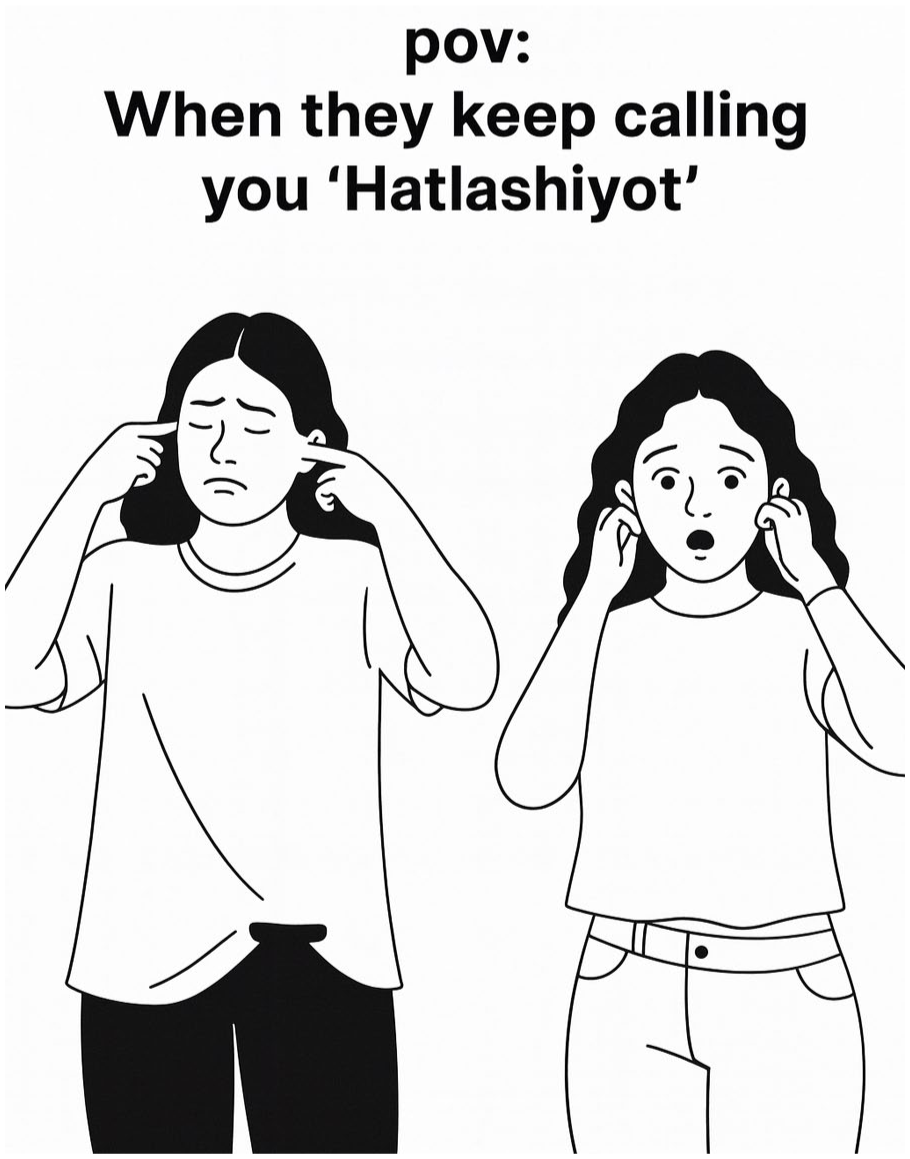
Dancing sisters using trending TikTok audio.
A similar negotiation between trauma and normalcy appears in Tamar’s, an 18-year-old female, post, which adapts a popular dance trend to express both reintegration and disruption. While dance on TikTok is often associated with lighthearted entertainment, it also functions as a mode of self-expression that can embed deeper, more complex meanings. Tamar’s participation in a familiar dance trend highlights how young survivors use performative conventions to negotiate the tension between normalcy and disruption. Tamar performed a well-known TikTok dance routine in December 2023, alongside her friends, captioning the video: “Roses are red, I know this trend is in the past, but I was held captive by Hamas, so I get a pass.” (Figure 2). The playful tone of the caption, combined with the act of dancing that is typical of this TikTok trend, underscores a tension between trauma and reintegration, suggesting both a return to normalcy and an awareness that such a return is never fully possible. By engaging with an existing trend while subtly redefining its meaning, she asserts her presence within the platform’s culture while simultaneously marking herself as fundamentally changed by her experience.
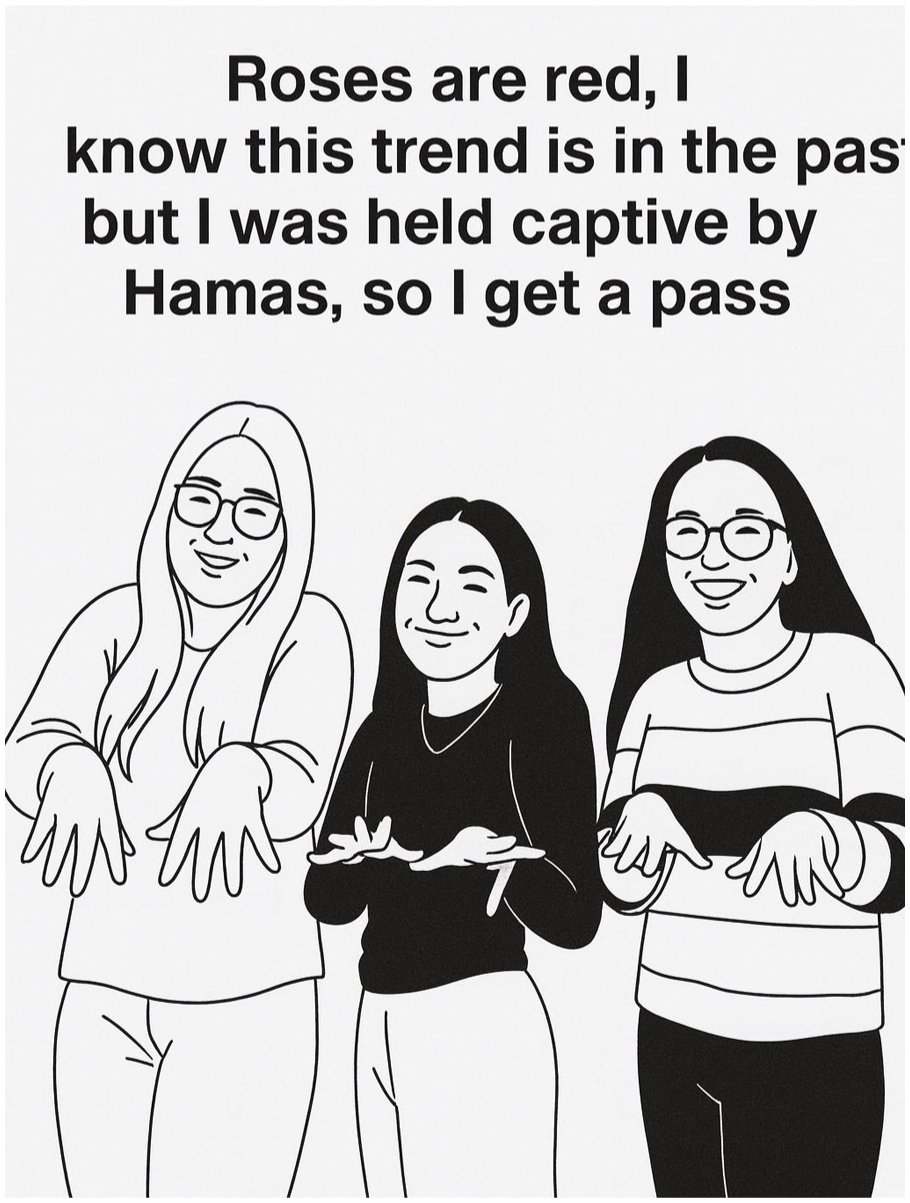
A teenage survivor participating in dance trend.
Taken together, these examples demonstrate how former hostages strategically appropriate TikTok’s vernacular to reframe trauma through visibility and creative participation, transforming the language of trends into tools of recovery and self-representation.
Dark humor and sarcasm
Dark humor emerges as one of the most distinctive strategies through which former hostages process and reframe their experiences. Humor has long been recognized as a form of emotional regulation and narrative control in the aftermath of trauma, but on TikTok it acquires a distinctly participatory character. The platform’s culture of irony and playful exaggeration enables users to navigate pain through performative detachment—turning fear, loss, and absurdity into shareable expressions that resonate within its affective economy. This ironic reframing is particularly visible in re-enactment videos, where users combine humor with stylistic cues drawn from platform trends. One way this humor manifests is through exaggerated and absurd re-enactments of captivity, often using TikTok’s performative affordances such as text overlays and dance trends. Rina, a 13 year old, for instance, shared a video on January 2024 in which she dances in her room with a caption that reads: “Hamas loves us so much that they came for a visit at the kibbutz and took us back with them.” By integrating a casual, TikTok-native format with such a stark message, Rina produces a jarring contrast between the cheerful form and the traumatic content. By performing her trauma through humor, she momentarily reclaims narrative control, reframing victimhood as self-aware resistance.
Other creators employ humor collaboratively, using shared trends to construct a sense of solidarity and mutual recognition. Lior, a 13-year-old former hostage, shared on June 2024 a video in which she humorously rank actions taken by a friend of her who is a former adolescent hostage. The video consists of a sequence of three images: the first shows Lior alone, taking a selfie with the caption: “ranking things that my friend did”; the second features both Lior and her friend with the text: “Got kidnapped to Gaza and didn’t tell me”; the third repeats the same image, but with another humorous remark: “Just kidding, I didn’t tell her either.” The two smile, stick out their tongues, and make playful hand gestures, accompanied by cheerful emojis. This ironic detachment allows them to reclaim their narrative, processing their experiences in a way that aligns with TikTok’s cultural norms while maintaining a sense of control over their own story.
Beyond personal recollection, dark humor also functions as cultural critique, exposing the absurdities and power dynamics embedded in captivity. For example, in August 2024, Shira posted a video using a popular TikTok soundbite from an Israeli reality TV show, “Big Brother,” where a participant dramatically proclaims: “Aren’t you ashamed? I’m a princess. I’m a princess. And it’s not a privilege—it’s reality. And no one is more of a princess than me.” The on-screen text reads: “When the Hamas guards told me they were taking me to the tunnels.” The video blends humor, gendered stereotypes, and an ironic reversal of power, suggesting a sense of detachment from the fear of the moment while also poking fun at the illogical and surreal nature of captivity (Figure 3).
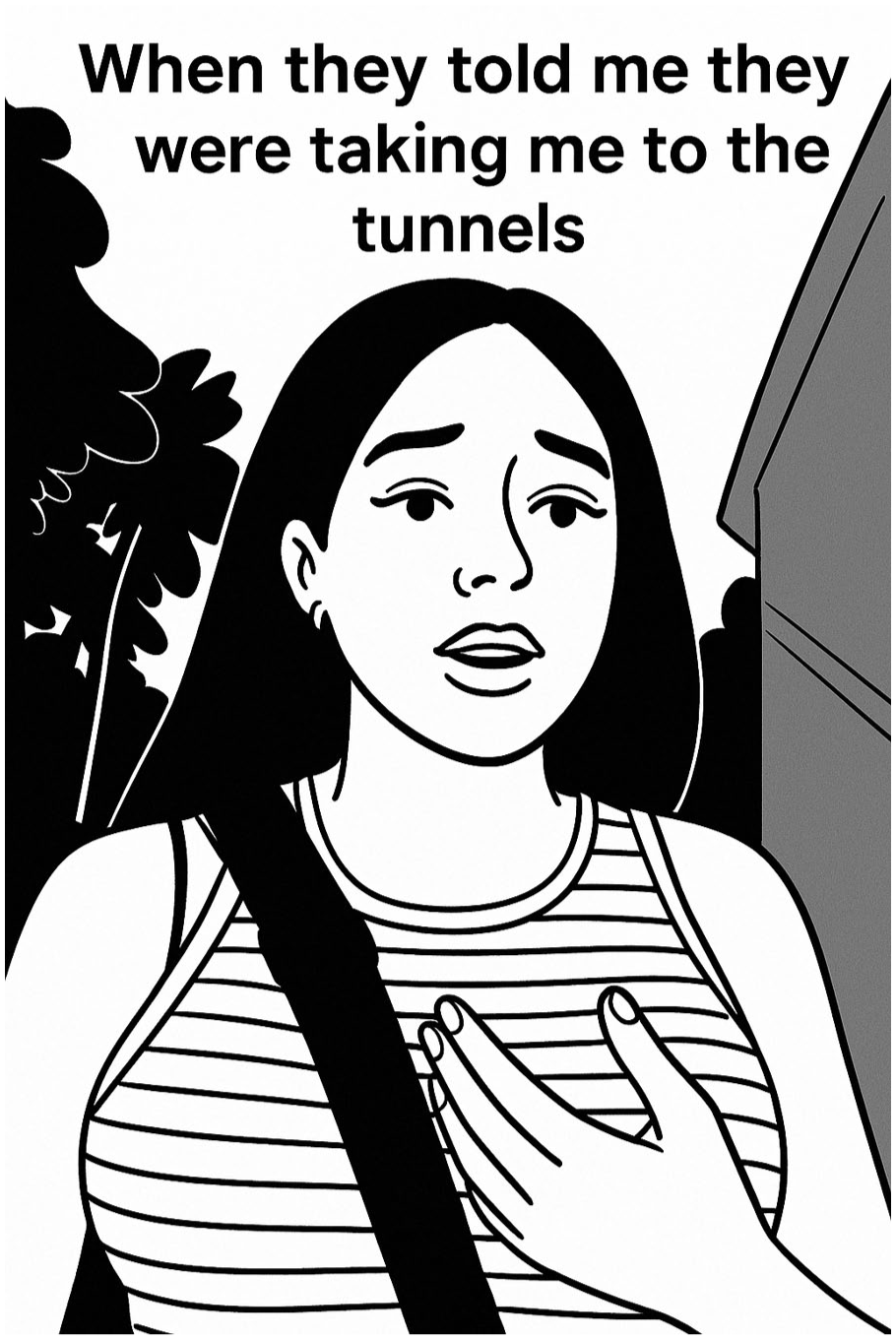
Ironically framed re-enactment of captivity.
Collectively, these examples reveal humor as a form of emotional agency and narrative resilience. On TikTok, irony does not trivialize trauma but transforms it into a socially intelligible and shareable experience that bridges pain and performance.
Trauma, grief, and coping
Although TikTok thrives on playfulness and performativity, former hostages use it as an emotionally charged space for mourning and reconstruction. The platform’s affordances—short-form video, music, and text overlays—allow users to translate grief into a visually mediated language of loss and continuity. Within this space, trauma is not erased by participation but reframed through it: videos function simultaneously as personal reflections and as public rituals of remembrance. Through such practices, former hostages articulate the dissonance between who they were before captivity and who they have become after, transforming private sorrow into shared cultural expression. Alongside reflections on self-transformation, former hostages also use TikTok to navigate the dissonance between their past and present realities. Many express an acute awareness of the irreversibility of time, using the platform to highlight the stark contrast between their pre-captivity lives and the transformed landscape they returned to. Beyond personal reflections, grief extends to the loss of loved ones, particularly family members who were murdered during the attacks. Many videos serve as digital memorials, allowing former hostages to publicly commemorate their relatives while integrating them into the rhythms of TikTok’s visual culture. This interplay between personal mourning and public expression is poignantly illustrated in the videos of Eithan, a 17-year-old. On July 2024 he shared a video in which he is seen standing on a ship, gazing at the water. The screen displays the caption: “From one to ten, how much do you miss him?” The next image shows a childhood photo of him with his father, who was killed on October 7, accompanied by the text: “I miss you a million.” The combination of imagery, nostalgic color tones, and subdued music transforms personal grief into a form of collective mourning, turning TikTok into a participatory memorial space where trauma becomes both seen and shared (Figure 4).
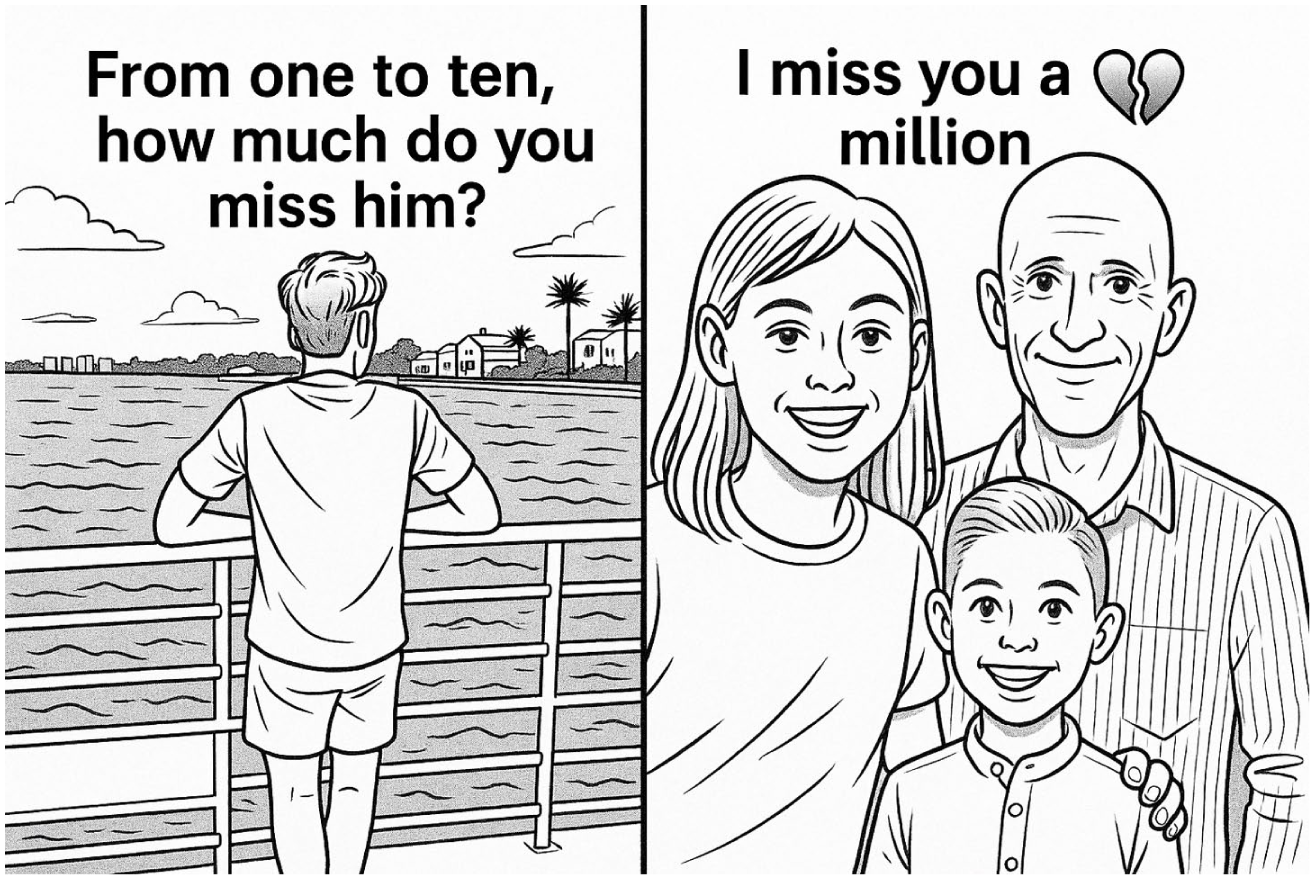
Side-by-side images linking present and loss.
In many cases, this sense of grief is expressed through subtle, everyday interactions with objects and symbols that carry emotional significance. Rather than presenting overt expressions of sorrow, former hostages often use minimalistic visual cues to signal their emotional states. Other posts convey loss through minimalist gestures, where emotional intensity is suggested rather than shown. For example, Shira uploaded on July 2024 a video where she stands in her pajamas, looking at the camera with the caption: “My dad: Don’t worry, we’ll go buy your school supplies at the beginning of the summer vacation.” (Figure 5). Her father had been killed during the Hamas attack on October 7, making the post’s ordinary phrasing quietly devastating. This seemingly simple statement, paired with the unassuming setting of the video, encapsulates the shattered expectations and everyday losses that define life after captivity. The absence of explicit emotional cues—no tears, no dramatic expressions—only amplifies the weight of the moment, making it a quiet yet profound reflection on grief.
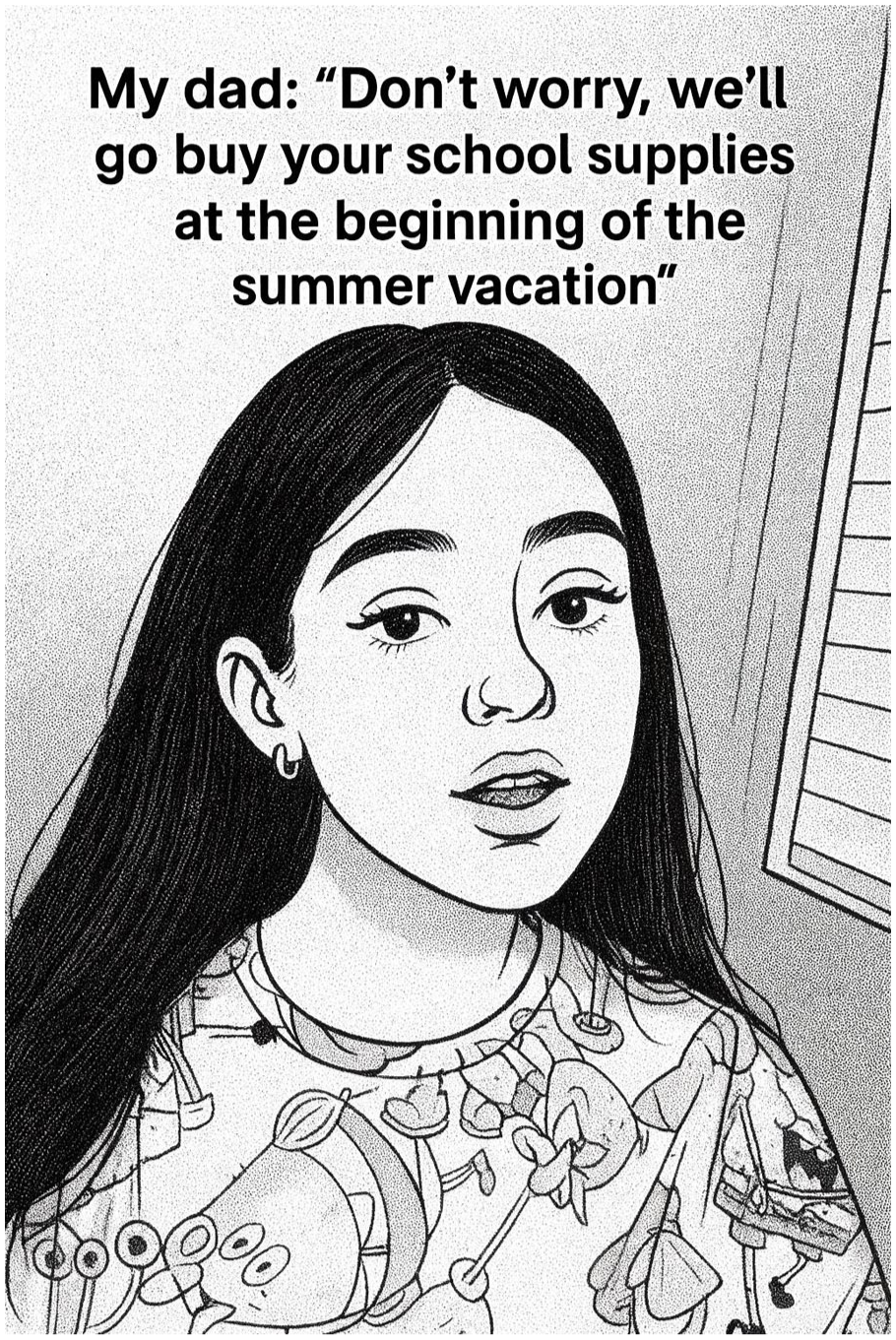
Irony juxtaposed with parental death reference.
These understated depictions of grief exemplify how TikTok enables affective intimacy without spectacle, inviting empathy through subtlety rather than display.
Family, identity, and community
Beyond individual expressions of trauma and humor, many former hostages turn to TikTok to reaffirm ties with family and community. Although captivity is often described as an isolating experience, these narratives reveal how personal identity remains anchored in familial relationships and collective memory. Through tributes to deceased relatives, acknowledgments of parental support, and gestures of solidarity with fellow survivors, TikTok becomes not only a site of self-expression but a space for sustaining social bonds and transforming private loss into shared remembrance. Through these practices, the boundaries between private remembrance and public solidarity blur, revealing how digital mourning and activism coexist within a shared moral framework of care and belonging. One of the most recurring modes of connection is digital memorialization, where former hostages use TikTok to commemorate lost family members and sustain their presence in the digital realm. Tamar, an 18-year-old former hostage, shared a slideshow of six photos in honor of her late father’s birthday, a day he would have celebrated had he survived (Figure 6). The images move from moments of warmth and togetherness—her father hugging his daughters in a field, playing with their family dog, sitting by the ocean—to a closing image of his framed photograph, adorned with a birthday message. The caption reads: My good luck charm, happy birthday. I love you so much and miss you endlessly. There’s not a day that goes by that I don’t think about you and all the experiences we shared together, when we would go surfing together and listen to songs in the car, and how you would react to me doing something silly that I thought you wouldn’t approve of.
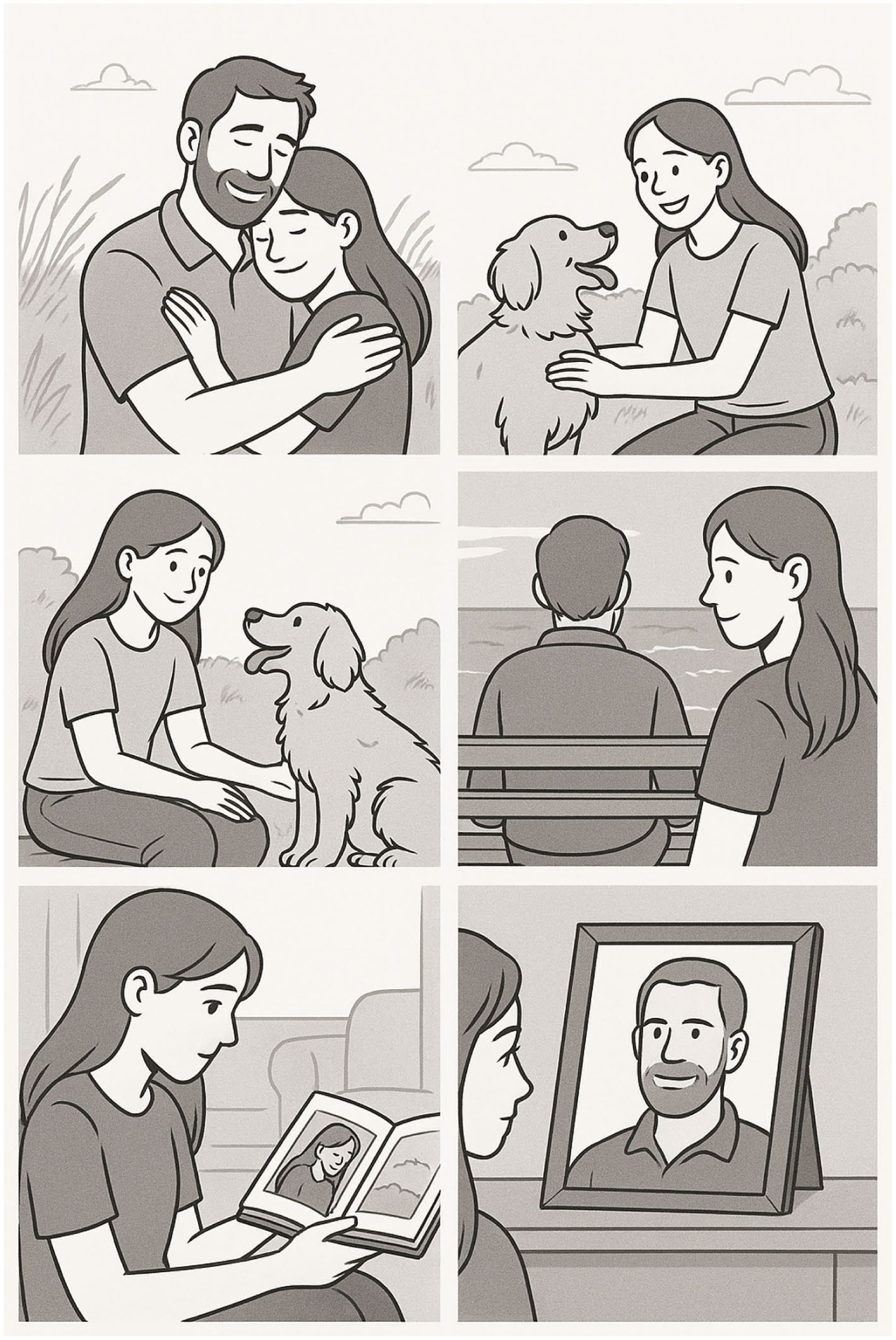
Familial collage referencing abducted family member.
Through this combination of image, text, and nostalgic music, Tamar translates private grief into a collective act of remembrance. Her video exemplifies how digital memory practices allow trauma survivors to preserve familial bonds while inviting communal empathy.
Yet, family connections on TikTok are not limited to mourning; they also become vehicles for advocacy and collective resilience. Expressions of familial connection are not limited to grief; they also extend to appreciation for those who played a role in securing the hostages’ return. A recurring theme in these videos is the portrayal of mothers as figures of strength and resilience, often described as having fought tirelessly for their children’s release. In addition, beyond immediate family, TikTok videos also reflect a broader sense of communal solidarity, as former hostages engage with their peers and participate in shared forms of activism. Romi posted a video on May 2024 in which she juxtaposes two images: the first is of herself taking a mirror selfie in a white outfit, with the text: “You always talk about how we must never forget them -what do you mean?” The second image is of a hostage poster featuring her father, still held captive in Gaza at that time, with the caption: “Please don’t forget them. There are still 133 people waiting to be saved, and one of them is my father.” (Figure 7). The post transforms a personal plea into a political statement, urging viewers to engage in public advocacy. By leveraging TikTok’s visual storytelling mechanisms, she merges her individual distress with a collective call to action, reinforcing the idea that captivity is not just a personal experience but a national and communal issue.
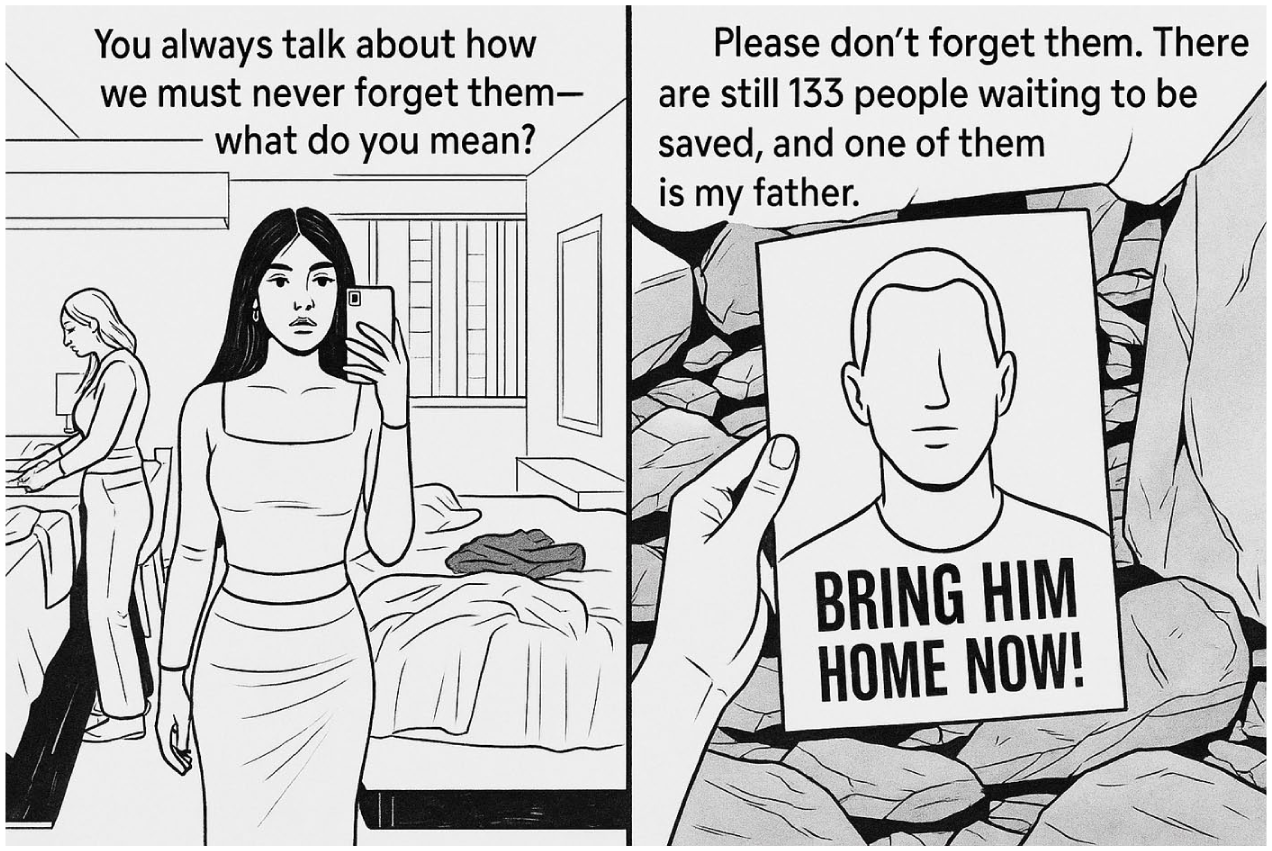
Left: Personal selfie paired with activist appeal.
Discussion
This study explored how former teenage hostages utilize TikTok’s platform-specific affordances to narrate their experiences of captivity and its aftermath. The findings revealed four central themes: (1) the incorporation of TikTok-specific trends, sounds, and POV formats into trauma narratives, (2) the use of dark humor and irony as coping mechanisms, (3) the integration of grief and memory into digital self-representation, and (4) the role of family and collective identity in shaping digital narratives. These findings illustrate the tension between personal storytelling and platform-driven cultural norms, highlighting how young survivors navigate the complexities of digital identity formation in the aftermath of extreme trauma.
Beyond this general overview, the findings align with and extend key arguments in the literature on trauma and digital representation. Scholars of visual media have long noted that trauma is not simply communicated but reshaped by the technological forms through which it circulates (Azoulay, 2008; Meek, 2016). The current study supports this claim by demonstrating how TikTok’s multimodal and memetic structures compel survivors to narrate captivity not through linear testimony, but through rhythmic, audiovisual, and trend-oriented formats. This transformation parallels Tambuscio and Tschiggerl’s (2023) argument that contemporary trauma becomes entangled with performance and platformed affect. Thus, the teenagers’ narratives exemplify how trauma is increasingly mediated through infrastructures that privilege brevity, emotional intensity, and stylistic play, suggesting that the platform itself becomes a significant agent in shaping how suffering is articulated.
Rather than presenting captivity as a solemn, linear account, these individuals embed their experiences within TikTok’s participatory culture, adapting their stories to fit its linguistic and aesthetic conventions. These observations complement previous research on digital trauma narratives, which suggests that social media platforms provide dynamic spaces for processing trauma (Divon and Eriksson Krutrök, 2024). Furthermore, this study extends prior work by demonstrating that TikTok’s unique algorithmic and participatory structures dictate not only how trauma is shared but also how it is narratively structured, visually stylized, and affectively modulated (Marino, 2024). As Williams and Thompson (2022) and Matamoros-Fernandez (2023) emphasize, platform architectures shape not only circulation but the semiotic boundaries of what becomes narratable. This study therefore contributes to broader debates about “ranking cultures” and algorithmic aesthetics (Hobbs, 2020; Rieder et al., 2018) by showing that survivors adapt their trauma narratives to fit platform-legible patterns, such as trending audios or recognized POV patterns, thus reinforcing arguments that digital infrastructures actively shape meaning-making rather than merely disseminating it. These dynamics also unfolded within TikTok’s politicized architecture, where opaque moderation practices required adolescents to signal aspects of captivity indirectly, echoing patterns identified by Steen et al. (2023). This also aligns with Bösch and Divon’s (2024) analysis of how TikTok’s remixable formats and algorithmic constraints shape the narrative possibilities available to users within conflict-related contexts.
Adolescence is a critical period of identity development, where self-presentation is shaped by social feedback and peer dynamics (Erikson, 1968; Nesi et al., 2018). The ways in which former hostages engage with TikTok’s affordances align with established adolescent tendencies to curate identity and seek validation through digital interactions (Stahl and Literat, 2023). These findings converge with studies showing that young users internalize platform aesthetics as part of their broader identity work (Stahl and Literat, 2023; Uhls et al., 2017). Yet, this case complicates such frameworks: unlike typical adolescent creators, teenage survivors must negotiate identities marked by trauma within an environment that rewards playfulness, irony, and aesthetic coherence. This tension extends Abidin’s (2021a) insights on visibility labor, suggesting that adolescents navigating post-captivity must simultaneously manage psychological recovery and algorithmic legibility—a dual burden not yet addressed in existing literature. These findings echo earlier critiques that visual technologies shape collective memory (Meek, 2016), yet on TikTok trauma is stylized and performative rather than purely testimonial. This raises important questions about the extent to which TikTok’s features facilitate meaningful self-expression versus constraining it within predefined trends.
A particularly striking finding was the pervasive use of dark humor and sarcasm to navigate trauma. Rather than adhering to conventional representations of victimhood, former hostages frequently employed irony, parody, and comedic reinterpretations of their captivity experiences. Elsayed (2016) highlight the ambivalent role of humor in trauma processing, noting that while it fosters resilience, it can also risk trivializing distressing experiences. The findings of this study build on that argument, showing that humor on TikTok is not just a personal coping mechanism but also a social performance shaped by platform norms. On TikTok, humor is not merely a psychological buffer but also a performative tool that enables users to integrate their trauma into the broader cultural landscape of the platform.
The use of humor in this context resonates with literature positioning digital humor as both community-building and politically expressive (Literat and Kligler-Vilenchik, 2019). For adolescents emerging from captivity, humor is not merely a coping mechanism but a vernacular practice that fits TikTok’s memetic rhythms and facilitates what Divon and Eriksson Krutrök (2024) term “playful trauma.” By situating their experiences within comedic registers, the teenagers engage in what Elsayed (2016) describes as subversive humor, a means of reclaiming symbolic power in the face of overwhelming structural constraints. This study therefore expands existing frameworks by showing that humor can become a site where trauma, platform norms, and adolescent identity converge into a coherent narrative strategy.
This analysis challenges traditional trauma discourse, which often frames survivors as passive subjects of suffering (Elsayed, 2016). The findings reveal that TikTok enables a significant reframing of victimhood into a form of agency, where individuals actively reclaim control over their narratives through strategic use of humor and platform affordances. This transformation of trauma narratives aligns with Goffman’s (1959) dramaturgical model, as users carefully curate their self-presentation to balance public expectations with personal catharsis. The study extends Goffman’s dramaturgical model by showing how TikTok blurs front- and backstage boundaries, allowing users to balance public visibility and personal catharsis in narrating trauma. Through deliberate choices about the timing and presentation of their experiences, users maintain agency over their narratives, effectively challenging deterministic views of trauma representation. These findings not only support prior research on social media as a site of identity negotiation (Kozman and Melki, 2018) but also reveal a crucial new dimension of agency within algorithmic culture, one where visibility becomes both a strategic choice and a technological byproduct.
However, this approach raises ethical and interpretive complexities: does humor trivialize the trauma, or does it serve as a powerful act of defiance? The findings indicate that, rather than diminishing the weight of trauma, humor on TikTok functions as a negotiation between pain and resilience.
Grief and memory emerged as a dominant theme, with former hostages frequently integrating images of lost loved ones, personal reflections, and nostalgic elements into their TikTok content. This aligns with prior studies on digital memorialization, which highlight social media’s role in sustaining collective memory and fostering public grieving (Khvorostianov, 2025). As Tambuscio and Tschiggerl (2023) argue, digital memory practices increasingly blur the lines between sincerity and spectacle, raising ethical concerns about the commodification of grief. However, digital storytelling in participatory environments is not just about memory preservation but about ongoing reinterpretation, where each engagement with past trauma reshapes its meaning for both creators and audiences. This study extends that perspective by illustrating how TikTok’s remix culture enables grief to be embedded within viral trends and audiovisual aesthetics, transforming traditional acts of mourning into participatory digital rituals.
However, while previous research emphasizes the role of digital platforms as repositories of memory (Gordon and Tirosh, 2024), this study adds nuance by showing how grieving on TikTok is both a personal and a participatory act. Rather than static documentation, grief is expressed dynamically through music overlays, video transitions, and visual metaphors embedded within broader TikTok trends.
These practices illustrate what Tambuscio and Tschiggerl (2023) define as the “ongoing reinterpretation” of trauma in participatory media environments. Unlike static memorials, TikTok memorialization becomes iterative, relational, and deeply aestheticized. This aligns with Ziberi et al.’s (2023) observation that visual media shape global affective responses to suffering, yet the present study suggests that adolescents appropriate these visual regimes in order to construct hybrid spaces where mourning is simultaneously intimate, performative, and socially embedded. In this sense, grief becomes a site of adolescent identity reconstruction, extending research showing that platformed memory fosters both emotional continuity and communal belonging (Gordon and Tirosh, 2024; Khvorostianov, 2025).
This interactive approach to mourning suggests that TikTok does not merely serve as a space for reflection but actively reshapes how grief is experienced and performed. While some scholars argue that digital mourning can lead to a commodification of trauma (Papacharissi, 2012), the findings here challenge this assumption by illustrating how users exercise agency in their self-representation, blending sorrow with creative expression in ways that traditional memorialization frameworks do not fully capture.
The study also revealed that family and collective identity play a significant role in shaping digital narratives of captivity, particularly for adolescents, for whom identity development is deeply intertwined with social relationships (Erikson, 1968). Many videos prominently featured parents, siblings, and community figures, reinforcing the idea that personal trauma is inextricably linked to both familial bonds and broader collective experience. This aligns with existing research on digital memorialization, which highlights the role of social media in constructing shared narratives of loss and resilience (Khvorostianov, 2025). However, adolescent engagement with digital memory extends beyond mere documentation—social media serves as an interactive space where youth actively renegotiate their evolving self-concept in relation to both past trauma and present social dynamics (Nesi et al., 2018).
This dynamic further aligns with Boyd’s (2014) notion of networked publics, yet the adolescents’ practices reveal a qualitatively different configuration: their family-based identity work occurs not only in public but within a platform where audiovisual remixing, algorithmic pacing, and stylistic conventions exert strong pressures on what identity can look like. This extends Meyrowitz’s (1985) argument regarding the collapse of frontstage/backstage boundaries and highlights how TikTok’s infrastructures create new dramaturgical conditions for trauma narration.
Moreover, the adolescents’ integration of family imagery and civic messaging resonates with research on youth in conflict zones who mobilize digital tools to maintain continuity and assert narrative sovereignty (Kozman and Melki, 2018; Primig et al., 2023). By embedding calls for collective action within their personal storytelling, they participate in a broader shift toward what Papacharissi (2012) describes as affectively driven civic expression—narratives that blur personal, communal, and political registers into a unified digital performance.
Unlike previous studies that emphasize social media as a tool for passive remembrance, this study suggests that TikTok fosters a more dynamic and participatory form of memory-making, particularly suited to adolescent modes of self-expression. By integrating family imagery into participatory formats, users transform remembrance into an active part of identity reconstruction (Boyd, 2014). This underscores TikTok’s function as a hybrid space where the personal and the political intersect, further complicating the boundaries between individual grief, collective activism, and adolescent identity construction.
Conclusion
This study provides new insights into how adolescent survivors utilize TikTok not just as a space for testimony, but as a medium for identity reconstruction within the platform’s participatory culture. The findings extend prior research on digital trauma narratives, humor as a coping mechanism, and collective memory in online spaces, while also challenging traditional assumptions about victimhood, self-presentation, and the role of social media in shaping trauma discourse. By demonstrating how former teenage hostages actively negotiate their past experiences through platform-specific affordances, this study highlights the intersection of adolescent development, trauma processing, and digital identity formation.
Future research should further explore how youth use digital media to process trauma and reconstruct identity in participatory environments. In addition, Future research should build on these insights by examining how platform architectures shape long-term processes of identity reconstruction among adolescents exposed to political violence. This includes the role of moderation policies and shadow-banning practices in delimiting trauma visibility (Steen et al., 2023), cross-platform differences in trauma narration (e.g. TikTok vs Instagram Reels), and comparative analyses of youth trauma storytelling in other geopolitical contexts such as Ukraine, Syria, or Gaza (Gordon and Tirosh, 2024; Yarchi and Boxman-Shabtai, 2023). Such investigations would further illuminate how platformed infrastructures not only mediate the representation of trauma but actively co-produce the emotional vocabularies through which young survivors negotiate resilience, belonging, and civic identity.
Moreover, this study also unfolds several ethical dilemmas and limits in the research that involves the analysis of online visual, identifiable content, created by social media users—adolescent minors in particular. Several questions were raised and should be raised in future studies: how much should we anonymize? How should we study vulnerable teenagers, who after all publish their thoughts? The outcomes of this research also call for future discussions about ethical aspects and how researchers should apply ethical norms and still be able to conduct meaningful research.
Footnotes
Acknowledgements
Not Applicable.
Funding
The author received no financial support for the research, authorship, and/or publication of this article.
Ethical considerations
The research did not involve experiments involving human participants, as defined in the Declaration of Helsinki.
