






Abstract
Search engines play a crucial role in helping users navigate the digital environment. However, factors affecting how users interact with these platforms, in particular choose search queries, remain understudied. Using a representative survey of Swiss citizens conducted before a round of federal popular votes, this study examines how users formulate search queries related to the retirement policies that were voted on in 2024. Contrary to existing research, we find no direct evidence of selective exposure, or users’ tendency to search for pro-attitudinal information, which we explain by the less polarizing search topics. However, the sentiment of the query is partially aligned with the expected vote outcome, indicating possible bandwagon effects. Our results also suggest that undecided and non-voters are more likely to search for interpretations of the policies. In addition, query formulation is affected by the perceived effect of the policy, political efficacy, and sociodemographic characteristics.
Introduction
There has been a long-standing concern about the potential of algorithm-driven platforms to sway attitudes and opinions by prioritizing certain information and viewpoints for their users (Bruns, 2019). Search engines, often serving as primary access points to other sources, are especially powerful in shaping individual information diets. By filtering and ranking information, they can highlight certain topics, resulting in agenda-setting effects (Lee et al., 2016). The choice of a search engine alone can determine which sources a person is directed to, since different engines produce distinctly different search results (Makhortykh et al., 2020).
However, exposure to information through search engines and its potential effects on opinions and decision-making do not solely depend on the algorithmic curation of the output but also on user interactions with these platforms. For example, Robertson et al. (2023) found that even though search engines present news that is relatively balanced in terms of partisanship, users still primarily engage with identity-congruent websites, emphasizing “the role of user choice, rather than algorithmic curation” (p. 347). This behavior can be attributed to the phenomenon of selective exposure, or the tendency “both consciously and unconsciously to seek out material that supports their [people’s] existing attitudes and opinions” (Chandler and Munday, 2011).
Information seeking via search engines, however, is not limited to the choice of results (i.e., visiting a retrieved website)—crucial is also the preceding stage of formulating a search request, as it largely determines what output a user is exposed to. In particular, prior beliefs can influence the way users conduct their searches and formulate search queries. While the role of selective exposure in the choice of search queries has been studied less extensively than that in the interaction with search results, there is still evidence suggesting that users tend to prefer queries aligned with their beliefs (Ekström et al., 2024).
Selective exposure is, however, only one of the factors that can shape information-seeking behavior. In certain cases, the search can be triggered by negative attitudes in the same way as by positive ones (Puschmann et al., 2025). Furthermore, depending on the search topic, other individual factors may play a significant role in the choice of a search query, such as perceived issue importance or general political leaning (van Hoof et al., 2024). Therefore, we argue that it is important to further investigate how individual factors impact different stages of political information seeking, in particular at the stage of search query formulation.
To fill this gap, this article examines how topic-specific attitudes, political views, and sociodemographic characteristics influence the formulation of search queries in the context of Swiss semi-direct democracy and whether the selection of a query is guided by selective exposure. To this end, we conducted a representative survey prior to a round of federal popular votes in March 2024, which concerned two retirement policies. Using queries collected through the survey and manually coded according to their features, we examine whether users tend to prefer attitude-consistent search terms and how citizens’ voting intentions, perceptions of the proposed policies, expectations regarding vote outcomes, and other individual factors influence the sentiment and the topic of search queries.
Importantly, this is one of the few studies that investigates query formulation as part of the information-seeking process and focuses on less polarizing topics than those that are typically used in selective exposure studies, such as migration, gun control, or abortion (e.g., Ekström et al., 2024; Knobloch-Westerwick et al., 2015a; Slechten et al., 2022). Instead, we show how users formulate search queries in the context of more specific and practical political issues (i.e., potential changes in pension legislation) that are directly related to political decision-making. This way, our study provides a nuanced account of the role of individual factors in routine online searches on political topics and contributes to a better understanding of what shapes information seeking online.
Literature review
Political information seeking online
Information seeking is an essential part of human behavior, which can be defined as “a process in which humans purposefully engage in order to change their state of knowledge” (Marchionini, 1995: 6). Scholars have conceptualized what triggers information seeking in various ways, referring to “making sense” of the world, reducing uncertainty, or bridging knowledge gaps (Case, 2007). Kuhlthau (1991: 362) argues that the information search process involves different stages—from becoming aware of the lack of knowledge to actual use of obtained information—all of which are characterized by distinct experiences on physical (actions), affective (feelings), and cognitive (thoughts) levels. Bates (1989) discussed information-seeking behavior in the context of online search interfaces. Her “berrypicking” model describes search as an “evolving” and “ever-modifying” process, which is characterized by a constant shift of the search query and “bit-at-a-time retrieval” of relevant information (Bates, 1989: 198). While “query” can be understood here rather broadly, we argue that search engine queries specifically are instrumental components of information seeking and can reflect different stages of this process.
Political information-seeking behavior unfolds in a complex, fragmented media ecosystem, where different platforms and communication channels shape information search and exposure. In particular, information seeking can be influenced by the general public agenda, whereby the amount of online searches (at least for certain issues) correlates with the intensity of media coverage (Maurer and Holbach, 2016; Scharkow and Vogelgesang, 2011). Studying Google Trends data, scholars demonstrated how TV debates during election campaigns, political advertising, or salient media events can lead to spikes in online searching (Arendt and Fawzi, 2019; Housholder et al., 2018; Trevisan et al., 2018) or other forms of information behavior (e.g., engagement with Wikipedia articles on breaking news; Avieson, 2019; Keegan et al., 2013). Besides the issue salience, media ecosystem influences information-seeking behavior through technical affordances as demonstrated by recent studies examining the impact of anthropomorphization of platform interfaces, for instance, via Google’s Auto-Predict function (Markham, 2024) or chatbot integrations (Kim and Lee, 2023) on engagement with political information. While not explicitly studied in the context of politics, individual information-seeking behavior can also be affected by interactions with one’s social network, including family members or peers (Morris and Teevan, 2010).
A major challenge for understanding politics-related information-seeking behavior is its multi-level nature. On the one hand, it is shaped by technological affordances (e.g., personalization on search engines) and their (political) imaginaries, or the way they are designed and perceived by relevant actors. For instance, developers influence the use of technology by encoding specific expectations about user behavior (Ridgway, 2023) or values relevant for users (Mager, 2023) in search engine design, whereas the way users interact with these platforms depends on their personal understanding of how search engines function and how they are supposed to work (Bucher, 2018). On the other hand, such behavior is influenced by individual user factors, ranging from sociodemographics to specific motivations behind search behavior and political beliefs. In a study by Puschmann et al. (2025), political interest was positively associated with the likelihood of searching for political actors online. Furthermore, both strong positive and strong negative attitudes toward a specific actor predicted searching for this person (Puschmann et al., 2025). Valentino et al. (2009) experimentally examined the role of different emotions related to political campaigns and found that, under certain conditions, anxiety can boost information seeking while anger, by contrast, decreases it.
Taken together, these findings suggest that both individual (e.g., political beliefs, emotions, attitudes toward algorithms) and external (e.g., issue salience, platform affordances) factors can impact information seeking online.
Selective exposure in political searches
One of the theories commonly used to study how and why users choose information online is selective exposure, which posits that individuals tend to prefer attitude-consistent information (e.g., Freedman and Sears, 1965). While studied across a variety of contexts, including news (Garrett, 2009), political advertising (Schmuck et al., 2020), and misinformation (Guess et al., 2018), selective exposure can also affect the way users engage in search behavior.
Experiments using mock search results pages as stimuli found that users prefer and spend more time with attitude-consistent messages (Knobloch-Westerwick et al., 2015a; Knobloch-Westerwick et al., 2015b; Westerwick et al., 2017). An eye-tracking experiment examining user search behavior (Ekström et al., 2022) found that both left- and right-wing participants tend to select pro-attitudinal links when reviewing search result pages. However, regarding visual attention, this effect was observed only for right-wing participants. Similarly, Robertson et al. (2023) found that voters who strongly support Republicans were significantly more likely to click on right-leaning sources in Google Search results, although there was no significant difference for voters who strongly support Democrats. Nevertheless, the study found evidence of selective exposure for both political identities when examining overall engagement with websites (not only those accessed through search engines).
At the same time, studies looking at broader online news consumption show that search engine use reduces selective exposure (Cardenal et al., 2019) and contributes to more diverse news repertoires (Fletcher et al., 2023). This suggests that while users might engage with attitude-consistent search results more often or more actively than with attitude-discrepant ones, search engines still may lead users to more diverse information diets.
Formulation of search queries
Up to now, studies have indicated several factors potentially influencing how a person constructs a search query. Using a survey of Dutch Internet users, van Hoof et al. (2024) investigated the relationship between political attitudes and the formulation of queries related to immigration and climate change. The authors found that immigration attitudes and political views affect the choice of the query for immigration-related topics—in particular, users with more positive attitudes toward immigration are more likely to use queries with a humanitarian framing. In contrast, for climate change searches, issue importance appeared to be a more significant factor for query selection (van Hoof et al., 2024).
Ekström et al. (2024) explore the occurrence of “self-imposed filter bubbles” through search engines, referring to the tendency of users to select queries that align with their own views. In an experiment with 54 participants, the researchers found that when given a selection of queries on polarizing topics such as immigration, abortion, and sex equality, users tended to choose queries that matched their political leanings (measured on a left-right scale). In another study, participants were prompted to search for information on various socio-political statements (Slechten et al., 2022). It was found that higher agreement with a statement predicted the use of queries confirming this belief.
Like the present paper, Blassnig et al. (2023) investigated how Swiss citizens search for information about upcoming referenda. The authors analyzed queries about the COVID-19-related proposal obtained both through data donation and a survey. Based on the donated queries, the study found that proponents typically searched for information about the benefits or arguments in favor of the proposal, while opponents more frequently looked for the counterarguments, however, referenda-related searches were generally quite rare (Blassnig et al., 2023). Yet, the same tendency was not present in the queries that participants reported in the survey.
In a similar vein, Menchen-Trevino et al. (2023) demonstrated that political search topics can, to some extent, reflect user partisanship (e.g., Democrats searching more for topics related to race and Republicans—for immigration). However, explicitly partisan language in the queries (collected via data donation) was rare and, even when it did occur, was not necessarily aligned with the user’s own political leaning.
In general, existing research presents a rather fragmented picture of user selection of search queries. While there is evidence of selective exposure in query formulation, it is not straightforward, which, however, can be partially explained by substantial differences in study designs and methodologies. Furthermore, factors affecting query construction may vary depending on the search topic, which requires further investigation.
Hypotheses and research questions
Relying on the evidence of selective exposure discussed above, we assume that users will prefer search queries aligning with their beliefs. Since the study investigates web search behavior in the context of Swiss popular votes, we use voting intention—in favor of or against a popular initiative to be voted on—as an indicator of an attitude toward an initiative. Thus, we propose the following hypotheses:
H1a. Proponents of the initiative are more likely to use queries with a positive sentiment.
H1b. Opponents of the initiative are more likely to use queries with a negative sentiment.
H1c. Undecided voters or non-voters are more likely to use queries with a mixed sentiment.
At the same time, voting intention may not be the only basis for the operationalization of selective exposure. For instance, the way a person perceives possible consequences of an initiative (positive or negative) can also indirectly indicate their views on the policy. Furthermore, studies show that expectations regarding the impact and consequences of the vote can affect the voting decision (Fisher and Renwick, 2018; Grynberg et al., 2020). Following these propositions, we hypothesize that the effect voters expect an initiative to have on them, if accepted, will influence the sentiment of a query.
H2a. The more positive the effect voters expect from the initiative, the more likely they are to use queries with a positive sentiment.
H2b. The more negative the effect voters expect from the initiative, the more likely they are to use queries with a negative sentiment.
Next, we assume that the expected outcome of the votes (i.e., whether an initiative will be accepted or rejected) will be related to the query sentiment. On the one hand, this expectation builds on the notion of the bandwagon effect, or the idea that people adopt political positions shared by the majority (Schmitt-Beck, 2015). In particular, in the electoral context, it can lead to voters supporting the candidate that they expect to win (Kiss and Simonovits, 2014). On the other hand, the effect of the expected vote outcome can, to a certain degree, be attributed to the spiral of silence (Scheufle and Moy, 2000): even though search queries are not public statements per se, users can still be affected by the general opinion climate and, thus, be more or less willing to express their own opinion depending on whether it aligns with that of the majority. This leads us to the following hypotheses:
H3a. Voters expecting the initiative to be accepted are more likely to use queries with a positive sentiment.
H3b. Voters expecting the initiative to be rejected are more likely to use queries with a negative sentiment.
Finally, we are interested in which subtopics respondents mention in their queries, in particular, whether they inquire about possible consequences of an initiative or its interpretations (e.g., related arguments or opinions). We, thus, pose the following research questions:
RQ1. Which users are more likely to use search queries mentioning consequences of the initiative?
RQ2. Which users are more likely to use search queries mentioning interpretations of the initiative?
Methods
Survey sample
We conducted a representative survey of 1100 Swiss citizens recruited online by the Swiss social and market research company Demoscope. The survey was conducted in the three major national languages in Switzerland: German, French, and Italian. Only respondents who were 18 or older, had voting rights in Switzerland, and used search engines at least occasionally were considered eligible for the study.
The data were collected in early January 2024—two months before the round of federal popular votes held on 3 March 2024.
During these votes, citizens voted on two popular initiatives:
Initiative for a 13th Old Age and Survivors’ Insurance (OASI) pension payment (also called “Better living in old age”; further referred to as the “OASI initiative”). It proposed an increase in the pensions paid from the OASI foundation by 1 month’s worth (The Federal Council, 2024a). As a result of the vote, the initiative was accepted (58.3% “yes” votes).
Pensions initiative (also called “For a secure and sustainable old-age pension scheme”). It proposed to increase the retirement age for women and men to 66 by 2033 and subsequently link it to life expectancy (The Federal Council, 2024b). As a result of the vote, the initiative was rejected (25.2% “yes” votes).
Popular initiatives are direct democratic tools to propose amendments to the Federal Constitution. To be put up for a vote, they must be supported by at least 100,000 signatures. Voter turnout for the two initiatives noted above was around 58%, which is higher than the average (Bundesamt für Statistik, n.d.).
The questionnaire included a set of questions about political leaning, voting intentions, attitudes toward the initiatives, search engine use, and sociodemographic characteristics. To collect the search queries, respondents were asked to provide three queries per initiative that they would consider using to find more information about the votes.
Manual coding of search queries
The collected search queries were categorized based on a set of variables related to query relevance, topic, and sentiment. Two student assistants fluent in at least one of the Swiss national languages completed the manual coding. Cohen’s kappa values varied between 0.68 and 1 across the variables of interest, indicating substantial agreement between the coders (Landis and Koch, 1977). We further removed queries that were considered meaningless (e.g., clearly indicating a non-response or consisting of a random sequence of letters). This resulted in 6427 queries eligible for analysis.
Measures
Independent variables
Initiative importance
Respondents rated how important each initiative was to them personally (from 1 = “Not at all important” to 5 = “Extremely important”). 1
Perceived effect of an initiative
Respondents indicated what effect each of the initiatives would have on them if accepted (1 = “Very negative,” 2 = “Somewhat negative,” 3 = “Not much of an effect,” 4 = “Somewhat positive,” 5 = “Very positive”).
Voting intention
Respondents were asked how they would vote on each initiative. For the analysis, their responses were grouped into three categories: (1) voting for, (2) voting against, and (3) undecided/non-voting.
Expected vote outcome
To capture respondents’ expectations regarding the outcomes of the votes, we asked how, in their opinion, Swiss citizens would vote on the initiatives. The responses were grouped into three categories: (1) for, (2) against, and (3) 50–50.
Political interest
Measured on a 5-point Likert-type scale from 1 = “Not at all interested” to 5 = “Extremely interested.”
Political leaning
An 11-point scale from 0 = “Right” to 10 = “Left” was used to measure political leaning.
Political efficacy
Four items, measuring internal (“I have a good understanding of the important political issues facing our country”; “I consider myself well qualified to participate in politics”) and external (“People like me don’t have any say in what the government does”; “No matter whom I vote for, it won’t make a difference”) political efficacy, were adapted from Ardèvol-Abreu et al. (2020) and Gil de Zúñiga et al. (2017). The items for external efficacy were reversed for analysis, and a composite variable was created.
Search engine use for news
We measured how often respondents used search engines to get the news, where 6 = “Everyday,” 5 = “Several times a week,” 4 = “About once a week,” 3 = “Several times a month,” 2 = “Less often than several times a month,” and 1 = “Never.”
In addition to the variables above, we controlled for age, gender, and education.
Dependent variables
Sentiment
The sentiment of the query was broadly operationalized as the presence of any indicator of a positive/negative framing of an initiative. It was coded as follows: (1) Positive: a query positively portrays an initiative or seeks arguments in its favor (e.g., “initiative X advantages”); (2) Negative: a query negatively portrays an initiative or seeks arguments against it (e.g., “initiative X disadvantages”); (3) Mixed: a query contains both positive and negative characteristics or seeks arguments both for and against an initiative (e.g., “initiative X pro and contra”); and (4) Neutral: a query does not express any sentiment (e.g., an initiative name without additional details).
Consequences
A binary variable measuring whether a query referred to the implementation process of an initiative or its consequences. Typically, such queries inquired about the financing of an initiative, its practical implications for a person, the initiative’s effects on the economy, and other related issues.
Interpretations
A binary variable measuring whether a query inquired about arguments for or against an initiative (e.g., “X pro and contra”) or about different opinions on it (e.g., “X position of the parties”).
Data analysis
Respondents with missing dependent variables and sociodemographic variables were excluded. To handle missing values for other independent variables, we used multiple imputation, which helps to mitigate potential bias due to missing data (van Ginkel et al., 2020). With this approach, a missing value is imputed multiple times, resulting in multiple complete datasets (Rubin, 1987). Missing values are replaced by plausible values drawn from the data distribution (van Buuren, 2018). The analysis is then performed on all datasets, after which the estimates are pooled. Unlike other ways of handling missing data, multiple imputation allows researchers “to reflect uncertainty about which values to impute” (Rubin, 1987: 16).
Multiple imputation was carried out using the “mice” package in R with the classification and regression trees (CART) method (van Buuren, 2018). In standard practice, data are imputed 2–10 times, which, however, may not be enough for obtaining replicable standard error estimates (von Hippel, 2020). Using the package “howManyImputations” (Errickson, 2024) based on the procedure suggested by von Hippel (2020), we determined that the optimal number of imputations for our data was 20.
To analyze the relationship between the features of the query and other factors, we ran a series of logistic regressions (a multinomial for sentiment and two binomial for consequences and interpretations). At this stage, we analyzed both initiatives together and paired queries on a specific initiative with attitudes toward the respective initiative (the initiative was included as an additional independent variable). The same set of predictors was used for each dependent variable. We first started with reduced models containing only the main predictors (voting intention, expected vote outcome, perceived effect) and initiative-specific independent variables (topic, perceived importance of an initiative). In the next stages, we controlled for demographics and then added variables measuring political beliefs and search engine use. In the final step, we ran a model including the interaction between the voting intention and the perceived importance of the initiative.
The binomial regression models were compared using a Likelihood ratio test based on the procedure suggested by Meng and Rubin (1992), and the multinomial models were compared based on the difference in the average Akaike information criterion (AIC). For all dependent variables, more complex models including all predictors (but not the interaction) provided a significantly better fit. Hence, we only report the results for the models using all predictors without interactions (Model 3 in the Supplement). The tables for all models are provided in the Supplement.
Results
Descriptives
Table 1 summarizes the descriptive statistics for the respondent-level variables. The survey data, to a certain degree, mirror the outcomes of the popular votes: the majority of respondents (57.1%) reported that they planned to vote for the OASI initiative, which was indeed accepted. The voting intentions regarding the Pensions initiative were split more evenly (40.9% for and 37.1% against); however, we observe that the majority (46.5%) expected the initiative to be rejected, which was indeed the result of the vote. Furthermore, respondents indicated that they anticipated a more positive effect from the OASI initiative than from the Pensions initiative.
Descriptive statistics for the independent variables.
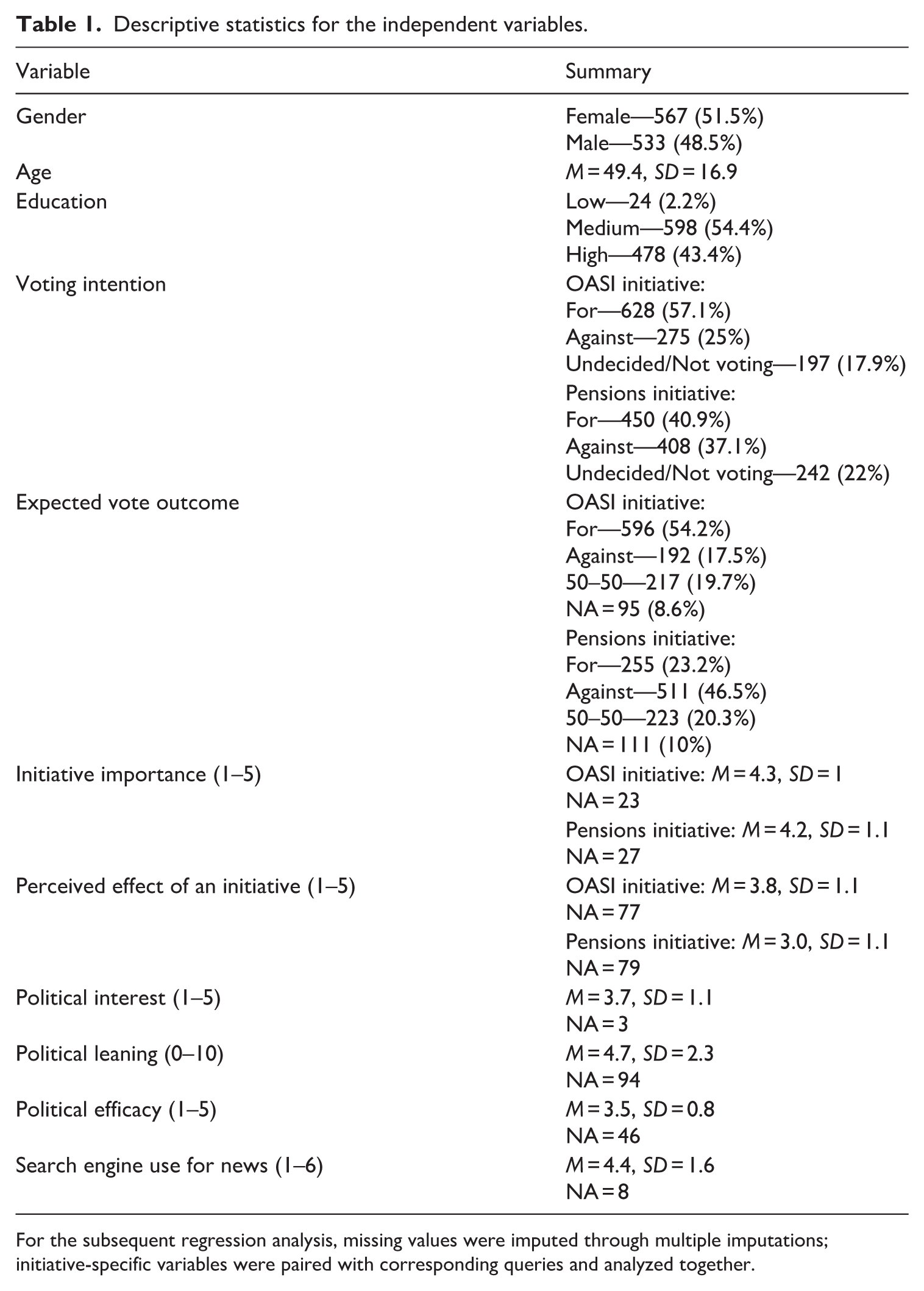
For the subsequent regression analysis, missing values were imputed through multiple imputations; initiative-specific variables were paired with corresponding queries and analyzed together.
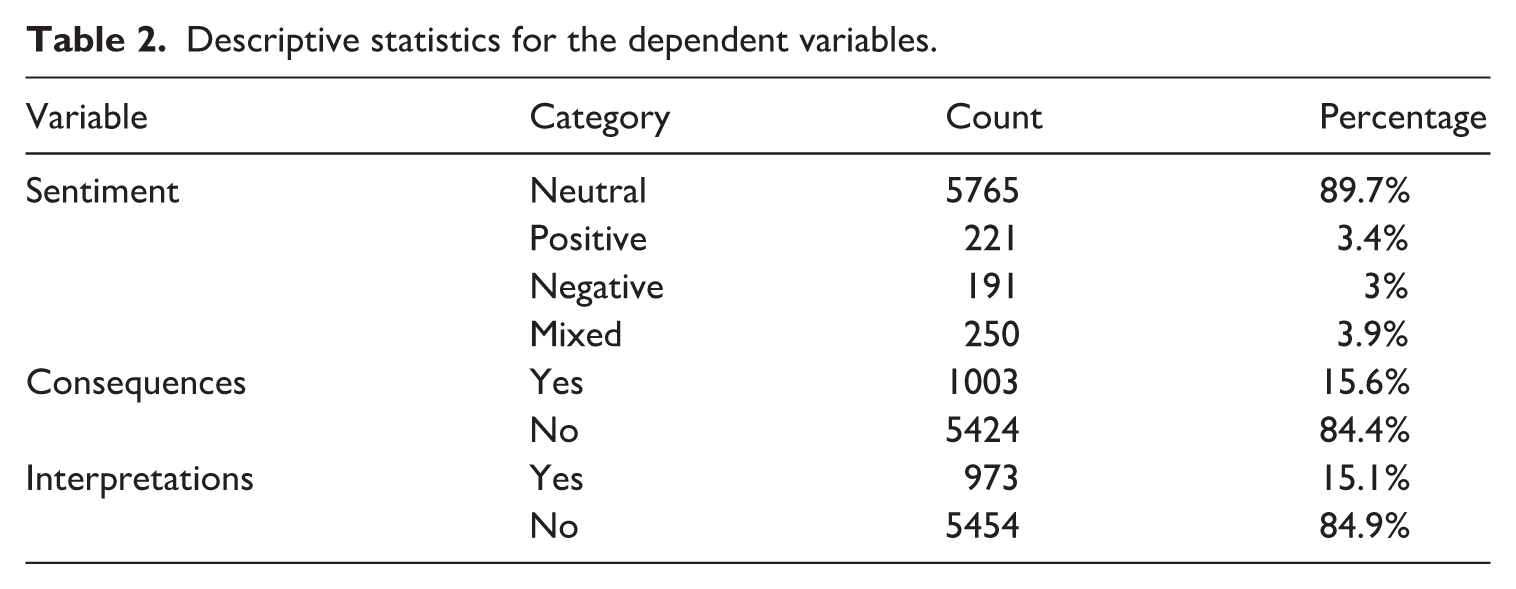
Table 2 presents the results of the manual coding of the queries. Most of them did not express any explicit sentiment and were coded as neutral (89.7%). This category typically included queries that mentioned only the initiative name or referred to the popular votes in general. The second most frequent sentiment was “mixed” (3.9%), typically represented by queries asking about the positive and negative sides of an initiative. Thus, expressing any clear attitude toward an initiative in a query was relatively rare. In addition, 15.6% of the queries inquired about possible consequences and implications of an initiative, whereas 15.1% were focused on interpretations.
Descriptive statistics for the dependent variables.
Query sentiment
Multinomial logistic regression was used to test hypotheses related to the sentiment of the query. As a reference level of the dependent variable, we chose a neutral sentiment representing the largest group of queries; thus, all other types of sentiment were compared against it.
According to our results (Figure 1), there is no significant relationship between voting intention and query sentiment. In other words, initiative opponents are not more likely to use negative queries, and proponents are not more likely to use positive ones. We also do not observe any significant difference in query sentiment for undecided and non-voters. Thus, hypotheses H1a, H1b, and H1c are rejected. The perceived effect of an initiative is also not significant, which contradicts H2a and H2b.
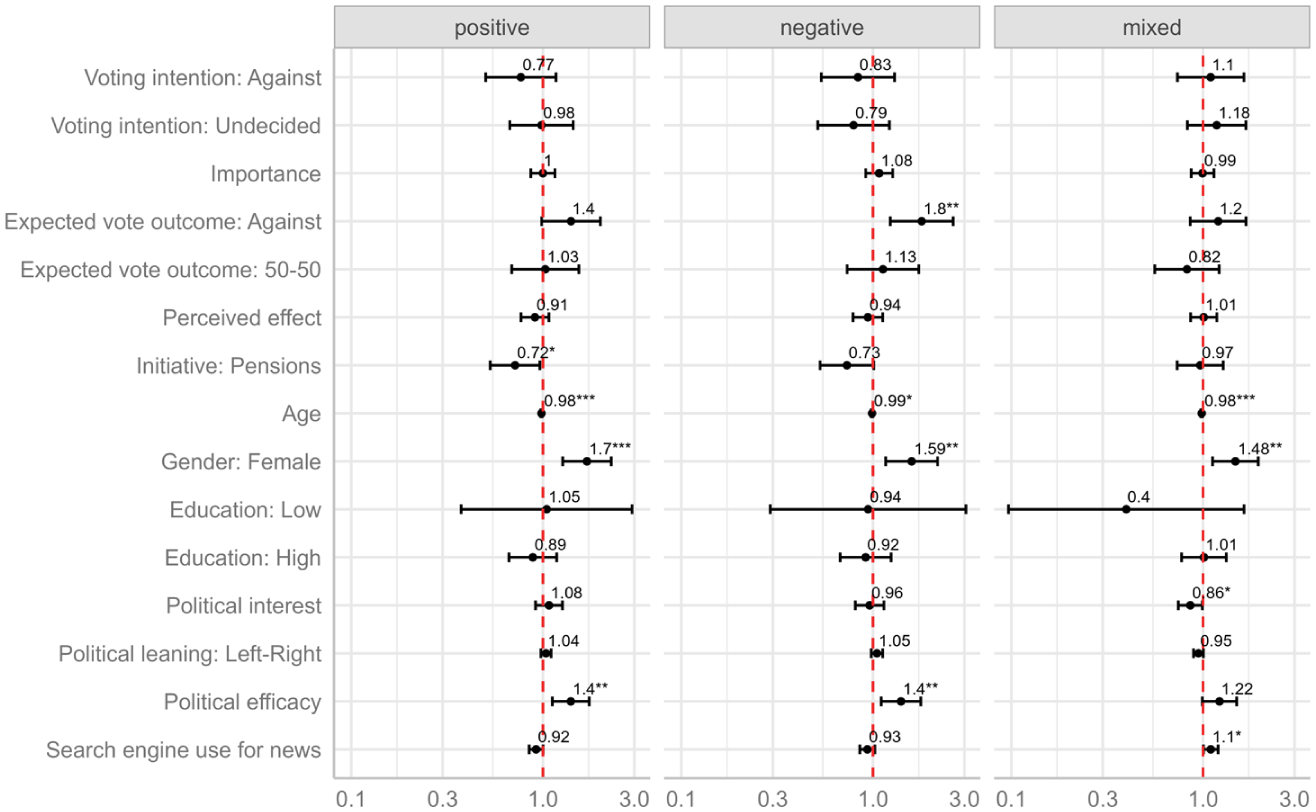
Results of the multinomial logistic regression model for Sentiment (odds ratios).
The hypothesis regarding the expected outcome of the votes is partially supported. In particular, we find that respondents who expect an initiative to be rejected are more likely to use negative queries, with this relationship being rather strong (odds ratio (OR) = 1.8, 95% confidence interval (CI): [1.23, 2.62], p < .01) (H3b confirmed). However, we do not find the opposite effect for positive queries, thus rejecting H3a.
Age is negatively associated with using queries expressing any sentiment, indicating that the younger the respondent, the more likely they are to use non-neutral queries, and vice versa. Specifically, per year of age, there is a 1-2% decrease in odds of using queries with non-neutral sentiment (or approximately 10-18% decrease over 10 years). Similarly, we find that women are significantly more likely than men to use non-neutral queries across all models, with this effect being strongest for positive queries (OR = 1.7, 95% CI: [1.27, 2.27], p < .001).
Looking at other predictors, we found that queries related to the Pensions initiative are less likely to express positive sentiment than those related to the OASI initiative. Our results also show that the sentiment of the query is, to a certain degree, related to political attitudes. In particular, higher political efficacy provides a moderate explanation for the use of both positive and negative queries (Positive: OR = 1.4, 95% CI: [1.12, 1.75], p < .01; Negative: OR = 1.4, 95% CI: [1.11, 1.78], p < .01). Furthermore, political interest is negatively associated with the use of mixed queries. Finally, we observe a weak positive effect of search engine use for accessing the news on mixed query formulation, suggesting that more active users tend to look for both-sided information.
Consequences
We used binomial regression to examine the factors associated with searching for the consequences of an initiative. Generally, respondents are less likely to inquire about the consequences of the Pensions initiative than about the consequences of the OASI initiative (Figure 2). This effect was consistent across all models (see the Supplement). This can be attributed to the fact that respondents mostly did not expect the Pensions initiative to pass and, thus, might have been less concerned about its implications.
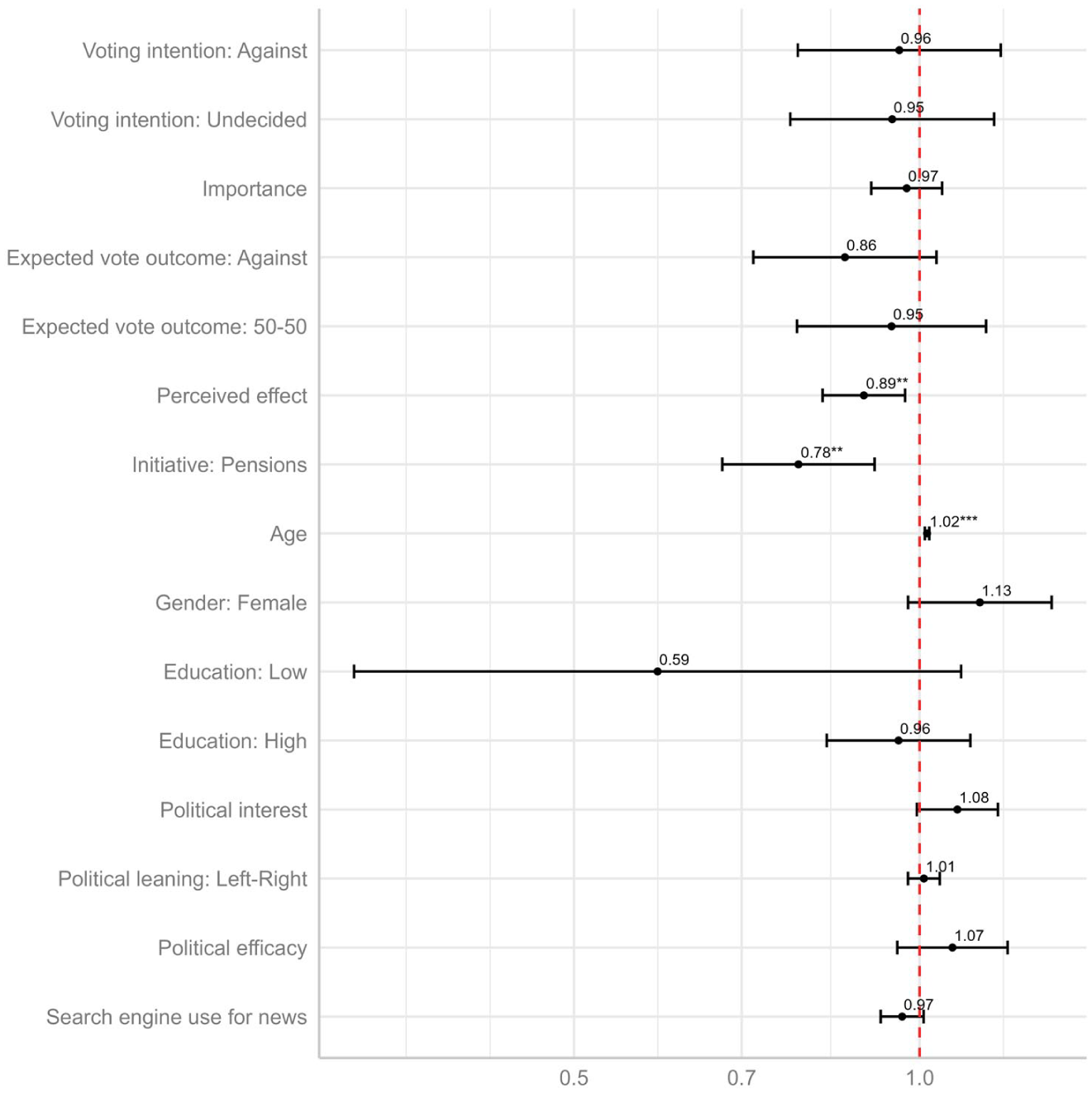
Results of the binomial logistic regression model for Consequences (odds ratios).
While other initiative-related predictors were insignificant, the perceived effect of the initiative was negatively associated with searching for consequences, indicating that respondents expecting a more positive effect from the initiative were less likely to search for its consequences (OR = 0.9, 95% CI: [0.82, 0.97], p < .01) and vice versa. Furthermore, age appeared to be a positive predictor of searching for consequences (OR = 1.02, 95% CI: [1.01, 1.02], p < .001; Model 3); however, as with sentiment, the effect was small. General political beliefs, as well as the use of search engines for news consumption, were insignificant in the consequences-related models.
Interpretations
We further analyzed which factors predicted the use of queries seeking interpretations of an initiative. In particular, undecided and non-voters were considerably more likely to look for interpretations (OR = 1.31, 95% CI: [1.08, 1.59], p < .01; Figure 3); this effect remained significant across all models. This can be explained by the fact that respondents who had not yet made a voting decision required more context and perspectives on the issue. Here, we also observe a small negative effect of age, suggesting that younger respondents were more likely to look for interpretations and vice versa.
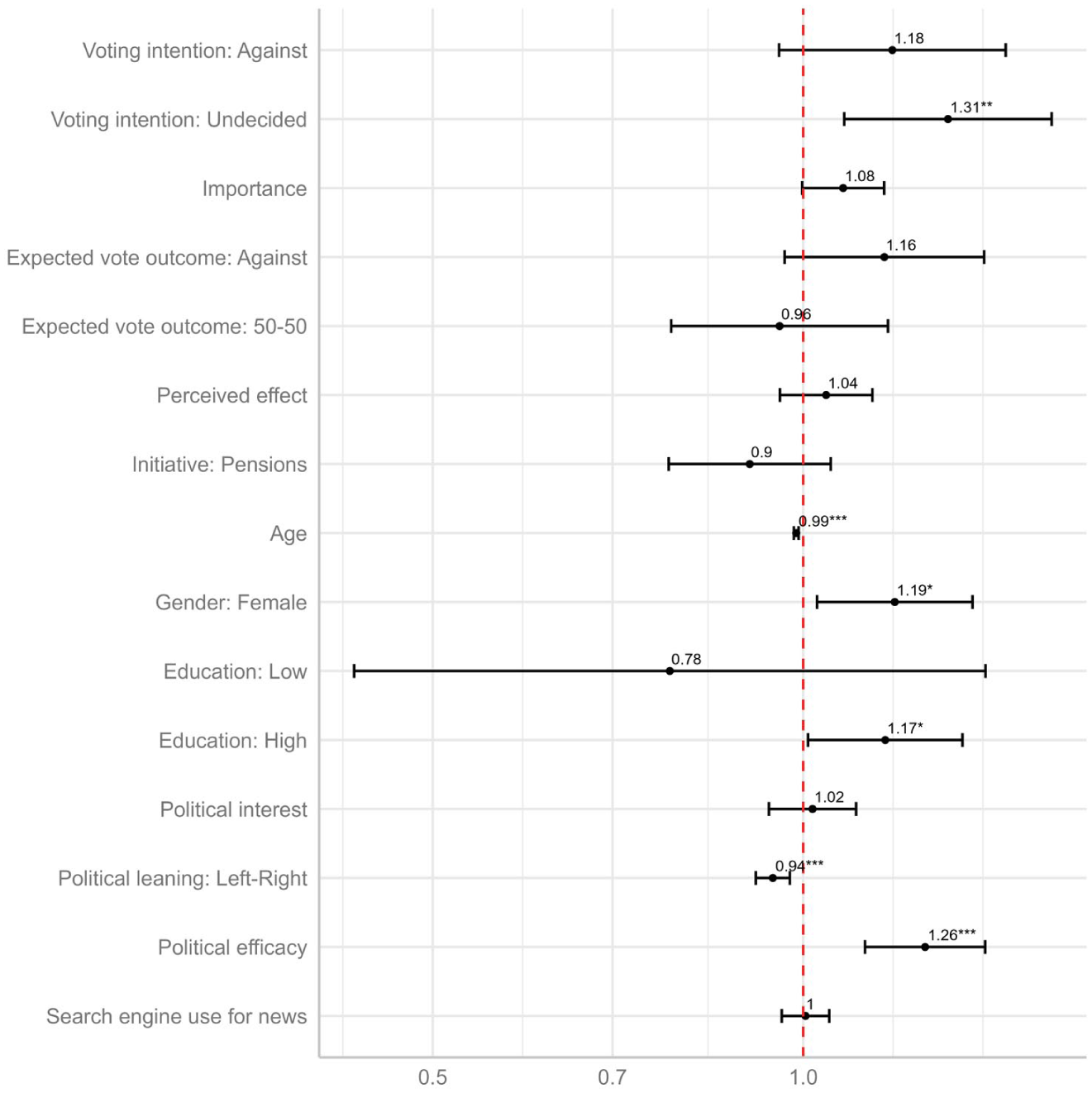
Results of the binomial logistic regression model for Interpretations (odds ratios).
An intention to vote against the initiative, as well as its perceived importance, was positively associated with searching for interpretations in less complex models (1 and 2 in the Supplement); however, this effect disappeared when controlling for political attitudes. In particular, political efficacy positively predicted searching for interpretations (OR = 1.26, 95% CI: [1.12, 1.4], p < .001), while having more right-leaning political views had a small but significant negative effect (OR = 0.95, 95% CI: [0.92, 0.98], p < .001). Finally, being a woman and having a higher education level were also positively associated with mentioning interpretations in the queries.
Discussion
As algorithm-driven systems such as search engines offer more personalization and become increasingly sensitive to user input, it is critical to understand what influences user interactions with these platforms, particularly the formulation of queries. For instance, the type of query (e.g., locally relevant vs general) can lead to varying degrees of personalization (Kliman-Silver et al., 2015), whereas its language may result in different representations of political or historical issues which users are exposed to (Makhortykh et al., 2022; Urman et al., 2022).
This issue has become especially important with the rise of generative artificial intelligence (AI) and large language model (LLM)-powered chatbots. On the one hand, they serve as new tools for online search (e.g., Kaiser et al., 2025) and, on the other hand, are extensively integrated into digital platforms, including search engines and social media. Due to their stochasticity, such tools are particularly reactive even to slight changes in the prompt (e.g., Ni et al., 2024), potentially requiring a higher degree of precision from users. Furthermore, as AI chatbots offer highly anthropomorphic interactions, users may formulate prompts in a more conversational manner (as opposed to using generic search queries), which, in turn, can lead to stronger opinion reinforcement. In particular, there is already evidence that users are more likely to use attitude-consistent prompts when interacting with AI chatbots than when using search engines (Sharma et al., 2024).
Yet, the way users formulate their search requests remains relatively understudied, especially for less polarizing political issues and in countries other than the United States. To fill this gap, we investigated how users search for political information in the context of Swiss popular votes. This study expands the understanding of individual factors motivating user selection of search queries and yields several significant findings.
Contrary to our hypotheses and existing evidence, our study does not find clear signs of selective exposure in the formulation of search queries. In particular, proponents and opponents of the popular initiatives are not more likely to compose pro-attitudinal queries. Furthermore, the perceived effect of an initiative is not associated with query sentiment; in other words, voters who expect an initiative to have a negative outcome are not more likely to select negative queries and vice versa. Thus, this study does not demonstrate direct evidence of users’ tendency to confirm their own views in the process of information-seeking behavior on search engines.
This discrepancy with existing research might be explained by the political issues chosen as search topic. While selective exposure research often focuses on highly polarizing topics, we asked respondents to compose search queries for issues that are likely to elicit less polarization. This might indicate that selective exposure might not necessarily be present for less controversial socio-political issues. Another possible explanation for this finding is methodological: while multiple studies on selective exposure ask participants to choose preferred information from a limited list of items (e.g., Ekström et al., 2024; Knobloch-Westerwick et al., 2015b), we asked respondents to construct their own search queries. This suggests that in the absence of obvious cues, users might not necessarily seek pro-attitudinal information. On the other hand, in the actual search situation, autocomplete suggestions may serve as such cues, thus facilitating selective exposure.
We, however, find that respondents expecting an initiative to be rejected tend to select negative queries more often, which we can partially attribute to a bandwagon effect: in other words, citizens who think that the majority does not support an initiative tend to adopt this belief and consequently look for arguments against it. However, as it is not always possible to disentangle the bandwagon effect from projection effects (i.e., individuals projecting their own beliefs onto others) (Schmitt-Beck, 2015), this evidence might also be attributed to selective exposure to a certain degree.
Next, the study demonstrates that the subtopic of search queries depends on issue-specific attitudes and corresponding information needs. For example, we find that users expecting a negative effect in case an initiative is accepted are more likely to search for its consequences. Furthermore, undecided and non-voters are more likely to search for interpretations of an initiative (e.g., different arguments and opinions), which indicates a need for more context than among those who have already made their voting decision. This finding is especially important, as search engines can potentially lead to a stronger attitude shift among undecided voters (Epstein and Robertson, 2015).
Sociodemographic characteristics also play a role in query selection, with age being associated with all query features, albeit these effects are relatively small. We observe that the older the respondents, the more likely they are to look for the consequences of an initiative and the less likely they are to express any clear sentiment in their queries or look for interpretations. One possible explanation for this finding is the nature of the initiatives, both of which are related to retirement. Hence, we can assume that these proposals are more relevant for older people who might have had an opinion on them early on (and, thus, are less interested in interpretations) but for whom practical aspects of the initiatives are the most crucial (hence, a higher interest in the consequences). We also find an effect of gender, with women being significantly more likely to select non-neutral queries than men. This, again, can be partly explained by the focus of the initiatives: currently, there is a considerable gap in pension payments, with women receiving less than men (Bundesamt für Statistik, 2024). Moreover, the increase in the retirement age for women (from 64 to 65, as it is now for men) was already passed in 2022. This makes the impact of the initiatives potentially stronger for women than for men, leading to more queries expressing a certain attitude toward an initiative.
Finally, general political attitudes also partially explain the choice of queries. For instance, users with higher political efficacy are more likely to use both positive and negative queries, as well as to look for interpretations of an initiative. This might indicate that respondents who believe they have more influence on political processes tend to select more nuanced queries and look for diverse political opinions. Taken together, these observations have important implications for research on information-seeking behavior, both in the context of search engines and, potentially, a broader range of platforms. They show that theories like selective exposure offer an important starting point for understanding the complex interplay of factors influencing individual behavior, but they may fail to capture a broad range of motivations and reasons explaining engagement with information in a complex (and, increasingly algorithm- and AI-driven) media ecosystem. This observation aligns with existing research (e.g., Kofler et al., 2016) suggesting that information-seeking behavior on search engines can be driven by a more diverse range of factors than the defensive motivations of selective exposure. It also highlights the need for more qualitative assessments, for instance, based on autoethnography (e.g., Atay, 2020) or ethnomethodology (Markham, 2024), which are usually associated with (critical) platform studies and not political communication, to better explore the reasons behind query formulation and users’ ontological understanding of search queries.
This study, however, has several limitations. First of all, even though we do not find selective exposure in search queries, we cannot rule out that, even after typing in neutral queries, users will still select attitude-consistent search results, or that the results themselves will be systematically biased toward one or the other perspective. Second, the queries studied are self-reported and do not fully represent actual searching behavior. As in the study by Blassnig et al. (2023), it is possible that in a survey setting, respondents could have provided more balanced queries than they would have used in an actual search. Third, most of the collected queries are neutral and show little variability in terms of searched subtopics and aspects of the initiatives. Thus, queries of interest comprise a relatively small part of our sample. This, again, can be explained by the focus on less polarizing and rather specific issues, for which users might not necessarily provide either opinion-based or topically diverse queries. Finally, by conducting our analysis at the level of individual queries, we do not account for the general composition of queries per respondent.
These findings highlight several directions for future research. Further investigation into information-seeking behavior related to less polarizing political topics is needed. As we demonstrate, the patterns of online search for more event-specific and developing topics might diverge from the search related to more general political issues, such as climate change. However, with Switzerland being a very particular case of a semi-direct democracy, our results should be treated carefully if generalized to other political and national contexts. Thus, we recommend a more nuanced selection of topics for studying information-seeking behavior in different national, regional, and political contexts (especially those in the Global South). Furthermore, we encourage studying the full cycle of information-seeking behavior (from search query formulation to engagement with search results and their potential influence on opinions) for different sociopolitical issues. This may include a more in-depth qualitative investigation into the strategies that users employ when formulating search queries to obtain the desired results (e.g., using generic terms or terms that commonly appear in the media). Finally, our research highlights the importance of studying a more nuanced set of individual factors that affect the selection and formulation of search queries. In particular, it is crucial to capture factors specific to each given issue (e.g., pre-existing knowledge, relevance) and to go beyond a dichotomous understanding of pro- or contra-attitudinal information-seeking behavior.
Supplemental Material
sj-pdf-1-nms-10.1177_14614448261445071 – Supplemental material for Google, how should I vote? How users formulate search queries to find political information on search engines
Supplemental material, sj-pdf-1-nms-10.1177_14614448261445071 for Google, how should I vote? How users formulate search queries to find political information on search engines by Victoria Vziatysheva, Mykola Makhortykh, Maryna Sydorova and Vihang Jumle in New Media & Society
Footnotes

Ethical considerations
The design of the project has been approved by the Ethics Committee of the Faculty of Business, Economics and Social Sciences of the University of Bern (serial number 382023).
Consent to participate
Before starting the survey, respondents were demonstrated the information about the study and provided consent to participate in it.
Consent for publication
Not applicable.
Funding
The authors disclosed receipt of the following financial support for the research, authorship, and/or publication of this article: This work was supported by the Swiss National Science Foundation under Grant number 105217_215021 (“Algorithm audit of the impact of user- and system-side factors on web search bias in the context of federal popular votes in Switzerland”).
Declaration of conflicting interests
The authors declared no potential conflicts of interest with respect to the research, authorship, and/or publication of this article.
Data availability statement
The data underlying this article will be shared on reasonable request to the corresponding author.
Supplemental material
Supplemental material for this article is available online.
Notes
Author biographies
References
Supplementary Material
Please find the following supplemental material available below.
For Open Access articles published under a Creative Commons License, all supplemental material carries the same license as the article it is associated with.
For non-Open Access articles published, all supplemental material carries a non-exclusive license, and permission requests for re-use of supplemental material or any part of supplemental material shall be sent directly to the copyright owner as specified in the copyright notice associated with the article.
