






Abstract
Digital platforms increasingly structure how workers communicate, construct identity, and express dissent under algorithmic governance. While gig work research has emphasized precarity and control, less attention has been paid to how identity and voice are negotiated within workers’ online communities. Drawing on Communication Theory of Identity (CTI), this study examines how Gojek drivers in Indonesia construct personal, relational, and communal identities in Facebook-based communities. Combining social network and computational content analysis, the findings show that expression is unevenly distributed and shaped by network position and community norms. Central actors exhibit greater discursive flexibility, while peripheral members experience constrained and conditional voice. These findings demonstrate that algorithmic power operates through communicative and relational structures, producing identity gaps and mediated inequality in platform-based work.
Introduction
Digital platforms have become central infrastructures through which work, communication, and social life are organized. In platform-based labor, algorithmic systems not only allocate tasks and evaluate performance but also shape how workers communicate, become visible, and articulate collective concerns in mediated environments (Gillespie, 2019; Möhlmann et al., 2021). As a result, platform governance operates through communicative and relational mechanisms rather than formal hierarchies, raising critical questions about identity, voice, and power in digitally mediated work. In this study, voice refers to the capacity to express experiences and concerns within structurally constrained, platform-mediated communication environments, where identity is continuously negotiated through technological infrastructures.
Research on the gig economy has extensively documented issues of precarity, control, and inequality under algorithmic management (Bandi et al., 2020; Gandini, 2018; Wood et al., 2019). Recent studies have also shown how gig workers’ communicative practices are shaped by platform-mediated environments and spatial reconfigurations of work (Chan and Humphreys, 2018). However, much of this literature approaches gig work primarily as an economic or organizational phenomenon, paying comparatively limited attention to how workers negotiate identity and voice through media practices and online interaction. From a media and communication perspective, this gap is significant, as identity and expression are not merely individual attributes but are shaped through communicative processes embedded in platform infrastructures (Couldry and Hepp, 2018; Papacharissi, 2016).
Social media–based communities have emerged as crucial spaces where gig workers exchange information, express grievances, and construct collective meanings around platform work (Ford and Honan, 2019; Tassinari and Maccarrone, 2020). While these communities are often portrayed as sites of solidarity and mutual support, existing studies tend to treat them as relatively cohesive or egalitarian spaces. Less attention has been paid to internal differentiation within worker communities, particularly how network position, visibility, and participation shape unequal opportunities for expression and recognition (Ahmed and Madrid-Morales, 2021; Litterio et al., 2017).
From a theoretical standpoint, Communication Theory of Identity (CTI) conceptualizes identity as a communicative process operating across personal, enacted, relational, and communal layers (Hecht, 1993; Hecht et al., 2005). Although CTI has been widely applied in studies of interpersonal communication and online self-presentation, its use in examining platform-based labor and algorithmically governed communication environments remains limited. In particular, prior research has rarely explored how algorithmic visibility, network structures, and platform risks intensify identity gaps between what workers experience, express, and have recognized (Jung and Hecht, 2004; Kuiper, 2023). CTI is particularly appropriate for this study because it allows identity to be understood as a communicative and relational process, rather than a fixed attribute. This is essential in platform-based work, where identity is continuously negotiated through interaction, visibility, and algorithmic mediation.
Methodologically, studies of gig worker communication have predominantly relied on qualitative interviews or ethnographic approaches, offering rich insights into lived experience but limited capacity to capture large-scale interaction patterns and relational inequalities within online communities (Bucher et al., 2021). At the same time, computational analyses of platform labor often focus on behavioral metrics or network structures without integrating communication theory, resulting in analytically thin accounts of meaning, identity, and voice (Lazer et al., 2009; Stieglitz et al., 2020). This separation has constrained our understanding of how algorithmic power operates simultaneously at the level of infrastructure and everyday communication.
Addressing these gaps, this study integrates CTI with a theory-driven network and content analysis to examine how digital identity and voice are negotiated within gig workers’ online communities. Focusing on Facebook-based communities of Gojek drivers in Indonesia, the study analyzes how communicative practices, network positions, and community norms shape uneven opportunities for expression under algorithmic governance. By situating identity construction within mediated interaction and relational power structures, this research contributes to critical debates in New Media & Society on digital labor, platform governance, and mediated inequality, while foregrounding insights from a Global South context where platform power intersects with distinct socioeconomic conditions (Heeks et al., 2020).
Gojek represents one of the most prominent platform-based labor systems in the Global South, with rapid expansion accompanied by increasing numbers of independently contracted drivers operating under digital management systems. The platform’s growth, reflected in its valuation exceeding US$40 billion in 2021 (Lee, 2021), signals its scale and systemic influence within Southeast Asia. Despite this expansion, gig work in this context is characterized by structural precarity, including long working hours, income instability, and limited institutional protection (Heeks et al., 2020). In response, drivers have developed online communities as spaces for mutual support, information exchange, and collective sense-making around platform-mediated work. These communities have also played a role in mobilizing collective action and protest across major Indonesian cities between 2020 and 2023. However, beyond their role as sites of solidarity, such communities constitute critical communicative environments in which workers negotiate how to articulate experiences, construct identity, and express concerns under conditions of algorithmic governance.
Indonesia represents a critical Global South context where platform-based labor is widespread and embedded within informal economic structures. Gojek, as one of the largest digital platforms in Southeast Asia, provides a significant case for examining how algorithmic governance shapes communication and identity at scale (Ford and Honan, 2019; Gunawan, 2024; Wahyuningtyas, 2016; Yuniastuti et al., 2019). This context highlights how platform power operates within informal economies where workers face heightened precarity and limited institutional protection. Against this backdrop, this study addresses three interrelated research questions:
Literature review
Communication Theory of Identity
CTI views identity not as a static attribute of an individual, but as a communicative construct that is continuously negotiated through social interaction (Hecht, 1993; Hecht et al., 2005). Within the CTI framework, identity is understood as a multidimensional phenomenon that operates through four interacting layers: personal, enacted, relational, and communal identity. This approach emphasizes that identity resides not only in individual consciousness but is also manifested, acknowledged, and contested in everyday communication practices.
A key strength of CTI lies in explaining identity gaps between self-perception (personal identity) and socially expressed identity (enacted and relational identity) (Jung and Hecht, 2004). This tension is particularly salient in digital environments, where identity expression is mediated by both social interaction and platform infrastructures. In the context of platform-based work, gig worker identities are shaped within conditions of asymmetrical power relations and intensive algorithmic surveillance. Workers are not fully free to express their experiences, criticisms, or aspirations, as such expressions could potentially impact job access, performance appraisals, or account sustainability. Therefore, CTI provides a relevant conceptual framework for understanding how gig worker identities are constructed, negotiated, and constrained in a technologically controlled communication environment.
CTI applications in online identity communication
While CTI has been widely applied in studies of health communication, culture, and interpersonal interactions, its application in the context of platform-based digital work remains relatively limited. Studies using CTI in online contexts generally focus on individual identity formation within online health communities, social support forums, or general social media, without explicitly considering the power dynamics and algorithmic control inherent in digital work platforms. In online identity studies, CTI has been used to demonstrate that user identities are formed through a combination of personal expression, social responsiveness, and community norms (Hecht and Choi, 2012; Zhao et al., 2022). However, most of this research relies on small-scale qualitative approaches and has not integrated social network structure analysis to understand how users’ relational positions influence their visibility, influence, and space for expression.
This limitation is particularly significant in the context of gig workers, where identity and expression are not only communicative but also have economic and structural implications. In online gig worker communities, who can speak, be heard, or influence discussions is strongly influenced by their position within the digital social network. However, the integration of CTI and Social Network Analysis (SNA) to explain the relationship between network structure and identity layers is still rare. Therefore, this study positions CTI not only as an interpretive framework but also as an analytical lens operationalized through computational data. By mapping the four layers of CTI identity onto social network metrics and patterns (such as centrality, modularity, and interaction intensity), this study bridges the gap between communicative identity theory and computational social science approaches. This approach enables a more systematic analysis of how identity is shaped through the interaction of communicative practices, social relations, and network structures in platform-based environments.
Freedom of expression in algorithmic environments
Freedom of expression in digital spaces can no longer be understood solely as an individual right, but must be viewed within the power relations shaped by platform architecture and algorithmic systems. Within digital platform ecosystems, algorithms function as governance mechanisms that regulate the visibility, distribution of content, and the consequences of user behavior, thus indirectly shaping the boundaries of acceptable expression (Gillespie, 2019; Zuboff et al., 2022). In the context of the gig economy, algorithms act as nonhuman actors that determine access to jobs, incentives, and the sustainability of workers’ livelihoods (Lee et al., 2015; Möhlmann et al., 2021). This asymmetrical power relationship places workers in a vulnerable position, as algorithmic decisions are opaque and unpredictable. As a result, workers’ freedom of expression is limited not only by community norms but also by concerns about algorithmic sanctions such as decreased account performance, suspension, or deactivation (Cram et al., 2022; Mcdaid et al., 2023).
Studies show that workers in algorithmically monitored environments develop self-censorship as a survival strategy, using symbolic and indirect expressions to mitigate risks (Wood et al., 2019; Zuboff et al., 2022). Expression is therefore conditional, shaped not only by algorithmic control but also by network structures and community norms that unevenly distribute communicative freedom (Litterio et al., 2017). Within CTI, this reflects an intensified identity gap between personal and enacted identity, where structural risks constrain expression (Jung and Hecht, 2004).
Methods
This study employs a mixed-methods computational approach integrating SNA, computational content analysis, and non-participant online observation to capture both relational structures and communicative patterns at scale. Non-participant observation was used to avoid influencing naturally occurring interactions, allowing the study to capture authentic communicative practices within the community. This approach captures how online interactions are shaped by both communication practices and network structures (Borgatti, 2009; Wasserman and Faust, 1994).
Operationally, SNA was used to map interaction patterns, central actors, and subcommunity formation, while computationally assisted content analysis was used to identify discussion topics, symbolic language, and recurring expressions reflecting enacted identity (Ho et al., 2021; Lukito et al., 2023). Non-participant online observation was used to provide interpretive context to the computational findings without engaging in ethnographic practices or direct intervention. The integration of these three components allows for the empirical operationalization of CTI by linking layers of personal, enacted, relational, and communal identity with network data and communication content (Table 1).Thus, this research design allows for a more comprehensive analysis of how gig workers’ identities and freedom of expression are negotiated within algorithm-driven digital ecosystems.
Operationalization of CTI in computational social analysis.
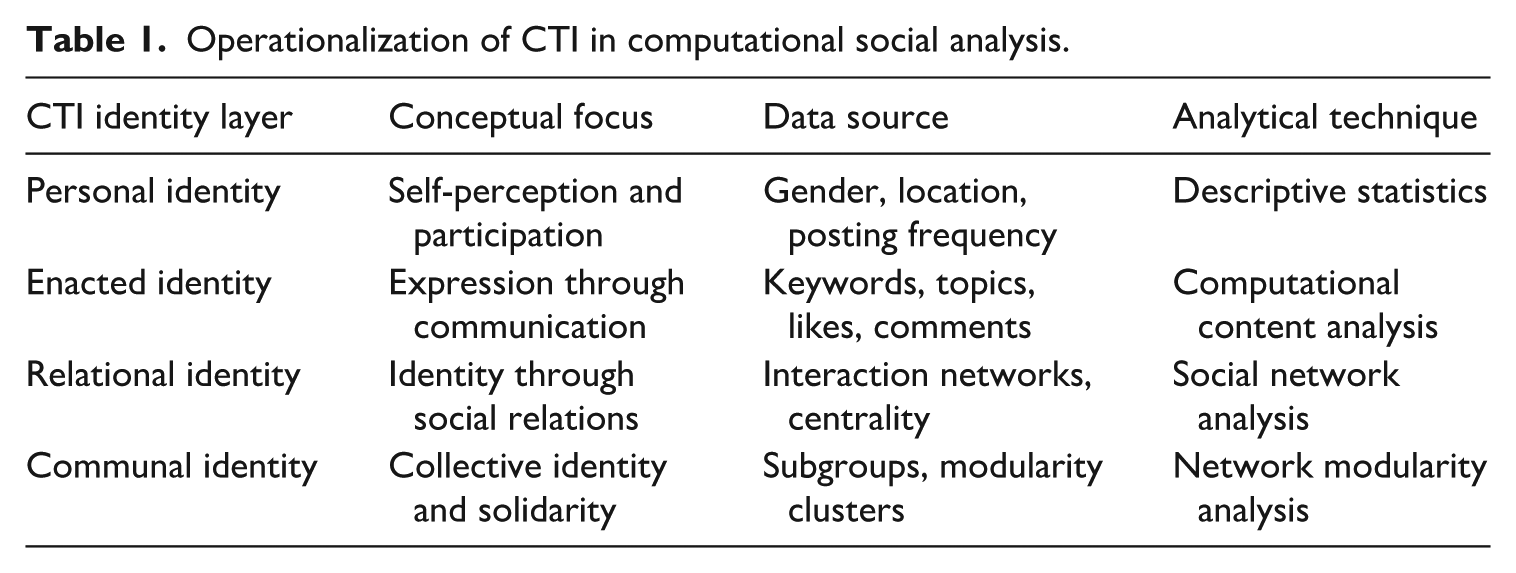
To operationalize CTI within a computational framework, each identity layer is linked to specific empirical indicators. Personal identity is reflected through participation frequency and available metadata. Enacted identity is examined through linguistic expressions and dominant keywords. Relational identity is captured through network centrality metrics, while communal identity is identified through modularity clusters and subgroup formations. This operationalization enables CTI to function not only as a conceptual framework, but as an analytical mechanism that systematically links identity layers to observable network and communicative patterns.
Sampling and data collection
This study used purposive sampling of the Gojek driver online community on Facebook with the aim of capturing the most representative patterns of interaction and expression in the platform-based work ecosystem. From an initial mapping of 1012 Facebook groups, 87 met the criteria, and 12 highly active groups were selected as primary data sources. The selection criteria included (1) high activity level (⩾50 posts per month); (2) number of members ⩾25,000; (3) dominance of discussions related to work, incentives, and platform dynamics; and (4) public or semi-public access that allows for ethical data collection. The 12 groups as the primary data sources can be seen in Table 2.
Primary data sources.
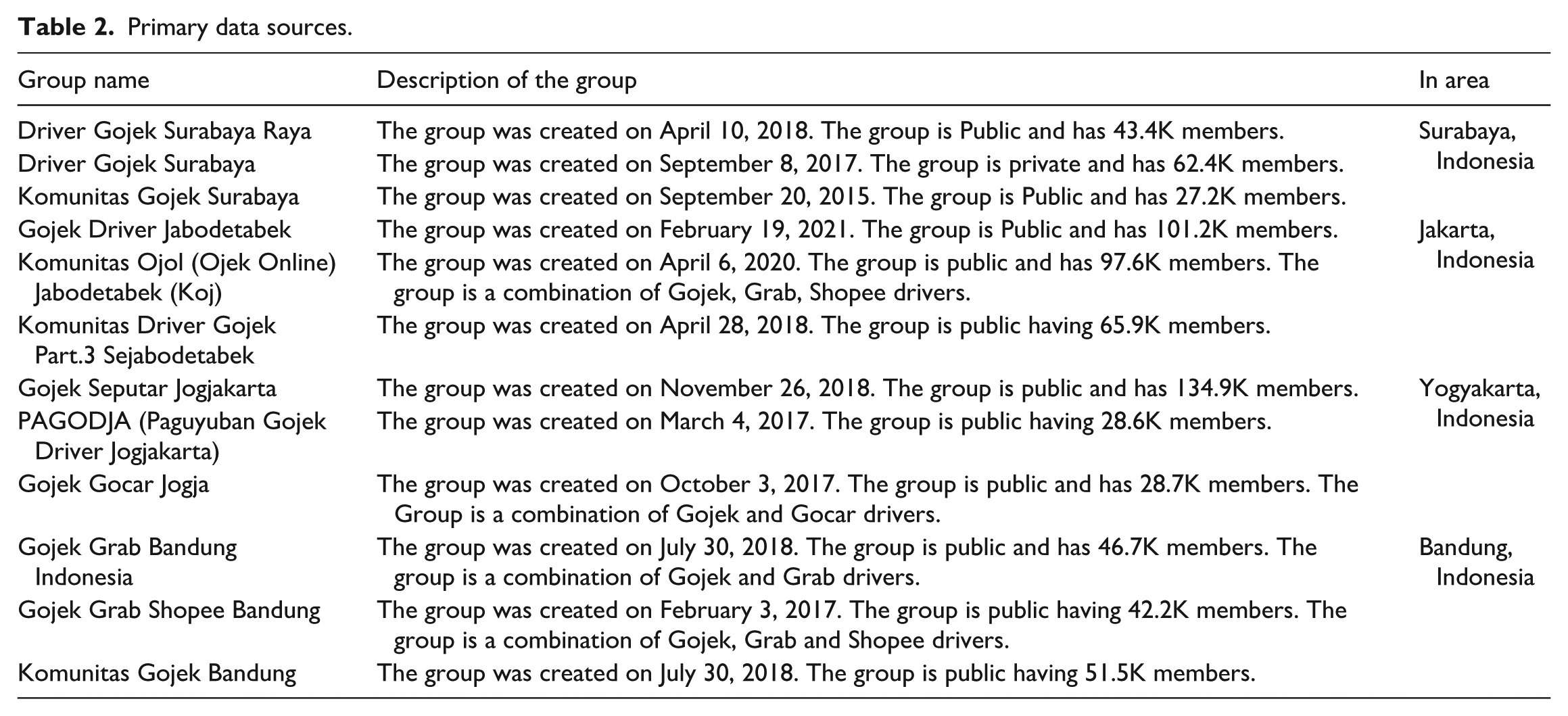
Data collection was conducted between February and June 2024 using Python and R-based computational tools to systematically extract, clean, and manage online interaction data. The final dataset included 1873 posts, 62,491 comments, and 321,880 likes. The unit of analysis was defined at the post and interaction level (comments and responses), with metadata limited to non-identifying characteristics such as participation frequency, location, and gender, where available. All account data was anonymized to maintain participant privacy.
For content analysis, discussion topics were identified through keyword extraction and topic clustering, focusing on issues central to drivers’ work experiences, such as complaints, criticism of platform policies, calls for solidarity, and job information. Limited non-participant online observation was conducted to provide analytical context for the resulting data patterns, without direct researcher involvement in community interactions and without collecting private data. The classification of discussion topics and keywords can be seen in Table 3.
Types of comments in Gojek driver online community.
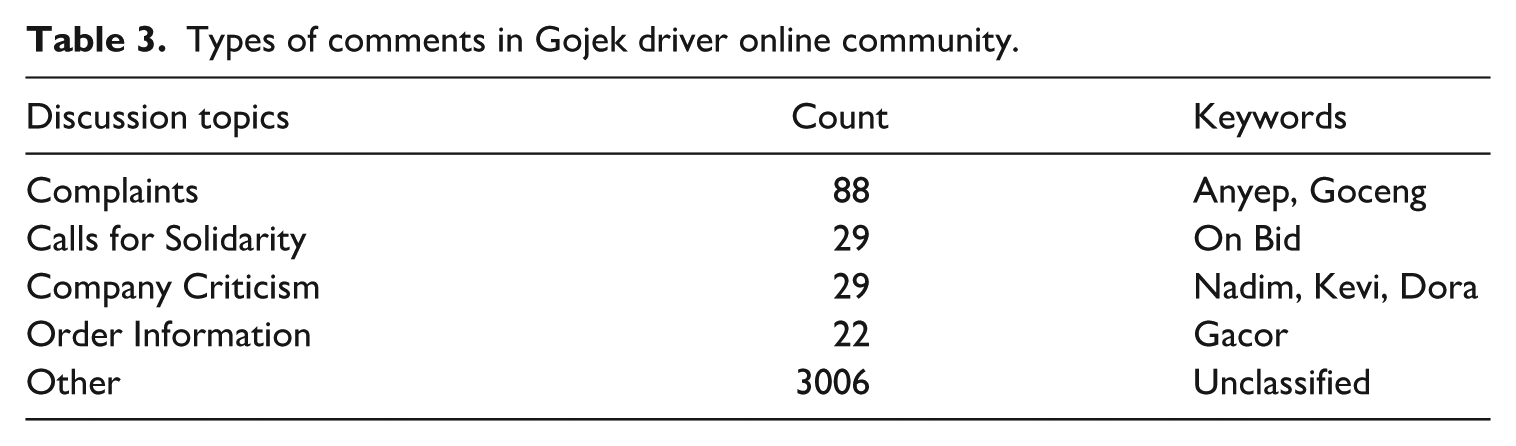
Local terms such as “anyep” 1 and “gacor” 2 are commonly used by drivers to describe work conditions and algorithmic performance. The data analyzed in this study were primarily in Indonesian. The analysis was conducted by a fluent speaker to ensure accurate interpretation of linguistic nuances. These terms also carry contextual meanings that reflect shared experiences and implicit understandings among drivers, which are not always directly translatable into English. Key local terms are retained in their original language to preserve contextual meaning, with explanatory footnotes provided for clarity. Keywords such as “anyep,”¹ “gacor,”² “on bid,” 3 and “goceng” 4 were identified through frequency-based exploration, representing core community vocabulary related to work conditions, algorithmic performance, and platform dynamics. These terms were then used to map interaction networks and analyze identity formation within the community.
Ethical considerations
This study adheres to established ethical standards for online research. All data were collected from public or semi-public Facebook groups without accessing private or restricted content. No direct interaction with participants was conducted, and all user data were anonymized to prevent identification. The study did not collect sensitive personal information, and all analyses were conducted at an aggregate level to minimize potential risks to participants. This approach ensures compliance with ethical guidelines while maintaining the integrity of research on platform-based communication.
Data analysis
The collected data was analyzed using Gephi for visualization and graph analysis and converted into node and edge formats, where nodes represent Gojek driver community member accounts and edges represent interactions between accounts, such as comments and responses to posts. The analysis was conducted using a directed graph to capture the communication flow and intensity of relationships between actors in the network. Then, SNA metrics were calculated, including degree centrality, betweenness centrality, closeness centrality, and eigenvector centrality, to identify central actors, opinion leaders, and mediating roles in the network. In addition, modularity analysis was applied to detect the formation of subgroups (communities) within the network that reflect communal identity and solidarity patterns among members. This approach is particularly suitable for addressing the research questions, as it captures both large-scale interaction patterns and communicative expressions that cannot be fully understood through purely qualitative or computational approaches alone.
Results and discussion
Network structures and interaction patterns in Gojek driver communities (RQ1)
Building on this operationalization, network structure does not merely reflect interaction patterns but actively organizes the distribution of communicative power within the Gojek driver Facebook community. SNA reveals a highly concentrated topology in which a small number of actors (e.g. A01 and A06) occupy dominant positions across centrality metrics (see Table 4), while the majority of participants remain structurally peripheral.
Centrality of Gojek driver.
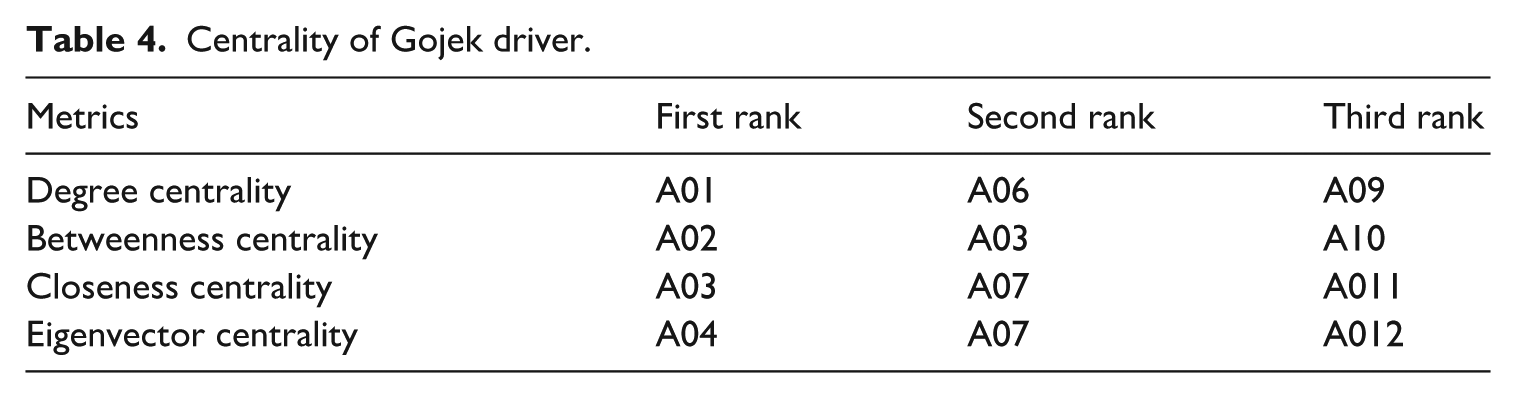
Such concentration constitutes a hierarchical communication order, where visibility, participation, and influence are unequally allocated through patterns of connectivity rather than individual intention. In this configuration, centrality functions as a mechanism of discursive amplification: actors positioned at the core of the network systematically gain greater exposure, higher interaction rates, and increased capacity to shape communicative flows. This aligns with network-based accounts of influence, where structurally embedded actors disproportionately mediate information circulation and agenda formation (Borgatti, 2009; Litterio et al., 2017).
Modularity further reinforces this stratification by segmenting the network into densely connected clusters with limited cross-group interaction (see Figure 1). These clusters operate as semi-bounded communicative spaces in which interaction circulates internally, while cross-cluster exchange depends on a narrow set of bridging actors. As a result, communicative reach is not universally accessible but contingent upon positional embeddedness within the network. This pattern constrains the diffusion of discourse and fragments collective visibility, producing localized arenas of interaction rather than a unified communicative public.
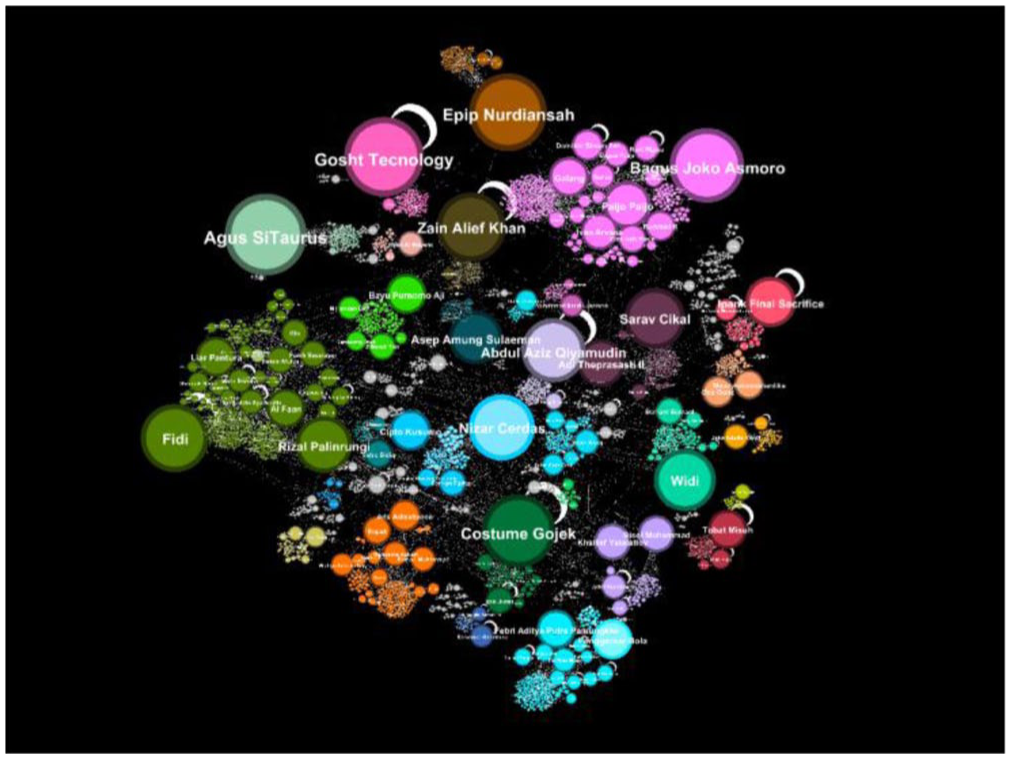
Modularity of Gojek driver interactions.
Under these conditions, participation is structurally mediated rather than equally available. Peripheral actors remain marginal not due to lack of expression, but due to limited integration into high-visibility interaction pathways. Conversely, central actors accumulate communicative advantage through repeated exposure and relational embeddedness, enabling them to stabilize their presence as reference points within the network. This dynamic reinforces visibility, where centrality leads to further centrality.
Within platform-based communication environments, such networked concentration operates analogously to algorithmic governance. Rather than relying on explicit rules or formal authority, control is exercised through the differential distribution of visibility and interaction opportunities. This mechanism resonates with broader accounts of platform power, where visibility regimes structure what can be seen, circulated, and recognized (Couldry and Hepp, 2018; Gillespie, 2019). In this context, network position becomes a proxy for communicative legitimacy, determining whose voices gain traction and whose remain structurally muted. Consequently, network structure constitutes the relational infrastructure through which identity and voice are made possible. The unequal distribution of connectivity does not simply precede communication but actively conditions it, shaping how identities are enacted, recognized, and constrained within the platform environment. This establishes communicative inequality not as an outcome of individual differences, but as a structurally produced feature of networked interaction.
Constructing digital identity through CTI layers in online communities (RQ2)
Building on the relational conditions identified in the network structure, the following analysis examines how digital identity is constructed through the four layers of CTI. Specifically, it traces how participation patterns, communicative expressions, relational positioning, and community clustering empirically reflect the personal, enacted, relational, and communal dimensions of identity within platform-based communication.
Personal identity: participation patterns and individual engagement
At the personal identity level, participation structures how individuals become visible and recognized within the communicative environment. Participation is unevenly distributed, producing stratified visibility in which highly active contributors remain consistently exposed while peripheral actors are marginal (see Figure 2). Personal identity, therefore, is not simply self-expressed but conditioned by differential access to participation and visibility. Frequent engagement increases the likelihood of recognition and reinforces communicative presence, whereas limited participation constrains the capacity for identity expression to gain traction. Identity formation thus operates through participatory embeddedness, where visibility is unevenly distributed across actors.
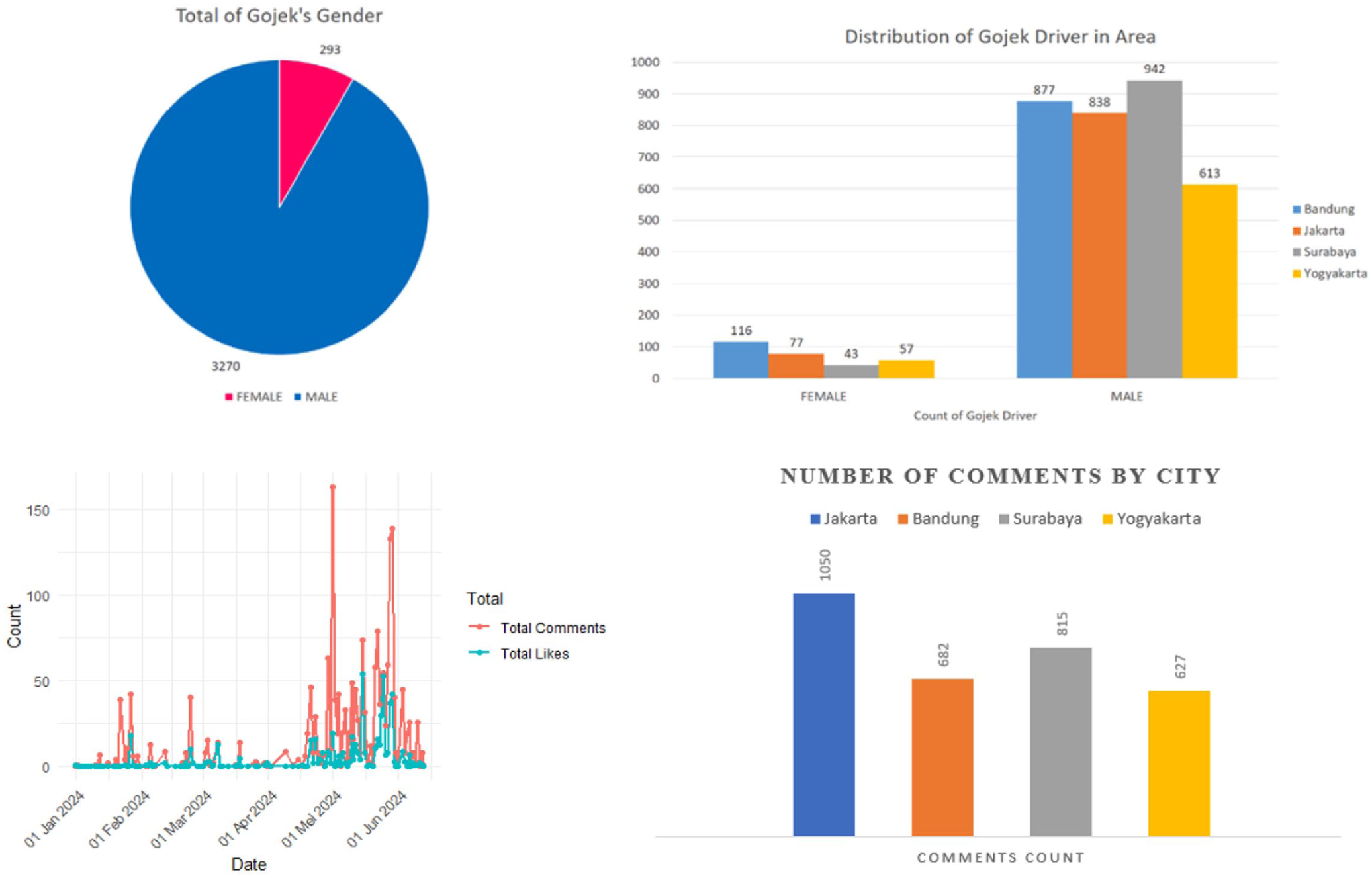
Differences in participation rates, geographic location, and gender involvement.
Within the CTI, this indicates that the personal layer is structurally mediated by interaction frequency and exposure rather than solely by internal self-conception (Hecht, 1993; Jung and Hecht, 2004). The distribution of participation regulates which identities can be enacted and recognized, establishing baseline inequalities in self-expression. Variation across gender and geographic location further suggests that participation is not socially neutral, although these patterns remain indicative due to limited metadata. Overall, personal identity in platform-based communities is unevenly constituted through participation structures that condition visibility and recognition.
Enacted identity: linguistic expressions and symbolic communication
At the enacted identity level, linguistic practices operate as mechanisms through which drivers make sense of and negotiate platform-mediated experiences. Terms such as “anyep” (see Note 1), “gacor” (see Note 2), and “akun” 5 function not merely as descriptive labels but as shared symbolic resources that encode work conditions, algorithmic performance, and income uncertainty (see Figure 3). These expressions structure how experiences are articulated and understood, transforming individual conditions into collectively recognizable meanings. Rather than neutral vocabulary, recurring terms stabilize interpretive frames through which drivers communicate, evaluate, and respond to platform dynamics. Enacted identity thus operates through symbolic standardization, where shared language enables the circulation of meaning across dispersed actors.
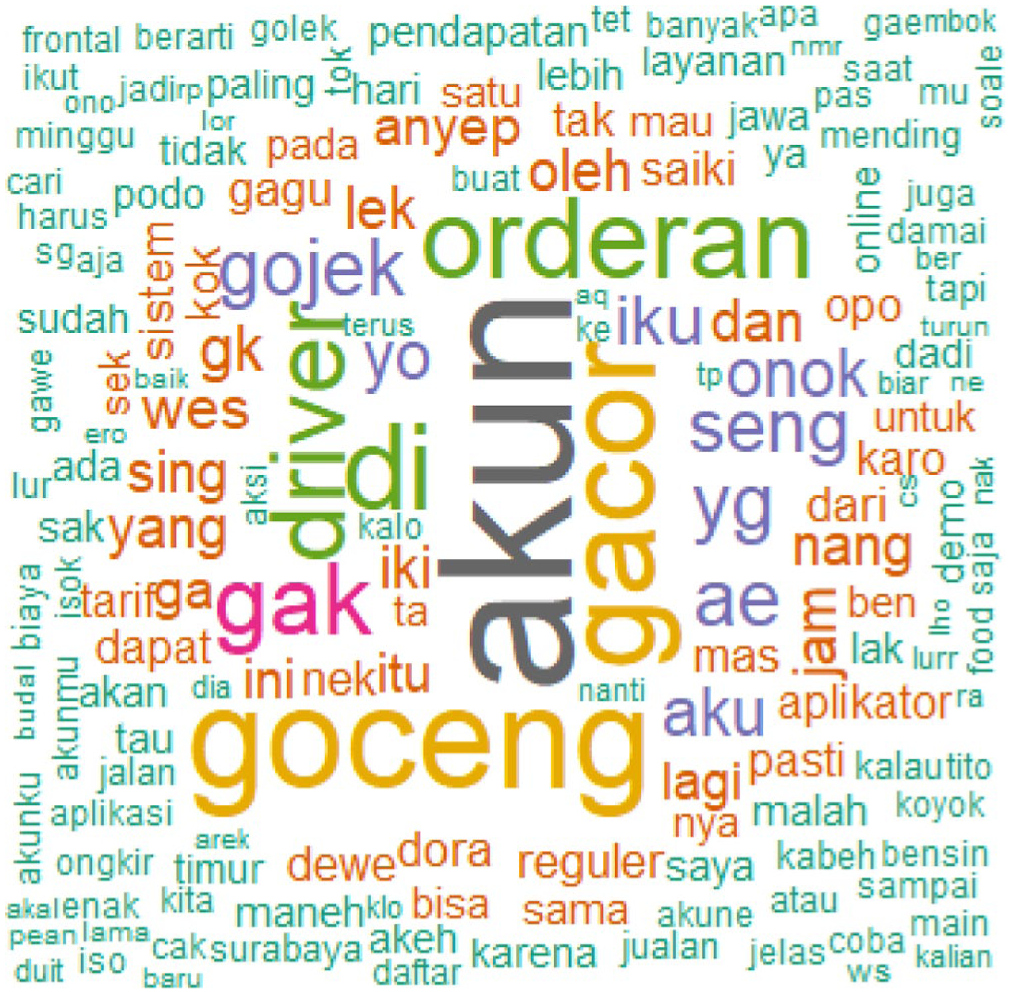
Wordcloud of Gojek driver.
Within the CTI, this indicates that the enacted layer is not simply expressive but socially and structurally organized through recurring communicative patterns (Jung and Hecht, 2004; Shin and Hecht, 2017). The repetition of these terms embeds collective experience into everyday discourse, allowing drivers to articulate concerns indirectly while maintaining shared understanding. Under conditions of algorithmic governance, such linguistic practices also function as adaptive strategies. Indirect, symbolic, and context-specific expressions enable drivers to communicate critique without explicit confrontation, mitigating potential risks associated with visibility and platform surveillance. Enacted identity, therefore, is not only constructed through communication but also calibrated in response to structural constraints, where expression remains intelligible within the community while avoiding direct exposure.
Relational identity: network position and communicative influence
At the relational identity level, identity is constituted through actors’ positions within the interaction network (see Table 5). High-degree accounts (e.g. A01 and A06) occupy structurally central positions that enable sustained interaction, positioning them as recurrent focal points of communication. Relational identity thus emerges not from personal attributes, but from patterns of connectivity that regulate visibility and recognition. Central actors accumulate interactional exposure, allowing their contributions to circulate more widely and shape ongoing discussions, while peripheral actors remain constrained by limited access to interaction flows. Identity formation, in this sense, operates through relational embeddedness, where recognition is contingent upon network position rather than individual intention.
High-degree actors and their relational roles in the network.
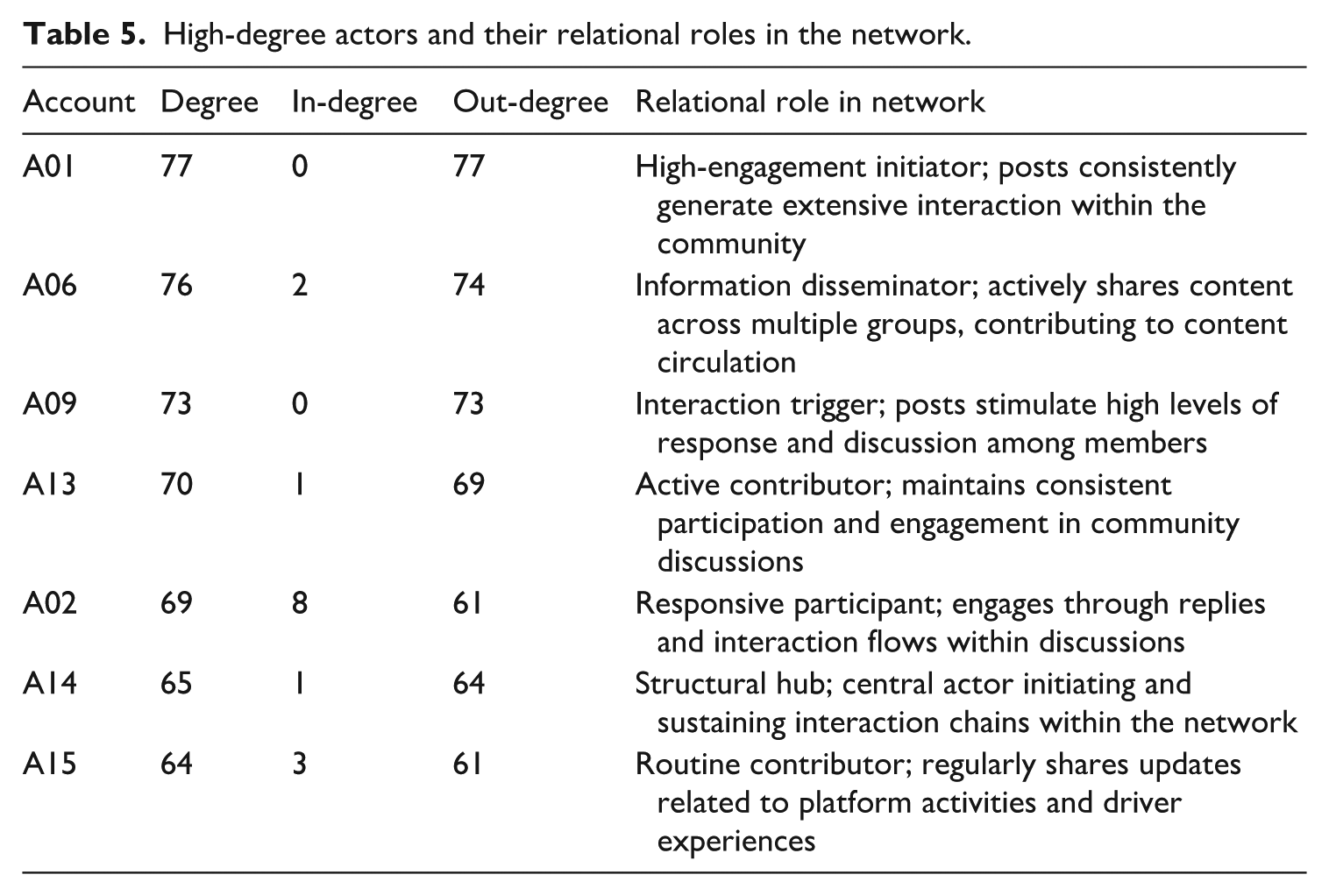
Within the CTI, this indicates that the relational layer is structurally mediated through differential patterns of interaction and acknowledgment (Hecht, 1993; Jung and Hecht, 2004). Network centrality functions as a mechanism of communicative influence, enabling certain actors to stabilize their presence as reference points within the network. This configuration produces an uneven distribution of relational identity, where communicative influence and recognition are concentrated among structurally central actors. Rather than reflecting formal authority, influence emerges through interaction intensity and positional advantage, reinforcing the role of network structure in shaping how identities are enacted and acknowledged within the community.
Communal identity: clustering, solidarity, and shared meaning
At the communal identity level, identity emerges through clustered interaction patterns that organize shared meaning within subcommunities (see Figure 4). These clusters concentrate interaction among actors with similar experiences, producing localized forms of solidarity rather than a unified collective identity. Communal identity is therefore not broadly shared across the network, but formed within bounded relational spaces where repeated interaction stabilizes common interpretations of platform work. Clustering functions as a mechanism of discursive consolidation, enabling members within the same cluster to reinforce shared concerns, narratives, and evaluative frameworks, while limiting exposure to alternative perspectives across the network.
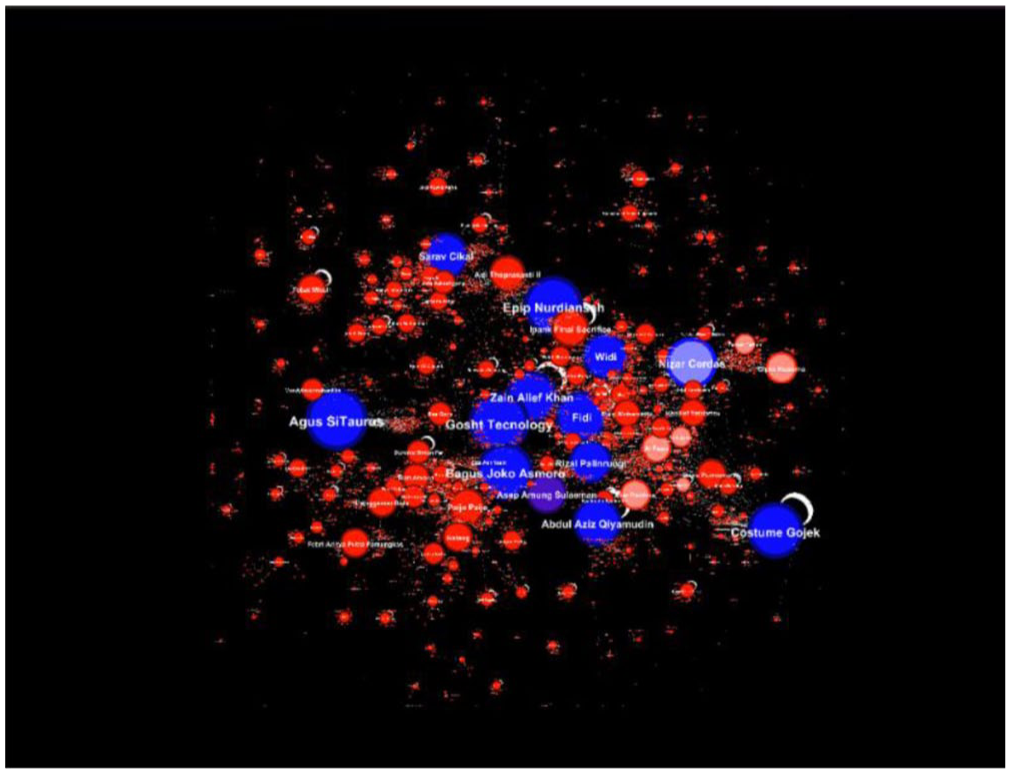
Social network by Gojek driver interactions.
Within the CTI, this indicates that the communal layer is structured through patterned interaction and selective connectivity rather than collective consensus (Jung and Hecht, 2004). Identity at this level is contingent upon cluster membership, where belonging, recognition, and shared meaning are produced through relational proximity. This configuration results in a fragmented communal identity, where solidarity is unevenly distributed and confined within specific clusters. Rather than integrating the community as a whole, clustering reproduces localized identity formations that reinforce broader patterns of relational inequality. Communal identity thus operates as a structurally mediated outcome of network segmentation, shaping how collective meaning and belonging are differentially experienced across the community. This fragmented communal structure further conditions how expression is negotiated across the network, as elaborated in the following section on voice and algorithmic constraint.
Algorithmic control, community norms, and freedom of expression (RQ3)
Opportunities for voice within the Gojek driver community are not uniformly available but are structured through the interaction of network position, algorithmic risk, and community norms. Rather than being freely exercised, expression operates within constrained communicative conditions where actors calibrate what can be said, how it is articulated, and to whom it becomes visible. Critical reflections on platform policies and algorithmic systems rarely appear as direct statements, but are mediated through symbolic language, humor, and indirect expressions. These communicative strategies enable drivers to articulate shared concerns while mitigating potential exposure to algorithmic sanctions and social repercussions. Expression thus operates through discursive adaptation, where meaning remains intelligible within the community while avoiding explicit confrontation.
This pattern is further conditioned by relational positioning within the network. Actors occupying structurally central positions exhibit greater flexibility in expressing experiences, as their established visibility and interactional embeddedness reduce communicative risk. In contrast, peripheral actors face constrained opportunities for voice due to limited visibility and heightened uncertainty regarding potential consequences. Voice, in this sense, is not an individual capacity but a relationally distributed resource, contingent upon positional embeddedness within the network. Within the CTI, these dynamics reflect an intensified identity gap between personal and enacted identity, where lived experiences cannot always be fully articulated in communication (Jung and Hecht, 2004). This gap is not solely interpersonal but structurally produced, as algorithmic governance and relational inequality jointly regulate the conditions under which expression becomes possible. Voice therefore emerges as a negotiated outcome, shaped by the need to balance communicative intent with platform-induced risk.
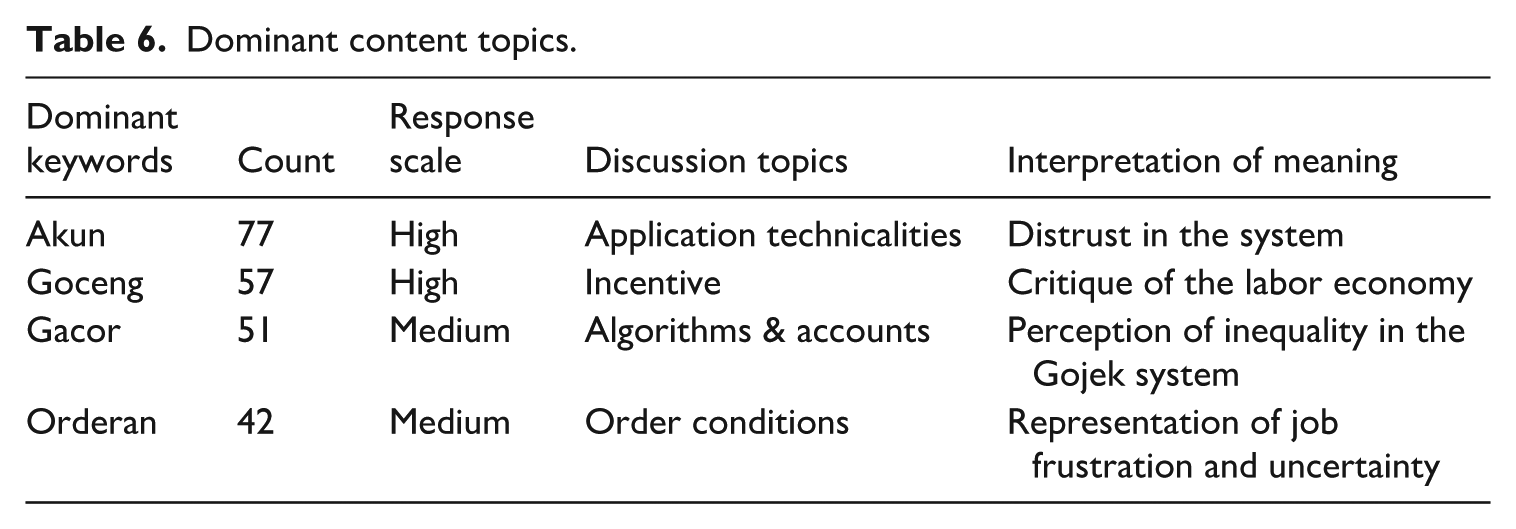
Figure 5 illustrates how these constraints are reflected in dominant communicative patterns, where high-frequency expressions cluster into three orientations: (1) concerns, hopes, and aspirations, (2) the articulation of experiences and opinions, and (3) the search for support or solutions. These orientations demonstrate that communication extends beyond technical discussion, integrating emotional expression, experiential sharing, and collective problem-solving. At the same time, they reveal how discourse is structured through recurring themes that remain within acceptable communicative boundaries. This pattern is reinforced in Table 6, where frequently used terms such as “akun,”⁵ “goceng,”⁴ and “gacor”² operate as symbolic resources that encode critique, uncertainty, and shared understanding. Rather than functioning as neutral descriptors, these terms enable indirect articulation of dissatisfaction and inequality within the platform system. The use of such language reflects a form of context-sensitive expression, where critique is embedded within collectively recognized vocabulary rather than expressed explicitly.
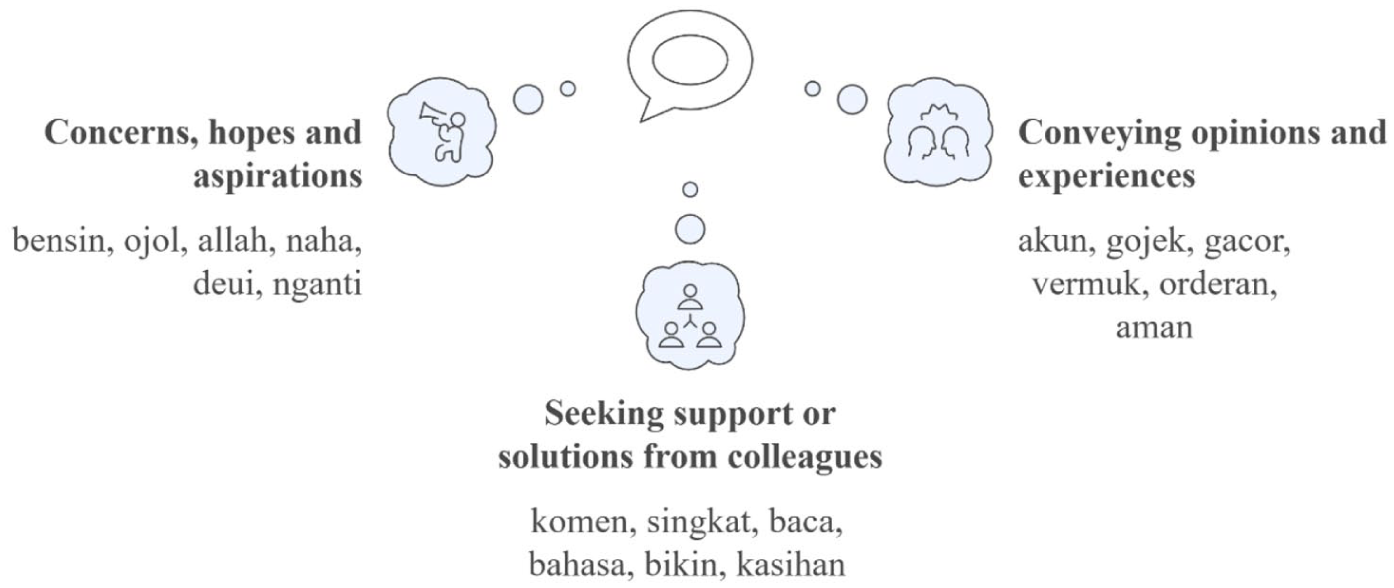
Communicative orientations of high-frequency topics in Gojek driver online discussions.
Dominant content topics.
Taken together, these findings indicate that freedom of expression in platform-based communities is not simply constrained, but systematically organized through the interplay of algorithmic governance and relational structure. Expression is neither fully suppressed nor equally accessible; instead, it is unevenly distributed and strategically negotiated across actors. In this configuration, communicative agency emerges as a structurally conditioned outcome, where the capacity to express, be recognized, and influence discourse is shaped by both visibility regimes and networked interaction dynamics. This demonstrates that algorithmic power operates not only through external control, but through the relational organization of voice itself.
Discussion
Taken together, the findings reveal that digital identity and voice in platform-based communities are not uniformly distributed, but systematically structured through relational positioning and algorithmic governance (Couldry and Hepp, 2018; Gillespie, 2019). Communication in platform environments functions as a mechanism through which inequality is produced, as visibility, participation, and voice are unevenly distributed across networked interactions.
Network structure, power, and relational identity
The Gojek driver community exhibits an inegalitarian network structure in which a small number of actors occupy central positions in communication flows. This pattern reflects broader findings that gig worker communities reproduce structural inequalities through uneven distributions of visibility and connectedness (Ford and Honan, 2019; Gandini, 2018). Within networked environments, central actors possess a greater capacity to mediate information and shape discursive agendas without relying on formal authority (Borgatti, 2009; Litterio et al., 2017). Within the CTI framework, relational identity is therefore not simply socially constructed but structurally conditioned, as recognition and legitimacy depend on positional embeddedness. Network centrality operates as a filter that determines whose identities are acknowledged and sustained. This repositions communicative power as a relationally organized condition, where visibility and influence emerge through interaction patterns rather than external imposition. As a result, network position becomes a prerequisite for voice, structuring unequal opportunities for participation within the communicative field.
Enacted identity and algorithmic expression
The use of symbolic language such as “gacor” and “anyep” demonstrates that enacted identity is realized through communicative practices that adapt to algorithmically mediated work environments. This aligns with research showing that workers negotiate expression within constrained conditions to mitigate risks associated with algorithmic control (Wood et al., 2019; Zuboff et al., 2022). At the same time, these practices reflect broader forms of communicative and emotional labor, where workers continuously manage visibility and expression under platform constraints (Raval and Dourish, 2016). Enacted identity is therefore not only expressive but adaptive, shaped by both platform visibility regimes and community norms (Gillespie, 2019). Expression becomes conditional and situational, as drivers calibrate communication to balance the need for articulation with the risk of exposure. This positions workers as strategic communicators who actively negotiate the boundaries of expression, producing forms of discourse that are context-sensitive and risk-aware. Communication, in this sense, becomes a site of negotiation where agency is exercised through adaptation rather than direct resistance.
Communal identity, fragmentation, and identity gaps
Communal identity within the Gojek driver community is formed through clustered interaction patterns that produce localized forms of solidarity rather than a unified collective identity. This reflects broader patterns in digital communities where cohesion coexists with implicit mechanisms of exclusion and normative constraints on expression (Couldry and Hepp, 2018; Cram et al., 2022; Papacharissi, 2016). Within the CTI framework, this condition reflects an identity gap between personal and enacted identities, where not all experiences can be openly articulated (Jung and Hecht, 2004). Algorithmic governance intensifies this gap by introducing structural risks that shape how identities are expressed and recognized. As a result, communal identity operates ambivalently: it reinforces shared belonging while simultaneously reproducing boundaries that regulate expression. This demonstrates that solidarity in digital labor communities is not inherently egalitarian, but structured through relational proximity, shared experience, and implicit communicative norms.
Theoretical contribution
This study advances communication scholarship by demonstrating that algorithmic power operates through the relational organization of communication itself (Couldry and Hepp, 2018; Gillespie, 2019). By extending CTI into platform-based labor contexts, the findings reconceptualize identity gaps as structurally produced within networked environments, where visibility, participation, and expression are unevenly distributed. This shifts the analytical lens from platforms as governing infrastructures to communication as the site where power is enacted, reproduced, and negotiated. Identity and voice are not merely shaped by external systems, but emerge through communicative processes embedded within relational structures. In doing so, the study contributes to broader debates on digital labor and mediated inequality by demonstrating that algorithmic governance operates through the organization of visibility and voice within everyday interaction.
The Indonesian context further sharpens this contribution by illustrating how platform-based communication operates within conditions of heightened precarity and limited institutional protection characteristic of Global South economies (Anwar and Graham, 2021; Heeks et al., 2020). In such contexts, communicative practices become critical resources for navigating algorithmic control, as workers rely on informal networks to negotiate visibility, expression, and support. Rather than representing a peripheral case, this context highlights how platform power is differentially experienced across socioeconomic settings, where structural vulnerability intensifies communicative inequality. This suggests that algorithmic governance cannot be understood as a uniform system, but must be analyzed in relation to the broader economic and institutional conditions in which it operates.
Limitations
This study should be interpreted in light of several limitations that also point to important theoretical and methodological considerations. First, the analysis is based on data from public and semi-public Facebook communities of Gojek drivers, which capture communicative practices among actively participating members. As such, the findings do not fully account for forms of identity negotiation and expression that occur in private, less visible, or platform-internal spaces. This limitation highlights the situated nature of communicative identity, which is shaped by varying degrees of visibility and platform affordances.
Second, while the integration of computational network and content analysis enables the examination of large-scale interaction patterns, it does not fully capture the subjective and experiential dimensions of identity negotiation. The interpretation of identity gaps and conditional expression is therefore inferred from observable communicative patterns rather than directly articulated by participants. This points to the need for complementary approaches that can more deeply engage with the lived experiences underlying communicative practices.
Third, the study is constrained by the algorithmically curated nature of platform data. The interactions analyzed reflect content that is made visible and circulated through Facebook’s algorithmic filtering processes, rather than the entirety of possible expressions. This suggests that what appears as communicative patterns is already shaped by infrastructural selection, reinforcing the argument that identity and voice are co-produced through platform visibility regimes.
Future research
Future research can extend the theoretical and methodological contributions of this study in several directions. First, integrating computational approaches with qualitative methods, such as in-depth interviews or digital ethnography, would provide deeper insight into how identity gaps are experienced and negotiated, strengthening CTI by linking communicative patterns with lived experience. Second, comparative studies across platforms and socioeconomic contexts could clarify how different forms of algorithmic governance shape communicative practices, and whether communicative inequalities are platform-specific or structurally embedded within digital labor systems.
Third, longitudinal approaches would enable the examination of how identity and expression evolve over time in response to changes in platform policies and algorithmic control, capturing identity as a dynamic and continuously negotiated process. Finally, future research should consider how gender shapes communicative practices and identity negotiation in platform-based work. Given that algorithmic management, visibility, and communicative risk may be experienced differently across gendered positions, examining how gender intersects with network position, voice, and identity gaps would extend CTI while offering a more critical understanding of differentiated inequalities in digital labor environments.
Conclusion
This study demonstrates that digital identity and voice in platform-based work are not merely individual attributes, but are structurally constituted within algorithmically mediated communication environments. By integrating CTI with network and computational analysis, the findings show that identity is shaped through relational positioning, visibility regimes, and communicative constraints embedded in platform infrastructures. Beyond the specific case of Gojek drivers in Indonesia, these findings extend CTI by showing that identity gaps are not solely interpersonal or psychological phenomena, but are structurally produced within networked and algorithmically governed systems of communication. In such environments, misalignment between personal, enacted, relational, and communal identity is intensified by unequal distributions of visibility, participation, and communicative risk. Identity negotiation therefore becomes increasingly mediated by platform architectures and relational dynamics rather than direct interpersonal interaction alone.
Furthermore, this study introduces the concept of conditional voice as a structurally situated form of expression in which communicative agency is shaped by the need to balance articulation with exposure to algorithmic and social risks. Voice is therefore not an inherent individual capacity, but a relationally distributed and context-dependent phenomenon shaped by network position and platform visibility. This extends CTI by linking identity construction to communicative inequality, demonstrating that the capacity to express, be recognized, and influence discourse is unevenly distributed within digital labor environments.
Methodologically, the study demonstrates the value of integrating communication theory with computational approaches to examine identity and voice as relational and discursive phenomena within large-scale digital systems. Taken together, these contributions reposition communication as a central site of power in platform societies, where identity, visibility, and voice are continuously negotiated through unequal relational structures. By foregrounding these dynamics, this study contributes to broader debates on digital labor, platform governance, and mediated inequality, offering a theoretically grounded framework for understanding how identity and expression are transformed under algorithmic governance.
Footnotes

Funding
The authors received no financial support for the research, authorship, and/or publication of this article.
Declaration of conflicting interests
The authors declared no potential conflicts of interest with respect to the research, authorship, and/or publication of this article.