






Abstract
This essay theorizes ‘sleeping in the wake' as a counterintuitive yet vital Black feminist aesthetic tradition that centers nonconsciousness – somnolence, hypersomnia, and blackouts – as a strategy of political refusal in slavery's afterlife. Grounded in the legacy of Harriet Tubman, whose traumatic brain injury and subsequent sleep affliction are celebrated by contemporary Black feminists as a vital component of her political activism, this essay shows how Black sleep torques the racialized, ableist, and gendered parameters of ‘lived experience'. By examining Claudia Rankine's Don't Let Me Be Lonely, Tricia Hersey's Rest Is Resistance, and contemporary art installations, this essay traces how contemporary Black feminist thinkers and artists revalue the horizontal body. I map two distinct but twinning lineages across the twentieth and twenty-first centuries: one that reclaims rest as a collective, spiritual practice of repair and reparations and another that embraces nonconsciousness as a necessary relief valve from the reproductive labor of interiority and selfhood. Ultimately, ‘sleeping in the wake’ decouples sociopolitical awareness from physical wakefulness, expanding the boundaries of feminist phenomenology by framing deadened, diminished, or suspended mental states as radical, opaque sites of Black aliveness.
When not in bed, the speaker of Claudia Rankine's (2004) lyric Don’t Let Me Be Lonely is benumbed. To manage the grief of genocidal violence and the quotidian indignities of anti-Blackness, she turns to a host of anaesthetizing agents – including SSRIs and television – meant to buffer people against ‘the random inevitability of their own lives’ (Rankine, 2004: 39). The poem duly adopts a somnolent tone that imbues real-life encounters with the hazy air of a dream and, conversely, dreams with the sharp sting of reality. The speaker recalls a dream in which: the lights are out in New York City. They are out because they were out. Even inside the dream I know I am dreaming … In this dark dream I am looking for a chance, ‘my chance to’ or ‘my chance for’ – it is not clear. Then where I am going or what I want is behind a black curtain, but it is so dark the curtain becomes the night. I want to fall asleep inside my dream. This wish for further paralysis wakes me. (Rankine, 2004: 127)
The strange tension in the causal shift in verb tense ‘They are out because they were out’ implies tautology but indexes a real event: the lights are out mentally because they were out materially. A footnote to the vignette states that ‘On Thursday, August 14, 2003, dozens of cities in the eastern United States and Canada […] were struck with a major power outage’ (Rankine, 2004: 153). This episode collates the multiple meanings of ‘blackout’ as a power failure, a theatrical dimming and amnesia. The dream is about an electrical blackout; it features a theatrical blackout, a ‘black curtain’ that dims to night; and it functions as a cognitive blackout, a ‘dark’ hollowed-out space of insentience within unconsciousness. Crucially, the speaker's blackout-dream appears to evacuate life but in fact creates another space for living. A ‘wish for further paralysis’ is not the same as a death wish. Because the blackout approaches without broaching death, because it takes sensory deadening as a vital resource, it has the potential to short-circuit the interminable charge of white supremacist power.
Unconsciousness is sparking interest in feminist art, writing and activism. For writers like Rankine, sleep is not a state of passivity but a kind of ‘glitch’, in curator Legacy Russell's (2020: 7, 8) locution, a scenario like ‘getting stuck in an elevator’ or ‘a city-wide blackout’ that transposes failure into a ‘vehicle of refusal, a strategy of nonperformance’. Insofar as capitalist systems use sleeplessness as a strategy of social control, as Jonathan Crary (2014) argues in 24/7: Late Capitalism and the Ends of Sleep, the digital management of sleep further exacerbates the biopolitical determinations of ‘who must stay awake in order that others may rest’ (Ma, 2022: 34). Sleep fractalizes across racial, ethnic, gendered and economic colocations, and minoritized people have made notable efforts to reclaim rest from the market by retooling it as a glitch, an act of resistance. Danielle Wong's analysis of how the ‘Sleepy Asian’ meme circulates anxiety ‘about the ends of labor and rest in the digital age’, for instance, goes some way in accounting for the Pahinga Collective's ‘Call to Rest’ as an act of ‘collective care and healing justice’ among Filipina/x/o people (de Leon, 2022: 111; Wong, 2024: 208). For many Black feminist thinkers, sleep is a response to the history and legacy of enslavement. ‘When I think about the history of the Transatlantic Slave Trade, chattel slavery, and plantation labor, I am stunned by how much we have chosen to forget that capitalism was built from these systems’, Tricia Hersey (2022) explains in her manifesto Rest Is Resistance. ‘My consciousness and Spirit will not allow me to align myself with a system that still owes a debt to my Ancestors’ (Hersey, 2022: 35). Where Rankine instantiates sleep as a phenomenologically rich resource for and poetics of Black being, Hersey frames it as a reparative activity that refuses slavery's legacy of exhaustion.
Both Rankine's lyric and Hersey's manifesto decline to presume the equivalence of mental wakefulness and sociopolitical awareness. Together they spin ‘the wake’ on its axis. As conjugated by Christina Sharpe (2016: 19), ‘wake’ – a ritual practice of mourning the dead, the flow of water produced by (slave) ships and a state of awareness – coalesces into a conceit for Black experience as the condition of mourning ‘the interminable event’ of slavery's afterlife. Sharpe's analysis of the material and metaphysical production of Blackness frames ‘Black being in the wake as a form of consciousness’ that does not ‘resolve the question of exclusion in terms of […] civil or human rights, but rather depict[s] aesthetically the impossibility of such resolutions by representing the paradoxes of blackness within and after the legacies of slavery's denial of black humanity’ (Sharpe, 2016: 19). Lingering in the irresolvable paradoxes of ‘Black life insisted from death’, the little death called sleep performs that impossibility (Sharpe, 2016: 17). It decouples being consciously awake from being politically woke – and thereby shears cognizance from wake work, a tradition of community care that epistemically ruptures the unthinkability of living in diaspora by attending to ‘Black life lived in, under, and despite Black death’ (Sharpe, 2016: 20). Rankine and Hersey, in different ways and to different ends, dramatize how unconsciousness – because it holds subjectivity in abeyance – aesthetically enacts this epistemic rupture.
Unconsciousness has emerged as a crucial if counterintuitive resource for living in the wake. So much so, in fact, that it underwrites a Black aesthetic tradition that might be called sleeping in the wake, a phrase that gathers together creative practices that wrest rest from the chronobiopolitical clutches of racial modernity by exploiting the phenomenological opacity and plotless temporality of unconsciousness. Sleeping in the wake yokes the phenomenological problem of unconsciousness (the self is absent to itself) to the political problem of who gets afforded time for unconsciousness (the racial sleep gap) to assay the possibilities for being both ‘woke’ and ‘in the wake’ without being awake. It is a practice that originates with Harriet Tubman, whose hypersomnia and hypnagogic visions were said to chart literal and figurative paths to freedom. Accordingly, this article begins by showing how Tubman, as a Black woman who lived with a sleep affliction, prompts a feminist revaluation of lived experience that accounts for deadened, diminished or suspended mental states as phenomenologically rich modes of living. It then tracks how Tubman's unpredictable and involuntary sleep spells have become an animating legend for two distinct but linked traditions of sleeping in the wake. The first tradition, I show, reads Tubman as modelling rest as a revolutionary practice of spiritual restoration; it includes Hersey's The Nap Ministry collective, Black performance art that curates physical and psychical retreat, and the perhaps unlikely figure of Dianthe Lusk from Pauline Hopkins's (1903) novel Of One Blood. The second tradition considers sleep a refuge not simply from exploited labour but from the reproductive labour of interiority. From Charles Chesnutt to Rankine and the artist Sheldon Scott, this tradition values unconsciousness as a relief valve from selfhood. At stake in these linked but distinct iterations of sleeping in the wake is whether the inner freedom of Black rest advances or impedes freedom projects.
From the late 19th century to the early 21st century, from poetry and prose to performance art, these twinning practices of sleeping in the wake – one that considers rest a political act of resistance, another that sees it as an enlivening though not necessarily liberatory activity – cover different formal mediums over significant swaths of historical time. These sweeps are not meant to universalize or ahistoricize Black experience. Global history teaches us ‘to be suspicious of apparent disconnections between regions, periods, and peoples’, David Kazanjian (2016: 6) observes, but the dominance of this critical disposition runs the risk of eliding otherwise compelling affinities over time and space. Kazanjian (2016: 7) duly develops in his book The Brink of Freedom a ‘transversal’ method that links two geographical points at the same time (Liberia and Yucatán in 1847) while transgressing ‘established distinctions’ between the historical formations (Anglo and Spanish Atlantics) they represent. This article draws methodological inspiration from Kazanjian by inverting that transversal. ‘Sleeping in the wake’ requires drawing a line that connects two time periods in the same place (the United States, ca. 1900 and 2000) without reducing that historical relation either to causality or to analogy. Moving across centuries – frankly, shuttling over most of the 20th century – does not flatten the cultural texts under discussion but rather juxtaposes historical conditions of rest within the always accretive history of anti-Black systems of violence. The wake, as Sharpe holds, involves continual calibration within and across different historical flashpoints. Whether occurring amid Jim Crow segregation or Black Lives Matter, enslavement or post-9/11 islamophobia, sleeping in the wake invites varied aesthetic techniques for remaking sleep into a strategy for reclaiming time – or killing it altogether.
Sleeping in the wake is steeped in different historical contexts, but at its broadest it compels a radical rethinking of lived experience. The centrality of sleep to Tubman's political leadership not only dismantles the (white-patriarchal) authority of consciousness that has delimited lived experience. It also displaces what feminist theory has long considered the hallmarks of lived experience – sentience, feeling, agency – with a more ontological set of concerns that exceeds the ideals of deliberative selfhood. At stake in incorporating unconscious states into the category of lived experience is, fundamentally, the modern ontology of the subject: formed not by a continuous stream of impressions that yields self-knowledge but instead by the gaps in perception that produce other, more opaque kinds of knowledges. As an icon of radical liberation, Tubman effectively inverts Sharpe's (2016: 5) provocation ‘to think “the wake” as a problem of and for thought’ by embodying the unthought as a problem of and for thinking the wake. Across a variety of moments and mediums, sleeping in the wake assays the unthought – somnolence and its sisters – as a fertile rather than fallow ground for wake work.
Lived experience below the threshold
If wake work insists on other possibilities for Black being in the world, then Harriet Tubman suggests one such possibility. Whether construed by her 19th-century comrades as a spiritual gift or retroactively diagnosed by medical historians as narcolepsy, Tubman's hypersomnia pushes lived experience below the threshold of consciousness. From the age of 13, when she suffered a traumatic brain injury after an overseer threw an iron weight at her head, Tubman spent a lifetime coping with seizures, painful headaches and unpredictable blackouts that caused her to fall asleep in the middle of talking or working. These sleeping spells often lasted anywhere from one minute to 30 minutes and were accompanied by hallucinatory visions. In the context of 19th-century evangelicalism and the spiritualist movement, historian Tiya Miles (2024: 76) notes, Tubman's ‘religious sensibility coincided with the physiological impact of her altered brain to create a powerful sense of amplified, second – or future – sight’. Indeed, Janell Hobson (2019: 198) contends that Tubman intentionally intertwined ‘Christian liberation theology and black feminist thought to reconstitute her own disabled body through the divine’. Tubman turned her sleep affliction into an integral component of her abolitionist activism. Her first biographer Sarah Hopkins Bradford reported that in 1860 while Tubman was staying with the minister Henry Highland Garnet in New York City, she had a vision: of the emancipation of her people. Whether a dream, or one of those glimpses into the future […] no one can say, but the effect upon her was remarkable. She rose singing, ‘My people are free! My people are free!’. (Bradford, 1886: 92)
This oft-recounted incantatory declaration certifies the imbrication of sleep – marked by a present tense so protracted that what will be already is – with Black freedom struggles.
Because sleep facilitated her and her people's self-emancipation, Tubman bodies forth the challenge that unconsciousness poses to conventional theories of lived experience. After all, what is self-determination without consciousness, the building block of agency, of selfhood? Bradford noted her heroic subject's somnolent ‘gift’, but the image of Tubman that prevailed for the better part of a century was the one Bradford's 1869 biography of Tubman authorized: awake, erect and militantly acting on the world around her (Figure 1). Not asleep, not prostrate and certainly not vulnerable to her environs. The tension between the ‘real’ Tubman and her public representation exemplifies philosopher Cressida Heyes's (2020: 51) claim that ‘the centrality of experience to knowledge in feminist thinking’ has made it difficult to ‘conceptualize unconsciousness as being part of human life, and thus available for ethical thinking’. In the 20th century, feminists adapted the phenomenological concept of ‘lived experience’ – the embodied web of relations through which experience emerges – to challenge the patriarchal construal of experience as universal and disembodied knowledge, as well as to validate the epistemic authority of subjective knowledge and personal testimony. Feminist thinking has used lived experience to rebut ‘experience’ – but has left the reigning qualifier ‘lived’ surprisingly un(der)questioned.
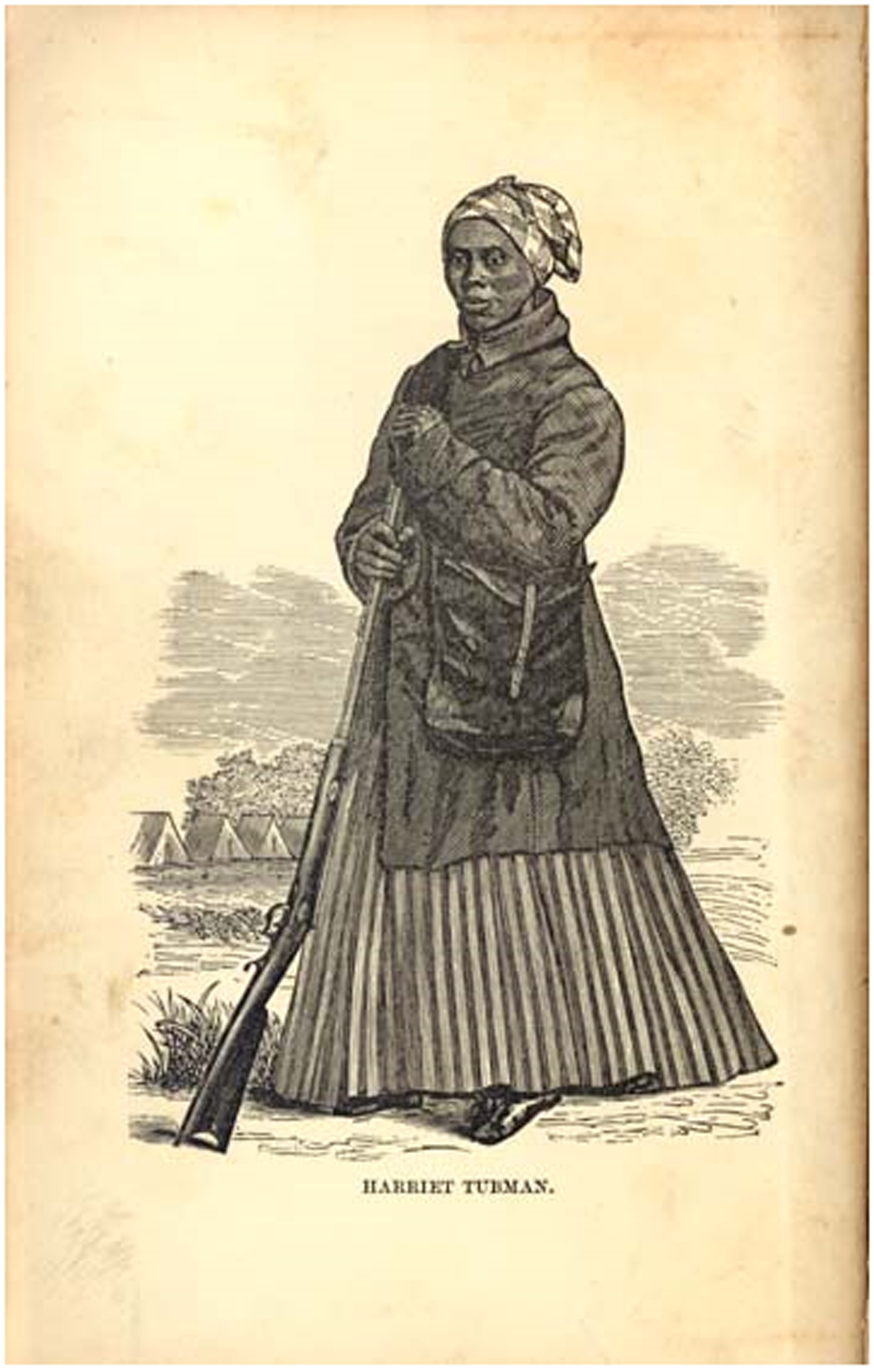
Frontispiece image, Sarah H. Bradford, Scenes in the Life of Harriet Tubman (1869).
Feminist theory's assumption that lived experience is consciously registered has had the perhaps unintended effect of excluding a host of insensible experiences from the category of ‘lived’. That oversight, Heyes (2020: 20) argues, eliminates a significant part of human living ‘from social and political interpretation’. To eliminate from lived experience the unconscious states that cluster at the edges of cognizance (comas, migraines and unmedicated childbirth) is to elide the fact that human beings are never fully in control of their mental and physical faculties. Elaborating on his commitment to impairment phenomenology, a politicized theory of existence that presumes ‘an experience of self that is unstable and ultimately not full available [to itself]’, Jonathan Sterne (2021: 13) argues that the ‘constant possibility of impairment, error, breakdown’ and other gaps in consciousness is constitutive of lived experience. To expand the parameters of ‘lived’, then, is to bring into the fold of social analysis the autonomic functions – the involuntary processes (sleep, metabolism, respiration) of physiological regulation – that sustain physiological life but neither require nor produce will, agency or subjectivity. A figure sitting at the nexus of Heyes's feminist critique and Sterne's impairment phenomenology, Tubman certifies that self-awareness need not be a prerequisite for qualifying experience as ‘lived’.
Recent attention in feminist and disability theory to states of impaired consciousness has fruitfully upended what counts as lived experience. Yet there remains another restriction baked into the concept of ‘lived experience’ that has gone overlooked: Black existence. Coupled with ‘the everyday of Black immanent and imminent death’, in Sharpe's (2016: 13) words, slavery's legacy of objectification discloses that lived experience presumes not only wakefulness but whiteness too. Hence, Tubman compels a reassessment of not only what but also whose experiences count as lived. Lived experience, after all, expresses the phenomenological axiom that ‘there is no perception without a subject’ and ‘no subject without a body’, Gayle Salamon (2018: 6) observes. But because Black existence is produced as both ‘enfleshed’ and ‘without ontology’, Rizvana Bradley et al. (2023a: 93, 86) argues, the phenomenological body – the ‘perceptual locus from which lived experience unfolds’ – is constitutively unavailable to Black subjects. In short, phenomenology is ‘a racial and racializing operation’ that excises Black flesh, the dehumanized and desexed artifact of captivity, from the phenomenological flesh that is the (white) body's sensuous entry into the world (Bradley et al., 2023a: 88). While Bradley's critique of phenomenology is both persuasive and meticulously argued, David Marriott (2023: 20) reminds us that ‘Not being is not being nothing’. Lived experience may be an impossibility within the strictures of European phenomenology but that does not necessarily mean that livedness is an impossibility tout court. Lived experience might be knowledges gleaned from the litotic position of ‘not nothing’. And that is something.
Whereas scholarship that includes unconsciousness in the social analysis of lived experience often overlooks the anti-Blackness of that concept, scholarship that elucidates the racist foundations of lived experience may elide the phenomenological richness of unconscious states. Whether or not phenomenology is a dead end, deadened consciousness might be an invitation to think unconsciousness as, not against, lived experience. Kevin Quashie's contention that ‘Black aliveness’ is to be found in states of psychical surrender suggests as much. Rather than reject lived experience, Quashie (2021: 66) defines Black aliveness as a ‘state of suspension in the intensity of presence and possibility’ and a ‘call towards dispossession’ that ‘countenance[s] risk and threat as if one were free to be suspended in human happening’. Describing Black aliveness in the language of surrender and dispossession indicates a phenomenological vacancy that closely resembles sleep. In fact, Quashie's description of Black aliveness resonates with Bradley's et al. (2023b: 196) claim, in her essay on Black wayward feeling, that rest is ‘an interval within an interval’. In other words, Black rest is a psychical negation within the ontological negation of Black being that makes it possible to bear the ‘desire for a life beyond the reproduction of social death and all that survives it’ (Bradley et al., 2023b: 194). Bradley's account of Black rest complements Black aliveness as a ‘suspension of human happening’ that can act as an epistemic and aesthetic resource for living athwart biopolitical and anti-Black determinations of ‘life’. Black aliveness enacts a modality of being so restful and recessive that it throws into crisis the very meaning of ‘lived’ experience. Socially illegible, phenomenologically inaccessible and ontologically confusing, unconscious states install a poetics of Black aliveness where it would appear to be otherwise impossible.
Within the phenomenological framework offered by feminist, Black feminist and disability theorists, Tubman suggests one possibility for being in the wake: inhabiting states of diminished consciousness that torque the racialized, ableist and gendered parameters of lived experience. As an emblem of the paradoxical imbrication of self-determination and somnolence, she facilitates a feminist revision of lived experience organized around states of unconsciousness where Black aliveness can flourish. Thus, when theorized from the social position of a Black woman with a sleep affliction, what Frantz Fanon famously called ‘the fact of Blackness’ looks quite different. Far from an epistemological vacuum, sleep is a lived experience that troubles distinctions between rest and labour, passivity and agency, as well as objecthood and subjectivity. The lived experience of Blackness might register (as it does for Fanon) the feeling of loss that attends the awareness of racialization. It also might entail the sovereignty of insensibility, a phenomenological orientation that bears no inherent relation to the anti-Black world. Sleep charts a way forwards in the wake by extending suspended being into lived experience.
The promise of res(t)istance
In the process of routing the politics of lived experience through unconsciousness, Tubman has come to anchor a set of Black feminist practices that revalue rest as a portal into freedom dreams. Although falling asleep in the middle of a rescue often ‘jeopardize[d] the safety of her parties of runaways’, historian Kate Clifford Larson observes, nonetheless an array of artists and thinkers have drawn inspiration from Tubman's hypersomnia (Larson, 2003: 136). Rest strategist Octavia Raheem – the author of Rest Is Sacred (Raheem, 2025) and founder of the Pause, Rest, Lead School – includes Tubman in a genealogy of Black ‘dreamers and dream keepers’ that motivate her. In her manifesto Rest Is Resistance, the theologian and performance artist Tricia Hersey (2022) similarly identifies Tubman as ‘one of my many muses’. She explains in the preface, ‘I was guided by Harriet Tubman, proclaiming after waking up from a prophetic dream: “My people are free.” The audacity to proclaim freedom via rest in the now. Rest has been revolutionary for my soul’ (Hersey, 2022: 4). Scholar Alexis Pauline Gumbs (2014: 142) also considers Tubman to be an iconic daydreamer who models Black feminism ‘as a collective visionary act’. Reflecting on the Combahee Pilgrimage that she led in 2019, Gumbs (2014: 144) asks, ‘What did freedom look like in her dream? […] Might she have envisioned twenty-one black feminists dressed in white at the banks of the Combahee River […] repeating a mantra that still requires faith to articulate: “My people are free”?’. Black feminist thinking harnesses the mythos of Tubman's dreamlife to retool naps into an instrument of liberation.
Accounts of Tubman's dreams, which ‘have appeared in newspapers, children's books, and adult nonfiction’ since the 19th century, are not new (White, 2019: 82). What is new is a concerted effort among African, African American and Afro-Latinx artists to turn sleep into a practice of collective freedom. Inspired by the idea that Tubman's dreams ‘revealed [to her passengers] where to move next’ on their journey North, these artistic experiments comprise what art historian Josie Roland Hodson (2021: 21, 8) calls a ‘Black sleep aesthetics’, a ‘poetics that acts as a refusal of and reparation for the enduring myths of Black sleeplessness or nonsomnia, indolence, and extraordinary industry’. Black sleep aesthetics is indebted to Civil Rights activist Fannie Lou Hamer's (Hamer et al., 2011: 57) insight that racial oppression is a disabling system of exhaustion – ‘I am sick and tired of being sick and tired’ – as well as to Audre Lorde's (1988: 119, 125) canonical and chronically abused (by the white wellness industry) avowal that ‘periods of rest and relaxation’ are self-care, which itself is ‘an act of political warfare’. But Tubman acts as a kind of patron saint to Black sleep aesthetics. She embodies an actionable response to the ‘hyperexploitative labor conditions’ that have deprived Black people of sleep by compelling them ‘to work more for less’ (Hodson, 2021: 14). After all, living in the wake increasingly means living with the racial sleep gap: the disparities in quantity and quality of sleep produced by systemic racism, economic precarity and the daily stress of discrimination. Dating back to the colonial plantation, the racial sleep gap bisects ‘capitalism's theft of time with the theft of bodies and land’, writes media theorist Jean Ma (2022: 35). In its effort to install rest as a collective practice for restoring physical and mental health, Ma (2022: 34) observes in her analysis of cinematic representations of sleep that Black sleep aesthetics sits at the ‘fulcrum of an art collaboration and a politics of resistance’.
In the same way that Tubman channelled her hypersomnia towards collective liberation, so too do Black sleep aesthetics enact sleep as a mode of wake work by transforming it into an experiment in Black sociality. In her role as Nap Bishop, Hersey organizes Collective Napping Experiences that are free and open to the public, typically held in libraries, parks and other community spaces. By gathering people together to nap, Hersey aligns ‘the subjective space of the self’ with the ‘sense of belonging to found in the collective’ (Hodson, 2021: 9). Afro-Latinx artists Niv Acosta and Fannie Sosa undertake a similar effort in their installation Black Power Naps / Siestas Negras (2018–2020). Across art venues in North America and Europe, this allowed only visitors of colour to rest in healing stations that were designed as culturally resonant sleep surfaces, including a ‘Black Bean Bed’ (a pit of uncooked black beans) and the ‘Atlantic Reconciliation Station’ (a waterbed). The sleep materials both literalize the semiotic undulations of the wake and perform a kind of bodywork – cradling, holding, massaging the napper – to undo the somatic damage of exploitation. Whether experienced in a high school gym or a museum, on a yoga mat or a pit of coffee beans, Black sleep aesthetics invites individuals to idle in a ‘collective plane’ of ‘vulnerability and interdependence’ (Ma, 2022: 36). It refuses capitalism's nonstop productivity by yanking the corporate ‘power nap’ – semaphored by the installation's title – away from the ‘wellness industry's capitalization on sleep as individual investment’ and placing it instead in the community-minded tradition of the Black Power movement (Drees, 2020: 13). Naps, idleness and indolence are all reclaimed to suture individuals to, rather than separate them from, a collective body.
Black sleep aesthetics remakes sleep into wake work not only by curating it as a collective act of reparations but also by inculcating it as an imaginative, not oblivious, state of being. ‘How can we dream if we don’t sleep?’, Acosta and Sosa ask (Douglas, 2023). Indeed, rest is a portal into what Hersey (2022: 134) calls a ‘DreamSpace’, a ‘temporary place of joy and freedom’ for reclaiming Black ‘autonomy and sovereignty’. Notably, Mia Imani Harrison and Mayola Tikaka's 2024 installation DREAM TEMPLE (for Octavia) choreographs the fine line between the vitality of dreaming and the lifelessness of the sleeping body. It features a low-lit space with pillows and mats for visitors to rest, as well as an altar that contains a mattress indented by a figure lying on its side (Figure 2). The sleeper's figural impression – one knee bent, an arm outstretched – responds to images of Black people murdered by the police by indexing and inverting the two-dimensional chalk outline of a homicide victim. It also, in the global tradition of die-ins, lie-ins and sleep-ins, exploits horizontal figuration to stage ‘the structures in which different people are laid low’ (Dowling, 2024: 17). Yet this ‘performance of inertness’ is also a performance of absence; the postural imprint, the only remnant of human presence, breaks down any ‘grammar of collectivity’ (Wong, 2024: 209). It responds to Black people's structural proximity to ‘resting in peace’ by consecrating the Black body resting peacefully. Here, Black sleep aesthetics joins disability justice in acknowledging that, because rest is not always elective, the time people are forced to ‘spend in beds enduring pain, fatigue, depression, or other bodymind conditions’ can still be a mode of ‘resistance and visioning’ (Nishida, 2022: 259). DREAM TEMPLE (for Octavia) ‘rises up’ by sacralizing the gestural repertoire of dreaming, such that lying prostrate breathes (dream)life into Black liberation.
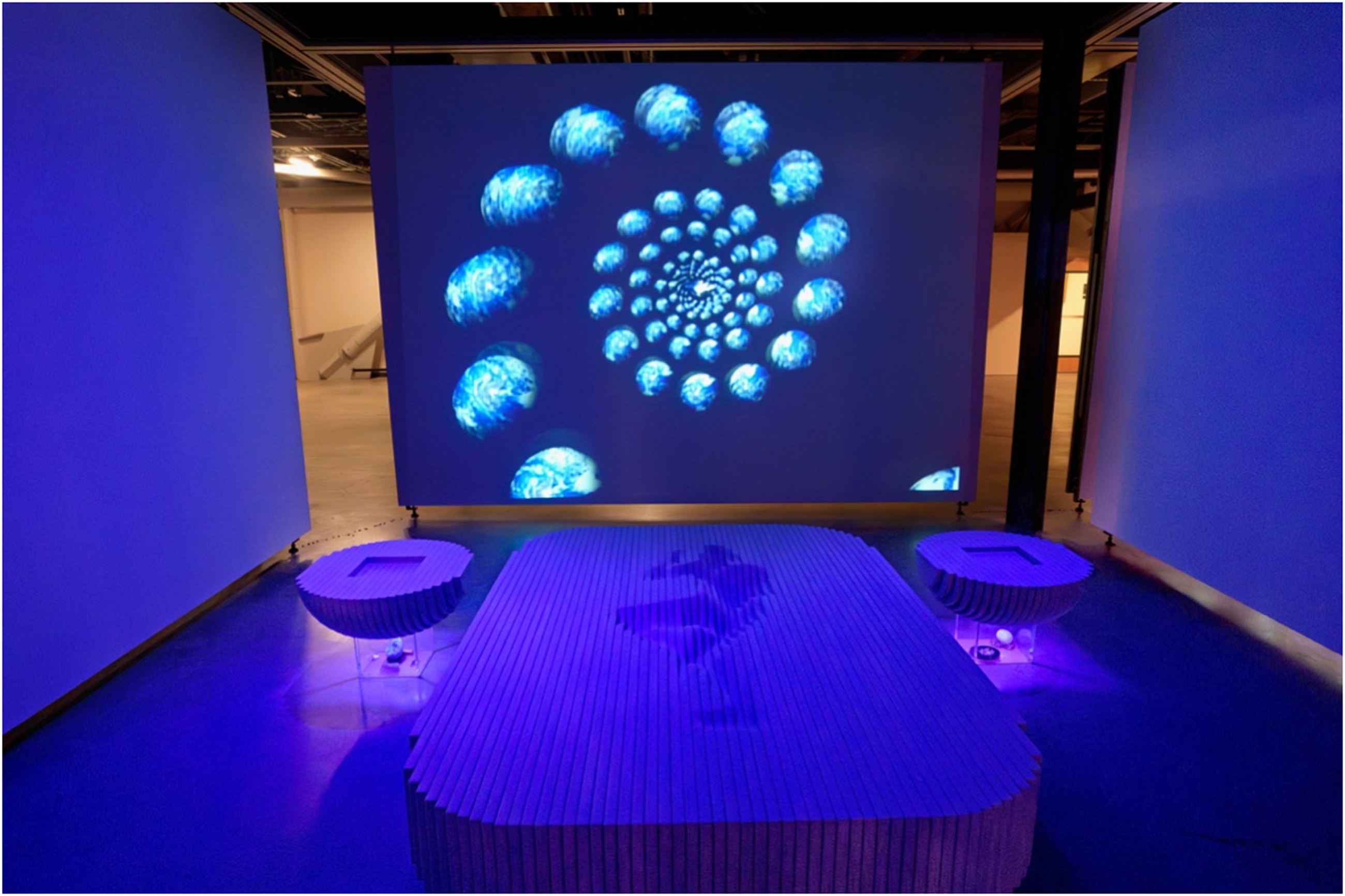
Harrison and Tikaka, DREAM TEMPLE (for Octavia). Photo courtesy of City of Seattle Office of Arts & Culture / Marcus Donner.
In this fashion does Black sleep aesthetics blur distinctions between individual and collective bodies, resistance and recumbence, physical retreat and psychical retreat. These nap experiences and exhibitions, Ma (2022: 40) observes, double as ‘an enclosure, or a space in which bodies are at once held and withheld [from white surveillance]’. This enclosure, in turn, materializes dreaming as a retreat into ‘the unconscious territory of Black sleep’ (Hodson, 2021: 17). That unconscious territory of what Hersey calls ‘DreamSpace’ redirects sleep from a state of insensibility towards a contemplative tradition of mindfulness. Black sleep aesthetics thus endeavours to mould ‘quiet subjects’, in Quashie's (Quashie 2012: 45, 100) formulation, that inhabit a joyfully raucous and riotous ‘freedom within’ that declines to ‘yield to [the] vagaries’ of the anti-Black world. Quiet is not a suspension of consciousness – that would be unconsciousness. Rather, for Quashie (2012: 113) quiet enacts a more Buddhist ‘consciousness of surrender’ that expands interiority and selfhood into a relational ‘oneness’. Quiet elucidates how Black sleep aesthetics thinks rest: as a vehicle for the spiritual restoration, not evacuation, of the Black subject. In 2019, the artist collective House/Full of Blackwomen extended Tubman's legacy by fostering quiet as a fugitive practice. Its performance ‘Black Women Dreaming’ privately invited Black women and femme-identified people in the Bay Area to a ritual practice of rest and dreaming. This fugitive episode – ‘No documentation of the collective sleep was publicly circulated’, Hodson (2021: 21) reports – installed quiet as a physically and psychically safe space for making a devotional practice of dreamlife. With Tubman's iconic face marking her as a spiritual leader or guru, the event inaugurated a supine sensus communis: a community of sleepers who see inner freedom as the route to collective freedom.
These important artistic renovations of sleep establish Tubman, either explicitly or implicitly, as a foremother to Black feminist practices of res(t)istance. An earlier, if proleptic, practitioner of Black sleep aesthetics somewhat tempers the liberatory reach of Black rest, however: Pauline Hopkins, a Progressive-Era writer and an editor of The Colored American Magazine. Hopkins's apprehension about the emancipatory possibilities for Black sleep might have arisen from bearing witness to the fate of Tubman, a living icon so destitute that Hopkins made direct appeals to the magazine's readers for her financial support. Hopkins also penned a biographical sketch of Tubman as part of its ‘Famous Women of the Negro Race’ series. She also, I argue, used ‘Moses’ as inspiration for Dianthe Lusk, the tragic heroine of Hopkins's novel Of One Blood; or the Hidden Self, serialized in the Colored American Magazine from 1902 to 1903. Generically and thematically hybrid, Of One Blood tracks the legacy of slavery's familial bond(age)s while mapping out a future for pan-African liberation. It does so by delineating two crisscrossing dramas: one, the biological discovery that a love triangle between the hero Reuel Briggs (a telepathic doctor passing as white), the villain Aubrey Livingstone (a white plantation heir) and the ‘tragic mulatta’ Dianthe Lusk (a Black soprano and spirit medium) is in fact incestuous; the other, the archaeological discovery of a hidden city in Africa that Reuel ends up ruling by birthright after learning he is descended from African royalty. The subordination of realist character development to the melodramatic plot twists of the romance, this brief summary hopefully conveys, has the effect of rendering Hopkins's African American characters, especially Dianthe, fairly static. Yet when placed in the long tradition of Black sleep aesthetics, the affectively flat style that Hopkins adopts might be read instead as an effort to reproduce the singular opacity of the ‘quiet’ subject.
An aesthetic choice rather than a failing, flatness guards a Black woman like Dianthe against further objectification by rendering, as sleep does, her subjectivity illegible to outsiders. This stylization of Dianthe is both thematic and narratological. As a star soprano and a psychic, Dianthe performs in two different mediums: sound and spirits. Whereas her virtuosic vocal performances awaken her audience to heightened emotions, her catalepsy is a performance of non-performance that seals her off from onlookers. During one such spirit visitation, she tells Reuel that she sees ‘the power and influences behind the Veil’ and then ‘[sinks] upon the cot into a recumbent position. Her face was pale; she appeared to sleep. Fifteen minutes passed in death-like stillness, then she extended her arms, stretched, yawned, rubbed her eyes – awoke’ (Hopkins, 1903: 107). The description of Dianthe in her ‘death-like stillness’ not only conjures Tubman but also places her in a tradition of deadpan aesthetics. Given the Jim Crow-era ascendance of Blackface minstrelsy and its racist depiction of Black people as hyper-expressive, critic Tina Post (2022: 5) argues, deadpan emerged as a Black performative mode of ‘surface quiet’ for marshalling outwards inscrutability. Thus, although sleep's transformation of a person into an object ‘is an awkward theoretical configuration for the Black human that has already been decreed an object by dominant discourses’, Dianthe dramatizes a register of affective declension that exploits objecthood to preserve Black interiority from outside scrutiny (Hodson, 2021: 16). Deadpan aesthetics thus becomes a strategy for suturing inner quiet to the gestural economy of surface quiet – and thereby models how an African American woman in the postbellum United States might become object-like while still asserting agency.
Within this expressive and historical context, Hopkins routes Black sleep aesthetics through affective flatness rather than intensity. Yet any promise of res(t)istance that deadpan might offer Dianthe is undercut by the melodrama that her somnolence propels. When a train accident puts her ‘into a cataleptic sleep’, and Reuel finds the ‘unconscious girl’ in a ‘seeming sleep of death’, she awakens to tell him, ‘I dreamed of you while I slept’ (Hopkins, 1903: 103). The scene stages another accident-induced ‘cataleptic sleep’ recounted in the Colored American Magazine earlier that year. ‘A cruel blow upon the head […] inflicted a lifetime injury which caused her to fall into a state of somnolency from which it is almost impossible to arouse her’, Hopkins (1902: 218) wrote of Tubman. In the context of print publication, Dianthe's profound somnolence suggests the same ‘supernatural power’ that Hopkins (1902: 218) ascribed to Tubman. The novel, then, is a kind of palimpsest that peels away ‘I dreamed of you while I slept!’ to reveal the proclamation ‘My people are free!’ underneath. Dianthe's avowal duly acquires a patina of prophecy: Reuel will ‘be free’ when he returns to Africa. Her prophetic visions power the liberatory telos that ultimately discards her. Dianthe is a tragic mulatta fated to die before freedom arrives – a plot point that surely resonates with the abandonment of Tubman to a life of penury. Dianthe, the fictional child of a freedom fighter flattened into an icon (at the expense of the material support she needed to live), experiences sleep states that serve her brother Reuel's self-determination – and leave her vulnerable to sexual assault by her half-brother Aubrey Livingstone. Sleep redoubles a deadpan aesthetics that protects Dianthe from anti-Black violence but is itself a condition that, because it entails a ‘precarious balancing act between personhood and objecthood’ that can prove fatal for Black women, remains a risky proposition for collective liberation (Ma, 2022: 29).
Of One Blood thematically converges with while stylistically diverging from Black sleep aesthetics. The novel agrees that rest is a necessity for dreaming and realizing Black liberation. But it warns that liberation risks coming at the expense of Black women. Sleep, Hopkins shows, can still be put to work – specifically to dreamwork (a term that colloquially denotes the images, ideas and feelings that dreams produce). In Of One Blood, dreamwork extends the reproductive labour of interiority: Dianthe's visions produce Black political progress, but because they occur in the ‘private sphere’ of the psyche they are not considered work. The novel instrumentalizes Dianthe as a somnolent means to a liberatory ends; Black sleep aesthetics similarly runs the risk of instrumentalizing sleep as a tool for dreaming. In valuing Tubman's hypersomnia for the visions it produced, Black sleep aesthetics has perhaps unwittingly engendered a model of res(t)istance that renders the revolutionary possibilities for Black rest subject to white corporate capture. That risk is borne out in the second edition of Hersey's Rest Is Resistance, first published in 2022 as a manifesto then two years later reprinted as a self-help book subtitled ‘Free Yourself from Grind Culture and Reclaim Your Life’. Hersey's (2022: 7) resolve to ‘push back against capitalism and white supremacy’ slips all too easily into the self-help genre's sentimental fantasy of solving political problems through personal solutions. The depoliticization of Black rest evident at the level of genre – from manifest to self-help – exemplifies the risks of mythologizing Tubman's dreams as the telos of her sleep. To be sure, Black sleep aesthetics powerfully enacts sleep as political action. Yet as Hopkins's aesthetics shows, it bespeaks a model of res(t)istance that risks incorporating Black women into evermore spaces of reproductive labour.
Blackout power
If Tubman's hypersomnia has generated a Black sleep aesthetics that pursues res(t)istance through freedom dreams, then it also has animated an aesthetics of ‘Blackout power’ that exploits sleep as a socially productive incapacity. Res(t)istance pursues wake work by reclaiming ‘stolen time, returning collective freedom dreams to the space of the unconscious’, writes Hodson (2021: 24). In this sense, sleep is a vehicle of racial consciousness. But it can also be disruptive. Dianthe's sleeping spells have oracular effects, but they produce a partial amnesia that renders her unaware of her racial identity. ‘Memory remained a blank to the unhappy girl’, and Reuel decides to withhold this piece of crucial information from her until her memory returns (Hopkins, 1903: 191). Hopkins enacts a Black sleep aesthetics that dramatizes the liberatory reach of Tubman's hypnagogic visions, but she also gestures towards a countertradition of ‘Blackout power’ grounded in Tubman's narcolepsy, in the temporary flatlining of consciousness. Blackouts shear dreams from sleep, and they decline the ‘consciousness of surrender’ that characterizes the inner freedom of imagining otherwise in favour of a surrender of consciousness that demurs the equation of interiority with human being. They therefore are not easily absorbed into the political framework of res(t)istance. Thus, although Blackout power joins Black sleep aesthetics in lingering in a protracted present, it does so to evacuate rather than enrich inner life, to take up time rather than take it back.
Blackout power wagers that unconsciousness has the potential to generate new ways of living in the wake. Accordingly, Dianthe Lusk is not the only child of Tubman; so too is Skundus, the narcoleptic slave at the centre of Charles Chesnutt's (1893) conjure tale ‘A Deep Sleeper’. In the story's Reconstruction-era frame, white landowners John and Annie ask the ex-slave Uncle Julius to help them carry a watermelon back to their house before it gets stolen. Julius says that his arthritis prevents him from helping, and he recommends a ‘sleepy-looking negro boy’ named Tom to do the job instead. While someone goes to fetch Tom, who is ‘down in de orchard asleep under a tree’, Julius tells a story about Tom's grandfather, ‘a monst’us pow’ful sleeper’ named Skundus (Chesnutt, 1893: 2). Julius recalls, ‘He could sleep in de sun er sleep in de shade. He could lean up on his hoe en’ sleep. He went ter sleep walk’n ‘long de road oncet […] I did heah he oncet went ter sleep whiel he wuz swimmin’’ (Chesnutt, 1893: 3). When Skundus's enslaver Dugal Macadoo loans Skundus's sweetheart Cindy to a neighbouring enslaver, Skundus responds to that heartbreak by falling asleep. ‘W’eneber he wuz’n wukkin’ er eatin’, he’d be sleepin’’ – until one morning when Skundus ‘didn’t come ter work’, and no one can find him (Chesnutt, 1893: 5). Meanwhile at the neighbouring plantation, the enslaver's wife sends Cindy (who refuses to eat) every day to gather fresh roots at a nearby swamp. A month later, Cindy is returned to the Macadoo plantation, and the next day Skundus reappears. He claims not to have run away but to have taken a nap in a barn, and that he had only just awoken ‘en’ foun’ hisse’f covered up whar de hay had fell over on ‘im. A hen had built a nes’ right on top un ‘im, en’ it had half-a-dozen aigs in it’ (Chesnutt, 1893: 7). Two doctors pronounce Skundus the victim of a trance and tell Macadoo to ‘let Skundus en’ Cindy git married, er he’d be liable ter hab mo’er dem fits’ (Chesnutt, 1893: 8). As Julius concludes his story, Tom appears ‘blinking and rolling his eyes as if he had just emerged from a sound sleep’ to retrieve the watermelon – but by that time it ‘was gone’ (Chesnutt, 1893: 8).
Chesnutt's conjure tales are known for dramatizing the ontological ambiguities of enslavement through plots involving the metamorphosis of Black people into nonhuman beings. ‘A Deep Sleeper’ does not feature such a metamorphosis, but it does involve a transformation of sorts: an alert subject into a sleeping object. At first glance, Skundus – and his grandson Tom – savvily but simply adapts the pathologization of Black indolence to his own amorous purposes. That pathologization was called Dysaesthesia Aethiopica. Literally meaning ‘Black Bad Feeling’, it was a mental disorder invented by antebellum physician Samuel Cartwright that medicalised racist stereotypes of Black sloth. Cartwright alleged that this disorder afflicted free Black people with ‘sleepiness, dry skin, lesions on the body’ and ‘mischievous behavior’ (Bankole, 1998: 113). Predictably, this pathological indifference to work rendered Black people constitutionally unfit for freedom. But more so, philosopher Calvin Warren (2016: 112) argues, Cartwright's attribution of ‘lazy, narcoleptic’ behaviours to mental illness produced Black personhood as a ‘condition in which “life” is somewhat of an impossibility’. In effect, ‘Black Bad Feeling’ entrapped Black people in two contradictory conditions: they either could remain enslaved and therefore socially dead, or they could self-emancipate but then suffer the ‘mental death’ of a debilitating pathology. Hypersomnia emerged over the course of the 19th century as integral to the broader white supremacist rationale for why freedom produces psychical death for Black people.
One way for a Black person to navigate this irresolvable situation is to turn Black Bad Feeling into Black Unfeeling – that is, to push Black indolence into the domain of Black insentience, that narcoleptic extreme in which the impossibility of Black life is suspended between mental death and social death. Although narcolepsy was not accepted as a neurological disorder until the mid-20th century, ‘A Deep Sleeper’ nonetheless stages hypersomnia as a phenomenological resource for living in ontological impossibility. Specifically, it suggests that hypersomnia makes it possible to practise absenteeism, the temporary suspension of exploited labour, phenomenologically: defer subjection by deferring subjectivity. As historian Stephanie Camp (2005: 36) explains, absenteeism was a form of protest in which enslaved people, often in response to a specific grievance, fled to swamps or bogs to ‘withdraw their labor’ while giving themselves ‘the space and time not only for relief from exploitation, control, and surveillance but also for independent activity’. Insofar as Skundus is loosely based on ‘real-life deep sleeper’ Tubman, Hannah Huber (2023: 107) notes, he demonstrates that the practice of absenteeism can operate phenomenologically as well. Skundus and Cindy flee to low-lying, uncultivated planes to momentarily escape their enslavement. For Cindy that plane is ecological; for Skundus it is psychical. Sleep creates a holding space where Skundus can absent himself, can wait out his separation from Cindy without knowing what he is waiting for or if the desired outcome will arrive. Skundus productively performs the impossibility of living by holding not simply Black labour but Black sentience in abeyance: it is not simply that he sleeps too much but that his sleep is too deep for dreaming. Like the swamp, sleep is an uncharted transition zone between social life and social death. It is there where freedom, flailing and the freedom to flail cohabitate.
The power of the blackout is its ability to obscure crucial distinctions between intentional and involuntary withdrawal, between dallying and debility. Crucially, the only definite blackout in ‘A Deep Sleeper’ is the narrative blackout that renders the difference between narcolepsy and malingering indistinguishable. Julius's third-person narration produces a discursive void that blocks access to Skundus's interiority – a lacuna redoubled by the outer tale's first-person limited narration, which cannot know Tom or Julius. This narrative blackout, in turn, makes it impossible to determine if Skundus is narcoleptic or faking it, if he spent a month asleep in a barn or with Cindy in a swamp. In short, the blackout is Julius's story: a narrative gap that leaves the question of disability (Skundus's narcolepsy, Julius's arthritis, Tom's fatigue) not simply unresolved but necessarily unanswerable. Julius harnesses the power of the blackout to render the Black psyche inscrutable. Rather than an act of flight or fugitivity, that unreadability instead involves a listless waiting (or, wading in the swamp) on end, in place. The blackout abjures the legibility of freedom dreams. It declines flights of fancy in favour of flight itself – a flight that is a holding station more than a launchpad. The impossibility of drawing a worthwhile distinction between real and fabricated illness, then, obscures the very parameters of resistance. Whether or not Skundus is narcoleptic, whether or not he purposely absents himself, the story's thematic and narratological blackout helps him survive – live in but not for – a world that extracts and exploits Black labour while negating Black people's existence. Not resistance but not not-resistance either, the blackout disrupts power by lingering in the literally fruitful (the watermelon, the occasion for the story's telling) possibility of malingering.
By figuring deep sleep as an engine of absenteeism rather than of emancipation, Chesnutt advances ‘Blackout power’ not as triumphal resistance but as a practice of contentless survival. ‘A Deep Sleeper’ duly displaces the future-orientated trajectory of Black sleep aesthetics with the chronic temporality of a plotless present. It is caught in the biopolitical grid of the postbellum United States, yet it resonates with the impasse or ‘thick moment of ongoingness’ that, Lauren Berlant (2011: 200) argues, describes the urgent but shapeless crises populating the historical present. Sheldon Scott's (2022) ‘Rope Hammock’ – part of his multimedia exhibition Altar of Repose: I’m Gonna Lay Down… – duly joins Chesnutt in engaging the blackout as a productive, though not redemptive, practice of wake work. ‘Rope Hammock’ (Figure 3) is a bold rendering of an historical icon of leisure: a handwoven rope hammock that has been tarred, charred and painted black. The hammock is a type of furniture that invites rest and relaxation by buoyantly cradling a body in physical suspension. Thinking the wake through material structures of leisure and repose, Scott exploits the hammock's open-mesh construction to suture the racial sleep gap to the metaphysical production of Black being as an ontological interstice. If the hammock's gaps are part of its physical structure, then Black being is the negative space woven into the netted surface that supports the weight of its own impossibility. Yet ‘Rope Hammock’ upends the act of lying down; it hangs vertically and therefore cannot support any weight. In conjunction with its colour and texture, the hammock's position indexes the lynching rope. At the same time, verticality makes rest impossible. Unlike Black Power Naps or DREAM TEMPLE (for Octavia), ‘Rope Hammock’ is not intended for use. It refuses to hold any body – a position that both forecloses reclaimed time but also prevents Black rest from being put to work. Perhaps in keeping with Scott's Gullah/Geechee heritage, Scott joins Chesnutt in figuring unconsciousness as a mode of absenteeism, a temporary opting out of the reproductive labour of selfhood that shields Black life from the material and metaphysical incursions of anti-Blackness. The sleep gap is remediated not by taking time to dream but instead by sitting out a pendulous present.
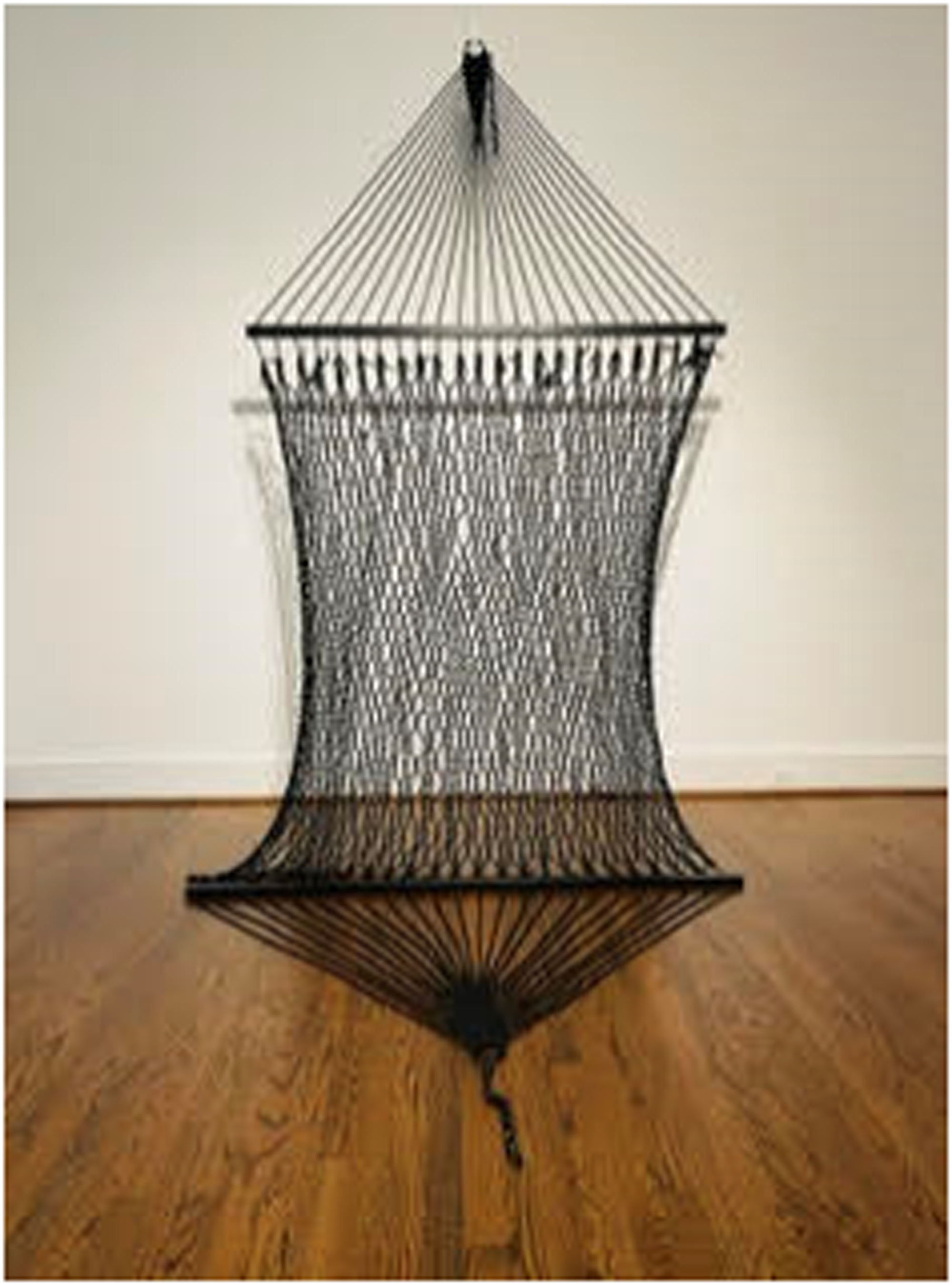
Sheldon Scott, Rope Hammock. © Sheldon Scott. Courtesy Connersmith, Washington DC. Permanent collection, National Museum of African American Art and Culture, USA.
Precisely because it is plotless, not discernibly volitional and enmeshed in everyday textures that do not fall neatly into a politics of resistance, Blackout power exploits sleep states as an experiential gap to narratively or materially withhold Black interiority. Aslant res(t)istance, it produces an alternative set of material relations by thinking the wake through what Stefano Harney and Fred Moten (2013: 97) call the ‘hapticality’ of connection and constraint – and, I would add, of the inanimacy and intimacy – borne of the slave ship. The hapticality of the blackout, in fact, goes some way to explaining the images of television static that punctuate Don’t Let Me Be Lonely's episodic structure. Overall, television images of politicians, cinematic cowboys and crime victims sustain the lyric's parataxis while inoculating the speaker, who is writing a book on the hepatoxicity of anti-depressants, against the pain of living. Images of television static, however, disrupt both her anaesthetic stupor and the lyric's episodic rhythm (Figure 4). Specific to analogue display devices, static is a flickering pixel pattern that occurs when antennae receive extraneous input that cannot be organized into a coherent image. If the blackout disrupts neurological power to make something out of nothingness – even a performance of nonbeing is a performance – then the television static simultaneously and conversely makes nothing out of the too-muchness of a hostile world. Rewiring psychical suspension as audiovisual unintelligibility, the television static is a metonym for the blackout as a phenomenological refusal (an absence of self) of ontological refusal (Black nonbeing). The haptic grain of the static – like two lovers asleep in bed together, unaware of one another's presence yet resolutely attached – sketches out another way of holding and being held in the wake.

Image from Claudia Rankine, Don’t Let Me Be Lonely (2004).
Coda: Regaining unconsciousness
There is freedom to be found in the blackout, but it is neither lasting nor guaranteed. For this reason, the blackout has the potential to slip through the ‘stranglehold’ that resistance has ‘on how we think about black humanity’ (Quashie, 2012: 26). For Quashie, resistance constrains the multitudinous meanings of Black humanity to public expressiveness. (Bradley et al., 2023a: 36) Bradley shares his reservations, warning that ‘we must […] beware the temptation to submit black art to a teleology of liberation’. Yet, as we have seen, the production of rest in Black sleep aesthetics as a meditative practice that facilitates ‘somnolent fugitivity’, in Hodson's (2021: 24) words, runs precisely this risk of thinking Black subjectivity solely in terms of social conflict. Blackout power declines the political instrumentalization of rest as a tool of resistance without eliding what Bradley et al. (2023a: 28) calls the irreducible ‘entanglement of fugitivity and subjection’. Sleeping in the wake might occur in DreamSpaces, but it might also look a lot like television static.
Along a spectrum of unconsciousness that runs from dreamlife to catalepsy, spanning formal genres and mediums as well as historical conditions, sleeping in the wake names distinct but linked aesthetic traditions of cultivating Black rest. Feminist thinking, then, might think wake work anew as a practice of what poet Harryette Mullen calls ‘regaining unconsciousness’. In her collection Regaining Unconsciousness, Mullen (2025) continues her formally experimental project of documenting the ordinary affects and racial politics that choreograph bodies in their broader social, technological and environmental habitus. The collection's titular poem begins with an epigraph – ‘Are there animals that do not sleep?’ – from an essay by sleep researchers Chiara Cirelli and Giulio Tonini (2008) on whether sleep is essential for all animals (the answer: technically yes, but it depends on how you define sleep). It then proceeds: Too late to break our fall, we land on pointlessness, eternal void of feeblesouls. Safe for now, but beyond rescue. Our trials continue with inexhaustiblefire as we reckon the damage. Shriveling fruit, curdling scars, shrinkingflesh, eroding earth and bone. Wasted bodies sprawl where they drop, in fieldslit up, harsh, bright, as survivors retreat to tighter formations.Later, regaining unconsciousness, we toast the drought with dry martinis. We play to lose and drink to get sober. Lasers restore blank looks misplacedin cracked mirrors. Doubtful clouds seek carefree rainbows. Expert handlers adjust our autonomy and send us back into the fray. (Mullen, 2025: 59)
