







Abstract
Not much is known about participatory journalists in Germany or further afield. We conducted a standardized quantitative online survey of participatory journalists at the German-language website myheimat, a German-based hyperlocal participatory journalism portal with about 37,000 contributors (as at September 2010). The purpose of the survey was to examine the individual characteristics of participatory journalists (sociodemographics, expertise, qualification and gender aspects). The survey also explored why they write articles for myheimat (societal/individual motivations), what they think about their role and function as grassroots journalists (identity/self-concept), what they know and what they think about established editorial practices (attitudes toward traditional professional journalism), how they think about their audience and how they differ in all these aspects from traditional professional journalists – if at all. Our results contribute to the understanding of the participatory system in general and of the forces behind the enormous popularity of participatory journalism, as well as its conditions and its future development.
Keywords
1 Introduction
Dramatic events like the tsunami in Asia in 2004 or the terrorist attacks on the London Underground in 2005 made eye witnesses suddenly turn into journalists, whose photos and first-hand reports were picked up by traditional media and were broadcast around the globe (Allan and Thorsen, 2009). Those events also proved that weblogs and other online portals have become important news sources which function independently from traditional media (Reese et al., 2007). As a result, traditional media loses its monopoly on producing and publishing news and has to react to the fact that alternative news published by amateurs is only a few clicks away (Atton, 2009: 283). Some even believe that half of all the news produced in the year 2021 will be produced by citizens rather than professional journalists (Bowman and Willis, 2003).
As is often the case with media innovations, the development of participatory media formats on the internet was accompanied by an ‘inflation of terms’: ‘citizen’ or ‘democratic journalism’, ‘grassroots’, ‘participatory’, ‘amateur’, and ‘hobby journalists’ are only a few examples for the variety of terms that have been used to label an emerging phenomenon. Engesser (2008: 48) talks about ‘term hyperinflation’. The idea behind all these terms and concepts is always basically the same: people without professional journalism training use digital tools to publish in real time on Web 2.0 platforms. This new generation of content providers threatens the conventional media’s monopoly with so-called ‘user-generated content’ and is challenging the well-known and comparatively simple patterns of news consumption and production.
Bowman and Willis (2003: 9) define participatory journalism as:
… the act of […] citizens, playing an active role in the process of collecting, reporting, analyzing and disseminating news and information. The intent of this participation is to provide independent, reliable, accurate, wide-ranging and relevant information that a democracy requires.
Since we do not yet know very much about the intent of the new journalistic generation, 1 we are not sure whether the second part of the definition is valid. Could it not be that ‘the new journalistic generation’ simply follows idiosyncratic self-interests or merely joins the party for the reason of personal development? Are they maybe not really interested in ‘independent, reliable and accurate’ content production, but rather in strongly and explicitly individualized and biased points of view (the alternative perception of the world)? Do they maybe not care for ‘wide-ranging and relevant information’ and instead find it thrilling to talk about their personal microcosm, mood and sensibility? With our study we try to contribute to the understanding of the participatory system and of the motivational forces behind the enormous popularity of participatory journalism, its conditions and its future development.
2 Theoretical background
Since there are so many different media formats on the internet allowing the participation of users (blogs, new websites, bulletin boards, social network sites, etc.), our study requires a thorough definition of the relevant theoretical concepts. We start by systematizing the various different definitions related to ‘participatory journalism’.
2.1 Definition of terms
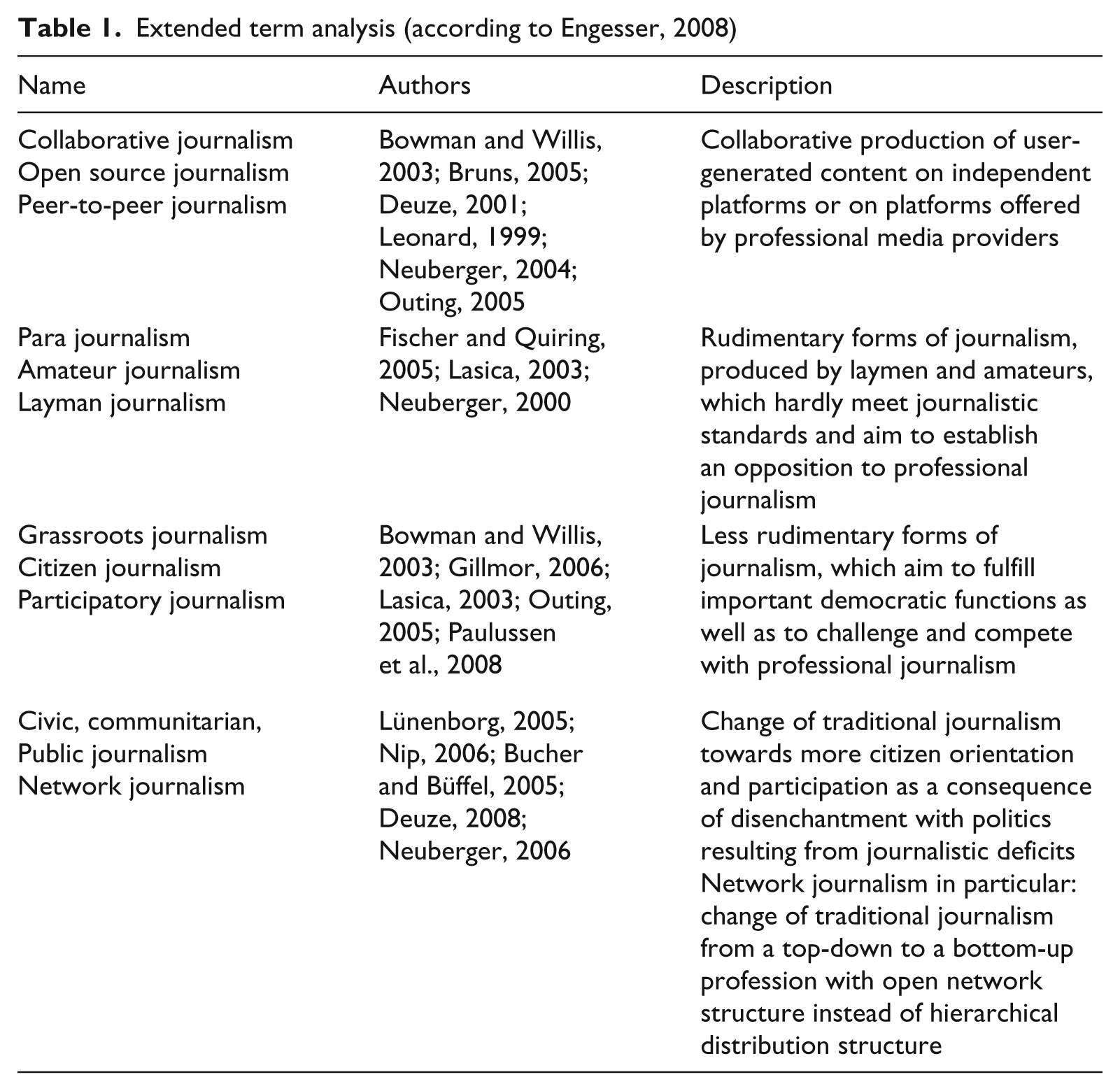
On the basis of a first broad analysis of the term ‘participatory journalism’, Engesser (2008) differentiates between nine related terms that often come up in the context of participatory online media formats and that can be subsumed under three main groups due to their similarities (see Table 1). However, we extend his typology with the terms civic journalism, communitarian journalism and public journalism on the one hand and network journalism on the other. 2
Extended term analysis (according to Engesser, 2008)
Collaborative journalism, open source journalism, peer-to-peer journalism
The term collaborative journalism (Bowman and Willis, 2003; Bruns, 2005) emphasizes cooperation on the production of content. The users collaboratively produce media content on a platform provided by professional media outlets. An extension of this is open source journalism (Bruns, 2005; Deuze, 2001; Leonard, 1999). This term is borrowed from the open source movement within software development, which publishes scripts on the internet to be revised and spread freely by a community of developers (Engesser, 2008: 59). Analogically, users in open source journalism can unrestrictedly produce, revise and publish content in collaboration or revise existing news material without the approval of superior media providers. Therefore, open source journalism is a mode of collaborative journalism where the checking of the content is left up to the users. The most famous representative is the online encyclopedia Wikipedia whose users also take over final revision and publication (Bruns, 2005: 65). Outing (2005) takes the term open source journalism a step further by interpreting ‘open source reporting’ not only as the collaborative development of whole media offers but also of individual articles within a media offer. Another related term is peer-to-peer journalism (Bowman and Willis, 2003; Bruns, 2005; Neuberger, 2004). It refers to file sharing programs like Napster or KaZaA which operate on the peer-to-peer principle (the direct connection between several computers without a central server). For journalism, this means that during the exchange of information among users there is no editorial intervention (Bruns, 2005: 122).
Para journalism, amateur journalism, layman journalism
These three terms are mostly used as synonyms. The respective authors assume that these forms of journalism differ from professional journalism ‘by implying that the contents produced by them are of minor journalistic quality and the communicators work in professions other than journalism’ (Engesser, 2008: 61). Therefore, by para journalism (Neuberger, 2000) we mean rudimentary forms of journalism on the internet produced by amateurs and hardly meeting the requirements of any journalistic standards (Engesser, 2008: 310). Para journalists often see themselves as opponents of professional journalists. The terms amateur journalism (Lasica, 2003) and layman journalism (Fischer and Quiring, 2005) express an even greater lack of professionalism. Both terms point to the fact that a new generation, encouraged by lower barriers to internet access, act as journalists not professionally but just for fun. However, because of the easy handling and low costs of production and publication, even users without sufficient education or specific knowhow can take part in public communication and produce and publish content themselves online (Engesser, 2008: 61).
Grassroots journalism, citizen journalism, participatory journalism
These terms emphasize the accomplishment of important democratic functions, and the respective form of journalism is most probably regarded as a competition to professional journalism. Nevertheless, we cannot assume that all kinds of existing varieties of these forms of journalism in fact deserve this high praise (Engesser, 2008: 63). The term grassroots journalism (Gillmor, 2006) goes back to political movements emanating from citizens and already existed before the invention of the internet, mostly in the alternative press. With regard to new forms of media on the internet, Gillmor (2006) sees grassroots journalism as being ‘by the people, for the people’, which means a form of journalism where citizens can take part in social discourse. The new publication possibilities on the internet, especially weblogs, collective forms and mobile forms of communication, have helped the present spread of grassroots journalism. Gillmor (2006: xiii) predicts further change in journalism from ‘journalism as lecture’ to ‘journalism as a conversation or seminar’. Like the term grassroots journalism, citizen journalism requires a high degree of audience participation: ‘In citizen journalism, the newsmaking process is completely out of the hands of journalists and is handed over to the people who have become both producers and users of the news’ (Paulussen et al., 2008: 267).
Civic, communitarian, public journalism and network journalism
The terms civic, communitarian and public journalism as well as network journalism are frequently used in the context of and often confused with participatory journalism. Civic, communitarian, public journalism and network journalism, however, describe new forms of (traditional) journalism and not new forms of audience participation. Instead, they are the result of traditional journalism’s reaction to the changes in the public sphere, the internet, and the development of participatory journalism. This way, network journalism describes the change of journalism from a top-down profession with a ‘hierarchical distribution structure’ to a bottom-up model with an open ‘network structure’ (Bucher and Büffel, 2005: 107). As with network journalism, conventional journalism becomes the ‘linchpin of a complex environment’ (Neuberger, 2006: 73), characterized by the cooperation of professional journalists and amateur journalists who are linked in various ways and co- create a better media product (Deuze, 2008: 254). Public journalism also describes a reorientation of journalism where the focus is on audience orientation and participation. But the trigger here was not the internet. Public journalism actually developed in the early 1990s in the USA as a reaction to the dissociation of the public and the citizens’ disenchantment of politics caused by journalistic deficits (Nip, 2006: 213). Public journalism – referring to communitarism – wants democracy to work and to strengthen civil society and therefore demands better integration of the audience as citizens in public communication (Neuberger, 2006: 73). Public journalism also refers to the concept of advocacy journalism, which is part of the self-concept of journalism today (Lünenborg, 2005: 153). In short, civic, communitarian and public journalism stand for a change of traditional journalism towards more citizen orientation and participation as a consequence of a disenchantment with politics that results from journalistic deficits.
Summing up the existing definitions, the first three groups of terms (collaborative, open source, peer-to-peer; para, amateur, layman; grassroots, citizen and participatory journalism) emphasize different aspects (mode of production, quality, democratic functions) of basically the same new phenomenon, while the fourth group of terms describes changes in conventional or traditional journalism (civic, communitarian, public, network journalism).
2.2 User-generated content and motivation
The majority of these new forms of journalism (in particular the first three categories) have one basic commonality: large proportions of the content offered are not produced within a professional ‘realm’; that is, the producers do not make a living out of the production of the respective media offer. 3 This kind of content is usually referred to as ‘user-generated-content’. During the last few years, the term ‘user-generated-content’ has become more and more common (e.g. boyd, 2008; Jenkins and Deuze, 2008; Royal and Kapila, 2009). At the same time, there are very few attempts to thoroughly inspect the term (e.g. Schweiger and Quiring, 2006; Thurman, 2008). The definition most suitable for our purposes comes from Schweiger and Quiring. The authors define user-generated content (UGC) as ‘intentionally or unintentionally user-produced website content on professional websites which are in the charge of and administered by professional media providers’ (2006: 87). We apply this definition because the focus on professional providers helps us to exclude a large array of irrelevant amateur sites such as private homepages. User-generated content in our sense is not a completely new phenomenon. Traditional mass media usually offer feedback possibilities (e.g. letters to the editor) to users and even publish a selection of this kind of users’ feedback. The digitalization of (mass) communication, however, enables users to produce content in an easier, quicker, cheaper and more flexible way.
Based on a review of existing literature and a theoretical extrapolation supported by a qualitative analysis of several online news sites, Schweiger and Quiring (2006: 103) distinguish three differing user motives according to three different groups of intended addressees of UGC. If UGC is addressed to the general public, the motivation is usually dominated by the aim of distributing personal ideas and opinions, information, criticism and recommendations and thus ‘to cause a certain reaction in society, the political system etc.’ (2006: 98). Part of this motivation is ‘to reach the status of a well-known, prestigious and respected personality […] or even become a ‘guru’ (2006: 98) – a motivation which is often referred to as impression management in social psychology. If UGC is addressed to other (prod)users of UGC, the motivation is usually dominated by the aim of establishing and maintaining social contacts, of discussing topics and exchanging them with others. In this group we also find the altruistic desire to help others. Finally, if UGC is addressed to a (certain website) provider, the motivation for producing user-generated content is mainly driven by the desire to communicate with the provider (e.g. telling him the author’s or user’s own opinion or knowledge – comparable to a classic letter to the editor), or by the prospect of financial and/or material incentives (e.g. lotteries). These basic types of motivation, as mentioned by Schweiger and Quiring (2006), are necessarily very abstract and should be thoroughly adapted to the specific context of the respective investigation.
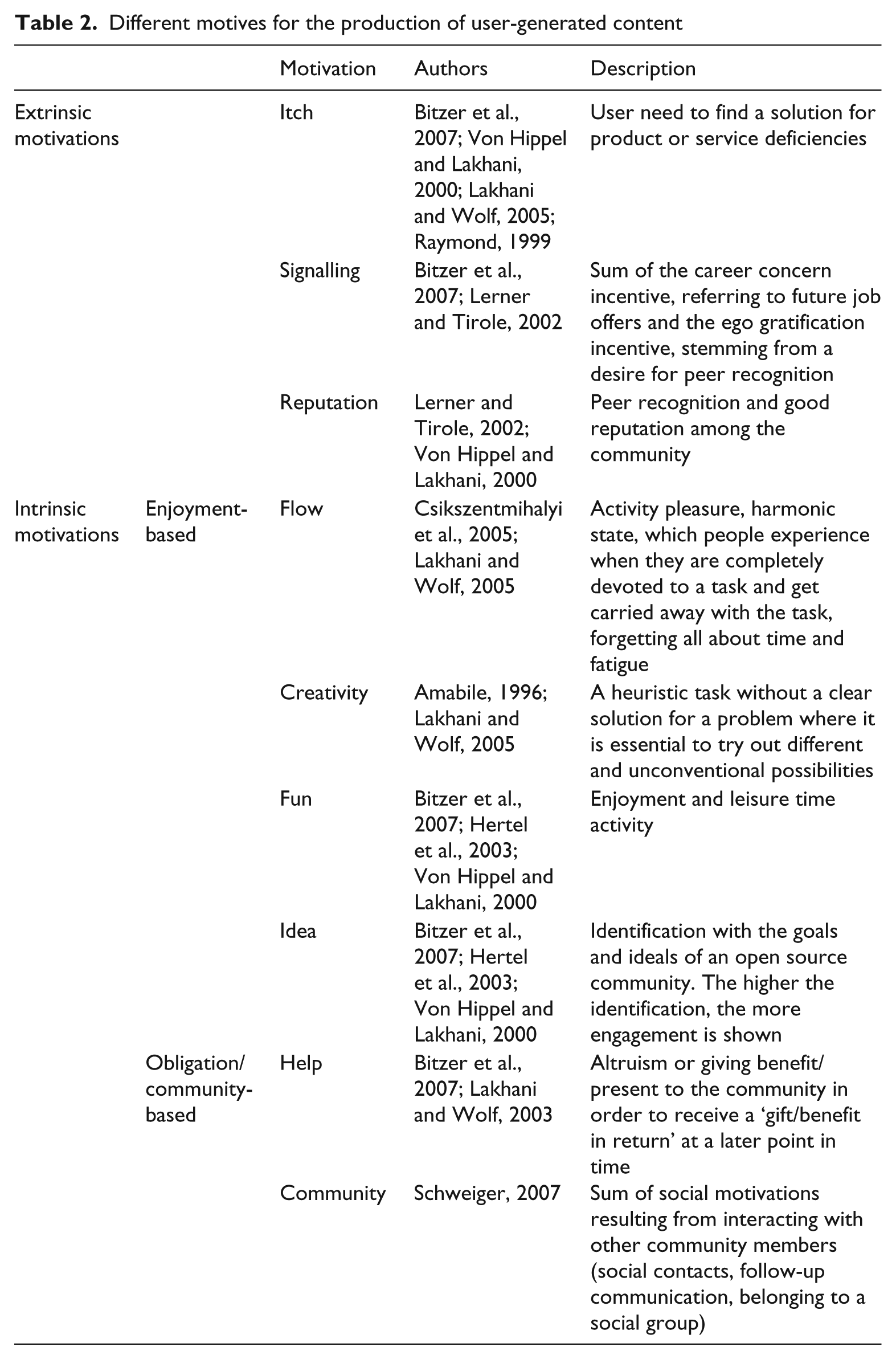
Our research questions also focus on the why of UGC. In this context one could apply the uses and gratifications approach (Blumler and Katz, 1974; Katz et al., 1973) as a theoretical basis. We decided not to do this because the uses and gratifications approach focuses on motivations of media consumption (audience/receiver) and not media production (communicator/sender). Following Höflich (1994: 394), we argue that, regarding the interaction possibilities of new communication technologies, the traditional uses and gratifications approach does not sufficiently take into account the interaction with other users. In economic research, motivations from the open source field have frequently been researched in studies on weblogs, wikis and user-generated content. Similarly, Schweiger and Quiring (2006: 98) refer to motives of the open source research in the context of user-generated content. As the content produced by participatory journalists can be called user-generated content as well, we primarily focus on motives known from open source research – all the more as Riedel (1998: 39) shows that the term ‘open source’ is not only limited to software, but can generally be extended to knowledge and information. Previous research characterized the motivations contributing to open source applications as either extrinsic motivation (i.e. indirect benefits such as signalling incentives, reputation benefits) (e.g. Frey, 1997) or enjoyment-based (direct benefits such as flow, creativity, fun, intellectual stimulation) and obligation or community-based (direct benefits such as gift, help, altruism) intrinsic motivations (e.g. Ryan and Deci, 2000). Table 2 offers a brief overview of existing approaches.
Different motives for the production of user-generated content
So far, the discussion of user-generated content and the respective motives offers only one of two possible perspectives on motivation: the user perspective. However, the motivation of participatory journalists might as well be explained by professional journalistic self-conceptions, which include motives such as controlling those in power or giving advice. Research into journalistic self-conceptions has a long tradition. Lately Weischenberg et al. (2006) condensed the large number of possible motives into three dimensions: information-journalism (which has the neutral dissemination of information at its core), active journalism (critique, control and opinion formation) and service-/entertainment journalism (offering advice, showing new trends, entertaining). As we know very little on participatory journalists and their potential ‘professional’ motivation, it seems impossible to theoretically predict motivational patterns. Since there are so many different forms of participatory journalisms and even more participatory media formats on the internet, motivation has to be measured in the specific context of each journalistic product.
2.3 Ethic values and research methods
The same applies for ethical values and the respective behavior of participatory journalists. Studies on ethical values and research methods usually ask for a wide array of different values and research methods (e.g. from paying for secret information to putting pressure on informants and using confidential governmental documents). Afterwards, researchers construct patterns of ethical values and behavior, sometimes even comparing different ‘journalistic cultures’ (cf. e.g. Hanitzsch and Seethaler, 2009; Weischenberg et al., 2006). This makes perfect sense when surveying ‘professional journalism as a whole’. When participatory journalists are investigated, the specific context gains importance again. While using confidential governmental reports or documents might pose a minor ethical challenge for some participatory media formats on the internet (e.g. Wikileaks), the same question might not be applicable to a hyperlocal context as in our study.
3 Research questions and method
Within the scope of our research project we decided in favor of the term ‘participatory journalism’ and ‘participatory journalist(s)’. This is because participatory journalism (like grassroots and citizen journalism) explicitly includes a political component and the accomplishment of important democratic functions is attributed to it. In addition, it does not only mean political but also public participation. The term ‘participatory journalism’ is most likely regarded as a competition to professional journalism.
The basic research question of our survey is: to what extent can participatory journalists be compared to professional journalists and how do they differ, regarding their attitude towards questions of journalistic ethics, journalistic quality and their perception of their audience? Within this scope we also investigated the participatory journalists’ perception of their role and function (identity and self-concept), their attitude and relationship towards traditional professional journalism, the societal and individual motivations of the respondents and their individual characteristics like socio-demographics, expertise and qualifications. We also wanted to know how intensively they participate as authors, how they select their topics for publication, and which sources they use. In order to find out how the participatory journalists under investigation differ from traditional professional journalists, we compare our findings – if reasonable and possible – with results from the most recent German journalism study conducted by Weischenberg et al. in 2005 (2006) (within our graphics referred to as ‘JouriD 2005’) and with results from Malik and Scholl (2009) 4 about professional online journalists in Germany (Malik and Scholl, 2009, conducted a specific analysis of online journalists based on the data of JouriD 2005). If we make comparisons, we used exactly the same wording as in JouriD 2005. Our choice of indicators from JouriD 2005 was led by the applicability of items to the specific hyperlocal context of our object of investigation. For example, asking respondents whether they make use of secret governmental documents does not really fit into a hyperlocal context.
We conducted a standardized quantitative online survey among participatory journalists in Germany. Engesser’s (2008: 66) definition of participatory journalism served as our working definition: ‘Participatory journalism allows users to participate at least in the process of content production, is practised beyond professional activity and enables active audience participation in the public media sphere.’ Our questionnaire (32 questions) was online between 15 July and 12 August 2008 on the German-language website myheimat (http://www.myheimat.de). Myheimat is a German-based hyperlocal participatory journalism portal with about 37,000 contributors (as at September 2010) from all over Germany (for hyperlocal news sites, see Schaffer, 2007). It maintains partnerships with print publishers, which republish the best participatory journalism content from myheimat in printed weeklies or monthlies. Combining online presence and print publication to a cross-medial, hybrid media offer is the essential innovation of this citizen platform (Huber and Möller, 2008: 306). It serves the so-called hyperlocal long tail, as, through user integration with content production and the restriction of the media organization on providing the platform, fragmented target groups can become economically profitable (Huber and Möller, 2008: 307, 312). On myheimat registered users can actively publish articles and other content (comments, photos, videos) from a local and hyperlocal area and, in doing so, collaboratively establish a media product corresponding to the principle of crowdsourcing and swarm intelligence. Myheimat is used as a regional turntable of information, and the community is so popular that regular members meet in the real world. 5
At the beginning of the survey on 15 July 2008 myheimat had 14,107 registered users, according to their own statistics. At the end of the survey, on 12 August 2008, there were already 15,107 users. According to myheimat data, about one-third of all registered users have written an article or comment at least once and therefore are active citizen reporters. The remaining two-thirds are registered users who use the community features and who only read articles, recommend and/or comment but do not actively write articles.
All in all, 153 participants completed our questionnaire. Since we were not able to get proper information on the size and sociodemographics of the basic population, all results must be interpreted with considerable caution. Unfortunately, it is quite a common phenomenon that online questionnaires in the field of participatory journalism attract very few respondents (Kopp and Schönhagen, 2008). Nevertheless, our data provide a first interesting glimpse of participatory journalists in Germany. However, we need to consider that because of its hyperlocal nature, myheimat is a very specific configuration of participatory journalism and thus might differ from the majority of participatory or citizen journalism projects. Therefore, our study does not allow generalization from its results to participatory journalism as a whole. Our sample shows rather small differences to professional journalists: while roughly more than one-third of professional journalists in Germany are female (37%, Weischenberg et al., 2006), our sample comprises of 43 percent women. The average age of our respondents was 45.6 years (SD = 14.8 years), while professional journalists average 41 years (Weischenberg et al., 2006).
4 Results
Thirty-five percent of our participatory journalists have already been able to publish some of their work in traditional media, 31 percent of them in local magazines and newspapers. Eight percent have been working as full-time journalists in the past or at the time of the survey. Most of them are working at smaller regional daily newspapers, Sunday or weekly newspapers or at private broadcast stations. Eleven percent work in the broader media field. Thus, roughly one-third of our participatory journalists are experienced writers and they are also committed writers in their leisure time.
On average, they write 6.6 articles a month for myheimat. The majority (53%) writes up to five articles a month, 19.9 percent claimed to write 10 and more articles monthly. The average monthly time taken to write articles was 12.2 hours. However, it is interesting that our interviewees rarely use other participative media formats on the internet. As already mentioned, our results should be taken cautiously. It may be the case that our respondents decided to participate in the questionnaire because they are devoted writers, which may result in an overestimation of general engagement.
Although our respondents share a relatively high level of education (27% finished university or even have a doctoral degree; Figure 1) compared to the overall German population (13% for the Germans, 15 years and older; Statistisches Bundesamt, 2009), the average level of education in our sample is much lower than that of professional offline and online journalists: 69 percent of professional journalists (Weischenberg et al., 2006: 59) and 79 percent of online journalists (Malik and Scholl, 2009) finished university or have a doctoral degree. This can be explained by the target group of myheimat: writing for myheimat requires local and regional knowledge (i.e. being deeply rooted in the region for which the media product is produced), but it does not necessarily require academic skills.
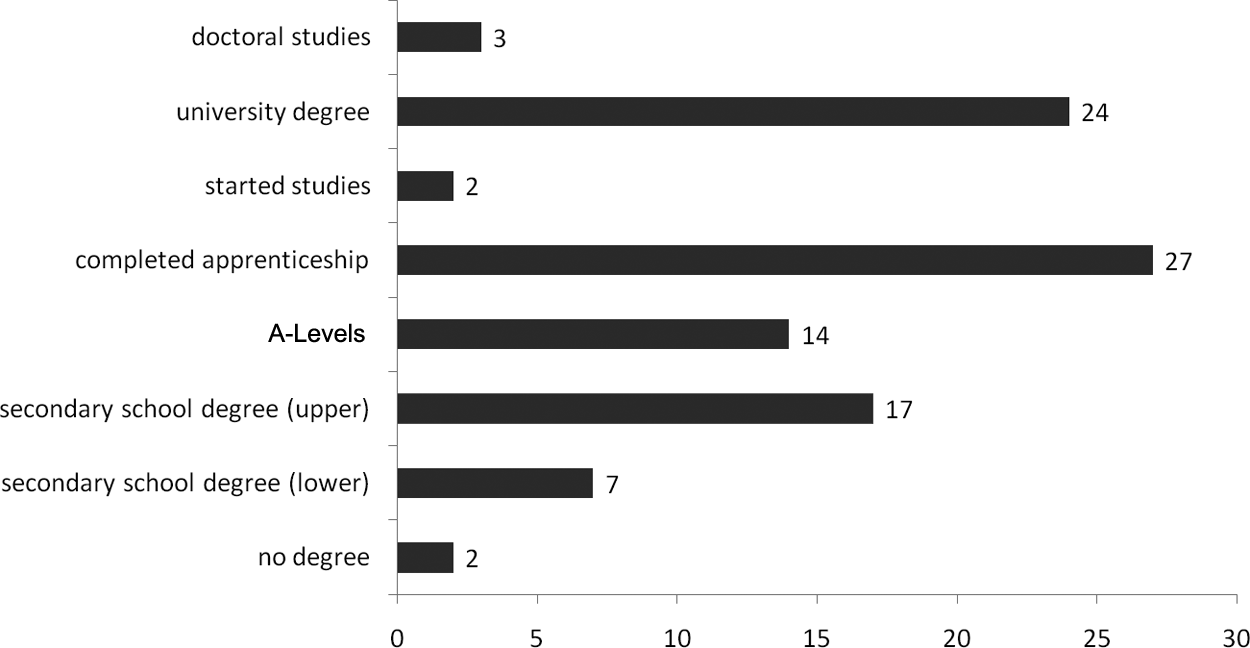
Highest level of education of the interviewees (%)
4.1 Topic selection, investigative research methods and audience perception
For our respondents, the individual and personal criteria of topic selection, such as personal interest and concern, are more important than conventional professional journalistic criteria such as relevance or being up-to-date (Figure 2). The respondents from myheimat pick up a topic especially when they are personally interested in it (25%), when they are emotionally connected to it, or when they are thoughtful (19%). They also select an issue if they are personally affected and able to report about personal experiences (16%). Together, these three ‘individualistic’ statements represent almost 60 percent of all answers given. In contrast, the criterion ‘if it affects many others’ plays a minor role (13%) in the selection. Only 6 percent of respondents pay attention to the headlines of the traditional media. Therefore, our respondents are much more self- centered than their professional counterparts who select topics according to professional news values, such us relevance or continuity of an issue.
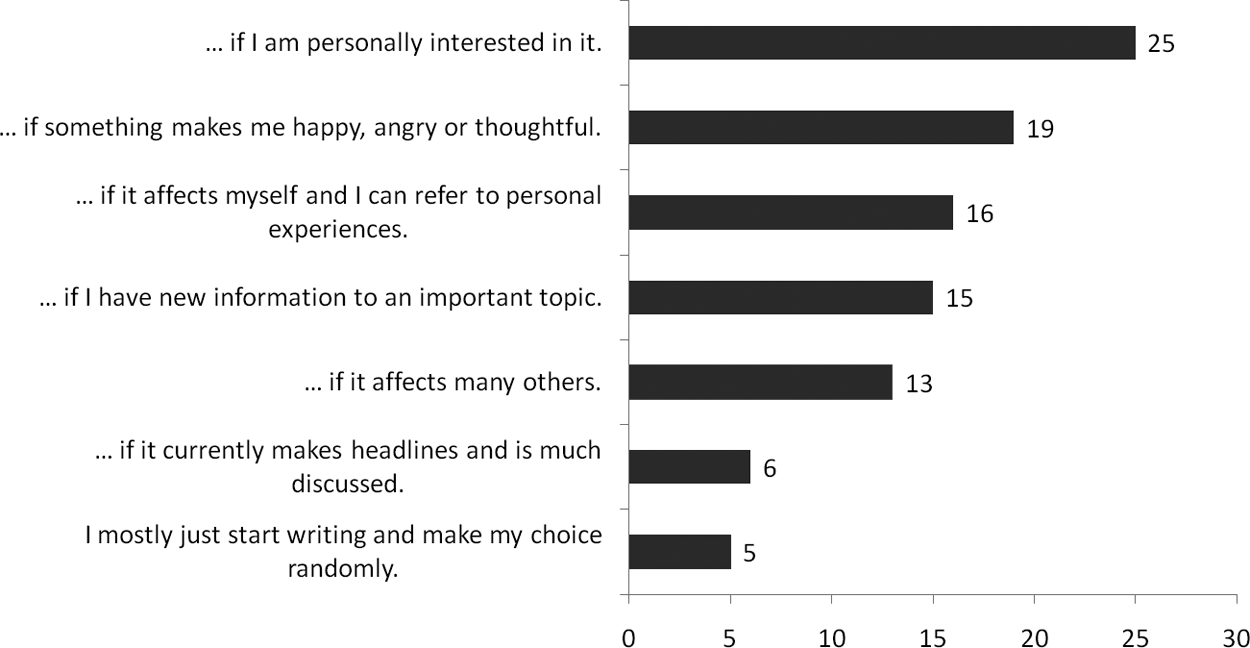
Criteria for topic selection by the interviewees (%)
Furthermore, the respondents of our survey are much less willing than professional offline and online journalists to use dubious investigative research methods (Figure 3) – for example, they are much less likely to pretend another opinion, to pretend to be another person or to pay for information. Concerning questionable investigative research methods, they differ even more strongly from professional internet or online journalists than from conventional offline journalists. There is only one item where participatory journalists show slightly more agreement than professionals: publishing documents without permission. But even here, very few respondents are willing to show such a behavior. The results make perfect sense in the regional context of our study. Most information is traveling by word of mouth and the issues presented are usually not highly controversial.
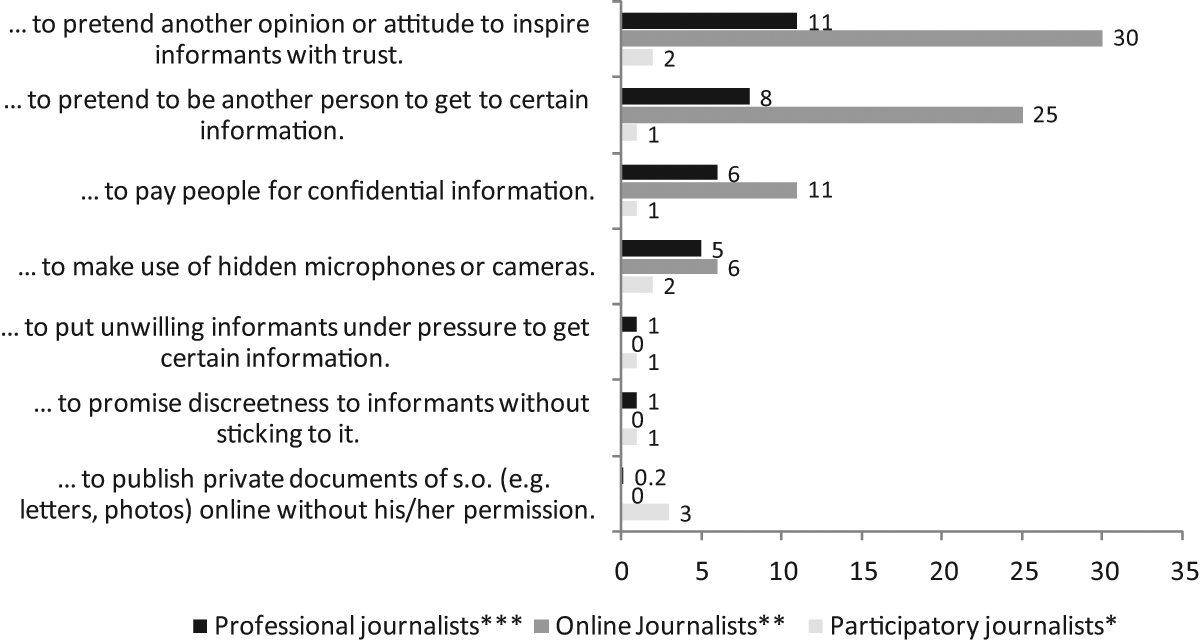
Accordance with research methods by the interviewees in comparison with JouriD 2005 and Malik and Scholl (2009) (%)
On the one hand, our results on topic selection show that the willingness to consider important professional criteria is low among our respondents. On the other hand, compared to professional journalists they are clearly less willing to apply dubious methods, such as ‘pretending another opinion or attitude to inspire sources with trust’. This particular picture of attitudes towards journalistic quality is not that consistent – at least not when compared with the attitudes of professional journalists.
Surprisingly, participatory journalists do not substantially differ from their professional counterparts as regards their perception of their audience (Figure 4). The only major deviation is the ‘progressive/conservative scale’. While professional journalists tend to judge their audience as rather conservative, our respondents consider their audience as rather progressive. On the one hand, this result is not intuitive because smaller rural areas are usually not the most progressive parts of the country, and myheimat foremost serves rural areas and smaller towns. On the other hand, we assume that our respondents simply see their audience as progressive because most of myheimat’s readers use the internet version. Therefore the progressive image of online communication might have been transferred towards the perception of the audience.
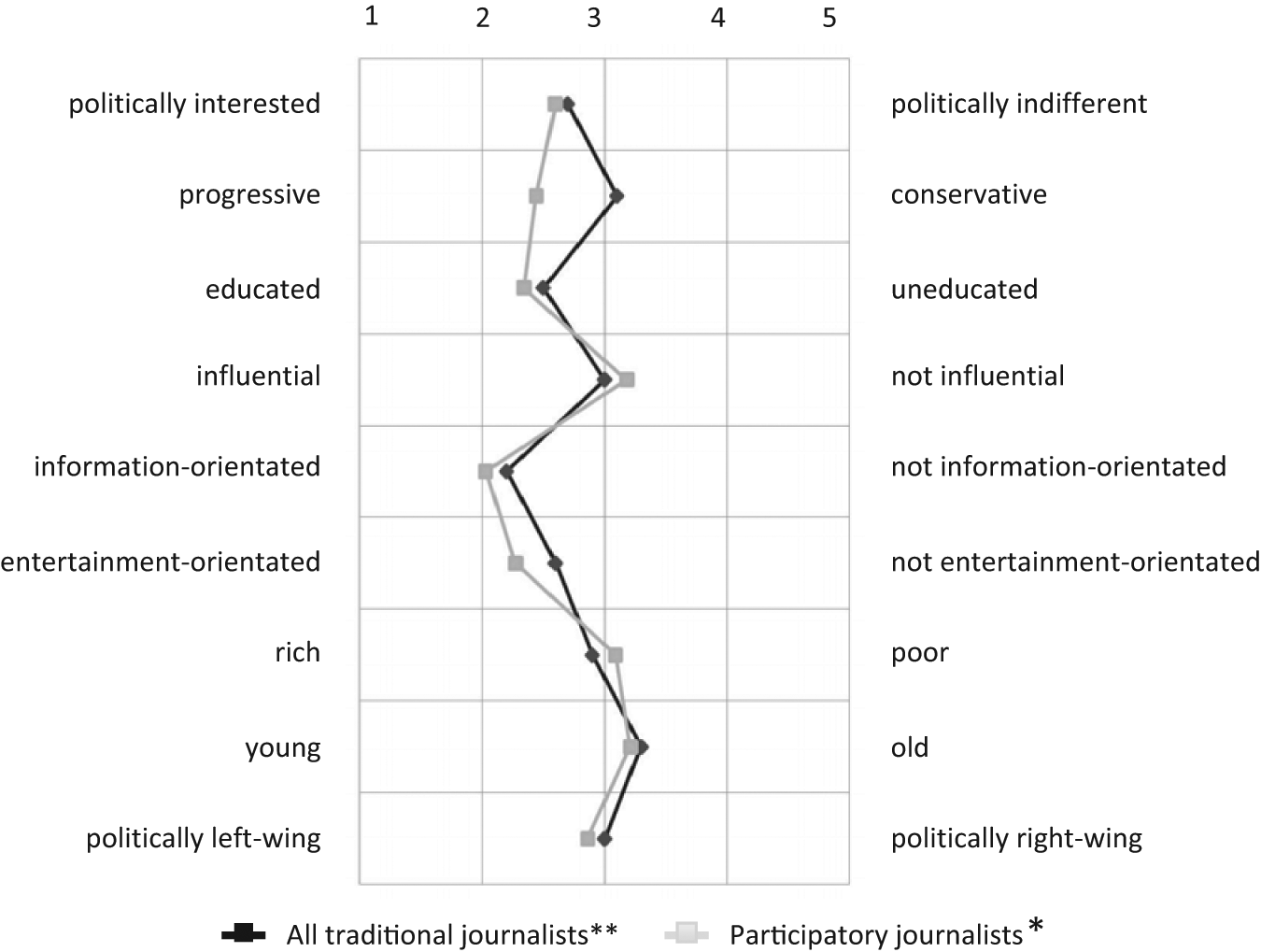
Interviewees’ perception of their audience
4.2 Journalistic self-conception
So far, our results indicate that participatory journalists are somewhat more idiosyncratic and self-centered in the selection of their topics, while showing high ethics and perceiving their audience in a very similarly way to professionals. These attitudes might be explained by their journalistic self-concepts, i.e. their basic understanding, in which all other attitudes are rooted (Figures 5–7).
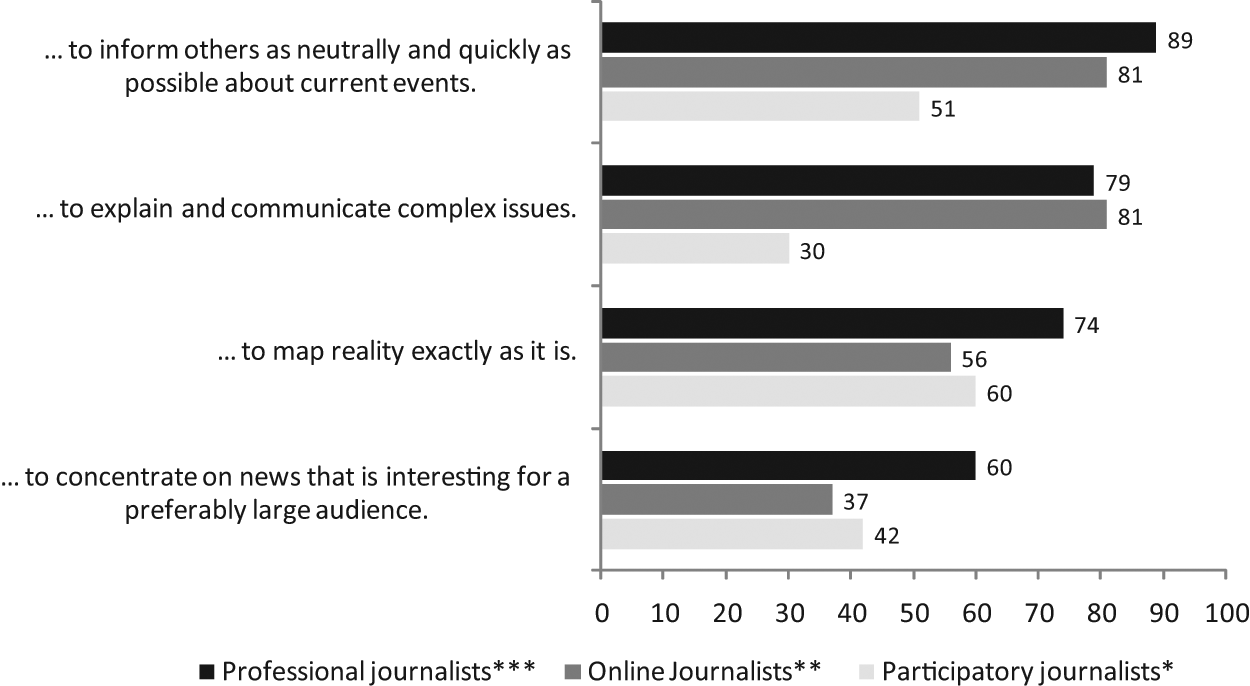
Interviewees’ accordance with the role perception of ‘information journalism’ (%)
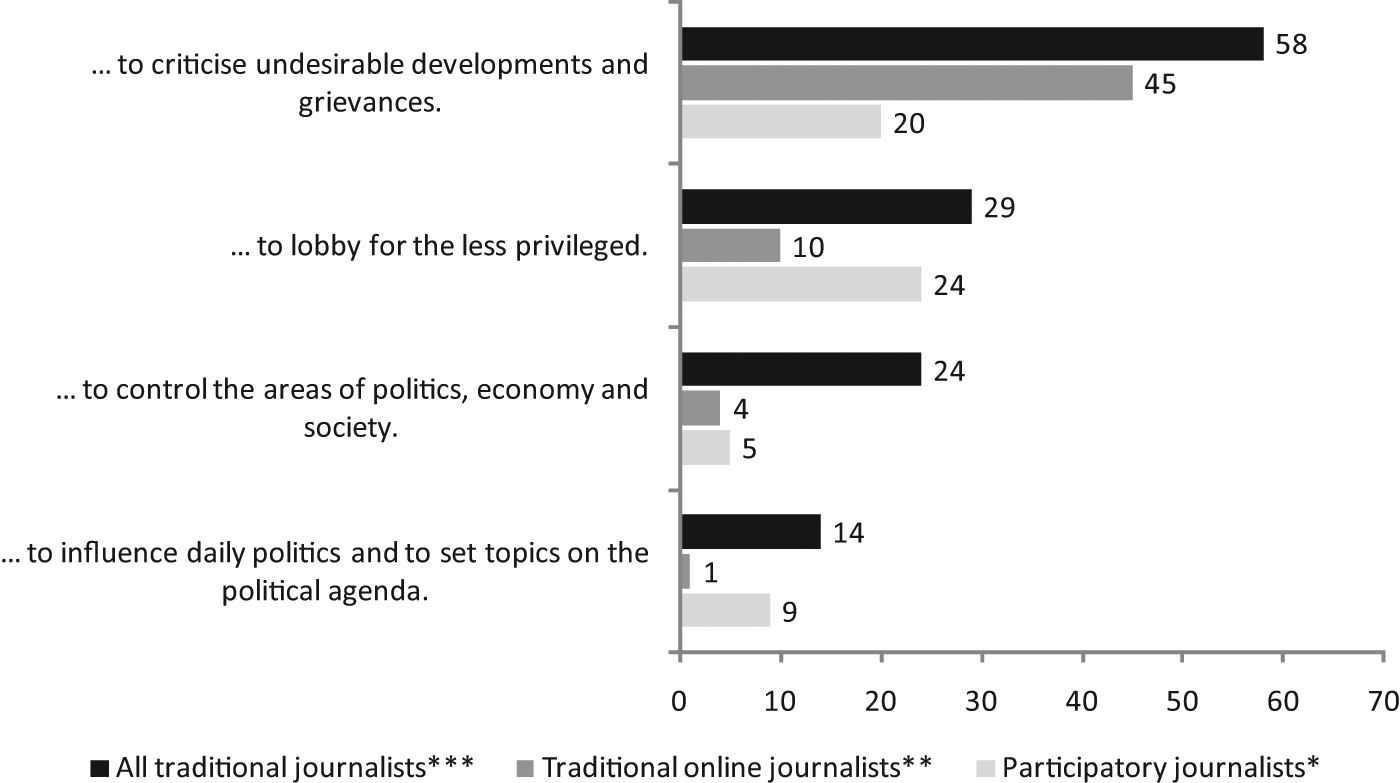
Interviewees’ accordance with the role perception of ‘active journalism’ (%)
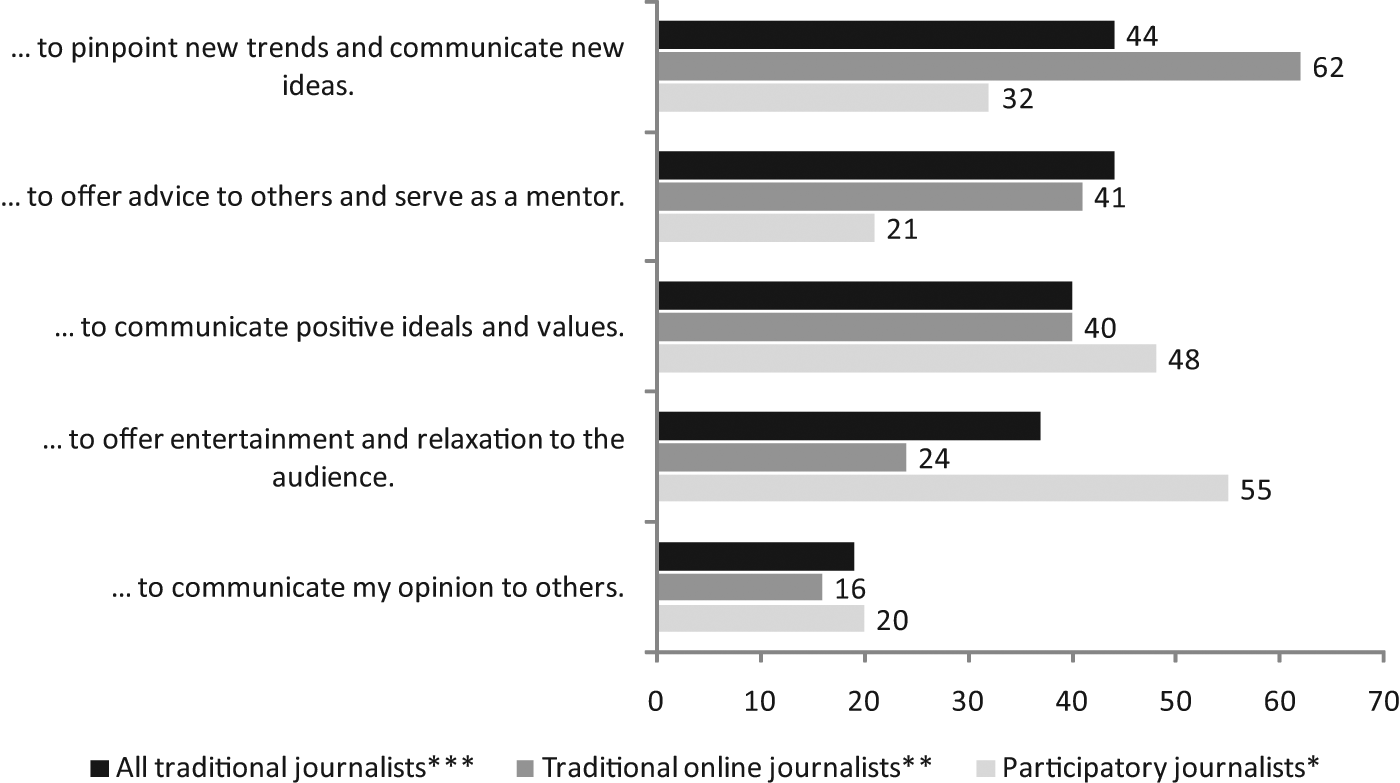
Interviewees’ accordance with the role perception of ‘entertainment journalism’ (%)
The responding participatory journalists in our survey agree far less with typical items of ‘information journalism’ (Figure 5) and ‘active journalism’ (Figure 6) than professional offline journalists and more resemble professional online journalists (Malik and Scholl, 2009: 189). Our respondents rather tend to ‘entertainment journalism’ (Figure 7), even though one has to consider that here the comparison with professional offline and online journalists (Weischenberg et al., 2006; Malik and Scholl, 2009) appears to be less consistent. 6
The comparatively weak accordance of our respondents with the self-conception ‘active journalism’ fits Malik and Scholl’s (2009) findings about professional online journalists, as already mentioned. On the one hand this could allow for a cautious generalization between our respondents and professional internet or online journalists in general. On the other hand, the deviation of our mainly non-professional participatory journalists from professional offline journalists could also be explained by the presumption that they do not intend to criticize and control politics, economy and society, but rather to criticize and control the fourth power in the state – the conventional media. We know this intention from Weblog authors, who often define themselves as ‘media watchdogs’ (Fengler, 2008). We think it might be worth further investigating the question to what extent criticism and control of conventional mainstream media are typical for the self-conception of participatory and citizen journalists. Still, we should bear in mind the very hyperlocal nature of myheimat. This could mean that its participants simply see themselves as addressing a gap in mainstream news coverage – local issues – which certainly puts them in stark contrast to the big national and/or regional political matters. We, however, would like to point out again that the deviance of our respondents from the self-conception as ‘active journalism’ is consistent with respective findings on professional internet or online journalists.
Summing up the evidence so far, it can be stated that the journalistic self-concepts are quite in accordance with the attitudes discussed above: the orientation towards entertainment journalism might explain the patterns of issue selection, ethics and audience perception.
4.3 Users’ motivation
What motivates our respondents to participate voluntarily in myheimat? On the whole, the interviewees primarily have intangible intrinsic reasons (Table 3) when participating as content producers. Many of these motives are basically self-centered, such as individually perceived creativeness, the fascination of publishing and the enjoyment of presenting one’s own ideas to a larger public. Typical journalistic motivations, such as balancing different perspectives and informing other people, are also important for our participatory journalists, but they clearly range behind egoistic motives.
Motivation of the interviewees
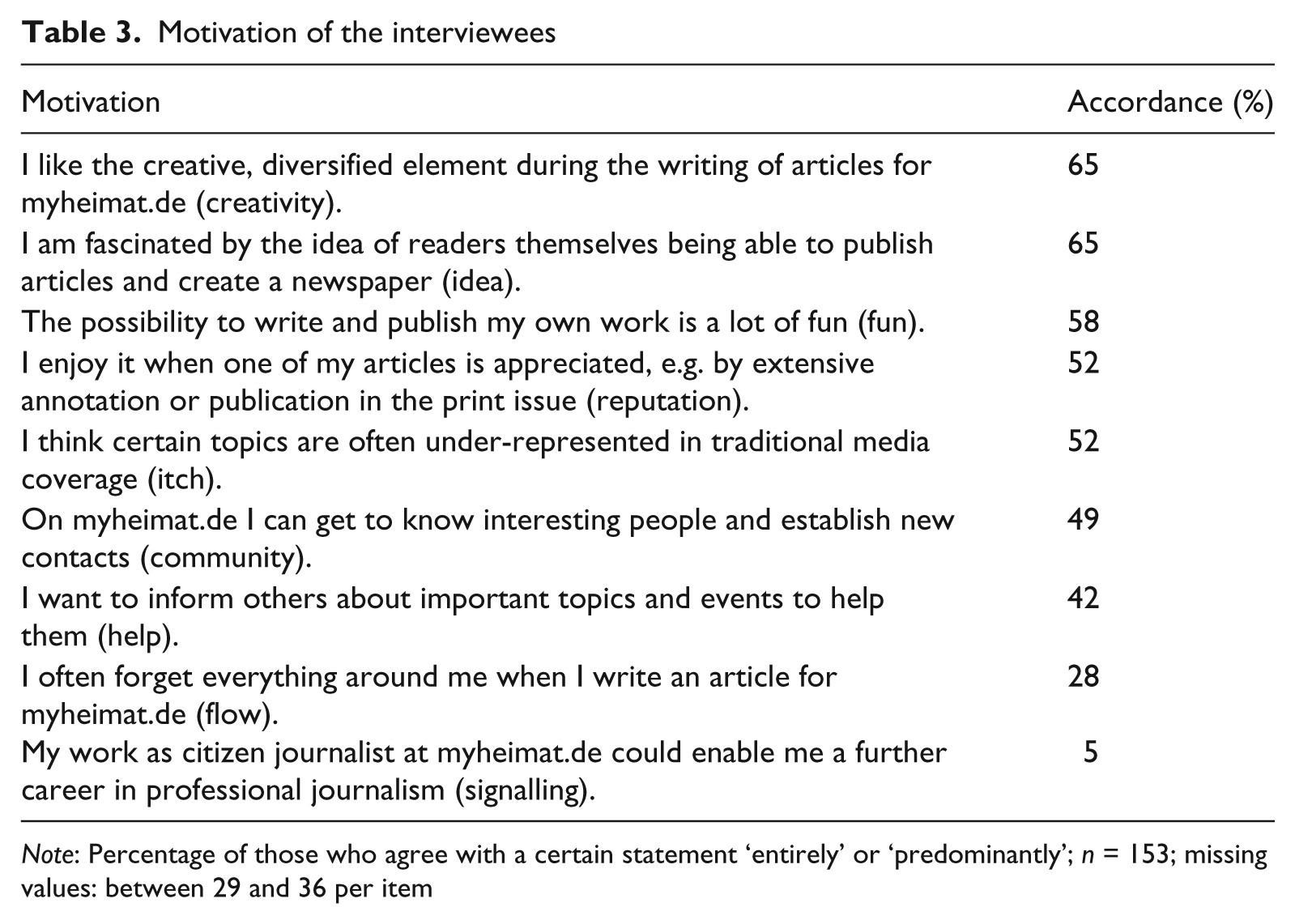
Note: Percentage of those who agree with a certain statement ‘entirely’ or ‘predominantly’; n = 153; missing values: between 29 and 36 per item
4.4 Competition with conventional or traditional journalism
This research dimension was analysed to clarify how the interviewed citizen journalists judge the competition between participative media formats and professional mainstream journalism and what they perceive as the strengths and achievements of citizen and professional mainstream journalism. The respondents assume that citizen journalism adds to conventional journalism rather than threatening it (Figure 8).
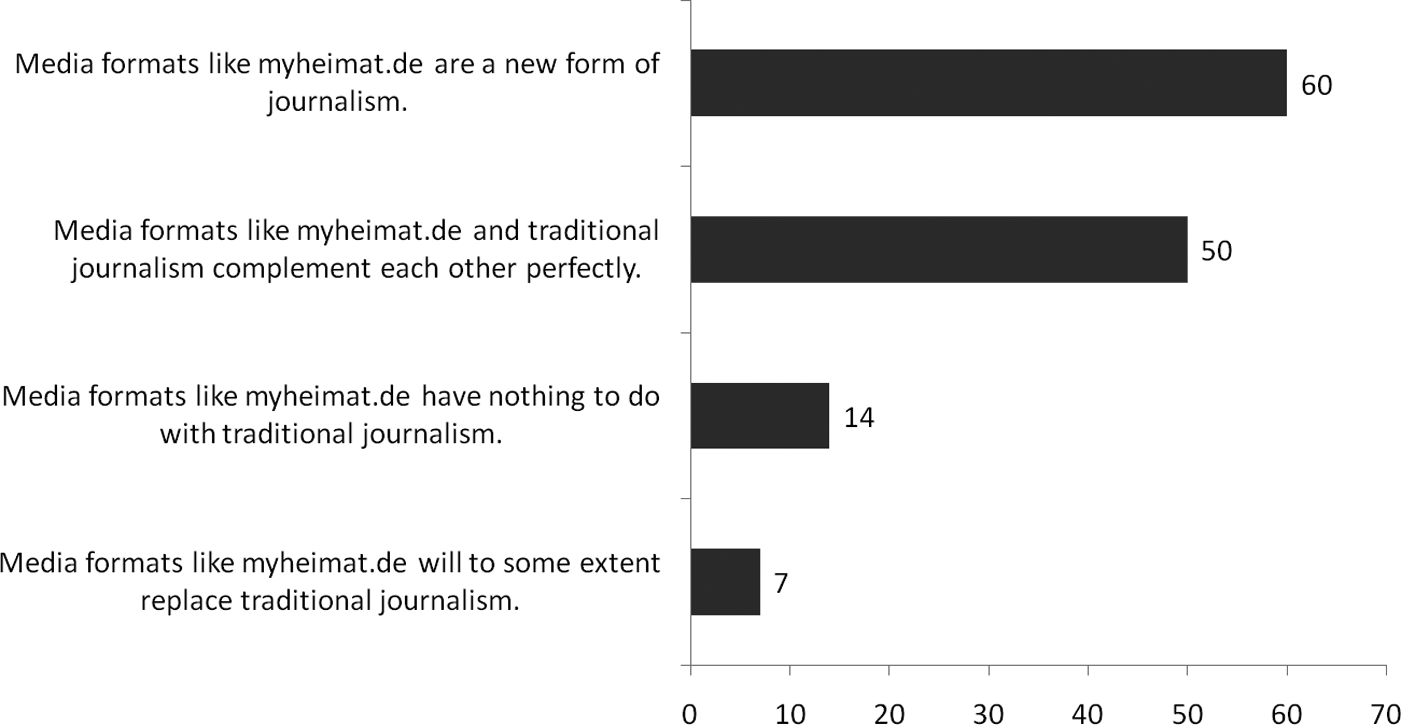
Interviewees’ accordance with statements on competition (%)
The majority of respondents (60%) state that platforms like myheimat mark a new form of journalism; 50 percent believe that new participative media formats and professional journalism complement each other; and only 7 percent perceive traditional journalism as being endangered by citizen journalism. This result is not surprising when bearing in mind the hyperlocal character of myheimat.
Figures 9 depicts what the interviewed citizen journalists perceive as the strengths and achievements of citizen and traditional media.
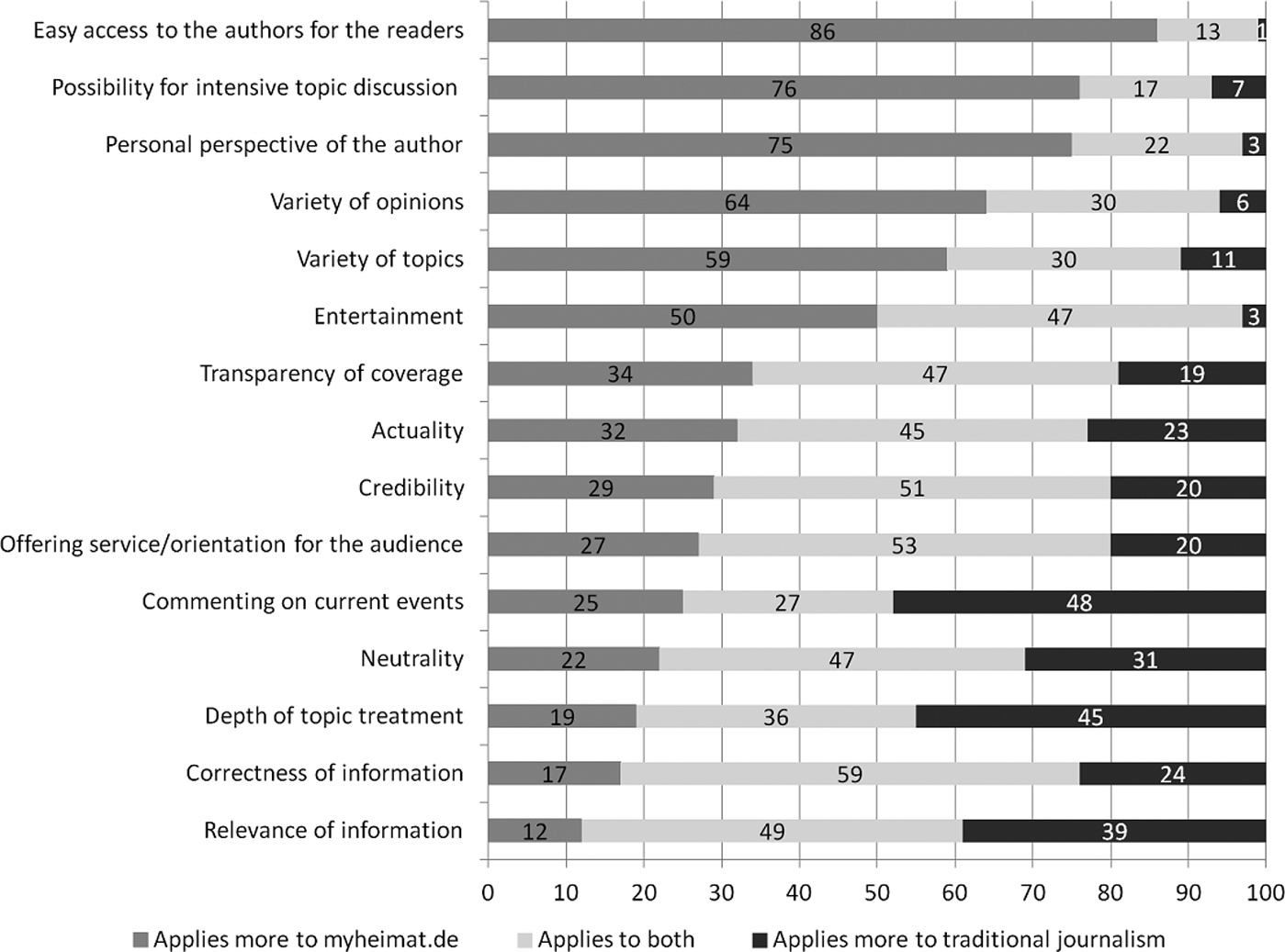
Interviewees’ perception of the strengths of participatory and traditional journalism (%)
Not surprisingly, the respondents consider participative media formats to be extremely positive in comparison with conventional journalism. Thus the interviewees perceive the easy access to the author (86%), the intense discussion by the audience (76%), the personal perspective of the author (75%), the variety of opinions (64%) and topics (59%) as well as the entertainment (50%; Figure 9) as the strengths of participative journalism. The variety of topics might also refer to the very hyperlocal character of myheimat. The strengths of traditional journalism are perceived as commenting on current events (48%), the depth of topic treatment (45%) and the relevance of information (39%). This classification of strengths confirms the complementary function of participative and conventional journalism. Thus both conventional journalism and participative journalism contribute to shaping public opinion. In this context both sides may be an important impetus for each other.
5 Summary and conclusion
The most striking difference between participatory and professional journalists in our study concerns education and the self-concept of the journalistic role and function. In addition, our respondents regard themselves to a lesser extent as neutral mediators, which is an important indicator for journalistic professionalism. Professional journalistic topics like politics or business also play an inferior role for our respondents, and their news sources are mainly based on their own experiences and personal surroundings. Furthermore, subjective criteria of topic selection (personal interest or concern) are more important than journalistic criteria like relevance or actuality. Surprisingly, our respondents do not substantially differ from professionals in the perception of their audience. This result again points out that both basically want to serve the same public, but with a different focus.
The results show that the respondents of our (not representative) survey have a high cognitive awareness of motivating factors and expected gratifications. They are not driven exclusively by intrinsic or extrinsic motivations but by an interesting combination of both. The need to provide an opposition or alternative to traditional mainstream media seems to play a crucial role as does the simple desire for expressing values. Most, however, are not driven by perceptions of ‘influence’, which sounds slightly contradictory. One reason for the limited role of influence in the case of our respondents from the participative media platform myheimat might be that the traditional conceptualization of influence (in terms of traditional mass media) is too narrow to be translated one-to-one into the new world of participatory and citizen journalism. Creativity, ideas and fun are most important motivations for taking part in participatory media formats for our respondents; they actively want to take part in public communication, as traditional media often fail to satisfy their needs. Reputation and community motives also play a significant role. However, signalling only plays a minor role: The respondents of our survey seem not to see their engagement as a stepping stone for a journalistic career but want to fill niches that traditional journalism does not or cannot serve (ideal reasons). Given the very hyperlocal character of myheimat, the latter is highly plausible.
Besides these differences, this study has also identified similarities of participatory and professional journalists. Looking at the qualifications and expertise of our respondents, they often do not lack journalistic experience, as one-third already has experience in traditional journalism, 8 percent work as full-time journalists and another 11 percent work in the broader media field. Furthermore, the majority of respondents may identify with a typical description of journalistic tasks (‘gathering information, selecting and publishing the most important information and only additionally giving one’s own interpretation and opinion’).
The present study suggests that although there are significant differences between professional journalists and the (specific kind of) participatory journalists of our study it cannot be denied that the latter also contribute to public opinion building. However, the assumption of Hartley (2000) that on the internet everybody is a potential journalist (‘everyone is a journalist’) and the point that we are on the way towards an ‘editorial staff society’ (Neuberger, 2004: 2) seems to be a bit too extreme. When looking at the results of this study, it would also be a slight exaggeration to reduce journalism to the pure process of publishing and to ignore traditional journalism’s specific benefits and skills of gathering, mediating and interpreting news.
Although participatory journalism complements or enlivens traditional journalism, it cannot replace the benefits of traditional professional journalism. However, participatory journalism fills the niches that traditional media cannot fill because of market pressure and profitability issues. As our study shows, this applies especially for specific participatory media platforms: a hyperlocal platform with an especially strong focus on rural and regional issues and areas. In this sense, participatory journalism contributes to a diversity of opinions and topics and can give important an stimulus to traditional journalism regarding authenticity, equality, and audience orientation (through a more local/rural/regional focus for example). This is the strength of hyperlocal platforms compared to more conventional sites which rather discuss national politics or the quality of the mainstream media.
Traditional journalism could benefit from citizen journalism by using participatory content from citizens as important first-hand sources of research for professional journalists. In case of catastrophes, natural disasters or tragic accidents, citizens are often on site before professional journalists. The integration of and collaboration with the audience increases trust and reader loyalty towards traditional mainstream media, especially in times of audience emancipation. Collecting reader feedback and important information about the needs, preferences and expectations of the audience is also important to create more market-oriented media products – especially while facing economic threats.
All in all, traditional journalists have to realize that readers will be more interested in participating in and evaluating the media. They will find themselves more and more in a mediating role, managing content produced by participatory journalists – at least in certain beats. The increasing importance of participatory journalism should therefore not be seen as a risk but as an opportunity for traditional media.