







Abstract
This paper examined the framing of the war on Tigray on CNN and Al Jazeera from November 4, 2020, to June 28, 2021. Content analysis was used for the data analysis. The results revealed that, while CNN relied on eyewitnesses, including humanitarian workers and local people, Al Jazeera primarily relied on official sources to cover the war. CNN predominantly focussed on crimes against humanity and hunger, whereas Al Jazeera covered crimes against humanity. While CNN focussed on the responsibility and human interest frames, Al Jazeera focussed on the responsibility and morality frames. Both media largely focussed on the responsibility frame, emphasising that perpetrators should be liable for war crimes, crimes against humanity, aggression, and atrocities on civilians in different parts of Tigray, all of which epitomise genocide.
Introduction
In 2018, Abiy Ahmed 1 took office as the Prime Minister of Ethiopia, which was described as a ‘political reform,’ although many Ethiopians consider it a leadership change rather than a genuine reform. Abiy Ahmed had a leadership position in the EPRDF (Ethiopian People’s Revolutionary Democratic Front) coalition government and assumed power with full consent from the EPRDF. In 2019, he dissolved the EPRDF, established the Prosperity Party (PP), and sought to introduce centralised power, which caused more polarised views, divisions, and increased violence. Since then, political differences have widened between the Ethiopian government and the Tigray People’s Liberation Front (TPLF) government in Tigray. Following this, the people of Tigray have been discriminated against in different ways, including federal budget allocations (Corey-Boulet, 2020; Crisis Group, 2020; Pichon, 2022), expulsions from federal institutions, and arbitrary arrests (Amnesty International, 2021; United Nations, 2021). This caused a rift between the federal and Tigray regional state governments.
Later, on November 4, 2020, the Ethiopian government declared a full-fledged war on Tigray, emphasising the ‘Law Enforcement Operation.’ However, little is known about the causes, actors involved, and magnitude of the Tigray war, mainly at earlier stages (November 2020 to January 2021). This was due to information blackout in Tigray, including the internet, telephone, and denial of access to any form of media. The Ethiopian government blocked access to the international media to cover the war. Despite this, both CNN and Al Jazeera covered the war on Tigray. Hence, this paper explores the framing of the war on Tigray by CNN and Al Jazeera.
Content analysis (quantitative and qualitative) was used to examine the depth of war coverage, frames used, recurring terms, and the tones employed. Examining CNN and Al Jazeera is vital to understanding the role of international media in covering African conflicts and identifying their prominence points. Additionally, it helps the international community recognise the magnitude of the war, the actors involved, and its impact on Tigray. Essentially, it adds to the role of global media in covering African conflicts and amplifying marginalised voices, which local media have deliberately overlooked. Based on this, we focused on the following questions.
RQ1. What was the depth of coverage of the war on Tigray on CNN and Al Jazeera?
RQ2. How did CNN and Al Jazeera frame the war?
RQ3. What were the recurring framing terms used to describe the war on Tigray?
Background and historical context
Tigray is in the northern part of Ethiopia. Ethiopia has more than 80 ethnicities, varied geographic and climatic conditions, rich traditions, and a multi-faceted history (Nigussie, 2017). However, Ethiopia experienced continual regional instability since 2018. Various factors have contributed to this instability. First, with the dissolution of the Ethiopian People’s Republic Democratic Front (EPRDF) and a leadership change in 2018, several ethnic clashes and civilian casualties arose. Second, due to media polarisation, ethnically affiliated media focussed on a specific ethnic group and its bestowed interests. The Ethiopian government jailed or killed journalists critical of crimes against humanity in various parts of the country. 2 Media institutions that covered the continued instability in the country were shut down. The third factor is related to governance systems. In the past 27 years, despite failure to attain good governance and democracy, the EPRDF has established a multinational federal system that has helped Ethiopians promote their language, culture, and development. However, Abiy Ahmed sought to introduce a unitary governance system to maintain total power control.
The fourth factor was the 2020 Ethiopian national election in which the Ethiopian government deferred claims to the COVID-19 pandemic. The decision to postpone the election provoked accusations that Abiy Ahmed sought to maintain power beyond the constitutionally mandated (Davis, 2020; Zecharias, 2020). The Tigray government defied it and exercised its constitutional power to undertake regional elections. However, the Ethiopian government declared the Tigray election to be void and illegal. This further exacerbated the relationship, and the Ethiopian government later declared a war on Tigray. There were different narratives about the war and the war of different actors with different objectives and priorities. The Ethiopian government proclaimed it a ‘Law Enforcement Operation,’ 3 targeting a few TPLF officials. The Amhara Regional government described it as an ‘Estate Restitution Operation’. 4 The Tigray government reiterated that it is ‘Genocide’ 5 against the people of Tigray. In his discussion with the representatives of the Ethiopian government, Pekka Haavisto witnessed that they told him to ‘wipe out the people of Tigray for 100 years’ 6
Human Rights organisations emphasised that the war was to exterminate the people of Tigray, calling for an independent investigation (Human Rights Watch and Amnesty International, 2022). Touatti (2023) indicated that Abiy Ahmed reinvigorated ethnic nationalism to eradicate the people of Tigray. The ‘Oromara alliance’ between the Oromo and Amhara (the two largest ethnic groups) in Ethiopia symbolised such calls against the people of Tigray. The Ethiopian government allied with both internal and external forces. Internal forces comprised the Ethiopian National Defence Forces (ENDF), Militia from each region, Special Forces, and ‘Fano’ 7 from the Amhara regional government. The Ethiopian National Defence Forces, Amhara Forces, and Eritrean troops committed crimes against humanity, mass civilian killings, and denial of burial services. They looted private and government property, forced displacement of citizens, demolished infrastructure (schools, hospitals, and factories), destroyed religious sites, and looted manuscripts. External forces comprised the Eritrean troops, Somali troops, Russia, the UAE, Iran, Turkey, and China, all of which have been actively involved in the war, financially or through technological support. The Ethiopian government persistently denied the presence or active involvement of foreign forces. However, evidence shows the active involvement of foreign forces in the battlefield, including the Eritrean and Somali troops (Globe and Mail, 2022; Human Rights Watch and Amnesty International, 2022; Rubin, 2021).
Media during the war on Tigray
Media determines which voices are included in public dialogue and which are neglected or excluded (DiMaggio, 2009). This shows that media systems have historically been rooted in the institutions of the nation-state, partly because of their close relationships with the political world (Hallin and Mancini, 2004). Abiy Ahmed waged war on Tigray through the Ethiopian Broadcasting Corporation (EBC), associated it with the attack on the ‘Northern Command,’ 8 and labelled the TPLF and the people of Tigray as ‘Junta.’ 9 The Ethiopian media unvaryingly disseminated war-related messages, including “ከመከላከያ ጎን እቆማለሁ,” meaning, I Stand by the Ethiopian National Defense Force to legitimise the actions of the government against the people of Tigray. This emphasises that the Ethiopian media system reveals the tendencies of decisive state interventions (Kiflu et al., 2022).
Ethiopians contributed to the war financially, and capable individuals joined the military. The Ethiopian media focussed on the ‘Law Enforcement Operation,’ and the government briefed foreign media houses and diplomats in Ethiopia accordingly. Local and international journalists relied on government views to cover the war. However, the realities of the war were largely unnoticed, underreported, or misreported, and thus, barely unknown to the outside world (Meron et al., 2022). Journalists tend to represent political issues from a power perspective (DiMaggio, 2009). However, one of the challenges of war reporting is accessibility, as only a few reporters would dare venture into the conflict area (Scherling, 2021).
The Ethiopian media houses (state and private) were one-sided while covering the war, which shows how journalists’ professional roles, situations, and contexts influence events that determine people’s perceptions of the war. This means that media houses intentionally ignored the crimes and atrocities committed in Tigray (Meron et al., 2022). During the war, fact-based reporting turns the tide of public opinion for or against a conflict (Scherling, 2021). However, it was challenging to balance and fact-check the realities on the ground because of the inaccessibility of independent media to cover the war. Politicians pursue different methods to persuade people and legitimise military actions, influencing journalists to decide what to include in a story and what to exclude from the government’s actions. In such cases, media organisations that are close to the government remain supportive of official government interests (Kiflu et al., 2023).
Africa in the international media
Africa is rarely represented in international media or receives biased coverage. This implies that the international media has neglected issues of priority public concern in Africa. Framing studies have consistently concluded that international news media represents African conflicts negatively and stereotypically (Ogunyemi, 2018). Journalists evaluate Africa based on socially accepted norms and/or empirical views that lead to a ‘selective view of what happens in the world’ (Harcup, 2004:30). Bias and misrepresentation in international media have severely swayed Africa, as issues affecting its people are given little prominence (Jibrin and Jimoh, 2017). Conflict coverage in international media is biased as Western media are criticised for giving prominence to ‘fatal frames’ (Kothari, 2010), focusing on destruction, war tactics, or tribalism, and providing little prominence to ‘conflict resolution frames’ (Armentia and Marin, 2018). Zhukov and Baum (2015) also uncovered a biased report on the Libyan Civil War. Jibrin and Jimoh (2017) concluded that CNN and Al Jazeera’s coverage of Boko Haram in Nigeria was more negative. These studies have shown that different wars occurred across the continent. The war on Tigray was genocidal, in which Ethiopia invited foreign forces to kill its people.
Framing: A theoretical underpinning
We focus on framing as a theoretical framework. Due to a state-declared information blackout, little was known about the war on Tigray. Local media covered it as a ‘Law Enforcement Operation’ that entirely supported the government’s views. However, the actors involved, civilian atrocities, and infrastructure damage were unknown, and CNN and Al Jazeera covered them at later stages.
It is vital to understand how the two media houses framed the war and their overall focus. Framing has been widely used to investigate news coverage of war and conflict (Al Nahed and Hammond, 2018). Framing can be defined in various ways. Saraisky (2016), for instance, sees framing as how issues are organised and understood in the public arena; that is, frames are the organising ideas, words, images, and themes used to describe and structure information about a public issue. Based on Entman (1993:52), to frame is to “select some aspects of perceived reality and make them more salient in a communicating text, in such a way as to promote a particular problem definition, causal interpretation, moral evaluation, and/or treatment recommendation for the item described”. However, one of the most widely accepted approaches to framing stresses certain aspects of reality and pushes others into the background through selection and salience (Entman et al., 2009).
Frames are tools used in communication to decide which elements of reality should be selected, and which elements need a central position to present an issue that is as comprehensible as possible to diverse audiences (Entman, 1993). Media framing aims to unpack the central organising structures of a news story or narrative that journalists and audiences draw upon to make sense of a particular issue or media event (Gamson and Modigliani, 1989). Framing can be a primary device by which the media shapes public opinion and agenda (Boaz, 2005) through ‘problem definition, causal interpretation, moral evaluation, and/or treatment recommendation’ (Entman, 1993:55). We focussed on five generic frames, including human interest, conflict, morality, responsibility (attribution frame), and economic consequences (Semetko and Valkenburg, 2000:94).
The human interest frame brings a “human face or an emotional angle to the presentation of an event, issue, or problem” (Semetko and Valkenburg, 2000:95). The conflict frame focuses on the differences or disagreements between people, groups, and institutions (Semetko and Valkenburg, 2000), and is associated with the context of morals, social prescriptions, and religious tenets (Seon-Kyoung and Gower, 2009). The economic consequences frame reports an event, problem, or issue and its impact on economic, an individual, group, organisation, or a country (Seon-Kyoung and Gower, 2009:111). The responsibility frame attributes responsibility to a government for a cause or solution to individuals or groups (Semetko and Valkenburg, 2000). This paper explores how CNN and Al Jazeera framed the war on Tigray, focusing on how both media framed the war, its depth of coverage, and the descriptive terms used. The reason for selecting CNN and Al Jazeera was based on their coverage of the war during a region-wide information blackout.
Studies have shown that CNN and Al Jazeera are known for their extensive coverage of international conflict (Pew Research Center, 2012; Valassopoulos, 2012). Due to information blackouts in Tigray, there was a limited understanding of the causes and consequences of the war. However, both media extensively covered the war, and we selected 100 videos, mainly from November 4, 2020, to June 28, 2021. Purposive sampling was used to select the samples. Purposive sampling refers to the deliberate selection of specific individuals, events, or settings because of crucial information that cannot be obtained through other channels (Carpenter and Suto, 2008). The logic and power of purposeful sampling lie in selecting information-rich cases (Patton, 2002). It is vital to select participants who can ‘offer an in-depth understanding and insights into the findings instead of empirical generalizations’ (Liamputtong, 2013:14). Overall, “sites or cases are chosen because there may be a good reason to believe that what goes on there is critical to understanding some process or concept, or to testing or elaborating some established theory” (Lindolf and Taylor, 2002:128).
Methods and materials
Content analysis was used for the data collection. Content analysis has emerged in the communication discipline, and much of the early qualitative work has focussed on Anthropology and Sociology (Vidich and Lyman, 1998). However, Krippendorff (2004) indicated that content analysis originated from studies of newspaper content and was traditionally utilised in the communication field. Content analysis can be defined in various ways. Neunedorf (2002) defined it as the systematic, objective, and quantitative analysis of message characteristics. Holsti (1969:14) describes it as “any technique for making inferences by objectively and systematically identifying specified characteristics of messages.” Despite the various definitions, content analysis involves a “systematic and replicable” analysis of messages (Riffe et al., 1998:20). Framing analysis generally involves both qualitative and quantitative dimensions (Hammond, 2018).
We employed quantitative and qualitative content analysis, as both approaches are useful for examining how CNN and Al Jazeera framed the war, depth of coverage, descriptive terms, and the sources used. Quantitative content analysis is useful for analysing media content, such as topics or issues, the volume of mentions, and messages (Macnamara, 2005). Quantitative content analysis is helpful to describe or explain a phenomenon in a way that avoids or minimises biases (Neunedorf, 2002); in that it “requires a set of categories that coders use to assign numeric values to dimensions of messages” (Benoit, 2014:270). However, quantitative content analysis “has not been able to capture the context within which a media text becomes meaningful” (Newbold et al., 2002:84). The goal of content analysis is more than a counting process to link results to the context in which they are produced (Bengtsson, 2016), thus emphasising the qualitative approach. Qualitative content analysis examines the relationship between a text and its likely audience meaning, often recognising media texts (Macnamara, 2005). It is useful for systematically describing the meaning of qualitative data (Schreier, 2014) and for fully understanding the potential meanings (manifest and latent) of audiences and the likely effects of texts (Macnamara, 2005).
Qualitative content analysis also helps to identify and document attitudes, small groups, and large and diverse cultural groups (Drisko and Masch, 2016). It helps reduce the amount of a given material, focusing on “aspects of meaning, namely those aspects that relate to the overall research question” (Schreier, 2014:170). To maintain objectivity, this study was conducted using scientific methods, and two ratters were assigned to verify the intercoder reliability. Other researchers can obtain consistent results on the same topic. As authors, we are victims of the war in many ways, including the loss of family members, friends, neighbours, and colleagues. However, we focused on scientific approaches to minimise bias and personal views.
Data analysis procedure
We analysed the framing of the war on Tigray on CNN and Al Jazeera. Our analysis focussed on different categories, including the topics covered, sources used, framing genres employed, and recurring terms that appeared on CNN and Al Jazeera. We employed the intercoder reliability for each parameter based on Holist’s (1969) intercoder reliability formula, R = 2*M/(N1 + N2). A codebook was prepared to analyse the data. Two ratters were coded to ensure intercoder reliability. The average values of the intercoder reliability for each parameter were 0.96, 0.93, 0.97, and 0.92, respectively.
Data analysis and discussion of results
The depth of coverage of the war on CNN and Al Jazeera
From November 4, 2020, to June 28, 2021, CNN and Al Jazeera broadcasted 100 news items related to the war on Tigray, each covering 54 and 46 news items, respectively (Figure 1). Number of news items by the TV channels.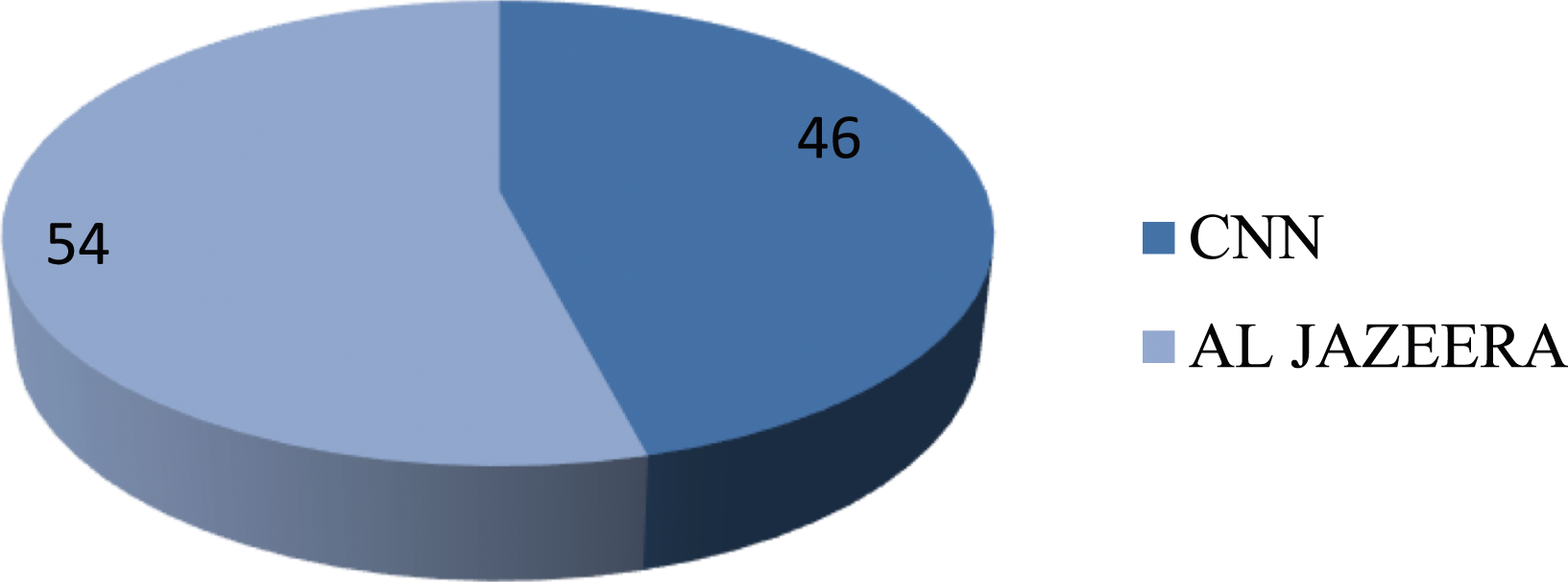
CNN and Al Jazeera have focussed on different topics to cover the war. However, there were differences in the depth of topic coverage between the two stations (Figure 2). Topics covered in CNN and Al Jazeera.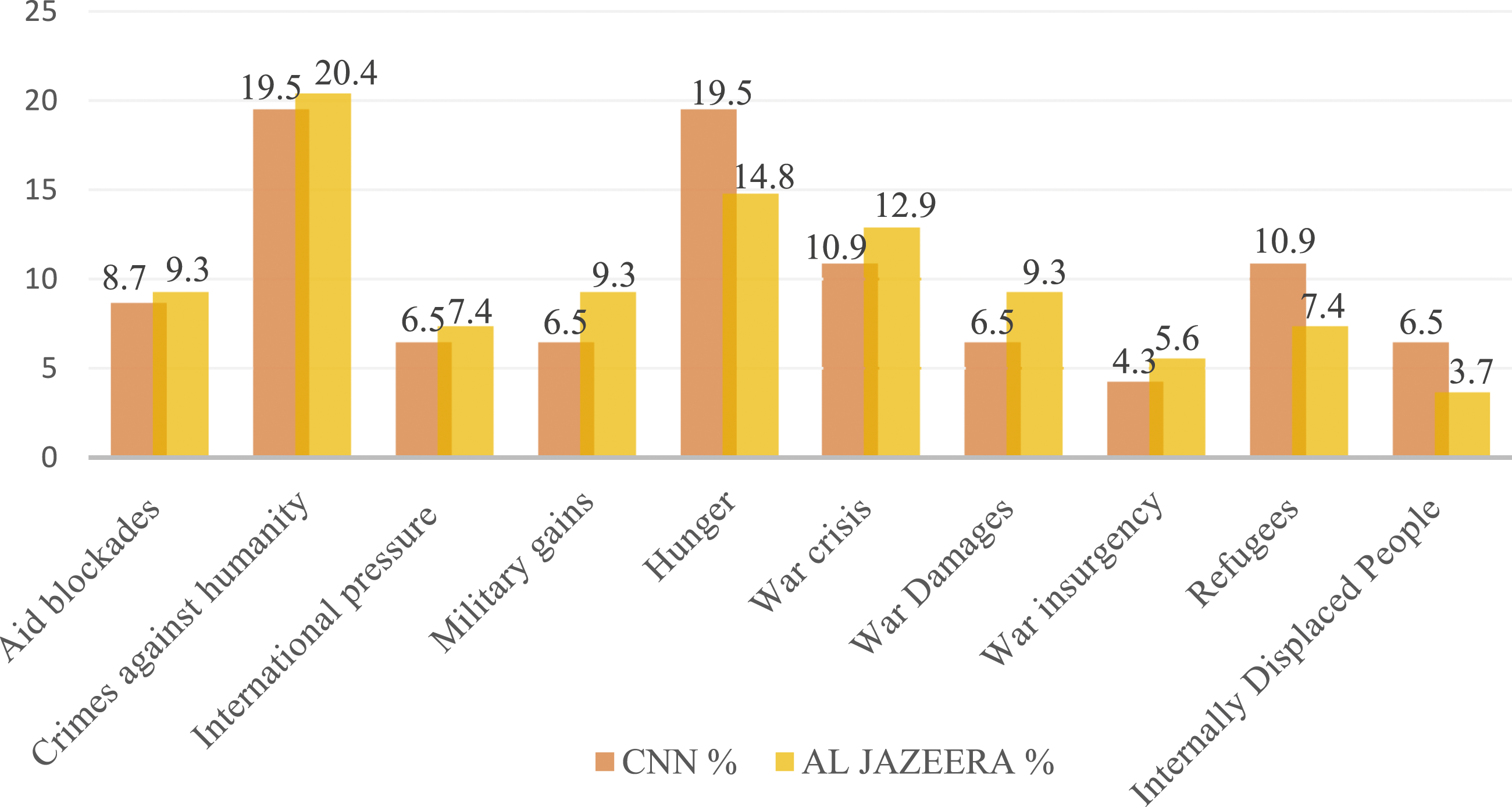
Figure 2 shows the topics covered by CNN and Al Jazeera. We selected the topics after a pilot test, as we learned that these topics were predominantly covered. These topics are highly interdependent rather than mutually exclusive, as each presents issues related to the war in different forms. These topics included aid blockades, crimes against humanity, international pressure, military gains, starvation (hunger), war crises, war damage, war insurgency, refugees, and Internally Displaced People. However, each medium provided different levels of coverage of these topics with specific focus areas, which determined the depth of the coverage. Al Jazeera covered aid blockades (9.3%), crimes against humanity (20.4%), international pressure (7.4%), military gains (9.3%), hunger (14.8%), war crises (12.9%), war damage (9.3%), war insurgency (5.6%), refugees, who fled to Sudan (7.4%), and Internally Displaced People (3.7%). The CNN covered aid blockades (8.7 %), crimes against humanity (19.5 %), international pressure (6.5 %), military gains (6.5 %), hunger (19.5 %), war crises (10.9%), war damage (6.5%), war insurgency (4.3%), refugees (10.9%), and Internally Displaced People (6.5%). While CNN gave the most coverage of crimes against humanity (19.5%) and hunger (19.5%), Al Jazeera provided the highest coverage of crimes against humanity (20.4%).
Abiy Ahmed was firm in hiding these crimes by blocking media outlets (Meron et al., 2022), including the international media. However, on March 5, 2021, Al Jazeera covered a preliminary analysis of the UN report on the “serious violations of international law, possibly amounting to war crimes and crimes against humanity, may have been committed by multiple actors in the conflict.” The US Secretary of State Antony Blinken said in a statement that “People in Tigray continue to suffer human rights violations, abuses, and atrocities, and urgently needed humanitarian relief is being blocked by the Ethiopian and Eritrean militaries as well as other armed actors” (Al Jazeera, May 24, 2021). Al Jazeera broadcasted about the crimes in Western Tigray, “A Tigrayan womb should never give birth.” “I begged them to stop,” Akberet told Al Jazeera. “I asked them, crying, why they were doing that to me. What wrong have I done to you? “You did nothing bad to us,” she said they told her. “Our problem is with your womb. Your womb gives birth to Woyane….A Tigrayan womb should never give birth” (Al Jazeera, April 21, 2021). This is a story of forcibly displaced people from Western Tigray attesting to rape, looting, and extrajudicial killings allegedly perpetrated by the Amhara forces.
CNN extensively covered crimes against humanity and hunger. US Sen. Chris Coons highlighted this as “New reports and footage emerging from Tigray of extrajudicial killings, murders of civilians, sexual and gender-based violence, and forced displacement are deeply disturbing” (CNN, April 3, 2021). Texas Rep. Michael McCaul told CNN that “there have been ample, credible reports from human rights groups and journalists on the continuing presence of Eritrean troops, and reports that have implicated them, and other armed actors, in human rights abuses, rape and other atrocities” (CNN, May 15, 2021). The UN also reiterated “human rights violations and abuses, including reports of sexual violence against women and girls in the Tigray region” (CNN, April 23, 2021). UN Office of the High Commissioner for Human Rights states, “Amid a worsening humanitarian situation in the Tigray region of Ethiopia, reports of indiscriminate and targeted attacks against civilians, including rape and other horrific forms of sexual violence, continue to surface. This must stop” (CNN, March 23, 2021). These news reports revealed that both CNN and Al Jazeera extensively covered crimes against humanity and hunger in Tigray.
Previous studies on comparative media analysis of CNN and Al Jazeera have shown varied coverage of African conflicts (Jibrin and Jimoh, 2017). However, this study showed that, overall, CNN and Al Jazeera had a similar focus and coverage toward revealing the impacts of the war on Tigray. One of the main reasons for this is that allied forces committed gross human rights violations and atrocities against civilians. This emphasises media homogenisation on the magnitude, actors, and impact of the war. Figure 2 shows that CNN focuses on people on the ground and Al Jazeera on official sources. Both media relied largely on US and UN organisations. This signifies responses from the US government and the UN regarding war crimes, human rights violations, and civilian atrocities. This highlights the international community’s response beyond news organisations, focusing on war-related topics.
Figure 3 shows that CNN and Al Jazeera relied on different sources. Al Jazeera covered diplomats (9.3%), the Ethiopian government (16.7%), human rights advocates (11.1%), humanitarian workers (12.9%), the international community (11.1%), local people (12.9%), local media (9.3%), opinion leaders (5.6%), Tigray government officials (7.4%), and the Tigray interim government (3.7%). Al Jazeera predominantly relied on the Ethiopian government as its official source (16.7%). CNN covered diplomats (6.4%), the Ethiopian government (10.8%), human rights advocates (10.1%), humanitarian workers (19.8%), the international community (15.2%), local people (19.8%), local media (4.3%), opinion leaders (4.3%), Tigray government officials (6.4%), and the Tigray interim government (2.1%). CNN focused on humanitarian workers and local people who helped the international community understand war crimes and crimes against humanity, hunger, and rape as weapons of war. Sources used by CNN and Al Jazeera.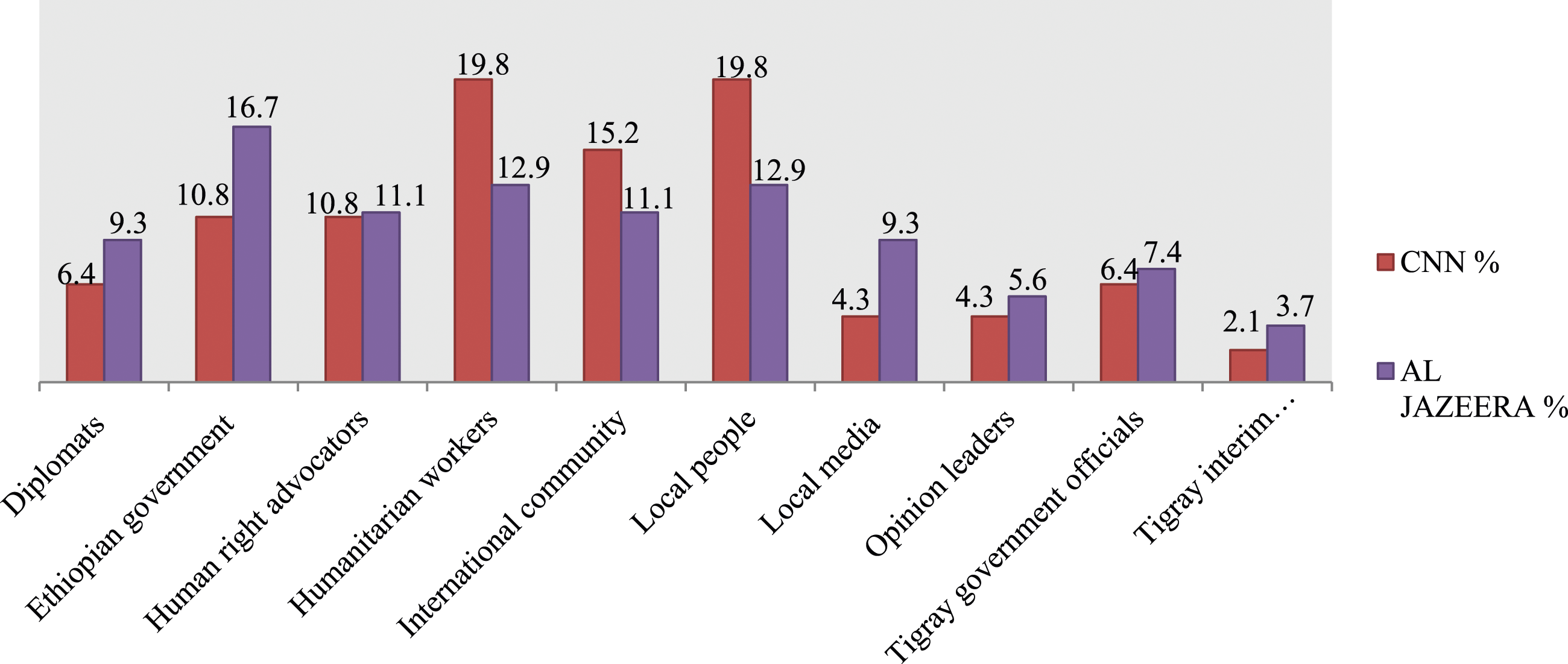
As shown in Figure 3, CNN and Al Jazeera used various sources to cover the war. Gans (1979) identifies sources as the ‘knowns’ (or already known individuals, such as politicians and government officials) and the ‘unknowns’ (or ‘ordinary’ people). Davis (2003:35) associates sources with the ‘primary definer’ and ‘secondary definer’ roles emphasising social status and power. This implies that the power relationship becomes a central focus between the two sources, the official and the unofficial sources. This paper uses official and unofficial sources. Official sources include government officials in higher leadership positions. They are seen as authoritative and trustworthy and are preferably drawn on because verification costs are minimal, as reliability is presumed (Scherling, 2021). Reliance on official sources amplifies the existing power structure, further marginalising those outside the official circle (Freedman et al., 2010).
In war reporting, the media relies on official or government sources and eyewitness reports (Scherling, 2021). In earlier stages of the war, Al Jazeera described war as a Law Enforcement Operation that relied on government sources. Unofficial sources are those without authority, elite status, position, or expertise; they are ordinary people or eyewitnesses (Dekavalla and Jelen-Sanchez, 2017). Unofficial sources witness what they have observed and encountered, which may strengthen the credibility and legitimacy of news organisations. During the war on Tigray, unofficial forces played a vital role in witnessing the atrocities and human rights violations of civilians. CNN focused on humanitarian workers and local people who helped the international community understand war crimes and crimes against humanity, hunger, and rape as weapons of war in Tigray.
Eyewitnesses are important sources because they allow the audience to see the conflict through the eyes of those affected, providing authentic weight owing to their seemingly unmediated nature (Scherling, 2021). Eye witnessing is vital, as it helps journalists identify and implement appropriate and preferred practices (Zelizer, 2007). Regarding tonal valuation during the war, official sources emphasised the war as a ‘Law Enforcement Operation’ and viewed it as positive. However, unofficial sources, including local residents and humanitarian workers, viewed it negatively.
How did CNN and Al Jazeera frame the war on Tigray?
CNN and Al Jazeera used five frames to describe the War on Tigray.
Figure 4 shows the framing genres of CNN and Al Jazeera used to cover the war. CNN predominantly used a responsibility frame (38.6%), human interest (19%), morality (17%), economic consequences (16 %), and conflict (10 %). Al Jazeera predominantly employed the responsibility frame (28.4%), morality frame (20.2%), conflict (18.9%), economic consequences (17.6%), and human interest (14.9%). CNN and Al Jazeera provided the highest coverage of the responsibility frame (38.7%) and (28%), respectively). Below are the news headlines on the dominantly used frames in CNN and Al Jazeera: Framing types used.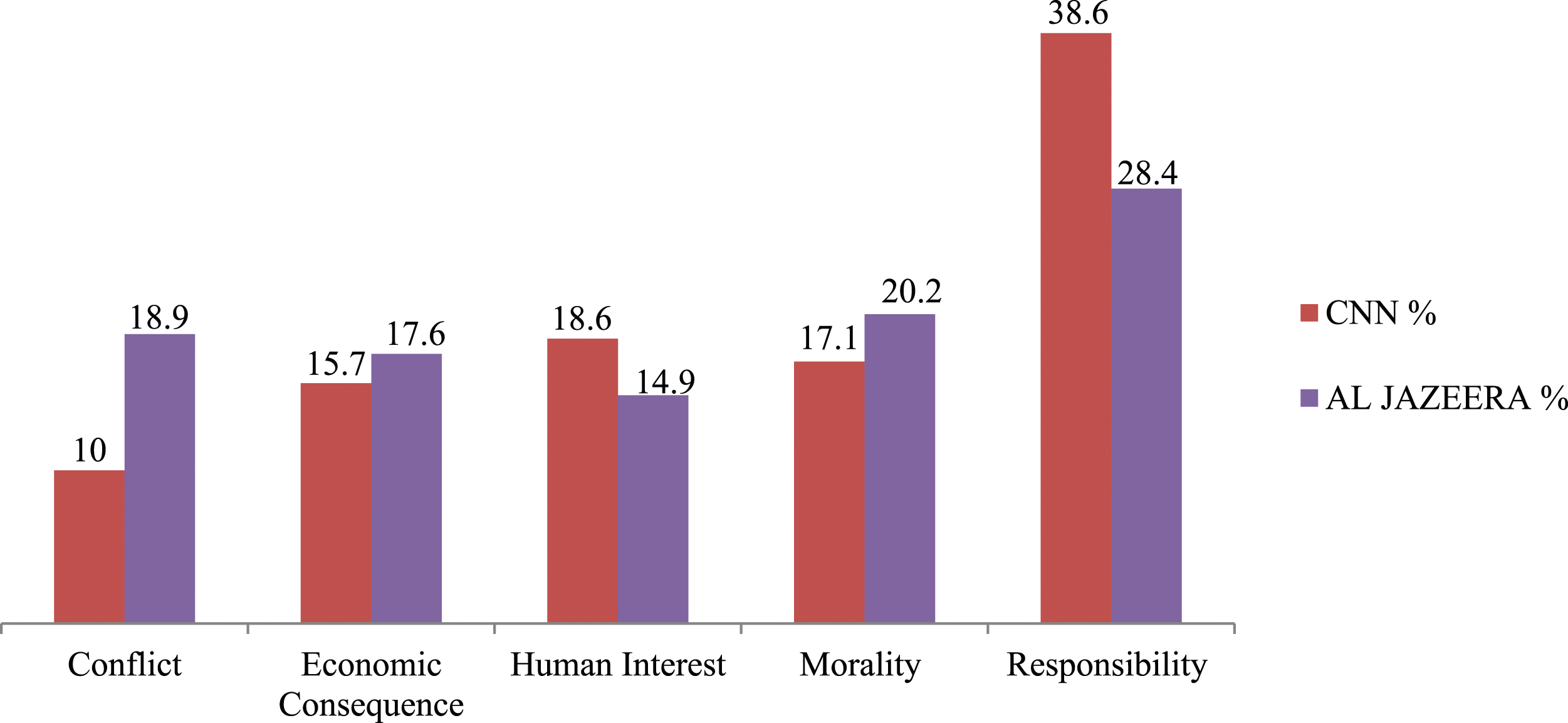
Responsibility frame: US official condemns violence in Tigray, warns of new sanctions
US legislators call for action amid reports of gang rapes, ethnic cleansing, and war crimes by the Ethiopian and Eritrean forces. “The violence in Tigray is horrifying. It shocks the conscience,” US Assistant Secretary of State Robert Godec said. The US has called on parties to end the conflict, allow humanitarian access, and halt human rights abuses. “If we do not see immediate progress on these fronts,” Godec said, “we will be imposing additional sanctions” (Al Jazeera, May 27, 2021).
Morality frame: Ethiopia’s Tigray: Men forced to rape family members, UN reports
Wafaa Said, Deputy UN aid coordinator in Ethiopia, said in a briefing to UN member states in New York that “Women say they have been raped by armed actors; they also told stories of gang rape, rape in front of family members and men being forced to rape their family members under the threat of violence” (Al Jazeera, 25 March 2021).
Responsibility frame: Massacre in the mountains
The US Secretary of State Antony Blinken spoke on Tuesday to the Ethiopian Prime Minister Abiy Ahmed…“Noting the growing number of credible reports of atrocities and crimes against humanity and abuses, the Secretary urged the Ethiopian government to take immediate, concrete steps to protect civilians, including refugees, and to prevent further violence. Secretary Blinken pressed for the immediate end to hostilities and the withdrawal of outside forces from Tigray, including Amhara regional security forces and Eritrean troops,” a readout of the call said (CNN, March 3, 2021).
Human interest frame: Analysis of Tigray massacre video raises questions for Ethiopian army
This news focuses on mass killings in Mahibere Diego, central Tigray…Ethiopian soldiers appeared to round up a group of young, unarmed men on a wind-swept, dusty ledge before shooting them at point-blank range…“picking them up by an arm or a leg and flinging or kicking their bodies off a rocky hillside like ragdolls. The soldiers could be heard in the footage urging one another not to waste bullets, to use the minimum amount needed to kill them, and to ensure that none of the groups were left alive. They also appear to cheer each other on, praising the killings as heroic and hurling insults at the men in their captivity” (CNN, April 2, 2021).
Based on Figure 4, we can argue that CNN and Al Jazeera focussed on the responsibility frame emphasising perpetrators who should be responsible for crimes against humanity, war crimes, crimes of aggression, and civilian atrocities. Both media played a positive role in covering the genocide, which would otherwise have been silenced in the local media because of the government’s intention to camouflage them through region-wide information blackouts. This has alerted the international community and the UN Human Rights Commission for an independent investigation, leading to sanctions from the US and the European Union.
Recurring terms used to frame the war on Tigray
CNN and Al Jazeera used different recurring terms to describe the war.
Recurring terms in CNN and Al Jazeera.
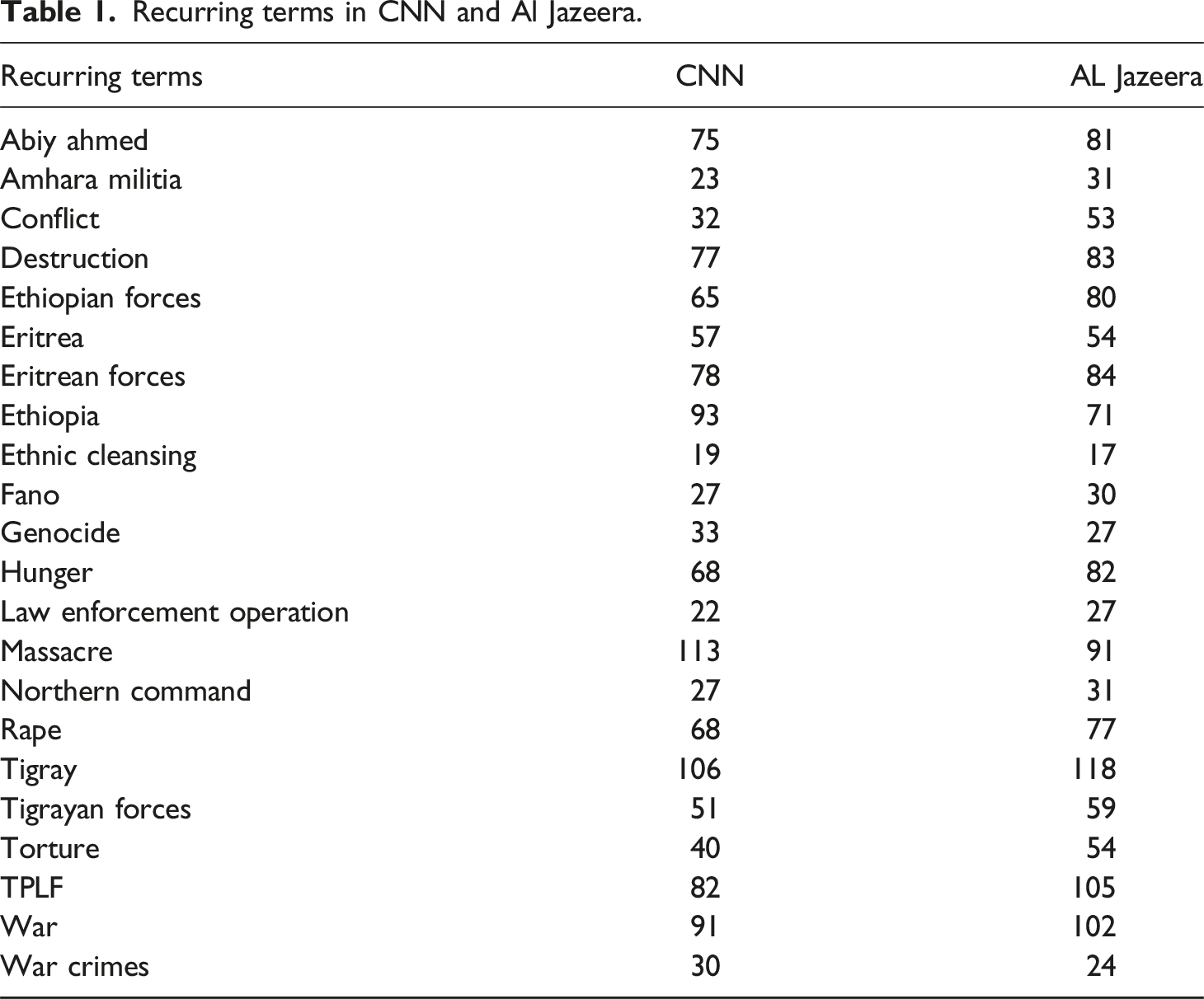
Although the Ethiopian government emphasised the ‘Law Enforcement Operation’, it was not the focus of these media channels. This is because the allied forces targeted civilians, looted private and government properties, and destroyed the infrastructure in different parts of Tigray. The Eritrean forces carried out door-to-door looting, including kitchen utensils, in the urban and rural areas of Tigray. The Massacre also reveals the nature and magnitude of indiscriminate atrocities committed by the allied forces. The above table lists the recurring terms used to frame the war. While CNN used massacre (113 times), Al Jazeera used Tigray (118 times). This implies that civilian atrocities and the overall Tigray context have been focal points of framing for both media channels. CNN and Al Jazeera informed the international community that Tigray had become a global agenda, and the UN Security Council held more than 13 meetings about the region.
Tones in the recurring terms.
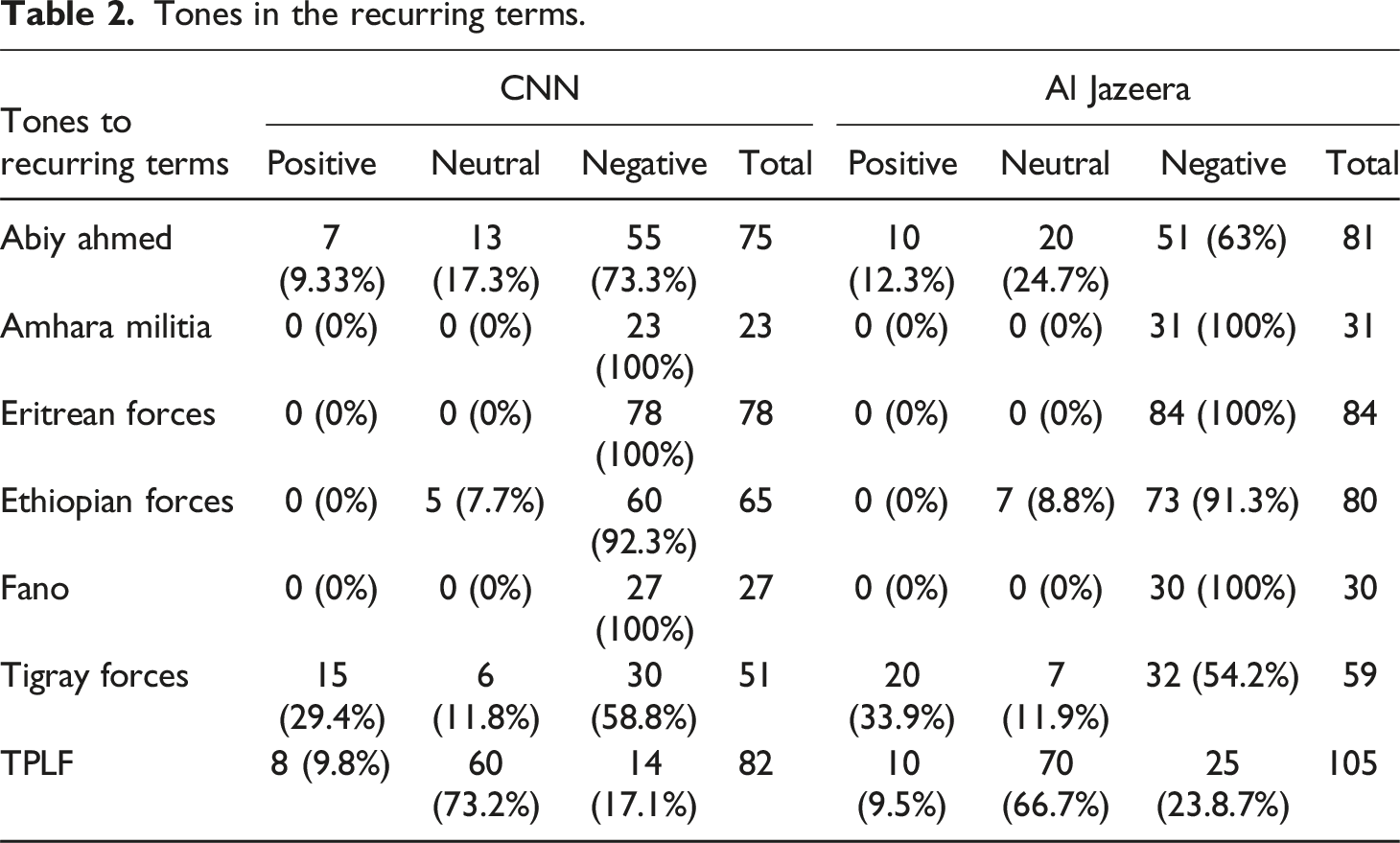
The TPLF was the most frequently mentioned in the CNN 82 times: 9.8% positively, 73.2% neutral, and 17.1% negatively. However, the Amhara militia was mentioned the least: 23 times, 0% positively, 0% neutral, and 100% negatively. In Al Jazeera, Abiy Ahmed was mentioned 81 times: 12.3% positively, 24.7% neutral, and 63% negatively. The Amhara militia was raised 31 times: 0% positively, 0% neutral, and 100% negatively. The Eritrean forces were mentioned 84 times: 0% positively, 0% neutral, and 100% negatively. The Ethiopian Forces were mentioned 80 times: 0% positively, 8.8% neutral, and 91.3% negatively. Fano was mentioned 30 times, 0% positively, 0% neutral, and 100% negatively.
Tigray forces were mentioned 59 times: 33.9% were positive, 11.9% neutral, and 54.2% negative. TPLF was the most frequently mentioned term in Al Jazeera 105 times: 9.5% positively, 66.7% neutral, and 23.8% negatively. The table also shows that TPLF was the most frequently raised word on CNN and Al Jazeera, 82 and 105 times, respectively. The Tigray forces were the most positively mentioned 29.4% on CNN and 33.9% on Al Jazeera. In contrast, the Amhara militia (100%), the Eritrean forces (100%), and Fano (100%) were the most negatively mentioned terms at both media stations. One of the basic reasons for the negative representation of these terms was that the allied forces committed crimes against humanity, mass killings, and denial of burial services for civilians in different parts of Tigray.
In the table above, the Amhara militia, Fano, and Eritrean forces had the highest negative tones on both CNN and Al Jazeera. The war on Tigray was political. However, the Ethiopian government has weaponised hate speech as a significant strategy for declaring war (Plaut and Vaughan, 2023; UN, 2022). Labelling the people of Tigray ‘as enemies’ of Ethiopia was a pretext for the actions taken by allied forces. The Ethiopian government and its partners are responsible for civilian atrocities and human rights violations in Tigray. This is associated with the level of crimes committed in different parts of Tigray, viewed as negative tones. The Tigray forces were viewed most positively in both media. The reason is that from November 4, 2020, to June 28, 2021, they were based in Tigray and did not commit any crimes against the people.
Conclusion
This study sought to explore the framing of the war on Tigray in CNN and Al Jazeera. Our analysis focussed on different categories, including the topics covered, sources used, framing genres, and recurring terms. While Al Jazeera predominantly focussed on crimes against humanity, CNN provided the most coverage of crimes against both humanity and hunger. This implies that the allied forces indiscriminately committed crimes against humanity and mass killings in Tigray. They also used rape and hunger as weapons of war. Both media informed the international community to recognise the nature and consequences of the war, although there were limited actions against the perpetrators. Al Jazeera dominantly relied on official sources (government and state media) as it relied on the views of the government to cover the war. However, CNN mostly relied on people on the ground, including humanitarian workers and local people.
While Al Jazeera focussed on the responsibility frame followed by the morality frame; CNN focussed on the responsibility frame followed by the human interest frame. This implies that both CNN and Al Jazeera emphasised perpetrators who committed genocide. In Al Jazeera, Tigray was the most recurring term and ethnic cleansing the least. However, on CNN, massacre was the most mentioned term, while ‘Law Enforcement Operation’ was the least mentioned. This indicates that the ‘Law Enforcement Operation’ was not the focus of either media house, as the intention of the war was far beyond this operation. The term massacre indicates the nature and magnitude of the atrocities committed on civilians. About the tones in the recurring terms, Tigray forces were the most positively mentioned on CNN and Al Jazeera. However, the Amhara militia, the Eritrean forces, and Fano were the most negatively mentioned in both media.
The study findings have several implications. Initially, the war was perceived as a ‘Law Enforcement Operation’ for Ethiopians and the international community. However, the study findings informed global audiences about the cause and intentions of the war, emphasising that it was far beyond the allied forces targeting civilians and their properties. The presence of foreign forces, including Eritrea, was controversial, as the Ethiopian government stubbornly denied it. CNN and Al Jazeera have revealed the presence of these invaders. Both media covered the war using a responsibility frame, highlighting that perpetrators should be held accountable for genocide. Furthermore, the findings help to realise the role of global media in covering the magnitude of crimes, civilian atrocities, and the different actors involved in the war. However, this study has limitations. One of its limitations is that it does not make comparisons with other regional/international war coverage and does not show the framing of these media compared to other regional war coverage.
Footnotes
Acknowledgements
We are grateful to the three anonymous reviewers for their constructive and insightful comments that contributed to improving the quality of the manuscript.
Declaration of conflicting interests
The author(s) declared no potential conflicts of interest with respect to the research, authorship, and/or publication of this article.
Funding
The author(s) received no financial support for the research, authorship, and/or publication of this article.
