







Abstract
In today’s digital news media environment, where the number of professional staff photojournalists is declining, this study examines the extent to which images outsourced from external sources, including vested groups, are published, and how the visual quality of images varies by photo source: 1) staff photojournalist, 2) wire services, 3) social media, 4) news sources, and 5) citizens. Computational and statistical analyses of 7,651 online news photos published between January 1, 2024, and December 31, 2024, by five major South Korean newspapers, revealed that the quality of visual journalism, based on photo characteristics, varied by photo source. The results also indicate that both the topics and the accuracy of visual representation varied by photo source: photos taken by staff photojournalists were more closely aligned with the article content than those from other sources. Furthermore, photos from social media and news sources tended to depict human faces with positive emotions, whereas those from wire services more often showed negative emotions. This suggests that the gatekeeping role of photojournalists as news gatherers may be weakening, enabling external sources, including vested interest groups, to promote their own agendas.
Introduction
In the digital age, the current trend in visual journalism worldwide is a decrease in images provided by staff photojournalists, alongside an increase in the use of images from external sources, such as wire services, citizens, and even news sources (Ferrucci et al., 2020; Mortensen and Gade, 2018). Although this phenomenon is largely attributed to the financial crises of news organizations, which have led to a reduction in the number of staff photojournalists (Mortensen and Gade, 2018; Thomson, 2018), advancements in camera technology have also led news managers to anticipate that nonprofessional journalists may increasingly supplant the work of skilled professional (Greenwood and Thomas, 2015; Mast and Hanegreefs, 2015).
However, the effects of this phenomenon may be more serious, weakening professional photojournalists’ gatekeeping roles and resulting in a decline in the quality of photojournalism. Gatekeeping refers to the process by which journalists, editors, and news organizations select and omit items, including photographs, based on the concept of news value (Shoemaker et al., 2009; White, 1950). Therefore, the gatekeeping role involves journalists’ professional decisions about which events to report based on their editorial judgment. The increased use of photographs taken by external sources, including non-professional photographers, has led to negative journalism effects because non-professionals may disregard professional photojournalistic rules that ‘have come to define quality photojournalistic images’ (Lough and Mortensen, 2023: p. 2017).
Given the well-documented power of images (Bissell, 2000) and the ability of professional staff photojournalists to produce images with news value and greater representativeness (Klein-Avraham and Reich, 2016; Lough and McIntyre, 2019), recent studies have highlighted the displacement of news by citizen-generated content (Greenwood and Thomas, 2015; Mast and Hanegreefs, 2015), the stock photography industry (Mortensen et al., 2023), social media, and even news sources. Although scholars have noted an increasing number of news organizations incorporate photographs provided by interest groups, including public relations and news sources (Schwalbe et al., 2015), few studies have examined the extent to which images provided by non-staff photographers displace the work of staff photojournalists, particularly in online news environments.
Therefore, drawing on prior research, this study examined whether and, to what extent, the quality of visual journalism differs depending on photo sources, particularly between professional staff photojournalists and non-staff external sources. To that end, this exploratory study analysed 7,651 lead photographs published online between January 1, 2024, and December 31, 2024, by five major South Korean newspapers by using computational approaches. In South Korea, more than seven out of 10 people consume their daily news through online platforms—one of the highest levels reported in global surveys conducted by the Reuters Institute for the Study of Journalism (Newman et al., 2021). Thus, South Korea provides an appropriate context for examining news photographs published online.
The findings of this study contribute to journalism research by suggesting that the gatekeeping role by staff photojournalists has eroded, and by documenting the distinct differences in quality between online news photographs taken by staff photojournalists and those captured by non-staff professionals.
Literature review
Journalistic gatekeeping and digital media
Gatekeeping is perceived as crucial in journalism because it is fundamental to the news production process. The concept of gatekeeping, initially proposed by Lewin (1947), refers to ‘the process of selecting, writing, editing, positioning, scheduling, repeating and otherwise massaging information to become news’ (Shoemaker et al., 2009: p. 73). Gatekeeping theory is one of the oldest in journalism studies and it has been conceptualized as a process carried out by individuals and shaped by organizational structures. Especially in early studies conducted until the 1970s, researchers influenced by White (1950) understood gatekeeping as a process influenced by individual journalists.
However, subsequent studies have shown that gatekeeping may not be the responsibility of a single journalist or editor but rather a process that operates across multiple levels within a news organization. For example, beginning in the 1980s, Gans (1979), working from the perspective of the sociology of news work, helped initiate the study of gatekeeping and multiple gatekeepers in their organizational context (Shoemaker and Vos, 2009). Gatekeeping is now generally understood not only as an individual journalist’s selection of information but also as a process in which information gathered from various sources passes through multiple levels of gates within a news organization before being shaped into a product for public dissemination. Thus, similar to news stories, photographs published in newspapers also undergo a gatekeeping process.
In the digital media environment, however, scholars have expressed concerns regarding the role of gatekeeping in journalism. From a withering perspective, researchers highlight that traditional ‘gates’ and gatekeepers are struggling to sustain their long-standing role of selecting, from an ever-expanding pool of information providers in the digital media environment, that which is deemed sufficiently valuable to communicate to the public (Singer, 2006). In contrast, from a shifting-role perspective, scholars contend that although journalists’ gatekeeping responsibilities have fundamentally transformed—from producing original content to functioning as curators—this evolution does not signal a wholesale decline in journalistic gatekeeping roles (Bakker, 2014; Schwalbe et al., 2015).
For example, Bakker (2014) analysed job advertisements for journalists and editors posted on Villamedia.nl over the course of approximately 1 month, as well as job postings from 62 major Dutch media companies. They argued that producing original content is no longer the primary task of contemporary journalists. Instead, journalists are increasingly functioning as ‘harvesters’, ‘managers’, and ‘curators’ of information generated outside their own organizations. In the context of photojournalism, Schwalbe et al. (2015) drew on findings from an online survey and interviews with elite photojournalists, approximately half of whom reported that visual journalists’ roles were shifting from content creation to content curation. They proposed that ‘the traditional gatekeepers and gate watchers in legacy newsrooms are evolving into ‘gatecheckers’ who select, verify, and curate visuals’ (p. 476).
Specifically, during crisis events such as terror attacks, the active participation of citizens or amateur photographers is becoming increasingly important in the process of news production (e.g., Mast and Hanegreefs, 2015) because they are ‘the person first on the scene with a camera’ (Allan, 2014: p. 134) or acting as a ‘citizen witnessing’ (Allan, 2013). However, they are not professionals, and many scholars have thus raised concerns about ethical and normative issues, criticizing this type of participation as ‘me-first journalism’, ‘unsubstantiated amateur footage’, or ‘unreliable crowd-sourced material’ (Fry, 2013, cited in Allan, 2014: p. 136). In contrast, several scholars have proposed that professional photojournalism could benefit from citizen witnesses in the digital media environment (Allan and Peters, 2015). This is not a matter of replacement but of complementarity; previous studies on citizen photojournalism have defined it as involving ‘amateurs who do not identify as journalists and are not bounded by journalistic norms, standards, guidelines, code of ethics or procedures, but create and produce images, video and multimedia that are integrated into traditional media reports’ (Brennen and Brennen, 2015: p. 520). As this type of journalism has increased, the gatekeeping role of professional journalists, who can curate or verify the content, has become more important.
News value and visual journalism
Fundamentally, the gatekeeper’s role is to determine what should be reported based on newsworthiness. Since Galtung and Ruge’s (1965) seminal study on news factors, news value has remained an enduring topic in journalism research. According to Bednarek and Caple (2012, 2017), news values have been conceptualized in two primary ways: (1) a material perspective, which locates news values in the characteristics of actual events and people (Galtung and Ruge, 1965); and (2) a cognitive perspective, which views news values as residing in the minds of journalists (Donsbach, 2004; Harcup & O’Neill, 2001; Harrison, 2010). The material perspective emphasizes inherent attributes of events or actors, such as impact, proximity, prominence, and negativity. By contrast, the cognitive perspective conceives news values as professional or organizationally learned conventions.
Third perspective is the discursive perspective that focuses not only on events or actors, but also on how and why they are constructed as newsworthy (Bednarek and Caple, 2017). From this viewpoint, news values are constituted through news factors and discursive devices, such as language and images. For example, Bednarek and Caple (2012) analysed news articles published in newspapers such as The Sydney Morning Herald, and demonstrated that evaluative language (e.g., celebrity, momentous), superlatives (e.g., up to, more than), and historical comparisons function as semiotic devices that contribute to the construction of newsworthiness.
Aligned with the discursive perspective that news values are constructed primarily through ‘what is presented in images (content) and to a lesser extent through how the image is technically realized’ (Caple and Bednarek, 2015: p. 445), this study proposes that photojournalism embodies both journalistic news values and distinctive visual qualities. Accordingly, the quality of photojournalism should be evaluated along two dimensions: news factors, understood as attention to events or individuals from a material perspective (Galtung and Ruge, 1965), and the visual features of the photographic work itself (Lough and Mortensen, 2023; Mortensen and Gade, 2018). Although these two elements are not always clearly delineated, assessments of newsworthiness often consider the significance of the news topic, human components, the representation of diversity, including race and gender (Kim and Smith, 2005; Lough and Mortensen, 2023). For instance, Kim and Smith (2005), through a content analysis of 60 years of Pulitzer Prize-winning photographs (1942–2002), found that award-winning domestic news images were predominantly characterized by a negative valence, with a primary focus on social issues such as crime and poverty.
Quality differences in visual journalism depending on image providers
There has been an increased reliance on external providers, such as wire services, freelancers, citizens, and even stock imagery companies, referring to businesses that manufacture photographic images primarily for use in marketing promotions and advertising (Greenwood and Thomas, 2015; Mortensen et al., 2023; Thomson, 2018).
Moreover, with the advancement of digital technology, influential interest groups traditionally regarded as news sources—such as elite politicians and government officials, can now interact directly with news audiences by disseminating information and uploading self-produced images online. As news reporters are increasingly bypassed by elite sources in social media and digital media environments (Carlson et al., 2021), a similar trend may be observed in the field of photojournalism.
Consequently, scholars in visual journalism have expressed concerns that this trend may affect not only the quality of news images, but also audience trust in the news. Professional staff photojournalists’ work has been found to differ from that of nonprofessional photojournalists in several aspects (Greenwood and Thomas, 2015; Klein-Avraham and Reich, 2016; Nilsson, 2017). Based on professional and rigorous gatekeeping practices recognized as a fundamental aspect of journalism and intrinsically linked to journalism’s principles of objectivity, impartiality, and autonomy (Shoemaker and Vos, 2009; Singer, 2006), photojournalists should be autonomous and independent to ensure the unbiased and objective selection and representation of subjects, fulfilling their primary obligation—the pursuit of truth. For example, in an online survey on the factors that affect the gatekeeping role of visual journalists in the US (Schwalbe et al., 2015), 84% of respondents agreed or strongly agreed that objectivity and fairness is the most important factor; followed by the visual itself (47%).
Similarly, photojournalists prioritize the accurate representation of reality, a principle that Wheeler and Gleason (1995) describe as ‘an idea at the heart of photojournalism ethics’ (p. 8). Consistent with this perspective, Brennen (2010) proposed that news photographs document ‘truthful depictions of an objective reality’ (p. 73). By analysing images in the print edition of The Middletown (NY) Times Herald-Record in the U.S. before and after the newspaper laid off its entire photography staff, Mortensen and Gade (2018) also said, ‘they take different news images than non-professionals, and these images capture what is newsworthy’ (p. 1005). Furthermore, through an experimental study, Mortensen et al. (2023) demonstrated that participants perceived stock photographs as significantly less credible than those taken by staff photojournalists.
Building on the preceding discussion, this study examines the impact of images provided by external sources on visual quality and the first research question (RQ1) investigates the extent to which photographs produced by external sources, including both non-staff photographers and news sources, are utilized in South Korean newspapers.
Additionally, this study examines the quality of news photographs based on their news factors and visual features. In terms of news factors, the topic and accuracy of the images were assessed. Regarding visual techniques, this study considered the dominant emotion conveyed, the presence of people, and the vividness of the work. Specifically, this study highlights the contrast between images supplied by traditional news sources with vested interests and those produced by staff photojournalists (RQ2).
Methods
Data
Photos
The number of photos by newspaper.

Photo sources
To examine the differences in visual qualities of photos according to the source, we categorized photo sources into five categories: staff photojournalists, wire services, social media, news sources, and citizens. The ‘staff photojournalist’ source indicates that photos were taken by a photographer employed by the newspaper, while the photos of the ‘wire service’ source were provided by a wire agency. Photographs acquired from social media were classified as social media photographs. In this study, a news source refers to the origin of the information used in a news article, such as individual people (including politicians), institutional or PR materials, and representatives from organizations such as government, companies, or other institutions who provide the basis for the news article. Finally, the photos provided by the readers were categorized as ‘citizens’.
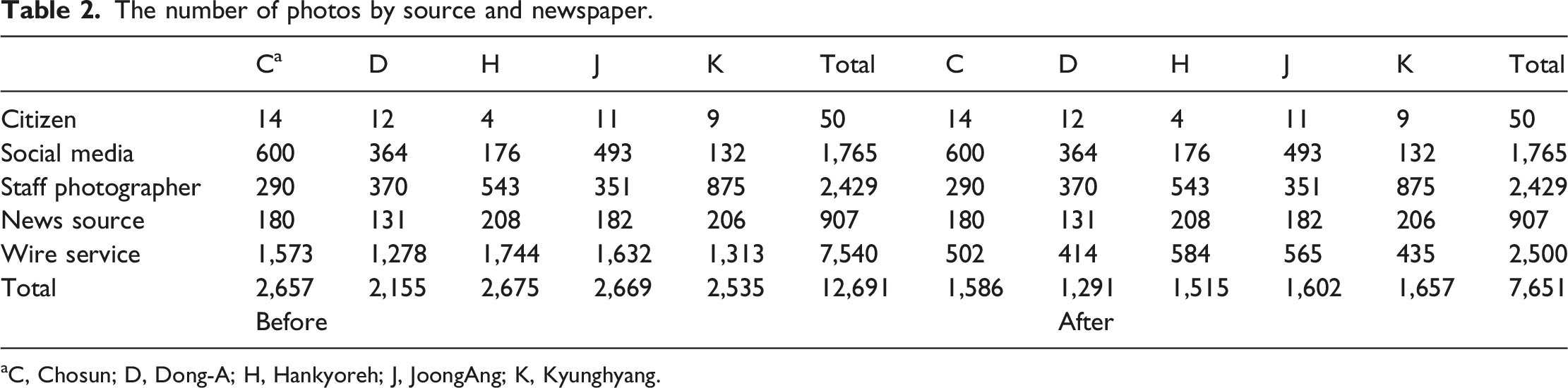
The number of photos by source and newspaper.
aC, Chosun; D, Dong-A; H, Hankyoreh; J, JoongAng; K, Kyunghyang.
The numbers on the left show the original distribution of the number of photographs by source. As shown, the number of photos provided by the wire services (7,540) was much higher than the number of photos provided by other sources. To make the distribution more even and reduce the total number of photos to be analysed, 2,500 wire service photos were randomly selected without altering the number of photos from other sources, as shown in the table on the right side. Table 2 also shows the number of photos by newspaper.
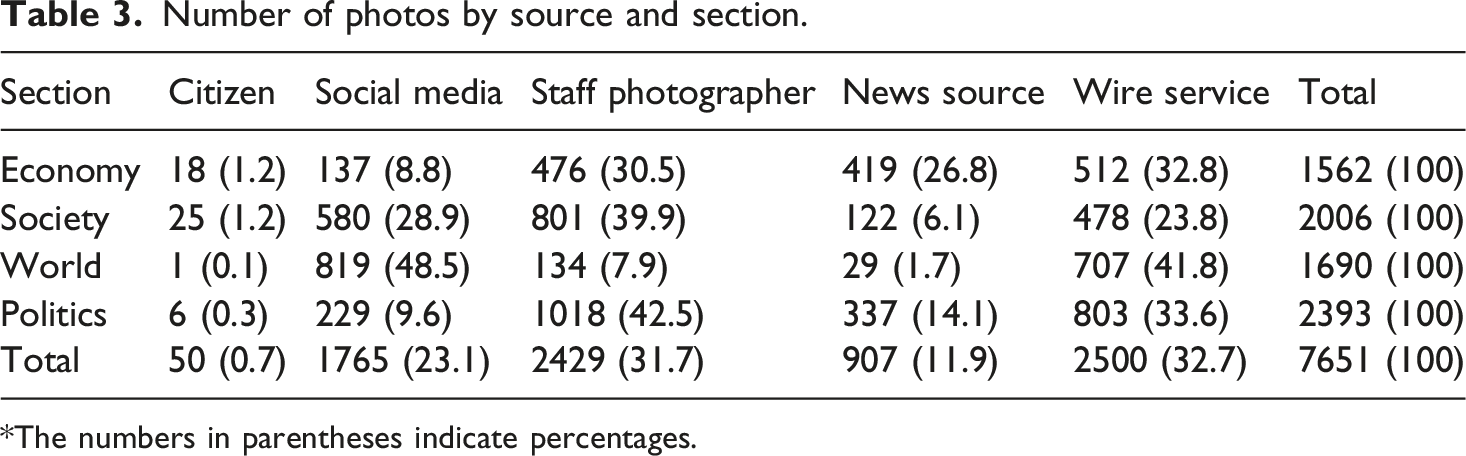
Number of photos by source and section.
*The numbers in parentheses indicate percentages.
Visual qualities: News factors and visual features
The differences in the visual qualities of photographs were analysed using computer vision and text mining techniques. Based on previous studies (Bednarek and Caple, 2017; Greenwood and Thomas, 2015; Mast and Hanegreefs, 2015), this study examined the visual quality of photographs using two components, news factors and visual features. Specifically, since previous studies have defined news factors as characteristics located in actual events (e.g., what is presented in images), this study measured each photo’s topic and accuracy of representation (i.e., the similarity between a photo and the article content). In addition, because visual features have been defined as ‘how the image is technically realized’ (Caple and Bednarek, 2015: p. 445), this study analysed the presence of people in the frame, the dominant emotion, and vividness of the image.
Topics of a photo
The topics represented in each photo were identified using topic modelling methods with a two-step approach. First, a short text description was generated for each photo using multimodal LLaMa 3.2 2 , a multimodal large language model. Multimodal LLaMa 3.2 is a large language model developed by Meta in 2024 that is designed to process and generate responses based on both textual and visual inputs (Meta, 2024).
After generating a text description for each photo, a topic modelling technique was applied. BERTopic (Grootendorst, 2022) was used. BERTopic is a Transformer-based topic modeling algorithm that was released in 2022. According to the author, BERTopic performs better than traditional probability-based models such as LDA (Latent Dirichlet Allocation).
By applying this model to the text descriptions of the photos in the dataset, 106 topics were identified. Subsequently, similar topics were first identified using BERTopic. Next, two human coders verified whether the topics classified as similar were indeed similar, and those confirmed to be similar by the human coders were merged into a single topic, resulting in 61 topics. Appendix 1 presents the top five words representing each topic.
Accurate representation: Similarity between a photo and the article that embeds it
To measure the similarity between a photo and the article content, the Contrastive Language-Image Pretraining (CLIP) model developed by OpenAI (Radford et al., 2021) was used. The primary purpose of CLIP is to calculate the similarity between an image and its corresponding text. As the original content was too long for use with CLIP, the content was first summarized using the KoBART model. 3 The KoBART model is a Korean version of the Bidirectional and Auto-Regressive Transformer (BART) model developed by SKT, a leading telecommunications company in South Korea. BART is a sequence-to-sequence model based on both the encoder and decoder parts of the transformer and was developed by Facebook AI in 2019 (Lewis et al., 2019). The summarized text was then fed into CLIP, along with the corresponding photo, which resulted in a similarity score between them.
Whether a person is present in a photo
To detect a person in a photo, the YOLOv11 object detection model released by Ultralytics in 2024 (Ultralytics, 2024) was employed. Among the versions of YOLOv11, the ‘nano’ version (YOLO11n) was utilized. YOLOv11 was pre-trained using the MS COCO (Microsoft Common Objects in Context) dataset (Ultralytics, 2024). The MS COCO dataset is a widely used large-scale dataset in computer vision, primarily used for object detection. It contains 80 object categories, such as persons, cars, buses, and dogs. This study used a pre-trained model without fine-tuning, as the primary purpose was to detect persons in the photo.
Dominant emotion
The number of photos for each emotion.

Vividness: Saturation and value
Vividness refers to the extent to which a visual stimulus is perceived as clear, detailed, and perceptually rich. It can be approximated using low-level visual features, such as saturation and value, because these directly shape sensory intensity and clarity (Kind, 2017). In particular, saturation reflects the richness and intensity of colors, while value (brightness) determines the visibility and clarity of visual details. Higher saturation and appropriate brightness increase perceptual information and make images appear more vivid. Highly saturated images tend to have bright and vivid colours, whereas low-saturation images are more likely to have subdued colours. Value refers to the lightness of a colour. An image with a high value has a lighter colour, whereas an image with a low value has a darker colour. OpenCV was employed to measure the saturation and value of each photograph 4 .
Statistical analyses
A series of statistical analyses to answer the research questions were employed. To assess whether the topic and dominant emotion of a photo differed according to its source, a Chi-square test of independence was conducted to examine the relationship between categorical variables. In addition, a set of regression analyses was conducted for the following characteristics of the photographs: 1) similarity between a photo and the article text in which it appears, 2) whether a person is included in a photo, 3) saturation, and 4) value. The following regression model was used for the analysis:
When y represented whether a person was included in a photo, (1 if present, 0 otherwise), a binary logistic regression method was employed. A linear regression method was used for the remaining photo characteristics. All regression models were estimated using heteroscedasticity-robust standard errors.
Results
The number of photos by photo providers (sources)
To address the first research question (RQ1), this study examined the extent to which photographs from external sources were used in online news content. As detailed in the Methods section (Table 2), the largest proportion of published images originated from wire services, accounting for 7,540 photographs (59.4%), whereas citizen-generated photographs were the least represented, totalling only 50 images (0.4%). Photographs from social media and news sources comprised 13.9% (1,765) and 7.1% (907), respectively. In comparison, staff members produced 19.1% (2,429) of the photographs. In other words, only two out of 10 published photographs were created by staff photojournalists, whereas the remaining eight were provided by external sources.
Topics of photos
Next, we examined whether visual quality in terms of news value and visual features differed according to the type of source (RQ2a, b). First, regarding news value, this study examined the topics of photographs. The topic modelling analysis resulted in 61 topics, as reported in Appendix 1. The results of topic modeling did not directly indicate what the topics were; rather, they showed which keywords were most strongly associated with each topic. To examine whether the topics of photos varied with photo source, a Chi-square test of independence was conducted. In addition, because the contingency table contains cells with values less than or equal to five, the results of the Chi-square test may be unreliable; therefore, those cells were removed. The Chi-square test resulted in Percentage of each topic covered by photo sources.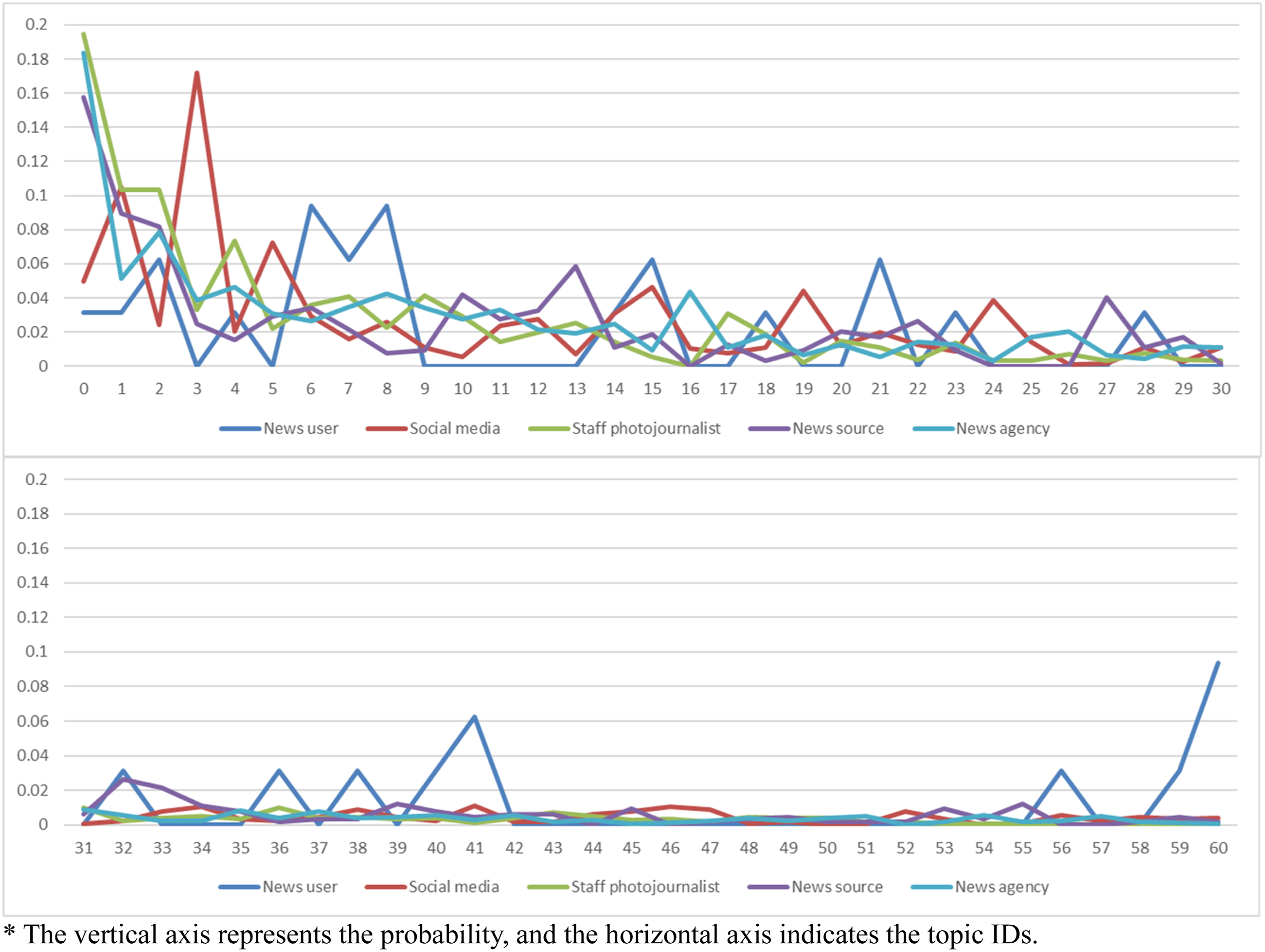
The figure indicates that the most frequent topics of photos provided by wire services, staff photojournalists, and news sources are associated with Topic 0, which depicts a person or people delivering an address or speech. Another scene frequently covered by the photos from these sources was people sitting around a desk or table, represented by Topic 1. Another frequently appearing topic in photos taken by staff journalists is Topic 4, which represents people gathering for a protest. One of the frequently appearing topics in photos provided by news sources is buildings, which is Topic 13. The main topics of the photos provided by the wire services were similar to those of the photos taken by staff journalists. Many of the photos obtained from social media were in the form of collages. In other words, instead of a single photo, collages consisting of two or more photos were often acquired from social media. Photos acquired from social media frequently featured women. The main topics of the photos provided by the citizens were cars parked on roads and fire scenes.
Similarity between a photo and the text of the article that embeds the photo
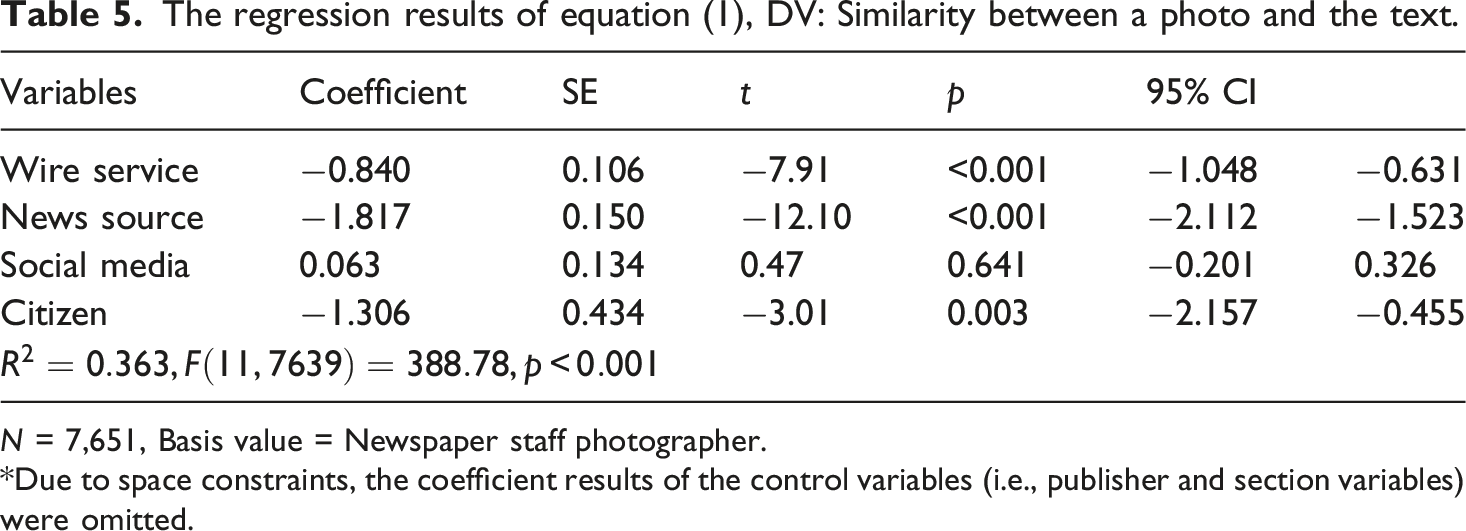
The regression results of equation (1), DV: Similarity between a photo and the text.
N = 7,651, Basis value = Newspaper staff photographer.
*Due to space constraints, the coefficient results of the control variables (i.e., publisher and section variables) were omitted.
Dominant emotions
The contingency table of photo sources and dominant emotions.
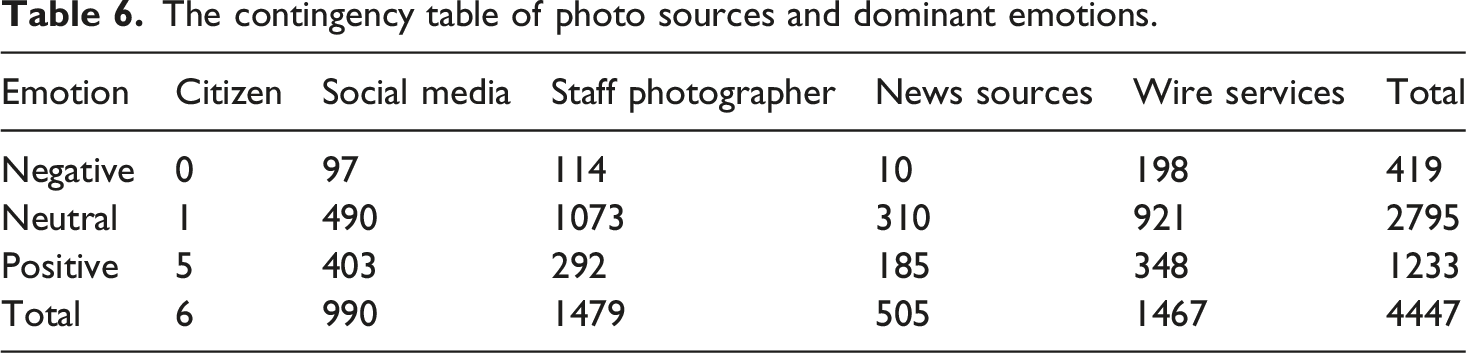
Presence of humans
Regression results of equation (1), DV: Whether a person(s) is present in a photo.
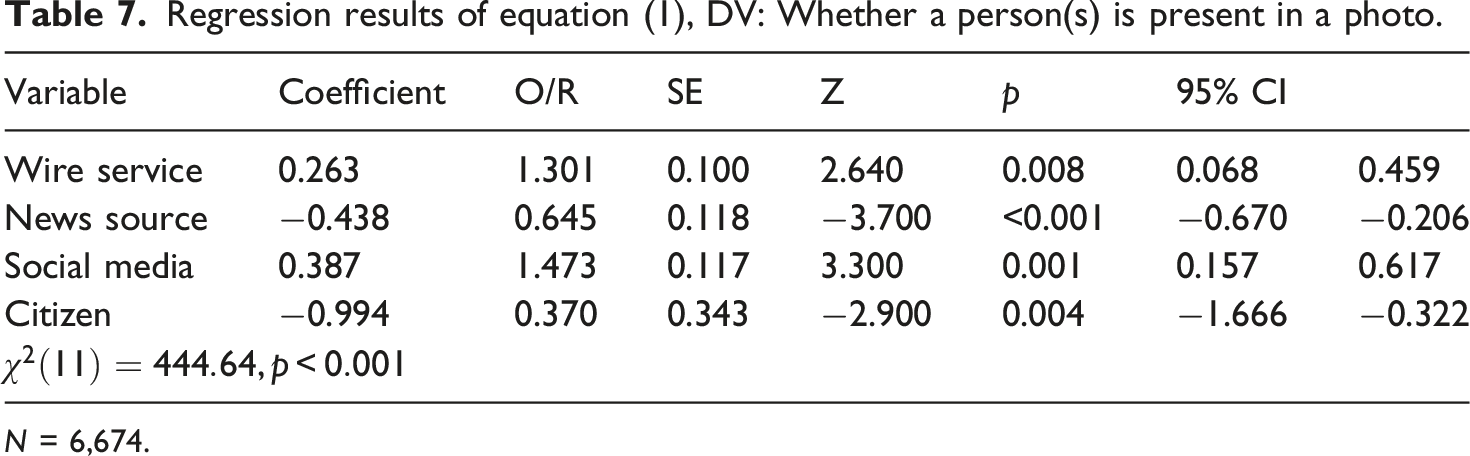
N = 6,674.
Saturation and value
Regression results of equation (1), DV: Saturation (left) and value (right).
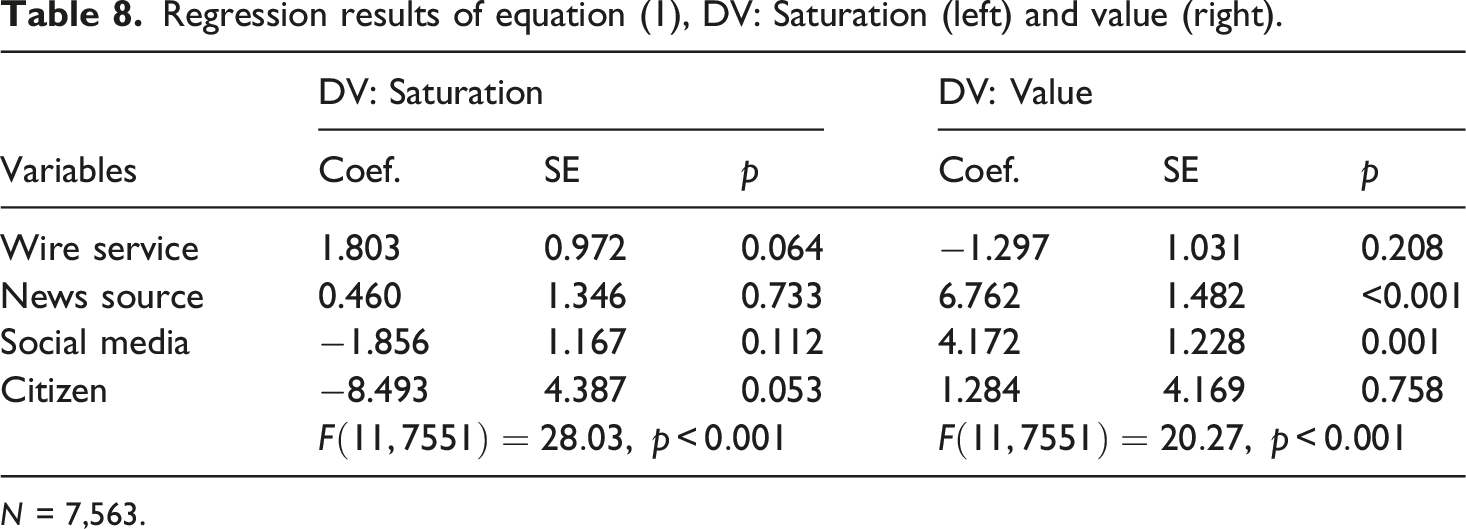
N = 7,563.
Discussion
In a digital media environment marked by a decreasing number of staff photojournalists and an increasing reliance on external sources, this study analysed how this shift affects the quality of visual journalism and the gatekeeping role of professional photojournalists, particularly within online news media. Drawing on previous studies (Bednarek and Caple, 2012, 2017; Caple and Bednarek, 2015; Greenwood and Thomas, 2015; Klein-Avraham and Reich, 2016; Lough and McIntyre, 2019; Lough; Mortensen, 2023; Mortensen et al., 2023), this study examined the quality of news photographs and investigated how the characteristics varied according to the photo source. Five photo sources were considered: 1) staff photojournalists, 2) wire services, 3) social media, 4) news sources, and 5) citizens.
This study had several important findings. First, the results indicate that most lead photographs published online by major newspapers in South Korea were provided by external sources, including wire services, news sources, and citizens (RQ1). Additionally, the results of the Chi-square test and topic modelling analyses demonstrated that the topic of a photo differed depending on the type of photo source used (RQ2a). For example, staff journalists often capture political and social protests, while news sources typically provide images related to companies, often featuring their buildings. Notably, the current study also found that the several visual features varied depending on the type of photo source used (RQ2b). For example, photos acquired from social media and news sources tend to present human faces with positive emotions, whereas photos provided by wire services are likely to present negative emotions.
The findings of this study have important implications for visual journalism in the digital media environment. First, the results revealed that the work of staff photojournalists has been increasingly displaced by outsourced content. Only two out of 10 lead photographs published online were produced by staff photojournalists; the rest were outsourced. This contrasts with previous research showing that outsourced photographs accounted for a small proportion of published images (Greenwood and Thomas, 2015; Lough, 2018; Mast and Hanegreefs, 2015). The differing results of the current study may reflect the rapid transformations in visual journalism over the past decade.
Consistent with the findings of previous studies (Mortensen and Gade, 2018; Nilsson, 2017), the quality of visual journalism differed between professional staff and non-professionals. For example, regarding accurate representation, photos taken by staff journalists better represent article content than do photos acquired from other sources, such as wire services, news sources, or citizens. The findings of previous studies (e.g., Mortensen and Gade, 2018) suggest that an accurate representation of the corresponding article content in news photographs is a critical attribute of professional photojournalism. In addition, the current study showed that staff journalists frequently photographed scenes of political and social protests; Mortensen and Gade (2018) similarly demonstrated that professional journalists’ photographs are often more dynamic, representing conflict and tension, with a focus on capturing moments that involve multiple individuals, whereas non-professionals’ images tend to be static.
Regarding citizen journalism, consistent with the findings of previous studies (Brennen and Brennen, 2015), we found that citizen-generated photographs were the least represented, totalling only 50 images (0.4%). Photos provided by citizens more often captured streets, disasters, and fires, likely because such disasters are unpredictable, and the photos come from people who are in the area at the time of the event. Therefore, although some scholars have proposed that, in a digital technological environment where anyone can easily take photographs, visual journalism can function more effectively through the participation of citizens present at the scene of crises or conflicts (Allan, 2014; Allan and Peters, 2015), such citizen participation remains limited in Korea.
The findings reveal that the gatekeeping role of professional staff photojournalists is changing. As several scholars posit, visual journalists’ gatekeeping role has not diminished but rather transformed. It makes the professional responsibilities of verification and curation (Bakker, 2014) even more essential, as ‘part of that curation is determining the validity of images that emerge from news situations, and that is a huge challenge when dealing with amateur sources’ (Schwalbe et al., 2015: p. 476). However, extensive reliance on externally sourced photographs—including those provided by news sources—rather than images produced by staff photojournalists suggests a substantial weakening of journalism’s gatekeeping function, particularly when gatekeeping is conceptualized as the role of individual photojournalists or news gatherers (Bass, 1969).
Notably, the current study found that the emotions expressed through facial expressions varied depending on the type of photo source used: Photos acquired from social media and news sources tend to present human faces with positive emotions, whereas photos provided by wire services are likely to present negative emotions. This suggests that news sources provide photos that are favourable to them. From this perspective, the findings may reveal how the gatekeeping role of photojournalists is threatened, given that photojournalists’ legitimacy is based on their objective and impartial judgment of what to capture, and their goal of focusing on accurate representations of reality (Brennen, 2010; Morten and Gade, 2018; Wheeler and Gleason, 1995). For example, politicians’ photos are often provided by the political party or institution to which a politician belongs, and, in such cases, positive-emotion photos may be provided to generate a favourable attitude toward the politician.
This supports prior research (e.g., Greenwood and Thomson, 2020), which suggests that how a subject is portrayed in a photo is strongly influenced by photographers’ personal views or the political orientation of their organization. Ferrucci et al. (2020) emphasized this distinction, stating, ‘Professional photojournalists are truly independent. There’s a lot of people working in corporate communication these days as photographers on behalf of that organization, but the work they do isn’t necessarily photojournalism in the traditional sense’. (p. 379). This observation highlights independence as a defining characteristic of professional photojournalism.
This study had several limitations. First, data were acquired from photos and news articles posted on Naver, an online news aggregator in South Korea. Thus, the results of this study may not be generalizable to other countries where the methods of reporting or obtaining photos of news articles differ from those of South Korea. Furthermore, although the criteria for evaluating the quality of visual journalism vary widely, this study focused on elements that could be analysed using computational methods. For example, regarding visual features, each photo’s dynamic characteristics, (active or static; candid or posed) (Greenwood and Thomas, 2015; Lough and Mortensen, 2023), lens distance (or eye contact), and photographic angle (Greenwood and Thomas, 2015; Mortensen and Gade, 2018) were not measured.
While this approach necessarily limited the scope of the assessment, it also enabled the analysis of a large number of photographs, which represents a notable strength of the study. In particular, this study employed a multimodal deep learning model to examine aspects overlooked in previous research, such as the relationship between text and images, and topic modeling analyses of images. Future research would benefit from employing more advanced computational techniques to evaluate photographs across a broader set of quality criteria. In addition, as this study used only photos related to news articles that were published within a particular time period, in many cases, related to important events and issues in 2024.
Despite its limitations, this study contributes to journalism research by elucidating the extent to which photojournalists’ gatekeeping roles have weakened in the digital news environment and how various changes have affected the quality of visual journalism.
Footnotes

Funding
The authors disclosed receipt of the following financial support for the research, authorship, and/or publication of this article: This research was supported by the Yonsei University Humanities and Social Sciences Field Creative Research Fund of 2025-22-0512.
Declaration of conflicting interests
The authors declared no potential conflicts of interest with respect to the research, authorship, and/or publication of this article.
Notes
Author biographies
Appendix
Appendix 1. Topic modeling results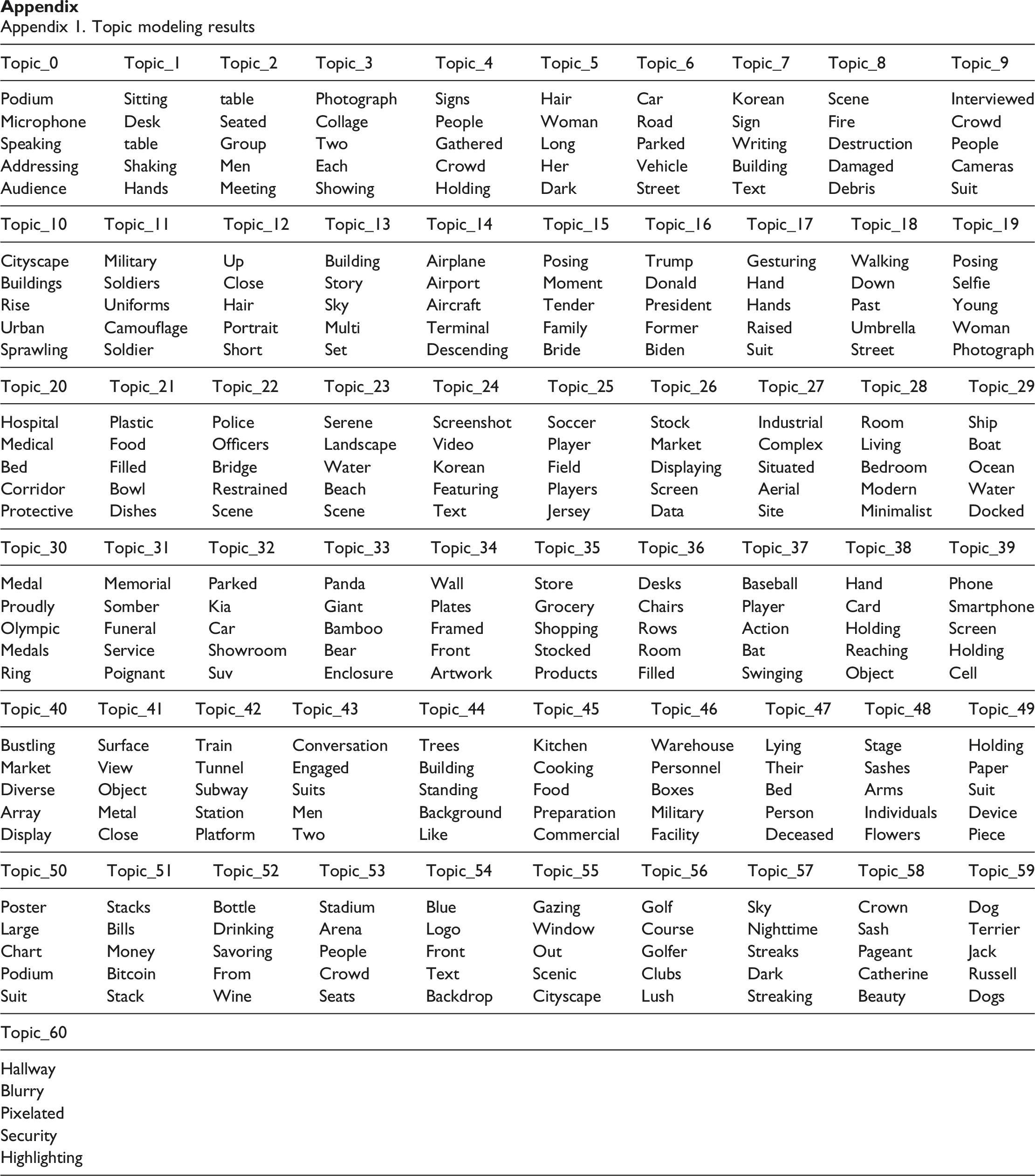
Topic_0
Topic_1
Topic_2
Topic_3
Topic_4
Topic_5
Topic_6
Topic_7
Topic_8
Topic_9
Podium
Sitting
table
Photograph
Signs
Hair
Car
Korean
Scene
Interviewed
Microphone
Desk
Seated
Collage
People
Woman
Road
Sign
Fire
Crowd
Speaking
table
Group
Two
Gathered
Long
Parked
Writing
Destruction
People
Addressing
Shaking
Men
Each
Crowd
Her
Vehicle
Building
Damaged
Cameras
Audience
Hands
Meeting
Showing
Holding
Dark
Street
Text
Debris
Suit
Topic_10
Topic_11
Topic_12
Topic_13
Topic_14
Topic_15
Topic_16
Topic_17
Topic_18
Topic_19
Cityscape
Military
Up
Building
Airplane
Posing
Trump
Gesturing
Walking
Posing
Buildings
Soldiers
Close
Story
Airport
Moment
Donald
Hand
Down
Selfie
Rise
Uniforms
Hair
Sky
Aircraft
Tender
President
Hands
Past
Young
Urban
Camouflage
Portrait
Multi
Terminal
Family
Former
Raised
Umbrella
Woman
Sprawling
Soldier
Short
Set
Descending
Bride
Biden
Suit
Street
Photograph
Topic_20
Topic_21
Topic_22
Topic_23
Topic_24
Topic_25
Topic_26
Topic_27
Topic_28
Topic_29
Hospital
Plastic
Police
Serene
Screenshot
Soccer
Stock
Industrial
Room
Ship
Medical
Food
Officers
Landscape
Video
Player
Market
Complex
Living
Boat
Bed
Filled
Bridge
Water
Korean
Field
Displaying
Situated
Bedroom
Ocean
Corridor
Bowl
Restrained
Beach
Featuring
Players
Screen
Aerial
Modern
Water
Protective
Dishes
Scene
Scene
Text
Jersey
Data
Site
Minimalist
Docked
Topic_30
Topic_31
Topic_32
Topic_33
Topic_34
Topic_35
Topic_36
Topic_37
Topic_38
Topic_39
Medal
Memorial
Parked
Panda
Wall
Store
Desks
Baseball
Hand
Phone
Proudly
Somber
Kia
Giant
Plates
Grocery
Chairs
Player
Card
Smartphone
Olympic
Funeral
Car
Bamboo
Framed
Shopping
Rows
Action
Holding
Screen
Medals
Service
Showroom
Bear
Front
Stocked
Room
Bat
Reaching
Holding
Ring
Poignant
Suv
Enclosure
Artwork
Products
Filled
Swinging
Object
Cell
Topic_40
Topic_41
Topic_42
Topic_43
Topic_44
Topic_45
Topic_46
Topic_47
Topic_48
Topic_49
Bustling
Surface
Train
Conversation
Trees
Kitchen
Warehouse
Lying
Stage
Holding
Market
View
Tunnel
Engaged
Building
Cooking
Personnel
Their
Sashes
Paper
Diverse
Object
Subway
Suits
Standing
Food
Boxes
Bed
Arms
Suit
Array
Metal
Station
Men
Background
Preparation
Military
Person
Individuals
Device
Display
Close
Platform
Two
Like
Commercial
Facility
Deceased
Flowers
Piece
Topic_50
Topic_51
Topic_52
Topic_53
Topic_54
Topic_55
Topic_56
Topic_57
Topic_58
Topic_59
Poster
Stacks
Bottle
Stadium
Blue
Gazing
Golf
Sky
Crown
Dog
Large
Bills
Drinking
Arena
Logo
Window
Course
Nighttime
Sash
Terrier
Chart
Money
Savoring
People
Front
Out
Golfer
Streaks
Pageant
Jack
Podium
Bitcoin
From
Crowd
Text
Scenic
Clubs
Dark
Catherine
Russell
Suit
Stack
Wine
Seats
Backdrop
Cityscape
Lush
Streaking
Beauty
Dogs
Topic_60
Hallway
Blurry
Pixelated
Security
Highlighting