






Abstract
In the emerging literature on resilience in relation to food security, a growing number of studies stress the need to expand our analysis beyond conventional socio-economic factors such as assets or social capital, and to consider less tangible elements such as risk perception, self-efficacy or aspiration. Drawing on the recent literature and the authors’ own experience, a conceptual framework of subjective resilience is proposed. The framework helps locating the subjective element of resilience within the wider resilience conceptualization as currently developed in the literature on food security and to clarify how it links to the more tangible elements of that conceptualization. Empirical data are then used to test the framework. The analysis demonstrates the relevance of the concept of subjective resilience and the central role that psychosocial factors and individual perceptions play in people’s construct of resilience in the context of humanitarian and food security crises. The article concludes with a discussion of the implications of those findings.
Introduction and context
Since the rise of resilience as a key concept in the humanitarian and development sphere DFID, 2011; FAO, 2013; USAID, 2012; WFP, 2013) and its recognition as a central mechanism helping to explain why certain individuals or households are able to manage shocks, stressors and extreme events better than others (Constas et al., 2014), a growing number of studies have attempted to identify the components and underlying determinants of resilience 1 . A large body of literature, for instance, point out how wealthier households are more likely to bounce back better or more quickly after a disaster than less wealthy households in the same community (e.g., Carter et al., 2007; Hoddinott, 2006), or how local institutional arrangements, level of participation in decision-making process, or good leadership and social cohesion are critical in helping communities recover after an extreme shock (e.g., Aldrich, 2010; Schwarz et al., 2011; Woodson et al., 2016).
Most of those articles also recognize, however, that looking at tangible factors, such as assets, livelihood strategies, financial or social capitals, does not capture everything that encompasses what resilience is, or what influences when and how resilience capacities help buffer the negative effects of shocks and stressors. Improving our understanding about people’s and communities’ resilience seems to also require capturing less tangible and more subjective factors, such as individuals’ and households’ aspirations, expectations and motivations (Béné et al., 2016a; Bernard and Seyoum Taffesse, 2014; Jones and Tanner, 2015). Risk perception, for instance, which is determined and influenced by cultural and other psychosocial factors, is recognized to play an important role in people’s response to threats (Swim et al., 2009). More generally, although shocks, unforeseen events and changes affecting people’s lives and livelihoods are part of an objective (i.e., directly observable) reality, long-established evidence shows that individual and collective responses and adaptation are also influenced by people’s subjective views and construals (Bandura, 1977, 1997; Camfield and McGregor, 2005; McLaughlin and Dietz, 2008; Moscovici, 1984; Weber, 2010). In those conditions, it becomes just as important to understand people’s perceptions, e.g., perceived severity, about a particular event (e.g., an earthquake) as it is to assess factual dimensions of that event (e.g., Richter scale magnitude), if one wants to make deep and lasting progress on understanding resilience and improving well-being over time.
In other related domains like adaptation to climate change, several psychosocial concepts including aspirations, self-efficacy, well-being, personal experiences with extreme weather events and attitudes towards innovation and learning have already received extensive attention (Eitzinger et al., 2018; Grothmann and Patt, 2005; O’Riordan and Jordan, 1999; van der Linden, 2014; Wolf et al., 2010). In contrast, much less attention has been paid to this issue in the literature on resilience in relation to food security/development interventions. In that body of literature, the largest effort has so far focused on more tangible elements, including financial (income and assets), technical (knowledge, skills, education and capacity) and institutional (governance and social capitals) factors (e.g., Alinovi et al., 2010; Brück et al., 2018; Cutter et al., 2008; Duit et al., 2010; Pelletier et al., 2016; Smith et al., 2015). There is a need, therefore, to extend those types of psychosocial research beyond just the domain of adaptation, into the larger sphere of research that proposes to engage with resilience in the context of development/food security in low-income countries.
Accounting for psychosocial factors—alongside more tangible dimensions of resilience—is expected to bring additional insights into the precursors to and components of resilience. The objective of this article is to investigate these questions further—both conceptually and empirically—and to discuss the implications that those elements raise for the theory of changes of resilience interventions designed in response to food security crises. Although some researchers have already stressed the importance of these various psychosocial and cognitive factors in this particular literature (e.g., Clare et al., 2017; Jones and Tanner, 2015), a coherent conceptual framework underlying these ideas is still missing. This article is intended to fill this gap and will hopefully spark future empirical investigations that include psychosocial factors within the humanitarian/food security resilience context. The ‘scales’ at which the arguments advanced in this article are relevant are essentially the individual, household, and, to a lesser extent, community levels, all of which being scales at which dynamics driven by processes, such as aspirations, perceptions to risk, individual or collective attitude to change etc., have been recognized to be at play (Jones and Tanner, 2015; Nussbaum, 2001; Pettersson-Strömbäck, 2014; van der Linden, 2014).
Subjective elements of resilience in the literature
This section reviews the core ideas behind subjective resilience, drawing essentially (but not exclusively) on the literature on adaptation, and focuses on three psychosocial measures believed to influence responses to shocks and stressors: risk perception, self-efficacy and aspirations. Those three factors have been selected as illustrative cases, although the list of subjective elements that are relevant for this discussion is, of course, much longer. Others factors, such as confidence, self-esteem, perceived agency/locus of control, fatalism or adaptive preference, should be mentioned (see e.g., Camfield and McGregor, 2005; Hill et al., 2012; Jahan et al., 2015; Lefcourt, 1991). Those three have been selected, however, because they are useful in helping to understand how people’s mental models shape the choices they make when responding to adverse events, which turns out to be particularly relevant in relation to resilience. Risk aversion, in particular, will be shown to shape important resilience capacities and behaviours around the occurrence of shocks; aspiration is key in that it also influences important behaviours central to resilience such as investments in human capital advancements, preparedness activities, and pursuing livelihood opportunities; self-efficacy (the belief in one’s own capacities) will be shown to be central in the construction of resilience as it influences the choice people make in the face of a challenging task or situation.
With the exception of self-efficacy, the literature has so far discussed these different concepts mainly in relation to adaptation to climate change, willingness to engage in innovation (e.g., Bernard and Seyoum Taffesse, 2014; Grothmann and Patt, 2005) or even social protection (Kosec and Mo, 2015). In contrast, very little has been done in relation to the wider concept of resilience in the context of food security, for which there is still a lack of focused analyses. The contribution of this article will be to advance this research, first by developing a conceptual model built on the current understanding of the theory of change of resilience interventions and then by testing empirically some of the hypotheses underlying the framework.
Risk Perception
There are at least two dimensions of risk that are relevant when applying psychosocial risk perception principles to resilience conceptualization. First, there are perceived risks associated with experiencing certain shocks and stressors. These perceptions pertain to individuals’ calculations of the likelihood that they will experience a negative event and the likely severity of that event, should it occur (van der Linden, 2014). Related, yet conceptually distinct, are risk perceptions that surround responses to shocks and stressors once an adverse event has occurred. This latter set of perceptions both directly and indirectly shape the course of actions individuals, communities and institutions take to maintain or improve well-being outcomes following shocks and stressors. In this article, we focus on those two sets of risk perceptions, as we believe they both shape important resilience capacities and behaviours before, during and after a shock or stress has occurred. For instance, if one household perceives that a shock is imminent and will be quite impactful, the members of that household may take steps to mitigate/anticipate the negative effects of that shock before it occurs (e.g., buy insurance or build a dike) (Shiferaw et al., 2014). In parallel, once a shock has occurred, and one perceives a specific type of response to be too risky or uncertain, they may choose alternative responses (Chuku and Okoye, 2010).
Risk perceptions and the subsequent actions (or inactions) taken as a result of those perceptions are a function of many factors, including norms, beliefs and culture, the actual or perceived presence of external support, the availability and accessibility of information, the value placed on that information as well as time pressures (Gonzalez, 2001; Jones and Boyd, 2011). One example of the importance of information and risk perceptions centres on predictions about seasonal and long-term climate conditions, which can come from either scientific modelling or traditional knowledge (Joffe, 2003; van der Linden, 2014). The importance of the latter is increasingly appreciated in the climate adaptation literature (Burkett, 2013; Williams and Hardison, 2013). Adger and his colleagues, for instance, stress that ‘Historical and current adaptation is and continues to be informed by perceptions and local knowledge based on perceptions and previous experience of weather and climate’ (Adger et al., 2009: 346).
Risk perception is also influenced by immediate social circles. Family and neighbours are often the most timely, proximate and trusted information sources (Joffe, 2003). These sources, in turn, form part of a social world that further mediates how information is collected, constructed, represented and amplified. This world extends beyond family and neighbours to personal and broader social networks and connections such as links to friends, overheard conversations, social media and risk advisories from official sources (Swim et al., 2009). More recent work, offering a social psychological model of climate change risk perceptions, bolsters these points and concludes that risk perceptions are shaped by four sets of factors: (a) socio-demographic factors (e.g., gender, income and wealth), (b) sociocultural factors (culture, values and norms), (c) experiential factors (feelings and direct experiences) and (d) cognitive factors (knowledge/information) (van der Linden, 2014). Those four factors are consistent with our own empirical observations, which will be discussed later in this article.
Aspirations
To aspire means to seek to attain or accomplish a particular goal (Kosec et al., 2014). In the psychological literature, the concept of aspirations encompasses beliefs, preferences and capacities relevant to the future and to future-oriented desires and behaviours (Bernard and Seyoum Taffesse, 2014; Rao and Walton, 2004). Aspirations can be for oneself or for others and can also be a proxy for how one views the feasibility of realizing one’s wants and preferences in the future (Bernard et al., 2011). There is, therefore, often a close relationship between aspirations and decision-making regarding the future (pending available resources and structural parameters that allow one to act in a manner consistent with one’s desires and goals). Empirical research suggests, however, that if indeed acting on one’s aspirations is conditioned by the individual’s self-assessment of what one can accomplish in their circumstances (e.g., Bernard and Seyoum Taffesse, 2014; Kosec and Mo, 2015), aspiration is also influenced by external factors (e.g., presence or absence of opportunities, views of particular actors, etc.). As such, those empirical studies also support the idea of ‘aspiration windows’ proposed by Ray (2006), whereby aspirations are influenced by relevant peers in one’s community.
With respect to psychosocial resilience more specifically, Wyman et al. (1993) found that aspirations facilitate adjustment to life stress and suggested that aspirations comprise an important part of people’s self-perception, which in turn influence the way people engage with and respond to external challenges. For instance, in their assessment of four studies on aspirations in different contexts in Nicaragua, Ethiopia, India and China, Bernard and Seyoum Taffesse (2014: 5) found that all studies ‘… converge towards the importance of aspirations in influencing future-oriented behaviour—whether it is school enrollment, nutrition or other future-enhancing investments’. In other research in Ethiopia, Kosec and colleagues (2014) found that poverty-related aspirations ‘help determine whether individuals make investments to better themselves economically and socially, and whether they engage in potentially profitable economic risk taking’. They concluded: ‘As a result, having high aspirations can improve the resilience of the poor in the face of increasingly common weather shocks’ (ibid., 2014: 91–92).
Building on those findings, aspirations may be associated with resilience through a number of different pathways. People’s experiences of shocks and stressors likely influence how they construe what is possible (or not possible) and also shape how they interpret the barriers standing between thinking of their desires and actually realizing them. These two sets of cognitions—one’s perceived set of possibilities and one’s perceived set of barriers—subsequently shape what they want to achieve in the future (i.e., their aspirations), which in turn influences important behaviours such as investments in human capital advancements, preparedness activities and pursuing livelihood opportunities (or not) and so on. Eventually, these behaviours have a direct effect on well-being outcomes as well as on the individual’s standing as the next shock or stressor approaches, and so the cycle continues. This hypothesized logic is one of the major reasons we deem aspirations an essential psychosocial factor to be considered as a correlate of subjective resilience.
Self-efficacy
Drawing on Bandura’s work (1997), Brown and Westaway define self-efficacy as the ‘belief in one’s own ability to perform a task and to manage prospective situations’ (2011: 326). Self-efficacy, therefore, reflects the effect of individuals’ beliefs about their own ability to succeed in the future and directly affects people’s motivation. In particular, self-efficacy can influence whether someone will choose to persist or give up in the face of a challenging task or situation. By understanding the beliefs a person holds regarding his or her own ability to manage situations, we additionally gain insight into the types of choices people will likely make to shape their well-being (Luszczynska and Schwarzer, 2005). For these reasons, the link between self-efficacy and resilience may be even more direct than the connection between resilience and the other two measures discussed previously (risk-perception and aspiration). Bandura himself makes this link clear: ‘In order to succeed, people need a sense of self-efficacy, to struggle together with resilience to meet the inevitable obstacles and inequities of life’ (Bandura, 1997).
Possible links between self-efficacy and adaptive responses to climate change have been already explored. Swim and her colleagues (2009), for instance, in their report on psychology and climate change, noted that in responding to experienced and anticipated stressors, people assess their ability to engage in a particular behaviour (i.e., self-efficacy), the likelihood of that behaviour to result in a desired outcome (i.e., response efficacy), the constraints on response options and the relative perceived costs and benefits of responses (Swim et al., 2009: 109). In the rest of this article, we will explore how this concept of self-efficacy (along with other psychosocial factors) appears particularly relevant in relation to conceptualizing subjective resilience.
Conceptual framework
The literature review presented in the previous section was primarily concerned with how individuals view the risks of shocks and stressors to which they are susceptible, how they assess their capabilities to handle those shocks and stressors to attain satisfactory or improved livelihood outcomes and how these perceptions affect their choices of actions (ex-post responses and ex-ante preparation). We contend that all those elements are key in the construct of people’s resilience.
In this section, we now propose a conceptual framework depicting the relationships between the subjective and the more tangible factors that people are thought to rely on when responding to shocks and stressors. For this, we build on Béné et al. (2015)’s conceptual work on resilience and resilience measurement in the context of food (in)security. In that article, those authors acknowledge that ultimate well-being outcomes following an adverse event (measured in terms of change in household welfare, well-being, food security or nutrition status) do not result solely from the direct impact of that initial shock (e.g., destruction of assets, losses of livestock and physical injuries), but reflect also the medium to longer-term impact of the responses deployed by the individuals/households or communities to counteract/mitigate that shock, which eventually materializes through the ability of the household to ‘handle’ the recovery (cf. Figure 1). To use a concrete example, when a household decides to send their eldest son to the capital city, following the loss of the last two crops due to a continuous severe drought, the ultimate outcome of this sequence of events does not reflect just the crop loss, but also the ability of the household to recover adequately, given the combined effects of two processes: (a) the initial shock (loss of crops due to drought) and (b) the mid-term effects of the response put in place by the household (sending the son away). A neighbour in the same community, experiencing the same drought, but who decides to respond differently, say by borrowing money, may undergo a very different recovery path, leading to different ultimate outcomes in terms of well-being of its members—even if, as pointed earlier, both households have been initially affected by the same shock.
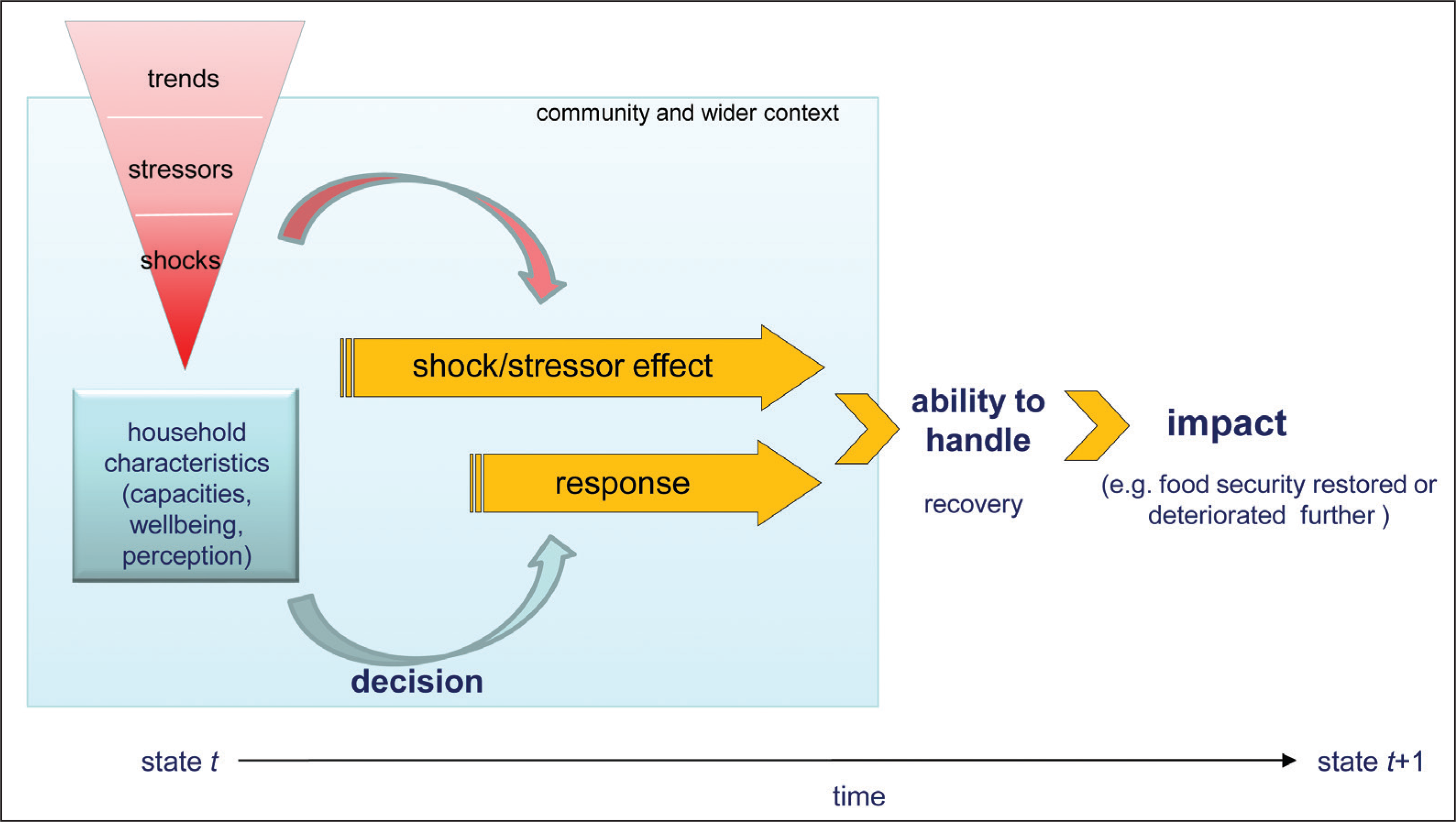
We contend that in order to accurately capture why, when and how individuals engage in particular behaviours in response to shocks or stressors, one needs to account for the subjective factors that underlie individuals’ decisions in the face of those adverse events. The way this subjective resilience, along with its causal psychosocial factors, and the other, more, tangible elements (e.g., household socio-economic and demographic characteristics such as age, education, assets, social and human capitals, etc.) are linked together, how they determine the type of responses adopted (absorptive, adaptive or transformative response) and eventually the type of final outcome are represented in Figure 2. The diagram follows the initial conceptual approach laid out in Figure 1 but extends it to highlight the central argument of this article: the role of subjective elements and psychosocial mechanisms and factors in building people’s resilience.
Figure 2 helps distinguish two main components of people’s resilience. The first component (in black) corresponds to the ‘tangible/directly measurable’ elements of resilience, resulting from a combination of factors operating at the individual, household or community level, such as income, assets, livelihood strategies, knowledge or access to infrastructure and services. A rich and growing body of literature has already discussed these influences (Alinovi et al., 2010; d’Errico et al., 2018; Pelletier et al., 2016). Although additional research is needed to more fully unpack how these factors effectively strengthen resilience, there is increasing consensus around how these tangible/measurable factors, like income and assets, shape resilience (e.g., Carter et al., 2007; Smith et al., 2015).
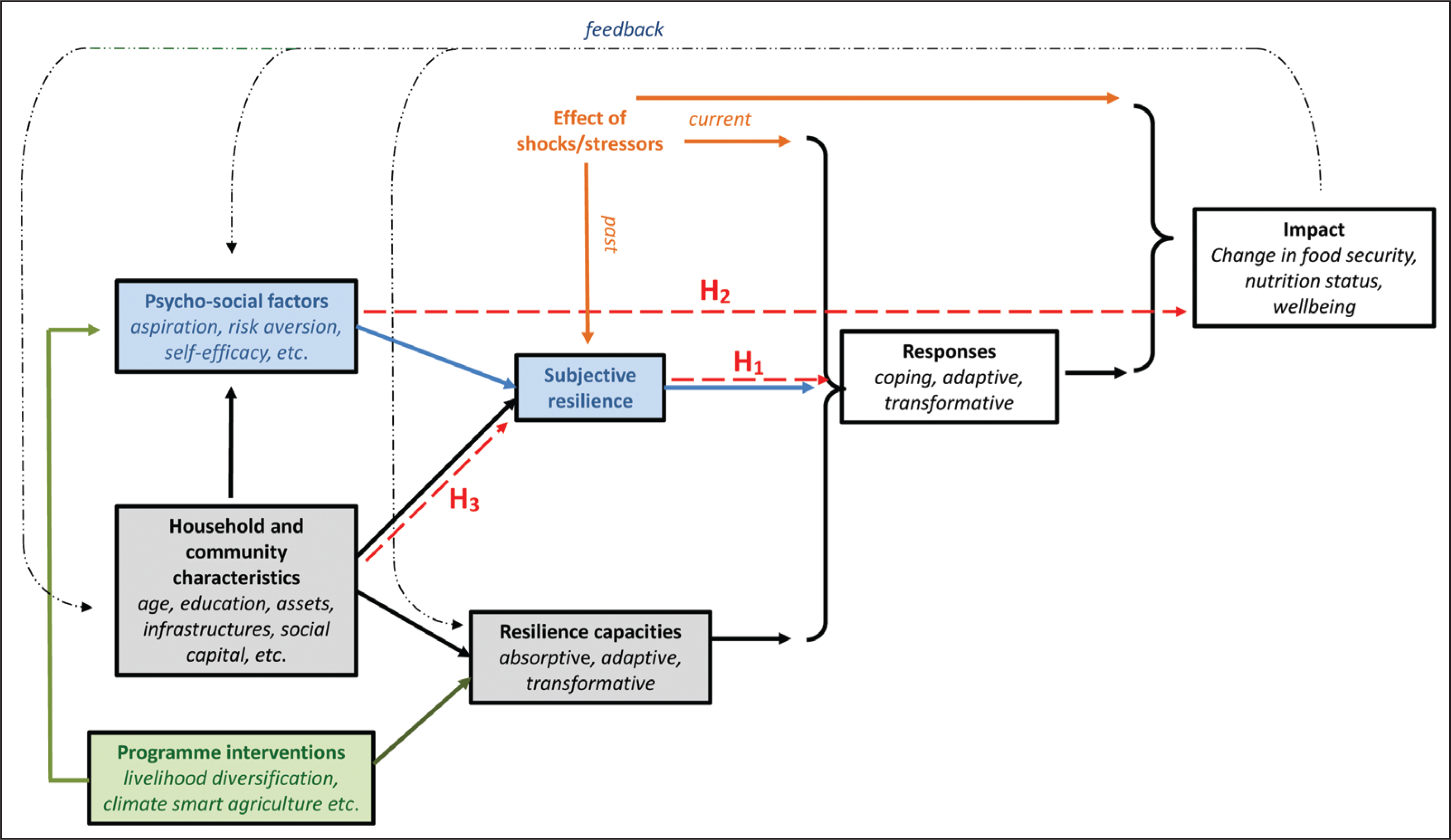
The second component of resilience (highlighted in blue) is the focus of the current analysis. This component involves a combination of different psychosocial elements which operate primarily at the individual level (although aggregated perceptions at household and community levels also influence decisions and behaviours). Those psychosocial elements include the three factors, discussed earlier in this article, (risk aversion, aspirations and self-efficacy) and other factors such as self-esteem, self-confidence, motivation, cultural identity, locus of control or fatalism.
The next step in building the framework consists of introducing the concept of ‘subjective resilience.’ By subjective resilience, we mean the perceptions that individuals, households or communities have about their own capacities and capabilities to handle current or future shocks and stressors. This definition of subjective resilience rests on the assumption that people have built a cognitive understanding of the factors that contribute to their capacity to manage shocks and adverse events. Subjective resilience, therefore, relates to individuals’ or households’ perceived capabilities and capacities. As such subjective resilience is strongly related to, and influenced by, the psychosocial factors mentioned earlier (e.g., risk perceptions, cultural identity, self-confidence, aspirations, etc.), but needs to be distinguished from them as being a specific cognitive correlate of them that also incorporates other more ‘tangible’ elements such as the household’s past experience in relation to similar shocks or the household’s current socio-economic situation. Note in that regard the different arrows directed towards the subjective resilience box in Figure 2.
Also highlighted in the Responses box is the importance given in the framework to the type of responses adopted by people. To some extent, this suggests a broadening of our own current understanding of resilience, in which resilience building is not simply about strengthening the (absorptive, adaptive or transformative) capacities of households/communities (see, e.g., Béné et al., 2014; Frankenberger et al., 2012; Grist et al., 2014; USAID, 2013) but also about improving the abilities of those households/communities to make informed and more sound decisions about the type of responses and strategies they should adopt (Béné et al., 2017).
Finally, through the green component and related arrows, Figure 2 highlights that the diverse interventions that NGOs, international agencies or governments implement as part of their resilience strengthening programmes (e.g., capacity building, group training, BCC activities, etc.) do not simply affect (hopefully positively) households’ revenues, capacities or social cohesion (arrow going towards the Capacities box). They also probably shape the perceptions that the members of these communities have of their own ability to handle (future) shocks through the effect they have on people’s self-confidence, self-efficacy or aspiration (arrow going up to the Psycho-social factors box).
Subjective resilience, as we defined it earlier, is thus very close to the concept of ‘perceived adaptive capacity’ proposed by Grothmann and Patt (2005) in their socio-cognitive model of climate change adaptation. Those authors developed this model as an attempt to understand the decision-making process that leads people to undergo adaptation (or not) and to emphasize that these decisions are partially based on subjective perceptions as opposed to only ‘objective adaptive ability’. In their own words, ‘The objective ability or capacity of a human actor (…), indicated by the availability and the access to resources, only partly determines if an adaptive response is taken. Even as important as this objective ability is the subjective or perceived ability of human actors (…)’ (ibid: 202 our emphasis). Our conceptualization of subjective resilience does follow this idea of perceived adaptive capacity but expands it beyond the climate change adaptation context within which it was originally developed, in two major ways. First, our model of subjective resilience is applicable not just to adaptive capacity but also to absorptive and transformative capacities—the two other dimensions of resilience highlighted in the recent literature (e.g., Béné et al., 2016b; Frankenberger et al., 2012). Second, we conceptualize subjective resilience within a more general framework that includes climate change but also other covariate and idiosyncratic adverse events such as illness, crop failure, conflicts, or economic shocks, characterizing the daily life of most households in lower income countries, and which often lead to food insecurity or even humanitarian crises.
Subjective resilience is, therefore, assumed to be a critical element in the households’ decision-making process in the face of shocks and stressors. One important point is that the decision is not simply about whether or not households should or should not engage in a response, but rather about which response to adopt among several potential options. To use an empirical example from the char region in the north of Bangladesh, qualitative assessment conducted there indicates that once households have lost their house and assets due to a sudden river erosion or a flood event, those households usually have the choice between staying in their village and try to rebuild their livelihoods, or migrating to the closest urban centre (WFP, 2015). Group discussions reveal that this decision (to stay or to leave) is made essentially based on individuals’ perceived ability to restore their livelihood. If they feel that they can rebuild it, they will intend to stay; if, on the contrary, they feel they have lost too much (land, assets) to be able to recover, they will migrate (first author, personal observation). This specific decision relies on cognitive processes based on past (personal and observed) experiences, current construal of reality, as well as one’s perceived prospects and subjective evaluation of their ability to bounce back in the future. Eventually, these perceptions lead to the choice of whether to stay (to absorb) or to migrate (to transform). The longer-term household and community well-being, thus, depends on this more downstream decision process and not just on the initial losses that have been directly induced by the disaster.
The previous section presented a conceptual framework highlighting the importance of considering subjective resilience along with the more tangible elements of resilience (income, assets, livelihood strategies, knowledge or access to infrastructure and services, etc.) that are generally considered in resilience interventions operated in the context of food security or humanitarian crises. The present section offers several applications of this conceptual model to data collected in low income in both Africa and Asia. The choice of these examples was guided mainly by data availability, particularly with respect to the psychosocial dimensions of resilience. It was especially challenging to find appropriate datasets because, as mentioned earlier, most of the attention in the literature related to development and food security has so far focused almost exclusively on the more tangible factors of resilience. Despite those data availability issues, we were able to test two hypotheses directly from the framework using two different sets of data. The first set of data is derived from research on fishing communities from Ghana, Fiji, Vietnam and Sri Lanka (Béné et al., 2016a); the second set of data is from an evaluation of rural households surveyed in two different pastoralist regions of Ethiopia (Smith et al., 2015). Using these two sets of data, the following two hypotheses were tested:
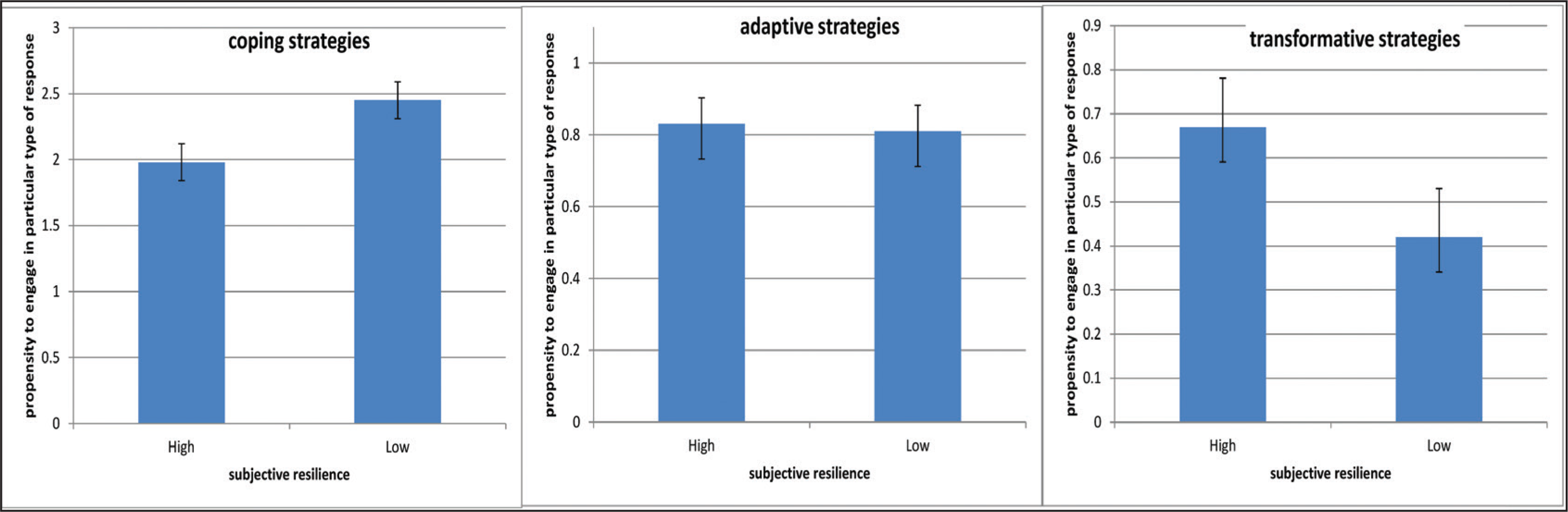
In the case of the fishing communities’ data from Ghana, Fiji, Vietnam and Sri Lanka (referred as the GFVSL dataset in the rest of this article), a series of coded questions exploring subjective resilience was included in the original survey instrument. In that questionnaire, subjective resilience was conceptualized as the perceived ability of fishing households to handle future shocks—thus consistent with the model described earlier in this article—and measured through self-reported scores, using psychometric techniques. The scores were constructed for each of the most frequently experienced shocks and stressors occurring in each fishing community. The individual self-assessed scores were then aggregated at the household level and averaged at the community level, allowing us to distinguish two groups: households with a subjective resilience aggregated score above the community average score (high subjective resilience households), and those with a subjective resilience aggregated score below the community average score (low subjective resilience). The propensity of engaging in different types of responses was then computed for each household and aggregated by group. The analysis (Figure 3) shows that the two groups are characterized by statistically different propensity to engage in different types of responses. In particular, when responses were divided into (a) negative absorptive strategies (including reducing expenses, reducing food consumption, borrowing money or selling assets); (b) adaptive strategies (diversification within the fishery sector; adoption of new fishing techniques) and (c) transformative strategies (migration, diversification outside the fishery sector), the data reveal that the households with lower subjective resilience are more likely to engage in negative coping strategies and less likely to leverage transformative strategies than households with higher subjective resilience (t-test p < 0.0001 for both tests). No difference was found, on the other hand, between the two groups in relation to their respective propensities to engage in adaptive response (Béné et al., 2016a).
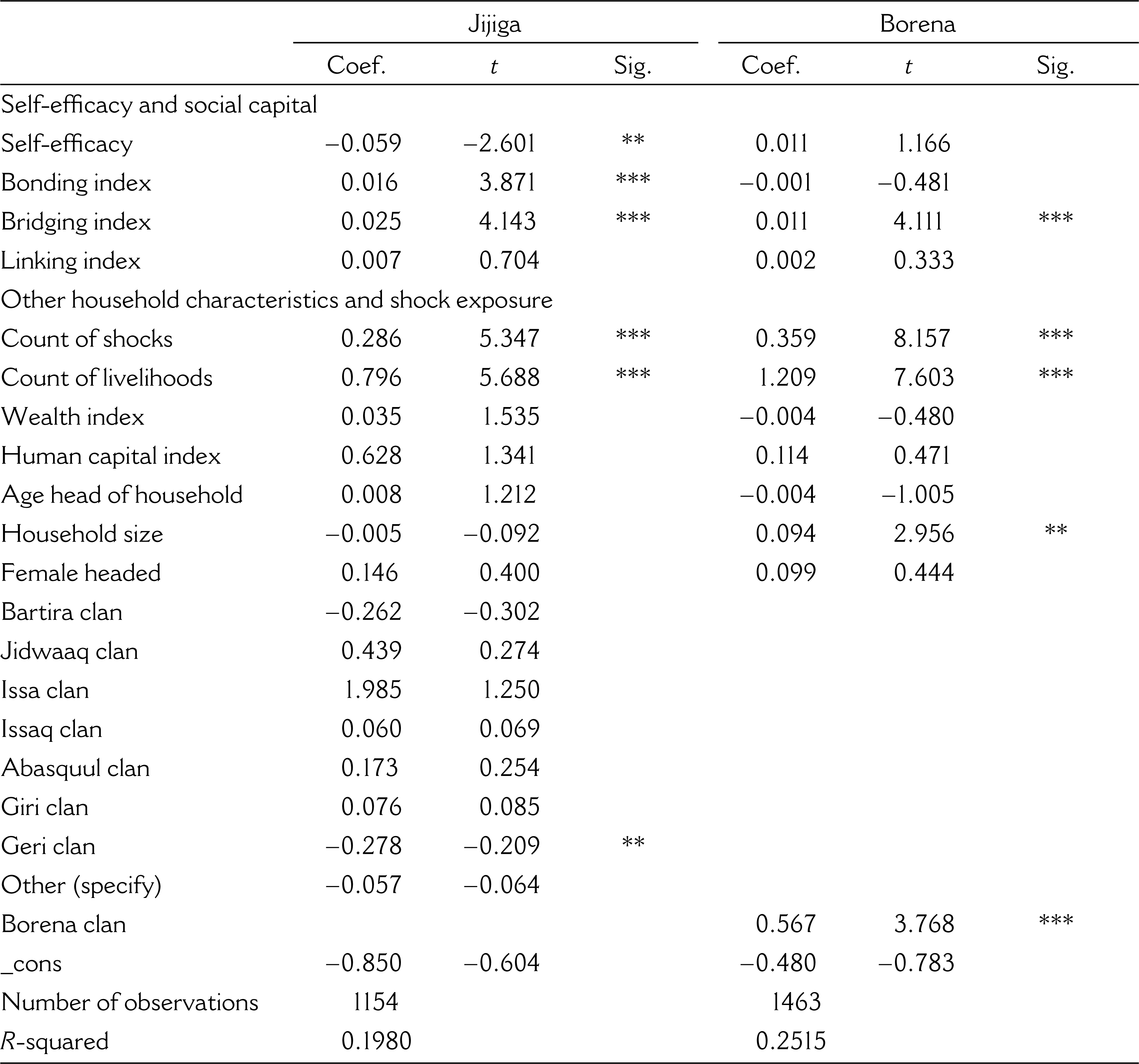
Our second example of the importance of subjective resilience is derived from the pastoralist household survey that was conducted in the Jijiga and Borena regions of Ethiopia (Smith et al., 2015). In this example, no specific question had been initially included in the original questionnaire to estimate the level of subjective resilience of these households. The study did include, however, a series of questions to assess some of the psychosocial factors thought to influence people’s subjective resilience. In particular, a self-assessed index of level of control that people have over their own life (i.e., a proxy for ‘self-efficacy’) was constructed. We used ordinary least squares (OLS) regressions to determine whether there was some degrees of correlation between this self-efficacy score and people’s responses to shocks/stressors. Exposure to 18 different types of shocks, which occurred in the two pastoralist communities in the 12 months prior to the survey, had been recorded in the initial survey and were used here. Table 1 shows the regression results for the two regions considered. In the Jijiga region, people’s self-efficacy score appears to be statistically negatively correlated with their propensity to engage in negative coping strategies such as dropping children from school, getting into debt and reducing consumption (p = 0.012)—meaning that people with a higher sense of control over their own life seem to be less likely to engage in negative detrimental strategies. In Borena, on the other hand, this relation was not found to be statistically significant.
Results of the ordinary least squares (OLS) regression models used with the Ethiopian dataset to assess the influence of self-efficacy on households’ propensity to engage in negative coping strategies (dependent variable). The test confirms the correlation between self-efficacy and coping strategies in the case of Jijiga. Other factors that appear statistically significant include the cumulative number of shocks faced by the households, the level of livelihood diversification, and some dimension of social capital
If, as suggested just above, psychosocial factors have some influence on the type of strategies put in place by households to respond to adverse events, one could also envisage that some of these psychosocial variables have also an effect on the degree of recovery of those same households. Using the two datasets at our disposal, we were able to probe this assumption further.
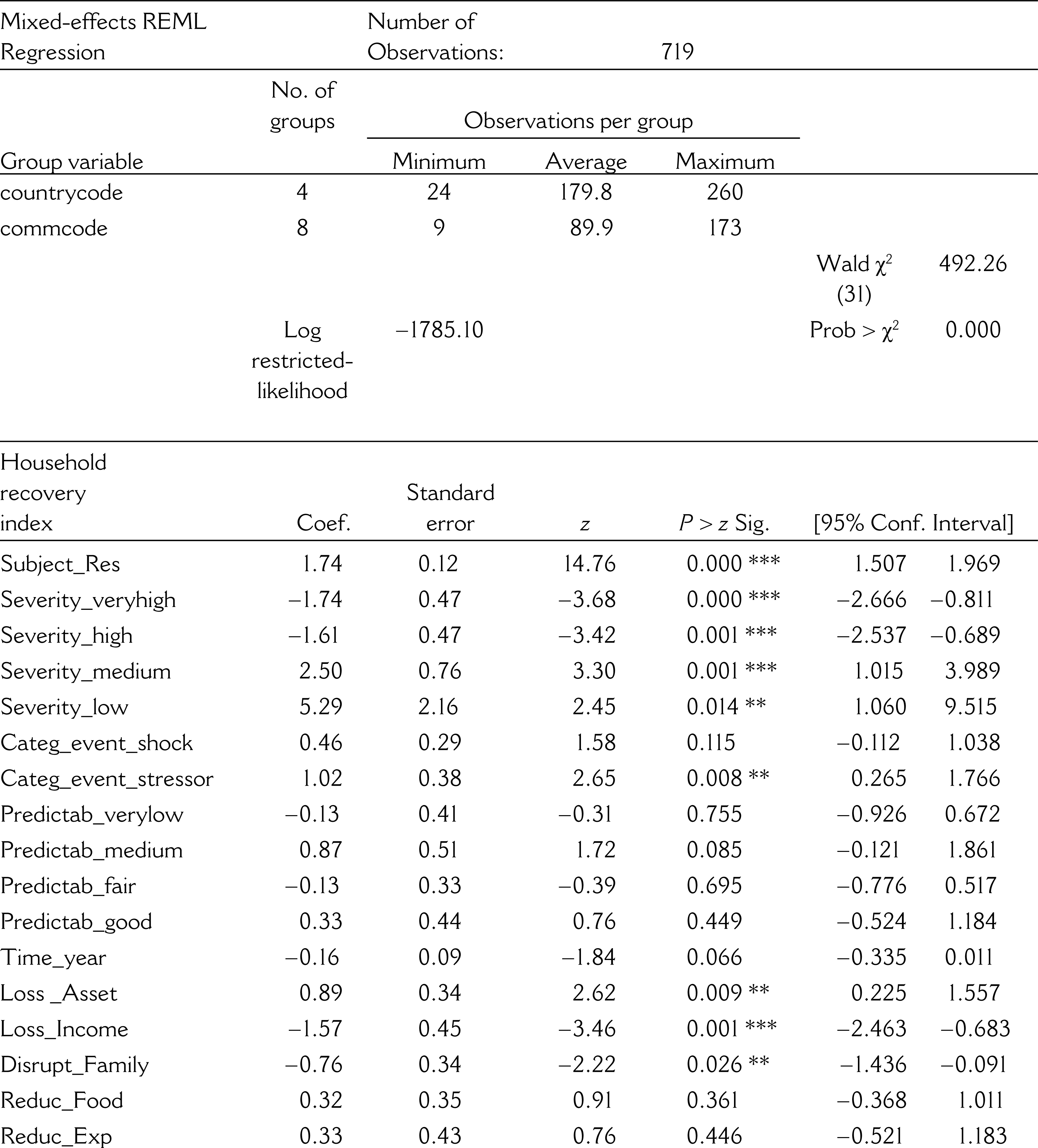
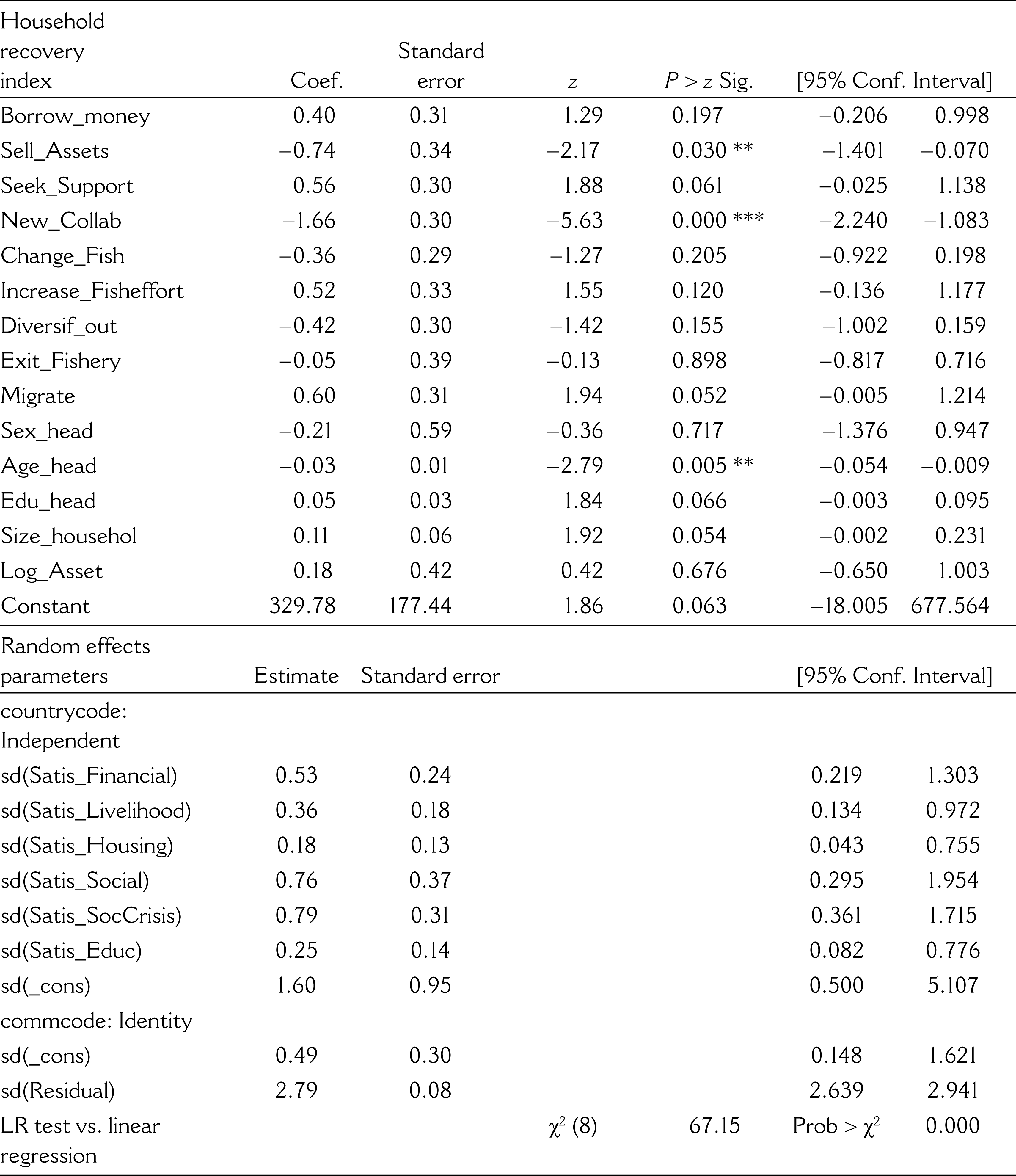
Estimating recovery after an adverse event is methodologically and conceptually challenging (Béné, 2013; Constas et al., 2014; Frankenberger and Nelson, 2013). In theory, high-frequency panel data are required (Barrett and Constas, 2012; Barrett and Headey, 2014; Headey and Ecker, 2013). The prohibitive costs of running such high-frequency panel surveys make those data unfortunately, rarely available. In the absence of such panel data, it is still possible however, to assess the level of recovery of households to shock and stressors (as a proxy of resilience) through self-reported scores. For the fishing communities of the GFVSL dataset, these self-reported scores were used to construct a ‘resilience index’ (understood as the ability to recover from past shocks/stressors) associated with each of the different types of shocks/stressors that had affected the households in the past 5 years. The index was then aggregated at the household level to obtain a household recovery index (see details in Béné et al., 2016a). We were then able to explore the potential influence of the level of households’ subjective resilience on those recovery indexes, using a mixed effect regression model and controlling for other factors such as assets, education or even severity of shocks. The results are displayed in Table 2. The analysis shows that subjective resilience does have a strong positive and statistically significant impact on the ability of household to effectively recover from shocks/stressors (z = 14.76, p < 0.0001).
Results of the mixed effect model used with the GFVSL dataset to assess the effect of subjective resilience on households’ recovery index (dependent variable). The models confirms that subjective resilience has a strong positive and statistically significant impact on the ability of household to effectively recover from shocks. Other factors that appear statistically significant include the severity of the events, the disruption of regular income and family’s life, the selling of assets as a negative coping strategy or the age of the household head
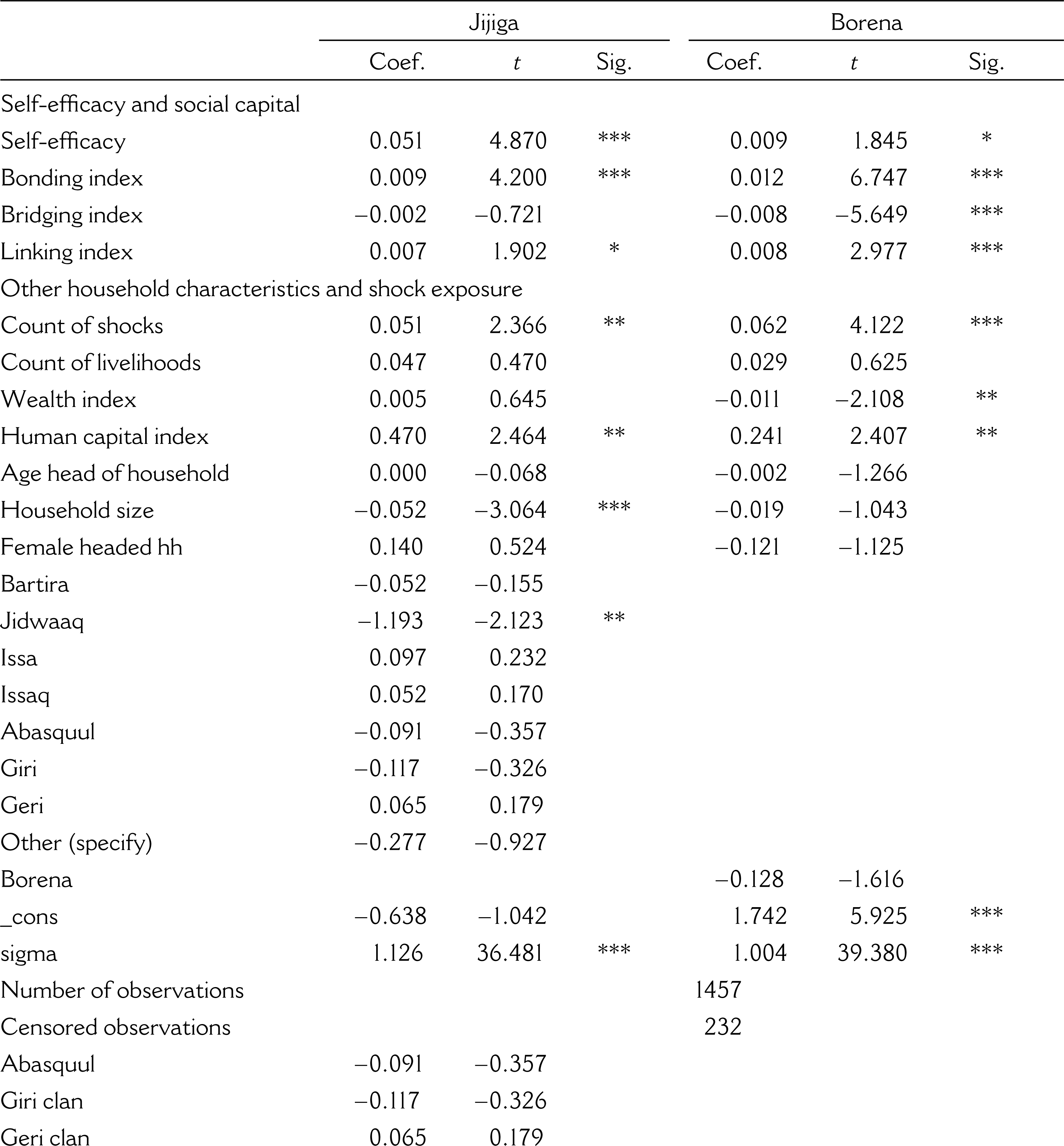
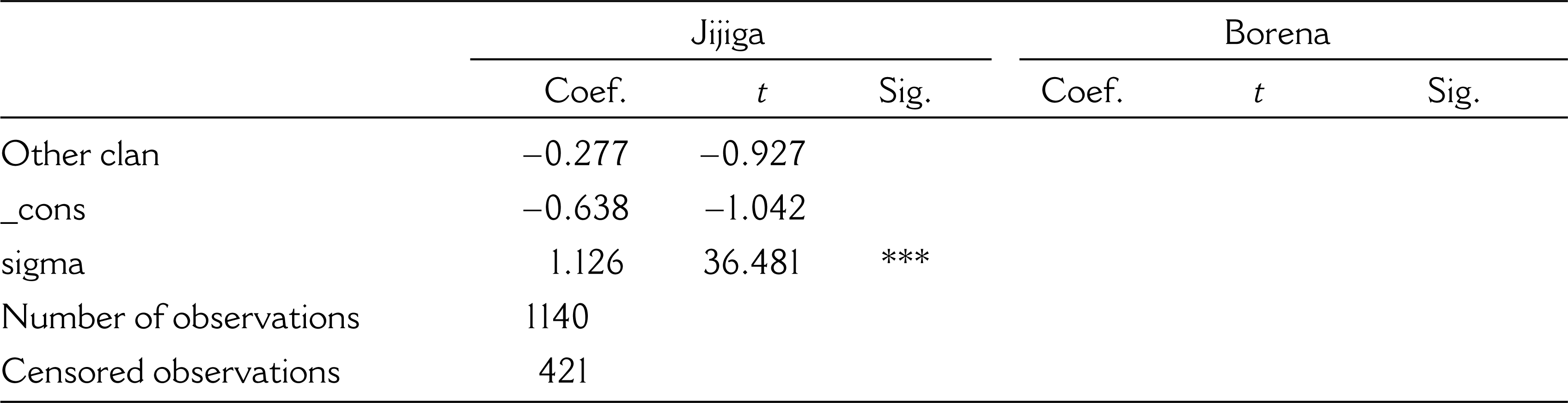
We were also able to use the datasets from Jijiga and Borena to explore the potential relation between the degree of recovery of households to shocks and more subjective or cognitive elements of people’s life. For this dataset, an index of self-reported recovery from the 18 types of shocks/stressors that had occurred in the last 12 months had been constructed. The recovery index at the household level was then computed by averaging the self-reported scores obtained for each type of shock/stressor. Table 3 displays the results of the Tobit models that were used to explore the relation between this household recovery index and the self-efficacy score presented in the previous analysis. Table 3 shows that for both the Jijiga and Borena regions, the level of self-efficacy has a positive and statistically significant relation with the recovery index (respectively p < 0.01 and p < 0.10), suggesting that the perception that people have of their own level of control over their life—a strongly subjective element—is positively correlated with their ability to recover from past shocks/stressors.
Results of the Tobit (censored regression) models using the Ethiopian dataset to assess the influence of self-efficacy on households’ recovery (mean of reported recovery over 18 shocks). The models confirm that self-efficacy has a strong positive and statistically significant impact on the ability of household to effectively recover from shocks. Other factors that appear statistically significant include social capital—in particular bonding and linking capitals—and human capitals. The positive relation with the number of shocks is probably due to the association with assets: households with more assets have more exposure to shocks but are also more likely to recover. On the other hand, the negative sign of the bridging capital seems more difficult to explain
Overall, these last two sets of results provide strong empirical support to H2 and the relationship between the level of recovery from shocks/stressors and psychosocial variables measured at the household level.
Complementary Analysis
Subjective resilience is itself expected to be strongly related to, and influenced by, psychosocial factors, such as self-confidence, risk aversion and so on, but needs to be distinguished from them as being a specific cognitive correlate, which also incorporates other more concrete elements such as the household’s past experience in relation to similar shocks, or the household socio-economic situation. Although this was not presented as a central assumption in our conceptual framework, a deeper analysis of the objective/quantifiable factors that effectively influence the level of subjective resilience appears also relevant in the light of the present discussion. This would correspond to testing the hypothesis noted H3 between household characteristics and subjective resilience boxes in Figure 2.
The only dataset that allowed us to explore this type of relation was the GFVSL dataset. In that case, we looked for potential correlations between the households’ characteristics (age, gender, education of the household head, level of assets, etc.) and the subjective resilience index that was computed for those same households. Table 4 displays the results of the ordered probit model that was run for this purpose. The model shows that the households’ subjective resilience level is strongly correlated with the index reflecting how households had managed to recover from the same type of shock or stressor in the past, suggesting that past experiences influence the level of subjective resilience. Likewise, the predictability (or lack of thereof) of these shocks/stressors is also correlated—negatively—with the level of subjective resilience, meaning that shocks or stressors that were not expected by the households seem to affect negatively their subjective resilience, a finding quite consistent with social psychological literature on stress. Among the other explanatory variables, we note that none of the households’ main demographic characteristics (age, education, size, or even gender of the head) seems to have a significant influence on subjective resilience, but the household assets level does. Overall, those last results confirm the relevance of the other components included in the conceptual framework, in particular the arrows between past shocks as well as household characteristics (in particular ‘asset level’) and subjective resilience as represented in Figure 2.
Results of the ordered probit model used with the GFVSL dataset to assess the determinants of households’ subjective resilience
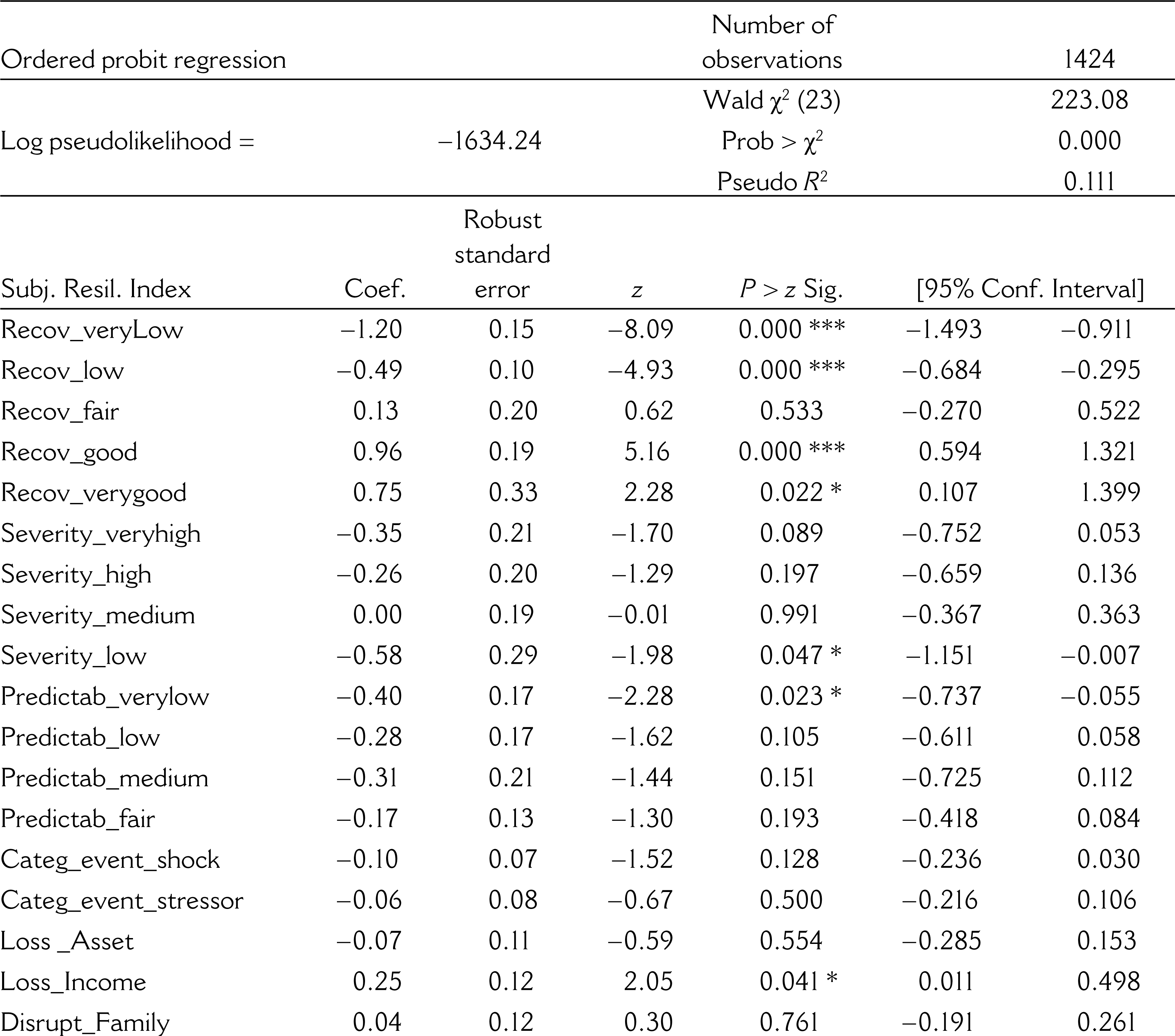
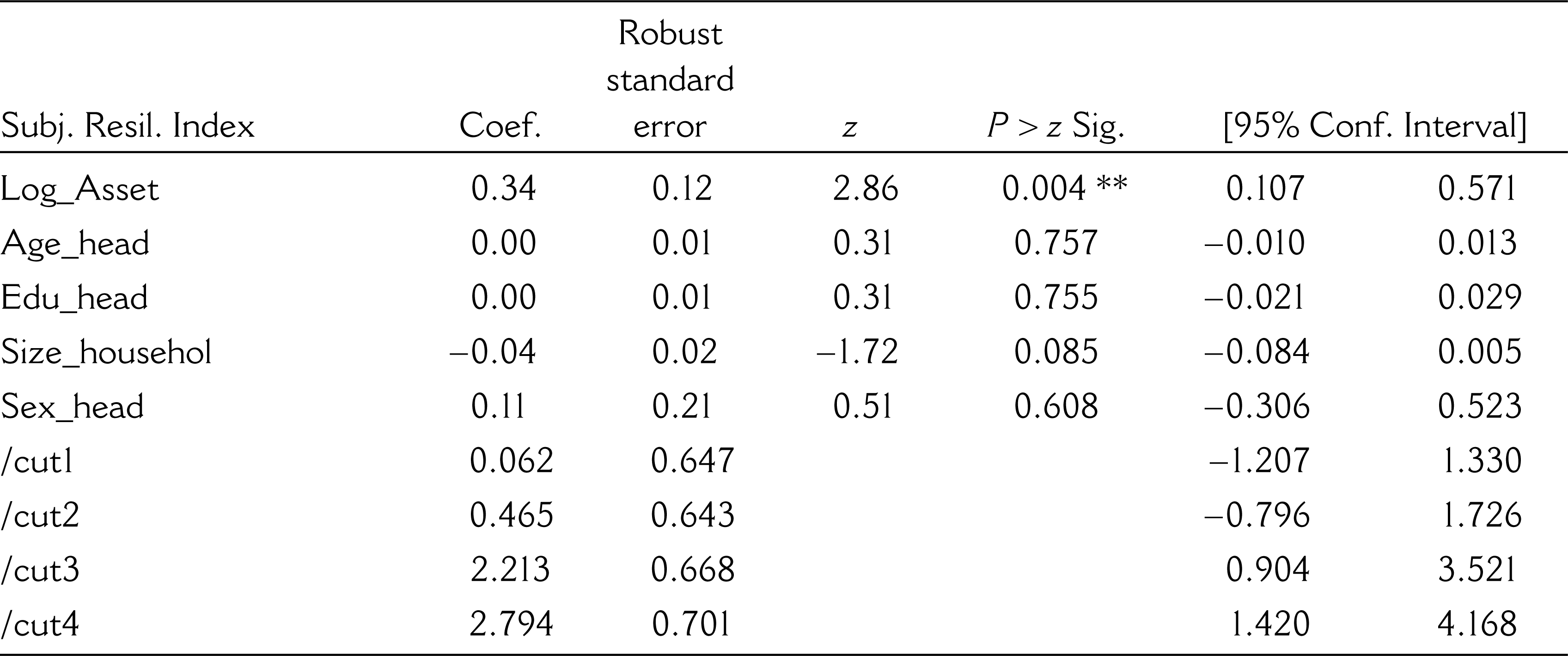
* = p < 5%; ** = p <1%; *** = p < 0.1%.
The objective of this article was to investigate the relevance of perceptions and subjective resilience—both conceptually and empirically—in the context of the emerging literature investigating resilience in relation to humanitarian and food security interventions (Alinovi et al., 2010; Brück et al. 2018; d’Errico et al., 2018; Pelletier et al., 2016; Smith et al., 2015). More specifically, we hypothesized that people’s perception about their own ability to handle current and future events (what we referred to as ‘subjective resilience’ in this article) is key in strengthening people’s resilience. The rationale behind this assumption was the recognition that people must make decisions about whether or not the previous status quo (prior to the shocks/stressors’ impact) is likely to be re-established relatively quickly and therefore that they just need to adopt short-term coping strategies or whether new livelihood and other adaptive/transformative strategies will be necessary to be able to go through the crisis. These considerations strongly determine the types of responses (absorptive, adaptive and transformative) that people will put in place in the immediate aftermath of an adverse event—thus affecting their ability/incentive/willingness to engage in particular types of responses.
Our assertion—that perceptions are essential in people’s construction of their own resilience—is theoretically and empirically supported by research in other domains. In developmental psychology and in psychosocial resilience literature, the role of individual characteristics, such as self-esteem, self-confidence, or self-concept (alongside social support and available resources), has long been recognized (Canvin et al., 2009; Garmezy, 1991; Joffe, 2003). Closer to us, in the context of adaptation to climate change, the subjective nature of the decision-making process around adaptation has also been well established (Eitzinger et al., 2018; Grothmann and Patt, 2005; Lockwood et al., 2015). Very little has been done, in contrast, in the domain of resilience in relation to food security/development interventions, with the exception, perhaps, of Jones (Jones and Tanner, 2015) and Clare (Clare et al., 2017) who both explicitly highlight not only the relevance but also the necessity to include the subjective dimension of resilience into the analyses. In their views, subjective analysis may offer potential as a complement or even an alternative to traditional objective methods of resilience measurement, each with their own merits and limitations. Those are important initial contributions. This article participates to this nascent effort. Its objective was to propose a coherent conceptual framework that helps locating the subjective element of resilience within the wider resilience conceptualization as currently developed in the literature on food security and to clarify how it links to the more tangible elements of that conceptualization.
Using quantitative data from several recent research projects, we were then able to revisit the framework empirically. The decision to use a statistical approach (as opposed to a more qualitative approach) was essentially based on the fact that we knew our own data well and were therefore able to extract and assemble the right subsets of variables to construct the appropriate tests. This does not mean, however, that quantitative analysis is the only appropriate approach to explore those questions. Certainly, qualitative research (e.g., case studies, ethnography, narrative/life-story, etc.) should be considered.
Overall, the results of the different statistical models we used demonstrate the validity of the framework’s underlying hypotheses. In a first series of analyses, we found statistically significant negative correlations between households’ level of subjective resilience (i.e., people perception about their own ability to handle (future) shocks/stressors) and the propensity of those same households to engage in negative absorptive strategies. This finding is important given that a large part of the current investment around people’s resilience in relation to disaster or food crisis focuses on reducing the likelihood of affected households/communities to adopt short-term detrimental coping strategies as an attempt to mitigate the immediate impact of the crisis/shock that hit them (Béné et al., 2017). Interestingly, it appears that households with higher-than-average subjective resilience levels have also a higher likelihood to engage in positive transformative strategies.
The second series of tests looked at the potential influence of these subjective elements on households’ ability to recover from past shocks/stressors. The empirical analysis supported our initial assumption. In the case of the GFVSL fishing communities, the correlation between households’ subjective resilience and their self-assessed index of recovery was significant and positive, while in the case of the pastoralist communities in Ethiopia, a positive correlation between the households’ self-efficacy scores and their ability to recover from past shocks/stressors was also found. Those results point at some important implications in terms of the type of new activities that may need to be included in the portfolios of resilience strengthening programmes (to be discussed in greater detail in the last sections of this article); in short, it means that it may be as effective—or perhaps more effective—to go for activities that aim at boosting the self-esteem, self-efficacy or other psychosocial factors of the members of the targeted communities in order to increase their ability to recover from a shock than to try to enhance some of their resilience capacities through more conventional approaches like livelihood diversification or climate smart agriculture practices.
Our third empirical investigation focused on the correlates of subjective resilience. We found that households’ subjective resilience was strongly related to the degree to which households had managed to handle the same adverse event in the past as well as to a series of characteristics of these events such as their levels of severity and predictability. Among the household demographic characteristics tested, only the level of assets appeared to be statistically correlated with subjective resilience.
Those different conclusions are represented in Figure 4. The diagram is based on Figure 1, which captured the starting point of this discussion: the ability of a household to recover from an adverse event depends on the impact of that initial event, combined with the ‘mitigating’ effect of the response put in place by the household,-which eventually determines the long-term outcomes through the recovery process. The new elements in Figure 4 are the two blue arrows that indicate in a schematic manner the loci where psychosocial factors such as those discussed earlier are expected to be central in this process. The first arrow (left) relates to the decision about the type of responses adopted by the household in anticipation or in reaction to an adverse event (e.g., migrating or staying; sending the eldest son away or borrowing money, etc.). Those refer broadly to the hypotheses have been explored in this analysis.
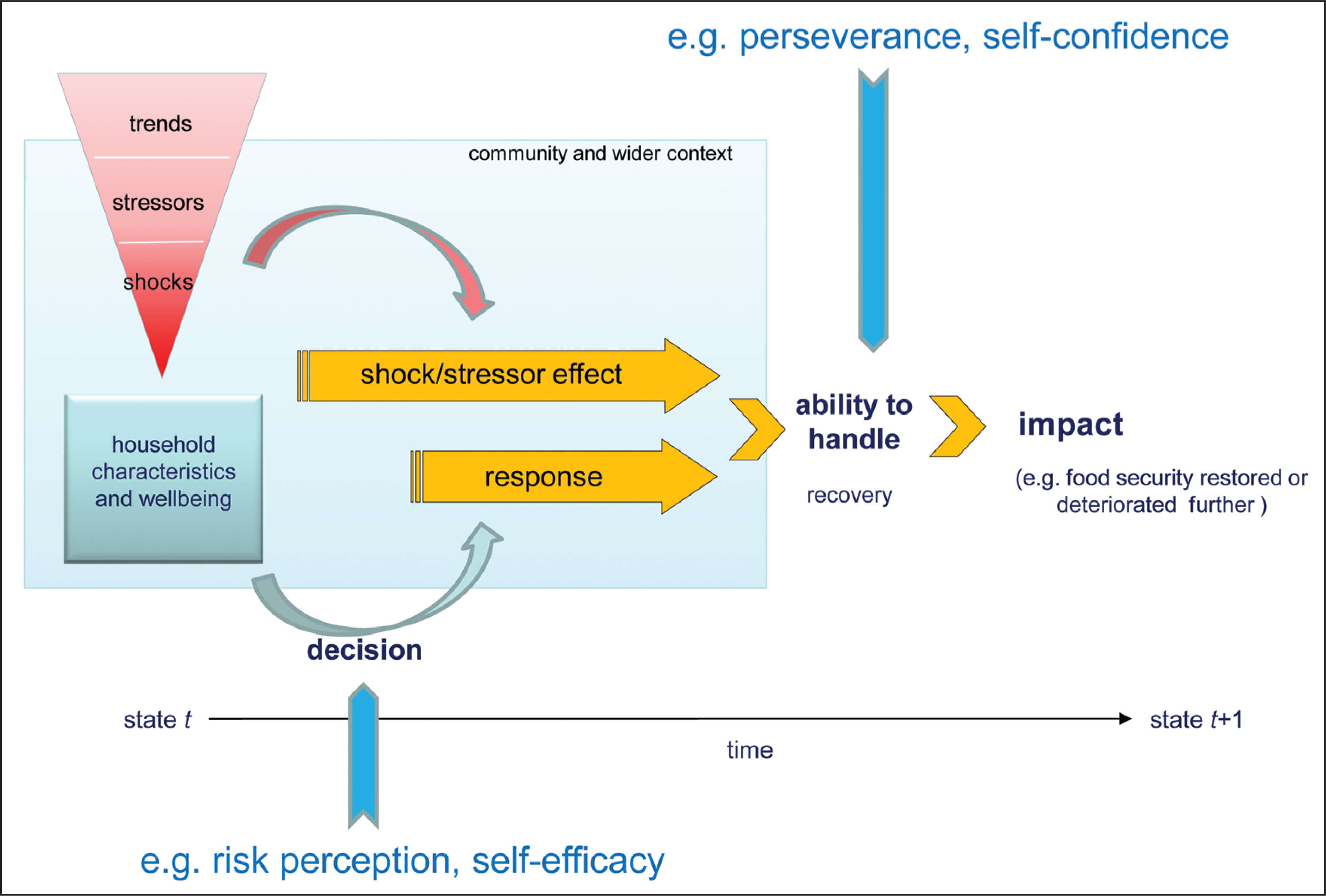
The second arrow (right) indicates that psychosocial factors may also be critical at a later moment during the recovery phase, when factors, like perseverance or self-confidence, can influence considerably the final outcome of the process by affecting the behaviour and decisions of individuals and households (or communities) during the recovery phase. It seems indeed reasonable to assume that factors, such as persistence, determination or even stubbornness, are probably as important as skills, knowledge or even financial assets, when it comes to explain why certain households are successful at rebuilding their livelihood after being hit by a disaster or affected by a personal adverse event, while other households in the same situation fail. This second locus where psychosocial factors are expected to influence the resilience process has not been tested in this article, however.
From the results presented earlier, the need for a new agenda addressing the subjective dimension of resilience appears evident. While this agenda may sound passé or obvious to scholars working on (child) psychosocial development or even for social scientists working on climate change adaptation, the review of the current literature on resilience in the context of food security crises in low-income countries indicates that this is not the case. Subjective factors are not yet part of the conventional package of those types of interventions.
Including those elements may create some methodological challenges for those of us who have so far concentrated our effort on tangible and measurable determinants of resilience. We deem, however, that there is a great benefit to taking on the challenge and expanding our thinking and research beyond the ‘usual suspects’ (levels of assets, income, or number of livelihood activities), into new domains that embrace the importance of subjective factors in the construct of individual and household resilience. For this, we need to collect information on psychosocial and subjective factors, like aspirations, and individual and collectively constructed perceptions of one’s own capacity or ability to cope with risk and change (Hill et al., 2012; Kosec et al., 2014). These are factors that may be difficult to measure, but, as this article demonstrates, they are indispensable to account for, if we want to better capture the whole set of processes that constitute people’s resilience and apply it in relation to resilience interventions in low-income countries (see next section).
In addition to the methodological challenge of capturing subjective dimensions of people decision (e.g., Bernard and Seyoum Taffesse, 2014; Lockwood et al., 2015), there is the challenge of interpretation. As those in the development community delve more and more into the realm of subjective factors and resilience (e.g., Béné et al., 2016a; Jones and Tanner, 2015), it will be essential to ground hypotheses in the realities of the contexts being considered, to critically test even the seemingly most basic assumptions, and to fully consider psychological research studies in tandem with economics and international development literatures (Bernard and Seyoum Taffesse, 2014). Take the concept of ‘locus of control’, for instance. Locus of control, a correlate of self-efficacy, refers to the extent to which individuals believe they can control events affecting them (Lefcourt, 1991). While it may seem like a safe assumption to presume that higher levels of perceived control are always better, psychological research has shown that for many minority groups in high-income countries, higher levels of perceived control in the absence of conditions that allow one to actually exercise one’s perceived control can lead to adverse outcomes (Gurin et al., 1969). Being aware of external barriers is, therefore, helpful for managing constraints/expectations and is protective of one’s mental health when confronted with these barriers. Whether locus of control, self-efficacy and other constructs related to perceived power follow the same pattern in the context of resilience in low-income countries is an empirical question that deserves future attention. Of particular relevance to the current article, however, is the need to stress the importance of basing assumptions on the cultural context in which one is working (Appadurai, 2001; Burkett, 2013; Canvin et al., 2009). It also points to the value of an interdisciplinary approach—particularly with psychologists, anthropologists and other social scientists who are well-versed in capturing and interpreting latent and subjective constructs—and not just depending on agricultural economics and statistics.
Programmatic and policy implications
The findings of this research, once firmed up and established through a larger body of applied research, will also have important implications for the policy and intervention packages provided by NGOs and international development agencies in relation to humanitarian and food security crisis programmes. At present, the majority of the activities proposed as part of those interventions are addressing the tangible component of resilience through activities such as the promotion of livelihood diversification, micro-enterprises development or climate smart agriculture practices. All these activities are critical, but they are based on an incomplete theory of change that considers only the ‘measurable’ determinants of resilience. With such a focus, these programs run the risk of overlooking the importance of less tangible elements in households’ decision process and miss the opportunity to improve further the resilience of those households. The results of this article complement the already well-established literature on adaptive capacity by emphasizing the importance of accounting for elements such as risk perception, self-efficacy and (as this series of results have confirmed) households’ perception about their own capacity to handle shocks and stressors. It does it, however, not only in relation to adaptation responses (the focus of the adaption literature) but also in relation to absorptive/coping strategies and transformative responses—the two other groups of responses that constitute people’s resilience.
Footnotes
Declaration of Conflicting Interests
The authors declared no potential conflicts of interest with respect to the research, authorship and/or publication of this article.
Funding
The authors disclosed receipt of the following financial support for the research, authorship, and/or publication of this article: The authors would like to acknowledge the initial financial support of the UK ESRC-DFID Joint Scheme for Research on International Development (Poverty Alleviation) (project ES/J017825/1) [GFVSL dataset] and the Feed the Future FEEDBACK project [Ethiopian dataset].