







Abstract
Millennials have the uniqueness of active learners and work with freedom. Millennials are the first generation to put the fun in work-life. Social media is a strategic instrument in Cyber Learning (CL) in work-life and lifestyle. Learning on Business Performance (BP) in many studies has an insignificant effect and is still inconclusive. The purpose of this study is to offer Innovative Millennial Entrepreneurship (IME), which will be tested empirically in its role in pushing CL to BP significantly. Data collection was carried out by employing a purposive sampling method on 159 millennials who hold owner/manager positions in business organizations. Data analysis used a quantitative approach with Structural Equation Modelling (SEM). The empirical results in the model provide evidence that IME fully mediates, becoming a bridge that strongly fosters the role of CL (β = 0.83) on BP (β = 0.42) and Marketing Capability (MC) through Agile Teamwork (AT) provides an excellent total effect when compared with the direct effect between CL (β = 1.01) and BP (β = 0.79). In the Entrepreneurial Agility perspective, IME and MC through AT have encouraged millennials CL to be converted into better performance through opportunity foresight, systemic insight, and entrepreneurial mindset.
Keywords
Introduction
Starting from a concept introduced by (Ferreira et al., 2017; Schumpeter, 2013), innovation is built from various entrepreneurial resources directed to create competitive advantages against competitors (Hussain et al., 2017; Jones et al., 2017). Innovative Entrepreneur (IE) undergoes several evolutionary phases introduced by (Alvarez and Barney, 2010; Dess and Lumpkin, 2005) until this study presents Innovative Millennial Entrepreneurship (IME). Millennials are placed in a different period because of their unique characteristics and periodically differ from previous generations (Buckley et al., 2015) or enter the evaluation void gap type (Müller-Bloch and Kranz, 2015). Millennials currently occupy many vital positions in organizations as decision-makers. In entrepreneurship, millennials are at the forefront of innovation in a nation with their creative ideas in business ownership. Millennials create a leap regarding technology efficacy from the central theme of technology anxiety to technology-savvy (Lee and Circella, 2019). Millennials can build their knowledge self-taught, looking for raw materials and new markets through socially constructed networks that are all oriented towards the existence of Cyber Learning (CL). CL is a cyber-based learning process with existing technology, such as social media (Hermawan et al., 2020). Social media primarily operated using the gadget is a medium for actively upgrading millennial knowledge (Brydges and Hracs, 2019). Millennials, recent technology, and learning are inseparable concepts referring to entrepreneurship agility. This concept builds CL by referring to resource-based view (RBV) theory which facilitates a robust recent information technology as knowledge infrastructure.
Entrepreneurial agility is the ability to build opportunity foresight, systemic insights, and an entrepreneurial mindset. This ability is related to resources elaboration in entrepreneurship, such as technology adoption, market investigations, teamwork, conversion of knowledge to inimitable products, and method and process innovations (Wynn and Jones, 2018; Xing et al., 2020). Resources are the key to creating entrepreneurial agility. Entrepreneurial agility in this paper refers to IE for millennials (IME) and Marketing Capability (MC) supported by Agile Teamwork (AT). IME, derived from the Entrepreneurship Theory of Innovation (ETI) concept, which has reddened the presence of innovation in entrepreneurship, will go hand in hand with MC because innovation in today's business requires more than just a driving force in the marketing line to convert it to Business Performance (BP). Agility attempts to convert resources into performance (Kohtamäki et al., 2020). The entrepreneur needs to continuously present fresh and brilliant ideas embedded with IME as a prerequisite for survival in massive market competition. Building ideas is a challenge that is not easy and requires a think tank as a source of innovation. It is why entrepreneurs need to build agility in teamwork and presenting MC (Hoque et al., 2020; Rahman et al., 2018; Real et al., 2006). Product innovation only does not guarantee conversion into performance. MC will be the booster and distribution funnel for how a good idea will be converted into a product accepted by consumers. MC in entrepreneurs refers to all innovative marketing efforts that refer to the power of product innovation and social network management used to propagate the importance of the consumer having the products (Cho and Lee, 2020). Thus, MC, especially in pandemic turbulence, becomes a driving force in entrepreneurship agility and is strategic in enhancing performance (Kristinae et al., 2020).
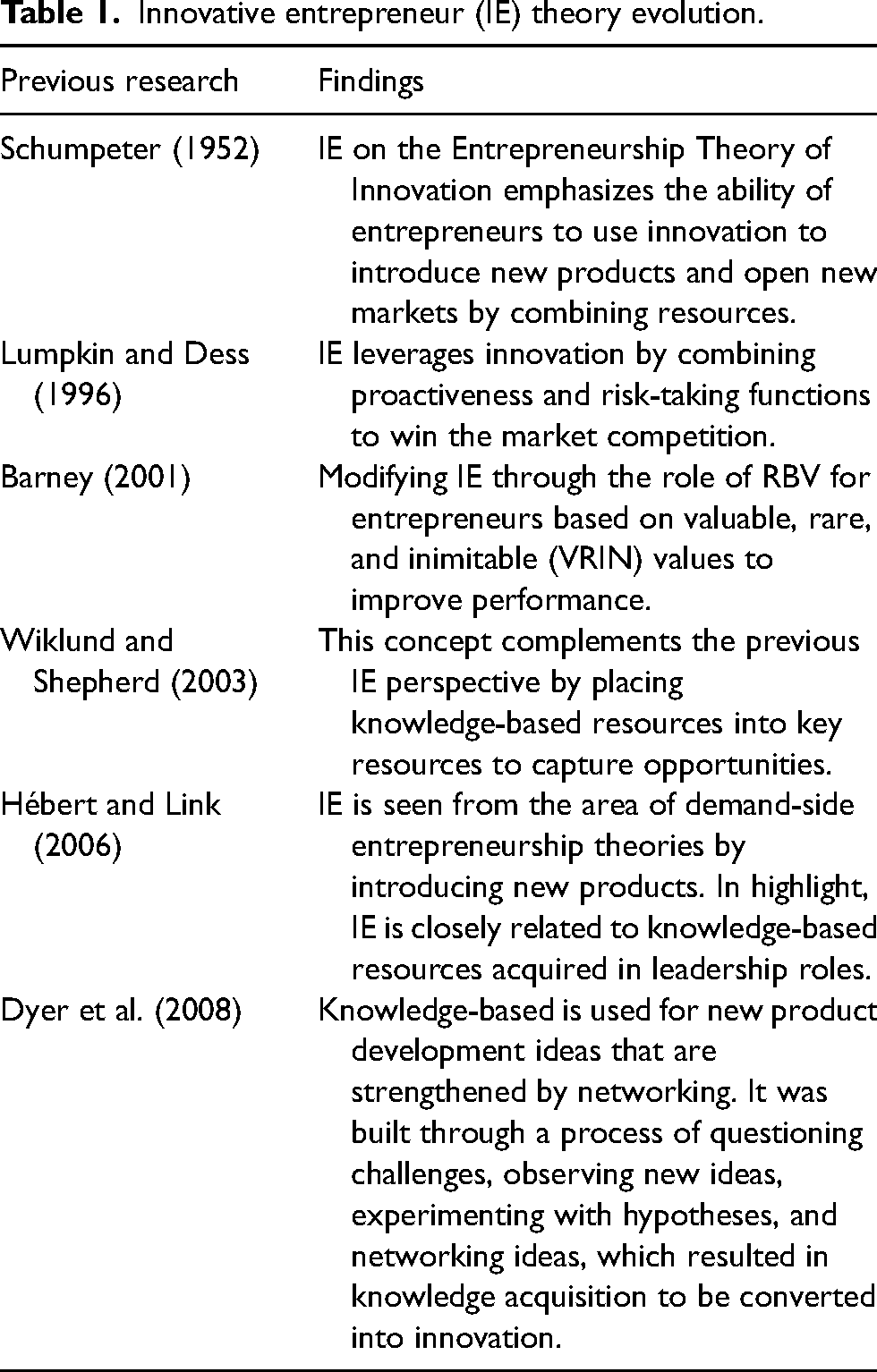
This study refers to the evolution in IE, which needs to be reconfirmed in line with time progression, changing the entrepreneurial character, especially the efficacy of using technology and other characteristics inherent in the millennial generation. Thus, it makes the cut-off in a period that needs to be reviewed. It is an evalution void gap referring to (Müller-Bloch and Kranz, 2015), where IME is the latest contribution to the evolution of IE in this study, which is confirmed in the conceptual model concerned about the problem gap between CL and BP. Hermawan et al. (2020) state that CL has a significant effect on BP, supported by (Akhtar and Arif, 2011; Liao and Wu, 2009; Santos-Vijande et al., 2012) that emphasizing technology roles in CL towards performance. While others explained vice versa (Hung et al., 2011; Jiménez-Jiménez and Sanz-Valle, 2011; Zhao et al., 2011). CL is a characteristic of millennials who are active learner generations, which in this paper will be examined its effect on performance in the context of entrepreneurial business ownership. The problem raises a research question: What is the mediating variable that can bridge CL and BP? The study proposes two paths of mediation in developing solutions for the research gap from the grand theory of RBV perspective. The first path is IME under the umbrella of ETI theory. The second path as an alternative is through the umbrella of dynamic MC theory, triggered by MC through AT as an antecedent. In highlight, this study aims to confirm the variables capable of mediating CL and BP. IME is an entrepreneurial concept that emphasizes innovation significance in methods and products to create a unique distinction from competitors and implement good governance managed by millennial business ownership. IME in this paper is a novelty that bridges the gap and becomes a modification in the form of evolution in IE. The contribution of this study is to complement the evolution of IE by building an IME construct inspired by Schumpeter's study (Table 1) so that this study fills the body of knowledge in the evaluation void gap (Müller-Bloch and Kranz, 2015).
Innovative entrepreneur (IE) theory evolution.
Literature review
Innovative Millennial Entrepreneurship (IME)
This study refers to the generational theory in viewing individuals born in certain situations will have their unique values and beliefs (Taylor, 2018). The millennial generation who born in 1980–2000 (Raines, 2002), has the most significant number compared to other generations with characteristics, including optimistic, able to work in a team, and technology savvy since they are grown up with social networks embedded in technology, such as social media (Eric and Michael, 2009). As an employee, in contrast to Generation X, who places value on people in the organization, millennials are more than looking for organizations that match their character and goals, so they choose companies when they have meaningful work (Payton, 2015). The study of entrepreneurship and millennials began to develop in 2012 by introducing leadership types with unique characteristics based on historical experience. It is closely related to the intensive use of technology, such as social media (Adams and Ricci, 2017), in organizations that operate with robust knowledge (Lingelbach et al., 2012). In addition, (Uy et al., 2017) implicitly conducted a study on entrepreneurs in the millennial age range with a new sampling method using mobile phone text messages. It shows that the role of technology is intense for millennial entrepreneurs. Millennial entrepreneurs are youth entrepreneurs with neoliberal characteristics: independent, flexible, creative, and highly social relationships to collaborate (Kozorog, 2018). However, the study did not focus on IE. So, it is urged to study the evolution of IE in the millennial generation. Table 1 shows the evolution of the concept of building an IE.
In line with the IE concept as in Table 1, the evolution of IE studies continues to grow, inference also with the face of generations that have different characteristics from the previous era. The novelty of this study places the millennial generation as a new face of IE rooted in Schumpeter's thinking that the conversion of resource-based performance dominated by human capital that builds intellectual property is the driving force for a new phase in the context of IE. Entrepreneurial investment to increase organizational growth does not stop at financial capital but also social and human capital (Palamida et al., 2016). In the perspective of human capital, millennials encourage the evolution of efficacy in using technology, where research themes in generation X are dominated by technology anxiety. Currently, various studies have many central themes of technology savvy, so there is a new leap in efficacy related to technology, especially its implementation in entrepreneurship. Another millennial character that dominates new thinking is the spirit of go-green management, the need for a work-life balance, and active learners. All of them have acquired a new lifestyle at this time so that in the context of human resource entrepreneurs who refer to Schumpeter's thinking, the millennial lifestyle will be attached automatically, either whether they realize it or not, when they play a leadership and management role to build IE. It will create a different perspective to the previous IE concept. Millennials are a new concept offered in building IME constructs.
IME that emphasizes the importance of innovation in methods and products, creating a difference and implementing good governance managed by millennial business owners is a novelty developed from the theories that underlie the evolution of IE in Table 1. Some of the theories raised are the first, resource-based view theory (RBV), where tangible and intangible resources create innovation (Kellermanns et al., 2016). In practice, intangible resources are dominated by the role of human capital, such as leadership and teamwork, to become the motor in building competitive advantage through the presence of innovation. As human capital in entrepreneurship, millennials have a lifestyle that creates an atmosphere, work ethic and makes a different acceleration from the previous generation. The advantages of driving evolution include how they work to develop innovations in processes and products. Thus, RBV becomes a theory that explains how innovation is built through resource optimization. The second is Knowledge-based View (KBV). KBV in entrepreneurship is based on knowledge management which is divided into knowledge infrastructure capability, related to how entrepreneurs have instruments to capture knowledge such as technology, culture, and organizational structure; and knowledge management process, related to how existing knowledge is managed to create competitive advantages, such as knowledge sharing, knowledge donation, and knowledge protection (Gold et al., 2001; Mills and Smith, 2011). KBV in entrepreneurship is implemented to enrich the knowledge repository and build solid research and development. The third is The ETI. The next thought that inspires innovation in entrepreneurship is how to manage knowledge flow from an external organization, elaborate it with the knowledge possessed by internal human resources to build methods, production processes in entrepreneurship, and promote inimitable products formulation (Schumpeter, 2013).
CL and BP
CL is a crystallisation of the concept of organizational learning by utilizing technology as a facilitator in accelerating exchanging information and knowledge, such as market information, to create viral products through internet searches. According to (Hermawan et al., 2020), CL is rooted in technology task fit theory and collectivism, in which individuals in work teams have high efficacy in sharing knowledge in organizations. In many studies, organizational learning is an antecedent of BP (Attia and Essam Eldin, 2018; Real et al., 2006; Soomro et al., 2021). CL as a manifestation of organizational learning facilitated through the development of the internet encourages the achievement of BP. Studies that mention CL in a direct business context are still limited. Researchers are more referring to the use of technology as a learning support. The frame in this paper is the same, the use of technology in learning is considered a CL concept (Hermawan et al., 2020; Real et al., 2006; Soto-Acosta et al., 2018). The CL process in helping capture, process, share and store strategic information promotes BP, which is in line with study of (Chang, 2019). The presence of technology in CL makes it easier for organizational entities to carry out knowledge sharing activities to enhance learning motivation in teamwork and grow team creativity, which boosted BP (Hermawan et al., 2019). Therefore, the proposed hypothesis is as follows:
CL and IME
Knowledge induction in CL is created when the entities have the same experiences or goals, making it easier to formulate ideas (Faizuniah and Joon, 2014). For instance, information from market as a source to stimulate the innovation process (Slimane and Lamine, 2017). The process of transferring knowledge between the individuals involved is built in understanding, absorption, and utilization by other individuals (Mills and Smith, 2011). Learning significantly influences innovation, where technology provides vital support in strengthening sharing to organizational elements. Technology provides easy access to knowledge and unlimited storage as an advantage (Dhewanto et al., 2020). Contrary to the research of (Qamari et al., 2019), learning has no significant effect on innovation. Learning induction is built to solve entrepreneurial problems in the millennial context, such as participatory engagement affiliated with sharing knowledge (Kozorog, 2018). Millennials use their social networks to develop their knowledge, such as buying products (Purani et al., 2019), so learning activities become millennials’ lifestyle. Existing data is linked to becoming a reference base using cellular networks in work-life (Kong et al., 2020). Kong recommended future studies on information sharing in e-marketplaces based on millennial business ownership. So, CL implementation by the millennial entrepreneur will escalate IME, which plays a role as a bridge in technology-based learning processes to create innovations that can improve BP.
IME and BP
Departing from the business paradigm, an innovation that is the main element in the Knowledge-based Era (KBE), is transforming the market competition that is no longer just focused on price and quality. Innovation in many studies refers to the dynamic theory (Dasgupta and Stiglitz, 1981; Goh and Pentland, 2019). Dynamic theory refers to various resources and elements in business organizations used to achieve creativity as an outcome of innovation (Kiessling, 2004; Kristinae et al., 2020). In generating innovative ideas, it can be encouraged through thoughts from internal or external (third parties) individuals willing to share knowledge. The external encouragement to innovate in an organization will be effectively created through internal and external entities’ learning process. According to (Kong et al., 2020), the learning process promotes knowledge sharing that directly affects innovation creation and improves performance.
Millennials are active learners who always study technological challenges as solutions to their problems so that millennials become agents of innovation in developing methods, processes, and creating new products. Millennials as discoverer agents, their application in entrepreneurship and innovation are related to technical support and knowledge management buildings in their repositories used to create unique and inimitable entrepreneurial products. The organizations will grow in acceleration because they can capture viral signals. The innovation process can be promoted by the appearance of technology such as social media (Adams and Ricci, 2017) embedded with millennials to improve BP in SMEs.
CL and AT
AT represents an organizational team with a solid motivation to keep moving and responsive to change (Whitworth and Biddle, 2007). It encourages increased productivity to create innovation, leading to organizational competitive advantage (Hermawan et al., 2019). (Faizuniah and Joon, 2014) reveals that the learning process through knowledge sharing creates innovation when members have a cohesiveness and commitment to support AT. AT builds team cohesiveness so that they are willing to share their information and knowledge at both an explicit and tacit level. CL has a position to inspire a robust level of cohesiveness and develop a change-driven individual. The cyber base on CL facilitates teamwork to carry out the learning process without constraints on space, distance, and time, such as video teleconferencing and live groups using the internet (Silva et al., 2021), promoting AT.
AT and MC
AT built in the organization fosters work effectiveness to create innovation in processes, methods, and products (Moi and Cabiddu, 2020). This role is crucial in improving organizational capabilities, especially in the MC. AT that is change-driven based can see potential trends in the market as a basis for preparing targeted marketing strategies. According to (Moe et al., 2010), teamwork is built with six frames: team orientation, team leadership, monitoring team members, feedback, backup, coordination, and communication. The framework leads to the development of a solid team by prioritizing integration between individuals for self-management. This ability accelerates market-oriented organizations to recognize the market and explore new needs from the consumer side.
MC and BP
Given that millennials are a generation embedded in technology such as social media, the role of social media use to work is strategic for millennial entrepreneurs to generate innovation (Kong et al., 2020; Purani et al., 2019). However, innovation being an independent element is not enough, many of the entrepreneurs have created innovations and produced inimitable products, but they did not sell favorably in the market. As in the pandemic era, the purchasing power of the market has weakened. The priority scale for purchasing orientation has changed. The emergence of unhygienic anxiety phenomenon and marketing channels is developing where the market begins to choose indirect service. This phenomenon proves that innovative and millennial entrepreneurship (IME) is a popular model idea to build a good game in the market but cannot stand solely. It takes more than just a drive to enter new markets that have been untouched or niche. The agility to enter new markets is a critical effort to achieve the inimitable product is executed into an actual sale or is accepted by the market. The entrepreneur needs the ability to convince consumers that the products offered are vital and significantly impact consumers. So that in this concept emphasizes that if consumers do not have a product or service, it will result in lost benefits. The idea which is equivalent to an orientation in a pandemic economic paradigm, which strengthens the role of IME, is the presence of MC (Petzold et al., 2019) to improve BP (Mu, 2017).
The mediating role of IME
Innovation is a crucial concept in entrepreneurship business in line with market developments that reflect competitive advantage. In many studies, the creation of innovation, especially in the digital era, cannot be separated from the presence of technology such as social media (Qamari et al., 2019). Technology facilitates the process of capturing and processing potential market information to be used as learning material (Real et al., 2006; Soto-Acosta et al., 2018) which crystallised in the form of CL (Hermawan et al., 2020). The presence of CL provides materials that are used to innovate through a repository of knowledge from learning outcomes. However, in the context of technology, CL which is affiliated with the use of technology in the organization absorbs the investment and requires a key driver. It often results in an insignificant relationship and may have a negative relation. (Alaarj et al., 2016; Garcia-Morales et al., 2018; Mills and Smith, 2011) state that the presence of technology in the learning process will accelerate knowledge iteration and open up opportunities for organizations to create innovation by combining internal and external information. It indicates the possibility of indirect influence of CL on BP. So it needs to be explained through the role of the middle variable through the indirect effect. By being mediated through IME, the knowledge repository that CL produces is converted into a unique product that is accepted by the market. IME plays a role in strengthening the knowledge gained through CL in its use to counter competitors through the creation of unique products and services that are accepted by the market. Furthermore, IME also builds on the precautionary principle in the development of new products. IME is a manifestation of systemic insight that guarantees entrepreneurship to be more solid and implements entrepreneurial agility theory. IME triggers designing new products that are rooted in the wealth of collective knowledge gained by CL. IME provides many options for entrepreneurship in problem-solving through breakthrough innovations in methods, processes, and products. This innovation breakthrough will ensure entrepreneurship as a market leader, profit achievement, and market strengthening, which are the outputs of BP. In this paper, IME mediates CL and BP.
The mediating role of AT and MC
The ability to create value becomes an opportunity foresight in entrepreneurial business. Creating value will ensure customer engagement and product sales targets are achieved. Furthermore, the prerequisites in MC need to pay attention to approaches that are effective following the target market segment. The distinctive capability of MC is to acquire the local wisdom character in the target community, which is in line with a dynamic theory based on RBV theory (Qureshi et al., 2017). Local characters are an attraction to build product attributes and support customer engagement. MC has a leading role in dealing with consumers and ensuring that the market's products are absorbed (Martin and Javalgi, 2016). This ability will increase if the entrepreneur has AT. AT will help understand local wisdom into a unique attribute, assist MC in building good product distribution and fulfill marketing tasks with good response time (Silva et al., 2021). So in this context, MC with AT support will build entrepreneurial agility better (Eriksson et al., 2020) (Figure 1).
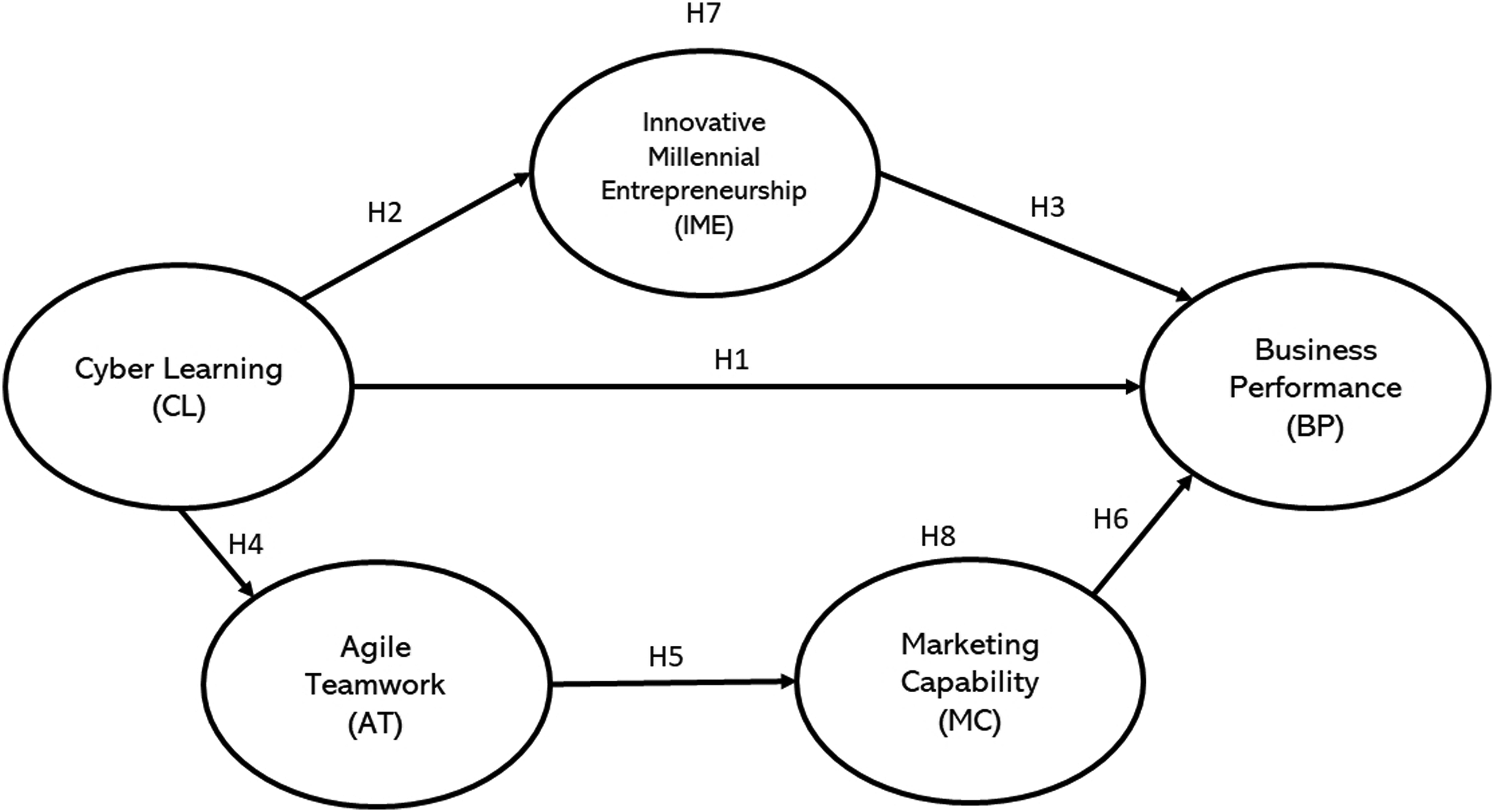
Conceptual model.
Methodology
The study implements quantitative approach to explain the relationship between proposed variables in the conceptual model. Since the model consists of several simultaneous equation models, structural equation modelling (SEM) was chosen as the analytical method for processing data. The research methodology detail is represented in Figure 2.
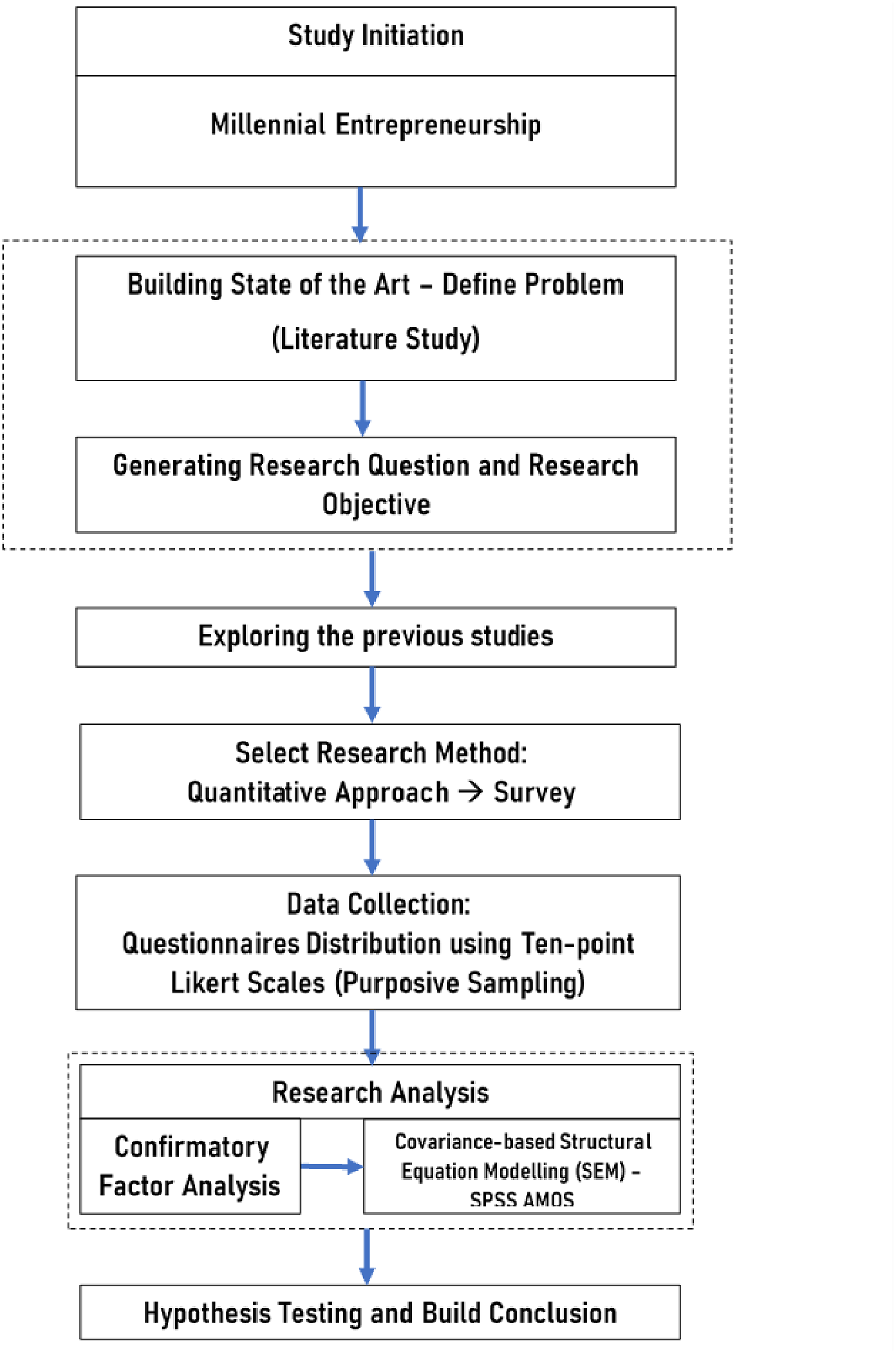
Research methodology.
A minimum sample of 100 is fulfilled by reflecting the number of constructs of five variables with a minimum of four indicators for each construct with a minimum community of 0.6 (Hair et al., 2014). The sampling technique used was purposive sampling because specific characteristics for millennial business ownership were determined, namely, a design-based organization with robust innovation. The element of a design-based organization that adopts technology aims to create inimitable product covering the potential market. By considering the implementation of AT in an organization, the study decided to set the minimum number of employees to five people. It is based on the five standard organization divisions (human resource, finance, production, marketing, and general). The study focuses on Java Island, Indonesia, since Indonesia's dominant business transaction turnover centre is embedded with the innovation process.
The appropriate return rate for the questionnaire was 92% (166 respondents) out of 180 respondents. After testing the Mahalanobis Indices-based outlier data, seven data did not meet the requirements where the p1 and p2 values were 0.000, so they were eliminated and left 159 data ready to be processed.
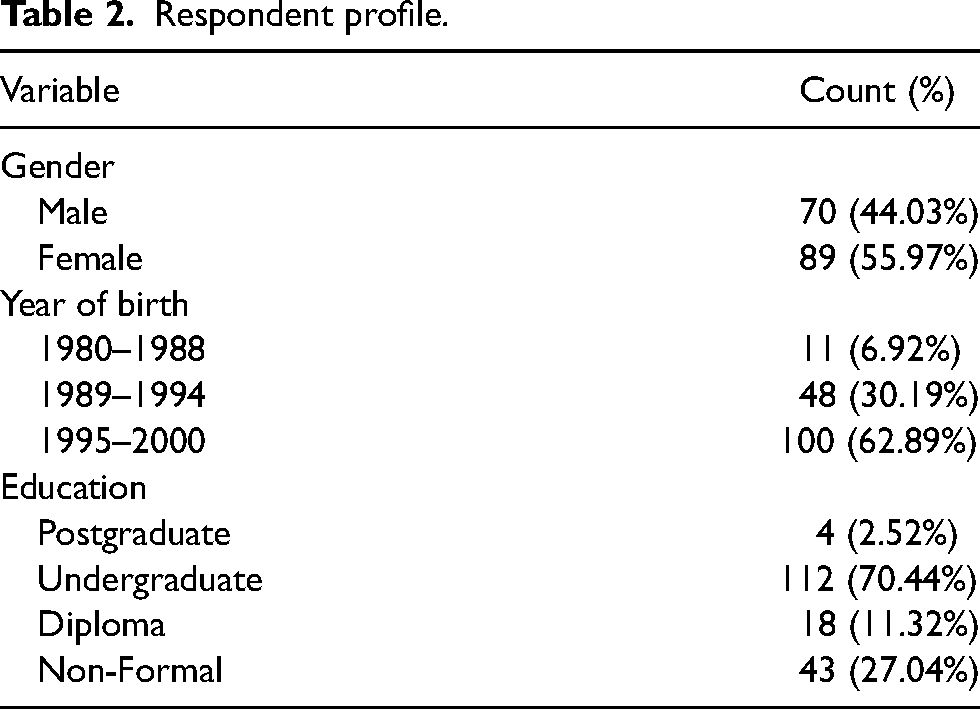
Table 2 shows that the number of male and female millennial entrepreneurs is almost equal to most undergraduates. It happens because of the high competition in getting work and entrepreneurial awareness currently starting to grow in the undergraduate environment, thus becoming the dominant sample in terms of composition. The majority of millennial entrepreneurs comes from the year of birth between 1995 and 2000, accounting for 62.89%. It also can be seen that those four respondents are postgraduate. It proves that the spirit of millennial entrepreneurs also has a high willingness to study through formal education to a higher level. The knowledge gained will be more robust and become the foundation in running the business, such as training and business incubation, short course, and homeschooling. However, 43 respondents took non-formal education levels. This fact shows that education to start a business does not only come from the formal one.
Respondent profile.
Data analysis and result
Measurement validation
Before SEM analysis, the feasibility of the data must be tested through several measures, namely confirmatory factor analysis (CFA), the validity of the indicators by looking at the loading factor value, reliability, and the discriminant validity. Data for each indicator representing the variable obtained from the research questionnaire instrument is based on a Likert scale from points 1–10 (agree-disagree). Table 3 shows the CFA calculation with the cut-off for fulfilling the eligibility of the model.
Confirmatory factor analysis.

The ability of each indicator to represent the variable is proven by testing the validity of the loading factor. In addition, the reliability test is to ensure that the measuring instrument used in the study is constant. Even though it is tested repeatedly, the same results will be obtained.
The cut-off for standardized factor loading value is more than 0.05 (Hair et al., 2014). By departing from the constructs built, the smallest loading factor is 0.523 (CL2), but it is still above the cut-off (0.5) so that all indicators are suitable for building constructs in the full model. Table 4 displays that each indicator defines the variable accurately, with CR being more than 0.6 (Kiyabo and Isaga, 2020).
Validity and reliability tests.
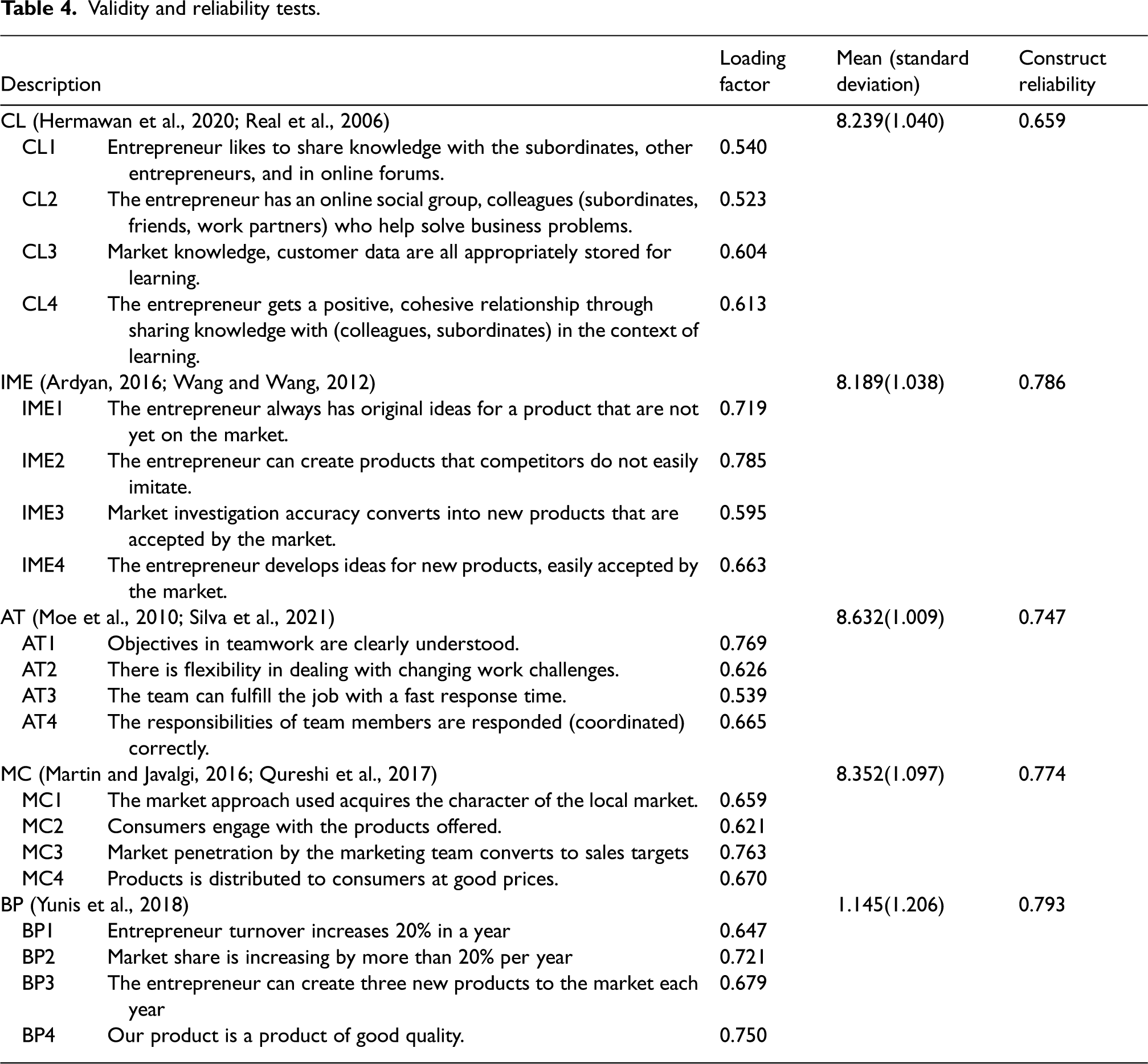
Table 5 shows that each variable can distinguish the constructs in the model with the square root of Average Variance Extracted (AVE) value higher than the construct correlation value of each variable.
Discriminant validity.
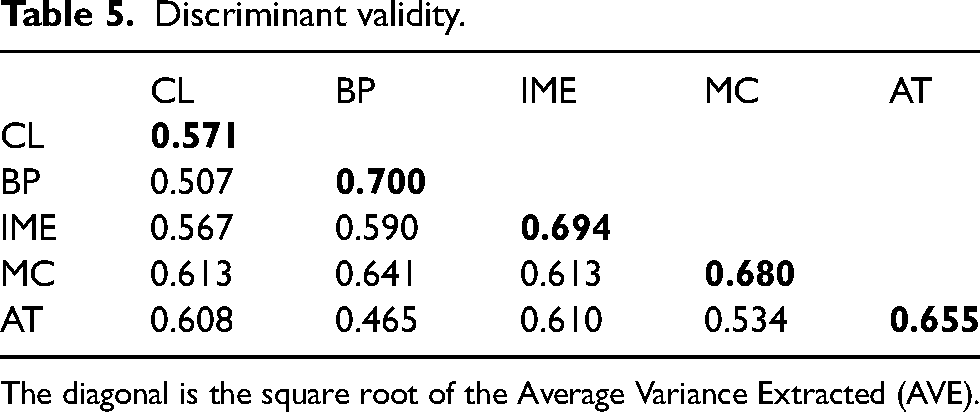
The diagonal is the square root of the Average Variance Extracted (AVE).
Hypothesis testing
The full model testing has been carried out and meets the goodness of fit so that the model can be used for hypothesis testing as follows:
Figure 3 shows that four proposed hypotheses are accepted, and one hypothesis is rejected. Hypothesis 1 is rejected, which means that CL has no significant effect on BP with a P-value: 0.054 > 0.05. Hypothesis 2 is accepted and states that CL has a significant effect on IME (P: *** < 0.001). Hypothesis 3 is accepted so that IME is stated to have a significant effect on BP (P: 0.001 = 0.001). Hypothesis 4 is accepted, where CL has a significant effect on AT (P: *** < 0.001). Hypothesis 5 is accepted and states that AT has a significant effect on MC (P: *** < 0.001). Hypothesis 6 is accepted, so that MC has a significant effect on BP (P: 0.011 < 0.05). Since the result was accepting Hypothesis 2 and Hypothesis 3, it is concluded that Hypothesis 7 is accepted. It means that IME successfully mediates CL and BP. Besides, the acceptance of Hypothesis 4, Hypothesis 5, and Hypothesis 6 confirmed that Hypothesis 8 is accepted. It means that MC through AT successfully mediates the gap between CL and BP.
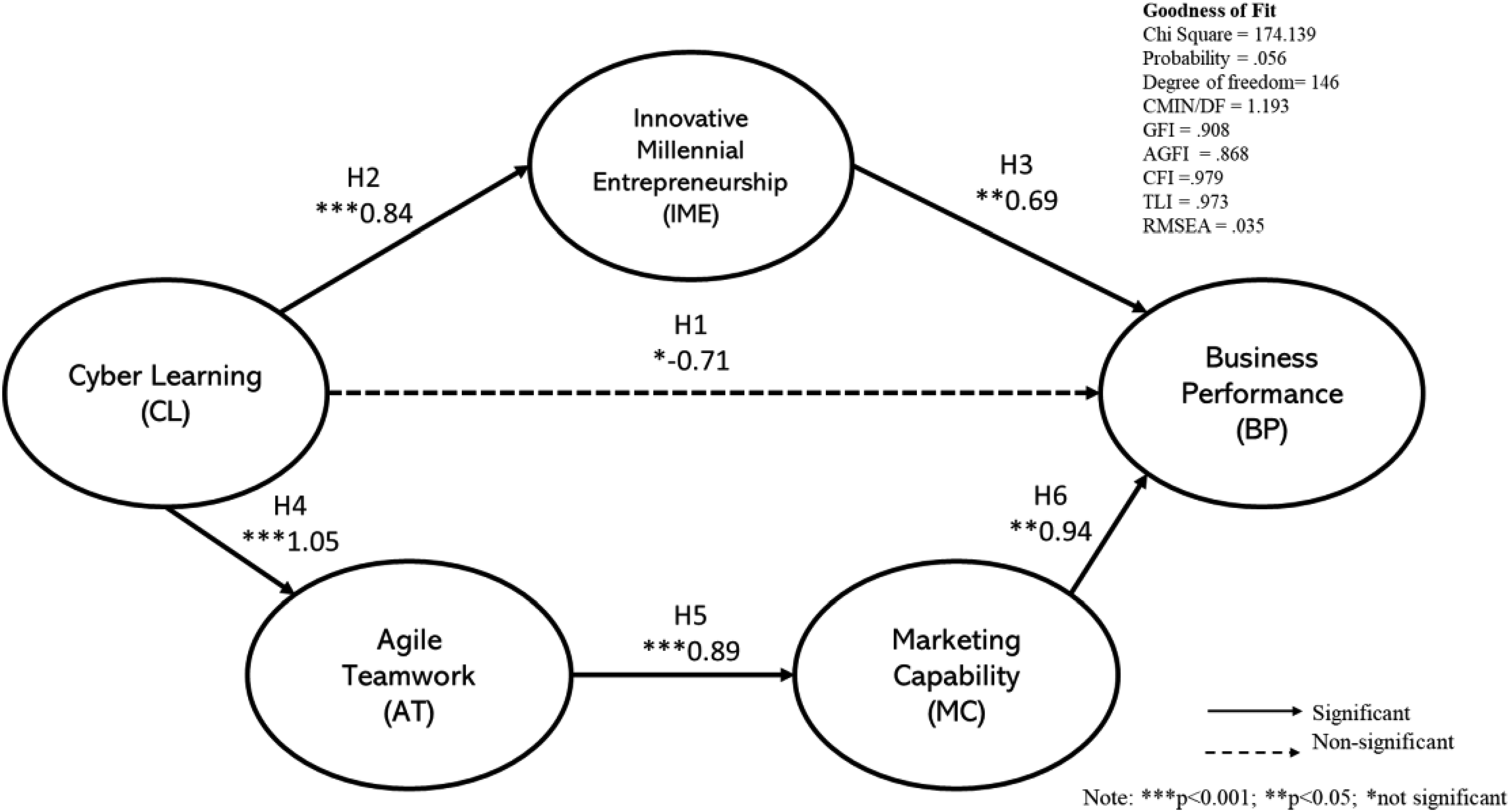
Estimated structural model.
Direct and indirect effect
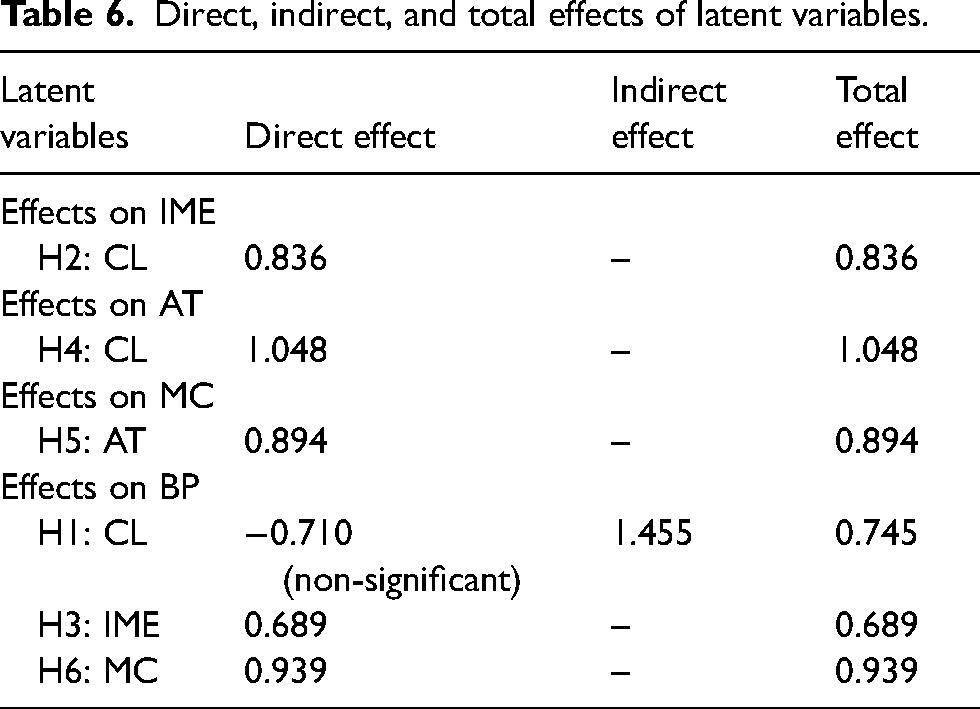
Table 6 are obtained the following structural equations: IME = 0.84CL; AT = 1.05CL; MC = 0.89AT; and BP = 0.69IME + 0.94MC. Meanwhile, based on Table 4, the total effect on BP = 0.745CL + 0.689IME + 0.939MC. It shows that IME successfully mediates the effect of CL on BP with a total effect of 0.689. AT provides the alternative mediator. However, AT is not enough to bridge CL to BP. It needs another driving force, namely MC, with a total effect of 0.939.
Direct, indirect, and total effects of latent variables.
Discussion
This study traces the evolution of IE, which is closely related to generational theory, by looking at the millennial generation as individuals who have unique values and beliefs, such as being tech-savvy, creating solid teamwork, and being active learners. This generation's presence creates an evolution in IE or called the evaluation void gap (Müller-Bloch and Kranz, 2015), where at a certain period, the existing concept needs to be re-examined to see its relevance to today's business. IE is a construct that has evolved from the theory of RBV, KBV, and ETI (Barney, 1991; Lumpkin and Dess, 1996; Schumpeter, 1952), and in practical, currently, the evolution of IE reaches the concept of IE in the context of the millennial generation (Liu et al., 2019). IME is an essential construct because millennials have a different character and achieve the evolution of efficacy using technology, placing tech-savvy and cyber technology as a manifestation of millennials’ active learning (Arthur et al., 2020; Nidhi and Vijay, 2019). The work challenges of millennials will be overcome with their character, which tends to conquer problems by actively learning using online learning resources. The active learning character of millennials provides energy in entrepreneurship addressed to entrepreneurial agility. Currently, millennials occupy significant organizational posts, which is a demographic bonus in several countries (Colli, 2020; Harmel and Yeh, 2019; Osman and Aziz, 2018) to become recent issues. It is also the case in the context of innovation in entrepreneurship. Millennials become fighters at the innovation forefront with their intellectual property building incremental to radical innovation that distributes business today (Ogamba, 2019). So that millennial provides a peculiarity in the evolution of IE. This peculiarity departs from the primary character of millennials, which creates a uniqueness that helps achieve innovation. The ability of the evolution of this generation to develop a distinctive cognitive which is juxtaposed with ETI theory will create aggressiveness in building a new service or product and upgrade in creating counter-strategies that anticipate innovations generated by competitors. It shapes a systemic insight into the IME (Karimi and Walter, 2021) and makes entrepreneurship organizations agile (Arthur et al., 2020; Brydges and Hracs, 2019).
In the entrepreneurial agility point of view, which emphasizes management mechanisms in creating strategic moves, the combination of CL through social media, AT, and MC in the millennial generation can build opportunity foresight. Besides, the presence of innovative millennials as entrepreneurs creates resource-based insights that produce the basis for entrepreneurial agility development. Based on the result, H1 is rejected (β = −0.71). It is because CL affiliated with the technology absorbs investment cost, so it tends to have a negative or insignificant effect on performance. Millennial entrepreneurs are open to dynamic technology investment and guarantee successful CL implementation. They elaborate CL with IME to align systemic insight, and opportunity foresight becomes entrepreneurial agility in escalating performance. Besides, H2 is accepted (β = 0.84), it is proved that millennial entrepreneurs take advantage of learning facilities through digital technology to build knowledge repositories and provide many options for problem-solving and innovation creation. Learning activities using digital technology is the millennial lifestyle and helps them to access the required knowledge easily. It promotes the accepted H3 (β = 0.69), which confirms the significant relationship between IME and BP. An innovative insight that creates original ideas from millennial entrepreneurs enhances performance by launching new products each year with turnover and market share of more than 20% per year. The result of H1, H2, and H3 strengthen hypothesis H7 acceptance (β = 57.96) and proves the role of IME as a construct that empirically mediates the relationship between CL and BP. IME is derived from ETI, which studies how entrepreneurs build innovations from existing resources. So this theory is relevant to the RBV theory in the context of entrepreneurship. CL uses technology as knowledge infrastructure to generate organizational learning to foster new practical experiences effectively. CL has the massive use of technology domain, such as social media for group learning and active participation in the community. Validated CL resources will increase individual skills efficacy in enriching knowledge to the innovative method, process, and performance improvement.
Another entrepreneurial agility pathway that complements the IME concept is MC through AT. CL has a significant effect on AT by accepting H4 (β = 1.05), where the teamwork is well fulfilled with CL processes used to build collective knowledge in the team. The importance of learning in winning the global competition is exploring the local character where the geolocation of a market segment becomes a potential target market. From the KBV perspective, the flow of knowledge becomes the primary material for learning in organizations. Knowledge flows will be utilized in both IME and AT. Besides, H5 is accepted (β = 1.05). MC through AT is targeting this space by acquiring emerging market knowledge related to local characters, absorbing and placing it as a product attribute, as well as a marketing strategy. For instance, building marketing channels (websites and social media) with themes that acquire local characteristics of target consumers in many countries. This point of view is critical in market responsiveness. From a millennial perspective, learning new things related to culture and values to be converted into marketing attributes aligns with the millennial lifestyle. They are active learners with good social networks so that in its implementation, millennials will look for best practices that adopt local wisdom in terms of market penetration. Understanding local culture is facilitated by learning activities, especially in CL, escalating engagement between entrepreneurs and consumers in their market segments. CL has a positive impact on knowledge induction and helps find solutions to problems in teamwork, such as finding themes, building complementary products, or creating a blue ocean strategy. Response time to problems and the collaboration quality produces agility in teamwork. In many studies, agility will help entrepreneurs in critical work affiliated with readiness for change in facing turbulence. H6 is accepted (β = 1.05). MC is an ability designed to apply collective knowledge, skills, and resources to market-related needs. This capability allows for adding value to products or services and enhancing market conditions adaptation. This capability is relevant to dynamic capability, a strategic aspect of creating value through a more profound MC role. MC is a crucial aspect that bridges how consumers receive products or services and generates BP.
The acceptance of H4, H5, and H6 support H8 that MC and AT successfully bridge CL on BP. In today's environment of massive competition in entrepreneurial businesses, the role of marketing with the support of AT will determine how innovative products that entrepreneurs have created will be accepted in the market. The existence of MC through AT will build up the need for entrepreneurs to identify segments and apply a strategic approach in line with the target market characteristics. MC will help entrepreneurs create value creation for consumers and provoke the target market to make a purchase. In this context, it becomes an opportunity foresight of entrepreneurship. MC via AT will boost CL's role in its conversion to BP.
By accepting H7 and H8, this study answered the research question and confirmed that both pathways could play their role in mediating CL on BP. IME, the engine for resource-based insight, can continue the knowledge repository built through CL to create innovative differences compared to competitors and convert to BP. So this study proves the path built through IME and MC, both of which can carry out their role as mediators. Besides, millennial entrepreneurs need to build a conceptual base that creates energy to shape sustainable innovation and create renewable products or services, which becomes an entrepreneurial mindset.
Conclusion
IME, transformed from the IE concept, builds innovation rooted in the millennial lifestyle as an entrepreneur in business ownership. Departing from the research gap between CL and BP, this study offers two pathways of mediator variable through the role of IME and MC facilitated by the presence of AT. These two completion paths provide empirical evidence that they can create the carrying capacity of the research gap and become a contributor.
Theoretically, this research contributes to the body of knowledge, especially the ETI, by presenting IE to the millennial generation, which creates efficacy evolution in today's entrepreneurship relevant to competitive innovation needs, such as active learner, tech-savvy, promoting life balance, and dynamic style. Since millennials as a subject that upgraded in IE, it becomes the novelty in IE evolution. The study succeeded in placing IME as a mediator in the acceleration of CL on performance. In another way, CL can be driven by its role through AT and MC variables. These two variables provide alternative interconnections in the model to provide the carrying capacity of CL on BP in the perspective of entrepreneurship agility. In building entrepreneurship agility, three dimensions: systemic insight attached to the IME is used to create various options for solving entrepreneurial business challenges innovatively and provide counter-strategies to competitors. Opportunity foresight is used to build value creation that boosts consumer engagement through MC supported by AT. The importance of building AT is based on positive interaction, problem-solving, and achieving market responsiveness. Utilizing the repository produced by CL as the raw material to create renewal knowledge is used to inspire the entrepreneurship mindset dimension where entrepreneurs must create energy that transforms knowledge repositories into sustainable innovation, which is used to bridge through the role of IME. Novelty IME is a concept that energizes entrepreneurial innovation with a millennial concept that upgrades the evolution of IE theory. Millennials become a theme for a new period in IE theory where theory development needs to be reviewed with changing times.
The practical contributions of this study are, first, that an entrepreneur is currently essential to build a creative environment to foster an innovative atmosphere when working with millennials. An innovative environment in a simple context provides recent technology such as subscriptions and sufficient internet traffic reliability. Adequate infrastructure offers millennials opportunities to explore new things and facilitates them to solve work challenges in line with their massive lifestyle using technology. Second, millennial entrepreneurs emphasize control and evaluation functions without providing restrictive rules but still ensure work completion according to procedures. Third, managers need to apply the art of directing millennials as a generation that does not like to be tied down. In implication, managers need to implement a work-life balance, provide clear work targets, and apply fun in work-life, for example working with music, outbound, or other intermezzos. It is to optimize the potential of the millennials by providing a creative work environment based on their characters that will trigger ideas and intellectual property to be acquired into a knowledge repository attached to the IME construct.
The limitation in this paper is the sample used in this study focuses on design-oriented companies affiliated with the presence of innovation. So, it needs to be examined in other sectors, such as manufacturing, education, and hospitality, which have substantial innovations in their business processes. Besides, geographically, millennial entrepreneurs who become respondents are only located in Java Island, Indonesia. It is recommended to conduct the same measuring instrument in different areas by considering cultural differences. By seeing the market as an orientation for entrepreneurs in winning the competition, future studies supporting IME are elaborating with market proactiveness and building teamwork cohesiveness based on trust values in learning. Besides, future studies will evolve with entrepreneurship in the pandemic era. Entrepreneurs need to strengthen performance conversion, such as elaborating the market proactiveness. It becomes a strategic theme since innovation in the pandemic will face weak purchasing power or even changing consumer priority.
Footnotes
Declaration of conflicting interests
The author(s) declared no potential conflicts of interest with respect to the research, authorship, and/or publication of this article.
Funding
The author(s) received no financial support for the research, authorship and/or publication of this article.
