







Abstract
Metaverse will be a game-changer for micro, small, and medium enterprises (MSMEs) in the coming years. Despite its benefits, the entrepreneur's orientation and perception of its usefulness play an essential role in determining its adoption and usage. This study examines the behavioral factors influencing MSMEs’ decisions to integrate Metaverse into their businesses. Additionally, this study investigates MSME entrepreneurs’ perceptions of this new technology and determines the influence of these perceptions on Metaverse adoption. Using the five-dimensional entrepreneurship orientation scale (FDEOS) and parts of the Technology Adoption Model (TAM) as the primary constructs, a survey was conducted among 384 MSMEs. Structural equation modeling was used to analyze the direct effects of FDEOS and the mediating relationship between perceived usefulness and ease of use on the intention to adopt the Metaverse by these MSMEs. Findings reveal the critical dimensions of entrepreneurship orientation that would determine the adoption of the Metaverse. The mediating effects also have significant and interesting results. This study helps segment MSMEs based on their entrepreneur's orientation toward the Metaverse. Platform developers, strategists, and marketers would highly benefit from this study, which provides empirical evidence for MSME user adoption of Metaverse services.
Keywords
Introduction
Metaverse is emerging as a virtual platform for organizations to meet, interact, and engage with their new-age customers (Dwivedi et al., 2022). According to McKinsey's research, 57% of companies aware of the Metaverse have already implemented it (McKinsey & Company Value Creation in Metaverse report, 2022). This has led to several technological developments in the world of business. User interactivity, extended reality (XR), blockchain (data storage), cloud computing (scalability), IoT, artificial intelligence (AI), computing vision, and future mobile networks are all technological developments that form the pillars of the Metaverse (Fu et al., 2023). It also has wide applications in digital advertising and marketing, education and training, gaming, virtual tourism, virtual real estate, HR, and healthcare. Businesses operating in the Metaverse must create shops, restaurants, and other digital spaces for social and commercial customer interaction. This allows businesses to grow beyond their current markets, combining the positives of a physical store with its digital counterpart.
In the context of micro, small, and medium-sized enterprises (MSMEs), the Metaverse provides a competitive advantage, new paths in marketing and sales, immersive customer engagement, and new market opportunities for expansion (Gil-Cordero et al., 2024; De Regt et al., 2021). Metaverse adoption empowers MSMEs to prosper in a highly competitive, digital, and interconnected environment by providing Metaverse-enabled innovative business strategies. MSMEs can also interact with customers who may not have access to physical stores through the Metaverse.
The economy can benefit significantly from having MSMEs in it. They strengthen corporate control systems, aid decision-making processes, and increase operational effectiveness. MSMEs contribute significantly to entrepreneurship, innovation, and inclusive growth through their operations. MSMEs are a varied and dynamic segment of the economy, and social progress and sustainable economic growth depend on their continued development. Government-enacted laws and regulations, like India's Micro, Small, and Medium Enterprises Development Act of 2006, are designed to assist and promote MSMEs in recognizing their significance to the country's economy (Kumar, 2014).
Since the onset of COVID-19 in 2020, many MSMEs have transitioned to online operations, leading to digital innovation in their operations and marketing functions (Shi et al., 2023). Given this virtual setup, adopting the Metaverse would be highly advantageous, offering significant benefits when transitioning from physical to virtual business operations. Despite other digital platforms like e-commerce and social media, Metaverse provides users with a unique immersive experience, better interaction or enhanced virtual collaboration, user-driven experience, and high customer engagement, which is not achievable through conventional digital platforms alone (Thurau et al., 2023).
However, several factors, including technological barriers, lack of awareness, lack of experience, lack of financial resources, and lack of support from partners and other stakeholders, may be the reason behind the slow uptake of the Metaverse despite the potential benefits (Gil-Cordero et al., 2024; Kromidha, 2023). Another primary reason for its low adoption could be the entrepreneur's characteristics (Raman and Menon, 2018), otherwise known as entrepreneurship orientation. The five-dimensional entrepreneurship orientation scale (FDEOS) proposed by Zhang et al. (2014), provides a framework to measure essential entrepreneur characteristics like autonomy, innovativeness, proactiveness, risk-taking, and competitive aggressiveness. The degree of their presence or absence could predict the entrepreneur's willingness to adopt Metaverse technologies in their business. Since an MSME entrepreneur may come from varied backgrounds, ranging from seasoned family businesses to an upstart or a product of circumstances, their entrepreneurship orientation may vary drastically (Dessì et al., 2023). The role of predictors such as entrepreneurship orientation to adopting Metaverse remains unexplored.
Additionally, one must not ignore the perceptions of the MSME entrepreneur concerning the Metaverse. It is quite possible that despite the visible advantages of the Metaverse cited in the literature, the MSME entrepreneurs themselves may find its value incomprehensible. As Davis (1989) proposed, any new technology adoption is based on its perceived usefulness and ease of use. Unless the entrepreneurs find the Metaverse useful for their specific businesses or easy to implement and use, its adoption by these MSMEs may be negligent and slow. Notwithstanding the development of various models in technology adoption, the technology adoption model (TAM) remains a robust model tested by various researchers in the context of new technology adoption (To et al., 2021). Since the Metaverse is a technological innovation, the TAM model provides the necessary construct to measure its meaning and value for MSME entrepreneurs.
This study addresses the need to understand the perspective of the MSME entrepreneur concerning the Metaverse. Our unique contribution lies in capturing the entrepreneurship orientation of MSME entrepreneurs and mapping them to their intention to adopt and implement the Metaverse for their businesses. We also study the mediating effect of their perceptions of usefulness and ease of use of the Metaverse platforms and applications on their intention to adopt it. By doing so, we provide a comprehensive explanation for the adoption of the Metaverse among MSME entrepreneurs. Since MSMEs are under-explored in the context of the Metaverse, this study would provide the necessary foundation for researchers and businesses currently seeking information in this aspect. Researchers benefit from the empirical evidence this article provides to theories that were yet not tested in these contexts. Additionally, businesses that are seeking to work with entrepreneurs will now know to look for the right entrepreneurial traits that could lead to Metaverse adoption, providing practical guidelines for better partnerships and cooperation between them.
Literature review
The literature review for this study is divided into five subsections. First, we discuss the rise of the Metaverse, providing a brief history of its trajectory. In the subsequent four sections, we focus on the technological advances in building the Metaverse platform, provide the MSME perspective, the relevance of the Metaverse to MSMEs, and the theoretical underpinnings that explain the adoption of Metaverse by these MSMEs.
Rise of the Metaverse
In October 2021, Facebook rebranded itself as Meta, ushering in a new era of social engagement. Although the Metaverse concept was first mentioned in the science fiction book “Snow Crash” by Neal Stephenson in 1992, it gained wide popularity after Mark Zuckerberg renamed Facebook as Meta. The Metaverse refers to virtual platforms that provide a digital option to meet, connect, and collaborate in an immersive, life-like fashion. In the Metaverse, users interact with each other with the help of avatars – a version of their authentic selves. Metaverse is a hyperconnected digital universe where individuals (consumers, brands, and firms) seamlessly interact in an interconnected space of virtual realities (Barera and Shah, 2023). It provides a bridge between real life and digital space and helps users in different activities like gaming, shopping, real estate, and socializing through an avatar that represents themselves. The opportunities in the Metaverse are mainly oriented toward virtual identities (building their own identity in the virtual world through avatars) and virtual community building (both with each other and with the brand) (Mancuso et al., 2023).
Technological advances in the Metaverse
Technological advances are considered a boon and a curse to the human race. While some predict Metaverse to emerge as the primary focal point for online social interactions in the future (Kraus et al., 2022), some others believe it may be harmful to a wholesome life. The relevance of the Metaverse extends from its social impact to innovations in technological developments. From a research point of view, only a few research pieces have been published in this area that capture the rapidly evolving technological advancements (Dwivedi et al., 2022; Barera and Shah, 2023; Kraus et al., 2022; Hennig-Thurau et al., 2023; Shi et al., 2023). This can also be attributed to the reason for why there is low awareness of the Metaverse as a concept. Facebook, Epic Games, Fortnite, and many other leading gaming companies are investing more in building virtual spaces and platforms, aiming to bring the Metaverse concepts closer to reality. Karademir (2023) posits that the Metaverse offers diverse entrepreneurial opportunities in different fields and urges organizations to invest in the Metaverse. Yet the last word on this is not out yet!
The Metaverse will aid in the evolution of immersive interactive learning experiences in training and education (Lin et al., 2022). It can eliminate the constraints placed on Web-based learning in Web 2.0 by incorporating visualization and personalization, creating a seamless student experience. It also aids in lowering the risks and expenses associated with learning through experimentation and potentially supporting the education system because it is not time-bound.
The Metaverse is predicted to completely reshape the advertising and managerial aspects of travel and tourism (Thapa, P., 2023; Malodia, S et al., 2024). Using digital twins strengthens coordination and management, positioning and branding, and destination awareness. With the use of Metaverse, consumers’ behavior can be effectively transformed by supporting trip planning, engagement, and interaction. Instead of replacing actual travel, virtual visits and interactions with destinations are meant to encourage it (Buhalis et al., 2023).
The Metaverse can create anything from conventional land plots to intricate constructions, buildings, or virtual worlds in virtual real estate. On Metaverse or virtual world platforms, users can purchase, sell, lease, build, and make money from virtual real estate assets. Digital ownership, asset value, economic opportunities, investment, infrastructure, and governance (Hutson et al., 2023).
MSME in perspective
MSME is an acronym for micro, small, and medium-sized enterprises. MSMEs include a broad spectrum of firms and establishments, such as individual businesses, limited corporations, cooperatives, or partnership companies (Hubeis, 2009). With the enactment of the Micro, Small, and Medium Enterprises Development (MSMED) Act in 2006, the term MSME became well-known in India. This act aimed to reinterpret and group agricultural, small, and medium-sized businesses under the MSMEs umbrella. Additionally, it increased the investment thresholds for these businesses, offering them several advantages and expansion prospects. MSMEs are usually categorized according to workforce size, turnover, and investment in equipment and machinery (Dubey and Das, 2022). These classifications aid in creating targeted policies and programs by governments and policymakers to foster the expansion and advancement of small and medium-sized businesses, which are thought to be essential for job creation, economic growth, and poverty reduction.
MSMEs are categorized based on investment thresholds, which vary between the manufacturing and service sectors. Manufacturing enterprises’ investment limits for micro, small, and medium enterprises stand at 25 lakhs, five crores, and 10 crores, respectively. The corresponding investment thresholds for service enterprises are 10 lakhs, two crores, and five crores respectively (MSME at a Glance, 2017). According to Statista's report, there are 13.83 million micro-enterprises in India, 0.45 million small enterprises, and 0.04 million enterprises as of February 2023. Almost all the 13.83 million micro-enterprises have been registered on the Indian government's Udyam registration portal of the MSME sector. (Statista, 2023a). Also, the micro, small, and medium enterprises’ share of GDP across the country from 2012 to 2021 has been between 30% and 26.83%, indicating MSMEs’ significant role in contributing to the country's GDP (Statista, 2023b).
Chabbouh and Boujelbene (2023) explored the adoption of innovation in terms of organizational capabilities (dynamic, absorption, and appropriate capabilities for small and medium business organizations. Jacob Salder (2023) also states that the foundation embeddedness (firm's capabilities, resources, culture, processes, and core competencies) in small firms is necessary for entrepreneurial decision-making.
Relevance of the Metaverse to MSMEs
Metaverse is anticipated to be a trillion-dollar market that will change entrepreneurship (Weking et al., 2023). Recently, many entrepreneurs have been paying attention to the Metaverse, especially technology entrepreneurs who work on developing new virtual spaces and platforms. Research juxtaposing the Metaverse with entrepreneurship has seen interest in recent years (Gil-Cordero et al., 2024; Gupta et al., 2023; Karademir, 2023; Weking et al., 2023). Yet, one is unsure if it is a platform suitable for entrepreneurs. Especially in the context of entrepreneurship, it is clear that several more studies are needed to explore the opportunities for small businesses to invest and benefit from the Metaverse (Hassouneh and Brengman, 2011). A compelling reason for MSMEs to invest time and money in the Metaverse is that the challenges they face when expanding internationally could be alleviated through engagement in virtual business and marketing activities within the Metaverse.
The Metaverse increases the visibility of MSMEs beyond their local audience, creating economies of scale by reaching out to national and global audiences through the Metaverse. It also allows for better customer engagement through its immersive technologies. Despite its advantages, there is scanty to no evidence of the adoption of the Metaverse among MSMEs (Gil-Cordero et al., 2024). Ince et al. (2023) prove that innovation performance mediates the relationship between entrepreneurial orientation and firm performance.
Based on past work, two overarching pertinent research questions come to fore that require further investigation
Theoretical underpinnings
In the entrepreneurship literature, many theories have been adopted and analyzed. A relevant theory in the context of the adoption of the Metaverse is the TAM. TAM was first proposed by Davis in 1989. TAM serves as the foundational model, primarily examining the connection between perceived Usefulness and perceived Ease of use in shaping one's intent to use technology. In contrast, the other versions of the technology acceptance model extend its scope by incorporating additional external factors such as subjective norms, image, job relevance, output quality, and others. Despite the advances in technological models, TAM provides the necessary constructs applicable to this study.
Several other theories lend themselves to a better understanding of the adoption of Metaverse. One such theory is the Adoption of Diffusion of Innovation (Fagerberg, 2006). The diffusion of innovations refers to the process by which society and individuals accept and adopt a new idea, object, product, service, practice, culture, or lifestyle (Schiffman and Kanuk, 2004). The types of innovation adopters are innovators, early adopters, early majority, late majority, and laggards (Rogers, 2003). Technology companies, investors, and innovators provide the first boost to Metaverse adoption. Early adopters aiming to profit from their early entry into the market provide the next lease of life for the adoption of Metaverse (İldaş, 2022). Currently, several brands like Warner Bros, Gucci, Nike, Coca-Cola, Pepsi, and Porsche have entered this world and exist on blockchain-supported platforms.
Ajzen's Theory of Planned Behavior (1991) also provides an explanation for technology adoption by entrepreneurs (Ajzen, 1991). A positive attitude toward Metaverse adoption coupled with a boost from the external environment and their own perceived control over digital resources may lead to better adoption. Entrepreneurs in the Metaverse may also be motivated by extrinsic factors such as money, fame, or power in virtual environments or by internal factors such as creativity, a love of virtual experiences, or a sense of community (Deci and Ryan, 2000).
In this article, to measure the behavioral aspects of an entrepreneur, we used the entrepreneurship orientation theory. It is an entrepreneurship behavioral construct developed at an enterprise level. Entrepreneurship theory was first developed by Miller in 1983, and it included only three behavioral aspects of the entrepreneur: Innovation, risk-taking, and proactiveness. Later, in 1996 Lumpkin and Dess added two more behavioral aspects to the EO construct – autonomy and competitive aggressiveness. Solikahan and Mohammad, 2019 conducted a comprehensive review of the Entrepreneurship Orientation theory, providing clear insights into its development, including definitions and measurement scales. Zhang et al. (2014) introduced a FDEOS encompassing a comprehensive behavioral perspective. This scale (25 items) integrates essential items from previously established scales (Covin and Slevin, 1989; Chang et al., 2007; Hughes and Morgan, 2007; and Lumpkin et al., 2009), ensuring neutrality across industry contexts and organizational types.
Conceptual framework
The behavioral traits of the entrepreneur influence business decisions and strategies. Within large-scale industries, decision-making occurs across various levels, from managerial to top management. Conversely, in MSMEs, the entrepreneur guides decision-making based on their knowledge, experience, and behavioral characteristics. In this study, we focus mainly on the behavioral aspects of MSME that influence the adoption of Metaverse. Since the Metaverse is a relatively recent technology, the adoption decision might be influenced or changed by how the entrepreneur perceives the technology. The framework outlined in this study elucidates the influence of the behavioral traits of MSME entrepreneurs on Metaverse adoption and the role of the entrepreneur's perception of the Metaverse in mediating this decision-making process. Drawing upon the theoretical foundation, we derived the hypotheses linking behavioral traits, perceived usefulness, perceived ease of use, and MSME entrepreneurs’ decision to implement Metaverse in businesses. These hypotheses are also supported by Gupta et al. (2015), who emphasized that individual entrepreneurial orientation significantly influences the adoption of new technologies. They incorporated behavioral traits into the TAM specifically for large-scale industries. This theory is also supported by Fan et al. (2021), who examined the impact of entrepreneurial orientation on social media adoption and SME performance.
The model developed in this research incorporates behavioral elements from the Five-Dimensional Entrepreneurship Orientation (EO) theory (Zhang et al., 2014), with perceived usefulness (PU) and perceived ease of use (PEU) drawn from the TAM framework serving as mediators. TAM is a basic technology adoption model suitable for studying technology adoption at an individual level. Since our study focuses on the individual MSME entrepreneur, TAM is more suitable than its advanced versions. On the other hand, TAM2 (Venkatesh and Davis, 2000) and UTAUT (Venkatesh et al., 2003) available in the literature for technology adoption are suitable for studying technology adoption in a large organizational setting that factors in other adoption decisions (like social influence, performance expectancy, effort expectancy, etc.). The advanced models’ complexity sometimes obscures the key constructs’ core relationship (Taheri et al., 2024). Additionally, the foundational principle in TAM remains robust and very relevant. Hence, the choice of PU and PE constructs from the TAM model for our study was a conscious attempt at parsimony.
The primary focus of this study is to explore the connections between behavioral traits of MSME entrepreneurs, including innovativeness, autonomy, proactiveness, competitive aggressiveness, and risk-taking, concerning adopting the Metaverse. Additionally, we investigate the mediating impact of PU and PEU, components of the TAM framework, on the relationship between these behavioral factors and Metaverse adoption. A visual representation of the conceptual framework is provided in Figure 1.
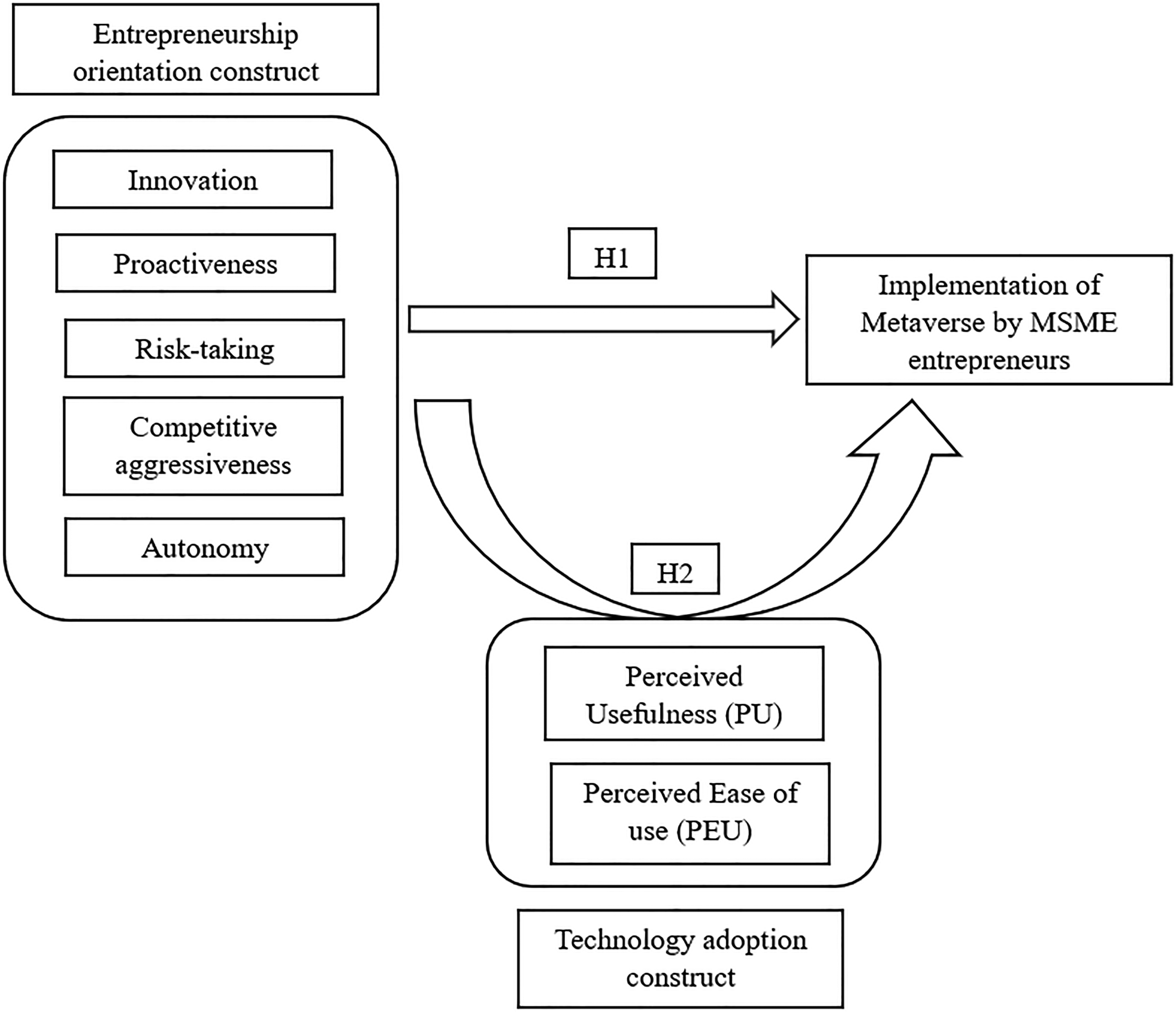
Conceptual framework.
The hypotheses considered in this study are listed below.
Methodology
This section discusses the research design and the measurement scales used in this study. We conducted the study through a online survey to a set of MSME entrepreneurs. In stage 1, a list of potential entrepreneurs was created based on their interest to participate in the study. In stage 2, a random sample was generated, who received the survey through email or social media platforms.
Research design
We followed the survey method for conducting this research on Metaverse from the perspective of MSME entrepreneurs. The instrument used for this study is divided into three sections. Section 1 encompasses descriptive questions, covering topics such as gender, age, educational qualification, annual turnover, and their nature of business. Additionally, this section includes inquiries regarding the respondents’ level of awareness about the Metaverse and whether they maintain an online presence for their business. Section 2 contains the FDEOS scale that measures entrepreneurship orientation. Section 3 is dedicated to rating the construct of technology adoption. Notably, we recognize that not all entrepreneurs are familiar with the concept of Metaverse technology. To address this, before presenting Section 3, we provide educational material as a video. This video introduces entrepreneurs to the Metaverse and demonstrates its potential utility for micro, small, and medium-sized business owners.
The data was collected from a wide spread of entrepreneurs from various industries across India. The call for respondents was posted on social media, urging volunteer entrepreneurs to undertake the survey. We also contacted the MSME foundation and circulated the call to 526 entrepreneurs. We prepared a list of volunteers (MSME entrepreneurs) and generated a randomized sample based on the response. This sample (of entrepreneurs) was sent the instrument. We got responses from 138 entrepreneurs through social media and 246 entrepreneurs through the MSME foundation. Totally we got 384 completed responses.
According to the guidelines provided by Hair Jr. et al. in 2010, it is recommended to have a sample size of 15–20 observations for each predictor variable when conducting structural equation modeling (SEM) analysis. Also, for SEM, a 100–400 sample size is suggested to have a good model fit (Molwus et al. 2017). For this study, we gathered data from 384 micro, small, and medium business entrepreneurs, as we had five predictors and two mediating variables. In this study, we used the entrepreneurial orientation construct to predict the likelihood of considering Metaverse in the business. Besides, we also used the technology adoption construct (PU and PEU) as the mediators.
Measurements of variables
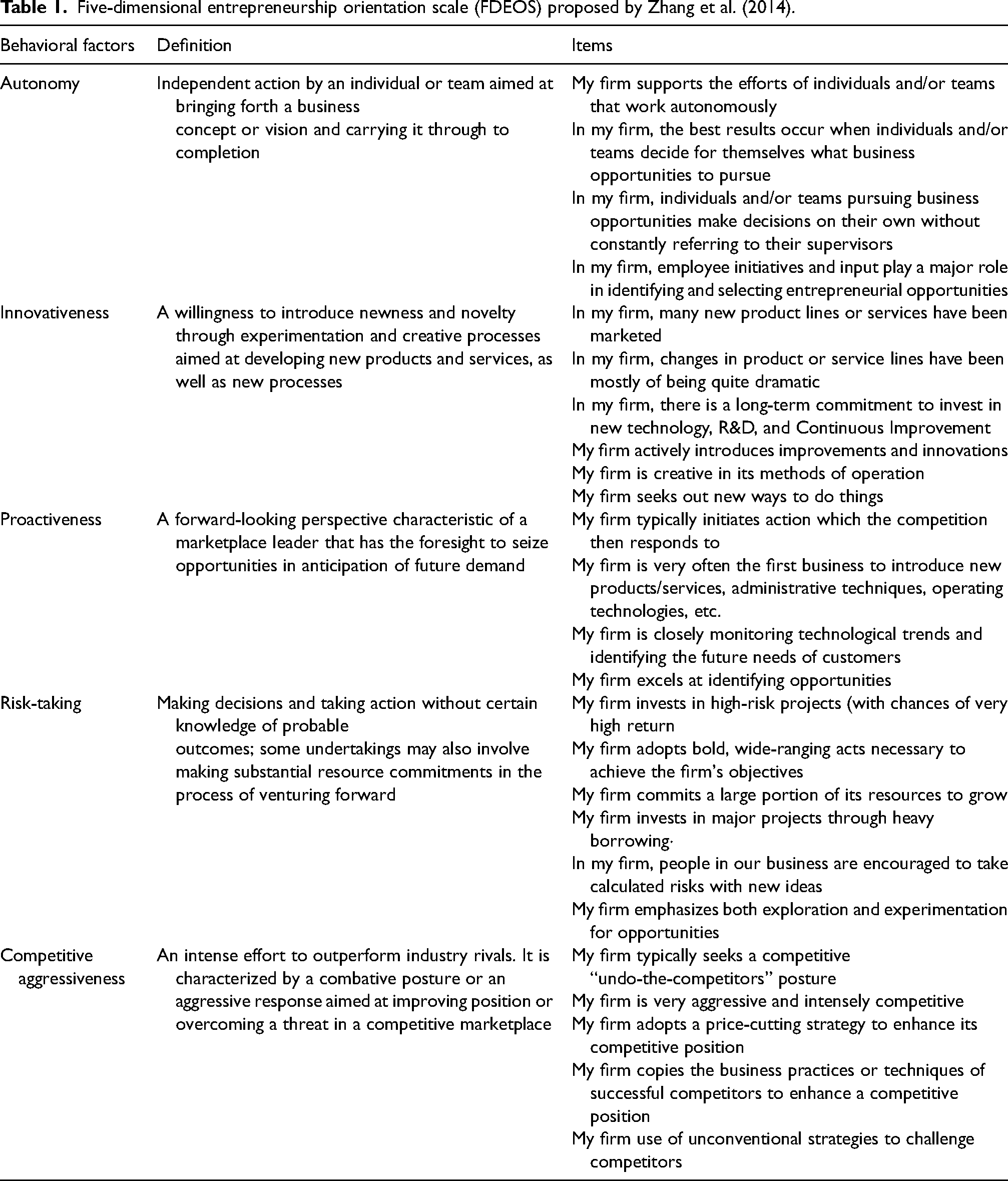
As mentioned above, this study used two constructs – the FDEOS construct and the TAM construct. The entrepreneurship orientation construct has five predictors (autonomy, innovativeness, proactiveness, risk-taking, and competitive aggressiveness), measured using 25 individual items as given in Table 1. From a behavioral perspective, we followed the FDEOS proposed by Zhang et al. (2014). We measured these behavioral factors using a 5-point Likert scale (1 – Strongly disagree through 3 – Neutral to 5 – Strongly agree).
Five-dimensional entrepreneurship orientation scale (FDEOS) proposed by Zhang et al. (2014).
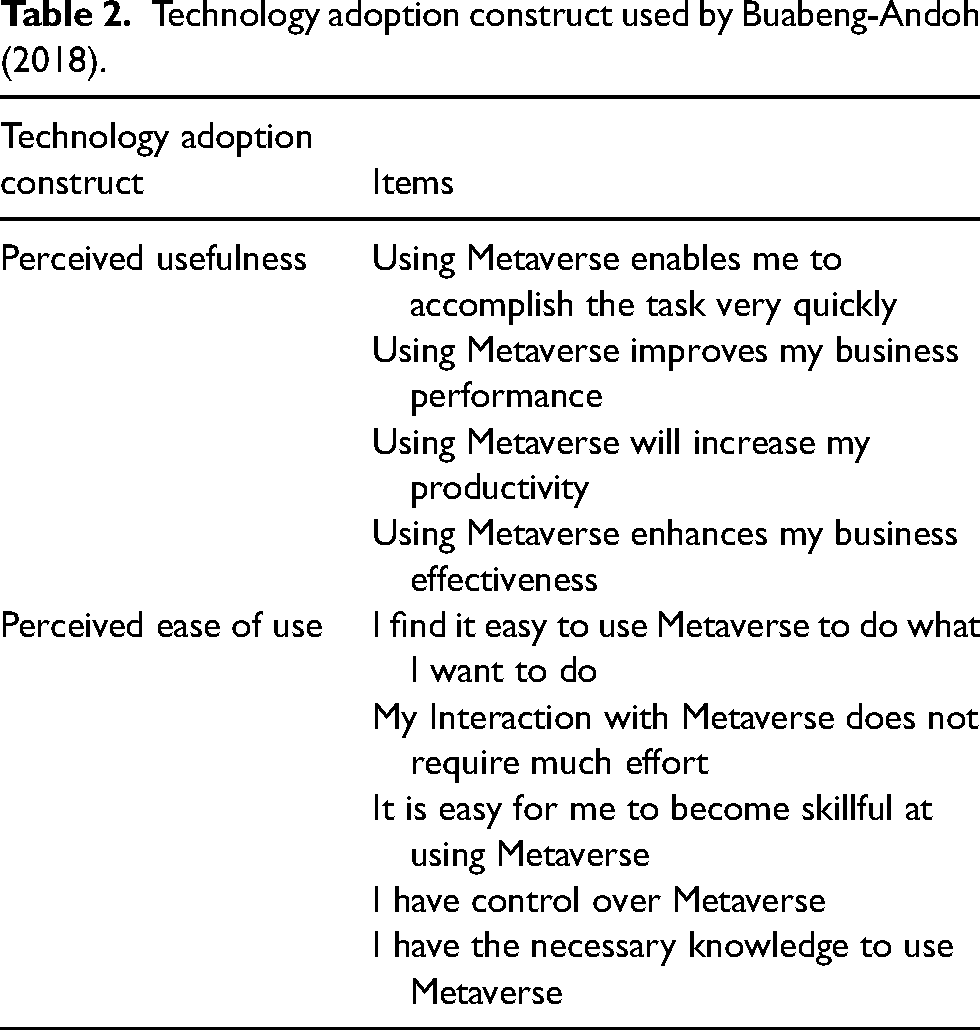
In the technology adoption construct, we measured the PU and perceived ease following the measurement scale used by Buabeng-Andoh (2018). We measured these two technology adoption variables using nine items as given in Table 2. These items are measured using a 7-point Likert scale (1 – Strongly disagree through 4 – Neutral to 7 – Strongly agree) as measured by Buabeng-Andoh (2018).
Technology adoption construct used by Buabeng-Andoh (2018).
We measured the dependent variable (Likely to adopt Metaverse) using a 5-point Likert scale (1 – Very unlikely through 3- Neutral to 5 – Likely).
Validity test
The questionnaire incorporates elements from both the EO construct and the constructs derived from TAM. These constructs have been thoroughly developed and validated in the literature and the current study. The questionnaire has been checked for face, context, and content validity by a panel of three researchers and two industry experts in this area. The experts reviewed the questionnaire items and provided feedback on their relevance, representativeness, and clarity for measuring the intended construct in the context of this research. Furthermore, we conducted an initial pilot study involving 50 MSME entrepreneurs to ensure the validity of these constructs. Since the constructs are from well-known and tested theories (EO and TAM), we conducted a confirmatory factor analysis to test the hypothesized factor structure. The adjusted goodness of fit Index from the CFA is 0.86, which indicates that the model with the given constructs has explained an acceptable amount of variance/covariance. The items were appropriately categorized as anticipated, indicating precise alignment with our theoretical framework.
Data analysis
This survey was conducted online, and the basic descriptive statistics (gender, age group, educational qualification, and annual turnover) collected from the data are given in Table 3.
Descriptives from the data.
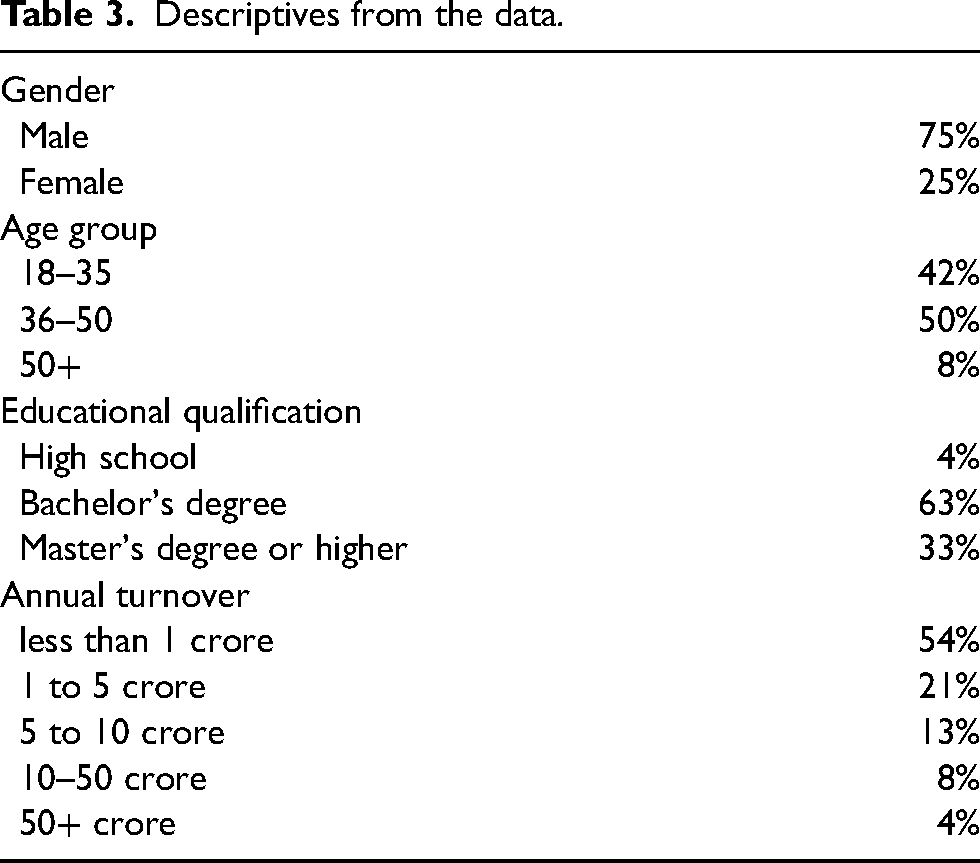
Table 3 shows that 73% of the respondents are male entrepreneurs, and 27% are female entrepreneurs. Even though the data looks skewed toward males, this is representative of the population (Tripathi, 2023). Most of the data is from the age group 36–50 and have a basic undergraduate degree. Following the definitions for micro, small, and medium enterprises (Shelly et al., 2020), 75% of the respondents are micro-entrepreneurs whose turnover is less than five crores, 21% of respondents are from small enterprise entrepreneurs whose annual turnover is between 5 to 50 crores, and 4% are from the medium enterprise entrepreneurs whose turnover is more than 50 crores.
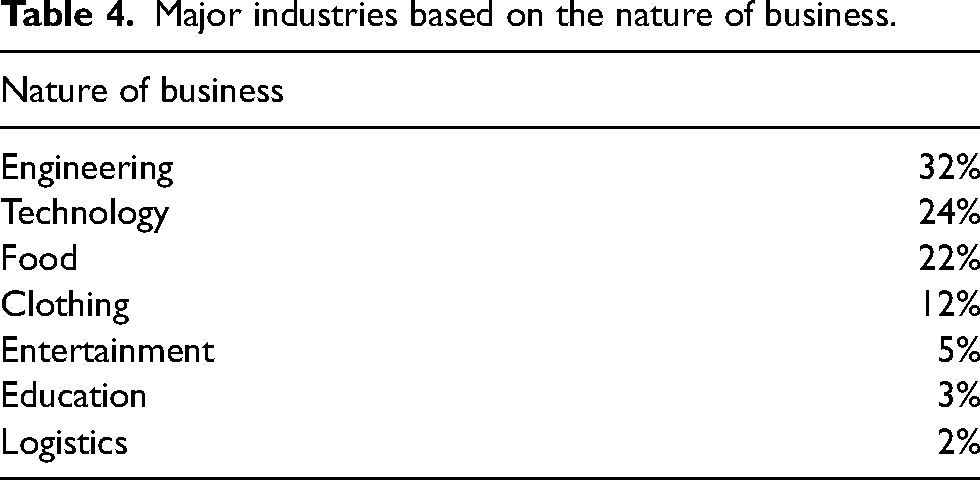
The major industries from which data was collected are given in Table 4. Most of the data comes from the engineering, technology, food, and clothing industries in the same order as mentioned.
Major industries based on the nature of business.
Based on the other questions from section 1 of the survey, Table 5 represents the crosstabulation between the Metaverse awareness question and the dependent variable (likelihood to adopt the Metaverse). From the table, we can say that 66% of the entrepreneurs were aware of the Metaverse, out of which 58% of the entrepreneurs were neutral/likely to adopt the Metaverse in their business. This is in line with the research conducted by McKinsey on Metaverse (Mckinsey & company (2022), value creation in Metaverse report).
Crosstabulation between Metaverse awareness and the DV (Metaverse adoption).

To analyze the effect of behavioral aspects on the implementation of Metaverse, we developed a structural model and analyzed it using AMOS 20 computer software. Before developing the structural model, we conducted factor analysis for dimension reduction and created new factor variables using the regression option. The new factor variables are abbreviated as given in Table 6 and used for further analysis.
Factor variables and corresponding abbreviation.
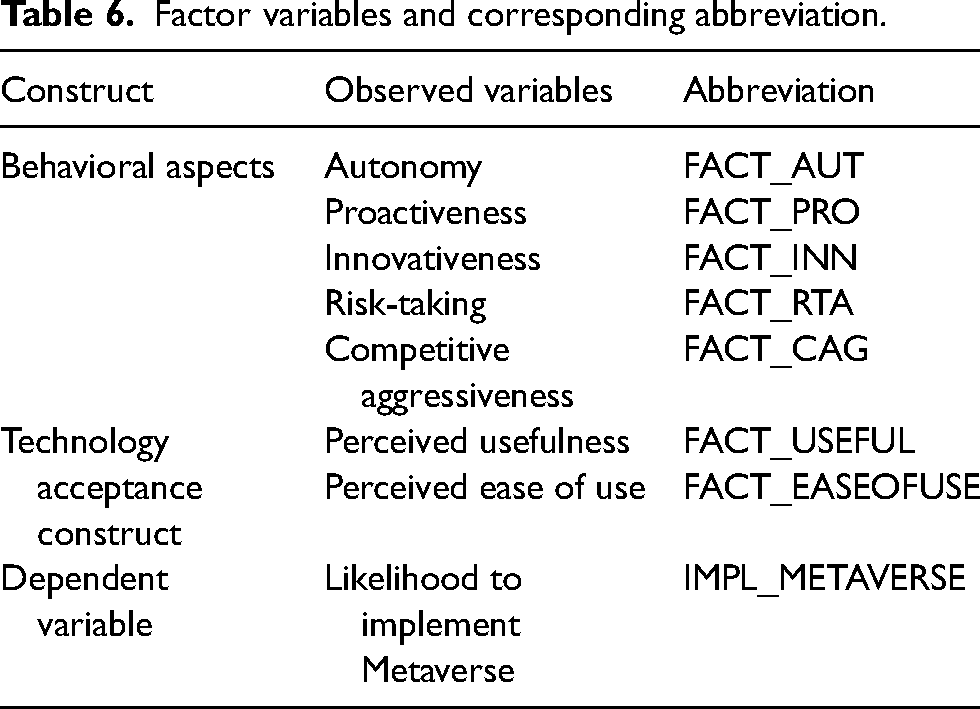
Since the measurement scale that we used is a well-established one and used by many researchers, the 25 individual attributes are grouped together and created as five behavioral factors using SPSS software 20.
Before starting on the model, we first tested for multicollinearity by examining the bivariate correlation coefficients between the variables, as shown in Table 7.
Correlation matrix.
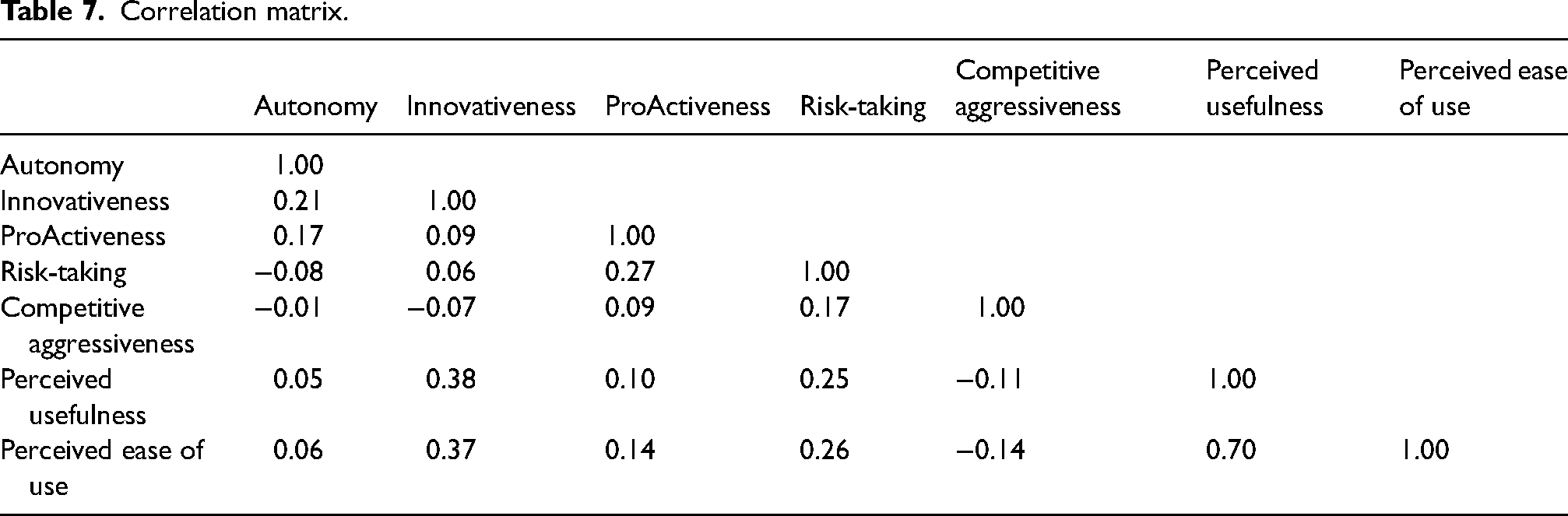
According to Gujrati (2004), a correlation coefficient greater than 0.8 suggests a potential multicollinearity problem. The correlations between all the independent variables were below 0.38, except for the correlation between PU and PEU, which was 0.7. This value is still below the 0.8 threshold indicated by Gujrati (2004).
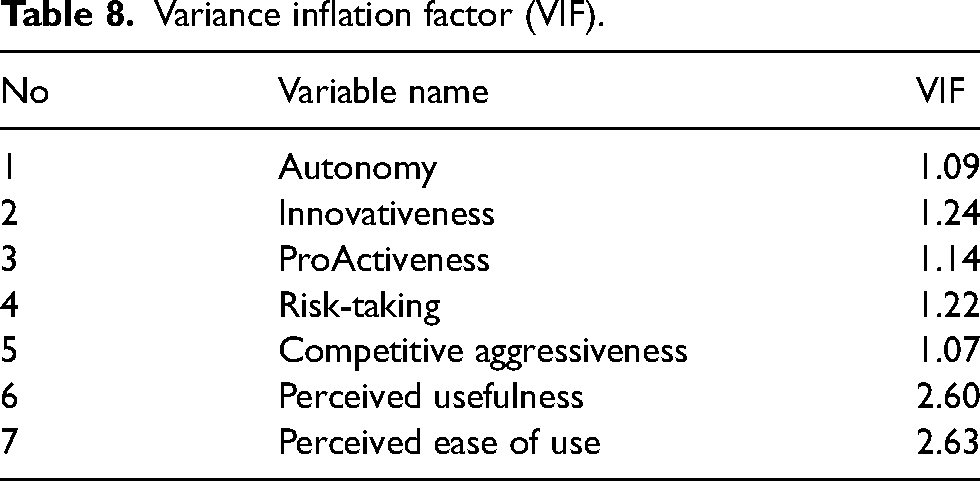
We cannot confirm the presence of multicollinearity based solely on the correlation coefficients. Therefore, we further investigated the variance inflation factor (VIF). According to Gujrati (2004), a VIF greater than 10 indicates multicollinearity, while a VIF less than 5 suggests no multicollinearity. Table 8 displays the VIF metrics for all the variables. Since the VIF for all variables is less than 3, we can conclude that there is no evidence of multicollinearity, allowing us to proceed with the modeling. Furthermore, the issue of endogeneity is explicitly addressed using SEM. Unlike simple linear regression models, SEM is specifically designed to effectively manage potential endogeneity problems (Kline, 2015).
Variance inflation factor (VIF).
Structural equation model
We performed path analysis as given in Figure 2 in AMOS. The path diagram shows the direct effect of the behavioral factors on the dependent variable, and the technology adoption factors (PU and PEU) mediate the relationship between the behavioral factors and the dependent variable. The model fit Index shows a GFI of 0.824.
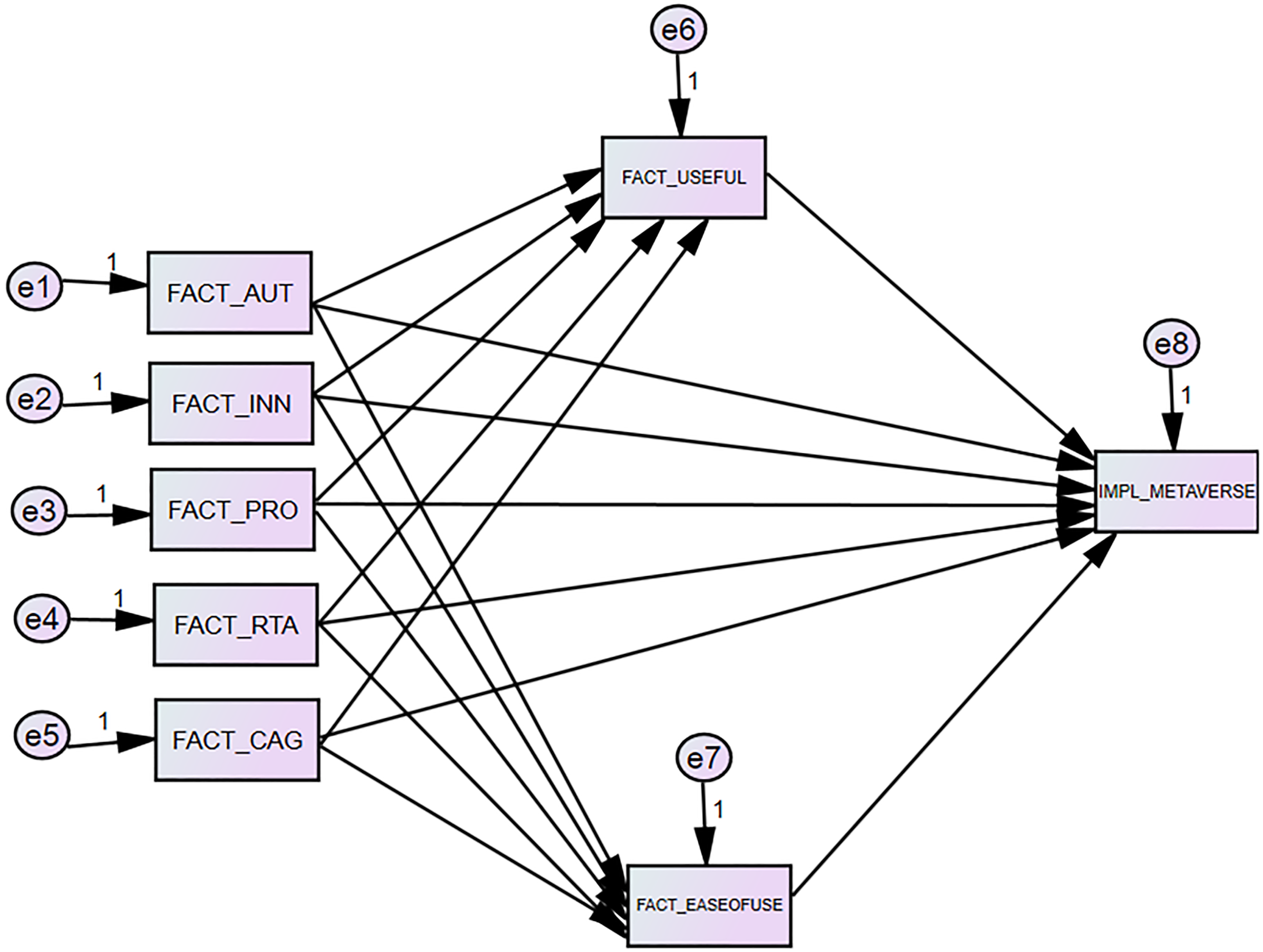
Structural model for likelihood to implement Metaverse.
The direct effect, indirect effect, and the total effect for the path diagram given above are shown in Table 9. The effects reported in Table 9 are standardized coefficients.
Direct and indirect effects for the path diagram shown in Figure 1.
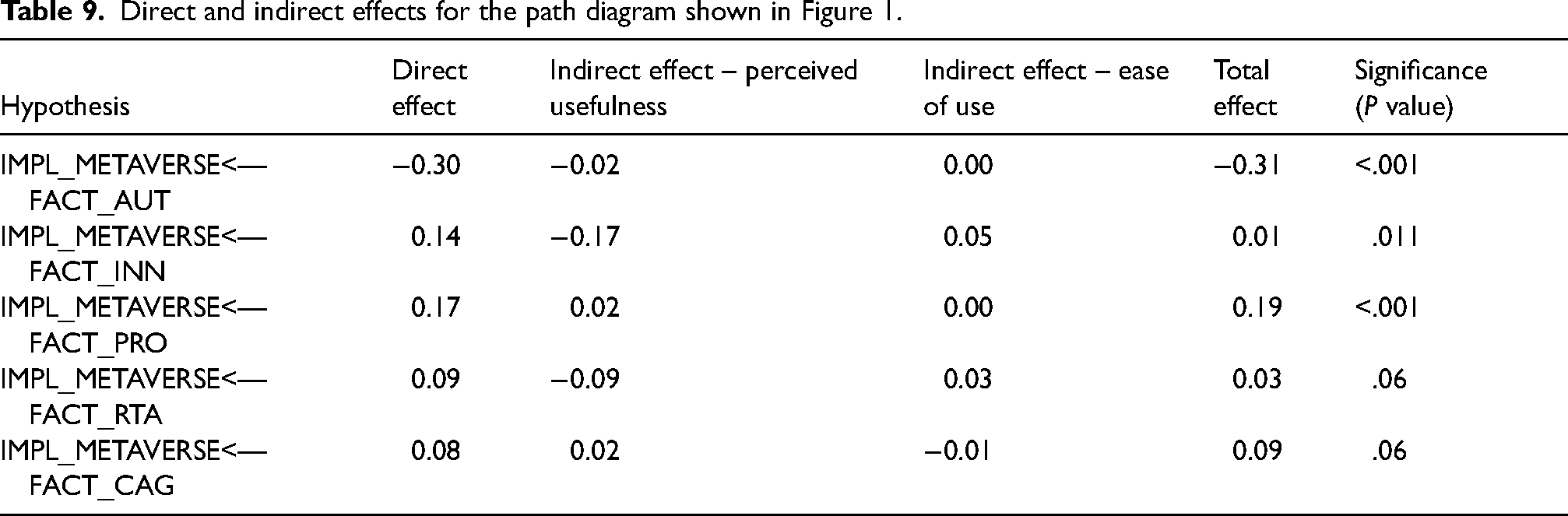
According to Baron and Kenny (1986), the direct effect is the direct relationship between one variable (IV) and the other (DV) without any intermediary variables. In the case of mediation analysis, it is the effect of one variable on the other after controlling for the mediation effect. From Table 7, we can see that the direct effect for autonomy is −0.30, and it has a reverse effect on the dependent variable. Next, proactiveness and innovation have the highest direct effect of 0.17 and 0.14 on the dependent variable. Risk-taking and competitive aggressiveness have a direct effect of 0.09 and 0.08 on the adoption of Metaverse.
The indirect effect is also known as the mediation effect. According to Preacher and Hayes (2008), the indirect effect is the effect of one variable on the other, which is transmitted through another intermediate variable. In other words, indirect effect quantifies the change in the dependent variable that occurs due to the mediator variables. The indirect effect of both the mediator's PU and PEU are given separately in Table 7. The impact of PEU on the dependent variable (DV) is significantly smaller in comparison to PU. Specifically, when examining its mediating role with innovativeness, PEU exhibits an effect size of 0.05, and for risk-taking, it is 0.03. However, for most other behavioral factors, the mediating effect of PEU is nearly negligible. Similarly, the mediating effect of PU for Innovativeness is −0.17 and Risk-taking is −0.09; both are negative and have a reverse effect on the DV. For other behavioral factors, the effect of PU is negligible (0.02).
Discussion
Based on the results of this study, several interesting outcomes solicit further discussion. While the study embarked on finding the relationship between all five dimensions of FDEOS and the adoption of Metaverse, positive causal relationships were established for only two of the five dimensions, namely proactiveness and competitive aggressiveness. We also found a strong negative relationship between autonomy and adopting the Metaverse. These outcomes require further explanation, and what follows is our deliberation on these findings.
The direct impact of the EO dimension “autonomy” on Metaverse implementation is negative. The items used to measure autonomy capture an entrepreneur's act of providing autonomy to individual employees or teams to make decisions. (Zhang et al., 2014). However, the decision to implement Metaverse technology in a business requires significant financial resources and specialized technological expertise. In the case of MSMEs, the budget for adopting new technology is limited, and typically, the entrepreneur alone is responsible for this decision-making. Existing literature demonstrates that autonomy is positively associated with “firm performance” (Awang et al., 2009). However, in certain instances (like family businesses and enterprises at the embryonic stage), its relationship with “firm performance” as the DV exhibits a mixed nature (Casillas et al., 2009; Hughes and Morgan, 2007). When viewed through this lens, the negative relationship makes sense. This means that the more the decisions for technology adoption are nested with the entrepreneur, the higher the chances of Metaverse adoption.
The next strong behavioral relationship with the adoption of Metaverse is proactiveness. In the past, proactiveness had demonstrated positive relationships with the growth of the family business (Casillas et al., 2009) and manufacturing flexibility (Chang et al., 2007). Proactiveness also has a positive relationship with Metaverse adoption, which signifies its influence on Metaverse adoption. The PU and PEU, as perceived by these entrepreneurial individuals regarding the Metaverse, moderately reinforce the hypothesis for Metaverse adoption.
Past research has found a positive relationship between the innovativeness of the entrepreneur and firm performance (Lumpkin and Dess, 1996). The result was encouraging enough to test it in the context of Metaverse adoption. The results reveal that apart from autonomy and proactiveness, innovativeness has a strong direct effect on Metaverse adoption. However, the PU and PEU of these entrepreneurs have a counteractive influence on this decision, thus weakening the originally observed relationship or hypothesis. The mediating influence of PU changes the dynamic between innovative behavior and its influence on Metaverse adoption. This implies that even if the entrepreneur is innovative, without perceiving the utility of technologies like the Metaverse, it is unlikely that the entrepreneur will adopt them.
Awang et al. (2009) studied the direct and indirect effects of risk-taking behavior on MSME performance, revealing a “U” shaped curvilinear relationship, suggesting that moderate-level risk-takers outperformed high-level risk-takers. In line with these results, although not negative, we find that the effect is minimal compared to autonomy, proactiveness, and innovativeness. Moreover, the mediating influence of PU and PEU further diminishes the impact of risk-taking behavior on Metaverse adoption. This shows that the risk-taking behavior of the entrepreneur cannot solely influence Metaverse adoption; it only has a minor effect on decision-making. Adoption of Metaverse cannot be simply pegged as a risky decision. It is, in fact, strategic to the business and its growth. The results reflect this quite clearly.
Most past studies have considered SME performance as the outcome variable (Lumpkin and Dess, 1996; Mason et al., 2015). Given this, they find a significant positive relationship between competitive aggressiveness and firm performance. On the assumption that technology adoption would lead to firm performance, we posit that entrepreneurs who display competitive aggressiveness would be willing to adopt the Metaverse. We find that akin to risk-taking behavior, competitive aggressiveness demonstrates a favorable inclination toward adopting the Metaverse. Moreover, the mediating roles of PU and PEU modestly amplify the overall impact of competitive aggressiveness on the decision to adopt the Metaverse. This indicates that, following autonomy and proactiveness, competitive aggressiveness significantly influences the decision of MSME entrepreneurs to embrace the Metaverse in their businesses.
To summarize, MSME entrepreneurs displaying characteristics of individual autonomy (such as independent decision-making), proactiveness, and competitiveness demonstrate a pronounced inclination toward integrating the Metaverse into their business operation, which is only moderately influenced by their conviction of PU and PEU. On the other hand, those who are innovative may choose to implement the Metaverse, but this decision largely depends on their perception of its usefulness and ease of use.
Limitations and scope of the study
This study exclusively centered on the examination of specific behavioral dimensions in alignment with entrepreneurship orientation theory deploying FDEOS. Future research endeavors could extend the scope to encompass additional behavioral facets, such as resilience, adaptability, self-motivation, market awareness, and technology knowledge.
Metaverse technology is currently in the early stages of growth, and entrepreneurs’ perceptions of its adoption are evolving. The validation of the TAM becomes feasible once entrepreneurs more widely embrace this technology.
Furthermore, this research can be extended to various geographical regions and encompass larger enterprises already adopting the Metaverse. Anecdotal evidence suggests that the enthusiasm and acceptance of the Metaverse are more pronounced among larger enterprises than among MSMEs. However, this comparison is yet to be tested. Furthermore, concerning large-scale enterprises, the impact of autonomy may undergo directional changes (where the decision to adopt the Metaverse could be influenced by a group of managers rather than solely by the entrepreneur), presenting a potential area for future investigation. It is possible to explore the levels of awareness and adoption of the Metaverse within family businesses and among Indigenous entrepreneurs.
The rise of technological innovations such as the Metaverse among MSMEs is a recent development, and research can be directed toward examining its impact on economic growth. Future researchers can delve into research regarding the customer journey, customer engagement, and customer satisfaction within the immersive Metaverse environment. In the course of this study, while we examine the perspectives of entrepreneurs on the Metaverse, it is essential to also investigate customer perceptions and willingness to adopt the Metaverse technology. Additionally, an exploration into the educational and training aspects of the Metaverse for MSME entrepreneurs is worth considering. We can also investigate the innovation resistance theory (IRT) to examine how MSME entrepreneurs exhibit resistance to change in response to rapid technological advancements such as the Metaverse.
Conclusion
The study pinpoints the specific behavioral attributes within an MSME that strongly align with the adoption of the Metaverse in their business. According to the findings, entrepreneurs who exhibit individual autonomy and proactive and competitive aggression are highly inclined to embrace the Metaverse. Additionally, their knowledge of Metaverse technology, as reflected in PU and PEU, moderately facilitates this decision. Entrepreneurs displaying risk-taking and innovative behaviors might consider Metaverse implementation, but this decision is influenced by PU and PEU. They are more likely to proceed with Metaverse implementation only when they perceive it as extremely useful and user-friendly. The adoption of the Metaverse technology entails a significant financial commitment, and MSME entrepreneurs must independently make decisions regarding its implementation. In this context, the notion of granting autonomy to other individuals or teams may not be applicable. This could be possible in the context of large-scale enterprises. Given the potential substantial losses that could result if the Metaverse implementation is unsuccessful, it would be challenging for MSMEs to absorb such losses. It appears that many MSME entrepreneurs may have limited awareness of this emerging technology, resulting in a relatively low perception of its usefulness and ease of use. Therefore, there is a need for enhanced education and awareness programs to ensure that a greater number of MSMEs can harness the benefits of this technological advancement.
Footnotes
Declaration of conflicting interests
The authors declared no potential conflicts of interest with respect to the research, authorship, and/or publication of this article.
Funding
The authors received no financial support for the research, authorship, and/or publication of this article.
