







Abstract
Digitalization reshapes society, disrupting conventional business models and fostering opportunities for entrepreneurs in “digital entrepreneurship.” This study explores its direct and indirect impacts on entrepreneurship via talent and economic competitiveness. This study analyzes data from 65 developing and developed countries over six years, constructing a structural equation model, and estimating it using (Maximum Likelihood). The study observed that institutions and human development play crucial roles in fostering levels of innovation. Furthermore, human development, innovation, and institutions emerged as primary drivers propelling societies towards digital transformation. Additionally, digital transformation generates various externalities, bolstering talent competitiveness, economic competitiveness sustainability, and entrepreneurial activities. Notably, economic competitiveness sustainability fosters entrepreneurship, whereas talent competitiveness negatively influences entrepreneurial endeavors. Our mediation analysis indicates that innovation partially mediates the relationship between human development, institutions, and digital transformation. Similarly, talent and economic competitiveness sustainability also partially mediate the connection between digital transformation and entrepreneurship. Moreover, we identified the indirect positive impact of determinants of digital transformation on talent, economic competitiveness sustainability, and entrepreneurship. These findings underscore the independent variable's mechanism of action, which provides an additional dimension to understanding causes and pathways of effects and informs the identification of more effective intervention strategies.
Keywords
Introduction
Entrepreneurship is a driving force for fostering innovation, creativity, and economic development. It embodies a process melding individual passion with creative thinking and leadership prowess (Yang and Ping, 2019). Entrepreneurship isn’t novel; it has historical roots in economic thought (Hisrich and Peters, 2002). Recently, various conceptualizations of entrepreneurship have surfaced. Entrepreneurship can be defined as the initiative activity of establishing new firms (often entailing self-employment) (Stephen et al., 2005).
Entrepreneurship is a key driver of national economies, through job creation, poverty alleviation, and the stimulation of economic growth. Entrepreneurship contributes to job creation through its capacity to establish new businesses based on innovative ideas (Astebro and Tåg, 2015). The employment opportunities generated by entrepreneurial activities are often well-suited to the poor (Amorós and Cristi, 2011), thus alleviating poverty in developing and developed countries.
Furthermore, entrepreneurship accelerates economic growth and development through multiple mechanisms: (i) Mobilizing capital by directing idle savings (Ghosh, 2005), (ii) Mitigating regional disparities by establishing industries in less-developed areas (Matejovsky et al., 2014), (iii) Diluting economic power concentration among a select few (Dhaliwal, 2016), (iv) Facilitating equity wealth redistribution (Cagetti and De Nardi, 2006), (v) Augmenting Gross National Product and per capita income (Nwagu and Enofe, 2021), (vi) Promoting exports and foreign trade (Hossain and Azmi, 2021), and (vii) Enhancing living standards by adopting innovations in producing a wide range of goods and services (Dhaliwal, 2016).
Despite its significance, entrepreneurship encounters various challenges. The swift advancement of digitization has introduced new dimensions to entrepreneurship. Entrepreneurs must now adeptly incorporate digital technology to retain competitiveness, identify opportunities, and capitalize on them. Innovative entrepreneurship entails profound alterations in the economy's nature and framework, elevating technological proficiency, enhancing economic productivity, and delivering valuable services (Nwagu and Enofe, 2021).
Entrepreneurial activities within organizations have undergone significant changes with the emergence of digital transformation. Globally, embracing digital transformation and adopting digital technologies are recognized as potent catalysts in enhancing enterprises’ entrepreneurial methodologies and practices to sustain competitiveness. Scholars such as Kraus et al. (2019) highlight the significance of the Industry 4.0 paradigm's evolution and the rapid progress in Information and Communication Technology (ICT), which have yielded substantial benefits for the economies of numerous nations, reshaping the dynamics of entrepreneurial processes (Chatterjee et al., 2022).
Hence, digital transformation assumes a pivotal role in sustaining entrepreneurial endeavors. The digital transformation of economic activities influences entrepreneurs’ efforts by providing supportive tools and altering the landscape within which they function (Secundo et al., 2020). Consequently, “digital entrepreneurship” has emerged, amalgamating digital technologies with entrepreneurship.
Although the literature has traditionally focused on the relationship between innovation and entrepreneurship, where innovations are accompanied by digital transformations that enhance value creation, the consideration of the impact of digitalization on entrepreneurial has not received sufficient attention in the previous literature; few studies have addressed the direct effect of digital transformation on entrepreneurship, while completely neglecting the externalities of digital transformation that can support entrepreneurship indirectly.
So, this paper aims to assess the influence of digital transformation on entrepreneurship, considering direct and indirect effects via talent and economic competitiveness sustainability (ECS) while controlling for digital transformation determinants. Section “Theoretical analysis and hypothesis development” provides our theoretical analysis and literature review. Section “Methodology” conducts our empirical study, including the model, variables description, and estimation methodology. Section “Results and discussion” presents the empirical findings. Finally, in Section “Conclusions, implications, and future research,” we discuss the results, draw conclusions, and suggest recommendations for future research.
Theoretical analysis and hypothesis development
Determinants of digital transformation
There are important factors associated with the success of digital transformation. Oh et al. (2022), and Ta and Lin (2023) suggest that human development, innovation, and institutions are among the most critical factors contributing to digital transformation success (Figure 1).

Determinants of digital transformation.
Human development stands as a critical element in digital transformation, fostering the skillsets and capacities of the workforce to navigate the changes induced by digitalization and to engage with new and advanced technologies, as confirmed by several studies (Gulati and Reaiche, 2020; Qureshi, 2023), which underscore human capital's pivotal role in facilitating effective digital transformation. Without a corresponding evolution in requisite capabilities, skills, and knowledge, digital transformation risks exacerbating inequalities.
Innovation is a pivotal force in fostering digital transformation, as evidenced by numerous studies (Baccianti et al., 2022; Mendez-Picazo et al., 2024). As delineated by Schumpeter, innovation serves as a potent economic catalyst by perpetually disrupting old structures and creating new ones, thereby propelling the digital transformation process. Kostić (2018) suggests that innovative technologies usher in radical changes across businesses and services by embracing novel methodologies, discarding traditional approaches, and embracing digital transformation across all facets. Studies (Holmström, 2022; Khrais and Shidwan, 2020) highlight the pivotal role of adopting cutting-edge technologies such as Artificial Intelligence (AI), data analytics, and the Internet of Things (IoT) in fostering innovation and driving digital transformation. These technologies, with their capacity to analyze vast datasets, discern patterns, and make intelligent decisions, have the potential to revolutionize business processes, enrich customer experiences, and open new opportunities for innovation.
Moreover, institutions wield a crucial influence in the digital transformation process, necessitating the cultivation of a culture oriented towards digitization, as highlighted by studies (Baccianti et al., 2022; Chen et al., 2021; Hanna, 2018). Chen et al. (2021) propose that governments can drive digital transformation by implementing funding initiatives, establishing digital learning platforms for institutions, and bolstering digital infrastructure. Baccianti et al. (2022) underscore the importance of countries’ efforts to enhance digital infrastructure within institutions, encompassing initiatives such as digital identity systems and electronic payment frameworks alongside expanding government digital services. Additionally, Hanna (2018) delineates institutions’ role in disseminating digital transformation by formulating clear strategies, upskilling employees, and fostering awareness across all organizational levels, thereby solidifying the concepts and objectives of the transformation initiative.
Finally, these factors are interrelated, as qualified human capital enhances innovative capacity, as affirmed by several studies (Diebolt et al., 2022). Furthermore, cultivating proficient skills conducive to innovation necessitates supportive institutional frameworks (Donges et al., 2023). Institutions quality influences the pace of technology diffusion and transfer alongside the requisite level of human skills needed to interact with such technologies.
Consequently, the interaction among these three factors leads to a radical digital transformation, giving rise to new organizational forms and institutional structures (Hinings et al., 2018).
The role of digital transformation in supporting entrepreneurship
Digital transformation exerts a direct impact on entrepreneurship through several avenues. Firstly, it facilitates streamlined access to market information, supply chain data, and potential customer profiles; this is done through three technologies: Reactor Process Design, AI / Technical Learning, and Blockchain. Enabling entrepreneurs to make informed decisions (Akbari et al., 2024; Li and Zhao, 2024; Xie et al., 2020). Secondly, digital transformation enables entrepreneurs to broaden their market reach through e-commerce platforms, social media, and other digital channels (Brahma and Dutta, 2020; Song et al., 2022). Thirdly, digital transformation enhances skills, thereby increasing worker productivity, reducing costs, and stimulating innovation (Al Naim, 2023; Goulart et al., 2022).
Fourth, digital transformation enhances production and management processes for entrepreneurs, bolstering overall entrepreneurial efficiency while reducing startup and operational costs. Moreover, by harnessing the benefits of digital transformation, entrepreneurs endeavor to enhance innovation in their products and services, further boosting their competitiveness (Li et al., 2024). Finally, digital transformation creates new opportunities for women through the adoption of ICTs (Ongo and Song, 2023).
Accordingly, the study proposes the following hypothesis: H(1): Digital transformation has a positive and statistically significant effect on entrepreneurship.
Digital transformation also yields numerous externalities that extend beyond its initial objectives. While comprehensively addressing all these externalities in a single paper may pose challenges, this discussion will center on talent competitiveness and ECS due to their intimate connection to entrepreneurship.
As for talent competitiveness, research indicates that the gradual digitization of society is instigating organizational shifts that influence talent attraction and retention. Digital transformation furnishes the technical infrastructure required for talent development and serves as a platform for individuals to showcase their ideas and creative aptitudes, fostering competition within society (Nageeb and Saad, 2022). Consequently, human resource management has evolved into electronic human resource management, encompassing integrated online systems for managing human resource activities and practices remotely (DiRomualdo et al., 2018), notably that, digital transformation may encounter internal organizational resistance, necessitating leadership skills to navigate this opposition to change, as the increased use of digital technologies may not always garner employee support (Guerra, 2023).
Conversely, regarding the impact of talent on entrepreneurship, Steigertahl and Mauer (2023), and Lv et al. (2022) emphasize the critical role of talent in entrepreneurial endeavors, encompassing a wide range of skills and qualities pivotal to defining successful ventures. This has prompted numerous international companies to seek out talent actively, underscoring the role of talent as a bridge between entrepreneurial activities and their digitization transformation. Additionally, Frankiewicz and Chamorro-Premuzic (2020) highlight that one of the primary gaps examined when elucidating reasons for the lack of success in entrepreneurial digital transformation lies in talent management. The technological revolution and the shift toward digitization have precipitated the “talent war,” with burgeoning demand for talent in new projects, particularly within technology industries (Stumpf and Tymon, 2001).
It is worth noting that the availability of talent in an entrepreneur is a double-edged sword. While talent is an enhancing element for the entrepreneur to seize and develop new opportunities, this good luck for the talented entrepreneur can turn into a curse H(2): Digital transformation exerts a positive and statistically significant effect on talent. H(3): Talent has a positive and statistically significant effect on entrepreneurship. H(4): Talent mediates the relationship between digital transformation and entrepreneurship.
As for economic competitiveness, research suggests that digital transformation processes play a pivotal role in enhancing the competitiveness of countries and achieving improved growth rates (Rodríguez and Rodríguez, 2005). Assert that digital transformation enhances countries’ competitiveness by simplifying procedures and reducing costs. Moreover, as elucidated by Bessonova and Battalov (2020), digital technologies facilitate access to new markets and foster opportunities for collaboration with all stakeholders, accelerating and sustaining the innovation process. Ensuring competitiveness and long-term sustainability is contingent upon embracing new digital technologies and establishing the requisite technological infrastructure, as underscored by Martincevic (2022). This is evident when observing digitally advanced countries, which enjoy significant competitive advantages compared to nations that inadequately invest in digital innovations (Miethlich et al., 2020).
Conversely, concerning the impact of competitiveness on entrepreneurship, a country's competitiveness is gauged by factors such as education, healthcare, infrastructure, institutions quality, innovation, and technology, all of which contribute to enhancing its ability to compete (Singh et al., 2023; Zhao, 2005), so the impact of competitiveness on entrepreneurship takes more than one perspective. Lee et al. (2019) highlight the role of competitiveness in entrepreneurial activities, emphasizing entrepreneurship driven by innovation, adaptability to market changes, and the competitive performance of the country. While direct studies linking competitiveness to entrepreneurship remain scarce, recent trends focus on exploring the dimensions of competitiveness and their impact on facilitating entrepreneurship processes. Hindrawati et al. (2023) believe that competitiveness affects innovative entrepreneurship through the enhancing role of education, and Audretsch (2014) believes that competitiveness fosters the generation of marketable knowledge, such as patents and licenses. Guerrero et al. (2016) further emphasizes that competitiveness cultivates a pool of skilled individuals, including graduate students, and research scientists, who play pivotal roles in creating and nurturing entrepreneurial ecosystems. Additionally, studies address the role of the institutions environment, encompassing infrastructure, laws, and legislation, in bolstering competitiveness and consequently facilitating entrepreneurial activity (Stephen et al., 2005). Therefore, the hypotheses proposed in this section are as follows: H(5): Digital transformation positively and significantly impacts economic competitiveness. H(6): Economic competitiveness positively and significantly influences entrepreneurship. H(7): Economic competitiveness mediates the relationship between digital transformation and entrepreneurship.
Methodology
Structural model and data
A model of Mendez-Picazo et al. (2024)
1
will be developed to achieve the study's goal. By constructing a structural equation model consisting of five equations in logarithmic form, as follows:

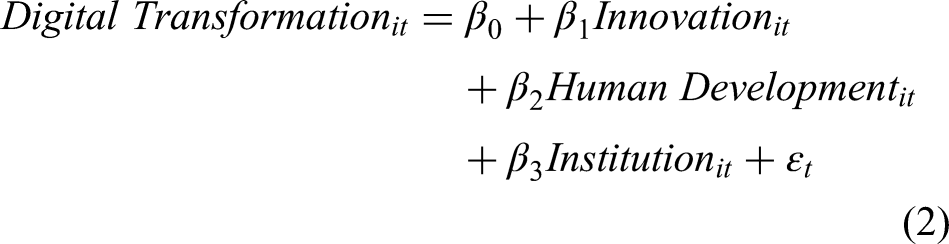


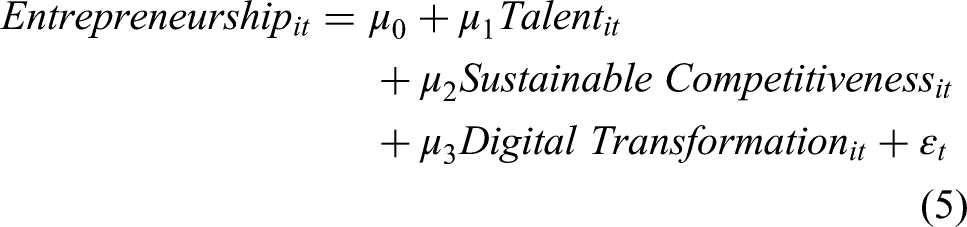
Equation (2) delves into the drivers propelling societies towards digital transformation: innovation, human development, and institutions quality. Given the existence of interrelated relationships between the determinants of digital transformation, they have been controlled in equation (1). Technological innovations are primarily contingent on the availability of scientists and researchers possessing high human capital alongside supportive institutions frameworks. Equation (3) explores the impact of digital transformation on talent competitiveness, while equation (4) delves into its effect on ECS. Moreover, equation (5) examined its influence on entrepreneurship. To further elucidate these relationships, the variables of talent and competitive sustainability have been incorporated into equation (5) as mediators, enabling a deep understanding of their role in the link between digital transformation and entrepreneurship.
In summary, a structural equation system has been developed to elucidate the direct impact of digital transformation on entrepreneurship and its indirect effects mediated by talent variables and the ECS. The determinants of digital transformation are anticipated to contribute indirectly to advancing entrepreneurship in societies. Therefore, the proposed study model represents a continuum of indirect effects. It is expected that all structural model coefficients will be positive.
Accordingly, this study employs the theoretical framework of Mendez-Picazo et al. (2024), applying it to a new field: entrepreneurship. It expands the determinants of digital transformation, allows for logical interactions among them, and incorporates bi-causality pathways that reveal the dual nature of talent. Thus, the study does not merely replicate the original model but broadens its conceptual scope and develops it empirically within a more dynamic framework, thereby establishing its conceptual and empirical originality.
Sample and data
Despite the availability of various original measures for assessing digital transformation, many suffer from limited country and time-period coverage. As a result, most studies on digital transformation rely on proxy indicators, particularly the Network Readiness Index, which offers extensive global coverage over a prolonged period. This index assesses a country's preparedness to engage with and benefit from advancements in ICT. However, it has been criticized for focusing solely on readiness without capturing the actual transformation in government and business practices or the broader societal impacts stemming from the adoption of digital technologies.
To address these limitations, this study opted to use one of the original indicators of digital transformation. The Global Digital Competitiveness Index (GDCI) was selected as it provides the most extensive country coverage (65 countries) over a relatively suitable period. Consequently, the study sample was drawn from the countries included in the GDCI, ensuring robust and comprehensive analysis.
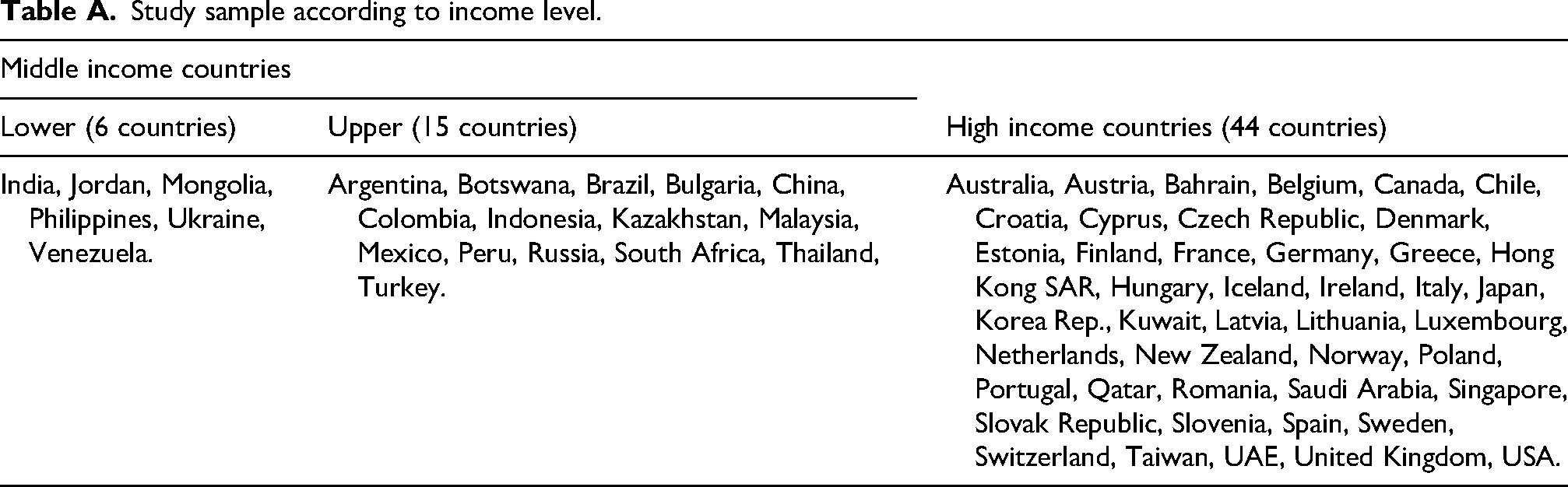
So, unbalanced panel data was utilized to execute the study model, comprising 65 developing and developed countries from diverse regions and income groups (2017–2023), totaling 455 annual observations 2 . Table A in the appendix shows the sample divided by income groups.
Here, the latent variable of
Transitioning to the main variable of the study
It is preferable to express the study variables in the latent form for several reasons: (i) Taking into account the exploratory nature of the empirical analysis to approach the certainty of the proposed theoretical relationships, (ii) the latent variables have a role in freeing the estimated parameters in the structural model from effect of measurement errors, (iii) avoiding the complexity of the study variables that are not completely known, and finally, (iv) removing sub-dimensions similar to other latent variables to prevent conflict, overlap and avoids the potential issues of statistical bias or circular reasoning. For example, the dimensions of human capital and institutions were excluded from the GII to be able to measure the impact of the latent variables of human development and institutions on innovation. The talent dimension was removed from the GDCI to be able to measure its impact on the Global Talent Index. Methodologically, it is inconsistent to define a dimension as an element of the dependent variable while also using it as an independent variable in the same analysis.
Estimation technique and verification tests
Structural Equation Modeling is a statistical method utilized to examine the relationships between observed variables and latent constructs, offering a comprehensive insight into complex phenomena (Kline, 2023). The pathways of the structural model were assessed employing the Maximum Likelihood method, which remains the predominant approach for statistical inference, even in cases of missing data (Maydeu-Olivares, 2017). Mediation was also analyzed using Baron and Kenny's (1986) informal three-step approach and the Sobel (1982) formal test to explain how the independent variable affects the dependent variable through the mediator.
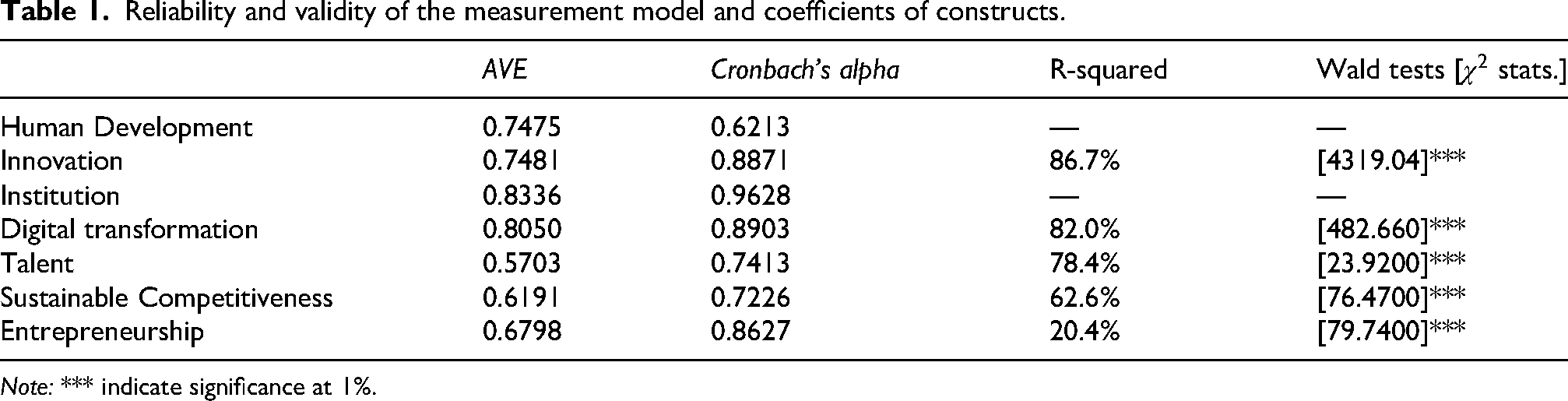
In assessing the structural model's quality, as shown in Table 1, confirmatory factor analysis was performed, leading to convergent validity is initially evaluated using the average variance extracted (AVE). An AVE value exceeding 0.5 is acceptable, signifying that the latent variable explains over 50% of the variance in its constituent elements (Hair Jr et al., 2020). As illustrated, the model demonstrated convergent validity across all latent variables. Furthermore, convergent validity is validated through the external saturation values of the indicators measuring the latent variable in Figure 2. These values indicate high saturation of the measures comprising the latent factorial structure of the study variables, with loading values significantly surpassing the standard threshold of 0.40 (except for PHDI, with a minimum saturation of 0.4) (Hair Jr et al., 2020).
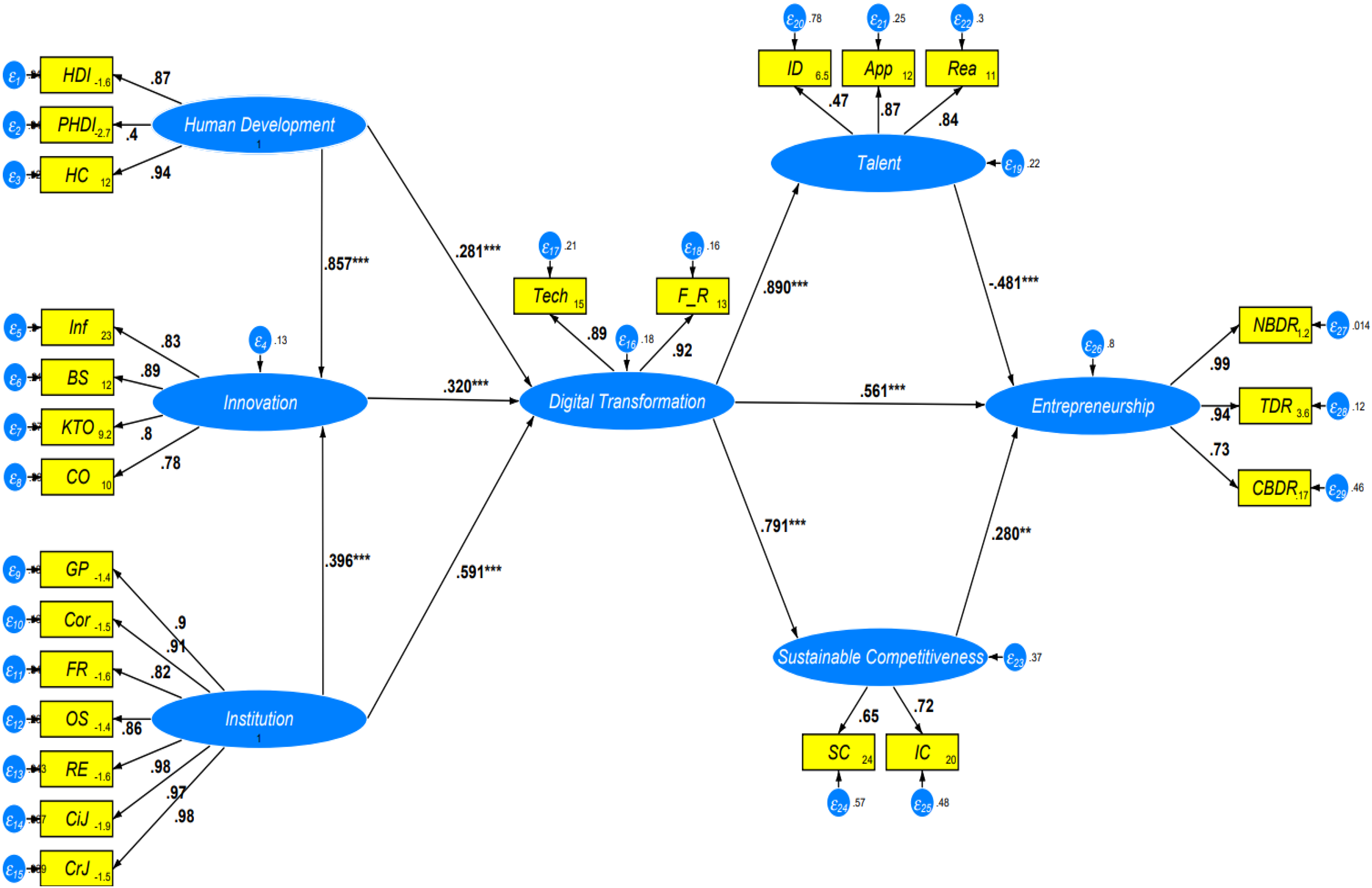
Path analysis for recursive model (standardized estimates).
Reliability and validity of the measurement model and coefficients of constructs.
Note: *** indicate significance at 1%.
Reliability was further evaluated using internal consistency via Cronbach's alpha coefficient, which assesses the consistency of the scale items to ensure their freedom from random errors (Bonett and Wright, 2015). As depicted in Table 1, all latent variables demonstrated high stability, as indicated by Cronbach's alpha coefficients, which were well above the standard threshold of 0.7. However, an exception is observed with the latent variable of human development, which yielded Cronbach's alpha value of 0.6213, which could be a problem (Diamantopoulos et al., 2012); however, the study maintains it considering the exploratory framework of the study and the need to include relevant indicators despite their potential duplication.
Also, from the determination coefficient (R2) statistic, the explanatory power of the model equations is high, except for the fifth equation, in which digital transformation, talents, and sustainable competitiveness explain 20.4% of the variance in entrepreneurship. This is consistent with the results of Mendez-Picazo et al. (2024), in which digital transformation alone explains 19.1% of the motivation for entrepreneurship. Finally, the
Hence, after a systematic evaluation and model quality analysis, given the exploratory nature of the examination, it is reasonable to conclude that the chosen measurement indicators for each latent variable are dependable and reliable.
Results and discussion
In Figure 2, the structural model is estimated, elucidating the standard coefficients’ values 3 and their statistical significance on each path. The figure clearly illustrates that all paths within the model were statistically significant and consistent with the theoretical expectations and study hypothesis, except for the impact of talent on entrepreneurship.
The analysis indicates that human development and institutions positively impact innovation. It is clear from the standard path coefficients that the most important variable in supporting the innovation process is human development, with a coefficient of 0.857, which is more than twice the impact of institutions (0.396). This implies that technological innovations depend primarily on the availability of scientists and researchers with high human capital (Diebolt et al., 2022; Kusumawijaya and Astuti, 2023), followed by the presence of supportive institutions and policies (Donges et al., 2023; Rodríguez-Pose and Zhang, 2020).
The results also confirmed that human development, innovation, and institutions are the main factors that drive societies towards digital transformation. The most important of these determinants were institutions (0.591), followed by innovation (0.320), and then human development (0.281). This emphasizes the fact that digital transformation cannot be achieved without the presence of institutions that recognize the importance of digital transformation and push the economy toward digitalization by providing a supportive economic and legal environment (Baccianti et al., 2022; Chen et al., 2021; Hanna, 2018). This is supported by the availability of technological innovations in the field of digitalization, such as AI, data analysis, and the IoT (Holmström, 2022; Khrais and Shidwan, 2020), finally, citizens with an acceptable level of human development that enables them to understand and use digital transformation applications in their daily lives, which is consistent with studies (Gulati and Reaiche, 2020; Qureshi, 2023), which view human capital as the key to effective digital transformation.
Turning to the role of digital transformation in economies, the study finds that digital transformation has many externalities through its positive impact on talent competitiveness (0.890), ECS (0.791), and entrepreneurship (0.561). This supports the acceptance of hypotheses H(1), H(2), H(5). Digital transformation may provide the technical applications necessary to develop talents in societies, and digitalization is the fuel of the modern era, and it is impossible to expect an advanced and competitive economic system that does not operate through digitalization. Therefore, digital transformation has become an urgent necessity for the sustainability of the competitiveness of contemporary economies. Digital transformation also provides new economic opportunities that entrepreneurs can exploit and facilitates the creation and operation of new projects through digital applications.
Finally, note that the ECS supports entrepreneurship (0.280), as a competitive economy from a general perspective is more capable of supporting entrepreneurship by providing the economic, institutions, legal, and infrastructure environment that enables the exploitation of economic opportunities. This supports the acceptance of hypothesis H(6). While we find a negative impact of talent on entrepreneurship (−0.481) contrary to expectations, which supports the idea of the “talent curse,” which can hinder the personal growth, performance, and participation of a talented entrepreneur and may even push him out the door. Therefore, this result supports the rejection of hypothesis H(3).
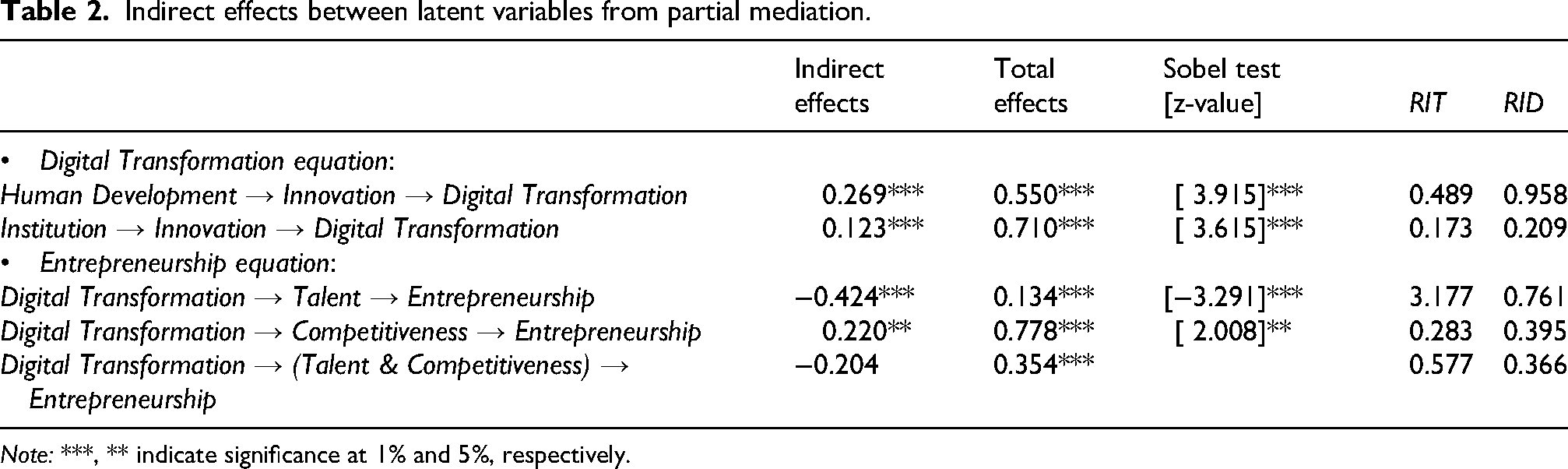
Upon analyzing the direct impacts illustrated in Figure 2, we decompose the model's pathways to discern both the indirect effects via intermediate variables and the aggregate impact, encapsulating both direct and indirect effects. Table 2 delineates the primary effect of our investigation, encompassing relationships between latent variables housing both direct and indirect paths, complemented by formal mediation testing.
Indirect effects between latent variables from partial mediation.
Note: ***, ** indicate significance at 1% and 5%, respectively.
Analysis of the digital transformation equation reveals that both human and institutions development indirectly impact digital transformation via the mediating role of innovation. Specifically, one standard deviation (sd) rise in institutions development directly increases digital transformation by 0.591 (sd) and additionally boosts it by 0.123 (sd) through innovation, culminating in a total enhancement of digital transformation by 0.710 (sd). Likewise, human development contributes to a total effect on digital transformation of 0.550 (sd), indicating innovation's mediating role in enhancing the influence of institutions and human development on entrepreneurship.
Examining the entrepreneurship equation, we observe a contradictory indirect impact of digital transformation on entrepreneurship. This is illustrated by a positive effect of 0.220 (sd) via the ECS and a negative impact of −0.424 (sd) through talent. These opposing influences result in the disappearance of statistical significance for the combined indirect effect of talent and competitive sustainability.
Based on these findings, the Baron and Kenny test indicates that innovation may act as a “partial mediator” in the nexus between human development and institutions with digital transformation. Likewise, talent and competitive sustainability are proposed to serve as “partial mediators” in the nexus between digital transformation and entrepreneurship, signifying that these factors channel a portion of the influence within these relationships.
Formally evaluating the mediating variables, Table 2 demonstrates that the Sobel test statistic (z) was statistically significant for all three variables, corroborating the initial findings from the informal Baron and Kenny test. Thus, this supports the verification of hypotheses H(4) and H(7). Additionally, the table presents the RIT and RID statistics for the intermediate variables. Notably, the RIT statistic indicating the collective impact of digital transformation on entrepreneurship, mediated through talent and competitive sustainability, is 0.577. Furthermore, based on the RID statistic, the intermediate effect of talent and competitive sustainability is approximately 0.366 times greater than the direct effect of digital transformation on entrepreneurship.
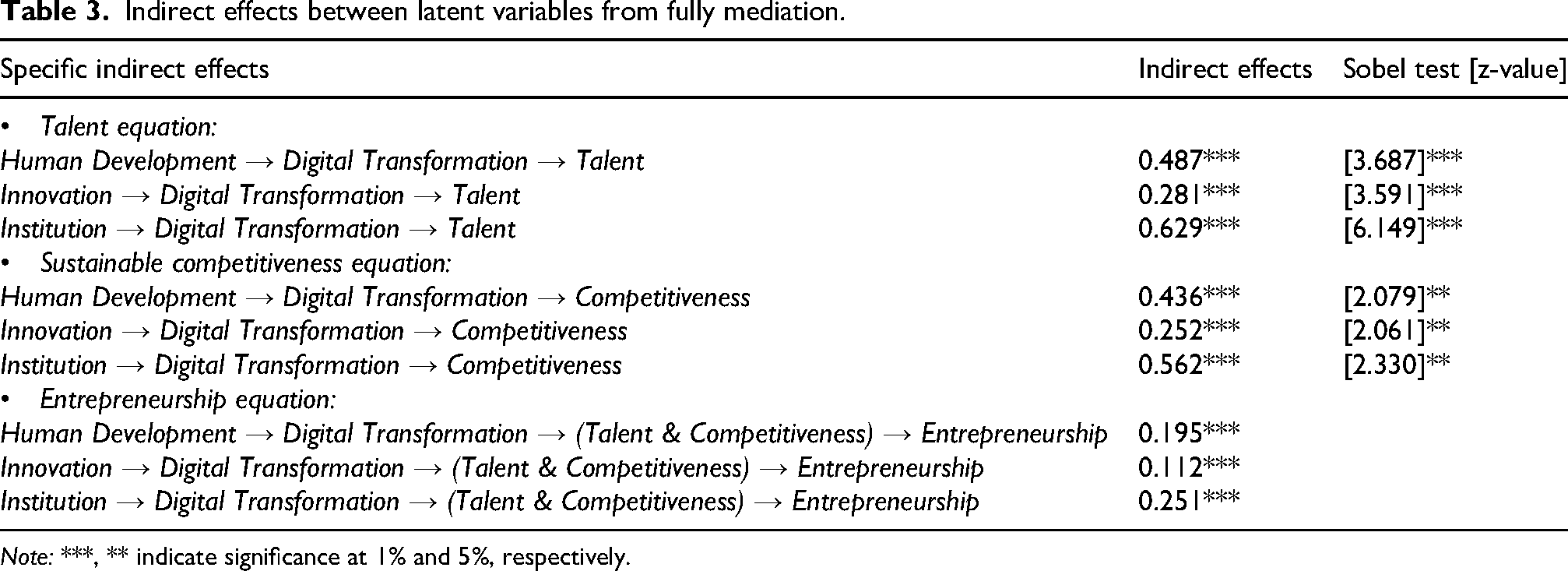
It is crucial to emphasize that the intermediate variables and resultant indirect effects are not solely reliant on Table 2. As mentioned, the proposed study model represents a continuous series of indirect effects. Table 3 thoroughly examined all indirect effects, which encompasses relationships between latent variables that are indirectly connected. Consequently, the table elucidates the determinants of digital transformation's indirect effects on talent and the ECS via digital transformation as an intermediary variable. This, in turn, leads to indirect effects of these determinants on entrepreneurship through all channels conveying the impact (digital transformation, talent, and competitiveness sustainability).
Indirect effects between latent variables from fully mediation.
Note: ***, ** indicate significance at 1% and 5%, respectively.
Table 3 reveals a positive indirect impact of the determinants of digital transformation on talent, competitive sustainability, and entrepreneurship. Notably, institutions play a crucial role, followed by human development then innovation. This underscores the pivotal role of these factors in shaping the dynamics of impact, extending beyond mere support for digitalization.
Researching bi-causality relationship
The structural model depicted in Figure 2 represents a sequential causal model characterized by one-way causal relationships. As Goodman (1973) elucidated, researchers need to establish the temporal direction of causal relationships between variables to ensure stability in the design. However, this raises an intriguing question regarding the possibility of a bi-causal relationship within the study's model.
Hence, constructing a non-sequential causal model (feedback model) becomes imperative to delve into causal relationships among the study variables. In such models, the direction of causal relationships is unspecified, often resulting in loops. However, solving non-sequential models poses challenges due to stability and convergence issues. Unstable results raise concerns about the model's validity (Kline, 2023).
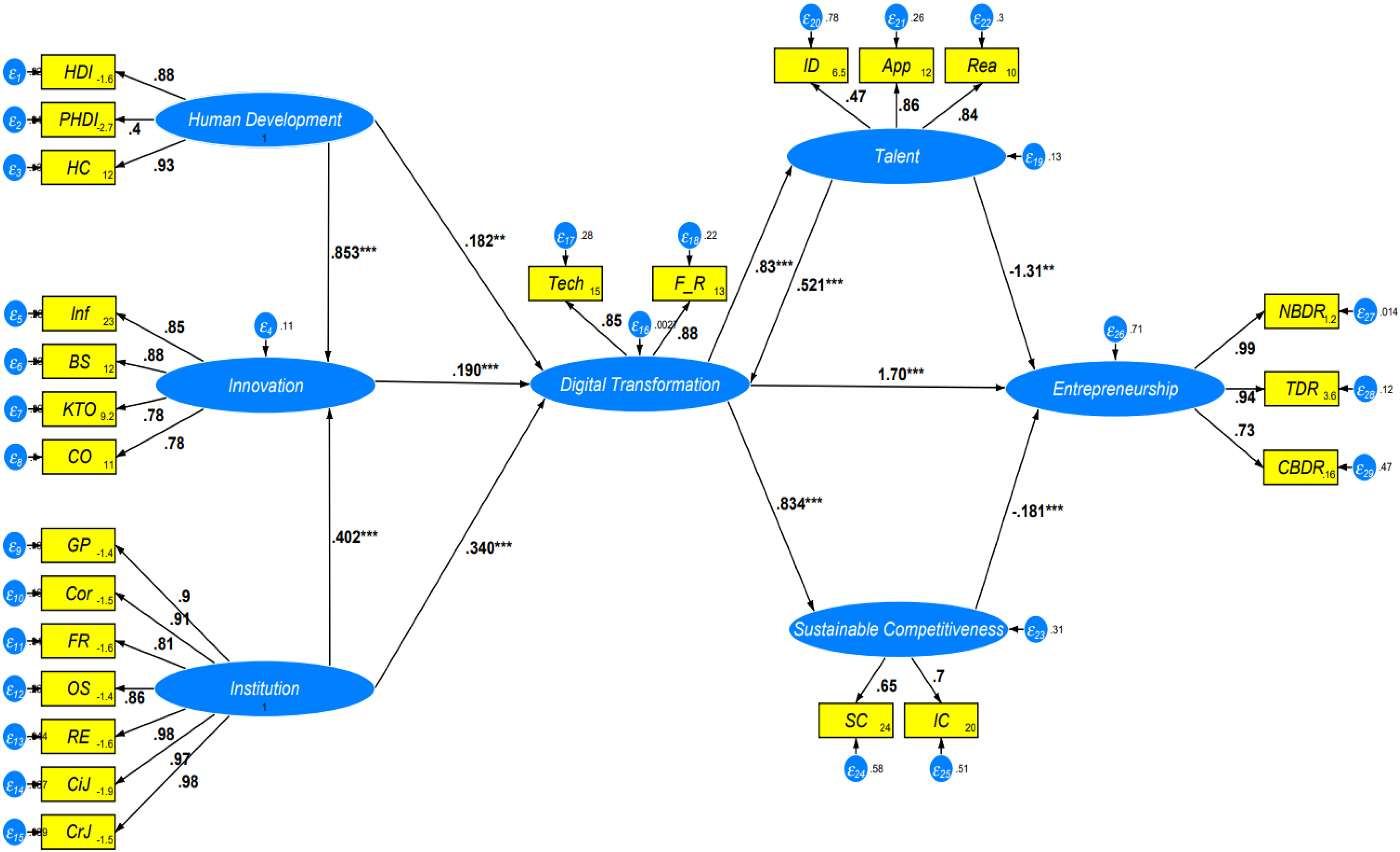
Accordingly, researchers undertook various methodological strategies to construct an appropriate, stable, non-sequential model. These include gradually introducing different reverse paths, starting with one, then two, then three, to obtain a non-sequential model akin to the study (Shahwan and Fathalla, 2020). Results from these attempts have mostly yielded challenges such as failure of estimation due to lack of convergence, model instability, non-significant new equations, or a combination of these issues. However, one notable attempt succeeded, involving feedback from talent competitiveness to digital transformation, as in Figure 3.
Path analysis for non-recursive model (standardized estimates).
Figure 3 demonstrates that integrating feedback from talent to digital transformation did not alter the primary conclusions drawn from the paths depicted in Figure 2, except for the shift of sustainable competitiveness's effect on entrepreneurship to negative. This shift may be attributed to a redistribution of explanatory power within the model, resulting in what is known as a suppressor effect. Under this new dynamic, talent began mediating part of the effect of ECS on entrepreneurship through digital transformation, temporarily causing ECS to appear as a “redundant predictor” rather than a direct driver of entrepreneurship. This transformation reflects a realistic dynamic that warrants further research exploration.
Notably, talent exerts a positive influence on digital transformation, implying the presence of a bi-causal relationship between these variables. A one (sd) increase in digital transformation corresponds to a 0.830 (sd) increase in talent while enhancing talent supports digital transformation processes by 0.521 (sd), converging to a specific equilibrium position in their relationship.
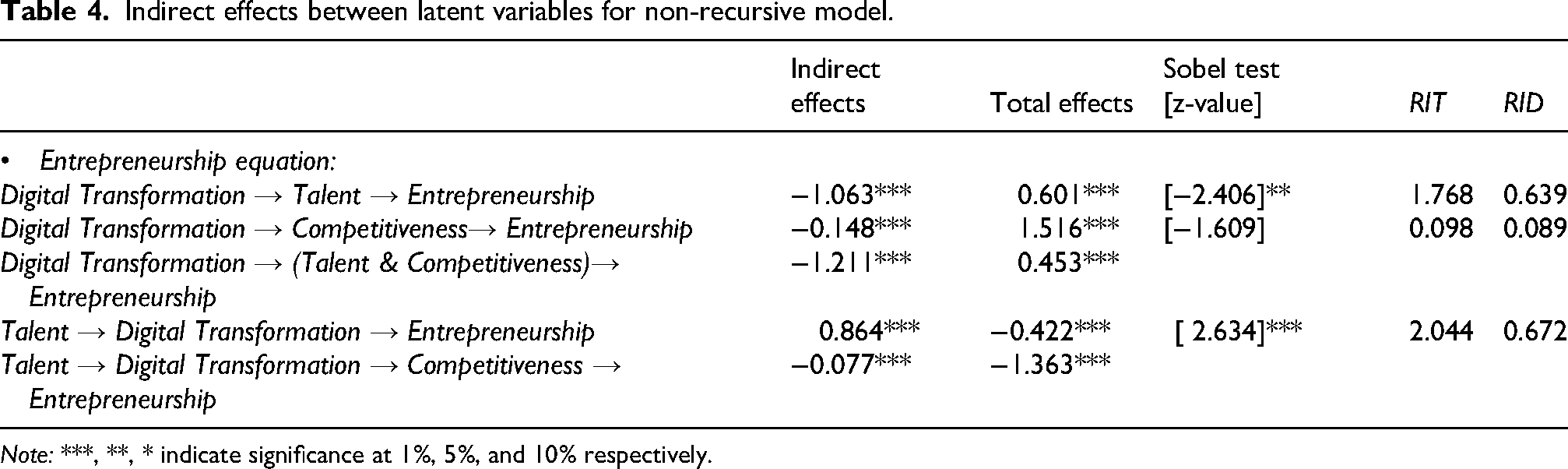
Table 4 considers talent feedback, which has revealed positive indirect effects of talent on the sustainability of competitiveness and entrepreneurship through digital transformation. Moreover, the direct impact of digital transformation on entrepreneurship has increased from 0.561 to 1.700. Consequently, a one (sd) increase in talent decreases entrepreneurship directly by −1.310 (sd), indirectly by −0.077 (sd) through sustained competitiveness, but increases it indirectly by 0.864 through digital transformation. These results affirm the crucial role of talent in bolstering digitalization due to their positive reciprocal relationship. The escalation of talent fosters more digital transformation, which, in turn, fuels talent acquisition, perpetuating an infinite loop. This phenomenon elucidates the global “talent attraction war” among technology firms. Furthermore, these results support the notion of talent as a driver of entrepreneurship through digital transformation rather than the inverse relationship. Furthermore, the results indicate that ECS shifts from acting as a stimulating mediator to a constraining one when the reversed interaction between talent and digital transformation is present. This shift serves as an early indicator of “paradoxical mediation” mechanisms, which warrant deeper investigation in future research.
Indirect effects between latent variables for non-recursive model.
Note: ***, **, * indicate significance at 1%, 5%, and 10% respectively.
Discussion
Empirical evidence demonstrates that investing in digital technologies acts as a key capital input that, when combined with labor, results in increased labor productivity (Goulart et al., 2022). These technologies provide entrepreneurs with crucial and timely market insights, enhance their adaptability to environmental changes, lower transaction and communication costs, broaden market reach, facilitate international exchanges, and diminish cultural, organizational, and institutional barriers (Li and Zhao, 2024). Furthermore, digitization promotes collaboration within ecosystems, granting access to complementary resources and fostering stronger business partnerships (Liu and Su, 2022; Song et al., 2022). The digital solutions that emerged during the COVID-19 pandemic have enabled virtual environments for meetings, teamwork, and social interactions.
As a result, digital transformation has underscored the need for nations to continuously update the skills of their workforce to remain attractive to innovative entrepreneurship (Nwagu and Enofe, 2021). Consequently, informal and proactive work-related learning has gained significance, as employees today must actively manage their careers more than ever before. Digital transformation thus presents significant opportunities to enhance talent management effectiveness amidst intensifying competition. It fosters a more innovative work culture, establishing an environment conducive to talent development and allowing employees to reach their full potential (Nageeb and Saad, 2022). The effective integration of digital technology contributes to increased competitiveness, creating a dynamic business ecosystem that supports and nurtures entrepreneurship.
The widespread adoption of digital technologies is also revolutionizing entrepreneurial activities across countries; emerging technologies such as AI, blockchain, the IoT, and social media are reshaping entrepreneurial processes and strategies, replacing traditional business practices (Akbari et al., 2024; Xie et al., 2020). Moreover, the utilization of digital technology has opened numerous avenues for enhancing the entrepreneurial processes of nations, boosting innovation, efficiency, and competitive advantage.
Conclusions, implications, and future research
Digitization has fundamentally transformed our societal dynamics, providing fertile ground for innovation, and supporting entrepreneurship. Accordingly, the paper aims to investigate the impact of digital transformation on entrepreneurship, both directly and indirectly, through the dimensions of talent and ECS, in addition to controlling the determinants of digital transformation. This is to reach a picture closer to the complex economic reality. The study created a model of five structural equations to achieve that, reflecting a continuous chain of indirect effects. It was operationalized using a sample of 65 developing and developed countries (2017–2023).
Estimating the structural model using the Maximum Likelihood method, the direct paths revealed that Institutions and human development bolster the level of innovation, with institutions emerging as the most influential determinant driving digital transformation, followed by innovation and human development. Additionally, digital transformation yielded various externalities, positively impacting talent competitiveness, ECS, and entrepreneurship. Sustained competitiveness also supports entrepreneurship. However, talent harmed entrepreneurship due to the “resource curse.”
The mediation analysis, employing both the informal Baron and Kenny (1986) test and the formal Sobel (1982) test, highlighted the mediating role of innovation (partial mediation) in the relationship between human development and institutions with digital transformation. Similarly, talent and competitive sustainability mediate (partial mediation) the relationship between digital transformation and entrepreneurship, indicating that these factors convey a portion of the impact. As the structural model encompasses a continuum of indirect effects, it allowed for the identification of positive indirect effects of the determinants of digital transformation on talent, competitive sustainability, and entrepreneurship. These results underscored the significant pivotal role of institutions, followed by human development then innovation.
Furthermore, the study elucidated a positive bi-causality relationship between talent competitiveness and digital transformation, leading to the emergence of positive indirect effects of talent on the sustainability of competitiveness and entrepreneurship through digital transformation. Consequently, these results support viewing talent as a driver of entrepreneurship through digital transformation rather than vice versa.
The results of the study have important theoretical and practical implications. Theoretically, results confirm that digital transformation supports entrepreneurship, reinforcing the literature review. However, our study proves the existence of positive externalities of digital transformation in favor of entrepreneurship. Practically, our results provide deep understanding of factors that support digital transformation, enhance entrepreneurship, and enable policymakers to see the interrelationships with other areas, such as talent or, which ECS motivates the identification of more effective intervention strategies to support entrepreneurship. The study directs the attention of policymakers, institutions, and entrepreneurs to the effective role of talent as one of the most crucial factors that support digital transformation and entrepreneurship. The technological revolution and the shift to digitalization have led to a “talent war,” as the demand for talent has increased in new projects, especially technology industries. Therefore, the study's results support the need to prepare future cadres leaders and invest in improving skills and retraining work teams to keep pace with the latest technologies while encouraging a culture of continuous education and development to enable individuals to face challenges and exploit new opportunities. Policymakers are advised to establish a legal environment that supports digital transformation enhances digital entrepreneurship and inventions while periodically developing and updating these legislations that support digital entrepreneurship to ensure their compatibility with rapid technological developments.
The study's main limitations lie in the sample of variables and countries used. The lack of authentic (not proxy) digital transformation data prevented the inclusion of more countries—especially those with lower income levels—or even the use of a longer period, leading to the inability to make structural comparisons. Another limitation is the lack of familiarity with the structural model with important variables that may provide additional information, such as digital entrepreneurship.
Finally, the theoretical and empirical analyses raised new possibilities for future research, by expanding the scope of the current analysis by (i) considering feedback between institutions and digital transformation. Although institutions are the main element in supporting digital transformation in societies, digital transformation is observable as radical institutions change, leading to the emergence of new organizational forms and institutions infrastructure. Thus, there is a likely reciprocal relationship between them. (ii) Using proxy indicators for digital transformation—such as the Networked Readiness Index—which allows for the use of a larger sample of countries over larger periods, allowing discovery of heterogeneity in the study relationships across countries, whether in terms of income levels, development, institutions quality, cultural differences, etc. (iii) New mediating variables could be proposed to explore whether there are other externalities to digital transformation other than talent and the sustainability of economic competitiveness.
Footnotes

Funding
The authors received no financial support for the research, authorship, and/or publication of this article.
Declaration of conflicting interests
The authors declared no potential conflicts of interest with respect to the research, authorship, and/or publication of this article.
Notes
Appendix
Study sample according to income level.
| Middle income countries | High income countries (44 countries) | |
|---|---|---|
| Lower (6 countries) | Upper (15 countries) | |
| India, Jordan, Mongolia, Philippines, Ukraine, Venezuela. | Argentina, Botswana, Brazil, Bulgaria, China, Colombia, Indonesia, Kazakhstan, Malaysia, Mexico, Peru, Russia, South Africa, Thailand, Turkey. | Australia, Austria, Bahrain, Belgium, Canada, Chile, Croatia, Cyprus, Czech Republic, Denmark, Estonia, Finland, France, Germany, Greece, Hong Kong SAR, Hungary, Iceland, Ireland, Italy, Japan, Korea Rep., Kuwait, Latvia, Lithuania, Luxembourg, Netherlands, New Zealand, Norway, Poland, Portugal, Qatar, Romania, Saudi Arabia, Singapore, Slovak Republic, Slovenia, Spain, Sweden, Switzerland, Taiwan, UAE, United Kingdom, USA. |