







Abstract
This work examines the influence of different leadership behaviours of hospitality managers on employee job satisfaction to close open gaps in leadership research, especially in the German context. Bass’s (1985) full-range leadership model was selected as a framework of this study. A quantitative survey methodology was used to assess leadership influence on employee job satisfaction, and 101 hotel employees in Germany completed the survey. The data analysis involved three major stages: correlation analysis, multiple regression analysis and MANOVA. The results from this study suggest that German hotel employee job satisfaction is strongly affected by leadership behaviour. In this regard, the influence of transformational leadership on employee job satisfaction differs widely from transactional and non-leadership behaviour. Earlier studies have indicated a situational or cultural impact on appropriate leadership style, and this study furthers this concept with a new geographic area (Germany), which can therewith be added to the hospitality leadership research.
Keywords
Introduction
The hospitality industry is, in general, a labor-intensive industry that depends on the abilities and motivations of its employees (King, 2010). Front-line employees play an important role because of their customer–employee interactions. Employees influence how customers perceive an organisation (Harris and de Chernatony, 2001) and how the organisation itself performs in the long term (King, 2010). Employees directly influence the perceived service quality as well as customer satisfaction (Ottenbacher, 2007). After all, the service industry always claims that in order to guarantee customer satisfaction, an organisation at first needs to ensure employee job satisfaction (Hoffman and Ingram, 1992), and thus, the widely established perception ‘happy employees are necessary for happy customers’ indeed holds true in the hospitality context (Garlick, 2010). Indeed, employee job satisfaction seems a particularly relevant outcome variable in the hospitality industry to enhance guest satisfaction. Consequently, an appropriate leadership style to guarantee and enhance employee job satisfaction is critical. Therefore, this study examines the influence of leadership behaviour on employee job satisfaction in the hotel context.
The past couple of years were extremely challenging for the hospitality industry around the world. As a result, ‘doing it like it was done in the past’ is no longer a formula for success; but, major changes are required to compete and survive in this increasingly harsh environment. Within the context of change, there is always one central theme that arises: leadership. Kotter (1998) claims that change always demands more leadership. Leaders inspire followers by creating shared values, beliefs and visions in an organisation. Leadership is the system used by an individual to impact group members towards the accomplishment of objectives (West and Tonarelli-Frey, 2008). Transactional leadership refers to all these leadership models, which primarily focus on the exchange dimension between leaders and followers. Leaders, applying a transactional leadership style, either use rewards or disciplines in order to influence followers’ performance (Bass, 1985). They clarify their expectations and clearly communicate how followers will get rewarded for successful task completion.
Transformational leadership, however, involves more than the administration of rewards or punishments. As the name implies, transformational leaders are concerned with the transformation or change of followers’ fundamental values, goals and aspirations. The basic difference is that followers, under a transformational leader, share the organisation’s values and are committed to the organisational goals. They accomplish work tasks out of motivation and not because they get rewarded for accomplishments (Mac Kenzie et al., 2001). Yukl (1989: 204) refers to transformational leadership as ‘the process of influencing major changes in the attitudes and assumptions of organisation members and building commitment for the organisation’s mission or objectives’. Northouse (2007) concludes that transformational leaders assess followers’ motives, satisfy their needs and treat them as important human beings. This treatment makes followers accomplish more than what they are expected.
While several studies have focused on assessing leadership in general, only a limited number have been completed assessing leadership style and its effectiveness in a German context. Culture of a variety of types has been shown to impact leadership practice, and national culture has been an important cultural contributor (Brodbeck et al., 2002; Coquitt et al., 2007). Further, empirical research has been conducted in several industries; however, leadership as a subject of research has been rather neglected within the hospitality sector. There are very few studies concerned with leadership in the specific context of the hospitality industry (e.g., Maier, 2011; Pittaway et al., 1998), and the few studies that specifically examined the influence of transformational and transactional leadership behaviour (Gill et al., 2006; Hinkin and Tracey, 1994) were conducted in the United States. So far, there have been no studies published regarding transformational and transactional leadership in the German hospitality industry. Therefore, this study concentrates on dimensions of transformational, transactional and non-leadership styles. The dimensions of these leadership styles are examined within the context of the German hotel industry. The primary purpose of this study is to examine the influence of leadership behaviour on hotel employee job satisfaction.
Literature review
Cultural impacts on leadership style
Cultural studies suggest that culture differs at multiple levels of organisations and society based on values, beliefs and expectations that members within these levels come to share. Common levels of cultural differences include organisational culture (Schein, 1985) and national culture (Hofstede, 1983). Other sources of culture may include age, social class, education, profession, length of tenure with a firm and religion (Usunier and Lee, 2005). Therefore, a key rationale for the importance of the current study is to assess the impact of culture on leadership style perceptions. Earlier studies have demonstrated differences between national culture and leadership styles. Kuchinke (1999) examined differences in leadership styles and work-related values among managers, engineers and production employees of US and German telecommunication employees. The results indicated that German employees demonstrated lower levels of value to transformational leadership styles than the US counterparts, but no differences in leadership styles were apparent among different job categories in either country. There were country-level differences in culture that explained a portion of the variance in leadership scores. Job category also had a main effect on cultural values. The study points to patterns of work-related values different from those predicted in earlier research and to the need for further refinement of research in leadership theory and our understanding of culture.
The GLOBE project assessed the impact of culture and leadership in 61 countries worldwide. The findings support the assumption that leadership concepts are culturally endorsed. Further, clusters of European countries that share similar cultural values seem to support similar leadership concepts or the assumption that effective leadership is in the eye of the beholder (Coquitt et al., 2007). In general, the GLOBE project found that Germanic and Anglo cultures rated the value of transformational leadership higher than did participants from Latin Europe cultures such as Spain and Portugal (House et al., 2004). As part of the GLOBE project, Brodbeck et al. (2002) found that leadership in Germany is generally ‘tough on the issue, tough on the person’, whereas they suggest that the right recipe for German managers would be ‘tough on the issue, soft on the person’ to ensure the ability to be adaptive to change in the 21st century.
While the GLOBE study was executed more than a decade ago, more recent studies indicate that changes are taking place in more current German leadership practices. For instance, in 2005, McCarthy (2005) found that German managers and firms were beginning to adopt modern leadership practices, and where these were adopted, the practices appeared to be more consistently implemented as compared to their counterparts in the UK. Further, the study found the strategic management to be more commonly deployed compared to previous researchers. In a hospitality setting, Ottenbacher and Harrington (2009) indicated that innovation leadership style of Michelin-star chefs appeared to be influenced by institutional, cultural and other contextual factors. Specifically, the innovation leadership style varied with the involvement of other members of the firm. Spanish chefs used the most individualistic approach, US chefs the most participative and German chefs used a combination of approaches. Both these studies neglected to evaluate the effectiveness of the leadership approaches identified.
A synthesis of these studies points to the impact of culture on work-related values and how these values on leadership style may change based on location, time and industry. These studies also identified the need for further refinement of research in leadership theory and a better understanding of the impact of culture. Based on these findings, the following assumptions were made according to this study. First, as with earlier studies and theory, it was assumed that effective leadership style was situational. This view was based on the proposition that differing beliefs and values of different situations will present different methods or practices contingent on the culture. Cultural elements of interest in this study included national culture (Germany) and profession (the hotel industry). Because other factors may impact leadership practice and perceptions, age and length of tenure with the firm were included as control variables of interest. These variables and assessment are discussed in greater detail in upcoming sections.
Leadership theory
Bass’s (1985) full-range leadership theory involves the three components ‘transformational leadership’, ‘transactional leadership’ and ‘non-leadership’. These three leadership behaviours consist of different dimensions (see Figure 1). All components have been identified in a variety of ways, for example, by using factor analyses, conducting interviews, through observations or by the descriptions of followers’ ideal leaders (Bass et al., 2003).
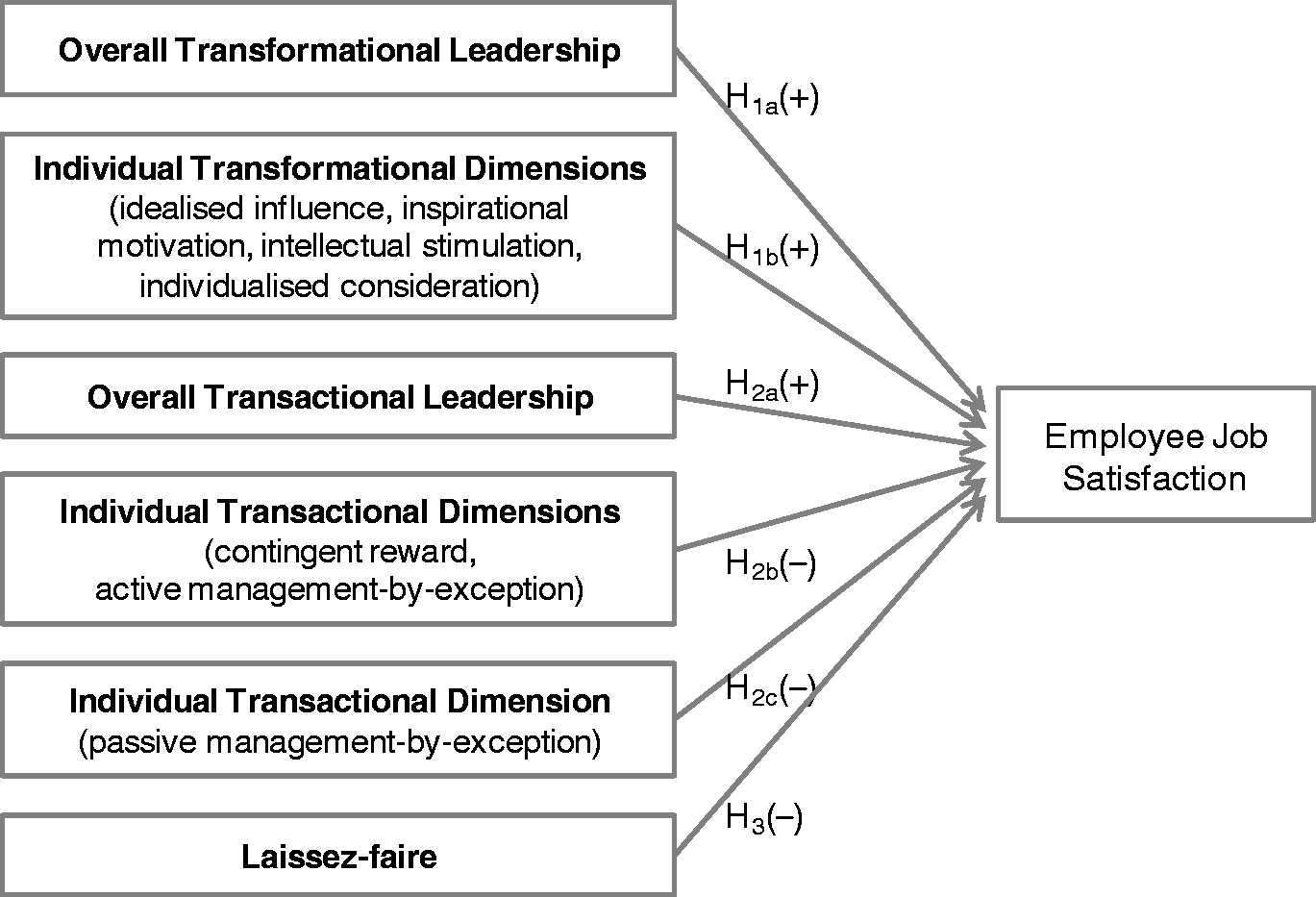
Bass’ leadership factors. Proposed hypotheses.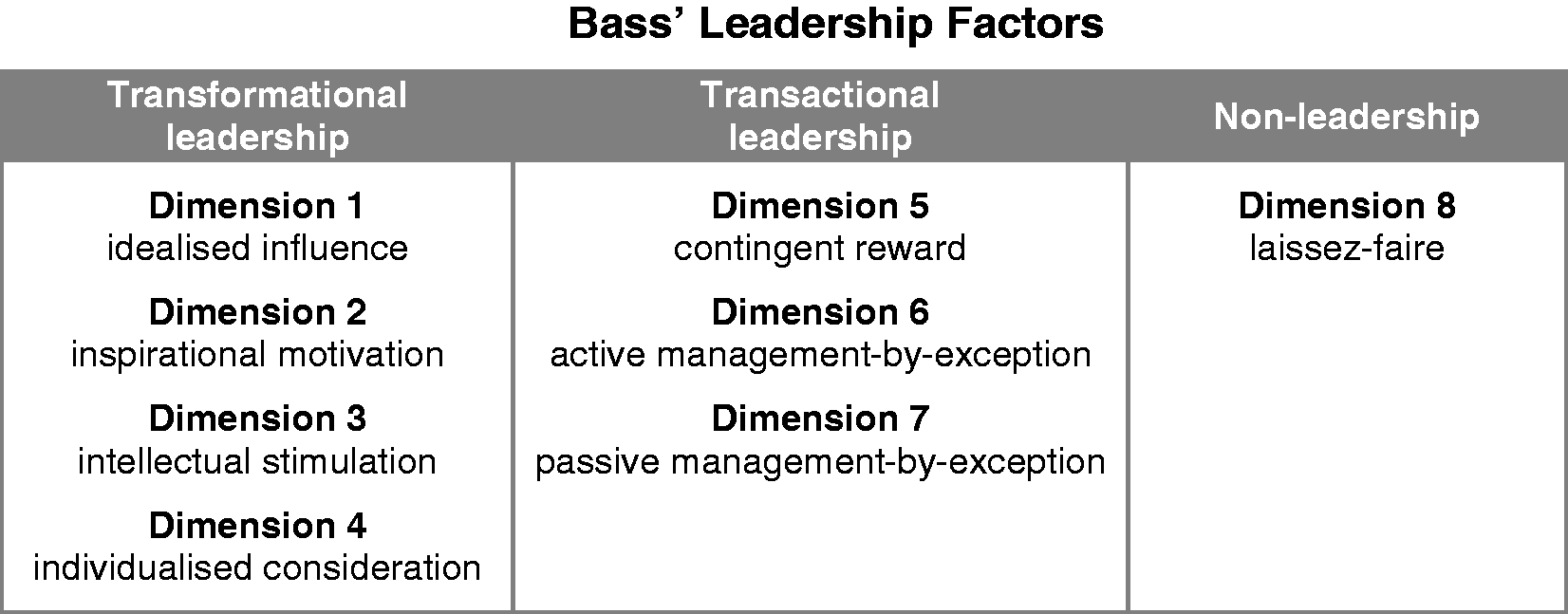
Transformational leadership
Bass (1998, 1990) and his colleagues (Bass and Avolio, 1989; Seltzer and Bass, 1990) characterised transformational leadership as being composed of four behavioural components, which are unique but interrelated: idealised influence, inspirational motivation, intellectual stimulation and individualised consideration. The first two dimensions represent the notion of ‘charisma’ and are based on a follower’s admiration for a leader, in equal measures as a follower’s confidence in a leader’s vision and his or her values. The third dimension, intellectual stimulation is concerned with providing followers with challenging tasks. Individualised consideration, as the last transformational dimension, describes the degree to which leaders are concerned with the follower’s individual needs and wants. As all four transformational dimensions start with the letter ‘l’, literature often refers to them as the ‘four l’s’. Bass and Avolio (1994) found that transformational leaders achieve higher results by employing one or more of the transformational dimensions. Specifically, significant leadership research indicates that subordinates of transformational leaders experience higher overall work satisfaction (Bass and Avolio, 1994; Bryman, 1992; Howell and Frost, 1989; Keller, 1992; Seltzer and Bass, 1990). Within the hospitality context, Erkutlu (2008) found that this connection also exists. But, little research has been performed to demonstrate this relationship with specific dimensions of transformational leadership and if these relationships hold in a German hotel context.
The first transformational dimension is called idealised influence; sometimes also referred to as charisma. The term describes leaders who demonstrate high standards of moral and ethical conduct and who can be counted on to do the right thing. As these leaders see what is particularly important, they establish a vision as well as a sense of mission. Such leaders are determined, persistent, self-confident, highly competent and willing to take risks (Bass, 1997). They furthermore sacrifice their personal interests for the benefit of the group or organisation, set a personal example and therewith act as role models. This behaviour results in followers’ respect, trust and admiration. The determination and conviction with which these leaders act make followers want to identify with and emulate them (Bass and Avolio, 1994).
In the common leadership literature, idealised influence is sometimes divided into attributed idealised influence and behavioural idealised influence. The first type refers to whether a leader is perceived as being self-confident and committed to high-order ideals. It basically is a perception in the beholder’s eye. Behavioural idealised influence, on the other hand, refers to a leader’s charismatic actions, which are based on his or her values, ideals or beliefs (Harms and Credé, 2010).
Inspirational motivation, sometimes also called inspirational leadership, is the second transformational dimension. It is highly correlated to idealised influence but conceptually not the same (Bass, 1997). This dimension describes a leader’s behaviour that provides meaning and sets challenging goals to followers’ work. This behaviour motivates and inspires followers. As a result, followers become committed and are more likely to share the organisation’s vision. Inspirational leadership demonstrates commitment to organisational goals, enhances team spirit and clearly articulates high expectations. The latter is done by using appealing symbols, metaphors and simple language (Bass, 1990). In addition, inspirational leaders increase the optimism and enthusiasm of followers and provide an attractive but achievable vision of the future. With this effort, they help followers to increase their self-confidence and to accomplish more than they initially felt was possible (Dubinsky et al., 1995).
Dimension three, intellectual stimulation, is descriptive of leaders who stimulate followers to be innovative, creative and to participate intellectually. This leadership behaviour aims at increasing followers’ awareness of problems, challenges followers to look at problems and procedures from new perspectives and encourages novel approaches for performing work in order to achieve the organisation’s goals and objectives. These leaders encourage using intuition by using reasoning and rationality rather than unsupported opinions. However, they do not criticise followers’ ideas, because they differ from their own. Intellectually stimulating leaders question existing values and beliefs and provoke rethinking and re-examination of set assumptions on which capabilities and strategies are based (Bass, 1997). In other words, they look at old problems in new ways and make their employees do the same. As a result, subordinates under this kind of leadership alter their way of thinking, openly communicate their ideas, become critical and effective in their problem-solving and become adept at responding to different needs and wants (Dubinsky et al., 1995).
Individualised consideration is the fourth and last dimension of the transformational ones. It refers to the leader’s awareness and appreciation for followers’ uniqueness as well as individual needs and concerns. These supervisors pay attention to each subordinate individually, are attentive to the unique concerns of their employees and make each one feel important and valued. Additionally, they consider followers’ growth needs and take all necessary actions to foster followers’ personal development (Bass, 1997). In this regard, individualised considerate leaders provide socio-emotional support. This involves attentive listening, maintaining frequent contact with followers and encouraging subordinates’ self-actualisation while empowering employees. Leaders displaying individualised consideration act as coaches or mentors (Northouse, 2007) and therewith encourage two-way communication on a one-to-one basis. They practice ‘walk around management’ and often use delegation to help followers grow through personal challenges. However, as individualised considerate leaders treat each employee individually, they may give a lot of space to some employees and provide others with more structure and specific directions. As a result, subordinates under such a supervisor tend to feel coached, supported and listened to. They respect their leaders and feel more self-confident through the leader’s individual support at esteem-building (Dubinsky et al., 1995).
Transactional leadership
Transactional leadership behaviour is composed of three dimensions: contingent reward, active management-by-exception and passive management-by-exception. Contingent rewarding leaders get agreement on what needs to be done by followers and provide rewards in exchange for effective task completion. Management-by-exception can be practiced either actively or passively. The active form is mainly based on constant monitoring and taking corrective action, whereas, at the passive form of management-by-exception, corrective actions are only taken if things go wrong (Bass, 1997). In earlier research, Bass and Avolio (1994), Bryman (1992), Keller (1992) and Seltzer and Bass (1990) as well as Howell and Frost (1989) found that subordinates of transactional leaders experience lower overall work satisfaction than the subordinates of transformational leaders. Here again, little research has been performed to demonstrate this relationship with specific dimensions of transactional leadership and if these relationships hold in differing cultural contexts. To bridge this gap in the literature, this study aimed to analyse the influence of contingent reward and management-by-exception on employee job satisfaction, individually.
Contingent reward, as the first transactional leadership dimension, describes an exchange process that takes place between leaders and followers. Efforts by followers are exchanged for pre-decided specified rewards. Contingent rewarding leaders set out clear goals and assignments and communicate their expectation to followers. They focus on giving followers a clear understanding of what needs to be done and how they will get rewarded for completing agreed-on tasks. Rewards can occur in the form of praise, commendations, bonuses or pay increases (Bass, 1997). Thus, contingent rewards can be seen as a positive reinforcement pattern or as a constructive transaction.
Active management-by-exception is mainly based on taking corrective action. Leaders actively monitor and control followers’ performance and watch closely for any mistakes they cause or for any rules they violate. If leaders, applying active management-by-exception, detect any failures, errors or deviations from standards, they take corrective actions as quickly as possible (Bass, 1997).
Contrary to the active version of management-by-exception, passive management-by-exception describes leaders who only intervene after certain standards have failed or problems have occurred. These leaders wait for things to go wrong and for mistakes to occur before they act to correct failures (Harms and Credé, 2010). Passive management-by-exception mainly consists of negative feedback forms like criticism, correction or punishment administered by a leader contingent on insufficient or poor performance. Due to that fact, literature also refers to it as contingent punishment (Podsakoff et al., 1984), corrective transactions or negative reinforcement (Northouse, 2007). Only the contingency of the punishment distinguishes this behaviour from what Kohli (1985) calls ‘arbitrary and punitive behaviour, thereby making it a transactional one.
Non-leadership—laissez-faire
Non-leadership represents an extremely inactive behaviour that is neither transformational nor transactional. For this reason, literature also refers to it as non-transactional leadership. Non-leadership involves laissez-faire behaviour, which itself basically refers to the absence of leadership.
Although laissez-faire leadership is conceptually correlated to the passive form of management-by-exception, it results in a lack of action even when correction is needed. Laissez-faire leadership describes an approach where managers take a ‘hands-off’ approach and let things go their own way. Supervisors applying this style usually abdicate authority and responsibility, hesitate to take action, delay decisions or avoid decision making completely. They avoid taking positions, give no feedback to followers and make little or no effort to help followers grow. Laissez-faire managers are inactive, indifferent, uninfluential, inattentive and, above all, typically absent when needed. It can be said that laissez-faire leaders do not event attempt to lead. Metaphorically laissez-faire leadership behaviour can be seen as a ‘sink or swim’ strategy in which employees either make it on-their-own or do not make it at all. Consequently, employees working under this type of supervision seek assistance, direction and support from alternate sources, for example, peers, other managers or even extra organisational members (Bass, 1990). According to Bass and Avolio (1989), laissez-faire leadership is observed infrequently in industry, even though there are still individual managers exhibiting this type of non-leadership behaviour. Erkutlu (2008) found that a laissez-faire leadership style was negatively related to subordinates’ job satisfaction in a hospitality setting.
Hypotheses
Transformational leaders show high standards of moral and ethical conduct. Not just because transformational leaders live up to their own set of expectations but also because they have their subordinates’ best interests in mind; subordinates identify and emulate their transformational leaders. Followers feel inspired and motivated and tend to truly respect and admire their supervisors. Transformational leaders provide an optimistic and attractive vision of the future, stimulate followers’ creativity and furthermore encourage team spirit. However, they never lose sight of subordinates’ individual concerns. Quite the contrary, they appreciate followers’ uniqueness and individually foster followers’ personal development. Based on these arguments, it can be hypothesised that employees led by a transformational leader feel more satisfied with their job overall. Significant leadership research proves that subordinates of transformational leaders experience higher overall work satisfaction than subordinates of transactional leaders (Bass and Avolio, 1994; Bryman, 1992; Howell and Frost, 1989; Keller, 1992; Seltzer and Bass, 1990). Erkutlu (2008) found that this connection also exists in the hospitality industry. In order to support Erkutlu’s (2008) findings, the following hypotheses were tested in the German hotel industry context:
Transactional leaders demonstrating contingent reward behaviour clearly articulate their expectations. They additionally communicate how employees get rewarded for completing agreed-on tasks. These rewards occur in the form of praises, commendations, bonuses or also in pay increases. This, beyond a doubt, argues for the assumption that overall employee job satisfaction can be increased by contingent rewarding behaviour.
Transactional leaders, applying the active or passive management-by-exception approach, however, watch closely for any mistakes or deviations and take direct or delayed corrective actions. There is a lot of controlling and monitoring involved in these leadership styles. Thus, these approaches are likely to slow down individual development instead of encouraging it. For these reasons, it can be argued that active and passive management-by-exception reduce employee job satisfaction. In previously conducted research, Bass and Avolio (1994), Bryman (1992), Keller (1992) and Seltzer and Bass (1990) as well as Howell and Frost (1989) found that subordinates of transactional leaders experience lower overall work satisfaction than did the subordinates of transformational leaders. Though most studies focused on transactional leadership as a whole, this study aimed to analyse the influence of contingent reward and management-by-exception on employee job satisfaction, individually. The arguments and assumptions discussed led to the following hypotheses:
Laissez-faire leadership basically refers to the absence of leadership. Leaders, applying this leadership style, neither instruct their subordinates nor motivate or inspire them extrinsically. Research findings by Erkutlu (2008) indicated that laissez-faire leadership was negatively related to subordinates’ job satisfaction in hospitality. Accordingly, the following was proposed:
Methodology
A quantitative survey methodology among hotel employees was used to assess leadership influence on employee job satisfaction. The sample of the current study was drawn from hotels in Germany. General managers were first contacted via telephone. The goal and purpose of this study was explained, and the general managers were asked if they were willing to let their employees participate in this study. Participating hotel managers were asked if they preferred print-questionnaires or an on-line survey. Questionnaire packets were then mailed to the managers who either directly distributed the questionnaires to employees or to division managers who continued the distribution within their department. A total of 116 hotel employees (57 print questionnaires and 59 online questionnaires) participated in this study. Incomplete questionnaires reduced the sample size to 101 subjects. To determine if collection method (print or online) affected results, t tests were performed to test for significant differences between print and online groups for leadership dimensions. For these t tests, results were non-significant, indicating no method effects.
To remain consistent with previously conducted research, all measures used in this study were adapted from noteworthy leadership studies. Therefore, all the scales used in this study had strong, construct validity already established in the literature with substantial tests using factor analysis and other means.
Leadership behaviour was measured using scales adapted from the Multifactor Leadership Questionnaire (MLQ) developed by Bass and Avolio (1989). The MLQ was used as a basis, as there is a substantial evidence that it is an adequately reliable and valid measure of these three leadership types (e.g., Bass and Avolio, 1989; Chemers and Ayman, 1993; Hinkin and Tracey, 1994). It is regarded to be the benchmark measurement for transformational and transactional leadership. However, while Bass and Avolio (1994) provide a conceptual distinction among the ‘four l’s’, Hinkin and Tracey (1998) found that Bass’ ‘four I’s’ overlap and highly correlate with each other. In addition, Tejeda et al. (2001) state that some transformational dimensions correlate with transactional and non-leadership dimensions. This means that they may not be unique to the transformational approach.
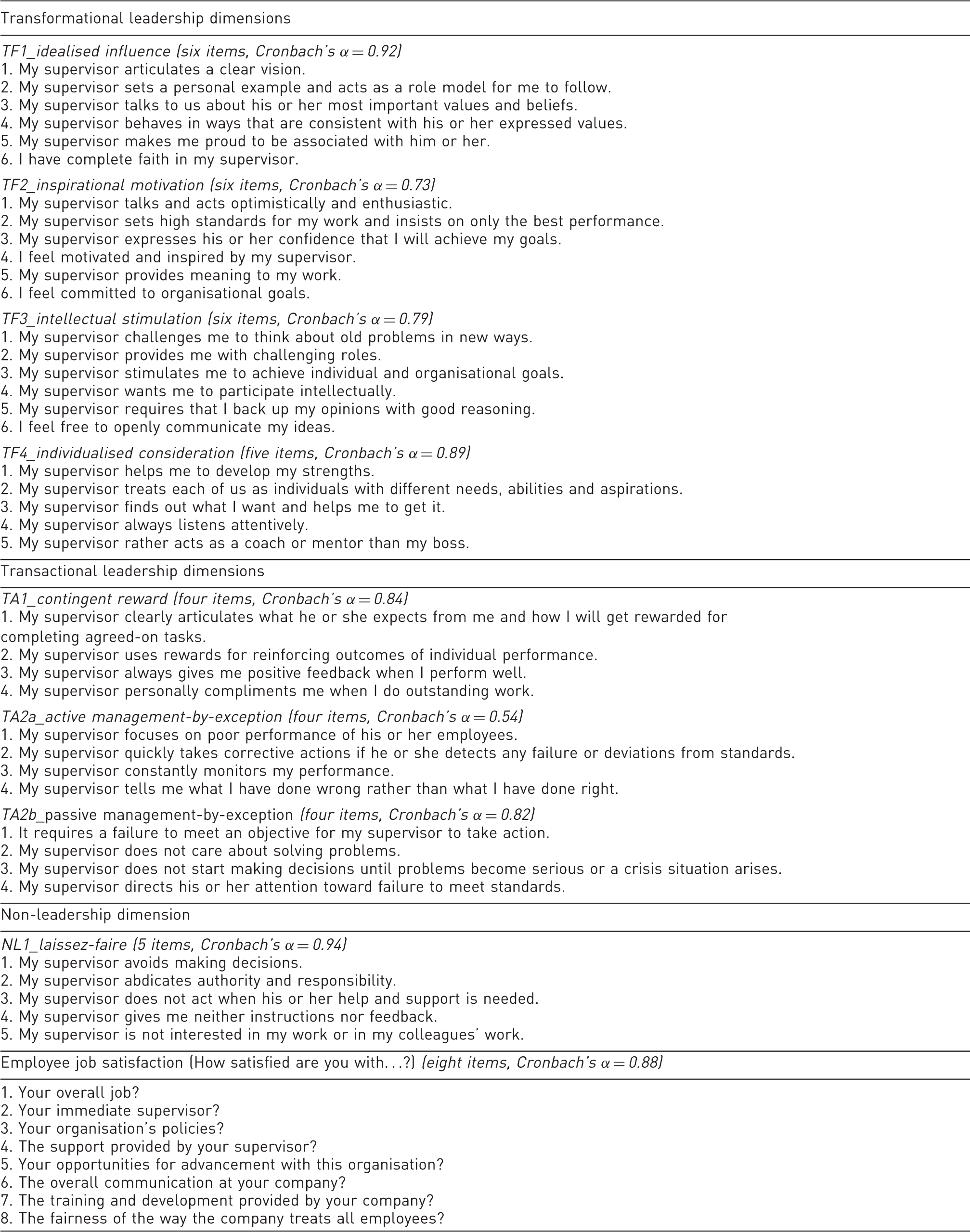
All in all, 40 questions were asked about leadership behaviour. The construct transformational leadership (23 items) was divided into the sub-constructs’ idealised influence (6 items), inspirational motivation (6 items), intellectual stimulation (6 items) and individualised consideration (5 items). Transactional leadership (12 items) consisted of the sub-constructs’ contingent reward (4 items), active management-by-exception (4 items) and passive management-by-exception (4 items). Non-leadership was composed of the sub-construct laissez-faire leadership (5 items). Hospitality employees were asked to indicate on a five-point Likert scale, if they either (1) agreed or (5) disagreed with statements regarding the leadership behaviour of their immediate supervisor.
Job satisfaction was measured using a self-constructed eight-item scale mainly adopted from work by Brown and Peterson (1993) as well as Clark et al. (2009). The scale was appropriately readjusted and extended by the authors of this study. Employees had to answer on a five-point Likert scale, how much they were (1) satisfied to (5) dissatisfied with a variety of job dimensions, which add to overall job satisfaction.
Reliability of instrument dimensions.
Variable correlation matrix and descriptive statistics.
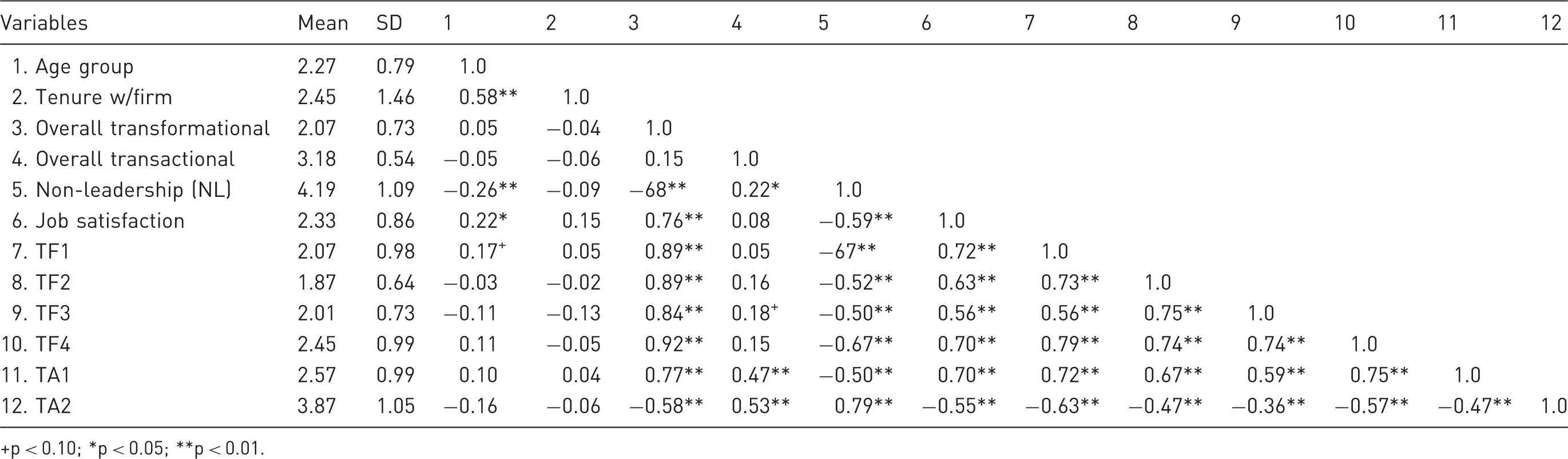
p < 0.10; *p < 0.05; **p < 0.01.
Results
The results of the correlation analysis showed that several variables were interrelated. The overall measure of transformational leadership was weakly correlated to the overall measure of transactional leadership. But, it was moderately and negatively correlated with non-leadership (−0.68, p < 0.01). This relationship was consistent with the earlier research on leadership (Tejeda et al., 2001). Overall, transactional leadership and non-leadership were weakly and non-significantly interrelated. The individual dimensions for transformational leadership were significantly interrelated (ranging from 0.56 to 0.79). Individual transactional leadership dimensions were moderately negatively correlated (−0.47, p < 0.01).
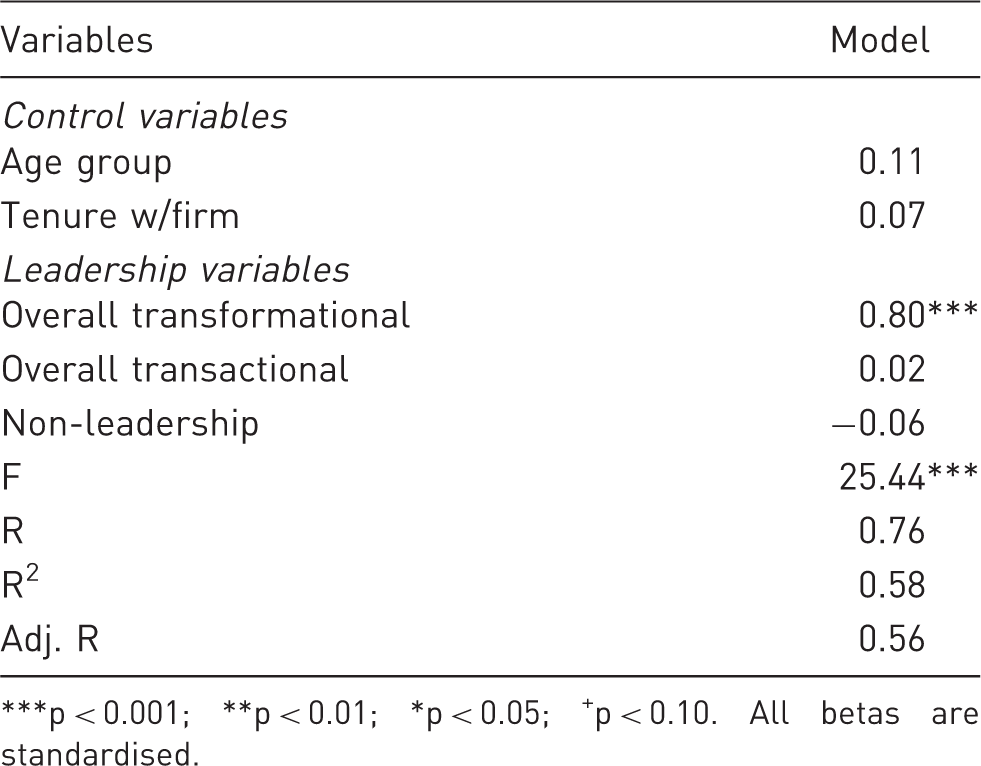
Job satisfaction regressed on controls (age group, tenure w/firm) and IVs (overall transformational leadership, overall transactional leadership and non-leadership perceptions) N = 101.
p < 0.001; **p < 0.01; *p < 0.05; +p < 0.10. All betas are standardised.
When job satisfaction was used as the dependent variable, the test resulted in a highly significant finding overall (F = 25.44, p = 0.001). The control variables of age group and tenure with the firm were non-significant. Only one leadership style was a significant predictor of job satisfaction levels. The overall transformational leadership measure had a positive and significant relationship with job satisfaction (β = 0.80, p < 0.001); the overall transactional leadership measure and non-leadership had a non-significant relationship.
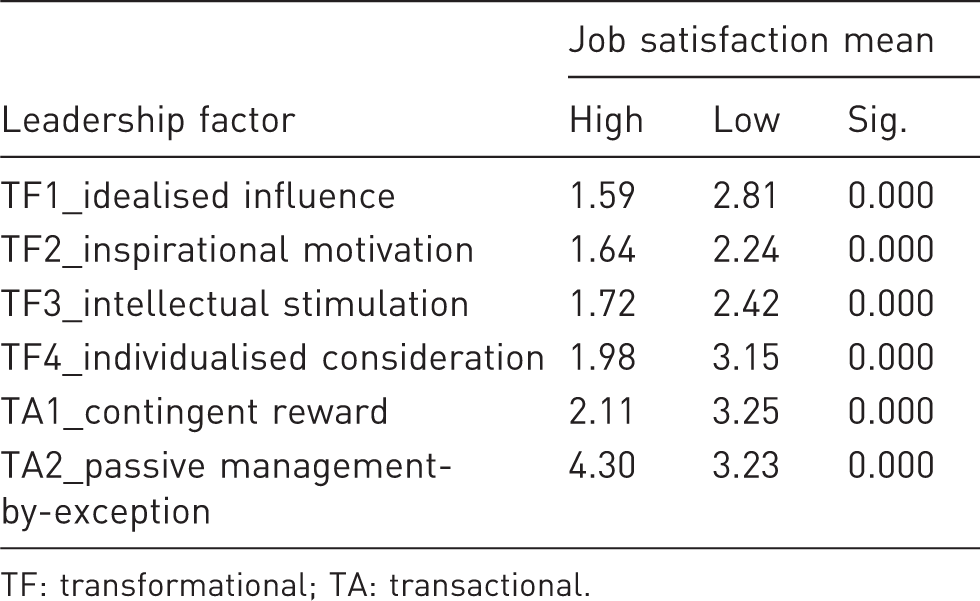
Mean differences between job satisfaction groups for leadership factors.
TF: transformational; TA: transactional.
The t tests showed that there was a significant difference between high and low levels of job satisfaction with all four transformational sub-dimensions: TF1 idealised influence, TF2 inspirational motivation, TF3 intellectual stimulation and TF4 individualised consideration (all with p < 0.001). Hence, the findings of this study indicated a higher level of job satisfaction with higher perceived use of leadership behaviours by supervisors in the transformational dimensions of idealised influence, inspirational motivation, intellectual stimulation and individualised consideration.
The t test results for job satisfaction groups and the transactional dimensions were also highly significant, indicating a substantive relationship between transactional dimensions and job satisfaction levels. Specifically, the tests showed that there was a significant difference between high and low levels of job satisfaction of both transactional dimensions: TA1 contingent rewards and TA2 passive management-by-exception (p < 0.000). As predicted, this finding indicated a higher level of job satisfaction with higher perceived use of leadership behaviours by supervisors in the transactional dimension of contingent rewards and lower job satisfaction for perceived passive management-by-exception behaviours in the German hotel context.
Overall, the study’s results showed that employee job satisfaction was closely affected by leadership behaviour. In particular, it was found that idealised influence, inspirational motivation, individualised consideration, intellectual stimulation and contingent reward behaviours were positively related to employee job satisfaction. Study findings furthermore suggested that passive management-by-exception had a negative influence on employee job satisfaction. Laissez-faire leadership was not considered influential by participants in the results of this study.
Discussion
Summary of predictions and results.
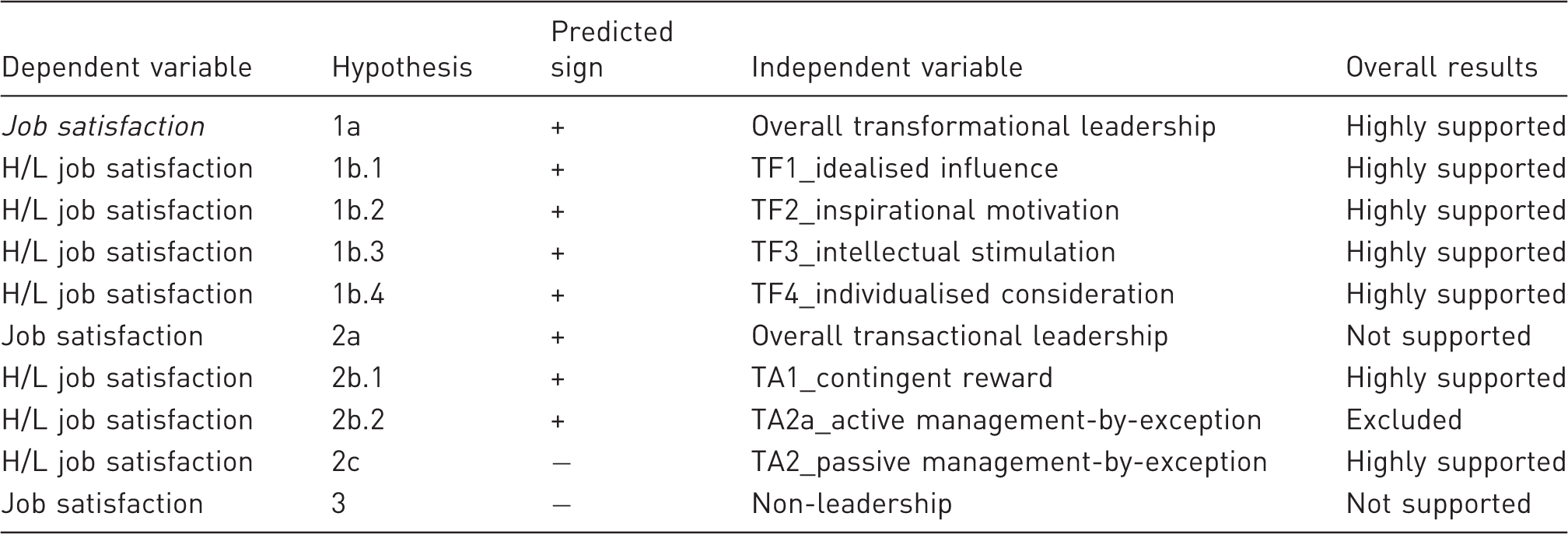
Interestingly, contingent reward behaviour also had a strong positive relationship on employee job satisfaction. This result supported hypothesis 2b and suggested that German hotel employees were more satisfied with their overall work when leaders clearly formulated expectations, provided followers with feedback and used rewards or compliments to show appreciation for outstanding work. This finding was consistent with Bass’ theoretical explanation that executives may use transformational and transactional leadership and that transactional leadership can be seen as a basis and transformational leadership as a complement to it. In fact, the correlation analysis showed that transformational leadership was highly correlated with contingent rewarding behaviour, meaning that leaders applying transformational leadership also demonstrate contingent rewarding behaviour.
This theoretical explanation did not find proof in the current study with regard to the transactional dimension management-by-exception. In line with hypothesis 2c, passive management-by-exception was found to decrease German hotel employee job satisfaction. This result was not surprising, since it was comprehensible that employees were dissatisfied when supervisors directed their attention towards failure to meet standards and when they did not care about solving customers’ or employees’ problems. In addition to that, employees’ job satisfaction decreased when supervisors only took action after failures already occurred or did not make decisions before crises arose. This finding supported previous results from other contexts, which indicated that subordinates of transactional leaders experienced lower overall work satisfaction than subordinates of transformational leaders (Bass and Avolio, 1994; Bryman, 1992; Howell and Frost, 1989; Keller, 1992; Seltzer and Bass, 1990).
Study findings also implied that laissez-faire leadership, contrary to hypothesis 3, had no effect on employee job satisfaction. This finding was not consistent with the research results of Erkutlu (2008) who found laissez-faire leadership to be negatively related to subordinates’ job satisfaction. The fact that passive management-by-exception and laissez-faire leadership were highly correlated in the present study also favours the assumption that laissez-faire leadership decreases employee job satisfaction. However, study findings did not support this assumption. A possible explanation for the non-existing relationship may be the actual effective appearance of this leadership style in the German hospitality industry. Due to close leader–follower relationships, it is very unlikely that laissez-faire leadership occurs often. As a result, the effects on dependent variables can hardly be assessed.
These findings supported the proposition in earlier studies that German leadership was moving away from the ‘tough on the issue, tough on the person’ leadership approach—at least in high-contact service industries such as the hotel industry. Or, at least, lower level German hotel employees had a preference for transformational leadership approaches. Of course, it remains to be seen if transformational leadership’s relationship to job satisfaction also translates to overall higher staff and firm performance.
Managerial implications
The study results suggested that leadership matters with regard to influencing employees’ job satisfaction in the German hospitality industry. Employee job satisfaction seems especially important, considering the fact that guests rarely interact with management but with employees and that satisfied employees were more likely and more willing to provide quality service to customers. So, it was noted that hospitality managers must work to positively influence employees by adopting an adequate leadership behaviour. Based on current study findings, it can be argued that the adequate leadership behaviour for managing hospitality employees is primarily transformational, because transformational behaviour increases employee job satisfaction. Findings furthermore indicated the need for leaders to use transactional style in the form of contingent rewarding to satisfy employees. Hence, it can be recommended for hospitality executives to use transformational leadership behaviours and contingent rewarding leadership and to avoid passive-management as well as the laissez-faire approach. This balance between the four transformational leadership dimensions and the transactional contingent reward dimension indicates the need to perform a leadership style ‘juggling act’ to balance the needs of the task and employee in order to maximise job satisfaction of employees in the hotel industry.
Reduced to praxis, the results about transformational leadership mean that hospitality executives, no matter if the general manager or division managers, have to demonstrate high standards of moral and ethical conduct themselves. Employees feel the need to be able to trust and count on their supervisors to do the right thing. Hospitality executives furthermore need to think more carefully about how they can do a better job of articulating the corporate vision to provide employees with guidance and understanding of where the organisation is heading. If employees understand the thoughts, processes and strategies behind the tasks or orders, they appear more likely know what they must do to help accomplish the leader’s vision. If subordinates understand the ‘big picture’, they will furthermore feel more satisfied, because they perceive their work as meaningful and they may develop higher levels of motivation and commitment, which subsequently influence other work outcomes.
As with other contexts, one of the best ways for German managers to transfer corporate principles is to lead by example. Leading by example becomes particularly important in the hospitality industry due to the close contact between employees and supervisor. Furthermore, German supervisors need to pay more attention to their intellectually stimulating leadership behaviour. Reduced to praxis, this means that they need to create a climate in which employees feel challenged to always re-examine set assumptions, to be innovative and creative, but also feel supported to openly communicate their ideas. In the German hotel context, this means addressing tough problems with a balance between the concern for the task at hand and concern for the people involved. This, of course, includes maintaining an awareness of the employees’ uniqueness and diversity of beliefs and values.
The study findings also indicated that German hospitality managers should not ignore the potential impact of contingent rewarding behaviour, since a positive effect on employee job satisfaction was assessed. This means providing clear expectations, so that followers can fulfill their assignments and know what they must do to help accomplish desired objectives. Managers can use timely rewards, for example, in the form of praise, commendations, bonuses, incentives or small pay increases to acknowledge employees’ work and to show employees that their work is important and meaningful.
In terms of specific recommendations, it is suggested that management attaches great importance to the recruitment and selection of German hotel managers that exhibit characteristics of transformational and contingent rewarding behaviour. Second, training and development seem to be particularly important in the hospitality setting as the German hotel industry is known for having managers who worked their way up without having a strong academic background or professional development program regarding leadership. Therefore, the implementation of seminars or trainings about leadership style is critical to change institutional and cultural expectations and assumptions. Thus, it is suggested that hotel administration assess and evaluate leadership behaviour and employees perceived work outcomes in each division of the organisation with a corresponding survey. According to the results, problems may be solved in discussions or by training individual division managers who demonstrate doubtful leadership behaviour.
Conclusion
This study was conducted in the German hospitality industry and aimed to measure the influence of transformational, transactional and non-leadership behaviour on employee job satisfaction. Contrary to most studies on this subject, this study was not only concerned with the positive effects of transformational leadership but also looked into the effects of transactional and non-leadership. These three leadership behaviours were furthermore analysed in their particular components (dimensions) and not as a whole, which makes results not only more accurate but also valuable. In conclusion, study findings suggest that leadership behaviour influences employee job satisfaction quite to the extent hypothesised.
Based on the current study results, it can be argued that the most appropriate behaviour for positively influencing employee job satisfaction is transformational and contingent rewarding. Consequently, it is important that these leadership behaviours are practically applied and that structures within the organisations are established that make the application possible. As the majority of earlier studies have focused on US samples, this study tested relationships in a German national culture and unique profession (hotels). The findings support a more universal approach to leadership style preferences rather than a ‘beauty is in the eye of the beholder’ or cultural perspective to leadership style. Particularly, age groups, firm tenure, national location and industry effects supported propositions of the effectiveness of transformational and contingent reward approaches to leadership in general.
Limitations
The findings of this study should be viewed in light of its limitations. The first limitation refers to the sample size of 101 questionnaires. While the sample size is relatively small, the size of the current study attempts to establish both statistical and practical significance. A weakness of a smaller sample size is a lack of statistical power to identify differences that exist, and the weakness of a larger sample (200 or more) is that the statistical tests become overly sensitive (Hair et al., 1998). The current study used a sample of appropriate size to balance the need for both statistical and practical significance. Of course, a limitation of this approach is less generalisability. Thus, a second limitation is the question of generalisabilty due to not only sample size but also the context. The research scope of this study was the German hospitality industry; while this limitation may limit the generalisability of the findings, a key objective was to assess the impact of leadership style in this specific cultural (Germanic) and institutional (hotel field) situation. The study drew a broad cross-section through the German hospitality industry by covering different areas and by including different types of hotels ranging from the budget to the luxury segment. Further research on this subject can investigate if study findings can be applied to other industries and other countries.
While common-method bias cannot be totally ruled out due to the use of exclusively survey data based on staff perceptions, the correlations found in the study are consistent with earlier studies in the area (e.g., Tajeda et al., 2001). But, in any case, results should be interpreted with caution, given the potential for any common-method bias effects.