







Abstract
Tourism in small island developing states and territories in the South Pacific is crucial to the development of these countries yet highly vulnerable to climate change. Drawing on political science theories, this study critically analyses the policy environment of Fiji, Samoa and Vanuatu for the tourism sector’s adaptation to climate change. Three aspects of the policy environment were analysed, namely stakeholder commitment, resource availability and capacity, and presence of enabling mechanisms or processes. We find that Samoa provides the most conducive policy environment among the three for climate change adaptation. The difference can be attributed to political instability and lack of institutional coordination in Fiji; and in Vanuatu, industry players showing little concern for climate change and lack of policy implementation. Stakeholders should take ownership of the climate change issues, and governments better manage the funding from aid agencies and establish policy mechanisms that facilitate adaptation.
Introduction
Tourism in small island developing states and territories (SIDST), including those in the South Pacific, is crucial to the socio-economic development of these countries (SPTO, 2007), yet it is highly vulnerable to the impacts of climate change
1
(OECD/UNEP, 2011). Tourism in SIDST is deemed vulnerable because the natural environment, which acts as a drawcard for tourists, is exposed to the risks of extreme weather events such as tropical cyclones. However, these destinations have low financial and technical capacity to adapt (UNFCCC, 2005). Climate change policies are often formulated on a national level and do not necessarily address specific needs for economic sectors such as tourism (Becken and Clapcott, 2011). Scott and Becken (2010) argue that climate change research in tourism remains far less developed than in other economic sectors. This is possibly related to institutional arrangements for tourism within governments as they may not have the adequate research capacity to assess climate change risks (Scott et al., 2012). Buckley (2012) finds that even though sustainable tourism research has almost four decades of history, little progress has been made on climate change research. This paper establishes the importance of the tourism sector’s adaptation to climate change and examines the environment of public policy-making in three major tourist destinations in the South Pacific, namely, Fiji, Samoa and Vanuatu (Figure 1). Specifically, the objective of this paper is to evaluate the conduciveness of the policy environment to climate change adaptation for the tourism sector in these three countries. Based upon a conceptual framework developed from political science theories and field work in the three case study countries (in excess of eighty in-depth interviews and a range of secondary data sources), this research provides constructive and practical recommendations to policymakers and other key stakeholders on how to progress in the adaptation agenda.
Locations of Fiji, Samoa and Vanuatu in the Pacific.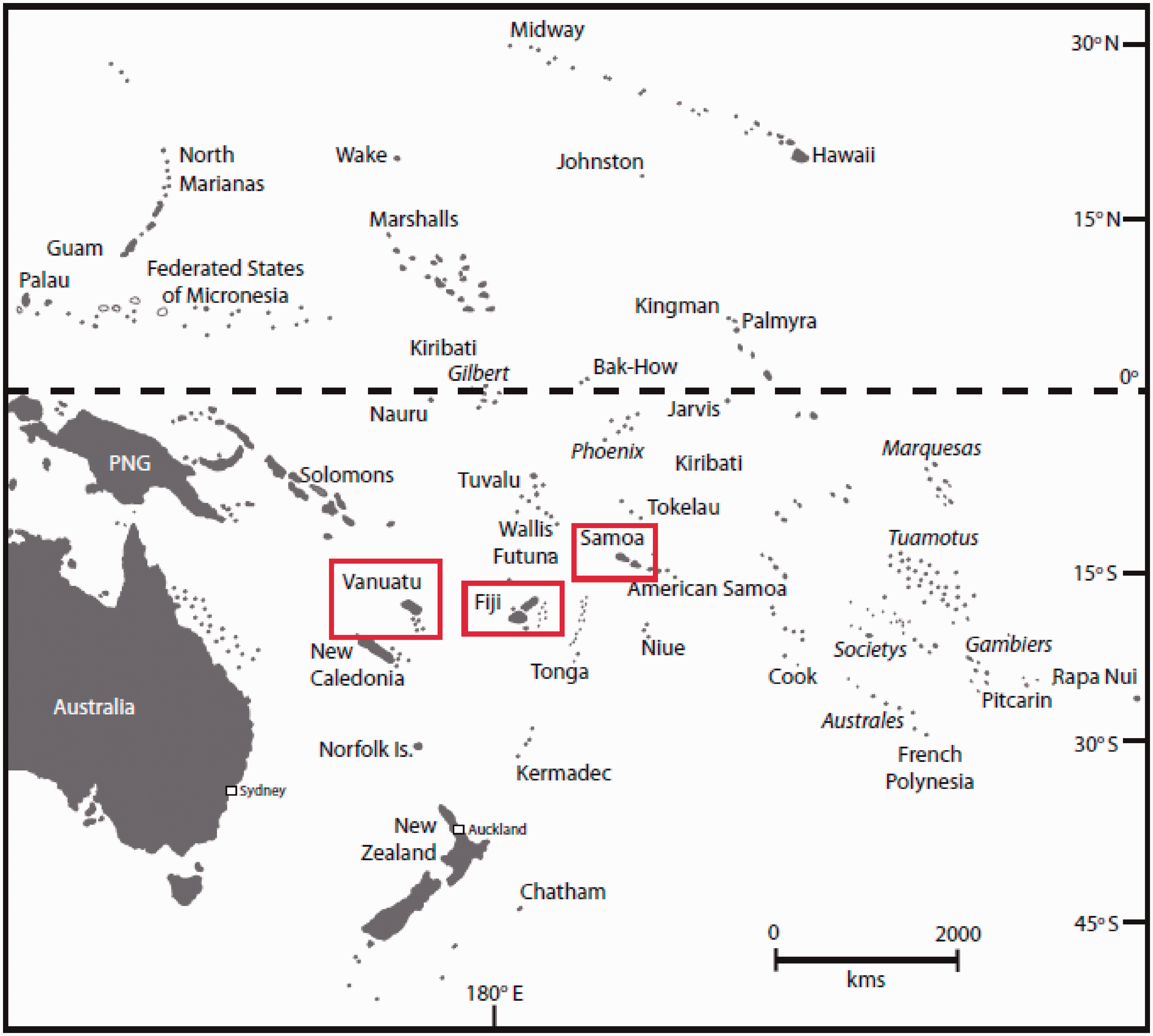
A policy environment refers to the context in which policy-making and policy implementation take place. Drawing on ‘new institutionalism’ (March and Olsen, 1989) and ‘decision-making’ theories (Dougherty and Pfaltzgraff, 1996), we analyse and evaluate the conduciveness of the policy environment of the three selected countries along three dimensions: (1) stakeholder commitment – the commitment of the people and organisations that are involved towards the policies; (2) resource availability and capacity – financial means, talents, manpower that support policy-making and implementation and (3) presence of enabling mechanisms or processes that facilitate the policy-making and implementation (Dougherty and Pfaltzgraff, 1996; Lerche and Said, 1963). The pluralistic approach of combining ‘new institutionalism’ and ‘decision-making’ theories offers an original and unique perspective to understand the policy environments and subsequently identify what may facilitate or hinder the progress of adaptation in the region.
The next section explains the theoretical approach of this research. It is followed by the review of literature on climate change in the South Pacific context. The method and the four-stage design of the study, empirical findings and recommendations for key stakeholders are provided in the second half of the paper.
Analysing and evaluating policy-making environment
Climate change is a relatively new policy agenda, not just in the South Pacific region but worldwide (Henson, 2008). As we have found in our research, the South Pacific region has a short history of climate change policies, and thus, has no well-established policy-making mechanisms for dealing with climate change. To identify factors that facilitate or hinder climate adaptation, an examination of the rationale and circumstances in which climate change policies were/are formulated may offer more insights than conducting a traditional policy analysis (such as Dunn’s, 2008). Hence, the analysis and evaluation of the policy-making environment are emphasised in this research on climate change adaptation in the Pacific Islands.
There is no one standard way to analyse or evaluate a policy-making environment, neither is there any readily available framework for tourism adaptation policies. We, therefore, turned to political science literature. Stoker and Marsh (2010) encourage a pluralistic approach to develop a better understanding of politics. This study draws on both ‘new institutionalism’ and ‘decision-making’ theories to construct its conceptual framework. Institutionalism refers to ‘a set of theoretical ideas and hypotheses concerning the relations between institutional characteristics and political agency, performance, and change’ (March and Olsen, 2006: 4). Institutions can be broadly defined as rules and procedures that ‘structure the relationships between people in various units of the polity and economy’ (Hall, 1986: 7). The so-called new institutionalism, a term coined by March and Olsen in 1984, actually builds upon the insights of traditional institutionalism (Lowndes, 2010). The traditional approach focused on formal rules and organisation, whereas the new approach takes into consideration also the unwritten, informal conventions. In a nutshell, new institutionalism analyses the impact of institutions on government performances (ibid.). In this study, we examine the formal and informal rules or key factors in the policy environment that influence, positively or otherwise, the formulation of climate change adaptation policies. For example, in the South Pacific, the Church and village leaders play a major role, alongside the government and traditional governance systems, in being an important part of the institutional architecture (Crocrombe, 2008). Hence, the research began with a familiarisation of the background of the case study countries including their government/institutional structures (details in the Method section).
However, the study of institutions alone does not give a complete picture of a policy environment. Institutions, and the decisions or policies made within these institutions, are formed by actors or key stakeholders such as politicians, bureaucrats, heads of large corporations, interest groups, etc. (Peters, 1999). The rules and conventions that new institutionalism examines have little meaning if they are not recognised or adhered to by actors, who are the influential individuals or groups in the political system (Lowndes, 2010). In Pacific Island countries (PICs), these individuals or groups would include the Church and village or community leaders. Snyder et al. (1963) and Dougherty and Pfaltzgraff (1996) emphasise that it is the behaviour of human decision-makers that shape governmental policies, and that the authoritative acts of the decision-makers are the acts of the state. Therefore, central to understanding policies and policy environment is examining the decision-makers, and the power and interest dynamics among them.
Power is a highly contested concept in political science literature whereby no agreed definition has been developed. Nevertheless, Heywood (2004: 122) argues that power has three important characteristics. First, power can have the ability to influence the making of decisions; second, it may have the capacity to ‘shape the political agenda and thus prevent decisions [from] being made’ and third, it may control people’s thought by manipulating their preferences and perceptions. Peters and Pierre (2001: 131) believe that political power is less and less derived from formal constitutional powers but more from one’s capacity to ‘wield and coordinate resources’ according to his/her interests. The term ‘interest’, again lacks a commonly agreed definition, but in its broadest sense, denotes benefit or advantage (Heywood, 2004). The relationship between power and interests is a dynamic one because policy- and decision-making involve multiple parties; each has its own goals and different capacity to control resources. Their actions, decisions and outcomes interact with the decision-making process itself (Krasner, 1982). Hence, analysis of a policy environment needs to include the study of the dynamics between power and interests of key stakeholders in terms of how resources are controlled and negotiated as well as what and how decisions are made.
Given the important role that decision-makers play in policy-making, the evaluation of the policy environment in our case studies (and subsequently what may facilitate or hinder the development and implementation of climate change adaptation measures) ought to involve an assessment of the level of commitment of those decision-makers to the adaptation agenda. The more political will they have towards adaptation, the more likely it is that adaptation measures will be implemented. Such commitment or political will is the result of a variety of factors, namely subjective perceptions in the ‘psychological environment’ and objective factors in the ‘operational environment’ (Harold and Margaret Sprout, cited in Frankel, 1963: 4). The former entails political values and agenda; the latter institutions, i.e. the rules and procedures under which decisions are made (Dougherty and Pfaltzgraff, 1996), and the capabilities of the state to execute those decisions (Lerche and Said, 1963). Therefore, when evaluating the policy environment in our case studies, we believe it is important to also evaluate the extent to which the institutions enable adaptation, and the capabilities of the governments to implement adaptation in terms of resources availability and capacity.
Apart from the three dimensions pertaining to the internal setting of a country’s political system (i.e. decision-makers, institutions and capability of the state), the external setting (i.e. the international environment) also affects policymakers (Dougherty and Pfaltzgraff, 1996). In this research, we study the impact of the international environment in the context of global climate change policies (e.g. United Nations Framework Convention on Climate Change, UNFCCC) and the involvement of development agencies (e.g. the Australian Agency for International Development, AusAID). In fact, as discussed in the findings sections, these external agencies and their funding exert much influence on the implementation of adaptation policies, Macro-environmental factors such as those in the global economic environment are not included in our evaluation because they are outside the direct control of the governments in our case studies.
Some scholars criticise that new institutionalism is more concerned with the impacts institutions have on policy and political choices but does not explain very well the formation and transformation of structures (Peters, 1999). With decision-making theories, some argue that political behaviours can be affected by many variables which can be difficult to sort out and assign proper weights in an analytic scheme (Dougherty and Pfaltzgraff, 1996). Yet, we believe ‘new institutionalism’ and ‘decision-making’ theories complement each other – elements of the institutions explain the decisions made by the policymakers, and in doing so, the key influencing factors are highlighted; meanwhile, these decision-makers are members of the institutions interpreting the rules and values (Peters, 1999), and may account for any changes that take place in the institutions. Combined, these two approaches provide us with a unique perspective to better understand the policy environment.
Tourism and climate change in the South Pacific
International arrivals and contribution of tourism to GDP (selected years).
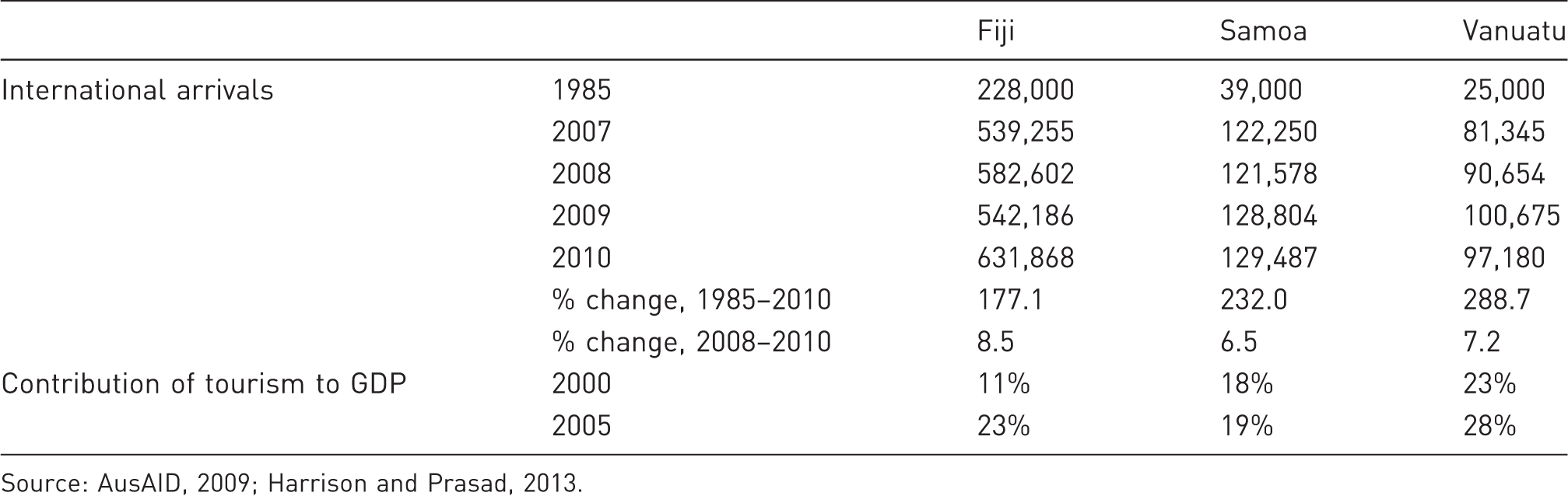
Source: AusAID, 2009; Harrison and Prasad, 2013.
Climate change, according to the Intergovernmental Panel on Climate Change (IPCC), refers to ‘a change in the state of the climate that can be identified by changes in the mean and/or the variability of its properties, and that persists for an extended period, typically decades or longer’ (IPCC, 2007: 78). Specific to tourism, expected climate change impacts can be grouped into four categories; direct impacts, indirect environmental impacts, impacts on tourist mobility and indirect impacts on society (Scott et al., 2012). Direct impacts refer to changes in tourism flows due to changes in weather patterns (Hamilton et al., 2005), decline of landscape aesthetic and damage to tourism infrastructure. Indirect environmental impacts are, for example, water shortages, biodiversity loss and increase in vector-borne diseases (Becken and Hay, 2007). Mitigation policies seeking to reduce greenhouse gas (GHG) emissions, such as carbon taxes on long-haul travel, may have an impact on tourism demand as might safety concerns from more frequent and higher intensity extreme weather events (DeLacy and Lipman, 2010; STCRC, 2009). Finally, climate change may impact on aspects of society, such as economic growth, development patterns and socio-political stability in some regions (UNWTO et al., 2008). These societal changes can negatively alter destination attractiveness and tourism demand. Hence, tourism can be considered a highly climate-sensitive economic sector (Gössling et al., 2010).
Projected major impacts of climate change in the Pacific region and possible adaptation measures for tourism (Wong et al., 2012a: 139).

Types of strategies: policy (P), technical adaptation (T), business management (BM), behavioural adaptation (BH), and research and education (R) (Scott et al., 2009).
Climate change and adaptation policies
The UNFCCC can be considered the policy framework that shapes and influences the climate change policies of most countries. The Convention was introduced in 1992 at the UN Earth Summit in Rio de Janeiro, Brazil, and signed by 166 nations that summer (almost 200 to date). The ‘ultimate objective’ of the landmark agreement is the stabilisation of greenhouse gas concentrations in the atmosphere at a level that would prevent dangerous anthropogenic interference with the climate system. (UNFCCC Article 1, 1992: n.p.)
Internationally in the 1990s, much of the policy-making attention and efforts were put into setting emission targets and mitigation only. It was not until 2001 when the UNFCCC established a mechanism called National Adaptation Programme of Action (NAPA), which helps the least developed countries (LDC) to identify priority activities that respond to their urgent and immediate adaptation needs (UNFCCC, 2005). Then in 2004, the United Nations Development Programme (UNDP) published some much-needed detailed policy guidelines for adaptation. Entitled ‘Adaptation policy frameworks for climate change: developing strategies, policies and measures’, the document is a roadmap for countries to evaluate and complement existing planning processes to address climate change adaptation (UNDP, 2004). Simpson et al. (2008) and Becken and Hay (2012) later developed frameworks specific for tourism.
Climate change is rapidly being recognised as a major threat to the sustainability of the tourism sector across the South Pacific (Jones and Phillips, 2011). The development of adaptation strategies and policies for tourism is crucial. According to Scott et al. (2012), many tourism stakeholders see governments responsible for taking a leadership role in adaptation. Yet, there is no ‘one size fits all’ policy for adaptation. As a UNDP (2004) document suggests, it is important for countries to examine their own specific risks, vulnerability and adaptive capacity, and develop a set of customised adaptation strategies. That is why studying the policy environment of a destination is important as it informs policymakers what policies, resources or measures are already there that would help facilitate adaptation, and what is missing. It is also important to examine tourism adaptation within broader policy frameworks, such as national or cross-sectoral policies (Dodds and Kelman, 2008). This is because most existing adaptation policies are driven on a regional or national level. Jopp et al. (2010) recommend that for destinations to adapt successfully a range of stakeholders should be involved as a sense of transparency and ownership would generate better results. For this reason, multiple stakeholder groups were included in this research such that their interests and perspectives were taken into consideration in our analysis.
Method
The research adopted a four-stage approach (Figure 2). The first stage was basic country analysis (George and Bennett, 2005) involving background information about the geography, history, politics, institutional structure, economy, and climate change related hazards of Fiji, Samoa, Vanuatu and the South Pacific region. Secondary resources were consulted, such as Crocrombe’s (2008) The South Pacific, and various country-specific reports such as Pacific Adaptation to Climate Change (PACC) and NAPA reports. The second stage involved gaining an understanding of the policy-making environment of each country in relation to tourism and climate change, the political power and interest dynamics within that environment, and the tourism and climate change policies of the past, present and future. Initially, inventories of policies using secondary data, including accessible official policy and other media of communication (e.g. news reports, research papers, etc.) were developed. Secondary data, as one would expect, were not sufficient for a comprehensive evaluation of the policy environments to be conducted. Thus, primary data had to be acquired. This led to stage 2 of the research.
The four stages of the research.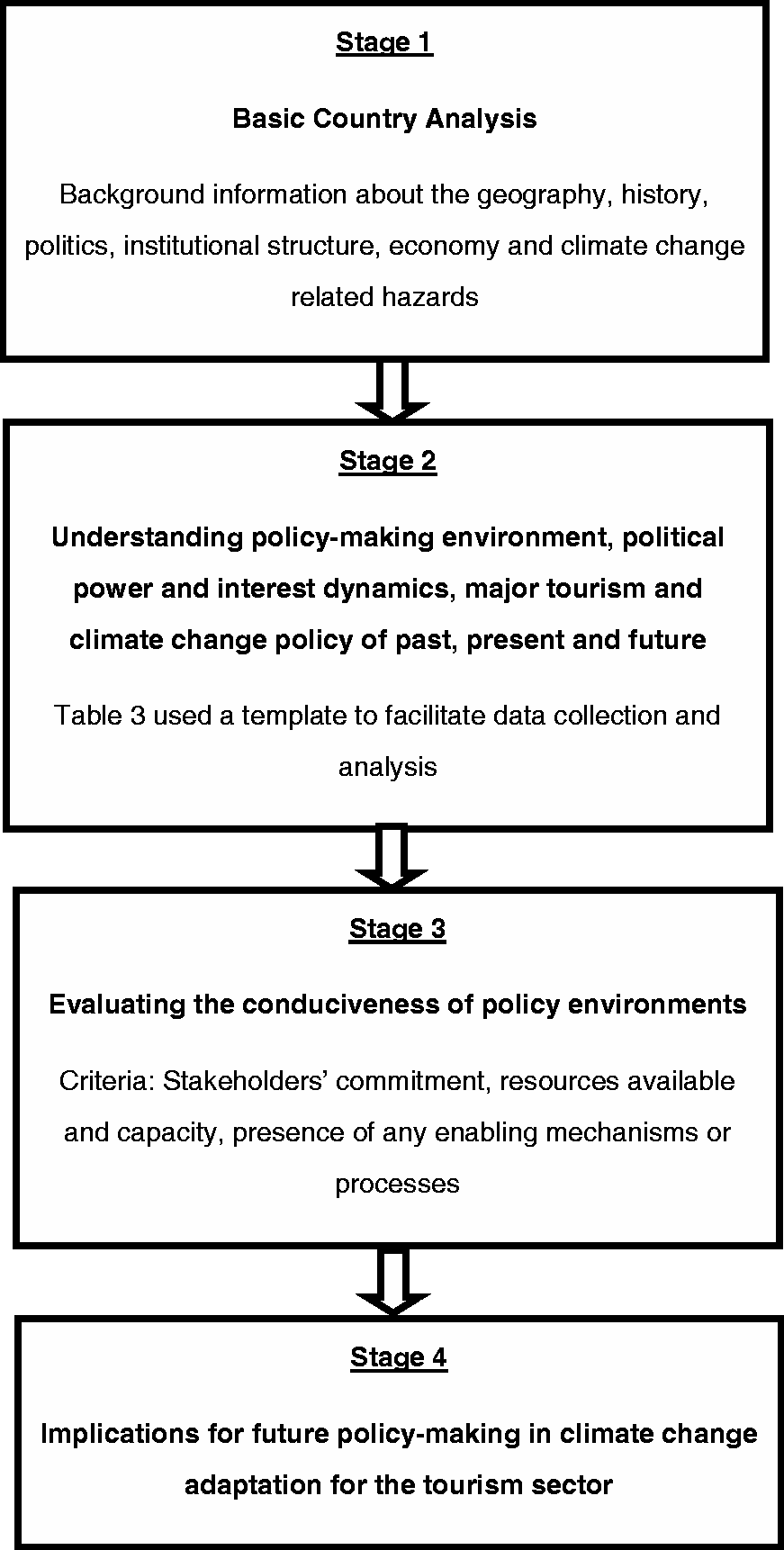
Analytical framework.
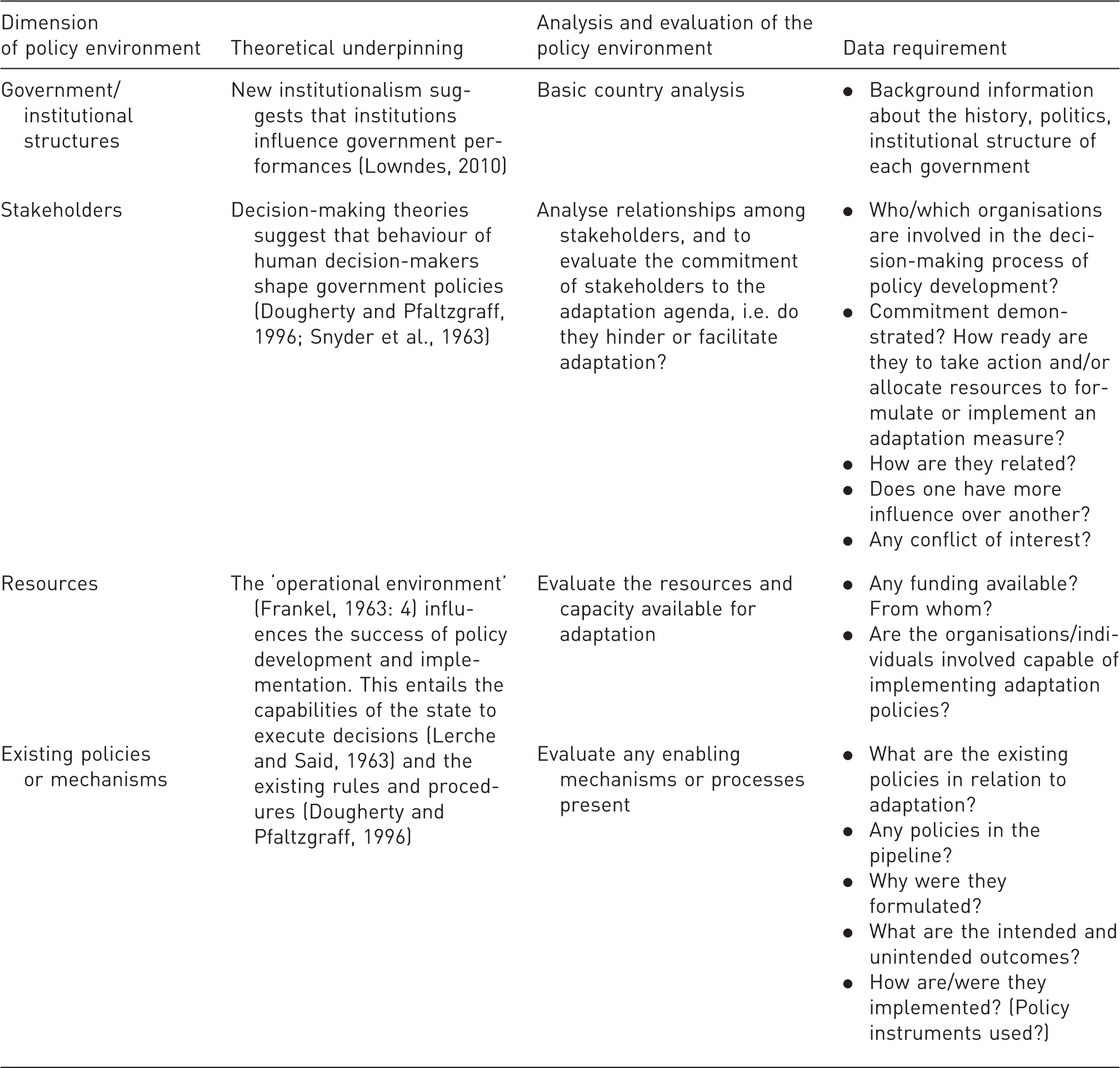
The third stage of this research was an evaluation of the conduciveness of the policy environments by examining the level of commitment the key stakeholders have towards adaptation, their capacity and resources available, and the presence of any enabling mechanisms or processes based on the questions listed in Table 3. Both secondary data (policy documents, reports by UN and other agencies) and primary data obtained by means of in-depth interviews with a range of stakeholders in the case study countries (details in next section) were used. Finally, the last stage was to conclude how the research findings have implications for future policy-making in climate change adaptation in tourism.
Primary data collection
The objectives of conducting primary research were to collect data that were not available in secondary sources, and to examine policy issues from multiple perspectives. The primary data were obtained by means of semi-structured in-depth interviews with key informants (Woodside, 2010) representing a number of stakeholder groups. The use of multiple sources helped assure the confirmability (or objectivity) and credibility of findings (Lincoln and Guba, 1985). The interviews were conducted face-to-face in 2009 and 2010 (ethics approval received in 2009). They were, on average, 40 minutes in length. A detailed set of guidelines and protocol for data collection was provided to the interviewers in advance. After the field work was completed, the situations in each case study country were monitored until the end of 2013 through secondary sources (such as newspapers and consultancy reports) and personal correspondence with some interviewees.
The sample.
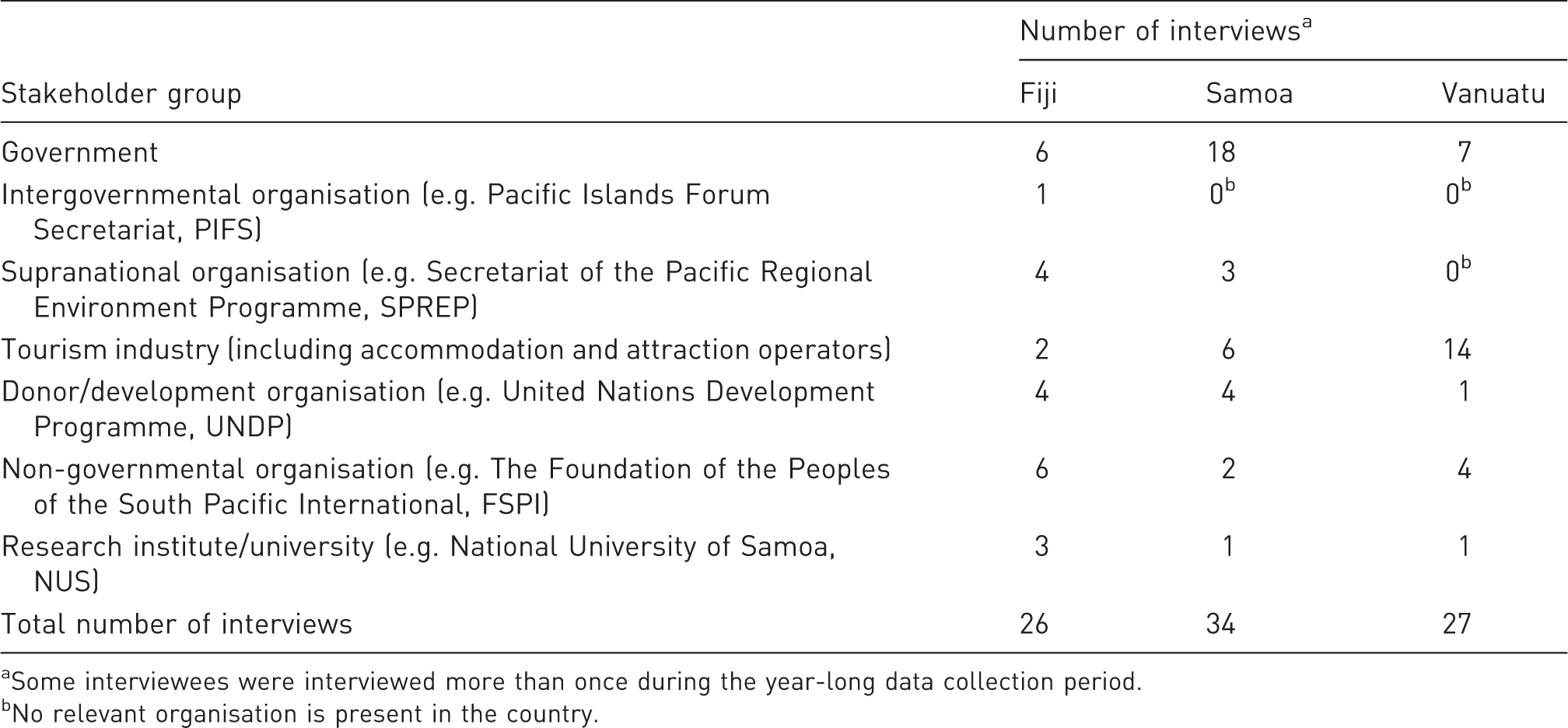
Some interviewees were interviewed more than once during the year-long data collection period.
No relevant organisation is present in the country.
Data analysis
Qualitative data collection and analysis often go hand in hand to build a coherent interpretation of the data (ibid). Throughout the process of secondary data collection and in-depth interviewing, we looked for emerging themes and kept track of concepts or ideas. This facilitated further, intensive analysis and interpretation of the data when data collection was completed. Our analysis involved constructing charts and tables to highlight patterns in the data. For example, on the question of the level of commitment of stakeholders, data were first categorised into ‘high’, ‘neutral’ and ‘low’ based on one’s readiness to take action and/or allocate resources to formulate or implement an adaptation measure or policy. Then, under the category ‘high’, suggested aspects of commitment were sorted and grouped (e.g. sources and nature of commitment). Our data were revisited for at least three times to identify the standpoints of participants on each issue and to categorise them. As Taylor and Bogdan (1998) suggest, the qualitative data need to be read and reread so that researchers can engage with the data and continually discover new ideas and interpretations. The data were also analysed and interpreted by four individuals in the research team (all with masters or PhD qualifications) to minimise bias in interpretation. Any differences or inconsistencies identified by the team would be thoroughly discussed. If necessary, additional sources of information would be sought to triangulate the data (ibid).
Findings and discussion
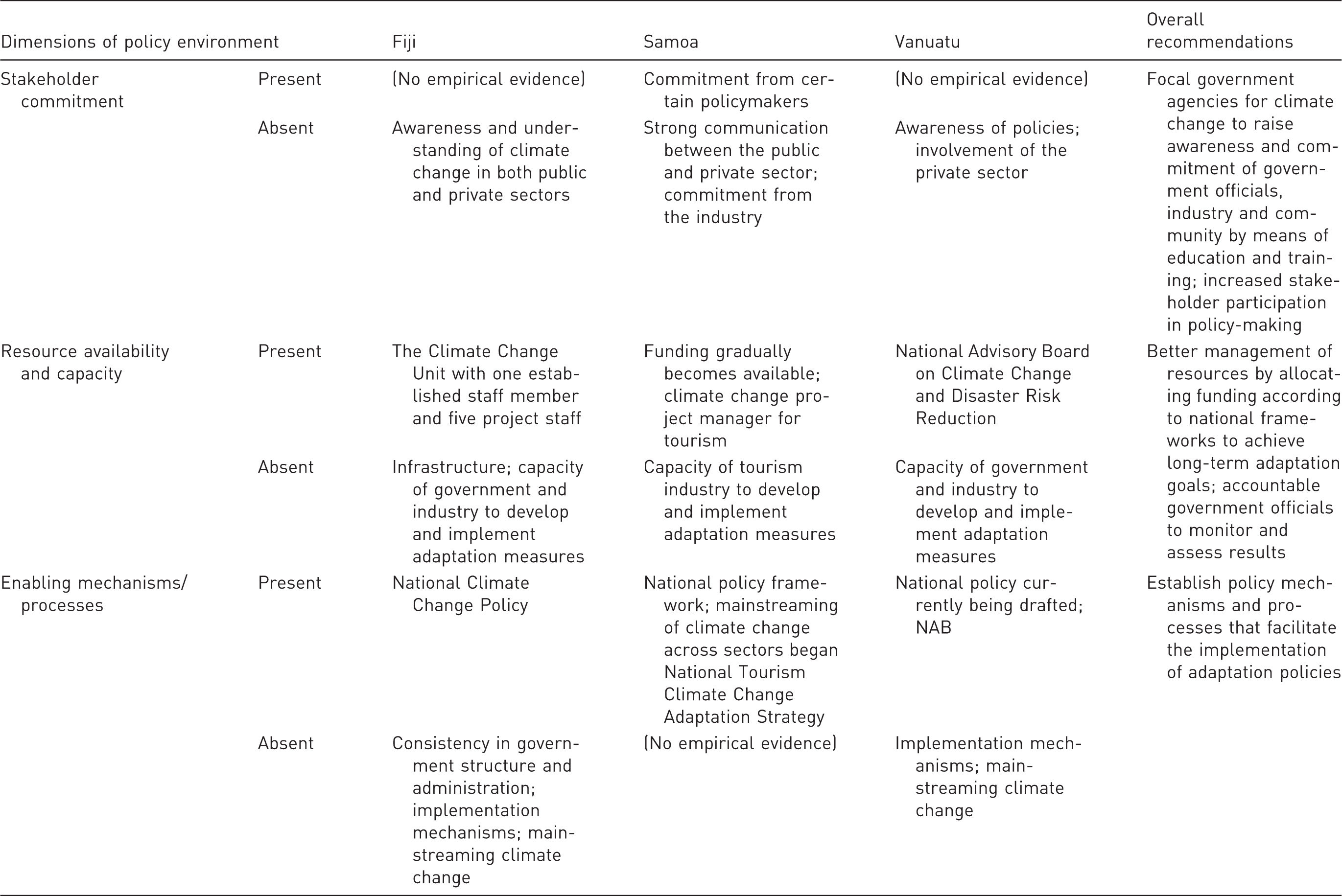
Summary of findings in three countries and overall recommendations.
Fiji
The overall institutional structure of Fiji
Fiji gained independence in 1970 adopting a bicameral Westminster Model parliamentary system (Parliament of Fiji, no date). Since 1987, Fiji has experienced several military coups. The last one took place in 2006, and as a result, military chief Voreqe Bainimarama was appointed as the interim Prime Minister in 2007 (Government of Fiji, no date), indicating that the military was still effectively in control over the government.
At the provincial level, each province of Fiji is governed by a provincial council, which has power to make bylaws, levy rates and control building construction in Fijian villages. Village (Koro) is the basic unit in the system of Indigenous Fijian Administration, headed by a chief (Turaga ni Koro) elected or appointed by the villagers (UNESCAP, no date). Municipal governments have also been established under the general supervision of the Ministry of Local Government and Urban Development. Each of the city or town councils is headed by a mayor and elected councillors, having power similar to that vested in provincial councils such as the levying of rates (Government of Fiji, no date).
Key stakeholders and their power and interest dynamics
Key actors involved in climate change and tourism in Fiji.

Source: Interview notes unless otherwise stated.
Existing policy mechanisms and resources available
The ‘Climate Change Policy: the Framework’ was developed in 2007, which provides general guidance for Fiji in developing climate change policies (DOE Fiji, 2007). In January 2012, the National Climate Change Policy for Fiji was developed, thanks to the financial support provided by international development agencies (GIZ and UNDP). The policy provides a platform for cross-sector coordination, identifies directions on national positions and priorities regarding climate change mitigation and adaptation, and provides guidelines for sectors to take climate change impacts in their planning and implementation programmes (Government of Fiji, 2012). Potential climate change impacts on Fijian tourism, among other sectors such as agriculture, transport, fisheries and so on, are briefly summarised in the policy, and key areas in mitigation and adaptation are outlined.
The Fijian government also showed an intention to integrate climate change into sectoral policies but it is yet to be mainstreamed into the tourism sector (interview notes). The Tourism Development Plan 2007–2016 identifies climate change as a risk and the need to understand climate change impacts on the tourism sector (STDC, 2007). A Global Environment Facility (GEF) funded tourism adaptation project was developed in 2006. An initial stakeholder workshop was held to discuss and identify a wide range of possible adaptation measures for tourism as well as adaptation barriers that exist in the current policy setting of Fiji. Unfortunately, at the time of writing, the project remains inactive. There has been a five-year delay in funding approval since the initial workshop, probably due to the political instability brought about by military coups (Fiji Ministry of Tourism, 2006).
Implications of the policy environment for climate change policy-making
The focal government agency for climate change (by the time when primary data were collected), the DOE, was showing a growing level of commitment to responding to climate change. A DOE officer was appointed to be responsible for climate change issues such as coordinating preparation for the Second National Communication (SNC) to the UNFCCC, climate change awareness programmes with relevant government agencies and local communities, and other adaptation projects (interview notes). The former climate change officer took over the position as the acting Director of Environment, who led the reestablishment of the NCCCT in 2011. The strategic move of the Climate Change Unit from the DOE to the Division of Political and Treaties in the Ministry of Foreign Affairs and International Cooperation may have a positive effect on pushing the climate change agenda in Fiji, which led the development of the National Climate Change Policy in 2012. Yet, it is still too early to judge its leadership on the coordination of climate change projects and implementation of the policy. In terms of the tourism sector, although the importance of climate change seemed to be recognised at both government and industry levels, our interview data indicate a lack of awareness and understanding across the tourism sector. The industry representatives were more concerned about tourism infrastructure than anything else. A FIHTA representative asserted that ‘the government does not provide sufficient infrastructure [e.g. garbage disposal facilities] for the tourism industry to develop and operate in an environmentally friendly way’ (interview, 26 October 2009, Suva). Despite a number of regional tourism strategies in place, most of them remain inactive because of ‘lack of human, capital and land resources to implement them’ (interview, 30 October 2009, Suva). The resource availability issue was attributed to a lack of consistency in policy as well as frequent turnover among government officials (interview notes). A DOT representative said that, ‘There is no consistency in policies because policies change so often with the change of government… We are still trying to push the government to pass the draft tourism legislation developed in 2006’ (interview, 26 October 2009, Suva). An interviewee from a donor and development agency also commented that ‘in many cases, policy is just an intention because a legally binding mechanism is missing’ (interview, 3 November 2009, Suva).
Implementation of policies was raised as a major issue by the interviewees across different groups. A supranational organisation’s representative who is also a former government official stated that ‘We have put in place (environmental) policies that were amazing and would be of great use to us, however, it is very hard to mainstream policies into other ministerial areas and translate them into legislation so that they can be implemented in reality’ (interview, 3 November 2009, Suva). According to an industry representative, some government officials have misconceptions about the nature of policies as ‘the government signed lots of conventions that they have got absolutely no idea about…’ (interview, 26 October 2009, Suva). The same source further commented about the government capacity, saying that ‘there [is a] certain amount of people [who] came to civil services because of political connections rather than ability and education…’ (interview, 26 October 2009, Suva).
A number of interviewees from the supranational organisation group and the donor agency group also raised the need for more resources and capacity building to improve implementation of policies. For example, a supranational organisation’s representative commented that ‘there is a lack of awareness of environmental policies within other government ministries and departments, which makes implementation difficult’ (interview, 3 November 2009, Suva). An NGO interviewee claimed the absence of reporting systems ‘that can tell people what policies are in place and how they are implemented’ (interview, 28 October 2009, Suva).
Using the three criteria for evaluating the conduciveness of a policy environment – stakeholder commitment, resource availability and capacity, and enabling mechanisms, Fiji is lacking in all three aspects. There is little awareness and understanding in climate change let alone commitment among the key stakeholders due to the limited capacity of government and industry in environmental sustainability. In terms of resources, infrastructure and human capacity are not yet available for the tourism sector to further its adaptation efforts. While a policy implementation framework in the National Climate Change Policy is present, mechanisms for implementing the adaptation policies need to be established. Changes along these three dimensions are required to ensure that the policy environment in Fiji is not hindering adaptation in the tourism industry.
Samoa
The overall institutional structure of Samoa
The Samoan Government is a parliamentary democracy. The Parliament is also known as Fono. The Prime Minister selects 12 of the parliamentarians, who are also ministers of 12 ministries, to form a Cabinet (Government of Samoa, 2010). Ministry of Natural Resources and Environment (MNRE) is a ministry of particular relevance to this study, as MNRE is the focal agency for climate change (NTT, 2005).
The Prime Minister and his Cabinet ministers collectively decide on the nation’s policy and tactical direction. A Chief Executive Officer (CEO) is hired for each ministry to oversee its day-to-day management and decision-making. These CEOs assert great influence on plans and strategies in their area of responsibility, and give advice to their ministers on major policies that require approval by the Cabinet (interview, 28 September 2009, Apia). At the local level, the 1990 Village Fono Act gives village councils authority over village law and order, health and social issues. Local civil and criminal matters can be dealt with by the village chiefs (a.k.a. Matai) (Government of Samoa, 2010).
Key stakeholders and their power and interest dynamics
Key actors involved in climate change and tourism in Samoa.

Source: Interview notes unless otherwise stated.
Existing policy mechanisms and resources available
Samoa’s decision to sign the UNFCCC in 1992 and the Kyoto Protocol in 1998 can be considered the starting point of the country’s significant policies on climate change (Wong et al., 2012b). As one of the non-Annex I countries and LDCs under UNFCCC, Samoa receives financial and technical support from the LDC Fund (LDCF) to carry out, inter alia, the preparation and implementation of NAPA. NAPAs were designed to provide a process for LDCs to identify priority activities that respond to their urgent and immediate needs with regard to adaptation to climate change (NTT, 2005). In addition, as part of its commitment to the UNFCCC, Samoa produced the First National Communication (FNC) in 1999 and SNC in 2009. They are documents that record a country’s inventory of GHG emissions and mitigation, as well as other activities related to climate change issues (UNFCCC, 2010).
Samoa’s NAPA was completed in 2005. It laid important groundwork for existing climate change policies for the country, as it provided a detailed account of the current risks and vulnerabilities, and identified nine priority projects, one of which was for tourism (entitled ‘Sustainable Tourism Adaptation Project’; NTT, 2005). It proposed that the industry sectors and communities should be jointly involved to develop procedures and protocols in response to climate change and climate variability (NTT, 2005). Funding for these projects has been provided in phases by the UN and donor countries such as Australia. In 2009, funding for tourism became available from AusAID (US$4 million) as well as LDCF (US$4.95 million) (Samoa-Australia Partnership for Development, 2009; interview, 28 September 2009, Apia). The formulation of plans to implement the tourism project then began. Part of the money has been used to hire a climate change project manager for STA, who commenced duty in mid-2011. Some funding may also go into a project called ADAPT, which involves the building of a carbon-neutral village or resort using green technologies (interview, 13 January 2010, Apia).
The 2005 NAPA report also prompted the development of Samoa’s climate risk profile (MNRE, 2007a) and the National Policy on Combating Climate Change in 2007 (MNRE, 2007b). The latter establishes a regulatory framework to facilitate the country’s responses to climate change (MNRE, 2007b). Major outcomes so far include the 2008 National Greenhouse Gas Abatement Strategy (MNRE, 2008) and the 2009 National Climate Change Summit (interview, 30 September 2009, Apia).
Our findings also show that efforts to address climate change challenges in Samoa have progressively influenced the country’s policy-making. In other words, it is not only the MNRE that is taking on the climate change agenda but other government bodies, too. For example, disaster management and coastal infrastructure management were made priorities in the Ministry of Finance’s Strategy for the Development of Samoa (SDS) 2008–2012 as adaptation measures (MOF Samoa, 2008). The 2011 Strategic Programme for Climate Resilience (SPCR) that is funded by Multilateral Development Banks (US$25 million) also emphasises the importance of mainstreaming climate change in all government policies (MOF Samoa, 2011). The trend to mainstream climate change may be attributed to increased awareness of top policymakers about climate issues and the advice that the government receives from funding bodies. In the case of SPCR, advice was given by a number of experts from the World Bank and Asian Development Bank while the programme was being devised (Wedderburn, 2010).
Most of the climate change related policies in Samoa were developed in a general, national context, and were not specific to any industry sector, until in late 2012, the National Tourism Climate Change Adaptation Strategy for Samoa (NTCCASS) 2012–2017 was launched. The strategy was funded by AusAID under the Samoa–Australia Partnership for Development Project (NAPA4) (Government of Samoa, 2012). The previous non-tourism-specific policies essentially provided a statewide framework for subsequent mitigation and adaptation actions, including those that would be undertaken by the tourism sector. For example, the tourism projects in drafting (e.g. ADAPT) are part of the implementation of NAPA; and building the resilience of coastal tourist facilities is one of the strategies proposed in the CIM Plans. The study of non-tourism-specific policies is, therefore, crucial when examining adaptation issues for the tourism sector. The NTCCASS provides situational analysis of climate change impacts on tourism and strategic direction for the tourism sector towards building its resilience and capacity to adapt to climate change. Aligned with NAPA, adaptation implementation will expectedly be resourced through future NAPA initiatives (Government of Samoa, 2012).
Implications of the policy environment for climate change policy-making
We believe that the existing policy environment in Samoa is conducive to the tourism industry to adapt to climate change. The focal government agency MNRE is showing some level of commitment to combating climate change (such as that from the former CEO and Assistant CEO), although there seems to be neglect of the risks facing the tourism sector on the part of the industry stakeholders. Most of the tourism business owners we spoke to either have little understanding of the risks or do not feel that there is an urgent need to act (multiple interviews, 7 June 2010, Manase; 21 January 2010, Lano; 28 October 2010, Apia). In terms of resources, funding has become available from AusAID and LDCF since 2009 for the implementation of tourism adaptation strategies. This includes the recruitment of a climate change project manager for STA. Finally, a National Climate Change Policy framework (i.e. the National Policy on Combating Climate Change) and an institutional arrangement for policy implementation, namely the NCCCT, have already been established. Based on these observations, one can argue that Samoa provides an arena that allows the development of what may eventually be effective adaptation strategies for the tourism industry.
However, Samoa and its tourism industry still have a long way to go in their adaptation journey. Considering the five types of adaptation measures suggested by Scott et al. (2009), our research shows that most of Samoa’s climate change initiatives are policy-level adaptation. While they provide a good foundation for further actions and projects to protect coastal infrastructure such as CIMP have begun, more concrete adaptation measures such as those suggested in Table 2 still need to be assessed and implemented where applicable. Furthermore, STA and SHA should take a more proactive role in dealing with issues of vulnerability and resilience of the tourism sector, and start engaging the industry to collectively develop solutions. Communication and the relationship between the public agencies and members of the private sector need to be significantly strengthened.
Republic of Vanuatu
The overall institutional structure of Vanuatu
Vanuatu gained independence in 1980. It is a sovereign democratic state (The People of Vanuatu, 1980) and the government structure is based on the Westminster model (Parliament of Vanuatu, 2009). Under the arm of the Department of Local Authorities (under the Ministry of Internal Affairs) sit six provinces (Torba, Sanma, Penama, Malampa, Shefa and Tafea) and three municipalities (Port Vila, Luganville and Lenakel) (Government of Vanuatu, 2010).
In 2006, the Vanuatu government introduced a policy document entitled the ‘Priorities and Action Agenda 2006–2015’, which sets out the overarching policies for the country and provides a guiding policy document for the individual ministries, departments and other government bodies by highlighting key priority areas. The document is relevant to tourism and climate change as it sets out direction for the tourism sector in the medium term by making private sector growth in tourism a top priority and provides strategic direction for the meteorology departments that incorporates climate change issues, such as the strategy of ‘Building climate change issues into National Development Plans’ (Government of Vanuatu, 2006: 42).
Key stakeholders and their power and interest dynamics
Key actors involved in climate change and tourism in Vanuatu.

Source: Interview notes unless otherwise stated.
From the primary data collected in Vanuatu, it becomes obvious that there is a limited knowledge of the government policies within the tourism industry. A key industry player mentioned: ‘there is no awareness of policies’ (interview, 30 November 2009, Luganville) and was supported by most of the other interviewees from the industry group. The reasons for this are not clear, but it may be explained by a lack of interest from the private sector – the majority of expatriates being climate change sceptics (Klint et al., 2012a) – and the lack of implementation and enforcement of policies that would make the policies more visible to the general public. Another interviewee from the industry group thought that this might be because the ‘expatriates are not doing enough to put pressure on the government’ (interview, 4 December 2009, Port Vila). Such apathy is possibly caused by their feelings of limited outcomes of the private sector’s involvement in the policy-making process, as a private sector respondent said, if she can see a long-term benefit from [a government and/or development agency] workshop, she would attend. But she is not confident about this (interview, 29 November 2009, Aore Island near Luganville).
Within government, one interviewee highlighted the need for all government departments to work together, as ‘everything will be impacted by climate change’ (interview, 4 December 2009, Port Vila). Nevertheless, this same interviewee provided examples of current projects involving government where cross-sectoral dialogue has not involved all governmental stakeholders. As the respondent continued, ‘This [cross-sector] cooperation has only just taken off over the last 4 to 5 years’ (interview, 4 December 2009, Port Vila). The completion and implementation of the National Climate Change Policy may help encourage the cross-sectoral dialogue, as ‘the main purpose of the policy is to mainstream climate change in the decision-making process of all sectors’ (interview, 24 November 2009, Port Vila) as highlighted by an interviewee in the Government pool.
Existing policy mechanisms and resources available
Six explicit climate change policies were identified in Vanuatu: (1) NAPA 2007, (2) PACC 2009, (3) Pacific Islands Framework for Action on Climate Change (PIFACC) 2006–2015, (4) A Climate Change Policy and Implementation Strategy Discussion Paper for Vanuatu, (5) The Forest Policy 2010–2020 (see Klint et al., 2012b for the background and development of the first four policies) and (6) National Climate Change Adaptation Strategy for Land-Based Resources 2012–2022 (second draft). The PIFACC is a regional policy, whereas the other four policies are national policies of Vanuatu. All five are crucial policies in Vanuatu and are implicitly related to the tourism sector’s adaptation to climate change.
In recent years, the Vanuatu Government has acknowledged the importance of the tourism sector to secure economic growth and has developed a number of policies related to tourism. According to an interviewee from the Government, ‘the national tourism office was first established’ in the 1980s and ‘in the early 1980s, it was decided by the national planning office that a sector plan should be written to guide further development of tourism and to further grow this sector’ (interview, 1 December 2009, Port Vila). This policy was brought to life in 1995 when the World Tourism Organisation prepared a tourism development master plan for Vanuatu, which was endorsed by the Government (VNSO, 2007). The Vanuatu Tourism Development Master Plan 2004–2010 sets out the overall policy for the tourism sector, and will be implemented through the Vanuatu Tourism Action Programme (VTAP) 2008 and its sub-sector plans. The tourism policies do not acknowledge climate change or include explicit climate change adaptation measures, yet elements of these plans will help the sector adapt to climate change. For example, one of the adaptation measures of the VTAP 2008 is to support ‘the geographical spread of tourism by incorporating provincial tourism products and icons into the VTO [Vanuatu Tourism Office] marketing, hence diversifying the product offering and enhancing the overall resilience of the tourism sector’ (Klint et al., 2012b: 265).
In late 2012, a community tourism and climate change project funded by GIZ through its Coping with Climate Change in the Pacific Island Region Programme with SPC made resources available for Vanuatu’s tourism sector, which aims to strengthen the capacity of Vanuatu to cope with climate change impacts and associated risks on the community tourism sector. One of the experts on the project is an author of this paper. She has learnt that the project involves two pilot sites (Nguna-Pele Islands and Havannah Harbour) where comprehensive vulnerability assessments are being undertaken and adaptation opportunities will be identified and implemented. The year 2012 also saw the establishment of the National Advisory Board (NAB) on Climate Change and Disaster Risk Reduction (NAB Vanuatu, 2012). It is a step forward to cross-sectoral (tourism included) public–private partnership.
Implications of the policy environment for climate change policy-making
A number of implications for the development of climate change adaptation policies as well as general policies became apparent from the primary data. The first is related to climate change awareness. An interviewee from the Industry group showed the interviewer a piece of paper and said the following while he pointed at the piece of paper, ‘a person once told me that if you take a piece of paper and say this is the environment, then climate change is just a tiny little corner of the paper’ (interview, 30 November 2009, Luganville). This was further backed up by an interviewee from the Government, who identified ‘a lack of awareness’ in relation to policies in the following areas: (1) what is out there in terms of knowledge, (2) what are the impacts of climate change on tourism, (3) what needs to be done, (4) what are tourism ‘tides’, i.e. seasonality and trends and (5) what are the skills within tourism (interview, 23 November 2009, Port Vila). This limited climate change awareness may hinder the successful implementation of any approaches aimed at addressing the effects of climate change and may leave the nation unprepared to deal with the effects of climate change (Klint et al., 2012b).
The second implication that emerges from the findings involves funding issues. An interviewee from the Industry said that there is ‘no back-up or funding from the Government to deal with climate change and that it is the rest of the world that will have to pull up the Pacific countries’ (interview, 27 November 2009, Luganville). Although this is a very cynical view of the situation there is some truth in the matter as Vanuatu, a LDC cannot afford to allocate sufficient resources – an issue common to the most vulnerable communities and countries (Michel, 2010) – and very few policies explicitly deal with climate change and tourism (Klint et al., 2012b). Although significant aid money has been received by the nation, this lack of explicit climate change policies may be caused by the fact that many of the government’s policies are about boosting the economy, as highlighted by an NGO representative (interview, 24 November 2009, Port Vila) and a lack of ownership of externally developed policies (Klint et al., 2012b).
Finally, the lack of implementation of policies needs to be highlighted. From the interviews, there seemed to be a general lack of awareness within the industry of the policies relevant to the tourism sector. As one interviewee claimed he was ‘not aware of any policies, as they are completely inactive’ (interview, 4 December 2009, Port Vila). Thus, there seem to be some awareness of the presence of documents, but either the implementation of these are not transparent or the policies are not implemented. More statements like this became apparent during interviews with the industry group. Fourteen industry representatives were interviewed (of which 13 were Expats and one was ni-Vanuatu). It was not only within the industry group that there were concerns related to the drafting and implementation of policies. This concern was further raised by an interviewee from the Government pool (seven interviews covering both national and provincial levels of government) of interviews (interview, 24 November 2009, Port Vila), who advised that the climate change policy had been in the drafting stage since 2002 and had not been completed due to a disagreement whether the policy document and the implementation strategy should be in one document or in two. Furthermore, another interviewee from the Government mentioned that there is a real issue in relation to the implementation of plans, as the Government official stated ‘will there be enough funding to implement the plan within this timeframe?’ (interview, 26 November 2009, Luganville)
Using the three criteria for evaluating the conduciveness of a policy environment, Vanuatu will need to improve in all three aspects. Similar to the situation in Fiji, there is little awareness and understanding of climate change, not to mention commitment, among the key stakeholders. Resources for enhancing the capacity of the public sector in dealing with climate change are required. Mechanisms for implementing adaptation policies also need to be established.
Conclusion and recommendations
The paper evaluates the conduciveness of the policy environment to climate change adaptation for the tourism sector in the South Pacific using Fiji, Samoa and Vanuatu as case studies. These countries are three of the major tourist destinations in the region. An analysis of their policy environments is important because it helps inform the future directions of climate change adaptation strategies and plans for the tourism sector in the South Pacific.
As Table 5 shows, based on our assessment conducted up to the end of 2013, the three island states are at various stages in developing a conducive policy environment for climate change adaptation. What all countries have in common is the presence of a National Climate Change Policy framework – or at least a draft in Vanuatu. This can be attributed to the efforts of international development agencies, in particular, the UNDP for driving NAPA. This observation is in line with what the political science literature suggests, that is, actors who have the capacity to control resources – in this case the development agencies and their funding – have the power to influence policy-making (Heywood, 2004). Subsequently, the policy frameworks that these agencies helped generate have become part of the ‘institution’. The introduction of framework policies in the case study countries is also congruent with what Kooiman (2003) and Hall (2011a: 657) would describe as a ‘second order change’ in governance, which is characterised by ‘new policy instruments and techniques and policy settings’. What all three countries lack, however, is awareness of climate change issues among tourism industry players and their capacity to adapt. With continuous implementation of its coastal infrastructure protection plan and the employment of a climate change project manager in its national tourism organisation, Samoa is relatively advanced in the progress it makes in adaptation when compared to Fiji and Vanuatu. It is also the only country where we can find empirical evidence to support the presence of all three facilitating elements in its policy environment. The difference in progress can be explained by a period of political instability between 2006 and 2009 and a lack of institutional coordination in the case of Fiji; and in the case of Vanuatu, the dominance of foreign (expatriate) tourism business owners, who show little concern for the potential impact of climate change (Klint et al., 2012a), and the lack of implementation of policies. Samoa, on the other hand, had influential policymakers who were committed to the climate change agenda and is institutionally better organised, which in turn facilitated the availability of funding from donors. The findings show that adaptation policy development in tourism is highly complex for it involves multiple institutions and stakeholders who have different power and interests. It is also challenging because adaptation is still a relatively ‘new’ policy problem, which even some developed countries lack the expertise and resources to address (Scott et al., 2012). Nevertheless, the fact that Samoa is making progress means that it is possible for other SIDST in the region to do the same.
Findings from this study illustrate that the tourism industry in the South Pacific region, despite its importance and vulnerability, lacks preparedness in adapting to the negative impacts of climate change. The SIDST can improve the conduciveness of their policy environment in the following three ways. First, government departments or ministries that are charged with the responsibility of driving the climate change agenda should raise the awareness and commitment of government officials, industry and community, particularly in the case of Fiji and Vanuatu by means of training and education. The stakeholders, members of the private sector, industry associations, Church and community leaders included, ought to be more proactive and take ownership of the climate change issues in their own country and work closely with the government. Such approach is called ‘networks’ in governance literature (Hall, 2011b: 443). Increased stakeholder participation in policy-making would help increase the effectiveness of policies (Jopp et al., 2010).
Second, resources have to be better managed. Our findings show that with the active involvement of development or aid agencies such as the UNDP in climate change issues in the South Pacific region, availability of funding for adaptation is not necessarily a critical problem. What governments can improve on is the management of the funding or resources once they are received. In addition to complying with guidelines set by the aid agencies or donors, the funding and resources obtained should be allocated by the finance ministry, for example, according to the framework set out by the National Climate Change Policy in individual countries. They should not be used on a one-off, ad hoc basis, but rather as the means to achieve long-term adaptation goals. For instance, resources can be used to increase the capacity of government bodies and tourism stakeholders to develop and implement adaptation measures, and to mainstream climate change in all policy areas (ADB, 2009). Accountable government officials should be appointed to monitor and assess results. Furthermore, destination management organisations and/or industry associations need to continue to champion the tourism industry so that tourism is kept high on their government’s and funding bodies’ agenda.
Finally, as traditional institutionalists would argue, policy mechanisms and processes that facilitate the implementation of adaptation policies have to be established. The recruitment of a climate change project manager for tourism in Samoa is a good example to follow. In the case of Fiji, consistency and stability in government structure and administration are much needed. As for Vanuatu, cross-sectoral communication can continue to be strengthened through the newly established NAB to ensure the commitment to climate adaptation across all sectors. The involvement of the private sector in the policy-making process should also be enhanced. It is important that all three dimensions are addressed as they play equally critical roles in contributing to successful adaptation policy formulation and implementation.
This paper contributes to the currently limited body of literature that focuses on climate change adaptation policy issues in the tourism industry. The pluralistic approach of combining ‘new institutionalism’ and ‘decision-making’ theories offers an original and unique perspective to understand the policy environments. The study shows how theories from the political science literature can be applied in the context of tourism and climate change. The case studies in three important destinations in the South Pacific offer insights into the challenges the countries face, but at the same time, facilitate a good understanding of the general situation in the region. The study also provides constructive policy recommendations based on the in-depth analysis made.
Further research shall be conducted to explore other avenues to facilitate adaptation. For example, network theories or social network analysis can be employed to find out how networks among stakeholders can contribute to developing and implementing adaptation measures in the tourism sector. Furthermore, researchers who study SIDST in other regions may consider replicating the method of this study and compare the findings between two regions in order to explore common tourism-specific SIDST adaptation measures.