







Abstract
The purpose of this study was to explore the implementation of internal branding in international tourist hotels and to investigate the impact of internal branding and employee brand commitment on employee brand behavior. Based on the results of 661 questionnaires returned from a sample of international tourist hotels in Taiwan, internal branding and employee brand commitment have a significant effect on employee brand behavior. Moreover, internal branding and employee brand commitment and behavior differ significantly according to personal variables such as age and work experience, and in different categories of tourist hotels. The results of this study imply that hoteliers could shape employee attitudes and behavior through internal branding, and it is therefore recommended that internal branding be added to corporate education and training. In the extant literature on the hospitality industry, the effect of internal branding on organizational performance and effectiveness is unclear; the present study contributes to academic research in clarifying this link.
Introduction
According to a definition provided by the American Marketing Association, a brand is a name, terminology, symbol, symbol design, or combination of the above. The purpose of a brand is to identify products or services of a particular enterprise or group of sellers that differ from the products or services of competitors (King and Grace, 2008). A brand is much more important than an associated product, since it is the only thing that sharply differentiates the product from similar products that can satisfy the same consumer demand. Furthermore, in the minds of consumers, a brand represents a complex combination of a company’s corporate image, experience, and commitment to its customers. Therefore, to consumers, brand denotes a commitment or a guarantee of quality. To businesses, brand is a valuable intangible asset, as well as a means by which companies gain a competitive advantage.
Service industries have the characteristic of intangibility. Thus, branding is an indispensable factor in service industries, since a strong brand can increase customers’ trust and reduce their psychological and financial risks when purchasing intangible products or services (Berry, 2000; Kimpakorn and Tocquer, 2010). In the 21st century, the cornerstone of service marketing is branding. In the catering industry or the hotel industry, the establishment of a brand is a particularly important issue ((Berry, 2000; King and Grace, 2006; Lee and Back, 2008, 2010; Nam et al., 2011). However, for a long time, companies have focused their marketing resources on external communication with consumers (Aurand et al., 2005; Chong, 2007; Hankinson, 2004; Lee and Back, 2008, 2010; Nam et al., 2011; Vallaster, 2004), including advertising, spokespersons, and public relations. This approach allows customers to understand products and services and, subsequently, make purchases, and helps to create a specific image in the minds of consumers, thereby distinguishing enterprises from those of their competitors. Moreover, most of the literature on branding has adopted the external point of view, which postulates that companies should adopt a strategic or tactical approach to attract customers (Hankinson, 2004; Kim and Kim, 2005; Kim et al., 2011; Ladhari et al., 2008; Nam et al., 2011; Roh and Choi, 2010). Of course, all of the marketing activities of an enterprise should be focused on brand positioning and image in the minds of customers. However, brand internalization (internal branding (IB)) is every bit as important as the external point of view (Back and Parks, 2003; Keller, 1999; Mitchell, 2002). Even if an enterprise has told customers that its brand of products or services is different, the employees may not know it (Mitchell, 2002).
Brand is even more important in the service industry (Back and Parks, 2003; Boo et al., 2009; Keller, 1999). Many of the world’s successful service brands have one common feature: employees are able to provide customers with a unique brand experience (Boo et al., 2009; Hardaker and Fill, 2005; King and Grace, 2010; Mosley, 2007) because they reflect the spirit, culture, orientation, and current situation of the brand. In other words, they are part of the business (Dortok, 2006). The hospitality industry also needs to rely on the ability and willingness of employees to carry brand commitment (BC) to the customers (King, 2010; Punjaisri et al., 2008). The successful transmission of BC requires the input of every employee. When buying or using a product or service associated with a brand, normally customers only communicate with frontline employees and not with management or marketing personnel behind the scenes. Nevertheless, all grassroots staff members, middle-level managers, and executives must understand and agree with the essence of the brand (Aurand et al., 2005). In addition, the brand itself is a complex of functional and emotional values (Bergstrom et al., 2002). While the functional value can be easily and quickly copied by competitors, the emotional value establishes a difference or uniqueness (Mosley, 2007; Tsai et al., 2010). In other words, the experience of the brand cannot be imitated by competitors.
In the hospitality industry, many enterprises have implemented IB (Berry, 2000; Burmann and Zeplin, 2005; Chong, 2007; Harrison et al., 2005; Miles and Mangold, 2005; Mosley, 2007; Papasolomou and Vrontis, 2006). For example, Starbucks employees must strongly agree with the spirit of the brand and let customers understand and feel the Starbucks commitment through their actions, including attitude, knowledge, professional competence, and enthusiasm. All of these help to create a distinctive coffeehouse experience for customers. Therefore, regardless of location, Starbucks can make their customers feel unique. Another example of the IB approach is Ritz-Carlton, which promotes the idea that the employee is the best brand ambassador (Lee et al., 2006; Line and Runyan, 2012).
Studies conducted in the context of IB can have significant consequences. Because the frontline employees are in direct face-to-face contact with customers, their behavior will have a direct impact on customer perception of the enterprise. The success or failure of a hospitality enterprise depends not only on tangible assets but also on the comprehension of its employees. Once employees clearly understand the direction and goal of brand development, they will be able to adjust their behavior in their daily work. If the employees find that certain aspects of their duties run counter to this goal, they are then in a position to improve the corporate products or services to create a better brand experience for customers. Therefore, clarifying whether the employees support the brand is particularly important (Mangold and Miles, 2007). The consistency of employee behavior is the most important factor for strengthening brand equity (Boo et al., 2009; King and Grace, 2006, 2010; Nam et al., 2011). Conversely, inconsistent behavior will lead to a gradual decrease in brand equity (King and Grace, 2006; Nam et al., 2011; Samli and Frohlich, 1992; Tsai et al., 2010). In the extant literature on the hospitality industry, the effect of IB on organizational performance and effectiveness remains unclear. Clarification of this effect could be one of the contributions of the present study to academic research.
The purpose of this study was to explore the implementation of IB in international tourist hotels and to investigate the impact of IB and employee BC on employee brand behavior (BB).
Literature review
This section summarizes the operational definitions of the variables being studied, including explanations of their significance in the context of this study. These variables are IB, employee BC, and employee BB. In addition, each hypothesis is logically developed and justified.
IB
IB originated from a strategic, inside-out point of view. According to the perspectives of Barney’s resource-based theory (1991), the competitive advantage of an enterprise is founded on the organization of internal resources, and the operation of these resources will generate the ability of the enterprise. As the value, rarity, and uniqueness of the resources increase, and the availability of alternatives decreases, the resources become core resources, making it possible to transform the ability of the enterprise into core competitiveness. By virtue of core competitiveness, enterprises develop valuable and unique strategies that are used to defeat their competitors and gain a competitive advantage (Tsai et al., 2010).
In accordance with Punjaisri et al. (2009), IB is defined in this study as a nurturing process whereby employees are dialoged and trained with brand knowledge. Such a process enables employees to understand the meaning of a corporate brand and pass on a consistent brand experience to customers. In the hospitality industry, in particular, employees are both internal resources and a part of the product. Hence, employee quality is an important factor (King, 2010), and the employees should be the primary marketing target of managers. If the employees do not provide appropriate brand service, a hotel will be unable to obtain effective overall performance (Bowen, 1997; Tsai et al., 2010). Brand equity is particularly evident in the high-touch service industry (De Chernatony et al., 2004), because customers can perceive the differences between different brands (Chong, 2007). Therefore, employees should be able to understand and support the brand goal, possess the skills and training to perform the work, and maintain customer satisfaction.
According to Free (1999) and Mitchell (2002), the goal of IB is to create a special emotion by allowing employees to connect to a corporate brand and go beyond the experience of other brands. IB enables front-office employees to have a brand vision in their minds and comply with the brand spirit in any decision. This ensures that guests can understand the BC that hotels want to convey and that employees can successfully transmit that BC to the customers. Thus, IB allows the brand vision to be achieved through the daily tasks of the employees.
Papasolomou and Vrontis (2006) declared that in order to build a corporate brand through the employees, it is essential that internal communication be used to imbue the employees with brand positioning and commitment to customers. In this manner, employees can acquire the brand knowledge and ability to perform the tasks delegated to them by the enterprise. Moreover, according to de Chernatony and Segal-Horn (2003), the purpose of the IB process is to motivate employees to acquire brand knowledge and understand BC. Ottenbacher (2007) noted that for employees in the hospitality industry, simple training in basic service skills is not sufficient. It is also essential to augment their knowledge of the brand or the special skills and attitudes associated with the brand. Hardaker and Fill (2005) showed that a service brand relies on IB to enable employees to deliver BC. Furthermore, Chong (2007) and De Chernatony et al. (2006) argued that an enterprise should help employees internalize the core values of the brand into their attitudes and behavior, deeply rooting these values in key employees, and materializing them through their actions. Thus, the point of contact between each employee and customer becomes an opportunity and is the key to implementing BC (Henkel et al., 2007). Gapp and Merrilees (2006) claimed that once employees understand and accept a corporate brand, they will adjust their attitudes and behavior in accordance with brand values, which is good for both customers and employers.
Mosley (2007) declared that the purpose of IB is to develop and enhance shared values between employees and enterprises. These values typically embody the corporate mission or vision, and employees and brand are closely linked together through this procedure. In addition, Vallaster and De Chernatony (2005) noted that once employees have internalized the brand values, they will maintain the established standards of the brand during customer contact at any time or place. Punjaisri and Wilson (2007) also argued that the purpose of IB is to ensure that employees recognize and believe in the brand values and pass them on to customers. The stronger the employees’ recognition of the brand, and the deeper their commitment and loyalty to it, the more their behavior will benefit the brand. Indeed, De Chernatony and Segal-Horn (2001) claimed that the purpose of IB is to communicate with and educate employees, while enhancing their knowledge of, and emotional response to, the brand.
When employees have a clear understanding of the knowledge and value of the brand, the situation will not only enhance the brand knowledge and emotional understanding but also improve the enterprise performance (Thomson et al., 1999; Tsai et al., 2010). Understanding includes both knowledge and emotion, meaning that employees must know the impact of brand knowledge while also understanding the importance of BC. Knowing only one aspect is not sufficient (Thomson et al., 1999; Thomson and Hecker, 2000). Therefore, enterprises should improve their employees’ understanding of brand knowledge and BC through internal communication and training to create the best brand employees.
Employee BC
In accordance with Kimpakorn and Tocquer (2010), this study defines employee BC as an active relationship with the organization that makes employees willing and proud to share their brand knowledge with others. Such employees are psychologically and affectively committed to supporting the brand. Miles and Mangold (2004) suggested that lack of employee commitment to a brand may result in negative word of mouth concerning the enterprise or failure to deliver the customer experience specified by the BC. This, in turn, may affect the meaning and image of the brand in the minds of the relevant stakeholders and may also hurt brand equity.
Kimpakorn and Tocquer (2010) declared that, in the service industry, employees need to understand the meaning of the corporate brand in the minds of customers but, more importantly, employees must be committed to supporting the brand and passing on a consistent brand experience to customers. In the service sector in particular, employees deliver the brand experience to customers through their services, which must not only effectively create the brand spirit and values in the minds of customers but also allow customers to develop an emotional connection to the brand. Consequently, employees in the hospitality industry must be committed to the corporate brand. If a hotel has strong brand equity, it must also have a high degree of BC from employees. Thus, managers must inform their employees of the importance of employee BC and BB (Kimpakorn and Tocquer, 2010).
IB and employee’s BC
Punjaisri et al. (2009) noted that IB will affect an employee’s attitude and behavior, and that an employee’s brand recognition will affect his or her BC, thereby affecting brand loyalty. Punjaisri et al. (2009) also noted that in IB, internal communication and training should be used to educate employees on the BC and how to pass it on, and suggested that such an approach will significantly impact employee attitudes and behavior. If brand ideology is successfully instilled in the employees, it will influence their attitudes and behavior (Ind, 2003; Miles and Mangold, 2005; Papasolomou and Vrontis, 2006).
Interestingly, De Chernatony and Segal-Horn (2001) noted that a successful service enterprise is especially dependent on the behavior of employees with brand knowledge and BC to maintain the brand. Also, De Chernatony and Cottam (2006) argued that the foundation of a successful service brand is that employees have a high degree of knowledge and a clear understanding of the brand, and that the employees’ grasp of brand knowledge is the key to passing on the BC. If employees do not possess adequate brand knowledge, they will not be able to realize the brand vision (Berry, 2000; Miles and Mangold, 2004). In addition, the service itself has the characteristic of heterogeneity, and the employees’ relevant brand knowledge can overcome this uncertainty (De Chernatony and Segal-Horn, 2001; Vallaster and De Chernatony, 2005). Thus, we make the following assumption in this study: Hypothesis 1: IB has a significant impact on employee BC.
Employee BB
In accordance with Aurand et al. (2005), employee BB is defined in this research as a spontaneous interaction or actions with the organization and customers in which individuals act as the best brand employees to promote corporate brand values to others and to strengthen the brand. Aurand et al. (2005) suggested that when employees have a high degree of commitment to the brand, they will bring BC into their work (i.e. convey the brand experience to customers through their performance and behavior). Thus, when employees have BC, they will work hard to achieve business goals or reflect the values of the enterprise through their behavior (Kazlauskaite et al., 2006).
Because brand values can drive the behavior of employees, De Chernatony et al. (2004) declared that they play an important role in the experience economy. Vallaster and De Chernatony (2005) suggested that the implementation of “employees as the brand ambassadors” (p. 182) depends not only on their grasp of brand knowledge and corresponding abilities but also on the full support of the enterprise. Only when employees internalize the enterprise’s values will they be able to achieve the enterprise’s goals. King and Grace (2010) stated that an enterprise must, at least, transfer relevant brand information to employees. On this basis, in addition to imparting brand knowledge to their employees through effective and systematic approaches, enterprises must also have employees that embrace the brand values. Employees can obtain relevant brand information through formal or informal corporate channels; such information includes knowledge of commitments to the outside world (customer expectations), how to provide brand-appropriate services, the features of the products and services associated with the brand, differences from competitors’ products and services, brand objectives, and the impact of employee performance on brand. The purpose of equipping employees with this information is to improve their attitudes and their ability to convey BC.
In the hospitality service industry, employees embody the brand spirit and values. Through their behavior, employees bring the brand experience to customers and affect brand perception in the minds of the customers (De Chernatony and Segal-Horn, 2001). This perception can significantly affect brand equity (So and King, 2010). Thus, when employees exhibit brand-appropriate behavior in their work, the service brand can be developed into a strong brand (Vallaster and De Chernatony, 2005). Miles and Mangold (2004) stated that employee BB occurs when employees internalize the brand image and mediate it to the customers or relevant stakeholders through their behavior.
Henkel et al. (2007) argued that the internal management mechanism and integration of managers and employees will affect employee behavior toward the brand values. Empirical research has also revealed that the more employee behavior upholds the brand values, the more likely it is that the enterprise will develop a strong brand. Aurand et al. (2005) suggested that, in addition to providing relevant information to employees through education and training, the value of brand internalization is also in its ability to bring the brand spirit into the employees’ daily work, thereby enabling them to manifest that spirit during their interactions with customers. Employee BB includes planning the work schedule, meeting the customers’ brand expectations, communication, training, supervision, and feedback on the results of the branding, which makes it possible to verify that employees within the organization are bringing the brand spirit into their work. In addition, the appointment of external personnel can ensure that there are enough high-quality employees in the organization to maintain brand performance.
Harris and De Chernatony (2001) declared that brand knowledge inspires and helps employees understand their own roles, and the correlations between their roles and the brand, enabling them to refine their performance. De Chernatony and Riley (1999) also noted that brand knowledge will motivate employees to maintain a consistent quality of service, so that even if a customer visits a different branch of the same enterprise, there will not be a significant difference. Brand knowledge can promote appropriate employee behavior in all circumstances, as well as BC (King and Grace, 2008). Therefore, employee brand knowledge and BB are positively correlated. Brand knowledge will affect employee roles and work responsibilities, and employees that lack brand knowledge cannot deliver BC.
In the hospitality industry, simply improving the employees’ ability to perform their tasks is not sufficient. Employee brand capacity and knowledge must also be strengthened (King, 2010; Ottenbacher, 2007) via so-called soft power. This can be used to create ideal brand employees, and the enterprise will reap the benefits of their behavior. Therefore, brand knowledge must be conveyed to internal employees, and the behavior of these employees at work can then be affected and guided by the brand (King and Grace, 2006). Soft power also builds employee BC (King and Grace, 2008). When employees understand the core values of the brand, they will have a higher level of BC and performance (Chong, 2007). Thus, we make the following assumption in this study: Hypothesis 2: IB has a significant impact on employee BB.
Employee BC and BB
Burmann et al. (2009) stated that employee BB occurs when employees can create brand uniqueness and produce the desired customer behavior. In other words, employee BB is more than simply bringing the brand spirit to work. BB also includes internal and external communication of the brand spirit, such as brand recommendation, and conveying the brand spirit to customers. Since employees simultaneously play the roles of brand creator (De Chernatony and Segal-Horn, 2001) and marketer, in addition to providing customers with a unique brand experience, they also influence customer preference for the brand. Punjaisri et al. (2008) suggested that when an employee’s customer service meets a customer’s brand expectations, the relationship between the customer and brand will tend to be positive. Punjaisri et al. (2009) and Punjaisri and Wilson (2011) declared that employee BB should include the idea of employees embedding the brand spirit and values into their hearts, and then conveying the BC to customers through the performance of their duties.
This literature review has logically demonstrated that the essence of employee BC is recognition of the brand spirit and participation in the establishment of the service brand. In this context, the employees are willing to devote more effort to help the corporate brand reach set goals and they remain loyal to the brand (Back and Parks, 2003; Ladhari et al., 2008; Nam et al., 2011). In addition, numerous authors (Burmann et al., 2009; Punjaisri and Wilson, 2011; Tsai et al., 2010) have shown that employee BB (which is reflected by how well employees convey the brand values, goals, and mission to customers through their customer service) helps enterprises develop a strong brand. Thus, we make the following assumption in this study: Hypothesis 3: Employee BC has a mediating effect on IB and employee BB.
Research methodology
The purpose of this study was to understand the factors that affect employee BB, and to explore a theoretical basis for establishing the framework of this study (Figure 1), derived from the work of Burmann et al. (2009), De Chernatony et al. (2006), Kimpakorn and Tocquer (2010), Ladhari et al. (2008), Nam et al. (2011), and Punjaisri and Wilson (2011).
Research framework.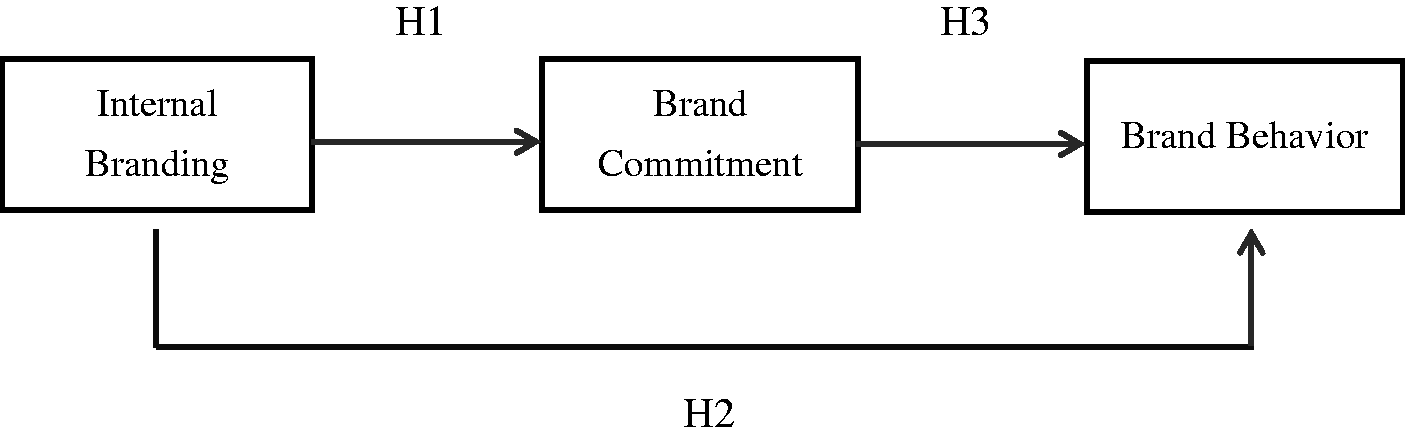
Sampling
The international tourist hotel directory of the Tourism Bureau of Taiwan (2010) lists a total of 69 such hotels. The researchers first contacted the heads of the human resources departments at these hotels to determine their willingness to participate. Of these, 28 were willing to receive the questionnaires. The contacts responsible for distributing the questionnaires were informed of the methods of distribution and collection. The questionnaires were mailed to the contacts at the hotels via registered mail, together with a description of how to answer the questions and a return envelope.
Contacts at the various human resources departments were asked to randomly select the subjects (respondents) who would receive the questionnaire, and all subjects had an equal chance of being selected. This was done in order to minimize the effect of sampling error. The questionnaires were collected via mail after being completed. In this study, a total of 801 questionnaires were distributed, and 774 questionnaires were returned. Those respondents with incomplete answers or invalid questionnaires were excluded from the study. There were 661 valid questionnaires, which is 82.52% of the original sample.
Measures
The IB measure developed by Punjaisri et al. (2009) was used in this study. There were 10 questions on the questionnaire, including the following representative items: “Training gives me appropriate skills in relations to deliver the brand promise based on the brand standards,” “I like the orientation kit and/or brand manuals of my hotel brand,” and “Briefings contain all essential information for me to provide services according to the brand expectations.”
The employee BC measure developed by Kimpakorn and Tocquer (2010) was used in this study. There were eight questions on the questionnaire, including the following: “I usually tell my friends that this is a great hotel brand to work for,” “I really care about this hotel brand,” and “I am willing to put in a great deal of effort, beyond that normally expected, in order to help this hotel brand be successful.”
The employee BB measure developed by Aurand et al. (2005), which is applicable to a variety of enterprises, was used in this study. There were six questions on the questionnaire, including the following: “I use my knowledge of my company's brand values to better organize my time,” “I am confident in my ability to clearly explain brand values to my colleagues,” and “I coach my colleagues on ways to build the brand values into their daily activities.”
The five-point Likert scale (0: “strongly disagree” to 5: “strongly agree”) was used in the questionnaire to assess all of the variables, and the questions were back-translated (Brislin, 1976) from the original English into Chinese. After being tentatively put together, the questionnaire was reviewed by three experts and scholars in the field of hospitality to correct translation deviations, obscure parts of the translation, and the essential text, so that the respondents could clearly understand and answer the questions (which also confirmed content validity).
Results
Demographic information
Demographic information (n = 661).
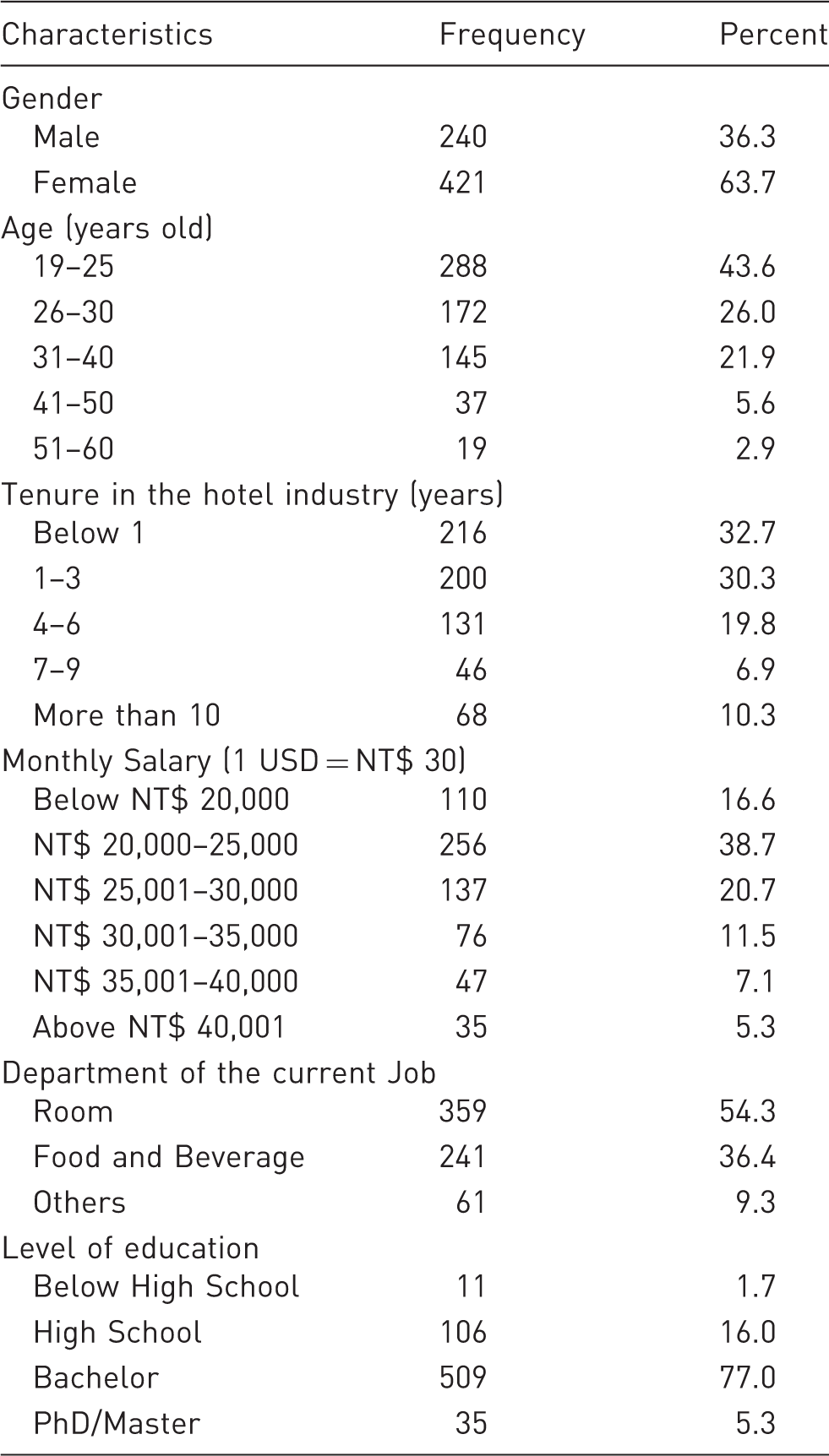
Pearson correlation analysis was used to explore the correlations between IB, employee BC, and employee BB. The correlation coefficient of IB and employee BC was r = 0.66 (p < 0.01). The correlation coefficient of IB and employee BB was r = 0.70 (p < 0.01). The statistical results indicate that the constructs of employee BC and BB were both positively correlated with IB. In addition, the correlation coefficient of employee BC and BB was r = 0.59 (p < 0.01). In other words, the constructs of employee BC and BB were also positively correlated.
Analysis of variance (ANOVA) was used to analyze the differences in IB, employee BC and BB according to age group, and the LSD method was employed for the post hoc comparisons, to maintain consistency with the significance of the overall F value. There were no significant differences in IB with respect to age (p = 0.21). However, there were significant differences in employee BC among the different employee age groups (p < 0.05). The post hoc comparison showed that employees who were 51 years of age or older had the highest employee BC (M = 3.85), followed by the 41–50 age group (M = 3.72) and the 26–30 age group (M = 3.60). There were also significant differences in employee BB among the different employee age groups (p < 0.05). The post hoc comparison showed that employees who were 41–50 years of age were the most committed to employee BB (M = 3.76), followed by the 26–30 age group (M = 3.63).
With respect to years of employment, there were no significant differences in IB (p = 0.20). However, there were significant differences in employee BC among employees with different years of employment (p < 0.05). The post hoc comparison showed that employees with 10 or more years of employment had the highest employee BC (M = 3.80), followed by those with seven to nine years of employment (M = 3.80). There were also significant differences in employee BB among employees with different years of employment (p < 0.05). The post hoc comparison showed that employees with 10 or more years of employment were the most committed to employee BB (M = 3.73), followed by those with seven to nine years of employment (M = 3.72).
There were also significant differences in IB, employee BC, and BB among different categories of international tourist hotels. The hotels were divided into hotel chains, resort hotels, and independent hotels, and the analysis results indicated that there were significant differences in IB among these categories (p < 0.05). The post hoc comparison showed that employees of hotel chains were the most committed to IB (M = 3.69), followed by employees of resort hotels (mean = 3.58) and independent hotels (M = 3.52). There were also significant differences in employee BC among the different categories of international tourist hotels (p < 0.05). The post hoc comparison showed that employees of hotel chains had the highest employee BC (M = 3.62), followed by employees of resort hotels (M = 3.60) and independent hotels (M = 3.46). There were no significant differences in employee BB among the different categories of international tourist hotels (p = 0.06), but employees of hotel chains were still the most committed to employee BB (M = 3.63), followed by employees of resort hotels (M = 3.56) and independent hotels (M = 3.52).
Regression analysis
Model 1: The overall model
Model 1 primarily verified whether employee BC had a mediating effect on IB and employee BB. First, IB was used as an independent variable, and employee BB was used as a dependent variable. The regression analysis showed that IB had a significant impact on employee BB, with a β value of 0.70 and a nonstandardized regression coefficient of 0.39 (t = 26.03, p < 0.01). Second, IB was used as an independent variable, and employee BC was used as a dependent variable. The regression analysis showed that IB had a significant impact on employee BC, with a β value of 0.66 and a nonstandardized regression coefficient of 0.40 (t = 22.90, p < 0.01). Finally, IB and employee BC were used as independent variables, and employee BB was used as a dependent variable. Between IB and employee BB, the regression analysis yielded a β value of 0.56 and a nonstandardized regression coefficient of 0.32 (t = 16.10, p < 0.01). Between employee BC and BB, the β value was 0.21 and the nonstandardized regression coefficient was 0.11 (t = 5.94, p < 0.01). These results all suggest significant impact.
Baron and Kenny (1986) found that employee BC had a partial mediating effect on IB and employee BB, and that the effect was significant (Sobel Z = 5.71, p < 0.01). As Figure 2 shows, the effect of IB on employee BB was partially mediated by employee BC in the present study.
Model 1. Notes: Values in brackets were the standardized regression coefficients when both internal branding and employee brand commitment were included. *p < .05; **p < .01.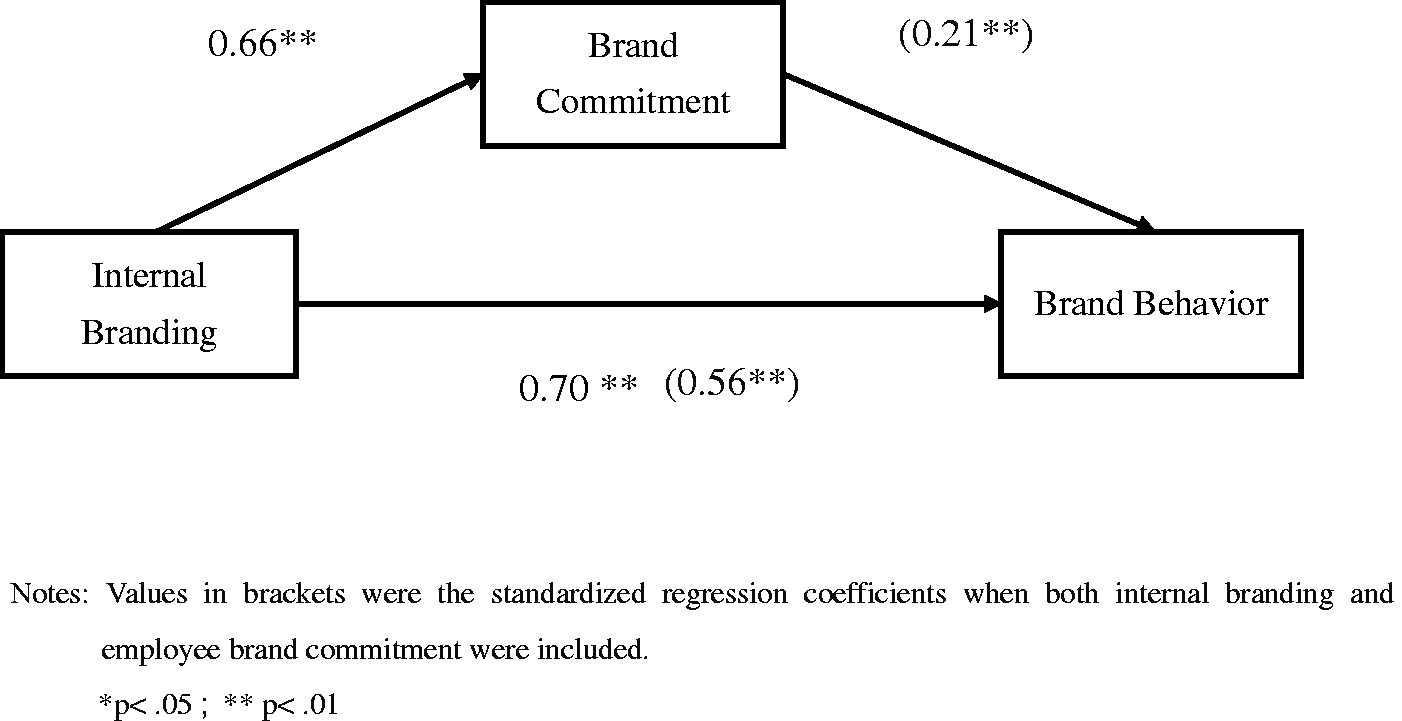
The term intermediate variable (mediator) refers to a third variable added to explain the relationship between the independent and dependent variables. A complete mediating effect occurs when the relationship between the independent and dependent variables is no longer significant after the addition of the intermediate variable. A partial mediating effect occurs when the relationship between the independent and dependent variables becomes weaker or less significant after the addition of the intermediate variable. According to the overall model, employee BC had a partial mediating effect on IB and employee BB.
Model 2: Employees with one or more years of employment
Model 2 primarily verified whether employee BC had a mediating effect on IB and employee BB among employees with one or more years of employment (those with less than one year of employment were excluded). First, IB was used as an independent variable, and employee BB was used as a dependent variable. The regression analysis showed that IB had a significant effect on employee BB, with a β value of 0.72 and a nonstandardized regression coefficient of 0.40 (t = 22.02, p < 0.01). Next, IB was used as an independent variable, and employee BC was used as a dependent variable. The regression analysis showed that IB also had a significant effect on employee BC, with a β value of 0.67 and a nonstandardized regression coefficient of 0.39 (t = 19.06, p < 0.01). Finally, IB and employee BC were used as independent variables, and employee BB was used as a dependent variable. Between IB and employee BB, the regression analysis yielded a β value of 0.54 and a nonstandardized regression coefficient of 0.30 (t = 12.92, p < 0.01). Between employee BC and employee BB, the β value was 0.25 and the nonstandardized regression coefficient was 0.15 (t = 6.10, p < 0.01). The differences were all significant.
Baron and Kenny (1986) found that employee BC had a partial mediating effect on IB and employee BB, and the effect was significant (Sobel Z = 5.80, p < 0.01). As Figure 3 shows, the effect of IB on employee BB was partially mediated by employee BC. Thus, according to the model for employees with one or more years of employment, employee BC had a partial mediating effect on IB and employee BB.
Model 2. Notes: Values in brackets were the standardized regression coefficients when both internal branding and employee brand commitment were included. *p < .05; **p < .01.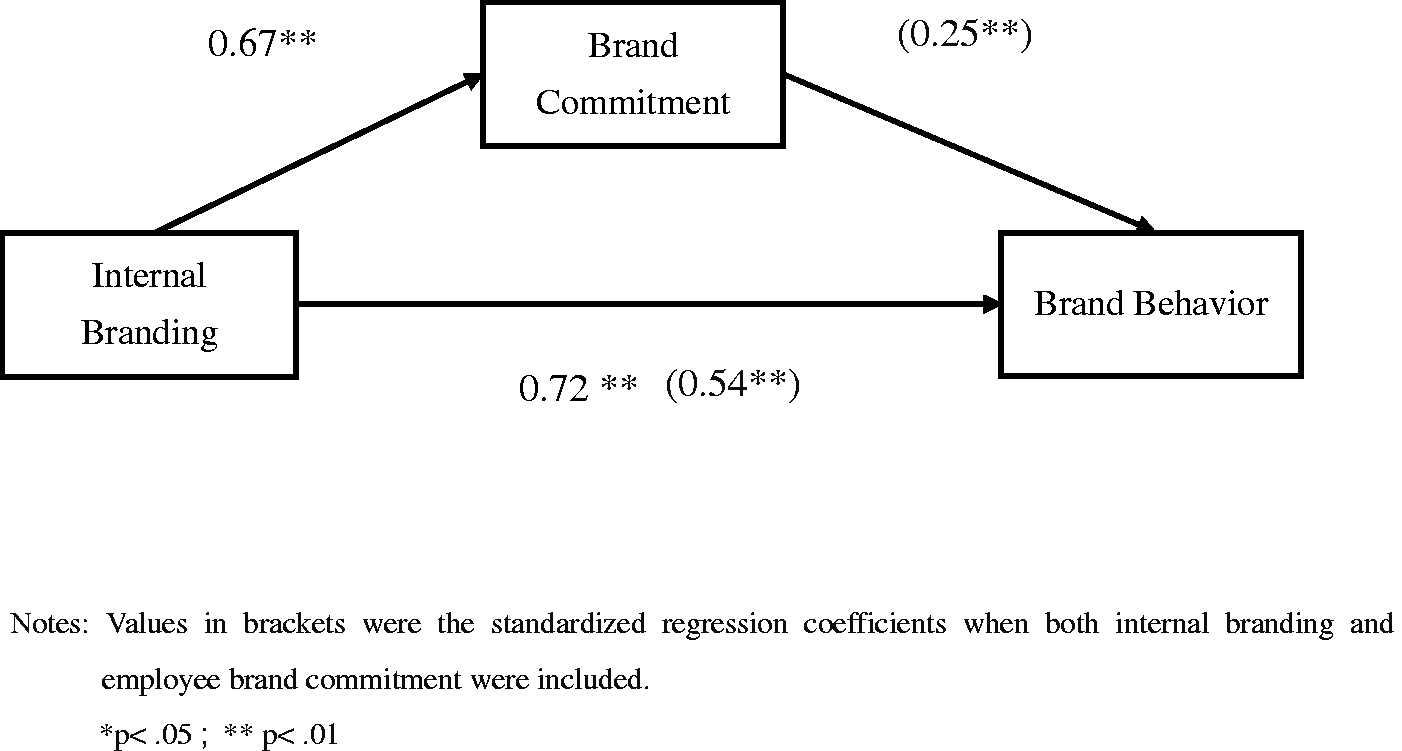
Model 3: Employees with less than one year of employment
Model 3 primarily verified whether employee BC had a mediating effect on IB and employee BB among employees with less than one year of employment. First, IB was used as an independent variable, and employee BB was used as a dependent variable. The regression analysis showed that IB had a significant effect on employee BB, with a β value of 0.67 and a nonstandardized regression coefficient of 0.38 (t = 13.76, p < 0.01). Next, IB was used as an independent variable, and employee BC was used as a dependent variable. The regression analysis showed that IB had a significant effect on employee BC, with a β value of 0.64 and a nonstandardized regression coefficient of 0.42 (t = 12.68, p < 0.01). Finally, IB and employee BC were used as independent variables, and employee BB was used as a dependent variable. The regression analysis showed that IB had a significant effect on employee BB, with a β value of 0.59 and a nonstandardized regression coefficient of 0.33 (t = 9.39, p < 0.01).
Employee BC did not have a significant effect on employee BB, with a β value of 0.12 and a nonstandardized regression coefficient of 0.06 (t = 1.90, p = 0.06). The mediating effect test did not produce significant results (Sobel Z = 1.91, p = 0.06). As Figure 4 shows, employee BC had no mediating effect on IB or employee BB. In other words, the effect of IB on employee BB was not mediated by employee BC. Thus, according to the model for employees with less than one year of employment, employee BC had no mediating effect on IB and employee BB.
Model 3. Notes: Values in brackets were the standardized regression coefficients when both internal branding and employee brand commitment were included. *p < .05; **p < .01.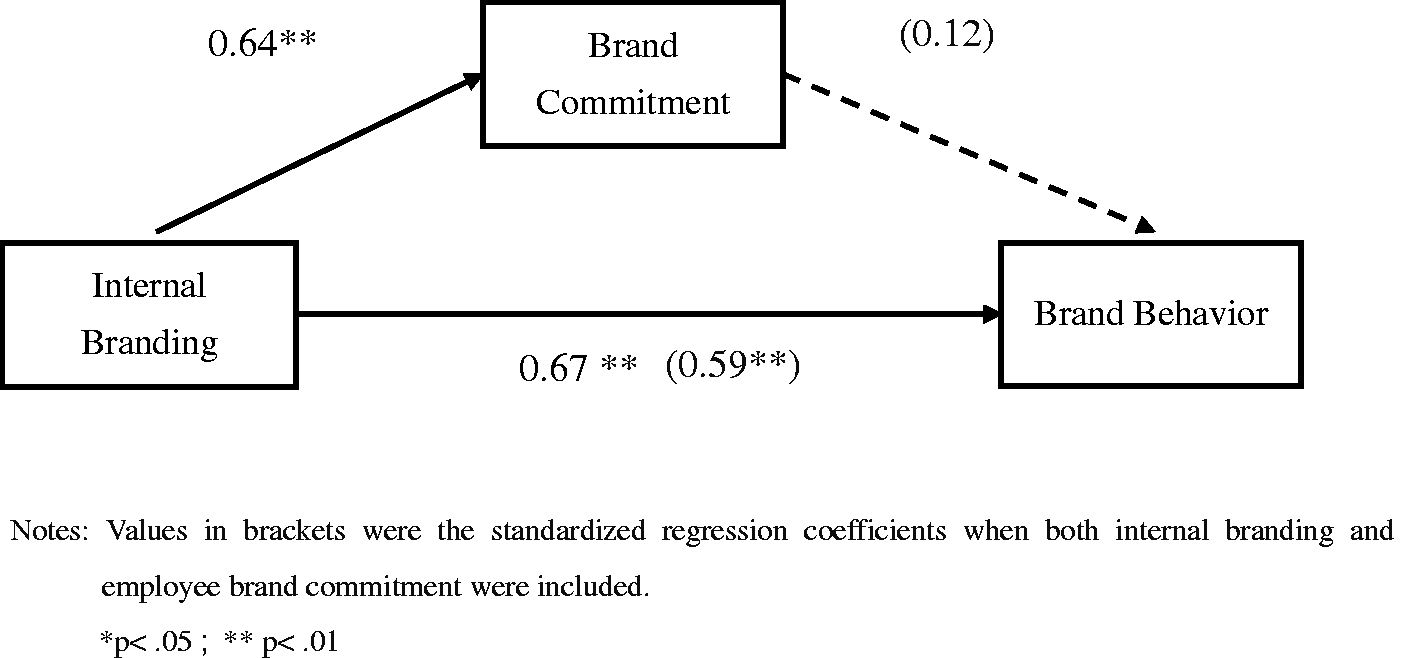
Discussion
This section begins with a discussion of the effects of the demographic variables/profiles of the respondents on IB, employee BC and employee BB, and plausible explanations for these effects are offered. The hypothesized relationship is examined in the latter subsection.
Implementation of IB in international tourist hotels
Various theoretical considerations concerning age groups were combined with expectations from the literature concerning tenure in present hotel and different categories of international tourist hotels in Taiwan to perceive IB practices, employee BC and BB.
When age was used as a variable, the ANOVA results showed that there were no significant differences in IB between different employee age groups, but there were significant differences in employee BC and employee BB. Employees 51 years of age or older had the highest level of employee BC, followed by the 41–50 age group, suggesting that the older the employee, the more significant the employee BC and employee BB.
When years of employment was used as a variable, the results showed that there were no significant differences in IB, but there were significant differences in employee BC and employee BB. Employees with 10 or more years of employment had the highest level of employee BC, followed by those with seven to nine years of employment. Although there were no significant differences in IB, the results indicated that additional years of employment were associated with a higher average value, which is consistent with the results of previous studies, such as those of Punjaisri et al. (2008) and Punjaisri and Wilson (2011). This suggests that older employees with a lower level of education and longer period of employment are more committed to employee BC and employee BB. Conversely, younger employees with a higher educational level and a shorter duration of employment are less committed to employee BC and employee BB.
When international tourist hotel category (hotel chain, independent hotel, or resort hotel) was used as a variable, the ANOVA results showed that the level of IB in hotel chains was higher than that of independent hotels, which is consistent with the findings of Dortok (2006) and Kimpakorn and Tocquer (2010). Enterprises with good reputations were more effective at internal communication, i.e. IB implementation was more significant. Moreover, the advantages of hotel chains were their good operation and management. Hotel chains were superior to other types of hotels in terms of productivity, technology, and efficiency. Accordingly, the analysis results showed that IB implementation was better in hotel chains.
Impact of IB on employee BC and BB
The relevant analysis results showed that IB, employee BC, and employee BB were positively correlated, which is consistent with the findings of previous studies (Mangold and Miles, 2007; Punjaisri et al., 2009).
The regression analysis showed that IB had a significant impact on employee BC and employee BB. IB improved employee brand recognition, loyalty, and commitment. Moreover, IB training provided the relevant brand service skills to employees to enhance the brand values they conveyed to customers. These results are similar to those of Aurand et al. (2005), Burmann et al. (2009), Kimpakorn and Tocquer (2009), and King (2010). That is, the more effective the IB implementation, the more it enhances employee BC, and the more positive the brand-appropriate behavior arising from IB procedures such as preemployment training, corporate meetings, and daily work reports (which strengthen the mission and commitment of employees to the brand). BC motivates employees to dedicate themselves to the success of the brand and to use service skills acquired through brand training to bring the brand experience to customers.
Employee BC had a partial mediating effect on IB and employee BB in both the overall model and the model for employees with one or more years of employment, which is in keeping with the results of King and Grace (2010) and Mangold and Miles (2007). The reason the mediating effect was partial rather than complete was that IB included internal communication and human resource training, as Punjaisri et al. (2008) have suggested, instead of merely providing staff training and a curriculum for adjusting employee BB. IB also integrated employee brand recognition, which inspired employees to think of themselves as part of the brand, care about the brand and, thus, put more effort into accomplishing the goals of the brand. In other words, IB could have a significant impact on employee BB through employee BC. IB changes employees’ brand perception, reshaping their ideas and, eventually, their behavior.
In the model for employees with less than one year of employment, although IB had a significant effect on employee BC and BB, employee BC had no mediating effect on IB and employee BB. In other words, the effect of IB on employee BB was not mediated by employee BC. This finding is in accordance with what is suggested by the brand-feature model of De Chernatony and Cottam (2006) with regard to the employee–brand relationship. Even though the enterprise had clear brand positioning and a clear code of operational specifications, when these employees were in the stage of building the brand, they had worked with it for less than one year. Although IB had influenced employee BC, at this stage, the employees still did not quite understand the essence of the brand or the meaning of the code of operational specifications. Thus, it was not possible to influence employee BB through employee BC. When a subsequent stage of brand understanding was reached (i.e. after working with the brand for a longer period of time), the employees began to develop a deeper understanding of the brand, and gradually came to understand the meaning and functions of the operational specifications. By this time, the effect of IB on employee BB could be gradually mediated by employee BC.
Conclusion and implications
Although IB has been the subject of many papers/articles, particularly in the service marketing discipline, it still is rarely investigated in the hospitality context. This study reinforces the findings of the extant literature (e.g. Aurand et al., 2005; Burmann et al., 2009; Kimpakorn and Tocquer, 2009; King, 2010; Mangold and Miles, 2007; to name a few) that the more effective the IB implementation, the more it enhances employee BC, and the more positive will be the brand-appropriate behavior arising from IB procedures. This research also clarifies Punjaisri’s et al. (2008) proposition that IB also integrated employee brand recognition, which inspired employees to think of themselves as part of the brand, care about the brand and, thus, put more effort into accomplishing the goals of the brand.
Two major conclusions can be drawn from this study with regard to the influence of IB practices in the Taiwanese hotel industry. First, managers should strengthen brand training and orientation programs, and formal and informal internal communication channels, and then use these media/platforms to motivate and assist employees toward the highest recognition of, and commitment and loyalty to, the brand through spontaneous interactions and social encounters in the workplace. Second, the relationship between IB and employee BB might be better mediated by employee BC, which is often affected by demographic characteristics (i.e. age group, seniority, educational level, and type of hotel). These concluding remarks could provide new insights for hospitality management.
Implications for hospitality management
The results of this empirical study imply that, from the perspective of operational management, hoteliers (managers) need to reinforce brand values among younger employees with a higher level of education. IB should be added to corporate training, to strengthen cooperation between brand positioning, long-term education, and resources.
The higher the education level of employees, the less likely they are to feel stuck in a job, as they tend to be confident of their own abilities, and are less likely to worry about finding another position if they find themselves unemployed. Accordingly, enterprises should design a different brand of internal marketing to educate their staff. Studies have shown that younger employees with a higher level of education and a shorter duration of employment are less responsive to branding. This necessitates a different method of brand education that specifically targets these employees, such as long-term training or delegating challenging tasks, and a different reward-feedback system should be used to assess and supervise them.
This study has shown that IB can affect both employee BC and employee BB. Thus, managers could shape employee attitudes and behavior through IB. Moreover, employee brand recognition reduces staff turnover. It is therefore recommended that IB be added to corporate education and training. With regard to internal communication, prework reports, group meetings, message boards, and internal magazines could be used to provide the staff with relevant brand information. With regard to human resource training, in addition to basic service skills, training must be provided in special services associated with the brand, to enhance the employees’ service performance.
Hotel managers should inform employees of the brand image expected by customers and how to convey the brand vision and values through their behavior. In the hospitality industry, enterprises often tell employees that good service is the key to success, and hope that employees are able to deliver it. However, good service cannot be achieved through instruction alone. Furthermore, even if employees provide good service, lack of “soul” (brand spirit) is still a possibility. Therefore, it is recommended that enterprise managers explain to their employees why their brand is good, how it differs from its competitors, how to inform the customer of these qualities, and why their brand is doing that. So and King (2010) declared that different brand spirits convey different service experiences to customers. In this study, it was observed that enterprises focus on carrying out their own brand motto because it is the essence of the brand. In addition, the purpose of the brand motto is to provide internal staff and external marketing partners with a clear understanding of the most important facts when presenting the brand to consumers. For example, McDonald’s mission is to be the best fast-food restaurant. Consequently, in addition to good customer service, there is also a time constraint for providing the service. At the same time, the brand motto is also the basis of the brand. Thus, enterprises should clearly understand their own positioning and policy.
The results of this study have shown that employees with less than one year of employment did not quite understand the essence of the brand or the meaning of the operational specifications. Thus, it was not possible to influence their BB through BC. Moreover, Gapp and Merrilees (2006) argued that during the implementation of IB, enterprises also need to pay attention to coordination of resources, internal communication, and whether brand information has been instilled in the employees. Enterprises may face implementation difficulties, such as how to use daily work reports to provide employees with brand information, and whether employees have understood this information. Therefore, it was recommended that, in addition to long-term efforts to inform employees of brand values, various internal departments should coordinate initiatives to achieve the desired results. As Foster et al. (2010) suggested, the successful implementation of IB could not only effectively improve employee and customer satisfaction but also attract potential customers and employees. Thus, enterprises should strive to implement IB to attract employees who are more in line with the company spirit. This strategy could reduce the risks involved in recruiting new employees, since only the right people would be recruited.
Limitations and further studies
In this study, a questionnaire was used to explore employee BB in international tourist hotels. We strove for a rigorous research design, framework, and process, but there were some unavoidable issues, and this study was not perfect. For example, the questionnaire was cross-sectional, and the course of the study had time limitations. Thus, a longitudinal analysis could not be conducted, because attitude may lead to errors resulting from differences in mood or the situation at a particular time. The tools used to measure the variables in this study (IB, employee BC, and employee BB) were referenced and adapted from foreign literature, including the work of Aurand et al. (2005) and Punjaisri et al. (2009). Taking into account the intent, and cultural differences between questionnaires in different languages, the questionnaire used in this study was translated and reviewed by experts, but there still may have been some slight deviations.
In future studies, it is expected that the scope of this research will be extended, including, for example, the brand leadership behavior and degree of support of management personnel at the grassroots, middle, and top levels of an enterprise. Vallaster and De Chernatony (2005) stated that leaders play an intermediary and passing role in brand management and can influence employee BB. King and Grace (2006) argued that whether an enterprise supports IB in all circumstances will influence the effectiveness of brand management. Researchers could also study the customer level to understand whether the effect of IB on employee BB and performance was understood and felt by customers. Hence, future studies should include brand leadership, enterprise systems, or customers to expand the scope of research on IB. Due to time constraints, we carried out a cross-sectional study, and attitude may have led to errors resulting from differences in mood or the situation at a particular time. To obtain more accurate and objective data, longitudinal studies should be carried out, if time permits, including long-term follow-up on the brand or interviews with relevant personnel. Furthermore, IB is a new, emerging topic, and studies of IB in the food and beverage industries or other related services in Taiwan could be conducted in the future. Brands in other Asian countries or multinational brands could also be analyzed to elucidate different methods of brand education and results for the same brand in the cultural and geographical environments of different countries.