







Abstract
This study explored the important role of brand prestige in the casino industry. More specifically, based on a literature review, it was proposed that (1) brand prestige positively affects three outcome variables: social value, customer satisfaction, and revisit intentions; (2) social value has a positive influence on customer satisfaction and revisit intentions; and (3) customer involvement plays a moderating role in this process. Based on the proposed hypotheses, a conceptual model was developed and tested using empirical data from 236 casino customers who had played casino games in the United States. Data analysis results showed that brand prestige is an important determinant of social value and customer satisfaction, both of which bear a significant impact on revisit intentions. Lastly, customer involvement plays an important moderating role in the relationship between brand prestige and customer satisfaction. The possible interpretations and managerial implications of these findings are provided in the last section of the article.
Introduction
The casino industry has a significant effect on the national economy and regional development in the United States. In fact, about 450 commercial casinos in 20 states make a profit of $37 billion per year (American Gaming Association, 2013). The report also showed that among those profits, casino companies spend approximately $8.6 billion for states and local communities. Furthermore, about 34% of American adults (76 million people) have visited a casino at least once in the past year. Macao, the world’s biggest gambling center, has played an important role in the casino industry with revenues generated (US$ 6.95 billion), edging out the Las Vegas Strip (US$ 6.50 billion) in 2006 (The New York Times, 2007). The gaming, tourism, and hospitality industries account for more than 50% of Macau’s gross domestic product, approximately 75% of employment opportunities, and about 70% of government income (China National Tourism Administration, 2014). These statistics indicate that the casino industry is popular and is an important part of the overall economy as well as regional development.
As the quality of life improves, people are found to be more interested in prestigious brands (Le Monkhouse et al., 2012), so many businesses are investing a large amount of money to attract such prestige brand seekers (Lee and Hwang, 2011). The casino industry is no exception to this phenomenon because many casino customers prefer a prestigious image of the casino brand. For this reason, casino companies spend a great deal of money in order to generate a prestigious image. For example, according to SLS Las Vegas (2014), about $415 million will be invested in a renovation project that helps to create a more prestigious image of casinos.
In addition, there seems to be a positive correlation between brand prestige and social value because most people who prefer to purchase prestigious brands hope to be respected by those around them (Okonkwo, 2009). In consumer research, Ting-Toomey and Kurogi (1998) also argued that “a sense of favorable social self worth that a person wants others to have of him or her in a relational and network context” (p.187). For this reason, if the brand is not prestigious enough to meet their social value, they are less likely to purchase such a brand’s products in the future (Steenkamp et al., 2003), suggesting that social value can be considered a critical factor affecting consumer behavior. However, there has been little research focusing on how social value is formed and how it affects other outcome variables. In this regard, the result of this study would make significant theoretical contributions to the existing body of literature.
Lastly, previous scholars in consumer research have long focused on customer involvement in order to show the important relationship between brand and consumer behavior (e.g. Laage-Hellman et al., 2014; Shim and Kotsiopulos, 1993). Customer involvement is the personal disposition toward a certain object such as opinions, feelings, and behavioral intentions (Gordon, McKeage and Fox, 1998). That is, customers with high involvement in a certain product show a greater interest in such a product. Therefore, it is significant and important to identify the role of customer involvement in consumer behavior. However, to the best of the authors’ knowledge, the moderating role of customer involvement in the relationships between brand prestige and its outcome variables has never been examined in the casino industry. In this respect, this study would extend the existing body of knowledge by empirically finding the important moderating role of customer involvement in the casino industry for the first time.
As shown above, the concept of brand prestige is critical to the casino industry, and yet very little research has examined its impact on managerial outcomes. Thus, the objective of this study is to examine the outcomes of brand prestige in the casino industry. More specifically, this study explored (1) the important role of brand prestige in the formation of social value, customer satisfaction, and revisit intentions, (2) the direct effect of social value on customer satisfaction, and revisit intentions, and (3) the moderating function of customer involvement in this process.
Literature review
Brand prestige
Brand is considered the most important factor when customers purchase products/services (Steenkamp et al., 2003). For instance, customers are less likely to purchase products/services in the future, if they do not prefer the brand even though they are satisfied with the practical value of the products/services (Aaker, 1996; Vigneron and Johnson, 1999). For this reason, many scholars have studied various concepts of brand including brand commitment (e.g. Yang et al., 2015), brand extensions (e.g. Mahasuweerachai and Qu, 2015), brand image (e.g. Lin et al., 2015), and brand loyalty (e.g. Petrick, 2005).
Among the diverse concepts of brand, recently, brand prestige is receiving a lot of attention (e.g. Hwang and Han, 2014, 2015a). The concept of brand prestige refers to the relatively high status of product positioning compared to other brands in a similar product category (McCarthy and Perreault, 1987; Steenkamp et al., 2003). According to Dubois and Czeller (2002), an excellent and distinctive characteristic is an important factor when evaluating the level of brand’s prestigious image. Similarly, Walters and Carr (2015) suggested that material nature of luxury can be explained by the following words: expensive, rare, unique, and exclusive. In addition, a prestigious brand is considered as high-quality product, so it is a key factor in representing the luxury market (Baek et al., 2010). For this reason, in general, a prestigious brand’s product is more expensive than a non-prestigious brand’s product (Truong et al., 2009), and the general belief is that such an expensive price plays an important role in making customers special (Alden et al., 1999). In particular, because of prestigious image, the wealthy classes prefer to purchase prestigious brands, which represent their social status or wealth (Vigneron and Johnson, 1999).
Several previous studies have focused on the effect of brand prestige on managerial variables in diverse industries. For example, Hwang and Han (2014) collected data from luxury cruise passengers in order to discover the effect of brand prestige on outcome variables. They showed that brand prestige has a positive influence on well-being perception, which in turn positively affects brand loyalty. In addition, Hwang and Han (2015a) examined how brand prestige influences outcome variables using empirical data collected from 294 amateur golfers in the United States. They found that brand prestige is an important factor affecting brand loyalty.
Social value
Social value is defined as “the utility derived from the product’s ability to enhance social self-concept” (Sweeney and Soutar, 2001: 211). People believe that purchasing luxury products/services is a very important means of enhancing self-image (Hyun and Han, 2015). For example, even though consumers are satisfied with a product’s utilitarian value, if the brand is insufficient in meeting the needs of consumers’ social value, they are less likely to repurchase such brand’s products in the future (Steenkamp et al., 2003). This clearly shows that social value plays a critical role in the luxury market (Hyun and Han, 2015).
Previous studies have commonly suggested that social value consists of the following two theoretical sub-dimensions: status enhancement and self-esteem enhancement (e.g. Hyun and Han, 2015; Rintamäki et al., 2006). First, status enhancement is “a benefit attained by using symbolic features in communicating signs of position or membership to others,” while self-esteem enhancement is “a benefit experienced when symbolic features derived from the company, store, products, personnel and other customers are attached to the self in order to define and maintain one’s concept of that self” (Rintamäki et al., 2006: 15).The same author tested the uni-dimensionality of these two sub-dimensions using the empirical data collected from department stores (n = 364) and found that two sub-dimensions of social value attained high levels of convergent validity, discriminant validity, and internal consistency. Carrying Rintamäki et al.’s study (2006) a step further, Hyun and Han (2015) also examined the uni-dimensionality of the two sub-dimensions using data collected from 342 luxury cruise passengers and showed that the convergent validity, discriminant validity, and internal consistency were statistically supported.
Customers hope to keep and enhance their social status and wealth, so they prefer to purchase a prestigious brand containing luxurious image (Vigneron and Johnson, 1999). In other words, one of the most important reasons to prefer a prestigious brand is for the enhancement of social value (Hwang and Hyun, 2012). In addition, Walters and Carr (2015) also argued the correlation between brand prestige and social value, suggesting that people tend to consume luxury goods in order to keep their social status. Thus, if the casinos give their customers an impressive prestigious image, they are more likely to perceive that their social value is enhanced. Based on the theoretical and empirical background, the following hypothesis was proposed: Hypothesis 1: Brand prestige positively affects social value.
Customer satisfaction
As the marketing phenomenon has changed from product-oriented marketing to a customer-oriented relationship (Grönroos, 1994), customer satisfaction receives more attention in diverse fields. Customer satisfaction refers to “the leading criterion for determining the quality actually delivered to customers through the product/service and by the accompanying servicing” (Vavra, 1997, p.8). More importantly, customer satisfaction is considered an important criterion of whether customers return or not (Dube et al., 1994). In the same vein, Yüksel and Yüksel (2002) also showed that customer satisfaction plays an important role in the formation of the perception of customer post-purchase behavior; therefore, it significantly affects business sales (Heskett et al., 1997). For this reason, it is necessary for casino managers to understand how to make customers satisfied to sustain their status in the competitive casino industry.
It is widely accepted that a brand’s prestigious image becomes an important way to reflect their self-image, which satisfies consumers (Steenkamp et al., 2003). For this reason, consumers prefer to purchase a prestigious brand (Hwang and Han, 2014a). That is, if a casino brand gives a strong prestigious image to their customers who hope to connect casino’s prestigious brand image to their self-image, they are more likely to be satisfied with the casino. Following this logic, it can be theorized that there is a positive relationship between brand prestige and customer satisfaction. Hypothesis 2: Brand prestige positively affects customer satisfaction.
In addition, this study hypothesized that social value is a critical predictor of customer satisfaction. As explained earlier, consumers are more likely to purchase a prestigious brand in order to enhance social status or wealth (Vigneron and Johnson, 1999), so if customers perceive a strong prestigious brand image from the casino that enhances their social status or wealth, they are more likely to be satisfied with the casino. Integrating the above theoretical background, the following hypothesis can be derived: Hypothesis 4: Social value positively affects customer satisfaction.
Revisit intentions
The term “revisit intentions” is defined as “the degree to which a person has formulated conscious plans to perform or not perform some specified future behavior” (Warshaw and Davis, 1985: 214). First, this study proposed a positive relationship between brand prestige and revisit intentions. Prestige-seeking customers are more likely to have high levels of long-term repurchase behaviors toward a certain luxury brand (Hwang and Hyun, 2012) because they hope to show a more distinctive personality by possessing prestigious brands (Vigneron and Johnson, 1999). That is, if casino customers perceive that a casino has high status, they are more likely to visit this casino in the future. Previous studies also have supported this theoretical argument. For instance, Hwang and Han (2014) investigated how brand prestige influences behavioral intentions in the luxury cruise industry and they found that brand prestige is a critical determinant of behavioral intentions. Based on the theoretical and empirical backgrounds, the following hypothesis is thus derived: Hypothesis 3: Brand prestige positively affects revisit intentions. Hypothesis 5: Social value positively affects revisit intentions. Hypothesis 6: Customer satisfaction positively affects revisit intentions.
The moderating role of customer involvement
Several previous studies have focused on customer involvement in diverse fields because of its significant impact on consumer behavior (e.g. Laage-Hellman et al., 2014; Zhang et al., 2014). For instance, customers are less likely to be interested in a certain tangible/intangible product/service when they have a low level of involvement toward the product, while customers are more likely to be interested in a particular tangible/intangible product/service when they have a high level of involvement toward the product (e.g. Hwang and Lyu, 2015: golf game; Kim et al., 2012: dining out; Liu et al., 2015: tourism products; Park et al., 2007: online shopping; Warrington and Shim, 2000: clothing products).
Zaichkowsky (1985) suggested that the following three factors play an important role in the formation of customer involvement: (1) individual characteristics including needs, values, and interests, (2) stimulus characteristics such as a type of communication media or variations within the product class, and (3) situational characteristics including purchase occasion or the perceived risk associated with the purchase decision.
This study develops hypotheses for the moderating role of customer involvement based on the following inferences. Customers with a high level of involvement are enthusiastic about the product (Mittal and Lee, 1989); consequently, they efficiently identify products’ advantages and disadvantages (Suh and Yi, 2006). Therefore, if a casino offers a prestigious impression for their customers who hold high levels of involvement, they are more likely to have positive outcome variables such as social value, customer satisfaction, and revisit intentions because customers with high levels of involvement are knowledgeable about the casino. Empirical studies also supported the moderating role of customer involvement. For instance, Ambroise et al. (2005) examined the moderating function of customer involvement using data collected from the soft drink and sportswear market and suggested that customer involvement significantly moderates the relationships between brand personality and attitude towards the brand and commitment. In addition, Xue (2008) also explored the moderating role of customer involvement and found that customer involvement plays an important moderating role in the relationship between brand image and brand choice in the automobile industry. Lastly, Kim et al. (2010) in the restaurant industry suggested that customer involvement significantly moderated the relationship between brand preference and customer share of visits. Based on the theoretical and empirical background, the following hypotheses were proposed (See Figure 1): Hypothesis 7a: Customer involvement moderates the relationship between brand prestige and social value. Hypothesis 7b: Customer involvement moderates the relationship between brand prestige and customer satisfaction. Hypothesis 7c: Customer involvement moderates the relationship between brand prestige and revisit intentions.
Methodology
Measurement
To empirically measure the constructs in the proposed model, this study adapted validated measurement items from previous studies. Brand prestige was measured with three items cited from Baek et al. (2010) (retail industry), Hwang and Han (2014) (luxury cruise industry), and Ahn et al. (2015) (airline industry). Social value was measured using six items under two sub-dimensions adapted from Rintamäki et al. (2006) (shopping industry), Hwang et al. (2015) (private country club industry), and Hyun and Han (2015) (luxury cruise industry). Customer satisfaction was measured with three items employed by Hennig-Thurau et al. (2002) (service industry) and Kim et al. (2012) (restaurant industry). Revisit intentions were measured with three items developed by Hellier et al. (2003) (retail industry) and Hwang and Han (2015b) (casino industry). All of these measures were assessed using a five-point scale anchored by “strongly disagree (1)” and “strongly agree (5).”
There were three groups of experts (faculty members, graduate students and employees who currently work in the casino industry) that reviewed the initial questionnaire. They suggested that the initial questionnaire had no problems. Subsequently, a pilot test was performed using 30 actual casino customers. Cronbach’s alpha was employed to evaluate reliability of the measurement items, and the data analysis result showed that the values of Cronbach’s alpha for all of the constructs were higher than .7, which was acceptable (Nunnally, 1978).
Data collection
Data were collected through an online survey company’s system in the United States. First, respondents were asked to identify whether they have visited a casino or not: “Have you played casino games in the United States in the past six months?” If a respondent marked “no” on the survey, the survey ended. On the other hand, if a respondent marked “yes” on the survey, the survey was continued. In addition, the respondents were given a question to select the name of the casino in which he/she had played most recently and to answer all questions based on the selected casino. The questionnaire was sent out to 1000 general American casino customers. Among them, 244 people participated in the survey. However, eight outliers were removed because they were detected as Multivariate outliers. Consequently, 236 usable responses remained for further analysis.
Data analysis
Profile of the sample
Profile of survey respondents (n = 236).
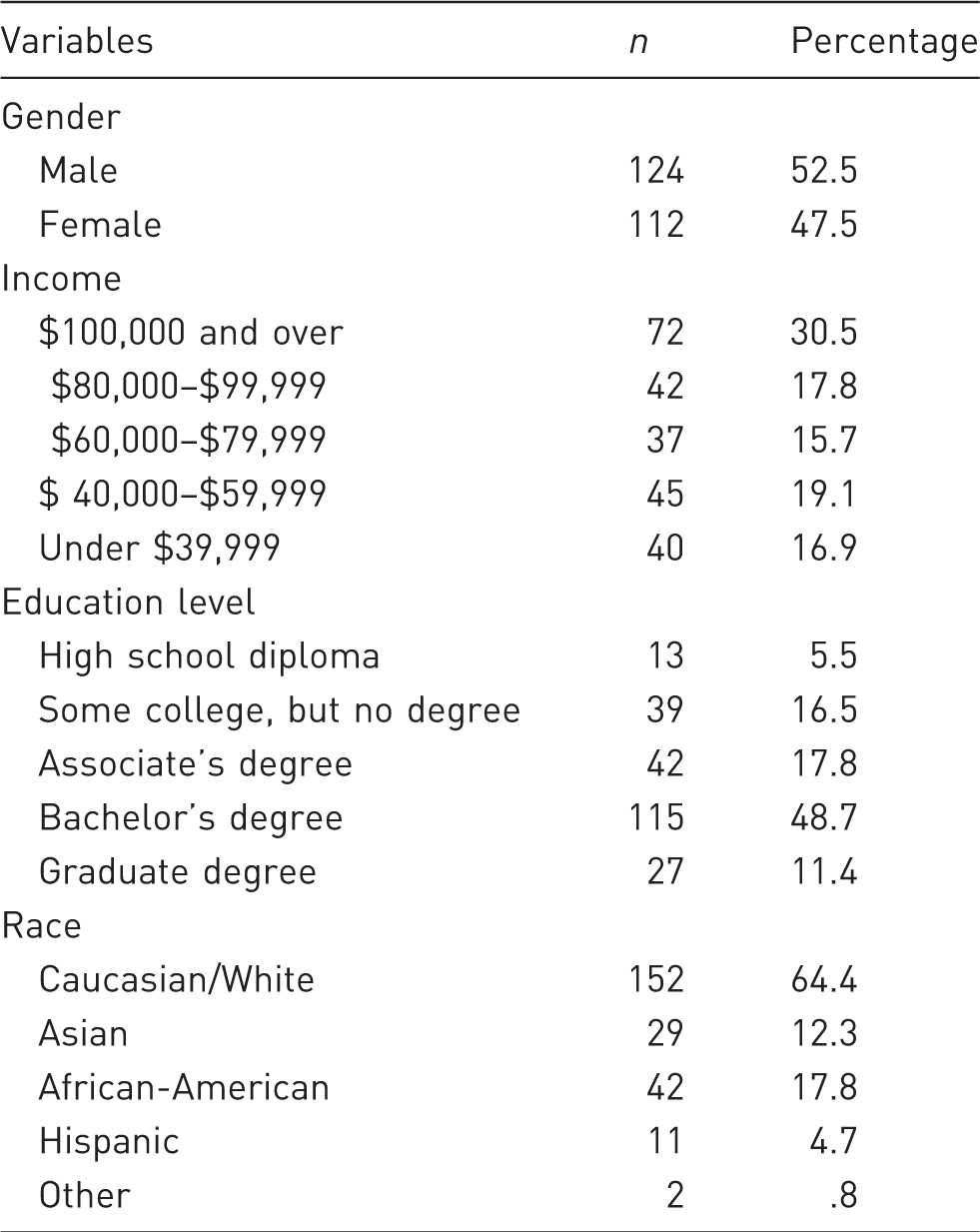
Note: Mean age = 44.90 years old.
Confirmatory factor analysis
Confirmatory factor analysis: Items and loadings.

All factors loadings are significant at p < .001.
Descriptive statistics and associated measures.

AVE: average variance extracted; IFI: incremental fit index, CFI: comparative fit index, TLI: Tucker-Lewis index, RMSEA: root mean square error of approximation.
Note: Goodness-of-fit statistics: χ2(80) = 221.863, p < .001, χ2/df = 2.773, IFI = .942, CFI = .941, TLI = .923, GFI = .883, SRMR = .031, RMSEA = .067.
Composite reliabilities are along the diagonal.
Correlations are above the diagonal.
Squared correlations are below the diagonal.
Structural model
Standardized parameter estimates for structural model.

IFI: incremental fit index; CFI: comparative fit index; TLI: Tucker-Lewis index; RMSEA: root mean square error of approximation.
Note: Goodness-of-fit statistics: χ2 = 230.926, p < .001, df = 81, χ2/df = 3.195, IFI = .938, CFI = .938, TLI = .919, GFI = .879, SRMR = .033, RMSEA = .068.
Testing the moderating effect of involvement
Multiple-group analyses were conducted to test the moderating effect of customer involvement (Byrne, 2001). Respondents (n = 236) were split into two groups: a low-involvement group (n = 125) and a high-involvement group (n = 111) using a moderator score. The sum of the five involvement scale items was employed as the moderator score. Multiple group analyses were conducted according to a hierarchical approach comparing the two sub-samples. These two sub-groups were selected based on the median split of the moderating variable (Chandrashekaran and Grewal, 2003). To check the differential effects of involvement between high- and low-involvement groups, the Chi-square difference between the constrained and unconstrained models was examined with regard to the difference in degrees of freedom (Anderson and Gerbing, 1988).
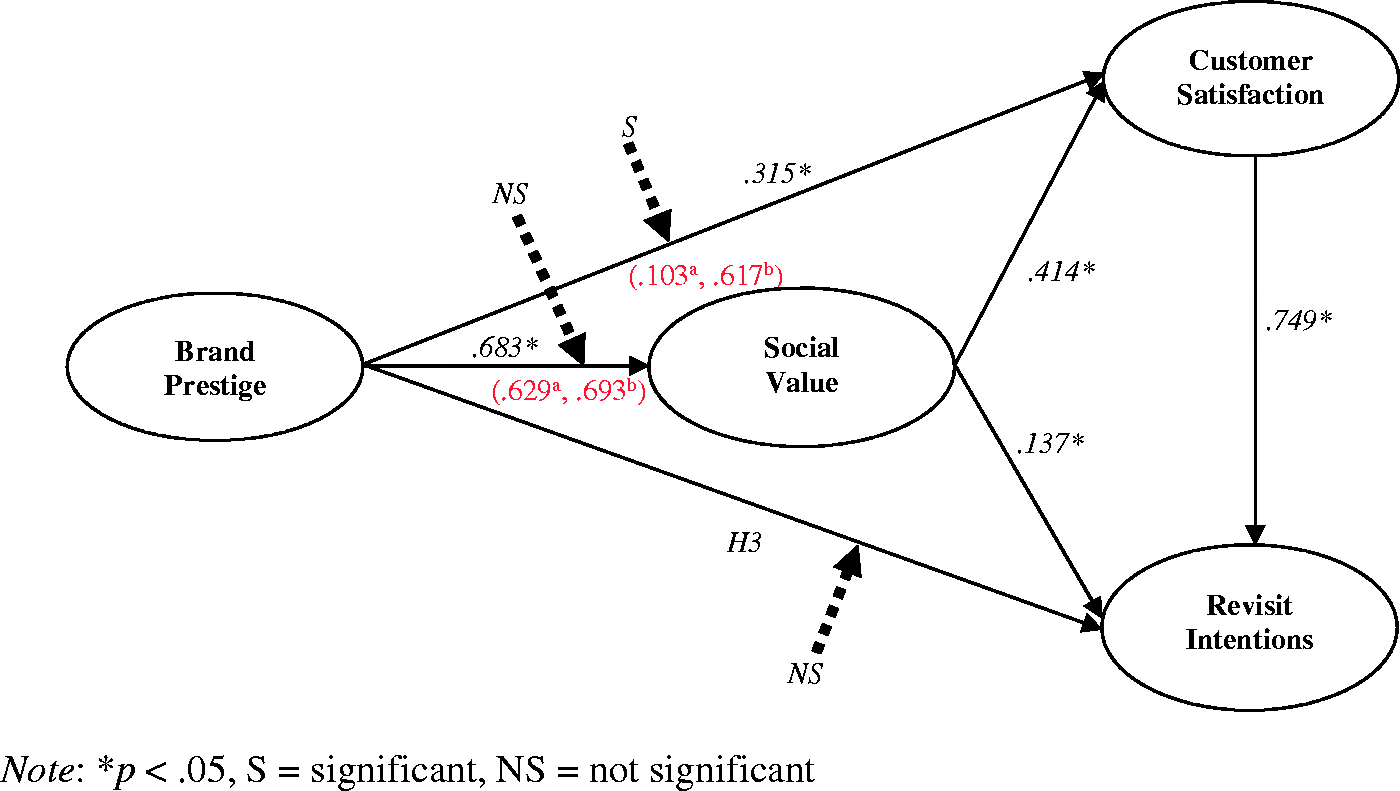
Proposed conceptual model. Standardized theoretical path coefficients. *p < .05. S: significant; NS: not significant; a: path coefficient for a low involvement group; b: path coefficient for a high involvement group.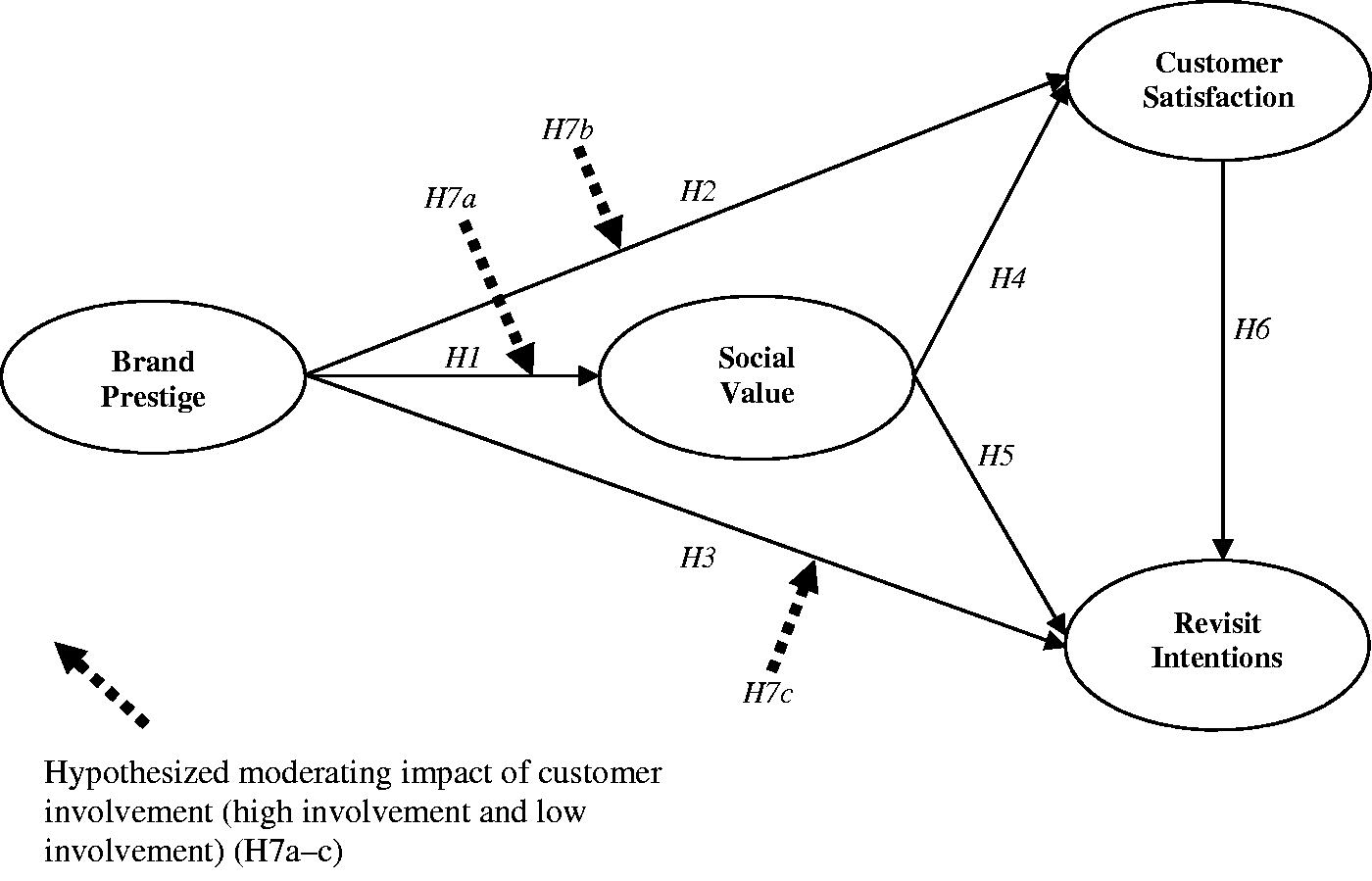
Results of the unconstrained model and fully constrained model.
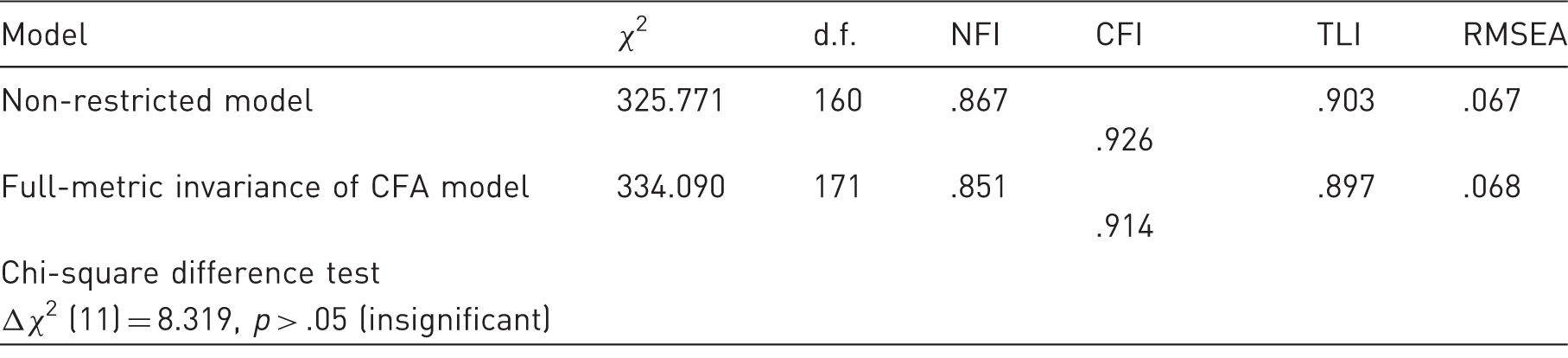
NFI: normed fit index; CFI: comparative fit index; TLI: Tucker-Lewis index; RMSEA: root mean square error of approximation.
The results showed that the moderating role of customer involvement in the relationship between brand prestige and customer satisfaction was supported (H7b) (Δχ2 = 10.745 > Δχ2 = .5(1) = 3.84, df = 1), suggesting that casino customers having high levels of involvement are more likely to be satisfied with the casino when they feel that the casino has high status. However, H7a and H7c were not significant at the .05 level as follows: H7a (Δχ2 = .209 < Δχ2 = .05 (1) = 3.84, df = 1) and H7c (H7a: Δχ2 = .83 < Δχ2 = .05 (1) = 3.84, df = 1). That is, there is no moderating effect of involvement in the relationship between (1) brand prestige and social value and (2) brand prestige and revisit intentions.
Discussion and implications
First, the data analysis indicated that brand prestige was found to exert a significant impact on social value (.683, p < .05) and customer satisfaction (.315, p < .05). In the history of business management research, brand prestige has been considered a critical factor in the evaluation of the overall experience of service quality (e.g. Baek et al., 2010; Dubois and Czellar, 2002). For example, Baek et al. (2010) tried to explore the importance of brand prestige in the retail industry using data collected from a total of 1500 observations. The results of their SEM analysis showed that brand prestige was a critical predictor of perceived quality, which in turn positively affects purchase intention. Unlike like previous studies, this study replicated and further extended the existing finding by empirically testing the effects of brand prestige on social value and customer satisfaction in the casino industry. These findings can be interpreted to mean that when customers perceive that the casino has high status, they are more likely to have high levels of social value and satisfaction.
These findings have managerial implications as well. It is widely known that service quality is the key factor to enhance the level of brand prestige (e.g. Baek et al., 2010; Hwang and Hyun, 2014) and many previous studies commonly suggested the following four service qualities as an important service quality in the casino industry (e.g. Prentice, 2013; Wong et al., 2012; Zeng and Prentice, 2014): (1) game service, (2) service environment, (3) service delivery, and (4) food service. Therefore, casino managers need to focus more on such service qualities in order to increase the level of brand prestige. For example, it is recommended to (1) offer a sufficient number and variety of casino games, (2) hire competent cleaning staff to keep a pleasant environment, (3) provide well-educated employees, and (4) offer a variety of restaurants including American, Italian, Japanese, Mexican, Chinese, and Korean in order to meet the needs of its various customers.
Another important contribution of this study is to find the role of social value in the casino industry. The results of the data analysis showed that social value has a positive influence on customer satisfaction (.414, p < .05), which in turn positively affects revisit intentions (.749, p < .05). In addition, it was found that social value has a direct effect on revisit intentions (.137, p < .05). It is widely known that social value is the key predictor of outcome variables (e.g. Hyun and Han, 2015; Rintamäki et al., 2006). In this regard, this study further extended the existing theory by finding significant effects of social value on customer satisfaction and revisit intentions in the casino industry. That is, when casino customers perceive high levels of social value, they are more likely to be satisfied with the casino and revisit the casino in the future.
Lastly, this study explored a moderating function of customer involvement in casino consumer behavior. The results of multi-group analysis indicated that customer involvement plays an important moderating function in the relationship between brand prestige and customer satisfaction in the casino industry. That is, casino customers with a high level of customer involvement are more likely to be satisfied with the casino when they feel a high level of brand prestige.
This finding also provides important practical implications. First and foremost, it is necessary for casino managers to focus on the target market through a survey. For this, the casino should conduct a survey in order to determine the level of customer involvement. Then, the casino can set up customer databases based on the levels of customer involvement. Given the fact that for casino customers with a high level of customer involvement, brand prestige has a stronger impact on increasing customer satisfaction, it is more effective and efficient to focus more on this target market.
For example, a casino needs to make and send out advertising that emphasizes the prestigious image of the casino for its customers with a high level of involvement; the casino can maximize the efficiency of its advertising. In addition, casino customers with a high level of involvement are more likely to often play casino games, so it is required to keep a high level of comp available and also stress well-developed loyalty programs through advertisements.
Limitations and suggestions for future study
Because of the following limitation, the results of this study should be interpreted with caution. The data used in this research were collected from casino customers in the United States, so external validity can be an issue. It is recommended that future research needs to test the proposed model using different populations indifferent settings. In addition, it is important to consider the moderating role of gender because gender plays a significant role in consumer behavior (Jin et al., 2013; Mattila, 2000). Thus, it is necessary for future studies to examine the moderating role of gender in the casino industry. Lastly, although Hair et al. (2006) suggested size ranging from 200 to 400 when conducting CFA/SEM, we somewhat agree that our sample size is not enough. Thus, future research needs to have larger sample sizes.
Footnotes
Author's Note
Present affiliation for Jinsoo Hwang is Faculty of College of Hospitality and Tourism Management, Sejong University, 98 Gunja, Gwanjin, Seoul Korea.
Declaration of conflicting interests
The author(s) declared no potential conflicts of interest with respect to the research, authorship, and/or publication of this article.
Funding
The author(s) received no financial support for the research, authorship, and/or publication of this article