







Abstract
The exponential growth of open access publishing has sadly encouraged the emergence of numerous predatory publishers and journals harming the scientific community and threatening scholarly communication. While the issue has received some attention from the academic community in medical and applied sciences, much less work has been done within the realm of social sciences. Specifically, despite the gravity of predatory publishing as unethical practice and its negative effect on the progress and quality of tourism and hospitality research, empirical investigation on the topic remains very limited. The present study used a mixed method design combining data from 612 articles published in 13 potential tourism and hospitality predatory journals with data from two surveys drawing on authors’ experiences as well as tourism and hospitality most prolific scholars’ perceptions. The findings reveal that predatory journals are succeeding in targeting a wide range of researchers regardless of their career experience from both developed and developing countries. Lack of awareness of predatory journals, pressure for publication, and high rejection rates in legitimate journals were found to be the key motivations for publishing in predatory journals. Raising awareness of predatory journals and reconsidering tenure and promotion requirements were suggested as the best response strategies to curb predatory publishing. The study offers several theoretical and practical implications and proposes avenues for future research.
Keywords
Introduction
The past decade has witnessed the emergence of journals and publishers of highly questionable credibility in almost all areas of research. The increasing volume of this phenomenon, widely referred to as predatory publishing, is regarded as a major negative consequence of the exponential growth of open access publishing supported by article processing charges (Beall, 2015; Berger and Cirasella, 2015; Butler, 2013; Shen and Björk, 2015). Referred to as fraudulent journals (Memon, 2018), bogus journals (Renandya, 2014), fake journals (Lukić et al., 2014), “pay to publish” journals (Karakaya, 2013), and vanity journals (Balehegn, 2017), predatory journals can be defined as low-quality, profit-oriented, typically open access journals with questionable marketing and peer review practices (Nelson and Huffman, 2015; Shen and Björk, 2015). The word “predatory” was first introduced by Jeffrey Beall, an American librarian who until January 2017 authored and managed a blog where potential predatory publishers and standalone journals were blacklisted to warn both authors and readers. The work of Beall received widespread attention among researchers and librarians since it had been the only comprehensive and regularly updated list of predatory journals. Beall also proposed in his blog a set of criteria to help authors identify possible and potential predatory journals. 1 The list, however, has been the target of some criticism due to its subjectivity and because the methodology Beall adopted was not transparent (Watson, 2017). The list is also argued to be far from being comprehensive and accurate (Gasparyan et al., 2015).
Predatory journals and publishing houses are launched and managed by cyber criminals who aim to gain profits exploiting the business model of open access journals (Kurt, 2018; Lukić et al., 2014). It is widely accepted that the predatory publishing can potentially harm the scientific community polluting scholarly literature and seriously undermining public trust in science (Beall, 2016; Eriksson and Helgesson, 2017; Harvey and Weinstein, 2017). The future development of a given field of study can be potentially damaged by the “junk science” or the “pseudo-science” published in predatory journals (McKercher and Tung, 2015; Roberts, 2016). The professional reputation of individuals and institutions can also be greatly threatened by predatory publishing (Balehegn, 2017). Despite these concerns, predatory publishing continues to thrive, polluting science and damaging the reputation of researchers and their institutions. Research indicates that the number of predatory journals has increased from about 1800 journals in 2010 to around 8000 journals in 2014 (Shen and Björk, 2015). As forecasted by Huffman (2017), if this trend continues, there could be 37,500 predatory journals and 7500 predatory publishers by 2022.
The need for this current investigation is accentuated by the fact that there is a blight threatening tourism and hospitality research. However, some scholars, as well as many early career researchers and students, are apparently unaware of this blight. While some research has recently appeared addressing various aspects of predatory publishing, the need to identify its geographical distribution by determining the volume of predatory journals and the market (preys) they target is still wanting. Moreover, although considerable research has been conducted on predatory publishing in medical sciences (e.g. Johal et al., 2017; Oermann et al., 2016; Xia et al., 2015), the issue is barely touched by scholars within the tourism and hospitality realm. This is perhaps due to the fact that open access journals perform much better in medical and healthcare domains than in social sciences domains (Yan and Li, 2017). In this vein, the current investigation aims to explore tourism and hospitality predatory publishing by identifying its academic market characteristics. The study also identifies the reasons why authors choose to publish their works in predatory journals. Moreover, drawing on the perceptions of the most prolific scholars in the field of tourism and hospitality, the study suggests some solutions and strategies to respond to predatory publishing. In sum, the current study contributes to raise awareness of predatory publishing among researchers as well as policymakers in higher education institutions and research centers. Moreover, the findings will help decision makers design and implement strategies to reduce researchers’ disturbingly unethical engagement in predatory publishing. The findings will also help direct efforts in areas of research other than tourism and hospitality. Further contribution arises from the fact that it helps fill a gap in knowledge about predatoriness in tourism and hospitality research.
Literature review
The open access model of academic publishing has been abused by predatory journals and publishers to gain financial profits from ill-informed and less experienced authors. In recent years, the scam industry has received some attention from the scientific community. Several editorials of established journals have expressed concerns about the growing industry of predatory publishing (e.g. Bartholomew, 2014; Darbyshire et al., 2017; Pearson, 2016; Pickler et al., 2015). Most predatory journals are either multidisciplinary in nature or pertaining to the fields of science, medicine, and technology (Huffman, 2017; Shen and Björk, 2015). Arguably, this explains why predatory publishing has received far more attention among academics in medical and applied sciences than in social sciences.
There seems to be a consensus in the literature with respect to the common features of predatory journals. These features include sending bulk spam emails inviting authors for contribution, promising quick processing and publishing of papers, applying non-transparent fees, reporting fake impact factor, claiming indexation in popular databases, promoting questionable special issues, using non-institutional mail addresses, and lacking clear contact information (Beall, 2016; Huffman, 2017; Johal et al., 2017; Lukić, et al., 2014; Memon, 2018; Renandya, 2014; Roberts, 2016). Moreover, in order to look attractive to naïve researchers, predatory journals often promote themselves as being Western while in fact they are more often published in developing countries (Beall, 2016; Gasparyan et al., 2015; Kurt, 2018; Memon, 2018). Predatory journals also prey on ill-informed researchers by mimicking the titles of well-established journals (Beall, 2016; McKercher and Tung, 2015; Xia et al., 2015). While predatory journals are typically online open access, not all online open access journals are predatory. Similarly, whereas all predatory journals charge fees in different ways, open access journals which charge fees are not necessarily predatory (Berger and Cirasella, 2015). Predatory journals are based on a fraudulent “cash and carry” business model exploiting disparate researchers’ need to publish (Beall, 2015; Omobowale et al., 2014).
Publishing in predatory journals may severely tarnish the reputation of authors, particularly early career researchers seeking to establish their credibility in the academic community (Clark and Thompson, 2017). Given that predatory journals are expanding in almost all areas of research and are succeeding in targeting a wide range of researchers across the globe, it seems implausible that researchers are fully aware of this type of journals (Clark and Thompson, 2017). In fact, although many agree that young and inexperienced early career researchers are the typical victims of predatory journals (Memon, 2018; Xia et al., 2015), some respected academics and authors may also publish in these journals (Darbyshire et al., 2017). It is also argued that not all authors publishing in predatory journals are victims (Balehegn, 2017). Shen and Björk (2015: 14) advocated that “most authors are not necessarily tricked into publishing in predatory journals; they probably submit to them well aware of the circumstances and take a calculated risk that experts who evaluate their publication lists will not bother to check the journal credentials in detail”.
Motivations for and reasons of publishing in predatory journals have also received academic attention. For instance, Clark and Thompson (2017) adduced five reasons why nursing authors would ignore scholarly recognized journals and publish in predatory journals. These reasons include authors’ carelessness about their reputation, lack of self-confidence to publish in established journals, caring about the quantity rather than the quality of publications, authors’ apathetic practices when submitting manuscripts, and deliberate desire for publishing in predatory journals. In a recent study, Kurt (2018) surveyed authors of 300 articles published in predatory journals and found that social identity threat, unawareness, high pressure, and lack of research proficiency were the key motivations for publishing in such journals. Bagues et al. (2019) found that authors were either misled by the information provided by the journal or were aware of the fraudulent nature of the journal but expected to receive a positive assessment from scientific evaluation committees in their institutions. A critical review of the scant literature shows that pressure to achieve publishing quotas necessary for promotion is a key reason driving authors’ engagement in unethical publishing practices (Kurt, 2018; McKercher, 2018; Pearson, 2016; Roberts, 2016; Tijdink et al., 2014; Tung and McKercher, 2017). Unfortunately, in several institutions, it is the quantity of the publications not the quality that serves as a proxy of academic performance (Kurt, 2018) leading some authors to beef up their resumes with publications in highly questionable journals. As noted by some researchers (e.g. Bagues et al., 2019; DeMaria, 2018), the proliferation of predatory journals reflects the lack of accuracy of many scientific evaluations.
Previous research also identified the common characteristics of authors publishing in predatory journals. For instance, Xia et al. (2015) suggested that authors publishing in such journals tend to be inexperienced and early career researchers (e.g. Ph.D. students) from developing countries such as India, Nigeria, and Pakistan. In keeping with this, Shen and Björk (2015) suggested that authors publishing in predatory journals are typically from Asia and Africa. Roberts (2016) maintained that predatory journals serve to facilitate two key types of researchers; the phony researchers and the desperate researchers. Empirical evidence indicates that authors publishing in predatory journals have little to no history of previous publications and citations (Xia et al., 2015). To the author’s best knowledge, no study was conducted to identify the profile of authors publishing in predatory tourism and hospitality journals. Mapping the academic market engaged in predatory publishing is needed to understand the geographical distribution of authors, which could eventually determine as to whether predatory publishing is a context-bound phenomenon. Exploring the academic market will also help tourism and hospitality schools understand those who are likely to publish in predatory journals which serves to direct their response strategies.
Concerned about the increased demand for and supply of predatory publishing, some researchers called for measures and response strategies to stand against this growing industry. These strategies include improving research skills of authors particularly in developing countries, raising awareness among researchers of the damage predatory journals can do to their reputation as well as that of their institutions, adopting measures to control publication quality in academic institutions, and establishing a whitelist of journals to help inexperienced authors choose outlets for their research (Balehegn, 2017; Herron, 2017). Wehrmeijer (2014) suggested three methods to curb predatory publishing, namely black and whitelists, open peer review systems, and new metrics measuring more aspects of research impact while being less liable to gaming.
Predatory publishing is increasing at a steady pace threatening the very core of science and knowledge and providing huge profits for a scam industry. Nevertheless, research exploring predatory journals remains very limited (Shen and Björk, 2015; Xia et al., 2015). Drawing on data from articles published in potential predatory tourism and hospitality journals as well as data from authors publishing in these journals and academic leaders in the field, the current study aims to answer the following specific questions:
What is the general profile (e.g. academic ranking, country of affiliation) of the academic market engaged in predatory publishing in tourism and hospitality? What are academic researchers’ key motivations for publishing in predatory tourism and hospitality journals What are the best response strategies that should be implemented by stakeholders in the scientific community to curb predatory publishing in tourism and hospitality?
By addressing these questions, the study adds to the nascent body of knowledge on publishing ethics and responds to the need of combating predatory publishing.
Methodology
This study used a mixed method design combining secondary data on predatory journals with data from two surveys, one drawing on the experiences of authors who published in such journals and the other on the perceptions of the most prolific scholars in tourism and hospitality. To identify potential tourism and hospitality predatory journals, an archived version of Beall's popular list of predatory journals and publishers was adopted (Beall's List of Predatory Journals and Publishers, 2018). This list is regarded as a blacklist of journals that should be avoided (Watson, 2017). By early 2018, a total of 14 tourism and hospitality journals were identified of which 12 pertained to predatory publishers whereas two were standalone journals. One of the standalone journals was excluded as it used to publish works in medicine and biomedical science between 2010 and 2013 before it changed its name and scope. Moreover, this particular journal did not provide access to the articles published making data collection impossible. Thus, 13 tourism and hospitality predatory journals were included. Despite some criticism (e.g. Gasparyan et al., 2015; Watson, 2017), Beall’s list was adopted because it represents a rich, relatively up-to-date and comprehensive database on predatory publishing (Manca et al., 2017; Pearson, 2016; Wehrmeijer, 2014). The list was also employed in several recent studies (e.g. Huffman, 2017; Kurt, 2018; Manca et al., 2017; Memon, 2018; Nelson and Huffman, 2015; Oermann et al., 2016; Shen and Björk, 2015; Somoza-Fernández et al., 2016; Xia et al., 2015). To ensure that journals selected in the present study are indeed questionable, each journal was checked using the Directory of Open Access Journals, a widely credible whitelist of open access journals (Berger and Cirasella, 2015). None of the journals was included in the DOAJ database confirming that these journals are highly questionable and potentially predatory. Using the DOAJ database to confirm the questionability of the journals stems from the notion that the penetration rate of predatory content in popular and rigorous research databases is likely to be quite low (Huffman, 2017; Nelson and Huffman, 2015; Somoza-Fernández et al., 2016).
With the aim of identifying the tourism and hospitality academic market engaged in predatory publishing, each of the 13 tourism and hospitality journals were thoroughly examined and all articles published in those journals were identified. Data collected from each article included the number of authors, their academic status, and their countries of affiliation. To measure the performance of the articles published in the predatory journals, the number of citations for each article was identified using Google Scholar, an academic research tool that has been widely used to conduct citation analysis (e.g. Benckendorff and Zehrer, 2013; McKercher, 2008; Wardle and Buckley, 2014). Citation counts can be, among other instruments, a reliable tool to measure the impact of academic works (Law et al., 2009). Editorials, commentaries, and book reviews were not included in the analysis.
To identify the motivations for publishing in the predatory journals, an online-based self-completion survey was sent to all corresponding authors with a cover letter explaining the research objectives and ensuring the confidentiality of the information obtained. Of the 612 emails sent 96 bounced back. As expected, given the sensitivity of the research questions, only 48 questionnaires were collected achieving a response rate of 9.3 percent (based on the number of questionnaires presumably delivered).
To identify potential response strategies to predatory publishing, two open-ended questions on why publishing in tourism predatory journals is increasing and how to curb this phenomenon were e-mailed to the 100 most prolific authors in tourism and hospitality as ranked by Park et al. (2011). Those prolific scholars are recognized to have contributed the most to the tourism and hospitality research through their publications in high-quality journals. Therefore, it was deemed that exploring their perceptions of predatory publishing would provide significant insights. Of the 100 authors contacted, only 17 responded, though a much higher response rate had been expected. Interestingly, three respondents replied asking for clarification since they were unfamiliar with predatory journals. Although the initial intention was to analyze the data via a qualitative analysis software, given the relatively small amount of data, these were content analyzed manually. The analysis adopted the guidelines proposed by Braun and Clarke (2006). To increase the reliability of the qualitative analysis, authentic quotations from the original data were included (Elo and Kyngas, 2008). To ensure participants’ anonymity, their names were replaced with codes.
Findings and discussion
Market characteristics
Since 2010, a total of 612 articles have been published in 13 predatory tourism and hospitality journals. As depicted in Figure 1, except for the year 2014, there has been a steady increase in the number of articles published in these journals. These articles were written by a total of 1267 authors. It is noteworthy that when the articles were coauthored, multinational collaboration was minimal to nonexistent and coauthors were more likely to be affiliated to the same institution.
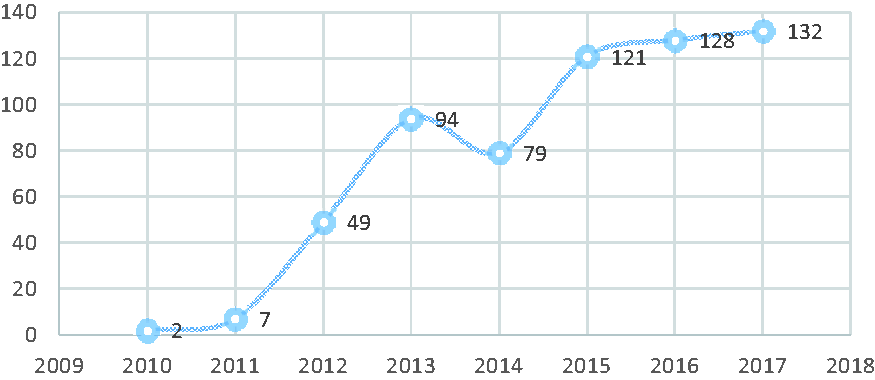
Growth of predatory tourism and hospitality publishing.
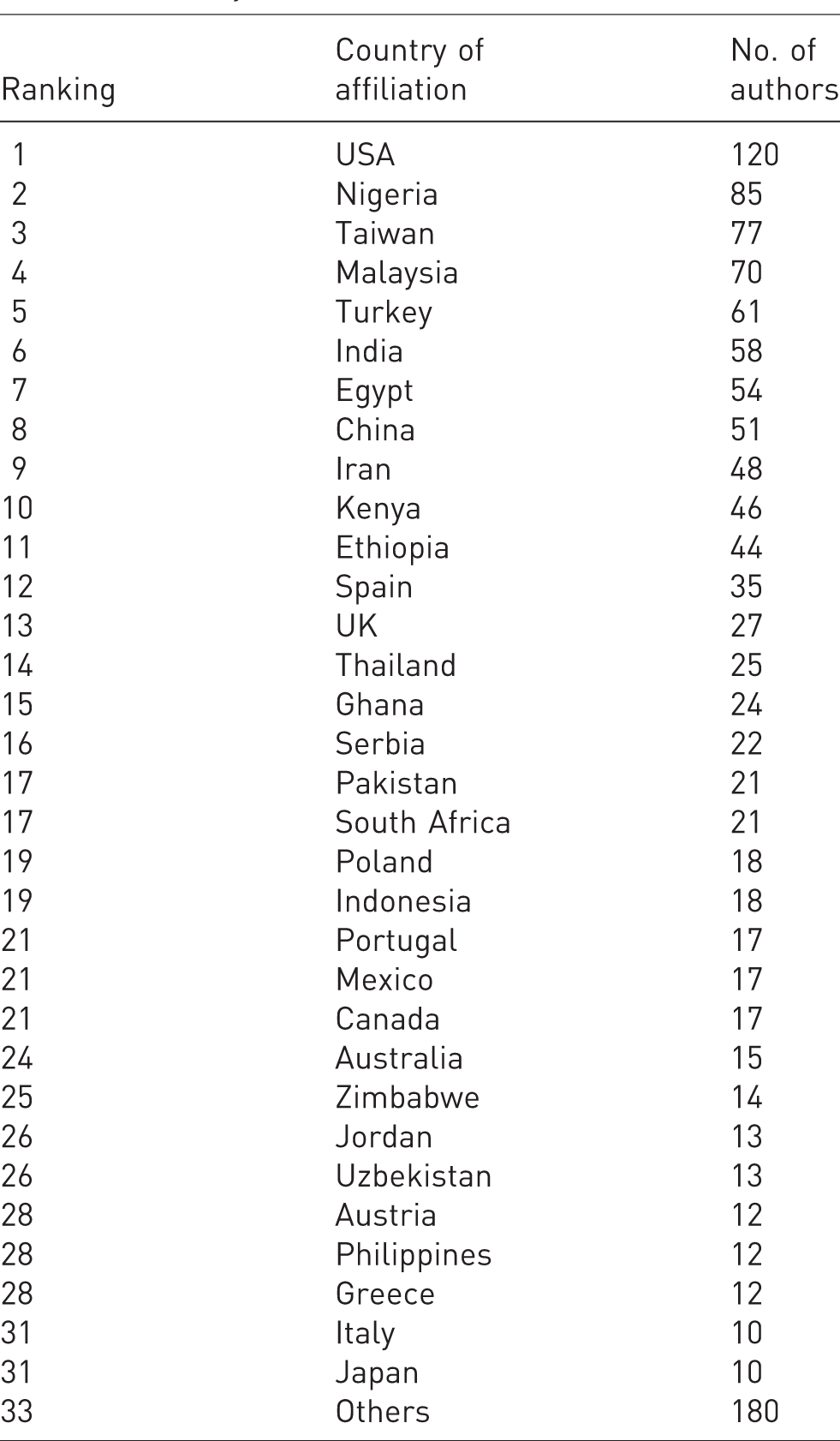
One of the key objectives of this study was to identify the geographical distribution of authors publishing in tourism and hospitality journals. As seen in Table 1, far more than one-third of the authors were affiliated to institutions in the USA, Nigeria, Taiwan, Malaysia, Turkey, and India, a finding that largely supports previous studies (Ezinwa Nwagwu and Ojemeni, 2015; Shen and Björk, 2015; Xia et al., 2015). Interestingly, the USA are ranked first which calls into question the notion that the predatory phenomenon is “a global North-South dilemma” (Shen and Björk, 2015: 14) and confirms that even authors from developed countries can be involved in predatory publishing (Oermann et al., 2016; Simón, 2016). Countries of affiliation with less than 10 authors were listed as Others.
Country of affiliation of authors.
To understand the academic profile of authors publishing in tourism and hospitality predatory journals, data related to the authors’ academic status were also collected. As depicted in Figure 2, the academic status of only 220 authors (around 17%) could be retrieved from the articles and the survey on authors. While the findings confirm that predatory publishing is more common among early career researchers than more established ones (Memon, 2018; Xia et al., 2015), there is evidence that experienced researchers may also be involved in this kind of publishing.
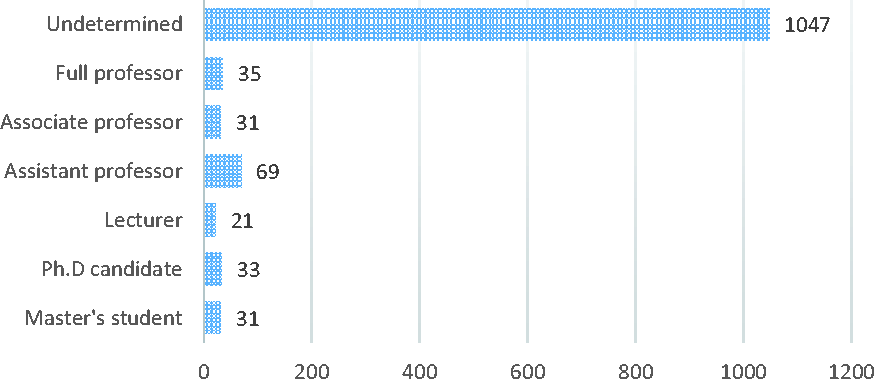
Academic status of authors publishing in predatory journals.
To measure the performance of articles published in the predatory journals, a citation analysis was conducted using Google Scholar. As depicted in Table 2, around 59 percent of the articles have never been cited. A recent study by Bagues et al. (2019) suggested that articles published in predatory journals are less likely to receive much attention. Their analysis revealed that 23 percent of the articles had not received any citation.
Citation analysis of articles published in predatory journals.
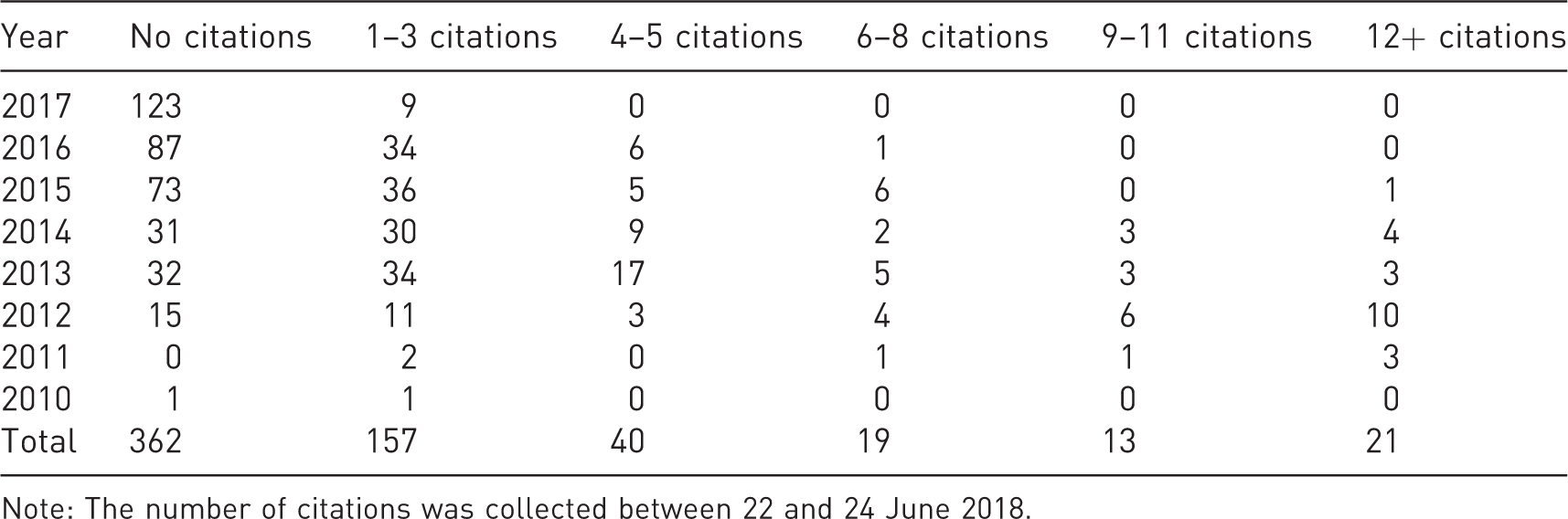
Note: The number of citations was collected between 22 and 24 June 2018.
Motivations for publishing in predatory journals
A key objective of the current investigation was to draw on the perceptions of the most prolific authors in tourism and hospitality to identify the reasons explaining why predatory publishing is thriving and to propose effective strategies to curb it. Based on the content analysis of the participants’ responses, four key potential reasons for publishing in predatory journals were identified:
Pressure for publication: Eight out of seventeen respondents mentioned the pressure to achieve publishing quotas necessary for promotion and tenure as a major factor pushing authors into submitting their research to predatory journals. Confirming this, P11, an author based in a major US university, suggested that “faculty [members] may feel the pressure of fulfilling the minimum number of publications per year as required by their school, or untenured faculty [members] want to get more publications to be tenured”.
Lack of awareness of predatory journals: A significant portion of the respondents (7) suggested that many honest authors may be deceived into publishing in predatory journals. Specifically, respondents highlighted that authors may not be aware of this type of journals and can often be fooled by the names of journals which mimic those established journals. P1, an author based in a university in Hong Kong, related a first-hand experience of his colleague who “got scammed because the title of a predatory journal is very close to a legitimate one and they felt they were publishing in the legitimate journal”.
High submission and rejection rates in legitimate journals: Seven respondents noted that established legitimate tourism and hospitality journals receive too many submissions and inherently the rejection rate is quite high. Frustrated about being rejected, some authors may look for alternative outlets for their research such as predatory journals. P14, a scholar based in a US university, commented: “many scholars (and me included) feel that high-level journals have become profitable ventures for multinational publishing companies and they can be unpredictable or even politicized and capricious on their acceptance decisions. So, academics are then faced with the decision to subjugate themselves to a rigged publication system, or to find alternatives”.
Deliberate publishing for the sole sake of publishing: Two respondents proposed that although aware of the unethicalness of their practice, some authors may still desire to publish in predatory journals to pad their resumes without caring about their reputation or assuming that no one will notice. For instance, P8, an author based in a university in Israel, suggested that some faculty members may “wrongly believe that their colleagues and superiors won’t notice the predatory nature of these journals”.
To offer a comprehensive understanding of the motivations for choosing predatory journals as venues for publishing articles, authors publishing in such journals were also surveyed. The majority (89.6 percent) claimed that they were not aware of the predatory nature of these journals when they submitted their works. Far more than two-thirds (70.8 percent) expressed unwillingness to submit their future works to the predatory journal they had published in or to similar predatory journals.
Based on the content analysis of the open-ended questions asked in the survey, most authors claimed to have been deceived into publishing in predatory journals (27 authors out of 48). Recommendations from colleagues and submission invitations from editors were frequently mentioned as reasons for submitting articles to predatory journals. Need for easy and quick publication to ensure career development also emerged as a key motivation for publishing in predatory journals. Interestingly, 14.6 percent of the authors disagreed to consider the journals that published their papers to be predatory. A46 mentioned: Just because it [the journal] is listed in this fashion [Beall’s list] does not mean that the quality is bad. It takes time for a journal to build up its reputation and I believe that we need more journals. There are a limited number of journals in the area of hospitality and tourism. […] there are more and more hospitality programs in the world which means more professors need a place to publish, so I believe that this gives professors other opportunities.
Overall, the reasons explaining the growing industry of predatory publishing are in line with those cited in previous studies (Bagues et al., 2019; Clark and Thompson, 2017; Günaydin and Dogan, 2015; Kebede et al., 2017; Kurt, 2018; McKercher, 2018; Pearson, 2016; Roberts, 2016; Tijdink et al., 2014). It seems that authors may scarify their long-term reputation for short-term benefits. The findings of the current study also reveal that the pressure for publication coupled with the limited number of established tourism and hospitality journals is a major issue that fuels the industry of predatory publishing.
Response strategies to predatory journals
Participants were also asked about the best strategies to curb the phenomenon of predatory publishing. Based on the content analysis of the data, two key strategies were identified:
Raising awareness of predatory journals: There is a general feeling among respondents that predatory publishing will probably continue to exist as long as authors continue to be either deceived into or lured to quick and easy publishing. Respondents highlighted the role of universities in raising awareness among researchers of the damaging impact of publishing in predatory journals. P1 proposed that researchers must be reminded that “these journals are largely unread and incited. All also do not sit on any legitimate league table of journals. So, publishing here is a waste of one’s effort.” Respondents also suggested that faculties introduce blacklists and whitelists to prevent authors from being deceived by predatory journals. Previous research (e.g. Kurt, 2018) also proposed that raising awareness is an effective strategy in combatting illegitimate predatory publishing.
Reconsidering tenure and promotions requirements: Most respondents highlighted the need of ceasing the recognition of articles published in predatory journals in tenure and promotions. P15, a researcher in a major US university, suggested: Institutions of higher learning should refuse to accept any predatory journals. They should not count towards reappointment, tenure, or even as part of an annual report. If no one can count them as part of their research record in any sense, then no one would be willing to pay for publications and the predatory journals would not be financially viable. Then, they would close shop.
While our findings may not seem too concerning given the small size of papers published in predatory journals and the relatively limited geographical distribution of the authors of these papers, there is little evidence that this disturbing trend will cease to grow. As noted by Clark and Thompson (2017: 2501), “as long as workplace cultures reward publishing for publishing’s sake, predatory publishers will continue to thrive”. All stakeholders including researchers themselves (and perhaps at first place) are required to play a more effective role in combatting predatory publishing to ensure a healthy future development of tourism and hospitality research.
Conclusions
Predatory publishing is a blight threatening the future of scholarly communication and eradicating it should be a joint responsibility for all stakeholders within the academic community including researchers and academic institutions. While some researchers forecast a dramatic growth in the preparatory publishing (Huffman, 2017), others are less pessimistic expecting that the phenomena will diminish in the near future (Shen and Björk, 2015). However, what no one can deny is that predatory journals do exist and their market is unfortunately vibrant. By exploring predatory publishing in tourism and hospitality, the present study joined other similar studies in different scientific fields to raise awareness of the predatory publishing. Specifically, the study showed that predatory journals continue to burgeon appealing to both early career researchers and experienced researchers in a number of countries. It seems that predatory journals constitute an “offering” that responds to an increasing demand in the academic arena. In this vein, techniques used by such journals (e.g. sending spam emails inviting authors for contribution) can be viewed as a marketing strategy.
Theoretical implications
The current study is probably the first of its kind in the tourism and hospitality domain. While the study joined similar research attempts in other fields to identify the academic market engaged in predatory publishing (e.g. Kurt, 2018; Shen and Björk, 2015), it went further by conducting a citation analysis to measure the performance of articles published in predatory journals. Moreover, the current study gave voice to the tourism and hospitality leading scholars to understand their perceptions of predatory publishing and to explore their suggestions as to how this phenomenon can be curbed. Overall, the present study combined secondary data on predatory journals with primary data from two surveys drawing on authors’ experiences as well as tourism and hospitality most prolific scholars’ perceptions. By doing so, this study provided a deeper understanding of predatory publishing in the tourism and hospitality research.
Practical implications
Our findings indicate that unawareness of predatory journals is a key reason why predatory publishing is thriving. Therefore, not only should publishing in predatory journals be dis-encouraged and dis-incentivized, academic institutions should also actively initiate internal campaigns to inform academic staff as well as post-graduate students about good practices in publishing. For instance, departments can issue and maintain whitelists and blacklists for journals and share them with postgraduate students and academic staff. A step forward should be taken by considering publishing in predatory journals an unethical practice that should incur punishment. Experienced researchers have an important responsibility toward the academic community and thus they should steer their students and early career researchers when evaluating journals as potential publication venues for their outputs. Public and private funding agencies should assign research grants only for research published in legitimate journals.
Among the articles analyzed in this study, in a few the authors declared to have received funding. Rewarding projects that disseminate their outcomes in predatory journals contributes to the transfer of financial resources from the academic institutions to the scam industry. Researchers who have publishing records in questionable journals should seek and be encouraged to self-clean their reputation by retracting these publications. Specifically, researchers need to know that “by publishing in a predatory journal, researchers immediately render their work unusable, illegitimate, and stigmatized” (Roberts, 2016: 1831). Promotion and tenure committees of academic institutions could respond to the threat of predatory publishing by improving their systems in a way to refuse recognition of articles published in questionable journals. In this vein, the practice of relying excessively on the number of publications as a proxy for academic productivity and performance should also be reconsidered. Authors should pay attention when citing articles. Papers citing articles published in predatory journals may risk being questionable themselves (Beall, 2016). Specifically, senior researchers supervising Master’s and Ph.D. students should pay attention and direct their students to high-quality journals.
Limitations and future research
The present study has a number of limitations. First, the academic market engaged in predatory publishing was identified using data from Beall’s list of predatory publishers and journals. Although the list has been used in extensive previous research, it remains controversial. Closely related to this issue, the journals selected in the present study were based on an archived version of Beall’s list that went dark in January 2017. Other predatory tourism and hospitality journals may have emerged since then and thus were not identified and included in this study. Further, this study examined predatory journals published in the English language only. However, local journals in other languages may also adopt questionable practices and therefore, be potentially predatory. Similarly, although it has significantly matured over the past few decades (Kozak and Kozak, 2016), tourism is not yet viewed as an established scientific discipline with a distinguished body of knowledge (de Esteban et al., 2015). Therefore, many tourism-related articles may have been published in other predatory journals. Given the low response rate from both the authors of articles published in predatory journals and the tourism and hospitality academic prolific researchers, the non-response bias is a major concern. Research on predatory publishing is still maturing and thus there are still many unanswered questions. A critical review of the literature shows that there are many propositions still in need of empirical investigation. For instance, pressure for publication is widely discussed as a key factor driving authors’ engagement in unethical scholarly practices including publishing in predatory journals. This notion may need to be empirically examined. It also may be interesting to explore more in depth the performance of articles published in predatory journals. For instance, a more comprehensive citation analysis can be performed to understand where these articles are most cited. This could provide insights into the levels of penetration of “junk science” in the legitimate journals.
Footnotes
Acknowledgements
An earlier version of this paper was presented at the 5th International Tourism, Travel and Leisure Conference (TOURAVEL 18) in Istanbul-Turkey, May 2018. The author would like to thank Ms. Gonul Akin for her assistance in the data collection.
Declaration of Conflicting Interests
The author(s) declared no potential conflicts of interest with respect to the research, authorship, and/or publication of this article.
Funding
The author(s) received no financial support for the research, authorship, and/or publication of this article.