







Abstract
In the last decade, global urban destinations have witnessed an unprecedented wave of tourism growth based on the development of short-term rental platforms (STAP) and of a particular platform, Airbnb. Literature has demonstrated this growth’s influence in different contexts, highlighting its impact on housing markets, mostly at the city level and through correlation or regression analyses. This study goes a step further, focusing on the neighborhood level for the case of Barcelona (Spain) and using k-means clustering. Results show how the concentration of Airbnb listings in “highly touristified” and “trendy” neighborhoods has been associated with an increase in rental prices in these areas. Moreover, the subsequent increase in the demand for tourism-related services in these neighborhoods has led to a displacement of residents to peripheral neighborhoods, which has also put pressure on these areas’ housing prices. These processes have been accompanied by an increasing reaction from local anti-tourism movements. Based on these findings, we suggest that global urban destinations managers need to manage STAP and tourism-related service development not only in relation to the tourism industry but also regarding its impact on the conditions of residents and should consider the neighborhood as a primary management unit when designing the necessary regulations.
Keywords
Introduction
In the last decade, global urban destinations have witnessed an unprecedented wave of tourism growth facilitated by different phenomena, such as digitization, low-cost transportation, and social media actors. Nevertheless, there is one factor that stands out from the rest and that, in many of these cities, has benefited from the post-financial crisis context: the development of the platform economy and especially of short-term rental platforms (STAP), starring one company in particular, Airbnb. Initially understood from the almost exclusive prism of its sharing characteristics, the platform economy is currently understood as an economic and social activity facilitated by digital platforms and/or technological frameworks, where platforms generally mediate in peer-to-peer (P2P) exchanges, optimizing the use of underutilized resources (Belk, 2007). The emergence of platforms in tourism activity was viewed, in its origins, with optimism and, in the same way as in other contexts, its potentials were highlighted above all in terms of a possible empowerment of consumers and service providers (Cheng, 2016). Their growth in urban destinations has followed a natural socioeconomic logic: the development of P2P exchanges and their supporting digital platforms has essentially been one of the main vectors of the contemporary urban reality (Artioli, 2018). Urban destinations, given their demographic and social characteristics and their agglomeration economies, have favored the platformization of tourism, especially in subsectors such as the mediation of “home-sharing,” since the platforms grow precisely in relation to the concurrence, requiring critical masses to be viable. Airbnb’s growth in global cities has been astronomical, not only due to demand (low cost and geared to millennials) but also supply (attractiveness for investors, centrality of locations, and home-away-from-home vibe) and institutional factors (urban rental legislation) (Guttentag, 2019) and the company has boasted being an active agent in reducing inequality in cities through the creation of wealth and the distribution of income derived from their growth.
However, other factors were also driving this growth, relating the dynamics of tourist activity with other sectors and particularly with housing, in a way that had not happened before in urban destinations (though common in mature “sun and sea” destinations in previous growth stages). The 2008 financial crisis plummeted housing prices in many cities, led to the arrival of new actors, more inclined to speculation, and diverted a large part of the supply to the rental market (Lima, 2020). The closure of many companies and the increase in unemployment in many cities favored the appearance of large pockets of population in need of supplementary incomes. This was the context in which some authors understood that tourism was representing an opportunity for capitalism, a kind of “spatial arrangement” that could be at the forefront of economic recovery (Cañadas, 2019). It was the moment for platforms to take off in these large cities, especially by being businesses that did not need large infrastructures and structures to achieve greater shares of power in the strategic control of a large part of the tourism supply, essentially accommodation. An initial situation in which local administrations promoted “laissez-faire,” shielding themselves in the need to recover from the crisis.
These elements favored a spectacular growth in the tourism accommodation supply and its related services in these destinations and therefore also the development of a whole set of services aimed at the growing masses of tourists that arrived at these destinations over the years prior to the outbreak of COVID-19. In the most populated Spanish cities, this demand-push effect was propelled by the increase in the number of properties posted on Airbnb and their high occupancy rate (Jiménez et al., 2021). However, the later years have seen an especially important development of specialized literature (Guttentag, 2019) that has echoed other results of these dynamics, highlighting a range of negative externalities caused by STAP growth, such as the increasing occupation of public and private spaces, the deterioration of the commercial fabric and, most notably, the effects on the housing market itself. Authors, such as, for example, Wachsmuth and Weisler (2018), have reported the influence of the development of the Airbnb supply in the increase in rental prices in different cities as well as its responsibility for diverse processes leading to the displacement of the resident population (“touristification” processes) (Morales et al., 2020), which have even overlapped previous “gentrification” processes. Obviously, an initial rather passive, and even receptive, response from residents has been followed by resistance and finally mobilization of a group of activists, generally united by a degrowth ideology, and aligned with organizations defending decent housing conditions, forming two basic vectors of the contemporary “Right to the city” movement (Díaz-Parra and Jover, 2021). These activists have pointed to Airbnb and its practices as being responsible for speculation and rising house prices (Garay et al., 2020), pressuring public administrations to act to control the growth and spatial distribution of the platform (Wilson et al., 2021).
Nevertheless, most of these studies have analyzed these processes considering the city as a whole, when the STAP commercial strategies, their providers’ investment decisions and the disruptions caused by their development occur in a clearly differentiated way in different neighborhoods typologies (Xu and Xu, 2021). In fact, it has been shown that the neighborhood is the company’s work unit at the level of marketing and projection of the image of the destination (Garay and Morales, 2021) and that it is on this micro-geographic scale where the company exploits the concept of community as an engine of attraction to its listings. Moreover, when the literature has focused its analysis on the neighborhood level, the associations and relationships between their different typologies have not been identified, without considering the importance that, for example, these processes may have in the multiple tourist neighborhoods, in new expansion areas or in those that make up the periphery. Consequently, this study has the general objective to observe potential similarities, differences and relationships regarding STAP externalities between diverse clusters of neighborhoods in one of the most representative urban destinations in Europe, Barcelona, grouped by their characterization in terms of tourism-related, demographic and socioeconomic issues.
Literature
Being one of the greatest exponents of STAP and the company that has starred the last stage of tourism growth in many global urban destinations, the development of Airbnb has been interpreted as a great opportunity from the tourism business perspective. Essentially from the idea of being a disruptive innovation (Guttentag, 2015) that would offer an alternative value proposition centered around a supposed “more authentic” local experience for tourists (Paulauskaite et al., 2017). Since its inception, the platform has championed its image as a central contributor to the wealth of tourism destinations, especially by allowing low- or middle-income residential families to supplement rent by becoming one of the company’s hosts.
Nonetheless, once the platform began to have a certain dimension, a range of authors have described a very different reality regarding hosts’ characterization, far from the image of the idealized “altruistic resident.” Thus, while a range of authors (e.g., Ki and Lee, 2019; Yrigoy, 2016) have documented that Airbnb’s actions are strongly conditioned by commercial intermediaries, with a consolidated presence of large landowners and real-estate agencies, others, such as Aznar et al. (2018), have found that a huge proportion of hosts have performed a range of professional revenue management practices. In fact, the same company promotes the commercial orientation of its hosts, particularly through valorization techniques that single out hosts whose performances are considered exemplary, especially for responding to the company’s desired consumer experience (Von Richthofen, and Von Wangenheim, 2021).
Beyond the prevalent corporate nature of many of its hosts, Airbnb’s growth strategy in global urban destinations has been generally “additive” (Arias Sans and Quaglieri Domínguez, 2016), that is, with a greater presence in neighborhoods where traditional tourist accommodation was already well developed (Gutiérrez et al., 2016), thus putting even more pressure on already saturated areas. Questions have been raised about whether Airbnb’s supply distribution is related to proximity to cities’ tourist attractions but also transport and educational infrastructures (Morales-Pérez et al., 2020) or to other socioeconomic factors, such as a young population (Dudás et al., 2017), a large proportion of single-person households (Ki and Lee, 2019) or even the attractiveness of lifestyle consumption (neo-bohemia) (Ioannides et al., 2018). In fact, studies such as those by Benítez-Aurioles (2018), Gibbs et al. (2018), Li et al. (2019) and Lladós-Masllorens et al. (2020), have established a close link between the location of Airbnb’s supply and the attractiveness and perceived value of these places for potential tourists. More recently, Lagonigro et al. (2020) stated that the main factors explaining the spatial development of Airbnb listings have mainly been socioeconomic: residents’ family income and education level, and dwelling sizes in these spaces.
This strategy has logically impacted the “traditional” tourism ecosystem, opening a significant debate to understand whether P2P activities add to a destination’s tourism supply and demand for a destination or if they intensify competition with mainstream activities for market share. In any case, an “additive” strategy has perhaps been most clearly seen in the accommodation sector, especially at the lower end of the market within which it competes (Zervas et al., 2017). Studies such as Dogru et al. (2021) show how Airbnb growth in the destinations has a clear negative impact on hotel revenues, especially related to a reduction in the pricing power of hotels, rather than occupancy. Moreover, some authors (i.e., Morales et al., 2020) have demonstrated how this adverse influence is associated with the growing predominance of multiple-listing hosts in the digital platform; the only exception to this outcome is the “economy-scale” segment; in addition to forcing economy-scale hotels to lower their prices to compete with Airbnb, these hotels also appear to have lost customers to the platform. For Farronato and Fradkin (2021), this kind of externalities are especially concentrated in times of peak demand: the hotel sector in many cities is frequently constrained by a limited number of available rooms, which leads to high prices during demand peaks because hotels cannot accommodate all potential travelers.
Furthermore, for authors such as Cócola-Gant (2018), the expansion of Airbnb’s supply and the subsequent tourism-related service infrastructures has also been a key factor in how these urban destinations’ space is produced and consumed, affecting the (original) internal balance between the composite elements of these places’ rental property (central locations, square footage, and opportunity cost in terms of mobility and income). In fact, the location of Airbnb listings has been proven to be associated with tourism amenities’ distribution in cities (García-López et al., 2020), thus exacerbating processes of tourism-induced urban change (Novy, 2018), rooted in swapping out residential rentals for a growing tourism rental market (Yrigoy, 2016). The fact is that, until a decade ago, tourism supply and housing supply did not generally overlap in most of these global urban destinations. However, after the financial crisis took hold in 2008, the emergence of STAP afforded property owners a more lucrative option than traditional long-term residential rental. The resulting rent gap (to use geographer Neil Smith’s term) has been analyzed in global destinations such as New York (Wachsmuth and Weisler, 2018) or Barcelona (García-López and et al., 2020), emphasizing the extent of the impact that the growth of STAP has had on long-term residential rents.
Different studies (Lladós-Masllorens and Meseguer-Artola, 2019; Wachsmuth and Weisler, 2018) have concluded that, particularly in the most touristified neighborhoods, long-term housing affordability has been directly affected by the appearance of these rent gaps (Gyódi, 2019; Lee, 2016). In their study, Kim et al. (2019) showed that this depletion of the long-term rental supply was more concentrated among the lower-priced, affordable, units, raising concerns about the affordability of available housing. Along the same lines, Shabrina et al. (2019) found a positive correlation between the spatial location of Airbnb accommodation rentals and the supply of purpose-built flats. Moreover, they found that Airbnb tourism listings were growing in areas with a higher proportion of privately-rented properties, turning an increasing percentage of the original housing supply into short-term rental supply.
For Lestegás et al. (2019), this rent gap, originated by the latest wave of tourism growth, takes place especially in big cities but is really a global issue: the loss of purchasing power in many countries after the financial crisis hit, and the subsequent austerity measures, forced many residents to compete for access to a limited housing stock controlled by real-estate developers targeting external markets, essentially international tourists and other temporary (mostly high-income and professionally-qualified) visitors (sometime described as “digital nomads”). Meanwhile, different authors have found that this rent gap is also rooted in the increasing commercial orientation of a large proportion of Airbnb’s hosts. For example, Barron et al. (2018) found that an increase in Airbnb listings led to a rise in the price of housing both for rent and purchase, but, more interestingly, this effect was moderated by type of accommodation offered: the more entire dwellings offered, the greater the impact. For the authors this indicated the influence of the professional hosts reallocating their homes. In the same context, Ayouba et al. (2020) showed that pressure on housing rents increased in destinations with a greater density of professionally-owned Airbnb listings.
In addition, the incidence of this latest wave of tourism growth based on the development of STAP, and essentially Airbnb, on housing affordability had other relevant side effects in these global urban destinations, highlighting the displacement of their residents and businesses. Füller and Michel (2014) were among the first to delve into the transformation that was taking place in urban tourism (in their case, in Berlin), where the preference for “off the beaten track” experiences was causing the number of tourist flats to skyrocket, provoking an increase in long-term rent prices and a decrease in the housing supply. It also brought about the development of higher-income households in touristified zones and marked the start of a new residential displacement process, called “touristification,” which went beyond the traditional notion of gentrification. Indeed, several authors (del Romero Renau, 2018; Santos and Sequera, 2018) have signaled Airbnb as the main contemporary perpetrator of this “touristification,” not only due to the increased pressure it puts on housing affordability but also the resulting disintegration of the social fabric—local networks, small businesses, and public infrastructure.
Cócola-Gant (2016) referred to STAP’s activity as the “new gentrification battlefront,” documenting three displacement processes: 1) the direct displacement of existing residents; 2) exclusionary displacement (a falling housing supply and rising rents, rendering access to housing almost impossible); and 3) displacement pressure (generalized pressure on daily life, coexistence and the different uses made of neighborhood services and amenities by tourists and residents, prompting the latter to move out). Ioannides et al. (2018) also noted this pressure, warning of the potential conflicts that could arise between visitors and locals in what they termed “Airbnb ghettoes.” The consequences of these processes are twofold: the impoverishment of many residents, who need to allocate a higher proportion of their income to rent, and the risk of being displaced from their neighborhoods to peripheral areas of the city, or even outside it, where services decrease, and the commercial fabric is impoverished.
The effects of this impoverishment and displacement particularly impact residents in historic districts or those with tourism amenities but has been interpreted as one of the main problems at the city level in many of these destinations, especially on the European continent. The growing unease in the face of the negative externalities of this latest phase of tourism growth has been captured, to a great extent, by social movements aligned with the idea of the “Right to the City” (Cañadas, 2019; Díaz-Parra and Jover, 2021), which initially spread precisely because of the difficulties of many residents to access decent housing. Rising concerns surrounding the role of platform rentals in the socio-spatial transformation of cities have driven new radical geographies of resistance (Keith and Pile, 2013), characterized by the rise of anti-tourism social movements grounded in a renewed sense of localism. An “internationalist” activism that blames city administrators for being co-responsible for “overtourism” situations, calling out a dearth of regulatory intervention and claiming a direct need for tourism degrowth in cities. The best example of this can be found in the creation of a pan-European network of anti-tourism activism, such as SET (Network of Southern European Cities against Touristification), strongly aligned with degrowth discourses (Fletcher et al., 2019).
Moreover, it is important to add that this is mainly a digital fight: anti-tourism social movements are using the same tools as the big companies, that is, the platforms. Indeed, anti-tourism activism in these cities make use especially of social media platforms and the participation of different stakeholders (especially choreographers, basically influencers) on them to pressure the destination managers regarding the need to control tourism growth pushed by “platform capitalism” (Garay et al., 2020; Morales et al., 2020; Wilson et al., 2021). And this begins with the claim for the platforms to offer more data on the characteristics of their listings and developments in these cities. Finally, it is interesting to note, in relation to these issues, that this activism also faces the company’s own narrative, a true expert in lobbying that supports different causes from liberal values and works hard in the close links between public relations, politics, and activism (Dolnicar, 2017).
Additionally, it is important to note that not enough time has passed to analyze, in depth, what the repercussions of the pandemic caused by COVID-19 may be on these phenomena, both in terms of the Airbnb supply development and their incidence on the aforementioned processes. The first repercussions were visible in an abrupt drop in tourist demand in urban destinations (Gössling et al., 2020) and the terrible impact that this was having on them in terms of the desertification of certain public spaces that were excessively dependent on tourist mobility, and the subsequent impact on specialized commerce. In the case of Airbnb, this was impacting the activity of many hosts (Sequera, 2020), who were considering closing or redirecting their offer to the residential housing market. Nevertheless, although some tourism scholars predicted a potential fall in investor-hosted listings of STAP, with the pandemic under relative control by the end 2020, demand for short-term accommodation rentals resurged (Gurran, N., & Shrestha, 2021) and the company’s revenue was again increasing. In this context, Airbnb founder Brian Chesky announced that the company’s future strategy would focus on independent hosts (as opposed to large operators) and put more emphasis on developing listings in less populated areas. Both of these initiatives would supposedly limit the negative externalities for destinations and maximize the economic benefits for residents needing to complement rent.
In short, we are facing a phenomenon that, as we have seen, has had (and has) important effects on all types of cities, causing serious disruptions. In any case, most of the studies mentioned are focused on the city as the unit of measure, forgetting that the neighborhood is the basic marketing unit of the platform’s supply and that, as Xu and Xu (2021) indicate, the impact on residents (for example, their displacements) generally occur between aggrupations of neighborhoods in the same city. It is, without a doubt, the specificities in terms of tourist infrastructure, demographics and socioeconomic conditions that mark the different repercussions of the development of Airbnb in these cities. In fact, claims for a neighborhood-specific regulatory scheme to balance redevelopment and displacement in communities with limited housing resources. In light of all the above we understand that this research line should delve into the analysis of the differentiated impacts of the platform on different types of neighborhoods as well as the possible interrelationships between these micro-geographies. Based on this, we formulate the following hypotheses:
H1. The concentration of Airbnb listings in a range of urban global destination neighborhoods is associated with an increase in rental prices in these spaces.
H2. The demand for residential, commercial and tourist services brought about by the presence of Airbnb listings in these global urban destinations’ neighborhoods has led to the displacement of the original residents to peripheral neighborhoods in cities.
H3. The concentration of Airbnb listings in the aforementioned neighborhoods is indirectly influencing the increase in property market prices in some of these destinations’ peripheral neighborhoods due to the growing demand for residential uses.
Airbnb growth and the housing problem in Barcelona
Barcelona is a living illustration of the nature and paradoxes of the Airbnb effect in reshaping the urban fabric and associated place dynamics, as several authors have documented (e. g. Morales et al., 2020 and García-López et al., 2020). Having become a top tourist destination since the beginning of this century, the growth of STAP, and particularly of Airbnb, in Barcelona over the past years has been explosive, highlighting the presence of entire home listings (Figure 1). This steep growth has been increasingly curtailed in terms of listing numbers but also in keeping entire home rentals relatively under control—increasing by 3099 between 2015 and 2018, but by only 347 in 2019. Furthermore, despite entire homes constituting the principal listing type in 2015, the situation has finally reverted, following the systematic removal of several thousand unlicensed entire home listings by Airbnb in 2018 (under orders from the City Council via the 2017 Special Tourist Accommodation Plan [PEUAT]). Evolution of Airbnb listings in Barcelona. 2015–2018. Listings by typology. Source: Authors, based on Airbnb data.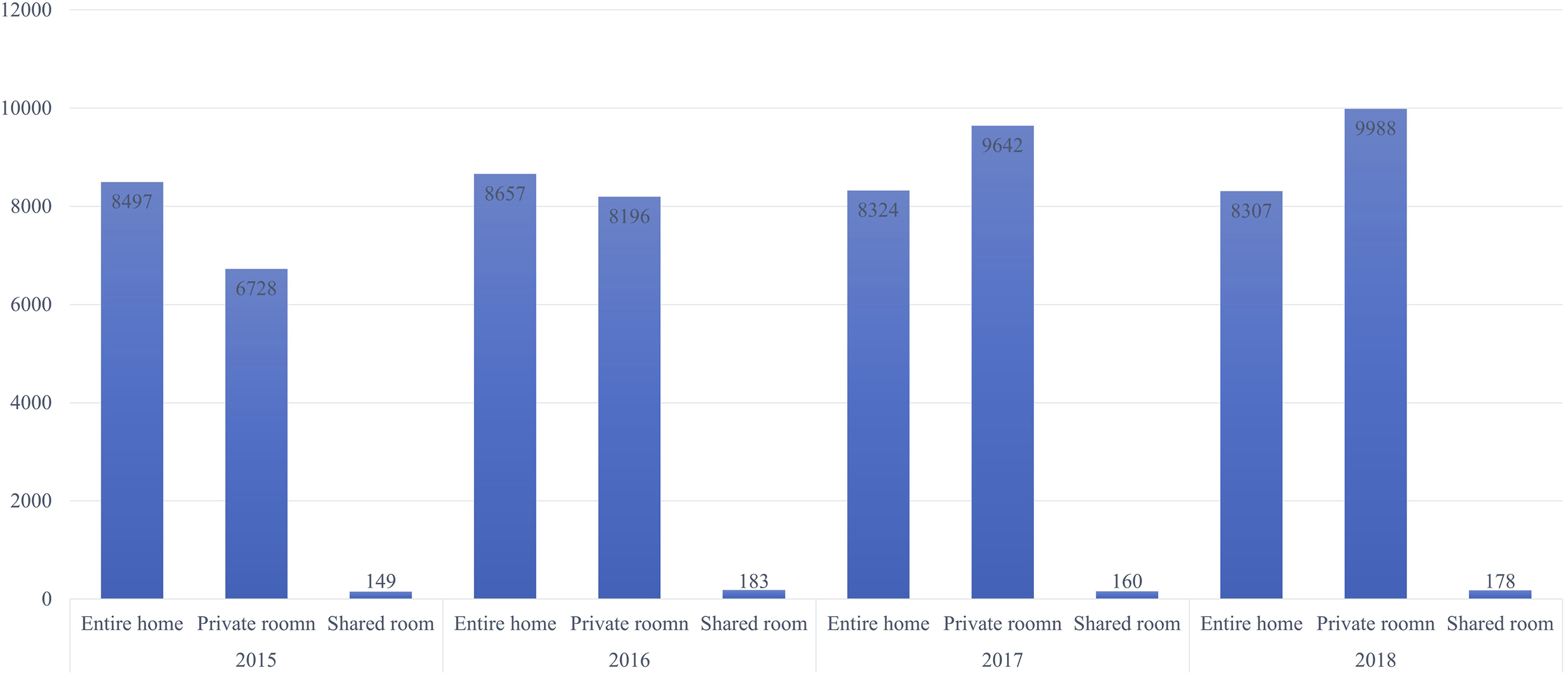
Furthermore, Barcelona is also an example of the development of anti-tourism movements and also one of the strongest regulatory positions regarding STAP to minimize the negative impacts of them in the social urban fabric. On the one hand, diverse references (e. g. Wilson et al., 2021) have shown the growth of anti-tourist resistance in this city, its use of social media (especially Twitter) and its influence on the tourism policies of recent municipal governments (with which it largely coincides ideologically). Also, of their growing participation in the creation of mobilization networks on a continental scale, which can counteract the lobbying power of the STAPs. In their narrative, generally projected on the aforementioned social media, the criticism of Airbnb’s growth stands out, in strong association with the degradation of the “housing problem,” while the local council is pressured to control its growth (Garay et al., 2020). Precisely, on the other hand, since 2015 until now, the City Council has swiftly reinforced the regulatory approach to STAP, starting with halting the concession of new tourism rental licenses in the whole city for new accommodation establishments of any type while introducing new measures. In 2017, the PEUAT established zero growth for tourism accommodation supply in some central neighborhoods to avoid an excessive concentration of tourism rentals and ensure a more balanced distribution throughout the city while the City Council entered into a conflictive cycle with STAP, fining Airbnb for repeatedly advertising unlicensed listings.
Regarding the housing market in the city, the economic recovery that followed the crisis rapidly caused housing prices in the city to rise. The average monthly rent in Barcelona reached 980 euros in 2019, indicating that the upward trend in prices did not take long to reactivate after the brief price drop following the housing crisis. As Figure 2 shows, the increase in the cost of rent has more than compensated for the previous price adjustments, and in 2019, exceeded 2013 values by more than 40%. This accelerated growth in housing prices represented more than two times the Spanish average, with only Madrid beating Barcelona in terms of price increase. This has had a clear impact on housing affordability in the city, representing a jump from 43.1% to 50.5% of a Barcelona family’s average gross disposable income. Average monthly rent in Barcelona. 2000–2019. Euros. Source: Authors, based on Government of Catalonia data.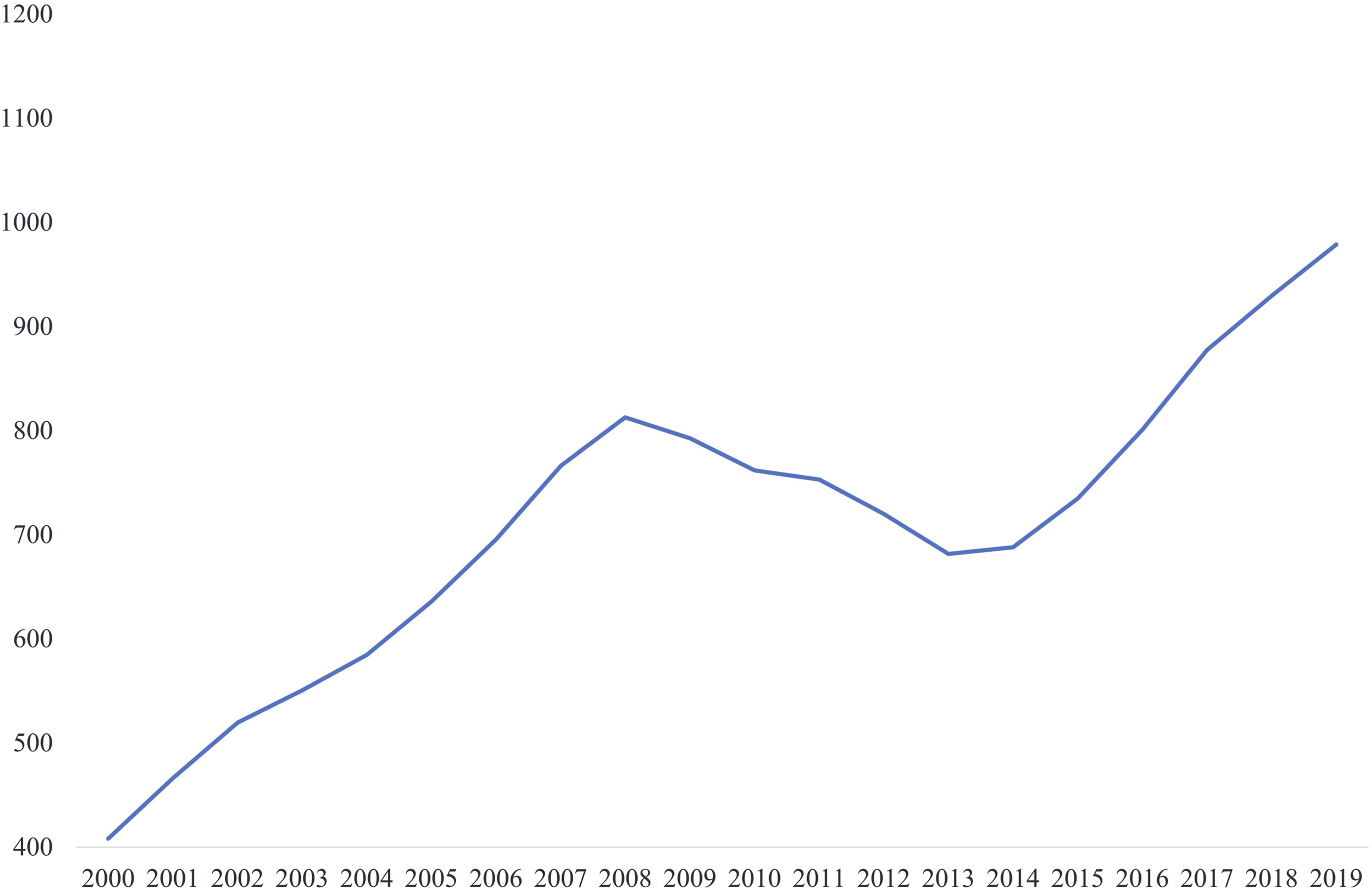
Methodology
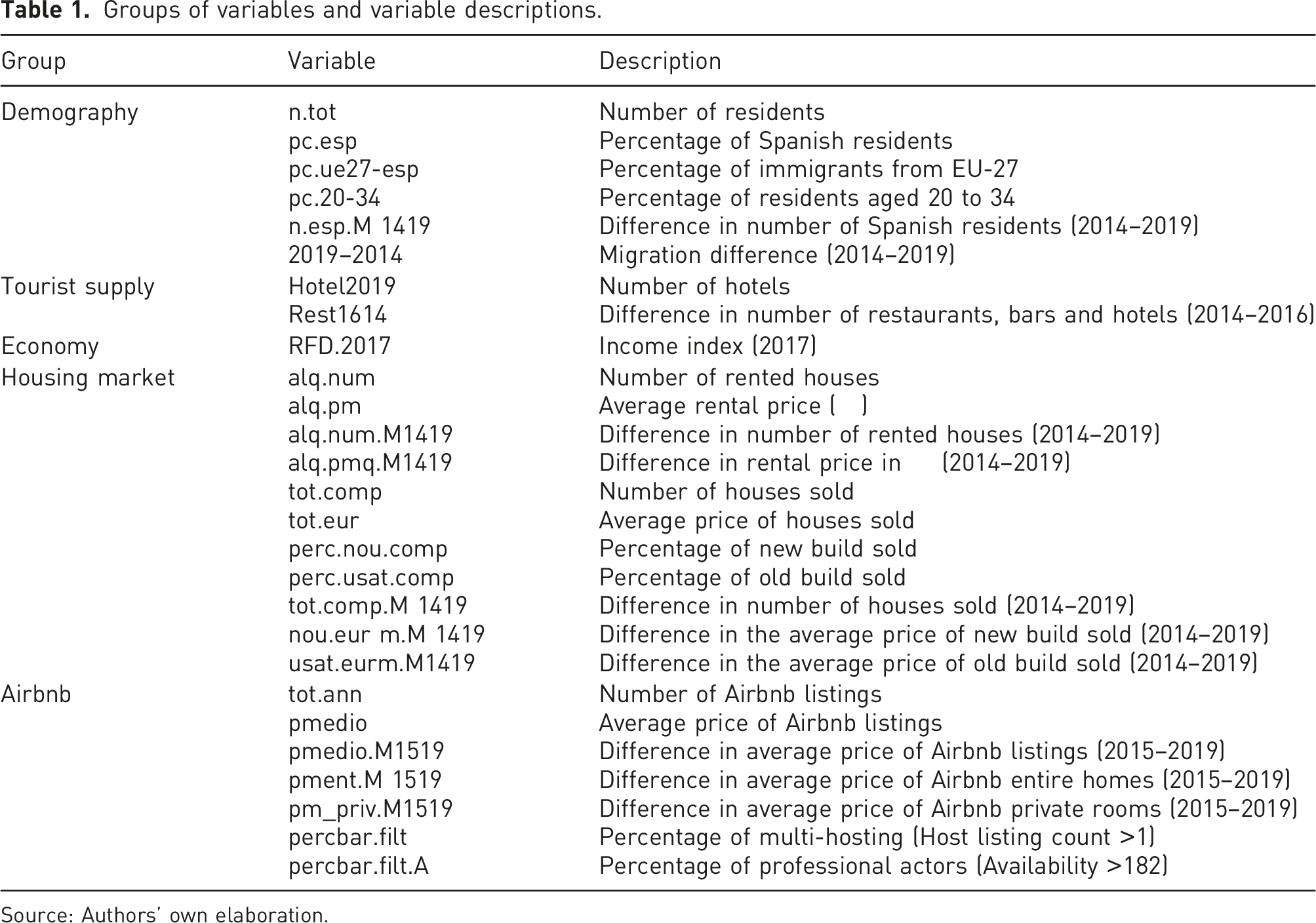
Variables and sources of information
Groups of variables and variable descriptions.
Source: Authors' own elaboration.
A preliminary descriptive analysis of the variables revealed that the “Marina del Prat Vermell” neighborhood contained very extreme observations. Due to these outliers, we decided to eliminate this neighborhood from the analysis. Hence, we carried out the quantitative analysis with the remaining 72 neighborhoods.
Research method
Since the objective of this paper was to find similarities and discrepancies between neighborhoods and to analyze the reasons why different neighborhoods have variables with analogous values, we used a cluster analysis. This multivariate statistical technique attempts to group elements (or variables) to achieve maximum homogeneity within each group while simultaneously identifying the largest difference between the groups (Han, 2001). A number of different options exist for performing a cluster analysis, but for the purposes of our study we chose the k-means clustering technique (MacQueen, 1967), which is one of the most popular of non-hierarchical alternatives (Hair et al., 2010) and highly efficient in terms of computational time (Park & Jun, 2009). K-means clustering allowed us to minimize the distance between the values of the observation variables and the respective cluster centroids (mean vectors of the standardized variables) and, consequently, to maximize the similarity among observations belonging to a specific cluster. Hence, groups were as different as possible and contained observations that were as similar as possible. There is no consensus in the academic literature on which technique (hierarchical or non-hierarchical) is the best type to use in a cluster analysis; each researcher bases their opinion on the interpretability and suitability of the results obtained by their chosen approach. However, non-hierarchical methods have become more widely-used and accepted (Hair et al., 2010). As will be explained in the following sections, the results obtained in this paper using the k-means clustering approach have allowed us to check the validity of the proposed hypotheses and correctly interpret the situation in each neighborhood according to its respective cluster.
Cluster analysis
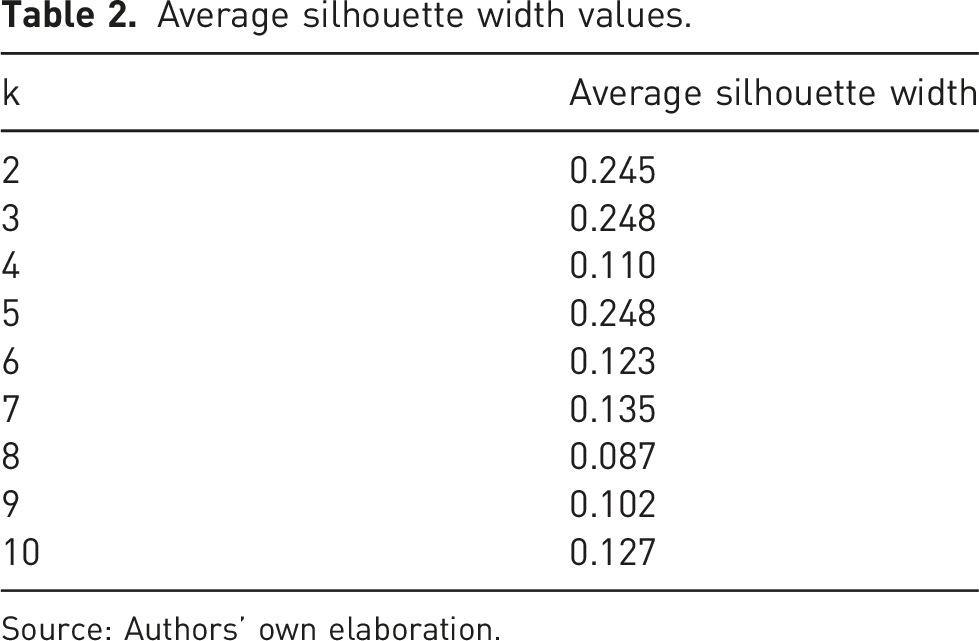
Average silhouette width values.
Source: Authors' own elaboration.
Once we had decided on the number of clusters, we proceeded with the k-means analysis. To perform the analysis, we considered the Euclidean distance and Hartigan’s algorithm. According to Telgarsky and Vattani (2010) and Slonim et al. (2013), Hartigan’s method is more refined than Lloyd’s algorithm since it tends to eliminate bias. The results of the k-means analysis showed that the second cluster contained more neighborhoods (44.44%) and that the first cluster was the smallest (5.56%). The remaining three clusters had a similar proportion of neighborhoods. Figure 3 shows the city map with the neighborhoods color-coded according to the cluster. Map of neighborhood cluster distribution. Source: Authors' own elaboration.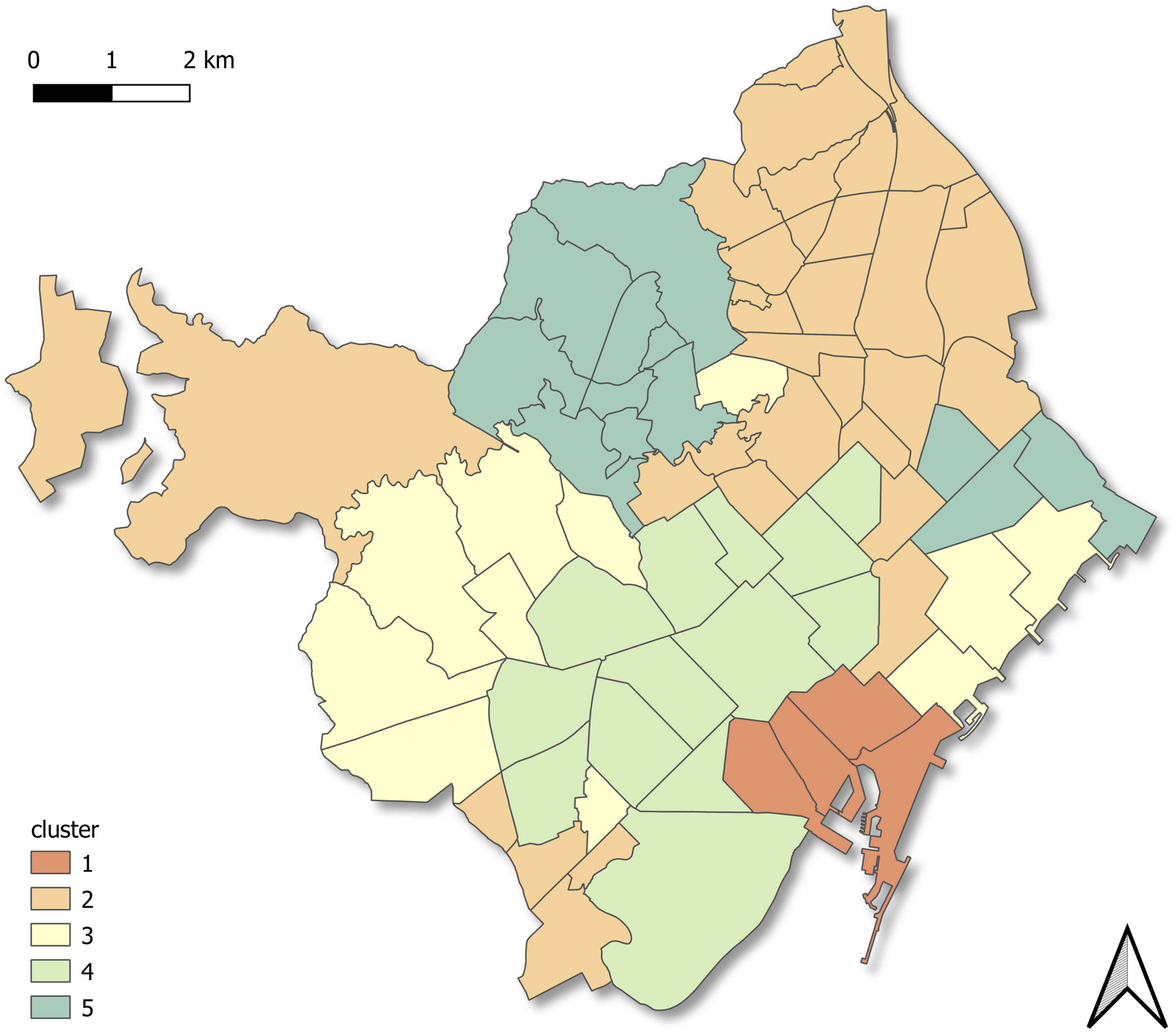
Centroid values of the cluster analysis.
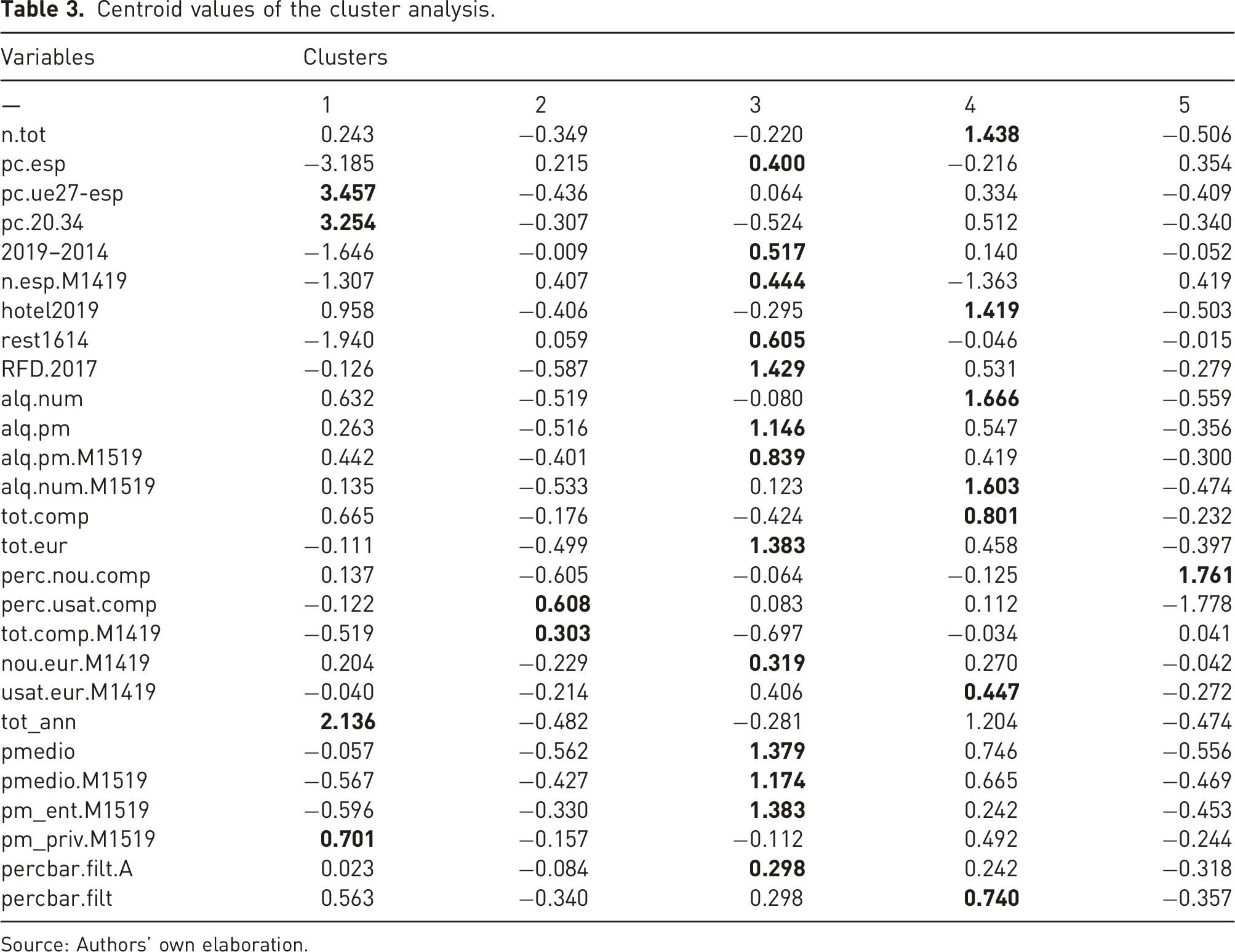
Source: Authors' own elaboration.
Results
By employing a cluster analysis, we grouped the 72 Barcelona neighborhoods we had selected into five broad categories. The two first clusters comprise the historic districts and commercial areas of the city, all full of tourist attractions. These are the city’s most populated areas, affected by an intense, long-term touristification (growth of tourism accommodation and other related infrastructures) process. A significant increase in housing market prices has been detected in these clusters, and this surge in rents and property values is due to demographic trends and a larger presence of tourist amenities. The first cluster comprises the city’s four oldest neighborhoods. In these neighborhoods (cluster 1, Figure 3), there is a great presence of young and immigrant people and the housing supply is restricted by the high density of hotels and other tourist accommodation. Nevertheless, the decrease in the resident population in the historic district from previous gentrification processes has not prevented, but rather reinforced the abrupt rise in rental prices in these areas. The emergence of the Airbnb online marketplace has clearly had an impact on the evolution of these areas’ housing markets, as a direct connection can be made since most Airbnb accommodation services are located in these high-density neighborhoods. Centrality and proximity to the main tourist attractions mean these services are strategically located, and, in hospitality services, location plays a big part in consumers’ decisions.
A high density of hotels and rentals for tourist accommodation is also present in the 13 neighborhoods configuring the “trendy” cluster (cluster 4, Figure 3). This cluster also encompasses the city’s main business and shopping areas. Full of local amenities, these commercial and trendy neighborhoods are becoming increasingly attractive to tourists. Despite an increase in the amount of housing available for rent in these neighborhoods—the most significant in the city, in fact—it still has not been enough to offset the rise in demand for residences. Indeed, the large concentration of STAP in the area makes it difficult for dwellings to be used as permanent residences. Meanwhile, the digital platform users’ particular appreciation for being close to the city’s most popular attractions drives the price of Airbnb listings in these central and highly touristified neighborhoods up.
As shown in Figure 4, 76.5% of Airbnb accommodations are located in these two clusters and jointly explain almost three quarters of the growth in listings since 2014. This shortage in long-term accommodation is aggravated by the increasingly large concentration of properties managed by operators who run Airbnb listings as a business venture, seduced by the huge opportunities that purchasing and converting properties into tourist rental accommodation provides. A large homeowners’ market in the historic district of the city could also attract these professional agents, who handle multiple listings at once or rent accommodation for more than 6 months. Noteworthy is that over 75% of the lodgings managed by these commercial agents, whose marketing approach is far from peer-to-peer, are located in these two clusters. In these commercial neighborhoods, there is a large concentration of hosts who have several listings on the platform and whose listings are rented for the better part of the year. Most accommodation was rented out for over half the year (182 days) in these 13 trendy neighborhoods and most multiple-listing managers (55%) are located here. All signs point to this cluster being the site of the second wave of touristification in the city. Neighborhood clusters' contribution to the growth of Airbnb listings. Barcelona. 2014–2019. Average. Source: Authors, based on Inside Airbnb data.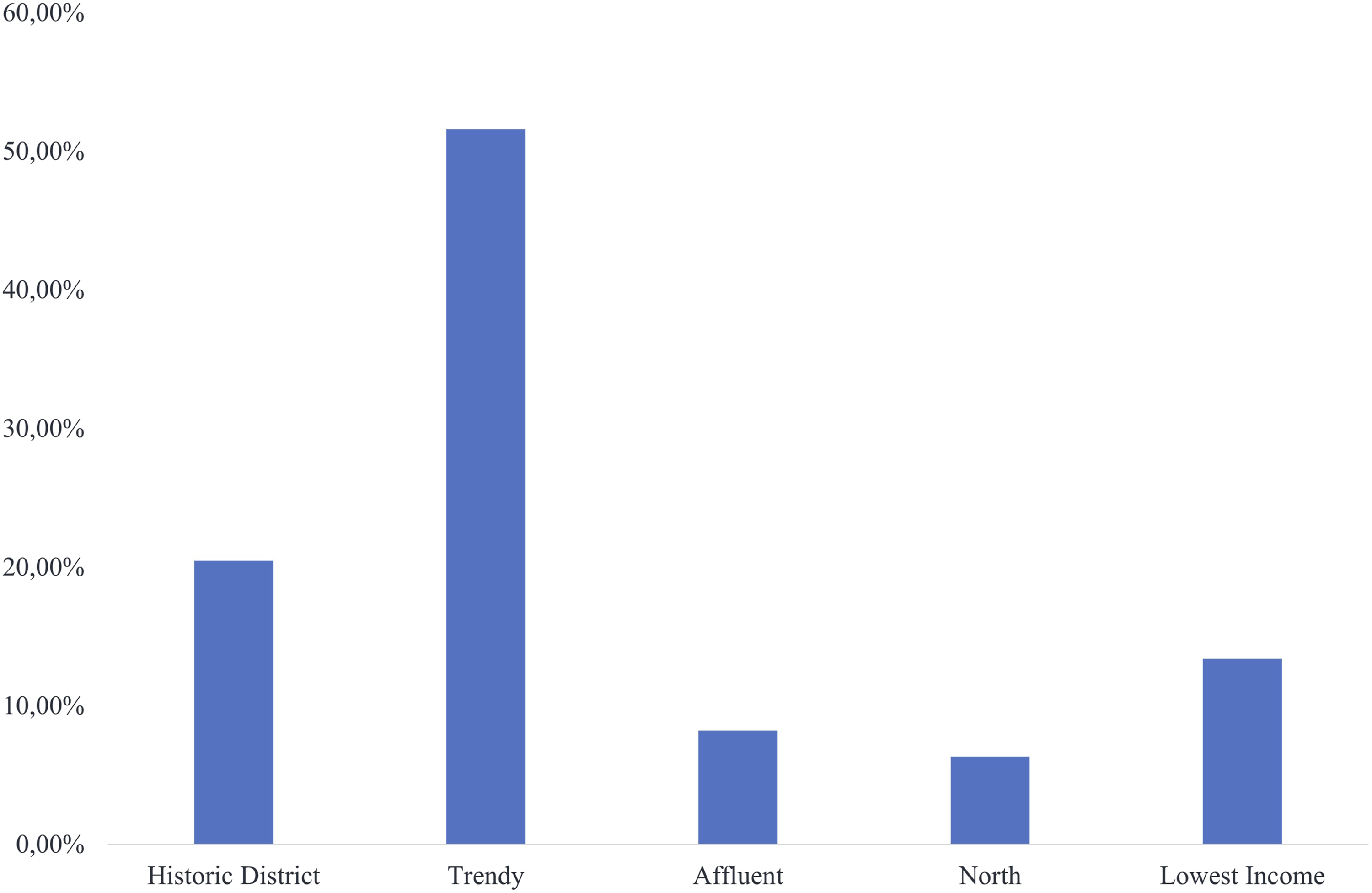
Moreover, Airbnb’s influence on rental accommodation can also be seen in the other clusters. The third cluster includes the 11 urban neighborhoods with the highest level of income and the most expensive housing supply in the city, both to rent and own. These neighborhoods configure the “affluent” cluster (cluster 3, Figure 3). The high growth in the number of residents and the growing number of restaurants is reshaping these affluent districts. A process of expansion accompanied by a significant boom in the rental and homeowners’ markets have brought about the biggest price hikes in the city. Here again, Airbnb has done nothing to relieve the growing strain on the rental market in these neighborhoods. On the contrary, both the number of tourist dwellings and listing prices have risen significantly. These are the most selective districts, with the most affluent and aging population, and contain a range of high-quality homes with different characteristics, and the rise in the price of entire homes for rent suggests that Airbnb consumers prefer privacy. As shown in Figure 5, and similar to the effect detected in the commercial neighborhoods, escalating rates for this type of accommodation is noticeably higher in these neighborhoods, increasing the opportunity costs for alternative residential uses. Airbnb listings by 1000 residents. Barcelona. 2019. Number of listings. Source: Authors, based on Barcelona City Council data.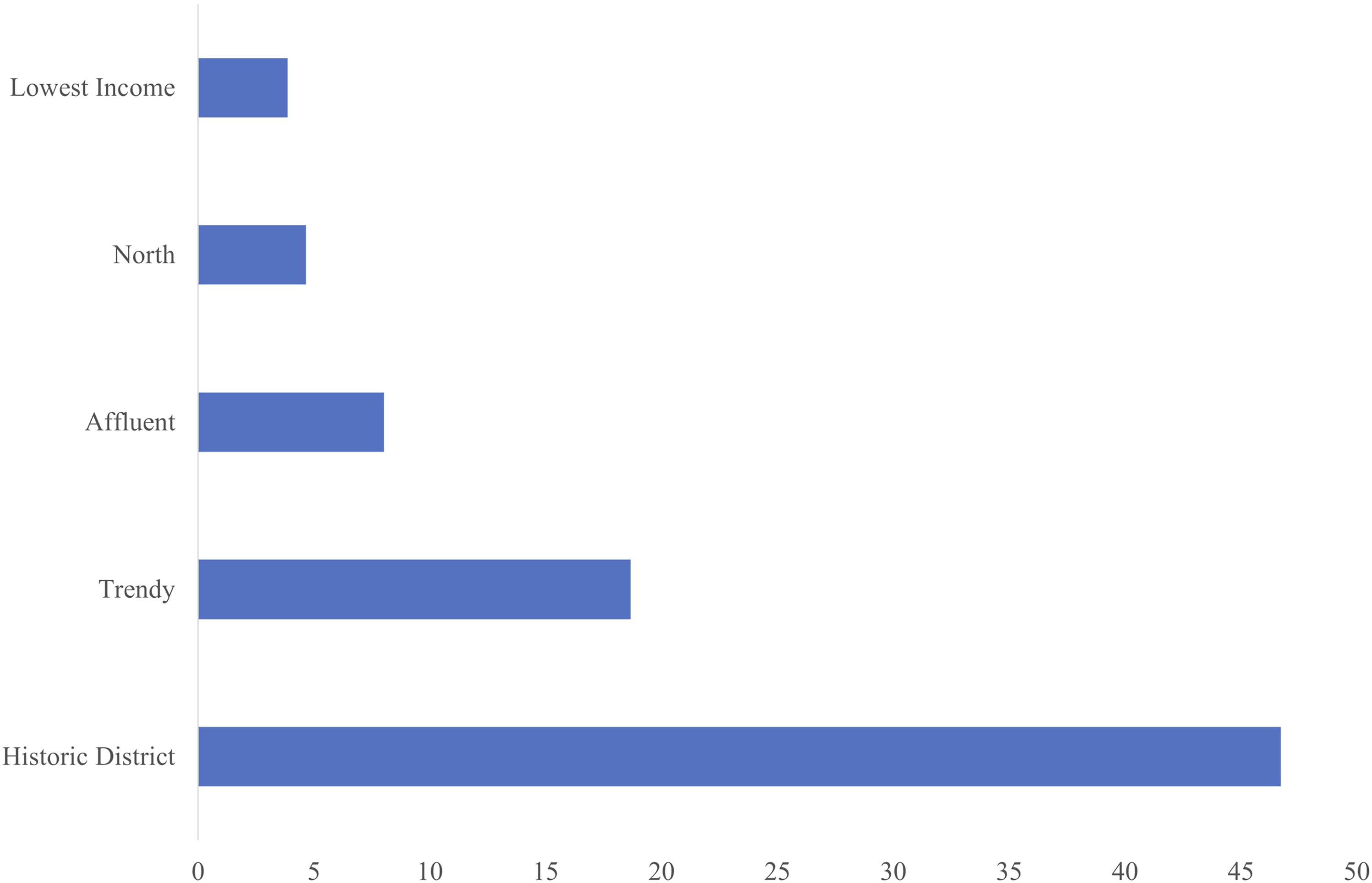
In summary, in the “historic,” “trendy,” and “affluent” neighborhoods, where Airbnb listings are highly concentrated, the increase of rental prices is especially relevant. Hypothesis H1 is therefore verified. Moreover, this demand for residential, commercial and tourist services brought about by the presence of Airbnb listings in these global urban destinations’ highly touristified neighborhoods has also resulted in the displacement of their original residents. In fact, a higher share of the youth demographic in these areas could be a consequence of the displacement of the most vulnerable and aging population. As shown in Figure 6, immigration has been a determinant factor in the evolution of the population in the city, compensating for the loss of local residents. However, the progression has been geographically asymmetrical. So, the resident population has shown the least growth in the historic district, supporting hypothesis H2. The loss of the local population can be more clearly perceived in the “highly touristified” clusters. The high growth in the resident population in the “trendy” and “lowest income” clusters is essentially due to migration, although the behavior patterns are very different. While the “trendy” cluster receives one out of two migrants coming from EU countries, almost 80% of new foreign residents in the “lowest income” cluster come from countries outside the EU. Evolution of resident population by neighborhood cluster. Barcelona. 2014–2019. Source: Authors, based on Barcelona City Council data.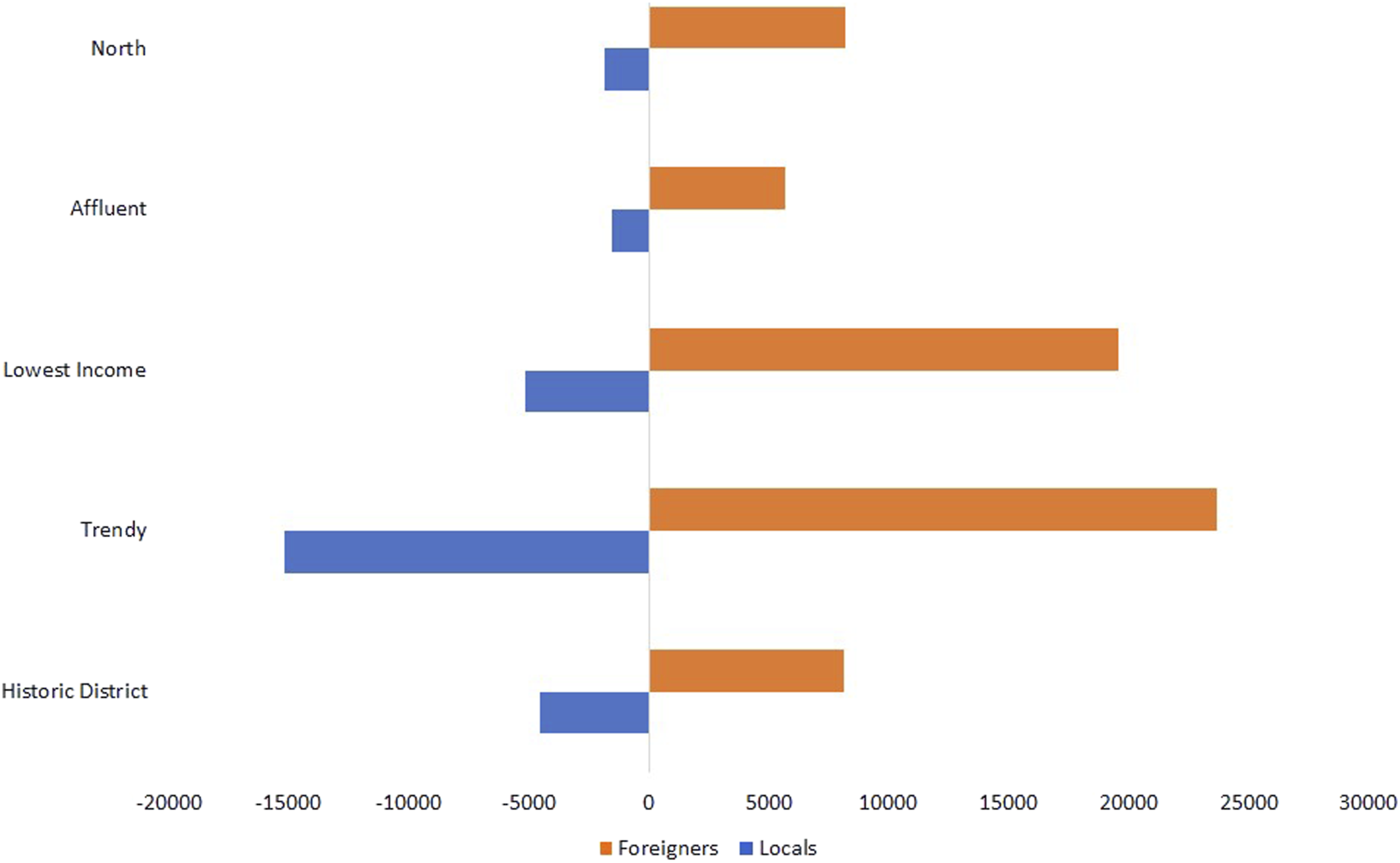
The demand for residential, commercial, and tourist services in these touristified neighborhoods has also brought about a sharp price increase in the homeowners’ market for both new-build and old-build (pre-owned) homes. Both a growing demand and a large, but stagnated, housing stock have mutually fed into a rise in prices in all segments of the housing market. In addition, the existence of a preeminent supply of houses for purchase in these areas has reduced accessibility to rental housing. The concentration of Airbnb listings in the aforementioned neighborhoods is indirectly influencing the increase of homeowners’ market prices in some peripheral neighborhoods of these destinations, where there is a growing demand for residential uses. The fourth cluster contains most of the city’s “north” neighborhoods (cluster 5, Figure 3). It concerns low- to middle-income districts with a high density of local residents and a scarce offering of rental housing. It comprises 12 urban neighborhoods undergoing a sudden increase in demand for housing from local residents, who come looking for more affordable places to live. Despite the recent growth in the supply of new homes in this area, the biggest in Barcelona, it has not been enough to prevent an increase in the cost of buying a home, which behaves much like the city average. As it has become increasingly difficult to find an affordable home in the central or historic neighborhoods of the city, displaced local residents have progressively sought other options in these peripheral areas. As such, the growing success of the Airbnb online marketplace leading the last wave of tourism growth in the city of Barcelona has also indirectly contributed to the rise in prices in the housing market in its peripheral neighborhoods, where displaced residents search for residences within the city limits.
Finally, the last cluster comprises the remaining 32 urban neighborhoods (cluster 2, Figure 3). These are the “lowest income” neighborhoods. Most of them are far from the main tourist attractions and, as a result, Airbnb’s influence on the housing market has been much less profound in these areas. There is also a more limited supply of rental housing, and therefore, Airbnb’s presence is significantly lower. As with the previous cluster, most dwellings for sale are for residential use, but price increases have been more restrained. Increased demand for pre-owned homes has not brought about a comparable acceleration of prices in these peripheral locations. Consequently, hypothesis H3 is partially corroborated. In the peripheral city districts, the population’s displacement from the highly touristified neighborhoods has spurred demand for dwellings for residential use and has contributed to a rise in housing market prices. This process is leading to an increase in prices in those districts where the supply of new homes has been growing, and to higher prices for pre-owned homes in others. As we have seen, the impact on the different segments of the housing market is significant and both house purchase and rent prices increase much more quickly in the neighborhoods with a greater presence of Airbnb listings.
Discussion and conclusions
This study analyzed Airbnb’s (direct and indirect) influence on the housing market of a range of neighborhood clusters in a global urban destination. As expected, our research confirmed that the rise of housing rental prices was particularly significant in “highly touristified” and “trendy” or “more affluent” neighborhoods, which happened to be where Airbnb listings were more concentrated. These results expanded on previous findings (i.e., García-López et al., 2020) using a different methodological approach: we were not highlighting the evolution of all variables across time but focusing on a specific period with a more (spatial) comprehensive approach. Moreover, we focused on neighborhoods’ similarities (clusters) and differences, using the actual (not posted) market prices and considering a larger set of variables and data than previous studies, which also differentiates the quantitative techniques employed. Also derived from our analysis is the need to consider the commercial nature (multi-hosting) of Airbnb development in Barcelona. Consequently, we were able to reveal that housing affordability issues were aggravated by the fact that many Airbnb accommodations, most of them located in neighborhoods under intense pressure from tourism, and under professional, had commercially-oriented management. In addition, the research revealed how demand in the “highly touristified” districts has displaced residents and has been indirectly affecting the residential housing market in peripheral neighborhoods.
Our findings suggested the existence of a strong relationship, both direct and indirect, between the presence of Airbnb listings and increasing housing prices (both for rental and purchase) in a range of neighborhoods clusters. This was evident not only in the most traditional tourist neighborhoods (“historic district” clusters) but also in residential and commercial neighborhoods put on the tourist map because of Airbnb’s outbreak (“trendy” cluster). These neighborhoods, attractive for their culture and lifestyle and defined as neighborhoods “where things happen,” have experimented what Ioannides et al. (2018) called “expanded centrality” (see also Benítez-Aurioles, 2018). Importantly, this raised the question of whether the housing problem in the urban global destinations has had to do with the developments in the traditional tourism supply or with the new (global) tourism processes promoted by STAP. Cities worldwide have been facing challenges related to dealing with increased tourism and the rise in popularity of online STAP. In this scenario, Airbnb has cornered the short-term rental market using a “feel-good story” that embodies the myth of the sharing economy: helping families obtain extra income by sharing their homes (a presumably underutilized housing asset) and meeting new people along the way, all the while making visitors “feel like a local.” Finally, and as presented in this study, its action has provoked a growing resistance from broad local groups, with some influence on local public policies.
Our findings provided empirical evidence of the above-mentioned process and what scholars have noted about STAP: they expand the geographies of tourism in destinations by drawing residential, suburban, and even exurban neighborhoods into the tourist circuit. The presence of tourism amenities has been key in shaping the spatial pattern distribution of Airbnb in Barcelona, as the number of platform listings drops sharply the further away one moves from significant primary and secondary tourism nodes. However, thanks to the emergence of Airbnb, new tourist centralities have arisen. The platform has been transferring tourism from city centers to neighborhoods where little more than everyday life is going on, which is exactly what Airbnb tourists are supposed to be there for: to feel like a local. Of particular note, our study has shown how Airbnb has expanded from the historic district and traditional tourism neighborhoods (where Airbnb has increased the most during the period under study) to neighborhoods that are further afield. It has spread like an oil slick, turning neighborhoods—and local life there—into tourist destinations in their own right. Tourism’s spread into residential neighborhoods and the subsequent re-spatializing processes that have taken place have been at the core of tourism-gentrification re-shaping processes (Robertson et al., 2020) and a new wave of capitalist greed in the housing market.
The “historic district” and in particular the “trendy” cluster’s behavior were key to understanding how STAP, especially Airbnb, have reconfigured tourism-driven gentrification processes in urban destinations’ neighborhoods, and the subsequent impact this has had on the housing problem. As the findings showed, these were the neighborhood clusters that have experienced the highest increase in housing prices in the city during the period under study; they have also been where 75% of the increase in listings between 2014 and 2019 has been concentrated and were home to a majority of total Airbnb accommodation. This growth has been more pronounced in the “trendy” cluster, whose neighborhoods have become the epicenter of Airbnb’s expansion in the city (51.6% of the increase in Airbnb listings was located in this cluster). It was also the cluster that represented the most commercial dimension of the platform, as most of the accommodation was rented out for over 182 days of the year, and the majority of multiple-listing managers (55%) were located in these 13 neighborhoods. This cluster has been experiencing a second wave of touristification brought on by the existence and expansion of STAP in the city, where an increase in tourism has been clearly linked to an increase in housing prices.
Moreover, Airbnb’s increasingly business-oriented focus, particularly apparent in light of the concentration of commercial capital (multi-hosting) and professionalization variables, was a key finding of this study, as well as a clue to better understanding how Airbnb influences housing problems in the world’s cities. Our research confirmed that the rapid expansion of Airbnb’s profit-driven model has been a threat to affordable housing and an arena for the proliferation of venture capitalists and predatory landlords (Barron et al., 2017; Gurran and Phibbs, 2017, Wachsmuth and Weisler, 2018; Wachsmuth and Weisler, 2018; Yrigoy, 2016). Probably, as a consequence of the high difference in profitability between renting long-term to residents and short-term rentals to tourists in central districts (García-López et al., 2020) and creating a situation which is a far cry from the sharing utopia it trumpeted at inception. Furthermore, our study provided evidence about Airbnb’s relation to rising housing prices and how it has contributed to the expansion of housing problems in global destinations.
With the expansion of its profit-driven model, Airbnb also has promoted Cócola-Gant’s and Marcuse’s notion of “exclusionary displacement” (Cócola-Gant and Gago, 2019). As Garay et al. (2020) illustrated recently, this displacement has not only been due to pressures related to housing’s affordability but also to a broader array of concerns that have to do with quality of life and the increase in the overall cost of living that comes with an influx of tourism. Without a doubt, in the “north” cluster, with low- to middle-income neighborhoods with a high density of local residents and scarce rental housing, these displacements showed how STAP has indirectly influenced the housing market in such areas. Housing prices in this cluster have been in direct relation with the growing demand for residential properties within the city limits. Our results have also shown that this displacement affects national residents in particular. In addition, the fact that the 47% increase in European immigration in the city was concentrated in the neighborhoods of the “trendy” cluster allows us to associate the displacement with that transnational gentrification processes described by Cócola-Gant and López-Gay (2020). These neighborhoods have become “globalhoods” thanks to the narratives STAP have built around them, making a local housing problem a global one (Garay and Morales 2021).
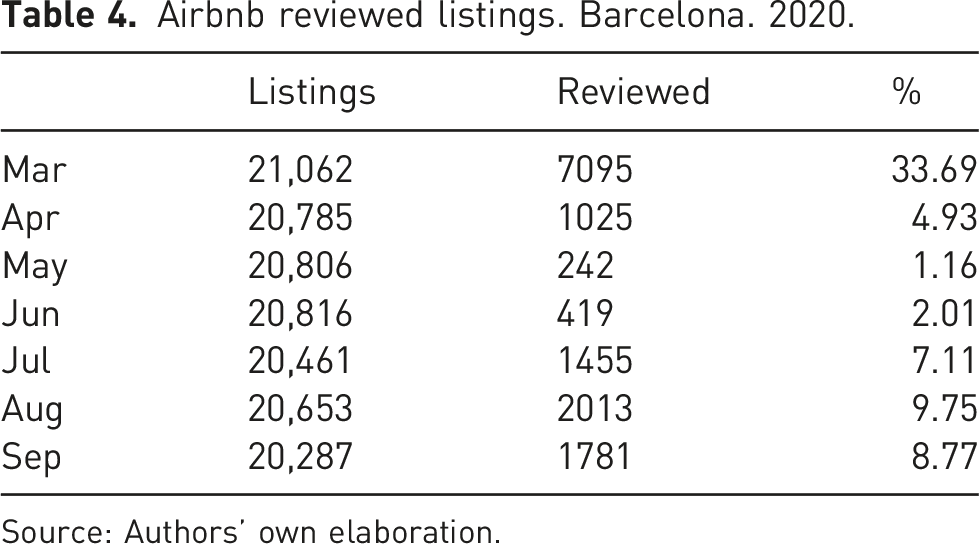
Airbnb reviewed listings. Barcelona. 2020.
Source: Authors' own elaboration.
Regarding the study’s implications, the social relevance of our results highlighted the need to develop specific policies and regulations that provide a means of mitigating the harmful effects of STAP and that move towards a just housing system. This regulation is even more important in a post-COVID-19 context, where this platform has openly expressed its intentions to move to mid- and long-term rental markets as an adaptive strategy to mitigate the negative impact the pandemic has had on its core business. This new strategy will only intensify relations between STAP and the housing market and, consequently, could negatively affect local communities’ living conditions. In this new context, and as our research has highlighted, the housing market problem is exacerbated when the management of these platforms is business- and commercially-oriented, and this must be considered both in the analysis and regulation of the activity. When considering the impact STAP may have on urban housing processes now and in the future, governments must think of the most effective policies, regulations and actions for dealing with the negative social and economic consequences the pandemic is generating in urban tourist destinations. Bearing in mind the effects of COVID-19 on the housing market and on STAP, future research should necessarily adopt a dynamic approach in order to compare the pre-COVID-19 situation in the neighborhoods with the new emerging reality derived from the pandemic. Additional methodologies, such as those based on time series analysis, should be considered to formally check the housing market’s performance in the neighborhoods as well as STAP’s influence.
Footnotes
Declaration of conflicting interests
The author(s) declared no potential conflicts of interest with respect to the research, authorship, and/or publication of this article.
Funding
The author(s) disclosed receipt of the following financial support for the research, authorship, and/or publication of this article: This work was supported by the Agencia Estatal de Investigación. Ministerio de Ciencia e Innovación. Gobierno de España (PID2020-118757RB-I00/AEI/10.13039/501100011033).

Author Biographies
Lluís Garay-Tamajón is Associate Professor at Universitat Oberta de Catalunya (UOC), Barcelona, Spain. His main areas of research interest concern diverse forces transforming the tourism activity, highlighting the collaborative, co-creative, sustainable and responsible processes causing disruptive impacts on urban and rural socio-economic environments and organizations. He is the coordinator of the NOUTUR research group (UOC) which aims to analyse the impacts that tourism and leisure activities are causing within the contexts of destinations (territories), organizations (both business and non-business) and consumption patterns (both tourists and residents).
Josep Lladós-Masllorens is Associate Professor of Economics and a researcher in the Digital Business Research Group at the Universitat Oberta de Catalunya. His main areas of research interest are connected with economic geography, digital marketplaces and the co-creation of value. He has published several papers, book chapters and handbooks on these topics.
Antoni Meseguer-Artola, is Associate Professor of Quantitative Methods for Economics and Business and a researcher in the Digital Business Research Group at the Universitat Oberta de Catalunya. He is member of the Catalan Statistical Council (IDESCAT), and (founding) member of the Catalan Statistical Society. He has published extensively on digital marketing, consumer behaviour, e-learning and game theory in JCR and Scopus indexed journals, with high impact. His current research focuses on users' behaviour in immersive virtual environments, online education and sharing economy.
Soledad Morales Pérez is Associate Professor of Economics and Business Studies at Universitat Oberta de Catalunya (UOC) and member of the UOC tourism research group NOUTUR. At present, her research interests include the analysis of collaborative economies in socio-spatial transformations of tourism spaces, new narratives and measurement of tourist sustainability, and event tourism impacts in public space.