







Abstract
This study examines the impact of the homestay tourism program in Mekong Delta, Vietnam, on women’s participation and empowerment in rural tourism development. As part of this study, 22 interviews were conducted with homestay owners to explore the benefits and challenges of women’s involvement in this type of tourism. The findings show that homestay tourism program has helped women to generate extra income, strengthen family ties, and increase their social influence while reducing domestic violence. However, cultural expectations and gender roles continue to pose challenges. This study underscores the importance of women’s participation in homestay tourism program and provides suggestions for promoting gender equality and women’s empowerment in tourism development. The study highlights the potential of women’s involvement in creating a sustainable and inclusive tourism industry and calls for further research and action to promote gender equality and women’s rights in tourism. The findings have practical implications for policymakers and practitioners in the tourism sector.
Keywords
Introduction
Tourism is a significant contributor to economic development, particularly in rural regions (Anand et al., 2012; Ferguson, 2011; Zhang and Zhang, 2020, 2021). However, gender inequality remains a persistent challenge in many countries, particularly in developing areas, due to social and cultural barriers, limited access to resources, and discriminatory customs and regulations (Acharya and Halpenny, 2013; Alarcón and Cole, 2019; Cole, 2018; Kalisch and Cole, 2022; Moswete and Lacey, 2015). Engaging women in tourism has been proven to result in significant economic, social, and cultural advantages for themselves and their communities (Alarcón and Cole, 2019; McCall and Mearns, 2021; Rinaldi and Salerno, 2020; Tran and Walter, 2014).
Homestay tourism, a type of rural tourism in which visitors reside with local families, has been identified as a means to complement family income, develop local infrastructure and services, and promote sustainable tourist practices (Pasanchay and Schott, 2021). In many rural areas, women have played a significant role in creating and managing homestay tourism (Acharya and Halpenny, 2013; Dong, 2020; Ngân, 2018). However, the scope and consequences of women’s engagement in homestay tourism are not well understood.
Community-based tourism, particularly homestay program, has been identified as a promising strategy for promoting rural development and providing local communities with sustainable livelihood options (McCall and Mearns, 2021; Rinaldi and Salerno, 2020). In Vietnam’s Mekong Delta region, homestay tourism has enabled women to remain in their home villages while earning a sustainable income (IPSARD, 2020). The research question that motivates this study is: How can community-based tourism initiatives, such as homestay tourism, promote gender equality and women’s empowerment for sustainable and inclusive rural tourism development in Ben Tre Province, Vietnam?
The primary objective of this study is to identify the significance of women’s engagement in the development of homestay tourism in Ben Tre Province, Vietnam, and to promote gender equality by investigating gender-based divisions of labour and caregiving responsibilities in Vietnamese society (Giang, 2021). In addition, the research aims to contribute to a deeper understanding of the potential of community-based tourism initiatives, including homestay tourism, to promote sustainable and inclusive rural tourism growth.
Literature review
Women, inequality and tourism development
The tourism industry serves as the entry point to employment opportunities for women in rural areas (Mitra et al., 2023) and women make up the greater part of the global tourism workforce (54%) (UNWTO, 2019). However, on one hand, the increasing discrimination against women concerning employment in the tourism industry poses a major concern related to gender inequality across the world (Alarcón and Cole, 2019; Mitra et al., 2023). For example, women are often denied the opportunity to pursue high-level education and to acquire soft-skills required for career progression including access to resources, for example, collateral, financing, technology, and business skills compared to male counterparts (Morgan and Winkler, 2020). From a broader perspective, women often face social, cultural, and legal challenges and are subject to exploitation, violence, stress and sexual harassment which impede their participation in tourism development (Acharya and Halpenny, 2013; De, 2013; Mitra et al., 2023). Although the tourism industry has increased the scope of women’s employment compared to other sectors, the pay scale, and the potential to advance within the industry are exceptionally minimal (Hutchings et al., 2020). Some studies call for more studies to identify the barriers that prevent women from fully participating in tourism development and to develop strategies for promoting gender equality and empowerment (Widiastuti et al., 2019).
On the other hand, women’s involvement in tourism can lead to economic, social, and cultural benefits for individuals and communities (McCall and Mearns, 2021; Rinaldi and Salerno, 2020) through creation of new job opportunities, reduced poverty, and promotes a more inclusive and sustainable tourism sector (Giampiccoli, 2020). Women’s involvement can also lead to their empowerment, for example, through education and gaining entrepreneurial skills development (Vij et al., 2023), gaining access and control over resources for production, such as land and capital, access to employment and entrepreneurial opportunities and economic competence in and outside of home (Joo et al., 2020) including additional income generation (Cherayi and Jose, 2016), self-confidence, critical consciousness, respect of self and from others, fulfillment, leadership and creativity (Joo et al., 2020; O’Hara and Clement, 2018), whereby enhancing their autonomy and self-esteem (Arroyo et al., 2019; Mitra et al., 2023; Rinaldi and Salerno, 2020). In addition, some studies indicate that women’s participation in the tourism industry can also help to dismantle gender stereotypes and promote gender equality in society (Acharya and Halpenny, 2013; Pasanchay and Schott, 2021). By taking on leadership roles, acquiring new skills, and generating income, women can challenge traditional gender roles and promote gender equality (Apisalome and Heidi, 2017; Zhang and Zhang, 2020). Addressing gender-related issues is important for promoting ethical and sustainable tourism practices that benefit local communities (ILO, 2017). Thus, integrating gender considerations into tourism planning and development can help to ensure that the benefits of tourism are distributed more equitably and that the industry contributes to United Nations’ Millennium Development Goals and Sustainable Development Goals, such as gender equality, empowerment of women and sustainable development (Chin et al., 2023; Zhang and Zhang, 2020).
Empowering local communities through women's participation in homestays
Empowerment often means transferring power from governments or the private sector to communities through real participation in tourism (Tosun, 2000). Homestays is the only sub-sector with more women (57%) than men (Panta and Thapa, 2018). Homestays have gained popularity as a form of rural tourism, providing tourists with an authentic experience of local culture and lifestyles (Acharya and Halpenny, 2013; Bhalla et al., 2016). Some studies indicate that involvement in community-based homestays has stirred up socio-economic changes via provision of empowerment and opportunities for rural women to transgress their normative role of homemaker into active citizen role for local development (Acharya and Halpenny, 2013). Homestays are seen to deliver numerous socio-economic benefits to the local community in the form of income earned, number of jobs created, women entrepreneurs involved, reverse migration, development of infrastructure and rise in standard of living (Panta and Thapa, 2018). Moreover, some studies suggest that women’s participation in homestay tourism can improve their economic and social standing and empowers the local community more broadly (Acharya and Halpenny, 2013; Anand et al., 2012; Panta and Thapa, 2018; Pasanchay and Schott, 2021).
From an economic perspective, operating a homestay has been found to enhance access to economic activities (Pasanchay and Schott, 2021), which not only creates family income for women but can also improve other long-term livelihood opportunities such as health care and education (Shukor et al., 2014). Cash income, for instance provided by visiting tourists, is a fundamental part of rural communities as it helps women and their families with food security (Ashley, 2000). From a socio-cultural perspective, Leh and Hamzah (2012) note that homestays attract tourists to rural communities which in turn offers opportunities for cultural exchange and for tourists to increase their awareness and understanding of local cultures and lifestyles. At the same time, increased tourist interest in the local culture can strengthen the community’s sense of identity (Ball, 2004). Moreover, homestays have been found to help preserve natural resources by encouraging better community waste management (Shukor et al., 2014). Other studies indicate that women’s participation in homestay promote gender equality and empower women in rural tourism development including the community (Chin et al., 2023; Kc, 2021; Pasanchay and Schott, 2021). Women in rural areas face social and cultural obstacles, a lack of resources, and discriminatory laws and practices limit their participation in economic activities (Panta and Thapa, 2018). Through participation in homestay tourism, women can earn income, acquire new skills, and participate in tourist development decision-making processes (Movono and Dahles, 2017; Panta and Thapa, 2018; Pasanchay and Schott, 2021). However, it is important to note that various constraints such as social and cultural norms, limited access to resources, and discriminatory practices prevent women from owning homestays (Acharya and Halpenny, 2013; Panta and Thapa, 2018; Thapaliya et al., 2013).
Overall, tourism is embedded in global inequality and has a pattern like other industries (Mitra et al., 2023), however, empowerment of all members of the population is essential to promote sustainable growth in the tourism industry (Alarcón and Cole, 2019). Given that gender inequality is a chronic issue that hinders women’s participation in the tourism industry including access to resources, knowledge, and growth possibilities (Dashper et al., 2022; UNWTO, 2019), it is crucial to address these challenges head-on. Tourism must strive for social, political, and cultural empowerment to reduce gender inequalities (Scheyvens and Hughes 2019). By promoting gender equality and empowering women in the tourism industry, in this context, homestay tourism, we can create a more sustainable and inclusive tourism sector that benefits rural communities and empowers women.
Methodology
Research context
Ben Tre is a province located in the Mekong Delta, Vietnam (Figure 1) flanked by the East Sea and Tien Giang, Tra Vinh, and Vinh Long provinces. With a population of around 1.3 million and an area of 2,379,70 square kilometres, the province has a population density of 544 persons per square kilometre on average. Its flat topography has sandbars, verdant farms, and beautiful orchards. The province’s extensive canal system of over 6000 km is one of its greatest assets, giving it an excellent site for building waterway transportation and irrigation systems for coastal and agricultural industries. Map of Ben Tre province, Vietnam.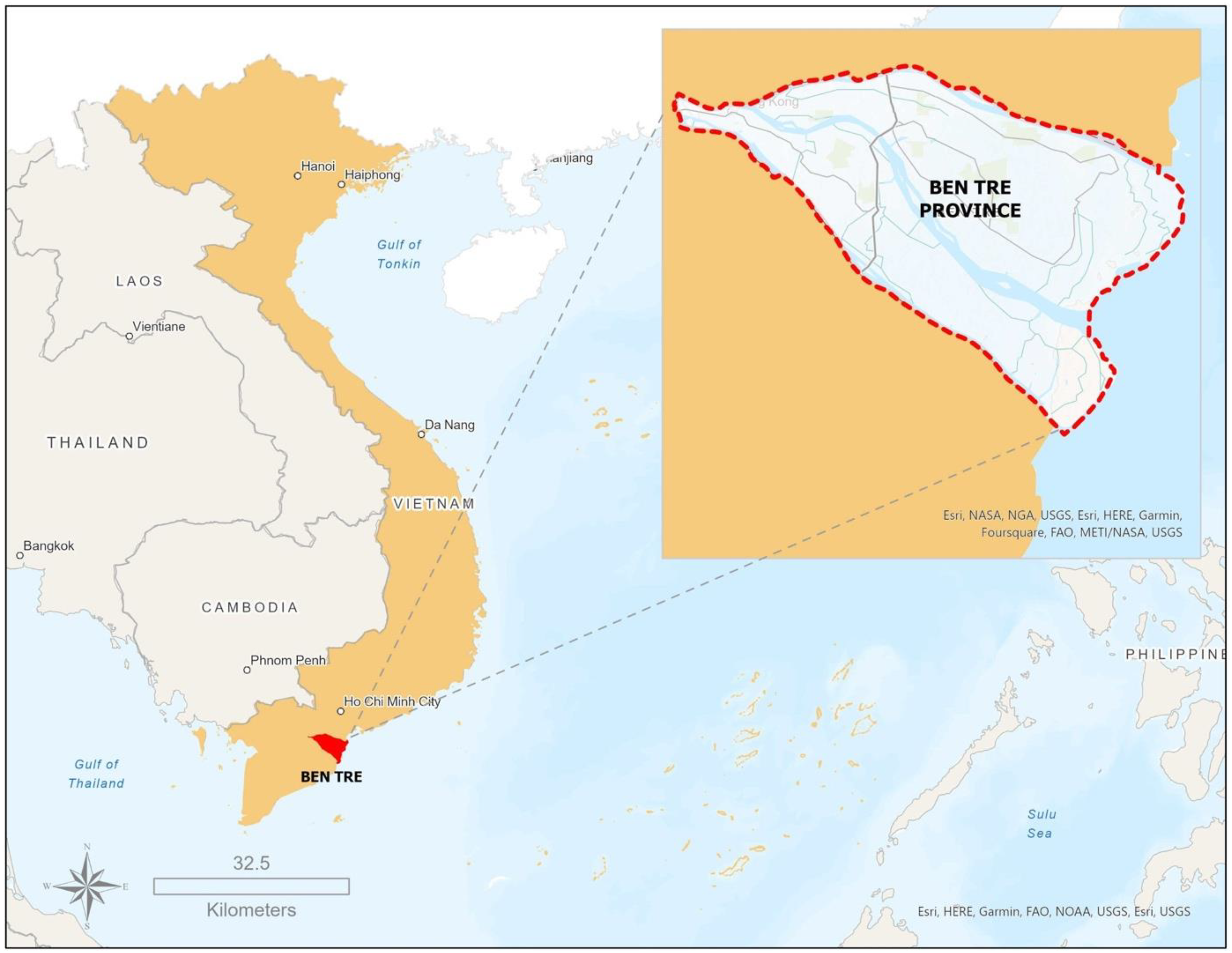
Ben Tre is endowed with immense natural resources and a rich cultural heritage, hence providing a variety of tourist opportunities. The province is known for its traditional celebrations, various artisan villages, and pleasant residences. With 39 different tourist attractions, including the Ho Chi Minh Sea Trail in Ben Tre and the Hai Van Farm - Vam Ho Bird Sanctuary, visitors can explore the province’s lush mangrove forests, take a boat tour along its breath-taking 65 km coastline, and visit traditional villages specialising in the production of coconut-based products such as candy, oil, and handicrafts. Ben Tre’s tourist sector is anticipated to become a significant economic driver by 2030. The province intends to capitalise on its distinctive cultural and natural features, enhance its infrastructure and services, and develop new tourist offerings like as community-based, agricultural, and culinary tourism. The objective is to build a responsible and sustainable tourism sector that benefits the local people and preserves the natural and cultural legacy of the province for future generations. Ben Tre, like other localities of the Mekong Delta, faces a substantial issue posed by the movement of female labour to large cities for employment, mainly in low-status occupations such as bartending. According to the General Statistics Office of Vietnam 2019, in Ben Tre, the migration rate among women is 49.7% higher than that of men at 46.5% (GSO, 2019).
Methods and data collections
For this study, a qualitative research approach was employed to examine the barriers and advantages experienced by guesthouse owners in accessing and engaging in the tourism industry in Ben Tre. Given the topicality of the study, a sample of 22 homestay owners was selected through purposive sampling to ensure that respondents had relevant information and expertise linked to homestay tourism (Vij et al., 2023). Tourism studies have used purposive sampling in choosing members of the population to participate in their study, for example, women’s empowerment through agritourism (Arroyo et al., 2019) and homestay accommodation (Fauziah and Hamzah, 2012). Semi-structured interviews were conducted with homestay owners and staffs based on the study questions and topics established in the literature review (Denzin and Lincoln, 2005).
In this study, our approach to conducting semi-structured interviews underscored the importance of fostering an atmosphere of openness and non-directiveness, providing participants with the autonomy to explore topics of personal relevance. All the interviews were conducted in Vietnamese, face-to-face, with each session typically lasting between 45 and 60 min. Prior informed consent was obtained from all participants. To ensure comprehensive documentation, thorough records of all interviews were made and subsequently transcribed verbatim. The interview process persisted until we reached a point of data saturation, a stage characterised by consistent or repetitive responses, as endorsed by Guest et al. (2006). This extensive data collection phase spanned from June 2022 to February 2023. Of notable significance is that the interview process was a collaborative endeavour, with active involvement from all the authors. Over the course of four field trips to Ben Tre province, these interviews were conducted directly within households that hosted both staff and homestay owners. This approach facilitated the acquisition of first-hand insights into the subject matter.
Regarding data analysis, initially, the transcripts were subjected to multiple readings, coded manually including the interpretation of textual nuances, aligning with Kvale’s framework (2007). These transcripts underwent verbatim transcription in Vietnamese language. Subsequently, the lead author assumed the responsibility for translating these transcripts into English. These translations were then subject to thorough verification by other authors to ensure the highest level of translation accuracy. It is noteworthy that only quotes employed to illustrate our findings were subjected to translation.
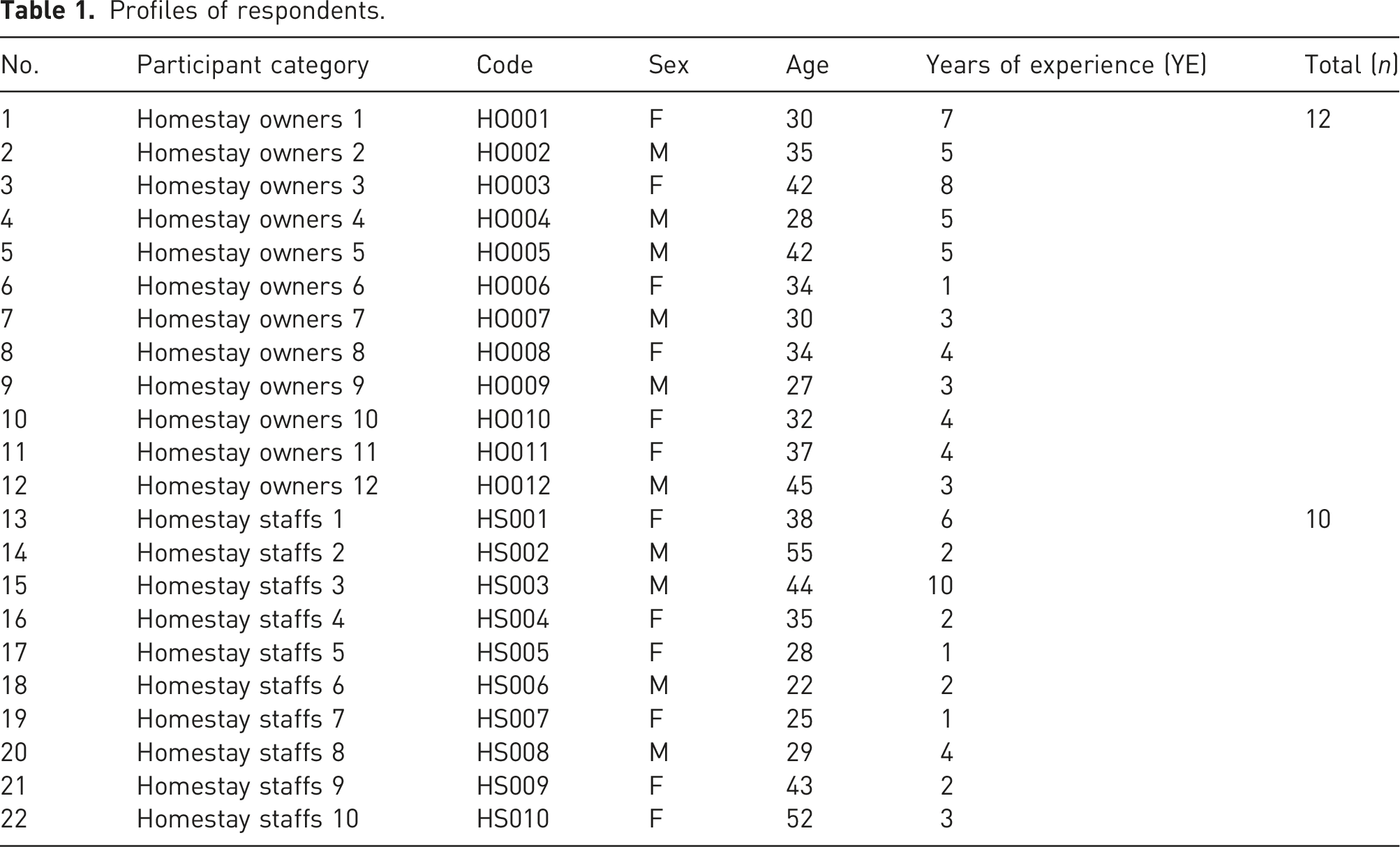
The study had a total of 22 participants, all of whom were either homestay owners or staff. Among the 12 homestay owners, six were female, and the remaining six were male. The owners’ ages ranged from 28 to 45 years, with an average age of 35.1 years. Out of the 10 homestay staffs, six were female and four were male, with ages ranging from 38 to 55 years and an average age of 47.3 years.
Data analysis
Profiles of respondents.
Findings
Women’s roles and participation level in rural tourism
The findings show that women play an important role in rural tourism, particularly in homestays. We identified six main group of tasks undertaken by women including cooking, housekeeping, homestay maintenance, ensuring guest safety, communication with guests, and sales and marketing. The first and second group of tasks involve cooking, assisting in the kitchen, menu planning, grocery shopping, room cleaning, and laundry. These tasks are like their daily household chores. Women’s skills in cooking and household care are highly valued and trusted to oversee these tasks in homestays. As a result, most women interviewed were found to be working in the kitchen and housekeeping including as servers or cleaners. For example, one female homestay owners said, “I am in charge of the kitchen, cleaning, and welcoming guests. In general, I am responsible for the household …” (HO003). Male staff managed the overall operations, for example, another male homestay owner shared, “The female staff here work as servers and cleaners, and I manage the overall operations, while my wife manages the restaurant area …” (HO001).
The third and forth group of tasks involved gardening, planting, maintaining, repairing homestays, luggage transportation, transporting visitors by boats, motorbikes, and working night shifts. These tasks are considered physically demanding and are mainly performed outdoors. Thus, men are primarily responsible for them. This is emphasised by the following response: “If working at a homestay, the nature of the job is very suitable for women, but if going out, such as organizing tours, boat trips, and driving, then men are needed more …” (HO007)
The fifth group of tasks include direct interaction with visitors and tour guiding. These tasks require excellent communication skills, welcoming attitude, and local cultural knowledge. Women are thought to have an advantage in welcoming and exchanging with tourists due to their gentle nature and hospitality. However, men are typically preferred for tour guiding and taking visitors on tours of the countryside. In addition, in the homestays, only one male staff member could speak English fluently and was involved in guiding and leading guests to explore the surrounding landscapes. This finding indicates the importance of communication skills in the tourism industry. This is emphasised by the following response: “In the homestay, there is only one man who is an English-speaking tour guide to guide tourists and take them to visit the surrounding landscape …” (HO001)
The business and promotion-related tasks of the homestay operations include organising village tours, dealing with travel companies, promoting the homestay, managing finances, and devising strategies to sustain the business. These tasks involve diplomacy, establishing relationships with partners, management, and decision-making. For the most part, decisions were discussed between the husband and wife to make the best choice for operating the homestay. However, in most of the interviews, the husband took on the main role of diplomacy. This is highlighted by the following responses: “My husband will take care of contacting companies, contacting guests, and then providing information to me. My husband is the public face, but we still work together, for example, how to organize tours for guests, how guests live here... then we discuss together …” (HO008) “Tasks like dealing with companies, making decisions... I do, but slowly and now my wife can do it too. Both me and my wife can do it. Usually, we discuss because the two of us will definitely have many opinions, we will persuade each other if there are conflicts in work and family. We discuss as husband and wife, I will not be imposing, but sometimes each person has to protect their own decision to make the final decision …” (HO007)
In terms of spatial aspects, women tend to participate in tasks within the homestay, while men are responsible for tasks outside of the homestay. Figure 2 illustrates the gendered division of labor in homestay tourism, where women are primarily involved in the day-to-day activities within the homestay, such as cooking, cleaning, and hospitality. On the other hand, men take on tasks outside of the homestay, such as transportation, tour guiding, and marketing. Men also tend to handle diplomatic tasks, such as negotiating with guests, while women play a more supportive role in advising and influencing decision-making. Levels of women’s participation in homestays.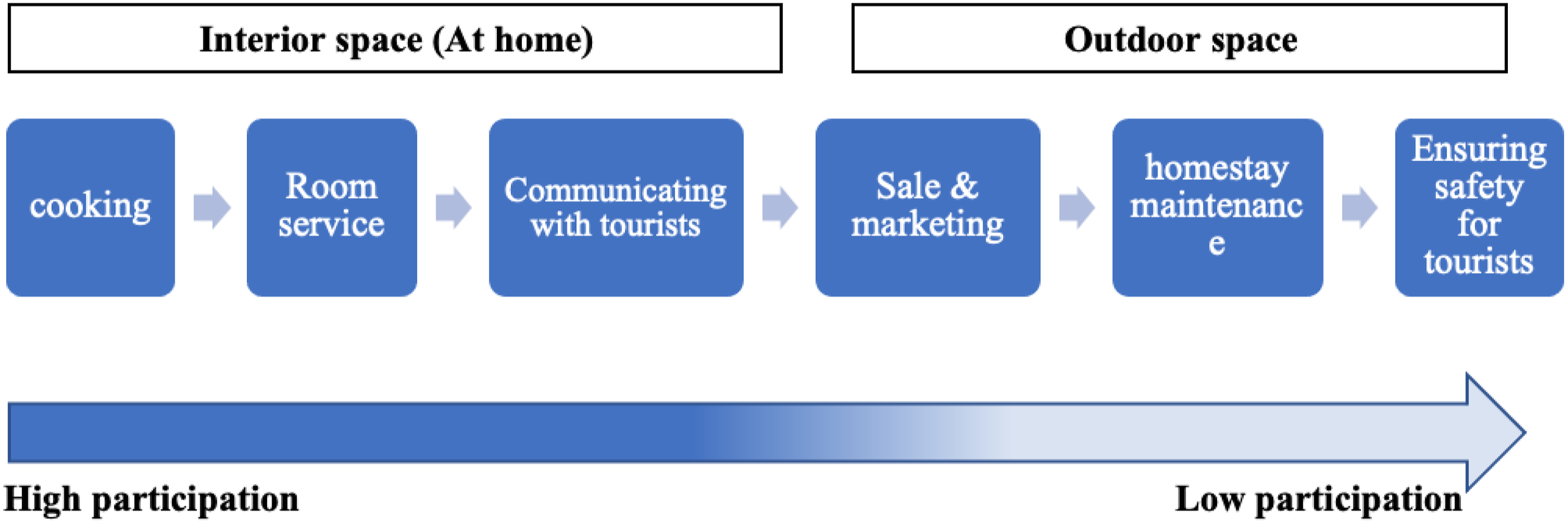
The homestay model provides travelers with the opportunity to stay with local families and experience the local culture firsthand (Figure 3). In Vietnam, women are considered to be more suitable for the homestay model due to their innate qualities, such as hospitality, attentiveness, diligence and openness. Vietnamese women are known for their hospitable nature and family care skills, which make them adept at taking care of guests and making them feel like family. This is highlighted by the following responses. HO003 said “Women here have excellent family care skills, so they receive guests with great enthusiasm and take care of them like their own family members…” According to HO008 “Women are more meticulous, attentive to small details, and sensitive to the emotions of others, which is also an advantage for women to provide the best reception for guests and bring satisfaction to tourists …” Another said, “This personality trait is always mentioned when talking about Vietnamese women with many adjectives such as industrious, frugal, and hardworking. Whatever job they do, at whatever position, they always make every effort to work with a sense of responsibility and love …” (HO009). Fourth said “Women are more welcoming, cheerful, open-minded, and less talkative than men. Women also find it easier to talk to guests because they have many stories to tell, such as the daily life of the locality, and they are more skilled in household chores …” (HO001). Women participating in a sightseeing tour of the local area.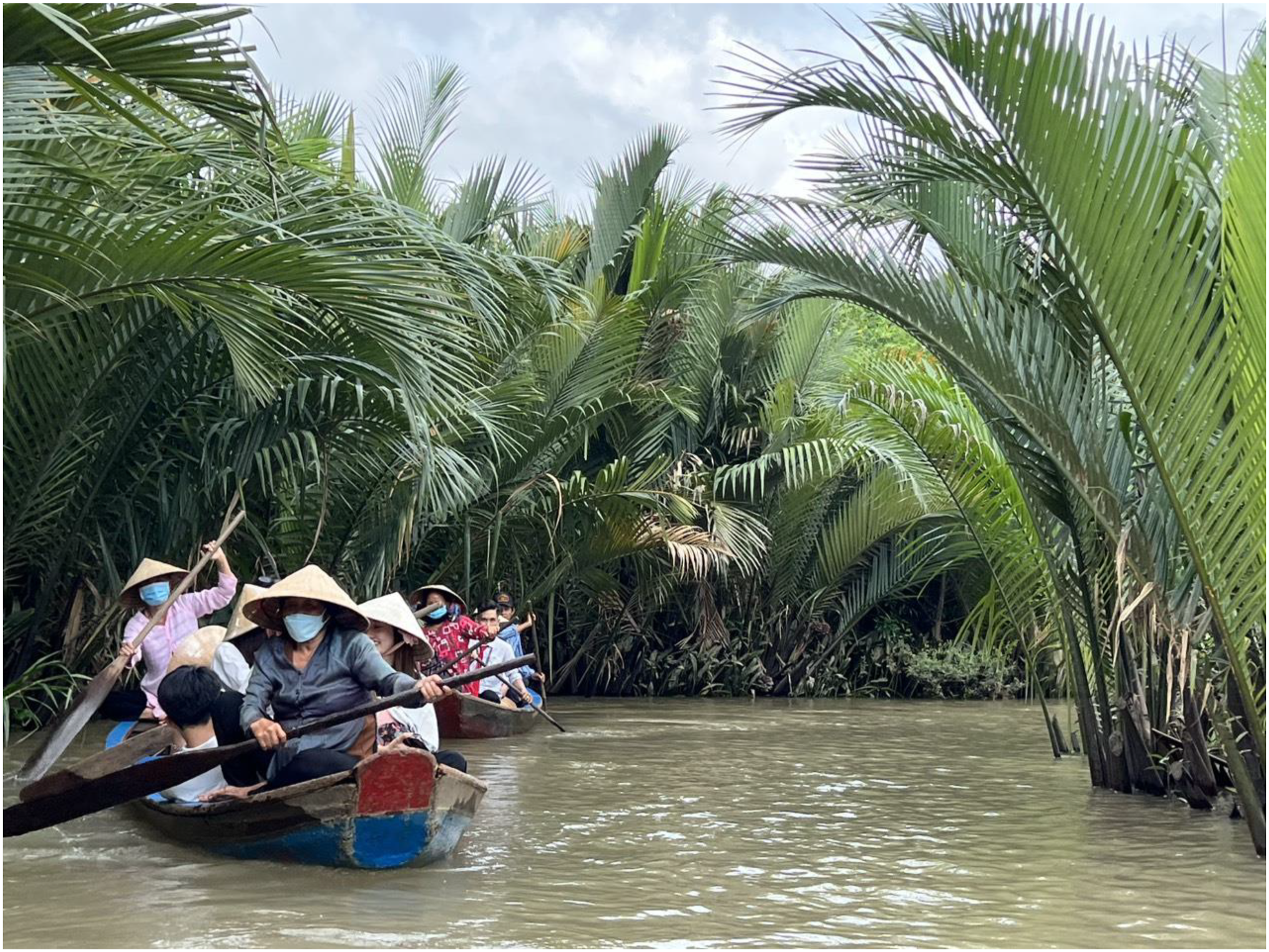
Recognition of women’s social status through tourism activities
Women are the key force in the homestay business activities
The findings show that women are the driving force in the homestay business (Figure 4). This is supported by the following responses. Women’s involvement in the sale of local agricultural specialties.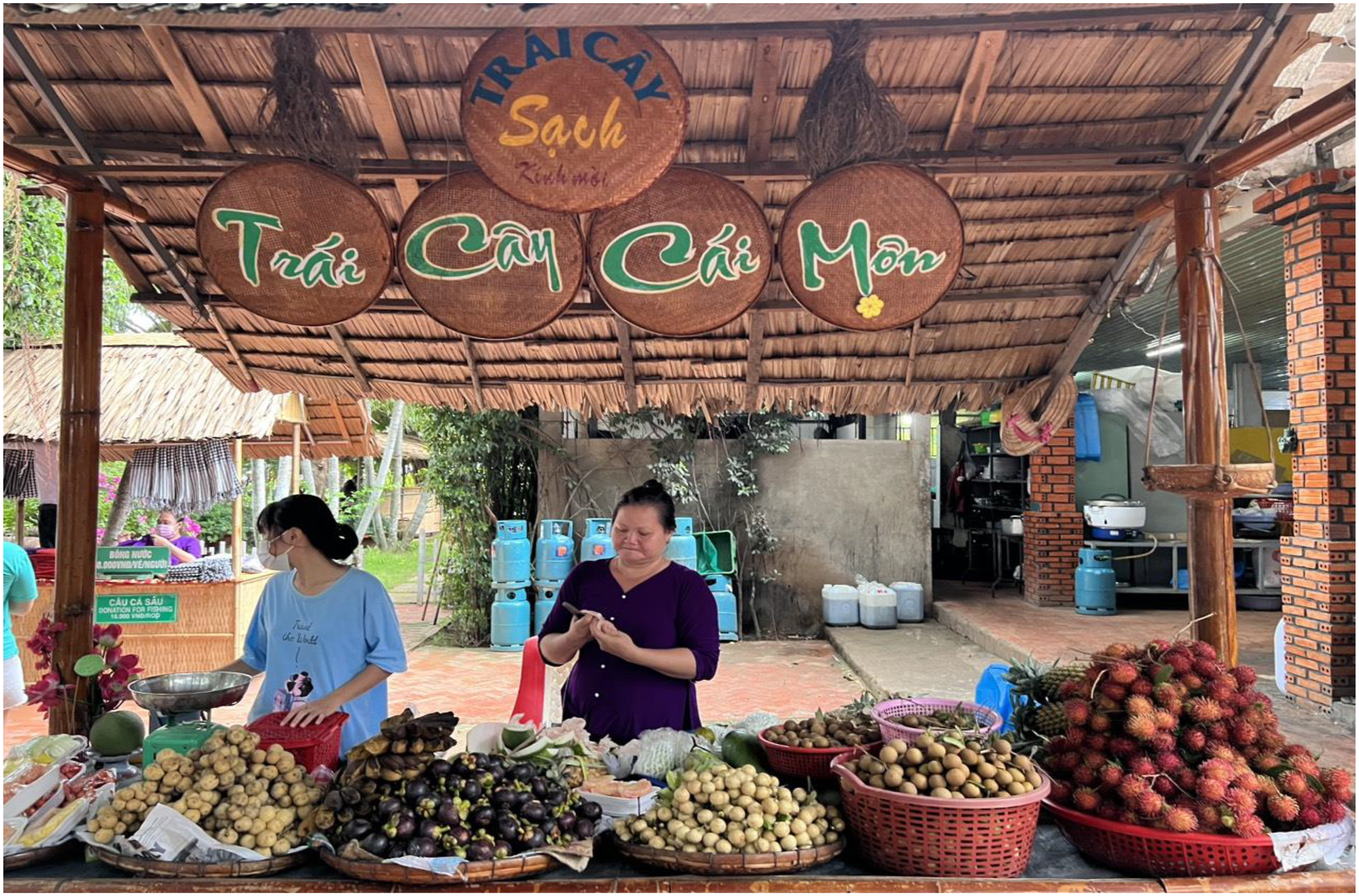
A homestay manager said “In these homestays, most of the employees are women. The work is not very physically demanding … There is only one male employee who is a tour guide for visitors … Gardening, planting flowers and trees can be done by women, but if there is a need for repairs or other tasks, I will hire someone to assist …” (HO012)
Another mentioned “At Mekong Home, 95% of the employees are women. There is only one male employee who helps with luggage transportation, security, and bike riding to guide visitors for sightseeing… All other tasks are carried out by women …” (HO03)
Third reported “In my homestay, mostly women work, and there is only one man who works in the garden... he does not work regularly at the homestay but will come to support whenever needed. Women are mainly responsible for all the work at the homestay, and on days when there are no guests, they take care of the garden and decorate …” (HO012)
Gender bias towards women remains prevalent
The findings show that self-reliance of women is an advantage for them to excel in the homestay business environment. However, the findings also indicate that this advantage can be a disadvantage as society assumes that they can only perform simple household tasks. Most of the interviewees mentioned that homestay jobs were suitable for women because they resemble housework, which women do daily. As a result, women can adapt quickly without requiring specific skills or professional knowledge. There are four most frequently mentioned job characteristics of homestays, including comfort, ease, proximity to home, and familiarity. Comfort here refers to the flexibility of working hours in homestays, which enables women to take care of their families while earning additional income. Secondly, the work involves interacting, conversing, and sharing everyday life stories with tourists, creating a cheerful and relaxed work atmosphere. This is emphasised by the response of following participants: “In this type of homestay, we talk and interact with tourists a lot, so the working mood is very comfortable. We even sing together, which women like. Overall, the work environment is relaxed, without pressure, and my female colleagues really enjoy it …” (HO008) “Working here is very comfortable. We work when we have work, and rest when we do not . The hours are flexible. When guests arrive, I am happy even though the work is continuous all day ... ” (HS001)
“Working in homestays is not as rigid as working in a factory; it is more like a family. If they are busy, they can ask someone else to do it …” (HO001)
Ease and familiarity characteristics mean that the nature of homestay work is similar to housework and family care, which women usually do, so women face no difficulty and work in a non-stressful environment. This is highlighted by the following responses:
“The homestay environment is familiar, and it is close to the daily life of local people …” (HO001)
“The work here is like a family, and when guests arrive, it feels like friends coming over to visit, so it is very comfortable without any difficulty. The work nature is related to cooking and cleaning, which is more suitable for women …” (HO006)
“The cleaning of rooms is not a demanding task, so local women can do them after a few days of trial work …” (HO009)
Proximity to home is another factor. Most of the female workers in homestays preferred working close to their homes. This is because it allowed them to save time and money on transportation and enabled them to balance work and family responsibilities more effectively. In addition, working close to home offered them a sense of familiarity and comfort, which made the job more enjoyable and sustainable in the long run. This is supported by the following responses:
“…situation is quite challenging, which is why many of us have to seek employment in Ho Chi Minh City (Saigon) or the industrial zones in Binh Duong and Dong Nai. It is only natural for anyone to desire proximity to their home to take care of their spouse and children. Having women at home ensures a tidy and cozy household … If there were stable employment options available in rural areas, no one would need to leave their hometowns and seek livelihoods far away …” (HO003)
“When it comes to working in Saigon, no matter how much we earn, it always seems to vanish by the end of the month due to expenses such as food, rent, and numerous other obligations … However, upon returning home and discovering a job opportunity, I made the decision to work here. In the countryside, there is less pressure … the expenses are more manageable, and the work is lighter as it primarily involves tourism services, cooking, room cleaning, and sweeping … Working close to home in the rural area gives me a sense of enjoyment … it offers greater comfort …” (HS01)
The double duty of women: Balancing family care and income generation
The findings show that the responsibility of taking care of children and household chores still dominates women’s lives in rural areas. Although they work to increase their household income, they are still mainly responsible for taking care of children and family members including cooking for the family. This is emphasised by the following responses:
“I know women who are very good at both working and earning money, but also skilled in the kitchen at home. They work in homestays, and even go to cut grass for the goats until 11 or 12 at night, but they still wake up early in the morning to cook and take care of their children and husbands …” (HS006)
“In modern society, especially in rural areas, women face even more pressure to both take care of their children and earn money. They have to shoulder both responsibilities. In addition, there are social relationships in the local community, such as family parties and neighborhood gatherings, that they must attend, unlike in the city where you can work at a company and not have to attend these events. Therefore, I think that women in rural areas face more pressure than women in the city …” (HO011)
“Nowadays, there are many factories, shops, and many women working as laborers. They can go to work in the morning and come back in the evening, and still fulfil their duties as mothers and wives while also generating income …” (HO003)
The homestay model empowers rural women and elevates their social status
The findings show that homestays have a positive impact on the physical and mental well-being of women, contributing to their improved status within their families and society. This is supported by the response of the following two participants.
“Travel serves as an additional source of income for me. While I am involved in a few other business ventures, I have discovered greater joy since entering the tourism industry … income derived from this field remains stable. Although I do not generate substantial earnings from tourism, it is worth mentioning that everyone is comfortable with our present way of life …” (HO001).
“The income may not be considered plentiful, but it is satisfactory. We earn enough to meet our needs ... Our income remains stable, allowing us to provide for our family comfortably and fulfil the fundamental requirements of rural living. I am genuinely content with both my job and the rural lifestyle … Homestay tourism has enriched the lives of many women in our community … with the prospect of increased tourist arrivals in the future, it is likely that our economic stability will improve …” (HS09).
Homestays contribute to women’s empowerment by enhancing their skills, for example, culinary. Although cooking and serving guests are the daily tasks of women, it demands a certain level of standard to satisfy guests needs. Thus, working at homestays helped to improve their culinary skills. This is emphasised by the following responses:
“Women in the homestays have surpassed their previous roles of making only cakes for festive occasions and have taken on a remarkable journey of daily culinary excellence. Through their dedicated work and commitment, they have honed their skills to new heights. Their kitchens are now full of aromas … Their husbands are captivated by their newfound culinary skills … cherishing their culinary creations and the love that goes into every dish …” (HO006)
“My journey begins when I step through the doors, embracing an opportunity to enhance my culinary and domestic skills. As I immerse myself in this nurturing environment, my cooking and cleaning abilities flourish, reaching new heights of excellence … I eagerly learn a multitude of new dishes from our valued guests, and with love and dedication, I bring these gastronomic delights back to my own family. This gives me happiness that resonates throughout my household … My find my commitment to self-improvement … as truly inspiring. My journey towards culinary mastery offers me joy and contentment…” (HS009)
Working at homestays exposes women to an environment that requires regular interactions with tourists, thereby empowering them through improved communication skills, confidence and new learning. This is emphasised by the following responses:
“I perceive the work environment as progressive, with daily encounters with foreign guests, getting opportunities for learning, language acquisition, and personal development. The most remarkable positive change I have witnessed is the conscious commitment to environmental protection. For instance, when foreign tourists visit and engage in sightseeing, they carry their own trash bags … Witnessing such behaviors serves as a wake-up call, prompting a shift in awareness. Consequently, a heightened emphasis on environmental preservation has emerged ... ” (HO009)
“When we first started working here, we were quite shy and had limited interaction with tourists. But as we got more familiar, we became more comfortable and started welcoming guests enthusiastically. Our approach and mannerisms improved, and everyone began to enjoy this job more. Interacting with guests regularly also allowed us to learn a lot. We gained more knowledge and became more proactive … giving us a stronger voice within our families and communities. When we go out, we proudly say that we work at a homestay and share our experiences with different people. We have a good income, so society perceives us differently …” (HS005)
“Before working in tourism, I had limited exposure … My husband would bring home money, and I would spend it … However, once I started interacting with working people in my community, I began to realize my own shortcomings … I understood that relying solely on my husband's income was not enough. I recognized the importance of self-reliance and the need to find meaningful work for myself. This … led me to actively seek for work opportunities that would allow me to contribute to my well-being and make a difference in my life …” ( HS004)
The findings also show changes in domestic violence among women who work at homestays or hold managerial positions. The is highlighted by the following response of one participant: “After becoming involved in the homestay tour industry, I have gained more confidence in myself. I had the opportunity to meet tourists from different parts of the world, and listening to their stories has been a source of encouragement for me … I have become more composed and knowledgeable, and I no longer feel intimidated by my husband. If he is wrong, I am now able to speak up and assert myself …” (HS004)
“When I first ventured into the homestay accommodation business, I felt a newfound sense of confidence and was willing to assert myself in my family's work. This was made possible through extensive interactions with both domestic and international tourists, allowing me to broaden my horizons and learn more about the world … now, I feel more open-minded and courageous in expressing myself … as I devoted myself wholeheartedly to this profession, my husband's perception of me changed. He no longer disregards me as before, but rather, he has come to appreciate and respect me. At present, there is a different dynamic in our relationship, characterized by mutual respect. I am now more willing to voice my opinions, and my husband has become more attentive…” (HO011)
Male participants in homestay tourism activities also shared their changing perspectives on gender roles. In the past, they held the belief that women’s only role was housework and caring for children. However, working with the women in the homestays, they have come to realise that women are more capable than they previously thought, and that they work hard to both take care of their families and earn a living as hired laborers. This is emphasised by the following responses:
“Women are skilled, quick, and agile. They can cook, be tour guides, and handle advertising and marketing. Now I understand, sympathize, and appreciate them more. This shift in attitudes is a positive development that not only benefits women, but also contributes to a more harmonious and equitable society …” (HS006)
“I am happy to share that community-based tourism is helping women in their hometowns find jobs. In the past, women had to leave their families and take up jobs in cities that were not suitable for them … But now, women are finding happiness and self-confidence by working close to their families. I am very thankful for the work women are doing in the tourism industry … I hope more people get the chance to come back to their hometowns and work in tourism-related job …” (HS008) (Figure 5 Women’s representation in leadership roles in the tourism.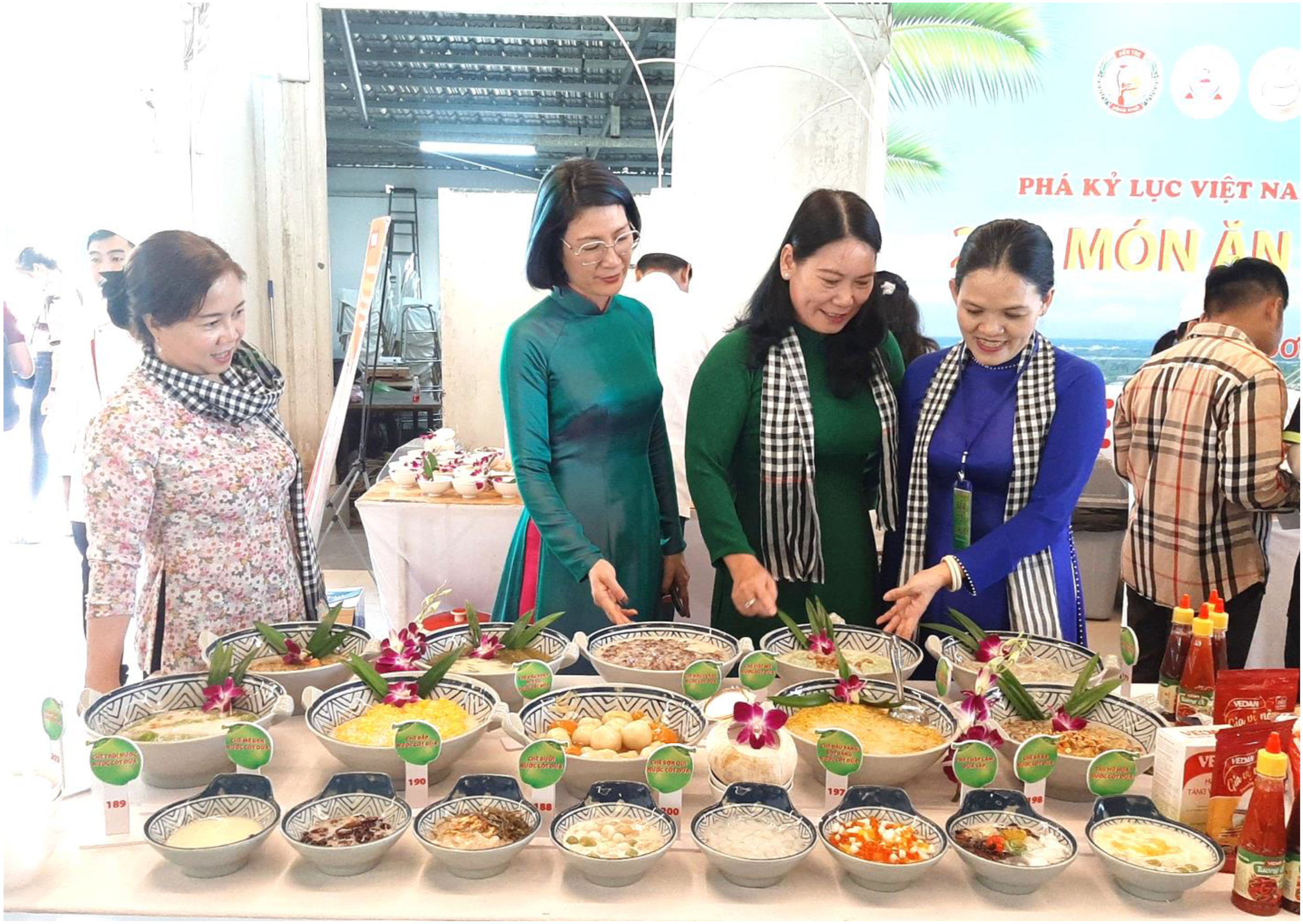
Discussion and conclusions
This study examined the impact of the homestay tourism program in Mekong Delta, Vietnam, on women’s participation and empowerment in rural tourism development. Two main conclusions can be drawn from the findings of this study. First, one of the main themes identified in this study is the women’s role and participation level in rural tourism. Most of the employees in homestays in Mekong Delta, Vietnam were women. Women to a great degree were responsible for tasks from cooking, housekeeping, repair and maintenance to communication with guests. In addition, the decisions related to the homestay business and promotion-related tasks were discussed between the husband and wife. Moreover, women also play a supportive role in advising and influencing decision-making, while men handle other tasks, for example, negotiating with guests, transportation, tour guiding, and marketing. There is gendered division of labour. Despite the labour division based on gender, this finding supports existing studies suggesting that homestay tourism offer opportunities for rural women to be involved in tasks beyond the traditional role of homemaker (Acharya and Halpenny, 2013).
Another main theme that was identified in this study is linked to recognition of women’s social status through tourism activities, in this context, homestay tourism. This theme comprises of four sub-themes namely: women are the key force in the homestay business activities; Gender bias towards women remains prevalent; the double duty of women: balancing family care and income generation; and the homestay model empowers rural women and elevates their social status. First, the findings show that women play a key role in the homestay business and handle most of the work as it was considered less physically demanding. This finding supports studies indicating that the tourism industry, in this context, homestay tourism, serves as the entry point to employment opportunities for women in rural areas (Mitra et al., 2023) and women make up the greater part of the global tourism workforce (UNWTO, 2019). The findings of this study based in the Mekong Delta region of Vietnam, also concur with some studies indicating that homestay can be a valuable tool for empowering women in rural areas and improve their social status by providing them with income, skills and confidence, while also promoting mutual understanding and breaking down cultural misconceptions (Acharya and Halpenny, 2013; Anand et al., 2012; Moswete and Lacey, 2015; Panta and Thapa, 2018).
Second, despite improvements in the position of women in Vietnamese society, the findings show that women in rural areas in Vietnam continue to face the burden of balancing family care and income generation. Despite this obstacle, the findings show that women were multitasking and strived to balance their family chores and professional obligations. The findings are consistent with existing studies documenting the challenges faced by women in rural areas, including gender stereotypes and the pressure to balance caregiving responsibilities with earning income (Anand et al., 2012; Dashper et al., 2022; Ling et al., 2013; Tran and Walter, 2014). As indicated in previous studies, the findings call for the need to promote gender equality and women’s empowerment in rural tourism through policies and initiatives that encourage women’s participation and support the development of sustainable and scalable homestay programs (Mashapure et al., 2022; Panta and Thapa, 2018). Such policies and initiatives could include providing training and capacity-building programs for women, promoting women’s entrepreneurship and leadership, developing marketing strategies that challenge gender stereotypes, creating support networks for women in the tourism industry, and ensuring fair compensation for women’s work (Acharya and Halpenny, 2013; Panta and Thapa, 2018).
Third, the findings indicate that from broader perspective homestays have a positive impact on women’s confidence building as well as physical and mental well-being, contributing to their improved family and social status including reduction in domestic violence incidents among women who work at homestays or hold managerial positions. Women involved in homestay businesses are viewed with more respect in their community, and their confidence in social relationships and work has improved. Male respondents in the study shared their changing views on gender roles and acknowledged the view that women can earn their living in addition to a homemaker role including their contribution to local tourism. Thus, homestay tourism contributed to reducing gender inequality in rural communities. As evidenced in this study, this finding supports some studies suggesting that tourism, in this context, homestay tourism programs, can contribute to raising awareness about gender related issues, reducing gender-based violence, ultimately advancing gender equality (Alarcón and Cole, 2019; Movono and Dahles, 2017; Zhang and Zhang, 2020).
Overall, the homestay program in Ben Tre, Vietnam, is an example of how homestays can promote rural economic development by creating an alternative source of income and greater economic independence for rural women, enhancing their skills and preserving cultural traditions. This finding supports studies indicating that community-based tourism initiatives are effective in providing economic opportunities within rural areas (Ling et al., 2013) and have positive social and economic impacts in the local communities and contribute to improved quality of life for participating families and job creation (Pasanchay and Schott, 2021).
Managerial implications
From a practical viewpoint, the findings suggest that homestay tourism should ensure that it promotes gender equality and empowers women as well as recognises and addresses gender-based disparities to provide equal access to economic opportunities and decision-making power. Some recommendations include the need to recognise and value women’s contribution to the local economy of rural communities through homestay tourism, involving them in decision-making and capacity-building programs, providing training and developing strategies that challenge gender stereotypes including ensuring fair compensation. In addition, policies must ensure equitable access to training and financial resources for women in rural communities, prioritising their protection and security, and address gender stereotypes. All members of the community should be involved in planning and development of tourism in rural communities to make it a more inclusive and sustainable industry. Moreover, the Vietnamese government should continue to support and encourage the development of homestays in rural areas, particularly those with high rates of domestic violence incidents. By doing so, the government can help to improve the quality of life for women in rural areas and promote sustainable economic development. Moreover, while women in rural tourism still face challenges, homestays should be promoted as a platform to challenge stereotypes and to allow women to showcase their diverse skill sets. This would help to recognise the value of women’s domestic skills contributes to building a more equitable society. Lastly, it is crucial to recognise that women’s challenges may vary across different regions in Vietnam and the government should provide individualised support and resources accordingly. Policies and support should be tailored to address the unique circumstances and needs of rural women, effectively advancing economic empowerment and gender equality. In sum, these findings underscore the need for a comprehensive approach that not only acknowledges the pivotal role of women in homestay tourism but actively works towards their economic empowerment and the promotion of gender equality.
Limitations and future research
The findings of the current study are highly destination-specific, and the ability to generalise the results is limited, as data were collected from Vietnamese participants and used purposive sampling for data collection. Studying a larger sample would increase the generalisability of the findings. In addition, the present study collected data using semi-structured interviews. Adopting a greater array of research methods might overcome this research limitation. The study participants were also mainly Vietnamese nationals. Future studies would benefit from cross-cultural sample bases and include a more diverse range of participants to provide a more comprehensive understanding of the impact of homestay tourism on the larger community. Future studies should be undertaken in other regions known for homestay tourism. This would augment the findings of the current study. In addition, the focus of this study was on homestay owners and staffs, future studies should also focus on exploring the perspectives of other stakeholders, for example, tourists, government officials, and non-governmental organisations. This would offer additional insights into the potential benefits and challenges of homestay ownership in promoting sustainable tourism and community development in rural communities.
Footnotes
Declaration of conflicting interests
The author(s) declared no potential conflicts of interest with respect to the research, authorship, and/or publication of this article.
Funding
The author(s) received no financial support for the research, authorship, and/or publication of this article.
