







Abstract
In response to the increasing demand for faster checkouts, shorter wait times, and enhanced customer experiences in fast-food establishments, the use of self-service kiosks is on the rise. This study employs an integrative framework combining the Technology Acceptance Model, the Technology Readiness Index and the subjective norms component of the Theory of Planned Behavior to explore the factors influencing customers’ continued intentions to use self-service kiosks. Data collected from 412 customers across fast-food restaurants in Jordan were analyzed using Partial Least Squares Structural Equation Modeling (PLS-SEM). The results indicate that perceived usefulness and ease of use significantly influence ongoing intentions to use self-service kiosks, while subjective norms do not exert any notable influence. Additionally, the Technology Readiness Index plays a crucial role in shaping subjective norms, perceived usefulness, perceived ease of use, and continuous intention. These findings underscore the significance of individual technology readiness and perceived benefits in encouraging sustained kiosk usage. The study offers actionable insights for fast-food marketers aiming to enhance kiosk adoption and usage rates strategically.
Keywords
Introduction
Information and communication technology (ICT) has profoundly reshaped the service industry, leading to a transition from conventional, in-person services to self-service technologies (SST) (Guan et al., 2021). This transformation has particularly impacted fast-food restaurants, where the escalating demands for faster checkouts and an enhanced customer experience have driven the widespread adoption of electronic fast-food kiosk machines. These self-service kiosks enable customers to browse menus, select items, make payments, and generate invoices independently. Their potential to enhance service experiences has garnered support from industry leaders (Law et al., 2020). In early adopter countries such as South Korea, kiosk sales doubled from 2018 to 2021, underscoring rapid market growth (Korea JoongAng Daily, 2021). The market for self-service kiosks in the United States is projected to expand to $38.52 billion by 2028, demonstrating a compound annual growth rate of 4.8% (Brand Essence, 2022).
In Jordan, the shift towards digitalization in sectors like telecommunications and banking is evident, driven by government initiatives outlined in the Kingdom’s Economic Modernization Vision (2023–2025) (Ministry of Digital Economy and Entrepreneurship, 2021). This shift is also prominent in the fast-food industry, where self-service kiosks are becoming increasingly common. For instance, McDonald’s Jordan (n.d) has installed two to three kiosks in each of its 46 branches, enhancing customer service and operational efficiency. These kiosks significantly reduce wait times and increase transaction speeds (WaveTec., n.d). Additionally, the integration of these technologies helps restaurants to manage peak hours more effectively and gather data on consumer preferences, which can inform menu adjustments and marketing strategies (Oracle, n.d). These developments reflect a broader trend of adapting to digital transformations that align with evolving consumer preferences and the demands of a youthful demographic (Xmap.ai, 2024).
Even though SST are becoming more popular in many industries, consumers in Jordan still prefer services delivered by humans (Hassan and Farmanesh, 2022). This preference is not limited to Jordan but is also evident in other countries (Lian, 2021). Acknowledging this preference is crucial as it underscores the importance of understanding how consumers adapt to and utilize smart technologies, especially within the restaurant sector. Introduced by Parasuraman (2000), the Technology Readiness Index (TRI) serves as a pivotal framework for understanding individual predispositions towards embracing innovations and new technologies. This framework explores characteristics—such as optimism, innovation, unease of use, and insecurity—alongside the features of the technology itself to determine how these factors influence motivations and intention, particularly in the realm of smart purchasing experiences (Park et al., 2021).
However, existing research on self-service kiosks has largely focused on perceived usefulness and ease of use, the core constructs of the Technology Acceptance Model (TAM), with limited attention given to the role of personal readiness and societal norms in influencing users’ continuous intention to adopt these technologies (Abdul Rahim et al., 2023; Na et al., 2021). This study addresses this gap by integrating the TAM with the TRI to explore the interplay between technology readiness and user acceptance of self-service kiosks in the fast-food sector, providing robust theoretical underpinnings for both models within this specific service context.
The current study aims to investigate the subsequent research questions: 1. What are the primary elements that affect the continuous intention to use self-service kiosks? 2. In what ways does the TRI impact these factors within the fast-food industry?
By examining these questions, the study provides insights for managers and policymakers to enhance customer satisfaction, operational efficiency, and competitiveness in an increasingly digitalized environment. The findings contribute to both theoretical knowledge and practical strategies for sustaining the usage of SST.
Literature review and hypothesis development
Self-service technology and self-service kiosks
Self-service technology (SST) includes a variety of customer service methodologies that leverage advanced information and communication technologies to replace traditional human service interactions (Hassan and Farmanesh, 2022). The hospitality industry has particularly embraced this technology to enhance service delivery, aiming to boost efficiency and improve service quality (Law et al., 2020). This shift towards SST allows customers to engage in service delivery, facilitating a transition from conventional human-led services to automated solutions. This evolution enables restaurants to optimize operations with fewer staff members, mitigating the traditionally labor-intensive nature of the industry and offering substantial cost-saving opportunities (Law et al., 2020).
The decision to implement SST in restaurants often arises from the perceived operational efficiency and potential labor savings (Yoon, 2023). However, the impact of SST on service delivery attributes and consumer experiences remains relatively understudied within the hospitality sector (Sujood et al., 2024). Unlike industrial technologies primarily aimed at boosting retail revenue, SST in service-oriented sectors is designed to significantly affect the financial performance of service providers and customer experiences (Pollak, 2018). Despite their potential benefits, SST systems are vulnerable to failures from technological glitches or user errors. SST promises to transform service delivery in restaurants, yet its success depends on overcoming technical issues and meeting customer expectations (Rahimi, 2020). Understanding the varied acceptance of SST among customers and enhancing its functionalities are crucial for optimizing its use and maximizing its impact.
Studies have shown that SST implementation in restaurants boosts check averages and marginal profits beyond traditional human service (Rahimi, 2020; Yoon, 2023). A report by Lightspeed (2022) indicates customers often spend 20–30% more using SSTs due to the ease of adding extras. Ahn and Seo (2018) report a notable increase in the number of diners using SST, indicating a rising adoption trend. Additionally, Datos Insights (2024) notes a 43% rise in global restaurant kiosks over 2 years up to June 2023, totaling nearly 350,000 installations, highlighting their widespread acceptance and use in the sector.
Recently, the adoption of fast-food kiosks has become a key focus in the industry. These kiosks allow customers to place orders independently, reducing the errors often associated with verbal orders and minimizing customer-employee contact, a substantial advantage throughout the COVID-19 pandemic (Park and Zhang, 2022). Driven by a desire to reduce reliance on human staff and enhance operational efficiency, the industry is integrating these systems extensively (Law et al., 2020). Furthermore, developing user-friendly interfaces is essential, as complex systems may not perform well in the competitive market (Na et al., 2021).
Fast-food kiosks, known for enhancing order accuracy and customer service, are valuable tools for restaurants in a competitive market (Datos Insights, 2024). However, research on user characteristics related to these kiosks remains limited (Kim and Park, 2024; Peng and Yan, 2022). This study seeks to address this gap by examining how individuals’ technology readiness influences their engagement with fast-food kiosks.
Theoretical foundations: The technology acceptance model and technology readiness index
Technology acceptance model
The TAM offers a foundational framework for analyzing user behaviors towards specific technologies (Davis, 1989). It delineates the relations between ease of use, usefulness, and intention to use (Venkatesh and Davis, 2000). Several studies have utilized TAM to gain insights into user behavior, including mobile payments, hotel applications and kiosks, and online travel reviews (Huang et al., 2019; Min et al., 2021). These investigations collectively demonstrate TAM as a solid framework for comprehending various patterns of technology use. Despite its widespread validation in business and hospitality sectors (Law et al., 2020; Sujood et al.,, 2024), TAM’s application to fast-food kiosk services remains under-explored, justifying its selection as the theoretical basis for this research.
TAM identifies perceived usefulness and ease of use as key factors influencing technology adoption and continued use. Perceived usefulness is defined as the extent to which people consider that utilizing a technology will improve the way they perform their jobs (Abdul Rahim et al., 2023; Davis, 1989). Perceived ease of use denotes the user’s perception of the simplicity of the technology (Davis, 1989; Ferreira et al., 2023). This framework helps to explain why some technologies are more readily accepted and integrated into daily operations than others.
Technology readiness index
The TRI is characterized by individuals’ tendency to engage in and employ modern technologies for achieving personal or professional goals (Parasuraman and Colby, 2015). Contrary to TAM, TRI acknowledges that individuals might feel apprehension or insecurity alongside positive sentiments towards new technologies. Introduced by Parasuraman (2000), TRI assesses a person’s willingness to engage with high-tech products and services, acknowledging that while they can be beneficial, they can also provoke frustration and disillusionment. These mixed emotions toward technology—positive (favorable) and negative (unfavorable)—highlight the nuanced response to new technologies (Chang and Chen, 2021).
TRI encompasses four inner dimensions: optimism, innovativeness, discomfort, and insecurity (Parasuraman, 2000). Optimism entails a belief that technology can positively influence control, accessibility, and efficacy in daily usage (Parasuraman and Colby, 2015). Innovativeness denotes a tendency to embrace new technologies early in their adoption cycle. Discomfort is characterized by feelings of being overpowered by technology and a perceived absence of control. Insecurity is characterized by skepticism and concerns over safety (Parasuraman and Colby, 2015).
In this study, we integrate the four dimensions of the TRI into a single construct to capture the complex interplay of these factors in influencing technology adoption. This unified approach, rooted in the model proposed by Parasuraman (2000) and supported by empirical research (Chang and Chen, 2021; Damerji and Salimi, 2021; Nguyen et al., 2023; Peng and Yan, 2022), offers a comprehensive perspective on individual technology readiness and its impact on decision-making processes.
Hypothesis development
The technology readiness index influences subjective norms
As described above, TRI is a pivotal factor in comprehending how individuals perceive and interact with new technologies. It reflects an individual’s propensity to adopt and utilize technological innovations, which is largely influenced by their levels of optimism and innovativeness. These traits reveal personal attitudes toward technology and significantly shape how individuals engage with their social environments (Parasuraman, 2000).
Subjective norms, defined as perceived social pressures to perform or abstain from specific behaviors (Fishbein and Ajzen, 2011), are critical within the technology adoption framework. These norms encapsulate the expectations of important social influencers, such as peers, family, and colleagues, regarding an individual’s behavior (Shishan et al., 2021). This social influence is integral to understanding the dynamics of technology usage. Recent findings from Rahmat et al. (2022) further support the connection between TRI and subjective norms, indicating that individuals with high technology readiness are more likely to adopt positive attitudes towards new technologies and value the opinions of significant others more favorably. These insights underscore the complex interplay between an individual’s readiness for technology and the social pressures that influence their technology adoption decisions.
Technology readiness index influences perceived usefulness and ease of use
Several studies have consistently confirmed the significance of TRI in technology approval (Chiu and Cho, 2021; Naruetharadhol et al., 2021). Optimism significantly influences individuals’ perceptions of technology’s attributes, impacting their views on pragmatic qualities such as usefulness and ease of use (Chen and Lin, 2018). Likewise, innovativeness is crucial in technology acceptance. Individuals with high innovativeness are more certain and open to novel insights (Shahzad et al., 2021). Further, highly innovative users of dietary and fitness mobile apps tend to find new technologies more user-friendly and useful (Chen and Lin, 2018). Consequently, consumers with high levels of optimism and innovativeness are expected to view SSTs in the fast-food sector as both user-friendly and useful.
However, discomfort and insecurity can act as inhibitors within the TRI (Parasuraman, 2000). The existing literature emphasizes the negative impact of those barriers on both the cognitive and emotional dimensions of adopting technology (Park et al., 2021). People with high levels of discomfort and anxiety often perceive new technologies as complex and unsafe (Park and Zhang, 2022). This perception decreases their willingness to interact with these technologies and limits their exploration of new technology-based products and services, ultimately also limiting their understanding of the ease of use and usefulness of technology (Park and Zhang, 2022).
TRI positively and significantly influences perceived usefulness.
TRI positively and significantly influences perceived ease of use.
Technology readiness index influences continuous intention
The TRI is a key framework for understanding how individual traits influence their continuous intention to use innovations such as self-service kiosks. The four dimensions—optimism, innovativeness, discomfort, and insecurity—are critical not only for predicting initial adoption but also for determining the continuous intention to use technology (Parasuraman and Colby, 2015). Research has demonstrated that while optimism and innovativeness encourage continuous usage, discomfort and insecurity can significantly impede it, ultimately affecting the success of technology implementation in fast-food settings (Kim and Park, 2024).
Scholars acknowledge the significant role of TRI in technology usage, though opinions on its precise impact vary (Blut and Wang, 2020). The introduction of innovative technologies, while beneficial, can lead to confusion and insecurity among users, reducing their willingness to adopt and engage with these systems (Rahman et al., 2023). This poses challenges for businesses, as they must balance technological implementation with human factors, such as addressing user resistance through targeted training and resource allocation (Rahman et al., 2023). Furthermore, discomfort and insecurity amplify these challenges, making it essential for marketers to assess both consumer readiness for and resistance to new technologies (Parasuraman, 2000; Parasuraman and Colby, 2015).
Despite these obstacles, some studies confirm a significant relationship between TRI dimensions and the continuous intention to use SST (Blut et al., 2016; Ferreira et al., 2023). Thus, understanding the interplay between these traits and user behaviors is critical for the effective integration of self-service kiosks in consumer settings.
TRI positively and significantly influences the continuous intention to use self-service kiosks.
Subjective norms influence continuous intention
Subjective norms describe how users perceive endorsement from important individuals for the adoption of new information systems (Venkatesh et al., 2012). This concept aligns with rational behavior frameworks, suggesting that perceived importance from close associates boosts technology adoption likelihood (Kumar et al., 2020; Nimri et al., 2024). Subjective norms have repeatedly been identified as key predictors of the intention to use various technologies (Kumar et al., 2020; Rahmat et al., 2022). For instance, Buabeng-Andoh (2021) reported a significant correlation between social norms and the intention to utilize mobile learning. Similarly, Na et al. (2021) reported that social impact significantly affects customers’ acceptance intentions of SST in restaurants and the behavioral intention to use self-order kiosks in fast-food settings, respectively.
Subjective norms positively and significantly influence the continuous intention to use self-service kiosks.
Perceived usefulness and perceived ease of use influence continuous intention
TAM highlights perceived usefulness and perceived ease of use as critical factors affecting technology usage and continuous intention (Davis, 1989; Naruetharadhol et al., 2021). Research demonstrates that perceived usefulness substantially impacts the intention to use new technologies (Abdul Rahim et al., 2023; Chang and Chen, 2021; Park et al., 2021). A considerable body of research has consistently reported a substantial effect of perceived ease of use on continuance intention (Abdul Rahim et al., 2023), underscoring its critical role in users’ ongoing commitment to technology.
Conversely, some studies challenge this consensus, revealing that perceived ease of use may not impact continuous intention in some contexts (Ferreira et al., 2023; Jo, 2022). Given these contrasting perspectives, it is imperative to investigate further how perceived ease of use influences continuous intent to utilize self-service kiosks. Additionally, while much of the existing literature explores the initial intention to engage with self-service kiosks, there has been insufficient investigation into the sustained use of these systems (Blut et al., 2016). Consequently, the current study aims to delve into this relationship, contributing to the ongoing debate and broadening our comprehension of the determinants that drive the ongoing intention to engage with innovative technologies, rather than just the initial intention (Manis and Choi, 2019; Min et al., 2021).
Perceived usefulness positively and significantly influences the continuous intention to use self-service kiosks.
Perceived ease of use positively and significantly influences the continuous intention to use self-service kiosks. Building on the preceding literature, the research framework is presented in Figure 1.
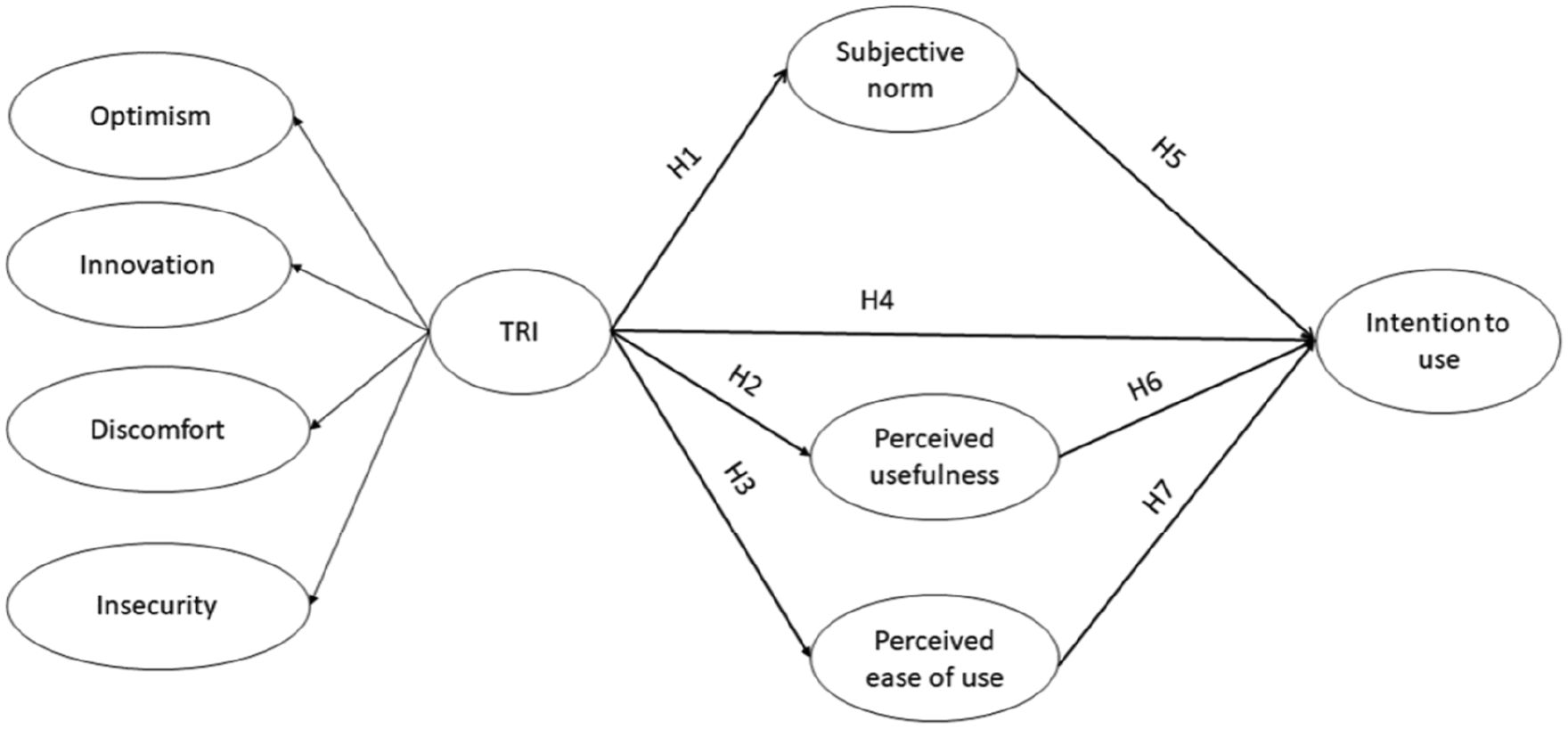
Proposed research framework.
Methodology
Research design, sample, and data collection
This research employs a quantitative design to develop and empirically test a structural model grounded on the TAM and TRI frameworks. A purposive sampling strategy was utilized, focusing specifically on customers who have experience using self-service kiosks at various fast-food restaurants across Jordan. This approach ensured that participants were well acquainted with the subject matter, thereby enriching the robustness and diversity of the study’s findings.
The survey was developed using Google Forms and administered online from January to April 2023. To collect data effectively, the questionnaire was disseminated through social media channels such as Facebook and LinkedIn. This approach facilitated widespread survey distribution, enhancing the precision and representativeness of the results. A preliminary filter question was incorporated to confirm that respondents had previous experience with self-service kiosks, ensuring the relevance of the data collected. Additionally, before soliciting demographic details, respondents were provided with a clear explanation of self-service kiosks at the beginning of the questionnaire to ensure understanding. Full ethical approval was obtained from the researchers’ institution. Participants were informed about the study’s objectives, benefits, confidentiality, and their right to withdraw at any time, with details provided in the survey.
A multiple regression power analysis was performed using G*Power software to ascertain the minimum sample size required for structural equation modeling (Faul et al., 2009). The power analysis revealed that a minimum of 89 participants was necessary, considering seven predictors, a two-tailed test, a medium effect size of 15%, an alpha level of 5%, and a power level of 95%. Several quality control measures were implemented during data collection. First, customers who engaged with self-service kiosks at fast food outlets in Jordan were targeted. Participants were screened with two questions: (1) Have you used a self-service kiosk to order your meal at any restaurant in Jordan in the past 3 months? and (2) Do you remember any specific details about your experience with using these self-service kiosks? Second, to confirm the reliability of the responses, four attention-check questions were distributed throughout the survey. Third, any survey responses where more than 15% of the fields were incomplete were excluded. After these quality checks, 412 respondents remained in the sample.
Sample profile.
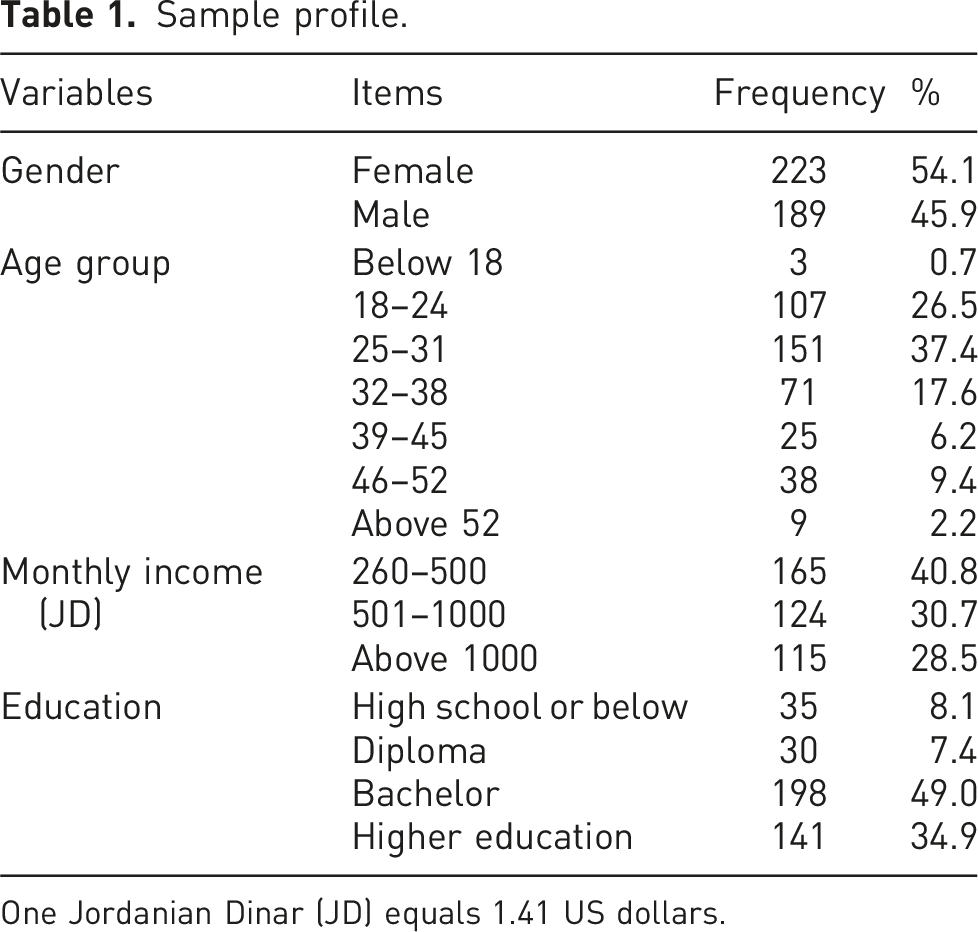
One Jordanian Dinar (JD) equals 1.41 US dollars.
Survey instruments and measurement items
The constructs’ measurement items were derived from the existing literature. Perceived usefulness and perceived ease of use were assessed through three and six items, respectively, both modified from Davis (1989), Venkatesh and Davis (2000) and Huang et al. (2019). Subjective norms were assessed using three items also modified from Fishbein and Ajzen (2011) and Venkatesh and Davis (2000). The TRI was classified as a second-order factor comprising four lower-order constructs—discomfort, insecurity, innovativeness, and optimism—all adapted from Parasuraman (2000). Finally, continuous intention to use was assessed with four items, modified from Lim et al. (2019) and Zaidan et al. (2024).
A team of four experts in consumer psychology and behavior from the business school rigorously reviewed, refined, and validated each research instrument, ensuring the appropriateness of the survey and scales. The questionnaire, originally developed in English, was translated into Arabic by a professional translator to ensure linguistic accuracy and maintain the semantic integrity of the survey content. This translation was further reviewed by bilingual academics from the department, who provided their feedback to refine the translation. The questionnaire was presented in both English and Arabic, allowing participants to choose the language with which they were most comfortable for their responses.
Data analysis
Structural equation modeling with partial least squares (PLS-SEM) was used to analyze the data and assess the model, providing a method for simultaneous analysis of both structural and measurement data, recognized for its robustness in various fields including marketing and information management (Sarstedt et al., 2022; Sarstedt and Liu, 2023). PLS-SEM is particularly advantageous for studies focused on achievement motivators and continuous intention (Ghasemy et al., 2020) and in models involving higher-order constructs. PLS-SEM was preferred over covariance-based SEM to assess the predictive theory (Becker et al., 2023). This method is well suited to evaluating hierarchical component models (i.e., higher-order constructs consisting of lower-order factors) (Sarstedt et al., 2019). The TRI conceptual framework used in this study is hierarchical, incorporating an extended repeated indicator approach of higher-order constructs. The methods outlined by Hair et al. (2021) were used to assess the measurement models and the structural model. The analysis was run using SmartPLS V4.1.0.2 (Ringle et al., 2022).
Results
Measurement model
In accordance with Sarstedt et al.’s (2019) protocols, the second-order construct (TRI) was treated by a repeated indicator approach. For this approach, Sarstedt et al.’s (2019) technique was followed to analyze the second-order construct based on a repeated indicator approach conducted manually. First, the model specification requires assigning all indicators from the lower-order components (optimism, innovation, discomfort, insecurity) to the higher-order component (TRI) simultaneously (using Mode A). All item loadings surpassed the cut-off of 0.708, except for one item (DISC3), which measured discomfort. Second, the measurement model assessment begins with evaluating the lower-order components through multiple reliability metrics. Internal consistency reliability is assessed using composite reliability (ρC), which examines the relationship between indicator loadings and measurement errors. Cronbach’s alpha provides another reliability measure, considering the number of components and their average correlations. The ρA metric offers an additional reliability check, incorporating weight vectors and covariance matrices. Convergent validity is established through Average Variance Extracted (AVE), calculated as the mean of squared loadings divided by the number of components. The findings confirmed that the reliability 0.70 cut-off value was met by all constructs (Henseler and Chin, 2010). The AVE was measured to calculate convergent validity. For all constructs, the AVE surpassed the cut-off value of 0.50, implying that over half of the variance in the constructs was accounted for.
Reliability and validity results.
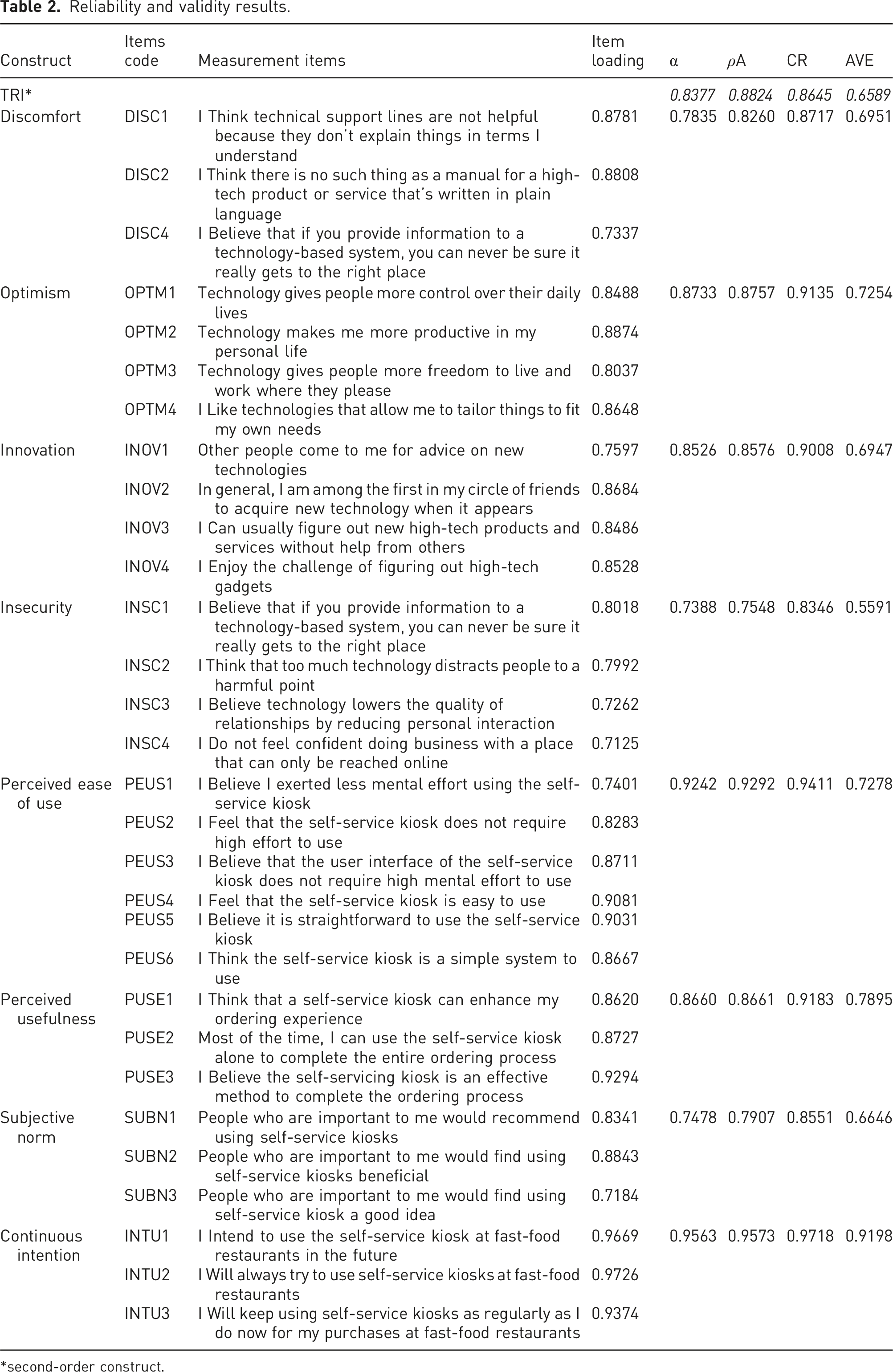
*second-order construct.
Discriminant validity results (HTMT ratio).
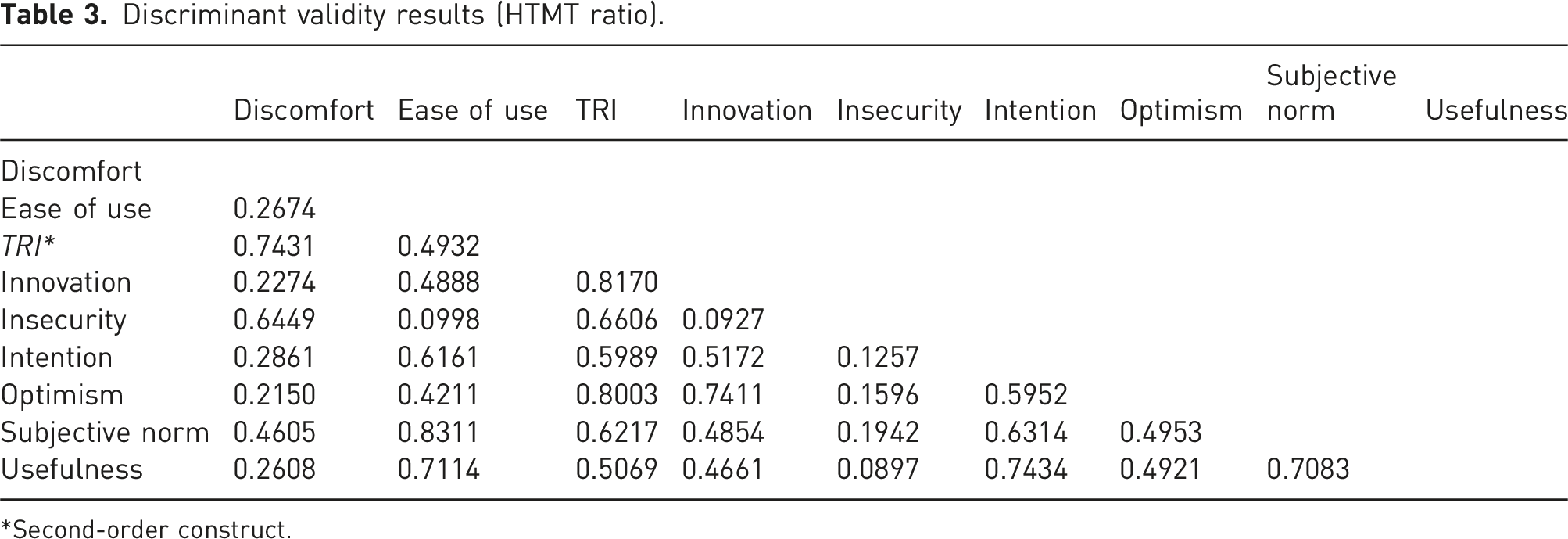
*Second-order construct.
Common method bias
Hypotheses testing.
Structural model
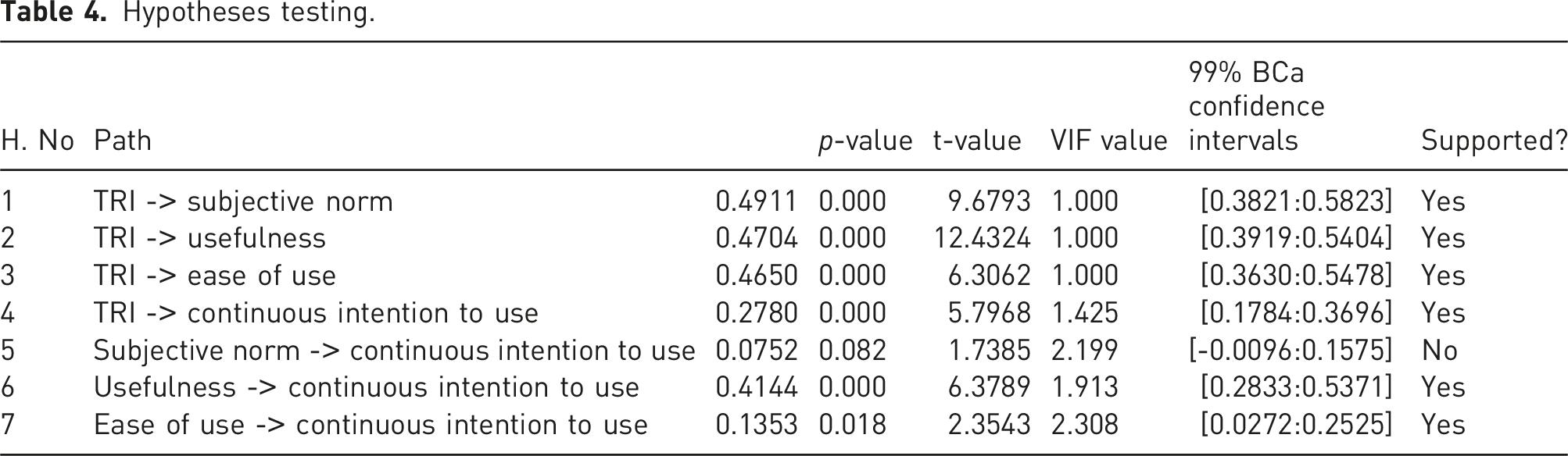
Upon verifying the validity and reliability of the measurement models, the structural model (Figure 2) was evaluated. The results of the structural model collinearity (VIF) check, which was performed first, showed that all VIF values were lower than the cut-off value (5), demonstrating no issues with collinearity (Hair et al., 2021). The next stage involved testing the hypotheses at a significance level of 0.05, using 5000 subsamples in a bootstrapping procedure. The outcomes of this path assessment are also shown in Table 4. The analysis revealed that the model accounted for 56% of the variance in the intention to use, 24.1% of subjective norms, 22.1% of perceived usefulness, and 21.6% of ease of use perception. Figure 2 illustrates the model results. The findings indicated that TRI positively and significantly affects subjective norms (B = 0.4911, t-value: 9.67936), perceived usefulness (B = 0.4704, t-value: 12.4324), perceived ease of use (B = 0.4649, t-value = 9.8175), and intention to use (B = 0.2777, t-value: 5.7968). Perceptions of usefulness and ease of use impact intention to use positively and significantly (B = 0.1353, t-value: 2.3543; B = 4144, t-value: 6.3789; B = 0.4144, t-value: 6.3789). However, subjective norm did not substantially impact intention to use. Therefore, all hypotheses are accepted except for H5. Model results.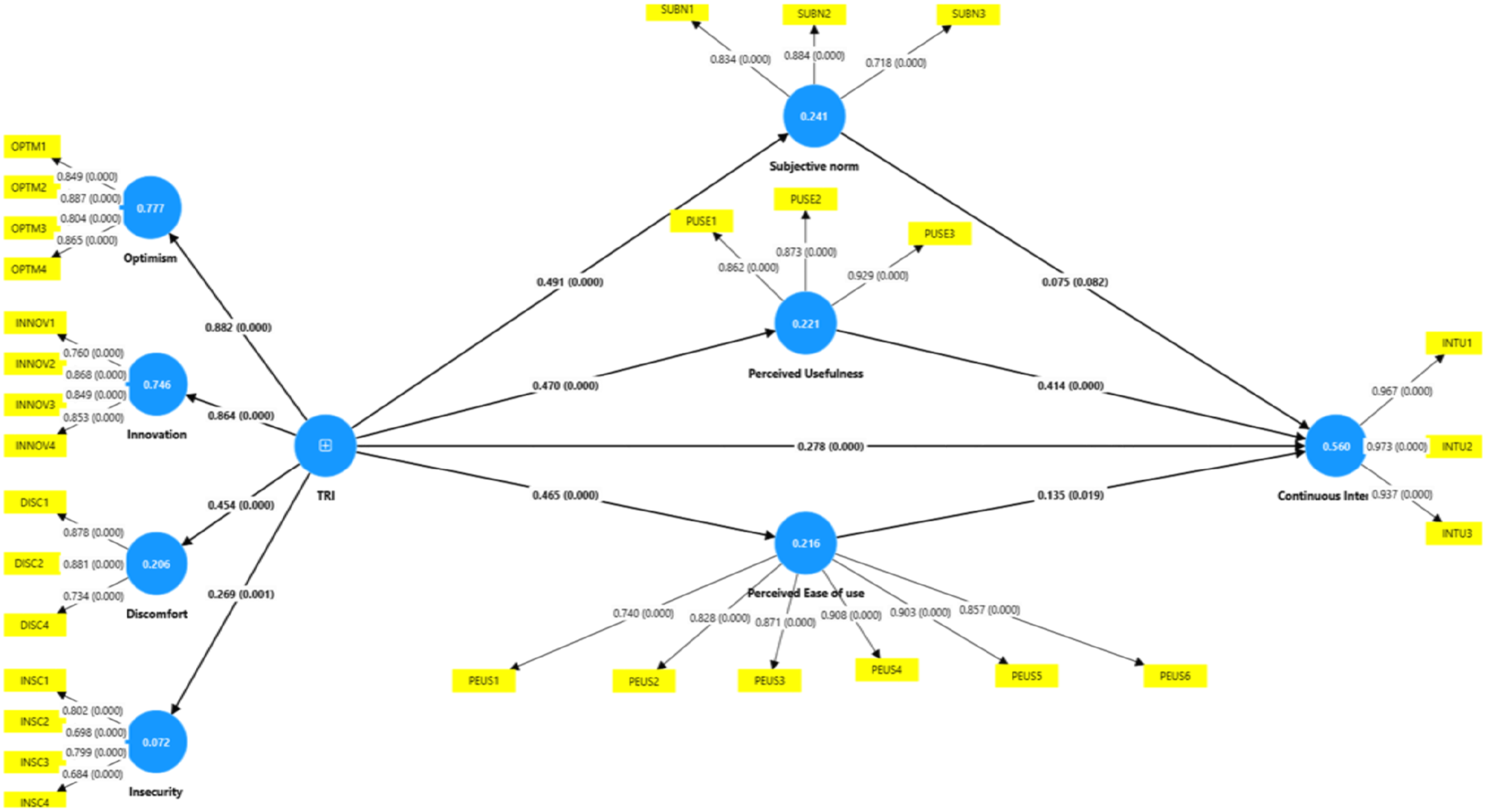
Prediction assessment.
Discussion
This study addresses a crucial gap in existing research by investigating how TRI influences perceptions of usefulness and ease of use, and subjective norms, in the context of self-service kiosks. Defined as a second-order construct, TRI encompasses optimism, innovativeness, discomfort, and insecurity. Our investigation into how these components influence continuous intention to use self-service kiosks offers robust empirical evidence that emphasizes the crucial role of TRI in modeling these key determinants.
The results show that TRI significantly affects perceived usefulness, supporting the arguments made by Ferreira et al. (2023) and Chiu and Cho (2021). Those with elevated optimism and innovativeness perceive modern technologies favorably, acknowledging their benefits and thereby enhancing perceived usefulness (Kim and Chiu, 2019). This suggests that an individual’s readiness for technology shapes their evaluation of its potential advantages (Chen and Lin, 2018). For instance, users open to new technologies are more likely to appreciate the efficiency and performance improvements offered by self-service kiosks. Conversely, those experiencing discomfort or insecurity may see these technologies as less advantageous, potentially hindering their intent to use such systems.
The findings also show a significant impact of TRI on ease of use perceptions, aligning with recent studies (Chiu and Cho, 2021; Ferreira et al., 2023). Technology readiness shapes individuals’ perceptions of a technology’s complexity or simplicity. Optimistic and innovative users often view technology as less complex and more user-friendly, enhancing their ease of use perceptions (Chen and Lin, 2018). Conversely, those experiencing discomfort or insecurity might find technology more challenging, negatively impacting their perceived ease of use (Jeng et al., 2022). These variations in ease of use perceptions, influenced by TRI, can affect the technology’s continuous usage intention.
The findings demonstrate that TRI significantly influences subjective norms, with highly technology-ready individuals more likely to adopt a positive stance towards new technologies and value the opinions of “important others” more favorably (Rahmat et al., 2022). This proactive attitude, fueled by optimism and innovativeness, shapes their perception of subjective norms and influences their ongoing intention to engage with new technologies.
The findings underscore that usefulness and ease of use perceptions, along with TRI, are pivotal in shaping the ongoing intention to engage with self-service kiosks, aligning with prior research (Chang and Chen, 2021). In particular, usefulness perceptions exerted the greatest impact on the ongoing intention to engage with self-service kiosks as supported in previous studies (Chang and Chen, 2021; Lim et al., 2019). Those studies highlight that the decision to continue to utilize technology is heavily motivated by the individual’s recognition of its practical benefits. For instance, in the context of self-service kiosks in fast-food restaurants, users may perceive the technology as useful because it can significantly reduce waiting times and minimize order errors. Moreover, TRI exhibited a moderately positive effect on continuous intention, indicating that a consumer’s readiness for new technologies has a pivotal role in influencing their ongoing intent to engage with these systems aligning with previous studies (Abdul Rahim et al., 2023; Naruetharadhol et al., 2021). Consequently, continuous intention to use self-service kiosks depends on the extent to which individuals are prepared to embrace new technologies, especially their levels of optimism and innovativeness. These findings suggest that marketing strategies should not only highlight these positive attributes but also address any associated discomfort and insecurity. Effective strategies might include enhancing kiosk design, ensuring employees are well trained to communicate the benefits of kiosk usage, and creating promotional materials that emphasize the ease of use and security features of self-service kiosks to boost customer acceptance.
The findings also reveal that ease of use perceptions have a weak significant impact on continued intention, aligning with a substantial body of research that supports this relationship (Chang and Chen, 2021; Chung et al., 2017). This suggests that users who perceive technology as easy to use are more willing to sustain their ongoing intent to engage with it, aligning with TAM, which suggests that ease of use encourages persistent usage (Venkatesh and Davis, 2000). However, these findings contrast with other studies that downplay the significance of perceived ease of use in continuous intention (Ferreira et al., 2023; Jo, 2022). By highlighting this alignment and divergence, this study contributes to the debate on the impact of ease of use perceptions in affecting continuous intent to use SST. Although this impact is less significant in our study, it should still be considered in developing advanced self-service solutions to enhance the experiences of the customers and operational efficiency.
Within this integrated model, subjective norms may have a less pronounced impact than previously reported (Yang et al., 2022). This discrepancy could stem from several contextual factors, such as the stage of technological adoption, limited awareness, or the presence of alternative influences. For instance, if self-service kiosks are relatively new in Jordan, individuals may base their decisions more on personal experiences than on the opinions of others, leading to a diminished influence of subjective norms. Additionally, limited awareness or exposure to self-service kiosks among Jordanians might indicate that societal influences are less likely to significantly affect usage. Furthermore, factors like personal convenience or ease of use could have a more significant impact in driving the ongoing intention to engage with self-service kiosks, potentially overshadowing the effect of the subjective norm.
Conclusion and implications
This study enhances our understanding of the elements that drive continuous intentions to engage with SST in the fast-food industry. By merging TAM, TRI, and subjective norms, it offers a comprehensive framework for examining continuous usage intentions. This approach enriches our perspective on the psychological and social influences shaping these intentions, addressing a research gap that typically emphasizes initial adoption over sustained usage. Notably, it underscores the significance of TRI in impacting consumer decisions and emphasizes its theoretical prominence, especially from the perspective of developing countries such as Jordan. In the fast-food sector, prior research on consumers’ continuous intention to utilize SST has been limited (Rahimi, 2020; Yoon, 2023). Addressing this gap, our study enhances understanding of consumer behavior regarding emerging technologies. The findings provided substantial support for all hypotheses regarding consumers’ continuous intent to engage with in-store SST, with the exception of the impact of subjective norms.
This study enriches the literature on technology usage and offers practical insights for managers and decision-makers in the fast-food industry. Specifically, it highlights the critical roles of ease of use perceptions and TRI in shaping consumer intent toward such kiosks. Innovation adoption in restaurants can significantly enhance performance by streamlining operations, improving customer satisfaction, and increasing competitiveness. For instance, innovations like self-service kiosks and digital ordering systems can reduce wait times, enhance order accuracy, and personalize customer experiences. These technologies optimize resource allocation by reducing reliance on manual processes while also enabling restaurants to gather valuable customer data for tailored marketing strategies (Abdulmawla et al., 2024). Moreover, fostering an innovative culture encourages continuous improvement and ensures adaptability to dynamic consumer demands and market conditions. These practices are particularly impactful in competitive hospitality markets, where innovative capabilities can drive higher financial returns and strengthen non-financial aspects such as customer loyalty, creating a holistic improvement in performance (Abdulmawla et al., 2024).
In terms of fast-food establishments, emphasizing the kiosks’ ease of use is crucial for influencing customer intention. Clear instructions and an intuitive interface can enhance the customer experience, encourage repeat use and reduce potential frustration. Placing easy-to-understand visual aids, step-by-step guides, or interactive tutorials directly on the kiosks can further simplify usage for first-time users. Further, managers can initiate onboarding sessions where customers can familiarize themselves with the kiosks in a guided, stress-free environment. Such sessions could include interactive tutorials and FAQs that address common user concerns and demonstrate the convenience of kiosk use, ideally implemented during non-peak hours or through digital displays that do not require staff intervention. Moreover, assigning a specific employee to encourage customers to use the kiosks and provide immediate assistance to those who find the kiosks challenging could ensure a smoother and more confident customer experience.
Furthermore, the findings highlight the perceived usefulness of kiosks as a crucial driver of customer continuous intention. Managers should emphasize both ease of use and practical benefits, ensuring the kiosks offer valuable features that improve the customer experience. Features such as reduced wait times, contactless payment options, and enhanced order accuracy directly address customer needs for efficiency and convenience. Self-service kiosks expedite the ordering process and offer a preferred method for payment and customization, allowing customers to personalize their orders without the risk of miscommunication. Providing incentives, such as discounts for kiosk users or loyalty points for frequent usage, can further motivate customers to choose kiosks over traditional ordering methods.
This study further illustrates the significance of addressing the major components of TRI—optimism, innovativeness, discomfort, and insecurity—to enhance the continuous intent to engage with self-service kiosks. Simultaneously, it examines the effect of TRI on the customer’s perceived ease of use and perceived usefulness. Optimism about the technology’s efficiency can be enhanced by creating user-friendly kiosks that emphasize convenience and speed. Innovativeness can be fostered by developing early adopter programs, continuously updating kiosks with new features, and creating a community for tech-savvy users to exchange experiences. Effective upselling techniques implemented via kiosks can suggest add-ons and special offers in a non-intrusive manner, enhancing the customer’s purchasing experience and potentially increasing the average order size, significantly contributing to the restaurant’s performance.
Promoting technology optimism and innovation, addressing user discomfort and insecurity, and educating about the technology’s benefits are vital. These strategies can boost perceived usefulness, driving greater adoption and sustained use. Employing a targeted communication strategy that highlights real-life success stories of customers who have efficiently used the kiosks can also promote optimism and reduce hesitation among new users. Digital signage or app-based notifications can be used to disseminate these stories effectively, reinforcing the ease and convenience of kiosk use. Moreover, showcasing these success stories near the kiosks, through screens or posters, can serve as immediate motivators for hesitant customers by creating a sense of familiarity and trust in the technology. Displaying testimonials or user reviews would further assist in normalizing kiosk usage, making it more appealing.
To alleviate discomfort, which often arises from feeling overwhelmed by technology, fast-food establishments should provide clear instructions, visual guides, and on-site assistance, enabling confident and effortless navigation of the kiosks. Additionally, addressing insecurity, related to concerns over data safety, necessitates implementing and effectively communicating robust security measures to reassure users about the protection of their data and payment transactions. These security protocols must be made transparent through both digital and physical communications at the point of interaction. By adopting these strategies, managers can significantly enhance customer readiness and positively influence their continuous intention to use self-service kiosks. This proactive engagement promises higher adoption rates and improves overall customer satisfaction.
Limitations and future research
This study focused solely on fast food restaurants in Jordan. While this provided a robust dataset, this exclusive focus restricts the applicability of the results to other dining venues or geographical regions. The insights gained are context-specific and may not fully represent other restaurant environments or cultural settings. Future research should broaden its scope to include various dining formats and extend geographically to cover diverse cultural and operational contexts. This expansion would enhance the reliability of the results and advance our interpretation of the global dynamics influencing the usage of SST.
Another limitation involves reliance on self-reported data, which can introduce response distortions or impacts on social desirability. The survey was exclusively conducted among customers who had utilized the self-service kiosks post-purchase, potentially biasing the results towards those with positive perceptions of the technology. Future studies may utilize observational techniques or behavioral experiments to supplement self-reported data and reduce bias. Additionally, exploring the views of non-users or those with neutral or negative attitudes towards self-service kiosks would offer a more comprehensive view of consumer behavior and intentions. The study also did not consider external influences such as marketing campaigns or the availability of alternative ordering options, which could affect continuous usage intentions. Examining these elements in future studies would provide a more nuanced understanding of the factors influencing technology adoption in fast-food restaurants.
Footnotes
Declaration of conflicting interests
The author(s) declared no potential conflicts of interest with respect to the research, authorship, and/or publication of this article.
Funding
The author(s) received no financial support for the research, authorship, and/or publication of this article.
