







Abstract
This study aims to identify the role of ChatGPT in addressing existing gaps and offering new opportunities in tourism and hospitality (T&H) education. In this evolving educational landscape, the study outlines emerging trends, practical applications, and potential avenues for implementing ChatGPT in educational contexts. Relevant research papers were retrieved from online databases indexed by Scopus, and a systematic literature and bibliometric review was conducted, focusing on studies published between 2018 and 2024. To this end, the Scopus database was used, with a focus on articles evaluating the use of ChatGPT in education within the T&H sectors. Following a defined protocol that included specific inclusion and exclusion criteria, 26 relevant studies were selected for final synthesis and analysis. This study emphasizes the positive impacts of ChatGPT in the learning environment, including its adaptability to individual learning needs, its versatility in enhancing digital marketing skills, and its practical utility for role-play and the development of cultural competencies. Challenges identified include concerns related to academic dishonesty, both quantitative and qualitative limitations associated with the technology, and various ethical considerations. This work represents the first systematic literature review on the adoption of ChatGPT in T&H education. It showcases AI-enabled educational practices while highlighting the current lack of ethical guidelines and personalized learning frameworks within the field. The study is limited to English-language articles and excludes grey literature.
Keywords
Introduction
Released in November 2022, ChatGPT was an open artificial intelligence (AI) tool that enabled users to communicate with it in natural language conversations (Rawas and AlSaeed, 2024). Literature reports analyses that suggest that ChatGPT has a superlative performance in natural language understanding, which in turn allows it to mimic human language and thereby write texts that resemble human writing (Cheung et al., 2023). It had emerged as a potential substitute for several web-based resources such as Google or Wikipedia, etc. The popularity of the tool in various application areas is manifested in the improvement of the education profession where it may be applied with a large set of data and flexibility towards the advancement of higher education (Sajja et al., 2023). Furthermore, the tool can be incorporated into the existing technology atmosphere of education with the help of Application Programming Interfaces (APIs), and it enriches the experience of learning through, for example, learning management systems (Fergus et al., 2023; Sajja et al., 2023).
Flexible and highly available through cloud computing architecture, ChatGPT is useful for higher education beneficiaries, including students and educators, as well as the institutions (Ghesh et al., 2024). The fact that it can be personalized allows it to serve as academic assistance in answering questions based on subjects, offering tutoring services, and generating educational material (Rawas and AlSaeed, 2024). It is in addition also a cheap alternative to conventional resources since it can aid mechanized feedback and other tutorial studies in STEM learning (Shanto et al., 2023).
ChatGPT can act as a virtual instructor since it is capable of assisting students with their assignments, elaborating on a topic, and recommending further readings in higher education (Adeshola and Adepoju, 2024). The explanation is more engaging, which allows students from higher education institutions to interact through an easy-to-use natural language interface for a more have a more interesting and more satisfactory learning experience (Wang et al., 2023). Such features give ChatGPT more worth to be identified with learning institutions and learners (Currie et al., 2023). Additionally, ChatGPT is a is a responsive training tool that issues helpful feedback depending on the learner and the training type (Bommineni et al., 2023). It is also elicited compatible with other higher education technologies to enable interoperability and integrate smoothly (Ivanov and Soliman, 2023).
Reflecting the rising scholarly publications concerned with generative AI technologies (e.g., Carvalho & Ivanov, 2024; Dwivedi et al., 2024), recent studies have begun examining the integration and impact of ChatGPT within T&H education and practice. For instance, Carvalho & Ivanov (2024) provide a conceptual analysis outlining specific applications of ChatGPT in tourism, including front-office automation, personalized marketing, and enhancements in back-office operations such as text analysis and data processing. Their study gives emphasis to the advantages of operational efficiency and workforce increase while also addressing significant risks related to factual inaccuracies, potential employee displacement due to automation, data privacy concerns, and substantial integration requirements. This review responds to the stated necessity to conduct additional research on the implications of ChatGPT in tourism education since most of the previous studies were concentrated on industry uses.
Contextualizing ChatGPT in tourism & hospitality education (rationale and objectives)
Dwivedi et al. (2023, 2024) further explored its application and the transformations that occurred in the perspective of the hospitality and tourism sector. Dwivedi et al. (2024) evaluated current hospitality and tourism industry practices along with future generative AI capabilities to demonstrate its benefits in terms of engagement with customers and workforce automation but revealed integration challenges and the need to build user trust. In an extensive discussion, Dwivedi et al. (2023) unite the perspective of multidisciplinary scholars to analyze not only the positive advantages (such as productivity enhancements) and important challenges (in terms of misinformation, alongside ethical concerns and academic integrity risks) that generative AI generates across different sectors, including education and research. These studies highlight the importance of more comprehensive studies that examine T&H education situations by exploring trends, pedagogical applications and benefits and obstacles thereby enabling scholars to fill this gap with their study. Kim et al. (2025) explored user interactions with ChatGPT and its impacts on behavior among tourists ; Skavronskaya et al. (2023), in turn, studied the role and importance of ChatGPT in tourism field for educational purposes. Keiper (2023) discussed the possibility of creating systems with ChatGPT that would capture learners’ interest. On the other hand, Gursoy et al. (2023) highlighted limitations of the platform, including how it contributes to the negative effects on creativity and decision-making and compounds education inequality among students (Fathy et al., 2025; Gursoy et al., 2023).
Several studies have been conducted regarding ways in which ChatGPT can be implemented in education, but few have examined the implementation of the model in the teaching of T&H. Previous studies have primarily focused on general educational benefits of the tool, such as the development of writing skills (Rejeb et al., 2024), boosting self-directed learning processes (Elbanna and Armstrong, 2024) and evaluating the tool for its functionality, precision, and reliability (Gill et al., 2024). The literature has addressed AI in T&H in various aspects including its implication on education and practice. However, A recent comprehensive review provides insight into the broader state of generative AI in these areas and even takes a step further, suggesting a strategic research agenda to direct future studies (Fouad et al., 2024).
The overall application of ChatGPT in tourism and hospitality (T&H) education remains limited. Given the unique demands of these fields, particularly the emphasis on practical skill development and intercultural competence, ChatGPT’s potential applications in simulation-based learning, content creation, and one-on-one assistance imply that the tool may become a helpful solution to meet the unique educational requirements. Thus, the proposed study aims to address the current gap in literature by discussing the applicability of ChatGPT in promoting and enhancing the educational experience of T&H students. This will be achieved through a systematic review of existing resources and the proposal of a future research agenda.
Although the possibilities of AI, including ChatGPT, have been studied in education overall (Adeshola and Adepoju, 2024; Fergus et al., 2023; Sajja et al., 2023), there is no research in T&H education, in particular. Existing studies have often focused on the general educational benefits of AI (Wang et al., 2023; Zawacki-Richter et al., 2019), such as tailored teaching (Chen et al., 2020) and automated feedback (Link et al., 2022). Nevertheless, those studies tend to lack discussing the peculiarities of the challenges and opportunities that ChatGPT offers to the realm of the T&H industry, as the latter must be highly concentrated on practical skills development (Gursoy et al., 2023), intercultural communication (Deardorff, 2006), and ethical decision-making (Weeden and Boluk, 2014). Additionally, major trends and rising research topics areas lack a comprehensive and systematic analysis of the current research landscape, particularly regarding ChatGPT in this context. Without a clear understanding of the current state of research, it is impossible to effectively integrate ChatGPT into curricula while also considering the opportunities, challenges, and innovative ideas of using ChatGPT in T&H education. Using ChatGPT, T&H students can gain better opportunities to enhance learning and develop essential skills relevant to the industry and the digital T&H sector (Buhalis and Leung, 2018; Neuhofer et al., 2015).
To systematically synthesize the burgeoning literature on ChatGPT in T&H education, the proposed study adopts a systematic literature review approach coupled with bibliometric analysis. When new technologies emerge within educational contexts, such reviews are crucial for mapping the current state of knowledge, identifying key trends, evaluating impacts, and outlining future directions. For example, recent systematic quantitative literature reviews examining the impact of other technologies, such as virtual reality (VR) in history education (Bonsu et al., 2024), typically aim to (1) map the field by discovering publication trends, key contributors, and geographic distribution; (2) assess the documented benefits (e.g., enhanced learning, increased interest) and challenges (e.g., technological limitations, pedagogical focus) associated with the technology’s implementation; and (3) identify current applications and delineate priorities for future research based on identified gaps. Following this established approach for systematically reviewing educational technology integration, this study addresses the following research questions:
The proposed study makes significant contributions by addressing key aspects of the integration of ChatGPT in T&H education.
The current study makes several significant contributions to conceptualization and implementation of ChatGPT in T&H education. Firstly, the study provides an overall view of the distribution of the research by the year, the main countries and educational institutions contributing to the field, and the most frequent terms associated with ChatGPT in the context of T&H education. By identifying publication trends, key contributors, and core research themes (Q1), it establishes a vital baseline for future scholarly work and collaboration in this rapidly evolving field. Secondly, the proposed study contributes to the methodological perspectives of researching ChatGPT adoption in T&H education through a systematic synthesis of the research approaches adopted in the literature. These insights highlight effective research strategies suitable for understanding technology adoption in a field that is inherently exploratory and often relies on capturing user experiences.
Furthermore, the study provides crucial evidence-based practical guidance for educators, curriculum designers, and institutions. Through systematically synthesizing the documented benefits (e.g., personalized learning, skill development) and challenges (e.g., academic integrity, ethical concerns) of ChatGPT implementation (Q2), it equips stakeholders with actionable insights for effective pedagogical integration and informed policy development. Another useful output of the analysis is methodological advice, as the review of the used research methods allows shedding light on successful tactics to be used in further studies, which is especially important to consider, as studying emergent educational technologies can be viewed as exploratory by its nature. Finally, the review clearly delineates the current applications of ChatGPT in T&H education and identifies key emerging trends and priorities for the future research agenda (Q3), such as VR/AR integration, ethical framework development, and impacts on critical thinking, thereby actively shaping subsequent inquiry in this domain.
Literature review
Understanding ChatGPT: Definition and context
The public release of ChatGPT by OpenAI in late November 2022 marks a major step forward for generative artificial intelligence (AI) research (Altun et al., 2024; Bahreini et al., 2023; Dwivedi et al., 2024; Ivanov and Soliman, 2023). The essential framework of ChatGPT is based on its status as an LLM utilizing the OpenAI Generative Pre-trained Transformer (GPT) architecture with GPT-3, GPT-3.5, and GPT-4 models (Bahreini et al., 2023; Ivanov & Soliman, 2023 ChatGPT was released to acquire millions of users rapidly, operating as a sophisticated AI-based chatbot that produces human-sounding written text in reaction to user input (Altun et al., 2024; Bahreini et al., 2023; Dwivedi et al., 2024; Nimri and Yang, 2024).
Core technology implements a “transformer architecture” to process extensive text and code collections obtained from the Internet by scraping web pages, books, and articles (Bansal et al., 2024). ChatGPT is trained in two steps: unsupervised pre-training, when the model learns about the probabilities of word combinations and word supply, and supervised fine-tuning that involves supplementing the model with human correction behaviours through reinforcement learning to know how to generate sequential word predictions and how to produce context-appropriate, coherent texts (Bhattacharya et al., 2024; Yenduri et al., 2024). This training enables the use of various natural language processing (NLP) abilities that span from answering inquiries across all subjects to producing artistic texts and producing and modifying code while also handling conversation continuity (Chen et al., 2024). The user interface of this platform operates without requirements for coding abilities from the end-user (Käss et al., 2023).
Understanding the in-built features and limitations of ChatGPT represents a critical requirement for users. The system works through generating probable text sequences instead of comprehending content or being conscious or able to reason (Ray, 2023). The system operates as a “stochastic parrot” that creates frequently flowing and realistic outputs but may generate inaccurate information and produce “hallucinated” non-existent facts and show biases from its training dataset (Jamaluddin et al., 2023). Its initial versions would operate with knowledge cutoff dates such as 2021, but newer versions aim to resolve this issue (Hassani and Silva, 2023). Despite its purpose to prevent harmful content generation, it lacks true ethical assessment abilities (Marsoof et al., 2023). Verifying and holding AI systems accountable becomes difficult due to two primary factors: a “black box” mystery surrounding their internal decision-making and the unknown origins of their information sources (Mienye and Swart, 2025).
ChatGPT in the broader educational landscape
Literature indicates that ChatGPT provides multiple opportunities to enhance the learning processes among students and educators. Research shows ChatGPT functions as an education tool for personalized tutoring with customized feedback solutions that adapt to unique student requirements (Elbanna and Armstrong, 2024; Grassini, 2023; Mienye and Swart, 2025). The learning use of ChatGPT includes content creation for teaching materials, curriculum development recommendations, translation of learning resources, and computerized grading assistance for instructors (Halaweh, 2023; Lo, 2023). ChatGPT operates as a virtual assisting students obtain solutions, explanations, writing critiques, collaborative support, and project-writing assistance (Cain & Rajan, 2024). Research indicates that GPT-3 has automated several administrative procedures and enhanced student productivity features (Elbanna and Armstrong, 2024; Fütterer et al., 2023). This tool gives variable findings across subject areas because it handles economics effectively but shows less accuracy or produces incorrect answers in domains including law, mathematics, medicine, and software testing, according to Adeshola and Adepoju (2024).
Implementation of ChatGPT in education is associated with numerous barriers and ethical dilemmas, which scholars widely examine through their academic literature. Academic integrity forms the core concern as students potentially use this tool to submit their work without mentioning that they use it (Halaweh, 2023; Lo, 2023). The ability of AI-generated content to eliminate existing plagiarism detection systems presents an additional issue for education systems. Accuracy and reliability present significant issues since ChatGPT demonstrates incorrect, biased, and completely artificial information output “hallucinations” through fabricated references while its operational knowledge ends at the cutoff date of its training data (Grassini, 2023; Mienye and Swart, 2025). Prejudices in the training which lead to discriminatory outputs and remain a prominent problem for analysts (Fütterer et al., 2023). Several concerns about student data privacy and security in data collection (Grassini, 2023; Mienye and Swart, 2025), as well as unclear AI decision-making systems (Mienye and Swart, 2025), together with concerns about diminished analytical abilities from over-reliance on AI (Fütterer et al., 2023; Grassini, 2023; Halaweh, 2023), have been identified. AI models, including ChatGPT, do not possess genuine emotional intelligence or empathy in the way human educators do (Adeshola and Adepoju, 2024; Grassini, 2023).
ChatGPT in T&H education
ChatGPT functions as a flexible tool for educators and students through its deployment in different specific ways in T&H education. ChatGPT enables educators to develop better curricula and produce educational content. The tool helps the educators develop the variety of teaching material with additional case studies, lesson plans, and assessment tasks, which include content from education subjects such as customer service and financial accounting in hospitality, as well as customer decision-making and performance analytics (Ray, 2024). ChatGPT helps scholars create individual quizzes and assignments that align with the expected learning outcomes (Dalgıç et al., 2024; Ray, 2024) as well as obtain help building complete course frameworks (Altun et al., 2024). Instructive scenarios can be developed by instructors using ChatGPT to push students into team-based marketing strategy development for new hotels (Altun et al., 2024). ChatGPT helps administrators manage tasks efficiently, including initial grading operations and scheduling processes, which require educators to offer a hands-on experience with students (Selem et al., 2025).
Students benefit from ChatGPT since it offers personal tutoring services controlled by a student and serves as his or her intelligent educational guide. ChatGPT offers immediate explanations for complex theories while also providing 24/7 clarifications about specific concepts, such as tourism economics, sports statistics, or statistical methods (Ray, 2024; Selem et al., 2025). Adaptive learning systems equipped with AI and featuring ChatGPT assess the knowledge of the students and their learning interests and paces to create learning pathways. The system allows students to access pre-class professional information and aids with technical trouble, such as R software use for tourism statistics visualization (Selem et al., 2025), in addition to offering personalized feedback about student work (Ray, 2024). Such functionality enables students to develop an interactive learning process that promotes personal learning autonomy (Altun et al., 2024; Ray, 2024).
ChatGPT functions as a bridging tool that transforms academic knowledge into practical industry applications through real-world simulation exercises. ChatGPT enables users to simulate various T&H roles, including travel advisors who guide pre-trip preparations and provide en-route assistance and post-trip summaries, as well as customer service agents for review management and digital advertising agents developing social media content and strategic developers who generate new touristic strategies (Altinay et al., 2024). The integration of ChatGPT with Virtual Reality (VR) as well as Augmented Reality (AR) enables students to experience destination exploration and service practice simulation in virtual environments (Ray, 2024). The technology enables students to learn through real-world examples and simulations and case studies in which the students can transform hypothetical thoughts into practical powers towards their tourism or hospitality professions (Dalgıç et al., 2024).
Technological integration in T&H education
Technology integration in T&H education evolved to the new level of elementary Information and Communication Technology (ICT) skills to the sophisticated usage of technology to adjust the approaches to building the curriculum, and delivering instruction (Conefrey et al., 2025). The research shows that educational success requires matching curriculum intended learning outcomes with industrial requirements as digital abilities crucial to education success (Elshaer, Azazz, Kooli, et al., 2024). Research establishes a requirement for academia to implement educational programs which incorporate digital marketing experience with data analytics skills and industry-specific software skills (Ali et al., 2018). The implementation of e-learning with blended learning techniques has become a focal point of study because researchers explore ways digital resources and online platforms enhance face-to-face teaching. Researchers analyze student performance along with their satisfaction within virtual platforms since only thoughtful educational planning could serve as their prerequisite and simple use of technological tools (Hartman et al., 2014). The ability to use digital marketing channels and operations requires educational organizations to adopt continuous updates in their curricula (Gutierriz et al., 2023).
Modern educational technology allows T&H institutions to build interactive learning for their students. The students obtain practical application learning in support of real-life operations through simulated games and gamifications to operate a hotel and a restaurant (Elkhwesky et al., 2024; Elshaer et al., 2024; Nassar and Fouad, 2022; Salem et al., 2025). Improved problem-solving and decision-making scenarios can use simulation-based learning methods. VR and AR represent two of the latest tools that show great promise. The potential of the VR to substitute a traditional method of teaching, the traditional method of teaching, with virtual field experience and service training facilities simulations, and SPATIAL comprehension training (Wiltshier and Clarke, 2017). Industry-relevant technologies create protected environments that help students develop deeper learning through skill enhancement and industry preparedness.
Synchronous communication tools were earlier examined for their capacity to eliminate geographic barriers during qualitative research. Skype serves as an interview platform for conducting in-depth investigations about tourism and heritage, according to Iacono et al. (2016). Their analysis showed how Skype provides fast access to international participants as well as affordable research which upholds pros and cons as compared to the traditional research approaches. The study reveals that researchers must modify their research approaches when working with VoIP technologies.
Research investigators advanced digital tools by utilizing social media platforms as active tools, which went beyond collecting passive data sources. According to Skavronskaya et al. (2020), WeChat was an interactive tool of gathering specific qualitative information on memorable tourism research. The study showed how WeChat platform features consisting of Moments interactions combined with group messaging features together with reward systems served in order to obtain the experimental data through the recall process as well as direct real-life experiences. The research demonstrated that mastering particular social media features allows researchers to investigate deeply into their qualitative study, still, the paper has technical limitations and cultural barriers.
T&H researchers and educators continue to accept new communication technologies using VoIP and sophisticated social media platforms as they evaluate these tools’ features versus methodological and ethical challenges. The recent introduction of generative AI tools like ChatGPT determines the current level of the development of human-technology integration. ChatGPT expands upon established benefits, including accessibility, yet brings fresh capabilities for content generation, personalization, and process automation. ChatGPT leads to new research requirements for the current study due to accuracy issues, ethical considerations, learning outcomes, and assessment integrity problems.
Methodology
In investigating the broad range of literature on ChatGPT and its application in T&H education, the study takes a systematic literature review (SLR) and a bibliometric analysis approach. Systematic reviews deliver a structured research method to review academic literature because they provide both rigorous execution, transparency, and reproducibility that narrative reviews lack, specifically when reviewing new or diverse fields (Petticrew and Roberts, 2008; Pickering and Byrne, 2014). The principles of systematic quantitative literature reviews allow researchers to generate quantitative summaries of the field, in which existing studies are analyzed thoroughly to identify research gaps and map the research undertakings (Pickering and Byrne, 2014). The systematic review process stands as the most effective method for rapidly shifting educational technology applications since it offers stronger foundations than traditional narrative reviews (Green, 2009; Pickering and Byrne, 2014). The SLR methodology followed in this research borrows established steps from generic research frameworks (Kitchenham, 2004; Kitchenham et al., 2009) but prioritizes structured quantitative mapping in line with Pickering and Byrne (2014) recommendation for social science and transdisciplinary analysis. The review entailed the development of a protocol alongside criteria determination for study selection and design of efficient search strategies together with selection procedures and quality assessment of studies and data extraction strategies.
To provide the answer to the research questions, a systematic literature review was done along with a bibliometric analysis. The systematic review coupled with bibliometric analysis was chosen for its potential to provide a comprehensive synthesis of academic literature, revealing research trends, key themes, and leading researchers and publishing institutions on ChatGPT applications for T&H education. The systematic review qualitatively examines the benefits and challenges of ChatGPT, as well as its applications in T&H education, while the bibliometric analysis generates quantitative information about the evolution of research over time.
Review protocol
The primary goal of the review protocol is to minimize research bias. By specifying the methods in advance, the potential for bias in the review process is significantly reduced.
Inclusion and exclusion
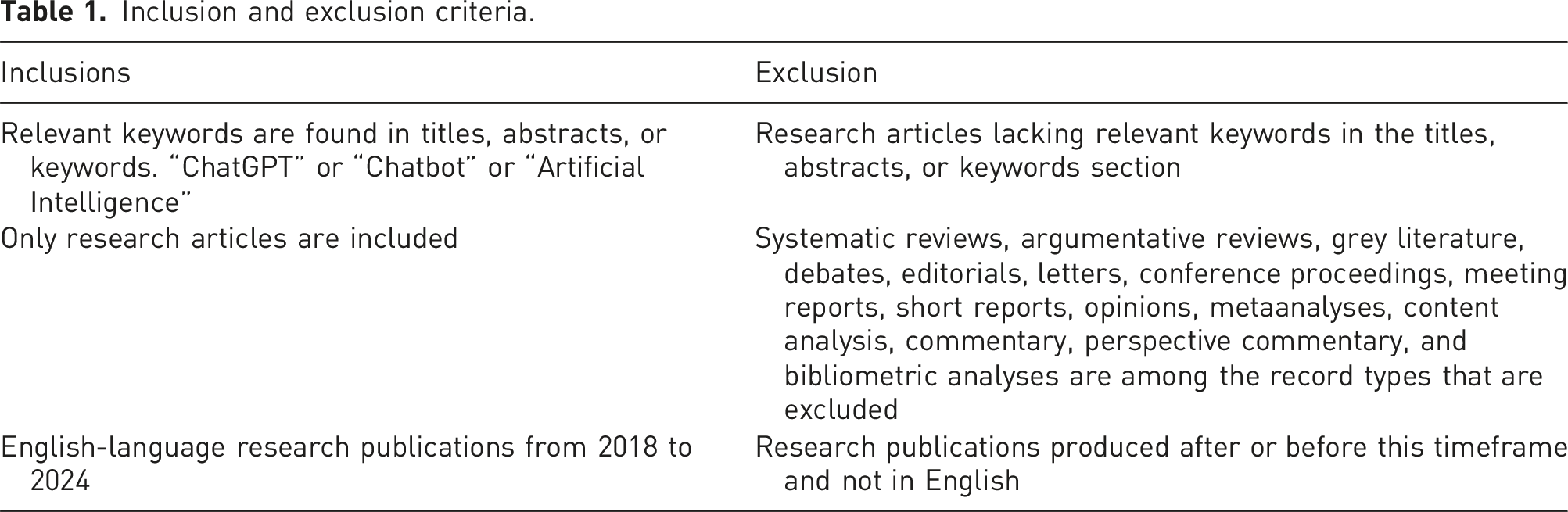
Inclusion and exclusion criteria.
Search procedure
Due to the research question and objectives, the research presents a systematic literature review based on the guideline of Preferred Reporting Items for Systematic Reviews and Meta-Analyses (Moher et al., 2010) (see Figure 1). Thus, this approach offered an exhaustive and clear methodology of carrying out the process of selecting studies for review. PRISMA framework for the study.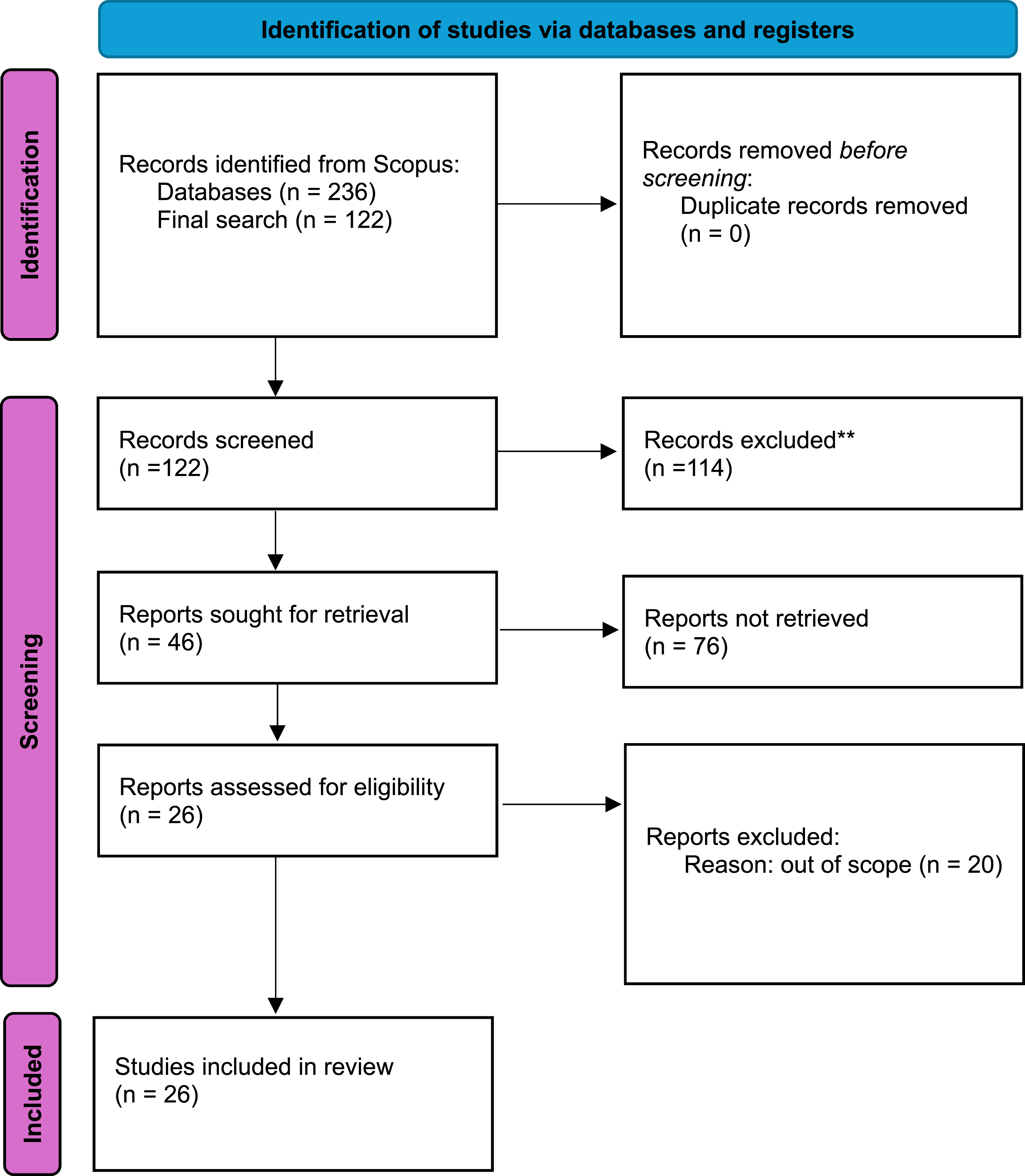
Scopus was chosen as the primary database for this study since it provides a vast list of journal articles from different fields of study—education, tourism, and technology—and it is the largest abstract and citation database of peer-reviewed literature (Burnham, 2006; Falagas et al., 2008). The Scopus platform is an appropriate database in retrieving relevant and good quality scholarly articles in the aim of attaining systematic reviews in case of interdisciplinary topics. Its functional and powerful search and citation functions help the researchers sort out and evaluate the body of literature evidence (Mongeon and Paul-Hus, 2016). Together with the frequent updates of Scopus and comprehensive indexing, place it in a suitable position to provide accurate and current findings.
Specifically, the specifics of the creation of the search query “ChatGPT OR Chatbot OR Artificial Intelligence OR Education OR Tourism OR Hospitality” were deliberately used to address the chosen topic of the roles of artificial intelligence applications in the education of the T&H fields. The studies were narrowed down by the year of publication between 2018 and 2024 in order to make the recommendation applicable in the current researches. The rationale for starting the search in 2018 was to capture the academic discourse and applications of conversational AI and artificial intelligence within this field preceding the specific release and widespread impact of ChatGPT. This earlier literature provides crucial context, identifies foundational concepts and challenges that informed the subsequent adoption and research on ChatGPT, and allows us to better understand the baseline state of the field. Including this period ensures a more comprehensive understanding of the trends and the specific impact attributable to ChatGPT’s emergence. Although the general search was sufficient to include such context, the final selection of 26 studies focuses on the most pertinent articles evaluating ChatGPT applications, with the majority published post-2022.
One hundred and 22 documents were obtained from the search and screened from the 236 records obtained to have unique documents. The use of this systematic method allowed incorporating broad and extensive sources of academic articles that provided a sturdy basis to the conclusion and a thorough discussion of the subject matter regarding the application of Chat-GPT in education and tourism. Studies in English focusing on ChatGPT in education were included. This reduced the number of studies under the subject areas of social sciences, computer science, business, and arts and humanities. Excluded were articles that were not in education, tourism, or hospitality specialties and articles that were not empirical or theoretical. After applying this process, 46 articles were further considered from, which the full texts could be retrieved.
Each of the studies included in the initial search was thoroughly assessed, and 29 of the studies included were considered off-topic for inclusion in the final analysis, leaving a total of 26 studies for the final consideration. Publication of such studies was also analyzed basing on the frequency of publication, geographical distribution, and institutions involved. Continuing from thematic analysis to topic trends, co-occurrence of keywords was conducted using the VOSviewer software. This approach identified important clusters of studies, including artificial intelligence, learning systems, machine learning, and their use in teaching tourism (Bahreini et al., 2023).
This systematic approach helped make the review both targeted and conclusive so that the article was able to offer insights into the nascent field of ChatGPT use in T&H education. The finding also underlines the appropriateness of using AI-based learning technologies and, at the same time, provides the description of the current challenges and prospects for further study that are worthwhile for the coming years (Fergus et al., 2023; Rawas and AlSaeed, 2024).
Assessment of quality
When determining the quality of each of the studies, specific characteristics of the study were held in consideration. First, the concerns of purpose clarity were addressed, and the works that stated research questions and aims and focused on the usage of ChatGPT in T&H and education were prioritized. Important evaluation of methodological quality was also applied where the place was given to the real study designs with quotation of data collection procedures and precise analysis (Grant and Booth, 2009). Further, the applicability of the studies was considered in relation to the research focus, according to the which only those studies been selected which deal with the use of ChatGPT or similar artificial intelligence tools in the areas of education, tourism, and hospitality sectors had been selected.
Another general dimension of the quality assessment was the degree of transparency coupled with compliance with reporting standards. Publication sources were compared based on the popularity of the given information on methods and the data that was used and the methods that were employed in the process of analysis carried out. It is also necessary to evaluate the articles’ practical or theoretical relevance: such contributions were preferred that would have considerable implications for education practice, business implementation, and further academic research.
To improve reliability, quality of the articles was judged independently by two authors. Inconsistencies in the ratings were resolved by discussion and with reference to a third reviewer when needed. Among all the articles, only the ones that fulfilled all the quality requirements were classified as “high quality,” while those that only partly met the criteria were categorized as “moderate quality.” Articles that did not meet the criteria in terms of methodological soundness or reporting quality were excluded from this review.
Findings
Q1: What is the yearly distribution, top countries, top educational institutions, and most utilized terms within ChatGPT and education in T&H?
Figure 1 presents the trend of the research publications regarding the relationship of ChatGPT, education, and the T&H industry for the period of 2018 to 2024. As of the year 2018, there are almost six publications. This number decreased to around five in the year 2019. However, there was a gradual increase in 2020 with approximately 10 publications, and in 2021, around 17. The number rises slightly more in 2022 to approximately 30 publications and rises to a higher rate of 52 in 2024. It is evident that the research focus on adopting ChatGPT in the learning environment of T&H is increasing rapidly.
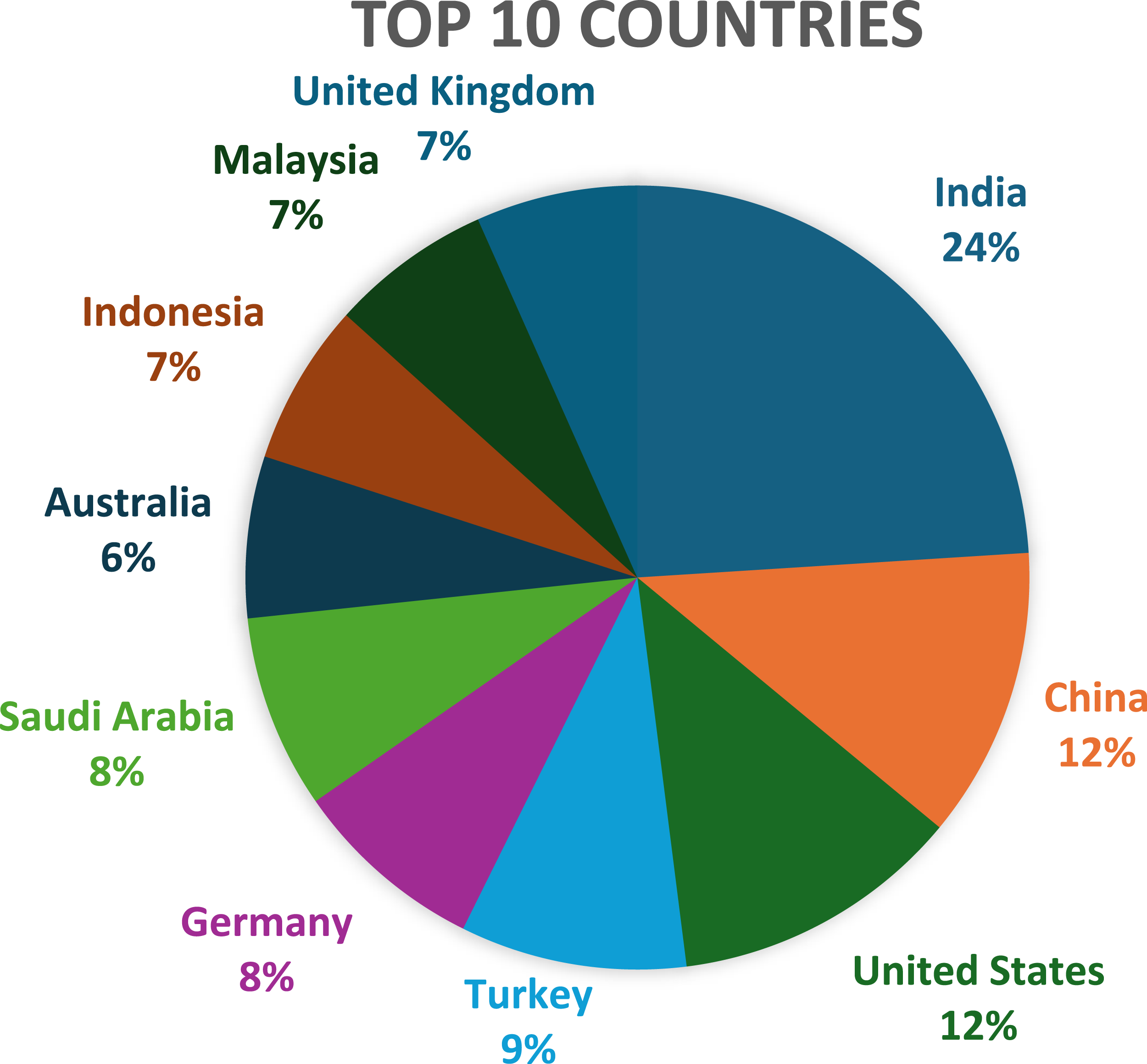
Furthermore, Figure 2 shows the scholarly output of research on ChatGPT and its use in T&H education by the 10 most successful nations. India has contributed as much as 24% of the articles, while the United States has 12%. Turkey has a total of 9%. Germany ranks fourth with 8%, and Saudi Arabia also contributes to 8% of the research output. Malaysia, Indonesia, and Australia also offer 7%, 7%, and 6%, respectively, for this research field. This distribution clearly indicates that this emerging and rising field is gaining considerable attention globally, particularly in India, which is leading in research output (see Figure 3). Publication trends. Top 10 countries in research on ChatGPT and T&H education.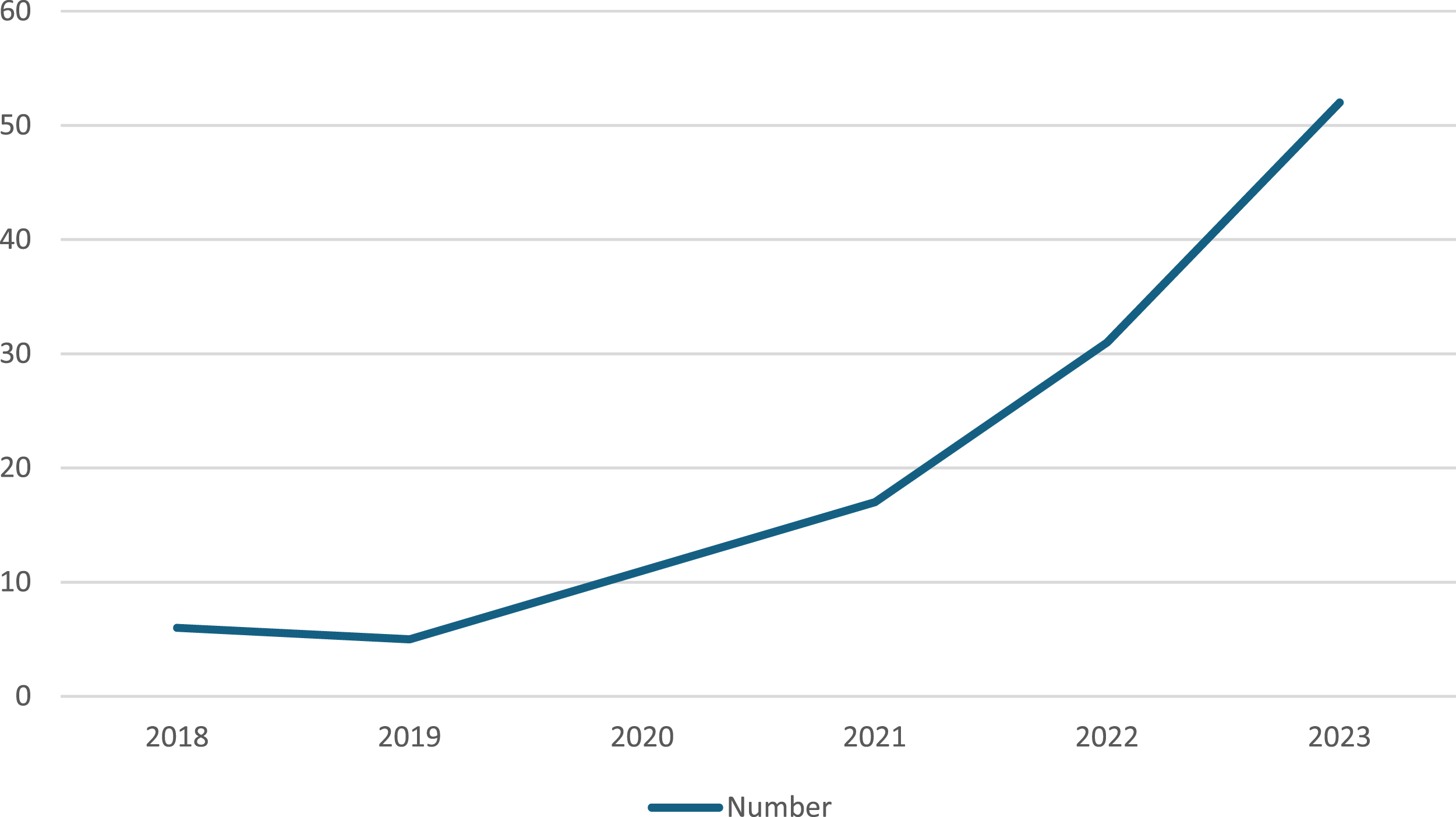
To identify the university affiliation of the authors, Figure 4 presents the distribution of papers regarding the usage of ChatGPT in the context of T&H education. The most productive institution in this area is Wuhan Business University which has about four articles. The Hong Kong Polytechnic University of Hong Kong and Bahçeşehir Üniversitesi of Turkey have released three articles. Country scientific production.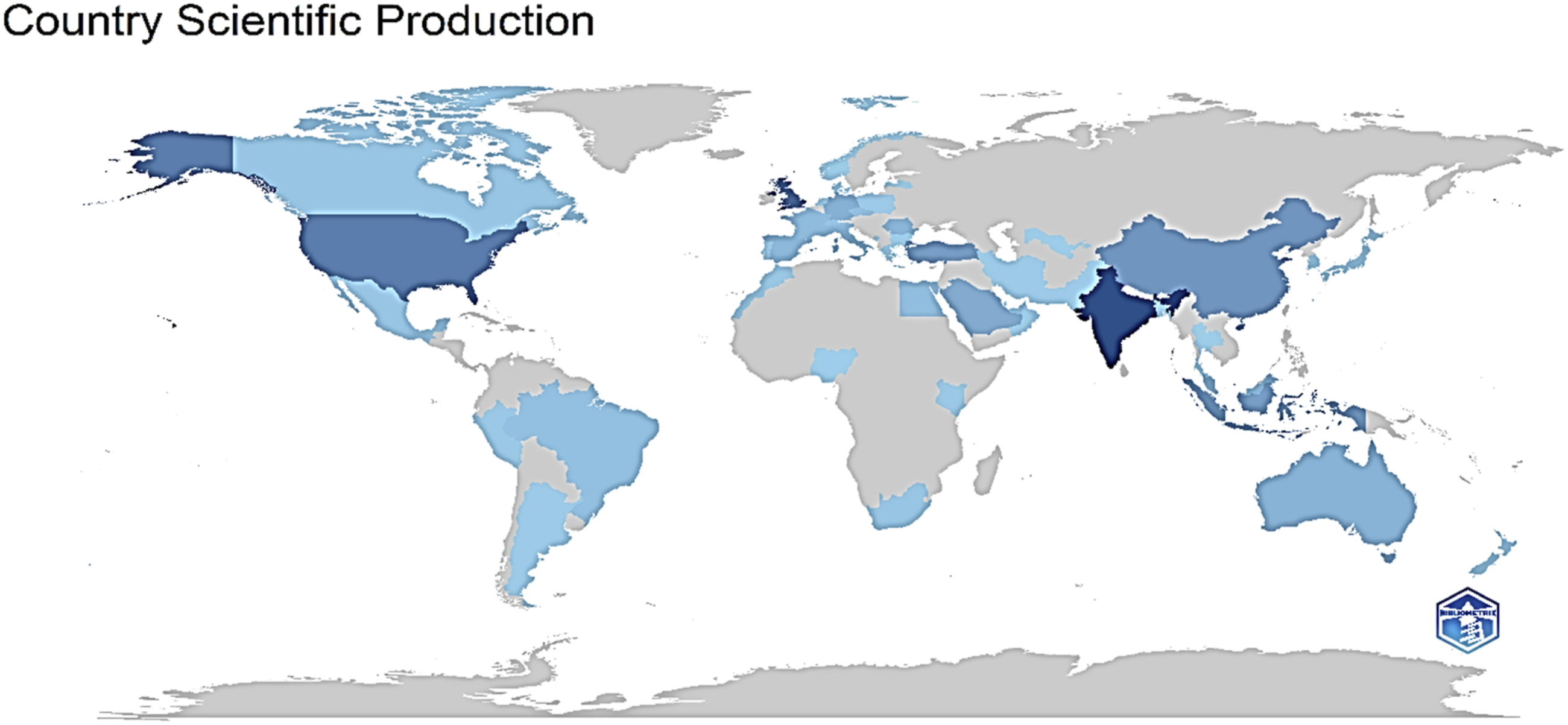
The second level of the participating institutions include the University of Johannesburg, King Abdulaziz University, the National Institute of Technology Warangal, the University of Newcastle Australia, the Universitat Politècnica de València, Yildiz Technical University, and Paderborn University. These institutions have released two articles in the field. The distribution of research output presented below demonstrates the numerous institutions that have embraced this relatively new subject area, with Wuhan Business University taking the lead.
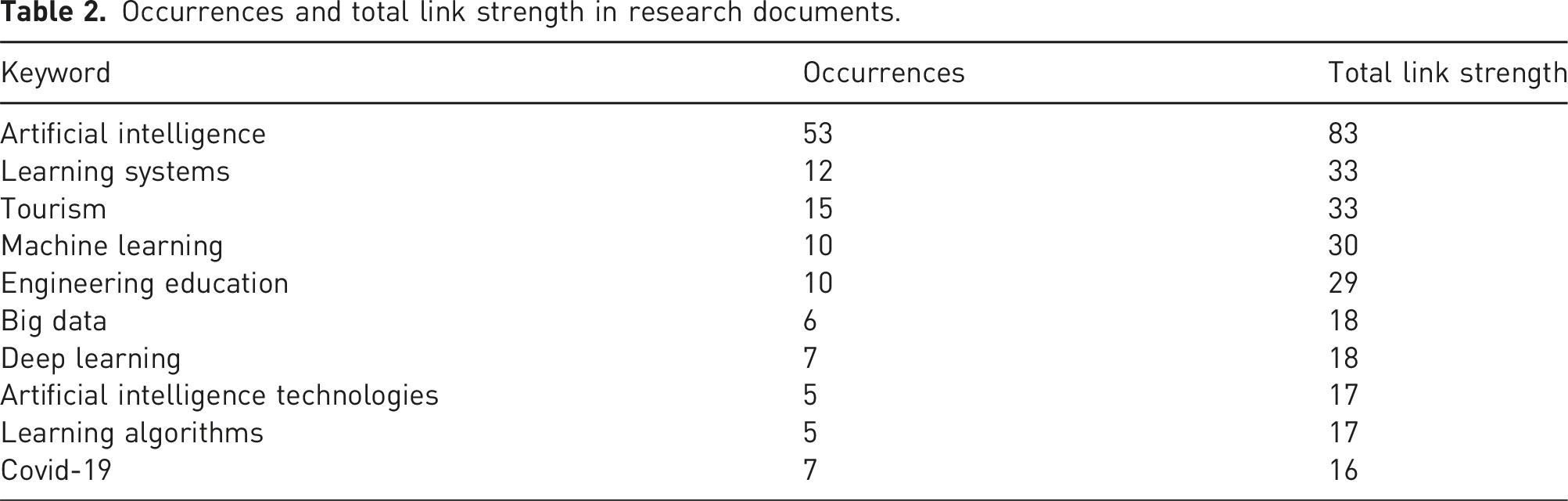
The graph given in Figure 5 provides a detailed overview of the keyword density analysis of studies on the use of ChatGPT in the education of T&H. A network visualization created by VOSviewer and Biblioshiny is presented, explaining the connections between the keywords often used in the visualization, where the circles represent the keywords, and the size of the circle is proportional to the number of articles using the term. Larger circles with more intense means that several words are highly associated with other terms and have a high number of instances. Thus, the keyword “artificial intelligence,” characterized by 53 occurrences and a total link value 83, is considered the most important keyword. The connecting lines are made thicker in accordance with the co-occurrence relationship in such a way that a thick line depicts greater frequency of co-occurrence between the terms related to it in the published literature. Distinct clusters emerge, grouping keywords based on their co-occurrence patterns, such as a cluster around machine learning models (“machine learning”: 10 occurrences, 30 total link strength; “deep learning”: seven occurrences, 18 total link strength; “learning systems”: 12 occurrences, 33 total link strength) and another related to industry-specific themes (“tourism”: 15 occurrences, 33 total link strength; “service industry”: five occurrences, 12 total link strength; “digital transformation”: six occurrences, 11 total link strength). Top 10 educational institutions in research on ChatGPT and T&H education.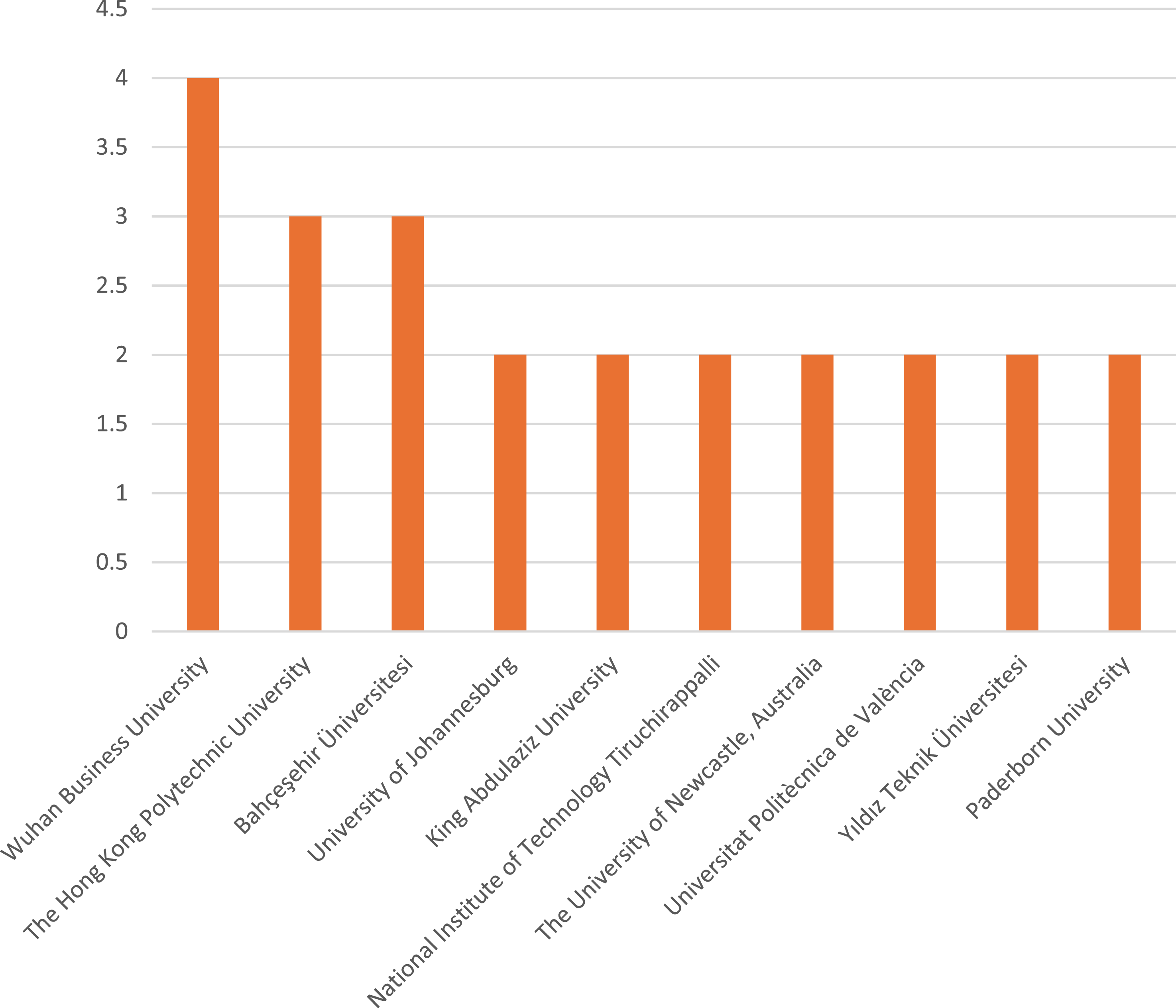
Occurrences and total link strength in research documents.
Furthermore, Figure 6 provides a visual representation of a three-column network graph that displays the relationships between keywords from three distinct fields or datasets: Each SDT record must include one or more AB_TM (abstract terms), DE (descriptors), and TI_TM (title terms). With the help of the worked-out connections between these columns, the interconnections between various concepts can be revealed via the flow of connections on the graph which the overlapping and distinction of research locations can be viewed (Figure 7). Co-occurrence key words. Interconnections between abstract terms, descriptors, and title terms in research.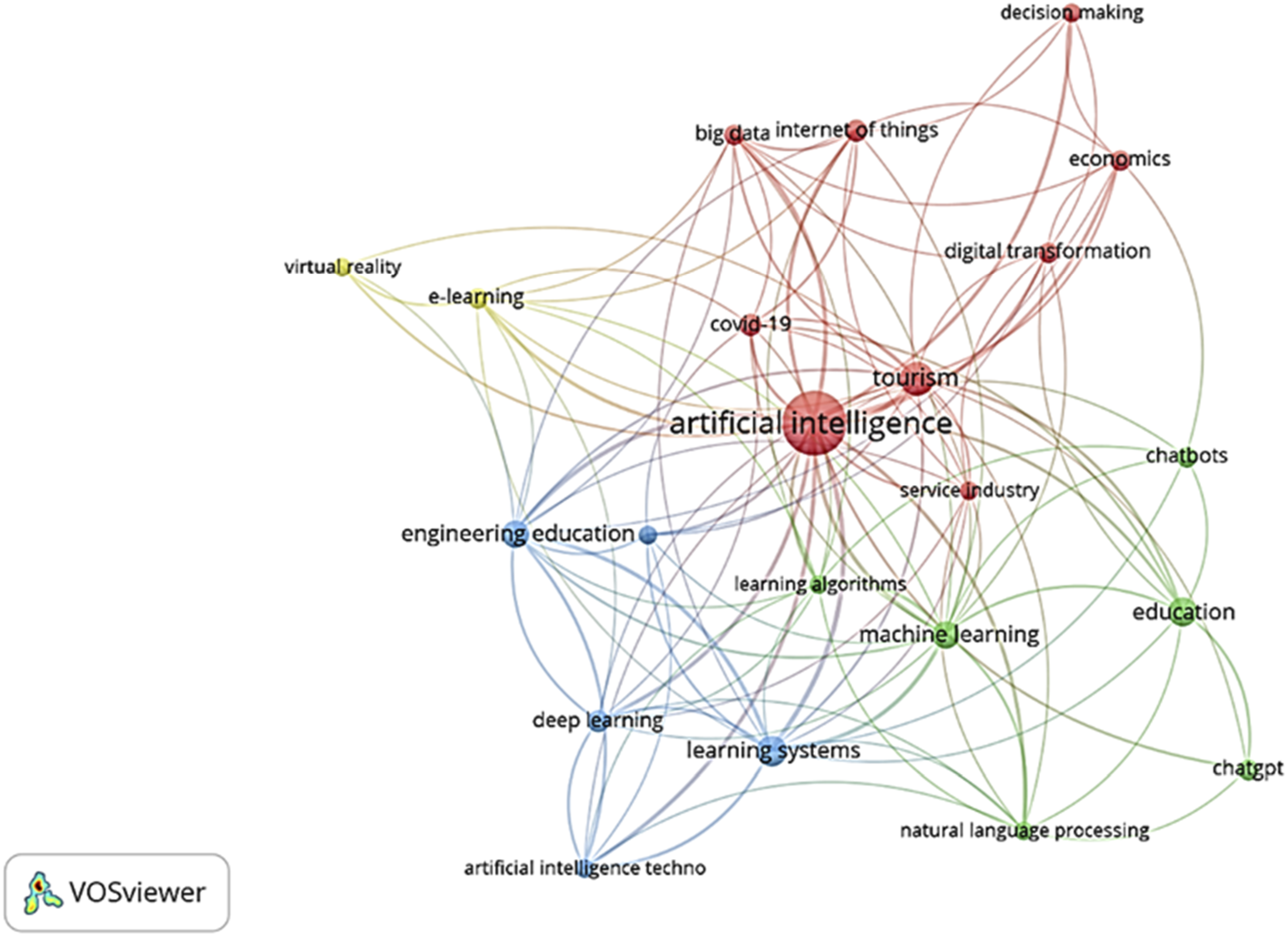
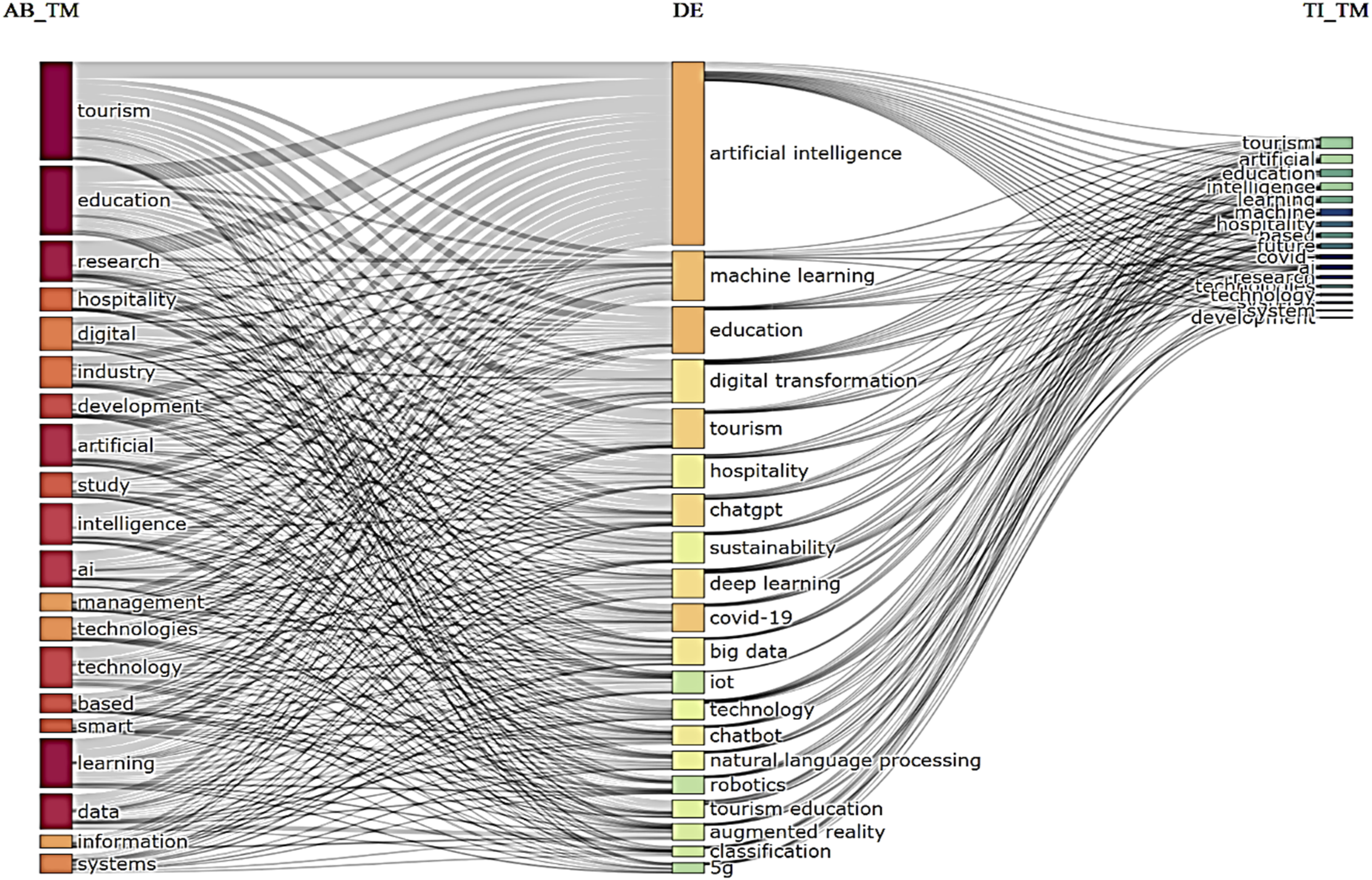
The left column (AB_TM) shows terms that have been derived from the abstracts of the documents that have been considered for analysis. These are “Tourism,” “Education,” “Hospitality,” and “Research,” which show that these key theme words are most frequently featured in the abstracts. It is with regard to these terms, such as “digital,” “artificial,” and “intelligence,” that affirm the technological focus in these studies.
Labeling in the middle column (DE) groups out the themes or categories that can be derived out of the data collected. The most frequent keywords in this part are “artificial intelligence,” “machine learning,” “education,” and “digital transformation,” intersections between abstracts and title words. Such central alignment is to convey the spirit of the studies on AI and machine learning in education, tourism, and digital contexts.
Finally, the right column (TI_TM) has a title map, which includes keywords extracted from the title of the document. Even though some terms are written in plural and others in singular, we can clearly see the fact that all abstracts, descriptors, and titles focus on the same research areas indicated by terms like “tourism,” “artificial intelligence,” “education,” and “hospitality.” The other emerging words are “future,” “chatbots,” and “technology development” and represent fields that are still evolving.
Q2: What are the benefits and challenges of using ChatGPT in teaching T&H?
ChatGPT as a tool embedded in T&H education provides significant revolutionary prospects in improving the teaching-learning practices. These include, but are not limited to, improving writing, research, and problem-solving abilities (Altun et al., 2024). This correlates with the requirements of the travel and accommodation industry, as most of the calls are for critical thinking and innovation. Furthermore, it assists students to synthesize text that is human-like and understanding the complexity of the dynamics of tourism challenges as well (Ülkü, 2023).
The fact that the tool can be integrated with the overall learning mechanism makes it capable of responding to individual students’ learning abilities, hence increasing student diversity. This flexibility can increase the interaction of students with the materials, which is a characteristic that is more beneficial to tuition (Zhu et al., 2024). Moreover, ChatGPT can influence the learning outcomes of people by offering instant feedback, designing lessons, and carrying out assignments (Ray, 2024). Hospitality education emphasizes authentic practical experiences that reflect realistic business settings, and ChatGPT offers students practical experience by means of interactive content and role-play schemes (Cloete and Ndlovu, 2023).
Although ChatGPT has been in the spotlight as a solution of its kind, it can also be applied to provoke interaction and develop digital competencies (see the table in Appendix A). For example, it develops learners’ skills in sectors such as digital marketing, data analysis, and report generation, which are crucial in contemporary tourism learning (Dalgıç et al., 2024). It enables timely information to the student regarding the industry, which makes them updated on the current trends (Ivanov and Soliman, 2023). Third, ChatGPT strengthens accessibility and multilingualism, which advance opportunities for studying and create conditions for learners to develop the global sense and cultural sensitivity necessary required by modern professional positions in the field (Dalgıç et al., 2024; Girgen & Kole, 2024).
Analysing the benefits reported across the literature (Appendix A), the benefits attained by an artificial intelligence in terms of the flexibility and creativity are similar to those of instructors. Regarding curriculum, it is used for the generation of interactive resources and lessons and in assessment. It helps instructors overcome geographical limitations, making it highly effective for online courses and blended learning environments (Galon, 2024; Zhu et al., 2024). By automating routine tasks, ChatGPT enhances the role of instructors as facilitators, allowing them to focus on delivering higher-order skills and fostering critical thinking (Fayed and Fathy, 2022; Nimri and Yang, 2024).
According to Figure 8, ChatGPT offers more than just lesson plans for subscribing teachers in the field of T&H; it also provides resources that address real-world tourism contexts and challenges. For instance, it models the conversations between the customers and the service staff, generates marketing materials for the tourism industry, and provides tools for conducting questionnaires as well as developing and enhancing theoretical models in the hospitality field (Ghazi et al., 2025; Ivanov and Soliman, 2023; Zhu et al., 2024). Benefits of using ChatGPT in teaching T&H.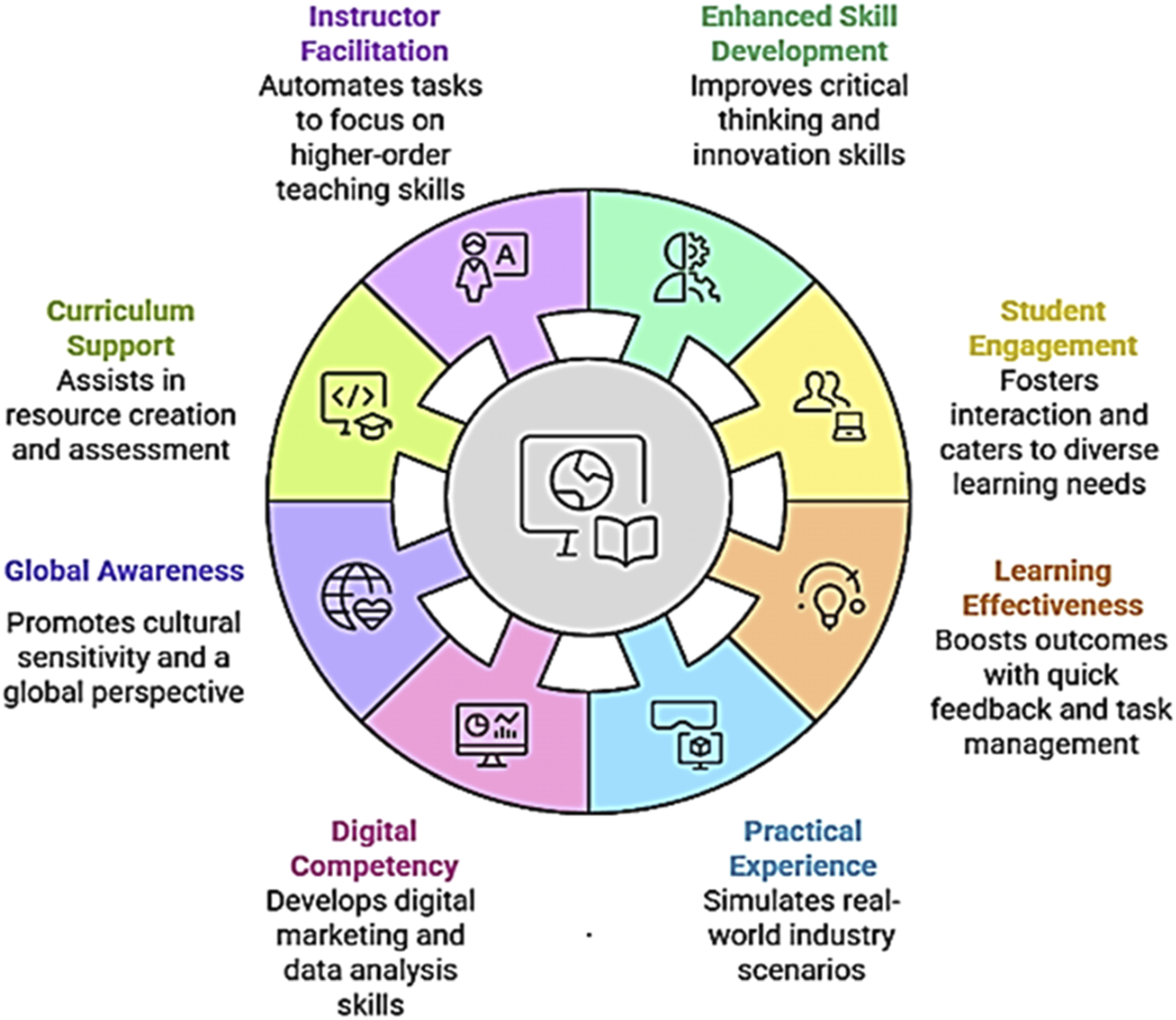
Some of the challenges that are likely to be faced when incorporating ChatGPT into the T&H education (see Figure 9). The first issue is the credibility of the data inputted into the system and the accuracy of the AI-generated content. The information generated by ChatGPT may be outdated, incorrect, or irrelevant to a specific topic, and it may lack sufficient detail and critical analysis (Ülkü, 2023). This poses a challenge for educators, or any individuals tasked with delivering information to learners, as the information provided must be accurate and up-to-date (Elshaer, Azazz, Fayyad, Aljoghaiman, et al., 2025). In addition, plagiarism, professorial authorship, and copying of copyrighted work are also scientific problems that threaten academic integrity (Dogru et al., 2024; El-Akhras et al., 2024). Excessive reliance on AI tools can hinder students’ development of critical thinking skills, which are essential for generating original ideas and conducting thorough analyses (Cloete and Ndlovu, 2023; Dogru et al., 2024; El-Akhras et al., 2024). Challenges of using ChatGPT in teaching T& H.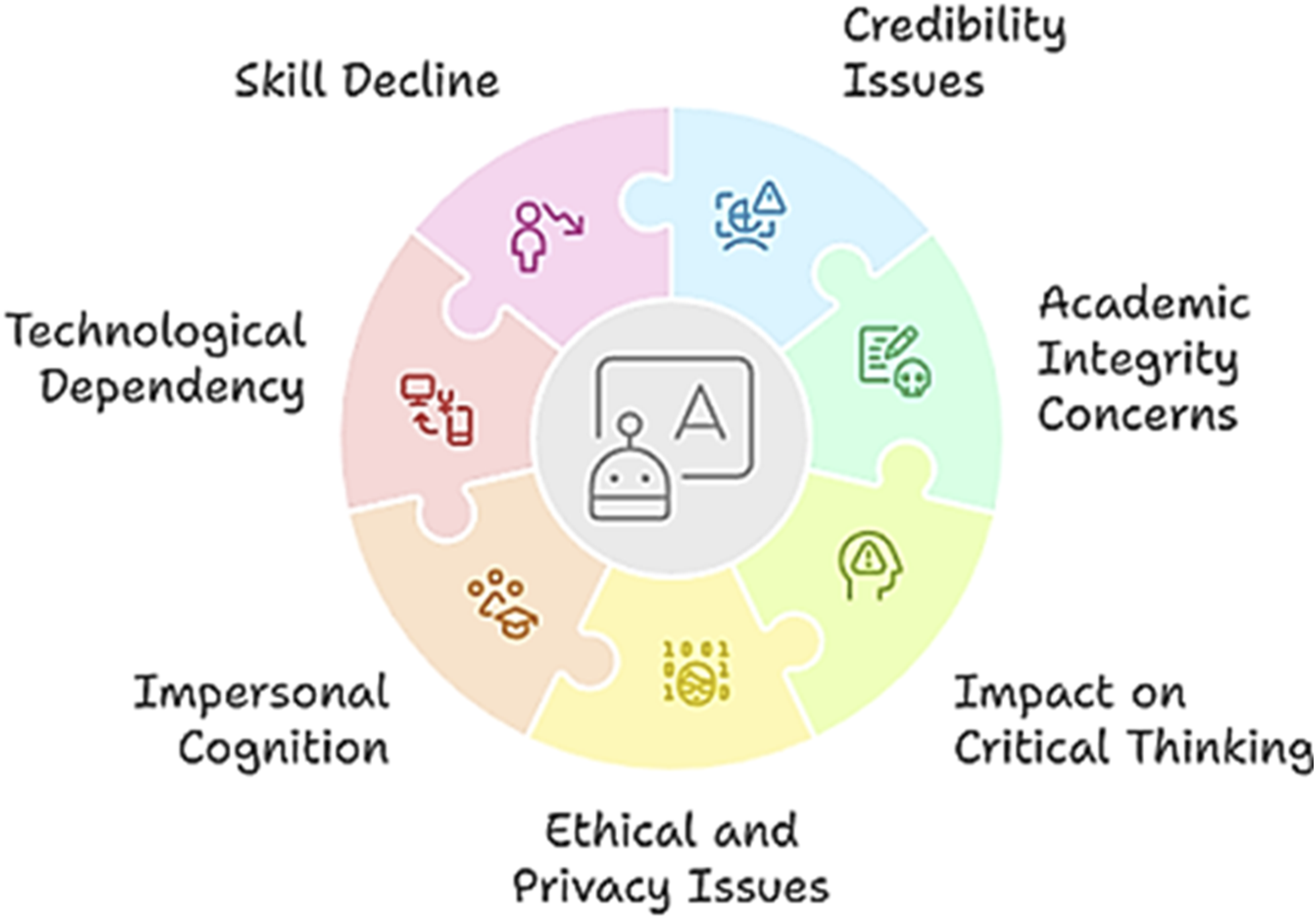
Ethical factors are also considered further here. Recommendations on data privacy and possible bias in the answers give by the AI and the digital divide are wide-spread (Abou-Shouk et al., 2024; Altun et al., 2024; Dogru et al., 2024; Ray, 2024; Zhang et al., 2024). Also, it is significant to mention that cognition that is impersonal and detached influences its performance in particular learning settings (Altinay et al., 2024). Finally, the constantly changing nature of AI technology suggests that the field must remain up to date with changes, and educators need to update professionally continually for them to be able to incorporate the tools into their practice appropriately and solve new problems (Girgen & Kole, 2024; Ray, 2024). There is also a problem of dependence on technology and another issue of decline in students’ skills due to over-reliance on the AI for the skills they should develop (Bahreini et al., 2023; Girgen & Kole, 2024).
Q3: What is the current landscape of ChatGPT applications in T&H education, and what are the key emerging trends and future research priorities arising from these practices?
The broader contribution of ChatGPT in the teaching and learning context of T&H education enhances the conventional teaching and learning practices. It is capable of generating various materials that involve teaching and learning, customized learning materials, practice exercises, quizzes, customer relationship management simulations, and others (Fathy and Zidan, 2017; Iskender, 2023; Ivanov and Soliman, 2023). This allows the direct addressing of such individual needs of learners and their learning styles, hence increasing their interaction and understanding. According to Ray (2024), the use of ChatGPT can also help streamline administrative courses such as marking, which will further enable educators to engage in other activities that are more interactive in nature.
Apart from content creation, ChatGPT provides engaging interactions for learners. The teaching avatars, research aids, language and culture tutors, entrepreneurship aids, and student well-being aids have a potential to be made using them (Galon, 2024). The AI can also execute realistic practices that students may face in the real environment, such as customer service interaction, so students get a safe environment to practice (Bahreini et al., 2023; Xu et al., 2022). Moreover, as a source of information, ChatGPT can be used for the trend’s identification, data gathering and assessment, as well as for enhancing students’ preparation for careers, emphasizing the most contemporary practices and emerging trends in the given field (Dogru et al., 2024; Elkhwesky, El Manzani et al., 2024; Gau et al., 2024; Ray, 2024).
ChatGPT application is relevant in the subsector of the T&H industry. For example, in sports tourism, it can help in game outcomes analyses, blogging, conducting legal analysis, and evaluating the risks (Keiper, 2023). It can also promote data literacy skills when used to teach programming languages such as Python and R for statistical analysis (Keiper, 2023). In other areas, ChatGPT can be employed to build cultural sensitivity, which includes teaching the students about cultures that they would see in school, and how they can establish purposeful interactions in multicultural classrooms (Alfirević et al., 2024; Keiper, 2023). This makes it possible for the design of more specific training courses in the continuously growing career paths in the market (Chan, 2024). Finally, ChatGPT also has the potential to contribute to the continuous education process and professional development through offering access to the established and constant training materials and knowledge-sharing among the individuals working in the field (Fathy, 2021; Guden and Safaeimanesh, 2024) (Figure 10). Applications of ChatGPT in teaching T& H.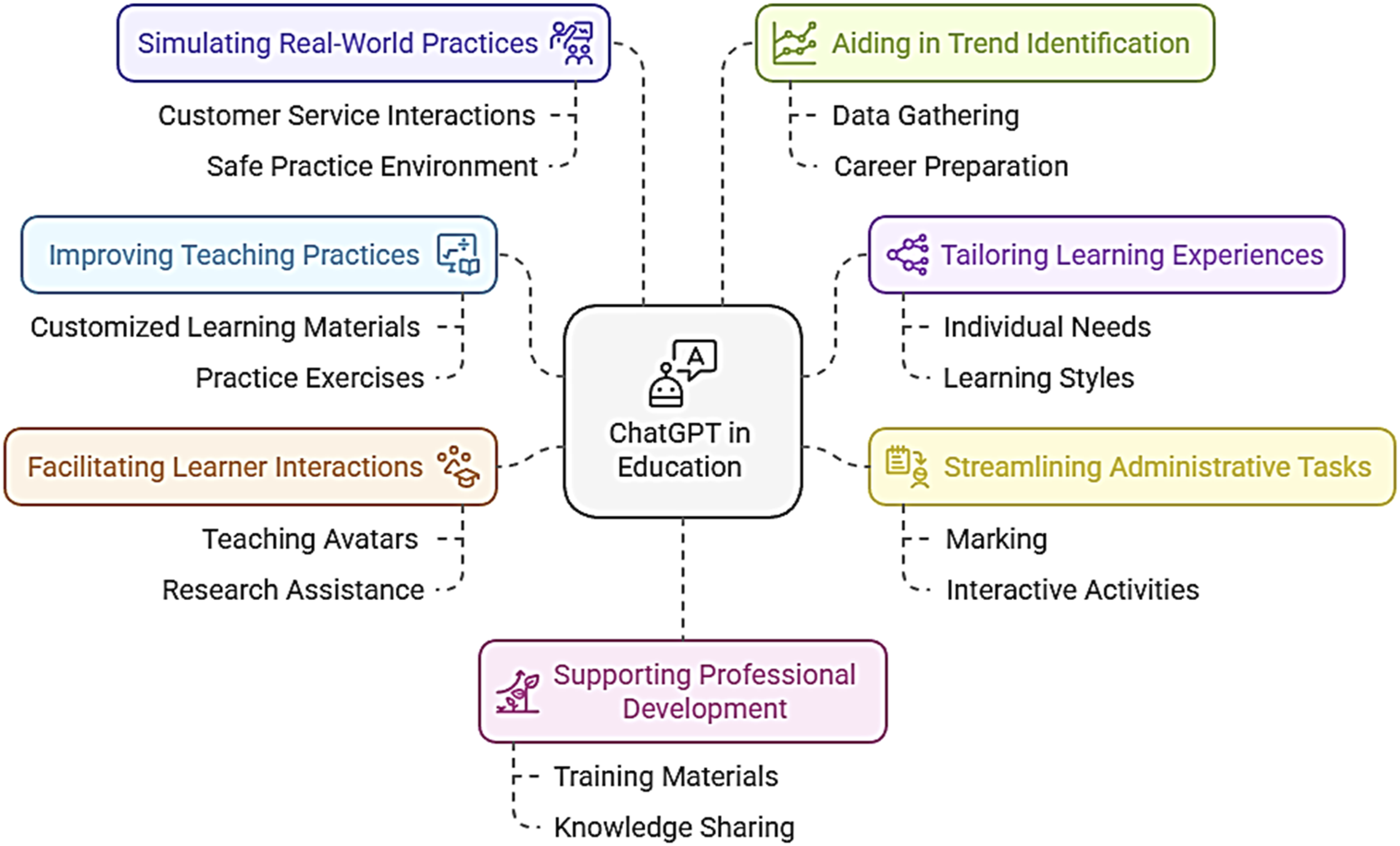
There are several avenues likely to develop in the future and some research opportunities currently impacting the application of ChatGPT in T&H education. One trend is that more emphasis is given to the concept of individual learning and the need to address learning preferences and challenges within a learner’s profile. This includes using ChatGPT to develop learning management systems, feedback-giving tools, and learning material (Galon, 2024; Țală et al., 2024). The research that aims to analyze the efficacy of these customized strategies in improving learning outcomes and the motivation of students to learn should be conducted in the future (Çalişkan and Sevim, 2023).
Another significant current and future trend that can be stated is the use of ChatGPT in other learning conditions that are related to VR/AR (Galon, 2024; Girgen & Kole, 2024). This imply assigning ChatGPT to create virtual guides, recreating hospitality contexts with interactive simulations, or integrating language training programs that use VR/AR. There is need to conduct research and development to investigate the teaching-learning implications of these integrated technologies and achievement.
Further research can be done to take into consideration the possible ethical issues of ChatGPT application in the educational field which include bias, data privacy, and knowledge integrity concerns, as indicated by Altun et al. (2024), Zhang et al. (2024), Ray (2024), and Dogru et al. (2024). It is therefore important to characterize guidelines on the utilization of AI in risk mitigation in learning. As with all things, it leaves learners wondering whether they have improved their thinking ability, and in this case, how ChatGPT may or may not have affected it. Some works in this area show that the constant use of such tools may pose a limitation to the growth of critical thinking among learners (El-Akhras et al., 2024). Yet, there is also literature that views the application of ChatGPT, such as one, as a possibility to aid critical thinking by providing numerous perspectives and aids the students in creating deeper analyses.
Finally, identifying the potential of ChatGPT in continuous learning and professional development is also one of the suggestions for the future research agenda (Girgen & Kole, 2024). It also encompasses discussing how the utilization of ChatGPT may increase the provision of continuous learning to working professionals and strengthen the knowledge translation process, and how the introduction of the technology will enable the scholars to transfer to the practice environment. Further research is also necessary to explore the existent and novel opportunities in using, as well as the future impacts of ChatGPT for T&H education. Analysing the potential cultural bias about using ChatGPT and examining the educational equity of large language models among diverse students (Alfirević et al., 2024; Keiper et al., 2023) are also the significant research questions in that context (Fathy and Fouad, 2022).
Discussion
For research question 1, the bibliometric analysis indicates that application of ChatGPT in T&H education has been growing significantly over the last years. Research on ChatGPT usage in T&H education increased dramatically starting in 2020, with a rapid growth trend leading to extensive publication numbers in 2023 and 2024 (see Figure 2). The studies regarding the implementation of ChatGPT into education are still increasing (Sajja et al., 2023; Zawacki-Richter et al., 2019) and growing interest in ChatGPT as an AI tool (Adeshola and Adepoju, 2024; Fergus et al., 2023). Studies indicate that in the future, the number of studies on the uses and capabilities of ChatGPT in the field of T&H education will increase (Carvalho & Ivanov, 2024).
Research about ChatGPT’s applications in T&H education sharply increased after 2020 due to several basic reasons. The quick progress in artificial intelligence (AI) technologies created substantial changes across multiple sectors, which includes educational institutions. Applications of ChatGPT created by OpenAI capture attention due to their ability to generate natural language response, which enables educators to use them to develop better learning approaches in T&H fields (Sokmen et al., 2024).
Furthermore, the constantly evolving nature of T&H creates an industry demand for employees with excellent problem-solving abilities and communication skills (Elshaer, Azazz, Fayyad, et al., 2024; Fayed and Fathy, 2022). The integration of ChatGPT into educational curricula allows students to build competencies through their engagements with AI-driven simulations in case studies scenarios (Schönberger, 2024). Research on the pedagogical utility of ChatGPT as a learning instrument emerged after universities recognized the industry’s demands.
The evolution of artificial intelligence has raised many concerns about ethics and educational effectiveness and practical standards within educational settings. The rising interest in AI tools for T&H education as prompted new research to be conducted regarding the impact of ChatGPT and others regarding the use of AI in T&H education. Researchers focus on discovering how these technologies boost educational results while making teaching more tailored and training students for industry transformation (Fathy et al., 2024a; Zhao et al., 2023).
Research findings show that India leads the world in producing studies in T&H education, followed by the United States and China, then Turkey, Germany, and Saudi Arabia (see Figure 3). Several key elements explain why India maintains its leading position for T&H education research productions. The tourism industry in India has demonstrated remarkable growth by providing valuable economic benefits to the national economy (Villanthenkodath et al., 2022). The tourism sector produced INR6.4 trillion in revenue during 2012 while making up 6.6% of India’s GDP and employing 39.5 million people, who amounted to 7.7% of total employment (Jaswal, 2014). The expansion has generated scholarly interest, which leads the field to produce more research studies. Such results support the necessity to study the impact of the cultural variations that might affect the acceptance and use of this technology in various areas.
Wuhan Business University stands out as the most active institution producing publications in this field, followed by The Hong Kong Polytechnic University and Bahçeşehir University. These institutions can combine expertise through collaborative initiatives that contribute to advancing this field. Previous studies have examined educational technology across broader domains, while our study gives particular insights to institutions that practice ChatGPT in T&H education actively.
The School of Tourism and Hotel Management at WBU was established in 1984 while maintaining its leadership through departments for Tourism Management and Hospitality Management (Shehawy, 2022). Studies concerning the integrating advanced technologies, including ChatGPT, into T&H education receives support due to WBU’s institutional commitment to these disciplines. The Hong Kong Polytechnic University shows noteworthy research achievements in this field. Studies in this institution involve these aspects of understanding how travellers intend to utilize ChatGPT in exploring factors that govern their behaviour in choice-making. The university demonstrates its dedication to AI investigation in T&H by studying user responses to ChatGPT’s answer format during trip planning (Han et al., 2025).
Keyword analysis revealed that the terms “artificial intelligence,” “learning systems,” and “machine learning,” along with “tourism” and “digital transformation,” were the most common. The analysis reveals strong evidence of research interest in AI and its underlying technologies in the T&H industries. The growing attention on “digital transformation” is supported by recent academic findings on technological changes in the tourism sector (Buhalis and Leung, 2018; Elshaer, Alyahya, et al., 2024; Neuhofer et al., 2015). The integrated relationships among these key terms demonstrate a robust interdisciplinary research approach that combines skills from computer science, education, and tourism/hospitality management. The research trends can be better understood by applying the Technology Acceptance Model (TAM) and the Diffusion of Innovations Theory (Rogers, 2003). TAM proposes that perceived usefulness and ease of use as facilitating technology use and adoption (Davis, 1989), while the Diffusion of Innovations Theory describes how innovative technologies propagate (Rogers, 2003). The keyword analysis expands on existing research on keyword evaluation in educational technology and tourism science by identifying specific ChatGPT concepts and themes that emerge in this educational field (Shawky et al., 2019).
For research question 2, studies have shown that the application of ChatGPT in educational settings specializing in T&H has multiple opportunities, as well as implementation barriers. A key advantage highlighted by research is that ChatGPT provides personalized learning support for each student based on their needs, preferences, and learning abilities (Chen et al., 2020). ChatGPT has an opportunity to adjust content towards individual students’ needs and diverse learning styles (Adeshola and Adepoju, 2024; Fergus et al., 2023; Sajja et al., 2023).
Students enjoy enhanced learning experiences through enhanced engagement with course content and active participation thanks to ChatGPT’s capabilities. The technical capability to recreate real-life settings and interactions between customers or potential travellers and service providers has turned out to be one of the significant strengths of ChatGPT (Carvalho & Ivanov, 2024; Ivanov and Soliman, 2023). Experiential learning and practical skills development, which form central elements of T&H curricula, find support from the functions of ChatGPT (Gursoy et al., 2023). The potential of ChatGPT to facilitate the language education and international communication practice (Alfirević et al., 2024; Keiper, 2023) received positive feedback as the T&H industry functions on a global scale (Deardorff, 2006).
The discussion has revealed several significant obstacles that emerged during our investigation. According to Ülk neu (2023), Students regularly expressed doubts about the reliability and accuracy of information provided by ChatGPT. Concerns about misinformation and biased content generated by AI align with broader observations noted by Bender et al. (2021). The risk of academic integrity, including plagiarism, was often a common concern among educators and students (Dogru et al., 2024; El-Akhras et al., 2024). Natural development of critical thinking skills faces barriers among professionals due to their tendency to depend excessively on ChatGPT (Cloete and Ndlovu, 2023; Dogru et al., 2024; El-Akhras et al., 2024).
Ethical considerations have proven to be among the most significant obstacles to address. The vulnerability of information security and the bias of AI, in addition to the cultural and backward description of ChatGPT results, have posed serious problems (Abou-Shouk et al., 2024; Altun et al., 2024; Dogru et al., 2024; Ray, 2024; Zhang et al., 2024). A proper perspective on ethical issues in the use of ChatGPT in T&H education involves extensive consideration to ethical issues that mirror wider societal examinations of AI ethics (Floridi, 2021). The studies included concerns regarding the digital divide and the fact that everyone should have access to technology to an equal measure.
Several potential educational applications of ChatGPT have emerged through analysis, which progressed past basic query handling and text-writing capabilities. Data showed a major group of applications focused on content creation. With ChatGPT, researchers were able to formulate specialized learning tools by generating practice resources and quiz packs and case scenarios designed to T&H areas (Iskender, 2023; Ivanov and Soliman, 2023). The efficiency of AI content generation for educational materials emerges specifically tailored for T&H education, according to Zawacki-Richter et al. (2019). ChatGPT enables the creation of scenarios that incorporate different cultural settings as well as tourism management ethical situations and authentic customer service problems.
Interactive learning activities and simulations served as another major application area for ChatGPT technology. Researchers investigated ChatGPT to develop virtual customers who function as “virtual customers” for role-play activities, which help students gain practice in problem-solving and customer service communication within secure simulated scenarios (Bahreini et al., 2023; Xu et al., 2022). The application demonstrates significant relevance to T&H education since both sectors are characterized by strong emphasis on training in practical skills using experiential learning (Benckendorff et al., 2019; Kusluvan et al., 2010). The integration of ChatGPT with VR alongside AR technology showed great promise for creating detailed T&H simulations, according to Galon (2024) and Girgen and Kole (2024).
Our analysis demonstrated that ChatGPT can be used as an aid to educational professionals not just as a tool to use among students. The tool is utilized, according to research findings, for creating lesson plans, assessment rubrics, and delivering automated feedback to student assignments (Ray, 2024), which corresponds to broader trends in artificial intelligence-aided education (Wang et al., 2023). The time saved by this tool could enable educators to provide personalized support to students and dedicate themselves to complex teaching activities (Nimri and Yang, 2024).
The study demonstrated how ChatGPT enables support for student research alongside career development preparation. ChatGPT can be used as a helpful tool in literature review support and qualitative data analysis while assisting in industry trend detection (Dogru et al., 2024; Elkhwesky, El Manzani et al., 2024; Gau et al., 2024). The widespread adoption of AI-powered research tools represents an emerging trend across academic fields. Sport tourism applications of ChatGPT involve data analysis of games to generate reports and blog content (Keiper, 2023). Students can develop cultural sensitivity through ChatGPT by learning about various school environments (Alfirević et al., 2024; Keiper, 2023).
The literature review revealed important future directions and scholarly investigations regarding the integration of ChatGPT in T&H education. Research has shown that personalized learning systems based on AI technology will continue to advance through development and refinement. According to project researchers, future studies should focus on developing the most sophisticated algorithms aimed at identifying the personal needs and preferences of students, as well as their career goals in the field of T&H (Galon, 2024; Țală et al., 2024). The widespread adoption of AI-driven personalization in education (Chen et al., 2020) demonstrates why focused research must address specific needs of this educational field. Research should explore how ChatGPT technology can help create personal educational plans to students who intend to study in different sub-sectors of hospitality and tourism including hotel management and sustainable tourism.
The integration of ChatGPT with emerging technologies served as a major trend as researchers explored VR and AR applications. Studies found that educators can use ChatGPT alongside VR/AR models to develop realistic interactive education environments (Galon, 2024; Girgen & Kole, 2024). With the help of virtual tourism destination simulations, students develop communication and problem-solving skills when they are asked to interact with virtual ChatGPT-based tourists. Awareness regarding VR/AR experiential learning in education continues to grow, which demonstrates the future potential to develop sophisticated virtual learning spaces in T&H.
Research should focus on investigating the ethical challenges that emerge from using ChatGPT in educational contexts. According to the studies reviewed in the current literature (Abou-Shouk et al., 2024; Altun et al., 2024; Dogru et al., 2024; Ray, 2024; Zhang et al., 2024), researchers highlight the necessity to establish precise guidelines with best practices that will solve data privacy issues as well as algorithmic bias and stereotypical content propagation through ChatGPT. The demand for responsible AI deployment in all sectors finds strong synergy with Floridi (2021) recommendations. The study implications on future research directions are to come up with systems that would detect and reduce cultural bias in ChatGPT responses and give regards to the destinations, and tourism activities and cultures. Research must discover the ways cultural heritage influences educational results among students (Bakr et al., 2025).
Multiple studies demonstrated that research is necessary to understand how ChatGPT affects students’ critical thinking abilities (Cloete and Ndlovu, 2023; Dogru et al., 2024; El-Akhras et al., 2024). Research provides mixed results regarding the possibility of ChatGPT affecting critical thinking that are influenced by the responsible use of it (i.e., students analyze and critique the AI-generated content (Neophytou et al., 2025). Empirical research studies need to examine how ChatGPT affects student critical thinking in T&H educational settings. Continuous learning and professional development benefits emerged as one of the final significant applications of ChatGPT (Girgen & Kole, 2024). This would help the professionals to improve their translation abilities.
Conclusion
In this study, a systematic literature review was used to conduct a bibliometric analysis of ChatGPT used in T&H education between 2018 and 2024. The main goal was to collect insights about current research trends and investigate practical applications and reported benefits and challenges besides identifying future opportunities. The interest in the research field has been growing rapidly since 2020 with certain geographic concentrations and three most prominent research topics that concentrate on AI along with learning systems and digital transformation generation. This review combined evidence to show how ChatGPT can enhance personalized learning and practical skills in T&H, yet also demonstrated major issues about accurate information and academic ethics, as well as excessive dependency and ethical responsibility. The practical application of ChatGPT include content creation, interactive practice, and emerging trends suggest its future use in immersive technologies alongside growing demands in the scope of ethical considerations.
The study serves as the first systematic review focusing on the theme of how institutions incorporate ChatGPT in T&H education. The study provides value by creating a perception of such educational environment through stakeholder identification and prominent themes analysis while exploring opportunities and challenges delineated within this unique academic context. Although the study delivers meaningful results, researchers should be aware of its restrictions regarding English Scopus-indexed sources in addition to the omission of grey literature content. The review shows the potential of ChatGPT to disrupt T&H education, yet it is imperative that educators, along with their institutions and researchers, approach the assessment of the tool in a considered manner and develop particular pedagogical approaches to employ it in a productive and ethical way.
Practical implications and educational policy implications
Numerous practical applications emerge from the synthesized data, highlighting the transformative potential of ChatGPT in T&H education when implemented effectively. Beyond time management enhancements, the tool offers significant benefits to educators, enabling the creation of targeted teaching content corresponding to the contemporary challenges in the industry. For instance, ChatGPT can generate case studies addressing issues such as sustainable tourism, hotel crisis management, and ethical tour practices (Elshaer, Azazz, Fayyad, Kooli, et al., 2025; Khalil and Fathy, 2017). From a student perspective, ChatGPT provides meaningful support in developing complex skills such as providing preliminary grammatical comments on written reports, generating example answers to service interactions and aiding in peer assessment rubric creation. Educators should use assignments that allow students to utilize ChatGPT for research while simultaneously asking them to examine the AI-generated information regarding its accuracy and cultural compatibility with tourism markets. This approach builds students’ digital literacy and critical thinking capabilities. Simulations which imitate tasks such as handling guest complaints and negotiating with suppliers give the students vital practical experience.
Learning with ChatGPT will empower students with a strong additional tool capable of providing fast clarification on challenging academic topics, materials or professional terminology when they are not in the classroom. The system helps users generate project ideas along with providing ways to organize their essays as well as acquiring skills in communication aimed toward T&H professionals. The availability of ChatGPT enables students pursuing digital marketing careers (Fathy et al., 2024b), along with data analysts and event planners, to practice their skills by generating drafts of social media content, interpreting data reports, and developing preliminary event scheduling modules (Fathy and Zidan, 2017).
Responsible use stands as the most important outcome from this analysis. Education should guide their students to use ChatGPT as a collaborative tool rather than allowing it to take the place of their independent efforts. Effective use of ChatGPT require students to master proper prompts, verify input against trustworthy industry sources while respecting ethical restrictions on AI work submission, and utilize the platform to strengthen their analytical skills and creative abilities. Educational institutions must adopt training programs for future industrially related AI tasks since it will be essential to become proficient in the job market.
The widespread nature and fast-changing dynamics of ChatGPT demand institutions to create thorough, future-oriented policies for regulation. Educational institutions should develop elaborate guidelines to formulate subtle regulations involving AI since broad rules alone are inadequate. The new policies should establish clear boundaries for acceptable and unacceptable AI use during different examination procedures, together with requirements for student clarity about AI usage (might include a declaration of openly used AI) and structured disciplinary practices for violations. Policies that only employ punishments to enforce guidelines will likely fail ensuring the appropriate engagement of AI, and therefore, it needs to incorporate educational programs that can help to establish ethical AI practices.
Teaching staff development is a key policy issue. AI integration at educational institutions remains ineffective when educators do not receive proper investments. Educational institutions should implement compulsory ongoing training that covers both AI technical capabilities and essential teaching approaches to ensure the highest T&H student achievements. Education professionals require training to develop their ability to create tests resistant to AI, along with developing basic AI comprehension and hosting ethical dialogues and learning methods appropriate for AI-enhanced classrooms. With AI implementation in higher educational institutions, educators require essential support in the form of resources coupled with the best practice sharing platforms and institutional recognition schemes for pedagogical innovations involving AI technology.
Existing curriculum directions require a profound update along with the assessment policies. AI and its potential, as well as limitations and ethical considerations concerning the use of tools like ChatGPT, will have to become a part of core competencies in T&H programs. Educational Institutions need official curriculum review systems to properly implement these abilities into their programs. Assessment policies need immediate implementation of methods that surpass traditional essay and examination systems. Unique learning skills such as critical analysis, creativity and problem-solving, and collaborative abilities can be appropriately evaluated through authentic assessments including project-based learning, portfolios, presentations, in-class activities, and performance-based tasks (Fouad et al., 2025). The institution should establish policies that assist educators in assessment design and grading scale adjustments to recognize both process work and critical reflection and originality in addition to final outcomes (Salem, Fathy, Fouad, et al., 2025).
The implementation of final policies should focus on three main areas, ethics together with equity and infrastructure enhancement. Institutions require established ethical protocols to monitor AI application in education while remaining cautious of data privacy alongside aspects of algorithmic bias and transparency. Recent policies need to contain proactive measures that prevent AI from increasing existing digital inequalities. To ensure that AI is implemented successfully, it is crucial to provide all students with full accessibility that integrates institutional licensing of tools with other hardware and Internet access with the fundamental training in the digital environment (Khalil and Fathy, 2017). Resource allocation policies should offer support to such initiatives since AI literacy training and ethical implementation serve fundamental requirements for protecting the future of T&H education.
Limitations and directions for further studies
The research study delivers important insights about ChatGPT adoption in T&H education with certain critical limitations in the scope. Published literature researched in languages other than English and material found in grey literature, as well as materials indexed beyond Scopus, may not have been captured in this study, resulting in possible selection bias. The findings based on the early adoption stage of generative AI reflect the specific capabilities and applications of ChatGPT, which will further evolve rapidly. Further comprehensive research on this technological integration should however be kept as a priority to indicate its dynamic nature in the field. Further investigations should aim at following up important avenues that arise out of the current findings within the known constraints. Studies investigating ChatGPT through a multicultural perspective require urgent priority attention to ensure that positive outcomes are universally accessible and minimize bias that affects global tourism markets (Fouad, 2021). Educational research should rely on broader empirical investigation to study the full impact of ChatGPT on students’ critical thinking capacity and important hands-on abilities used in T&H learning programs. The ability to integrate ChatGPT with VR/AR technologies to develop new pedagogical strategies for experiential learning is promising. Future work needs to establish strong ethical practices and operational standards regarding ChatGPT usage for T&H education to resolve academic integrity and data privacy issues.
Supplemental Material
Supplemental Material - Integrating ChatGPT in tourism and hospitality education: A systematic and bibliometric analysis of research trends, applications, and implications
Supplemental Material for Integrating ChatGPT in tourism and hospitality education: A systematic and bibliometric analysis of research trends, applications, and implications by Eslam Ahmed Fathy, Heba Abdel Kerim Youssef Zidan, amira hamdy El Sayed, and Amr Mohamed Fouad in Tourism and Hospitality Research
Footnotes
Declaration of Conflicting interests
The authors declared no potential conflicts of interest with respect to the research, authorship, and/or publication of this article.
Funding
The authors received no financial support for the research, authorship, and/or publication of this article.

Supplemental Material
Supplemental material for this article is available online.
Author Biographies
References
Supplementary Material
Please find the following supplemental material available below.
For Open Access articles published under a Creative Commons License, all supplemental material carries the same license as the article it is associated with.
For non-Open Access articles published, all supplemental material carries a non-exclusive license, and permission requests for re-use of supplemental material or any part of supplemental material shall be sent directly to the copyright owner as specified in the copyright notice associated with the article.
