







Abstract
In these turbulent times, destinations fiercely compete to attract tourists to build, sustain, and grow their market share. Fostering a favorable perception about a destination through the stereotyping process can help the destinations achieve the same. Thus, this study delves into the emerging concept of destination stereotyping by applying social exchange and signaling theories. We aim to propose and examine the model exploring one of its essential drivers, i.e., destination social responsibility (DSR), and its outcome destination brand engagement (DBE). We also study destination reputation as the moderator for the relationships among DSR, destination stereotype, and DBE. Using structural equation modeling, a collected sample of 520 respondents was analyzed. Findings reveal that DSR influences destination stereotypes, i.e., destination warmth, destination competence, and DBE. Further, destination competence emerged as a predictor of DBE. However, counterintuitively, destination warmth failed to affect DBE in the context of Indian destinations. Finally, destination reputation exhibited a moderating effect for all the proposed relationships. Destination marketers need to emphasize on developing socially responsible destinations to drive desirable outcomes including perceived warmth, competence and engagement among travelers.
Keywords
Introduction
With the increase in globalization and competition, consumers are confronted with numerous brands in most product and service categories (Kumar et al., 2023). Consumers tend to follow the stereotyping process to simplify their beliefs and perceptions about these encountered brands (Kolbl et al., 2019), as stereotypes help people process information related to others effectively (Fiske and Taylor, 1991). Stereotyping is described as the process of “categorizing” wherein individuals streamline, organize, and systemize the received information (Vaughan et al., 1981). In social sciences, stereotyping was initially employed to study social communities (Fiske et al., 2002), and its application was later extended to other fields, including brand management (Kervyn et al., 2012) to understand how brands are evaluated from consumers’ perspective (Aaker et al., 2012). Brand stereotype alludes to consumers generalized and oversimplified beliefs about brands as intentional agents (Kervyn et al., 2012; Kolbl et al., 2020). Research suggests that the Stereotype Content Model (SCM) is arguably one of the most widely followed theories of stereotype, with two main dimensions, i.e., warmth and competence (Fiske et al., 2007). The stereotypical judgments of warmth and competence play a significant role in affecting consumers’ perceptions of brands (Aaker et al., 2012) because the application of social perception theories and models in branding suggests that consumers tend to perceive the brands in a way as they perceive individuals (Kervyn et al., 2012).
For tourism destinations, understanding consumers’ perceptions about the destination is likely to enhance its competitive advantage (Chen and Hsu, 2021). In this regard, destination brand stereotyping provides a vital structure to comprehend travelers’ perceptions and beliefs, specifically regarding warmth and competence connected with a destination brand (Japutra et al., 2021). Destination stereotypes differ from the brand stereotypes as the former focus on the intentions of the destination in terms of local culture, residents, host community and tourist experiences and their ability to perform on these intentions. Whereas in case of brands, the intentions and the ability to perform on the intentions are primarily related to brand and its firm.
SCM’s application in tourism suggests that individuals are likely to perceive, evaluate, and distinguish the destination brands based on two dimensions of stereotype, i.e., warmth and competence (Feng et al., 2022). Although prior works have explored the role of various factors in affecting destinations stereotypes including destination logo (Li et al., 2023), destination gender personality (Hamdy et al., 2024), destination brand awareness, perceived quality, ideal self-congruence and culture involvement (Japutra et al., 2021), more empirical studies are required to explore the other prominent elements capable of forming favorable destination brand stereotypes and the outcomes of such stereotype (Ivens et al., 2015).
Hence, this research advances scholarship on destination branding in the following ways. First, the study considers DSR the major predictor of destination brand stereotypes. DSR mainly captures the socially responsible behavior of destinations orbiting around practices concerning environment, culture, and local communities, which have become critical in achieving sustainable development (Su and Swanson, 2017). Thus, DSR-related perceptions have a huge potential to develop a stereotype about a destination. Second, we propose DBE as the possible result of destination brand stereotype due to two reasons. First DSR reflects the potential to encourage tourists to engage with a destination in multiple ways. Second prior research suggests that individuals show the propensity to engage with brands reflecting specific favorable characteristics (Van Doorn et al., 2010), for instance competence and credibility. Third, we propose destination brand stereotypes i.e., warmth and competence as the predictor of DBE because destinations perceived as warm and competent are likely to engage the travelers by inducing a sense of admiration and liking (Kumar et al., 2023).
Finally, we test destination reputation as the potential moderator for linkage between DSR and destination brand stereotype and DSR and DBE. We contend that individuals with favorable perceptions of destination reputation would develop favorable and strong stereotypes about the socially responsible destinations in comparison to the individuals with less or no perceptions, as destination reputation can perpetuate favorable attitudes, intentions, and behavior towards the destination (Su et al., 2018).
Literature review and hypotheses development
Social exchange theory and signaling theory in tourism
Social exchange theory captures social exchanges in activities between at least two individuals associated with a reward and cost structure in that interaction (Emerson, 1987). Its application in tourism literature mainly applies to the host-guest relationship, which is not only limited to economic rewards but also extends to social, cultural, and environmental factors (Nunkoo, 2016). The association of these factors builds a positive attitude toward visitors, signifying community tourism development (Ward and Berno, 2011). Social exchange theory also addresses the heterogeneous nature of host interactions in the context of tourism (Nunkoo et al., 2013). Signaling theory finds its applications in various management disciplines. It refers to the meaningful communication between two parties contingent upon exchanging information (signals), emphasizing minimizing the asymmetry in the signals since different people possess different knowledge (Connelly et al., 2011). Signaling theory holds a distinctive position within tourism literature due to its application in reducing information asymmetry, a common challenge faced by tourist destinations that arises from the tourists’ limited ability to acquire advanced knowledge or prior experience of the destination (Baggio, 2011). DSR helps destinations observably project themselves as socially benevolent and committed to bringing desirable societal, environmental, commercial and cultural transformations while keeping tourists experience intact (Su et al., 2017, 2018). In such contexts, the tenets of signaling theory can be reconciliatory in the face of information asymmetry among destination stakeholders when DSR actions are capable of being signals of destination stewardship to the others (Nguyen, 2025).
Building upon both social exchange theory and signaling theory, we propose investigating the link between DSR (host’s actions), destination stereotype (guest’s perceptions), and tourist-destination engagement (guest’s motivation). Social exchange theory offers a theoretical base to understand the initiatives related to the social responsibility of a destination on its evaluation made by tourists. In simple words, the tourists would evaluate a destination favorably if they perceive the benefits associated with the socially responsible behavior of that destination outweigh the costs they incurred while visiting that destination. We argue that tourists would like to engage more with such destinations. Further, we argue that DSR initiatives would signal a destination commitment towards preserving the environment, culture, and social values to the tourists that may translate into favorable outcomes, i.e., destination stereotyping and tourist-destination engagement.
Stereotype to destination stereotype
What governs our interaction with other individuals? In social psychology, two types of dimensions are mentioned to encapsulate social judgment, namely, warmth and competence (Kervyn et al., 2022). These two dimensions of group stereotype were propounded by Fiske et al. (2002) in the theory of stereotype content model (SCM) which underlines the idea that people would be highly interested to know about the intent of another person and, accordingly, after effects of their intent are what they would like to seek (Fiske et al., 2007). Brand warmth refers to the brand’s intentions and is primarily recorded through identifiers, including warm, good-natured, kind, etc., whereas brand competence signifies the capability of the brand to enact such intentions (Fiske et al., 2002; Kolbl et al., 2020). Although warmth is generally advocated over competence (Kull et al., 2021), some research also presents an alternative perspective (Fousiani et al., 2023). The brand stereotypes have been differentiated from other related but different constructs, like brand personality and brand image. Brand personality differs from brand stereotype as it refers to “the set of human characteristics associated with a brand” (Aaker, 1997). Whereas, brand stereotype refers to consumers generalized and uncomplicated perspectives on brands as intentional agents (Kervyn et al., 2012). Further, the brand image differs from brand stereotype as the former generally captures ‘cognitive,’ ‘emotional,’ and ‘sensory’ associations (Cho and Fiore, 2015). In contrast, brand stereotype effectively captures individuals’ ‘value perception’ on various dimensions like functional, emotional, and social (Kolbl et al., 2020). To date SCM framework has been applied across various objects, including brands (Kervyn et al., 2012, 2022), organizations (Kim et al., 2021), and animals (Wang et al., 2020).
Nevertheless, in the destinations’ context, the application of SCM is minimal to date (Lee et al., 2021). Destination stereotypes may act as an effective tool for building a destination image (Shen et al., 2019) by predicting the tourists’ perceptions toward the destination and its offerings. Research delineates how the connection between cognitive aspects, emotional aspects and geographic proximity aids in the generation of destination stereotypes, thereby affecting attachment level for the destination brand (Japutra et al., 2021). Furthermore, the association of destination stereotypes and certain demographic variables, including age and education, are documented to have a causal relationship with revisit intentions (Shen et al., 2019). In a nutshell, SCM has the potential to offer tourism researchers a valuable basis to understand the nuances of tourist behavior toward destinations.
Destination social responsibility, destination warmth, and destination competence
DSR has emerged as a valuable construct in tourism research as it has the potential to affect the sustainable development of destinations (Lee et al., 2021). Due to the increasing importance of this construct, researchers have offered varied conceptualizations of DSR (Su et al., 2017). For instance, Su and Swanson (2017) define it as a factor that “includes stakeholder activities that protect and improve the social and environmental interests of an entire destination, in addition to the economic interests of the individual organizations” (p. 309). Primarily, the majority of DSR conceptualizations have treated it as a multi-dimensional construct comprising different dimensions such as economic, environmental, social, stakeholders, ethical, legal, and voluntariness. Further, DSR is viewed as a multi-stakeholder ideological approach to destinations aimed at socially benevolent conduct determined to effect beneficial change to destinations’ society (people), environment (planet), economics (profit), and culture (Su et al., 2018). DSR integrates the tourism product offerings, the social and environmental conscience, and tourists’ preferences and tastes (Su et al., 2017), and has been found to favourably affect residents’ support for tourism (Agapito et al., 2022) alongside their perceived tourism economic and socio-cultural impacts (Al-Sakkaf et., 2024), tourist loyalty (Saleh, 2023), locals’ quality of life (Su et al., 2020). A recent surge in the theoretical exposition on DSR has witnessed the application of different theories to explain its role in affecting different stakeholders’ attitudes, perceptions, and behavior toward the destination such as attribution theory (Su et al., 2020; Su et al., 2020), social exchange theory (Su et al., 2017), stakeholder theory (Su et al., 2020), and nudge theory (Lee et al., 2021). DSR is effective in increasing destination loyalty (García-Rodríguez and Armas-Cruz, 2007), enhancing destination reputation (Su and Huang, 2010), strengthening residents’ sentiments toward positive tourism impacts, and subduing negative impacts (Su et al., 2018), improving residents backing toward destination development (Su et al., 2020), among others. From the above discussion, while the DSR’s relevance in residents’ context is established, tourists employ this as a cue to infer warmth, which in turn is the focus of current investigation.
Research affirms that responsible users alleviate envy within social groups and are perceived as “warm” (Antonetti and Maklan, 2016). Also, from an evolutionary perspective, warmth manifests if an individual or group holds and exhibits congenial intentions (Fiske et al., 2007). Correspondingly, SCM considers competence and warmth as the cardinal dimensions capable of characterizing various group and individual perceptions based on the relative harm or benefit they can bestow upon themselves or the group (Antonetti and Maklan, 2016). In the CSR context, Alvarez and Fournier (2016) proposed increasing consumers’ perceived warmth in the presence of favorable acknowledgment of CSR initiatives. For destinations, amid increased scrutiny and mounting pressures on stakeholders to generate net benefits for locals (economic, societal, and environmental), the concept of DSR has become pertinent for decision-makers. Commensurately, the assessment of warmth alludes to the affirmative social traits such as trustworthiness, tolerance, friendliness, and sincerity, which is consistent with the essence enshrined in the DSR concept, representing an applied approach to mitigating unsavoury effects and bettering the local community holistically (Su et al., 2019). The subtle association of one of the universal dimensions of brand stereotype, i.e., brand warmth, in destination branding context makes a case for its association with DSR as a predictor.
DSR influences destination warmth positively. Another critical dimension of brand stereotype is competence, which projects the ability to enact noble intentions (Kolbl et al., 2020). Competence connotes the affordance or the goal achievement dimension that signals efficiency, activeness, and intensity (Wojciszke and Abele, 2008). In marketing literature, the inference that the competence dimension is associated with delivering efficiency and ability is prominently assumed in the backdrop of brands (Kolbl et al., 2020). Similarly, tourism destinations are being branded due to increasing competition and substitutability among destinations. Therefore, it becomes important for the destinations to communicate their ability to fulfill tourists’ expectations by executing the intentions manifested through socially responsible actions and initiatives. We argue that destinations engender perceptions of sincerity, trustworthiness, and morality and reflect the ability to deploy resources toward their commitment to society and the environment (Xie and Lee, 2013). Further, destinations also possess carrying capacities that make them prone to scrutiny due to rising environmental and social concerns (McCool and Lime, 2001). Consequently, it becomes implicit for destination brands to not only commit to social responsibility but also exhibit the capability to actualize the change in terms of implementation encapsulated in the competence dimension.
DSR influences destination competence positively.
Destination brand engagement, destination warmth, and destination competence
Engagement has emerged as a central marketing concept studied across different product categories, including tourism destinations (Kumar & Kaushik, 2020, 2022). Literature primarily reflects two schools of thought about customer engagement’ conceptualization. One stream treats it as a motivational state (Van Doorn et al., 2010), whereas other views it as a psychological state (Hollebeek et al., 2014). For instance, from a motivational perspective, customer engagement is “the behavioral manifestation of relationship that goes beyond purchase transactions focused on firms and brands and resulting from motivational drivers” (Van Doorn et al., 2010). The synthesis of existing literature on engagement largely suggests it as a motivational and context-dependent psychological state comprising mainly cognitive, affective, and behavioral dimensions (France et al., 2016; Kull et al., 2021).
While brand engagement studies gained momentum more than a decade ago (Hollebeek et al., 2014), tourism research has recently adapted and utilized the theoretical underpinnings of engagement to tourism destinations (Kumar and Kaushik, 2020). Destination engagement can result in favorable outcomes, including enhanced tourist loyalty (Chen and Rahman, 2018), higher trust (Harrigan et al., 2017), and improved brand evaluation (So et al., 2014), among others. Engaged tourists tend to exhibit interest in writing destination reviews, sharing experiences with other online community members, and creating video, audio, or written content (Shin and Perdue, 2022) with diverse motivations.
Brands as intentional agents’ framework (BIAF) considers that warmth instils specific emotions among consumers toward the brands (Kervyn et al., 2022). Research also shows that brand warmth can elicit stronger affective and behavioral responses (Kolbl et al., 2020). Consumers tend to admire the brands they perceive as high on warmth (Ivens et al., 2015). In the tourism context, destination warmth has been shown to drive destination brand attachment (Japutra et al., 2021). Although some research demonstrates the capability of brand warmth in inducing brand engagement in specific product categories (Kull et al., 2021), there is a need for further research to testify this relationship in other product or service categories across different contexts including tourism destinations. Accordingly, we argue that individuals who find a destination as warm, likely display intentions to engage with it further and strengthen the sensations of pride and esteem (Fiske et al., 2002). Further to this line of reasoning, Tse and Tung (2022) outline how, destinations perceived to be championing traits of civility, politeness and friendliness can harness potential benefits emanating from pleasant tourist interactions and socialisation.
Destination warmth has a positive influence on DBE. Kervyn et al. (2022) showed that brand competence-related judgments are triggered when individuals acknowledge product attributes. Similarly, in destination branding, tourism products are assessed for their inherent attributes, and these attributes result in the tourist experience (Barnes et al., 2014). Destination brands can evoke an interpretation of competence in tourists’ psyches when acknowledging destination attributes. Also, the customers develop expectations from competent brands, enhancing their perceived relationship quality (Valta, 2013). Such quality relationship is vital to individuals displaying engagement behaviour towards the target brand (Fernandes and Moreira, 2019). While warmth remains a primary element in evaluative judgments, according to the SCM framework, individuals also evaluate competence as secondary yet crucial dimension (Fiske et al., 2002). As research suggests that trust favorably engenders consumer engagement (Osei-Frimpong et al., 2020), and competence and trust have been shown as inextricably linked concepts in both theory and practice (Chen and Dhillon, 2003), we posit that competence in the context of destination brands can instill an urge among the tourists to engage with them (Varghese, 2016).
Destination competence influences DBE positively.
Destination social responsibility - Destination brand engagement
DSR alludes to the destinations seen as benevolent (Su et al., 2016) and contributors to trust, quality of life, satisfaction, and emotions for locals and visitors (Agapito et al., 2022). The branding literature also emphasizes brand engagement as a strong customer affirmation, particularly in the backdrop of social-cause-related activities pursued by firms or brands (Hoeffler and Keller, 2002). In line with corporate heuristics, DSR entails the onus of the key destination stakeholders to generate economic benefits and contribute to the overall welfare by diminishing social, environmental, and economic costs (Su et al., 2018). Given this, tourists are likely to display higher engagement behaviour towards such perceived socially responsible destinations (Lee et al., 2021; Su & Swanson, 2017).
DSR has a positive influence on DBE.
Moderating the role of destination reputation
Destination reputation is “the collective impression the destination stakeholders create on the tourists who view destination facilities, built environment, functional and symbolic benefits in gestalt” (Rather et al., 2023). Destination reputation is considered the assemblage of tourists’ evaluative judgments over time or the public’s general feelings (Artigas et al., 2015). It represents the collective appraisal of the destination’s social, environmental, and financial impact (Rather et al., 2023). By and large, destination reputation embodies the attitudes, perceptions, and opinions of distinct stakeholders comprising hosts, visitors, and the host community. Destination reputation can alter the association between DSR and destination stereotype, i.e., destination warmth and competence, depending on consumers’ perceptions of destination reputation. In other words, the individuals who perceive a destination as having a high reputation would also perceive it as weighty in warmth and competence, as opposed to those who perceive it to possess a lower reputation. The rationale behind this argument lies in the ability of a destination’s reputation to affect the attitudes and behaviour of tourists towards the destination (Loureiro and Kastenholz, 2011). Further, as the favorable destination reputation strengthens the destination image (Leblanc and Nguyen, 1996), such a developed favorable image would complement the effectiveness of perceived DSR in affecting consumers’ evaluation of that destination as warm and competent. Consequently, tourists are likely to interpret DSR activities more favourably in light of the stronger reputation as they feel such acts as intrinsically driven, which by contrast, in the case of weaker reputation is viewed as chiefly external and purposeful, thereby weakens warmth interpretations (Su et al., 2020).
Also, we postulate that destination reputation can moderate the link between DSR and DBE as higher destination reputation leads to higher trust (Johnson and Grayson, 2005), which can instil a greater inclination among tourists to engage with the perceived socially responsible destination (Liu et al., 2014). Moreover, a high destination reputation can strengthen the effect of DSR on destination engagement by imbuing a favorable attitude and behavioural intentions among the tourists. Past research also highlights that if a highly reputed organization indulges in socially responsible activities, individuals attribute those actions driven by intrinsic motives, which can ultimately influence people’s attitudes towards the concerned organization (Su et al., 2020).
Destination reputation moderates the relationship between (i) DSR and destination warmth, (ii) DSR and destination competence, and (iii) DSR and DBE.
Methodology
Measures
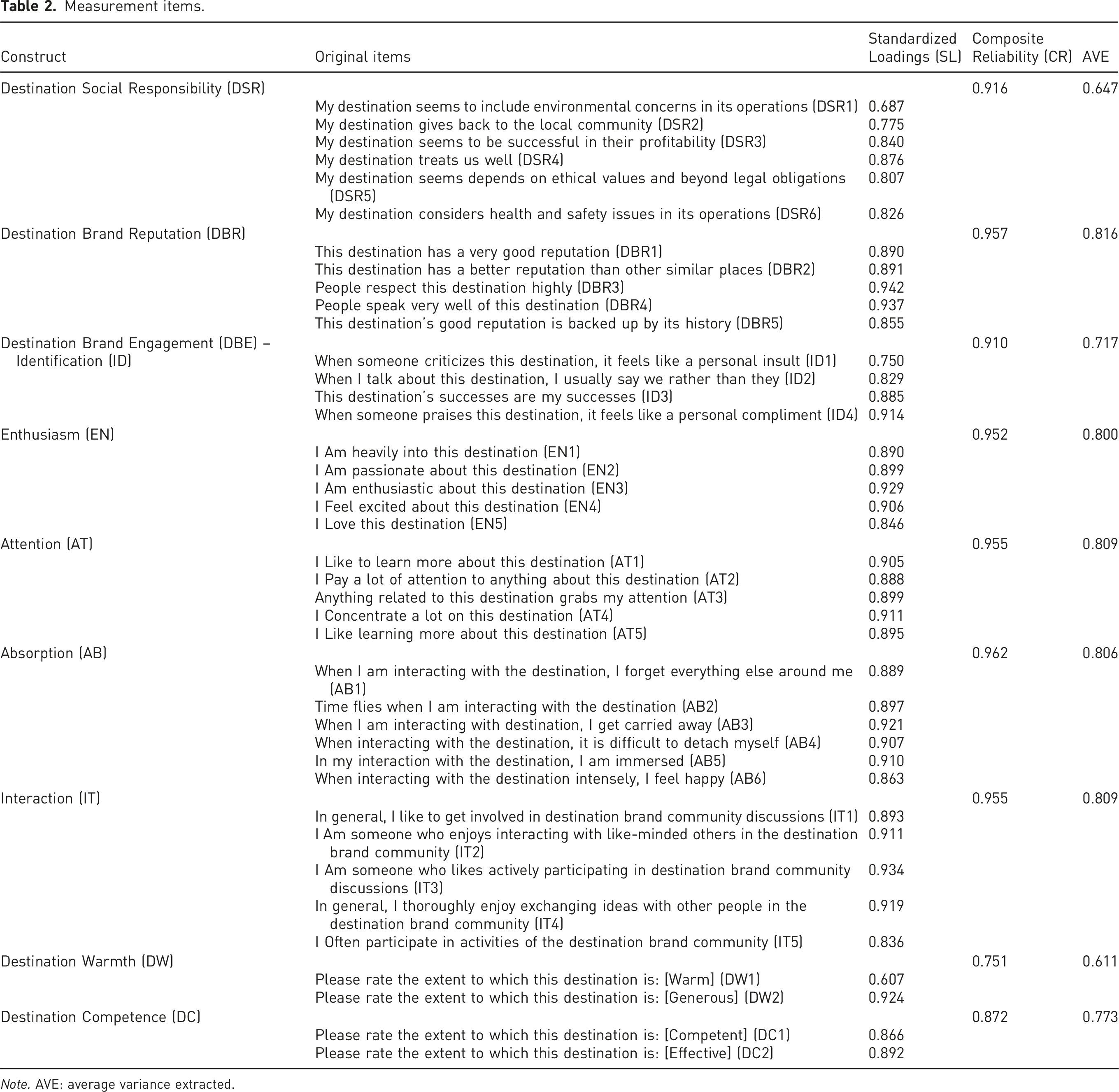
All the study’s constructs were examined using the existing scales in the literature. DSR is measured through six items that capture the social, economic, environmental, stakeholder, and voluntariness dimensions (Su et al., 2018; Su and Swanson, 2017). Destination brand stereotypes, i.e., destination warmth and destination competence, are assessed through four items taken from Aaker et al. (2010). We adopted the scale proposed by So et al. (2014) to measure DBE. Finally, destination reputation is measured through a five-item scale developed by Artigas et al. (2015). These scales were chosen for this study as they have already been validated in the context of destination brands. All the scale items were assessed with a 7-point Likert scale with endpoints “1 = strongly disagree” and “7 = strongly agree”.
Survey instrument and data collection
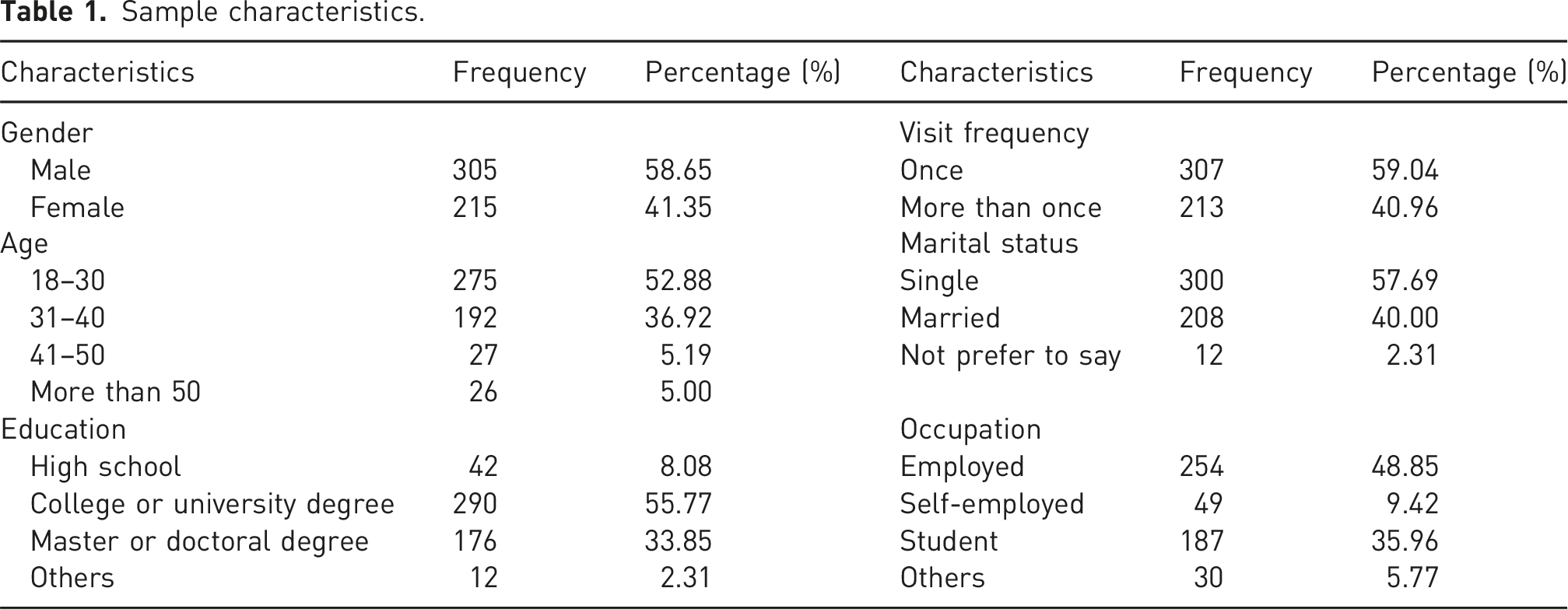
Sample characteristics.
Results
Measurement model
Measurement items.
Note. AVE: average variance extracted.
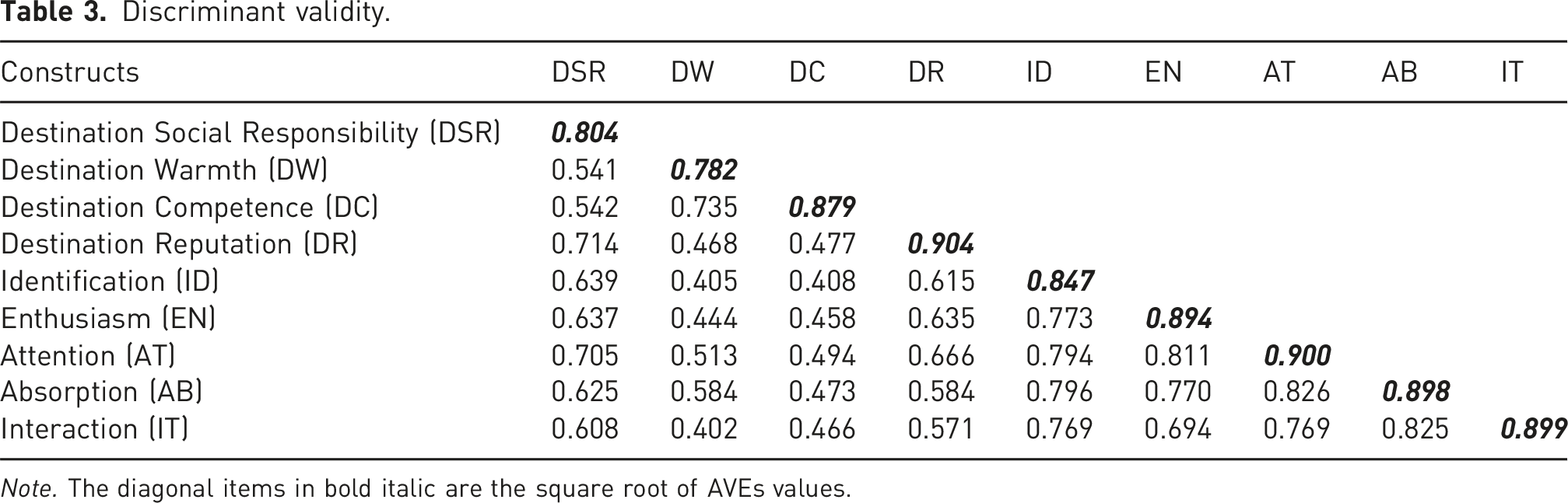
Discriminant validity.
Note. The diagonal items in bold italic are the square root of AVEs values.
Structural model and hypothesis testing
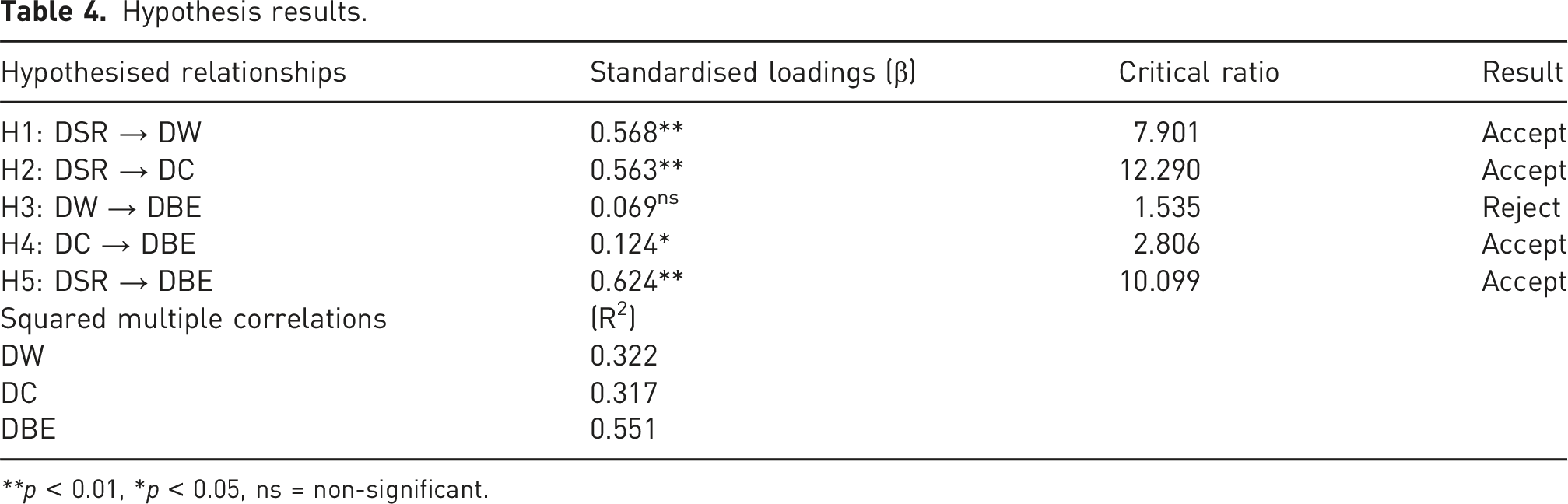
Hypothesis results.
**p < 0.01, *p < 0.05, ns = non-significant.
Moderation analysis
Moderated model analysis.
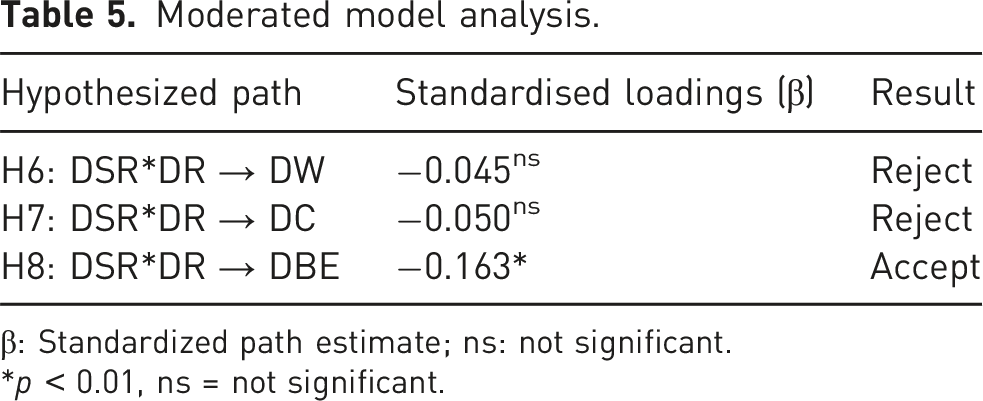
β: Standardized path estimate; ns: not significant.
*p < 0.01, ns = not significant.
Discussion and implications
The present study applies social exchange and signaling theories to investigate the association between DSR and DBE through destination brand stereotypes, i.e., destination warmth and destination competence. The results revealed positive associations between DSR and destination brand stereotype dimensions. These findings may align with the observations on corporate social responsibility’s association with perceived warmth and competence (Alvarez and Fournier, 2016). Findings further reveal that tourists are likely to consider a destination competent and warm if they perceive it as socially responsible. However, only the latter positively impacted DBE in the ensuing evaluation of the causal association of destination warmth and destination competence with DBE. Thus, this finding supported the partial theoretical postulation considered in the study and may be inferred as the primacy of competence over warmth for destination brands in the context of socially responsible destinations. This finding suggests that tourists value a socially responsible destination’s ability to deliver on social commitments to actuate engagement among tourists.
Another essential contribution of the study is towards the proposal and examination of destination reputation’s moderation in the link between DSR, destination brand stereotype, and DBE. The results suggest moderating effect of destination reputation on the relationship between DSR and DBE. Further, the effect was higher for the individuals who perceive a destination as less reputed than those with high reputation perceptions. This finding was contrary to the anticipated effect and may be interpreted as tourists’ tendency to view DSR as a general and routine expectation from highly reputed destinations, however it gets more conspicuous and can be valuable for destinations with lower reputations. Given the backdrop of study i.e. Indian travelers, this holds relevance for both scholarship and practice. Thus, we suggest that the destinations with low reputation among the travelers should focus more on showcasing the socially responsible initiatives to the targeted audience to generate favorable tourist behaviour toward such destinations. These findings hold significant theoretical and managerial implications, elaborated in the subsequent sections.
Theoretical implications
Some relevant theoretical contributions are made through the current study. First, findings confirmed a positive link between DSR and the dimensions of destination brand stereotype, viz., destination warmth and destination competence. Utilizing the framework of social exchange theory, the study widens the theory’s application to tourism research by explaining the reciprocity manifested in the destination-tourist relationship that results in the formation of destination warmth and competence. The novelty is that perceived fairness in the social exchange, i.e., DSR (host’s actions), results in favorable perceptions, i.e., destination warmth and destination competence that finally translate into DBE (tourists’ response).
Second, the study’s premise of signaling theory was employed to probe the causal linkage between DSR, destination stereotype, and DBE. Thus, findings suggest that tourists prefer to uphold relationships with destinations that signal practices of fair exchange of resources and values to the extent that such relationships manifest in various formats of destination engagement. Similar past findings related to perceived warmth and perceived competence, alongside behavioral intentions, have been observed in the context of hospitality consumers (Gao and Mattila, 2014). Third, while the past literature has primarily emphasized the suitability of warmth and competence dimensions of SCM with that of destination image (Shen et al., 2019), researchers have rarely quantified the scope of effect placed by either of these dimensions on more intricate outcomes, such as the DBE. In this line, the findings reveal a significant association between destination competence and DBE; however, it must also be noted that the results did not support the relationship between destination warmth and DBE. This highlights the deviation from traditional conceptualisation of downstream consequences of warmth outlined in the theory, and hints at latent boundary conditions toward SCM’s universality.
Fourth, whereas existing literature lends support for the notion of destination stereotype, i.e., warmth and competence resulting in destination brand attachment (Japutra et al., 2021; Shen et al., 2019), current work confirms the influence DSR can have in inducing DBE, which corroborates with similar but limited findings in the existing literature (Hoeffler and Keller, 2002; Lee et al., 2021; Su & Swanson, 2017). Finally, the study proposes and investigates destination reputation as a moderator for the relationship between DSR, destination stereotype (i.e., destination warmth and destination competence), and DBE. However, the investigation led to the recognition of destination reputation’s ability to alter the impact of DSR on DBE only.
Managerial implications
The study offers various insights into the tourism industry. First, the positive association between DSR and destination warmth and destination competence suggests to destination marketers the importance of creating perceptions of DSR to achieve competitive advantage. Activeness on the DSR front can help create visitors’ opinions on sensitive social and environmental issues, drawing a robust image of destinations as hospitable and agents of needed change. The study urges decision-makers to refer to DSR as a strategic tool aligned with overarching destination development goals. For instance, destination marketers can develop communication strategies to dispense information about the activities underscoring DSR commitments. Messages of destination initiatives to support culture, society, environment, and ethical vows can be communicated using diverse media platforms to reach broader segments of current and prospective visitors.
Second, destination marketers are encouraged to leverage the perceptions of destination competence and DSR to induce engagement among tourists. For instance, destination marketers can highlight the destination’s ability to deliver on its initiatives and intentions as perceived by the tourists. DBE should be viewed as a driver of future destination visitation and as a medium of destination knowledge enrichment among other tourists. Such initiatives can highlight destination stewardship and orientation toward DSR while projecting alongside commitment to sustainable practices and overall destination community well-being. Also, the associated travel literature and branding campaigns should reinforce such attributes to prospective travellers. It may also be noted that visitors expect destination brands to be more accountable of their actions.
Finally, destination reputation manifested as a significant moderator in the DSR and DBE link. However, contrary to our expectations, the destinations with low reputations tend to have strengthened the effect of DSR on DBE. Thus, destination marketers are encouraged to allocate their major resources to socially responsible initiatives compared to efforts required to build the destination reputation. Moreover, this finding is crucial for destinations perceived as low on reputation, as they can indulge in socially responsible actions to mitigate the effect of low destination brand reputation. In the similar vein, many destinations continue to evolve or are on the path of recovery, and may not be the beneficiaries of strong reputational gains, so as the findings suggest, if credible non-tokenistic DSR initiatives are integrated in destination marketing plans, tourists’ engagement response may be more pronounced and amplified. While past research shows relevance of sustainability certifications for the tourists in the West (Blancas et al., 2015) and cultural experience in the East Asian context (Li et al., 2023), findings from this study may be viewed as Indian tourists prioritising affordability (competence signalling) along with evidence of pro-social and responsible practices. It is also important to underscore the enormity of domestic tourism in India over international tourism, which is about 130 times the overseas inflow (Ministry of TourismGovernment of India, 2025), and makes it indispensable to assess the Indian perspectives as compared to countries where the latter is predominant. Alongside this, Indian destinations, despite the pull-appeal, are frequently faced with the challenge of overcrowding, hygiene and infrastructural bottlenecks that often result in unsavoury experience (Parsa et al., 2020; Tiwari and Rani, 2024). These arguments further strengthen the rationale for studies related to DSR signalling, stereotype and subsequent behavioural intentions for both theory and practice.
Limitations and future research agenda
While this work makes a pertinent contribution to the extant scholarship, it contains certain limitations that can be remedied in future studies. First, this study focuses on the Indian context; as a result, a word of caution may be raised about generalizing the findings in other spatial and cultural geographies. Second, future research may examine the significance of other prominent factors in shaping destination brand stereotypes, such as gender, marketing mix, and positioning. Third, we attempted to determine an association between destination warmth and DBE; the results did not support the postulated relationship. Thus, we call for further investigation into this relationship across different tourism milieus, cultures, and contexts. Fourth, although we have studied the role of destination reputation as a moderator, we suggest researchers further explore other possible moderators for the proposed relationships. Finally, as the majority of the respondents are from 18 to 30 and 31-40 age groups, the results of this study should be generalized accordingly. Hence, we call for future research covering other age groups (Figure 1). Conceptual model.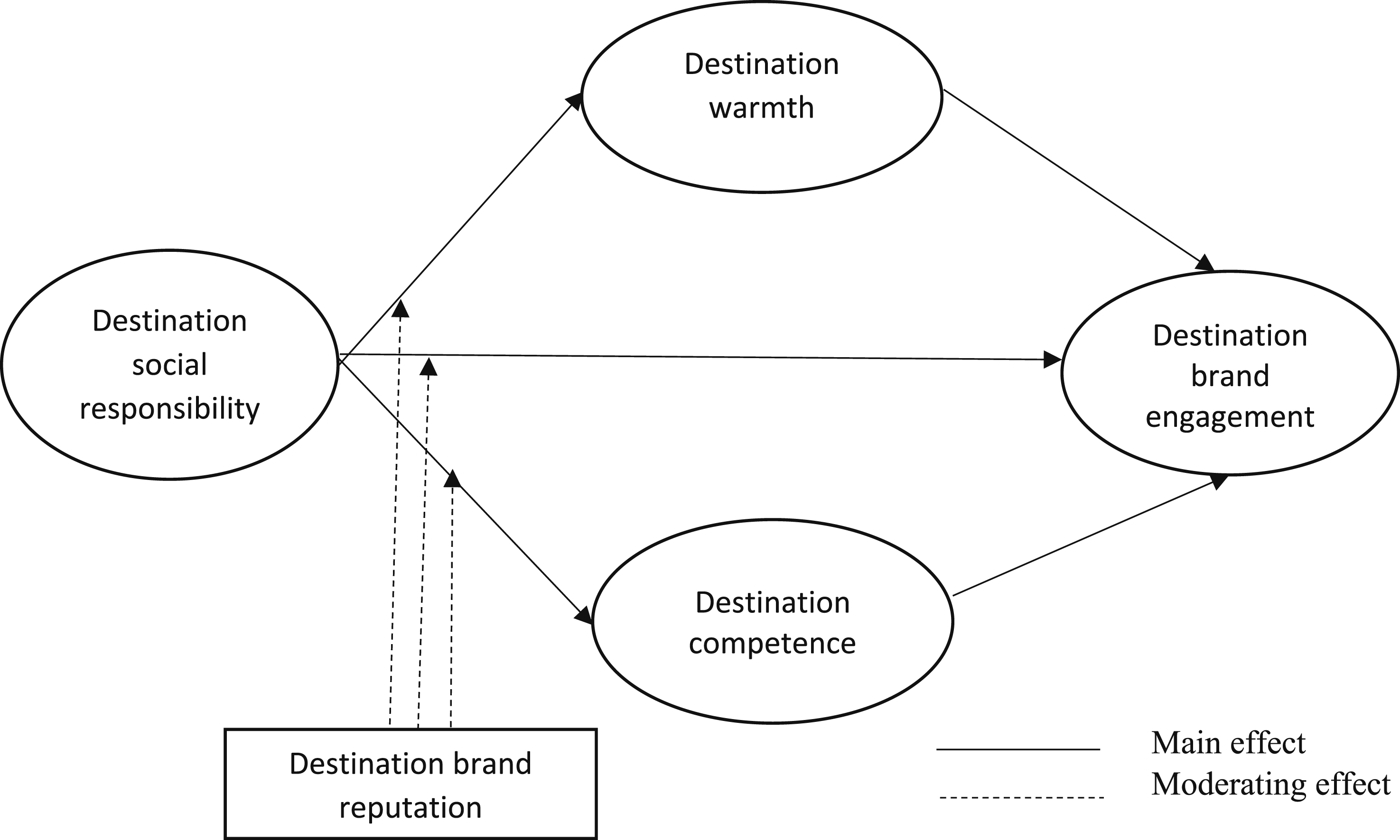
Footnotes

Funding
The authors received no financial support for the research, authorship, and/or publication of this article.
Declaration of conflicting interests
The authors declared no potential conflicts of interest with respect to the research, authorship, and/or publication of this article.