






Abstract
This study conducts a systematic review of foodstagramming; the practice of sharing food photographs on social media, and its effects on consumer dining behavior. The research adopts a dual-methodological approach, using bibliometric analysis to map research trends onto the ADO–TCM framework (Antecedents-Decisions-Outcomes; Theories-Contexts-Methods) framework to classify the existing literature. The findings indicate that self-presentation and social connection are the major drivers of foodstagramming that greatly change consumer decision making and restaurant brand perception. Although the existing literature points out positive implications for well-being and marketing outcomes, it lacks conceptual coherence. The novelty of this study is in the fact that it uses ADO-TCM framework, the only research contributing a forward step in the domain, as it extends beyond descriptive analysis, but also a structured predictive map of the consumer journey. In practice, the findings provide the restaurant marketers and managers with strategic information about the design and digital interaction that is most visually appealing for social media sharing. Theoretically, the research recognizes the essential gaps in the incorporation of AI/AR and ethical issues, which can form a clear agenda on future interdisciplinary research in the field of tourism and hospitality.
Introduction
Sharing food photos on social media platforms under the term “foodstagramming” is a widespread phenomenon (Wong et al., 2019). This recent trend in social media shows rapid growth as people share numerous photos of their dining activities and travel scenes (Chang, 2022). During travel times, foodstagramming reaches peak significance because tourists thoroughly search for fresh experiences (Dinhopl and Gretzel, 2016). Food photography on Instagram emerged from the transformation of social media, which has fundamentally changed the sharing of human experiences (Magdy and Hassan, 2025). Social media users post various food-related content including hashtags such as #food and #foodporn reflecting a widespread interest in this activity (Piluso, 2021).
Since their appearance, social media has greatly affected many changes in our lives. It often features food as something beautiful to see, showing its appeal, comforting sights and authentic touch (NurAksu and Yilmaz, 2023). Tourists discuss the food experience as a key consideration in memorable tourism experiences (Fathy et al., 2024; Okumus, 2021). Modern social media users tend to post photos of their food before eating as part of their personality presentation (Pindado and Barrena, 2021). Travelers typically take photos of their meals while traveling to display their dining locations and the local dishes on their social media channels. Posting food photos on social media, especially Instagram, is common, but studies analyzing this practice are still very scarce (Wong et al., 2019). The existing body of research on this topic remains at a preliminary level, with multiple studies existing as theoretical concepts that require additional empirical evidence to validate them (Chang, 2022). Such adequate research constitutes a major gap because social media users now commonly share food images that affect dining behaviors.
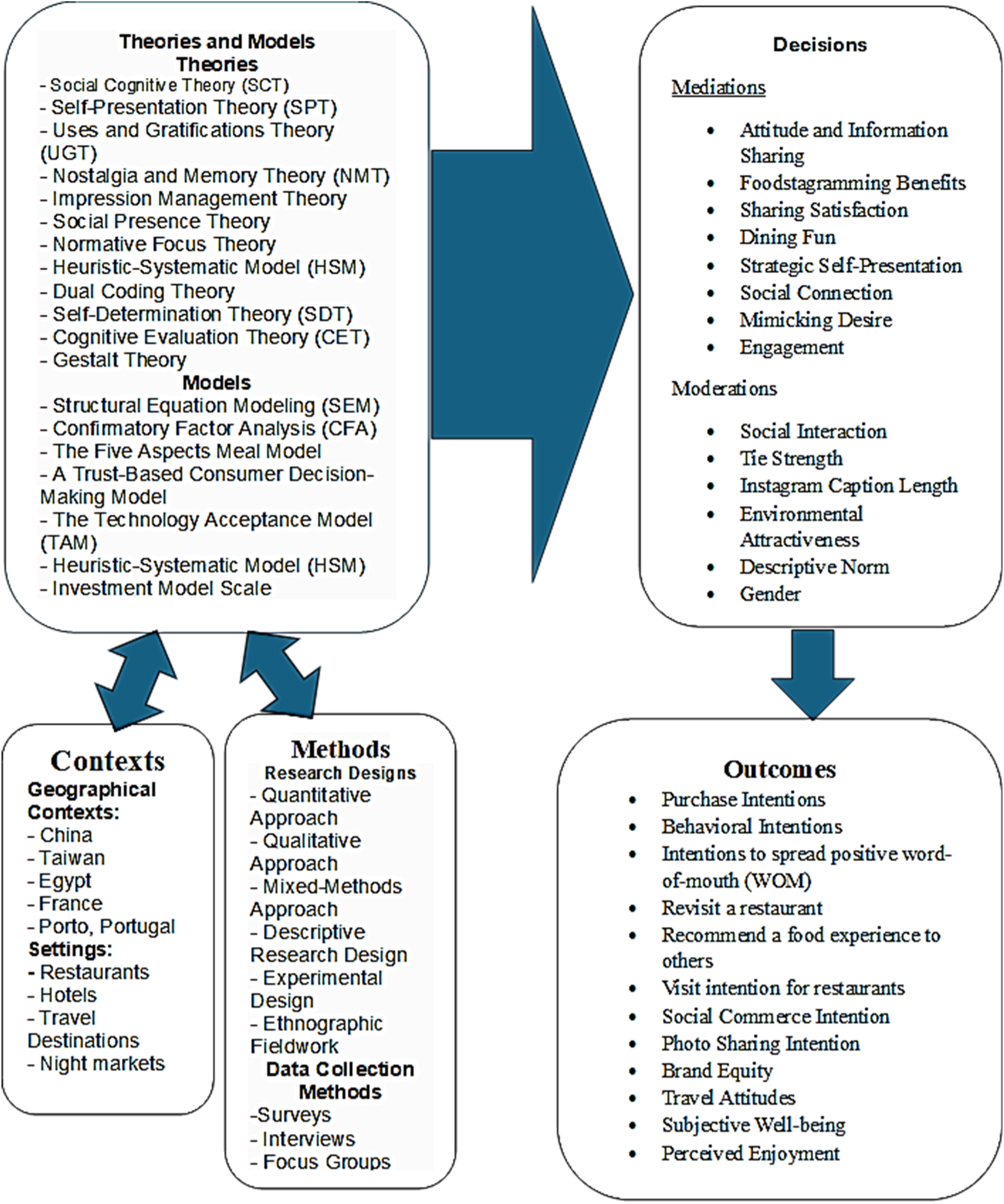
The study introduces new theoretical contributions to the study of foodstagramming by using the ADO-TCM framework (Mishra and Kiran, 2025) for the first time. It separates the literature by antecedents, decisions, outcomes, theories, contexts and methods, providing a clear and thorough structure. In addition, the review gathers diverse research from the fields of marketing, psychology and media studies. It looks at the main theories involved in foodstagramming studies, self-presentation and uses and gratifications theory and suggests parts where theory might be improved. Furthermore, there is a conceptual model outlining how future studies can look at this subject.
Originality can be seen in the way the ADO-TCM approach is applied to the problem studied in this research. It draws inspiration from several fields to help understand foodstagramming in detail. The review considers the future, pointing out places where more research is needed, including AI, ecological concerns and the mental effects of disasters. The study also considers a modern and culturally significant subject, giving readers real understanding of how identity, food, and digital media interact. For these reasons, this systematic literature review aims to achieve the following objectives: (1) synthesize the body of knowledge on foodstagramming by using the ADO-TCM framework. (2) categorize the main antecedents, approaches to decision-making and outcomes linked to foodstagramming and the theories, settings and methodologies of study used in the field. (3) Identify the most important research gaps that are missing and outline how future directions can progress in the discipline. The authors of this study focus on structuring the area and highlighting new paths that researchers can follow, rather than introducing innovative empirical findings.
The present study is based on the Self-Presentation and Impression Management Theories (Leary and Kowalski, 1990), which elaborate on how users premeditatedly maintain their digital identity using food content. Moreover, this is facilitated by Uses and Gratifications Theory (Katz et al., 1973) used to comprehend the social and personal gratifications that users expect to acquire through this action. These theories are incorporated into ADO-TCM framework (Mishra and Kiran, 2025) which offers an ordered classification of Antecedents, Decisions, and Outcomes, as well as those Theories, Contexts, and Methods that are common in the field.
This systematic review search provides guidance to restaurant managers, marketers, and tourism boards to create effective digital strategies. According to previous studies, there are strategic food presentation developments (Chen et al., 2024) that should be provided for foodstagramming. In addition, dining environments (Xiong et al., 2023) combined with social media brand enhancements (Huang 2024) are essential for a successful strategy for restaurants. The review offers recommendations for restaurants to work with influences according to Dyce et al. (2024). Furthermore, restaurants should create effective food experience storytelling (Chang, 2022).
The idea of foodstagramming, which is about sharing food photos on social media and has become a popular trend in the hospitality industry, is a structural change (Magdy and Hassan, 2025; Wong et al., 2019). To contemporary tourists, foodstagramming becomes the main means of personality representation and one of the most memorable parts of tourism (Fathy et al., 2024; Pindado and Barrena, 2021). Nevertheless, academic studies are in a preliminary, divided form, despite its widespread nature (Chang, 2022). The current literature tends to perceive foodstagramming as a set of individual behavior but fails to recognize it as a socio-technical ecosystem and thus a significant gap in the need to comprehend the entire consumer cycle of motivation to final behavioral outcome.
To address these gaps, this study aims to synthesize the body of knowledge on foodstagramming using the ADO-TCM framework. This review addresses the following five research questions:
Which countries, academic institutions, journals, authors, and keywords are most closely related to the foodstagramming phenomenon?
The next stage of the review, a systematic literature review, aims to answer the following research questions:
What is the current understanding of foodstagramming regarding its antecedents, decision-making processes, and outcomes?
How can we understand it through the theories, contexts, and methodologies applied?
What future directions for antecedents, decision-making processes, and outcomes in foodstagramming?
What are future directions for theories, contexts, and methods in foodstagramming?
This study is a two-methodology study. The bibliometric analysis is performed first to give a picture of the field (macro-map) in terms of the most productive countries, authors, and keywords. Second, systematic literature review (SLR) is performed to offer a micro-synthesis of the psychological and environmental variables that cause consumers to act. Such a combination will provide a quantitative image of the study and a qualitative richness of knowledge.
Finally, the study provides three general practitioner strategies. First, it advises on how to present food visually in order to make dining places Instagrammable. Second, it describes influencer storytelling practices in order to build brand trust. Third, it proposes digital engagement options to tourism boards and restaurant managers to use user-created content to create prestigious branding.
Materials and methods
Research design
The proposed study has a dual-methodological design, comprising of bibliometric analysis and a systematic literature review (SLR). This strategy is needed to offer both a macro-level perspective of the publication market (trends, geography and networks) and the micro-level synthesis of the thematic information of the foodstagramming field.
To provide a holistic study, the study will be structured into three balanced axes that will be analytically mapped to ADO-TCM framework (Mishra and Kiran, 2025):
Consumer Motivations and Self-Presentation (Antecedents): The axis examines the motive of foodstagramming. It dwells on the psychological motivations such as social bonding, identity construction, and self-enjoyment. This axis would correspond to the Axis of Antecedents (A) of the ADO-TCM framework.
Consumer Behavior and the Restaurant Ecosystem (Decisions and Outcomes): This axis is concerned with the impact of photo-sharing on consumer purchasing behavior (e.g., restaurant selection) and business (e.g., brand recognition and loyalty). The outcome (O) and Decisions (D) of the framework are directly proportional to this axis.
Platform Communication and Research Dynamics (Theories, Contexts, and Methods): This axis examines the how and the where the phenomenon is researched, i.e., the characteristics of social media platforms (e.g., Instagram vs Tik Tok), cultural contexts, and approaches utilized by researchers. This is in line with Theories (T), Contexts (C) and Methods (M) of the framework.
Through such a design, the research goes beyond the descriptive report to offer an analytical roadmap of the foodstagramming literature.
Search strategy
The search of the literature was carried out through the Scopus database mostly because it is a database that is well indexed containing peer-reviewed journals in the social sciences. To reduce the bias in the database, Web of science and Google Scholar were cross-referenced with the findings. The search used an expanded Boolean string so that it could be inclusive: (“foodstagramming” OR “food photography” OR “gastrophotography” OR “social media food sharing” OR “culinary tourism”) AND (“consumer behavior” OR “dining behavior” OR “restaurant choice”)
The first search was restricted to the publications that were published in 2019-2025. Although the filters of Social Sciences and Business, Management, and Accounting were used, they were chosen due to their use as the primary sources of hospitality, tourism, and communication-related research. This left a preliminary load of 392 applicable documents.
Data synthesis and analysis
Synthesis of data was done in two phases. First, quantitative data regarding citation network and keyword co-occurrence was given through bibliometric analysis using VOSviewer. Second, the ADO-TCM framework was utilized on the chosen literature to synthesize variables qualitatively into a conceptual roadmap. This two-fold method is a guarantee that the review will be able to reflect the structural development of the research area and the depth of the theme of the patterns of consumer behavior.
The research conducted both bibliometric analysis and systematic literature review to explore food posting activities on Instagram. Bibliometric analysis generated quantitative research findings about foodstagramming, but systematic review methods analyzed research variables and theories for foodstagramming. Research conducted through Scopus produced 392 studies that demonstrated both relevance and quality standards. Both bibliometric analysis and systematic literature review were used to study food postings on Instagram. Quantitative findings about foodstagramming were generated using bibliometric analysis, while systematic review methods examined the research variables and theories related to foodstagramming. Research explored in Scopus resulted in 392 findings that had both relevance and quality standard characteristics. New research about foodstagramming continued to expand rapidly after 2019 with increasing prominence in business and social science fields because digital visual content and social connections drive consumer actions.
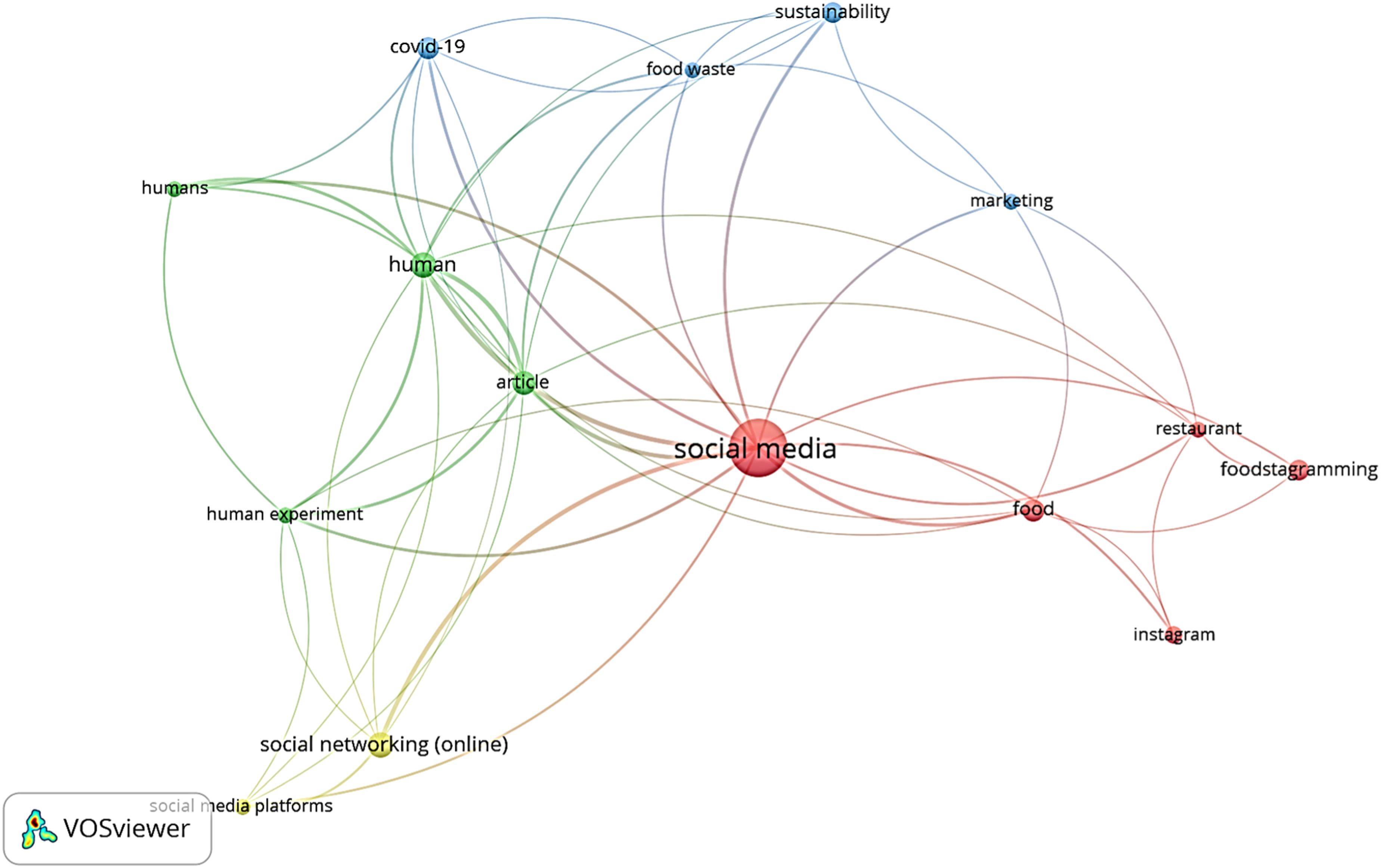
We analyzed publications using VOSviewer’s bibliometric tools. References to key research themes and their relationships were drawn from author-defined and indexed keywords of the 392 documents. They were then exported to VOSviewer. To fix errors in the data, we merged synonyms, made changes to remove plural and singular forms and combined similar ways of writing terms (e.g., “Instagram,” “Insta”). Next, a co-occurrence analysis was run, choosing a minimum number of cases for a keyword (5 documents) to be present in the analysis. A VOSviewer map was made with keywords shown as nodes, the bigger nodes having appeared more often in the publications and links are in place when keywords are found together in the same article. Popular combinations of keywords were identified, allowing us to discover the main subjects and important trends in research on foodstagramming.
Inclusion and exclusion criteria
The time frame from 2019 to 2025 was selected because it is the most considerable period of the digital maturity of dining when short-form video content is embraced worldwide and the COVID-19 pandemic has impacted the global tourism and food consumption significantly. Although this restriction to the English-language publications in the Scopus database guarantees high-quality peer-reviewed material, this study posits that it is a possible source of language and database bias.
In order to keep the academic standards high, certain inclusion and exclusion criteria were used:
Inclusion Criteria: - Paper articles, conference papers, and book chapters in peer-reviewed journals. - Research was done specifically on the interplay between social media food sharing and consumer dining behavior. - Studies published in the English language since 2019.
Exclusion Criteria: - Non-academic works like industry reports, white papers or blog posts. - Research that involved only food science or agriculture, but lacked the element of consumer behavior. - Duplicate records or studies, in which the full-text could not be found. - Those studies that were published in non-English languages.
Quality assessment
The screening process followed three distinct phases according to the PRISMA framework (Figure 1) (Moher et al., 2010). The title and abstract screening process led to the retrieval of 126 documents which originated from the identification of 392 documents. The research team evaluated 47 reports through full-text assessment which resulted in the exclusion of 24 reports because they failed to study consumer behavior or did not meet required methodological standards. The final 23 articles received selection through four quality thresholds which required the following criteria to be met. The articles required a theoretical framework to exist despite this requirement. The articles required research to use either quantitative or qualitative methods through which empirical data would be collected. The articles required research to demonstrate a direct connection to foodstagramming and its impact on dining behavior. The articles required research to demonstrate a high potential for citations or to appear in recognized tourism and hospitality academic journals. The academic community applies this strict filtering method to produce a synthesis which stands as the most credible evidence in the field. PRISMA framework.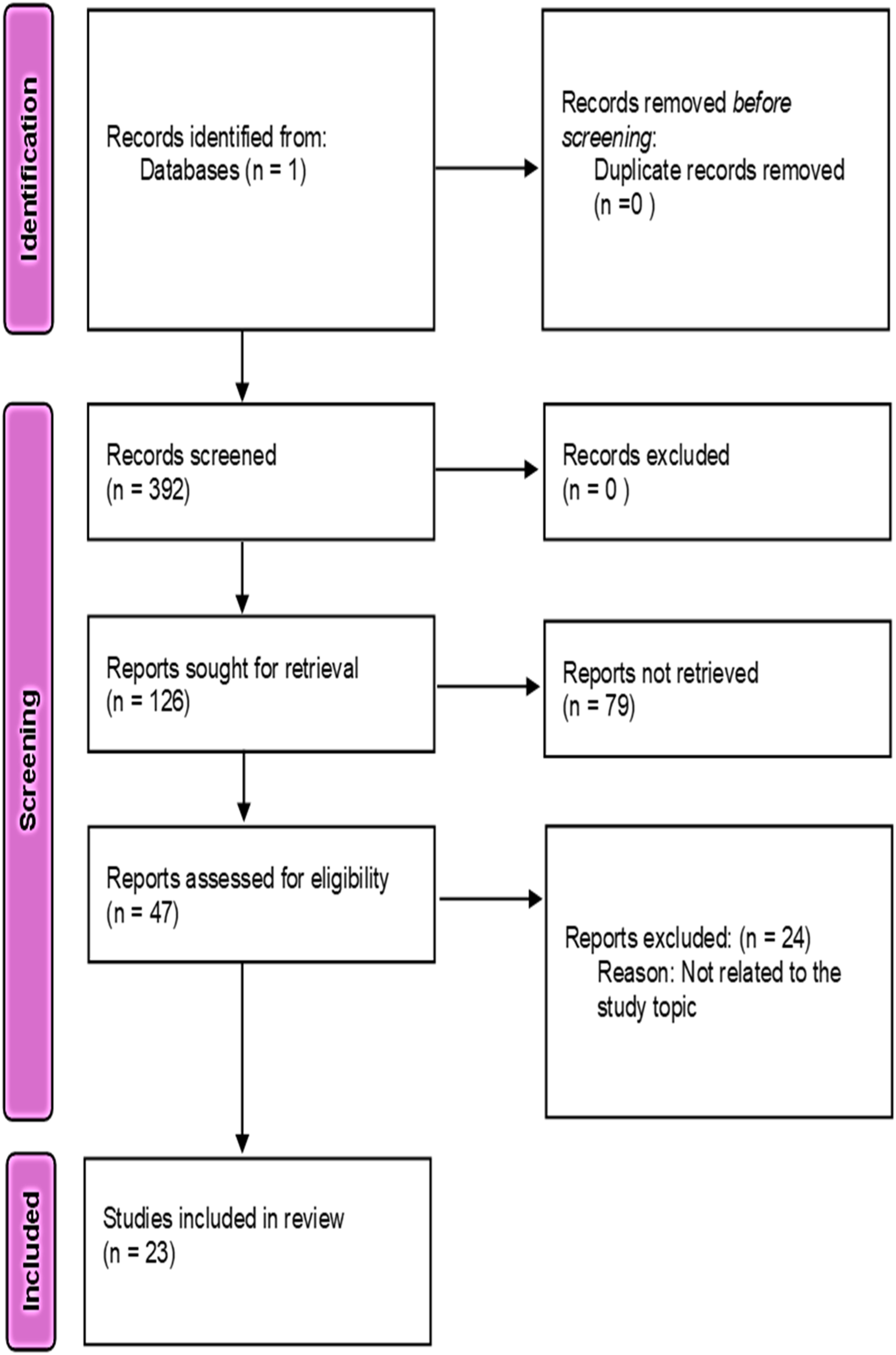
Systematic review structure
This research is based on the systematic literature review (SLR) methodology. The research uses the systematic literature review methodology instead of the narrative review because the systematic literature review methodology is characterized by rigorous examination using transparent standardized methods and clear guidelines for replicability. By using the systematic literature review methodology, researchers establish an objective research foundation through a comprehensive evaluation of relevant studies and synthesis, resulting in an unbiased research synthesis (Tranfield et al., 2003). The applied systematic approach helps researchers investigate the advanced relationships that exist between research elements in the data analysis process. This rigorous methodology, particularly when combined with bibliometric analysis, is employed across various sub-domains within hospitality and tourism research, such as investigating employee dynamics and environmental behaviors.
ADO-TCM framework integration
This research utilized the ADO (Antecedents, Decisions, Outcomes) framework from Paul and Benito (2018) and combines it with the TCM (Theories, Contexts, Methods) framework proposed by Suleman et al. (2025) when studying literature on foodstagramming. The ADO framework explains the review by focusing on personal, social and environmental reasons for foodstagramming, The choices involved when posting on social media (based on social connections, engaging pictures and traditions) and the results in terms of individual health, consumer habits and business performance. The TCM model, along with this, focuses on main approaches in the field (e.g., social cognition and how people present themselves), the varying geographic and cultural settings (e.g., Asia, Europe, North America) and the methods researchers use, providing a complete and orderly review of the subject.
Study results
Bibliometric analysis
The study uses bibliometric analysis to investigate foodstagramming trends, incorporating citation metrics and network collaboration data. It establishes correlations between tourism/hospitality patterns and business practices, aiding academic researchers and practitioners in digital food industry strategies.
The top countries in the field of foodstagramming
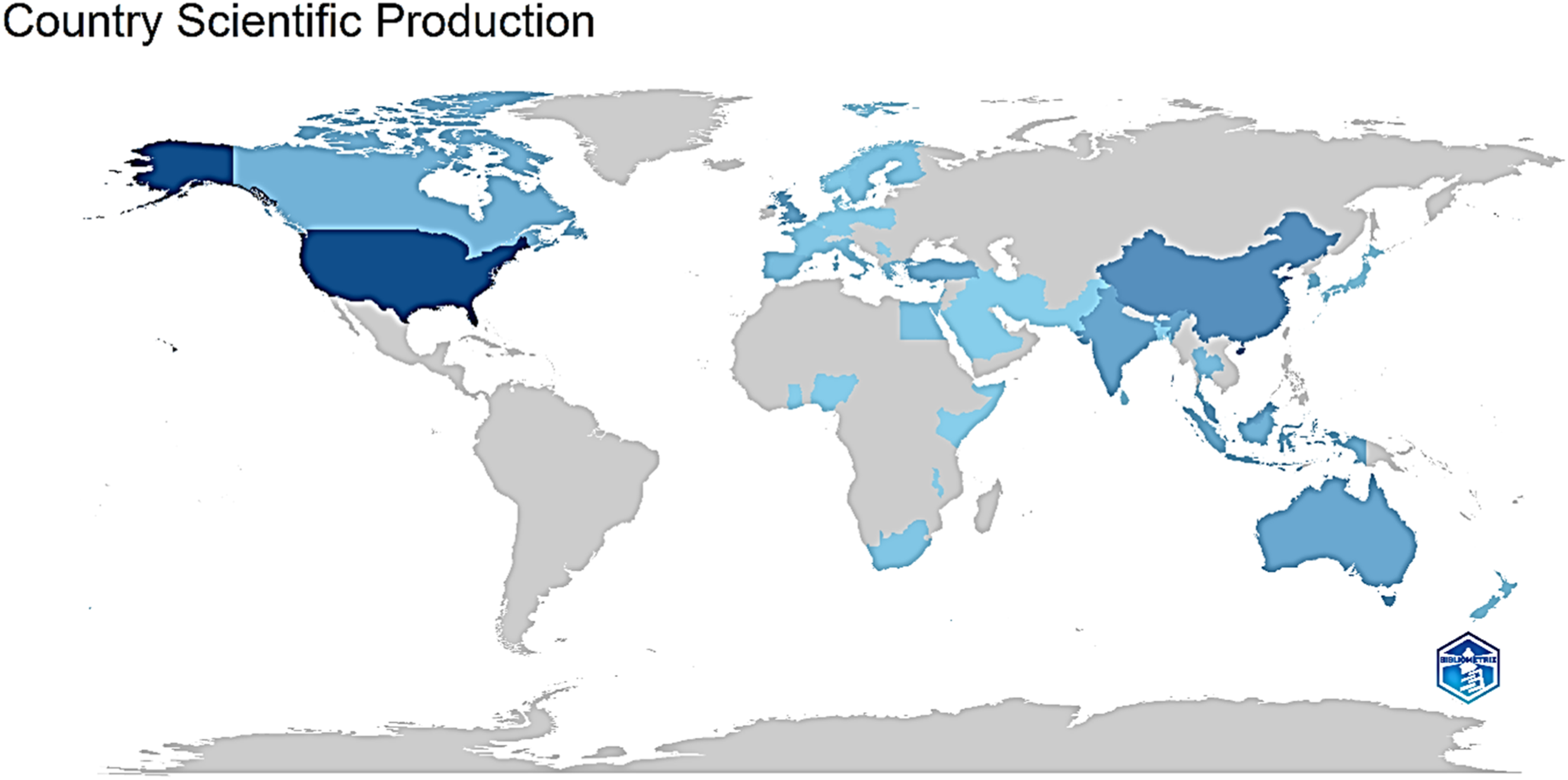
Foodstagramming research receives its main academic promotion from the USA through 27 published studies indicating widespread institutional interest in Instagram marketing for restaurants, according to Figures 2 and 3. Both China and the UK conducted 12 studies that demonstrate international interest in this phenomenon. The research field of foodstagramming has shown increasing interest in India while simultaneously expanding in Australia, Malaysia, and Turkey. Alongside this growth, the disciplines of Hong Kong and Macao are now contributing six publications each. Studies about foodstagramming demonstrate different cultural views regarding social media food photos along with consumer behavior across the world. Most productive countries in researching the field of foodstagramming. Country scientific production.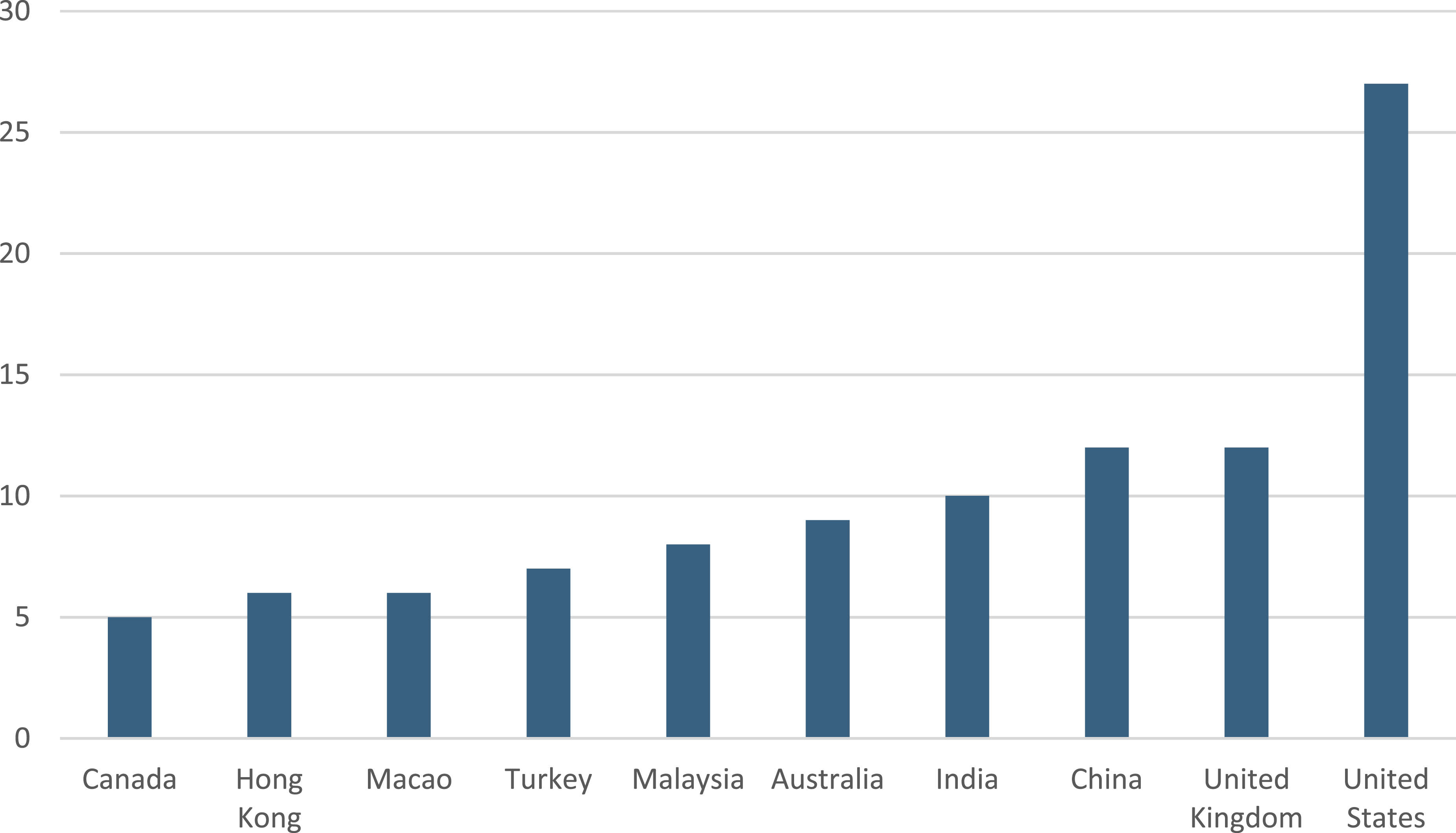
The top educational institutions in the field of foodstagramming
Foodstagramming has garnered significant academic interest, with Sun Yat-sen University, University of Macau, and School of Business Administration leading the way. Hong Kong Polytechnic University, University of Florida, and other institutions have published studies on foodstagramming behavior, highlighting its role as a social phenomenon and a major brand in consumer behavior.
The top authors in the field of foodstagramming
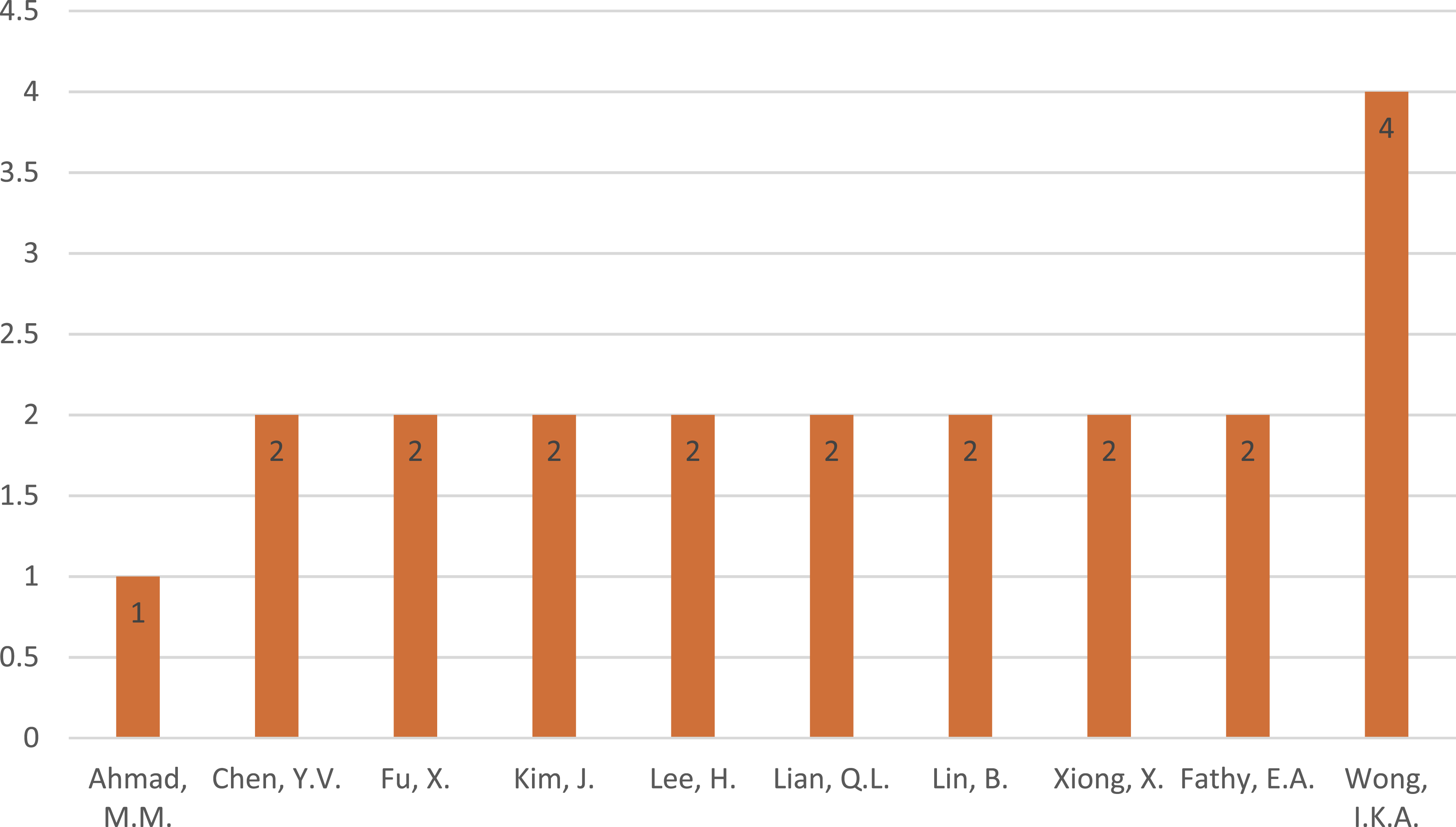
The top ten most productive academic authors in foodstagramming research include Fathy E.A., Wong I.K.A., Chen, Fu, Kim, Lee, Lian, Lin, and Xiong. Egypt’s interest in consumer behavior and the food and beverage sector is evident in the papers contributed by Fathy and Ahmad.
The top keywords used in publication in foodstagramming
The study uses VOSviewer software to analyze key topics in foodstagramming research, revealing a strong link between social media and discussions about foodstagramming. The study also highlights the importance of human elements, such as human experiments and consumer behavior, and the impact of COVID-19 on food consumption habits and online engagement. The study also highlights the growing concern about digital food culture’s influence on sustainable eating habits.
Systematic literature review by ADO-TCM approach
What is the current understanding?
Antecedents
The factors that drive foodstagramming fall into three groups: motivations, personal factors, and environmental factors. These motivations include self-expression, social connection, and the desire for social recognition (Chang, 2022; Fathy et al., 2025; Lin et al., 2022; Wong et al., 2019). The need to keep personalized memories for special occasions and the wish to record personal dining experiences and preserve them also motivates foodstagramming activities (Chang, 2022; Xiong et al., 2023).
Foodstagramming is used to socialize and communicate with people (Chang, 2022; Wong et al., 2019). Food images are posted to boost self-esteem and celebrate achievements (Chang, 2022; Wang et al., 2017). Behavior related to impression management theory. Some foodstagrammers document, share, and preserve their experiences (Wang et al., 2017). Sharing food images may also constitute word-of-mouth advertising (Fox et al., 2018; Lo and McKercher, 2015). Self-satisfaction and social connections may motivate (Lian et al., 2025). Motivations may be effective, expressive, or functional (Chang, 2022). Personal traits also affect foodstagramming. Whether someone foodstagrammes depends on their self-efficacy, or confidence in their ability to present themselves (Lin et al., 2022). Foodstagramming may also be impacted by territoriality and food-related personality (Lian et al., 2025). Exhibitionism, narcissism, and self-esteem affect behaviour (Chen et al., 2024; Derinalp Çanakçı and Birdir, 2020). Foodstagramming is heavily influenced by environmental factors such eating environments (Fathy et al., 2024; Han et al., 2022; Schunk and DiBenedetto, 2020). Intangibles like ambiance (Fathy et al., 2024) and tangibles like lighting, design, décor, and food quality may lead to foodstagramming. Food presentation also affects sharing (Lee et al., 2025). Foodstagramming relies on popularity and social norms (Xiong et al., 2023). Service customisation, restaurant cleanliness, and staff interpersonal skills may affect behavior (Javed et al., 2021). Social influence and approbation are another cause (Handayani, 2021).
Decisions
Social connection influences foodstagramming motivations and results (Lian et al., 2025). Foodstagramming improves social connections and engagement in social events. Foodstagramming advantages act as a bridge between the attributes of dining settings, visitor enjoyment, and creating memorable culinary experiences (Fathy et al., 2024). Fathy et al. (2024) found that memorable culinary experiences moderate the relationship between foodstagramming and visitor pleasure. Foodstagramming enhances tourist happiness by creating memorable meals. Strategic self-presentation also affects self-efficacy, self-experimental value, behavioral goals, and reported pleasure (Lin et al., 2022). Strategic self-presentation occurs when people like their cuisine and feel comfortable expressing themselves. Visual attractiveness influences gestalt meal presentations and picture sharing (Lee et al., 2025). Engagement mediates the relationship between food presentation, visit intention, and gestalt food presentation and picture sharing intention (Lee et al., 2025). Dining enjoyment mediates satisfaction and subjective well-being (Chen, Wong, et al., 2024). Studies have found numerous moderate factors. These factors influence how individuals see, engage with, and react to food on social media. Social norms and relationships moderate (Huang, 2024; Wong et al., 2019).
Match peers’ strength moderates foodstagramming’s impact on enjoyment (Huang, 2024). Social norms modulate the impact of foodstagramming on meals (Gajic et al., 2021). If prevalent, snipping dish photographs might boost consumer satisfaction and restaurant visits. Watching food selfies may also enhance the meal experience (Gajic et al., 2021). Captions and other textual and graphic elements are moderate (Huang, 2024). Dual coding theory states that Instagram food captions boost user engagement by activating linguistic and visual processing (Huang, 2024). Instagram captions and foodstagramming gestalt color affect visual appeal and engagement. Gestalt food presentations seem better. The four concepts of closeness, resemblance, continuity, and closure create this impact. The research found that utilizing identical products boosted picture visual attractiveness (Lee et al., 2025). According to a survey of 73 college students (n = 64, 88%; p < .001), the gestalt condition is more visually pleasant than the non-gestalt condition (Lee et al., 2025). Contextual and demographic factors are moderate. Gender moderates the relationship between food picture aesthetics and user engagement (Huang, 2024). Restaurant attractiveness amplifies extrinsic food-stagramming incentives (Wong et al., 2019). Extrinsic incentives dramatically affect social connections in low-attractiveness environments (Wong et al., 2019). Social impact modifies the relationship between behavioral and cognitive characteristics and consumer engagement. According to a culinary brand equity study, social engagement improves subdimensional connections (Huang, 2024).
Outcomes
Studying foodstagramming has social, personal, and commercial ramifications. Foodstagramming affects happiness and well-being. Foodstagramming may improve life happiness and eating delight (Chen, Wong, et al., 2024). These activities may improve subjective well-being and happiness over time (Chen, Wong, et al., 2024). Self-acceptance, healthy relationships, purpose, and personal growth are linked to these benefits (Wong et al., 2019). Foodstagramming may also increase self-esteem and fulfill pride and appreciation needs. It allows identity and self-expression (Wong et al., 2019). Foodstagramming further enriches meals and adds memories to memorable occasions (Wong et al., 2019). Social influence and connection are critical with foodstagramming. It strengthens online social relationships and encourages participation. Sharing food photos might help maintain social bonds. Foodstagramming may facilitate social interaction. Practice affects consumer decision-making. Social media sharing helps customers evaluate products and services. Foodstagramming may impact a person’s restaurant choice. In particular, posters’ look, and content may influence purchasers. The visual appeal and desire to imitate the dining experience are two keyways food photos impact buyers. Foodstagramming impacts restaurant and food choices. It keeps social media groups together (Chang, 2022; Chen, Wong, et al., 2024). Sharing food photos might help maintain social bonds. Foodstagramming may facilitate social interaction (Vila et al., 2021). Foodstagramming influences choices. Instagram comments help consumers assess food quality before buying it (Chen, Jin, et al., 2024; Seo et al., 2017). Foodstagramming may impact on restaurant visits (Chen et al., 2024). Post shape, quality, and content may impact purchasers (Chen, Jin, et al., 2024). Colors and presentation of the food are important determinants in restaurant selection (Chang et al., 2015; Taplin et al., 2022).
The practice of foodstagramming produces significant effects for marketing purposes and business growth. The practice generates cost-free promotional possibilities while creating positive electronic reviews that ultimately increase brand recognition (Chen, Jin, et al., 2024; Magdy and Hassan, 2025). The dining experience now includes user-generated images as an essential component that luxury restaurants should take advantage of (Atwal et al., 2019; Oliveira and Casais, 2019). Restaurants enhance their “primed-for-photography” qualities by presenting both physical attributes and non-tangible dining attributes to invite users for social media photo-sharing opportunities (Fathy et al., 2024). The use of pictures and videos in restaurants leads to better perception of their destinations (Chen, Jin, et al., 2024; Magdy and Hassan, 2025). The growth of both gastronomic tourism and foodstagramming practice leads to expanded opportunities for neighborhood business hotels, restaurants, and tour operations (Dixit and Prayag, 2022; Garibaldi and Pozzi, 2018; Vuksanović et al., 2024). Understanding the antecedents and consequences of this creative food tourism experience is crucial for leveraging its brand equity potential (Magdy, 2024). Through foodstagramming, restaurants achieve better online visibility while earning organic publicity (Chen, Jin, et al., 2024). Foodstagramming gives consumers the power to display their self-image thus generating positive experiences that lead to recommendations (Fu, 2023).
Lastly, studies show that foodstagramming might have both advantages and disadvantages. Foodstagramming may increase satisfaction and help people make memories, but it can also cause people to concentrate more on the photo-sharing process than the actual meal (Robinson et al., 2013; Seguias and Tapper, 2022).
How can we understand it through the theories, contexts, and methodologies applied?
Theories
Various theoretical models analyze foodstagramming by using psychology, sociology, marketing, and information technology to explain this phenomenon (Y. V. Chen, Wong, et al., 2024; Gajic et al., 2021; Huang, 2024). Foodstagramming analysis benefits from theoretical frameworks that help researchers study user motivations, behavioral patterns, and social consequences.
Social Cognitive Theory (SCT) functions as a common theoretical basis for investigations in foodstagramming (Y. V. Chen, Wong, et al., 2024). Through SCT, human actions derive from a mix of mental processes, physical behavior, and environmental aspects (Schunk and DiBenedetto, 2020). The theory demonstrates how people sense and evaluate dining situations which shape their actions to share food images on Instagram (Fathy et al., 2024). This theory examines the dual effect of social elements (internal) and outside environment (external) that stimulates foodstagramming behavior (Fathy et al., 2024; Lin et al., 2022).
The Self-Presentation Theory (SPT) serves as an analysis tool for understanding foodstagramming because individuals intentionally display themselves to others to control their public perceptions (Chang, 2022; Y. V. Chen, Wong, et al., 2024). Through food picture posts one showcases their lifestyle while presenting their tastes and social status (Y. V. Chen, Wong, et al., 2024; Kindberg et al., 2005). People use Foodstagramming as a method to oversee their digital persona while assembling an idealized version of themselves (Y. V. Chen, Wong, et al., 2024).
According to Uses and Gratifications Theory (UGT), individuals pick media channels autonomously to meet their requirements. UGT studies foodstagramming, where users share food photographs on social media for self-expression and social engagement (Lin et al., 2022). This hypothesis helps researchers comprehend restaurant social media customer behavior and consumer satisfaction impacts on service reuse (Wong et al., 2019). In the Heuristic-Systematic Model (HSM), humans process information via mental shortcuts yet analyze data to learn (Chaiken, 1980). The HSM helps explain how foodstagrammers evaluate posts by heuristically observing aesthetics and popularity and systematically examining textual content. The Normative Focus Theory explores how social norms influence human behavior (Chaiken, 1980; Shao et al., 2023). According to NFT, foodstagrammers take photos at food events depending on societal norms.
Gestalt Theory serves alongside other appropriate theoretical concepts to examine visual perception particularly through principles of grouping and organization (Lee et al., 2025). The research applies this concept to study how food arrangement shapes visual attractiveness and photo-sharing conduct. The Nostalgia and Memory Theory (NMT) shows how foodstagramming functions as an expression between memories and emotional ties to past events along with allowing photos to act as digital documentation which promotes returning to pleasant food-based experiences (Y. V. Chen, Wong, et al., 2024; Fathy et al., 2024). Through Source Credibility Theory researchers evaluate how social media influencers influence their followers. The evaluation of a source’s credibility depends on three main factors: content creator expertise level and trustworthiness as well as their visual appeal (Oliveira and Casais, 2019b; Suhaimi and Ahmad Tajuddin, 2024).
Contexts
The study examined fifty percent of cases in Asia and observed research activities in Europe at eighteen percent before moving onto Africa at fifteen percent and North American research at seventeen percent. The research conducted studies on Foodstagramming in China alongside social media marketing, brand equity, and culinary tourism within Taiwan, South Korea, and Thailand. European scientific teams based in Serbia, France, and Portugal investigated how Instagram affects dining choices as well as user behavior for photographs and travel bookings. The research examined elite dining in Egypt as its primary African study focus. Researchers conducted a U.S. study through the MTurk platform hosted by Amazon for behavioral social media research analysis. Cultural barriers serve as standing barriers that highlight the requirement to conduct extended research on social media behavior and consumer activities across different cultures.
Methodologies
Researchers approach foodstagramming studies through different quantitative and qualitative and mixed methods. The predominant method in foodstagramming research utilizes quantitative approaches because surveys remain the basic technique for data acquisition. Researchers use structural equation modeling with experimental designs to study consumer behavior and test hypotheses in their research (Lee et al., 2025; Lin et al., 2024). The research methods enable researchers to verify how foodstagramming affects diverse results by measuring connections between relevant variables.
Different studies have utilized qualitative research methods to uncover crucial consumer behavioral patterns. Researchers gather expansive exploratory data through comprehensive interviews together with focus group sessions and ethnographic research which supports quantitative results (Atwal et al., 2019; Chang, 2022). Research studies using photo elicitation allow participants to consider their situations through images and photographs.
By uniting both quantitative and qualitative research methods researchers can create whole-picture investigations which reveal foodstagramming comprehensively (Jang et al., 2024; Wong et al., 2019). Combining different research techniques enables scientists to identify statistical evidence alongside detailed consumer profiles which improves both functional and reliable research outcomes.
What are the future directions for antecedents, decision-making, and outcomes in foodstagramming?
Future research directions.
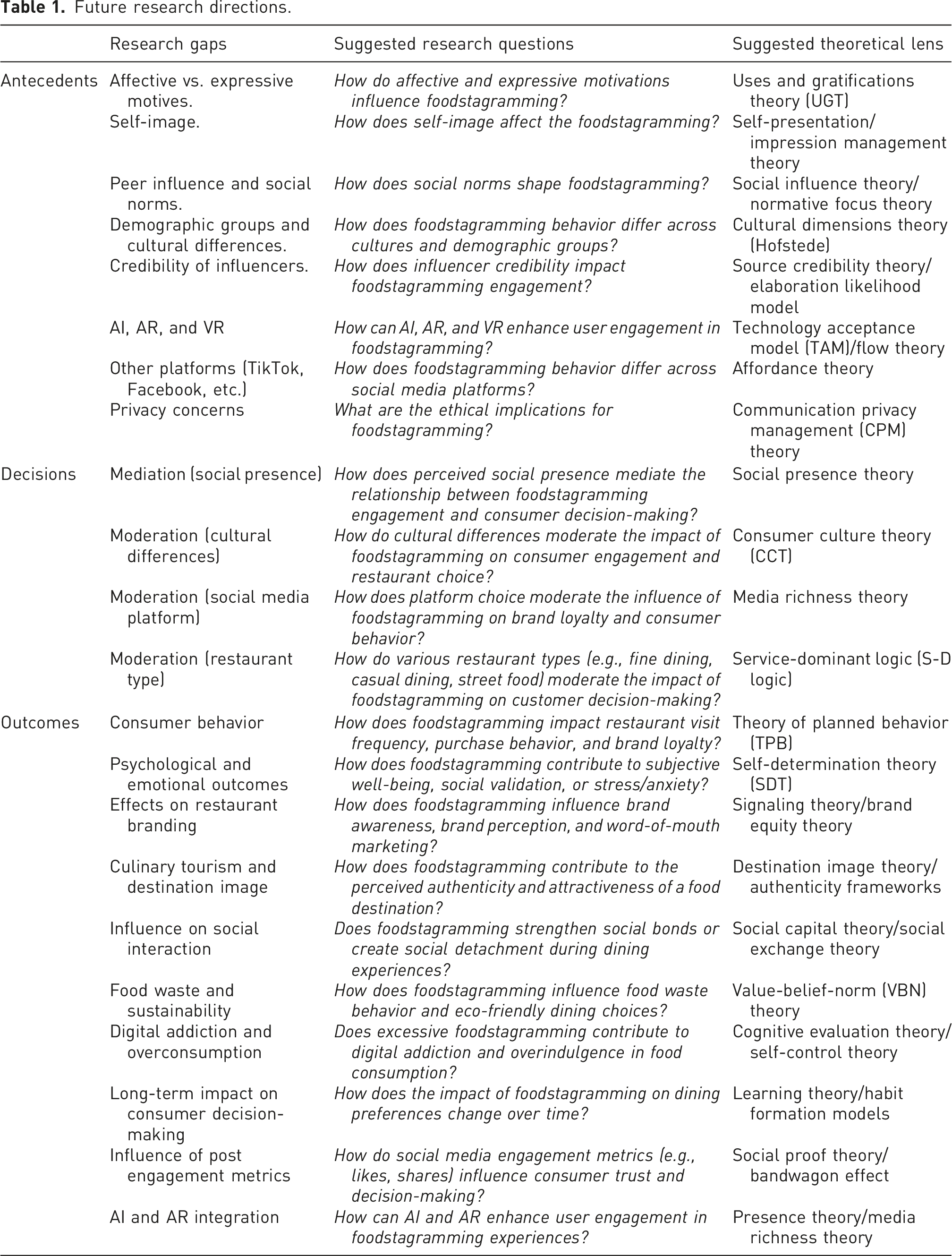
Future research needs to move beyond its current preliminary stage by establishing theoretical frameworks that support their descriptive research efforts. We have identified three essential research areas that will guide our future research which we derived from our analysis of ADO-TCM.
Platform Dynamics and Algorithmic Affordances
The present research on Instagram needs to expand its scope to investigate how TikTok and Facebook specific features affect dining patterns in distinct ways. Researchers should use Uses and Gratifications Theory (UGT) to investigate how platform-specific algorithms determine content visibility and establish standards for “Instagrammability” on social media platforms. Restaurants use AI-driven recommendations to create dining trends which develop ‘echo chambers’ that result in customers making unsustainable choices.
Social Influence and Cultural-Demographic Patterns
Current research on influencers remains at a surface level. We propose using Source Credibility Theory to investigate how influencer attractiveness and expertise moderate the transition from ‘digital viewing’ to ‘offline visiting.’ The research should expand its boundaries beyond Western and Asian urban environments to examine how cultural values (e.g., collectivism vs individualism) shape the social validation pressure that exists in different cultures. Social Influence Theory could provide a lens to understand how peer conduct and descriptive norms vary across different demographic age groups.
Sustainability, Ethics, and Holistic Well-being
The intersection of foodstagramming with ethical concerns represents a vital area that requires more investigation. Researchers should use Consumer Culture Theory (CCT) to study the ‘dark side’ of the phenomenon which includes digital addiction and improper eating patterns and the promotion of food waste through ‘aesthetic-only’ ordering. The investigation will determine how AR and AI technologies which create fake food experiences impact consumer trust and brand perception.
Future directions for antecedents
Future studies investigating Foodstagramming antecedents need to study three main aspects. The research requires examination of psychological factors including affective and expressive motives so researchers can study emotional self-expression aspects leading to Foodstagramming activities (Chang, 2022). Research on self-presentation has been inadequate due to insufficient understanding regarding how social media users present themselves through food-related material across different platforms (Lin et al., 2022). Future studies should investigate social influence factors with special attention to descriptive and affective norms because they need to understand how peer conduct and social pressure impacts Foodstagramming behaviors (Xiong et al., 2023).
A more detailed analysis of demographic alongside cultural patterns is needed because most current research focuses on targeted age categories and geographic areas thus reducing their applicability (Wareebor et al., 2024). The research requires investigation into the influence effects of social media influencers focusing on their credibility elements which include expertise level alongside attractiveness and trustworthiness capabilities on consumer engagement pathways and choice decision processes (Suhaimi and Ahmad Tajuddin, 2024). Foodstagramming research should explore how emerging technologies like artificial intelligence and augmented reality affected consumer interaction and content engagement since these fields are still developing (Magdy and Hassan, 2025).
Literature about Foodstagramming primarily concentrates on Instagram behavior while studies of Foodstagramming behavior on TikTok and Facebook platforms remain scarce (Huang, 2024). The investigation requires addressing ethical issues which deal with food privacy protections and business activities related to social media content because Foodstagramming presents possible adverse effects through digital transformations and social validation pressures (Fathy et al., 2024). Research that examines the complete set of factors which lead to Foodstagramming activities combined with its wider consequences will help establish a comprehensive understanding of this phenomenon.
Future directions for decisions
Future studies investigating Foodstagramming mediators and moderators need to examine important points about this phenomenon. Researchers need to establish how social presence functions as a mediator between consumers and their purchasing decisions. Studies show that self-perceived online social presence strongly impacts Foodstagramming behavior and customer responses although researchers have not thoroughly investigated this connection (Chen, Wong, et al., 2024). Current research has identified psychological factors which may influence Foodstagramming engagement yet testing of these mechanisms requires additional studies (H. Chen et al., 2024). Future research into marketing activities needs to explore how online user interaction generates offline restaurant visits (Lin et al., 2024).
Foodstagramming research needs more studies about cultural influences on consumer restaurant choices and engagement behavior because current evidence about cross-cultural behavior remains scarce (Fathy et al., 2024). The impact of social media algorithms on determining which content users see and how they interact with it needs more research because current studies are scarce (Wareebor et al., 2024). The current research focuses mainly on Instagram although Instagram serves as the main platform because studies fail to analyze how other platforms such TikTok and Facebook might influence the phenomena (Huang, 2024).
The dining establishment type stands as a critical factor because how Foodstagramming affects consumers depends on if they visit fine dining outlet or casual dining spots or experience street food locations (Gupta et al., 2018; Lee et al., 2025). Expertise, trustworthiness and attractiveness of influencers as credibility factors require more investigation to understand their influence on consumer perception and decision-making through Foodstagramming content (Suhaimi and Ahmad Tajuddin, 2024). The connection between extrinsic motivators including promotions along with discounts and contests needs additional research to demonstrate their impact on consumer engagement with Foodstagramming posts followed by dining behavior responses (Magdy and Hassan, 2025). The number of social engagements on posts known as post popularity shows potential as a critical moderator affecting restaurant visit intentions but requires further research on its impact (Oliveira and Casais, 2019). Research gaps need to be solved to develop a deeper comprehension of the strategic decision-making elements that occur during Foodstagramming activities.
Future directions for outcomes
Researchers need to study three main areas in future studies of Foodstagramming outcomes: consumer behavior impacts and psychological responses and restaurant brand developments. Empirical research regarding how Foodstagramming affects customer loyalty and brand awareness remains scarce (Huang, 2024). Future research should examine how Foodstagramming affects subjective well-being along with social validation and stress reduction (Chen, Wong, et al., 2024; Lee et al., 2025) alongside psychological variables. Analyzing user-generated food images and their impact on consumer preferences with the development of social relationships and the quality of dining experience brings insight into its impact (Suhaimi and Ahmad Tajuddin, 2024). The impact of Foodstagramming on food tourism and street food needs to be investigated (Chen, Wong, et al., 2024; Fathy et al., 2024).
Emerging trends in sustainability and digital addiction also call for deeper investigation. The influence of Foodstagramming on sustainable consumption along with food waste stands as an unexplored topic but researchers can use this opportunity to understand how social media shapes choices related to sustainability (Gretzel et al., 2020; Magdy and Hassan, 2025). Excessive Foodstagramming practices require ethical investigation since they create concerns about digital addiction together with improper eating patterns (Suhaimi and Ahmad Tajuddin, 2024). The lasting impact of Foodstagramming on consumer decision-making processes remains under-researched while future studies should examine how foodstagramming influence consumer trust and brand perception (Wareebor et al., 2024). Future studies should examine the impact of Foodstagramming on modern consumer behaviors and marketing.
What are the future directions for theories, contexts, and methods in foodstagramming?
Future directions for theories: An integrative perspective
Research of the future should shift towards multi-theoretical to minimize existing fragmentation. As an example, using the Social Cognitive Theory (SCT) and Self-Determination Theory (SDT) together would also be a way to understand how the social media external reward, the likes, internalizes to long-term dining habits. Moreover, the integration of Affordance Theory with the Social Exchange Theory would enable researchers to examine how the platform characteristics (e.g., a temporary feature of the ephemeral ‘Stories’ as opposed to a permanent feature of the Posts) can change the perceived cost and benefit of sharing food content.
Research focusing on food Instagram will be more effective by examining multiple theoretical frameworks. Theories that have been useful include uses and gratifications theory (UGT) (Fathy et al., 2024; Wareebor et al., 2024), which looks at why people use media. Another theory is Social Cognitive Theory (SCT) (Fathy et al., 2024; Lin et al., 2024; Magdy and Hassan, 2025), which looks at how personal and environmental factors affect behavior. Furthermore, Self-Determination Theory (SDT) (Lian et al., 2025), which looks at what drives people to foodstagramming. For a better understanding of foodstagramming, we need to look at social theories on normative focus (Xiong et al., 2023) and social exchange (Lin et al., 2022; Wong et al., 2019). These theories help understanding how people think and feel about this behavior.
Future directions for contexts: Beyond the traditional restaurant
Research on foodstagramming needs to expand its research scope beyond urban dining to study hybrid and transient consumption spaces. The “home-dining” atmosphere of food delivery apps demonstrates how their package design supersedes the visual appeal of dining plates (Atwal et al., 2019; Lin et al., 2022). The high-energy atmosphere of pop-up food festivals and night markets creates conditions that increase the likelihood of people sharing their food with others. Virtual dining in the metaverse creates an opportunity to study how people eat digital food in virtual spaces which affects their real-world food cravings and their ability to recognize brands after the pandemic ended.
The examination of various cultures (Lin et al., 2024; Wong et al., 2019) enables researchers to discover cultural elements that affect foodstagramming motives. New research opportunities emerge when we investigate how specific technologies such as augmented reality and artificial intelligence affect food tourism experiences. Foodstagramming behavior after the COVID-19 pandemic needs to be investigated (Das et al., 2024; Magdy and Hassan, 2025).
Future directions for methods: Technological and longitudinal innovation
The methodological rigor should be improved with the help of innovative techniques. The unstructured interactions between the organic communities of the so-called foodies and their interactions should be observed using ethnography. To cope with the huge amount of visual information, it is possible to objectively classify food attractiveness and color palette with the help of AI-powered computer vision and image analytics. Also, cross-cultural quasi-experiments are required to determine the causal influence of meal satisfaction by food-selfies. Lastly, longitudinal tracking is necessary to find out whether foodstagramming causes long-term changes in the health of dietary or sustainable consumption patterns (Lin et al., 2024).
Integrative TCM roadmap for future foodstagramming research.
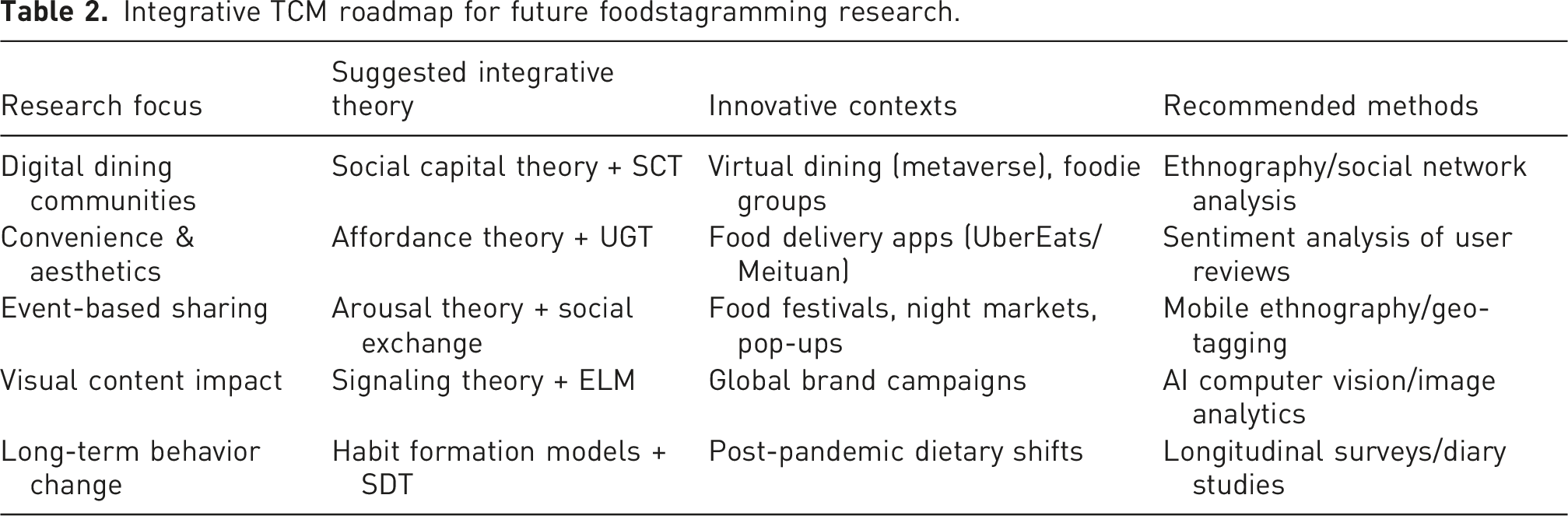
The investigation of digital dining communities directs research away from studying single users who post content and instead investigates how online food communities’ function. The research stream combines Social Capital Theory (Putnam, 2000) with Social Cognitive Theory (SCT) (Bandura, 1986) to explain how these social factors affect dining choices and which content users will share with others. Social capital explains how people build influence and status within online environments while SCT describes how people learn from what they see others do and later perform those actions. Dynamic social patterns emerge from Metaverse virtual dining environments and platform-based foodie groups which create new research opportunities. Ethnographic methods enable researchers to identify common social practices and identity formation methods while social network analysis enables researchers to track digital community relationships and their central positions and prestige movements.
The research study investigates user behavior through the analysis of platform interfaces which create convenience and aesthetic appeal for their users. The researchers used Affordance Theory (Gibson, 1979; Norman, 1988) and Uses and Gratifications Theory (UGT) (Katz et al., 1973) to develop their results which demonstrate the way users want to experience technology through its algorithm-based recommendations and filters and rating systems and frictionless ordering functions. Affordance theory explains what actions digital platforms make possible or salient, while UGT clarifies why users actively select media to satisfy psychological and social needs. The design of interfaces in food delivery systems like UberEats and Meituan functions as a control mechanism which determines what users will eat and how they will perceive food.
The sharing of events through digital platforms operates most effectively during moments when people experience intense emotional reactions. Researchers who study food festivals, night markets, and culinary pop-ups can build their work on Arousal Theory and Social Exchange Theory to discover how heightened sensory experiences lead people to share content because they experience deep emotions and expect social benefits. Arousal theory explains why people get motivated by new and exciting things while social exchange theory describes how people use social media posts to get validated through reciprocal social behavior. Mobile ethnography provides researchers with a method to observe people in their natural environments while geo-tagging analytics shows them how event-related content spreads through different geographic areas.
Fourth, the focus on visual content impact directs attention to persuasive mechanisms embedded in food imagery. The integration of Signaling Theory (Spence, 1973) and the Elaboration Likelihood Model (ELM) (Petty and Cacioppo, 2012) facilitates an understanding of how visual cues—such as plating sophistication, color vibrancy, and composition symmetry—communicate quality, authenticity, or luxury. Signaling theory explains how people use visible traits to share information about hidden traits while ELM shows how these visual signals affect people through two different processing methods which include both analytical and heuristic systems. This framework is particularly applicable in global brand campaigns and influencer marketing strategies. The combination of AI-based computer vision and image analytics methods enables researchers to measure visual elements in a neutral way while discovering how these elements affect user engagement.
The researchers investigate how people sustain their behavior changes by studying continuous posting practices which lead to permanent changes in their daily activities. Researchers can study the relationship between digital documentation and dining habits through the combination of habit formation models (Lally et al., 2010) and Self-Determination Theory (SDT) (Deci and Ryan, 2013; Ryan and Deci, 2000). The process through which people turn deliberate actions into automatic behaviors is described by habit theory, while SDT identifies two types of motivational regulation: autonomous and controlled. The current study focuses on how people changed their eating habits after the pandemic while they became more aware of sustainable practices. Longitudinal studies and diary research should be used to track how people change their behavior, which currently depends too much on cross-sectional research methods.
The research agenda combines three elements which include theoretical integration and contextual expansion and methodological sophistication. The researchers have defined foodstagramming through its operation as an intricate socio-technical system which connects psychological mechanisms with platform design features and community organization and permanent changes in behavior. The field needs this integrative approach to progress from its current state of descriptive fragmentation toward developing strong explanatory and predictive abilities.
Future studies need to combine quantitative with qualitative research methods (Atwal et al., 2019; Wong et al., 2019). Incorporating diverse participants will strengthen generalization and hypothesis testing (Huang, 2024; Lee et al., 2025). Other methods such as semi-structured interview approaches reveal deep insights into why people foodstagram (Chang, 2022; Wong et al., 2019). The combination of restaurant review analysis with surveys helps to strengthen research validity.
Conclusions, implications, and limitations
Discussion
The results of this systematic review indicate that foodstagramming can be no longer viewed as a social media fad or a shallow online behavior. Instead, it is the structural change in the consumer-digital technologies-hospitality providers relationship. Dining experiences are becoming packaged, spectaculated and consumed selectively not just due to their inherent pleasure, but also to work as digitally circularly facets of a prestige-driven visibility economy. This new paradigm includes not just the taste or quality of service, but also the aesthetic shareability of meals, their symbolism, and the possibility of being engaged through algorithms. The dining experience is therefore restructured as a type of hybrid offline-online experience where experiential consumption and digital self-representation are closely integrated.
Our synthesis also suggests that even though the literature does show a relative agreement in defining fundamental psychological antecedents including self-presentation motives, needs of social connection, memory preservation and hedonic gratification, the domain is still conceptually disjointed. A significant proportion of current studies view foodstagramming as a chronological and sequential process (e.g., motivation - posting behavior - behavioral intention), thus considering each of the steps as a self-standing and independent activity. This reductionist model does not consider the systemic and reciprocal relations between users, platforms and hospitality organizations. As an example, platform algorithms intensify some form of aesthetic style, which shapes consumer expectations; these expectations impact the decoration strategies of restaurants, engineering menu, and spatial aesthetics, and thus, the same visual norms that propelled engagement in the first place. Isolated and cross-sectional behavioral models can not adequately explain this cyclical dynamic.
The future research needs to reconceptualize foodstagramming as a socio-technical ecology, a dynamic multi-level system whereby user psychology, platform affordances and behavioral real-world manifestations co-evolve. In the framework of this ecology, personal motivations are acted upon by technological systems (e.g., algorithms, filters, measures of engagement) to generate not only direct behavioral effects (e.g., choice or intention to visit a restaurant) but also more systemic effects (e.g., brand repositioning, service innovation, changes in dining culture). This kind of integrative approach would enable researchers to go beyond descriptive correlations to explanatory models that are able to encompass the feedback processes, identity formation processes over a long period of time and systemic changes in hospitality consumption.
It is through locating foodstagramming within the context of this socio-technical ecological perspective that the phenomenon can be made out as not just a behavior of user-generated content, but a digitally mediated reorganization of experiential value creation, prestige, and market signaling across the modern hospitality setting.
This study undertakes a core-level inquiry into and maps the full scope of existing research on foodstagramming, consists of a systematically organized literature review and a bibliometric analysis, and outlines a theoretical roadmap for future scholarly inquiry (RQ1). The principal benefit of using the ADO-TCM framework was that our application consistently demonstrated its intended functionality of categorizing the essential elements of the body of extant literature, with the ultimate Antecedents identified in the form of a specific set of psychological and social-psychological primary drivers, and they are basically rooted in the idea of self-presentation, connection, and memory keeping. We established the Decision-making processes that were mainly restricted to transactional preferences, such as restaurant choice and restaurant visit intention, and the outcomes, which were mainly on an optimistic concept of better well-being and business incentive such as brand recognition (RQ2). The review also affirmed the methodological and theoretical structure of the field, which was identified to be highly dependent on a limited number of Theories (e.g. Social Cognitive Theory), and a concentrated emphasis on particular contextual dimensions, which is Instagram and urban dining, and the use of primarily quantitative surveys (RQ3). Through this systematic examination, it was possible to narrow down the specific research gaps, which were present, such as neglecting the multifaceted nature of digital platforms, the underestimation of the negative social outcomes, and the current lacking exploration of the emerging technologies, and an estimated research plan was formulated that could help create more multidimensional and complex perception of the phenomenon (RQ4 & RQ5).
Foodstagramming research remains in a developmental phase, with basic theoretical foundations in place but lacking deeper cognitive and critical exploration. Current studies often treat foodstagramming as a series of isolated, context-detached actions rather than as part of a socio-technical ecosystem that interlinks user motivations, digital platforms, and tangible behavioral outcomes. This fragmented approach has led to gaps in understanding how social validation, technological mediation, and long-term behaviors such as dietary changes or consumer spending connect. As a result, the literature lacks predictive power and cohesive theory, limiting its practical and academic utility. The field requires more integrated methodologies that trace the entire behavioral chain to construct a more accurate model of foodstagramming dynamics.
The study posits that foodstagramming is not a passing social media fad but a structural shift in the relationship between consumers, technology, and the hospitality industry. Dining has transformed from a fleeting experience into a digital asset—curated, shared, and consumed within a prestige-driven economy. This transition demands that hospitality professionals evolve into “experience architects,” designing environments optimized for visual shareability. Simultaneously, the research community must confront the overlooked negative implications of performative dining, such as social validation pressure, unsustainable consumption, and food waste. As digital documentation becomes increasingly embedded in dining culture, future research should focus on this evolving triad—diner, technology, and restaurant—and its wide-reaching effects on identity, service innovation, and the evolving notion of what defines a quality dining experience.
Theoretical implications
The study is one of the earliest systematic reviews of the emerging studies on and around the phenomenon of foodstagramming. Using the trend of publication and key authors, geographical locations, and terms that commonly co-occur in publications, it identified the foundational texts and theme clusters that delimit the field. Such keywords as self-presentation, consumer behavior, and the social media became central showing a heavy use of psychological and marketing aspects in the phenomenon. Compared to earlier narrative reviews, which tended to aggregate thematically, the study mainly aims at acquiring knowledge about how foodstagramming is regarded as a holistic socio-technical system. In this way, it narrows down the research prism to fill the gap in research related to a critically important yet understudied relationship between user motivation, dynamics of the platform, and real-world hospitality outcomes. This method provides a comprehensive insight into this concept of foodstagramming overlapping the borders of psychology, marketing and hospitality management thus enhancing the theoretical aspect in this growing area.
Another theoretical significance is associated with the fact that it uses the ADO-TCM framework to organize the content analysis. The systematic organization of the literature into the antecedents, decisions, the outcomes, theories, contexts, and methods of foodstagramming allowed the research not only to reveal the common patterns but also identify the infrastructural limitations of the field and, among them, a lack of consistent correlations between motivating factors and long-term effects on behavior. It demonstrated the way that the theoretical models are frequently used, detachedly, which constrains their clarifying capacity. The cross disciplinary synthesis presented here does not only bridge the gap between consumer psychology and hospitality management but also offers a systemic critique of the existing theoretical discourse on the same as a precursor to more integrated and process oriented models.
Above all, the study was the first to incorporate the use of systematic literature review (SLR) and bibliometric analysis in the field of foodstagramming. This combination of methodologies translates into a multi-dimensional broad picture of the research status. In greater detail, the SLR synthesised in breadth and depth the main theoretical contours and empirical evidence with a rich and qualitative synthesis of the overall coverage of the field, whereas the bibliometric analysis quantitatively charted the intellectual landscape of the field, helping to identify works with sway, network of keyword topics, and research paths. The synergistic combination of ideas gained through this twofold corpus promised to offer an evidence-based and elaborate research agenda that defines believable roadmaps in the future growth of the field.
Practical implications
This study presents some practical guidelines that can be adopted by the hospitality and tourism industry so that they can succeed in utilizing the foodstagramming phenomenon. Instead, restaurant and hotel managers have to put their energy toward actually designing the work and space to make it actively Instagrammable: use graphic-driven production of dishes and environs, ambient light at the right temperatures, appealing other interior design that prompts organic sharing; have employees trained to help in the photographing process as part of customer interactions. Moreover, destination marketing organizations (DMOs) must utilize the user-generated content to establish the gastronomic identity of a given location via hashtag campaigns, collaborating with influencers, and crafting such foodstagramming paths as “foodstagrammable trails”. When it comes to digital strategy, companies cannot afford to rely on Instagram alone and reach target audiences on video-based applications such as TikTok, where the strategy of video-based apps means that audiences respond better to more authentic and trend-based content. Lastly, industry policy makers need to put forward the responsible marketing standards, which may curtail the various repercussions such as food loss, and institute information sharing mechanisms which can guide companies at any scale in realizing both objectives of increased online presence and genuine customer interaction.
This structural change has a managerial aspect in the sense that the hospitality professionals can no longer work as exclusive service providers who are concerned with delivering services in a functional manner (i.e. food quality, efficiency and customer satisfaction). They need to more consciously become experienced architects instead, creating dining experiences that combine senses, aesthetics, and digitally shareable dimensions. The price of a hospitality product in the modern platform-mediated marketplace is no longer confined to the physical consumption of products on-site but may also be enhanced by its possible digital circulation, symbolic signaling, and brand amplification. In this regard, menu engineering, plating design, lighting, spatial layout, and even selection of the tableware must be strategically edited to create visual storytelling and shareable content online.
Nevertheless, even though the maximization of visual appeal is commercially beneficial, the managers should also be able to identify and prevent the secondary effects of the online culture of dining. Social validation by means of likes, shares, and visibility can worsen the performance pressure of the consumers, stimulating the motivation to compare and be compared, which might lead to a reduction in intrinsic enjoyment of the dining experience. In this regard, hospitality managers should work to ensure that they provide spaces where genuine interaction is fostered as opposed to straight performative consumption. One example is that service staff can be trained to make subtle, as opposed to solely aesthetic, presentation, to create a balance between digital and experiential appeal.
Moreover, increased focus on dishes that are visually appealing can be one of the causes of unsustainable habits, such as large quantities of food, aesthetic overproduction, and the emergence of aesthetic-only ordering, where all that a person orders is to capture a photo and not to eat it. Such a habit can unwillingly enhance the waste of food and inefficiency of resources. Hospitality organizations need to put in place responsible sharing initiatives in order to contain these risks. These may include: • Creating aesthetically pleasing and portion-controlled meals. • Providing half-size or tasting-size services on aesthetic-based orders. • Sustainability messages on digital campaigns. • Motivating conscious eating based on minor behavioral hints. • Incorporating waste-monitoring systems in decision-making on menu designs.
Aligning aesthetic innovation with the principles of sustainability, hospitality managers will be able to make sure that the so-called dark side of digital dining culture does not ruin the environmental and social responsibility objectives.
Finally, the practitioners must reconcile three strategic imperatives, i.e., digital visibility, experiential authenticity, and sustainable value creation. By getting through this triad successfully, hospitality companies will be able to reap the benefits of marketing that the phenomenon of foodstagramming offers and protect consumer health and environmental responsibility in a digital economy that is becoming more prestige driven.
Limitations and future research
This study is subject to a few limitations. To begin with, literature search has been conducted only on the use of the Scopus database and it was restricted to publications in English language. Most of the high-quality academic journals included in this database are also involved, but such a procedure can miss relevant research pooled in other databases (e.g., Web of Science, Google Scholar) or in non-English sources, which may significantly undermine the overall scope of the research and introduce a possible bias towards the Western world. Second, it is implied that the analysis depends on an idea of conceptual organization under the ADO-TCM framework, which is based mainly on literature synthesis and setting up of a theoretical roadmap. Although such approach can be useful in providing a systematic overview of the current state of research, it has the potential to simplify more complex or conflicting results in literature and does not make an empirical test of the proposed relationships itself.
Future studies would entail incorporating literature across databases and the incorporation of multilingual literature to make the coverage of information more expansive and the picture of foodstagramming much more globally representative. We would further advise more refined and in-depth analysis procedures such as meta-analysis or mixed methods reviews to be employed in future research to determine the strength of the relationship, the pattern of consistency, and directionality of the relationship between key variables. As a result, a more methodical empirical test of the conceptual framework and future research directions presented in the given paper can be achieved.
Conclusion
The study demonstrates how foodstagramming altered the fundamental understanding of what makes a restaurant experience enjoyable for diners. Dining assessment now includes digital display capacity together with aesthetic value and platform-based symbolic communication as new standards. Restaurants currently assess dining experiences through their capacity to create engaging online content and their potential to establish digital connections with customers who desire social representation. Foodstagramming serves as digital consumer behavior which transforms hospitality industry practices into new patterns for dining experience sharing.
The transformation delivers exceptional branding and market-positioning advantages to hospitality organizations which have never existed before. User-generated content enables restaurants to increase their brand presence while creating joint value with customers who function as unofficial brand promoters. Restaurants that utilize shareable culinary designs and visually optimized environments gain a competitive edge while building digital communities through their dining experiences. Foodstagramming operates as a marketing tool which enables brands to deliver immersive customer experiences while telling their brand stories.
The transformation creates substantial ethical problems together with sustainability issues for business operations. Digital documentation has become common practice which leads people to develop compulsive habits for social media platforms while they seek social validation thus creating negative effects on their mental health and their ability to enjoy dining experiences. The aesthetic appeal of dining spaces leads to unsustainable environmental practices which include excessive food portioning and decorative overproduction and food waste which results from customers ordering based only on visual appeal. The emerging tensions demonstrate the need to establish equilibrium between digital visibility plus responsible consumption practices and the maintenance of well-being.
The research scope must expand beyond its current Instagram and urban dining study scope to include studies that use multiple research methods across various social media platforms and different cultural settings. Researchers need to use combined research methods which can track how psychological forces and technological systems and organizational methods and social development work together over time. The research will use three types of methods which are longitudinal studies and experimental studies and multi-level studies to show how this structural change develops through different times and locations.
Researchers and practitioners need to treat foodstagramming as a socio-technical ecosystem instead of a single posting behavior to understand its transformative effects. The hospitality industry will drive responsible innovation through digital advancements by understanding how users and platforms and hospitality systems interact with one another while creating valuable experiences that meet ethical standards and environmental requirements (Figures 4–7). Most relevant affiliations. Top 10 prolific authors in foodstagramming. Occurrence of keywords and total link strengths. An integrative evidence-based overview of foodstagramming literature using the ADO-TCM.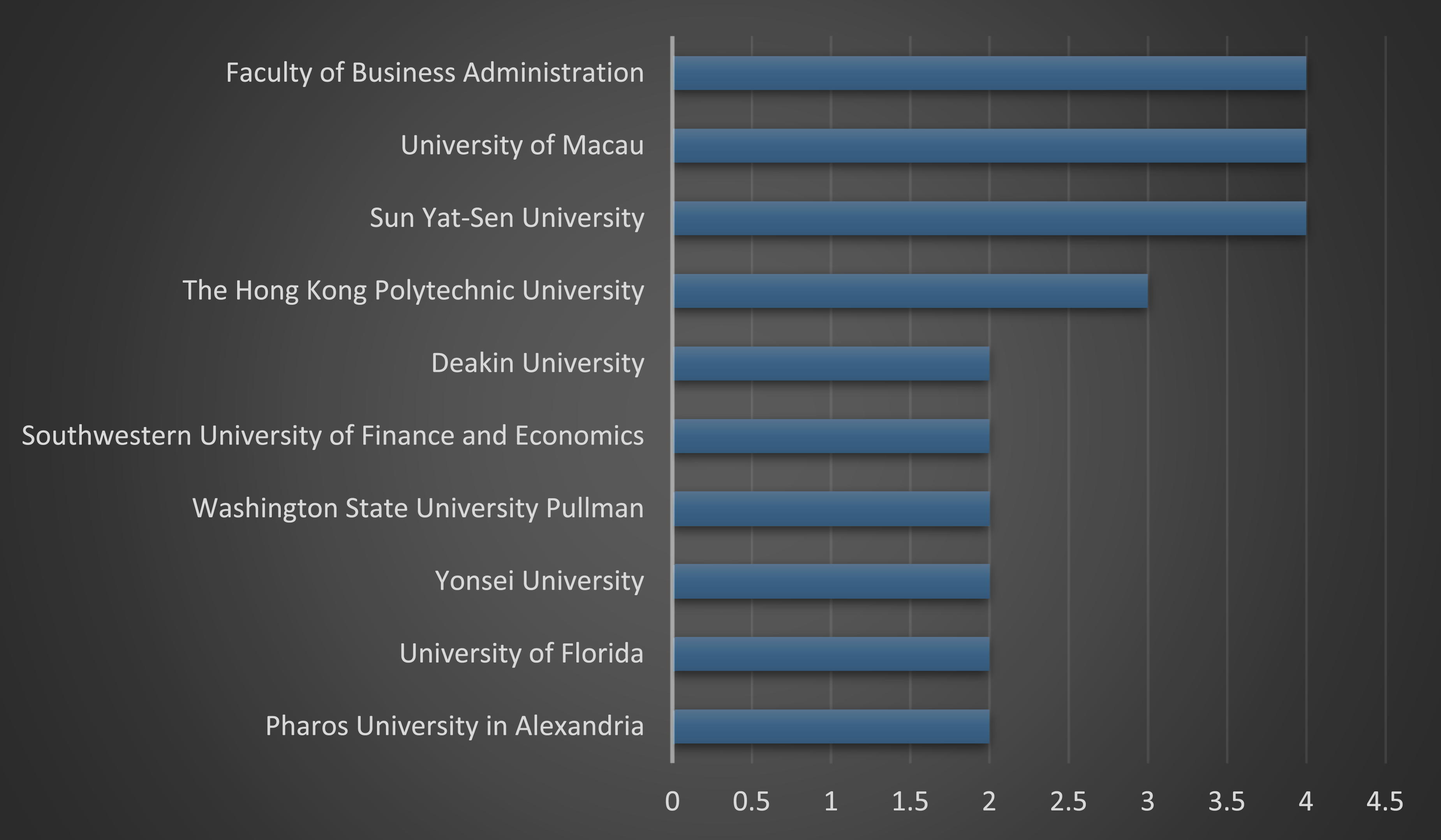
Footnotes

Funding
The authors received no financial support for the research, authorship, and/or publication of this article.
Declaration of conflicting interests
The authors declared no potential conflicts of interest with respect to the research, authorship, and/or publication of this article.
Author biographies