






Abstract
The rapid growth of global economies and urbanization, combined with behavioral factors, has led to an exponential increase in waste generation. This poses serious health risks and environmental challenges. Although general pro-environmental behavior and attitudes are well-studied in tourism and hospitality, less is known about the subject of solid waste management in particular. This paper critically reviews 226 studies which specifically focus on human behavior pertaining to solid waste management in the tourism and hospitality industries. Among the findings discussed are the four primary thematic clusters forming the basis of the field, identified through bibliometric and network analyses. The theoretical frameworks mentioned in the reviewed literature are largely limited to psychological theories, and many studies do not posit a strong theory around solid waste management behaviors. The review also found that food waste is the most frequently studied solid waste type compared to other waste types (e.g., plastic, paper, etc.) in hospitality and tourism scholarship. This review emphasizes the necessity of adopting broader approaches to understanding solid waste management behaviors in the hospitality and tourism sectors by considering different waste types, technological advancements, educational programs, and policies, and extending social and technology-related behavior theories to improve solid waste management efforts within the industry.
Keywords
Introduction
As global economies continue to expand and urbanize, there has been an exponential surge in waste generation, leading to significant health and environmental hazards (Raghu and Rodrigues, 2020). The United Nations Environmental Programme and United Nations World Tourism Organization reported that globally, tourism generates more than 35 billion kilograms of solid waste annually (Bien et al., 2012). Within the United States (US), statistics from 2018 revealed the generation of 292 billion kilograms of municipal solid waste, equivalent to an average of 2.27 kg per person per day (US EPA, 2025). In some areas, tourists are argued to produce up to twice as much waste as residents; US tourists annually generate an estimated 4.8 billion kilograms of waste (US EPA, 2023). In the UK, the tourism sector was estimated to generate approximately 23.9 billion kilograms of waste in 2019 (Waste Managed, 2024).
The hospitality and tourism industry is unique due to its human-intensive nature, constantly changing consumer demands, and the tendency of visitors to consume more packaged goods, food, and disposable items, which contribute to significant waste generation. Prior studies have outlined that the types of waste generated within hospitality and tourism settings include food, plastic, glass, and other materials commonly disposed of in hotels, restaurants, and other tourist facilities (e.g., Pirani and Arafat, 2014). Food waste is especially prevalent due to its ties to consumption behaviors, which are often influenced by cultural norms and traditions (e.g., over-preparation), personal habits (e.g., over-consumption), and social norms (e.g., portion sizes) (Mak et al., 2012). It remains a major issue in tourist destinations (Delgado et al., 2023). The promotion of pro-environmental behaviors among tourists is crucial for the long-term sustainability of the tourism industry (Clark et al., 2019). Yet, it is evident that tourists are less inclined to engage in pro-environmental practices during their vacations, as they often feel less obligated to adopt environmentally-friendly behaviors while traveling compared to at home (Juvan and Dolnicar, 2014). Despite the impact of tourism-related solid waste generation on the environment and society, this aspect has been largely underestimated. As a result, specific behaviors and strategies for managing or reducing solid waste in tourist destinations require empirical explanation.
One of the primary drivers of this escalating problem lies in human behavior. Human behaviors shape patterns of solid waste generation and their environmental and societal impacts. In some regions, studies have revealed that tourists produce double the amount of waste in comparison to local residents, placing significant strain on local solid waste management systems (Sustainable Travel International, 2024). The expansion and evolution of tourism have undeniably contributed to environmental degradation and sustainability challenges, particularly in relation to solid waste generation (Wang et al., 2021a). While there are tourism and hospitality studies on pro-environmental behavior (Loureiro et al., 2022), no study has focused specifically on solid waste management in relation to human behavior. Waste generated by restaurants, attractions, and hotels is substantial; this paper concentrates on the behaviors of humans (i.e., tourists, guests, employees, etc.) and solid waste management.
Based on the identified issues and knowledge gaps, this paper critically reviews existing literature on solid waste management in the context of tourism and hospitality and in relation to human behavior. This study systematically reviews and organizes relevant scholarly articles to analyze selected literature based on specific keywords on solid waste management in tourism and hospitality. It aims to identify thematic clusters and intellectual frameworks within this field, and to propose future research directions for solid waste management in tourism and hospitality.
Definition of solid waste and research on solid waste management
There are several ways to define solid waste, and it is important to distinguish between municipal solid waste, which is the focus of this current study, and non-municipal solid waste. Municipal solid waste consists of discarded solid materials from residences, small businesses, and city buildings (such as everyday items like food, paper, plastic, glass, etc.), whereas non-municipal solid waste is discarded solid materials from industry or large-scale production (such as construction, mining, agricultural, and hazardous waste). Since this study focuses on solid waste management in tourism and hospitality from a human behavior perspective, only municipal solid waste will be examined. Hereafter, “solid waste” will refer to municipal solid waste unless stated otherwise. Municipal solid waste management is regarded as the most important service a city provides (Hoornweg and Perinaz, 2012). Appendix A1 details some different definitions of solid waste; the definitions are general rather than sector-specific.
Different types of solid waste should be considered in the context of hospitality and tourism. Previous studies analyzed solid waste management in the hospitality industry, identifying the types of non-hazardous waste produced in the hotel industry, including food, paper, plastic, cardboard, metal, glass, cloths, wood, and organic waste (e.g., flowers and plants, branches, grass, fruit and vegetable peelings) (e.g., Goh et al., 2022; Okumus et al., 2020; Pirani and Arafat 2014). These studies examined various waste types and management practices; however, the authors primarily focused on food waste, as it is one of the most significant waste streams in hospitality. Radwan et al. (2012) also compared solid waste management in green and non-green small hotels in Wales, UK. Nevertheless, a clear definition of solid waste specific to hospitality and tourism remains absent. For the purpose of this study, the authors will adopt the definitions from the US Environmental Protection Agency and IPCC (Appendix A1), considering the following types of solid waste: food, paper, plastic, glass, metal, glass, wood, and other (e.g., dust, soil, electronic waste).
Solid waste management models and practices have been studied in hospitality and tourism. Studies date back to the 1990s when articles such as Cummings (1997) developed a hierarchical model of hospitality solid waste management, later applied by Radwan et al. (2010) to study the management of solid waste in small hotels. The waste hierarchy model, which includes prevention or reduction, reuse, recycling, recovery, and disposal, has been widely adopted across waste management disciplines (Radwan et al., 2010). Ball and Taleb (2011) developed a model for larger hotels in Egypt to assist them in recycling hotel waste. However, studies focusing on the behavioral aspects of solid waste management within the hospitality and tourism context remain limited.
Existing studies related to the influence of tourist waste reduction behaviors in destinations have highlighted how these behaviors can be adopted while traveling (Clark et al., 2019; Wang et al., 2021b). Notably, Whitmarsh et al. (2018) examined waste reduction behaviors at home, work, and holidays, eliciting the importance of both contextual (e.g., facilities) and individual (e.g., identity) factors in shaping waste behaviors and that within-context (e.g., home) behaviors are generally more strongly related to waste reduction. However, this study did not specifically examine waste reduction behaviors during travel. In general, waste reduction initiatives in tourism and hospitality tend to focus on changes in organizational processes and staff behavior, while attempts to change visitors’ behaviors are less common (Pirani and Arafat, 2014). While there is a growing public awareness of waste-related issues, such as marine pollution, and increased recycling rates in many countries (Kaza et al., 2018), progress in understanding waste reduction and reuse behaviors in hospitality and tourism settings has been relatively limited (Whitmarsh et al., 2018).
Theories and theoretical underpinnings of (solid) waste management studies in hospitality and tourism are scarce. Raghu and Rodrigues (2020) conducted a systematic literature review on the behavioral aspects and theories related to solid waste management, focusing on the research linking solid waste management and psychological behaviors. Commonly used theoretical (psychological) models related to pro-environmental behaviors in tourism and hospitality include the theory of planned behavior (TPB), the value belief-norm (VBN), and the norm-activation model (NAM), reflecting frameworks applied beyond the tourism and hospitality context (Raghu and Rodrigues, 2020). Most papers they evaluated focused on recycling, which is essential to converting waste into useful material, while behaviors like reduction and reuse were limited. Loureiro et al. (2022) employed text-mining techniques to review existing literature on pro-environmental behavior in tourism and hospitality, exploring the subject’s conceptualizations and key topics. The theoretical models identified were similar to Raghu and Rodrigues (2020). This reveals a significant knowledge gap in tourism and hospitality research, as well as in environmental psychology and behavioral science, particularly regarding waste management behaviors beyond food waste and within travel contexts. Given the transient, diverse, and high-consumption nature of tourism and hospitality, behavioral aspects of solid waste management are especially critical.
Research design
This research reviews existing knowledge related to solid waste management and behavior. The review has two steps: (1) bibliometric analysis and (2) narrative analysis based on the bibliometric findings. This facilitates a thorough and critical evaluation of the collected literature, providing valuable insights to guide future research directions.
Data source
The data sources utilized for this review are the Web of Science and ProQuest, with data retrieved in March 2024. The search was limited to the period from 2003 to March 2024. Both sources are recognized as leading international scientific citation indices and peer-reviewed academic platforms (Visser et al., 2021). Web of Science is one of the most comprehensive academic sources in the social science field, ensuring the reliability and validity of the retrieved research output (Gomezelj, 2016). ProQuest hosts multidisciplinary content containing scholarly journals, books, dissertations and theses, and more. Scopus is also a well-known academic source, but due to restricted access to Scopus, it was not considered in this research. Both sources are housed under Clarivate, and both sources were used to obtain as many relevant articles as possible.
Article selection
The relevant literature was identified via a search strategy. Several search criteria were adopted. Only English-written full-length empirical and review articles, conference papers, and book chapters were included in the search. It is noted that journals include both open-access and subscription-based peer-reviewed journals. This was because the researchers intended to search for all available articles (even those in open-access journals) that were relevant to the research aim and objectives. The keywords ‘solid waste, ‘waste, ‘waste management, ‘tourism’, ‘hospitality’ and ‘behavi*’ were used to build the target literature sample. A Naïve Boolean search using the following terms was conducted on both databases: (“solid waste” OR “solid waste manag*” OR “waste manag*” OR “waste”) AND (“tourism” OR “travel” OR “destination” OR “hospitality” OR “hotel” OR “restaurant” OR “lodging” OR “accommodation”) AND (“behavi*”).
Following the preferred reporting items for systematic reviews and meta-analyses (PRISMA) flow (e.g., Kim et al., 2022), Figure 1 presents an overview of the literature search process. A total of 1207 articles were directly extracted from the two data sources. Duplicates were removed, leaving 1076 articles. The initial search was based on their titles, abstracts, and keywords, followed by a manual screening of titles and abstracts to select literature specifically focused on solid waste management and behavior in tourism and/or hospitality. To reduce potential personal bias, the data screening and the last step of the selection process were conducted by multiple researchers and cross-checked within the research team. After screening, 832 articles were excluded as they were irrelevant to solid waste management and/or tourism and hospitality, leaving 245 articles, and an additional 19 articles were removed either because their main topic was not related to tourism and hospitality activities. In the end, 226 articles were eligible for analysis. Literature search and selection process.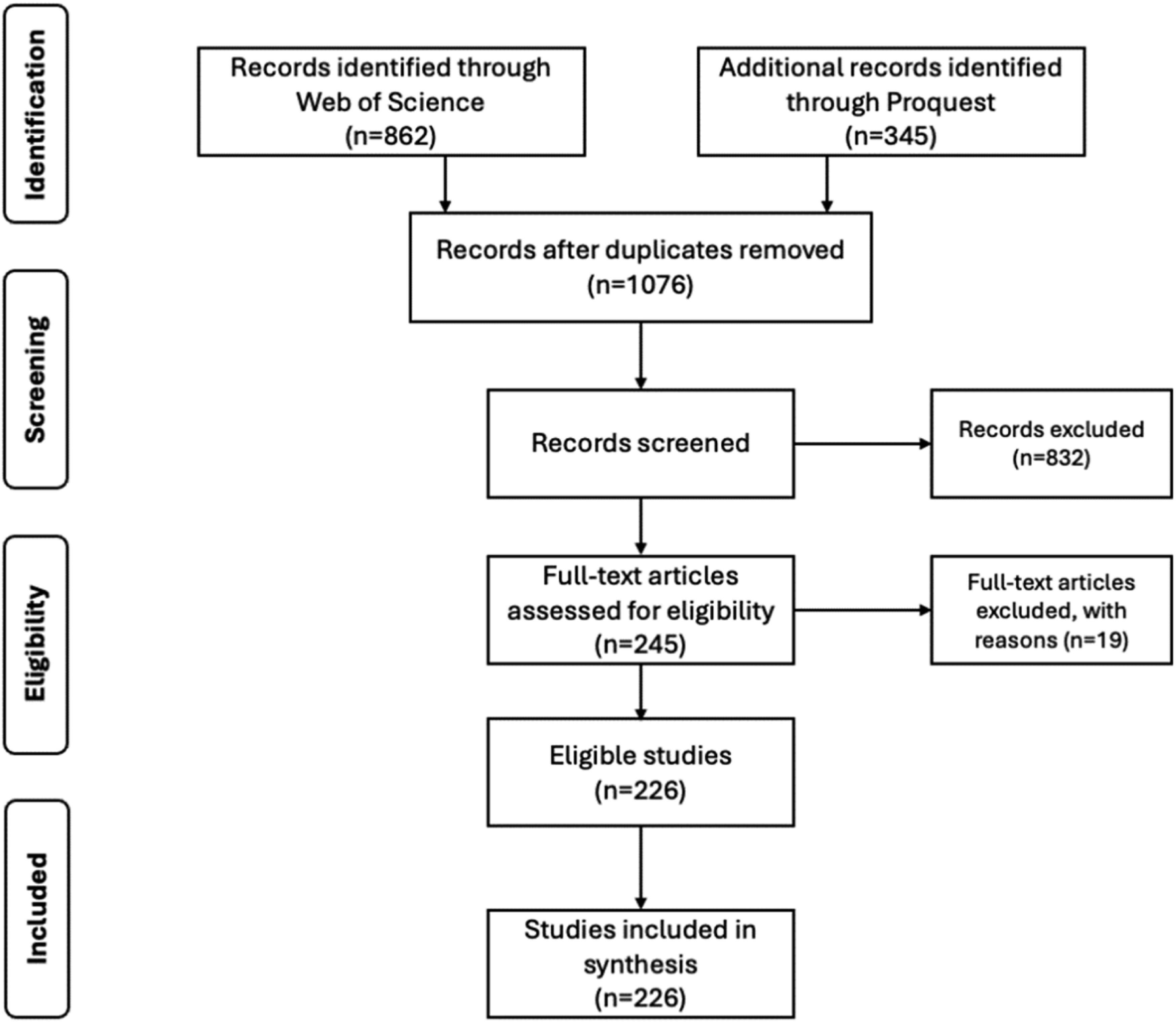
Data analysis
Bibliometric analysis serves a dual purpose: firstly, to discern the intellectual structure of the subject, and secondly, to identify gaps in the existing scholarship on solid waste management and behavior. This analysis is complemented by a narrative literature review to provide a more holistic understanding of the topic. For the bibliometric analysis, this study used the R package, bibliometrix, and its web-based interface, biblioshiny (Aria and Cuccurullo, 2017). An overview of the authors and publications is presented in the descriptive statistics based on the collected literature. The core sources and authors, source impact, and total citations per year were also investigated. Authors’ keywords were analyzed using the co-occurrence network analysis to capture clusters of keywords and observe the key research topics related to solid waste management in tourism and hospitality, and behavior in the collected literature.
Core study areas and theoretical frameworks are crucial for connecting diverse research streams and guiding future research directions. Co-occurrence network analysis, which utilizes authors’ keywords, was employed to map the knowledge structure in research on solid waste management and behavior within tourism and hospitality, facilitating the identification and integration of different research domains. In this study, the network parameters applied to the co-occurrence analysis consisted of the Louvain clustering algorithm, association for normalization, and an automatic network layout. In the networks, nodes represent unique words, and the edges correspond to the frequency of words co-occurring in a document. A high co-occurrence frequency suggests that the two or more appear together more often than would be expected by chance (Aria and Cuccurullo, 2017). The network’s characteristics were examined using centrality measures such as betweenness, closeness, and degree. A word with high betweenness serves as a crucial link connecting other words. These measures offer insights into the words’ influence within the network regarding the flow and dissemination of information. Closeness centrality indicates the extent of a word’s influence across the entire network by measuring its proximity to other words.
A thematic map is also used to highlight the key themes of a given domain. By applying a clustering algorithm on the keyword network, each cluster/theme was plotted as a thematic map – centrality measures the theme’s relevance, and density measures the theme’s development (Aria and Cuccurullo, 2017). Each cluster (in the shape of a bubble) represents a network cluster. The bubble size is proportional to the cluster word occurrences, and its position is determined by Callon centrality and density (Aria and Cuccurullo, 2017).
Findings
Descriptive statistics and overview
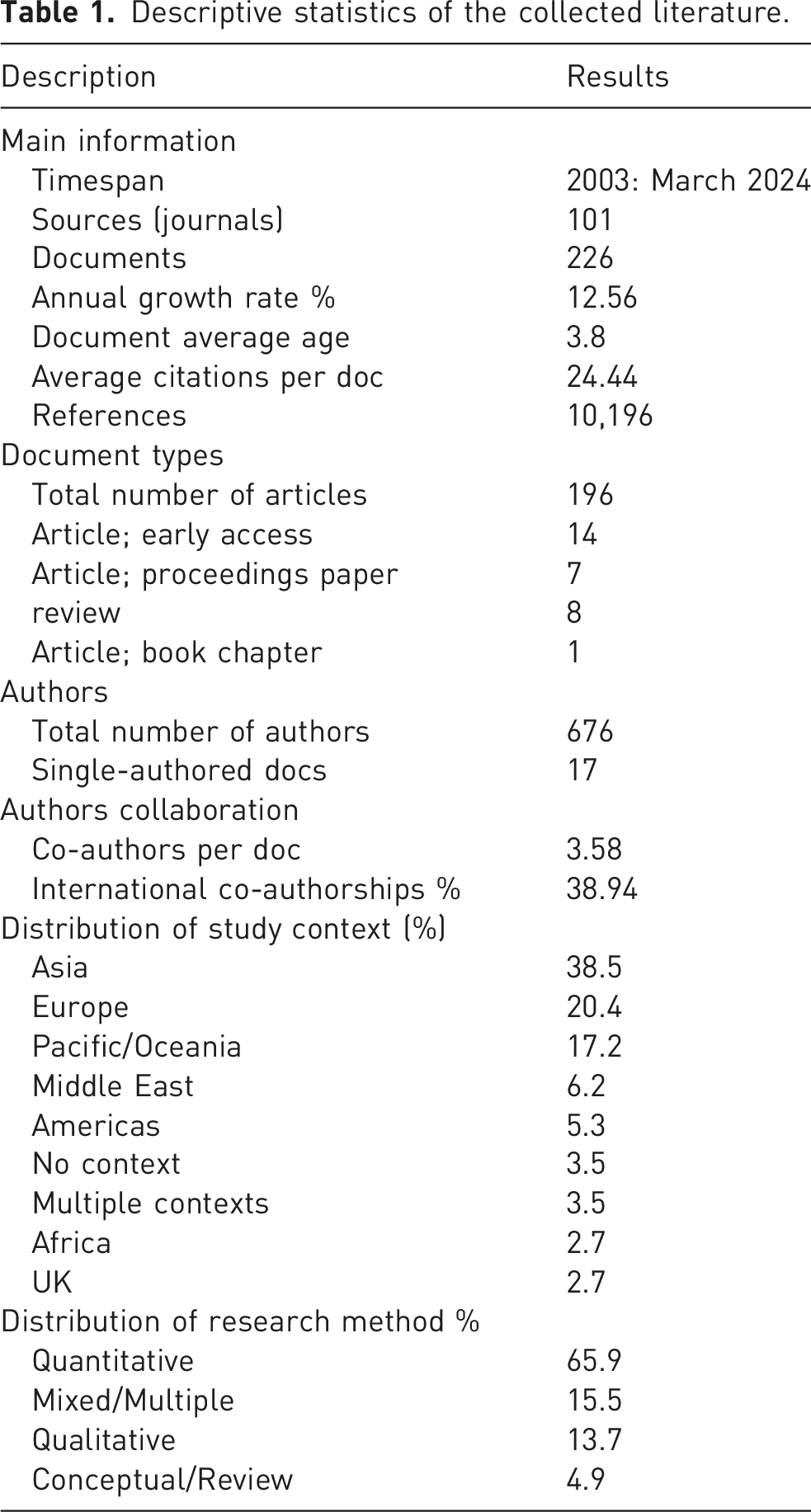
Descriptive statistics of the collected literature.
Articles by waste type.
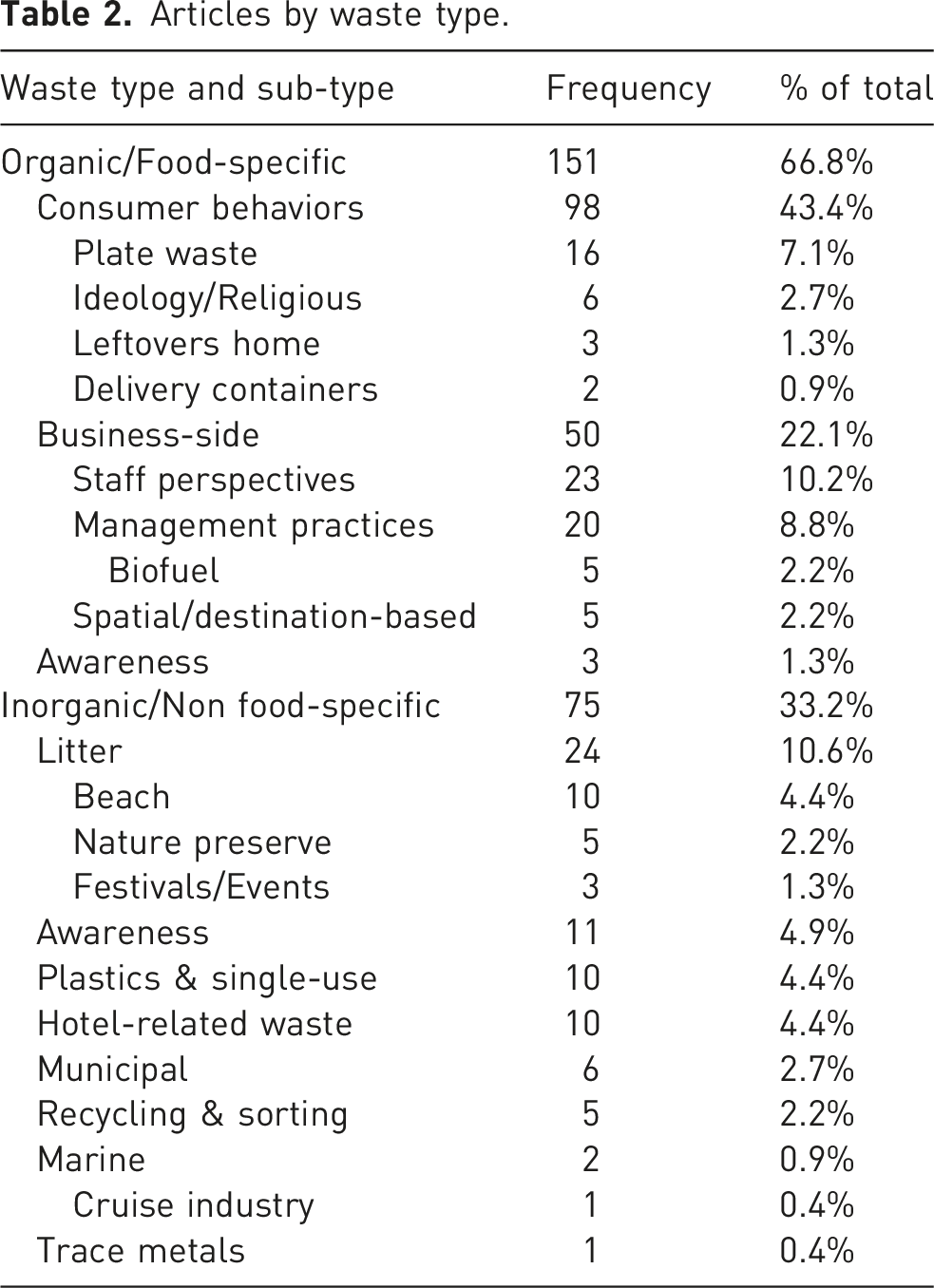
In general, food waste articles did not elaborate on the waste type beyond a basic reference to food itself, except for two articles about the extra waste generated by the food delivery industry in the form of disposable containers (Collis et al., 2023; Hitt et al., 2023). Most of the food waste articles pertained to consumption behaviors, while a smaller proportion looked at food waste from the business side of waste management, such as food production. For instance, five articles looked at the potential of restaurants as a source of biofuel from recycled cooking oil. Five articles examined spatial or destination-based aspects of food waste, such as location-specific management practices (Pontes et al., 2022) and carbon footprint measurement frameworks (Wang et al., 2024).
On the other hand, non-food specific waste was used to describe studies that address all forms of solid waste that can be traced to participants in the hospitality and tourism industry. In some cases, these articles include but are not limited to food waste as part of the general solid waste discussion. Other types of waste discussed include plastics (e.g., water bottles), hotel toiletries, and single-use plastics used for dining outside the home, which are also described in Table 2. Articles pertaining to “litter” (24 in total), referring to solid waste that is improperly disposed of and conspicuous to others, focused on visitor behaviors and reactions, and were further classified into the destination context, e.g., beaches, nature preserves, and festivals or events. Apart from litter, 10 more articles addressed plastic waste in a general sense (e.g., single-use plastics) and disposables (e.g., plastic water bottles). Another 10 articles explored accommodation-related waste as it pertains to green hotel management strategies; hotel-generated waste types in these articles varied but included some combination of food waste, plastic waste in the form of water bottles and toiletries, and recycling practices.
Eleven articles broadly focused on awareness subjects pertaining to solid waste, highlighting visitor education, marketing initiatives, and public engagement. Six articles concentrated on municipal solid waste, covering collection, disposal, and policy issues in tourism destinations from the local perspective. Five articles further discussed recycling and sorting on a general scale in the tourism industry, focusing on methods to improve resource recovery and reduce landfill use. Finally, two environmental science articles investigated marine waste apart from the coastal/beach litter context: one conceptually detailing marine waste generation from the cruise industry (Butt, 2007) and one measuring ocean trace metals in a beach destination (Jonathan et al., 2011).
Research methods by waste type.

Figure 2 shows the annual production of articles over time. From 2003, the number of articles published per year ranged from zero to five until 2017, during which eight articles were published. The production of articles spiked in 2020 during the COVID-19 pandemic, which is paradoxical considering the reduction of tourism activity characterizing that time period. Yet, an explanation for this can be found in the publications of articles about food waste and single-use plastic waste specifically associated with home-delivery meals from restaurants, which became a popular alternative to dining out in the COVID-19 era (Hitt et al., 2023; Li et al., 2021). Annual scientific production.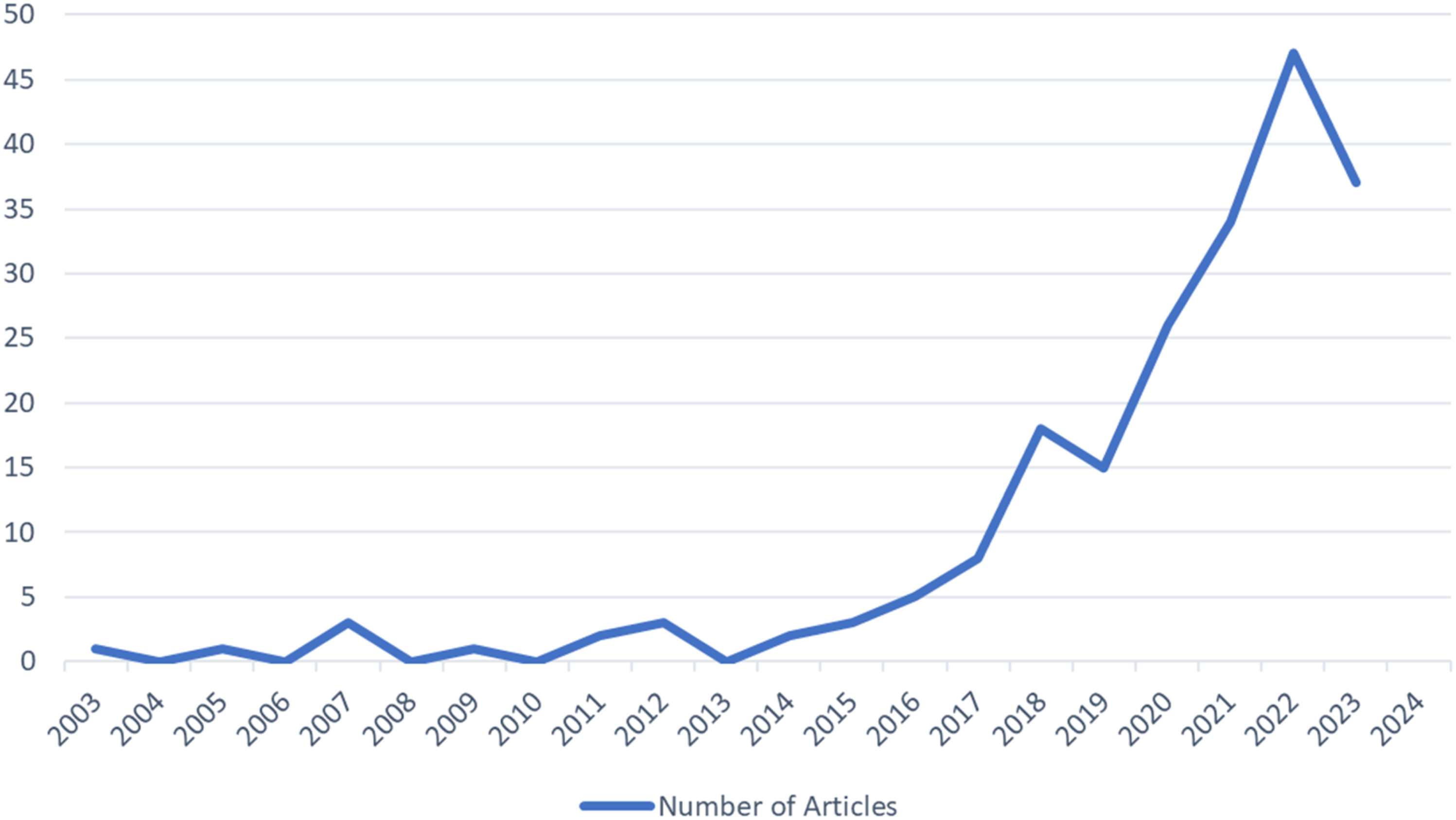
Top 10 relevant sources.
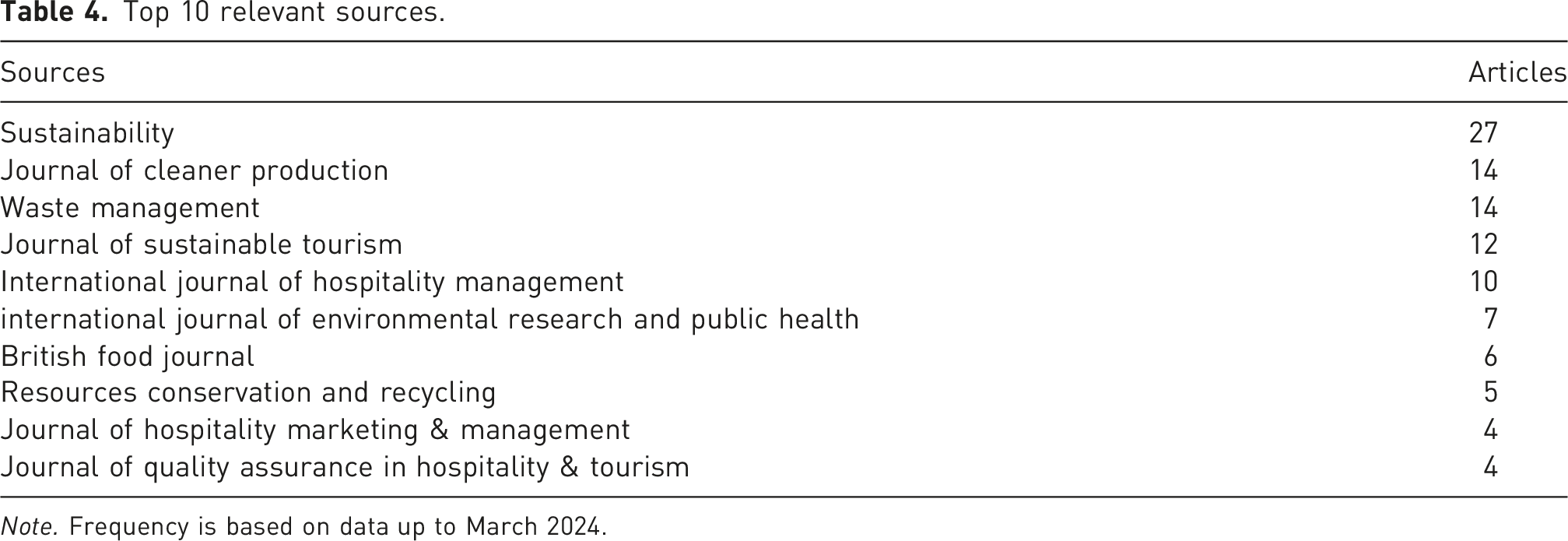
Note. Frequency is based on data up to March 2024.
The most globally and locally cited documents (Appendix A2) also provide some insights into the most relevant articles. Please note again that this is based on data up to March 2024. Five articles among these were placed in both the top global and locally cited document lists. All five of these papers addressed food waste in the context of dining outside of the home. Three of the studies examined an operational or business-level perspective on food waste management, while the other two looked at consumer behavior. The papers with the greatest citation counts are from journals outside of tourism and hospitality, suggesting that environmental science research is surpassing tourist waste management research. Most of the top-cited articles, regardless of subject area, deal specifically with food waste, and the dominance of food waste as the unit of analysis is an important thread in the bibliometric findings, as shown in Table 3 and supported by thematic analysis presented in the following sections.
Co-occurrence network
Figure 3 presents the co-occurrence network representing the relationships among terms found in the author keywords of the articles about solid waste management in tourism. The network is divided into four clusters, each indicating a group of closely related terms. The largest cluster (red) around the term food waste shows the most central term in the network. The related terms in the cluster include plate waste, restaurants, consumer behavior, consumption, leftovers, pro-environmental behavior, and social norms, which highlight some of the factors being researched alongside food waste in the tourism industry. Some of the novel factors investigated in reference to food waste behaviors relate to customer self-perceptions. Hamerman et al. (2018) studied diners’ likelihood to take home leftovers from a restaurant based on situational factors related to theories of social norms and social perception. A more recent study validated the simultaneous action of internal and external norms related to perceptions of beauty and weight control on food consumption and waste behaviors while dining out (Chen et al., 2024). Sirieix et al. (2017), one of the most cited documents, examined how food waste, culture, social norms, and emotions contribute to consumers’ attitudes and behaviors related to “doggy bags”. Yet, the Western European cultural context of the sample heavily influences some of the norms under study, which somewhat limits its generalizability. Nevertheless, there is a common thread around the material, cultural, and economic aspects of the solid waste problem that can be applied and scrutinized within the holistic tourism system. Co-occurrence network.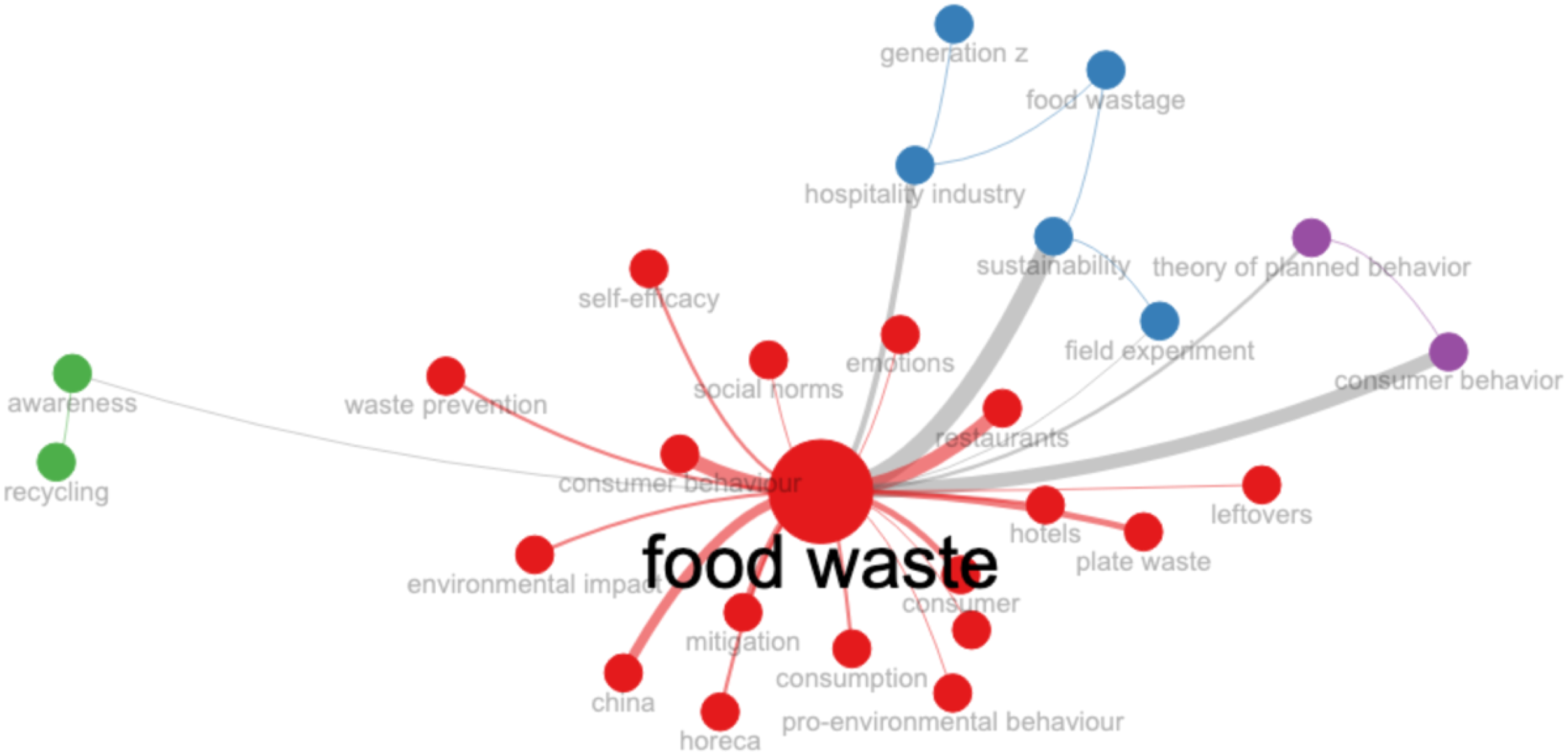
The second cluster (blue), around the terms sustainability, hospitality industry, food wastage, field experiment, and Generation Z, indicates a focus on generational differences and experimental approaches to waste management research. This cluster seemingly emphasizes practical implications, such as understanding Generation Z’s motivations and decision-making processes to develop effective waste management strategies from a general perspective (Puiu et al., 2022) or a specific inquiry, such as self-efficacy perception (Ding and Jiang, 2023). Field experiments, using a similar practical approach, have examined the potential utility of focused interventions in supporting behavioral change among younger customers (Dolnicar et al., 2020).
The next largest cluster (green) centered around awareness and recycling and is associated with efforts to promote recycling and raise awareness about solid waste management, which was observed in the discussion sections of some of the articles. For instance, Attiq et al. (2021) suggested that awareness of the negative consequences of food waste can positively influence consumer intentions to reduce, reuse, and recycle food. However, consumers may not always be fully aware of the financial losses associated with food waste. Similarly, other types of waste, such as plastic, paper, and metal waste, also have significant environmental and financial implications. To promote sustainable waste behavior, it is important to consider actionable strategies for reusing and recycling these wastes. For instance, consumers can reduce plastic waste by opting for reusable containers, kitchens can compost food scraps to enrich soil, or use vegetable peels and bones to create stocks and broths, recycle paper, or use compostable packaging. These practices can minimize waste and contribute to cost savings and sustainability in hospitality and tourism settings. Space-related elements like recycling receptacles for different waste types are also essential (Barber et al., 2014).
Sustainable waste management demands knowledge, skills, and attitudes that may be developed through education. Santos et al. (2005) found that daily beach litter was higher in low-literacy, low-income areas, highlighting the importance of education in environmental awareness and behavior. Comprehensive educational programs can equip individuals with not just the awareness of the environmental impacts of waste but also practical steps they can take to reduce, reuse, and recycle effectively. Ko and Lu (2022) examined Taiwanese hospitality students’ professional competence in food waste prevention. Educational interventions tailored to different demographics – children, youth, adults, and specific groups like tourists – can be particularly effective when they address the economic, environmental, and social implications of waste. For example, Wu et al. (2024) argued the need for innovative styles of environmental education for rural destinations where communities are less educated and comprised mainly of elderly individuals.
The final cluster (purple) is linked to research on the psychological and behavioral aspects of waste management in tourism, as evidenced by the theory of planned behavior and consumer behavior. Examples of these articles come from tourism and hospitality research, such as Park et al. (2021) findings that hotel waste reduction measures positively influence social and personal norms, and subsequently, customers’ willingness to pay more. Similarly, Hu et al. (2019) showed that tourists’ intention to participate in a zero-litter initiative was influenced by their attitudes, subjective norms vis à vis social pressures, perceived behavioral control, past behavior, and economic incentives. The relative scarcity and marginality of these terms in the network suggest an opportunity for closing a research gap.
Thematic maps
The thematic map presented in Figure 4 elaborates on the clustered themes using the collected literature and network analysis (Aria and Cuccurullo, 2017). It presents their position and relevance to the overall field of research. Motor themes, observed in the upper-right quadrant, tend to be the “drivers” of the research domain in that they are well-developed and most central. In this map, this cluster is built around sustainability, with related notable terms including emotions, field experiments, personal norms, beach litter, and coastal tourism. This echoes the co-occurrence analysis, which implies the key themes or topics of research are related to sustainability. Field experiments have been dominantly used in solid waste management and behavior research, and coastal tourism and beach litter have been identified as a motor theme. One of the oldest articles exemplifies these terms as a photography-based assessment of beachgoers’ perceptions of beach pollution (Adam, 2021; Tudor and Williams, 2003). Thematic map.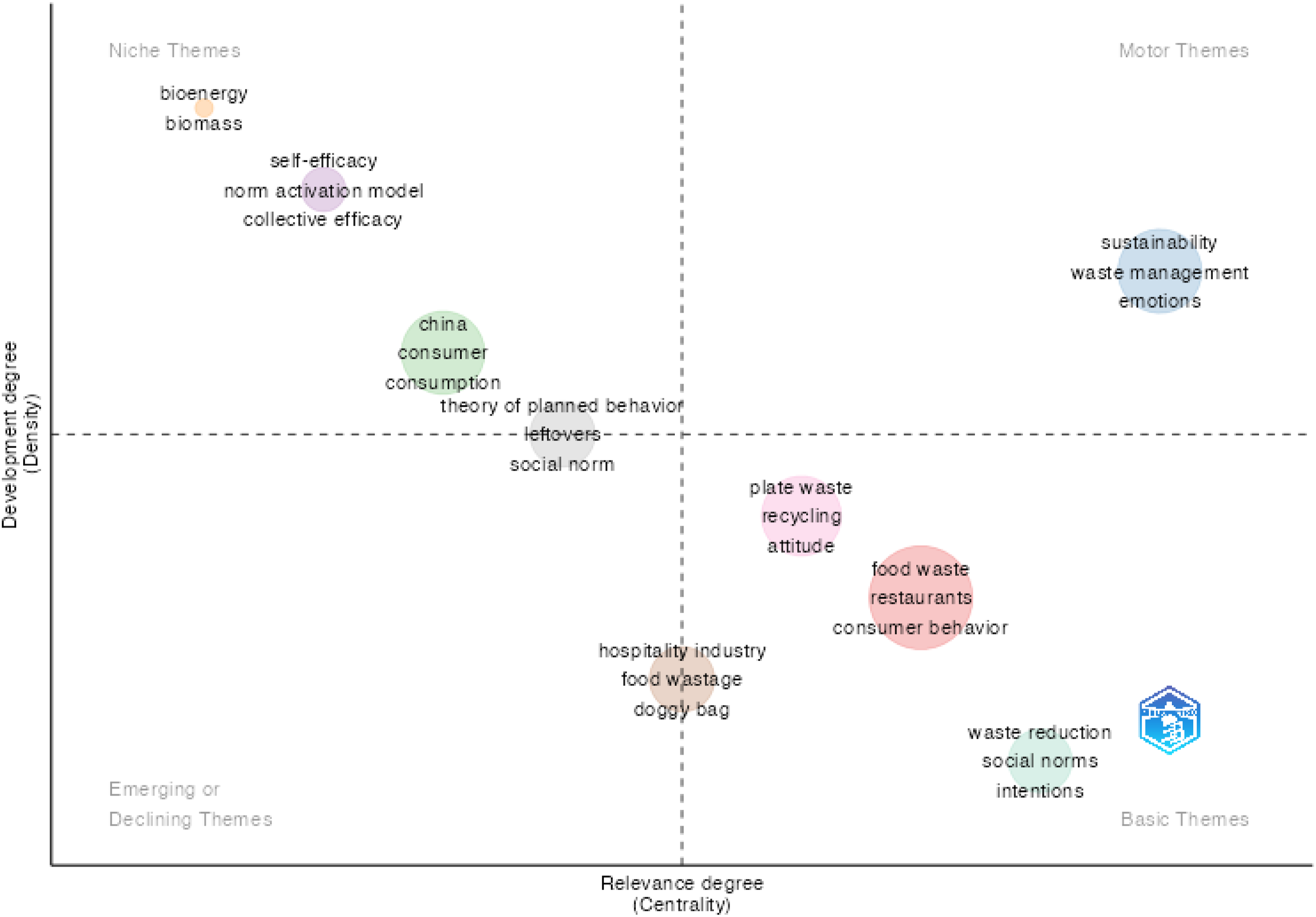
In the lower right quadrant, basic themes are presented. These are characterized by having high centrality and low density within the research field, which suggests that while they may not be the focus of intense research and development, they are well-connected and provide a groundwork upon which motor themes and niche themes build. In this case, the map shows some of the largest clusters, such as food waste with a frequency of 145 occurrences in the author keywords. Related topics within this theme include consumer behavior, waste prevention, environmental impacts, over-ordering, and sustainability practices. This also echoes the co-occurrence network in Figure 4. Papers in this cluster examined consumer behavior in specific dining settings, revealing the variety of factors that influence food consumption during a tourism experience. Vermote et al. (2018) tested portion size reduction as a means to minimize food waste as opposed to the buffet setting. Similar customer preferences were also found in Xu et al. (2020), highlighting the need to acknowledge the cultural and geographic context of food abundance and variety.
A similar cluster is observed around the term plate waste, which refers to a specific type of food waste and food waste research approach in the context of portion sizes and dining establishments. This term is sometimes used to make a distinction from the more general term food waste which encompasses food loss, which refers to wasted food that never made it to end-user consumption (Dolnicar et al., 2020; Okumus et al., 2020). For instance, drivers of plate waste at buffets identified by Juvan et al. (2021) included meal timing, cost of the buffet, and the presence of children. Meanwhile, the quasi-experimental field experiment by Dolnicar et al. (2020) demonstrated the effectiveness of a gamification intervention in reducing buffet plate waste, indicating that gamification can successfully modify behaviors in a hospitality setting without diminishing the overall guest experience.
Notable terms associated with this cluster included recycling, attitudes, nudging, and food waste management. Several studies focused on interventions meant to encourage behavior change regarding food waste as well as other waste types. Kallbekken and Sælen (2013) looked at nudging hotel guests to reduce food waste by reducing plate sizes. Similarly, Cozzio et al. (2021) examined reducing plate waste in a hotel breakfast buffet using persuasive messaging, which highlights the plate waste term in the cluster. Cingolani et al. (2016) explored persuasive and demonstrative messages to reduce littering in river beaches. This cluster’s findings suggest that operators tend to prioritize waste valorization over waste prevention (LaGioia et al., 2024), which may be the key to managing waste in a way that meets customer expectations. However, according to Baloglu et al. (2022), some restaurant operators avoid committing to major capital investments or green certification, instead prioritizing cost-effective green practices such as using biodegradable products, energy-saving appliances and motion sensor lighting.
Niche themes are identified in the upper left quadrant, characterized by their specialization and self-containment within a disciplinary area, resulting in a limited influence on the broader research landscape. These themes include self-efficacy, norm activation model, and collective efficacy in one cluster (Ding 2022; Ding and Jiang, 2023; Wang et al., 2022), and another cluster containing the terms bioenergy and biomass which highlight the potential for using hotel food waste to generate energy. This can refer to the waste recovery stage of the waste hierarchy model (Radwan et al., 2010). Due to its niche status, waste recovery in hospitality and tourism has received less attention than reduction and recycling. Both Gandhi et al. (2019) and Salama and Abdelsalam (2021) focused on the technical aspects and feasibility of waste recovery. This includes the potential of self-sufficiency via on-site energy generation and the associated economic advantages, juxtaposed with barriers like the initial capital investment required for the necessary infrastructure, including staffing and technical expertise (LaGioia et al., 2024). Mak et al. (2018) identified similar barriers along with behavioral motivators such as administrative incentives (e.g., corporate or government support) and general moral attitudes perceived by the customer base. Another cluster in this quadrant which demonstrated slightly more density includes a focus on the geographical context of China (n = 62 within the author keywords) in terms of consumer behavior, consumption patterns, and mitigation strategies for solid waste management (Long et al., 2022; Wang et al., 2021a). This reemphasizes the significance of cultural contexts in the reviewed literature and their relevance to solid waste management behaviors in hospitality and tourism.
Finally, there are no clusters positioned squarely within the lower left quadrant of the map dedicated to emerging or declining themes, which suggests that the existing field of research demonstrates relatively high centrality. However, the cluster on the horizontal axis between the upper and left quadrants includes the terms theory of planned behavior, social norm, and leftovers. The position of this cluster shows a relatively greater centrality compared to the clusters in the niche theme quadrant, which implies its high relevance to the overall theme. The theory of planned behavior is known as one of the most commonly used theories in understanding pro-environmental behavior (Loureiro et al., 2022); it is inevitable to find this theory in the articles collected for this current study. Yet, there are critiques about the over-use of this theory for environmental behavioral studies; thus, the following section will discuss theoretical frameworks identified in the review of the collected articles on solid waste management behaviors in the tourism and hospitality context.
Theoretical frameworks
The articles analyzed in the current research come from a variety of disciplines with different norms for research, but a majority of the articles lack or fail to adopt a specific theoretical framework. For instance, articles that employed simulation models tended to explore the importance of characteristics, such as Hitt et al. (2023) parametric life-cycle analysis of plastic food containers, whereas an approach like evolutionary game theory informed the analysis procedure in Li et al. (2021) examination of the interactions between stakeholders within the context of a single-use plastic ban. Some articles proposed technical or empirical models using quantities of solid waste generation, especially food waste, (e.g., Fischbach et al., 2022; Lorenz and Langen, 2018), instead of proposing a theoretical or conceptual framework to underpin their studies.
For articles in the social sciences specifying a foundational theory, TPB was expected to be the most frequently cited (Loureiro et al., 2022), but there were only 39 articles in total explicitly mentioning this theory which were all social science based. This represents about 20% of the total articles. Among those articles using TPB, articles from the hospitality and tourism subject domain made up the largest proportion. Goh and Jie (2019) used TPB to explain the influence of attitudes, subjective norms, and perceived behavioral control of Generation Z individuals on leftover food waste behavior. Filimonau et al. (2020) examined restaurant food waste behaviors in Poland based on the TPB and the Theory of Reasoned Action (TRA), which focuses on attitude and subjective norms influencing behavior. However, critics of TPB argue that the link between behavioral intentions and actual behavior is weak (Juvan and Dolnicar, 2014). Other theories found in the articles include the NAM, VBN, and stimulus-organism-response (SOR). Adam (2021) used VBN to investigate the behavioral reactions of tourists towards single-use plastic waste at beaches in the context of Ghana. This is one of the non-food waste studies and a marine study. These theories are also widely applied in hospitality and tourism studies related to pro-environmental behavior (Loureiro et al., 2022). However, these theories have been criticized in terms of the narrow focus on behavioral intentions rather than actual behavior (Juvan et al., 2024).
Nudge theory has been used to study behaviors like food waste reduction in specific settings, such as airlines or hospitality. It has been observed in studies that have adopted experimental design in their study. Kallbekken and Sælen (2013) applied the nudge theory to influence behavioral choices without changing economic incentives or imposing direct restrictions, leveraging food presentation (i.e., smaller plates), and messaging in Norwegian hotels. You et al. (2020) used the nudge theory and the theory of normative conduct to explore how meal presentation (portion sizes and menu choices) and passenger habits could be altered to minimize waste. However, the papers observed in the analysis are centered around food waste and nudging interventions. Although nudging has been used in other environmental-related studies in tourism and hospitality (e.g., Souza-Neto et al., 2023; Majid et al., 2024), there is limited nudge theory applied to other types of solid waste, beyond food, in the tourism and hospitality literature.
Systems theories were applied to different waste types, such as food and plastic, and used in mixed-methods research, providing a holistic approach to understanding behavior. Wang et al. (2022) investigated the “Clean Your Plate” campaign, a government-led initiative in China aimed at reducing food waste. Systems theory was used to understand how the campaign worked at various levels (individual, social, cultural promotion, policy enforcement) and its impact on overall waste behavior. Similarly, systems thinking was utilized by Wongprapinkul and Vassanadumrongdee (2022): a holistic systems-thinking approach was taken to understand the interconnected factors influencing plastic use and waste management. The application of systems theory has been shown to be related to learning and education and to influence waste management through waste reduction (Alsuwaidi et al., 2022). As discussed in the co-occurrence network findings, education and awareness play a critical role in influencing solid waste behavior. Yet, this is still limited in the current literature and more waste management studies in hospitality and tourism are needed, especially regarding the different types of waste.
Less common frameworks, such as the comprehensive action determination model (CADM) and sociological and technology-related theories, have been identified in the context of waste behavior. Wang et al. (2021b) examined Chinese visitors’ waste reduction intentions and activities using the CADM. Tourist waste reduction was found to be influenced by personal norms, social expectations, and situational factors, emphasizing the need for a comprehensive understanding of behavior determinants. Social movement theory (Wu et al., 2024) and social cognitive theory (Lei et al., 2024) were also used in food waste studies. One study applied the unified theory of acceptance and use of technology (UTAUT) to understand the behavioral intentions toward food waste among food delivery apps in China (Yang et al., 2024). Raghu and Rodrigues previously recommended that since most research on solid waste management behaviors uses psychological theories, social and technology behavioral theories are required to enhance our knowledge (2020). This paper’s analysis demonstrates the limited application of social and technology behavioral theories in the context of hospitality and tourism and solid waste management.
In light of these observations, there is a clear need for theoretical perspectives that better reflect the complex and situated nature of solid waste behaviors in the hospitality and tourism sectors. The transient, high consumption, and experience-driven characteristics of hospitality and tourism suggest that theories incorporating situational and socio-cultural factors may offer stronger explanatory value than those centered primarily on individual intentions. Frameworks that integrate behavioral economics with environmental psychology, or systems-based approaches that account for the interactions between businesses, visitors, and destination level governance, may also provide more comprehensive support for future research. Moreover, theories that explain technology adoption, social influence, organizational behavior, and community level engagement appear particularly relevant given the operational realities of hospitality and tourism. Developing and applying such theoretical approaches would strengthen the field by aligning behavioral explanations more closely with the contextual conditions under which solid waste is generated, managed, and potentially reduced in hospitality and tourism environments.
Conclusion and future research directions
This paper reviewed the current research on solid waste management within tourism and hospitality, with a particular emphasis on behavioral perspectives. A key contribution lies in highlighting the dominance of food waste studies (two-thirds) compared to other waste types. While quantitative methods dominate (44%), qualitative and mixed-method approaches have also been employed. Despite identifying other types of solid waste (e.g., plastic), these are comparatively underexplored in tourism and hospitality contexts, whereas plastics are well-studied in other contexts. Current studies center on recycling and waste reduction behaviors, suggesting a need for future research on reusing and recovering waste across diverse destinations, but also businesses and individuals.
Future research in solid waste management within the tourism and hospitality sector must expand beyond the current emphasis on food waste to encompass other types of solid waste, such as plastics, glass, paper, and marine waste. Each of these waste categories presents distinct environmental and operational challenges, and exploring strategies for managing them across various tourism and hospitality contexts will provide a more comprehensive understanding of solid waste management behaviors. Additionally, existing research focuses on solid waste behaviors in specific, often controlled, settings, such as hotels or restaurants. To gain a holistic understanding of waste management behaviors, future studies should expand to a wider variety of tourism and hospitality contexts, including outdoor recreational activities, emerging tourism markets (e.g., Africa), and festivals.
Different tourism activities present distinct challenges and opportunities for waste management, and studying behaviors across contexts can support more targeted strategies for waste reduction in tourism and hospitality. This broader scope is necessary to support a holistic waste management approach, encompassing reduction, reuse, recycling, and recovery, and to contribute to sustainability goals beyond the sector. At the same time, the findings confirm that food waste remains the most active and rapidly developing research area. From the perspective of advancing knowledge and addressing immediate practical concerns in tourism and hospitality, concentrating scholarly attention on food waste reduction may therefore be more urgent in the short term. Nevertheless, while food waste is undeniably a critical issue, the environmental burden of other waste streams, particularly plastics and packaging materials, cannot be overlooked. A research agenda that deepens understanding of food waste while gradually broadening its scope will better support destinations and businesses in achieving comprehensive sustainability goals.
There is an opportunity to extend the theoretical frameworks applied to solid waste management behaviors. Much of the existing literature relies on well-established theories like TPB, NAM, and VBN. These theories have been criticized for their limited effectiveness in changing behavior in tourism and hospitality contexts (Juvan et al., 2024). Considering alternative theories, such as social cognitive theory, systems theory, and the UTAUT, could provide deeper insights into the interplay between human behavior and technology in the context of waste management. These theories may offer deeper insights because each highlights mechanisms that existing psychological models tend to overlook. Social cognitive theory emphasizes how people learn, build confidence, and adjust their actions through technological cues and social modeling. Systems theory draws attention to the interconnected structures in which waste behaviors occur, illustrating how technology functions within organizational processes, destination-level policies, and social norms. The UTAUT provides a structured way to understand technology acceptance, which is critical as digital tools become increasingly embedded in waste reduction practices. Together, these perspectives could help explain not only individual intentions but also the technological, organizational, and systemic factors that shape waste management behaviors in hospitality and tourism. The limited theoretical grounding in many studies further indicates a need to explore additional social, environmental, economic, and behavioral economic theories, such as circular economy models. Future research should prioritize theories that capture the situational nature of waste practices, industry structures, and destination-level conditions. A more context-driven theoretical approach may yield more robust and practically relevant insights.
Technological advancements offer avenues for future research, both empirically and theoretically. The adoption of technological solutions, such as smart waste collection systems, digital tracking of waste through technologies like digital twins (Litavniece et al., 2023) and using data to help manage the waste inventory, and technology-based behavioral interventions (e.g., chatbots and other forms of generative AI – Majid et al., 2024), holds significant potential to enhance waste management practices. The earlier analysis demonstrated that only a small portion of existing solid waste studies in hospitality and tourism have examined the role of technology, despite the increasing presence of digital platforms in food delivery, hotel operations, and waste monitoring. Several studies identified in the review, such as those on food delivery apps, plastic container life cycle assessments, and systems thinking approaches to plastic reduction, show that technology already shapes consumption patterns and waste generation. These examples indicate that technology is not an isolated future trend but an emerging component of the waste system that requires more systematic investigation. Research examining adoption and effectiveness can clarify how digital tools support behavior change and complement traditional strategies. Theoretical extension of UTAUT (e.g., Majid et al., 2024) and technology acceptance models (e.g., Hellali and Korai, 2023) are particularly relevant in this context. Given the limited application of technology-based theories in the current literature, further empirical research is needed to clarify when, for whom, and under what operational conditions digital tools effectively support waste reduction.
Furthermore, such technologies will be able to enhance the operations of waste management and encourage positive behavioral changes among employees and guests. In order to take advantage of the cost-saving benefits of waste management technology and the ability to shape the behavior of employees and guests through the use of waste management technology, hospitality managers must also begin to see waste management technology as an effective way to achieve sustainability throughout all levels of the guest experience. As indicated in this literature review, digital tools such as mobile applications, automated reminders, and even AI-based chatbots may provide a means to promote sustainable behaviors at different points during the guest’s experience; however, the effectiveness of digital tools in promoting sustainable behaviors will depend on factors such as employee education, management support, and guest acceptance of the digital tools.
There is also a need for more focused research on how individual choices contribute to solid waste generation. Nudging, rooted in behavioral economics (Thaler and Sunstein, 2008), can be particularly effective in promoting pro-environmental behaviors by restructuring the “choice architecture” or the way choices are presented to individuals in the means of interventions (Greene et al., 2024). For instance, offering incentives for waste reduction could subtly encourage tourists to make more sustainable choices. It has also been proposed that personalized AI-informed nudging approaches might be particularly useful to encourage sustainable tourism behaviors (Syah and Binesh, 2025). However, more focused research is needed to understand the specific decision-making factors that drive waste-related behaviors among tourists, in particular, different types of solid waste. This includes examining psychological, social, and contextual influences that shape these choices, such as convenience, perceived social norms, or awareness of environmental impact. For instance, Luong (2025) examination of internal environmental locus of control demonstrated the importance of personal responsibility to pro-environmental attitudes and behaviors. To deepen this understanding, scholars could apply other behavioral economic theories, including prospect theory, which can examine how people evaluate risks and gains (Lin et al., 2024). Combining these theoretical frameworks with field studies in different hospitality and tourism settings could provide actionable insights for developing nudge strategies for solid waste management.
Educational interventions are another area for further investigation. Studies examining how awareness campaigns, signage, and the availability of waste disposal facilities (e.g., recycling bins) affect solid waste management behaviors are currently limited. Understanding the impact of these interventions and their effects on demographic groups, such as tourists versus locals, can provide insights into how education can drive sustainable practices. The co-occurrence analysis revealed that awareness, recycling, and information-related terms emerged consistently in the literature, yet many studies emphasized the need for clearer communication, skills development, and supportive physical environments. Despite appearing as central themes, the evidence shows that education is often discussed conceptually rather than empirically tested, particularly with respect to different waste types and varied tourism contexts. New theoretical perspectives might incorporate the broaden-and-build theory (Fredrickson, 2004), which suggests that experiencing positive emotions expands a person’s immediate range of thoughts and actions. This subsequently helps develop lasting personal resources, including physical, intellectual, social, and psychological strengths. Additionally, social cognitive theory could offer a valuable lens, emphasizing how people learn and change behaviors through observation, imitation, and reinforcement (Raghu and Rodrigues, 2020). Self-determination theory could be embedded in campaigns that appeal to individuals’ intrinsic motivations (e.g., a desire to protect the environment or contribute to community well-being), leading to stronger and more sustained waste management behaviors among both locals and tourists. With the advancement of technology, digital literacy may also need to be incorporated into the educational agenda for innovative waste management for businesses and employees, but also individual tourists’ waste behavior changes in destinations. Adopting diverse theoretical models, future research should aim to identify which strategies are most effective in promoting responsible waste management behaviors across different settings and groups. Building on the findings of this review, future work should connect education to measured behavior rather than intention alone and evaluate interventions in real tourism and hospitality environments, where the temporary, leisure-oriented nature of consumption may moderate their effectiveness.
Finally, investigating the impact of policies, incentives, and penalties on the waste management behaviors of tourists can provide crucial information for developing effective waste reduction strategies. Research supports the idea that strong government regulations can help reduce pollution and emissions, but these benefits can be less effective in the face of increased tourism demand (Raifu et al., 2026). Many countries have dedicated efforts to solid waste management, but tourism and hospitality-specific projects and policy-related work are relatively limited. Tourist areas with plastic bans have been shown to reduce single-use plastic in some of the highest traffic locations for tourism, such as coastal and island type tourism, where the risk of marine pollution is most pronounced. Waste taxes on a per-destination basis could also be an additional deterrent to excessive waste production by providing the incentive for both individuals and businesses to produce less waste through the internalized cost of environmental degradation. Increased enforcement of certification for hotels will result in increased accountability for sustainable practices in regards to waste management through the implementation of measurable standards rather than voluntary compliance. For example, cruise ship tourism has significant high-volume waste and transboundary impacts. Therefore, strong policies would include strict waste discharge regulations, mandated waste segregation, and transparency within their reporting system to help manage this waste-intensive activity. All of the above-mentioned policy instruments would greatly enhance solid waste governance at the destination level. By examining how different regulatory approaches can influence sustainable behaviors across the tourism and hospitality industry, researchers can contribute to more effective waste management practices.
As recent studies suggest that regulatory quality and government effectiveness may be insufficient to fully offset tourism’s environmental impacts (Raifu et al., 2026), solid waste as a subject of analysis provides a useful opportunity. Because solid waste is a direct and measurable socio-economic-environmental consequence of mass tourism (Shankar and Greenwood, 2025), its examination can provide important insights into whether existing policy and management frameworks are capable of supporting sustainable tourism development. Even under the assumption that environmental policies at the national level can trickle down to strategic and operational policies at the business level in tourism and hospitality (Veliverronena et al., 2024), solid waste management varies significantly between localities and regions, which can exacerbate a region’s environmental challenges. Future research should, therefore, focus on community-level behaviors in addition to individual behaviors and consider different levels of spatial analyses (e.g., local, regional, and national) to recommend place-based strategies for better solid waste management.
This review helps support the UN Sustainable Development Goals (SDGs) (United Nations Environment Programme and International Solid Waste Association, 2024). This research fits into SDG #12 (Responsible Consumption and Production) through its advancement of knowledge about waste reduction, recycling, recovery, and behavioral based interventions in the tourism and hospitality sector. The emphasis on destination level waste management, tourism related infrastructure pressure, and the policy mechanisms that promote sustainable Urban and Coastal Tourism Systems is consistent with SDG #11 (Sustainable Cities and Communities). Additionally, this research’s focus on plastic waste, marine litter, and coastal tourism behaviors also supports SDG #14 (Life Below Water) by addressing the tourism driven sources of marine pollution, and promoting the need for stronger waste prevention, and destination-based protection strategies.
Supplemental material
Supplemental material - Solid waste management and behavior in hospitality and tourism: A review
Supplemental material for Solid waste management and behavior in hospitality and tourism: A review by Yoo Ri Kim, Susan Varga, Sergio Alvarez, Xiaoxiao Fu and Bendegul Okumus in Tourism and Hospitality Research
Footnotes

Funding
The authors received no financial support for the research, authorship, and/or publication of this article.
Declaration of conflicting interests
The authors declared no potential conflicts of interest with respect to the research, authorship, and/or publication of this article.
Supplemental material
Supplemental material is available online.
Author biographies
References
Supplementary Material
Please find the following supplemental material available below.
For Open Access articles published under a Creative Commons License, all supplemental material carries the same license as the article it is associated with.
For non-Open Access articles published, all supplemental material carries a non-exclusive license, and permission requests for re-use of supplemental material or any part of supplemental material shall be sent directly to the copyright owner as specified in the copyright notice associated with the article.
