






Abstract
Food tourism research has shown that food and beverage experiences influence destination choice, satisfaction, and recommendation. However, existing studies often treat food-related experiences as direct antecedents of travel outcomes, while paying less attention to how travelers’ pre-existing food-related orientations shape the salience of food and beverage before, during, and after travel. Drawing on consumption value theory, food tourism involvement, and social influence research, this study examines how knowledge-seeking, novelty-seeking, and influence from others shape the role of food and beverage in destination choice and in travelers’ satisfaction and recommendation judgments. Survey data were collected from a balanced sample of 499 United Kingdom travelers and analyzed using Partial Least Squares Structural Equation Modeling. The findings show that both knowledge-seeking and novelty-seeking are positively associated with influence from others, including friends, media, and social media. Knowledge-seeking and social influence increase the role of food and beverage in destination choice, while novelty-seeking and the role of food and beverage in destination choice are positively associated with the use of food and beverage experiences in satisfaction and recommendation judgments. The study contributes to food tourism theory by shifting attention from whether food experiences affect satisfaction to how different travelers use food and beverage as an evaluative lens across the travel decision-making process. Practical implications are offered for destinations and food tourism businesses seeking to attract travelers whose attitudes predispose them to evaluate destinations through culinary experiences.
Keywords
Introduction
Food tourism has become an important area of tourism research and destination development, as travelers increasingly seek food and beverage experiences for enjoyment, learning, identity expression, social connection, and cultural discovery (Rousta and Jamshidi, 2020; Stone and Zou, 2023). Culinary tourism is understood as both a tourism phenomenon and an individual travel activity, defined as “the activity of participating in an intentional, exploratory, or reflective food or drink activity while traveling” (Stone, 2022: p. 696). This definition is consistent with the interchangeable use of related terms such as food tourism, gastronomic tourism, and food and beverage tourism in prior research (Everett, 2016; Stone, 2022; Wolf, 2014).
Food and beverage experiences are increasingly relevant to destination competitiveness because they help differentiate destinations, attract visitors, stimulate spending, and shape travelers’ memories and evaluations (Hamarneh and Kiráľová, 2019; Karthikeyan and Ramachandran, 2022; Stone et al., 2020). However, food tourists are not homogeneous. Their behavior may depend on emotional, interpersonal, cultural, experiential, and learning-related factors (Williamson and Hassanli, 2022). Consumption value theory provides a useful foundation for understanding this heterogeneity because it explains how consumers assign value to experiences based on different dimensions, including emotional, social, functional, epistemic, and conditional value (Sheth, Newman and Gross, 1991a, 1991b; Sweeney and Soutar, 2001). In food tourism, these values can be expressed through the search for pleasure, learning, novelty, social recognition, interpersonal connection, and cultural meaning (Choe and Kim, 2018; Rousta and Jamshidi, 2020; Stone and Zou, 2023).
Prior segmentation research has confirmed that food tourists differ in their motivations, involvement, preferences, and behavioral intentions. For example, studies have identified distinct food tourism sub-segments based on food involvement, gastronomic motivation, local food engagement, novelty orientation, culinary interest, and experience evaluation (Castillo-Canalejo et al., 2020; Levitt et al., 2019; Martín et al., 2020; Robinson et al., 2018; Santos et al., 2020; Soonsan et al., 2024; Stone and Castillo Ortiz, 2024). These studies demonstrate that food travelers likely cannot be treated as a single uniform market. However, much of this work remains descriptive, focusing on the classification of tourist profiles rather than explaining how specific traveler orientations are translated into travel decisions and post-trip evaluations.
This study addresses that gap by moving from segmentation to process explanation. Specifically, it examines how three pre-existing traveler orientations and influences, namely knowledge-seeking, novelty-seeking, and influence from others, shape the role of food and beverage in destination choice and in satisfaction and recommendation judgments. Knowledge-seeking reflects travelers’ perceived knowledge of food and beverage and their desire to learn more. Novelty-seeking reflects the desire to encounter new, unusual, or unfamiliar food and beverage experiences while traveling. Influence from others captures the role of friends, media, and social media in shaping food-related travel decisions. Together, these constructs allow the study to examine not only whether food and beverage matters in tourism, but for whom and through which mechanisms it becomes salient.
The core proposition of this study is that food and beverage experiences do not influence all travelers in the same way. Rather, travelers’ pre-existing knowledge-seeking and novelty-seeking orientations shape their openness to external influence and their tendency to use food and beverage as a basis for destination choice and post-trip evaluation. In this sense, social influence is not treated as a self-evident feature of contemporary tourism, but as a mechanism that helps explain how personal food-related orientations become connected to destination decision-making. This approach responds to calls for more nuanced explanations of food tourism behavior that connect pre-trip attitudes, information sources, destination choice, and post-trip outcomes.
Accordingly, this study develops and tests a structural model linking knowledge-seeking, novelty-seeking, influence from others, the role of food and beverage in destination choice, and food and beverage travel satisfaction and recommendation. Using survey data from a balanced sample of travelers from the United Kingdom, the study applies Partial Least Squares Structural Equation Modeling to examine the relationships among these constructs. The study contributes theoretically by integrating consumption value theory, food tourism involvement, and social influence research into an explanatory model of food tourism behavior. Practically, it offers guidance for destinations and food tourism businesses seeking to identify, communicate with, and satisfy travelers who evaluate destinations through food and beverage experiences.
Conceptual framework and review of literature
This study is grounded in three complementary streams of literature: consumption value theory, food tourism involvement, and social influence research. Consumption value theory explains why travelers may value food and beverage experiences for different reasons, including learning, emotion, social connection, prestige, and contextual relevance (Sheth, Newman and Gross, 1991a, 1991b; Sweeney and Soutar, 2001). Food tourism involvement research shows that travelers differ in the extent to which food and beverage are central to their travel identity, planning, and destination evaluation (Levitt et al., 2019; Stone and Castillo Ortiz, 2024; Stone and Zou, 2023). Social influence research explains how friends, media, social media, and other external sources shape travel decisions, especially when travelers search for inspiration, validation, or information before and during a trip (Decrop, 2006; Stone, 2016; Tham et al., 2020).
Integrating these perspectives allows the study to move beyond descriptive segmentation. Rather than simply identifying different types of food tourists, the proposed model explains how personal orientations connect to social influence, destination choice, and post-trip evaluation. This is important because a traveler may be interested in food and beverage for different reasons. Some travelers may value food as a source of learning and cultural understanding; others may value it as a source of novelty, experimentation, and sensory discovery. These orientations may also affect the extent to which travelers seek or accept influence from friends, media, and social media when making food-related travel decisions.
Conceptual overview
Five constructs are examined in this study. Knowledge-seeking in food and beverage travel refers to travelers’ perceived knowledge of food and beverage and their desire to learn more. Novelty-seeking in food and beverage travel refers to travelers’ preference for new, unusual, or unfamiliar culinary experiences. Influence from others in food and beverage travel refers to the extent to which friends, media, and social media affect travelers’ food-related decisions. Food and beverage role in destination choice refers to the extent to which food and beverage influence destination research, planning, and selection. Finally, food and beverage travel satisfaction and recommendation refers to the extent to which food and beverage experiences shape overall trip satisfaction, likelihood of return, recommendation, and storytelling after travel. The proposed model connects these constructs to explain how pre-trip orientations and social influence become linked to destination choice and post-trip evaluation.
Knowledge-seeking in food tourism
For many travelers, food tourism is a learning experience, and many of these travelers consider themselves knowledgeable about food and drink (Stone and Migacz, 2016). Food tourism is influenced by tourists seeking knowledge and exploring different culinary experiences, and these may affect their destination choices (Demirel and Tekeli, 2022; Hu and Shen, 2022). Food tourists are interested in trying local and authentic foods, learning about food culture and traditions, and experiencing the gastronomic value of a destination (Ellis et al., 2018; Sugimoto and Nagai, 2020). Researchers have found that knowledge-seeking and the desire for unique culinary experiences are crucial in food tourist’s choices (Park, 2020; Sthapit et al., 2020), and food and drink can be one of the best ways for travelers to learn about a destination (Luoh et al., 2020).
Influence of others in food tourism
Individuals seek out information about food and drink prior to traveling (Björk and Kauppinen-Räisänen, 2016), and these information sources include family members, friends, media, and other sources. It has also been well-established that friends influence travel decisions (Decrop, 2006), and these friends and fellow travelers may even make choices on behalf of the traveler (Stone, 2016). World Food Travel Association research found that nearly half of leisure travelers are heavily influenced by friends when making dining decisions (Stone and Migacz, 2016). Additionally, social media also plays a crucial role in shaping perceptions and decisions related to travel (Tham et al., 2020).
Media and social media also significantly impact the food experience (Chi et al., 2024; Gwiazdowska and Kowalczyk, 2020; Kim et al., 2021), Travelers are influenced by food television shows and food magazines (Stone et al., 2020), and high-involvement food travelers often use social media, TV, and print media to help them choose a travel destination (Stone and Castillo Ortiz, 2024). Food television shows allow potential travelers to explore foreignness in a rather risk-free context (Lynch, 2018), and interested travelers use videos to explore and learn about (often foreign) food and drink culture (Rauf and Pasha, 2024). Social media like Instagram and its postings of “food porn” can affect consumption behaviors and intentions (Garcia Henche, 2018; Kish and Contois, 2022).
From a consumption value perspective, knowledge-seeking travelers are likely to attach epistemic value to food and beverage experiences because these experiences allow them to learn about culture, heritage, production, preparation, and local identity. However, epistemic value often depends on access to information. Travelers who want to learn more about food and beverage may therefore be especially attentive to external information sources, including friends, media, social media, food television, magazines, online reviews, and visual content. In this sense, influence from others is not merely a general feature of contemporary tourism; it is a pathway through which knowledge-seeking travelers identify, interpret, and evaluate potential food and beverage experiences, therefore:
Knowledge-seeking is positively associated with the influence of others on food and beverage travel.
Food and beverage role in destination choice
Food and beverage experiences are not just something that people do while traveling, but they significantly influence tourists when choosing a destination (Björk and Kauppinen-Räisänen, 2016; Knollenberg et al., 2021), as food image is related to visit intention (Ab Karim and Chi, 2010). Tasting local food is now considered a primary vacation activity, one of the main motivations for a trip (Sthapit et al., 2020), and 59% of travelers consider that the availability of food experiences and restaurants helps them to choose between destinations (Stone et al., 2020). Rousta and Jamshidi (2000) found that attitude towards local food affected destination image and intention to visit the destination for food tourism.
Knowledge-seeking is also expected to shape the role of food and beverage in destination choice. Travelers who perceive themselves as knowledgeable about food and beverage, or who want to learn more, are likely to evaluate destinations partly in terms of their capacity to offer meaningful culinary learning opportunities. For these travelers, food and beverage experiences are not peripheral activities added after the destination has been chosen. Instead, they can become central cues in the comparison of potential destinations, particularly when travelers search for authentic, culturally embedded, or educational food experiences. Therefore:
Knowledge-seeking is positively associated with the choice of food and beverage travel.
Food and beverage travel satisfaction and recommendation
Culinary experiences contribute to memorable experiences and affect trip satisfaction and intent to recommend (Ab Karim, 2006; Sthapit, 2018; Stone et al., 2019). In a multi-country study, over 80% of travelers linked positive food experiences to satisfaction, return likelihood, and recommendations (Stone et al., 2019). Meeting diverse dietary needs—religious, medical, or lifestyle—also enhances satisfaction and recommendation likelihood (Lan et al., 2022), and destinations accommodating these preferences see increased positive evaluations and revisits (Li and Qiu, 2023). High involvement food travelers (who tend to be more knowledgeable about and interested in food) show an even higher connection between food experiences and satisfaction (Stone and Castillo Ortiz, 2024).
Knowledge-seeking may also shape post-trip evaluation. Travelers who attach epistemic value to food and beverage experiences may evaluate a trip more favorably when those experiences provide learning, cultural understanding, and meaningful stories to share. However, the relationship between knowledge-seeking and satisfaction may be more complex than the relationship between knowledge-seeking and destination choice. Knowledgeable travelers may have higher expectations, more refined evaluative criteria, and a greater ability to compare experiences across destinations. Therefore, although knowledge-seeking is expected to have a positive relationship with food and beverage travel satisfaction and recommendation, the strength of this relationship may depend on whether the destination experience meets the traveler’s expectations for learning and discovery. Thus:
Knowledge-seeking is positively associated with food travel satisfaction and recommendation.
Novelty-seeking in food tourism
Novelty-seeking is a central motivation in tourism because many travelers seek unfamiliar, distinctive, and memorable experiences (Aydin et al., 2022; Weaver et al., 2009). In food tourism, novelty-seeking is expressed through the desire to try new cuisines, restaurants, ingredients, preparation methods, and food cultures. Prior research has linked novelty-seeking to tourism motivation, cuisine image, intention to visit, local food purchasing, and food-related satisfaction (Chen et al., 2023; Ji et al., 2016; Lee and Kim, 2015; Levyta et al., 2022; Li and Su, 2022).
Novelty-seeking travelers may be particularly receptive to influence from others because unfamiliar food and beverage experiences often require information, reassurance, inspiration, or social validation. Media, social media, friends, and visual food content can reduce uncertainty by showing what is worth trying, where to find it, and how it is socially interpreted. This is especially relevant in contemporary food tourism, where travelers frequently encounter culinary inspiration through online images, videos, influencers, reviews, and peer recommendations. Therefore:
Novelty-seeking is positively associated with the influence of others on food and beverage travel.
Novelty-seeking may also increase the role of food and beverage in destination choice. If travelers are motivated by new and unusual culinary experiences, they may compare destinations based on the perceived availability of distinctive food and beverage opportunities. A destination’s culinary image, restaurants, markets, food tours, wineries, festivals, and local specialties can therefore become relevant decision cues for novelty-seeking travelers. Thus:
Novelty-seeking is positively associated with food and beverage role in destination choice.
Tourists with higher novelty-seeking tendencies are likelier to seek diverse culinary experiences, impacting their overall travel satisfaction and propensity to recommend destinations to others. For instance, Kim and Kim (2015) found that novelty-seeking tendencies strengthen the relationship between overall satisfaction and the intention to recommend a destination, suggesting that novelty-seeking tourists are more inclined to share positive word-of-mouth communications. Similarly, Barkah and Febriasari (2021) found that novelty-seeking, destination image, and culinary experience quality predict tourist satisfaction and revisit intentions, indicating the pivotal role of novelty in enhancing travel experiences. Albaity and Melhem (2017) and Ji et al. (2016) also emphasized the mediating role of satisfaction between novelty-seeking and loyalty, suggesting that novelty-seeking travelers who are satisfied with their culinary experiences are likelier to exhibit loyalty towards a destination.
Finally, novelty-seeking is expected to influence satisfaction and recommendation because novel food and beverage experiences can make travel more memorable, emotionally engaging, and shareable. Travelers who seek new culinary experiences may be more likely to evaluate the trip through the distinctiveness and memorability of what they ate, drank, discovered, and shared. Previous research suggests that novelty-seeking can strengthen the relationship between satisfaction and behavioral intentions, including recommendation and loyalty (Albaity and Melhem, 2017; Barkah and Febriasari, 2021; Ji et al., 2016; Kim and Kim, 2015). Therefore:
Novelty-seeking is positively associated with food and beverage travel satisfaction and recommendation.
Influence of others on food and beverage travel and food and beverage role in destination choice
Influence from others is especially important in food tourism because food and beverage experiences are often discovered, interpreted, and validated socially. Travelers may learn about restaurants, local dishes, markets, wineries, food festivals, or culinary neighborhoods through friends, food media, travel media, social media posts, online videos, and review platforms (Stone et al., 2020). Although social influence is now widespread in tourism decision-making, the theoretical issue is not simply whether travelers are influenced by others. Rather, the relevant question is how this influence becomes connected to the importance of food and beverage in destination choice. Travelers who are more influenced by external food-related information are likely to assign greater importance to food and beverage when comparing and selecting destinations. Thus:
The Influence of others on food and beverage travel is positively associated with the role of food and beverage in destination choice.
Food and beverage role in destination choice and food and beverage travel satisfaction and recommendation
The final hypothesis connects pre-trip behavior (role of food and drink in the pre-trip planning and destination choice) with post trip attitudes (satisfaction, intent to return and recommend). Studies such as Björk and Kauppinen-Räisänen (2017) highlighted that an inherent interest in food significantly affects travel motivation, destination choice, and overall holiday experience, with positive food experiences contributing to heightened satisfaction and enriched holiday experiences. Similarly, Rousta and Jamshidi (2020) emphasized the role of local food consumption value in shaping tourists’ attitudes towards local food, which in turn influences their travel behaviors, including their intention to recommend the destination.
Meng et al. (2008) further corroborated these findings by demonstrating the significance of food and beverage quality and the role of friendly service in enhancing overall tourist satisfaction and contributing to the positive evaluation of a resort destination. High involvement food travelers rated food and drink significantly in destination choice (Stone and Castillo Ortiz, 2024). Further, food and drink activities affect overall trip satisfaction (Stone et al., 2019).
The final relationship links pre-trip decision-making to post-trip evaluation. If travelers use food and beverage as an important criterion when choosing a destination, they are also likely to use food and beverage experiences as an evaluative lens after the trip. In other words, the factors that make a destination attractive before travel may also become the criteria used to assess satisfaction, intention to return, recommendation, and storytelling after travel. Prior research has shown that food and beverage experiences contribute to memorable tourism experiences, satisfaction, revisit intention, and recommendation (Björk and Kauppinen-Räisänen, 2017; Meng et al., 2008; Rousta and Jamshidi, 2020; Stone et al., 2019). Therefore:
The role of food and beverage in destination choice is positively associated with food and beverage travel satisfaction and recommendation.
Proposed model and hypotheses
The proposed model is found in Figure 1. Illustrates the research model’s hypothesized relationships.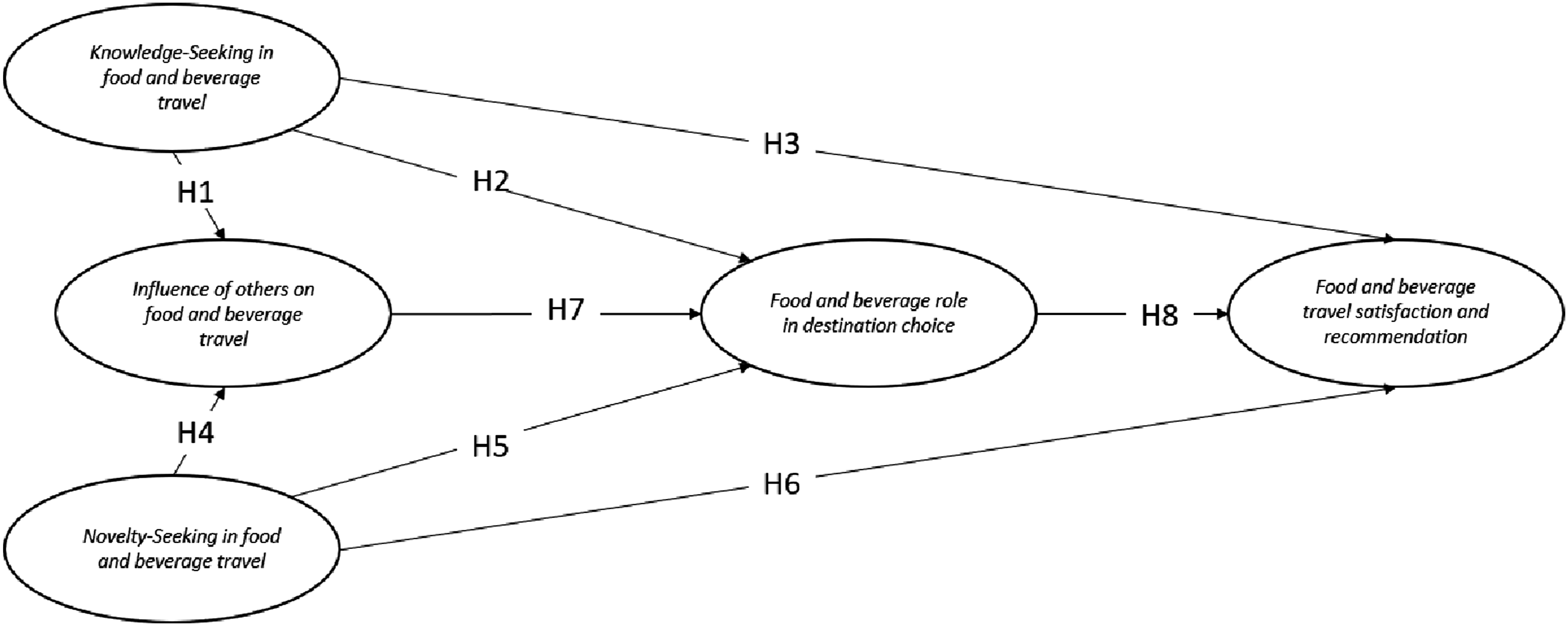
Methodology
Sample
The target population consisted of leisure travelers living in the United Kingdom. Travelers were defined as individuals at least 18 years old who had taken an overnight trip or traveled at least 50 miles (80 km) from home during the previous 2 years. The United Kingdom was selected because it represents a mature tourism market where both domestic and international travel are common. In 2024, residents of Great Britain made 105.6 million overnight visits within Great Britain and 94.6 million trips abroad (Murray, 2026). This context provides a suitable population for examining food and beverage travel behavior across both domestic and outbound travel experiences.
Data were collected through an online survey panel company. The sample was balanced by age and gender to improve representativeness within the panel-based design. Online panels are appropriate for reaching populations of interest in tourism and consumer behavior research, particularly when respondents must meet specific screening criteria such as recent travel participation (Lieberman et al., 2019). A total of 499 individuals completed the survey. This sample size exceeds common minimum requirements for PLS-SEM based on model complexity, including the ten-times rule, because the largest number of structural paths pointing at any endogenous construct in the model is three. The sample also exceeds the commonly used minimum sample size of 384 for estimating population proportions with a 95% confidence level and a 5% margin of error.
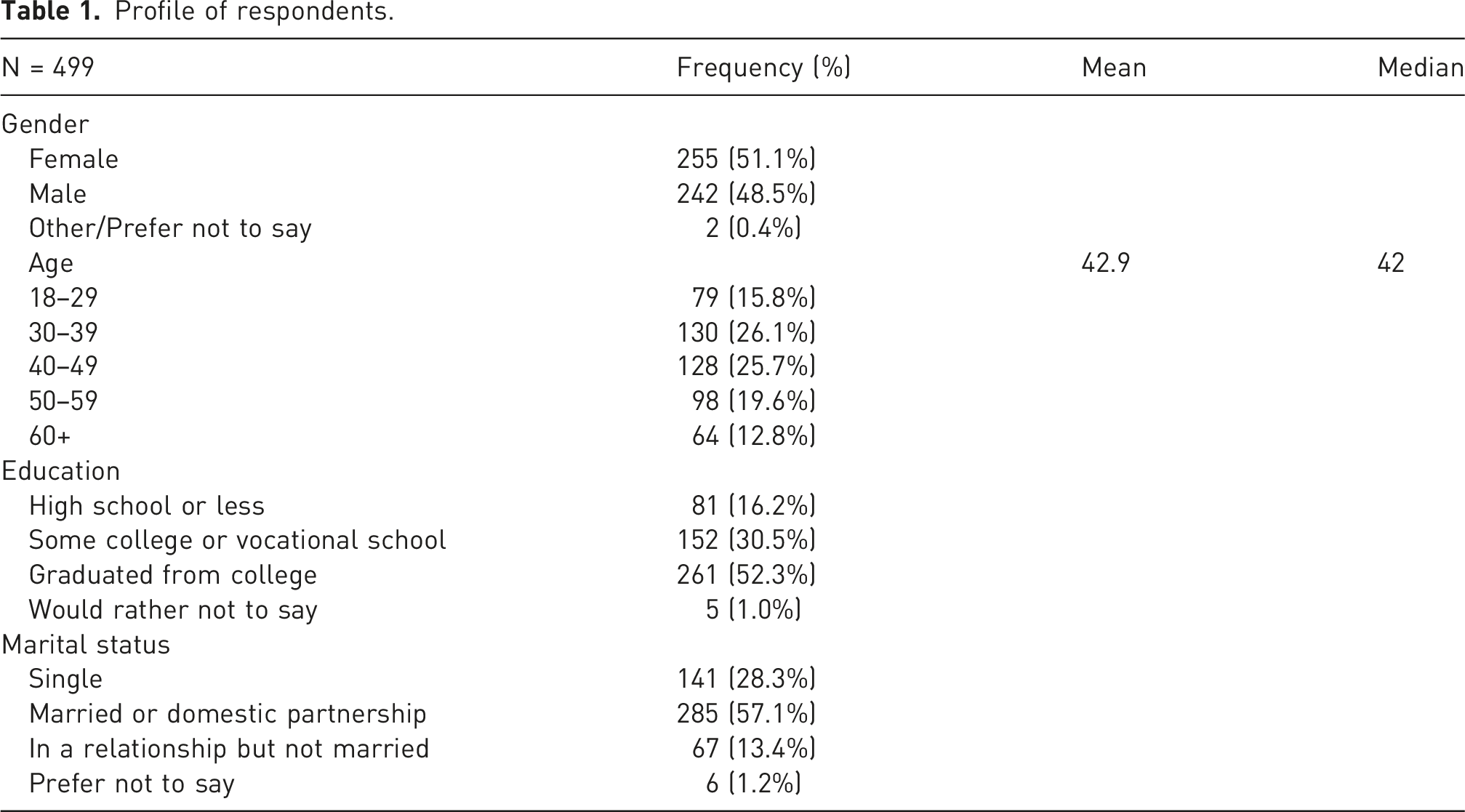
Profile of respondents.
Outer model results for first-order constructs.

Note. C.R. = Composite Reliability (rho_c).
Discriminant validity and correlation matrix.
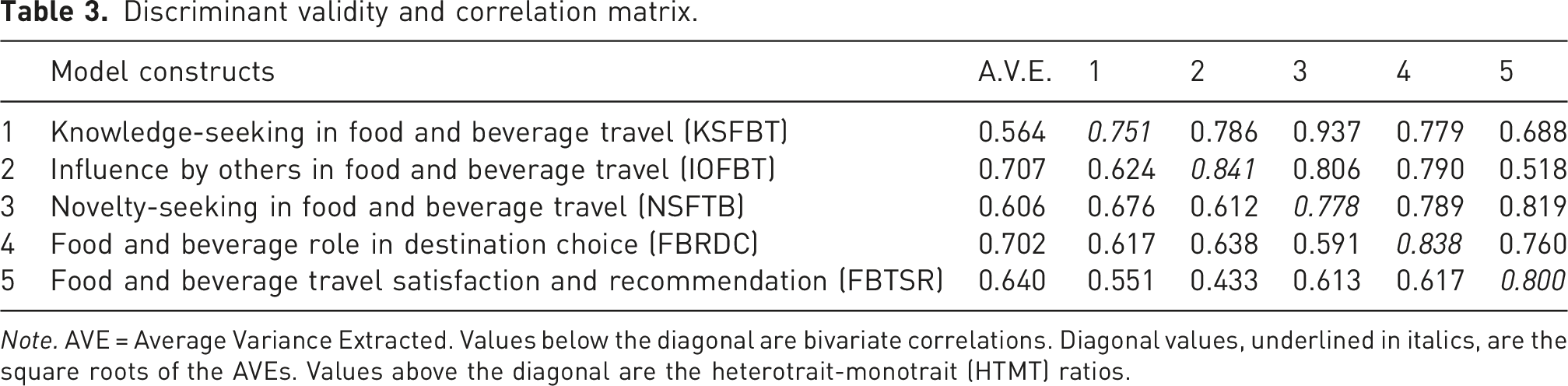
Note. AVE = Average Variance Extracted. Values below the diagonal are bivariate correlations. Diagonal values, underlined in italics, are the square roots of the AVEs. Values above the diagonal are the heterotrait-monotrait (HTMT) ratios.
Results of the structural model.
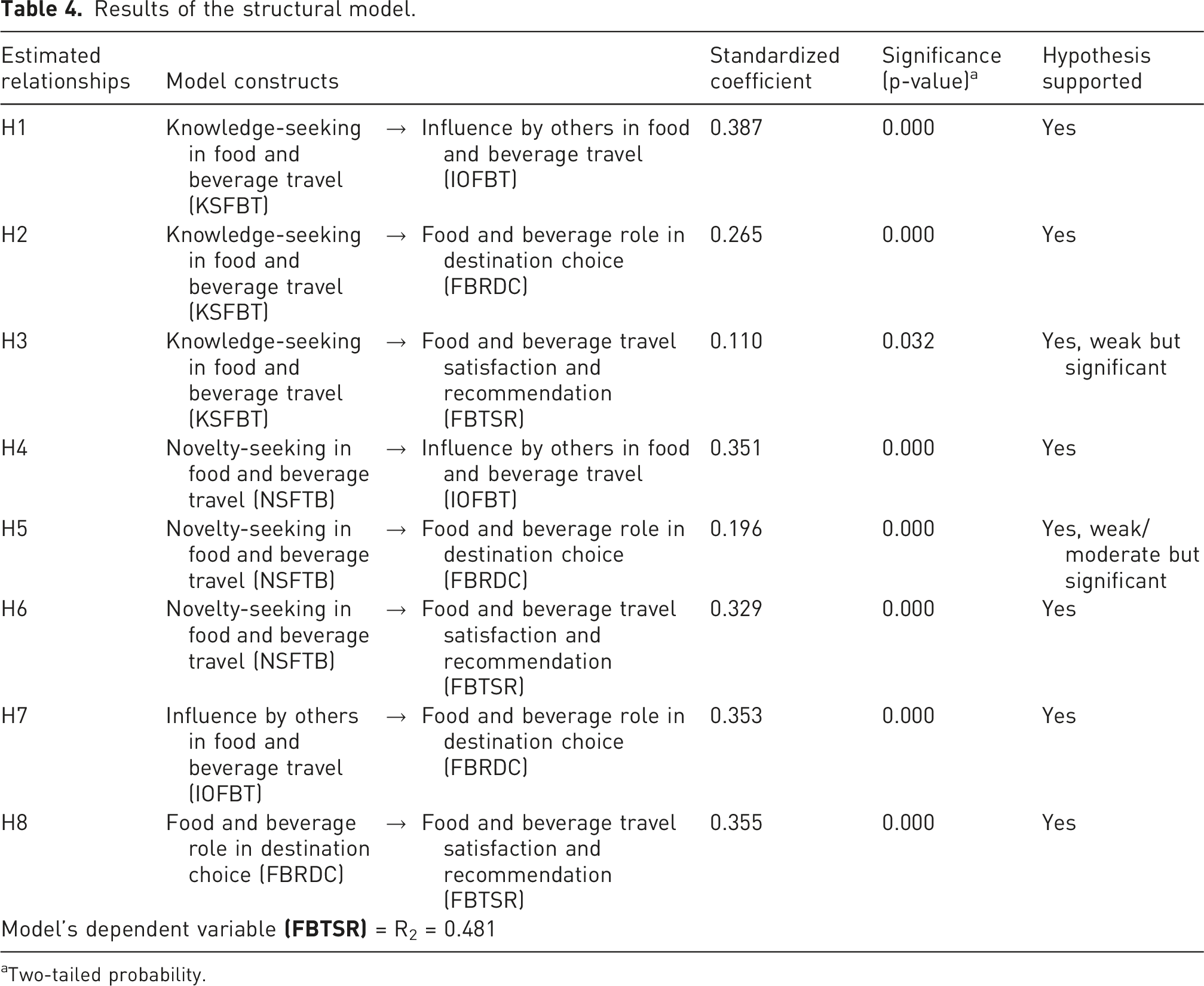
aTwo-tailed probability.
Survey measures
The survey used multi-item Likert-format scales to measure the latent constructs. Several measures were adapted from World Food Travel Association research reported by Stone and Migacz (2016). That research measured food and beverage travel attitudes and behaviors descriptively, but it did not test the structural relationships among the constructs examined in this study. Constructs adapted from that work include influence from others in food and beverage travel, knowledge-seeking in food and beverage travel, food and beverage role in destination choice, and novelty-seeking in food and beverage travel. The measure of food and beverage travel satisfaction and recommendation was adapted from Stone et al. (2019).
The measurement items were not subjected to a separate pilot test for the present study because they were drawn from prior food tourism research and had been previously used in large-scale food travel studies. However, before data collection, the questionnaire and measurement items were reviewed by tourism experts to assess clarity, relevance, and face validity. This procedure helped ensure that the items were appropriate for the target population and consistent with the conceptual definitions of the constructs.
Common method bias and procedural controls
Because the study relied on self-reported survey data, procedural and statistical steps were used to reduce and assess the potential for common method bias. Procedurally, the questionnaire separated conceptually distinct constructs, used established measurement items, and assured respondents that there were no right or wrong answers. Statistically, full collinearity variance inflation factors were examined following Kock (2015). Full collinearity testing is appropriate in PLS-SEM because it assesses whether each latent construct is excessively explained by the remaining constructs, which may indicate common method bias. All full collinearity VIF values were below 3.0, which is below the conservative threshold of 3.3 suggested in the literature. Therefore, common method bias was not considered a major threat to the interpretation of the results.
Multivariate models
Partial Least Squares Structural Equation Modeling was used to estimate the proposed model. PLS-SEM was appropriate for this study because the research objective was prediction-oriented and focused on explaining variance in endogenous constructs, including influence from others, food and beverage role in destination choice, and food and beverage travel satisfaction and recommendation (Carrión et al., 2016; Hair et al., 2017; Sarstedt et al., 2019). PLS-SEM is also appropriate when theory is still developing and when the objective is to examine complex relationships among latent constructs in applied social science contexts. This is consistent with food tourism research, where theory continues to evolve and where researchers often seek to explain consumer behavior through multiple interrelated psychological and behavioral constructs.
SmartPLS was used because it provides a comprehensive and widely used platform for estimating PLS-SEM models, assessing reflective measurement models, testing discriminant validity using HTMT, conducting bootstrapping, and reporting structural path estimates. The choice of SmartPLS rather than WarpPLS reflects a software decision rather than a different methodological logic. This study did not require WarpPLS-specific nonlinear modeling features; rather, it required a standard PLS-SEM estimation procedure with reflective constructs, bootstrapped path estimates, reliability and validity assessment, and predictive interpretation. Therefore, SmartPLS was appropriate for the study’s methodological objectives.
Results
Measurement model assessment
The measurement model was assessed using SmartPLS software. All constructs were specified as reflective first-order constructs. The evaluation followed established PLS-SEM guidelines for reflective measurement models, including indicator reliability, internal consistency reliability, convergent validity, discriminant validity, and collinearity assessment. All indicators yielded outer loadings above 0.70, supporting acceptable indicator reliability. Composite reliability values exceeded 0.70 and remained below 0.90, indicating satisfactory internal consistency without evidence of item redundancy. Average variance extracted values exceeded 0.50, supporting convergent validity. Discriminant validity was supported because the square roots of the AVEs were higher than the bivariate correlations, HTMT ratios were below the recommended threshold, and confidence intervals did not include 1. Finally, full collinearity VIF values were below 3.0, suggesting that neither multicollinearity nor common method bias represented a major concern.
Structural model estimation
The structural model was estimated using bias-corrected and accelerated bootstrapping with 10,000 subsamples. Although 5000 subsamples are commonly used in PLS-SEM, 10,000 subsamples were selected to obtain more stable standard errors, confidence intervals, and significance estimates. This was feasible given the sample size and model complexity. The model showed substantial explanatory power. The R-squared values indicated that the predictors explained 50.5% of the variance in food and beverage role in destination choice, 48.1% of the variance in food and beverage travel satisfaction and recommendation, and 45.6% of the variance in influence from others in food and beverage travel. The adjusted R-squared values were closely aligned with the R-squared values, suggesting that the model included an appropriate number of predictors and did not show evidence of overfitting.
Hypothesis testing
The structural model results supported all eight hypothesized relationships, although the strength of the supported paths varied. Knowledge-seeking in food and beverage travel was positively associated with influence from others in food and beverage travel (H1: β = 0.387, p < 0.001), supporting the argument that travelers who seek food-related knowledge are more likely to be influenced by friends, media, and social media. Knowledge-seeking was also positively associated with the role of food and beverage in destination choice (H2: β = 0.265, p < 0.001), indicating that knowledge-oriented travelers are more likely to use food and beverage as a criterion when comparing or selecting destinations. The relationship between knowledge-seeking and food and beverage travel satisfaction and recommendation was also significant, although weaker in magnitude (H3: β = 0.110, p = 0.032). This suggests that knowledge-seeking contributes to post-trip evaluation, but less strongly than it contributes to social influence and destination choice.
Novelty-seeking in food and beverage travel was positively associated with influence from others in food and beverage travel (H4: β = 0.351, p < 0.001), showing that travelers who seek new culinary experiences are more likely to rely on external sources of inspiration and information. Novelty-seeking was also positively associated with the role of food and beverage in destination choice (H5: β = 0.196, p < 0.001), although this relationship was weaker than the effects of knowledge-seeking and influence from others on destination choice. In addition, novelty-seeking was positively associated with food and beverage travel satisfaction and recommendation (H6: β = 0.329, p < 0.001), indicating that novelty-oriented travelers are especially likely to use food and beverage experiences when evaluating their trip and forming recommendation intentions.
Influence from others in food and beverage travel was positively associated with the role of food and beverage in destination choice (H7: β = 0.353, p < 0.001), confirming the importance of social, media, and interpersonal influence in shaping pre-trip decision-making. Finally, the role of food and beverage in destination choice was positively associated with food and beverage travel satisfaction and recommendation (H8: β = 0.355, p < 0.001), suggesting that travelers who use food and beverage as a destination choice criterion are also more likely to use food and beverage experiences as an evaluative lens after travel. Overall, these findings support the proposed process model linking pre-trip orientations, social influence, destination choice, and post-trip evaluation.
Indirect effects and mediation analysis
Specific indirect effects were examined using the same bias-corrected and accelerated bootstrapping procedure. The mediation results clarify the core mechanism of the study: knowledge-seeking and novelty-seeking do not only influence food tourism outcomes directly, but also operate through social influence and the role of food and beverage in destination choice.
Knowledge-seeking had an indirect association with food and beverage travel satisfaction and recommendation through food and beverage role in destination choice (β_indirect = 0.094, 95% BCa CI [0.057, 0.135], p < 0.001). Knowledge-seeking also had a sequential indirect association with food and beverage travel satisfaction and recommendation through influence from others and food and beverage role in destination choice (β_indirect = 0.049, 95% BCa CI [0.031], p < 0.001). These results suggest that knowledge-seeking travelers evaluate trips through food and beverage experiences partly because knowledge-seeking increases their attention to external influence and to food and beverage during destination choice.
Novelty-seeking had an indirect association with food and beverage travel satisfaction and recommendation through food and beverage role in destination choice (β_indirect = 0.070, 95% BCa CI [0.036, 0.108], p < 0.001). Novelty-seeking also had a sequential indirect association through influence from others and food and beverage role in destination choice (β_indirect = 0.044, 95% BCa CI [0.028, 0.063], p < 0.001). These results indicate that novelty-seeking travelers are not only directly oriented toward memorable food and beverage experiences, but are also influenced by external sources that help translate their novelty orientation into destination choice and post-trip evaluation.
Influence from others had an indirect association with food and beverage travel satisfaction and recommendation through food and beverage role in destination choice (β_indirect = 0.125, 95% BCa CI [0.087, 0.167], p < 0.001). This finding supports the argument that social influence is consequential because it increases the salience of food and beverage in destination choice, which subsequently shapes satisfaction and recommendation. Therefore, the model’s contribution lies not only in confirming direct relationships among food tourism constructs, but in identifying the mechanisms through which personal orientations and social influence become connected to travel outcomes.
Discussion
This study examined how knowledge-seeking, novelty-seeking, and influence from others shape the role of food and beverage in destination choice and in food and beverage travel satisfaction and recommendation. Rather than treating food and beverage experiences as uniformly important to all travelers, the study shows that travelers’ pre-existing orientations affect how food and beverage become relevant across the travel decision-making process. The results support a process model in which knowledge-seeking and novelty-seeking are associated with influence from others, influence from others is associated with the role of food and beverage in destination choice, and destination choice is associated with satisfaction and recommendation judgments.
To the best of our knowledge, this is the first study to combine these different variables to better understand food tourist consumer behavior. Knowledge-seeking behavior (KSFBT) measured how much travelers perceive to know and desire further knowledge about food and drink through traveling. Novelty-seeking behavior (NSFTB) considered how much travelers seek new or innovative food and drink activities when traveling. How much influence others (friends, media, and social media) have on travel decisions was measured by IOFBT (Influence by others in food and beverage travel). Two factors considered the impact of food and drink activities. FBRDC (food and beverage role in destination choice) measured the role of food and drink activities when selecting a destination, while FBTSR (food and beverage travel satisfaction and recommendation) measured how food and drink activities on a particular trip influence overall trip satisfaction, intent to return and to recommend.
Both knowledge-seeking and novelty-seeking were found to significantly influence the extent to which individuals are swayed by others in their food and beverage travel decisions (H1, H4). Travelers who know about and seek more knowledge about food and drink are influenced by others. This influence includes social media, media, and interpersonal influences. While researchers (e.g. Björk and Kauppinen-Räisänen, 2017) have connected interest in food with travel motivation, the current study extends this interest in food to knowledge of food. Further, those who are experimental, seeking novel experiences, also rely on others to influence their travel decisions. Previous researchers (e.g. Chi et al., 2024; Kim et al., 2021; Stone, 2016) found that others influence traveler choices, and this is not new. However, this study shows that these influences are not universal. Those who prioritize knowledge and who prioritize novel experiences are more likely to be influenced by others (media, social media, and friends).
Several hypotheses (H2, H5, and H7) considered what factors lead a traveler to place a high value on food and drink activities when selecting a destination. While it has been determined that tourist attitudes toward local food influence destination choice (Morris et al., 2020; Stone and Migacz, 2016), this study considered additional variables. As expected, knowledge was a key factor—those who seek food and drink knowledge use food and drink activities to differentiate between destinations (H2). Additionally, those influenced by others (including media and interpersonal sources) use food and drink activities to differentiate between destinations (H7).
The results also show that knowledge-seeking (H3) and novelty-seeking (H5) influence food and beverage outcomes differently. Knowledge-seeking had a stronger relationship with influence from others and destination choice than with satisfaction and recommendation. This suggests that knowledge-oriented travelers may use food and beverage primarily as a planning and learning framework before travel. Their post-trip evaluation may depend not only on whether food and beverage experiences occurred, but on whether those experiences met expectations for cultural learning, authenticity, and meaningful discovery. Novelty-seeking had a comparatively strong relationship with satisfaction and recommendation. This indicates that travelers who seek new and unusual culinary experiences may be especially likely to judge a trip based on whether it delivered memorable, distinctive, and shareable food and beverage encounters. Novelty-seeking was also positively associated with destination choice, although this relationship was weaker than the effect of knowledge-seeking and influence from others. This suggests that novelty-oriented travelers may seek new food and beverage experiences across many destinations, while knowledge-oriented travelers may be more likely to use specific food and beverage offerings as criteria for choosing among destinations.
Novelty seeking has been connected with purchase intention (Li and Su, 2022), but this study finds a limitation. The desire for new experiences may not necessarily prioritize food and beverage offerings in destination selection.
Finally, three hypotheses (H3, H6, H8) considered what leads to the connection between food experiences and post-travel satisfaction and recommendation. The relationships between novelty-seeking and satisfaction and recommendation (H6), as well as the role of food and beverage in destination choice on satisfaction and recommendation (H8), were both supported. These findings suggest that novelty-seeking behavior and the prioritization of food and beverage offerings in destination choice are positively related to travelers’ use of food and drink to determine trip satisfaction and their willingness to recommend. This finding supports Tezerjany & Fatemeh's (2024) discovery of the connection between novelty-seeking and satisfaction in food delivery—applying a similar concept to food tourism. It is also in line with other studies (e.g. Albaity and Melhem, 2017; Ji et al., 2016) connecting satisfaction and novelty-seeking in food tourism. These findings also build on Morris et al.'s (2020) investigation of the links between local food, destination choice, and satisfaction.
Previously, Stone, Migacz, and Wolf (2019) and Li and Qiu (2023) found that food and drink activities are connected with satisfaction, intent to recommend and return. This research builds upon this, finding that it may be more pronounced for novelty-seeking (but not for knowledge-seeking) food travelers. Further, this research connects destination choice with satisfaction—if food and drink is important in destination choice, it is important in destination satisfaction.
The research substantiates the mediating roles of “influence of others” and the “role of food and beverage in destination choice”, providing a comprehensive understanding of how individual desires for knowledge and novelty are translated into tangible travel decisions and experiences through social dynamics and destination offerings. The mediation by the “influence of others” underscores the pivotal role of social interactions and networks in the decision-making processes of tourists. It reveals that knowledge-seeking and novelty-seeking individuals are significantly swayed by their social circles and media consumption, which in turn shapes their preferences and priorities regarding food and beverage experiences in travel destinations. This social mediation serves as a crucial link between personal motivations and destination choices, highlighting the social fabric’s Influence on travel behaviors. Stone (2016) suggested that others’ influence is an often-overlooked factor contributing to decision making in tourism, while Stone and Castillo Ortiz (2024) noted that high involvement food travelers often rely on others to influence tourism decision making. This study extends this finding beyond high involvement food travelers to knowledge seeking and novelty seeking travelers.
Furthermore, the “role of food and beverage in destination choice” emerges as a key mediator, illustrating how the influence of peers and social networks translates into a prioritization of culinary experiences in the selection of travel destinations. This not only affects tourists’ destination choices but also significantly impacts their satisfaction levels and their propensity to recommend a vacation based on food and drink experiences. This pathway accentuates the importance of culinary offerings in meeting and exceeding tourists’ expectations, thereby enhancing their overall travel satisfaction. The model also uncovers both direct and indirect pathways through which knowledge-seeking and novelty-seeking influence travel satisfaction and recommendation, revealing a complex matrix of influences that includes personal motivations, social influences, and the perceived value of food and beverage experiences. This intricate web of relationships highlights the multifaceted nature of travel decision-making and satisfaction, where personal desires are interwoven with social dynamics and the allure of destination-specific offerings.
Additionally, the relationships between novelty-seeking and satisfaction and recommendation (H6), as well as the role of food and beverage in destination choice on satisfaction and recommendation (H8), were both supported. These findings suggest that novelty-seeking behavior and the prioritization of food and beverage offerings in destination choice positively affect their satisfaction levels and their propensity to recommend a vacation based on food and drink experiences.
In essence, the extended analysis illuminates the critical roles of social influences and destination-specific culinary offerings as mediators in the nexus between personal motivations and travel outcomes. It highlights the intricate ways in which individual desires for knowledge and novelty are molded by social contexts and destination attributes, culminating in enriched food tourism experiences that fulfill personal aspirations and foster recommendations. This comprehensive view underscores the symbiotic relationship between personal, social, and destination-related factors in crafting memorable and satisfying food tourism journeys.
Conclusion
General conclusion
Food and beverage tourism is a prime motivator to travel and can make a significant economic contribution to a destination (Everett, 2016; Stone and Migacz, 2016). Therefore, understanding food tourism consumer behavior is very important. From a theoretical perspective, it is not enough to say that travelers are motivated by food and drink in general or a particular food or drink experience. There is a complex interplay between personal motivations, social influences, and the perceived importance of food and beverage offerings in shaping food tourism experiences and outcomes. This study also connects pre-trip attitudes and motivations with decision making as well as ways in which food and drink affect vacation outcomes (e.g. satisfaction and recommendation).
First, this study considered who may be influenced by others in food tourism. For those who are knowledge-seeking (and knowledgeable) food travelers and those who are novelty-seeking food travelers, the influence of others is very pronounced. They rely on friends, media, and social media to choose a destination and to make dining decisions at a destination.
Second, the pre-trip activity of destination choice was considered. It has been previously determined that for many travelers, food and drink play a role in destination choice. However, this was pronounced for knowledge-seeking (and not for novelty-seeking) food travelers. Additionally, there is a connection between being influenced by others and the importance of food and drink in destination choice.
Finally, this study builds upon previous findings that food and drink activities impact post-travel reflection and behaviors (e.g. satisfaction, recommendation). We find that this is noticeable for novelty-seeking food travelers (but not for knowledge-seeking food travelers). Those who are seeking new or unique food and drink experiences in the motivation and planning phase place a higher value on food and drink in the trip satisfaction and other post-travel activities. Finally, there is an additional connection between pre-travel (planning) activities and post-travel (reflection) activities. Those who strongly consider food and drink in destination choice are also highly influenced by food and drink when assessing their overall trip experience (e.g. satisfaction, intent to recommend and return).
Theoretical contributions
This study makes three theoretical contributions to food tourism research. First, it extends food tourism segmentation literature by moving from descriptive typologies to an explanatory process model. Prior studies have shown that food tourists differ in involvement, motivation, culinary interest, novelty orientation, and local food engagement. This study builds on that work by explaining how specific orientations, particularly knowledge-seeking and novelty-seeking, are connected to social influence, destination choice, and post-trip evaluation.
Second, the study contributes to consumption value theory in food tourism by showing that epistemic and experiential values operate differently across the travel process. Knowledge-seeking is especially relevant to information search and destination choice, while novelty-seeking is especially relevant to satisfaction and recommendation. This distinction helps explain why food and beverage experiences may matter to different travelers in different ways.
Third, the study clarifies the theoretical role of social influence in food tourism. In contemporary tourism, influence from friends, media, and social media is widespread. However, the contribution of this study is not simply to show that social influence exists. Rather, the study shows that knowledge-seeking and novelty-seeking travelers are more likely to be influenced by others, and that this influence helps explain why food and beverage become salient in destination choice. Thus, social influence functions as a mechanism connecting personal food-related orientations to travel decision-making.
Managerial implications
The findings offer several implications for destinations and food tourism businesses. First, destinations should avoid treating food tourists as a single homogeneous market. Knowledge-seeking and novelty-seeking travelers may both be interested in food and beverage, but they respond to different value propositions. Knowledge-seeking travelers are likely to respond to messages emphasizing cultural learning, local heritage, production methods, regional identity, chef narratives, and educational experiences. For this segment, destinations should communicate not only what visitors can eat and drink, but what they can learn through food and beverage.
Second, novelty-seeking travelers are likely to respond to messages emphasizing uniqueness, discovery, experimentation, and memorable experiences. Destinations and businesses can attract these travelers by highlighting new restaurants, unusual ingredients, emerging culinary neighborhoods, limited-time tasting menus, food festivals, creative gastronomy, or immersive food and beverage experiences. Since novelty-seeking was strongly associated with satisfaction and recommendation, memorable and shareable culinary experiences may be especially important for generating positive word-of-mouth among these travelers.
Third, the results confirm the importance of friends, media, and social media in shaping food-related travel decisions. Destinations should therefore design food and beverage experiences that are easy to discover, interpret, photograph, review, and share. This includes strong visual storytelling, clear digital information, social media-ready content, collaborations with credible food media, and tools that help visitors share itineraries and recommendations with others. The practical value of social influence lies in its ability to increase the role of food and beverage in destination choice, which in turn is associated with satisfaction and recommendation.
Finally, food and beverage should not be positioned only as an activity that visitors enjoy after arrival. For many travelers, it is part of the decision-making process before the trip and part of the evaluative process after the trip. Destinations that integrate food and beverage into destination branding, itinerary planning, visitor information, and post-trip engagement may be better positioned to attract food-motivated travelers and convert their experiences into satisfaction, return intention, and recommendation.
Limitations and future research
This study has several limitations that suggest directions for future research. First, the sample consisted of travelers living in the United Kingdom. Although the United Kingdom is a mature tourism market with substantial domestic and international travel activity, the findings may not generalize fully to travelers from other cultural, geographic, or economic contexts. Future studies should test the model in additional countries and compare domestic and international travel behavior across markets.
Second, the study used cross-sectional self-reported survey data. This design is appropriate for examining relationships among latent constructs, but it does not establish causality. Future research could use longitudinal designs to examine how food-related attitudes influence pre-trip planning, actual in-destination behavior, and post-trip evaluation over time.
Third, the study examined influence from others as a combined construct including friends, media, and social media. Future studies could separate interpersonal influence, traditional media, social media, online reviews, influencers, and algorithmic recommendation systems to determine whether different sources of influence operate differently in food tourism decision-making.
Fourth, although the model explained substantial variance in destination choice and satisfaction/recommendation, additional factors may also be relevant. Future research could integrate perceived authenticity, destination food image, food neophilia and neophobia, cultural distance, dietary restrictions, prior destination familiarity, and travel party decision-making. These extensions would provide a more comprehensive understanding of how travelers use food and beverage experiences before, during, and after travel.
Footnotes

Funding
The authors disclosed receipt of the following financial support for the research, authorship, and/or publication of this article: This work was supported by: California State University, Chico RSCA Grant and World Food Travel Association.
Declaration of conflicting interests
The authors declared no potential conflicts of interest with respect to the research, authorship, and/or publication of this article.
Declaration of generative AI and AI-assisted technologies in the writing process
During the preparation of this work the authors used CHAT GPT in order to assist in generating ideas that would allow the author to approach a few paragraphs of the article from a broader and more accessible perspective. After using this tool/service, the authors reviewed and edited the content as needed.